Adhyaya 58
Udyoga Parva Adhyāya 58 — Saṃjaya’s Audience and Kṛṣṇa’s Deterrent Counsel (संजय-प्रवेशः कृष्णवाक्यं च)
Upa-parva: Sañjaya–Kṛṣṇa–Arjuna Saṃvāda (Court Report Episode)
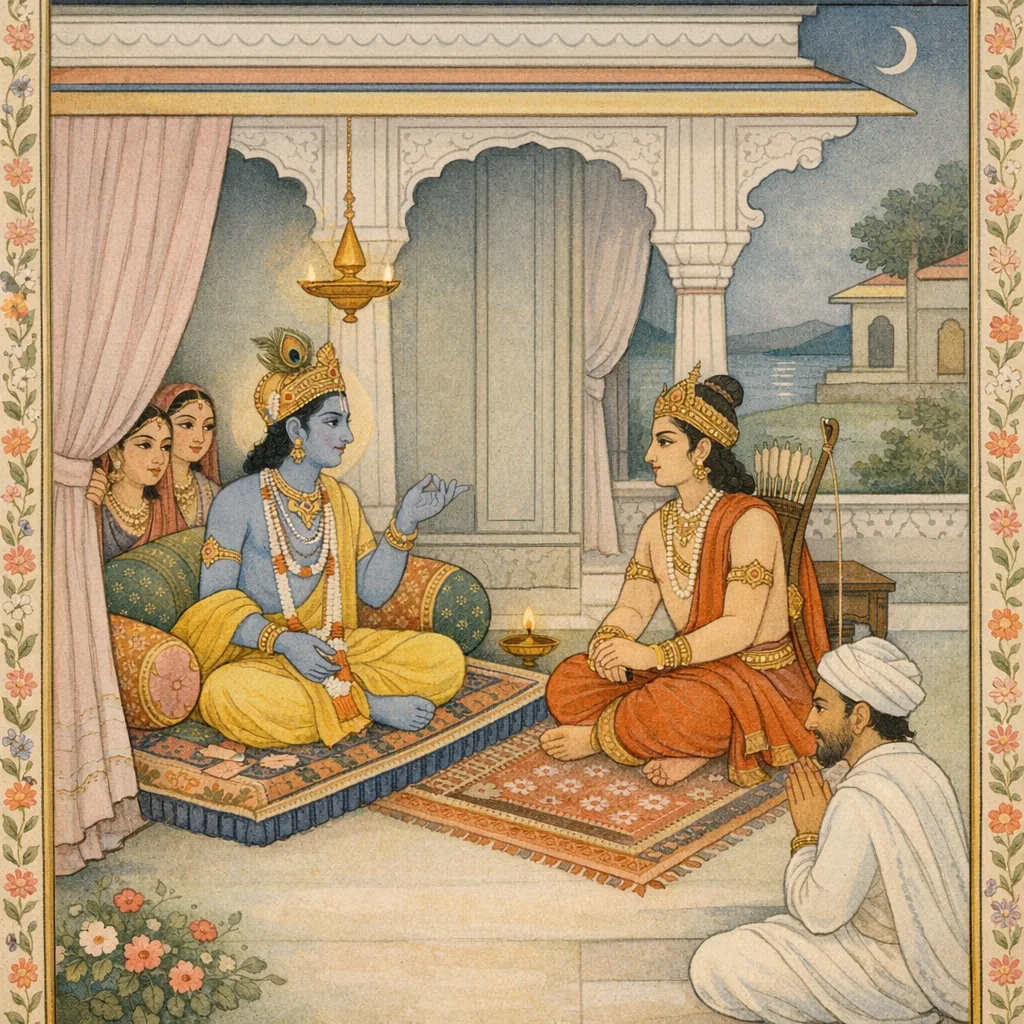
Dhṛtarāṣṭra requests Saṃjaya to recount what Vāsudeva (Kṛṣṇa) and Dhanaṃjaya (Arjuna) said. Saṃjaya narrates his respectful entry into the royal inner quarters to report on the two leaders, noting the exclusivity and guarded nature of their presence. He describes their courtly presentation—garlands, fine garments, ornaments, and a jeweled golden seat—then observes embodied hierarchy through details of posture and foot-rest imagery. Seeing them seated together, Saṃjaya experiences apprehension and interprets their combined stature through divine comparison, concluding that Yudhiṣṭhira’s resolve will succeed because such allies stand aligned. After receiving hospitality, Saṃjaya delivers Kṛṣṇa’s message intended for Dhṛtarāṣṭra (and heard by senior figures such as Droṇa): Kṛṣṇa urges the Kauravas to perform rites, give gifts, and take joy with family because a great danger is approaching. He recalls a personal debt to Draupadī’s cry of “Govinda,” frames Arjuna’s martial capacity as beyond ordinary opposition, and cites the Virāṭa episode as evidence that one warrior can rout many. The chapter closes with Saṃjaya noting Kṛṣṇa’s rousing speech and Arjuna preparing an awe-inducing reply.
Chapter Arc: धृतराष्ट्र, संजय से आग्रह करते हैं कि वह वही सुनाए जो उसने श्रीकृष्ण और अर्जुन के अन्तःपुर में प्रत्यक्ष देखा-सुना—क्योंकि अब राज्य और रक्त, दोनों का निर्णय वाणी से होने वाला है। → संजय राजसभा को उस अंतरंग दृश्य में ले जाता है जहाँ कृष्ण, अर्जुन, द्रौपदी और सत्यभामा विराजमान हैं; सत्कार के बाद संजय हाथ जोड़कर संदेश-प्रसंग छेड़ता है। फिर कृष्ण अर्जुन को उकसाते हुए कौरवों के पूर्व अपराध और पाण्डव-पराक्रम की स्मृति जगाते हैं—विशेषतः विराटनगर में अर्जुन द्वारा अकेले कौरव-सेना को भगाने का उदाहरण देकर। → कृष्ण का गर्जन-सा वचन—इन्द्र की समयोचित वर्षा-गर्जना के समान—अर्जुन के भीतर क्षात्र-तेज को प्रज्वलित करता है: ‘एक पाण्डुपुत्र ही पर्याप्त प्रमाण है’—यह उद्घोष युद्ध-न्याय और शक्ति-न्याय दोनों का शिखर बनता है। → कृष्ण के वचन सुनकर किरीटी अर्जुन रोमांचकारी प्रत्युत्तर देता है; संजय उस संवाद को धृतराष्ट्र के सामने यथावत रख देता है—यह स्पष्ट करते हुए कि पाण्डव पक्ष आत्मविश्वास और नीति-बल दोनों से सुसज्जित है। → संजय का कथन आगे के निर्णय की ओर धकेलता है—अब धृतराष्ट्र और कौरव-सभा इस संदेश को कैसे ग्रहण करेगी: संधि की ओर या विनाश की ओर?
Shlokas
Verse 1
ऑपन--मा_जल छा जज ड:ि:अ एकोनषशष्टितमो< ध्याय: संजयका 4:30 87 छनेपर उन्हें श्रीकृष्ण और अर्जुनके अन्तःपुरमें कहे हुए संदेश सुनाना धृतराष्ट उवाच यदब्रूतां महात्मानौ वासुदेवधनंजयौ । तन्मे ब्रूहि महाप्राज्ञ शुश्रूषे वचनं तव,धृतराष्ट्रने पूछा--महाप्राज्ञ संजय! महात्मा भगवान् श्रीकृष्ण और अर्जुनने जो कुछ कहा हो, वह मुझे बताओ; मैं तुम्हारे मुखसे उनके संदेश सुनना चाहता हूँ
Dhṛtarāṣṭra said: “Whatever the two great-souled ones—Vāsudeva (Kṛṣṇa) and Dhanañjaya (Arjuna)—have spoken, tell me that. O greatly wise Sañjaya, I wish to hear their message from your own mouth.”
Verse 2
संजय उवाच शृणु राजन् यथा दृष्टौ मया कृष्णधनंजयौ । ऊचतुश्चापि यद् वीरौ तत् ते वक्ष्यामि भारत
Sañjaya said: O King, listen to how I saw Kṛṣṇa and Dhanañjaya (Arjuna). I shall also tell you, O Bhārata, what those two heroes said.
Verse 3
संजयने कहा--भरतवंशी नरेश! सुनिये। मैंने वीरवर श्रीकृष्ण और अर्जुनको जैसे देखा है और उन्होंने जो संदेश दिया है, वह आपको बता रहा हूँ ।। पादाड्गुलीरभिप्रेक्षन् प्रयतो5हं कृताज्जलि: । शुद्धान्तं प्राविशं राजन्नाख्यातुं नरदेवयो:,राजन! मैं नरदेव श्रीकृष्ण और अर्जुनसे आपका संदेश सुनानेके लिये मनको पूर्णतः संयममें रखकर अपने पैरोंकी अंगुलियोंपर ही दृष्टि लगाये और हाथ जोड़े हुए उनके अन्तःपुरमें गया
Sanjaya said: “O king of the Bharata line, listen. I will report to you exactly as I saw the foremost heroes, Śrī Kṛṣṇa and Arjuna, and the message they conveyed. With my mind disciplined, my hands joined in reverence, and my gaze lowered to my own toes, I entered their inner apartments, O king, to deliver your words to those two lordly men.”
Verse 4
नैवाभिमन्युर्न यमौ त॑ देशमभियान्ति वै । यत्र कृष्णौ च कृष्णा च सत्यभामा च भामिनी,जहाँ श्रीकृष्ण, अर्जुन, द्रौपदी और मानिनी सत्यभामा विराज रही थीं, उस स्थानमें कुमार अभिमन्यु तथा नकुल-सहदेव भी नहीं जा सकते थे
Sañjaya said: “Neither Abhimanyu nor the twin sons (Nakula and Sahadeva) could go to that place—where Kṛṣṇa and Arjuna were present, and where Draupadī and the spirited Satyabhāmā were seated.”
Verse 5
उभौ मध्वासवक्षीबावुभौ चन्दनरूषितौ | स्रग्विणौ वरवस्त्रौ तौ दिव्याभरणभूषितौ,वे दोनों मित्र मधुर पेय पीकर आनन्दविभोर हो रहे थे। उन दोनोंके श्रीअंग चन्दनसे चर्चित थे। वे सुन्दर वस्त्र और मनोहर पुष्पमाला धारण करके दिव्य आभूषणोंसे विभूषित थे
Sañjaya said: Both of them, having drunk sweet mead and wine, were exhilarated with delight. Their bodies were anointed with sandal paste; they wore fine garments and garlands, and were adorned with splendid, divine ornaments.
Verse 6
नैकरत्नविचित्रं तु काड्चन॑ं महदासनम् | विविधास्तरणाकीर्ण यत्रासातामरिंदमौ,शत्रुओंका दमन करनेवाले वे दोनों वीर जिस विशाल आसनपर बैठे थे, वह सोनेका बना हुआ था। उसमें अनेक प्रकारके रत्न जटित होनेके कारण उसकी विचित्र शोभा हो रही थी। उसपर भाँति-भाँतिके सुन्दर बिछौने बिछे हुए थे
Sañjaya said: The great seat on which those two enemy-subduing heroes sat was made of gold. Adorned with many kinds of gems, it shone with a varied splendor, and it was spread over with fine coverings of different sorts—signs of royal dignity and the formal gravity of the council where momentous decisions about peace and war were being weighed.
Verse 7
अर्जुनोत्सड्रगौ पादौ केशवस्योपलक्षये । अर्जुनस्य च कृष्णायां सत्यायां च महात्मन:,मैंने देखा, श्रीकृष्णके दोनों चरण अर्जुनकी गोदमें थे और महात्मा अर्जुनका एक पैर द्रौपदीकी तथा दूसरा सत्यभामाकी गोदमें था
Sañjaya said: I observed that Keśava’s two feet were placed upon Arjuna’s lap; and that the great-souled Arjuna had one foot resting in Kṛṣṇā (Draupadī)’s lap and the other in Satyā (Satyabhāmā)’s lap. The scene conveys an intimate, domestic tableau of mutual regard and closeness among the foremost figures—an image of personal bonds and honor that stands in poignant contrast to the political strain and impending conflict of the Udyoga Parva.
Verse 8
काज्चनं पादपीठं तु पार्थो मे प्रादिशत् तदा । तदहं पाणिना स्पृष्टवा ततो भूमावुपाविशम्,कुन्तीकुमार अर्जुनने उस समय मुझे बैठनेके लिये एक सोनेके पादपीठ (पैर रखनेके पीढ़े)-की ओर संकेत कर दिया। परंतु मैं हाथसे उसका स्पर्शमात्र करके पृथ्वीपर ही बैठ गया
Sañjaya said: “At that time Pārtha (Arjuna) indicated to me a golden footstool as a seat. I merely touched it with my hand and then sat down on the ground.” The moment underscores Sañjaya’s humility and restraint in the presence of a revered prince, choosing simplicity over luxury and showing respect through modest conduct.
Verse 9
ऊर्ध्वरेखातलौ पादौ पार्थस्य शुभलक्षणौ । पादपीठादपदह्तौ तत्रापश्यमहं शुभौ
Sañjaya said: “There I beheld Pārtha’s feet—auspicious and marked with the upward lines and the flat soles. Resting upon the footstool, they were uninjured; thus I saw those two sacred, fortunate feet.”
Verse 10
बैठ जानेपर वहाँ मैंने पादपीठसे हटाये हुए अर्जुनके दोनों सुन्दर चरणोंको (ध्यानपूर्वक) देखा। उनके तलुओंमें ऊर्ध्वगामिनी रेखाएँ दृष्टिगोचर हो रही थीं और वे दोनों पैर शुभसूचक विविध लक्षणोंसे सम्पन्न थे ।। श्यामौ बृहन्तौ तरुणौ शालस्कन्धाविवोद्गतौ । एकासनगतोौ दृष्टवा भयं मां महदाविशत्,श्रीकृष्ण और अर्जुन दोनों श्यामवर्ण, बड़े डील-डौलवाले, तरुण तथा शालवृक्षके स्कन्धोंके समान उन्नत हैं। उन दोनोंको एक आसनपर बैठे देख मेरे मनमें बड़ा भय समा गया
Sañjaya said: When they had taken their seats there, I carefully observed Arjuna’s two beautiful feet, which had been drawn back from the footstool. On the soles I could make out upward-running lines, and both feet bore many auspicious marks. Then I saw Kṛṣṇa and Arjuna—dark-hued, broad-built, youthful, rising like the lofty trunks of śāla trees—seated together on a single seat; and at that sight a great fear seized my heart.
Verse 11
इन्द्रविष्णुसमावेतौ मन्दात्मा नावबुद्धयते । संश्रयाद् द्रोणभीष्मा भ्यां कर्णस्य च विकत्थनात्,मैंने सोचा, इन्द्र और विष्णुके समान अचिन्त्य शक्तिशाली इन दोनों वीरोंको मन्दबुद्धि दुर्योधन नहीं समझ पाता है। वह द्रोणाचार्य और भीष्मका भरोसा करके तथा कर्णकी डींगभरी बातें सुनकर मोहित हो रहा है
Sañjaya said: The dull-minded Duryodhana does not truly comprehend those two warriors, united with powers like Indra and Viṣṇu. Relying on Droṇa and Bhīṣma, and being intoxicated by Karṇa’s boastful talk, he remains deluded—misjudging the real balance of strength and the moral gravity of the coming war.
Verse 12
निदेशस्थाविमौ यस्य मानसस्तस्य सेत्स्यते । संकल्पो धर्मराजस्य निश्चयो मे तदाभवत्,ये दोनों महात्मा जिनकी आज्ञाका पालन करनेके लिये सदा उद्यत रहते हैं, उन धर्मराज युधिष्ठिरका मानसिक संकल्प अवश्य सिद्ध होगा; यही उस समय मेरा निश्चय हुआ था
Sañjaya said: “When two such great souls stand ever ready to carry out a man’s command, that man’s inner resolve is sure to succeed. Thus I became convinced, at that time, that Dharmarāja Yudhiṣṭhira’s purpose would indeed be fulfilled.”
Verse 13
सत्कृतश्नान्नपाना भ्यामासीनो लब्धसत्क्रिय: । अज्जलिं मूर्थ्नि संधाय तौ संदेशमचोदयम्,तत्पश्चात् अन्न और जलके द्वारा मेरा सत्कार किया गया। यथोचित आदर-सत्कार पाकर जब मैं बैठा, तब माथेपर अंजलि जोड़कर मैंने उन दोनोंसे आपका संदेश कह सुनाया
Sañjaya said: After I had been duly honored with food and drink, and had taken my seat having received proper hospitality, I placed my joined palms upon my head in reverence and then delivered to those two your message.
Verse 14
धनुर्गुणकिणाड्केन पाणिना शुभलक्षणम् | पादमानमयन् पार्थ: केशवं समचोदयत्,तब अर्जुनने जिसमें धनुषकी डोरीकी रगड़से चिह्न बन गया था, उस हाथसे भगवान् श्रीकृष्णके शुभसूचक लक्षणोंसे युक्त चरणको धीरे-धीरे दबाते हुए उन्हें मुझको उत्तर देनेके लिये प्रेरित किया
Then Arjuna, with the hand marked by the chafing of the bowstring, gently pressed and massaged the auspiciously marked feet of Keśava (Kṛṣṇa), urging him to give me an answer.
Verse 15
इन्द्रकेतुरिवोत्थाय सर्वाभरणभूषित: । इन्द्रवीयोंपम: कृष्ण: संविष्टो माभ्यभाषत
Sañjaya said: “Rising up like Indraketu and adorned with every ornament, Kṛṣṇa—whose prowess was comparable to Indra’s—then, having seated himself, addressed me.”
Verse 16
वाचं स वदतां श्रेष्ठो ह्वादिनीं वचनक्षमाम् | त्रासिनीं धार्तराष्ट्राणां मृदुपूर्वां सुदारुणाम्
Sañjaya said: He—foremost among speakers—uttered words that were pleasing and well-formed, yet terrifying to the sons of Dhṛtarāṣṭra: beginning gently, but ending with a severity that cut to the truth.
Verse 17
तदनन्तर इन्द्रके समान पराक्रमी तथा समस्त आभूषणोंसे विभूषित वक्ताओंमें श्रेष्ठ श्रीकृष्ण इन्द्रध्वजके समान उठ बैठे और मुझसे पहले तो मृदुल एवं मनको आह्लाद प्रदान करनेवाली प्रवचनयोग्य वाणी बोले। फिर वह वाणी अत्यन्त दारुणरूपमें प्रकट हुई, जो आपके पुत्रोंके लिये भय उपस्थित करनेवाली थी ।। वाचं तां वचनार्हस्य शिक्षाक्षरसमन्विताम् । अश्रौषमहमिष्टार्था पश्चाद्धदयहारिणीम्,तत्पश्चात् बातचीतमें कुशल भगवान् श्रीकृष्णकी वह वाणी मेरे सुननेमें आयी, जिसका एक-एक अक्षर शिक्षाप्रद था। वह अभीष्ट अर्थका प्रतिपादन करनेवाली तथा मनको मोह लेनेवाली थी
Sañjaya said: Thereafter, Śrī Kṛṣṇa—equal to Indra in prowess, adorned with every ornament, and foremost among speakers—rose like Indra’s banner and took his seat. First he spoke in a gentle voice, fit for counsel, soothing and gladdening the mind. Then that very speech assumed an exceedingly stern form, one that brought fear upon your sons. I heard the words of that worthy speaker—each syllable instructive—setting forth the desired meaning and, at the same time, captivating the heart.
Verse 18
वायुदेव उवाच संजयेदं वचो ब्रूया धृतराष्ट्र मनीषिणम् | कुरुमुख्यस्य भीष्मस्य द्रोणस्यापि च शृण्वतः,भगवान् श्रीकृष्णने कहा--संजय! जब कुरुकुलके प्रधान पुरुष भीष्म तथा आचार्य द्रोण भी सुन रहे हों, उसी समय तुम बुद्धिमान् राजा धृतराष्ट्रसे यह बात कहना
Vāyudeva said: “Sañjaya, convey these words to the wise king Dhṛtarāṣṭra—do so at a time when Bhīṣma, the foremost of the Kurus, and Droṇa as well are listening.”
Verse 19
आवयोर्वचनात् सूत ज्येष्ठानप्यभिवादयन् । यवीयसश्व कुशल पश्चात् पृष्टवैवमुत्तरम्,सूत! हम दोनोंकी ओरसे पहले तुम हमसे बड़ी अवस्थावाले श्रेष्ठ पुरुषोंको प्रणाम कहना और जो लोग अवस्थामें हमसे छोटे हों, उनकी कुशल पूछना। इसके बाद हमारा यह उत्तर सुना देना--
Vāyu-deva said: “O charioteer, on behalf of us both, first offer respectful salutations even to those elders who are foremost in age and dignity. Then inquire after the welfare of those who are younger than we are. After doing so, convey this reply of ours.”
Verse 20
यजचध्वं विविधीर्यज्निविप्रेभ्यो दत्त दक्षिणा: । पुत्रैदरिश्ष मोदध्वं महद् वो भयमागतम्,“कौरवो! नाना प्रकारके यज्ञोंका अनुष्ठान आरम्भ करो, ब्राह्मणोंको दक्षिणाएँ दो, पुत्रों और स्त्रियोंसे मिल-जुलकर आनन्द भोग लो; क्योंकि तुम्हारे ऊपर बहुत बड़ा भय आ पहुँचा है
“O Kauravas! Begin diverse sacrifices and give dakṣiṇā to the Brahmins. Rejoice with your sons and your wives; for a great fear has come upon you.”
Verse 21
“तुम सुपात्र व्यक्तियोंको धनका दान दे लो, अपनी इच्छाके अनुसार पुत्र पैदा कर लो तथा अपने प्रेमीजनोंका प्रिय कार्य सिद्ध कर लो; क्योंकि राजा युधिष्ठिर अब तुमलोगोंपर विजय पानेके लिये उतावले हो रहे हैं
Vāyu said: “Give wealth in charity to worthy recipients, beget sons according to your own wish, and accomplish what is dear to those you love; for King Yudhiṣṭhira is now growing eager to overcome you.”
Verse 22
ऋणमेतत् प्रवृद्धं मे हृदयान्नापसर्पति । यद् गोविन्देति चुक्रोश कृष्णा मां दूरवासिनम्
“This debt of gratitude, grown great within me, does not leave my heart: that Draupadī cried out ‘Govinda!’—calling to me though I was far away.”
Verse 23
अर्थास्त्यजत पात्रेभ्य: सुतान् प्राप्तुत कामजान् । प्रियं प्रियेभ्यश्षरत राजा हि त्वरते जये,“जिस समय कौरवसभामें द्रौपदीका वस्त्र खींचा जा रहा था, मैं हस्तिनापुरसे बहुत दूर था। उस समय कृष्णाने आर्तभावसे “गोविन्द” कहकर जो मुझे पुकारा था, उसका मेरे ऊपर बहुत बड़ा ऋण है और यह ऋण बढ़ता ही जा रहा है। (अपराधी कौरवोंका संहार किये बिना) उसका भार मेरे हृदयसे दूर नहीं हो सकता ।। तेजोमयं दुराधर्ष गाण्डीवं यस्य कार्मुकम् । मद्द्वितीयेन तेनेह वैरं व: सव्यसाचिना “जिनके पास अजेय तेजस्वी गाण्डीव नामक धनुष है और जिनका मित्र या सहायक दूसरा मैं हूँ, उन्हीं सव्यसाची अर्जुनके साथ यहाँ तुमने वैर बढ़ाया है
Vāyu-deva said: “Give up your wealth to worthy recipients, and seek to obtain sons born of rightful desire; let what is dear be offered to those who are dear—for a king hastens toward victory. But you have here intensified enmity with Arjuna Savyasācin, whose bow is the radiant, unconquerable Gāṇḍīva, and whose second (supporting) ally is none other than I. Therefore, without destroying the guilty Kauravas, the burden of that debt cannot be lifted from my heart.”
Verse 24
मदद्वितीयं पुनः पार्थ कः प्रार्थयितुमिच्छति । यो न कालपरीतो वाप्यपि साक्षात् पुरंदर:,“जिसको कालने सब ओरसे घेर न लिया हो, ऐसा कौन पुरुष, भले ही वह साक्षात् इन्द्र ही क्यों न हो, उस अर्जुनके साथ युद्ध करना चाहता है, जिसका सहायक दूसरा मैं हूँ
Vāyu said: “O Pārtha, when I stand as your second, who would still wish to challenge you? Who—unless already hemmed in by Time’s decree—would desire to fight Arjuna, even if he were Purandara (Indra) himself?”
Verse 25
बाहुभ्यामुद्धहेद् भूमिं दहेत् क्रुद्ध इमा: प्रजा: । पातयेत् त्रिदिवाद देवान् योडर्जुनं समरे जयेत्,“जो अर्जुनको युद्धमें जीत ले, वह अपनी दोनों भुजाओंपर इस पृथ्वीको उठा सकता है, कुपित होकर इन समस्त प्रजाओंको भस्म कर सकता है, और सम्पूर्ण देवताओंको स्वर्गसे नीचे गिरा सकता है
Vāyu-deva said: “He who can defeat Arjuna in battle would be capable of lifting the earth with his two arms; in wrath he could burn all these creatures to ashes; and he could even cast the gods down from heaven.”
Verse 26
देवासुरमनुष्येषु यक्षगन्धर्वभोगिषु । नतं पश्याम्यहं युद्धे पाण्डवं यो5भ्ययाद् रणे,“देवताओं, असुरों, मनुष्यों, यक्षों, गन्धर्वों तथा नागोंमें भी मुझे कोई ऐसा वीर नहीं दिखायी देता, जो पाण्डुनन्दन अर्जुनका सामना कर सके
Vāyu said: “Among gods, demons, and human beings—among Yakṣas, Gandharvas, and the serpent-races as well—I do not see anyone in battle who could stand firm against the Pāṇḍava (Arjuna), who would dare to advance upon him in the clash of war.”
Verse 27
यत् तद् विराटनगरे श्रूयते महदद्भुतम् | एकस्य च बहूनां च पर्याप्तं तन्निदर्शनम्,“विराटनगरमें अकेले अर्जुन और बहुत-से कौरवोंका जो अद्भुत और महान संग्राम सुना जाता है, वही मेरे उपर्युक्त कथनकी सत्यताका पर्याप्त प्रमाण है
“That great and wondrous deed which is heard of in the city of Virāṭa—the encounter of one man against many—stands as sufficient proof of the truth of what I have just declared.”
Verse 28
एकेन पाण्डुपुत्रेण विराटनगरे यदा । भग्ना: पलायत दिश: पर्याप्त॑ तन्निदर्शनम्,“जब विराटनगरमें एकमात्र पाण्डुकुमार अर्जुनसे पराजित हो तुमलोगोंने भागकर विभिन्न दिशाओंकी शरण ली थी, वह एक ही दृष्टान्त अर्जुनकी प्रबलताका पर्याप्त प्रमाण है
“When, in the city of Virāṭa, you were routed by a single son of Pāṇḍu and fled in different directions, that single incident itself is sufficient proof of Arjuna’s overwhelming might.”
Verse 29
बलं॑ वीर्य च तेजश्न शीघ्रता लघुहस्तता । अविषादश्न धैर्य च पार्थन्नान्यत्र विद्यते,“बल, पराक्रम, तेज, शीघ्रकारिता, हाथोंकी फुर्ती, विषादहीनता तथा धैर्य--ये सभी सदगुण कुन्तीपुत्र अर्जुनके सिवा (एक साथ) दूसरे किसी पुरुषमें नहीं हैं'
Vāyu-deva declares that strength, valor, radiance, swift execution, deftness of hand, freedom from despondency, and steadfast courage—these virtues, gathered together, are found in Pārtha Arjuna alone and in no other man.
Verse 30
इत्यब्रवीद्धूषीकेश: पार्थमुद्धर्षपयन् गिरा । गर्जन् समयवर्षीव गगने पाकशासन:,जैसे इन्द्र आकाशमें गर्जता हुआ समयपर वर्षा करता है, उसी प्रकार भगवान् श्रीकृष्णने अर्जुनको अपनी वाणीसे आनन्दित करते हुए उपर्युक्त बात कही
Thus Hṛṣīkeśa (Śrī Kṛṣṇa) spoke, heartening Pārtha (Arjuna) with his words. Like Pākaśāsana (Indra), who thunders in the sky and sends rain in due season, Kṛṣṇa’s speech resounded with power and timeliness—meant to strengthen resolve in the face of impending conflict.
Verse 31
केशवस्य वच: श्रुत्वा किरीटी श्वेतवाहन: । अर्जुनस्तन्महद् वाक्यमब्रवीद् रोमहर्षणम्,भगवान् श्रीकृष्णका वचन सुनकर किरीटधारी श्वेतवाहन अर्जुनने भी उसी रोमांचकारी महावाक्यको दुहरा दिया
Having heard Keśava’s words, Arjuna—crowned with his diadem and riding the white-steeded chariot—replied with a great utterance that sent a thrill through the listeners.
Verse 59
इति श्रीमहा भारते उद्योगपर्वणि यानसंधिपर्वणि संजयेन श्रीकृष्णवाक्यकथने एकोनषष्टितमो5 ध्याय:,इस प्रकार श्रीमह्ाभारत उद्योगपर्वके अन्तर्गत यानसंधिपर्वमें संजयद्वारा श्रीकृष्णके संदेशका कथनविषयक उनसठवाँ अध्याय पूरा हुआ
Thus, in the Mahābhārata, within the Udyoga Parva and specifically the Yāna–Saṃdhi section, the chapter in which Saṃjaya recounts the message and words of Śrī Kṛṣṇa comes to its close—marking the completion of the fifty-ninth chapter.
Frequently Asked Questions
The tension is between persisting in a contested claim to power versus acknowledging looming harm and prior moral obligations; Kṛṣṇa’s speech reframes policy as an ethical choice with foreseeable consequences rather than a neutral exercise of authority.
Speech and counsel are presented as instruments of governance: leaders must evaluate capability, precedent, and obligation together, because ignoring credible counsel converts manageable dispute into systemic danger.
No explicit phalaśruti is stated here; instead, the chapter’s meta-function is archival and diagnostic—documenting how protocol, perception, and persuasive speech operate at a critical decision point in the epic’s ethical history.