Adhyaya 37
उद्योगपर्व — विदुरनीतिः (Adhyāya 37): आयुःक्षयहेतवः, नीतिसूत्राणि, बलभेदाः, पाण्डव-विग्रहदोषदर्शनम्
Upa-parva: Vidura-nīti (Counsel of Vidura) — Dhṛtarāṣṭra–Vidura Dialogue Unit
Adhyāya 37 presents an extended Vidura-nīti discourse framed by Dhṛtarāṣṭra’s inquiry about why humans fail to attain the full, idealized lifespan taught in Vedic formulations. Vidura answers by enumerating internal and social vices that “cut down” life—excessive speech, pride, over-indulgence/over-giving, anger, intense craving, and betrayal of allies—treating ethical failure as a practical risk factor. He then outlines behavioral prudence: respond to deception with guarded strategy, to virtue with virtue; speak unpleasant but beneficial truth; prioritize interests hierarchically (individual, family, village, realm) while protecting resources for adversity; and avoid unreliable or harmful associates. The chapter includes applied governance guidance on servants, counsel, and the qualities of a competent envoy (dūta). It also offers social cautions (trust boundaries, risky contexts) and lists categories to avoid in transactions. Vidura integrates lifestyle counsel (moderation, cleanliness) with political realism, culminating in warnings about the strategic and reputational costs of hostility toward the Pāṇḍavas. He articulates a fivefold typology of “strength,” privileging prajñā-bala (intelligence) as the highest integrative power, and closes with analogical reasoning (forest–tiger; fire latent in wood; vine–tree) to argue interdependence and the danger of provoking superior forces.
Chapter Arc: हस्तिनापुर के राजप्रासाद में नीति की गंभीर वाणी गूंजती है—विदुर राजधर्म का दर्पण उठाते हैं और बताते हैं कि सम्मान, प्रत्युत्थान और अतिथि-सत्कार से ही राज्य की शुचिता आरम्भ होती है। → विदुर क्रमशः गृहस्थ-धर्म से राजधर्म तक आते हैं: साधु-अतिथि को आसन, पाद्य, मधुपर्क, अन्न देना; लोभ-भय-कृपणता से दान रोकने वाले गृह का जीवन ‘अनर्थ’ कहलाना; फिर राज्य-नीति में प्रवेश—शत्रु को अवसर मिलने पर छोड़ना नहीं, कृतघ्न और असंविभागी राजा का त्याज्य होना, स्त्री/प्रमादी/पतित/अनार्य के हाथ में धन का नाश होना, और दुर्योधन द्वारा पाण्डवों को त्यागकर ‘भारतैश्वर्य’ का दुरुपयोग। → नीति का शिखर तब आता है जब विदुर दुर्योधन के निर्णय पर सीधा प्रहार करते हैं—‘हित्वा तान् परमेष्वासान् पाण्डवानमितौजसः…’—अर्थात जिनके बल से राज्य की कीर्ति टिक सकती थी, उन्हीं को छोड़कर तूने वैभव को अधर्म की ओर मोड़ दिया; साथ ही वे चेताते हैं कि शत्रु को वश में पाकर ढील देना भविष्य का भय बनता है। → विदुर राज-गोपनीयता और कार्य-नीति का सूत्र देते हैं—धर्म/काम/अर्थ के कार्य और मंत्रणा पहले प्रकट न हो; करके दिखायी जाए; राजा की दृष्टि सर्वत्र हो, पर उसकी मंत्रणा बहिरंग-अंतरंग किसी को ज्ञात न हो। नीति का निष्कर्ष: विभाजन-न्याय, कृतज्ञता, संयम, और समयोचित कठोरता ही राज्य को दीर्घजीवी बनाती है। → विदुर की वाणी के बाद प्रश्न हवा में लटकता है—क्या दुर्योधन इस दर्पण में अपना मुख देखेगा, या नीति को ठुकराकर विनाश की ओर और तेज़ बढ़ेगा?
Shlokas
Verse 1
भीकम (2 अमान अष्टात्रेशो5 ध्याय: विदुरजीका नीतियुक्त उपदेश विदुर उवाच ऊर्ध्व प्राणा ह्ुत्क्रामन्ति यून: स्थविर आयति । प्रत्युत्थानाभिवादा भ्यां पुनस्तान् प्रतिपद्यते,विदुरजी कहते हैं--राजन्! जब कोई (माननीय) वृद्ध पुरुष निकट आता है, उस समय नवयुवक व्यक्तिके प्राण ऊपरको उठने लगते हैं; फिर जब वह वृद्धके स्वागतमें उठकर खड़ा होता और प्रणाम करता है, तब प्राणोंको पुनः वास्तविक स्थितिमें प्राप्त करता है
Vidura said: “O King, when a venerable elder approaches, the life-breaths of a young man seem to rise upward in agitation. But when he stands up to receive the elder and offers respectful salutation, those life-breaths return again to their proper, steady state.”
Verse 2
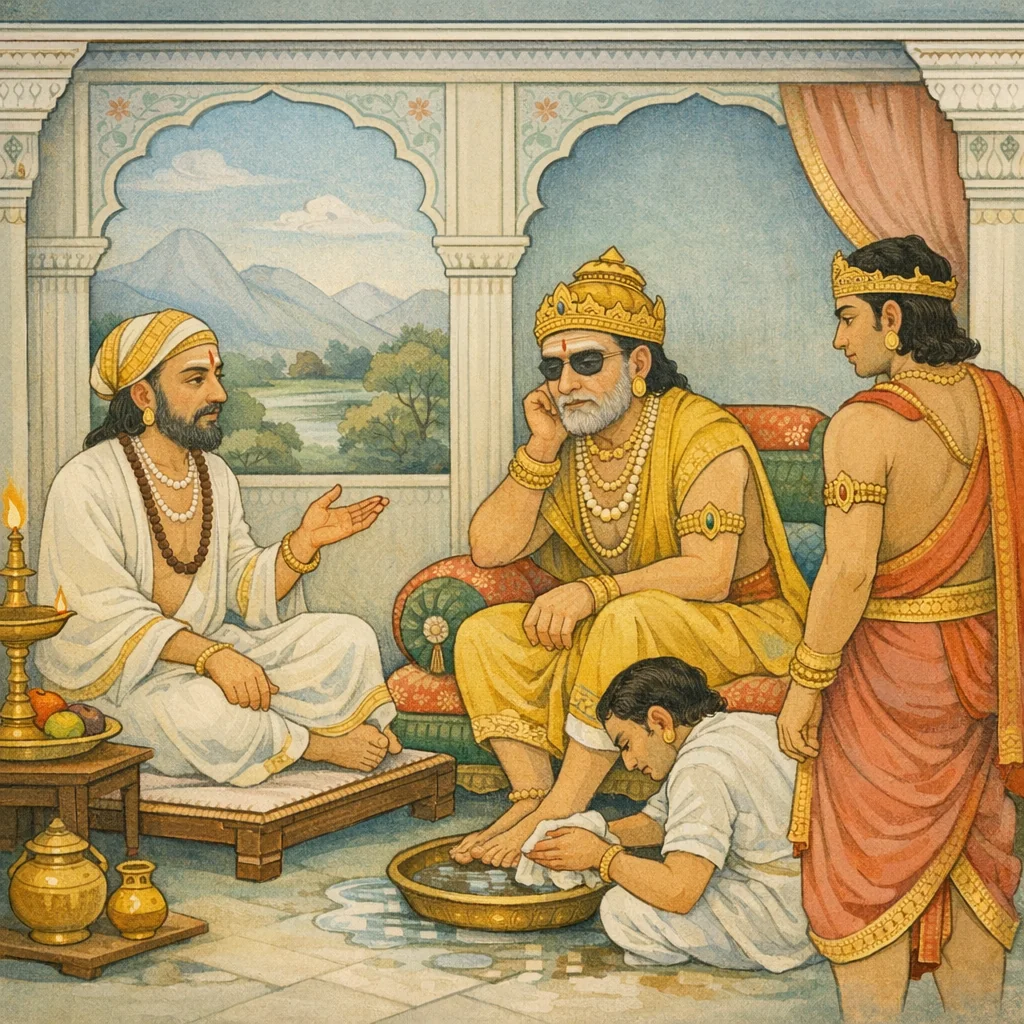
पीठं दत्त्वा साधवे$भ्यागताय आनीयाप: परिनिर्णिज्य पादौ | सुखं पृष्टवा प्रतिवेद्यात्मसंस्थां ततो दद्यादन्नमवेक्ष्य धीर:,धीर पुरुषको चाहिये, जब कोई साधु पुरुष अतिथिके रूपमें घरपर आवे, तब पहले आसन देकर एवं जल लाकर उसके चरण पखारे, फिर उसकी कुशल पूछकर अपनी स्थिति बतावे, तदनन्तर आवश्यकता समझकर अन्न भोजन करावे
Vidura teaches the proper conduct of hospitality: when a virtuous person arrives as a guest, a wise householder should first offer a seat, bring water and wash the guest’s feet, then inquire after the guest’s well-being and state one’s own condition. After that, discerning the guest’s need, one should provide food.
Verse 3
यस्योदकं मधुपर्क च गां च न मन्त्रवित् प्रतिगृह्नाति गेहे । लोभाद् भयादथ कार्पण्यतो वा तस्यानर्थ जीवितमाहुरार्या:,वेदवेत्ता ब्राह्मण जिसके घर दाताके लोभ, भय या कंजूसीके कारण जल, मधुपर्क और गौको नहीं स्वीकार करता, श्रेष्ठ पुरुषोंने उस गृहस्थका जीवन व्यर्थ बताया है
Vidura says: If a learned brāhmaṇa, well-versed in sacred counsel, does not accept in a house the customary offerings—water, the honey-mixture of welcome (madhuparka), and a cow—because of greed, fear, or miserly poverty, the noble and wise declare that householder’s life to be futile and without true purpose.
Verse 4
चिकित्सक: शल्यकर्तावकीर्णी स्तेन: क्रूरो मद्यपो भ्रूणहा च । सेनाजीवी श्रुतिविक्रायकश्न भृशं प्रियो5प्पतिथिनोंदकार्ह:,वैद्य, चीरफाड़ करनेवाला (जर्राह), ब्रह्मचर्यसे भ्रष्ट, चोर, क्रूर, शराबी, गर्भहत्यारा, सेनाजीवी और वेदविक्रेता--ये यद्यपि पैर धोनेके योग्य नहीं हैं, तथापि यदि अतिथि होकर आवें तो विशेष प्रिय यानी आदरके योग्य होते हैं
Vidura said: “A physician, a surgeon, one fallen from celibate discipline, a thief, a cruel man, a drunkard, a slayer of an embryo, a mercenary soldier, and a seller of the Veda—though such people are not fit even to have their feet washed, still, if they come as guests, they are to be treated with special regard; the guest is not to be denied the water of hospitality.”
Verse 5
अविक्रयं लवणं पक््वमन्नं दधि क्षीरं मधु तैलं घृतं च । तिला मांसं फलमूलानि शाकं रक्त वास: सर्वगन्धा गुडाश्न,नमक, पका हुआ अन्न, दही, दूध, मधु, तेल, घी, तिल, मांस, फल, मूल, साग, लाल कपड़ा, सब प्रकारकी गन्ध और गुड़--इतनी वस्तुएँ बेचने योग्य नहीं हैं
Vidura declares that certain necessities and sanctified household items are not fit to be treated as merchandise. Salt, cooked food, curd, milk, honey, oil, ghee, sesame, meat, fruits and roots, vegetables, red cloth, all kinds of fragrances, and jaggery—these, he says, should not be sold.
Verse 6
अरोषणो य: समलोष्टाश्मकाछचन: प्रहीणशोको गतसन्धिविग्रह: । निन्दाप्रशंसोपरत: प्रियाप्रिये त्यजन्नुदासीनवदेष भिक्षुक:,जो क्रोध न करनेवाला, लोष्ट", पत्थर और सुवर्ण-को एक-सा समझनेवाला, शोकहीन, सन्धि-विग्रहसे रहित, निन्दा-प्रशंसासे शून्य, प्रिय-अप्रियका त्याग करनेवाला तथा उदासीन है, वही भिक्षुक (संन्यासी) है
Vidura defines the true mendicant: one who is free from anger, who regards a clod of earth, a stone, and gold as equal, who has abandoned grief, who has gone beyond the calculations of alliance and conflict, who is unmoved by blame or praise, and who renounces attachment and aversion—living with the calm detachment of an indifferent witness. Such a person alone deserves the name ‘bhikṣu’ (renunciant).
Verse 7
नीवारमूलेड्गुदशाक वृत्ति: सुसंयतात्माग्निकार्येषु चोद्य: । वने वसन्नतिथिष्वप्रमत्तो धुरन्धर: पुण्यकृदेष तापस:,जो नीवार (जंगली चावल), कन्द-मूल, इंगुदीपाल और साग खाकर निर्वाह करता है, मनको वशमें रखता है, अग्निहोत्र करता है, वनमें रहकर भी अतिथिसेवामें सदा सावधान रहता है, वही पुण्यात्मा तपस्वी (वानप्रस्थी) श्रेष्ठ माना गया है
Vidura describes the ideal forest-dwelling ascetic (vānaprastha): one who sustains himself on wild rice, roots and tubers, the fruit of the iṅgudī tree, and simple greens; who keeps his mind disciplined and is diligent in sacred fire-rites; who, though living in the forest, remains ever attentive to the duties owed to guests. Such a bearer of responsibilities is truly a doer of merit and is regarded as an excellent tapasvin.
Verse 8
अपकृत्य बुद्धिमतो दूरस्थोडस्मीति नाश्वसेत् । दीर्घो बुद्धिमतो बाहू याभ्यां हिंसति हिंसित:,बुद्धिमान् पुरुषकी बुराई करके इस विश्वासपर निश्चिन्त न रहे कि मैं दूर हूँ। बुद्धिमानकी (बुद्धिरूप) बाँहें बड़ी लंबी होती हैं, सताया जानेपर वह उन्हीं बाँहोंसे बदला लेता है
Having wronged a wise man, do not rest easy in the belief, “I am far away.” Long are the arms of the wise: when harmed, he takes his revenge with those very arms.
Verse 9
नविश्वसेदविश्वस्ते विश्वस्ते नातिविश्वसेत् । विश्वासाद् भयमुत्पन्नं मूलान्यपि निकृन्तति,जो विश्वासका पात्र नहीं है, उसका तो विश्वास करे ही नहीं; किंतु जो विश्वासपात्र है, उसपर भी अधिक विश्वास न करे। विश्वाससे जो भय उत्पन्न होता है, वह मूलका भी उच्छेद कर डालता है
Vidura advises measured caution in trust: do not place confidence in one who is untrustworthy; and even with one deemed trustworthy, do not become overly credulous. For the danger born of misplaced trust can cut down even one’s very roots—ruining one’s foundations, security, and standing.
Verse 10
अर्नार्ष्गुप्तदारश्न॒ संविभागी प्रियंवद: । श्लक्ष्णो मधुरवाक् स्त्रीणां न चासां वशगो भवेत्,मनुष्यको चाहिये कि वह ईर्ष्यारहित, स्त्रियोंका रक्षक, सम्पत्तिका न्यायपूर्वक विभाग करनेवाला, प्रियवादी, स्वच्छ तथा स्त्रियोंक निकट मीठे वचन बोलनेवाला हो, परंतु उनके वशमें कभी न हो
Vidura says: A man should be free from jealousy, protect his wife and household, distribute wealth fairly, and speak in a pleasing manner. He should be refined and gentle in speech toward women, yet he must never become subject to their control. The teaching frames domestic conduct as a field of dharma: kindness and respect without surrendering one’s moral independence.
Verse 11
पूजनीया महाभागा: पुण्याश्च गृहदीप्तय: । स्त्रिय: श्रियो गृहस्योक्तास्तस्माद् रक्ष्या विशेषत:,स्त्रियाँ घरकी लक्ष्मी कही गयी हैं। ये अत्यन्त सौभाग्यशालिनी, आदरके योग्य, पवित्र तथा घरकी शोभा हैं; अतः इनकी विशेषरूपसे रक्षा करनी चाहिये
Vidura declares that women are to be honored: they are greatly fortunate, pure, and the very radiance of the household. Indeed, they are spoken of as the household’s prosperity itself; therefore, they must be protected with special care.
Verse 12
पितुरन्त:पुरं दद्यान्मातुर्दद्यान्महानसम् | गोषु चात्मसमं दद्यात् स्वयमेव कृषिं व्रजेत्
Vidura advises a disciplined, duty-bound division of household responsibilities: entrust the father with the inner apartments, the mother with the kitchen and domestic management, and in matters of cattle and wealth allot an equal share to one’s own dependents; then, without indulgence or idleness, personally take up agriculture. The ethical thrust is self-reliance, fair distribution, and orderly governance of the home as the foundation of righteous living.
Verse 13
भृत्यैर्वाणिज्यचारं च पुत्र: सेवेत च द्विजान् । अन्तःपुरकी रक्षाका कार्य पिताको सौंप दे, रसोईघरका प्रबन्ध माताके हाथमें दे दे, गौओंकी सेवामें अपने समान व्यक्तिको नियुक्त करे और कृषिका कार्य स्वयं ही करे। इसी प्रकार सेवकोंद्वारा वाणिज्य--व्यापार करे और पुत्रोंके द्वारा ब्राह्मणोंकी सेवा करे || १२ ६ || अद्भयोडन्नि््रह्यृत: क्षत्रमश्मनो लोहमुत्थितम्
Vidura advises a disciplined division of household and economic duties: entrust inner-palace security to the father, place the management of the kitchen in the mother’s hands, appoint a capable peer to tend the cows, and personally oversee agriculture. Trade and commerce should be conducted through trusted servants, while one’s sons should be directed to serve the Brahmins. The ethical thrust is orderly governance of the household—delegating appropriately, safeguarding resources, honoring elders, and sustaining dharma through support of learned Brahmins.
Verse 14
नित्यं सन्तः कुले जाता: पावकोपमतेजस:
Vidura observes that in this lineage the truly virtuous are born again and again—men whose brilliance is like fire—showing that noble conduct and moral strength are no accident, but a recurring inheritance meant to guide present choices.
Verse 15
क्षमावन्तो निराकारा: काष्ठेडग्निरिव शेरते । अच्छे कुलमें उत्पन्न, अग्निके समान तेजस्वी, क्षमाशील और विकारशून्य संत पुरुष सदा काष्ठमें अग्निकी भाँति शान्तभावसे स्थित रहते हैं ।। १४ ह ।। यस्य मन्त्र न जानन्ति बाह्ाश्चाभ्यन्तराश्ष ये
Vidura says: Those who are patient and free from display rest like fire hidden in wood. Though born in noble houses and radiant as flame, the saintly—enduring and inwardly undisturbed—abide quietly, their power contained and mastered rather than shown.
Verse 16
करिष्यन् न प्रभाषेत कृतान्येव तु दर्शयेत्
Vidura advises: One who intends to act should not merely speak of what he will do; let accomplished deeds themselves be the proof. The ethical thrust is restraint in speech and integrity in action—avoiding empty promises and showing resolve through results.
Verse 17
गिरिपृष्ठमुपारुह प्रासादं वा रहोगतः,अरण्ये नि:शलाके वा तत्र मन्त्रोडभिधीयते । पर्ववकी चोटी अथवा राजमहलपर चढ़कर एकान्त स्थानमें जाकर या जंगलमें तृण आदिसे अनावृत स्थानपर मन्त्रणा करनी चाहिये
Vidura advises that counsel should be held only in secure privacy—upon a mountain ridge, in a secluded upper chamber, or in a forest clearing with no cover—so deliberation is guarded from eavesdropping and intrigue. The ethical thrust is that wise rule depends on discretion: plans for the common good can be ruined, and harm can spread, when confidential counsel is exposed.
Verse 18
।। नासुद्गत् परमं मन्त्र भारताहति वेदितुम्
Vidura says: One who has not risen above base impulses is unfit to grasp the highest counsel; in the Bharata conflict, only a mind disciplined by self-control can truly understand the supreme guidance that turns one from ruin and toward dharma.
Verse 19
अपण्डितो वापि सुहृत् पण्डितो वाप्यनात्मवान् | भारत! जो मित्र न हो, मित्र होनेपर भी पण्डित न हो, पण्डित होनेपर भी जिसका मन वशमें न हो, वह अपनी गुप्त मन्त्रणा जाननेके योग्य नहीं है ।। १८ ह ।। नापरीक्ष्य महीपाल: कुर्यात् सचिवमात्मन:
Vidura warns Bharata (Dhṛtarāṣṭra) that a king must not entrust his secret counsel to just anyone: not to an unwise man, even if affectionate; not to one called a friend who is no true friend; not to one lacking learning, even if close; nor even to a learned man if he lacks self-mastery. Therefore a ruler should appoint a minister only after careful examination, for the safety of counsel is the safety of the kingdom.
Verse 20
अमात्ये हार्थलिप्सा च मन्त्ररक्षणमेव च । कृतानि सर्वकार्याणि यस्य पारिषदा विदु:
Vidura said: When a minister is free from greed for wealth and steadfast in guarding counsel, the king is understood by his advisers to have his affairs already accomplished. The lesson is that a ruler’s success rests on an incorruptible minister and disciplined protection of confidential policy.
Verse 21
धर्मे चार्थे च कामे च स राजा राजसत्तम: । गूढमन्त्रस्य नृपतेस्तस्य सिद्धिरसंशयम्
Vidura said: ‘That king—best among rulers—who keeps his counsel secret will, without doubt, attain success in dharma, in material prosperity, and in rightful enjoyment.’
Verse 22
राजा अच्छी तरह परीक्षा किये बिना किसीको अपना मन्त्री न बनावे; क्योंकि धनकी प्राप्ति और मन्त्रकी रक्षाका भार मन्त्रीपर ही रहता है। जिसके धर्म, अर्थ और कामविषयक सभी कार्योंको पूर्ण होनेके बाद ही सभासदगण जान पाते हैं, वही राजा समस्त राजाओंमें श्रेष्ठ है। अपने मन्त्रको गुप्त रखनेवाले उस राजाको निस्संदेह सिद्धि प्राप्त होती है ।। १९-- २१ || अप्रशस्तानि कार्याणि यो मोहादनुतिष्ठति । स तेषां विपरिभ्रंशाद् भ्रंश्यते जीवितादपि,जो मोहवश बुरे (शास्त्रनिषिद्ध) कर्म करता है, वह उन कार्योंका विपरीत परिणाम होनेसे अपने जीवनसे भी हाथ धो बैठता है
Vidura advises that a king should not appoint anyone as a minister without thorough testing, for the burdens of acquiring wealth and safeguarding state counsel rest chiefly upon the minister. The best of kings is one whose undertakings in dharma, prosperity, and pleasure are understood by the members of the court only after those aims have been fully accomplished—so well are his plans concealed. Such a ruler, who keeps his counsel secret, surely attains success. But one who, through delusion, engages in blameworthy and scripture-forbidden actions is ruined by their perverse outcomes and may even lose his life.
Verse 23
कर्मणां तु प्रशस्तानामनुष्ठानं सुखावहम् । तेषामेवाननुष्ठानं पश्चात्तापकरं मतम्,उत्तम कर्मोंका अनुष्ठान तो सुख देनेवाला होता है, किंतु उन्हींका अनुष्ठान न किया जाय तो वह पश्चात्तापका कारण माना गया है
Vidura says that the performance of commendable deeds brings well-being and peace. But failing to carry out those very duties is held to be a cause of later remorse—because one knowingly neglects what ought to be done.
Verse 24
अनधीत्य यथा वेदान् न विप्र: श्राद्धमर्हति । एवमश्रुतषाड्गुण्यो न मन्त्र श्रोतुमहीति,जैसे वेदोंको पढ़े बिना ब्राह्मण श्राद्धकर्म करवानेका अधिकारी नहीं होता, उसी प्रकार (सन्धि, विग्रह, यान, आसन, द्वैधीभाव और समाश्रय नामक) छ: गुणोंको जाने बिना कोई गुप्त मन्त्रणा सुननेका अधिकारी नहीं होता
Vidura said: “Just as a Brahmin who has not studied the Vedas is not entitled to officiate at the śrāddha rites, so too one who has not learned the six measures of statecraft is not entitled to hear confidential counsel. Secret deliberation should be entrusted only to the trained and disciplined, for unqualified listeners endanger both policy and righteousness.”
Verse 25
स्थानवृद्धिक्षयज्ञस्य षाड्गुण्यविदितात्मन: । अनवज्ञातशीलस्य स्वाधीना पृथिवी नूप,राजन! जो सन्धि, विग्रह आदि छ: गुणोंकी जानकारीके कारण प्रसिद्ध है, स्थिति, वृद्धि और हासको जानता है तथा जिसके स्वभावकी सब लोग प्रशंसा करते हैं, उसी राजाके अधीन पृथ्वी रहती है
O king, the earth remains under the sway of that ruler who is renowned for knowing the six measures—peace, war, and the rest—who understands stability, increase, and decline, and whose character is never held in contempt.
Verse 26
अमोघक्रो धहर्षस्य स्वयं कृत्यान्ववेक्षिण: । आत्मप्रत्ययकोशस्य वसुदैव वसुन्धरा,जिसके क्रोध और हर्ष व्यर्थ नहीं जाते, जो आवश्यक कार्योंकी स्वयं देखभाल करता है और खजानेकी भी स्वयं जानकारी रखता है, उसकी पृथ्वी पर्याप्त धन देनेवाली ही होती है
For one whose anger and joy are never wasted, who personally oversees what must be done, and who keeps direct knowledge and control of his treasury, the earth herself becomes a giver of wealth—yielding sufficient prosperity to such disciplined governance.
Verse 27
नाममात्रेण तुष्येत छत्रेण च महीपति: । भृत्येभ्यो विसृजेदर्थान् नैक: सर्वहरो भवेत्,भूपतिको चाहिये कि अपने “राजा” नामसे और राजोचित “छत्र' के धारणसे संतुष्ट रहे। सेवकोंको पर्याप्त धन दे, सब अकेला ही न हड़प ले
Vidura advises that a king should be content with the mere title of “king” and the royal emblem of sovereignty, the parasol, rather than craving to appropriate everything. He should distribute wealth to his servants and dependents, ensuring their maintenance and loyalty, and should not become a solitary devourer of all resources.
Verse 28
ब्राह्मणं ब्राह्मणो वेद भर्ता वेद स्त्रियं तथा । अमात्यं नृपतिर्वेद राजा राजानमेव च,ब्राह्मणको ब्राह्मण जानता है, स्त्रीको उसका पति जानता है, मन्त्रीको राजा जानता है और राजाको भी राजा ही जानता है
Vidura said: “A brāhmaṇa is truly understood by a brāhmaṇa; a woman is understood by her husband. A minister is understood by the king; and even a king is understood only by another king.”
Verse 29
न शत्रुर्वशमापतन्नो मोक्तव्यो वध्यतां गत: । न्यग्भूत्वा पर्युपासीत वध्यं हन्याद् बले सति । अहताद्धि भयं तस्माज्जायते नचिरादिव
Vidura says: An enemy who has fallen into one’s power and has become liable to punishment should not be released. One should first subdue him and keep him under watch; and when strength and opportunity are secure, one should strike down the one who deserves to be slain. For if he is left unharmed, fear from him soon arises again.
Verse 30
वशमें आये हुए वधके योग्य शत्रुको कभी छोड़ना नहीं चाहिये। यदि अपना बल अधिक न हो तो नम्र होकर उसके पास समय बिताना चाहिये और बल होनेपर उसे मार ही डालना चाहिये; क्योंकि यदि शत्रु मारा न गया तो उससे शीघ्र ही भय उपस्थित होता है ।। दैवतेषु प्रयत्नेन राजसु ब्राह्मणेषु च । नियन्तव्य: सदा क्रोधो वृद्धबालातुरेषु च,देवता, ब्राह्मण, राजा, वृद्ध, बालक और रोगीपर होनेवाले क्रोधको प्रयत्नपूर्वक सदा रोकना चाहिये
Vidura advises that an enemy who has come under one’s control and is fit to be slain should not be released. If one’s strength is insufficient, one should act with humility and bide time near him; but when strength is gained, one should strike him down—because an enemy left alive soon becomes a source of fear. At the same time, anger must always be restrained with deliberate effort toward the gods, kings, and Brahmins, and also toward the aged, children, and the sick.
Verse 31
निरर्थ कलहं प्राज्ञो वर्जयेन्मूढसेवितम् । कीर्ति च लभते लोके न चानर्थेन युज्यते
Vidura advises that a wise person should avoid pointless quarrels—especially those fostered and frequented by the foolish. By refusing such empty conflict, one gains a good name in the world and does not become entangled in harmful consequences.
Verse 32
मूर्खोंद्रारा सेवित निरर्थक कलहका बुद्धिमान् पुरुषको त्याग कर देना चाहिये। ऐसा करनेसे उसे लोकमें यश मिलता है और अनर्थका सामना नहीं करना पड़ता ।। प्रसादो निष्फलो यस्य क्रोधश्चापि निरर्थक: । नतं भर्तारमिच्छन्ति षण्ढं पतिमिव स्त्रिय:,जिसके प्रसन्न होनेका कोई फल नहीं तथा जिसका क्रोध भी व्यर्थ होता है, ऐसे राजाको प्रजा उसी भाँति नहीं चाहती, जैसे स्त्री नपुंसक पतिको
Vidura says: A ruler whose favour yields no real benefit, and whose anger is equally ineffectual, is not desired as a lord by his people—just as women do not wish for an impotent husband. The ethical point is that authority must be meaningful: reward should encourage virtue and service, and punishment should restrain wrongdoing; otherwise leadership becomes contemptible and socially destabilizing.
Verse 33
न बुद्धिर्धनलाभाय न जाड्यमसमृद्धये । लोकपर्याय वृत्तान्तं प्राज्ञो जानाति नेतर:,बुद्धिसे धन प्राप्त होता है और मूर्खता दरिद्रताका कारण है--ऐसा कोई नियम नहीं है। संसारचक्रके वृत्तान्तको केवल दिद्वान् पुरुष ही जानते हैं, दूसरेलोग नहीं
Vidura said: Intelligence does not invariably lead to the gaining of wealth, nor does dullness inevitably result in poverty. Only the truly wise understand the turning of the world’s cycles and the ways by which events unfold; others do not.
Verse 34
विद्याशीलवयोवृद्धान बुद्धिवृद्धांश्व भारत । धनाभिजातवृद्धांश्व नित्यं मूढोड5वमन्यते,भारत! मूर्ख मनुष्य विद्या, शील, अवस्था, बुद्धि, धन और कुलमें बड़े माननीय पुरुषोंका सदा अनादर किया करता है
Vidura said: “O Bhārata, a deluded man constantly shows contempt for those who are superior in learning, good conduct, and age, as well as for those who excel in wisdom, wealth, and noble birth. Such disregard for the truly venerable reveals his folly and moral blindness.”
Verse 35
अनार्यवृत्तमप्राज्ममसूयकमधार्मिकम् । अनर्था: क्षिप्रमायान्ति वाग्दुष्ट क्रोधनं तथा
Vidura warns that when one’s conduct becomes ignoble, one’s judgment foolish, one’s attitude envious, and one’s life opposed to dharma, calamities quickly rush in. Harsh, corrupted speech and anger likewise hasten ruin.
Verse 36
जिसका चरित्र निन्दनीय है, जो मूर्ख, गुणोंमें दोष देखनेवाला, अधार्मिक, बुरे वचन बोलनेवाला और क्रोधी है, उसके ऊपर शीघ्र ही अनर्थ (संकट) टूट पड़ते हैं ।। अविसंवादनं दानं समयस्याव्यतिक्रम: । आवर्तयन्ति भूतानि सम्यक्प्रणिहिता च वाक्,ठगी न करना, दान देना, प्रतिज्ञाका उल्लंघन न करना और अच्छी तरह कही हुई बात --ये सब सम्पूर्ण भूतोंको अपना बना लेते हैं
Vidura says: When a person’s conduct is blameworthy—when he is foolish, habitually finds faults even in virtues, is unrighteous, speaks harshly, and is quick to anger—calamities soon descend upon him. By contrast, freedom from deceit, generosity, not breaking one’s pledged word, and speech that is carefully and rightly framed—these win over all beings and draw them into one’s confidence.
Verse 37
अविसंवादको दक्ष: कृतज्ञों मतिमानृजु: । अपि संक्षीणकोशो5पि लभते परिवारणम्,किसीको भी धोखा न देनेवाला, चतुर, कृतज्ञ, बुद्धिमान् और कोमल स्वभाववाला राजा खजाना समाप्त हो जानेपर भी सहायकोंको पा जाता है अर्थात् उसे सहायक मिल जाते हैं
Vidura teaches that a king who never deceives others, is capable and efficient, grateful, intelligent, and straightforward in conduct will obtain loyal attendants and support even when his treasury has been exhausted. Integrity and wise character, he implies, attract allies more surely than wealth alone.
Verse 38
धृति: शमो दम: शौचं कारुण्यं वागनिष्ठरा । मित्राणां चानभिद्रोह: सप्तैता: समिध: श्रिय:,धैर्य, मनोनिग्रह, इन्द्रियसंयम, पवित्रता, दया, कोमल वाणी और मित्रसे द्रोह न करना --ये सात बातें लक्ष्मीको बढ़ानेवाली हैं इति श्रीमहाभारते उद्योगपर्वणि प्रजागरपर्वणि विदुरवाक्ये अष्टात्रिंशो 5 ध्याय: ।। ३८ || इस प्रकार श्रीमह्ाभारत उद्योगपर्वके अन्तर्गत प्रजागरपर्वमें विदुरवाक्यविषयक अड़तीसवाँ अध्याय पूरा हुआ
Vidura said: “Steadfastness, inner calm, self-restraint, purity, compassion, gentle (non-harsh) speech, and the refusal to betray or injure one’s friends—these seven are the kindling-sticks that feed and increase Śrī (prosperity, well-being, auspicious fortune).”
Verse 39
असंविभागी दुष्टात्मा कृतघ्नो निरपत्रप: । तादृड्नराधिपो लोके वर्जनीयो नराधिप,राजन्! जो अपने अश्रितोंमें धनका ठीक-ठीक बँटवारा नहीं करता तथा जो दुष्ट स्वभाववाला, कृतघ्न और निर्लज्ज है, ऐसा राजा इस लोकमें त्याग देनेयोग्य है
Vidura declares that a ruler who does not distribute wealth fairly among those dependent on him—one who is wicked at heart, ungrateful for services received, and shameless in conduct—ought to be renounced by the people in this world. Such a king, though called a “lord of men,” forfeits the moral right to be followed.
Verse 40
न च रात्रौ सुखं शेते ससर्प इव वेश्मनि । यः कोपयति निर्दोषं सदोषो5भ्यन्तरं जनम्,जो स्वयं दोषी होकर भी निर्दोष आत्मीय व्यक्तिको कुपित करता है, वह सर्पयुक्त घरमें रहनेवाले मनुष्यकी भाँति रातमें सुखसे नहीं सो सकता
Vidura says: A person who is himself at fault, yet provokes an innocent member of his own household, cannot sleep peacefully at night—like one trying to rest in a house where a snake is present. The inner sting of wrongdoing and the danger created by unjust anger destroy repose.
Verse 41
येषु दुष्टेषु दोष: स्याद् योगक्षेमस्थ भारत । सदा प्रसादनं तेषां देवतानामिवाचरेत्,भारत! जिनके ऊपर दोषारोपण करनेसे योगक्षेममें बाधा आती हो, उन लोगोंको देवताकी भाँति सदा प्रसन्न रखना चाहिये
Vidura advises: Even when dealing with people of bad conduct, if finding fault with them would obstruct one’s security and well-being, one should instead keep them continually appeased—treating them, as it were, like deities. The ethical thrust is pragmatic restraint: avoid needless blame that endangers stability, and preserve peace through measured conciliation.
Verse 42
येअर्था: स्त्रीषु समायुक्ता: प्रमत्तपतितेषु च । ये चानार्ये समासक्ता: सर्वे ते संशयं गता:,जो धन आदि पदार्थ स्त्री, प्रमादी, पतित और नीच पुरुषोंके हाथमें सौंप दिये जाते हैं, वे संशयमें पड़ जाते हैं
Vidura says: Wealth and resources entrusted to women, to the careless and fallen, or those attached to ignoble men—all such assets inevitably fall into uncertainty and risk. The ethical point is that prosperity requires prudent stewardship; placing valuables under unfit guardianship leads to instability and loss.
Verse 43
यत्र स्त्री यत्र कितवो बालो यत्रानुशासिता । मज्जन्ति तेडवशा राजन् नद्यामश्मप्लवा इव,राजन! जहाँका शासन स्त्री, जुआरी और बालकके हाथमें होता है, वहाँके लोग नदीमें पत्थरकी नावपर बैठनेवालोंकी भाँति विवश होकर विपत्तिके समुद्रमें डूब जाते हैं
Vidura warns the king that a realm in which authority is effectively placed in the hands of a woman, a gambler, or a child is doomed to helpless ruin: its people, lacking steady governance and discernment, sink into calamity like those who try to cross a river seated on a boat made of stone.
Verse 44
प्रयोजनेषु ये सक्ता न विशेषेषु भारत । तानहं पण्डितान् मन्ये विशेषा हि प्रसज्धिन:,भारत! जो लोग जितना आवश्यक है, उतने ही काममें लगे रहते हैं, अधिकमें हाथ नहीं डालते, उन्हें मैं पण्डित मानता हूँ; क्योंकि अधिकमें हाथ डालना संघर्षका कारण होता है
Vidura says: “O Bhārata, I deem truly wise those who apply themselves only to what is necessary and do not meddle in excess. For excess—going beyond what the situation requires—inevitably becomes a cause of entanglement and conflict.”
Verse 45
य॑ प्रशंसन्ति कितवा यं॑ प्रशंसन्ति चारणा: । य॑ प्रशंसन्ति बन्धक्यो न स जीवति मानव:,(केवल) जुआरी जिसकी प्रशंसा करते हैं, नर्तक जिसकी प्रशंसाका गान करते हैं और वेश्याएँ जिसकी बड़ाई किया करती हैं, वह मनुष्य जीता ही मुर्देके समान है
Vidura says: “A man whom gamblers applaud, whom professional bards and entertainers praise, and whom courtesans extol is not truly living; though he breathes, he lives like one already dead—because his life is governed by vice and empty approval rather than dharma and self-restraint.”
Verse 46
हित्वा तान् परमेष्वासान् पाण्डवानमितौजस: । आहितं भारतैश्वर्य त्वया दुर्योधने महत्,भारत! आपने उन महान् धनुर्धर और अत्यन्त तेजस्वी पाण्डवोंको छोड़कर यह महान् ऐश्वर्यका भार दुर्योधनके ऊपर रख दिया है
Vidura says: “Abandoning those Pandavas—supreme archers of immeasurable prowess—you have placed the great burden of Bharata sovereignty upon Duryodhana, O Bhārata. By setting aside the truly capable and righteous claimants, you have shifted the weight of kingship onto one whose choices endanger the realm’s moral order.”
Verse 47
त॑ द्रक्ष्यसि परिशभ्रष्टं तस्मात् त्वमचिरादिव । ऐश्वर्यमदसम्मूढं बलिं लोकत्रयादिव,इसलिये आप शीघ्र ही उस ऐश्वर्यमदसे मूढ दुर्योधनको त्रिभुवनके साम्राज्यसे गिरे हुए बलिकी भाँति इस राज्यसे भ्रष्ट होते देखियेगा
Vidura declares that before long the listener will witness Duryodhana—bewildered by the intoxication of power—fall from his kingdom, just as Bali was cast down from sovereignty over the three worlds. The warning frames pride in dominion as a moral blindness that inevitably ends in downfall, and it urges timely restraint and adherence to dharma.
Verse 136
तेषां सर्वत्रगं तेज: स्वासु योनिषु शाम्यति । जलसे अनिनि, ब्राह्मणसे क्षत्रिय और पत्थरसे लोहा पैदा हुआ है। इनका तेज सर्वत्र व्याप्त होनेपर भी अपने उत्पत्तिस्थानमें शान्त हो जाता है
Vidura explains that certain powers, though capable of pervading everywhere, become quiet when they return to their own source. Fire is born from water, a kṣatriya from a brāhmaṇa, and iron from stone; yet the brilliance of these, even when widespread, subsides in the very place from which it arose. The ethical point is that strength and authority are not absolute: they are conditioned by origin, context, and rightful place, and should therefore be exercised with restraint and humility.
Verse 156
स राजा सर्वतश्नक्षुश्रिरमैश्चवर्यम श्रुते । जिस राजाकी मन्त्रणाको उसके बहिरंग एवं अन्तरंग कोई भी मनुष्य नहीं जानते, सब ओर दृष्टि रखनेवाला वह राजा चिरकालतक एऐश्वर्यका उपभोग करता है
Vidura teaches that a king whose counsel and deliberations remain unknown even to those in his outer and inner circles—who guards his plans with disciplined secrecy while keeping vigilant watch in every direction—enjoys prosperity and sovereign power for a long time. The ethical point is that secrecy in statecraft, joined with constant watchfulness, protects the realm and sustains rightful kingship.
Verse 166
धर्मकामार्थकार्याणि तथा मन्त्रो न भिद्यते धर्म, काम और अर्थसम्बन्धी कार्योंको करनेसे पहले न बतावे, करके ही दिखावे। ऐसा करनेसे अपनी मन्त्रणा दूसरोंपर प्रकट नहीं होती
Vidura advises that undertakings connected with dharma (duty), kāma (desire), and artha (material aims) should not be announced beforehand. One should accomplish the work and let the result be seen; by acting in this way, one’s counsel and strategic deliberation are not exposed to others.
Frequently Asked Questions
How a ruler should act when knowledge of right policy exists but impulses—anger, pride, craving, and factional loyalty—push governance toward self-harm; the chapter treats ethical lapses as concrete threats to stability, reputation, and longevity.
Discernment and restraint are the highest forms of power: prajñā-bala integrates all other strengths, enabling measured speech, reliable alliances, and proportionate response—thereby preserving both dharma and pragmatic security.
No explicit phalaśruti is stated in this chapter’s presented text; its meta-function is instructional, positioning nīti as preventive medicine for personal and political decline within the pre-war narrative.