Adhyaya 181
Bhīṣma’s Retrospective of the Jāmadagnya Rāma Encounter (Divyāstra-Pratiyuddha and Twilight Cessation)
Upa-parva: Bhīṣma–Rāma Yuddha-smṛti (Retrospective Account of Bhīṣma’s Engagement with Jāmadagnya Rāma)
Bhīṣma narrates to a Kaurava interlocutor a prior encounter with Jāmadagnya Rāma. After the charioteer removes embedded shafts and the horses are refreshed, combat resumes at dawn. Rāma readies his chariot; Bhīṣma briefly dismounts, offers formal respect, and then re-enters battle. A sustained exchange of arrow volleys follows, with Rāma repeatedly launching projectiles that Bhīṣma severs midair. The engagement escalates into divyāstra use: Bhīṣma deploys the Vāyavya astra, countered by a Guhyaka astra; he deploys the Āgneyā astra, countered by the Vāruṇa astra. Rāma wounds Bhīṣma, prompting a tactical withdrawal and subsequent return to the field. Bhīṣma’s intensified barrage is neutralized; he then releases a single luminous shaft that knocks Rāma down, causing widespread alarm among attendants and ascetics who rush to revive him. Rāma rises and resumes, striking Bhīṣma and his horses; Bhīṣma answers with a rapid astra, producing atmospheric obscuration and heat, after which the arrows fall as ash. The narrative closes with the battle ending at twilight, and the teacher-adversary withdrawing—marking a regulated termination rather than annihilative conclusion.
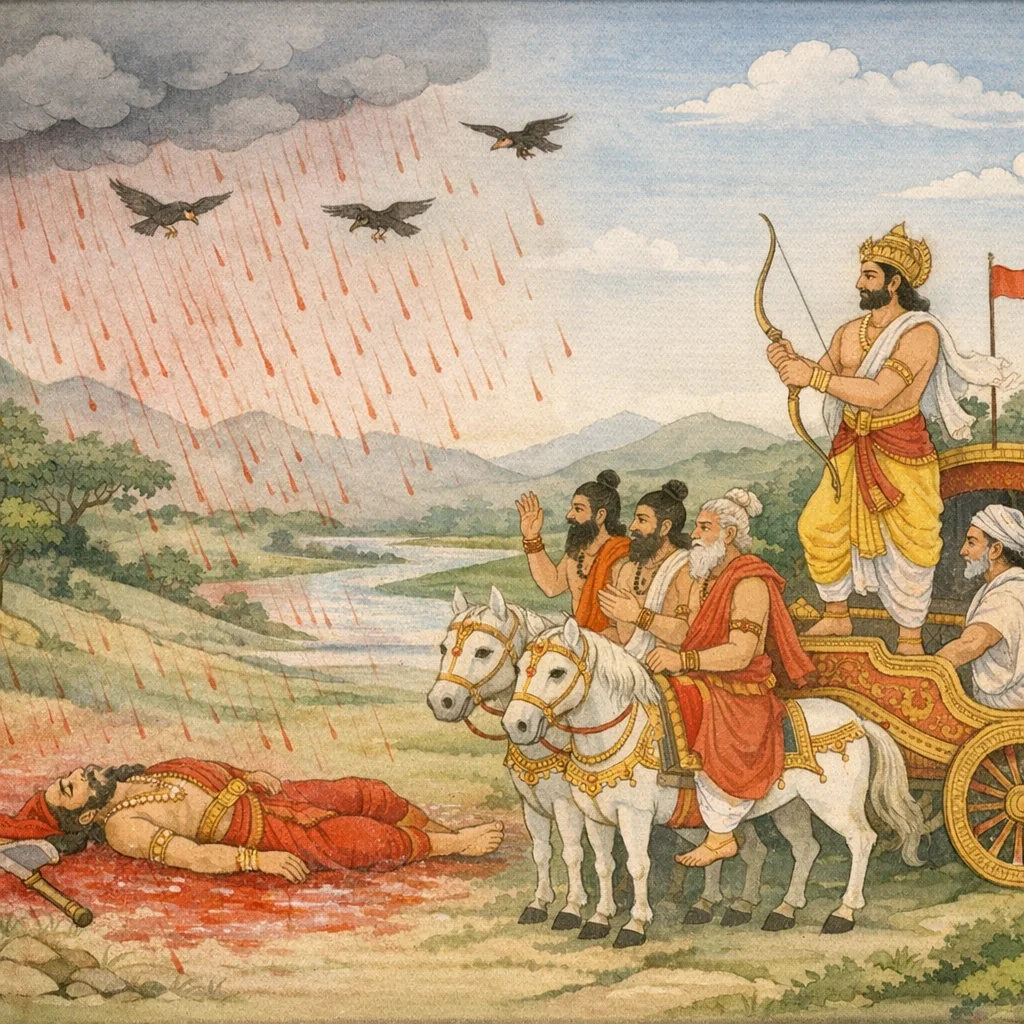
Chapter Arc: प्रभात होते ही सूर्य के निर्मल प्रकाश में भीष्म अपने व्रत और प्रतिज्ञा की कठोरता के साथ रणभूमि में खड़े हैं; सामने हैं भार्गव राम (परशुराम), जिनका क्रोध तपस्या-तेज की तरह दहक रहा है। → परशुराम अचल पर्वत पर बरसते मेघ की भाँति भीष्म पर शरजालों की वर्षा करते हैं। बाण-वृष्टि की मार से भीष्म का प्रिय सारथि आहत होकर रथोपस्थान से हटने लगता है, जिससे भीष्म के मन में क्षणिक विषाद उठता है—पर प्रतिज्ञा और क्षात्रधर्म उसे फिर स्थिर कर देते हैं। गंगा-जननी का स्मरण और पितृऋण का बोध भीष्म के भीतर एक साथ करुणा और कठोरता जगाते हैं। → दीर्घ, उग्र और असाधारण संग्राम के बीच एक क्षण ऐसा आता है जब परशुराम रण में गिर पड़ते हैं; उसी समय आकाश में रक्त-वर्षा जैसे अपशकुन, प्रचण्ड वायु, धरा का कम्पन, गिद्ध-काकों का मण्डल—समस्त उत्पात भयावह रूप से प्रकट होते हैं। ऋषि करुणा से भर उठते हैं, और क्रोधाविष्ट भार्गव कालानल-तुल्य शर उठाने को उद्यत होते हैं—मानो तपोबल स्वयं विनाश का अस्त्र बन जाए। → ऋषियों के हस्तक्षेप और धर्म-संयम के दबाव से वह प्रलय-शर अंततः रोका/शांत किया जाता है; संध्या के समय-समय पर युद्ध का आवेग उतरता-बढ़ता रहता है, और यह संघर्ष कई दिनों तक खिंचता है—पर निर्णायक वध या पूर्ण पराजय के बिना। → बीस दिनों और आगे भी कुछ दिनों तक चलने वाले इस द्वंद्व का परिणाम तत्काल निर्णीत नहीं होता; प्रश्न शेष रहता है—क्या तपोबल का क्रोध प्रतिज्ञा-बल को तोड़ेगा, या भीष्म का व्रत भार्गव-तेज के सामने अडिग रहेगा?
Shlokas
Verse 1
अपन का बा | अत-#--#क+ द्वयशीर्त्याधेकशततमो< ध्याय: भीष्म और परशुरामका युद्ध भीष्म उवाच ततः प्रभाते राजेन्द्र सूर्ये विमलतां गते । भार्गवस्य मया सार्ध पुनर्युद्धमवर्तत,भीष्मजी कहते हैं--राजेन्द्र! तदनन्तर प्रातः:काल जब सूर्यदेव उदित होकर प्रकाशमें आ गये, उस समय मेरे साथ परशुरामजीका युद्ध पुनः प्रारम्भ हुआ
Bhishma said: “O king, then at daybreak—when the sun had risen and the light had become clear—the battle between the Bhargava (Parashurama) and me began again.”
Verse 2
ततोअश्रान्ते रथे तिष्ठन् राम: प्रहरतां वर: । ववर्ष शरजालानि मयि मेघ इवाचले,तत्पश्चात् योद्धाओंमें श्रेष्ठ परशुरामजी स्थिर रथपर खड़े हो जैसे मेघ पर्वतपर जलकी बौछार करता है, उसी प्रकार मेरे ऊपर बाणसमूहोंकी वर्षा करने लगे
Then Rāma (Paraśurāma), the foremost among warriors, standing upon his unwearied chariot, showered volleys of arrows upon me—like a cloud pouring rain upon a mountain.
Verse 3
ततः सूतो मम सुहृच्छरवर्षेण ताडित: । अपयातो रथोपस्थान्मनो मम विषादयन्,उस समय मेरा प्रिय सुहद् सारथि बाणवर्षासे पीड़ित हो मेरे मनको विषादमें डालता हुआ रथकी बैठकसे नीचे गिर गया
Then my charioteer—my dear well-wisher—struck and overwhelmed by a shower of arrows, fell away from the chariot-seat, casting my mind into grief.
Verse 4
ततः सूतो ममात्यर्थ कश्मलं प्राविशन्महत् । पृथिव्यां च शराघातान्निपपात मुमोह च
Bhishma said: “Then my charioteer was seized by an overwhelming anguish. Struck by the impact of arrows, he fell to the ground and lost consciousness.”
Verse 5
मेरे सारथिको अत्यन्त मोह छा गया था। वह बाणोंके आघातसे पृथ्वीपर गिरा और अचेत हो गया ।। ततः सूतो$जहात् प्राणान् रामबाणप्रपीडित: । मुहूर्तादिव राजेन्द्र मां च भीराविशत् तदा,राजेन्द्र! परशुरामजीके बाणोंसे अत्यन्त पीड़ित होनेके कारण दो ही घड़ीमें सूतने प्राण त्याग दिये। उस समय मेरे मनमें बड़ा भय समा गया
Bhishma said: “Then my charioteer, grievously tormented by the arrows of Rama (Parashurama), gave up his life. And, O king, in that very moment—almost in an instant—fear entered my heart as well.”
Verse 6
ततः सूते हते तस्मिन् क्षिपतस्तस्य मे शरान् | प्रमत्तमनसो राम: प्राहिणोन्मृत्युसम्मितम्,उस सारथिके मारे जानेपर मैं असावधान मनसे परशुरामजीके बाणोंको काट रहा था! इतनेहीमें परशुरामजीने मुझपर मृत्युके समान भयंकर बाण छोड़ा
Bhīṣma said: “Then, when that charioteer had been slain, as he kept hurling arrows at me, I—my mind momentarily unguarded—was cutting down Paraśurāma’s shafts. Just then Rāma (Paraśurāma) loosed at me an arrow as dreadful as death itself.”
Verse 7
ततः सूतव्यसनिन विप्लुतं मां स भार्गव: । शरेणाभ्यहनद् गाढं विकृष्य बलवद्धनु:,उस समय मैं सारथिकी मृत्युके कारण व्याकुल था तो भी भृगुनन्दन परशुरामने अपने सुदृढ़ धनुषको जोर-जोरसे खींचकर मुझपर बाणसे गहरा आघात किया
Then, while I was shaken and distressed by the calamity that had befallen my charioteer, that Bhārgava—Paraśurāma—drew his mighty bow to its full stretch and struck me hard with an arrow.
Verse 8
स मे भुजान्तरे राजन् निपत्य रुधिराशन: । मयैव सह राजेन्द्र जगाम वसुधातलम्,राजेन्द्र! वह रक्त पीनेवाला बाण मेरी दोनों भुजाओंके बीच (वक्ष:स्थलमें) चोट पहुँचाकर मुझे साथ लिये-दिये पृथ्वीपर जा गिरा
Bhishma said: “O King, that blood-drinking arrow struck me between my arms, and, as if taking me along with it, fell down to the surface of the earth.”
Verse 9
मत्वा तु निहतं रामस्ततो मां भरतर्षभ । मेघवद् विननादोच्चैर्जहषे च पुनः पुन:,भरतश्रेष्ठ] उस समय मुझे मारा गया जानकर परशुरामजी मेघके समान गम्भीर स्वरसे गर्जना करने लगे। उनके शरीरमें बार-बार हर्षजनित रोमांच होने लगा
Bhishma said: “But when Rama (Parashurama) thought that I had been slain, O bull among the Bharatas, he roared aloud with a deep, thundercloud-like sound, and again and again he broke into exultant laughter.”
Verse 10
तथा तु पतिते राजन् मयि रामो मुदा युतः । उदक्रोशन्महानादं सह तैरनुयायिभि:,राजन! इस प्रकार मेरे धराशायी होनेपर परशुरामजीको बड़ी प्रसन्नता हुई। उन्होंने अपने अनुयायियोंके साथ महान् कोलाहल मचाया
Bhīṣma said: “But then, O King, when I had fallen, Rāma (Paraśurāma), filled with delight, raised a great roar, and with his followers made a loud outcry.”
Verse 11
मम तत्राभवन् ये तु कुरवः पार्श्चतः स्थिता: । आगता अपि युद्ध तज्जनास्तत्र दिदृक्षव: । आर्ति परमिकां जम्मुस्ते तदा पतिते मयि,वहाँ मेरे पार्श्वभागमें जो कुरुवंशी क्षत्रियगण खड़े थे तथा जो लोग वहाँ युद्ध देखनेकी इच्छासे आये थे, उन सबको मेरे गिर जानेपर बड़ा दुःख हुआ
“There, the Kuru kṣatriyas who stood behind me, and the people who had come wishing to see the battle—all of them were struck with the deepest sorrow when I fell.”
Verse 12
ततो<पश्यं पतितो राजसिंहं द्विजानष्टौ सूर्यहुताशना भान् । ते मां समन्तात् परिवार्य तस्थु: स्वबाहुभि: परिधार्याजिमध्ये,राजसिंह! वहाँ गिरते समय मैंने देखा कि सूर्य और अग्निके समान तेजस्वी आठ ब्राह्मण आये और संग्रामभूमिमें मुझे सब ओरसे घेरकर अपनी भुजाओंपर ही मेरे शरीरको धारण करके खड़े हो गये
“Then, as I was falling, O lion among kings, I saw eight brahmins radiant like the Sun and like Fire. They stood around me on every side in the midst of the battlefield, and with their own arms they bore up my body.”
Verse 13
रक्ष्यमाणश्ष तैविंप्रै्नाह भूमिमुपास्पृशम् । अन्तरिक्षे धृतो हास्मि तैर्विप्रैबन्धवैरिव,उन ब्राह्मणोंसे सुरक्षित होनेके कारण मुझे धरतीका स्पर्श नहीं करना पड़ा। मेरे सगे भाई-बन्धुओंकी भाँति उन ब्राह्मणोंने मुझे आकाशमें ही रोक लिया था
“Being protected by those brahmins, I did not have to touch the earth. Those brahmins held me aloft in the sky, as if they were my own kinsmen.”
Verse 14
श्वसन्निवान्तरिक्षे च जलबिन्दुभिरुक्षित: । ततस्ते ब्राह्मणा राजन्नब्रुवन् परिगृह माम्,राजन! आकाशकमें मैं साँस लेता-सा ठहर गया था। उस समय ब्राह्मणोंने मुझपर जलकी बूँदें छिड़क दीं। फिर वे मुझे पकड़कर बोले
Bhīṣma said: “As though breathing, I remained suspended in mid-air. Then, O King, the brāhmaṇas sprinkled me with drops of water; and after that, taking hold of me, they spoke.”
Verse 15
मा भैरिति सम॑ सर्वे स्वस्ति ते5स्त्विति चासकृत् | ततस्तेषामहं वाग्भिस्तर्पित: सहसोत्थित: । मातरं सरितां श्रेष्ठामपश्यं रथमास्थिताम्,उन सबने एक साथ ही बार-बार कहा--'तुम्हारा कल्याण हो। तुम भयभीत न हो।' उनके वचनामृतोंसे तृप्त होकर मैं सहसा उठकर खड़ा हो गया और देखा, मेरे रथपर सारथिके स्थानमें सरिताओंमें श्रेष्ठ माता गंगा बैठी हुई हैं
All of them, in one voice, repeatedly said, “Do not be afraid; may welfare be yours.” Sated and heartened by their nectar-like words, I rose up at once, and then I saw the Mother—Gaṅgā, foremost among rivers—seated upon my chariot in the place of the charioteer.
Verse 16
हयाश्व मे संगृहीतास्तयासन् महानद्या संयति कौरवेन्द्र । पादौ जनन्या: प्रतिगृहा चाहं तथा पितृणां रथमभ्यरोहम्,कौरवराज! उस युद्धमें महानदी माता गंगाने मेरे घोड़ोंकी बागडोर पकड़ रखी थी। तब मैं माताके चरणोंका स्पर्श करके और पितरोंके उद्देश्यसे भी मस्तक नवाकर उस रथपर जा बैठा
Bhīṣma said: O lord of the Kurus, in that battle the great river—my mother Gaṅgā—held the reins of my horses. Having first touched my mother’s feet in reverence, and bowing my head as an offering to the Pitṛs (my forefathers), I then mounted the chariot.
Verse 17
ररक्ष सा मां सरथं हयांशक्षोपस्कराणि च । तामहं प्राञ्जलि भूत्वा पुनरेव व्यसर्जयम्,माताने मेरे रथ, घोड़ों तथा अन्यान्य उपकरणोंकी रक्षा की। तब मैंने हाथ जोड़कर पुनः माताको विदा कर दिया
She protected me together with my chariot, my horses, and the other equipment. Then, with folded hands in reverence, I respectfully dismissed that Mother again.
Verse 18
ततोऊहं स्वयमुद्यम्य हयांस्तान् वातरंहस: । अयुध्यं जामदग्न्येन निवृत्तेडहनि भारत,भारत! तदनन्तर स्वयं ही उन वायुके समान वेगशाली घोड़ोंको काबूमें करके मैं जमदग्निनन्दन परशुरामजीके साथ युद्ध करने लगा। उस समय दिन प्रायः समाप्त हो चला था
Then, O Bhārata, I myself took firm control of those horses swift as the wind and engaged in battle with Jāmadagnya Paraśurāma. By then the day was nearly spent.
Verse 19
ततो<हं भरतश्रेष्ठ वेगवन्तं महाबलम् । अमुज्चं समरे बाणं रामाय हृदयच्छिदम्,भरतश्रेष्ठ] उस समरभूमिमें मैंने परशुरामजीकी ओर एक प्रबल एवं वेगवान् बाण चलाया, जो हृदयको विदीर्ण कर देनेवाला था
Then, O best of the Bharatas, on that battlefield I released against Rāma a swift and mighty arrow—one meant to pierce and split the heart.
Verse 20
ततो जगाम वसुधां मम बाणप्रपीडित: । जानुभ्यां धनुरुत्सृूज्य रामो मोहवशं गत:,मेरे उस बाणसे अत्यन्त पीड़ित हो परशुरामजीने मूच्छाके वशीभूत होकर धनुष छोड़ धरतीपर घुटने टेक दिये
Bhīṣma said: “Then Rāma (Paraśurāma), grievously tormented by my arrow, sank down to the earth; casting aside his bow, he fell under the sway of delusion and dropped to his knees.”
Verse 21
अनेक सहखस््र ब्राह्मणोंको बहुत दान करनेवाले परशुरामजीके धराशायी होनेपर अधिकाधिक रक्तकी वर्षा करते हुए बादलोंने आकाशको ढक लिया
Bhīṣma said: When Paraśurāma—renowned for lavish gifts to thousands of brāhmaṇas—was laid low upon the ground, the clouds covered the sky, pouring down an ever-increasing rain of blood.
Verse 22
उल्काश्न शतशः पेतु: सनिर्घाता: सकम्पना: । अर्क च सहसा दीप्तं स्वर्भानुरभिसंवृणोत्,बिजलीकी गड़गड़ाहटके समान सैकड़ों उल्कापात होने लगे। भूकम्प आ गया। अपनी किरणोंसे उद्भासित होनेवाले सूर्यदेवको राहुने सब ओरसे सहसा घेर लिया
Bhīṣma said: Hundreds of meteors began to fall, accompanied by thunderous crashes and tremors; an earthquake arose. And the radiant Sun, blazing with its own rays, was suddenly enveloped on all sides by Svarbhānu (Rāhu).
Verse 23
ततस्तस्मिन् निपतिते रामे भूरिसहस्रदे । आवव्रुर्जलदा व्योम क्षरन्तो रुधिरं बहु,ववुश्च वाता: परुषाश्वलिता च वसुन्धरा । गृध्रा बलाश्न कड़काश्च परिपेतुर्मुदा युता: वायु तीव्र वेगसे बहने लगी, धरती डोलने लगी, गीध, कौवे और कंक प्रसन्नतापूर्वक सब ओर उड़ने लगे
Then, when Rāma fell, the clouds covered the sky, pouring down much blood. Harsh winds began to blow and the earth itself trembled. Vultures, crows, and kites wheeled about on every side, as if rejoicing—ominous signs when a great warrior is struck down.
Verse 24
दीप्तायां दिशि गोमायुर्दारुणं मुहुरुन्नदत् । अनाहता दुन्दुभयो विनेदुर्भशनि:स्वना:,दिशाओंमें दाह-सा होने लगा, गीदड़ बार-बार भयंकर बोली बोलने लगा, दुन्दुभियाँ बिना बजाये ही जोर-जोरसे बजने लगीं
Bhīṣma said: “In one direction the sky seemed to blaze as if with fire. Again and again a jackal cried out with a dreadful sound, and war-drums, though not struck by any hand, resounded loudly like the crash of thunder.”
Verse 25
एतदौत्पातिकं सर्व घोरमासीद् भयंकरम् | विसंज्ञकल्पे धरणीं गते रामे महात्मनि,इस प्रकार महात्मा परशुरामके मूर्च्छिंत होकर पृथ्वीपर गिरते ही ये समस्त उत्पातसूचक अत्यन्त भयंकर अपशकुन होने लगे
Bhishma said: “All these ominous portents became dreadful and terrifying when the great-souled Rama (Parashurama), as if bereft of consciousness, fell upon the earth.”
Verse 26
ततो वै सहसोत्थाय रामो मामभ्यवर्तत । पुनर्युद्धाय कौरव्य विद्वल: क्रोधमूरच्च्छित:,कुरुनन्दन! इसी समय परशुरामजी सहसा उठकर क्रोधसे मूर्च्छित एवं विह्नल हो पुनः युद्धके लिये मेरे समीप आये
Bhīṣma said: “Then, springing up at once, Rāma (Paraśurāma) advanced toward me again for battle. O scion of the Kuru line, he was bewildered and as though fainted by rage, returning once more to renew the fight.”
Verse 27
आददानो महाबाहु: कार्मुकं तालसंनिभम् | ततो मय्याददानं तं राममेव न्यवारयन्
As that mighty-armed warrior was taking up his bow—huge and hard like a palmyra trunk—then, when he was about to direct it against me, Rāma himself restrained him.
Verse 28
महर्षय: कृपायुक्ता: क्रोधाविष्टोडथ भार्गव: । स मे5हरदमेयात्मा शरं कालानलोपमम्
Bhīṣma said: “The great seers, moved by compassion, intervened; but then the Bhārgava (Paraśurāma), seized by anger—his spirit immeasurable—took from me that arrow, an arrow like the fire of Time itself.”
Verse 29
परशुराम ताड़के समान विशाल धनुष लिये हुए थे। जब वे मेरे लिये बाण उठाने लगे, तब दयालु महर्षियोंने उन्हें रोक दिया। वह बाण कालाग्निके समान भयंकर था। अमेयस्वरूप भार्गवने कुपित होनेपर भी मुनियोंके कहनेसे उस बाणका उपसंहार कर लिया ।। ततो रविर्मन्दमरीचिमण्डलो जगामास्तं पांसुपुञ्जावगूढ: । निशाव्यगाहत् सुखशीतमारुता ततो युद्ध प्रत्यवहारयाव:,तदनन्तर मन्द किरणोंके पुंजसे प्रकाशित सूर्यदेव युद्धभूमिकी उड़ती हुई धूलोंसे आच्छादित हो अस्ताचलको चले गये। रात्रि आ गयी और सुखद शीतल वायु चलने लगी। उस समय हम दोनोंने युद्ध समाप्त कर दिया
Bhīṣma said: Paraśurāma bore a vast bow. When he raised an arrow against me, the compassionate great seers restrained him. That arrow was dreadful, like the fire of Kālāgni. The Bhārgava, immeasurable in spirit, though enraged, heeded the sages and withdrew that weapon. Then the sun, its softened rays and disc veiled by dust from the battlefield, sank to the western horizon. Night came, and a pleasant, cool breeze began to blow. At that time, the two of us suspended the combat.
Verse 30
एवं राजन्नवहारो बभूव ततः पुनर्विमले$भूत् सुघोरम् । कल्यं कल्यं विंशतिं वै दिनानि तथैव चान्यानि दिनानि त्रीणि,राजन! इस प्रकार प्रतिदिन संध्याके समय युद्ध बंद हो जाता और प्रातःकाल सूर्योदय होनेपर पुनः अत्यन्त भयंकर संग्राम छिड़ जाता था। इस प्रकार हम दोनोंके युद्ध करते- करते तेईस दिन बीत गये
Bhishma said: “Thus, O king, the fighting would cease each day; then again, at the clear break of dawn, the battle would become exceedingly dreadful. In this manner, day after day, for twenty days—and likewise for three more besides—our fighting continued.”
Verse 181
इस प्रकार श्रीमहाभारत उद्योगपर्वके अन्तर्गत अमग्बोपाख्यानपर्वमें एक सौ इकक््यासीवाँ अध्याय पूरा हुआ
Thus ends the one hundred and eighty-first chapter within the Udyoga Parva of the Śrī Mahābhārata, specifically in the sub-section known as the Amgamba-Upākhyāna Parva. This is a formal colophon marking the completion of the chapter rather than a spoken doctrinal verse.
Verse 182
इति श्रीमहा भारते उद्योगपर्वणि अम्बोपाख्यानपर्वणि रामभीष्मयुद्धे द्ववशीत्यधिकशततमो<ध्याय:
Thus ends, in the holy Mahābhārata, within the Udyoga Parva, the section known as the Ambā-upākhyāna, the episode of the battle between Rāma (Paraśurāma) and Bhīṣma—this being the one hundred and eighty-second chapter. The colophon marks the close of a narrative that frames Bhīṣma’s life through questions of duty, vows, and the moral weight of martial obligation.
Frequently Asked Questions
The tension lies between unwavering persistence in a sanctioned duel and the obligation to remain within regulated norms—showing how honor, restraint, and proportional escalation must be balanced in elite conflict.
Competence is depicted as disciplined matching of means to threat: divyāstras are not portrayed as indiscriminate power but as systems requiring correct invocation, counter-measures, and situational judgment.
No explicit phalaśruti is stated in this passage; the meta-commentary is structural—ending the engagement at twilight and noting withdrawal underscores normative limits and the epic’s interest in regulated conflict rather than total destruction.