Adhyaya 160
Adhyāya 160: Arjuna’s Envoy-Message—Critique of Borrowed Valor and Pre-dawn Mobilization
Upa-parva: Dūta-vākya and Senā-yoga (Envoy Message and Army Mobilization) — Episode Context for Adhyāya 160
Sañjaya narrates a tense exchange following Duryodhana’s stance in the Kuru assembly. Arjuna (Guḍākeśa) addresses an envoy (Kaitavya), articulating a normative distinction: a true person confronts others relying on one’s own strength, whereas one who challenges others while leaning on another’s power is ethically and socially diminished. Arjuna then directly warns Duryodhana that his confidence rests on Bhīṣma’s perceived restraint and protective presence; Arjuna declares his intention to strike Bhīṣma first in open view of all archers, forecasting engagement at sunrise and describing the expected demonstration of force. The discourse expands into a catalog of vices—pride, harshness, cruelty, disdain for dharma, and disrespect toward elders—asserting that their consequences will mature swiftly. The chapter ends with operational follow-through: the envoy returns and reports Arjuna’s words; Duryodhana addresses key allies (Duḥśāsana, Karṇa, Śakuni) and orders all forces and allied troops to be arrayed before dawn; Karṇa dispatches rapid couriers by chariot and fast mounts to ensure full readiness.
Chapter Arc: संजय धृतराष्ट्र से कहता है कि शकुनि-पुत्र उलूक पाण्डव-छावनी में पहुँचकर युधिष्ठिर से मिला और दुर्योधन का संदेश सुनाने लगा—दूत-वाक्य की मर्यादा के भीतर रहते हुए भी वह कटुता का शस्त्र लेकर आया। → उलूक ‘दूत-वाक्य’ का आवरण ओढ़कर पाण्डवों के पुराने अपमानों को कुरेदता है—राज्यहरण, वनवास, द्रौपदी का परिक्लेश, भीम की प्रतिज्ञा—और अर्जुन व भीम की वीरता पर व्यंग्य करता है, ताकि क्रोध भड़के और पाण्डवों का धैर्य टूटे। → उलूक का तीखा उपहास चरम पर पहुँचता है—जुए में ‘दास’ बनाये जाने की याद दिलाकर अर्जुन के गाण्डीव, भीम के बल और पाण्डवों की प्रतिष्ठा पर प्रहार करता है, और युद्ध में भीष्म के सामने ‘कथित’ शौर्य को झूठा ठहराने जैसा अपमानजनक तंज कसता है। → युधिष्ठिर दूत-धर्म का पालन करते हुए उलूक को निर्भय होकर बोलने देता है; पाण्डव-छावनी में संयम और प्रतिज्ञा की आग साथ-साथ जलती है—अपमान का उत्तर तत्काल हिंसा नहीं, बल्कि आगामी युद्ध में प्रतिज्ञा-पूर्ति से देने का संकल्प दृढ़ होता है। → उलूक का संदेश पाण्डवों के भीतर दबी ज्वाला को और प्रखर कर देता है—अब प्रश्न यह रह जाता है कि इस अपमान का प्रतिउत्तर रणभूमि में किस रूप में फूटेगा।
Shlokas
Verse 1
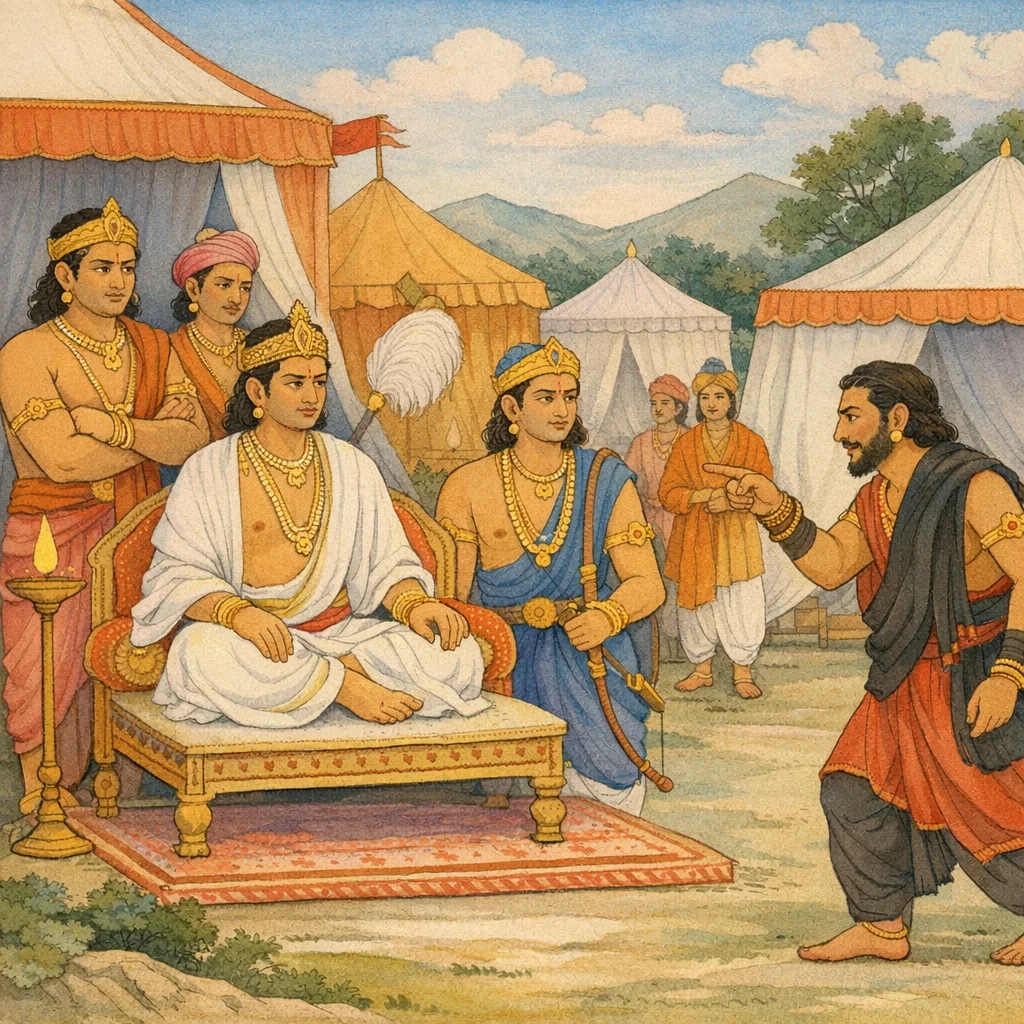
संजय कहते हैं--राजन्! तदनन्तर जुआ री शकुनिका पुत्र उलूक पाण्डवोंकी छावनीमें जाकर उनसे मिला और युधिष्ठिरसे इस प्रकार बोला--
Sanjaya said: “O King, thereafter Uluka, the son of Shakuni—one who had been instrumental in the gambling—went to the Pandavas’ camp and met them. He then addressed Yudhishthira in this manner, setting in motion a message meant to test resolve and provoke the moral tensions that precede war.”
Verse 2
अभिश्ञो दूतवाक्यानां यथोक्तं ब्रुवतो मम । दुर्योधनसमादेशं श्रुत्वा न क्रोद्धुमहसि,“राजन! आप दूतके वचनोंका मर्म जाननेवाले हैं। दुर्योधनने जो संदेश दिया है, उसे मैं ज्यों-का-त्यों दोहरा दूँगा। उसे सुनकर आपको मुझपर क्रोध नहीं करना चाहिये”
Sañjaya said: “O King, you are skilled in discerning the intent behind a messenger’s words. I shall repeat exactly as spoken the message sent by Duryodhana. Having heard it, you ought not to be angry with me.”
Verse 3
युधिष्ठिर उवाच उलूक न भयं ते<स्ति ब्रूहि त्वं विगतज्वर:ः । यन्मतं धार्तराष्ट्रस्य लुब्धस्यादीर्घदर्शिन:,युधिष्ठिरने कहा--उलूक! तुम्हें (तनिक भी) भय नहीं है। तुम निश्चिन्त होकर लोभी और अदूरदर्शी दुर्योधनका अभिप्राय सुनाओ
Yudhiṣṭhira said: “Ulūka, you have nothing to fear. Speak freely, with your anxiety set aside. Tell us what the son of Dhṛtarāṣṭra intends—he who is greedy and lacking far-sighted judgment.”
Verse 4
ततो द्युतिमतां मध्ये पाण्डवानां महात्मनाम् | सृञ्जयानां च मत्स्यानां कृष्णस्य च यशस्विन:,(संजय कहते हैं--) तब वहाँ बैठे हुए तेजस्वी महात्मा पाण्डवों, सूंजयों, मत्स्यों, यशस्वी श्रीकृष्ण तथा पुत्रोंसहित ट्रपद और विराटके समीप समस्त राजाओंके बीचमें उलूकने यह बात कही
Then, in that royal assembly—amid the radiant, high-souled Pāṇḍavas, the Sṛñjayas, the Matsyas, and the illustrious Kṛṣṇa—(as Sañjaya relates) Ulūka spoke these words in the presence of all the kings, near Drupada and Virāṭa together with their sons.
Verse 5
द्रुपदस्य सपुत्रस्य विराटस्य च संनिधौ । भूमिपानां च सर्वेषां मध्ये वाक्यं जगाद ह,(संजय कहते हैं--) तब वहाँ बैठे हुए तेजस्वी महात्मा पाण्डवों, सूंजयों, मत्स्यों, यशस्वी श्रीकृष्ण तथा पुत्रोंसहित ट्रपद और विराटके समीप समस्त राजाओंके बीचमें उलूकने यह बात कही
In the presence of Drupada with his sons, and of Virāṭa, amid all the kings, Ulūka spoke these words.
Verse 6
उलूक उवाच इदं त्वामब्रवीद् राजा धार्तराष्ट्री महामना: । शृण्वतां कुरुवीराणां तन्निबोध युधिष्ठिर,उलूक बोला--महाराज युधिष्ठिर! महामना धुृतराष्ट्रपुत्र दुर्योधनने कौरववीरोंके समक्ष आपको यह संदेश कहलाया है, इसे सुनिये
Ulūka said: “O Yudhiṣṭhira, the high-minded king Duryodhana—the son of Dhṛtarāṣṭra—has spoken this message to you in the presence of the Kuru heroes. Listen, and grasp it well.”
Verse 7
पराजितो$सि द्यूतेन कृष्णा चानायिता सभाम् | शकक््यो<मर्षो मनुष्येण कर्तु पुरुषमानिना,“तुम जुएमें हारे और तुम्हारी पत्नी द्रौपदीको सभामें लाया गया। इस दशामें अपनेको पुरुष माननेवाला प्रत्येक मनुष्य क्रोध कर सकता है
Ulūka said: “You were defeated in the dice-game, and Kṛṣṇā (Draupadī) was dragged into the royal assembly. In such a plight, any man who prides himself on being a ‘man’ can rise in indignation.”
Verse 8
द्वादशैव तु वर्षाणि वने धिष्ण्याद् विवासित: । संवत्सरं विराटस्य दास्यमास्थाय चोषित:,“बारह वर्षोतक तुम राज्यसे निर्वासित होकर वनमें रहे और एक वर्षतक तुम्हें राजा विराटका दास बनकर रहना पड़ा
Ulūka said: “For twelve full years you were driven from your rightful seat and made to live in the forest; and for one further year you had to remain in King Virāṭa’s realm, taking up the condition of servitude. Thus you endured exile and humiliation—yet now the question of justice and rightful recompense stands before both sides.”
Verse 9
अमर्ष राज्यहरणं वनवासं च पाण्डव । द्रौपद्याश्न परिक्लेशं संस्मरन् पुरुषो भव,'पाण्डुनन्दन! तुम अपने अमर्षको, राज्यके अपहरणको, वनवासको और द्रौपदीको दिये गये क्लेशको भी याद करके मर्द बनो
Ulūka taunted the Pāṇḍava, urging him to turn remembered wrongs into manly resolve: “Recall your smouldering indignation—how your kingdom was seized, how you were driven into exile, and how Draupadī was made to suffer. Remembering these, become a man.”
Verse 10
अशक्तेन च यच्छप्तं भीमसेनेन पाण्डव । दुःशासनस्य रुधिरं पीयतां यदि शक््यते,पाए्डुपुत्र! तुम्हारे भाई भीमसेनने उस समय कुछ करनेमें असमर्थ होनेके कारण जो दुर्ववन कहा था, उसे याद करके वे आवें और यदि शक्ति हो, तो दुःशासनका रक्त पीयें
Ulūka said: “O Pāṇḍava, remember the fierce vow Bhīmasena uttered when he was powerless to act. Let him come now—and if he truly has the strength—let him drink Duḥśāsana’s blood.”
Verse 11
लोहाभिसारो निर्वेत्त: कुरुक्षेत्रमकर्दमम् । सम: पन्था भृतास्तेश्वा: श्वो युध्यस्व सकेशव:,“लोहेके अस्त्र-शस्त्रोंकी बाहर निकालकर उन्हें तैयार करने आदिका कार्य पूरा हो गया है, कुरुक्षेत्रक्री कीचड़ सूख गयी है, मार्ग बराबर हो गया है और तुम्हारे अश्व भी खूब पले हुए हैं; अत: कल सबेरेसे ही श्रीकृष्णके साथ आकर युद्ध करो
Ulūka said: “The preparations of iron—arms and weapons—are complete; Kurukṣetra is free of mud; the road is level, and your horses are well-fed and strong. Therefore, come tomorrow at dawn and fight, with Keśava (Kṛṣṇa) at your side.”
Verse 12
असमागम्य भीष्मेण संयुगे कि विकत्थसे । आरुरुक्षुर्यथा मन्द: पर्वतं गन्धमादनम्
Ulūka said: “Without even having met Bhīṣma in battle, why do you boast? You are like a dull-witted man trying to climb Mount Gandhamādana.”
Verse 13
सूतपुत्र॑ सदुर्धर्ष शल्यं च बलिनां वरम्,'पार्थ! अत्यन्त दुर्जय वीर सूतपुत्र कर्ण, बलवानोंमें श्रेष्ठ शल्य तथा युद्धमें शचीपति इन्द्रके समान पराक्रमी महाबली द्रोणको युद्धमें जीते बिना तुम यहाँ राज्य कैसे लेना चाहते हो?
Ulūka said: “O Pārtha, how do you expect to seize the kingdom here without first defeating in battle the invincible son of a charioteer, Karṇa; Śalya, the foremost among the mighty; and the great Droṇa, whose prowess in war is like that of Indra, lord of Śacī?”
Verse 14
द्रोणं च बलिनां श्रेष्ठ शचीपतिसमं युधि । अजित्वा संयुगे पार्थ राज्यं कथमिहेच्छसि,'पार्थ! अत्यन्त दुर्जय वीर सूतपुत्र कर्ण, बलवानोंमें श्रेष्ठ शल्य तथा युद्धमें शचीपति इन्द्रके समान पराक्रमी महाबली द्रोणको युद्धमें जीते बिना तुम यहाँ राज्य कैसे लेना चाहते हो?
Ulūka said: “Droṇa, the foremost among the mighty, is in battle like Indra, lord of Śacī. O Pārtha, without defeating him in combat, how can you desire the kingdom here?”
Verse 15
ब्राह्मे धनुषि चाचार्य वेदयोरन्तगं द्वयो: । युधि धुर्यमविक्षो भ्यमनीकचरमच्युतम्,“आचार्य द्रोण ब्राह्मवेद और धरनुर्वेद दोनोंके पारंगत पण्डित हैं। वे युद्धका भार वहन करनेमें समर्थ, अक्षोभ्य, सेनाके मध्यमें विचरनेवाले तथा संग्रामभूमिसे कभी पीछे न हटनेवाले हैं। पार्थ! तुम उन्हीं महातेजस्वी द्रोणको जो जीतनेकी इच्छा करते हो, वह व्यर्थ दुःसाहस-मात्र है। वायुने कभी सुमेरु पर्वतको उखाड़ फेंका हो, यह कभी हमारे सुननेमें नहीं आया
Ulūka said: “Teacher Droṇa is a consummate master of both sacred learning (brahma-vidyā) and the science of the bow (dhanur-veda). In battle he is a true bearer of the war’s burden—unshakable, moving amid the ranks, and never retreating from the field. Therefore, Pārtha, to wish to conquer that radiant Droṇa is only futile rashness.”
Verse 16
द्रोणं महाद्युतिं पार्थ जेतुमिच्छसि तन्मृषा । न हि शुश्रुम वातेन मेरुमुन्मथितं गिरिम्,“आचार्य द्रोण ब्राह्मवेद और धरनुर्वेद दोनोंके पारंगत पण्डित हैं। वे युद्धका भार वहन करनेमें समर्थ, अक्षोभ्य, सेनाके मध्यमें विचरनेवाले तथा संग्रामभूमिसे कभी पीछे न हटनेवाले हैं। पार्थ! तुम उन्हीं महातेजस्वी द्रोणको जो जीतनेकी इच्छा करते हो, वह व्यर्थ दुःसाहस-मात्र है। वायुने कभी सुमेरु पर्वतको उखाड़ फेंका हो, यह कभी हमारे सुननेमें नहीं आया
Ulūka said: “Pārtha, your wish to conquer Droṇa, that man of blazing splendor, is a delusion. We have never heard of the wind uprooting Mount Meru; so too is the attempt to shake Droṇa from his steadfastness in battle.”
Verse 17
अनिलो वा वहेन्मेरुं द्यौर्वापि निपतेन्महीम् । युगं वा परिवर्तेत यद्येवं स््थादू यथा55तथ माम्,“तुम जैसा मुझसे कहते हो, वैसा ही यदि सम्भव हो जाय, तब तो वायु भी सुमेरु पर्वतको उठा ले, स्वर्गलोक पृथ्वीपर गिर पड़े अथवा युग ही बदल जाय
Ulūka said: “If what you say about me were to become true just as stated, then impossibilities would occur: the wind might carry off Mount Meru, heaven itself might fall upon the earth, or the very age (yuga) might be overturned.”
Verse 18
को हास्ति जीविताकाडुशक्षी प्राप्पेममरिमर्दनम् । गजो वाजी रथो वापि पुनः स्वस्ति गृहान् व्रजेत्,“जीवित रहनेकी इच्छावाला कौन ऐसा हाथीसवार, घुड़सवार अथवा रथी है, जो इन शत्रुमर्दन द्रोणसे भिड़कर कुशलपूर्वक अपने घरको लौट सके?
Ulūka said: “Who, still clinging to life, could confront this enemy-crushing warrior and then return home in safety—whether mounted on an elephant, a horse, or riding in a chariot?”
Verse 19
कथमाभ्यामभि ध्यात: संस्पृष्टो दारुणेन वा । रणे जीवन विमुच्येत पदा भूमिमुपस्पृशन्,'भीष्म और द्रोणने जिसे मारनेका निश्चय कर लिया हो अथवा जो युद्धमें इनके भयंकर अस्त्रोंसे छू गया हो, ऐसा कौन भूतलनिवासी जीवित बच सकता है?
Ulūka challenges the very possibility of survival in battle: if a warrior has been marked out for death by Bhīṣma and Droṇa, or has even been touched by their dreadful weapons, how could any mortal who still treads the earth escape alive?
Verse 20
कि दर्दुरः कूपशयो यथेमां न बुध्यसे राजचमूं समेताम् । दुराधर्षा देवचमूप्रकाशां गुप्तां नरेन्द्रैस्त्रिदशैरिव द्याम्ू,'जैसे देवता स्वर्गकी रक्षा करते हैं, उसी प्रकार पूर्व, पश्चिम, दक्षिण और उत्तर दिशाओंके नरेश तथा काम्बोज, शक, खश, शाल्व, मत्स्य, कुरु और मध्यप्रदेशके सैनिक एवं म्लेच्छ, पुलिन्द, द्रविड़, आन्ध्र और कांचीदेशीय योद्धा जिस सेनाकी रक्षा करते हैं, जो देवताओंकी सेनाके समान दुर्धर्ष एवं संगठित है, कौरवराजकी उस (समुद्रतुल्य) सेनाको क्या तुम कूपमण्डूककी भाँति अच्छी तरह समझ नहीं पाते?
Ulūka said: “Why, like a frog living at the bottom of a well, do you fail to comprehend this assembled royal host? It is hard to assail, radiant like the army of the gods, and guarded by kings—just as heaven is guarded by the Thirty-three gods.”
Verse 21
प्राच्यै: प्रतीच्यैरथ दाक्षिणात्यै- रुदीच्यकाम्बोजशकै: खशैश्न । शाल्वै: समत्स्यै: कुरुमुख्यदेश्यै- म्लेच्छै: पुलिन्दैद्रविडान्ध्रकाउच्यै:,'जैसे देवता स्वर्गकी रक्षा करते हैं, उसी प्रकार पूर्व, पश्चिम, दक्षिण और उत्तर दिशाओंके नरेश तथा काम्बोज, शक, खश, शाल्व, मत्स्य, कुरु और मध्यप्रदेशके सैनिक एवं म्लेच्छ, पुलिन्द, द्रविड़, आन्ध्र और कांचीदेशीय योद्धा जिस सेनाकी रक्षा करते हैं, जो देवताओंकी सेनाके समान दुर्धर्ष एवं संगठित है, कौरवराजकी उस (समुद्रतुल्य) सेनाको क्या तुम कूपमण्डूककी भाँति अच्छी तरह समझ नहीं पाते?
Ulūka said: “That Kaurava host—hard to assail, well-arrayed like the army of the gods—is guarded on every side by kings of the East, West, South, and North, and by the Kāmbojas, Śakas, Khaśas, Śālvas, Matsyas, the Kurus and the warriors of the central lands, along with Mlecchas, Pulindas, Draviḍas, Āndhras, and men of Kāñcī. Do you not grasp the strength of that ocean-like army, clinging to your view like a frog in a well?”
Verse 22
नानाजनीघं युधि सम्प्रवृद्धं गाड़ं यथा वेगमपारणीयम् | मां च स्थितं नागबलस्य मध्ये युयुत्ससे मन्द किमल्पबुद्धे,“अल्पबुद्धि मूढ़ युधिष्ठिर! जिसका वेग युद्धकालमें गंगाके वेगके समान बढ़ जाता है और जिसे पार करना असम्भव है, नाना प्रकारके जनसमुदायसे भरी हुई मेरी उस विशाल वाहिनीके साथ तथा गजसेनाके बीचमें खड़े हुए मुझ दुर्योधनके साथ भी तुम युद्धकी इच्छा कैसे रखते हो?”
Ulūka taunted, boasting: “In battle my army swells into a dense, many-peopled flood, its rush like the Gaṅgā’s current—impossible to cross. And with me standing amid the strength of the elephant-corps, how can you, dull and small-minded, still desire to fight?”
Verse 23
इत्येवमुक्त्वा राजानं धर्मपुत्र॑ युधिष्ठिरम् । अभ्यावृत्य पुनर्जिष्णुमुलूक: प्रत्यभाषत,धर्मपुत्र राजा युधिष्ठिसेे ऐसा कहकर उलूक अर्जुनकी ओर मुड़ा और तत्पश्चात् उनसे भी इस प्रकार कहने लगा--
Having spoken thus to King Yudhiṣṭhira, the son of Dharma, Ulūka turned back and then addressed Jiṣṇu (Arjuna) as well.
Verse 24
अकत्थमानो युध्यस्व कत्थसेड<र्जुन कि बहु । पर्यायात् सिद्धिरेतस्य नैतत् सिध्यति कत्थनात्,“अर्जुन! बातें न बनाकर युद्ध करो। बहुत आत्मप्रशंसा क्यों करते हो? विभिन्न प्रकारोंसे युद्ध करनेपर ही राज्यकी सिद्धि हो सकती है। झूठी आत्मप्रशंसा करनेसे इस कार्यमें सफलता नहीं मिल सकती
Ulūka said: “Arjuna, stop boasting and fight. Why indulge in so much self-praise? Success in this enterprise—winning the kingdom—comes only through the actual course of battle and its changing tactics, not through empty bragging. Mere self-glorification does not bring accomplishment.”
Verse 25
यदीदं कत्थनाललोके सिध्येत् कर्म धनंजय । सर्वे भवेयु: सिद्धार्था: कत्थने को हि दुर्गतः,“धनंजय! यदि जगतमें अपनी झूठी प्रशंसा करनेसे ही अभीष्ट कार्यकी सिद्धि हो जाती, तब तो सब लोग सिद्धकाम हो जाते; क्योंकि बातें बनानेमें कौन दरिद्र और दुर्बल होगा?
“O Dhanaṃjaya, if in this world one’s aims could be accomplished merely by boastful talk, then everyone would become successful. For who, indeed, is poor or powerless when it comes to making claims and spinning words?”
Verse 26
जानामि ते वासुदेव॑ सहायं॑ जानामि ते गाण्डिवं तालमात्रम् । जानाम्येतत् त्वादृशो नास्ति योद्धा जानानस्ते राज्यमेतद्धरामि,“मैं जानता हूँ कि तुम्हारे सहायक वसुदेवनन्दन श्रीकृष्ण हैं, मैं यह भी जानता हूँ कि तुम्हारे पास चार हाथ लंबा गाण्डीव धनुष है तथा मुझे यह भी मालूम है कि तुम्हारे-जैसा दूसरा कोई योद्धा नहीं है; यह सब जानकर भी मैं तुम्हारे इस राज्यका अपहरण करता हूँ
Ulūka said: “I know that Vāsudeva (Kṛṣṇa) stands as your ally. I know too of your Gāṇḍīva bow, as long as a tāla. I also know that there is no warrior equal to you. Yet, even knowing all this, I still seize this kingdom of yours.”
Verse 27
नतु पर्यायधर्मेण राज्यं प्राप्रोति मानुष: । मनसैवानुकूलानि विधाता कुरुते वशे,“कोई भी मनुष्य नाममात्रके धर्मद्वारा राज्य नहीं पाता; केवल विधाता ही मानसिक संकल्पमात्रसे सबको अपने अनुकूल और अधीन कर लेता है
Ulūka said: “A man does not obtain sovereignty merely by a nominal, conventional show of dharma. Rather, it is the Ordainer—Fate itself—who, by a mere act of will, bends events and people to what is favorable and brings them under control.”
Verse 28
त्रयोदश समा भुक्त राज्यं विलपतस्तव । भूयश्चैव प्रशासिष्ये निहत्य त्वां सबान्धवम्,“तुम रोते-बिलखते रह गये और मैंने तेरह वर्षोतक तुम्हारा राज्य भोगा। अब भाइयोंसहित तुम्हारा वध करके आगे भी मैं ही इस राज्यका शासन करूँगा
Ulūka taunted: “While you were left lamenting, I enjoyed your kingdom for thirteen years. And now, after killing you together with your kinsmen, I alone will continue to rule this realm.”
Verse 29
क्व तदा गाण्डिवं ते5भूद् यत् त्वं दास पणैर्जित: । क्व तदा भीमसेनस्य बलमासीच्च फाल्गुन,“दास अर्जुन! जब तुमलोग जूएके दाँवपर जीत लिये गये, उस समय तुम्हारा गाण्डीव धनुष कहाँ था? भीमसेनका बल भी उस समय कहाँ चला गया था?
Ulūka said: “Where then was your Gāṇḍīva bow, when you were won at the gambling-stake like a slave? And where, O Phālguna, was Bhīmasena’s strength at that time?”
Verse 30
सगदाद् भीमसेनादू वा पार्थाद् वापि सगाण्डिवात् | न वै मोक्षस्तदा वो5भूद् विना कृष्णामनिन्दिताम्,“गदाधारी भीमसेन अथवा गाण्डीवधारी अर्जुनसे भी उस समय सती साध्वी द्रौपदीका सहारा लिये बिना तुमलोगोंका दासभावसे उद्धार न हो सका
Ulūka said: “Whether it was Bhīmasena bearing the mace, or Pārtha (Arjuna) bearing the Gāṇḍīva, even then you found no deliverance from servitude without Kṛṣṇā (Draupadī), the blameless one.”
Verse 31
सा वो दास्ये समापन्नान् मोक्षयामास पार्षती । अमानुष्यं समापन्नान् दासकर्मण्यवस्थितान्,“तुम सब लोग अमनुष्योचित दीन दशाको प्राप्त हो दासभावमें स्थित थे। उस समय उस द्रुपदकुमारी कृष्णाने ही दासताके संकटमें पड़े हुए तुम सब लोगोंको छुड़ाया था
Ulūka said: “When you had fallen into slavery—brought to a wretched, unmanly plight and bound to a servant’s work—it was Pārṣatī (Draupadī), the daughter of Drupada, who freed you from that crisis of bondage.”
Verse 32
अवोचं यत् षण्ढतिलानहं वस्तथ्यमेव तत् | धृता हि वेणी पार्थेन विराटनगरे तदा,“मैंने जो उन दिनों तुमलोगोंको हिजड़ा या नपुंसक कहा था, वह ठीक ही निकला; क्योंकि अज्ञातवासके समय विराटनगरमें अर्जुनको अपने सिरपर स्त्रियोंकी भाँति वेणी धारण करनी पड़ी
Ulūka said: “What I once told you—calling you ‘eunuchs’—has indeed proved true. For at that time, in the city of Virāṭa during the period of concealment, Pārtha (Arjuna) had to wear his hair in a braid like a woman.”
Verse 33
सूदकर्मणि च श्रान्तं विराटस्य महानसे । भीमसेनेन कौन्तेय यच्च तन््मम पौरुषम्,“कुन्तीकुमार! तुम्हारे भाई भीमसेनको राजा विराटके रसोईघरमें रसोइयेके काममें ही संलग्न रहकर जो भारी श्रम उठाना पड़ा, वह सब मेरा ही पुरुषार्थ है
Ulūka said: “O son of Kuntī, the exhausting toil your brother Bhīmasena had to endure while employed as a cook in King Virāṭa’s great kitchen—that too is the fruit of my own prowess.”
Verse 34
एवमेतत् सदा दण्डं क्षत्रिया: क्षत्रिये दधु: । वेणीं कृत्वा षण्ढवेष: कन्यां नर्तितवानसि,“इसी प्रकार सदासे ही क्षत्रियोंने अपने विरोधी क्षत्रियको दण्ड दिया है। इसीलिये तुम्हें भी सिरपर वेणी रखाकर और हिजड़ोंका वेष बनाकर राजा विराटकी कन्याको नचानेका काम करना पड़ा
Ulūka said: “So it has ever been: kṣatriyas lay punishment upon rival kṣatriyas. Therefore you too, with your hair braided and clad in a eunuch’s guise, were made to dance attendance upon King Virāṭa’s daughter.”
Verse 35
न भयाद् वासुदेवस्य न चापि तव फाल्गुन । राज्यं प्रतिप्रदास्पामि युद्धयस्व सहकेशव:,'फाल्गुन! श्रीकृष्णके या तुम्हारे भयसे मैं राज्य नहीं लौटाऊँगा। तुम श्रीकृष्णके साथ आकर युद्ध करो
Ulūka said: “O Phālguna, I will not restore the kingdom—neither out of fear of Vāsudeva (Kṛṣṇa) nor of you. Come with Keśava and fight!”
Verse 36
न माया हीन्द्रजालं वा कुहका वापि भीषणा | आत्तशस्त्रस्य मे युद्धे वहन्ति प्रतिगर्जना:,“माया, इन्द्रजाल अथवा भयानक छलना संग्रामभूमिमें हथियार उठाये हुए मुझ दुर्योधनके क्रोध और सिंहनादको ही बढ़ाती हैं (मुझे भयभीत नहीं कर सकती हैं)
Ulūka said: “Neither sorcery nor Indra-like illusion, nor even terrifying deception can shake me. On the battlefield, with my weapon raised, such tricks only serve to carry and amplify my counter-roar—my wrath and lion-like challenge.”
Verse 37
वासुदेवसहस्रं वा फाल्गुनानां शतानि वा । आसाद्य माममाोधेषुं द्रविष्यन्ति दिशो दश,“हजारों श्रीकृष्ण और सैकड़ों अर्जुन भी अमोघ बाणोंवाले मुझ वीरके पास आकर दसों दिशाओंमें भाग जायँगे
Ulūka boasts that even if a thousand Vāsudevas or hundreds of Arjunas were to confront him, they would still flee in all ten directions when they came up against him, the warrior whose arrows never fail.
Verse 38
संयुगं गच्छ भीष्मेण भिन्धि वा शिरसा गिरिम् | तरेम॑ वा महागाध॑ बाहुभ्यां पुरुषोदधिम्,“तुम भीष्मके साथ युद्ध करो या सिरसे पहाड़ फोड़ो या सैनिकोंके अत्यन्त गहरे महासागरको दोनों बाँहोंसे तैरकर पार करो
Ulūka said: “Go and join battle with Bhīṣma; or else split a mountain with your head; or again, with your two arms, swim across the exceedingly deep ocean of warriors.”
Verse 39
शारद्वतमहामीनं विविंशतिमहोरगम् । बृहद्धलमहोद्वलं सौमदत्तितिमिज्विलम्,“हमारे सैन्यरूपी महासमुद्रमें कृपाचार्य महामत्स्यके समान हैं, विविंशति उसके भीतर रहनेवाला महासर्प है, बृहदबल उसके भीतर उठनेवाले महान् ज्वारके समान हैं, भूरिश्रवा तिमिंगिल नामक मत्स्यके स्थानमें हैं
Ulūka said: “In our army, which is like a vast ocean, Kṛpācārya (the son of Śaradvat) is like a mighty fish; Viviṃśati is like a great serpent dwelling within it; Bṛhadbala is like a powerful surge or tidal upheaval rising in it; and the Saumadatti (Bhūriśravas) is like the fearsome sea-creature called a timingila.”
Verse 40
भीष्मवेगमपर्यन्तं द्रोणग्राहदुरासदम् | कर्णशल्यझषावर्त काम्बोजवडवामुखम्,'भीष्म उसके असीम वेग हैं, द्रोणाचार्यरूपी ग्राहके होनेसे इस सैन्यसागरमें प्रवेश करना अत्यन्त दुष्कर है, कर्ण और शल्य मत्स्य तथा आवर्त (भँवर)-का काम करते हैं और काम्बोजराज सुदक्षिण इसमें बड़वानल हैं
Ulūka said: “This army is like an ocean whose boundless speed is Bhīṣma. It is extremely hard to enter, for Droṇa is like a crocodile lying in wait. Karṇa and Śalya act like great fish and whirlpools, and the Kāmboja king Sudakṣiṇa is like the submarine fire within it.”
Verse 41
दुःशासनौघं शलशल्यमत्स्यं सुषेणचित्रायुधनागनक्रम् । जयद्रथाद्रिं पुरुमित्रगाधं दुर्मर्षणोदं शकुनिप्रपातम्,“दुःशासन इसके तीव्र प्रवाहके समान है, शल और शल्य मत्स्य हैं, सुषेण और चित्रायुध नाग और मकरके समान हैं, जयद्रथ पर्वत है, पुरुमित्र उसकी गम्भीरता है, दुर्मर्षण जल है और शकुनि प्रपात (झरने)-का काम देता है
Ulūka continues his taunting, casting the Kaurava host as a dreadful river: Duḥśāsana is its fierce torrent; Śala and Śalya are like great fish within it; Suṣeṇa and Citrāyudha are like serpents and makaras; Jayadratha stands like a mountain; Purumitra is its deep channel; Durmarṣaṇa is its swelling water; and Śakuni serves as a plunging waterfall. The image is meant to intimidate the Pāṇḍavas, portraying the enemy’s strength as a perilous, unstoppable current.
Verse 42
शस्त्रौघमक्षय्यमतिप्रवृद्धं यदावगाहा श्रमनष्टचेता: । भविष्यसि त्वं हतसर्वबान्धव- स््तदा मनस्ते परितापमेष्यति,'भाँति-भाँतिके शस्त्र इस सैन्यसागरके जलप्रवाह हैं। यह अक्षय होनेके साथ ही खूब बढ़ा हुआ है। इसमें प्रवेश करनेपर अधिक श्रमके कारण जब तुम्हारी चेतना नष्ट हो जायगी, तुम्हारे समस्त बन्धु मार दिये जायूँगे, उस समय तुम्हारे मनको बड़ा संताप होगा
Ulūka warns that the Kaurava host is like a surging, inexhaustible flood of weapons. If you plunge into that torrent, exhaustion will shatter your clarity; and when all your kinsmen have been slain, your mind will be seized by burning remorse. The speech is meant to intimidate—casting war as an overwhelming force and the enemy’s resolve as a path not to honor, but to grief and moral anguish.
Verse 43
तदा मनस्ते त्रिदिवादिवाशुचे- निवर्तिता पार्थ महीप्रशासनात् | प्रशाम्य राज्यं हि सुदुर्लभं त्वया बुभूषित: स्वर्ग इवातपस्विना,'पार्थ! जैसे अपवित्र मनुष्यका मन स्वर्गकी ओरसे निवृत्त हो जाता है, क्योंकि उसके लिये स्वर्गकी प्राप्ति असम्भव है, उसी प्रकार तुम्हारा मन भी उस समय इस पृथ्वीके राज्य- शासनसे निराश होकर निवृत्त हो जायगा। अर्जुन! शान्त होकर बैठ जाओ। राज्य तुम्हारे लिये अत्यन्त दुर्लभ है। जिसने तपस्या नहीं की है, वह जैसे स्वर्ग पाना चाहे, उसी प्रकार तुमने भी राज्यकी अभिलाषा की है”
Ulūka said: “Then, O Pārtha, your mind will swiftly turn away from ruling the earth—just as the mind of an impure man turns away from heaven, knowing it is unattainable for him. Be calm and sit down: kingship is exceedingly hard for you to obtain. You have desired a kingdom the way an unascetic desires heaven.”
Verse 126
एवं कत्थसि कौन्तेय अकत्थन् पुरुषो भव | 'युद्धक्षेत्रमें भीष्मका सामना किये बिना ही तुम क्यों अपनी झूठी प्रशंसा करते हो? कुन्तीनन्दन! जैसे कोई अशक्त एवं मन्दबुद्धि पुरुष गन्धमादन पर्वतपर चढ़नेकी इच्छा करे, उसी प्रकार तुम भी अपने बारेमें बड़ी-बड़ी बातें किया करते हो। बातें न बनाओ; पुरुष बनो (पुरुषत्वका परिचय दो)
Ulūka taunts the son of Kuntī: “Why do you boast like this? Do not be a man who merely talks of valor—be a man in deed. If you truly claim heroism, prove it by facing Bhīṣma on the battlefield rather than praising yourself from safety.” The speech is meant to provoke shame and anger, pushing the opponent toward rash action and away from measured dharma.
Verse 161
इति श्रीमहाभारते उद्योगपर्वणि उलूकदूतागमनपर्वणि उलूकवाक्ये एकषष्ट्यधिकशततमो<ध्याय:
Thus, in the Śrī Mahābhārata, within the Udyoga Parva, in the section describing the arrival of Ulūka as a messenger, in the discourse of Ulūka, ends the one-hundred-and-sixty-first chapter.
Frequently Asked Questions
The dilemma concerns legitimacy in martial and political posture: whether it is ethically defensible to issue challenges and pursue domination while relying primarily on another’s protective power, rather than assuming personal responsibility for one’s claims and risks.
The chapter frames character as measurable by congruence between agency and assertion: true strength is self-grounded and accountable, while adharma expresses itself through pride, cruelty, and contempt for elders—traits that generate predictable consequences.
No formal phalaśruti is stated; instead, the text embeds consequential meta-commentary by explicitly forecasting near-term results (swift fruition of misconduct) and by showing immediate narrative causality from speech to mobilization orders.