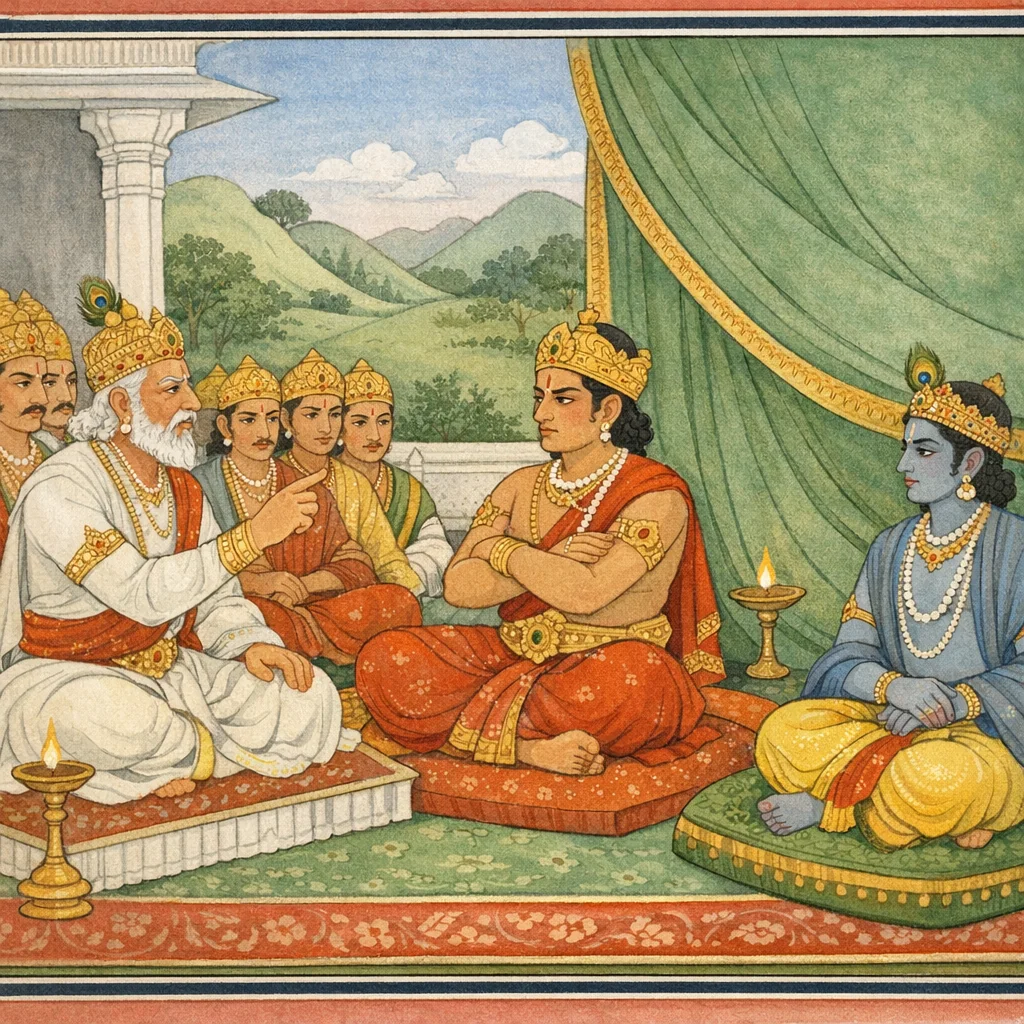
Adhyaya 146
Droṇa–Vidura–Gāndhārī Counsel in the Royal Assembly (धर्मार्थयुक्ता सभा-उपदेश-प्रकरणम्)
Upa-parva: Sanatsujāta Parva (Court Admonitions and Dharmic Counsel Context)
The chapter presents a sequence of formal admonitions in court. Droṇa, speaking after Bhīṣma’s position, recalls Kuru lineage precedents (Pratīpa, Śaṃtanu, Devavrata/Bhīṣma, and Pāṇḍu) to argue that the polity has historically been sustained by duty-driven restraint and orderly succession. He highlights administrative roles: Dhṛtarāṣṭra enthroned, Vidura serving with disciplined humility, and Bhīṣma overseeing alliance and conflict policy. Droṇa then issues a direct policy recommendation to Duryodhana: grant the Pāṇḍavas half the kingdom, affirming parity in ācārya-affiliation and grounding success in dharma (yato dharmas tato jayaḥ). Vidura responds by confronting Bhīṣma with the urgency of intervention, depicting Duryodhana’s greed as the proximate cause of impending Kuru destruction and urging decisive prevention, including withdrawal from complicity or constraining harmful agency. Finally, Gāndhārī publicly rebukes Duryodhana before assembled rulers and sages, invoking kuladharma and legitimacy: with Bhīṣma, Dhṛtarāṣṭra, and Vidura in place, Duryodhana’s bid for exclusive sovereignty is framed as delusion and a violation of inherited order; she endorses acceptance of Bhīṣma’s and Vidura’s guidance and affirms Yudhiṣṭhira’s rightful governance.
Chapter Arc: वैशम्पायन जनमेजय को सुनाते हैं कि युधिष्ठिर के पूछने पर श्रीकृष्ण कौरव-सभा में प्रकट हुए भीष्म के वचनों का वृत्तान्त कहते हैं—कूटनीति, उपदेश और कुल-धर्म की कठोर वाणी से भरी सभा का चित्र खुलता है। → दीर्घ संवाद और बार-बार की गुप्त मन्त्रणा के बाद कृष्ण लौटते हैं; पाण्डव विराट आदि नरेशों को विदा कर संधि-वार्ता के परिणाम जानना चाहते हैं। युधिष्ठिर एक-एक कर पूछते हैं—धृतराष्ट्र, द्रोण, गान्धारी, विदुर और अन्य सभासदों ने दुर्योधन से क्या कहा, और उसने क्या ग्रहण किया। → कृष्ण (वायुदेव-उवाच शैली में) स्पष्ट करते हैं कि उन्होंने हस्तिनापुर जाकर तथ्य, पथ्य और हित वचन कहे, पर ‘दुर्मति’ दुर्योधन ने उन्हें नहीं माना; भीष्म की चेतावनी—‘वृद्धों की बात सुनो, शंका मत करो, नहीं तो स्वयं और पृथ्वी दोनों का नाश करोगे’—सभा के ऊपर वज्र की तरह गिरती है। → कृष्ण का निष्कर्ष स्थिर होता है: कौरव-सभा में नीति-वचन कहे गए, पर दुर्योधन का हठ नहीं टूटा; पाण्डवों के लिए शान्ति का द्वार संकुचित और युद्ध का मार्ग प्रशस्त दिखता है। → युधिष्ठिर की अगली जिज्ञासा और पाण्डवों का निर्णय-क्षण निकट है—क्या अंतिम उपाय शेष है, या रण ही धर्म-निर्णय बनेगा?
Shlokas
Verse 1
ऑपन--माज छा अप ऋाज-ज सप्तचत्वारिशर्दाधिकशततमोब« ध्याय: युधिष्ठटिरके पूछनेपर श्रीकृष्णका कौरवसभामें व्यक्त किये हुए भीष्मजीके वचन सुनाना वैशम्पायन उवाच आगम्य हास्तिनपुरादुपप्लव्यमरिंदम: । पाण्डवानां यथावृत्तं केशव: सर्वमुक्तवान्,वैशम्पायनजी कहते हैं--जनमेजय! शत्रुओंका दमन करनेवाले भगवान् श्रीकृष्णने हस्तिनापुरसे उपप्लव्यमें आकर पाण्डवोंसे वहाँका सारा वृत्तान्त ज्यों-का-त्यों कह सुनाया
Vaiśampāyana said: O Janamejaya, the foe-subduing Keśava (Śrī Kṛṣṇa), having returned from Hāstinapura to Upaplavya, related to the Pāṇḍavas the entire course of events there exactly as it had occurred.
Verse 2
सम्भाष्य सुचिरं काल मन्त्रयित्वा पुन: पुन: । स्वमेव भवन शौरिविंश्रामार्थ जगाम ह,दीर्घकालतक बातचीत करके बारंबार गुप्त मन्त्रणा करनेके पश्चात् भगवान् श्रीकृष्ण विश्रामके लिये अपने वासस्थानको गये
Vaiśampāyana said: After conversing for a long time and repeatedly holding confidential counsel, Śauri (Śrī Kṛṣṇa) then went back to his own residence to take rest.
Verse 3
विसृज्य सर्वान् नृपतीन् विराटप्रमुखांस्तदा । पाण्डवा भ्रातर: पञ्च भानावस्तं गते सति
Vaiśaṃpāyana said: Having then taken leave of all the kings—Virāṭa foremost among them—the five Pāṇḍava brothers, when the sun had set, proceeded onward from that assembly.
Verse 4
संध्यामुपास्य ध्यायन्तस्तमेव गतमानसा: । आनाय्य कृष्णं दाशाहईं पुनर्मन्त्रममन्त्रयन्
Vaiśampāyana said: Having performed the twilight worship and meditating with minds wholly fixed on Him alone, they then brought Kṛṣṇa of the Dāśārha line and once again addressed him with their counsel.
Verse 5
तदनन्तर सूर्यास्त होनेपर पाँचों भाई पाण्डव विराट आदि सब राजाओंको विदा करके संध्योपासना करनेके पश्चात् भगवान् श्रीकृष्णमें ही मन लगाकर कुछ कालतक उन्हींका ध्यान करते रहे। फिर दशार्हकुलभूषण श्रीकृष्णको बुलाकर वे उनके साथ गुप्त मन्त्रणा करने लगे ।। युधिछिर उवाच त्वया नागपुरं गत्वा सभायां धृतराष्ट्रज: । किमुक्त: पुण्डरीकाक्ष तन्नः शंसितुमहसि,युधिष्ठिर बोले--कमलनयन! आपने हस्तिनापुर जाकर कौरवसभामें धृतराष्ट्रपुत्र दुर्योधनसे क्या कहा, यह हमें बतानेकी कृपा करें
After the sun had set, the five Pāṇḍava brothers dismissed all the kings—Virāṭa and the rest—and, having performed the twilight worship, fixed their minds on Śrī Kṛṣṇa alone and meditated on him for a time. Then they summoned Śrī Kṛṣṇa, the glory of the Dāśārha line, and began secret counsel with him. Yudhiṣṭhira said: “O lotus-eyed one, when you went to Nāgapura (Hastināpura) and stood in the royal assembly, what did Dhṛtarāṣṭra’s son, Duryodhana, say to you? Please tell us.”
Verse 6
वायुदेव उवाच मया नागपुरं गत्वा सभायां धृतराष्ट्रज: | तथ्यं पथ्यं हितं चोक्तो न च गृह्नाति दुर्मति:,भगवान् श्रीकृष्णने कहा--राजन्! मैंने हस्तिनापुर जाकर कौरवसभामें धृतराष्ट्रपुत्र दुर्योधनसे यथार्थ लाभदायक और हितकर बात कही थी; परंतु वह दुर्बुद्धि उसे स्वीकार ही नहीं करता था
Vāyudeva said: “I went to Nāgapura (Hastināpura) and, in the royal assembly, spoke to Dhṛtarāṣṭra’s son words that were true, wholesome, and beneficial. Yet that evil-minded man would not accept them.”
Verse 7
युधिष्टिर उवाच तस्मिन्नुत्पथमापन्ने कुरुवृद्धः पितामह: । किमुक्तवान् हृषीकेश दुर्योधनममर्षणम्,युधिष्ठिरने पूछा--हृषीकेश! दुर्योधनके कुमार्गका आश्रय लेनेपर कुरुकुलके वृद्ध पुरुष पितामह भीष्मने ईर्ष्या और अमर्षमें भरे हुए दुर्योधनसे क्या कहा?
Yudhiṣṭhira said: “O Hṛṣīkeśa, when Duryodhana had taken to the path of wrongdoing, what did the grandsire Bhīṣma—the elder of the Kurus—say to that resentful, unforbearing Duryodhana?”
Verse 8
आचार्यो वा महाभाग भारद्वाज: किमब्रवीत् । पिता वा धृतराष्ट्रस्तं गान्धारी वा किमब्रवीत्,महाभाग! भरद्वाजनन्दन आचार्य द्रोणने उस समय क्या कहा? पिता धृतराष्ट्र और माता गान्धारीने भी दुर्योधनसे उस समय क्या बात कही?
Yudhiṣṭhira said: “O noble one, what did the revered teacher—Bhāradvāja’s son (Droṇa)—say then? And what did his father Dhṛtarāṣṭra say to him, or his mother Gāndhārī? Tell me, O great-souled one.”
Verse 9
पिता यवीयानस्माकं क्षत्ता धर्मविदां वर: । पुत्रशोकाभिसंतप्त: किमाह धृतराष्ट्रजम्
Yudhiṣṭhira said: “Our father’s younger brother—Vidura, the chamberlain, the foremost among those who know dharma—was scorched by grief for his son. What did he say to Dhṛtarāṣṭra’s son?”
Verse 10
हमारे छोटे चाचा धर्मज्ञोंमें श्रेष्ठ विदुरने भी, जो हम पुत्रोंके शोकसे सदा संतप्त रहते हैं, दुर्योधनसे क्या कहा? ।। कि च सर्वे नृपतय: सभायां ये समासते । उक्तवन्तो यथातत्त्वं तद् ब्रूहि त्वं जनार्दन
“And what did Vidura too—our younger uncle, foremost among those who know dharma, ever tormented by grief for his sons—say to Duryodhana? And what, in accordance with the truth of the matter, did all the kings who were assembled in the royal court declare? Tell me that, O Janārdana.”
Verse 11
जनार्दन! इसके सिवा जो समस्त राजालोग सभामें बैठे थे, उन्होंने अपना विचार किस रूपमें प्रकट किया? आप इन सब बातोंको ठीक-ठीक बताइये ।। उतक्तवान् हि भवान् सर्व वचन कुरुमुख्ययो: । धार्तराष्ट्रस्य तेषां हि वचन॑ कुरुसंसदि
Yudhiṣṭhira said: “O Janārdana, besides this, how did all the kings seated in the assembly express their judgment? Tell me everything exactly as it happened. For you have already related the whole speech of the foremost Kurus; now recount, in the Kuru council, the words spoken on behalf of Dhṛtarāṣṭra and his party as well.”
Verse 12
कामलोभाभिभूतस्य मन्दस्य प्राज्ञमानिन: । अप्रियं हृदये महां तन्न तिष्ठति केशव
Yudhiṣṭhira said: “O Keśava, in the heart of one overpowered by desire and greed—dull-witted yet imagining himself wise—no great, unwelcome truth can remain.”
Verse 13
कृष्ण! आपने कौरवसभामें निश्चय ही कुरुश्रेष्ठ भीष्म और धृतराष्ट्रके समीप सब बातें कह दी थीं। परंतु आपकी और उनकी उन सब बातोंको मेरे लिये हितकर होनेके कारण अपने लिये अप्रिय मानकर सम्भवत: काम और लोभसे अभिभूत मूर्ख एवं पण्डितमानी दुर्योधन अपने हृदयमें स्थान नहीं देता ।। तेषां वाक्यानि गोविन्द श्रोतुमिच्छाम्यहं विभो । यथा च नाभिपसद्येत कालस्तात तथा कुरु । भवान् हि नो गति: कृष्ण भवान् नाथो भवान् गुरु:,गोविन्द! मैं उन सबकी कही हुई बातोंको सुनना चाहता हूँ। तात! ऐसा कीजिये, जिससे हमलोगोंका समय व्यर्थ न बीते। श्रीकृष्ण! आप ही हमलोगोंके आश्रय, आप ही रक्षक तथा आप ही गुरु हैं
Yudhiṣṭhira said: “Kṛṣṇa, you certainly spoke everything in the Kaurava assembly in the presence of Bhīṣma—the best of the Kurus—and Dhṛtarāṣṭra. Yet Duryodhana, foolish though he fancies himself wise, overpowered by desire and greed, likely gives no place in his heart to those words—because, though they are beneficial for me, he deems them unpleasant for himself. Govinda, I wish to hear what they all said. Dear one, act in such a way that time does not slip away fruitlessly. Kṛṣṇa, you alone are our refuge, our protector, and our teacher.”
Verse 14
वायुदेव उवाच शृणु राजन् यथा वाक्यमुक्तो राजा सुयोधन: । मध्ये कुरूणां राजेन्द्र सभायां तन्निबोध मे,श्रीकृष्ण बोले--राजेन्द्र! मैंने कौरवसभामें राजा दुर्योधनसे जिस प्रकार बातें की हैं, वह बताता हूँ; सुनिये
Vāyudeva said: “Listen, O King. I shall tell you exactly what words were spoken to King Suyodhana in the midst of the Kurus, in the royal assembly. Understand it from me.”
Verse 15
मया विश्राविते वाक््ये जहास धृतराष्ट्रज: । अथ भीष्म: सुसंक्रुद्ध इदं वचनमब्रवीत्,मैंने जब अपनी बात दुर्योधनसे सुनायी, तब वह हँसने लगा। यह देख भीष्मजी अत्यन्त कुपित हो उससे इस प्रकार बोले--
When my message had been conveyed, Dhṛtarāṣṭra’s son burst into laughter. Seeing this, Bhīṣma—deeply angered—addressed him with the following words.
Verse 16
दुर्योधन निबोधेदं कुलार्थे यद् ब्रवीमि ते । तच्छुत्वा राजशार्दूल स्वकुलस्य हितं कुरु,“दुर्योधन! मैं अपने कुलके हितके लिये तुमसे जो कुछ कहता हूँ, उसे ध्यान देकर सुनो। नृपश्रेष्ठी उसे सुनकर अपने कुलका हितसाधन करो
Vāyu said: “Duryodhana, understand this: what I am about to tell you is for the welfare of your lineage. Listen to it attentively, O tiger among kings, and then act in a way that truly serves the good of your own family.”
Verse 17
मम तात पिता राजन् शान्तनुर्लोकविश्रुत: । तस्याहमेक एवासं पुत्र: पुत्रवतां वर:,“तात! मेरे पिता शान्तनु विश्वविख्यात नरेश थे, जो पुत्रवानोंमें श्रेष्ठ समझे जाते थे। राजन! मैं उनका इकलौता पुत्र था
Vāyu said: “O King, my father was Śāntanu, renowned throughout the world. Of that illustrious ruler—counted among the foremost of those blessed with sons—I was his only son.”
Verse 18
तस्य बुद्धि: समुत्पन्ना द्वितीय: स्थात् कथं सुतः । एकपुत्रमपुत्रं वै प्रवदन््ति मनीषिण:,“अत: उनके मनमें यह विचार उत्पन्न हुआ कि "मेरे दूसरा पुत्र कैसे हो? क्योंकि मनीषी पुरुष एक पुत्रवालेको पुत्रहीन ही बताते हैं
Then this thought arose in his mind: “How might I have a second son? For the wise declare that one who has but a single son is, in truth, as one without a son.”
Verse 19
न चोच्छेदं कुलं यायाद् विस्तीर्येच्च कथं यश: । तस्याहमीप्सितं बुद्ध्वा कालीं मातरमावहम्,“किसी प्रकार इस कुलका उच्छेद न हो और इसके यशका सदा विस्तार होता रहे'-- उनकी आन्तरिक इच्छा जानकर मैं कुलकी भलाई और पिताकी प्रसन्नताके लिये राजा न होने और जीवनभर ऊध्वरिता (नैप्ठिक ब्रह्मचारी) रहनेकी दुष्कर प्रतिज्ञा करके माता काली (सत्यवती)-को ले आया। ये सारी बातें तुमको अच्छी तरह ज्ञात हैं। मैं उसी प्रतिज्ञाका पालन करता हुआ सदा प्रसन्नतापूर्वक यहाँ निवास करता हूँ
“May this lineage not be cut off, and may its fame ever expand.” Knowing that to be his heartfelt wish, I brought Mother Kālī (Satyavatī). For the welfare of the dynasty and to please my father, I undertook the difficult vow of not becoming king and of remaining a lifelong strict celibate. All this is well known to you. Keeping that vow, I dwell here always, content and steadfast.
Verse 20
प्रतिज्ञां दुष्करां कृत्वा पितुरर्थे कुलस्य च । अराजा चोध्वरिताश्व यथा सुविदितं तव । प्रतीतो निवसाम्येष प्रतिज्ञामनुपालयन्,“किसी प्रकार इस कुलका उच्छेद न हो और इसके यशका सदा विस्तार होता रहे'-- उनकी आन्तरिक इच्छा जानकर मैं कुलकी भलाई और पिताकी प्रसन्नताके लिये राजा न होने और जीवनभर ऊध्वरिता (नैप्ठिक ब्रह्मचारी) रहनेकी दुष्कर प्रतिज्ञा करके माता काली (सत्यवती)-को ले आया। ये सारी बातें तुमको अच्छी तरह ज्ञात हैं। मैं उसी प्रतिज्ञाका पालन करता हुआ सदा प्रसन्नतापूर्वक यहाँ निवास करता हूँ
Having undertaken a difficult vow for my father’s sake and for the welfare of the lineage, I resolved to live without kingship and as an ūrdhvaretaḥ (lifelong celibate). As you well know, understanding my father’s inner wish—‘may this family not be cut off, and may its fame ever expand’—I brought Satyavatī (Kālī) here. Content, I dwell here, faithfully upholding that vow.
Verse 21
“राजन! सत्यवतीके गर्भसे कुरुकुलका भार वहन करनेवाले धर्मात्मा महाबाहु श्रीमान् विचित्रवीर्य उत्पन्न हुए, जो मेरे छोटे भाई थे
Vāyu said: “O King, from Satyavatī’s womb was born the illustrious Vichitravīrya—righteous-souled and mighty-armed—who bore the burden of the Kuru lineage. He was my younger brother.”
Verse 22
स्वर्याते5हं पितरि तं स्वराज्ये संन्यवेशयम् । विचित्रवीर्य राजानं भृत्यो भूत्वा ह्धश्चर:,'पिताके स्वर्गवासी हो जानेपर मैंने अपने राज्यपर राजा विचित्रवीर्यको ही बिठाया और स्वयं उनका सेवक होकर राज्यसिंहासनसे नीचे खड़ा रहा
“When my father had departed for heaven, I installed King Vicitravīrya upon my own sovereign realm. Then, having become his servant, I remained standing below the royal throne—restraining my own claim and moving only by the command of duty.”
Verse 23
तस्यां जज्ञे महाबाहु: श्रीमान् कुरुकुलोद्वह: । विचित्रवीर्यो धर्मात्मा कनीयान् मम पार्थिव,तस्याहं सदृशान् दारान् राजेन्द्र समुपाहरम् । जित्वा पार्थिवसड्घातमपि ते बहुश: श्रुतम् 'राजेन्द्र! उनके लिये राजाओंके समूहको जीतकर मैंने योग्य पत्नियाँ ला दीं। यह वृत्तान्त भी तुमने बहुत बार सुना होगा
“In her was born the mighty-armed, illustrious upholder of the Kuru line—Dharmātmā Vicitravīrya, the younger one, O king. For him, O lord of kings, I brought suitable wives, having conquered an assemblage of rulers—an account you too have heard many times.”
Verse 24
ततो रामेण समरे द्वन्द्ययुद्धमुपागमम् । स हि रामभयादेभिननागिरैरविप्रवासित:,“तदनन्तर एक समय मैं परशुरामजीके साथ द्वन्धयुद्धके लिये समरभूमिमें उतरा। उन दिनों परशुरामजीके भयसे यहाँके नागरिकोंने राजा विचित्रवीर्यको इस नगरसे दूर हटा दिया था
“Then, on the battlefield, I entered into a single-combat duel with Rāma (Paraśurāma). For in those days, out of fear of Rāma, the citizens of this place had driven King Vicitravīrya away from the city, sending him into exile.”
Verse 25
दारेष्वप्यतिसक्तश्न यक्ष्माणं समपद्यत | यदा त्वराजके राष्ट्र न ववर्ष सुरेश्वर: । तदाभ्यधावन् मामेव प्रजा: क्षुद्धयपीडिता:,“वे अपनी पत्नियोंमें अधिक आसक्त होनेके कारण राजयक्ष्माके रोगसे पीड़ित हो मृत्युको प्राप्त हो गये। तब बिना राजाके राज्यमें देवराज इन्द्रने वर्षा बंद कर दी, उस दशामें सारी प्रजा क्षुधाके भयसे पीड़ित हो मेरे ही पास दौड़ी आयी”
Vāyu said: “Even while bound by excessive attachment to their wives, they fell into consumption (rājayakṣmā) and, afflicted by it, met their death. Then, when the kingdom was without a king, Indra, lord of the gods, withheld the rains. In that condition, the entire populace—tormented by hunger—ran to me alone for refuge.”
Verse 26
प्रजा ऊचु: उपक्षीणा: प्रजा: सर्वा राजा भव भवाय नः । ईती: प्रणुद भद्रं ते शान्तनो: कुलवर्धन,प्रजा बोली--शान्तनुके कुलकी वृद्धि करनेवाले महाराज! आपका कल्याण हो। राज्यकी सारी प्रजा क्षीण होती चली जा रही है। आप हमारे अभ्युदयके लिये राजा होना स्वीकार करें और अनावृष्टि आदि ईतियोंका भय दूर कर दें
The people said: “All the subjects are wasting away. Become our king for our welfare. Drive away the calamities—may good be yours, O increaser of Śāntanu’s lineage.”
Verse 27
पीड्यन्ते ते प्रजा: सर्वा व्याधिभिर्भुशदारुणै: । अल्पावशिष्टा गाड़ेय ता: परित्रातुमहसि,गंगानन्दन! आपकी सारी प्रजा अत्यन्त भयंकर रोगोंसे पीड़ित है। प्रजाओंमेंसे बहुत थोड़े लोग जीवित बचे हैं। अतः आप उन सबकी रक्षा करें
Vāyu said: “All your subjects are being afflicted by grievous and terrifying diseases. Only a few remain alive, O Gāṅgeya, son of the Gaṅgā. Therefore it is your duty to protect and rescue them all.”
Verse 28
व्याधीन् प्रणुद वीर त्वं प्रजा धर्मेण पालय । त्वयि जीवति मा राष्ट्र विनाशमुपगच्छतु,वीर! आप रोगोंको हटावें और धर्मपूर्वक प्रजाका पालन करें। आपके जीते-जी इस राज्यका विनाश न हो जाय
O hero, drive away diseases and govern the people in accordance with dharma. So long as you live, may this kingdom not fall into ruin, O valiant one.
Verse 29
भीष्म उवाच प्रजानां क्रोशतीनां वै नैवाक्षुभ्यत मे मन: । प्रतिज्ञां रक्षमाणस्य सद् वृत्तं स्मरतस्तथा,भीष्म कहते हैं--प्रजाओंकी यह करुण पुकार सुनकर भी प्रतिज्ञाकी रक्षा और सदाचारका स्मरण करके मेरा मन क्षुब्ध नहीं हुआ
Bhishma said: Even when I heard the people crying out in anguish, my mind did not waver at all; for I was intent on safeguarding my vow, and I kept the remembrance of righteous conduct firmly before me.
Verse 30
ततः: पौरा महाराज माता काली च मे शुभा | भृत्या: पुरोहिताचार्या ब्राह्मणाश्व बहुश्रुता: । मामूचुर्भशसंतप्ता भव राजेति संततम्,महाराज! तदनन्तर मेरी कल्याणमयी माता सत्यवती, पुरवासी, सेवक, पुरोहित, आचार्य और बहुश्रुत ब्राह्मण अत्यन्त संतप्त हो मुझसे बार-बार कहने लगे--*तुम्हीं राजा होओ, नहीं तो महाराज प्रतीपके द्वारा सुरक्षित राष्ट्र तुम्हारे निकट पहुँचकर नष्ट हो जायगा। अतः महामते! तुम हमारे हितके लिये राजा हो जाओ!
Bhīṣma said: “Then, O great king, the citizens, and my auspicious mother Kālī (Satyavatī), along with the attendants, the family priest, the teachers, and many learned Brāhmaṇas—deeply distressed—kept telling me again and again: ‘Become the king.’”
Verse 31
प्रतीपरक्षितं राष्ट्र त्वां प्राप्प विनशिष्यति । स त्वमस्मद्धितार्थ वै राजा भव महामते,महाराज! तदनन्तर मेरी कल्याणमयी माता सत्यवती, पुरवासी, सेवक, पुरोहित, आचार्य और बहुश्रुत ब्राह्मण अत्यन्त संतप्त हो मुझसे बार-बार कहने लगे--*तुम्हीं राजा होओ, नहीं तो महाराज प्रतीपके द्वारा सुरक्षित राष्ट्र तुम्हारे निकट पहुँचकर नष्ट हो जायगा। अतः महामते! तुम हमारे हितके लिये राजा हो जाओ!
Bhishma said: “If you do not accept the throne, this kingdom—protected and preserved since King Pratipa—will come to you only to perish. Therefore, O wise one, for our welfare indeed, become the king, O great king.”
Verse 32
इत्युक्त: प्राञ्जलिर्भूत्वा दु:खितो भृशमातुर: । तेभ्यो न्यवेदयं तत्र प्रतिज्ञां पितृगौरवात्,उनके ऐसा कहनेपर मैं अत्यन्त आतुर और दु:खी हो गया और मैंने हाथ जोड़कर उन सबसे पिताके महत्त्वकी ओर दृष्टि रखकर की हुई प्रतिज्ञाकें विषयमें निवेदन किया
Thus addressed, I stood with folded hands, overwhelmed by grief and acute distress. There, out of reverence for my father’s honor, I disclosed to them the vow I had undertaken—binding myself to it even at the cost of my own happiness.
Verse 33
ऊर्ध्वरेता हरराजा च कुलस्यार्थे पुन: पुन: । विशेषतस्त्वदर्थ च धुरि मा मां नियोजय,फिर माता सत्यवतीसे कहा--'माँ! मैंने इस कुलकी वृद्धिके लिये और विशेषतः तुम्हें ही यहाँ ले आनेके लिये राजा न होने और नैछ्लिक ब्रह्मचारी रहनेकी बारंबार प्रतिज्ञा की है। अतः तुम इस राज्यका बोझ सँभालनेके लिये मुझे नियुक्त न करो”
Bhīṣma said: “I have again and again vowed, for the welfare of this dynasty—and especially for your sake—to remain a lifelong celibate and to renounce kingship. Therefore, do not appoint me to bear the burden of the throne.”
Verse 34
ततोऊहं प्राञ्जलि भूत्वा मातरं सम्प्रसादयम् । नाम्ब शान्तनुना जात: कौरवं वंशमुद्रहन्,अहं प्रेष्पश्न॒ दासश्न॒ तवाद्य सुतवत्सले । राजन! तत्पश्चात् पुन: हाथ जोड़कर माताको प्रसन्न करनेके लिये मैंने विनयपूर्वक कहा --“अम्ब! मैं राजा शान्तनुसे उत्पन्न होकर कौरववंशकी मर्यादाका वहन करता हूँ। अतः अपनी की हुई प्रतिज्ञाको झूठी नहीं कर सकता।” यह बात मैंने बार-बार दुहरायी। इसके बाद फिर कहा--'पुत्रवत्सले! विशेषतः तुम्हारे ही लिये मैंने यह प्रतिज्ञा की थी। मैं तुम्हारा सेवक और दास हूँ (मुझसे वह प्रतिज्ञा तोड़नेके लिये न कहो)”
Then, with folded hands, I sought to appease my mother and spoke with humility: “Mother Amba, born of King Śāntanu, I bear the honor and responsibility of the Kaurava line; therefore I cannot make false the vow I have taken.” I repeated this again and again. Then I added: “O affectionate one, it was especially for your sake that I made this vow. Even now I am your attendant and servant—do not ask me to break it.”
Verse 35
प्रतिज्ञां वितथां कुर्यामिति राजन् पुन: पुनः । विशेषततस्त्वदर्थ च प्रतिज्ञां कृतवानहम्
Bhīṣma said: “O King, I kept saying to myself again and again, ‘May I not make my vow false.’ And it was especially for your sake that I undertook this solemn pledge.”
Verse 36
एवं तामनुनीयाहं मातरं जनमेव च,महाराज! इस प्रकार माता तथा अन्य लोगोंको अनुनय-विनयके द्वारा अनुकूल करके माताके सहित मैंने महामुनि व्यासको प्रसन्न करके भाईकी स्ट्रियोंसे पुत्र उत्पन्न करनेके लिये उनसे प्रार्थना की। भरतकुल-भूषण! महर्षिने कृपा की और उन स्त्रियोंसे तीन पुत्र उत्पन्न किये
Bhishma said: “O great king, having thus won over my mother and the others through respectful persuasion, I—together with my mother—approached the great sage Vyasa and sought his favor. I then requested him to beget sons through my brother’s wives, so that the royal line might not perish. O ornament of the Bharata race, the seer, moved by compassion, consented and fathered three sons through those women.”
Verse 37
अयाचं भ्रातृदारेषु तदा व्यासं महामुनिम् | सह मात्रा महाराज प्रसाद्य तमृषिं तदा,महाराज! इस प्रकार माता तथा अन्य लोगोंको अनुनय-विनयके द्वारा अनुकूल करके माताके सहित मैंने महामुनि व्यासको प्रसन्न करके भाईकी स्ट्रियोंसे पुत्र उत्पन्न करनेके लिये उनसे प्रार्थना की। भरतकुल-भूषण! महर्षिने कृपा की और उन स्त्रियोंसे तीन पुत्र उत्पन्न किये
Bhishma said: “Then, O King, after respectfully winning over my mother and the others, I approached the great sage Vyasa and, having pleased that rishi, I requested him to beget sons upon my brother’s widows. O ornament of the Bharata line, the Maharshi showed compassion and brought forth three sons from those women.”
Verse 38
अपत्यार्थ महाराज प्रसाद कृतवांश्व सः । त्रीन् स पुत्रानजनयत् तदा भरतसत्तम,महाराज! इस प्रकार माता तथा अन्य लोगोंको अनुनय-विनयके द्वारा अनुकूल करके माताके सहित मैंने महामुनि व्यासको प्रसन्न करके भाईकी स्ट्रियोंसे पुत्र उत्पन्न करनेके लिये उनसे प्रार्थना की। भरतकुल-भूषण! महर्षिने कृपा की और उन स्त्रियोंसे तीन पुत्र उत्पन्न किये
Bhishma said: “O great king, for the sake of securing offspring he showed favor. Then, O best of the Bharatas, he begot three sons.”
Verse 39
अन्ध: करणहीनत्वान्न वै राजा पिता तव । राजा तु पाण्डुरभवन्महात्मा लोकविश्रुत:,तुम्हारे पिता अंधे थे, अतः नेत्रेन्द्रियसे हीन होनेके कारण राजा न हो सके, तब लोकविख्यात महामना पाण्डु इस देशके राजा हुए
Bhishma said: “Your father was blind; therefore, being deprived of the faculty of sight, he could not become king. Instead, the great-souled Pandu—renowned throughout the world—became the ruler of this realm.”
Verse 40
स राजा तस्य ते पुत्रा: पितुर्दायाद्यहारिण: । मा तात कल हं कार्षी राज्यस्यार्ध प्रदीयताम्,पाण्डु राजा थे और उनके पुत्र पाण्डव पिताकी सम्पत्तिके उत्तराधिकारी हैं। अतः वत्स दुर्योधन! तुम कलह न करो। आधा राज्य पाण्डवोंको दे दो
Bhīṣma said: “That king (Pāṇḍu) was your father’s rightful heir, and those sons of his—the Pāṇḍavas—are the legitimate inheritors of their father’s estate. Therefore, dear child Duryodhana, do not create strife; let half the kingdom be granted to them.”
Verse 41
मयि जीवति राज्यं कः सम्प्रशासेत् पुमानिह । मावमंस्था वचो महां शममिच्छामि व: सदा,मेरे जीते-जी मेरी इच्छाके विरुद्ध दूसरा कौन पुरुष यहाँ राज्य-शासन कर सकता है? ऐसा समझकर मेरे कथनकी अवहेलना न करो। मैं सदा तुमलोगोंमें शान्ति बनी रहनेकी शुभ कामना करता हूँ
Bhīṣma said: “So long as I am alive, what man here could presume to govern the kingdom against my will? Therefore do not disregard my words. I continually desire that peace and concord be maintained among you.”
Verse 42
न विशेषो<स्ति मे पुत्र त्वयि तेषु च पार्थिव । मतमेतत् _पितुस्तुभ्यं गान्धार्या विदुरस्य च,राजन! मेरे लिये तुममें और पाण्डवोंमें कोई अन्तर नहीं है। तुम्हारे पिताका, गान्धारीका और विदुरका भी यही मत है
Bhishma said: “My son, O king, I make no distinction between you and those Pandavas. This is also the settled view of your father, of Gandhari, and of Vidura.”
Verse 43
श्रोतव्यं खलु वृद्धानां नाभिशड्कीर्वचो मम । नाशयिष्यसि मा सर्वमात्मानं पृथिवीं तथा,तुम्हें बड़े-बूढ़ोंकी बातें सुननी चाहिये। मेरी बातपर शंका न करो, नहीं तो तुम सबको, अपनेको और इस भूतलको भी नष्ट कर दोगे
One must indeed listen to the counsel of elders. Do not doubt my words; otherwise you will bring ruin upon everything—upon yourself, upon all around you, and even upon the earth itself.
Verse 147
इति श्रीमहाभारते उद्योगपर्वणि भगवद्यानपर्वणि भगवद्धाक्ये सप्तचत्वारिंशदधिकशततमो< ध्याय:,इस प्रकार श्रीमह्याभारत उद्योगपर्वके अन्तर्गत भगवद्यानपर्वमें भगवद्वाक्यसम्बन्धी एक सौ सैंतालीसवाँ अध्याय पूरा हुआ
Thus, in the Śrī Mahābhārata, within the Udyoga Parva, in the section known as the Bhagavad-yāna Parva, the portion titled “Bhagavad-vākya,” the one-hundred-and-forty-seventh chapter concludes.
Verse 356
अहं प्रेष्पश्न॒ दासश्न॒ तवाद्य सुतवत्सले । राजन! तत्पश्चात् पुन: हाथ जोड़कर माताको प्रसन्न करनेके लिये मैंने विनयपूर्वक कहा --“अम्ब! मैं राजा शान्तनुसे उत्पन्न होकर कौरववंशकी मर्यादाका वहन करता हूँ। अतः अपनी की हुई प्रतिज्ञाको झूठी नहीं कर सकता।” यह बात मैंने बार-बार दुहरायी। इसके बाद फिर कहा--'पुत्रवत्सले! विशेषतः तुम्हारे ही लिये मैंने यह प्रतिज्ञा की थी। मैं तुम्हारा सेवक और दास हूँ (मुझसे वह प्रतिज्ञा तोड़नेके लिये न कहो)”
Bhishma said: “O king, O mother who loves her son, today I am your attendant and your servant.” Then, again with folded hands, I spoke humbly to please my mother: “Mother, I am born of King Shantanu and I bear the honor and discipline of the Kuru line; therefore I cannot make my vowed promise false.” I repeated this again and again. Then I added: “O son-loving mother, it was especially for your sake that I made this vow. I am your servant and your slave—do not ask me to break my pledge.”
Frequently Asked Questions
The dilemma is whether to preserve dynastic stability through an equitable division of sovereignty (acknowledging rightful claims and precedent) or to pursue exclusive control despite counsel, thereby risking systemic collapse and collective harm.
The chapter teaches that political success is normatively tethered to dharma: leadership must integrate restraint, legitimacy, and counsel, and elders/ministers bear responsibility to intervene when governance choices predictably generate widespread loss.
No explicit phalaśruti is stated here; the meta-level function is archival and argumentative—preserving authoritative counsel (Droṇa, Vidura, Gāndhārī) as a moral record that frames subsequent outcomes as consequences of disregarded guidance.