Adhyaya 297
अध्याय २९७ — श्रेयः, धृति, दान-नियमाः (Welfare, Steadfastness, and Norms of Giving)
Upa-parva: Dharma-śikṣā (Ethical Instruction) — Episode of Janaka’s son meeting a Bhṛgu-descendant sage
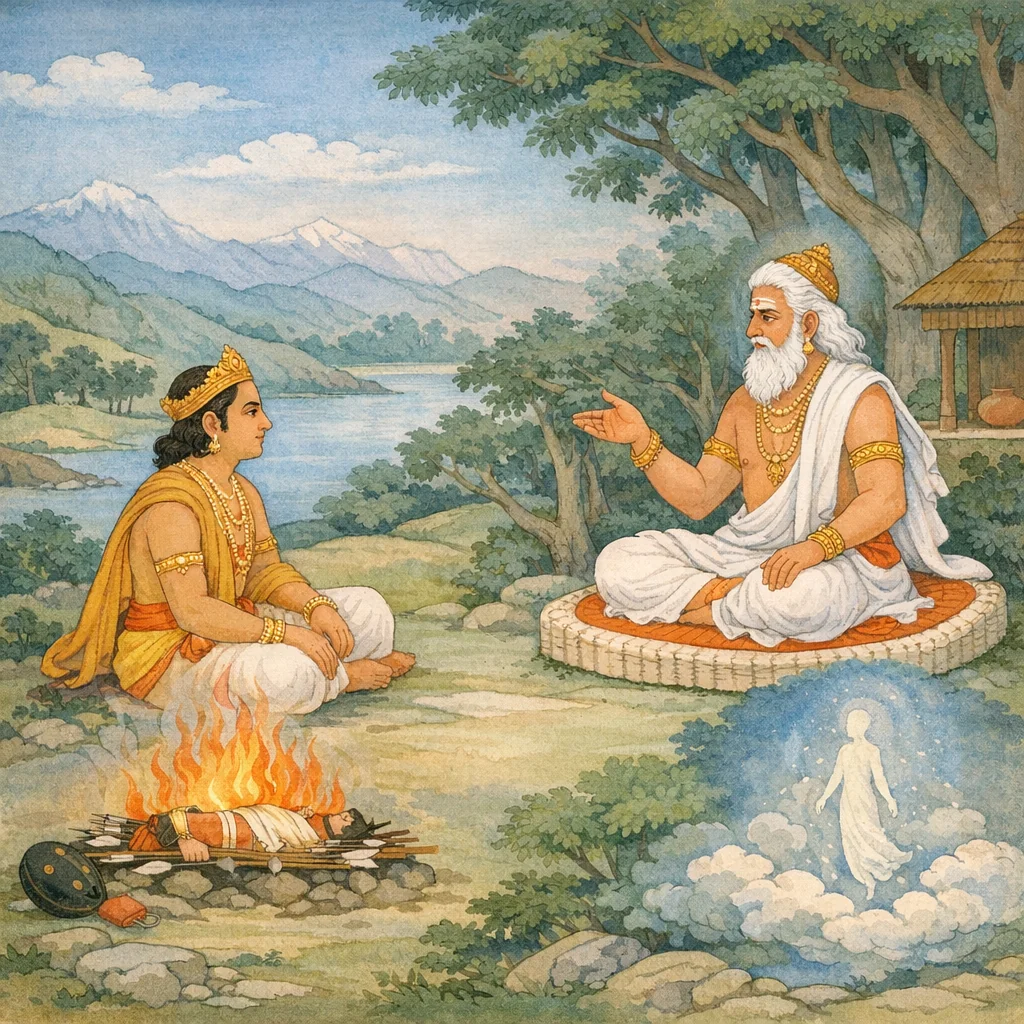
Bhīṣma recounts an instructive encounter: Janaka’s son, engaged in solitary forest movement, sees a distinguished sage descended from Bhṛgu and approaches with deference. Granted permission to speak, the prince asks what constitutes śreyas (true welfare) for a person whose body is unstable and whose agency is often governed by desire. The sage’s response frames dharma as the stabilizing order underpinning the three worlds and recommends a practical moral discipline: withdraw from conduct adverse to beings; cultivate dispassion toward sense-pleasures by recognizing their hidden downfall; practice dharma with the same deliberate familiarity one seeks in knowledge; and prefer inner alignment of mind, speech, and action. A substantial section defines dāna: give regularly and generously to sādhus without envy, honoring proper vows and cleanliness, and adapting to place and time; give without anger, regret, or self-publicity; and recognize recipient-qualification (pātra) through traits like purity, self-control, truthfulness, Vedic learning, and appropriate conduct. The discourse also stresses dhṛti (steadfastness) as the root of welfare in this life and after death, illustrated by exemplary royal figures. The episode closes with the prince internalizing the instruction and redirecting his mind from kāma to dharma.
Chapter Arc: युधिष्ठिर के सामने भीष्म यह कठोर सत्य रखते हैं कि गुणहीन मनुष्य का न पिता अपना रहता है, न मित्र, न गुरुजन, न स्त्री—और इसके विपरीत प्रभु-भक्ति, प्रियवचन और हितैषिता मनुष्य को लोक में आधार देती है। → पिता को ‘परम दैवत’ कहकर कर्तव्य-धर्म की जड़ स्थापित होती है; फिर क्षत्रिय-पुत्र के रणभूमि में बाणों की चिता पर दग्ध होकर स्वर्गगमन का विधान आता है—जिससे कर्म, मृत्यु और फल के संबंध पर प्रश्न तीखा होता जाता है। → प्रायश्चित्त और आत्म-शक्ति से पाप-क्षय का निर्णायक उपदेश उभरता है—‘किसी को कष्ट दिए बिना’ अपने दुष्कृत का शोधन; और प्राण-गति का रहस्य—पुण्यात्मा के प्राण ब्रह्मरन्ध्र भेदकर ऊपर जाते हैं, मध्यम पुण्य वाले मध्य में, दुष्कर्मी नीचे। → मनुष्य-योनि से पतन का भय और उससे उबरने का उपाय ‘श्रुति-प्रामाण्य’ तथा धर्मशास्त्र-वेद (षडंग सहित) के अनुशीलन में रखा जाता है—अक्लिष्ट कर्म से श्रेय की प्राप्ति; भीष्म बताते हैं कि यह समस्त उपदेश प्राचीन काल में पराशर मुनि ने विदेह-राज को श्रेय के लिए कहा था।
Shlokas
Verse 1
राजन! संसारमें पिता, सखा, गुरुजन और स्त्रियाँ--ये कोई भी उसके नहीं होते, जो सर्वथा गुणहीन हैं; किंतु जो प्रभुके अनन्य भक्त, प्रियवादी, हितैषी और इन्द्रियविजयी हैं, वे ही उसके होते हैं अर्थात् उसका त्याग नहीं करते
Parāśara said: “O King, in this world a father, a friend, elders and teachers, and even wives do not truly remain with one who is utterly devoid of virtue. But those who are exclusively devoted to the Lord, who speak what is pleasing and truthful, who seek another’s welfare, and who have conquered their senses—those alone stand by him; they do not abandon him.”
Verse 2
पिता परं दैवतं मानवानां मातुर्विशिष्टं पितरं वदन्ति । ज्ञानस्य लाभं॑ परम॑ वदन्ति जितेन्द्रियार्था: परमाप्नुवन्ति,पिता मनुष्योंके लिये सर्वश्रेष्ठ देवता है। कोई-कोई पिताको मातासे भी बढ़कर बताते हैं। श्रेष्ठ पुरुष ज्ञानके लाभको ही परम लाभ कहते हैं। जिन्होंने श्रोत्र आदि इन्द्रियों और शब्द आदि विषयोंपर विजय पा ली है, वे परमपदको प्राप्त होते हैं
Parāśara said: “For human beings, the father is the highest divinity. Some even declare the father superior to the mother. The wise call the gain of true knowledge the supreme gain; and those who have conquered the senses and their objects attain the highest state.”
Verse 3
रणाजिरे यत्र शराग्निसंस्तरे नृपात्मजो घातमवाप्य दह्ाते । प्रयाति लोकानमरै: सुदुर्लभान् निषेवते स्वर्गफलं यथासुखम्
On the battlefield—where the ground is strewn like a bed of arrows and fire—a king’s son, meeting his death and being consumed (in the blaze of war), departs to realms that are exceedingly hard even for the gods to attain. There he enjoys, at ease, the fruit of heaven.
Verse 4
क्षत्रियका पुत्र यदि समरांगणमें घायल होकर बाणोंकी चितापर दग्ध होता है तो वह देवदुर्लभ लोकोंमें जाता और वहाँ आनन्दपूर्वक स्वर्गीय-सुख भोगता है ।। श्रान्तं भीत॑ भ्रष्टशस्त्रं रुदन्तं पराड्मुखं पारिबर्द श्व हीनम् अनुद्यन्तं रोगिणं याचमानं न वै हिंस्यथाद् बालवृद्धौ च राजन्,राजन! जो युद्धमें थका हुआ हो, भयभीत हो, जिसने हथियार नीचे डाल दिया हो, जो रोता हो, पीठ दिखाकर भाग रहा हो, जिसके पास युद्धका कोई भी सामान न रह गया हो, जो युद्धविषयक उद्यम छोड़ चुका हो, रोगी हो और प्राणोंकी भीख माँगता हो तथा जो अवस्थामें बालक या वृद्ध हो, ऐसे शत्रुका वध नहीं करना चाहिये
Parāśara said: If a Kṣatriya’s son, wounded on the battlefield, is burned upon a pyre of arrows, he attains worlds that are hard even for the gods to reach, and there he enjoys heavenly happiness with delight. But, O king, one must not strike an enemy who is exhausted, terrified, has dropped his weapons, is weeping, has turned his back in flight, has been deprived of his horse and equipment, has ceased all martial effort, is sick, or is begging for his life—nor should one kill a foe who is a child or an old man.
Verse 5
पारिबर्द: सुसंयुक्तमुद्यतं तुल्यतां गतम् अतिक्रमेत् तं नृपति:ः संग्रामे क्षत्रियात्मजम्
Parāśara said: In battle, a king should not overstep or disregard a kṣatriya’s son who is well-equipped, fully prepared, and has come to an equal footing (as an opponent).
Verse 6
किंतु जिसके पास युद्धका सामान हो, जो युद्धके लिये तैयार हो और अपने बराबरका हो, संग्रामभूमिमें उस क्षत्रियकुमारको राजा अवश्य जीतनेका प्रयत्न करे ।। तुल्यादिह वध: श्रेयान् विशिष्टाच्चेति निश्चय: । निहीनात् कातराच्चैव कृपणाद् गहितो वध:,अपने समान या अपनी अपेक्षा बड़े वीरके हाथसे वध होना श्रेष्ठ है, ऐसा युद्ध-शास्त्रके ज्ञाताओंका निश्चय है। अपनेसे हीन, कातर तथा दीन पुरुषके हाथसे होनेवाली मृत्यु निन्दित है
Parāśara says: A king should strive to defeat in battle that kṣatriya prince who is properly equipped for war, prepared to fight, and his equal on the field. The experts in the science of warfare hold it as a settled rule that to be slain by one’s equal—or even by a superior hero—is preferable; but death at the hands of an inferior, a coward, or a wretched man is deemed disgraceful.
Verse 7
पापात् पापसमाचारान्निहीनाच्च नराधिप । पाप एव वध: प्रोक्तो नरकायेति निश्चय:,नरेश्वर! पापी, पापाचारी और हीन मनुष्यके हाथसे जो वध होता है, वह पापरूप ही बताया गया है तथा वह नरकमें गिरानेवाला है, यही शास्त्रका निश्चय है
Parāśara said: O king, when a person is slain by one who is sinful, who habitually acts in sinful ways, and who is morally degraded, that killing is itself declared to be of the nature of sin; it surely leads to hell—this is the settled conclusion of the śāstras.
Verse 8
न वक्ित् त्राति वै राजन् दिष्टान्तवशमागतम् | सावशेषायुषं चापि कश्रिन्नैवापकर्षति,राजन! मृत्युके वशमें पड़े हुए प्राणीको कोई बचा नहीं सकता और जिसकी आयु शेष है, उसे कोई मार भी नहीं सकता
Parāśara said: “O King, no one can truly rescue a being who has come under the dominion of destiny. And likewise, O King, no one can cut short the life of one whose allotted span still remains.”
Verse 9
स्निग्वैश्व क्रियमाणानि कर्माणीह निवर्तयेत् । हिंसात्मकानि सर्वाणि नायुरिच्छेत् परायुषा,मनुष्यको चाहिये कि उसके प्रियजन यदि कोई हिंसात्मक कर्म उसके लिये करते हों तो वह उन सब कर्मोको रोक दे। दूसरेकी आयुसे अपनी आयु बढ़ानेकी अर्थात् दूसरोंके प्राण लेकर अपने प्राण बचानेकी इच्छा न करे
Parāśara said: Even if one’s own dear ones undertake actions here out of affection, one should restrain them from all deeds that are violent in nature. One should not desire to prolong one’s own life by another’s lifespan—i.e., one should not seek to save oneself by taking the life of another.
Verse 10
गृहस्थानां तु सर्वेषां विनाशमभिकाड्क्षताम् । निधनं शोभनं तात पुलिनेषु क्रियावताम्,तात! मरनेकी इच्छावाले समस्त गृहस्थोंके लिये तो वही मृत्यु सबसे उत्तम मानी गयी है, जो गंगादि पवित्र नदियोंके तटोंपर शुभकर्मोंका अनुष्ठान करते हुए प्राप्त हो
Parāśara said: “For all householders who have come to long for the end of their worldly course, dear one, the most fitting death is to meet it on the river-banks while engaged in prescribed sacred rites.”
Verse 11
आयुषि क्षयमापन्ने पठचत्वमुपगच्छति । तथा हाकारणाद् भवति कारणैरुपपादितम्
Parāśara said: “When one’s allotted lifespan is running down, a person falls into helplessness and decline. In the same way, nothing comes to be without a cause; whatever occurs is established through its proper causes.”
Verse 12
जब आयु समाप्त हो जाती है तभी देहधारी जीव पंचत्वको प्राप्त होता है। यह बिना कारणके भी हो जाता है और कभी विभिन्न कारणोंसे उपपादित होता है ।। तथा शरीरं भवति देहाद् येनोपपादितम् | अध्वानं गतवश्चायं प्राप्तश्नायं गृहाद् गृहम्,जो लोग देहको पाकर हठपूर्वक उसका परित्याग कर देते हैं, उनको पूर्ववत् ही यातनामय शरीरकी प्राप्ति होती है। ऐसे लोग (मोक्षके साधनरूप मनुष्यशरीरको पाकर भी आत्महत्याके कारण उस लाभसे वंचित हो) एक घरसे दूसरे घरमें जानेवाले मनुष्यके समान एक शरीरसे दूसरे शरीरको प्राप्त होते हैं
Parāśara said: “When one’s allotted lifespan comes to an end, the embodied being reaches the state of the five elements—death. This may occur even without any evident cause, and at other times it is explained as arising from various causes. And a body is fashioned according to the basis by which it is brought about. Thus this being, driven along the road of transmigration, goes from house to house. Those who, having obtained a body, abandon it by force—through self-destruction—gain again a body of suffering, as before. Though they have attained the human body, a means for liberation, they are deprived of its benefit by the act of self-killing; like a person moving from one house to another, they pass from one body to the next.”
Verse 13
द्वितीयं कारणं तत्र नान्यत् किंचन विद्यते । तद् देहं देहिनां युक्त पज्चभूतेषु वर्तते,इनकी उस अवस्थाके प्राप्त होनेमें आत्महत्यारूप पापके सिवा दूसरा कोई कारण नहीं है। उन प्राणियोंको उस शरीरका मिलना उचित ही है, जो कि पंचभूतमय है
Parāśara said: “In that matter, there is no second cause at all—nothing else exists as the reason. It is fitting that embodied beings obtain that body which abides in the five great elements.”
Verse 14
शिरास्नाय्वस्थिसंघातं बीभत्सामेध्यसंकुलम् | भूतानामिन्द्रियाणां च गुणानां च समागमम्,यह शरीर नस, नाड़ी और हडिडियोंका समूह है। घृणित और अपवित्र मल-मूत्र आदिसे भरा हुआ है। पंचमहाभूतों, श्रोत्र आदि इन्द्रियों तथा गुणों (वासनामय विषयों) का समुदाय है
Parāśara said: “This body is but a mass of veins, sinews, and bones—repulsive, and crowded with impurity. It is merely a coming-together of the elements, the senses, and the guṇas (the tendencies that drive experience).”
Verse 15
त्वगन्तं देहमित्याहुर्विद्वांसो5ध्यात्मचिन्तका: । गुणैरपि परिक्षीणं शरीरं मर्त्यतां गतम्,अध्यात्मतत्त्वका चिन्तन करनेवाले ज्ञानी पुरुष कहते हैं कि इस शरीरके अन्तमें अर्थात् बाह्मभागमें त्वचा (चमड़ा) मात्र है। यह सौन्दर्य आदि गुणोंसे भी रहित है। इसकी मृत्यु अनिवार्य है
Parāśara said: “Those wise men who contemplate the inner Self declare that this body ends in skin—its outermost limit is merely hide. Depleted of all qualities and attractions, the body is destined for mortality; it inevitably goes to death. The teaching turns the mind away from superficial beauty and toward discernment of the Self beyond the perishable frame.”
Verse 16
शरीरिणा परित्यक्तं निश्रेष्टं गतचेतनम् | भूतै: प्रकृतिमापन्नैस्ततो भूमौ निमज्जति,जब जीवात्मा इस देहका परित्याग कर देता है, तब यह देह निश्चेष्ट और चेतनाशून्य हो जाती है एवं इसके पाँच भूत अपनी-अपनी प्रकृतिके साथ मिल जाते हैं। फिर तो यह पृथ्वीमें निमग्न हो जाती है
When the jīvātman abandons this body, it becomes motionless and bereft of consciousness. Then the five elements that compose it return to their own natures, and the body at last sinks into the earth.
Verse 17
भावितं कर्मयोगेन जायते तत्र तत्र ह । इदं शरीर वैदेह ग्रियते यत्र यत्र ह । तत्स्वभावो<परो दृष्टो विसर्ग: कर्मणस्तथा,विदेहराज! यह शरीर जिस किसी स्थानमें मृत्युको प्राप्त हो जाता है; फिर प्रारब्धकर्मके योगसे भावित होकर जहाँ-कहीं भी जन्म ले लेता है। कर्मोका फलस्वरूप यह स्वभावसिद्ध पुनर्जन्म देखा गया है
O Vaideha, this embodied being, shaped by the discipline and linkage of karma, is born again and again in various places. This body dies wherever it may be; and then, impelled by its ripened destiny (prārabdha), it takes birth somewhere else. Thus rebirth is seen as a natural and inevitable “sending forth” that arises from one’s own actions and their results.
Verse 18
न जायते तु नृपते कंचित् कालमयं पुनः । परिभ्रमति भूतात्मा द्यामिवाम्बुधरो महान्
O king, the jīvātman is not truly born again as some new creature fashioned by Time. Rather, the living being continues to wander on—circling through conditions and states—like a great cloud moving across the sky.
Verse 19
नरेश्वर! जैसे विशाल मेघ आकाशमें सब ओर भ्रमण करता है, उसी प्रकार जीवात्मा प्रारब्ध-कर्मके फलसे कुछ कालतक घूमता रहता है, जन्म नहीं लेता है ।। स पुनर्जायते राजन प्राप्पेहायतनं नूप । मनस: परमो ह्ात्मा इन्द्रियेभ्य: परं मन:,राजन! वही यहाँ फिर कोई आधार पाकर पुनः जन्म लेता है। मनसे आत्मा श्रेष्ठ है और इन्द्रियोंसे मन श्रेष्ठ है
O lord of men, just as a vast cloud roams in every direction across the sky, so the individual self, driven by the fruit of its already-begun deeds (prārabdha), wanders for some time without taking birth. Then, O king, upon finding here a suitable support or abode, it is born again. The Ātman is higher than the mind (manas), and the mind is higher than the senses (indriya).
Verse 20
विविधानां च भूतानां जड़मा: परमा नृप । जड़मानामपि तथा द्विपदा: परमा मता:,महाराज! संसारके विविध प्राणियोंमें चलने-फिरनेवाले जीव श्रेष्ठ माने गये हैं। इन जंगम प्राणियोंमें भी दो पैरवाले जीव (मनुष्य) श्रेष्ठ कहे गये हैं
O king, among the many kinds of living beings, those that move about are regarded as superior. And even among the moving creatures, the two-footed ones—human beings—are held to be the highest.
Verse 21
द्विपदानामपि तथा द्विजा वै परमा: स्मृता: । द्विजानामपि राजेन्द्र प्रज्ञावन्त: परा मता: | प्राज्ञानामात्मसम्बुद्धा: सम्बुद्धानाममानिन:,मनुष्योंमें भी द्विज श्रेष्ठ कहे गये हैं। राजेन्द्र! द्विजोंमें बुद्धिमान् और बुद्धिमानोंमें भी आत्मज्ञानी श्रेष्ठ समझे जाते हैं। उनमें भी जो अहंकाररहित हैं, उन्हें सर्वश्रेष्ठ माना गया है
Among all two-footed beings (humans), the twice-born are remembered as foremost. And among the twice-born, O king, the wise are held to be superior. Among the wise, those awakened to the Self are higher still; and among the Self-awakened, those free from pride are regarded as the very best.
Verse 22
जातमन्वेति मरणं नृणामिति विनिश्चय: । अन्तवन्ति हि कर्माणि सेवन्ते गुणत: प्रजा:,जन्मके साथ ही मृत्यु मनुष्योंके पीछे लगी रहती है। यह विद्वानोंका निश्चय है। समस्त प्रजा सत्त्व आदि गुणोंसे प्रेरित होकर विनाशशील कर्मोका आचरण करती है
From the very moment a person is born, death follows close behind—such is the settled conclusion of the wise. And because actions are inherently finite and perishable, living beings, driven by the qualities of nature (sattva, rajas, and tamas), continue to engage in these transient deeds.
Verse 23
आपने तूत्तरां काष्ठां सूर्ये यो निधन व्रजेत् नक्षत्रे च मुहुर्ते च पुण्ये राजन् स पुण्यकृत्,राजन! जो सूर्यके उत्तरायण होनेपर उत्तम नक्षत्र और पवित्र मुहूर्तमें मृत्युको प्राप्त होता है, वह पुण्यात्मा है
Parāśara said: “O King, one who meets death when the sun has turned to the northern course (uttarāyaṇa), and who departs at an auspicious constellation and a pure, favorable moment, is to be regarded as a doer of merit—a person of virtuous destiny.”
Verse 24
अयोजयित्वा क्लेशेन जन प्लाव्य च दुष्कृतम् । मृत्युना55त्मकृते नेह कर्म कृत्वा55त्मशक्तिभि:,वह किसीको भी कष्ट न देकर प्रायश्षित्तके द्वारा अपने पापको नष्ट कर डालता है और अपनी शक्तिके अनुसार शुभकर्म करके स्वेच्छासे मृत्युको अंगीकार करता है
Parāśara said: “Without causing anyone distress, one should wash away one’s wrongdoing through austerity and expiation; then, performing wholesome deeds according to one’s own capacity, one may accept death of one’s own accord—rather than being driven to it by the consequences of self-made acts.”
Verse 25
विषमुद्बन्धनं दाहो दस्युहस्तात् तथा वध: । देष्टिभ्यश्न पशुभ्यश्ष प्राकृतो वध उच्यते,किंतु विष खा लेनेसे, गलेमें फाँसी लगानेसे, आगमें जलनेसे, लुटेरोंके हाथसे तथा दाढ़वाले पशुओंके आघातसे जो वध होता है, वह अधम श्रेणीका माना जाता है
Parāśara said: “Death that comes by taking poison, by hanging, by being burned in fire, by falling into the hands of robbers, and by being struck down by beasts is called an ‘ordinary’ (base) kind of killing—an ignoble end rather than a dignified one.”
Verse 26
न चैशि: पुण्यकर्माणो युज्यन्ते चाभिसंधिजै: । एवंविधैश्व बहुभिरपरै: प्राकृतेरपि,पुण्यकर्म करनेवाले मनुष्य इस तरहके उपायोंसे प्राण नहीं देते तथा ऐसे-ऐसे दूसरे अधम उपायोंसे भी उनकी मृत्यु नहीं होती
Parāśara said: Those who are devoted to meritorious deeds do not meet their end through contrived, scheming devices; nor do they perish by many other such base means that arise from ordinary, worldly nature. The verse underscores an ethical vision in which a life grounded in virtue is not easily overthrown by petty plots and ignoble stratagems.
Verse 27
ऊर्ध्व॑ भित्त्वा प्रतिष्ठन्ते प्राणा: पुण्यवतां नूप । मध्यतो मध्यपुण्यानामधो दुष्कृतकर्मणाम्,राजन! पुण्यात्मा पुरुषोंके प्राण ब्रह्मरन्ध्रको भेदकर निकलते हैं। जिनके पुण्यकर्म मध्यम श्रेणीके हैं, उनके प्राण मध्यद्वार (मुख, नेत्र आदि)-से बाहर होते हैं तथा जिन्होंने केवल पाप ही किया है, उनके प्राण नीचेके छिद्र (गुदा या शिक्नद्वार) से निकलते हैं
Parāśara said: “O king, the life-breaths of the truly meritorious depart upward, piercing the brahma-randhra. Those whose merit is of a middling kind depart through the middle openings (such as the mouth and eyes). But those who have acted in evil alone depart downward, through the lower apertures.”
Verse 28
एक: शर्त्रुर्न द्वितीयो<$स्ति शरत्रु- रज्ञानतुल्य: पुरुषस्य राजन । येनावृतः कुरुते सम्प्रयुक्तो घोराणि कर्माणि सुदारुणानि,राजन! पुरुषका एक ही शत्रु है, उसके समान दूसरा कोई शत्रु नहीं है। वह है अज्ञान, जिससे आवृत और प्रेरित होकर मनुष्य अत्यन्त घोर और क्रूरतापूर्ण कर्म करने लगता है
Parāśara said: “O king, a man has only one true enemy; there is no second enemy equal to it. That enemy is ignorance. Veiled by it and driven by it, a person comes to perform deeds that are dreadful and exceedingly cruel.”
Verse 29
प्रबाधनार्थ श्रूतिधर्मयुक्तान् वृद्धानुपास्य प्रभवेत यस्य । प्रयत्नसाध्यो हि स राजपुत्र प्रज्ञाशरेणोन्मथित: परैति,राजकुमार! उस शत्रुको पराजित करनेमें वही समर्थ हो सकता है, जो वेदोक्त धर्मसम्पन्न वृद्ध पुरुषोंकी सेवा करके प्रज्ञा (स्थिरबुद्धि)-को प्राप्त कर लेता है, क्योंकि अज्ञानमय शत्रुको जीतना महान् प्रयत्नसाध्य कर्म है। वह प्रज्ञारूपी बाणकी चोट खाकर ही नष्ट होता है
Parāśara said: “O prince, one becomes capable of subduing the foe only by serving elders who are grounded in Vedic learning and dharma, and thereby gaining steady wisdom. For this enemy is conquered only through great effort; when struck and uprooted by the arrow of discernment, it perishes.”
Verse 30
अधीत्य वेदं तपसा ब्रह्मचारी यज्ञान् शक््त्या संनिगृहोह पड्च । वन॑ गच्छेत् पुरुषो धर्मकाम: श्रेय: स्थित्वा स्थापयित्वा स्ववंशम्,द्विजको पहले ब्रह्मचर्य-आश्रममें रहकर तपस्या-पूर्वक वेदोंका अध्ययन करना चाहिये; फिर गृहस्थाश्रममें प्रवेश करके अपनी शक्तिके अनुसार इन्द्रियसंयमपूर्वक पंच महायज्ञोंका अनुष्ठान करना चाहिये। तत्पश्चात् अपने पुत्रको घर-बारकी रक्षामें नियुक्त करके कल्याणमार्ममें स्थित हो केवल धर्मपालनकी इच्छा रखकर उसे वनको प्रस्थान करना चाहिये
Parāśara teaches the ordered path of life for a twice-born man: first, as a celibate student, he should study the Veda with disciplined austerity. Next, entering the householder stage, he should, according to his capacity, restrain the senses and perform the five great daily sacrifices. Thereafter, having established his own lineage and entrusting the protection of the household to his son, he should depart for the forest—steadfast in what is truly beneficial—seeking only the practice of dharma.
Verse 31
उपभोगैरपि त्यक्तं नात्मानं सादयेन्नर: । चण्डालत्वेडपि मानुष्यं सर्वधा तात शोभनम्,तात! उपभोगके साधनोंसे वंचित होनेपर भी मनुष्य अपने-आपको हीन न समझे। चाण्डालकी योनिमें भी यदि मनुष्य-जन्म प्राप्त हो तो वह मानवेतर प्राणियोंकी अपेक्षा सर्वथा उत्तम है
Parāśara said: Even when deprived of comforts and enjoyments, a person should not abase himself. Dear one, even if human birth occurs in the condition of a caṇḍāla, humanity is in every way noble—superior to non-human forms of life.
Verse 32
इयं हि योनि: प्रथमा यां प्राप्प जगतीपते । आत्मा वै शक्यते त्रातुं कर्मभि: शुभलक्षणै:,क्योंकि पृथ्वीनाथ! मनुष्यकी योनि ही वह अद्वितीय योनि है, जिसे पाकर शुभकर्मोंके अनुष्ठानसे आत्माका उद्धार किया जा सकता है
For, O lord of the earth, this human birth is the foremost condition of existence; having attained it, one is indeed able to rescue the self through actions marked by auspicious qualities.
Verse 33
कथं न विप्रणश्येम योनितो<स्या इति प्रभो । कुर्वन्ति धर्म मनुजा: श्रुतिप्रामाण्यदर्शनात्,'प्रभो! हम कौन ऐसा उपाय करें, जिससे हमें इस मनुष्य-योनिसे नीचे न गिरना पड़े' यह सोचकर और वैदिक प्रमाणोंपर विचार करके मनुष्य धर्मका अनुष्ठान करते हैं
Parāśara said: “O lord, thinking, ‘How might we not perish—how might we not fall down from this human birth into lower states?’ and reflecting on the authoritative validity of Vedic revelation, people undertake the practice of dharma.”
Verse 34
यो दुर्लभतरं प्राप्य मानुष्यं द्विषते नरः । धर्मावमन्ता कामात्मा भवेत्स खलु वज्च्यते,जो मानव अत्यन्त दुर्लभ मनुष्य-शरीरको पाकर भी दूसरोंसे द्वेष करता है और धर्मका अनादर करता है तथा मनसे कामनाओंमें आसक्त हो जाता है, वह महान् लाभसे वंचित होता है
Parāśara says: A man who, after attaining the exceedingly rare gift of human birth, still harbors hatred toward others, scorns dharma, and becomes ruled by desire—such a person is truly deprived of the greatest gain that human life can yield.
Verse 35
यस्तु प्रीतिपुरोगेन चक्षुषा तात पश्यति । दीपोपमानि भूतानि यावदर्थान्न पश्यति
Parāśara said: “But the one who looks with the eye led by affection, dear one, sees beings as though they were lamps—shining and attractive—yet he does not see their true purposes and realities as they are.”
Verse 36
तात! जो समस्त प्राणियोंको दीपकके समान स्नेहसे संवर्धन करनेयोग्य मानता है और उन्हें स्नेहभरी दृष्टिसे देखता है एवं जो समस्त विषयोंकी ओर कभी दृष्टिपात नहीं करता, वह परलोकमें सम्मानित होता है ।। सानन््त्वेनान्नप्रदानेन प्रियवादेन चाप्युत । समदुःखसुखो भूत्वा स परत्र महीयते,जो सब लोगोंको सान्त्वना प्रदान करता, भूखोंको भोजन देता और प्रिय वचन बोलकर सबका सत्कार करता है, वह सुख-दुःखमें सम रहकर (इहलोक और) परलोकमें प्रतिष्ठित होता है
Parāśara said: “Dear one, he who deems all living beings worthy to be nurtured with affection—like a lamp carefully tended—and who looks upon them with a loving gaze, never turning his eyes toward sense-objects, is honored in the world beyond. And he who comforts others, feeds the hungry, and speaks kindly, honoring all—remaining even-minded in sorrow and joy—wins esteem here and is exalted hereafter.”
Verse 37
दान॑ त्याग: शोभना मूर्तिरिद्भ्यो भूतप्लाव्यं तपसा वै शरीरम् । सरस्वतीनैमिषपुष्करेषु ये चाप्यन्ये पुण्यदेशा: पृथिव्याम्,राजन! सरस्वती नदी, नैमिषारणप्यक्षेत्र, पुष्करक्षेत्र तथा और भी जो पृथ्वीके पावन तीर्थ हैं, उनमें जाकर दान देना, भोगोंका त्याग करना, शान्तभावसे रहना तथा तपस्या और तीर्थंके जलसे तन-मनको पवित्र करना चाहिये
Parāśara said: “Charity and renunciation are a beautiful embodiment of virtue. By austerity (tapas) and by purifying waters, the body is cleansed and uplifted. Therefore, O king, one should go to sacred places—Sarasvatī, Naimiṣa, Puṣkara, and other holy regions upon the earth—and there give gifts, abandon indulgences, dwell in calmness, and purify body and mind through tapas and the waters of pilgrimage.”
Verse 38
गृहेषु येषामसव: पतन्ति तेषामथो निर्हरणं प्रशस्तम् । यानेन वै प्रापणं च श्मशाने शौचेन नूनं विधिना चैव दाह:,घरोंमें जिनके प्राण निकल रहे हों, उन्हें शीघ्र ही घरसे बाहर ले जाना उत्तम है। मृत्युके पश्चात् उन्हें विमानपर सुलाकर श्मशानमें पहुँचाना तथा पवित्रतापूर्वक शास्त्रोक्तविधिसे उनका दाह-संस्कार करना आवश्यक कर्तव्य है
Parāśara teaches that when a person’s life-breath is departing within a house, it is considered proper to remove them from the dwelling without delay. After death, the body should be conveyed on a bier to the cremation ground, and—maintaining ritual purity—cremated according to the scriptural procedure.
Verse 39
इष्टि: पुष्टियजनं याजनं च दानं॑ पुण्यानां कर्मणां च प्रयोग: । शकक््त्या पित्र्यं यच्च किंचित् प्रशस्तं सर्वाण्यात्मार्थे मानवो5यं करोति,मनुष्य अपनी शक्तिके अनुसार इष्टि-पुष्टि (शान्तिकर्म),, यजन, याजन, दान, पुण्यकर्मोंका अनुष्ठान तथा श्राद्ध आदि जो भी कुछ उत्तम कार्य करता है, वह सब अपने ही लिये करता है
Parāśara said: “The rites of iṣṭi and puṣṭi (appeasement and welfare-sacrifices), the performance of yajña and officiating for others, the giving of gifts, and the undertaking of other meritorious acts—indeed, whatever commendable duty a person performs according to his capacity, including ancestral rites (śrāddha)—he does all of it ultimately for his own sake (for his own spiritual welfare and future good).”
Verse 40
धर्मशास्त्राणि वेदाक्ष षडड़ानि नराधिप । श्रेयसो<र्थे विधीयन्ते नरस्याक्लिष्टकर्मण:,नरेश्वर! धर्मशास्त्र और छहों अंगोंसहित वेद पुण्यकर्म करनेवाले पुरुषके कल्याणके लिये ही कर्तव्यका विधान करते हैं
Parāśara said: “O king, the Dharmaśāstras and the Veda—together with its six auxiliary disciplines (vedāṅga)—lay down rules of what ought to be done for the sake of a person’s highest good, especially for one who performs righteous deeds without inner turmoil or harmful strain. Their purpose is not mere ritual formality, but the welfare and uplift of human life.”
Verse 41
भीष्म उवाच एतदू वै सर्वमाख्यातं मुनिना सुमहात्मना । विदेहराजाय पुरा श्रेयसो<र्थे नराधिप,भीष्मजी कहते हैं--युधिष्ठिर! प्राचीनकालमें महात्मा पराशर मुनिने विदेहराज जनकके कल्याणके लिये यह सब उपदेश दिया था
Bhishma said: “O king, all this was once taught in full, in ancient times, by the great-souled sage to the king of Videha, for the sake of his highest good. Therefore what I relate to you is an established instruction, handed down for a ruler’s welfare.”
Verse 297
इति श्रीमहाभारते शान्तिपर्वणि मोक्षधर्मपर्वणि पराशरगीतायां सप्तनवत्यधिकद्विशततमो<ध्याय:
Thus ends the two-hundred-and-ninety-seventh chapter in the Mokṣadharma section of the Śānti Parva of the Śrī Mahābhārata—known as the Parāśara-gītā. This closing colophon marks the completion of the chapter’s teaching within the larger discourse on liberation and right conduct.
Frequently Asked Questions
The dilemma is how a desire-governed person, living in an impermanent body, can identify and pursue śreyas (enduring welfare) rather than short-term gratification that carries latent harm.
Śreyas is grounded in dharma practiced through non-hostility, disciplined senses, and steadfastness (dhṛti); ethical action must align mind, speech, and deed, with deliberate cultivation replacing impulsive desire.
A functional meta-conclusion is provided through narrative result: the prince’s mind turns away from kāma toward dharma, indicating the intended fruit of the teaching—moral reorientation and improved welfare here and hereafter.