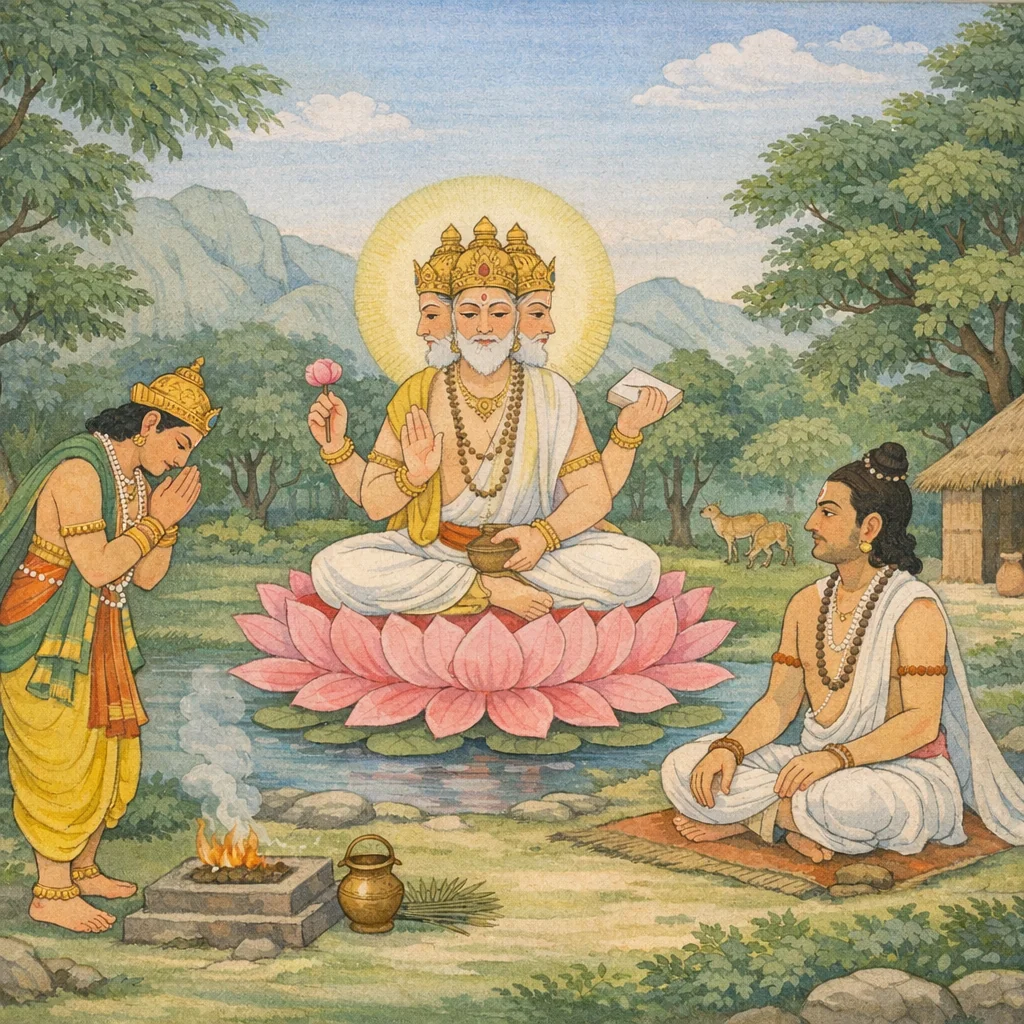
Adhyaya 223
Adhyāya 223: Nāradasya Guṇa-kathana (Catalogue of Nārada’s Virtues)
Upa-parva: Rājadharmānuśāsana (Instruction on Kingly Duty) — Nārada-guṇa-prakīrtana episode
Yudhiṣṭhira opens with a general inquiry about the kind of person who becomes प्रियः सर्वस्य लोकस्य—universally dear and praised for virtue. Bhīṣma responds by presenting an embedded report: a dialogue involving Ugrasena, Nārada, and Vāsudeva (Kṛṣṇa). Ugrasena observes public admiration for Nārada and asks what qualities justify such esteem. Vāsudeva answers with a compact but extensive catalogue of virtues: absence of ego rooted in conduct, fidelity in speech, tapas (austere discipline), freedom from desire and greed, spiritual discernment, forbearance, self-control, straightforwardness, truthfulness, radiance and reputation grounded in intelligence and humility, purity, pleasant and non-envious speech, consistent beneficence, intolerance of others’ harm, learning from Veda and narrative tradition, patience and respectfulness, equanimity that avoids favoritism and hostility, diligence without deceit, freedom from anger and avarice, absence of conflict in aims of wealth/duty/pleasure, elimination of faults, firm devotion, compassion, detachment amid social contact, concise doubt (decisiveness), refusal to self-praise, skill in social relations without contempt, non-disparagement of traditions, non-exploitation of asceticism, disciplined time-use, attentiveness, modesty, trustworthiness with confidences, emotional steadiness amid gain/loss, and strategic awareness of time and polity. The chapter closes by asserting that such comprehensive virtue naturally produces universal affection and respect.
Chapter Arc: युधिष्ठिर का प्रश्न—जो राजा राजलक्ष्मी से गिर चुका हो और काल-दण्ड से पीसा गया हो, वह किस बुद्धि से पृथ्वी पर विचरे? भीष्म उत्तर के लिए इन्द्र–बलि संवाद का प्रसंग उठाते हैं। → इन्द्र, असुर-विजय के मद में, ब्रह्मा के पास जाकर बलि के विषय में पूछता है। ब्रह्मा चेताते हैं कि पूछे जाने पर असत्य नहीं बोलना चाहिए—अतः वे बलि का वृत्तान्त सुनाते हैं: वैभव, दान, विभाजन, छत्र-छाया, गन्धर्व-गान—और फिर उसी ऐश्वर्य का क्षय। इन्द्र के भीतर अहंकार और भय साथ-साथ बढ़ते हैं—आज जो बलि पर बीती, कल मुझ पर भी? → बलि (या ब्रह्मा के मुख से बलि का वचन) इन्द्र को कठोर दर्प-भंजन करता है—‘पुरन्दर! अशुद्ध बुद्धि से मेरे सामने आत्म-प्रशंसा कर रहे हो; जब मेरी जैसी स्थिति तुम्हारी होगी, तब यह वाणी नहीं निकल सकेगी।’ यह वाक्य इन्द्र के मद पर वज्र की तरह गिरता है। → संवाद का निष्कर्ष यह बनता है कि राजलक्ष्मी चंचला है; वैभव में आत्म-स्तुति और पर-तिरस्कार अज्ञान है। पतित राजा को चाहिए कि वह धैर्य, विनय, सत्य और धर्म-आचरण से जीवन चलाए—क्योंकि काल सबको समान करता है। → युधिष्ठिर के प्रश्न का व्यापक उत्तर अभी आगे खुलना शेष है—राजा के लिए पतन के बाद ‘जीवन-नीति’ और ‘मोक्ष-दृष्टि’ का पूर्ण विधान अगले अध्यायों में विस्तार पाएगा।
Shlokas
Verse 1
(दाक्षिणात्य अधिक पाठके ४५६३ श्लोक मिलाकर कुल ८२३ *लोक हैं) #िफमशा (0) आज अत +- त्रयोविशर्त्याधेकद्विशततमो< ध्याय: इन्द्र और बलिका संवाद--इन्द्रके आक्षेपयुक्त वचनोंका बलिके द्वारा कठोर प्रत्युत्तर युधिछिर उवाच यथा बुद्धया महीपालो भ्रष्टश्रीविचरेन्महीम् | कालदण्डविनिष्पिष्टस्तन्मे ब्रूहि पितामह
Yudhiṣṭhira said: “Grandfather, tell me this: how does a king, having lost his royal fortune and splendor, wander over the earth in his right understanding—when he has been crushed by the rod of Time?”
Verse 2
युधिष्ठिरने पूछा--पितामह! जो राजलक्ष्मीसे भ्रष्ट हो गया हो और कालके दण्डसे पिस गया हो, वह भूपाल किस बुद्धिसे इस पृथ्वीपर विचरे, यह मुझे बताइये ।। भीष्म उवाच अत्राप्युदाहरन्तीममितिहासं पुरातनम् । वासवस्य च संवादं बलेवैंरोचनस्यथ च,भीष्मजीने कहा--युधिष्ठिर! इस विषयमें जानकार मनुष्य विरोचनकुमार बलि और इन्द्रके संवादरूप एक प्राचीन इतिहासका उदाहरण दिया करते हैं
Bhishma said: “On this very point, the learned cite an ancient historical example—namely, the dialogue between Vāsava (Indra) and Bali, the son of Virocana.”
Verse 3
पितामहमुपागम्य प्रणिपत्य कृताउज्जलि: । सवनिवासुरान् जित्वा बलिं पप्रच्छ वासव:,एक समय इन्द्र समस्त असुरोंपर विजय पाकर पितामह ब्रह्माजीके पास गये और हाथ जोड़कर प्रणाम करके उन्होंने पूछा--“भगवन्! बलि कहाँ रहता है?”
Bhishma said: After defeating the Asuras together with their allies and dependents, Indra (Vāsava) approached the Grandsire Brahmā. Bowing down with folded hands in reverence, he asked, “Blessed Lord, where does Bali dwell?”
Verse 4
यस्य सम ददतो वित्तं न कदाचन हीयते । तं॑ बलिं नाधिगच्छामि ब्रद्म॒ुन्नाचक्ष्व मे बलिम्,“ब्रह्मम! जिसके दान देते समय उसके धनका भण्डार कभी खाली नहीं होता था, उस राजा बलिको मैं ढूँढ़नेपर भी नहीं पा रहा हूँ। आप मुझे बलिका पता बताइये
Bhīṣma said: “That king Bali—whose treasury, though he gave wealth in equal measure, never diminished—I cannot find him, even after searching. O Brahman, tell me where Bali is.”
Verse 5
स वायुर्वरुणश्वैव स रवि: स च चन्द्रमा: । सोअग्निस्तपति भूतानि जलं च स भवत्युत
Bhīṣma said: He is the Wind; He is also Varuṇa. He is the Sun, and He is the Moon. He is the Fire that heats all beings, and He indeed becomes Water as well.
Verse 6
स एव हाुस्तमयते स सम विद्योतते दिश:,“वही यथासमय आलस्य छोड़कर सम्पूर्ण दिशाओंमें प्रकाशित होता, वही अस्त होता और वही वर्षा करता था। ब्रह्मन! उस बलिको मैं ढूँढ़नेपर भी नहीं पा रहा हूँ। आप मुझे राजा बलिका पता बताइये
Bhishma said: “He alone would set, and he alone would shine evenly, illuminating the quarters. At the proper time, casting off all indolence, he would brighten every direction; he would also set, and he would also send rain. O Brahman, though I search for that Bali, I do not find him. Tell me—point out to me King Bali.”
Verse 7
स वर्षति सम वर्षाणि यथाकालमतन्द्रित: । तं बलिं नाधिगच्छामि ब्रद्य॒ुन्नाचक्ष्य मे बलिम्,“वही यथासमय आलस्य छोड़कर सम्पूर्ण दिशाओंमें प्रकाशित होता, वही अस्त होता और वही वर्षा करता था। ब्रह्मन! उस बलिको मैं ढूँढ़नेपर भी नहीं पा रहा हूँ। आप मुझे राजा बलिका पता बताइये
He sent down rain in due season, evenly and without sloth; he shone forth in every quarter, he set, and he it was who made the rains fall. O Brahmin, though I seek Bali, I cannot find him. Tell me where King Bali is.
Verse 8
ब्रह्मोवाच नैतत् ते साधु मघवन् यदेनमनुपृच्छसि । पृष्टस्तु नानृतं ब्रूयात् तस्माद् वक्ष्यामि ते बलिम्,ब्रद्माजीने कहा--मघवन्! यह तुम्हारे लिये अच्छी बात नहीं है कि तुम मुझसे बलिका पता पूछ रहे हो। पूछनेपर झूठ नहीं बोलना चाहिये, इसलिये मैं तुमसे बलिका पता बता रहा हूँ
Brahmā said: “O Maghavan, it is not proper for you to question me about him in this way. Yet when one is asked, one should not speak falsehood; therefore I shall tell you about Bali.”
Verse 9
उष्टेषु यदि वा गोषु खरेष्वश्वेषु वा पुन: । वरिष्ठो भविता जन््तुः शून्यागारे शचीपते,शचीपते! किसी शून्य घरमें ऊँट, गौ, गर्दभ अथवा अश्वजातिके पशुओंमें जो श्रेष्ठ जीव उपलब्ध हो, उसे बलि समझो
Bhīṣma said: “O lord of Śacī (Indra), if in an empty house there are animals such as camels, cattle, donkeys, or horses, then whichever living creature among them is the best should be regarded as the proper offering.”
Verse 10
शक्र उवाच यदि सम बलिना ब्रह्मन् शून्यागारे समेयिवान् । हन्यामेनं न वा हन्यां तद् ब्रह्मुन्ननुशाधि माम्,इन्द्रने पूछा--ब्रह्मन! यदि किसी एकान्त गृहमें राजा बलिसे मेरी भेंट हो जाय तो मैं उन्हें मार डालूँ या न मारूँ, यह मुझे बतावें
Śakra said: “O Brahmin, if I were to encounter Bali alone in an empty house, should I kill him or should I not? O Brahmin, instruct me in what is right.”
Verse 11
ब्रह्मोवाच मा सम शक्र बलिं हिंसीर्न बलिव॑ंधमहति । न्यायस्तु शक्र प्रष्टव्यस्त्वया वासव काम्यया,ब्रह्माजीने कहा--इन्द्र! तुम बलिका वध न करना, बलि वधके योग्य नहीं है। वासव! तुम उनसे इच्छानुसार न्यायोचित व्यवहारके विषयमें प्रश्न कर सकते हो
Brahmā said: “Do not, O Śakra, harm Bali; he does not deserve to be slain. Rather, O Vāsava, if you wish, you should question him about what is just and proper.”
Verse 12
भीष्म उवाच एवमुक्तो भगवता महेन्द्र: पृथिवीं तदा । चचारैरावतस्कन्धमधिरुहा[ू श्रिया वृत:,भीष्मजी कहते हैं--राजन्! भगवान् ब्रह्माजीके इस प्रकार आदेश देनेपर देवराज इन्द्र ऐगावतवकी पीठपर सवार हो राजलक्ष्मीसे सुशोभित होते हुए पृथ्वीपर विचरने लगे
Bhishma said: Thus instructed by the Blessed Lord (Brahmā), Mahendra (Indra) mounted the back of Airāvata and began to range over the earth, resplendent with royal fortune—signifying the divinely sanctioned exercise of sovereignty and protection over the world.
Verse 13
ततो ददर्श स बलिं खरवेषेण संवृतम् । यथा<55ख्यातं भगवता शून्यागारकृतालयम्,तदनन्तर उन्होंने भगवान् ब्रह्माके बताये अनुसार एक शून्य घरमें निवास करनेवाले राजा बलिको देखा, जिन्होंने गर्दभके वेषमें अपने आपको छिपा रखा था
Then he beheld King Bali, concealed in the guise of a donkey. Just as the Blessed Lord had described, Bali was dwelling in an empty house—having taken up residence in a deserted place, hidden from view.
Verse 14
शक्र उवाच खरयोनिमनुप्राप्तस्तुषभक्षोडसि दानव । इयं ते योनिरधमा शोचस्याहो न शोचसि,इन्द्र बोले--दानव! तुम गदहेकी योनिमें पड़कर भूसी खा रहे हो। यह नीच योनि तुम्हें प्राप्त हुई है। इसके लिये तुम्हें शोक होता है या नहीं?
Śakra (Indra) said: “O Dānava, you have fallen into the womb of a donkey and now live on chaff. This is a base birth that has come to you—do you grieve for it, or do you not grieve?”
Verse 15
अदृष्टं बत पश्यामि द्विषतां वशमागतम् | श्रिया विहीन मित्रैश्व भ्रष्टवीर्यपराक्रमम्,आज तुम्हारी ऐसी अवस्था देख रहा हूँ, जो पहले कभी नहीं देखी गयी थी। तुम शत्रुओंके वशमें पड़ गये हो। राजलक्ष्मी तथा मित्रोंसे हीन हो गये हो तथा तुम्हारा बल- पराक्रम नष्ट हो गया है
“A strange sight indeed I behold—such a state as was never seen before. You have fallen under the sway of your foes; bereft of royal fortune and of friends, your strength and heroic prowess have been undone.”
Verse 16
यत् तद् यानसहसैस्त्वं ज्ञातिभि: परिवारित: । लोकान् प्रतापयन् सर्वान् यास्यस्मानवितर्कयन्,पहले तुम अपने सहस्रों वाहनों और सजातीय बन्धुओंसे घिरकर सब लोगोंको ताप देते और हम देवताओंको कुछ न समझते हुए यात्रा करते थे
Śakra said: “Formerly, surrounded by thousands of conveyances and by your own kinsmen, you moved about scorching all people with your might—setting out as though the gods, even we ourselves, were not worth a thought.”
Verse 17
त्वन्मुखाश्वैव दैतेया व्यतिष्ठंस्तव शासने । अकृष्टपच्या च मही तवैश्वर्ये बभूव ह
Śakra said: “The Daityas, looking to you as their leader, stood obediently within your command. And the earth, under your sovereignty, yielded its fruits without even being ploughed—such was the prosperity that attended your rule.”
Verse 18
यदा53तिष्ठ: समुद्रस्य पूर्वकूले विलेलिहन्
Śakra said: “When you stood upon the eastern shore of the ocean, licking (the waters) again and again…”
Verse 19
यत् ते सहस्रसमिता ननुृतुर्देवयोषित:,कथमद्य तदा चैव मनस्ते दानवेश्वर । तुमने बहुत वर्षोतक राजलक्ष्मीसे सुशोभित हो विहारमें समय बिताया है। उस समय सुवर्णकी-सी कान्तिवाली सहस्रों देवांगनाएँ जो सब-की-सब पद्ममालाओंसे अलंकृत होती थीं, तुम्हारे सामने नृत्य किया करती थीं। दानवराज! उन दिनों तुम्हारे मनकी क्या अवस्था थी और अब कैसी है?
Śakra said: “When thousands of celestial women danced before you in great assemblies, O lord of the Dānavas, what was the state of your mind then—and what is it like now? You once spent long years enjoying royal fortune and pleasure; in those days, surrounded by lotus-garlanded, golden-radiant apsarases, how did you inwardly feel, and how do you feel at present?”
Verse 20
बहूनि वर्षपूगानि विहारे दीप्यत: श्रिया । सर्वा: पुष्करमालिन्य: सर्वा: काउ्चनसप्रभा:
Śakra said: “For countless multitudes of years, in our celestial enjoyments, we have shone with splendor. All of them wear garlands of lotuses; all of them glow with the radiance of gold.”
Verse 21
छत्र॑ं तवासीत् सुमहत् सौवर्ण रत्नभूषितम्
Śakra said: “You once had a very great royal parasol, fashioned of gold and adorned with jewels.”
Verse 22
यूपस्तवासीत् सुमहान् यजत: सर्वकाऊ्चन:,यज्ञ करते समय तुम्हारे यज्ञमण्डपका अत्यन्त विशाल मध्यवर्ती स्तम्भ पूरा-का-पूरा सोनेका बना होता था। जिस समय तुम निरन्तर दस-दस करोड़ गौओंका सहस्रों बार दान किया करते थे, दैत्यायाज! उस समय तुम्हारे मनमें कैसे विचार उठते रहे होंगे?
Śakra said: “Your sacrificial post (yūpa) was exceedingly great; and as you performed the sacrifice, the central pillar of your vast sacrificial pavilion was made wholly of gold. And when you were ceaselessly giving away, again and again, tens of crores of cows in donation—O sacrificer of the Daityas—what thoughts were rising in your mind then?”
Verse 23
यत्रादद: सहस्राणि अयुतानां गवां दश । अनन्तरं सहस्रेण तदा55सीद् दैत्य का मति:,यज्ञ करते समय तुम्हारे यज्ञमण्डपका अत्यन्त विशाल मध्यवर्ती स्तम्भ पूरा-का-पूरा सोनेका बना होता था। जिस समय तुम निरन्तर दस-दस करोड़ गौओंका सहस्रों बार दान किया करते थे, दैत्यायाज! उस समय तुम्हारे मनमें कैसे विचार उठते रहे होंगे?
Śakra said: “When you were giving away, time after time, thousands of gifts—each consisting of ten ayutas of cows—and then again in successive thousands, O Daitya, what was the state of your mind then? What thoughts arose in you while performing such vast sacrificial giving?”
Verse 24
यदा च पृथिवीं सर्वा यजमानो<नुपर्यगा: । शम्याक्षेपेण विधिना तदा55सीत् किं तु ते हदि,जब तुमने शम्याक्षेपकी- विधिसे यज्ञ करते हुए सारी पृथ्वीकी परिक्रमा की थी, उस समय तुम्हारे हृदयमें कितना उत्साह रहा होगा?
Śakra said: “When, as the sacrificer, you circumambulated the entire earth in accordance with the prescribed rite of casting the śamyā (the ritual wooden peg), what strength of spirit—what ardor—was then present within your heart?”
Verse 25
न ते पश्यामि भज़ारं न च्छत्रं व्यजने न च | ब्रह्मदत्तां च ते मालां न पश्याम्यसुराधिप
Śakra said: “I do not see your royal vessel (for auspicious rites), nor your parasol, nor your fans. Nor do I see upon you the garland bestowed by Brahmā, O lord of the Asuras.”
Verse 26
असुरराज! अब तो मैं तुम्हारे पास न तो सोनेकी झारी, न छत्र और न चँवर ही देखता हूँ तथा ब्रह्माजीकी दी हुई वह दिव्य माला भी तुम्हारे गलेमें नहीं दिखायी देती है ।। (भीष्म उवाच ततः प्रहस्य स बलिवासवेन समीरितम् | निशम्य भावगम्भीरं सुरराजमथाब्रवीत् ।। भीष्मजी कहते हैं--युधिष्ठिर! इन्द्रकी कही हुई वह भावगम्भीर वाणी सुनकर राजा बलि हँस पड़े और देवराजसे इस प्रकार बोले ।। बलिरुवाच अहो हि तव बालिश्यमिह देवगणाधिप । अयुक्तं देवराजस्य तव कष्टमिदं वच: ।।) बलिने कहा--देवेश्वर! यहाँ तुमने जो मूर्खता दिखायी है, वह मेरे लिये आश्चर्यजनक है। तुम देवताओंके राजा हो। इस तरह दूसरोंको कष्ट देनेवाली बात कहना तुम्हारे लिये योग्य नहीं है ।। न त्वं पश्यसि भुज़ारं न च्छत्रं व्यजने न च । ब्रद्मदत्तां च मे मालां न त्वं द्रक्ष्य्सि वासव,इन्द्र! इस समय तुम मेरी सोनेकी झारीको, मेरे छत्र और चँवरको तथा ब्रह्माजीकी दी हुई मेरी उस दिव्य मालाको भी नहीं देख सकोगे
Indra said: “O lord of the Asuras! Now I do not see with you the golden vessel, nor the royal parasol, nor the fans; and that divine garland granted by Brahmā is not seen upon your neck either.” Bhīṣma said: Hearing Indra’s grave and pointed words, King Bali laughed and replied to the king of the gods: Bali said: “How astonishing is your folly here, O leader of the hosts of gods! Such harsh speech is unfit for you, the lord of the gods—speech that brings pain to another. Vāsava (Indra), you will not now behold my golden vessel, my parasol, my fans, nor even that garland bestowed on me by Brahmā.”
Verse 27
गुहायां निहितानि त्वं मम रत्नानि पृच्छसि । यदा मे भविता कालस्तदा त्वं तानि द्रक्ष्यसि,तुम मेरे जिन रत्नोंके विषयमें पूछ रहे हो, वे सब गुफामें छिपा दिये गये हैं। जब मेरे लिये अच्छा समय आयेगा, तब तुम फिर उन्हें देखोगे
Bhishma said: “You ask about my treasures; they have been concealed in a cave. When the proper time comes for me, then you will see them again.”
Verse 28
न त्वेतदनुरूपं ते यशसो वा कुलस्य च । समृद्धार्थोडसमृद्धार्थ यन्मां कत्थितुमिच्छसि,इस समय तुम समृद्धिशाली हो और मेरी समृद्धि छिन गयी है, ऐसी अवस्थामें जो तुम मेरे सामने अपनी प्रशंसाके गीत गाना चाहते हो, यह तुम्हारे कुल और यशके अनुरूप नहीं है
Bhishma said: “This is not fitting for your fame or for your lineage—that you, now prosperous, should wish to boast before me who has been stripped of prosperity. Such self-praise in the face of another’s fallen condition is unbecoming of one who claims noble conduct.”
Verse 29
न हि दुःखेषु शोचन्ते न प्रह्ृष्यन्ति चर्थिषु । कृतप्रज्ञा ज्ञानतृप्ता: क्षान्ता: सन्तो मनीषिण:,जिसकी बुद्धि शुद्ध है तथा जो ज्ञानसे तृप्त हैं, वे क्षमाशील मनीषी सत्पुरुष दुःख पड़नेपर शोक नहीं करते और समृद्धि प्राप्त होनेपर हर्षसे फ़ूल नहीं उठते हैं
Bhishma said: “The wise and saintly—whose understanding is purified, who are satisfied through true knowledge, and who are patient—do not grieve when suffering comes, nor do they exult when prosperity and desired gains arrive.”
Verse 30
त्वं तु प्राकृतया बुद्धया पुरन्दर विकत्थसे । यदाहमिव भावी स्यास्तदा नैव॑ वदिष्यसि
But you, O Purandara, boast under the sway of an unrefined, worldly understanding. When you come to be in a condition like mine, then you will not speak so at all.
Verse 53
तं॑ बलिं नाधिगच्छामि ब्रद्याज्ञाचश्व मे बलिम् । “वह राजा बलि ही वायु बनकर चलता, वरुण बनकर वर्षा करता, सूर्य और चन्द्रमा बनकर प्रकाश करता, अग्नि बनकर समस्त प्राणियोंको ताप देता तथा जल बनकर सबकी प्यास बुझाता था, उसी राजा बलिको मैं कहीं नहीं पा रहा हूँ। ब्रह्म! आप मुझे बलिका पता बताइये
Bhishma said: “I cannot find that King Bali. O Brahman, tell me where Bali is. He was the ruler who moved as the wind, poured rain as Varuṇa, shone as the sun and the moon, gave warmth to all beings as fire, and quenched everyone’s thirst as water—yet I do not see him anywhere.”
Verse 173
इदं च ते5द्य व्यसनं शोचस्याहो न शोचसि । सब दैत्य तुम्हारा मुँह जोहते हुए तुम्हारे ही शासनमें रहते थे। तुम्हारे राज्यमें पृथ्वी बिना जोते-बोये ही अनाज पैदा करती थी। परंतु आज तुम्हारे ऊपर यह संकट आ पहुँचा है। इसके लिये तुम शोक करते हो या नहीं?
Śakra said: “And now this calamity has come upon you—do you grieve for it, or do you not? All the Daityas once lived under your very rule, watching your face for command. In your kingdom the earth yielded grain even without ploughing or sowing. Yet today this crisis has fallen upon you. Tell me—do you lament for this, or not?”
Verse 186
ज्ञातीन् विभजतो वित्त तदा55सीत् ते मन: कथम् | जिस समय तुम समुद्रके पूर्वतटपर विविध भोगोंका आस्वादन करते हुए निवास करते थे और अपने भाई-बन्धुओंको धन बाँटते थे, उस समय तुम्हारे मनकी अवस्था कैसी रही होगी?
Śakra said: “When you were living on the eastern shore of the ocean, enjoying various pleasures and distributing wealth among your kinsmen, what was the state of your mind then? What inner disposition guided you while giving to your own people amid comfort and abundance?”
Verse 203
कथमद्य तदा चैव मनस्ते दानवेश्वर । तुमने बहुत वर्षोतक राजलक्ष्मीसे सुशोभित हो विहारमें समय बिताया है। उस समय सुवर्णकी-सी कान्तिवाली सहस्रों देवांगनाएँ जो सब-की-सब पद्ममालाओंसे अलंकृत होती थीं, तुम्हारे सामने नृत्य किया करती थीं। दानवराज! उन दिनों तुम्हारे मनकी क्या अवस्था थी और अब कैसी है?
Śakra said: “O lord of the Dānavas, how is your mind today, and how was it then? For many years you lived in pleasure, adorned with the splendor of royal fortune. In those days, thousands of celestial maidens—golden in radiance and all decorated with garlands of lotuses—danced before you. O king of the Dānavas, what was the condition of your mind in those times, and what is it like now?”
Verse 216
ननृतुस्तत्र गन्धर्वा: घट सहस्राणि सप्तधा | एक समय था, जब कि तुम्हारे ऊपर सोनेका बना हुआ रत्नभूषित विशाल छत्र तना रहता था और छ: हजार गन्धर्व सप्त स्वरोंमें गीत गाते हुए तुम्हारे सम्मुख अपनी नृत्यकलाका प्रदर्शन करते थे
Śakra said: “There, the Gandharvas danced—by the thousands, arranged in seven groups. Once, a vast golden parasol, studded with jewels, was held spread above you, while six thousand Gandharvas, singing in the seven notes, displayed their art of dance before you.”
Verse 222
इस प्रकार श्रीमहाभारत शान्तिपर्वके अन्तर्गत मोक्षधर्मपर्वमें इन्द्र और प्रह्मादका संवादनामक दो सौ बाईसवाँ अध्याय पूरा हुआ
Thus ends the two hundred and twenty-second chapter, entitled “The Dialogue between Indra and Prahlāda,” within the Mokṣadharma section of the Śānti Parva of the Śrī Mahābhārata. The colophon marks the completion of this teaching episode, framing it as a discourse oriented toward liberation (mokṣa) and the ethical-spiritual resolution of conflict through insight rather than force.
Verse 223
पुरन्दर! तुम अपनी अशुद्ध बुद्धिके कारण मेरे सामने आत्मप्रशंसा कर रहे हो। जब मेरी-जैसी स्थिति तुम्हारी भी हो जायगी, तब ऐसी बात नहीं बोल सकोगे ।। इति श्रीमहाभारते शान्तिपर्वणि मोक्षधर्मपर्वणि बलिवासवसंवादो नाम त्रयोविंशत्यधिकद्वधिशततमो<5 ध्याय:,इस प्रकार श्रीमहाभारत शान्तिपर्वके अन्तर्गत गोक्षधर्मपर्वमें बलि और इन्द्रका संवाद नामक दो सौ तेईसवाँ अध्याय पूरा हुआ
“O Purandara (Indra), because your understanding is still tainted, you are praising yourself in my presence. When you too come to a condition like mine, you will no longer be able to speak in this way.” Thus ends the dialogue between Bali and Vāsava in the Mokṣadharma section of the Śānti Parva, a rebuke of self-glorification and a reminder that pride collapses when one truly faces the same hardships and limitations as another.
Frequently Asked Questions
The dilemma is evaluative rather than tactical: by what objective criteria should society judge who is truly worthy of universal regard—status and acclaim, or demonstrable virtues such as restraint, truthfulness, and non-maleficence.
Public trust is treated as the byproduct of inner discipline: equanimity, controlled speech, freedom from envy and greed, and consistent beneficence generate stable esteem across contexts, making character a form of social authority.
There is no explicit phalaśruti formula; the meta-claim is implicit and causal: comprehensive virtue (sarva-guṇa-sampatti) naturally results in universal affection and honor, functioning as the chapter’s practical validation.