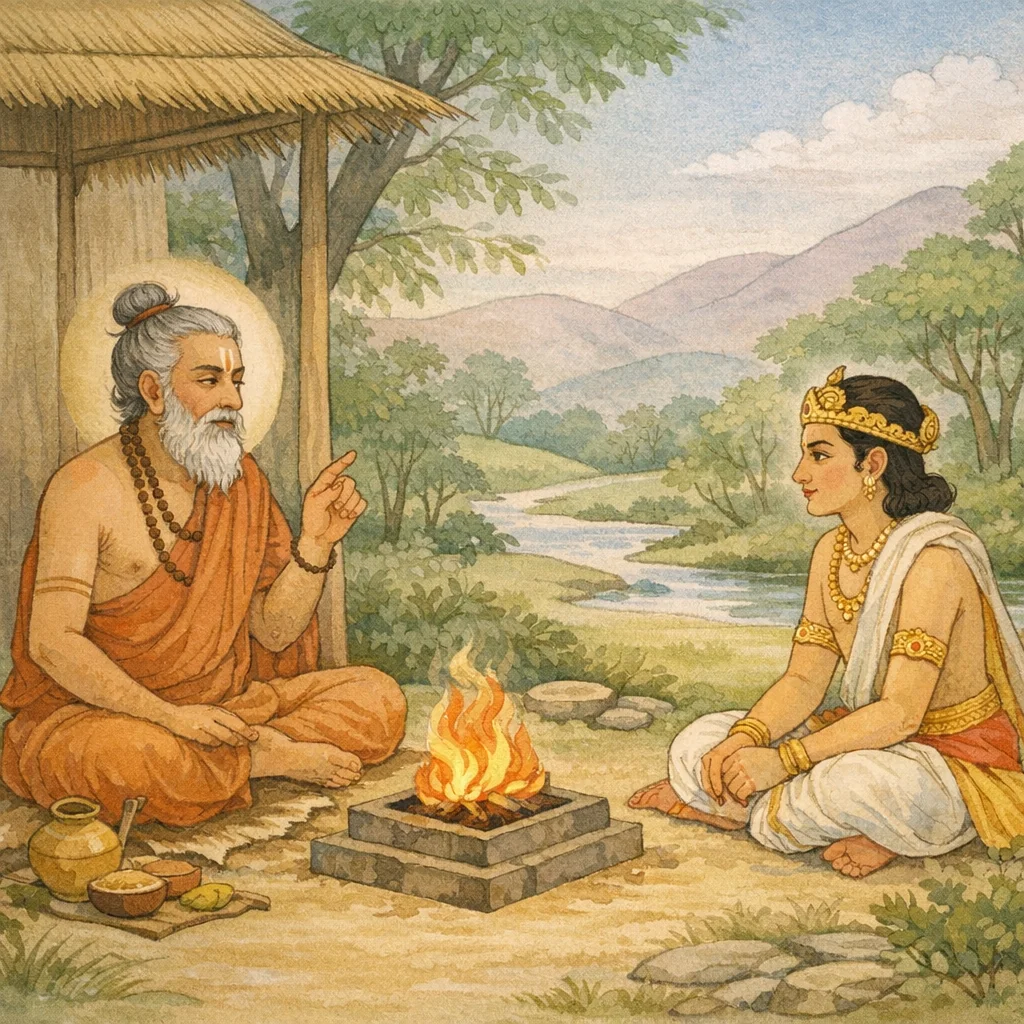
Adhyaya 153
अज्ञान–लोभयोः परस्परहेतुत्वम् (Mutual Causality of Ignorance and Greed)
Upa-parva: Rajadharmānuśāsana (Instruction on the Dharma of Kings) — Ajñāna–Lobha Discourse Unit
Yudhiṣṭhira asks Bhīṣma to explain ajñāna in technical terms—its manifestation, locus, increase, decline, origin, association, trajectory, temporal condition, and causality—because suffering is experienced as arising from ignorance. Bhīṣma replies by characterizing ajñāna through a cluster of affective and behavioral dispositions: attachment and aversion (rāga–dveṣa), delusion (moha), elation and grief (harṣa–śoka), pride (abhimāna), desire and anger (kāma–krodha), arrogance (darpa), and inertia (tandrī/ālasyam), along with distress and envy at others’ prosperity. He states that ajñāna and excessive greed (atilobha) produce comparable results and should be understood as one in effect. He further asserts a feedback loop: greed arises from ignorance and ignorance arises from greed; consequently, many faults originate in greed and therefore greed should be abandoned. As illustrative validation, Bhīṣma cites exemplary kings (e.g., Janaka) who attained higher ends through the diminution of greed. The chapter closes with a pragmatic exhortation: renounce greed directly to secure well-being in this life and favorable outcomes beyond.
Chapter Arc: शौनक जनमेजय के भीतर उठी धर्म-प्रतिज्ञा को देखकर कहते हैं कि अब उसका मन पाप से हट चुका है—और इसी क्षण वे उसे धर्म का उपदेश देने का संकल्प लेते हैं। → राजा के पुराने तीक्ष्ण स्वभाव, आवेग और ‘पूर्वापर विचार’ के बिना कर्म आरम्भ करने की प्रवृत्ति को सामने रखकर शौनक चेताते हैं कि ऐसा कार्पण्य (अविवेकजन्य दुर्बलता) मनुष्य का सर्वनाश कर देता है; फिर वे यज्ञ, दीर्घायु-इच्छा, और तप/संन्यास के बीच के सूक्ष्म संतुलन की ओर उसे ले जाते हैं। → देव-दानव प्रसंग के माध्यम से निर्णायक प्रश्न उठता है—यदि दोनों पक्ष समान हों तो विजय किसकी, और धर्मशील मनुष्य पाप को कैसे नुदता है? यहीं शौनक धर्म-फल की कसौटी को ‘विवेक, त्याग, और शुद्ध संकल्प’ से जोड़कर राजा के अंतःकरण का निर्णयन करते हैं। → उपदेश का फल यह होता है कि जनमेजय ‘व्यपनीत-कल्मष’ होकर श्रेय के मार्ग को चुनता है; वह प्रज्वलित अग्नि-सा तेजस्वी बनकर अपने राज्य में वैसे प्रवेश करता है जैसे पूर्ण चन्द्रमा आकाश में—अर्थात् अपराध-बोध से मुक्त, पर धर्म-स्मृति से बंधा हुआ। → सुख-दुःख की द्वैत-मीमांसा और ‘पुण्य-पाप से निवृत्ति’ की ओर संकेत (त्यजतां जीवितं श्रेयो...) अगले उपदेश-खंड के लिए प्रश्न छोड़ता है: क्या परम श्रेय जीवन-त्याग/वैराग्य में है, या राजधर्म के भीतर ही?
Shlokas
Verse 1
ऑपन--मराज बछ। डे द्विपज्चाशर्दाधिकशततमो< ध्याय: इन्द्रोतका जनमेजयको धर्मोपदेश करके उनसे अश्वमेधयज्ञका अनुष्ठान कराना तथा निष्पाप राजाका पुनः अपने राज्यमें प्रवेश शौनक उवाच तस्मात् ते#हं प्रवक्ष्यामि धर्ममावृतचेतसे । श्रीमान् महाबलस्तुष्ट: स्वयं धर्ममवेक्षसे
Śaunaka said: “Therefore I shall expound dharma to you, whose mind is still veiled (by doubt and grief). You are illustrious and of great strength; being inwardly satisfied, you will yourself discern and confirm what dharma truly is.”
Verse 2
शौनकने कहा--राजन्! तुमने ऐसी प्रतिज्ञा की है, इससे जान पड़ता है कि तुम्हारा मन पापकी ओरसे निवृत्त हो गया है; इसलिये मैं तुम्हें धर्मका उपदेश करूँगा; क्योंकि तुम श्रीसम्पन्न, महाबलवान् और संतुष्टचित हो। साथ ही स्वयं धर्मपर दृष्टि रखते हो ।। पुरस्ताद् दारुणो भूत्वा सुचित्रतरमेव तत् | अनुगृह्नाति भूतानि स्वेन वृत्तेन पार्थिव:,राजा पहले कठोर स्वभावका होकर पीछे कोमल भावका अवलम्बन करके जो अपने सदव्यवहारसे समस्त प्राणियों पर अनुग्रह करता है, वह अत्यन्त आश्वर्यकी ही बात है
Śaunaka said: “O King, since you have made such a vow, it appears that your mind has turned away from sin. Therefore I shall instruct you in dharma—for you are endowed with prosperity, great strength, and a contented heart, and you yourself keep your gaze fixed upon righteousness. Indeed, it is a striking thing when a ruler, having first been harsh, later adopts gentleness and, by his own upright conduct, shows favor and protection to all living beings.”
Verse 3
कृत्स्नं नूनं स दहति इति लोको व्यवस्यति । यत्र त्वं तादृशो भूत्वा धर्ममेवानुपश्यसि,चिरकालतक तीक्ष्ण स्वभावका आश्रय लेनेवाला राजा निश्चय ही अपना सब कुछ जलाकर भस्म कर डालता है, ऐसी लोगोंकी धारणा है; परंतु तुम वैसे होकर भी जो धर्मपर ही दृष्टि रख रहे हो, यह कम आश्वर्यकी बात नहीं है
Śaunaka said: “People are convinced that such a man surely burns everything to the ground. Yet you, even while being of that very kind, keep your gaze fixed only on dharma—this is no small wonder.”
Verse 4
हित्वा तु सुचिरं भक्ष्यं भोज्यांश्न तप आस्थित: । 22 88% | जनमेजय
Śaunaka said: “Having long renounced foods meant for chewing and for eating, he undertook austerity.”
Verse 5
जनमेजय! तुम जो दीपकालसे भक्ष्य-भोज्य आदि पदार्थोंका परित्याग करके तपस्यामें लगे हुए हो, यह पापसे अभिभूत हुए मनुष्योंके लिये अद्भुत बात है ।। यो<दुर्लभो भवेद् दाता कृपणो वा तपोधन: । अनाश्चर्य तदित्याहुर्नातिदूरेण वर्तते,यदि धन-सम्पन्न पुरुष दानी हो एवं कृपण या दरिद्र मनुष्य तपस्याका धनी हो जाय तो इसे आश्वर्यकी बात नहीं मानते हैं; क्योंकि ऐसे पुरुषोंका दान और तपसे सम्पन्न होना अधिक कठिन नहीं है
Śaunaka addresses King Janamejaya: “That you have set yourself to austerity—renouncing foods and delicacies even at the time of the lamp-lighting meal—is a wonder for people overwhelmed by sin. Yet, they say it is not truly astonishing if a wealthy man becomes a giver, or if a miserly or poor man becomes rich in austerity; for in such cases, generosity for the affluent and ascetic discipline for the deprived are not far beyond reach.”
Verse 6
एतदेव हि कार्पण्यं समग्रमसमीक्षितम् | यच्चेत् समी क्षयैव स्याद् भवेत् तस्मिंस्ततो गुण:,यदि सारी बातोंपर पूर्वापर विचार न करके कोई कार्य आरम्भ किया जाय तो यही कायरतापूर्ण दोष है और यदि भलीभाँति आलोचना करके कोई कार्य हो तो यही उसमें गुण माना जाता है
Śaunaka said: This indeed is the very fault of cowardly weakness—when a matter is taken up in its entirety without prior examination. But if an undertaking proceeds only after careful scrutiny, then that very deliberation becomes its merit. In ethical life, rash action born of confusion is blameworthy, while reflective discernment is praised as a virtue.
Verse 7
यज्ञो दानं दया वेदा: सत्यं च पृथिवीपते । पज्चैतानि पवित्राणि षष्ठ॑ सुचरितं तप:,पृथ्वीनाथ! यज्ञ, दान, दया, वेद, और सत्य--ये पाँचों पवित्र बताये गये हैं। इनके साथ अच्छी तरह आचरणमें लाया हुआ तप भी छठा पवित्र कर्म माना गया है
Śaunaka said: “O lord of the earth, sacrifice, charity, compassion, the Vedas, and truth—these five are declared to be purifying. Along with them, austerity that is well-practised and rightly conducted is counted as the sixth purifying discipline.”
Verse 8
तदेव राज्ञां परमं पवित्र॑ं जनमेजय । तेन सम्यग्गृहीतेन श्रेयांसं धर्ममाप्स्यसि,जनमेजय! राजाओंके लिये ये छहों वस्तुएँ परम पवित्र हैं। इन्हें भलीभाँति आचरणमें लानेपर तुम श्रेष्ठतम धर्मको प्राप्त कर लोगे
Śaunaka said: “O Janamejaya, this alone is the supreme purifier for kings. If you truly grasp it and adopt it in conduct, you will attain the highest and most beneficial form of dharma.”
Verse 9
पुण्यदेशाभिगमनं पवित्र परमं स्मृतम् । अत्राप्युदाहरन्तीमां गाथां गीतां ययातिना,पुण्य तीर्थोकी यात्रा करना भी परम पवित्र माना गया है। इस विषयमें विज्ञ पुरुष राजा ययातिकी गायी हुई इस गाथाका उदाहरण दिया करते हैं
Śaunaka said: “Going to a holy region is remembered as supremely purifying. In this very matter, learned people cite as an illustration a gāthā once sung by King Yayāti.”
Verse 10
यो मर्त्य: प्रतिपद्येत आयुर्जीवितमात्मन: । यज्ञमेकान्तत: कृत्वा तत् संन्यस्य तपश्चरेत्,जो मनुष्य अपने लिये दीर्घ जीवनकी इच्छा रखता है, वह यत्नपूर्वक यज्ञका अनुष्ठान करके फिर उसे त्यागकर तपस्यामें लग जाय
Śaunaka said: “If a mortal seeks long life for himself, he should first undertake the performance of sacrifice with single-minded diligence; then, having renounced that sacrificial course, he should devote himself to austerity.”
Verse 11
पुण्यमाहु: कुरुक्षेत्रं कुरुक्षेत्रात् सरस्वतीम् । सरस्वत्याश्ष तीर्थानि तीर्थभ्यश्व पृथूदकम्,कुरक्षेत्रको पवित्र तीर्थ बताया गया। कुरुक्षेत्रसे अधिक पवित्र सरस्वती नदी है, उससे भी अधिक पवित्र उसके भिन्न-भिन्न तीर्थ हैं। उन तीर्थोंमें भी दूसरोंकी अपेक्षा पृथूदक तीर्थको श्रेष्ठ कहा गया है
Śaunaka said: “They declare Kurukṣetra to be holy; holier than Kurukṣetra is the river Sarasvatī; holier still are the many sacred fords (tīrthas) upon Sarasvatī; and among those tīrthas, Pṛthūdaka is praised as the most excellent.”
Verse 12
यत्रावगाहा पीत्वा च नैनं श्वोमरणं तपेत् । महासर: पुष्कराणि प्रभासोत्तरमानसे,उसमें स्नान करने और उसका जल पीनेसे मनुष्यको कल ही होनेवाली मृत्युका भय नहीं सताता अर्थात् वह कृतकृत्य हो जाता है। इस कारण मरनेसे नहीं डरता। यदि तुम महासरोवर पुष्कर, प्रभास, उत्तर मानस, कालोदक, दृषद्गवती और सरस्वतीके संगम तथा मानसरोवर आदि तीर्थोमें जाकर स्नान करोगे तो तुम्हें पुन: अपने जीवनके लिये दीर्घायु प्राप्त होगी
Śaunaka said: “In that sacred place, after bathing and drinking its water, a person is no longer tormented by the fear of dying even the very next day; he becomes fulfilled, having done what ought to be done. Therefore he does not dread death. If you go and bathe at the great lake Puṣkara, at Prabhāsa, at Uttara-mānasa, at Kālodaka, at Dṛṣadgavatī, at the confluence of the Sarasvatī, and at other holy fords such as Mānasa-sarovara, you will again obtain long life for the sake of your continued living.”
Verse 13
कालोदकं च गन्तासि लब्धायुर्जीविते पुन: । सरस्वतीदृषद्वत्यो: संगमो मानस: सर:,उसमें स्नान करने और उसका जल पीनेसे मनुष्यको कल ही होनेवाली मृत्युका भय नहीं सताता अर्थात् वह कृतकृत्य हो जाता है। इस कारण मरनेसे नहीं डरता। यदि तुम महासरोवर पुष्कर, प्रभास, उत्तर मानस, कालोदक, दृषद्गवती और सरस्वतीके संगम तथा मानसरोवर आदि तीर्थोमें जाकर स्नान करोगे तो तुम्हें पुन: अपने जीवनके लिये दीर्घायु प्राप्त होगी
Śaunaka said: “You should also go to Kālodaka; having obtained long life, you will live again. (Go as well to) the confluence of the Sarasvatī and Dṛṣadvatī, and to the lake called Mānasa. Bathing in such tīrthas and drinking their waters removes the dread of imminent death, for one becomes inwardly fulfilled (kṛtakṛtya) and thus no longer fears dying; and by undertaking these pilgrimages—such as Puṣkara, Prabhāsa, Uttara-Mānasa, Kālodaka, the Dṛṣadvatī–Sarasvatī confluence, and Mānasa-sarovara—one is said to regain longevity and steadiness of life.”
Verse 14
स्वाध्यायशील: स्थानेषु सर्वेषु समुपस्पृशेत् । त्यागधर्म: पवित्राणां संन्यासं मनुरब्रवीत्,सभी तीर्थस्थानोंमें स्वाध्यायशील होकर स्नान करे। मनुने कहा है कि सर्वत्यागरूप संन्यास सम्पूर्ण पवित्र धर्मोमें श्रेष्ठ है
Śaunaka said: “Let one devoted to self-study (svādhyāya) perform purificatory bathing at all sacred fords (tīrthas). Manu has declared that renunciation—saṃnyāsa, the dharma of complete relinquishment—is the highest among all purifying disciplines.”
Verse 15
अत्राप्युदाहरन्तीमा गाथा: सत्यवता कृता: । यथा कुमार: सत्यो वै नैव पुण्यो न पापकृत्,इस विषयमें भी सत्यवान् द्वारा निर्मित हुई इन गाथाओंका उदाहरण दिया जाता है। जैसे बालक रण-द्वेषसे शून्य होनेके कारण सदा सत्यपरायण ही रहता है। न तो वह पुण्य करता है और न पाप ही। इसी प्रकार प्रत्येक श्रेष्ठ पुरुषको भी होना चाहिये
Here too, they cite these verses composed by Satyavān as an illustration: just as a young boy, free from the impulses of conflict and hatred, is naturally devoted to truth, so he neither deliberately earns merit nor deliberately commits sin. In the same way, every truly noble person should be: established in truth, untainted by intentional wrongdoing, and not driven by hostile passions.
Verse 16
न हास्ति सर्वभूतेषु दुः:खमस्मिन् कुत: सुखम् । एवं प्रकृतिभूतानां सर्वसंसर्गयायिनाम्
Śaunaka said: “In this world, among all living beings, suffering is never absent—so how could happiness be assured? Such is the very nature of embodied creatures: they must pass through every kind of association and contact, and with those contacts come inevitable pains, while pleasures are fleeting.”
Verse 17
यत्त्वेव राज्ञो ज्यायिष्ठं कार्याणां तद् ब्रवीमि ते,अब मैं राजाके कार्योमें जो सबसे श्रेष्ठ है, उसका वर्णन करता हूँ। जनेश्वर! तुम धैर्ययुक्त बल और दानके द्वारा स्वर्गलोकपर विजय प्राप्त करो। जिसके पास बल और ओज है, वही मनुष्य धर्माचरणमें समर्थ होता है
Śaunaka said: “I shall tell you what is truly the foremost of a king’s duties. O lord of men, by steadfast courage, strength, and generosity, win victory over the heavenly world. For the one who possesses strength and vital energy (ojas) alone is capable of sustained practice of dharma.”
Verse 18
बलेन संविभागैश्नलू जय स्वर्ग जनेश्वर । यस्यैव बलमोजश्न स धर्मस्य प्रभुर्नर:,अब मैं राजाके कार्योमें जो सबसे श्रेष्ठ है, उसका वर्णन करता हूँ। जनेश्वर! तुम धैर्ययुक्त बल और दानके द्वारा स्वर्गलोकपर विजय प्राप्त करो। जिसके पास बल और ओज है, वही मनुष्य धर्माचरणमें समर्थ होता है
“I shall now describe what is most excellent among a king’s duties. O lord of men, conquer heaven through steadfast strength and through generous distribution. For the man who truly possesses strength and vital energy (ojas) is the one capable of upholding and practicing dharma.”
Verse 19
ब्राह्मणानां सुखार्थ हि त्वं पाहि वसुधां नूप । यथैवैतान् पुरा$&क्षैप्सीस्तथैवैतान् प्रसादय,नरेश्वर! तुम ब्राह्मणोंको सुख पहुँचानेके लिये ही सारी पृथ्वीका पालन करो। जैसे पहले इन ब्राह्मणोंपर आक्षेप किया था, वैसे इन सबको अपने सददबर्तावसे प्रसन्न करो
O king of men! For the happiness of the brāhmaṇas, protect and govern the whole earth. As once you cast reproaches upon these brāhmaṇas, so now, by your grace and good conduct, make them all content.
Verse 20
अपि धिकृक्रियमाणो<पि त्यज्यमानो5प्यनेकधा । आत्मनो दर्शनाद् विप्रान्न हन्तास्मीति मार्गय । घटमान: स्वकार्येषु कुरु नि:श्रेयसं परम्,वे बार-बार तुम्हें धिक्कारें और फटकारकर दूर हटा दें तो भी उनमें आत्मदृष्टि रखकर तुम यही निश्चय करो कि अब मैं ब्राह्मणोंको नहीं मारूँगा। अपने कर्तव्यपालनके लिये पूरी चेष्टा करते हुए परम कल्याणका साधन करो
Even if you are reviled again and again and driven away in many ways, regard the brāhmaṇas as your very self and cling to this resolve: “I shall not kill the brāhmaṇas.” Striving earnestly in your own duties, pursue the highest good (niḥśreyasa).
Verse 21
हिमाग्निघोरसद्शो राजा भवति कश्चन | लांगलाशनिकल्पो वा भवेदन्य: परंतप,परंतप! कोई राजा बर्फके समान शीतल होता है, कोई अग्निके समान ताप देनेवाला होता है, कोई यमराजके समान भयानक जान पड़ता है, कोई घास-फ़ूसका मूलोच्छेद करनेवाले हलके समान दुष्टोंका समूल उन्मूलन करनेवाला होता है तथा कोई पापा- चारियोंपर अकस्मात् वज्रके समान टूट पड़ता है
Śaunaka said: “Among kings, one may be cool and soothing like snow; another may burn like fire; another may appear terrifying like Death itself. Yet another, like a plough or a thunderbolt, uproots wickedness from its very roots and strikes down wrongdoers suddenly. Thus rulers differ in temperament and in the manner by which they uphold order and punish adharma.”
Verse 22
न विशेषेण गन्तव्यमविच्छिन्नेन वा पुन: । न जातु नाहमस्मीति सुप्रसक्तमसाधुषु,कभी मेरा अभाव नहीं हो जाय, ऐसा समझकर राजाको चाहिये कि दुष्ट पुरुषोंका संग कभी न करे। न तो उनके किसी विशेष गुणपर आकृष्ट हो, न उनके साथ अविच्छित्न सम्बन्ध स्थापित करे और न उनमें अत्यन्त आसक्त ही हो
Śaunaka said: One should not associate with the wicked—neither by being drawn to some particular excellence in them, nor by forming an unbroken, continuing relationship with them. Never should one become deeply attached to such people, thinking, “Without them I cannot be,” for such dependence leads to moral decline.
Verse 23
विकर्मणा तप्यमान: पापादू विपरिमुच्यते । नैतत् कार्य पुनरिति द्वितीयात् परिमुच्यते,यदि कोई शास्त्रविरुद्ध कर्म बन जाय तो उसके लिये पश्चात्ताप करनेवाला पुरुष पापसे मुक्ता हो जाता है। यदि दूसरी बार पाप बन जाय तो “अब फिर ऐसा काम नहीं करूँगा! ऐसी प्रतिज्ञा करनेसे वह पापमुक्त हो सकता है
Śaunaka said: A person who is tormented by remorse after committing an act contrary to śāstra is released from the sin through that penitential suffering. And if the fault occurs a second time, one becomes free from it by making the firm resolve, “I will not do this again.”
Verse 24
करिष्ये धर्ममेवेति तृतीयात् परिमुच्यते । शुचिस्तीर्थान्यनुचरन् बहुत्वात्परिमुच्यते,“आजसे केवल धर्मका ही आचरण करूँगा" ऐसा नियम लेनेसे वह तीसरी बारके पापसे छुटकारा पा जाता है और पवित्र तीर्थोमें विचरण करनेवाला पुरुष अनेक बारके किये हुए बहुसंख्यक पापोंसे मुक्त हो जाता है
Śaunaka said: “By taking the vow, ‘I shall practice dharma alone,’ a person is freed from the third recurrence of sin. And one who is pure and who journeys through sacred tīrthas is released, by virtue of their multitude, from the many sins accumulated over numerous occasions.”
Verse 25
कल्याणमनुकर्तव्यं पुरुषेण बुभूषता । ये सुगन्धीनि सेवन्ते तथागन्धा भवन्ति ते,सुखकी अभिलाषा रखनेवाले पुरुषको कल्याणकारी कर्मोंका अनुष्ठान करना चाहिये। जो सुगन्धित पदार्थोंका सेवन करते हैं, उनके शरीरसे सुगन्ध निकलती है और जो सदा दुर्गन्धका सेवन करते हैं, वे अपने शरीरसे दुर्गन्न्ध ही फैलाते हैं। जो मनुष्य तपस्यामें तत्पर होता है, वह तत्काल सारे पापोंसे मुक्ता हो जाता है
Śaunaka said: A man who seeks true well-being should practice what is auspicious and beneficial. Those who associate with fragrant substances become fragrant in turn; likewise, those who continually partake of what is foul come to carry and spread foulness themselves. The teaching points to the moral law of association: by keeping company with the good and cultivating wholesome conduct, one’s character is refined; by clinging to the impure, one’s nature is degraded.
Verse 26
ये दुर्गन्धीनि सेवते तथागन्धा भवन्ति ते । तपश्चर्यापर: सद्यः पापाद् विपरिमुच्यते,सुखकी अभिलाषा रखनेवाले पुरुषको कल्याणकारी कर्मोंका अनुष्ठान करना चाहिये। जो सुगन्धित पदार्थोंका सेवन करते हैं, उनके शरीरसे सुगन्ध निकलती है और जो सदा दुर्गन्धका सेवन करते हैं, वे अपने शरीरसे दुर्गन्न्ध ही फैलाते हैं। जो मनुष्य तपस्यामें तत्पर होता है, वह तत्काल सारे पापोंसे मुक्ता हो जाता है
Śaunaka said: Those who partake of foul-smelling things come to bear that very odor; they become like what they associate with. Likewise, one devoted to austerity and disciplined practice is at once released from sin. The teaching points to moral causality: habits and chosen company shape one’s character and condition, while tapas (self-restraint and spiritual discipline) purifies and frees.
Verse 27
संवत्सरमुपास्याग्निमभिशस्त: प्रमुच्यते । त्रीणि वर्षाण्युपास्याग्निं भ्रूणहा विप्रमुच्यते,लगातार एक वर्षतक अग्निहोत्र करनेसे कलंकित पुरुष अपने ऊपर लगे हुए कलंकसे छूट जाता है। तीन वर्षोतक अग्निकी उपासना करनेसे भ्रूणहत्यारा भी पापमुक्त हो जाता है
By tending and worshiping the sacred fire (Agni) for a full year, one who is stained by reproach is freed from that stain. By tending the fire for three years, even one guilty of killing an unborn child (bhrūṇa-han) is released from sin.
Verse 28
महासर: पुष्कराणि प्रभासोत्तरमानसे । अभ्येत्य योजनशतं भ्रूणहा विप्रमुच्यते,महासरोवर पुष्कर, प्रभास तीर्थ तथा उत्तर मानसरोवर आदि तीर्थोमें सौ योजनतककी पैदल यात्रा करनेसे भी भ्रूणहत्याके पापसे छुटकारा मिल जाता है
Śaunaka said: By approaching and undertaking a journey of a hundred yojanas to the great lake, to Puṣkara, to Prabhāsa, and to the northern Mānasarovara, even one stained by the grave sin of brahma-hatya (here, the killing of an unborn child) is released from that guilt.
Verse 29
यावत: प्राणिनो हन्यात् तज्जातीयांस्तु तावतः । प्रमीयमानानुन्मोच्य प्राणिहा विप्रमुच्यते,प्राणियोंकी हत्या करनेवाला मनुष्य जितने प्राणियोंका वध करता है, उसी जातिके उतने ही प्राणियोंको मृत्युसे छुटकारा दिला दे अर्थात् उनको मरनेके संकटसे छुड़ा दे तो वह उनकी हत्याके पापसे मुक्त हो जाता है
Śaunaka said: “A killer of living beings is released from the sin of killing when, for as many creatures as he has slain, he rescues an equal number of creatures of the same kind from impending death—saving them from the danger of dying.”
Verse 30
अपि चाप्सु निमज्जेत जपेस्त्रिरघमर्षणम् । यथाश्वमेधावभूथस्तथा तन्मनुरब्रवीत्,यदि मनुष्य तीन बार अघमर्षणका जप करते हुए जलमें गोता लगावे तो उसे अश्वमेधयज्ञमें अवभूथस्नान करनेका फल मिलता है, ऐसा मनुजीने कहा है
Śaunaka said: “If a person immerses himself in water and recites the Aghamarṣaṇa three times, he attains the same merit as the concluding purificatory bath (avabhṛtha-snāna) of an Aśvamedha sacrifice—so Manu has declared.”
Verse 31
तत् क्षिप्रं नुदते पापं सत्कारं लभते तथा । अपि चैन प्रसीदन्ति भूतानि जडमूकवत्,वह अधमर्षण मन्त्रका जप करनेवाला मनुष्य शीघ्र ही अपने सारे पापोंको दूर कर देता है और उसे सर्वत्र सम्मान प्राप्त होता है। सब प्राणी जड एवं मूकके समान उसपर प्रसन्न हो जाते हैं
By that practice, a person quickly drives away sin and likewise gains honor and respectful regard. Even living beings become favorably disposed toward him, as if rendered harmless and silent—like the inert and the mute.
Verse 32
बृहस्पति देवगुरुं सुरासुरा: सर्वे समेत्याभ्यनुयुज्य राजन् । धर्म्य फलं वेत्थ फल महर्षे तथैव तस्मिन्नरके पारलोक्ये,राजन्! एक समय सब देवताओं और असुरोंने बड़े आदरके साथ देवगुरु बृहस्पतिके निकट जाकर पूछा--“महर्ष! आप धर्मका फल जानते हैं। इसी प्रकार परलोकमें जो पापोंके फलस्वरूप नरकका कष्ट भोगना पड़ता है, वह भी आपसे अज्ञात नहीं है, परंतु जिस योगीके लिये सुख और दु:ख दोनों समान हैं, वह उन दोनोंके कारणरूप पुण्य और पापको जीत लेता है या नहीं। महर्षे! आप हमारे समक्ष पुण्यके फलका वर्णन करें और यह भी बतावें कि धर्मात्मा पुरुष अपने पापोंका नाश कैसे करता है?”
Śaunaka said: “O King, once all the gods and the asuras assembled together and, with great reverence, approached Bṛhaspati, the preceptor of the gods, and questioned him. ‘O great sage, you know the righteous fruits of dharma, and you are also not ignorant of the torment of hell in the other world that arises as the fruit of sin. But does the yogin, for whom pleasure and pain are alike, truly conquer the merit and demerit that are the causes of those experiences? Please describe to us the fruits of virtue, and also tell how a righteous man destroys his sins.’”
Verse 33
उभे तु यस्य सदृशे भवेतां किंस्वित् तयोस्तत्र जयो5थ न स्यात् । आचक्ष्व न: पुण्यफलं महर्षे कथं पापं नुदते धर्मशील:,राजन्! एक समय सब देवताओं और असुरोंने बड़े आदरके साथ देवगुरु बृहस्पतिके निकट जाकर पूछा--“महर्ष! आप धर्मका फल जानते हैं। इसी प्रकार परलोकमें जो पापोंके फलस्वरूप नरकका कष्ट भोगना पड़ता है, वह भी आपसे अज्ञात नहीं है, परंतु जिस योगीके लिये सुख और दु:ख दोनों समान हैं, वह उन दोनोंके कारणरूप पुण्य और पापको जीत लेता है या नहीं। महर्षे! आप हमारे समक्ष पुण्यके फलका वर्णन करें और यह भी बतावें कि धर्मात्मा पुरुष अपने पापोंका नाश कैसे करता है?”
Śaunaka said: “If for a person pleasure and pain become truly alike, would there still be any ‘victory’ over the pair—or would victory and defeat cease to apply? O great sage, tell us the fruit of merit. And explain how a man devoted to dharma drives away sin.”
Verse 34
ब॒हस्पतिरुवाच कृत्वा पापं पूर्वमबुद्धिपूर्व पुण्यानि चेत्कुरुते बुद्धिपूर्वम् । स तत् पापं नुदते कर्मशीलो वासो यथा मलिने क्षारयुक्तम्,बृहस्पतिजीने कहा--यदि मुनष्य पहले बिना जाने पाप करके फिर जान-बूझकर पुण्यकर्मोंका अनुष्ठान करता है तो वह सत्कर्मपरायण पुरुष अपने पापको उसी प्रकार दूर कर देता है, जैसे क्षार (सोडा, साबुन आदि) लगानेसे कपड़े का मैल छूट जाता है
Bṛhaspati said: If a person has earlier committed a sin unknowingly, and then, with clear understanding, undertakes acts of merit, that man—steadfast in righteous action—drives away that sin, just as a stained garment is cleansed when treated with alkali (such as washing soda or soap).
Verse 35
पापं कृत्वाभिमन्येत नाहमस्मीति पूरुष: । तच्चिकीर्षति कल्याणं श्रद्धधानोडनसूयक:,मनुष्यको चाहिये कि वह पाप करके अहंकार न प्रकट करे--हेकड़ी न दिखावे, अपितु श्रद्धापूर्वक दोषदृष्टिका परित्याग करके कल्याणमय धर्मके अनुष्ठानकी इच्छा करे
Śaunaka said: A person, even after committing a sin, should not become arrogant and think, “I am not at fault.” Rather, with faith and without fault-finding or malice toward others, he should resolve to pursue what is wholesome—undertaking righteous conduct that leads to well-being.
Verse 36
छिद्राणि विवृतान्येव साधूनां चावृणोति यः । यः पाप॑ पुरुष: कृत्वा कल्याणमभिपलद्यते,जो मनुष्य श्रेष्ठ पुरुषोंके खुले हुए छिद्रोंको ढकता है अर्थात् उनके प्रकट हुए दोषोंको भी छिपानेकी चेष्टा करता है तथा जो पाप करके उससे विरत हो कल्याणमय कर्ममें लग जाता है, वे दोनों ही पापरहित हो जाते हैं
Śaunaka said: He who covers the openly visible faults of the virtuous—striving to conceal their exposed shortcomings—and he who, having committed sin, turns away from it and enters upon wholesome conduct: both become free from sin.
Verse 37
यथा<55दित्य: प्रातरुद्यंस्तम: सर्व व्यपोहति । कल्याणमाचरन्नेवं सर्वपापं व्यपोहति,जैसे सूर्य प्रातःकाल उदित होकर सारे अन्धकारको नष्ट कर देता है उसी प्रकार शुभकर्मका आचरण करनेवाला पुरुष अपने सभी पापोंका अन्त कर देता है
Śaunaka said: Just as the sun, rising in the morning, drives away all darkness, so too a person who practices auspicious and wholesome conduct dispels all sin.
Verse 38
भीष्म उवाच एवमुकक््त्वा तु राजानमिन्द्रोतो जनमेजयम् । याजयामास विधिवत् वाजिमेधेन शौनक:,भीष्मजी कहते हैं-राजन्! ऐसा कहकर शौनक इन्द्रोतने राजा जनमेजयसे विधिपूर्वक अश्वमेधयज्ञका अनुष्ठान कराया
Bhishma said: Having spoken thus to King Janamejaya, Indrota’s son Shaunaka then had the king duly perform the Aśvamedha sacrifice in accordance with prescribed rite.
Verse 39
ततः स राजा व्यपनीतकल्मष: श्रेयोवृत: प्रज्वलिताग्निरूपवान् | विवेश राज्यं स्वममित्रकर्षणो यथा दिवं पूर्णवपुर्निशाकर:,इससे राजा जनमेजयका सारा पाप नष्ट हो गया और वे प्रज्वलित अग्निके समान देदीप्यमान होने लगे। उन्हें सब प्रकारके श्रेय प्राप्त हो गये। जैसे पूर्ण चन्द्रमा आकाशमण्डलमें प्रवेश करता है, उसी प्रकार शत्रुसूदन जनमेजयने पुनः अपने राज्यमें प्रवेश किया
Bhīṣma said: Thereafter that king, his stains of sin removed, became clothed in auspicious welfare and shone like a blazing fire. The subduer of foes entered again into his own kingdom, just as the full-bodied moon enters the vault of heaven—radiant, complete, and beneficent.
Verse 151
इस प्रकार श्रीमह्या भारत शान्तिपर्वके अन्तर्गत आपद्धर्मपर्वमें इन्द्रोत और पारिक्षितका संवाद विषयक एक सौ इक्यावनवाँ अध्याय पूरा हुआ
Thus ends the one-hundred-and-fifty-first chapter of the Āpaddharma section within the Śānti Parva of the sacred Mahābhārata, dealing with the dialogue between Indrota and Parīkṣit.
Verse 152
इति श्रीमहाभारते शान्तिपर्वणि आपद्धर्मपर्वणि इन्द्रोतपारिक्षितीये द्विपज्चाशदधिकशततमो<्ध्याय:
Thus, in the Śrī Mahābhārata, within the Śānti Parvan—specifically the Āpaddharma Parvan—ends the one-hundred-and-fifty-second chapter, in the sub-narrative concerning Indrota and King Parīkṣit.
Verse 163
त्यजतां जीवितं श्रेयो निवृत्ते पुण्यपापके । इस संसारके सम्पूर्ण प्राणियोंमें जब दुःख ही नहीं है, तब सुख कहाँसे हो सकता है? यह सुख और दुःख दोनों ही प्रकृतिस्थ प्राणियोंके धर्म हैं, जो कि सब प्रकारके संसर्गदोषको स्वीकार करके उनके अनुसार चलते हैं। जिन्होंने ममता और अहंकार आदिके साथ सब कुछ त्याग दिया है, जिनके पुण्य और पाप सभी निवृत्त हो चुके हैं, ऐसे पुरुषोंका जीवन ही कल्याणमय है
Śaunaka said: For those in whom both merit and sin have come to rest, renunciation—even of life—is held to be the higher good. In the world of embodied beings, pleasure cannot be found without the shadow of suffering; happiness and sorrow arise as natural conditions of creatures bound to prakṛti, moving amid the defects of contact and association. But the one who has abandoned all possessions and claims along with ‘mine-ness’ and ego, and in whom the impulses of virtue and vice have ceased, such a person’s very living becomes auspicious and welfare-bearing.
Frequently Asked Questions
The chapter analyzes how ignorance leads to harmful action and social blame, and how greed amplifies this condition—together producing suffering, instability, and conflict with virtuous conduct.
Bhīṣma’s instruction is to recognize ajñāna through its emotional-behavioral markers and to actively abandon greed, since greed and ignorance operate as a reinforcing cycle that generates many faults.
Yes in functional form: it asserts that renouncing greed yields well-being in the present world and favorable post-mortem outcomes, presenting ethical restraint as both pragmatic and soteriologically beneficial.