Adhyaya 15
Daṇḍa as the Foundation of Social Order (दण्डप्रतिष्ठा)
Upa-parva: Rājadharmānuśāsana (Instruction on Kingly Duties)
This chapter presents a sustained argument that daṇḍa (discipline, juridical authority, deterrent sanction) is the operative mechanism by which social order is maintained. The discourse frames daṇḍa as protective and regulatory: it safeguards subjects, resources (grain/wealth), and the triad of dharma–artha–kāma by preventing disorder and predation. Multiple bases for compliance are enumerated—fear of royal sanction, fear of post-mortem consequence, and mutual social fear—culminating in the thesis that collective stability is ‘established in daṇḍa.’ The text links daṇḍa to maryādā (boundary-setting) and depicts it as enabling normative institutions: education, ritual practice, livelihood, marriage customs, and the functioning of the āśramas. It also acknowledges the empirical reality of harm in living systems (predation and subsistence), using illustrative chains of beings consuming others to argue that governance must be fitted to the world’s conditions. The chapter concludes by urging the ruler to protect subjects, uphold dharma, preserve allies, and neutralize aggressors without personal malice, while also embedding a metaphysical note on the continuity of the self across changing bodies.
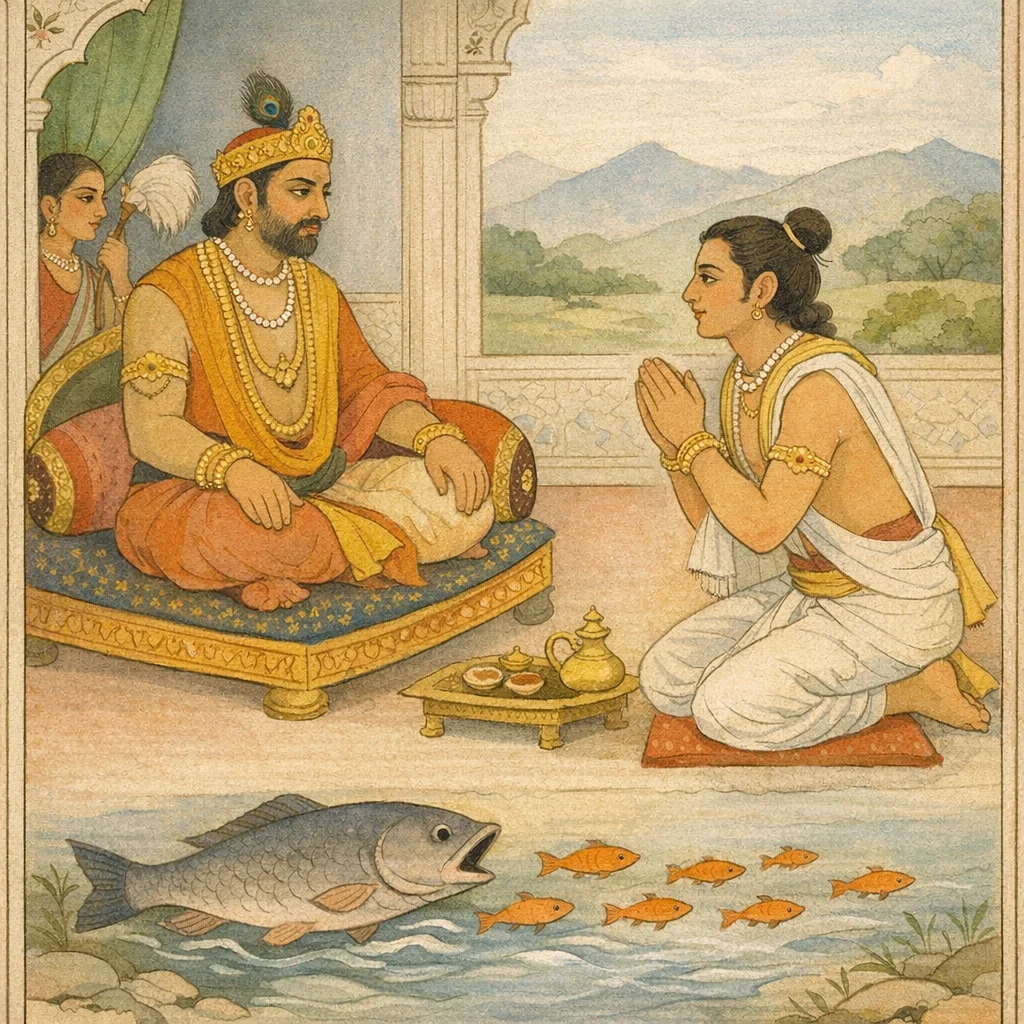
Chapter Arc: याज्ञसेनी (द्रौपदी) के वचनों को सुनकर अर्जुन पुनः बोल उठते हैं—राजदण्ड की महिमा और राज्य-रक्षा का रहस्य उद्घाटित करने के लिए। → अर्जुन दण्ड को ‘जागता हुआ प्रहरी’ बताते हैं—जो सोए हुओं में भी जागता है, प्रजा का शासन करता है, और धर्म-अर्थ-काम (त्रिवर्ग) की रक्षा करता है। वे दिखाते हैं कि दण्ड के बिना समाज में बलवान दुर्बल को वैसे ही निगलेंगे जैसे जल में बड़ी मछलियाँ छोटी मछलियों को। नास्तिक, वेद-निंदक और मर्यादा-भंजक भी दण्ड के भय से ही संयमित होकर भोग-व्यवस्था में टिकते हैं। → अर्जुन दण्ड की अनिवार्यता को तीखे उदाहरणों से चरम पर ले जाते हैं—यहाँ तक कि पशु भी दण्ड/नियमन के बिना गाड़ी न खींचें; और मनुष्य भार ढोने, बाँधने, वश में करने जैसे कठोर उपायों से ‘दम’ (नियंत्रण) स्थापित करते हैं। इसी के साथ वे दण्ड-नीति की नैतिक गाँठ खोलते हैं: आत्मा अवध्य है; शरीर बदलते हैं—जैसे मनुष्य पुरानी शाला छोड़ नई में प्रवेश करे, वैसे जीव पुराने देह त्यागकर नए देह धारण करता है। → दण्ड को अर्जुन केवल दंडात्मक हिंसा नहीं, बल्कि लोक-व्यवस्था का धर्म-रक्षक सिद्ध करते हैं—जो बाह्य अनुशासन से समाज को थामता है और भीतर यह बोध देता है कि वास्तविक ‘वध’ आत्मा का नहीं, देह का परिवर्तन है। इस प्रकार राजधर्म में कठोरता और तत्त्वज्ञान का संतुलन स्थापित होता है। → दण्ड की आवश्यकता सिद्ध हो गई—अब प्रश्न शेष है कि राजा इसे किस मर्यादा, किस करुणा और किस न्याय-बुद्धि से प्रयोग करे।
Shlokas
Verse 1
भीकम (2 अमान पजञ्चदशो< ध्याय: अर्जुनके द्वारा राजदण्डकी महत्ताका वर्णन वैशम्पायन उवाच याज्ञसेन्या वच:ः श्रुत्वा पुनरेवार्जुनो5ब्रवीत् । अनुमान्य महाबाहुं ज्येष्ठ भ्रातरमच्युतम्,वैशम्पायनजी कहते हैं--राजन! ट्रपदकुमारीका यह वचन सुनकर अपनी मर्यादासे कभी च्युत न होनेवाले बड़े भाई महाबाहु युधिष्ठिरका सम्मान करते हुए अर्जुनने फिर इस प्रकार कहा
Vaiśampāyana said: Having heard the words of Yājñasenī (Draupadī), Arjuna spoke again. Paying due honor to his elder brother—the mighty-armed one, unwavering from propriety—he addressed him, situating his reply within the demands of rightful conduct and kingship.
Verse 2
अजुन उवाच दण्ड: शास्ति प्रजा: सर्वा दण्ड एवाभिरक्षति । दण्ड: सुप्तेषु जागर्ति दण्डं धर्म विदुर्बुधा:,अर्जुन बोले--राजन्! दण्ड समस्त प्रजाओंका शासन करता है, दण्ड ही उनकी सब ओरसे रक्षा करता है, सबके सो जानेपर भी दण्ड जागता रहता है; इसलिये विद्वान पुरुषोंने दण्डको राजाका धर्म माना है
Arjuna said: “O King, punishment (the rod of governance) disciplines all subjects; punishment alone protects them on every side. Even when people are asleep, punishment remains awake. Therefore the wise know the rod of punishment to be the king’s dharma—his rightful duty of rule.”
Verse 3
दण्ड: संरक्षते धर्म तथैवार्थ जनाधिप । कार्म संरक्षते दण्डस्त्रिवर्गों दण्ड उच्यते,जनेश्वर! दण्ड ही धर्म और अर्थकी रक्षा करता है, वही कामका भी रक्षक है, अतः दण्ड त्रिवर्गरूप कहा जाता है
Arjuna said: O ruler of men, punishment (the king’s coercive power) safeguards dharma, and likewise protects artha; it also restrains and regulates kāma. Therefore, daṇḍa is spoken of as embodying and upholding the three aims of life (trivarga).
Verse 4
दण्डेन रक्ष्यते धान्यं धनं दण्डेन रक्ष्यते । एवं विद्वानुपाधत्स्व भावं पश्यस्व लौकिकम्,दण्डसे धान्यकी रक्षा होती है, उसीसे धनकी भी रक्षा होती है; ऐसा जानकर आप भी दण्ड धारण कीजिये और जगतके व्यवहारपर दृष्टि डालिये
Arjuna said: “By the rod of authority, grain is protected; by that same authority, wealth too is protected. Knowing this, you should also take up the power of punishment and look to the way the world actually functions.”
Verse 5
राजदण्डभयादेके पापा: पापं न कुर्वते । यमदण्डभयादेके परलोकभयादपि,कितने ही पापी राजदण्डके भयसे पाप नहीं करते हैं। कुछ लोग यमदण्डके भयसे, कोई परलोकके भयसे और कितने ही पापी आपसमें एक-दूसरेके भयसे पाप नहीं करते हैं। जगत्की ऐसी ही स्वाभाविक स्थिति है; इसलिये सब कुछ दण्डमें ही प्रतिष्ठित है
Arjuna said: Some sinners refrain from sin out of fear of the king’s punishment; some out of fear of Yama’s rod; and others out of fear of the next world as well. Such is the natural condition of the world—therefore everything stands established upon punishment (daṇḍa), as a regulating force.
Verse 6
परस्परभयादेके पापा: पापं न कुर्वते । एवं सांसिद्धिके लोके सर्व दण्डे प्रतिक्तितम्,कितने ही पापी राजदण्डके भयसे पाप नहीं करते हैं। कुछ लोग यमदण्डके भयसे, कोई परलोकके भयसे और कितने ही पापी आपसमें एक-दूसरेके भयसे पाप नहीं करते हैं। जगत्की ऐसी ही स्वाभाविक स्थिति है; इसलिये सब कुछ दण्डमें ही प्रतिष्ठित है
Arjuna said: Some sinners refrain from sin out of fear of one another. Thus, in this naturally constituted world, everything stands supported by daṇḍa—by the restraining force of fear and sanction that keeps wrongdoing in check.
Verse 7
दण्डस्यैव भयादेके न खादन्ति परस्परम् | अन्धे तमसि मज्जेयुर्यदि दण्डो न पालयेत्,बहुत-से मनुष्य दण्डके ही भयसे एक-दूसरेको खा नहीं जाते हैं, यदि दण्ड रक्षा न करे तो सब लोग घोर अन्धकारमें डूब जायेँ
Some people, out of fear of punishment alone, do not devour one another. If the power of punishment did not protect and restrain, all would sink into blinding darkness—into lawlessness and moral ruin.
Verse 8
यस्माददान्तान् दमयत्यशिष्टान् दण्डयत्यपि । दमनादू दण्डनाच्चैव तस्मादू दण्डं विदुर्बुधा:,यह उद्दण्ड मनुष्योंका दमन करता और दुष्टोंको दण्ड देता है, अत: उस दमन और दण्डके कारण ही विद्वान् पुरुष इसे दण्ड कहते हैं
Because it restrains the unrestrained and also punishes the unruly, and because it both disciplines and chastises, the wise therefore know it by the name “daṇḍa” (the rod of authority/punishment).
Verse 9
वाचा दण्डो ब्राह्मणानां क्षत्रियाणां भुजार्पणम् | दानदण्डा: स्मृता वैश्या निर्दण्ड: शूद्र उच्चते,यदि ब्राह्मण अपराध करे तो वाणीसे उसको अपमानित करना ही उसका दण्ड है, क्षत्रियकों भोजनमात्रके लिये वेतन देकर उससे काम लेना उसका दण्ड है, वैश्योंसे जुर्मानाके रूपमें धन वसूल करना उनका दण्ड है, परंतु शूद्र दण्डरहित कहा गया है। उससे सेवा लेनेके सिवा और कोई दण्ड उसके लिये नहीं है
Arjuna said: “For Brahmins, the punishment is by speech—reproof and censure. For Kshatriyas, punishment is the imposition of service by the strength of their arms, as in being made to work for sustenance. Vaishyas are said to be punished through monetary exactions and fines. The Shudra is described as ‘without punitive penalty’; for him, the only corrective measure is to take service, not to impose other forms of punishment.”
Verse 10
असम्मोहाय मर्त्यनामर्थसंरक्षणाय च | मर्यादा स्थापिता लोके दण्डसंज्ञा विशाम्पते,प्रजानाथ! मनुष्योंको प्रमादसे बचाने और उनके धनकी रक्षा करनेके लिये लोकमें जो मर्यादा स्थापित की गयी है, उसीका नाम दण्ड है
Arjuna said: O lord of the people, O protector of subjects, the boundary of order established in the world—meant to keep mortals from heedlessness and to safeguard their wealth—is what is called daṇḍa, the power of punishment and governance.
Verse 11
यत्र श्यामो लोहिताक्षो दण्डश्चरति सूद्यत: । प्रजास्तत्र न मुहान्ते नेता चेत् साधु पश्यति,दण्डनीयपर ऐसी जोरकी मार पड़ती है कि उसकी आँखोंके सामने अँधेरा छा जाता है; इसलिये दण्डको काला कहा गया है। दण्ड देनेवालेकी आँखें क्रोधसे लाल रहती हैं; इसलिये उसे लोहिताक्ष कहते हैं। ऐसा दण्ड जहाँ सर्वथा शासनके लिये उद्यत होकर विचरता रहता है और नेता या शासक अच्छी तरह अपराधोंपर दृष्टि रखता है, वहाँ प्रजा प्रमाद नहीं करती
Where the rod of punishment—dark and red-eyed—moves about ever ready to strike, and where the ruler keeps a vigilant and discerning watch over offences, there the people do not fall into confusion or negligence; order is maintained through just oversight and the credible presence of discipline.
Verse 12
ब्रह्मचारी गृहस्थश्व वानप्रस्थश्व भिक्षुक: । दण्डस्यैव भयादेते मनुष्या वर्त्मनि स्थिता:,ब्रह्मचारी, गृहस्थ, वानप्रस्थ और संन्यासी--ये सभी मनुष्य दण्डके ही भयसे अपने- अपने मार्गपर स्थिर रहते हैं
Arjuna said: “The brahmacārin (student), the householder, the forest-dweller, and the mendicant—people in all these stages of life remain steady in their respective paths chiefly out of fear of punishment (daṇḍa).” The verse underscores the role of social discipline and enforceable order in sustaining dharma across the āśrama system.
Verse 13
नाभीतो यजते राजन् नाभीतो दातुमिच्छति । नाभीत: पुरुष: कश्चित् समये स्थातुमिच्छति,राजन! बिना भयके कोई यज्ञ नहीं करता है, बिना भयके कोई दान नहीं करना चाहता है, और दण्डका भय न हो तो कोई पुरुष मर्यादा या प्रतिज्ञाके पालनपर भी स्थिर नहीं रहना चाहता है
Arjuna said: “O King, without fear no one performs sacrifice; without fear no one wishes to give in charity. And if there is no fear (of punishment), no man is willing to stand firm, at the proper time, in the observance of limits, duties, or pledged commitments.”
Verse 14
इस प्रकार श्रीमह्ाभारत शान्तिपर्वके अन्तर्गत राजधर्मानुशासनपर्वमें द्रौपदीवाक्यविषयक चौदहवाँ अध्याय पूरा हुआ,नाच्छित्त्वा परमर्माणि नाकृत्वा कर्म दुष्करम् | नाहत्वा मत्स्यघातीव प्राप्रोति महतीं श्रियम् मछली मारनेवाले मल्लाहोंकी तरह दूसरोंके मर्मस्थानोंका उच्छेद और दुष्कर कर्म किये बिना तथा बहुसंख्यक प्राणियोंको मारे बिना कोई बड़ी भारी सम्पत्ति नहीं प्राप्त कर सकता
Vaiśampāyana said: Without striking at others’ vital vulnerabilities, without undertaking harsh and difficult deeds, and without killing many living beings—just as fish-slayers do—no one attains great prosperity. The verse frames worldly success as often entangled with violence and ruthless action, raising a sobering ethical tension within the discourse on kingship and governance.
Verse 15
नाघ्नतः कीर्तिरस्तीह न वित्त न पुनः प्रजा: । इन्द्रो वृत्रवधेनैव महेन्द्र: समपद्यत,जो दूसरोंका वध नहीं करता, उसे इस संसारमें न तो कीर्ति मिलती है, न धन प्राप्त होता है और न प्रजा ही उपलब्ध होती है। इन्द्र वृत्रासुरका वध करनेसे ही महेन्द्र हो गये जैसे मनुष्य बारंबार नये घरोंमें प्रवेश करता है, उसी प्रकार जीव भिन्न-भिन्न शरीरोंको ग्रहण करता है। पुराने शरीरोंको छोड़कर नये शरीरोंको अपना लेता है। इसीको तत्त्वदर्शी मनुष्य मृत्युका मुख बताते हैं ।। इति श्रीमहा भारते शान्तिपर्वणि राजधर्मानुशासनपर्वणि अर्जुनवाक्ये पज्चदशो<ध्याय:
Arjuna said: “In this world, one who does not strike down an enemy gains neither fame, nor wealth, nor the securing of subjects. Indra became ‘Mahendra’ only by slaying Vṛtra.” The statement frames a hard, royal ethic: public renown and political stability are portrayed as arising from decisive action against threats, even when that action involves violence.
Verse 16
य एव देवा हन्तारस्ताललोको<र्चयते भृशम् । हन्ता रुद्रस्तथा स्कन्द: शक्रोडग्निर्वरुणो यम:
Arjuna said: “Those very gods who are destroyers—whom the world worships with great fervor—are themselves slayers: Rudra, and likewise Skanda; Indra; Agni; Varuṇa; and Yama.”
Verse 17
हन्ता कालस्तथा वाउूुर्मुत्युवैंश्रवणो रवि: । वसवो मरुत:ः साध्या विश्वेदेवाक्ष भारत
Arjuna said: “O Bhārata, the slayer is Time; so too are the Wind, Death, Vaiśravaṇa (Kubera), and the Sun. Likewise the Vasus, the Maruts, the Sādhyas, and the Viśvedevas.”
Verse 18
एतान् देवान् नमस्यन्ति प्रतापप्रणता जना: । जो देवता दूसरोंका वध करनेवाले हैं, उन्हींकी संसार अधिक पूजा करता है। रुद्र, स्कन्द, इन्द्र, अग्नि, वरुण, यम, काल, वायु, मृत्यु, कुबेर, सूर्य, वसु, मरुद्ण, साध्य तथा विश्वेदेव--से सब देवता दूसरोंका वध करते हैं; इनके प्रतापके सामने नतमस्तक होकर सब लोग इन्हें नमस्कार करते हैं || १६-१७ $ ।। न ब्रह्माणं न धातारं न पूषाणं कथंचन
Arjuna said: “People bow down to these gods, humbled by their might. Yet they do not, in any way, pay reverence to Brahmā, nor to Dhātṛ (the Sustainer), nor to Pūṣan.”
Verse 19
मध्यस्थान् सर्वभूतेषु दान्तान् शमपरायणान् | यजन्ते मानवा: केचित् प्रशान्ता: सर्वकर्मसु
Arjuna said: “Some people, remaining impartial toward all beings, self-restrained and devoted to inner calm, worship (the Divine) while abiding in peace in all their actions.”
Verse 20
परंतु ब्रह्मा, धाता और पूषाकी कोई किसी तरह भी पूजा-अर्चा नहीं करते हैं; क्योंकि वे सम्पूर्ण प्राणियोंके प्रति समभाव रखनेके कारण मध्यस्थ, जितेन्द्रिय एवं शान्तिपरायण हैं। जो शान्त स्वभावके मनुष्य हैं, वे ही समस्त कर्मोमें इन धाता आदिकी पूजा करते हैं ।। न हि पश्यामि जीवन्तं लोके कज्चिदहिंसया । सत्त्वै: सत्त्वा हि जीवन्ति दुर्बलैर्बलवत्तरा:,संसारमें किसी भी ऐसे पुरुषको मैं नहीं देखता जो अहिंसासे जीविका चलाता हो। क्योंकि प्रबल जीव दुर्बल जीवोंद्वारा जीवन-निर्वाह करते हैं
Arjuna said: “I do not see anyone in this world who truly sustains life by complete non-violence. For living beings live by other living beings; the stronger survive by consuming the weaker.”
Verse 21
नकुलो मूषिकानत्ति बिडालो नकुलं तथा | बिडालमत्ति श्वा राजन् श्वानं व्यालमृगस्तथा,राजन! नेवला चूहेको खा जाता है और नेवलेको बिलाव। बिलावको कुत्ता और कुत्तेको चीता चबा जाता है
Arjuna said: “O King, the mongoose eats mice; likewise the cat eats the mongoose. The dog eats the cat, and in the same way a fierce beast (a predator) overpowers the dog. Thus, in the world, one creature becomes food for another—showing the relentless chain of domination and vulnerability, and warning against complacency in power.”
Verse 22
तानत्ति पुरुष: सर्वान् पश्य कालो यथागतः । प्राणस्यान्नमिदं सर्व जड़मं स्थावरं च यत्,परंतु इन सबको मनुष्य मारकर खा जाता है। देखो, कैसा काल आ गया है? यह सम्पूर्ण चराचर जगत् प्राणका अन्न है
Arjuna said: “A man devours them all—see how such a time has come upon us. For the living being, this entire world becomes food: whatever is inert and whatever is immobile. Such is the order of time, where life sustains itself by consuming life and matter.”
Verse 23
विधान दैवविदहितं तत्र विद्वान् न मुहाृति । यथा सृष्टोडसि राजेन्द्र तथा भवितुमरहसि,यह सब दैवका विधान है। इसमें विद्वान् पुरुषको मोह नहीं होता है। राजेन्द्र! आपको विधाताने जैसा बनाया है, (जिस जाति और कुलमें आपको जन्म दिया है) वैसा ही आपको होना चाहिये
“This is an ordinance established by destiny; therefore a wise person is not deluded about it. O best of kings, as the Creator has fashioned you—placing you in your birth, lineage, and station—so it is fitting that you should be: act in accordance with the nature and duty that have been allotted to you.”
Verse 24
विनीतक्रोधहर्षा हि मन्दा वनमुपाश्रिता: । विना वध॑ न कुर्वन्ति तापसा: प्राणयापनम्,जिनमें क्रोध और हर्ष दोनों ही नहीं रह गये हैं, वे मन्दबुद्धि क्षत्रिय वनमें जाकर तपस्वी बन जाते हैं। परंतु बिना हिंसा किये वे भी जीवन-निर्वाह नहीं कर पाते हैं
Arjuna said: “Those who have subdued both anger and exhilaration, yet are dull of understanding, withdraw to the forest and take up the life of ascetics. Even they, however, cannot sustain their lives without some form of killing.”
Verse 25
उदके बहव: प्राणा: पृथिव्यां च फलेषु च । नच वक्षिन्न तान हन्ति किमन्यत् प्राणयापनात्,जलनमें बहुतेरे जीव हैं, पृथ्वीपर तथा वृक्षके फलोंमें भी बहुत-से कीड़े होते हैं। कोई भी ऐसा मनुष्य नहीं है, जो इनमेंसे किसीको कभी न मारता हो। यह सब जीवन-निर्वाहके सिवा और क्या है?
“In water there are many living beings; on the earth and in fruits as well. There is no person who has not, at some time, killed one of them. What is all this, after all, but the sustaining of life?”
Verse 26
सूक्ष्ममोनीनि भूतानि तर्कगम्यानि कानिचित् । पक्ष्मणो5पि निपातेन येषां स्यथात् स्कन्धपर्यय:,कितने ही ऐसे सूक्ष्म योनिके जीव हैं जो अनुमानसे ही जाने जाते हैं। मनुष्यकी पलकोंके गिरनेमात्रसे जिनके कंधे टूट जाते हैं (ऐसे जीवोंकी हिंसासे कोई कहाँ-तक बच सकता है?)
Countless are the beings born in subtle wombs, some knowable only by inference. At the mere fall of a man’s eyelashes their shoulders would be shattered—how far, then, can anyone avoid harming such creatures?
Verse 27
ग्रामान् निष्क्रम्य मुनयो विगतक्रोधमत्सरा: । वने कुट॒म्बधर्माणो दृश्यन्ते परिमोहिता:,कितने ही मुनि क्रोध और ईरष्यासे रहित हो गाँवसे निकलकर वनमें चले जाते हैं, और वहीं मोहवश गृहस्थधर्ममें अनुरक्त दिखायी देते हैं
Arjuna said: “Many sages, free from anger and envy, leave the villages and go out into the forest; yet there, deluded, they are seen clinging to the ways of household life.”
Verse 28
भूमिं भित्वौषधीश्शछित्त्वा वृक्षादीनण्डजान् पशून् | मनुष्यास्तन्वते यज्ञांस्ते स्वर्ग प्राप्रुवन्ति च
Arjuna said: “Having broken open the earth, cutting medicinal herbs, and felling trees and other growths, people also take egg-born animals. From these they set forth sacrifices; and by such sacrificial acts they attain heaven as well.”
Verse 29
मनुष्य धरतीको खोदकर तथा ओषधियों, वृक्षों, लताओं, पक्षियों और पशुओंका उच्छेद करके यज्ञका अनुष्ठान करते हैं, और वे स्वर्गमें भी चले जाते हैं ।। दण्डनीत्यां प्रणीतायां सर्वे सिद्धयन्त्युपक्रमा: । कौन्तेय सर्वभूतानां तत्र मे नास्ति संशय:,कुन्तीनन्दन! दण्डनीतिका ठीक-ठीक प्रयोग होनेपर समस्त प्राणियोंके सभी कार्य अच्छी तरह सिद्ध होते हैं, इसमें मुझे संशय नहीं है
Arjuna said: “People dig up the earth and, by cutting down herbs, trees, creepers, birds, and beasts, they still perform sacrifices—and they even attain heaven. Likewise, O son of Kuntī, when the science of punishment and governance (daṇḍanīti) is properly instituted and applied, all undertakings of all beings succeed; of this I have no doubt.”
Verse 30
दण्डश्नेन्न भवेललोके विनश्येयुरिमा: प्रजा: । जले मत्स्यानिवाभक्ष्यन् दुर्बलान्ू बलवत्तरा:,यदि संसारमें दण्ड न रहे तो यह सारी प्रजा नष्ट हो जाय; और जैसे जलनमें बड़े मत्स्य छोटी मछलियोंको खा जाते हैं उसी प्रकार प्रबल जीव दुर्बल जीवोंको अपना आहार बना लें
If there were no daṇḍa—the power of punishment—in the world, this whole people would perish; and as in the waters the larger fish devour the smaller, so would the strong make food of the weak.
Verse 31
सत्यं चेदं ब्रह्मणा पूर्वमुक्तं दण्ड: प्रजा रक्षति साधु नीत: । पश्याग्नयश्ष प्रतिशाम्य भीता: संतर्जिता दण्डभयाज्ज्वलन्ति,ब्रह्माजीने पहले ही इस सत्यको बता दिया है कि अच्छी तरह प्रयोगमें लाया हुआ दण्ड प्रजाजनोंकी रक्षा करता है। देखो, जब आग बुझने लगती है तब वह फूँककी फटकार पड़नेपर डर जाती और दण्डके भयसे फिर प्रज्वलित हो उठती है
Arjuna said: “This is indeed true, as Brahmā declared long ago: punishment—when rightly applied—protects the people. See how fires, when they begin to die down, are frightened when stirred and threatened; out of fear of the rod they blaze up again.”
Verse 32
अन्ध॑ तम इदेदं स्यान्न प्राज्ञायत किंचन । दण्डश्रेन्न भवेललोके विभजन् साध्वसाधुनी,यदि संसारमें भले-बुरेका विभाग करनेवाला दण्ड न हो तो सब जगह अंधेर मच जाय और किसीको कुछ सूझ न पड़े
Arjuna said: “This world would sink into blind darkness; nothing could be rightly understood. If there were no governing rod of punishment in society—no authority to distinguish the good from the bad—confusion would prevail everywhere and moral discernment would collapse.”
Verse 33
ये5पि सम्मिन्नमर्यादा नास्तिका वेदनिन्दका: । तेडपि भोगाय कल्पन्ते दण्डेनाशु निपीडिता:,जो धर्मकी मर्यादा नष्ट करके वेदोंकी निन्दा करनेवाले नास्तिक मनुष्य हैं, वे भी डंडे पड़नेपर उससे पीड़ित हो शीघ्र ही राहपर आ जाते हैं--मर्यादापालनके लिये तैयार हो जाते हैं
Arjuna said: “Even those who shatter the bounds of righteous conduct—atheists who revile the Vedas—are quickly pressed by punishment and thereby fall into line, becoming fit again for disciplined life and social order.”
Verse 34
सर्वो दण्डजितो लोको दुर्लभो हि शुचिर्जन: । दण्डस्य हि भयाद् भीतो भोगायैव प्रवर्तते,सारा जगत् दण्डसे विवश होकर ही रास्तेपर रहता है; क्योंकि स्वभावत: सर्वथा शुद्ध मनुष्य मिलना कठिन है। दण्डके भयसे डरा हुआ मनुष्य ही मर्यादा-पालनमें प्रवृत्त होता है
Arjuna said: “The whole world is kept in check by punishment; truly, a person who is naturally pure is hard to find. It is out of fear of punishment that people restrain themselves and proceed along the path of proper conduct, turning toward regulated enjoyment rather than lawless impulse.”
Verse 35
चातुर्वर्ण्यप्रमोदाय सुनीतिनयनाय च । दण्डो विधात्रा विहितो धर्मार्थो भुवि रक्षितुम्
Arjuna said: For the well-being and harmonious satisfaction of the four social orders, and for the guidance of people through sound policy and right conduct, the Creator has ordained the rod of punishment—an instrument of dharma—so that the world may be protected.
Verse 36
विधाताने दण्डका विधान इस उद्देश्यसे किया है कि चारों वर्णोके लोग आनन्दसे रहें, सबमें अच्छी नीतिका बर्ताव हो तथा पृथ्वीपर धर्म और अर्थकी रक्षा रहे ।। यदि दण्डान्न बिभ्येयुर्वयांसि श्वापदानि च । अद्यु: पशून् मनुष्यांश्व॒ यज्ञार्थानि हवींषि च,यदि पक्षी और हिंसक जीव दण्डके भयसे डरते न होते तो वे पशुओं, मनुष्यों और यज्ञके लिये रखे हुए हविष्योंको खा जाते
The Ordainer established punishment (daṇḍa) with this aim: that people of the four social orders may live in contentment, that good conduct and sound policy may prevail among all, and that on earth both dharma and material welfare (artha) be protected. For if birds and predatory beasts did not fear punishment, they would devour livestock and even human beings, and they would consume the oblations (havis) kept for sacrifice (yajña) as well.
Verse 37
न ब्रह्मचार्यधीयीत कल्याणी गौर्न दुह्मृते । न कन्योद्धहनं गच्छेद् यदि दण्डो न पालयेत्,यदि दण्ड मर्यादाकी रक्षा न करे तो ब्रह्मचारी वेदोंके अध्ययनमें न लगे, सीधी गौ भी दूध न दुहावे और कन्या ब्याह न करे
Arjuna said: “If the power of punishment and governance (daṇḍa) does not uphold order, then a brahmacārin would not apply himself to Vedic study; even a gentle, well-natured cow would not yield milk; and a maiden would not proceed to marriage. Without the protection of lawful restraint, the ordinary rhythms of dharma and social life collapse.”
Verse 38
विष्वग्लोप: प्रवर्तेत भिद्येरन् सर्वसेतव: । ममत्वं न प्रजानीयुर्यदि दण्डो न पालयेत्,यदि दण्ड मर्यादाका पालन न करावे तो चारों ओरसे धर्म-कर्मका लोप हो जाय, सारी मर्यादाएँ टूट जायँ और लोग यह भी न जानें कि कौन वस्तु मेरी है और कौन नहीं?
Arjuna said: “If the rod of punishment did not uphold order, there would arise a universal collapse: all boundaries and restraints would be shattered, and people would no longer even recognize the sense of ‘mine’ and ‘not mine’—what belongs to whom.”
Verse 39
न संवत्सरसत्राणि तिष्ठेयुरकुतो भया: । विधिवद् दक्षिणावन्ति यदि दण्डो न पालयेत्,यदि दण्ड धर्मका पालन न करावे तो विधि-पूर्वक दक्षिणाओंसे युक्त संवत्सरयज्ञ भी बेखटके न होने पावे
Arjuna said: “Even the year-long sacrificial sessions would not proceed fearlessly and without obstruction, nor would they be properly completed with the prescribed gifts, if the power of punishment (lawful chastisement) were not upheld. Without the enforcement of dharma through daṇḍa, orderly religious life itself cannot be sustained.”
Verse 40
चरेयुर्नाश्रमे धर्म यथोक्त विधिमाश्रिता: । न विद्यां प्राप्तुयात् कश्चिद् यदि दण्डो न पालयेत्,यदि दण्ड मर्यादाका पालन न करावे तो लोग आश्रमोंमें रहकर विधिपूर्वक शास्त्रोक्त धर्मका पालन न करें और कोई विद्या भी न पढ़ सके
Arjuna said: “If the rod of punishment were not upheld, people would not live within the disciplines of the āśramas and follow dharma according to the prescribed rules; indeed, no one would be able to obtain learning.”
Verse 41
न चोष्टरा न बलीवर्दा नाश्वाश्वतरगर्दभा: | युक्ता वहेयुर्यानानि यदि दण्डो न पालयेत्,यदि दण्ड कर्तव्यका पालन न करावे तो ऊँट, बैल, घोड़े, खच्चर और गदहे रथोंमें जोत दिये जानेपर भी उन्हें ढोकर ले न जायेँ
Arjuna said: “If the power of punishment and discipline (daṇḍa) did not uphold order, then even when yoked to vehicles, camels, bulls, horses, mules, and donkeys would not carry the loads or draw the conveyances. Therefore governance through daṇḍa is set forth as a necessary instrument for maintaining duty, obedience, and the working of society.”
Verse 42
न प्रेष्या वचन कुर्युर्न बाला जातु कर्हिचित् | न तिछेद् युवती धर्मे यदि दण्डो न पालयेत्,यदि दण्ड धर्म और कर्तव्यका पालन न करावे तो सेवक स्वामीकी बात न माने, बालक भी कभी माँ-बापकी आज्ञाका पालन न करें और युवती स्त्री भी अपने सतीधर्ममें स्थिर न रहे
“If the power of punishment and governance (daṇḍa) is not upheld, servants will not carry out their master’s commands; children will never obey their parents; and a young woman will not remain established in her dharma. The verse declares that social and moral order depends upon the steady maintenance of lawful discipline.”
Verse 43
दण्डे स्थिता: प्रजा: सर्वा भयं दण्डे विदुर्बुधा: । दण्डे स्वर्गों मनुष्याणां लोको<यं सुप्रतिछ्ित:,दण्डपर ही सारी प्रजा टिकी हुई है, दण्डसे ही भय होता है, ऐसी विद्वानोंकी मान्यता है। मनुष्योंका इहलोक और स्वर्गलोक दण्डपर ही प्रतिष्ठित है
Arjuna said: “All subjects stand supported by daṇḍa; the wise know that fear arises from daṇḍa. Both this human world and the heavenly world for men are firmly established upon daṇḍa.”
Verse 44
न तत्र कूटं पापं वा वज्चना वापि दृश्यते । यत्र दण्ड: सुविहितश्चरत्यरिविनाशन:,जहाँ शत्रुओंका विनाश करनेवाला दण्ड सुन्दर ढंगसे संचालित हो रहा है, वहाँ छल, पाप और ठगी भी नहीं देखनेमें आती है
“Where daṇḍa—well instituted and properly administered—moves about as a destroyer of enemies, there one does not see deceit, sin, or fraud. In such a realm, the disciplined exercise of authority restrains wrongdoing and protects the moral order.”
Verse 45
हवि:श्वा प्रलिहेद् दृष्टवा दण्डश्नेन्नोद्यतों भवेत् | हरेत् काक: पुरोडाशं यदि दण्डो न पालयेत्,यदि दण्ड रक्षाके लिये सदा उद्यत न रहे तो कुत्ता हविष्यको देखते ही चाट जाय और यदि दण्ड रक्षा न करे तो कौआ पुरोडाशको उठा ले जाय
Arjuna said: “If the rod of punishment is not kept ever ready, a dog, on merely seeing the oblation (havis), would lick it up; and if daṇḍa does not protect, a crow would carry off the sacrificial cake (puroḍāśa). Thus, without vigilant enforcement, what is meant for sacred order and rightful use is seized by the unscrupulous.”
Verse 46
यदीद धर्मतो राज्यं विहितं यद्यधर्मत:ः । कार्यस्तत्र न शोको वै भुड्क्ष्य भोगान् यजस्व च,यह राज्य धर्मसे प्राप्त हुआ हो या अधर्मसे, इसके लिये शोक नहीं करना चाहिये। आप भोग भोगिये और यज्ञ कीजिये
Arjuna said: “Whether this kingship has come to you by dharma or even by adharma, there is no cause for grief on that account. Accept the enjoyments that fall to your lot and perform sacrifices as well.”
Verse 47
सुखेन धर्म श्रीमन्तश्नरन्ति शुचिवासस: । संवर्षन्त: फलैदनिर्भुज्जनाश्षान्नमुत्तमम्,शुद्ध वस्त्र धारण करनेवाले धनवान् पुरुष सुखपूर्वक धर्मका आचरण करते हैं और उत्तम अन्न भोजन करते हुए फलों और दानोंकी वर्षा करते हैं
Arjuna said: “Prosperous men, clad in clean garments, practice dharma with ease. While enjoying excellent food, they also cause an abundance—like a ‘rain’—of fruits and grains, sustaining others through their wealth and well-ordered living.”
Verse 48
अर्थ सर्वे समारम्भा: समायत्ता न संशय: । सच दण्डे समायत्त: पश्य दण्डस्य गौरवम्,इसमें संदेह नहीं कि सारे कार्य धनके अधीन हैं, परंतु धन दण्डके अधीन है। देखिये, दण्डकी कैसी महिमा है?
Arjuna said: “There is no doubt that all undertakings depend upon wealth; yet wealth itself depends upon daṇḍa (the power of punishment and governance). Behold, then, the weight and majesty of daṇḍa.”
Verse 49
लोकयात्रार्थमेवेह धर्मप्रवचनं कृतम् । अहिंसासाधुहिंसेति श्रेयान् धर्मपरिग्रह:,लोक्यात्राका निर्वाह करनेके लिये ही धर्मका प्रतिपादन किया गया है। सर्वथा हिंसा न की जाय अथवा दुष्टकी हिंसा की जाय, यह प्रश्न उपस्थित होनेपर जिसमें धर्मकी रक्षा हो, वही कार्य श्रेष्ठ मानना चाहिये-
Arjuna said: “Here, the teaching of dharma has been set forth precisely for sustaining the course of worldly life. When the dilemma arises—whether one should practice non-violence in all circumstances or employ violence against the wicked—the better course is to adopt that action which upholds and protects dharma.”
Verse 50
नात्यन्तं गुणवत् किंचिन्न चाप्यत्यन्तनिर्गुणम् । उभयं सर्वकार्येषु दृश्यते साध्वसाधु वा,कोई भी वस्तु ऐसी नहीं है जिसमें सर्वथा गुण-ही-गुण हो। ऐसी भी वस्तु नहीं है जो सर्वथा गुणोंसे वंचित ही हो। सभी कार्योंमें अच्छाई और बुराई दोनों ही देखनेमें आती हैं
Arjuna said: “Nothing is wholly endowed with virtue, nor is anything wholly devoid of virtue. In every undertaking, both are seen—the good and the bad.”
Verse 51
पशूनां वृषणं छित्त्वा ततो भिन्दन्ति मस्तकम् | वहन्ति बहवो भारान् बध्नन्ति दमयन्ति च,बहुत-से मनुष्य पशुओं (बैलों)-का अण्डकोश काटकर फिर उसके मस्तकपर उगे हुए दोनों सींगोंको भी विदीर्ण कर देते हैं, जिससे वे अधिक बढ़ने न पावें। फिर उनसे भार ढुलाते हैं, उन्हें घरमें बाँधे रखते हैं और नये बच्छेको गाड़ी आदिमें जोतकर उसका दमन करते हैं--उनकी उद्दण्डता दूर करके उनसे काम करनेका अभ्यास कराते हैं
Arjuna said: “Many people first cut off the testicles of cattle (bulls/oxen) and then split or pierce the head—damaging the horns so that they do not grow further. After that, they make them carry heavy loads, keep them tied up at home, and by yoking a young calf to a cart and the like, they subdue it—removing its unruliness and training it to work.”
Verse 52
एवं पर्याकुले लोके वितथैर्जर्जरीकृते । तैस्तैन्ययिर्महाराज पुराणं धर्ममाचर,महाराज! इस प्रकार सारा जगत् मिथ्या व्यवहारोंसे आकुल और दण्डसे जर्जर हो गया है। आप भी उनन्हीं-उन्हीं न््यायोंका अनुसरण करके प्राचीन धर्मका आचरण कीजिये
When the world has become confused and agitated, and has been worn down by false dealings, then, O great king, follow those very principles of justice and practice the ancient dharma—restoring right conduct amid disorder.
Verse 53
यज देहि प्रजां रक्ष धर्म समनुपालय । अमित्रान् जहि कौन्तेय मित्राणि परिपालय,यज्ञ कीजिये, दान दीजिये, प्रजाकी रक्षा कीजिये और धर्मका निरन्तर पालन करते रहिये। कुन्तीनन्दन! आप शत्रुओंका वध और मित्रोंका पालन कीजिये
“Perform sacrifice, give in charity, protect the people, and continually uphold dharma. O son of Kuntī, strike down your enemies and safeguard your friends.”
Verse 54
मा च ते निघ्नतः शत्रून मन्युर्भवतु पार्थिव । न तत्र किल्बिषं किंचित् कर्तुर्भवीति भारत,राजन! शत्रुओंका वध करते समय आपके मनमें दीनता नहीं आनी चाहिये। भारत! शत्रुओंका वध करनेसे कर्ताको कोई पाप नहीं लगता
Arjuna said: “O king, when you strike down your enemies, let no dejection or self-reproach arise in you. In such an act there is, indeed, no stain of wrongdoing for the doer. O Bharata, in the slaying of enemies undertaken as one’s rightful duty, no sin attaches to the agent.”
Verse 55
आततायी हि यो हन्यादाततायिनमागतम् । न तेन भ्रूणहा स स्यान्मन्युस्तं मन्युमारछति,जो हाथमें हथियार लेकर मारने आया हो, उस आततायीको जो स्वयं भी आततायी बनकर मार डाले, उससे वह भ्रूण-हत्याका भागी नहीं होता; क्योंकि मारनेके लिये आये हुए उस मनुष्यका क्रोध ही उसका वध करनेवालेके मनमें भी क्रोध पैदा कर देता है
Arjuna said: If one kills an assailant who has come as an ātatāyin—an armed aggressor intent on murder—one does not thereby incur the sin of killing an embryo (bhrūṇa-hatyā). For the attacker’s wrath, bent on violence, provokes and passes into the defender as wrath in the very act of repelling him.
Verse 56
अवध्य: सर्वभूतानामन्तरात्मा न संशय: । अवध्ये चात्मनि कथं वध्यो भवति कस्यचित्,समस्त प्राणियोंका अन्तरात्मा अवध्य है, इसमें संशय नहीं है। जब आत्माका वध हो ही नहीं सकता तब वह किसीका वध्य कैसे होगा?
Arjuna said: “The inner Self dwelling in all beings is not subject to killing—of this there is no doubt. And if the Self is indeed inviolable, how could it ever become ‘killable’ in relation to anyone?”
Verse 57
यथा हि पुरुष: शालां पुन: सम्प्रविशेन्नवाम् । एवं जीव: शरीराणि तानि तानि प्रपद्यते
Just as a man enters a newly built house again and again, so the individual self (jīva) repeatedly takes up those bodies—one after another.
Verse 58
देहान् पुराणानुत्सृज्य नवान् सम्प्रतिपद्यते । एवं मृत्युमुखं प्राहुर्जना ये तत्त्वदर्शिन:
Arjuna said: “Casting off old bodies, one takes on new ones. In this very way, those who truly see reality describe death as merely an entry into another state—an inevitable passage rather than annihilation.”
Frequently Asked Questions
How a ruler can ethically employ discipline and coercive authority to protect society, while acknowledging ideals like restraint and non-harm yet operating within a world marked by conflict, scarcity, and predation.
Order is not self-sustaining: lawful discipline, properly guided, preserves institutions and enables ethical life; governance must be realistic, boundary-maintaining, and oriented to protection rather than personal anger.
No explicit phalaśruti is stated; the meta-function is normative and instructional—positioning daṇḍa as a necessary condition for dharma’s public realizability and for the stability required to pursue higher aims, including reflective insight into the self’s continuity across bodies.