Adhyaya 128
आपद्धर्मे कोशबलन्यायः | Treasury, Force, and Crisis-Ethics for the King
Upa-parva: Rājadharmānuśāsana (Instruction on Kingship)
Yudhiṣṭhira asks Bhīṣma to define the proper course for a ruler who is abandoned by allies, surrounded by many adversaries, weakened in force, and suffering a depleted treasury, with counsel compromised and the kingdom destabilized. Bhīṣma responds that the inquiry is subtle and context-bound: dharma is refined and must be learned through śāstra and disciplined conduct. He then advances a central rājadharma thesis: depletion of the treasury produces depletion of strength; therefore the king must regenerate the kośa in timely ways, because different dharmas apply in prosperity and in distress (āpaddharma). For a kṣatriya facing livelihood obstruction, taking resources is permitted with exclusions (not from ascetics and Brahmins), since protection of subjects defines the office. Begging and certain livelihoods are rejected as unsuitable for kingship; instead, the king must preserve state capacity and maintain mutual protection between ruler and realm in emergencies. Bhīṣma further argues that wealth enables both worldly and ethical aims, including ritual obligations; thus, acquiring resources through multiple lawful or necessity-framed means is treated as instrumentally justified for sustaining order. An analogy of cutting trees for a sacrificial post illustrates that collateral actions can be ethically evaluated by their public-purpose necessity and governance intent.
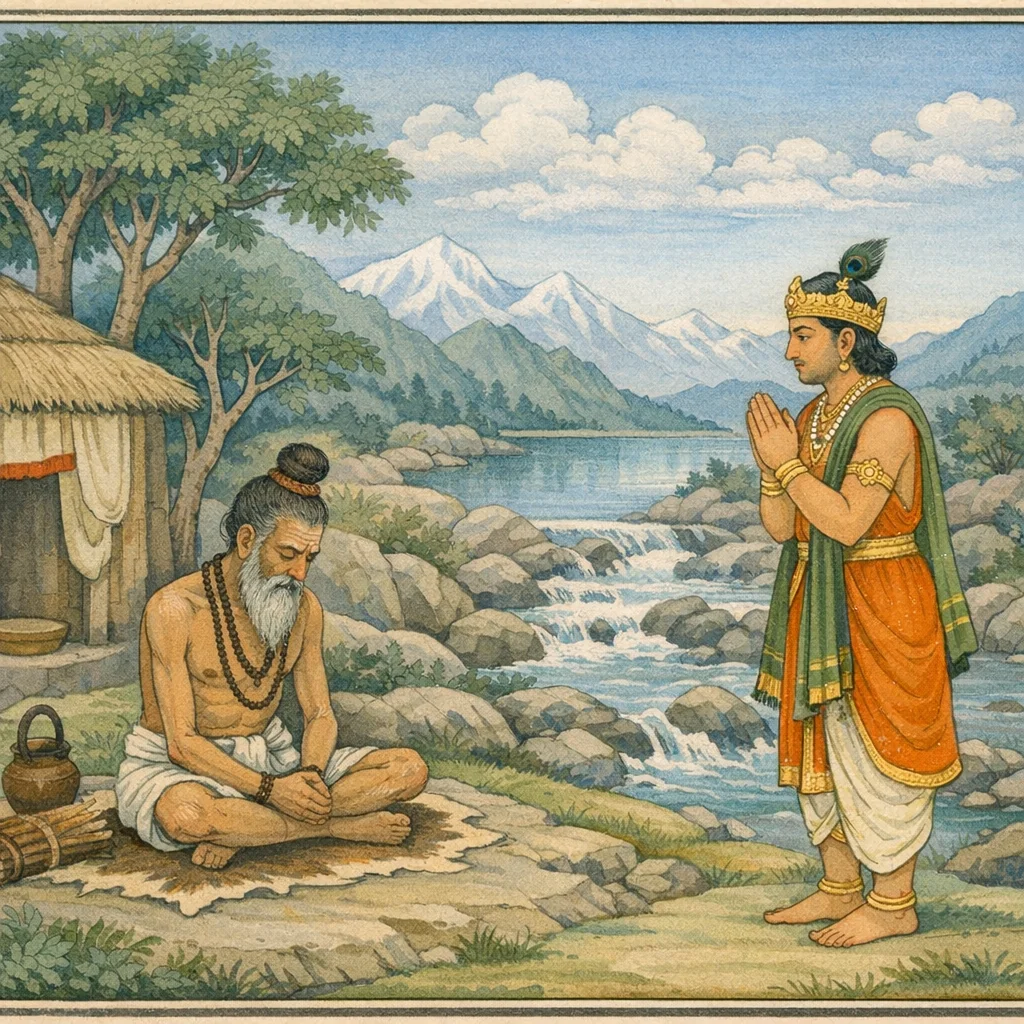
Chapter Arc: भीष्म युधिष्ठिर से कहते हैं—हे राजशार्दूल, एक समय तीर्थ-यात्रा करते हुए मैं दिव्य नर-नारायण आश्रम पहुँचा, जहाँ बदरीवन, वैहायस-ह्रद और वेदपाठी अश्वशिरा की पवित्र उपस्थिति है। → आश्रम-परिसर में एक कृश, भयभीत ब्राह्मण को देखकर कथावाचक-राजा (भीष्म के स्मरण में) विचलित होता है; उसके असामान्य भय और दीनता के पीछे छिपे कारण को जानने की उत्कंठा बढ़ती है। तनु मुनि ध्यानमग्न होकर राजा की बात सुनते हैं और मौन-गंभीरता से प्रसंग को धर्म-कारण की ओर मोड़ते हैं। → तनु मुनि निर्णायक कारण बताते हैं—राजन्, तुम्हारे पुत्र ने पूर्व में मूढ़-बुद्धि के वशीभूत होकर अपने दुर्भाग्य से एक पूजनीय महर्षि का अपमान किया था; उसी अपराध का फल आज भय, पतन और क्लेश के रूप में प्रकट है। → नर-नारायण आश्रम की मर्यादा, वैहायस-कुण्ड में स्नान, देव-पितृ तर्पण और ऋषि-संग के माध्यम से कथा प्रायश्चित्त, विनय और धर्म-शुद्धि की दिशा दिखाती है—अपराध का मूल अहंकार है और उसका उपचार श्रद्धा, क्षमा-याचना तथा सत्संग है।
Shlokas
Verse 1
ऑपन-माज बक। डे सप्तविशर्त्याधेकशततमो< ध्याय: ऋषभका राजा सुमित्रको वीरद्युम्न और तनु मुनिका वृत्तान्त सुनाना भीष्म उवाच ततस्तेषां समस्तानामृषीणामृषिसत्तम: । ऋषभो नाम विदप्रर्षिविस्मयन्निदमब्रवीत्,भीष्मजी कहते हैं--युधिष्ठिर! तदनन्तर उन समस्त ऋषियोंमेंसे मुनिश्रेष्ठ ब्रह्मर्षि ऋषभने विस्मित होकर इस प्रकार कहा--
Bhishma said: Then, among all those assembled sages, the foremost of seers—the Brahmarshi named Rishabha—marveling at what had occurred, spoke these words. In the ethical frame of the Shanti Parva, the scene signals a transition: a realized sage, moved by wonder, is about to articulate a teaching meant to steady the mind and clarify dharma for Yudhishthira.
Verse 2
पुराहं राजशार्दूल तीर्थान्यनुचरन् प्रभो । समासादितवान् दिव्यं नरनारायणाश्रमम्,नृपश्रेष्ठ पहलेकी बात है, मैं सब तीर्थोमें विचरण करता हुआ भगवान् नरनारायणके दिव्य आश्रममें जा पहुँचा
Bhishma said: O tiger among kings, O lord—once, while I was journeying through the sacred fords and pilgrimage places, I came upon the radiant hermitage of Nara and Narayana, O best of rulers.
Verse 3
यत्र सा बदरी रम्या हृदो वैहायसस्तथा । यत्र चाश्वशिरा राजन् वेदान् पठति शाश्वतान्
Bhīṣma said: “There lies that lovely Badarī, and there too the celestial lake. And there, O King, Aśvaśiras recites the eternal Vedas.”
Verse 4
'राजन्! जहाँ वह रमणीय बदरीका वृक्ष है, जहाँ वैहायस- कुण्ड है तथा जहाँ अश्वशिरा (हयग्रीव) सनातन वेदोंका पाठ करते हैं (वहीं नरनारायणाश्रम है) ।। तस्मिन् सरसि कृत्वाहं विधिवत् तर्पणं पुरा । पितृणां देवतानां च ततो55श्रममियां तदा
Bhishma said: “O King, the hermitage of Nara and Narayana is there—where the lovely Badarī tree stands, where the celestial lake called Vaihāyasa-kuṇḍa lies, and where Aśvaśiras (Hayagrīva) recites the eternal Vedas. In that lake, long ago, I duly performed the prescribed offerings of water (tarpana) in satisfaction of the ancestors and the gods; then, at that time, I proceeded to the hermitage.”
Verse 5
अदूरादाश्रमं कज्चिद् वासार्थमगमं तदा,उसके बाद वहाँसे निकट ही एक-दूसरे आश्रममें मैं ठहरनेके लिये गया। वहाँ मुझे तनु नामवाले एक तपोधन ऋषि आते दिखायी दिये, जो चीर और मृगचर्म धारण किये हुए थे। उनका शरीर बहुत ऊँचा और अत्यन्त दुर्बल था
Bhīṣma said: “Then, not far from there, I went to a certain hermitage to find a place to stay. There I saw a great ascetic sage named Tanu approaching—clad in bark-garments and a deer-skin. His body was very tall and extremely emaciated.”
Verse 6
तत्र चीराजिनधरं कृशमुच्चमतीव च । अद्राक्षमृषिमायान्तं तनुं नाम तपोधनम्,उसके बाद वहाँसे निकट ही एक-दूसरे आश्रममें मैं ठहरनेके लिये गया। वहाँ मुझे तनु नामवाले एक तपोधन ऋषि आते दिखायी दिये, जो चीर और मृगचर्म धारण किये हुए थे। उनका शरीर बहुत ऊँचा और अत्यन्त दुर्बल था
There I saw an approaching sage named Tanu, a treasure of austerity—clad in bark garments and a deerskin. He was exceedingly tall and extremely emaciated, his very appearance bearing witness to a life of rigorous self-discipline.
Verse 7
अन्यैनरिरमहाबाहो वपुषाष्टगुणान्वितम् । कृशता चापि राजर्षे न दृष्टा तादृशी क्वचित्,महाबाहो! उन महर्षिका शरीर दूसरे मनुष्योंसे आठ गुना लंबा था। राजर्षे! मैंने उनकी- जैसी दुर्बलता कहीं भी नहीं देखी है
Bhishma said: “O mighty-armed one, that great sage’s body was eightfold in stature compared to other men. And, O royal seer, I have never anywhere seen such extreme emaciation as his.”
Verse 8
शरीरमपि राजेन्द्र तस्य कानिषप्ठिकासमम् । ग्रीवा बाहू तथा पादौ केशाश्षाद्भुतदर्शना:,'राजेन्द्र। उनका शरीर भी कनिष्ठिका अंगुलीके समान पतला था। उनकी गर्दन, दोनों भुजाएँ, दोनों पैर और सिरके बाल भी अद्भुत दिखायी देते थे
Bhīṣma said: “O best of kings, even his body was as slender as a little finger. His neck, his two arms, his two feet, and the hair upon his head were all of an extraordinary appearance.”
Verse 9
शिर: कायानुरूपं च कर्णो नेत्रे तथैव च । तस्य वाक्चैव चेष्टा च सामान्ये राजसत्तम,शरीरके अनुरूप ही उनके मस्तक, कान और नेत्र भी थे। नृपश्रेष्ठ] उनकी वाणी और चेष्टा साधारण थी
Bhishma said: “His head was proportionate to his body; likewise his ears and eyes were well-matched. O best of kings, his speech and his outward manner of acting were ordinary.”
Verse 10
दृष्टवाहं तं कृश विप्रं भीत: परमदुर्मना: । पादौ तस्याभिवाद्याथ स्थित: प्राउजलिरग्रत:,मैं उन दुबले-पतले ब्राह्मणको देखकर डर गया और मन-ही-मन बहुत दुखी हो गया; फिर उनके चरणोंमें प्रणाम करके दोनों हाथ जोड़कर उनके आगे खड़ा हो गया
Seeing that emaciated brāhmaṇa, I became afraid and was overwhelmed with inner distress. Then, having bowed at his feet, I stood before him with my hands joined in reverence.
Verse 11
निवेद्य नामगोत्रे च पितरं च नरर्षभ । प्रदिष्टे चासने तेन शनैरहमुपाविशम्,नरश्रेष्ठ) उनके सामने नाम, गोत्र और पिताका परिचय देकर उन्हींके दिये हुए आसन पर धीरेसे बैठ गया
Bhīṣma said: “O bull among men, after respectfully stating my name and lineage, and also identifying my father, I slowly took my seat upon the seat that he had assigned.”
Verse 12
ततः स कथयामास कथां धर्मार्थसंहिताम् । ऋषिमध्ये महाराज तनुर्धर्मभूतां वर:,महाराज! तदनन्तर धर्मात्माओंमें श्रेष्ठ तनु ऋषियोंके बीचमें बैठकर धर्म और अर्थसे युक्त कथा कहने लगे
Then, O great king, that excellent Tanū—foremost among the righteous—sat amid the sages and began to relate a discourse woven with dharma and artha, a narrative meant to guide conduct and secure well-being.
Verse 13
तस्मिंस्तु कथयत्येव राजा राजीवलोचन: । उपायाज्जवनैरश्वे: सबल: सावरोधन:,उनके कथा कहते समय ही कमलके समान नेत्रोंवाले एक नरेश वेगशाली घोड़ोंद्वारा अपनी सेना और अन्तःपुरके साथ वहाँ आ पहुँचे
Bhishma said: While he was still narrating the tale, a lotus-eyed king arrived there—swiftly approaching with fast horses—accompanied by his full army and his inner household (the women’s quarters/royal retinue).
Verse 14
स्मरन् पुत्रमरण्ये वै नष्टं परमदुर्मना: । भूरिद्युम्नपिता श्रीमान् वीरद्युम्नो महायशा:,उनका पुत्र जंगलमें खो गया था। उसकी याद करके वे बहुत दुखी हो रहे थे। उनके पुत्रका नाम था भूरिद्युम्न और वे उसके महायशस्वी पिता श्रीमान् वीरद्युम्न थे
Bhīṣma said: Remembering his son who had been lost in the forest, he became utterly despondent. That illustrious and greatly renowned man was Vīradyumna, the fortunate father of Bhūridyumna—grieving intensely as a parent struck by separation.
Verse 15
इह द्रक्ष्यामि त॑ पुत्र द्रक्ष्यामीहेति पार्थिव: । एवमाशाहतो राजा चरन् वनमिदं पुरा,यहाँ उस पुत्रको अवश्य देखूँगा। यहाँ वह निश्चय ही दिखायी देगा। इसी आशासे बँधे हुए पृथ्वीपति राजा वीरद्युम्न उन दिनों उस वनमें विचर रहे थे
Bhishma said: “Here I shall see that son—here indeed I shall see him.” Thus, bound fast by hope, the king, lord of the earth, once wandered through this forest, driven by the longing to regain what was lost.
Verse 16
दुर्लभ: स मया द्र॒ष्ट नूनं परमधार्मिक: । एक: पुत्रो महारण्ये नष्ट इत्यसकृत् तदा,“वह बड़ा धर्मात्मा था। अब उसका दर्शन होना अवश्य ही मेरे लिये दुर्लभ है। एक ही बेटा था, वह भी इस विशाल वनमें खो गया' इन्हीं बातोंको वे बार-बार दुहराते थे
Bhishma said: “Surely it will now be hard for me to see that supremely righteous man again. ‘I had only one son, and he has been lost in this vast forest’—these very words he kept repeating again and again.”
Verse 17
दुर्लभ: स मया द्रष्टमाशा च महती मम । तया परीतगात्रो5हं मुमूर्षुर्नात्र संशय:,“मेरे लिये उसका दर्शन दुर्लभ है तो भी मेरे मनमें उसके मिलनेकी बड़ी भारी आशा लगी हुई है। उस आशाने मेरे सम्पूर्ण शरीरपर अधिकार कर लिया है। इसमें संदेह नहीं कि मैं उसके लिये मौतको भी स्वीकार कर लेना चाहता हूँ
Bhishma said: “Though it is rare for me to behold him, a great hope of meeting him has arisen in my heart. That hope has taken hold of my whole being. There is no doubt: for his sake I am ready even to accept death.”
Verse 18
एतच्छुत्वा तु भगवांस्तनुर्मुनिवरोत्तम: । अवाक्शिरा ध्यानपरो मुहूर्तमिव तस्थिवान्,राजाकी यह बात सुनकर मुनियोंमें श्रेष्ठ भगवान् तनु नीचे सिर किये ध्यानमग्न हो दो घड़ीतक चुपचाप बैठे रह गये
Bhishma said: Hearing this, the venerable sage Tanu—foremost among ascetics—bowed his head and, absorbed in meditation, remained silent and still for what seemed like a short while.
Verse 19
तमनुध्यान्तमालक्ष्य राजा परमदुर्मना: । उवाच वाकयं दीनात्मा मन्दं मन्दमिवासकृत्,उनको चिन्तन करते देख परम दुखी हुए नरेश दीनहृदय हो मन्द-मन्द वाणीमें बारंबार इस प्रकार कहने लगे--
Bhishma said: Seeing him absorbed in contemplation, the king became exceedingly distressed. With a heart weighed down by sorrow, he spoke—again and again—in a low, gentle voice, as if faltering under grief.
Verse 20
दुर्लभं कि नु देवर्षे आशायाश्वैव कि महत् । ब्रवीतु भगवानेतद् यदि गुह्यां न ते मयि,“देवर्ष! कौन वस्तु दुर्लभ है? और आशासे भी बड़ा क्या है? यदि आपकी दृष्टिमें यह बात मुझसे छिपानेयोग्य न हो तो आप इसे अवश्य बतावें"
Bhīṣma said: “O divine seer, what indeed is truly hard to obtain? And what is greater than hope? If this matter is not something you must keep hidden from me, then please tell me.”
Verse 21
मुनिर्वाच महर्षिभ्भगवांस्तेन पूर्वमासीद् विमानित: । बालिशां बुद्धिमास्थाय मन्दभाग्यतया55त्मन:
The sage said: “Formerly, that venerable great seer was treated with contempt. Because of his own ill fortune, he adopted the understanding of the foolish—lowering himself to their level—and thus came to be slighted.”
Verse 22
तब मुनिने कहा--राजन्! आपके उस पुत्रने पहले कभी मूढ़ बुद्धिका आश्रय लेकर अपने दुर्भाग्यके कारण एक पूजनीय महर्षिका अपमान कर दिया था ।। अर्थयन् कलशं राजन् काज्चनं वल्कलानि च | अवज्ञापूर्वकेनापि न सम्पादितवांस्तत: । निर्विण्ण: स तु विप्रर्षि्निसिश: समपद्यत,राजन्! वे उससे एक सुवर्णमय कलश और वल्कल माँग रहे थे। आपके पुत्रने अवहेलना करके भी महर्षिकी वह इच्छा पूरी नहीं की; इससे वे विप्र ऋषि अत्यन्त खिन्न और निराश हो गये थे
Bhishma said: “O King, your son, having once resorted to foolish judgment and driven by his own ill fortune, earlier insulted a venerable great sage. The sage requested a golden water-pot and bark-garments; yet your son, even after showing contempt, did not procure what was asked. Therefore that Brahmin seer became deeply disheartened and, in the night, resolved upon a course of action (born of disappointment).”
Verse 23
एवमुक्तो5$भिवाद्याथ तमृषिं लोकपूजितम् | श्रान्तो5वसीदद् धर्मात्मा यथा त्वं नरसत्तम,(ऋषभ कहते हैं--) नरश्रेष्ठ] उनके ऐसा कहनेपर उन लोकपूजित महर्षिको प्रणाम करके धर्मात्मा राजा वीरघ्युम्न तुम्हारे ही समान थककर शिथिल हो गये
Thus addressed, he then bowed in reverence to that sage who was honored by the world. The righteous-souled man, worn out, sank down in fatigue—just as you, O best of men, have done. (So says Ṛṣabha, drawing a direct comparison to the listener’s present condition.)
Verse 24
अर्घ्य तत: समानीय पाद्यं चैव महानृषि: । आरण्येनैव विधिना राज्ञे सर्व न्यवेदयत्,तत्पश्चात् उन महर्षिने तपोवनमें प्रचलित शिष्टाचारकी विधिसे राजाको पाद्य और अर्घ्य आदि सब वस्तुएँ अर्पित की
Bhishma said: Then the great sage brought the arghya (honor-offering) and the pādya (water for washing the feet), and—following the customary forest-ascetic code of hospitality—presented all these offerings to the king.
Verse 25
ततस्ते मुनय:ः सर्वे परिवार्य नरर्षभम् । उपाविशन् नरव्यात्र सप्तर्षय इव ध्रुवम्,पुरुषसिंह! तब वे सभी मुनि नरश्रेष्ठ वीरद्मयुम्मको सब ओरसे घेरकर उनके पास बैठ गये, मानो सप्तर्षि ध्रुवको चारों ओरसे घेरकर शोभा पा रहे हों
Bhishma said: Then all those sages, having surrounded the bull among men, sat down near him. O tiger among men, they appeared like the Seven Seers encircling the Pole Star—gathered around him in reverent order, enhancing his dignity and the solemnity of the assembly.
Verse 26
अपृच्छंश्वैव तं तत्र राजानमपराजितम् । प्रयोजनमिदं सर्वमाश्रमस्य निवेशने,उन सबने वहाँ उन अपराजित नरेशसे उस आश्रमपर पधारनेका सारा प्रयोजन पूछा
Bhīṣma said: There, they questioned that unconquered king about the entire purpose behind establishing and settling that hermitage—seeking to understand the intention and dharmic aim of his coming and residence.
Verse 46
रेमाते यत्र तौ नित्यं नरनारायणावृषी । उस वैहायस कुण्डमें स्नान करके मैंने विधिपर्वूक देवताओं और पितरोंका तर्पण किया। उसके बाद उस आश्रममें प्रवेश किया, जहाँ मुनिवर नर और नारायण नित्य सानन्द निवास करते हैं
Bhishma said: 'There is a place where the two sages, Nara and Narayana, ever delight. Having bathed in the celestial pool called Vaihāyasa, I duly performed the prescribed offerings of satisfaction to the gods and to the ancestors. Thereafter I entered that hermitage where the foremost sages Nara and Narayana dwell continually in serene joy.'
Verse 126
इस प्रकार श्रीमह्याभारत शान्तिपर्वके अन्तर्गत राजधमनिशासनपर्वमें ऋषभगीताविषयक एक सौ छब्बीसवाँ अध्याय पूरा हुआ
Thus ends the one hundred and twenty-sixth chapter on the subject of the Ṛṣabha-gītā, within the Rājadharmaśāsana section of the Śānti Parva of the sacred Mahābhārata. This closing colophon marks the completion of a discourse framed as instruction in righteous governance and ethical order.
Verse 127
इति श्रीमहा भारते शान्तिपर्वणि राजधर्मानुशासनपर्वणि ऋषभगीतासु सप्तविंशत्यधिकशततमो<ध्याय:
Thus ends, in the revered Mahābhārata, within the Śānti Parva—specifically in the section on the instruction of royal duties (Rājadharma-anuśāsana)—the one-hundred-and-twenty-seventh chapter of the Ṛṣabha-gītā. This is a concluding colophon marking the completion of the chapter’s teaching on kingship and ethical governance.
Frequently Asked Questions
How a ruler should act when state capacity collapses—treasury exhausted, allies absent, enemies pressing—without abandoning dharma, and whether necessity can justify extraordinary fiscal and punitive measures.
That kośa is a prerequisite for bala and for protection; therefore, regenerating resources in a timely, purpose-limited manner is treated as essential to sustaining the polity and enabling dharma in public life.
No explicit phalaśruti appears in this chapter; its meta-commentary is functional—emphasizing that dharma is subtle, learned through śāstra and practice, and must be applied with contextual discernment (buddhi) in crisis.