Adhyaya 52
Kurukṣetra–Samantapañcaka Māhātmya: King Kuru’s Ploughing and Indra’s Boon (प्रजापतेरुत्तरवेदिः समन्तपञ्चकं)
Upa-parva: Samantapañcaka–Kurukṣetra Māhātmya (Prajāpater Uttaravedi)
The sages describe Samantapañcaka as the ancient ‘uttara-vedi’ of Prajāpati where the gods once assembled for a great sacrificial session. They recount how the region came to be famed as Kurukṣetra because the royal seer Kuru, through prolonged and intense effort, ‘cultivated/ploughed’ (kṛṣ-) the land, making it exceptionally sanctified. Balarāma (Rāma/Halāyudha) asks why Kuru undertook this labor. The sages narrate Indra’s repeated visits: he questions Kuru’s purpose, mocks and departs, yet Kuru persists in ascetic ploughing. When Indra realizes Kuru’s resolve, he consults the gods, who express concern that automatic ascent to heaven for those dying there would reduce their share of sacrificial offerings. Indra returns and offers a regulated boon: those who die in Kurukṣetra—through fasting, in properly conducted battle, and even those who meet death in other embodied states—will attain heavenly worlds. Indra departs satisfied. The sages add an Indra-gāthā stating that even dust from Kurukṣetra, carried by wind, can elevate even those of evil deeds. They cite exemplary figures and define the kṣetra’s boundaries between named tīrthas and lakes, concluding that slain rulers there attain the ‘path of the great-souled.’
Chapter Arc: जनमेजय वैषम्पायन से पूछता है—वह ‘वृद्ध कन्या’ कौन थी, किस प्रकार उसने असाध्य तप किया, और कैसे उसका विवाह शृंगवान से होकर स्वर्गगमन तथा उस तीर्थ का माहात्म्य प्रसिद्ध हुआ। → वैषम्पायन एक महावीर्य ऋषि (कुणिर्ग्ग/कुणिर्ग) की कथा से सूत्र पकड़ते हैं और बताते हैं कि कैसे वह कन्या कठोर उपवासों, पितृ-देव-पूजन और दीर्घ ब्रह्मचर्य-व्रत में स्थिर रही। तप की पराकाष्ठा के साथ एक आंतरिक संकट उभरता है—देहत्याग की इच्छा और यह प्रश्न कि केवल तप से ‘लोक-विजय’ (संपूर्ण सिद्धि/फल) कैसे प्राप्त हो। → देवर्षि नारद प्रकट होकर उसे रोकते हैं—‘तुम्हारा तप परम है, पर लोक अभी नहीं जीते’—और समाधान बताते हैं: तप का अर्ध भाग पाणिग्रहण करने वाले को देने का संकल्प। कन्या ऋषि-सभा में घोषणा करती है कि जो भी उसका पाणिग्रहण करेगा, उसे वह अपने तप का अर्ध प्रदान करेगी; तब गालव-पुत्र शृंगवान सबसे पहले उसका वरण करता है और विवाह का निर्णायक क्षण घटित होता है। → कन्या ब्रह्मर्षि के साथ किए गए ‘समय’ (शर्त/प्रतिज्ञा) की पूर्ति का स्मरण कर विदा लेती है और बताती है कि नियत ब्रह्मचर्य-वर्षों का फल क्या है। विवाह, तप-वितरण और नियम-पालन के पुण्य से उसे शुभ स्वर्गगति प्राप्त होती है; साथ ही उस स्थान/तीर्थ का माहात्म्य स्थापित होता है।
Shlokas
Verse 1
ऑपन-आक्रात बछ। चर: द्विपञज्चाशत्तमो<ड ध्याय: वृद्ध कन्याका चरित्र, शृंगवानके साथ उसका विवाह और स्वर्गगमन तथा उस तीर्थका माहात्म्य जनमेजय उवाच कथं कुमारी भगवंस्तपोयुक्ता हाभूत् पुरा । किमर्थ च तपस्तेपे को वास्या नियमो5भवत्,जनमेजयने पूछा--भगवन्! पूर्वकालमें वह कुमारी तपस्यामें क्यों संलग्न हुई? उसने किसलिये तपस्या की और उसका कौन-सा नियम था?
Janamejaya said: “Revered sir, how did that maiden in former times become devoted to austerity? For what purpose did she undertake penance, and what rule or discipline did she observe?”
Verse 2
सुदुष्करमिदं ब्रद्म॑ंस्त्वत्त: श्रुतमनुत्तमम् । आखायाहि तत्त्वमखिलं यथा तपसि सा स्थिता,ब्रह्म! मैंने आपके मुखसे यह अत्यन्त उत्तम तथा परम दुष्कर तपकी बात सुनी है। आप सारा वृत्तान्त यथार्थरूपसे बताइये; वह कन्या क्यों तपस्यामें प्रवृत्त हुई थी?
Janamejaya said: “O Brahman, I have heard from you this supremely excellent account—yet it concerns an austerity exceedingly difficult to perform. Tell me the whole truth in full detail: how did that maiden come to be established in such tapas, and for what reason did she undertake it?”
Verse 3
वैशम्पायन उवाच ऋषिरासीन्महावीर्य: कुणिर्ग्गों महायशा: । स तप्त्वा विपुलं राज॑ंस्तपो वै तपतां वरः
Vaiśampāyana said: “There once was a sage of great prowess, Kuṇi, renowned far and wide. O King, foremost among ascetics, he undertook and completed an abundant, arduous austerity.”
Verse 4
मनसाथ सुतां सुभ्रं समुत्पादितवान् विभु: । वैशम्पायनजीने कहा--राजन्! प्राचीन कालमें एक महान् शक्तिशाली और महायशस्वी कुणिर्गग नामक ऋषि रहते थे। तपस्या करनेवालोंमें श्रेष्ठ उन महर्षिने बड़ा भारी तप करके अपने मनसे एक सुन्दरी कन्या उत्पन्न की ।। तां च दृष्टवा मुनि: प्रीत: कुणिर्ग्गो महायशा:
Vaiśampāyana said: “O King, in ancient times there lived a great sage named Kuṇirgga, mighty in spiritual power and renowned for his fame. Foremost among ascetics, that great seer performed severe austerities and, by the force of his mind, brought forth a radiant and beautiful daughter. Seeing her, the illustrious sage Kuṇirgga was filled with joy.”
Verse 5
सुभ्रू: सा हाथ कल्याणी पुण्डरीकनिभेक्षणा,तदनन्तर कमलके समान सुन्दर नेत्रोंवाली वह कल्याणमयी सती साध्वी सुन्दरी कन्या पूर्वकालमें अपने लिये आश्रम बनाकर बड़ी कठोर तपस्या तथा उपवासके साथ-साथ देवताओं और पितरोंका पूजन करती हुई वहाँ रहने लगी
Vaiśampāyana said: “That auspicious maiden, Subhrū—whose eyes resembled the white lotus—afterwards, being virtuous and blessed, established an ashram for herself in earlier times. There she lived, performing severe austerities and fasts, and continually worshipping the gods and the ancestors.”
Verse 6
महता तपसोग्रेण कृत्वा55श्रममनिन्दिता । उपवासै: पूजयन्ती पितृन् देवांश्ष सा पुरा,तदनन्तर कमलके समान सुन्दर नेत्रोंवाली वह कल्याणमयी सती साध्वी सुन्दरी कन्या पूर्वकालमें अपने लिये आश्रम बनाकर बड़ी कठोर तपस्या तथा उपवासके साथ-साथ देवताओं और पितरोंका पूजन करती हुई वहाँ रहने लगी
Vaiśaṃpāyana said: “In former times, that blameless maiden—endowed with auspicious qualities—undertook severe austerities, embracing strenuous discipline. Through fasts she worshipped both the ancestors and the gods, living in that manner with steadfast self-restraint.”
Verse 7
तस्यास्तु तपसोग्रेण महान् कालोअत्यगान्नूप । सा पित्रा दीयमानापि तत्र नैच्छदनिन्दिता
But through the intensity of her austerities, O king, a long time passed. Though her father offered her in marriage, that blameless maiden did not consent.
Verse 8
आत्मन: सदृशं सा तु भर्तारें नान्वपश्यत । राजन! उग्र तपस्या करते हुए उसका बहुत समय व्यतीत हो गया। पिताने अपने जीवनकालमें उसका किसीके साथ ब्याह कर देनेका प्रयत्न किया; परंतु उस अनिन््द्य सुन्दरीने विवाहकी इच्छा नहीं की। उसे अपने योग्य कोई वर ही नहीं दिखायी देता था ।। ७ न! ततः सा तपसोग्रेण पीडयित्वा55त्मनस्तनुम्
Vaiśampāyana said: She could not find a husband equal to herself. O King, as she pursued severe austerities, a long time passed. During his lifetime her father tried to arrange her marriage to someone, but that blameless beauty had no desire to wed. No suitor seemed worthy of her. Then, by the intensity of her ascetic practice, she afflicted her own body.
Verse 9
सा55त्मानं मन्यमानापि कृतकृत्यं श्रमान्विता
Though she regarded herself as having accomplished her purpose, she was nevertheless worn out and burdened by fatigue.
Verse 10
सा नाशकद् यदा गन्तुं पदात् पदमपि स्वयम्
Vaiśampāyana said: When she was no longer able to move forward even a single step on her own, her helplessness became evident.
Verse 11
मोक्तुकामां तु तां दृष्टवा शरीरं नारदो<ब्रवीत्,तप: परमकं प्राप्तं न तु लोकास्त्वया जिता: । उसकी देहत्यागकी इच्छा देख देवर्षि नारदने उससे कहा--“महान् व्रतका पालन करनेवाली निष्पाप नारी! तुम्हारा तो अभी विवाह-संस्कार भी नहीं हुआ, तुम तो अभी कन्या हो। फिर तुम्हें पुण्यलोक कैसे प्राप्त हो सकते हैं? तुम्हारे सम्बन्धमें ऐसी बात मैंने देवलोकमें सुनी है। तुमने तपस्या तो बहुत बड़ी की है; परंतु पुण्य-लोकोंपर अधिकार नहीं प्राप्त किया है”
Vaiśampāyana said: Seeing that woman intent on casting off her body, the sage Nārada spoke to her: “You have indeed attained the highest austerity; yet you have not won the (merit-bearing) worlds.”
Verse 12
असंस्कृताया: कन्याया: कुतो लोकास्तवानघे । एवं तु श्रुतमस्माभिदेंवलोके महाव्रते
Vaiśampāyana said: “O sinless one, how could heavenly worlds be attained by an uninitiated maiden, one who has not undergone the saṃskāras? Yet this is what we have heard in the world of the gods, O you of great vows.”
Verse 13
तन्नारदवच: श्रुत्वा साब्रवीदृषिसंसदि
Having heard Nārada’s words, he then spoke in the assembly of sages.
Verse 14
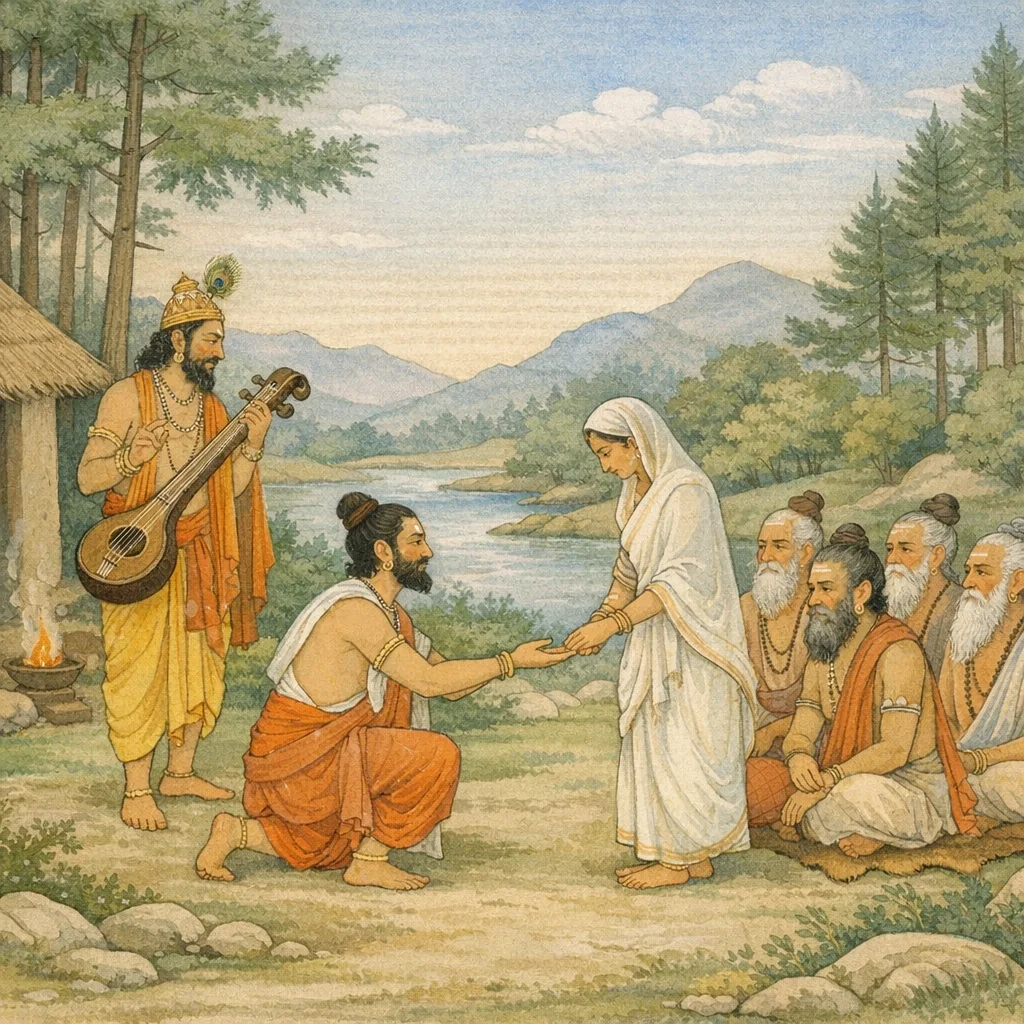
इत्युक्ते चास्या जग्राह पार्णिं गालवसम्भव:,यद्येकरात्र॑ वस्तव्यं त्वया सह मयेति ह । उसके ऐसा कहनेपर सबसे पहले गालवके पुत्र शृंगवान् ऋषिने उसका पाणिग्रहण करनेकी इच्छा प्रकट की और सबसे पहले उसके सामने यह शर्त रखी--'शोभने! मैं एक शर्तके साथ आज तुम्हारा पाणिग्रहण करूँगा। विवाहके बाद तुम्हें एक रात मेरे साथ रहना होगा। यदि यह स्वीकार हो तो मैं तैयार हूँ”
Vaiśampāyana said: When she had spoken thus, the son of Gālava at once expressed his wish to take her by the hand in marriage, but he set a condition first: “If you will dwell with me for a single night, then I will marry you.”
Verse 15
ऋषि: प्राक् शुद्रवान्नाम समयं चेममत्रवीत् । समयेन तवाद्याहं पार्णिं स्प्रक्ष्यामि शोभने
Vaiśaṃpāyana said: “Formerly, a sage named Śudravān declared this very agreement here. By virtue of that pact, O fair one, today I shall touch your hand.”
Verse 16
तथेति सा प्रतिश्रुत्य तस्मै पार्णिं ददौ तदा,तब “बहुत अच्छा” कहकर उसने मुनिके हाथमें अपना हाथ दे दिया। फिर गालवपुत्रने शास्त्रोक्त रीतिसे विधिपूर्वक अग्निमें हवन करके उसका पाणिग्रहण और विवाह-संस्कार किया
Saying, “So be it,” she gave him her hand in assent. Thereupon, the son of Gālava, following the injunctions of the śāstras, duly offered oblations into the sacred fire and completed her hand-taking and the marriage rite.
Verse 17
यथादृष्टेन विधिना हुत्वा चाग्निं विधानत: । चक्रे च पाणिग्रहणं तस्योद्वाहं च गालवि:,तब “बहुत अच्छा” कहकर उसने मुनिके हाथमें अपना हाथ दे दिया। फिर गालवपुत्रने शास्त्रोक्त रीतिसे विधिपूर्वक अग्निमें हवन करके उसका पाणिग्रहण और विवाह-संस्कार किया
Vaiśampāyana said: Having offered oblations into the fire according to the prescribed and traditionally observed rite, Gālava duly performed her hand-taking (pāṇigrahaṇa) and completed her marriage ceremony. The passage underscores the ethical weight of acting within śāstric procedure—personal union is validated and protected by dharma through proper ritual order.
Verse 18
सा रात्रावभवद् राजं॑स्तरुणी वरवर्णिनी । दिव्याभरणवत्त्रा च दिव्यगन्धानुलेपना,राजन! रात्रिमें वह दिव्य वस्त्राभूषणोंसे विभूषित और दिव्य गन्धयुक्त अंगरागसे अलंकृत परम सुन्दरी तरुणी हो गयी
Vaiśampāyana said: “O king, during the night she became a youthful maiden of exquisite complexion—adorned with celestial garments and ornaments, and anointed with a divine, fragrant unguent.”
Verse 19
तां दृष्टवा गालवि: प्रीतो दीपयन्तीमिव श्रिया । उवास च क्षपामेकां प्रभाते साब्रवीच्च तम्,उसे अपनी कान्तिसे सब ओर प्रकाश फैलाती देख गालवकुमार बड़े प्रसन्न हुए और उसके साथ एक रात निवास किया। सबेरा होते ही वह मुनिसे बोली--
Vaiśampāyana said: Seeing her—radiant as though illumining everything with her own splendor—Gālava was filled with joy. He stayed there with her for a single night; and when morning came, she spoke to that sage. The passage underscores how outward beauty and auspiciousness can stir attachment and delight, setting the stage for the ethical choices that follow in the narrative.
Verse 20
यस्त्वया समयो विप्र कृतो मे तपतां वर । तेनोषितास्मि भद्ठं ते स्वस्ति ते5स्तु व्रजाम्यहम्,“तपस्वी मुनियोंमें श्रेष्ठ ब्रह्मर्ष] आपने जो शर्त की थी, उसके अनुसार मैं आपके साथ रह चुकी। आपका मंगल हो, कल्याण हो। अब आज्ञा दीजिये, मैं जाती हूँ”
Vaiśampāyana said: “O brāhmaṇa, best among ascetics, the agreement you set for me has been fulfilled; I have stayed with you according to that condition. May auspiciousness attend you; may you be well. Now grant me leave—I depart.”
Verse 21
सा निर्गताब्रवीद् भूयो यो5स्मिंस्तीर्थे समाहित: । वसते रजनीमेकां तर्पयित्वा दिवौकस:,यों कहकर वह वहाँसे चल दी। जाते-जाते उसने फिर कहा--'जो अपने चित्तको एकाग्र कर इस तीर्थमें स्नान और देवताओंका तर्पण करके एक रात निवास करेगा, उसे अद्बवावन वर्षोतक विधिपूर्वक ब्रह्मचर्य पालन करनेका फल प्राप्त होगा”
Vaiśampāyana said: As she departed, she spoke again: “Whoever, with a collected mind, stays for a single night at this sacred ford, after performing the rites there and offering libations (tarpana) to the gods, gains the merit equivalent to observing disciplined brahmacarya in due form for fifty-two years.”
Verse 22
चत्वारिंशतमष्टौ च द्वौ चाष्टौ सम्यगाचरेत् । यो ब्रह्मचर्य वर्षाणि फलं तस्य लभेत स:,यों कहकर वह वहाँसे चल दी। जाते-जाते उसने फिर कहा--'जो अपने चित्तको एकाग्र कर इस तीर्थमें स्नान और देवताओंका तर्पण करके एक रात निवास करेगा, उसे अद्बवावन वर्षोतक विधिपूर्वक ब्रह्मचर्य पालन करनेका फल प्राप्त होगा”
Vaiśampāyana said: “Whoever duly undertakes this observance—equal to forty-eight years and another sixteen years of brahmacarya—obtains the fruit of that vow.” In context, the saying proclaims the tīrtha’s sanctity: by bathing there with a concentrated mind, offering libations to the gods, and staying for a single night, one gains merit equal to long years of disciplined celibate conduct performed according to rule.
Verse 23
एवमुक्त्वा ततः साध्वी देहं त्यक्त्वा दिवं गता । ऋषिरप्यभवद् दीनस्तस्या रूप॑ विचिन्तयन्,ऐसा कहकर वह साध्वी तपस्विनी देह त्यागकर स्वर्गलोकमें चली गयी और मुनि उसके दिव्यरूपका चिन्तन करते हुए बहुत दुःखी हो गये
Having spoken thus, the virtuous ascetic woman abandoned her body and went to heaven. The sage too became despondent, continually contemplating her radiant form—showing how attachment and grief can persist even in the presence of evident spiritual attainment.
Verse 24
समयेन तपोडर्ध च कृच्छात् प्रतिगृहीतवान् | साधयित्वा तदा5>त्मानं तस्या: स गतिमन्वियात्
Vaiśampāyana said: In due course, and only with hardship, he accepted half of the austerity (that was due). Then, having disciplined and perfected himself, he followed her course—attaining the same destiny as hers. The passage underscores that spiritual merit is not seized lightly: it is received according to proper time and effort, and true attainment requires inner self-mastery rather than mere claim.
Verse 25
दुःखितो भरतश्रेष्ठ तस्या रूपबलात्कृत: । उन्होंने शर्तके अनुसार उसकी तपस्याका आधा भाग बड़े कष्टसे स्वीकार किया। फिर वे भी अपने शरीरका परित्याग करके उसीके पथपर चले गये। भरतश्रेष्ठ) वे उसके रूपपर बलात् आकृष्ट होकर अत्यन्त दुःखी हो गये थे ।। एतत्ते वृद्धकन्याया व्याख्यातं चरितं महत्
Vaiśampāyana said: O best of the Bharatas, he became deeply distressed, forcibly overpowered by the strength of her beauty. Thus, I have explained to you the great life-story of that aged maiden.
Verse 26
तथैव ब्रह्मचर्य च स्वर्गस्थ च गति: शुभा | यह मैंने तुमसे वृद्ध कन्याके महान् चरित्र, ब्रह्मचर्य-पालन तथा स्वर्गलोककी प्राप्तिरूप सदगतिका वर्णन किया ।। तत्रस्थश्लापि शुश्राव हतं शल्यं हलायुध:,वहीं रहकर शत्रुओंको संताप देनेवाले बलरामजीने शल्यके मारे जानेका समाचार सुना था। वहाँ भी मधुवंशी बलरामने ब्राह्मणोंको अनेक प्रकारके दान दे समन्तपंचक द्वारसे निकलकर ऋषियोंसे कुरुक्षेत्रके सेवनका फल पूछा
Vaiśampāyana said: “Thus I have described to you the great account of the aged maiden—her steadfast observance of brahmacarya and her auspicious attainment of heaven as her blessed destiny. While still there, Halāyudha (Balarāma) also heard the news that Śalya had been slain.”
Verse 27
तत्रापि दत्त्वा दानानि द्विजातिभ्य: परंतप: । शुश्राव शल्यं संग्रामे निहतं पाण्डवैस्तदा,वहीं रहकर शत्रुओंको संताप देनेवाले बलरामजीने शल्यके मारे जानेका समाचार सुना था। वहाँ भी मधुवंशी बलरामने ब्राह्मणोंको अनेक प्रकारके दान दे समन्तपंचक द्वारसे निकलकर ऋषियोंसे कुरुक्षेत्रके सेवनका फल पूछा
There too, after bestowing gifts upon the twice-born, the foe-scorching one heard the news that Śalya had been slain in battle by the Pāṇḍavas. The verse sets the epic’s ethical frame: even amid grim tidings of war, the righteous uphold reverence for Brahmins and the duty of giving, treating charity and respect for sacred order as integral to dharma.
Verse 28
समन्तपज्चकद्धारात् ततो निष्क्रम्प माधव: । पप्रच्छर्षिगणान् राम: कुरुक्षेत्रस्य यत् फलम्,वहीं रहकर शत्रुओंको संताप देनेवाले बलरामजीने शल्यके मारे जानेका समाचार सुना था। वहाँ भी मधुवंशी बलरामने ब्राह्मणोंको अनेक प्रकारके दान दे समन्तपंचक द्वारसे निकलकर ऋषियोंसे कुरुक्षेत्रके सेवनका फल पूछा
Vaiśampāyana said: Then Mādhava (Balarāma) departed through the gateway of Samantapañcaka. Rāma questioned the assembled sages about the spiritual fruit gained by resorting to Kurukṣetra, seeking to know the merit of that sacred field even as news of war and death spread around.
Verse 29
ते पृष्टा यदु्सिहेन कुरुक्षेत्रफलं विभो । समाचख्यपुर्महात्मानस्तस्मै सर्व यथातथम्,प्रभो! उस यदुसिंहके द्वारा कुरुक्षेत्रके फलके विषयमें पूछे जानेपर वहाँ रहनेवाले महात्माओंने उन्हें सब कुछ यथावत् रूपसे बताया
When the lion among the Yadus asked about the spiritual fruit of Kurukṣetra, the great-souled sages dwelling there related everything to him exactly as it was. The passage underscores faithful transmission of sacred knowledge: approached with reverence, the wise respond with truthful, complete instruction about the merit of holy places and righteous conduct.
Verse 43
जगाम त्रिदिवं राजन् संत्यज्येह कलेवरम् । नरेश्वरर उसे देखकर महायशस्वी मुनि कुणिर्गर्ग बड़े प्रसन्न हुए और कुछ कालके पश्चात् अपना यह शरीर छोड़कर स्वर्गलोकमें चले गये
Vaiśampāyana said: “O king, having cast off his bodily frame here, he departed to Tridiva (the heavenly world).” The narrative underscores the traditional ideal that a life brought to completion—especially after fulfilling one’s duties—culminates in a peaceful relinquishing of the body and ascent to higher realms.
Verse 51
इस प्रकार श्रीमहाभारत शल्यपर्वके अन्तर्गत गदापव॑नें बलदेवजीकी तीर्थयात्राके प्रसंगमें सारस्वतोपाख्यानविषयक इक्यावनवाँ अध्याय पूरा हुआ
Thus ends the fifty-first chapter on the Sārasvata episode, occurring within the Śalya Parva—specifically in the section concerning the mace—set in the context of Baladeva’s pilgrimage. The closing formula marks the completion of this narrative unit, framing the episode within a broader ethical and ritual landscape in which pilgrimage and sacred lore stand alongside the violence of war as complementary means of sustaining dharma.
Verse 52
इति श्रीमहाभारते शल्यपर्वणि गदापर्वणि बलदेवतीर्थयात्रायां सारस्वतोपाख्याने द्विपज्चाशत्तमोडध्याय:
Thus ends the fifty-second chapter in the Śalya Parva of the Śrī Mahābhārata—within the mace section (Gadā-parvan), in the account of Baladeva’s pilgrimage to the sacred fords (tīrthas), specifically in the episode known as the Sārasvata narrative. This colophon marks the formal close of the chapter, setting its teaching within a sacred-journey frame that stresses purification, remembrance of holy places, and the ethical weight of tradition preserved through exemplary tales.
Verse 83
पितृदेवार्चनरता बभूव विजने वने | तब वह उग्र तपस्याके द्वारा अपने शरीरको पीड़ा देकर निर्जन वनमें पितरों तथा देवताओंके पूजनमें तत्पर हो गयी
Vaiśampāyana said: In a lonely, secluded forest, she became devoted to the worship of the Pitṛs (ancestral spirits) and the gods, undertaking fierce austerities and willingly enduring bodily hardship as an act of reverent devotion and expiation.
Verse 93
वार्थकेन च राजेन्द्र तपसा चैव कर्शिता । राजेन्द्र! परिश्रमसे थक जानेपर भी वह अपने-आपको कृतार्थ मानती रही। धीरे-धीरे बुढ़ापा और तपस्याने उसे दुर्बल बना दिया
Vaiśaṃpāyana said: “O king, she was worn down both by advancing age and by austerity. Even while growing weary from constant exertion, she continued to regard herself as fulfilled; in time, old age and ascetic practice left her physically weakened.”
Verse 106
चकार गमने बुद्धिं परलोकाय वै तदा । जब वह स्वयं एक पग भी चलनेमें असमर्थ हो गयी, तब उसने परलोकमें जानेका विचार किया
Then, being unable even to take a single step, she resolved to depart for the next world—turning her mind from bodily struggle toward the final passage beyond life.
Verse 123
तप: परमकं प्राप्तं न तु लोकास्त्वया जिता: । उसकी देहत्यागकी इच्छा देख देवर्षि नारदने उससे कहा--“महान् व्रतका पालन करनेवाली निष्पाप नारी! तुम्हारा तो अभी विवाह-संस्कार भी नहीं हुआ, तुम तो अभी कन्या हो। फिर तुम्हें पुण्यलोक कैसे प्राप्त हो सकते हैं? तुम्हारे सम्बन्धमें ऐसी बात मैंने देवलोकमें सुनी है। तुमने तपस्या तो बहुत बड़ी की है; परंतु पुण्य-लोकोंपर अधिकार नहीं प्राप्त किया है”
Vaiśampāyana said: “You have indeed attained the highest austerity; yet you have not thereby won the heavenly worlds.” Seeing her desire to abandon the body, the divine seer Nārada addressed her: “O sinless woman, steadfast in a great vow! Your marriage rite has not yet been performed—you are still a maiden. How, then, could you obtain the merit-worlds? This is what I have heard about you in the realm of the gods: you have practiced tremendous tapas, but you have not gained entitlement to the blessed worlds.”
Verse 153
यद्येकरात्र॑ वस्तव्यं त्वया सह मयेति ह । उसके ऐसा कहनेपर सबसे पहले गालवके पुत्र शृंगवान् ऋषिने उसका पाणिग्रहण करनेकी इच्छा प्रकट की और सबसे पहले उसके सामने यह शर्त रखी--'शोभने! मैं एक शर्तके साथ आज तुम्हारा पाणिग्रहण करूँगा। विवाहके बाद तुम्हें एक रात मेरे साथ रहना होगा। यदि यह स्वीकार हो तो मैं तैयार हूँ”
Vaiśampāyana said: “If you must spend only a single night with me,”—so he spoke. When she said this, the sage Śṛṅgavān, son of Gālava, was the first to declare his wish to take her hand, and he was also the first to set a condition before her: “O fair one, I will accept your hand today on one condition: after the wedding you must stay with me for one night. If you agree to this, I am ready.”
Verse 1363
तपसोडर्ध प्रयच्छामि पाणिग्राहस्य सत्तम । नारदजीकी यह बात सुनकर वह ऋषियोंकी सभामें उपस्थित होकर बोली --'साधुशिरोमणे! आपमें-से जो कोई मेरा पाणिग्रहण करेगा, उसे मैं अपनी तपस्याका आधा भाग दे दूँगी”
Vaiśampāyana said: “I shall grant half of my ascetic merit to the worthiest man who takes my hand in marriage.” Hearing this, Nārada’s daughter came into the assembly of sages and declared: “O crest-jewel among the virtuous! Whoever among you accepts my hand, to him I will give half the fruit of my austerities.”
Frequently Asked Questions
A tension arises between universal access to merit (automatic heavenly destiny for those dying in the kṣetra) and the gods’ concern for ritual reciprocity (their ‘share’ through sacrifices), prompting a negotiated settlement that preserves both sacral benefit and cosmic order.
Disciplined action sustained over time (tapas) can transform both the agent and the world, but outcomes are framed within an ordered moral economy where merit, intention, and institutionalized norms (boons, rites, boundaries) mediate spiritual claims.
Yes. The chapter embeds a functional phala-claim via Indra’s boon and gāthā: death within Kurukṣetra is declared conducive to svarga/sugati, and even contact with the region’s dust is said to elevate destiny—serving as a sacral authorization of the site’s salvific reputation.