Adhyaya 43
कुमाराभिषेकप्रश्नः — Inquiry into Kumāra (Skanda) Investiture at Sarasvatī
Upa-parva: Kārttikeya-Abhiṣeka (Skanda Origin and Investiture Episode)
Janamejaya requests a precise account of Kumāra’s abhiṣeka: the time, place, officiants, and the method by which Skanda attained authority, including his decisive capacity against daitya forces. Vaiśaṃpāyana agrees and narrates the transmission of Maheśvara-tejas that Agni cannot contain; by Brahmā’s directive Agni deposits it in Gaṅgā, who releases it upon Himavat. The radiance transforms the locale (golden imagery) and the Kṛttikās approach with maternal intent; Skanda responds by drinking their milk with six mouths, marking his extraordinary form. Devas, gandharvas, sages, and many cosmic classes assemble; Skanda approaches Śiva, Umā, Agni, and Gaṅgā, perceives their mutual claims, and manifests four bodies (Skanda, Śākha, Viśākha, Naigameṣa) to honor each relation simultaneously. Astonishment follows; the divine assembly petitions for his desired lordship. Brahmā deliberates and grants him senāpati authority over hosts of beings. The gods proceed toward the famed Sarasvatī at Samantapañcaka, where the ritual setting is established and the assembly sits on her auspicious bank.
Chapter Arc: वाणी की चार धाराएँ—परा, पश्यन्ती, मध्यमा, वैखरी—सरस्वती के चतुर्विध रूप के रूप में स्मरण कराई जाती हैं; और उसी दिव्य नदी के तट पर एक उज्ज्वल तीर्थ का रहस्य खुलने लगता है। → वैशम्पायन जनमेजय को बताते हैं कि बुद्धिमान् किंतु क्रुद्ध विश्वामित्र के शाप से सरस्वती की धारा उस श्रेष्ठ तीर्थ में रक्त-धारा-सी हो उठी। उस रक्त से राक्षस तृप्त होकर नाचते-हँसते हैं, मानो स्वर्ग-विजयी हों—और यह विकृति ब्राह्मणों को विचलित करती है। वे पूछते हैं: ‘कल्याणि! यह कुण्ड रक्त-मिश्रित क्यों है?’ तप, नियम, उपवास और कठिन व्रतों से वे कारण जानने और शुद्धि का उपाय खोजने में लगते हैं। → राक्षस/ब्रह्मराक्षस स्वीकार करते हैं कि उनका पाप-वर्धन स्वेच्छा से नहीं—वे पाप के संस्कारों और शाप-बंधन में जकड़े हैं; और महात्माओं की कृपा के बिना उनका उद्धार नहीं। इसी बीच प्रसंग देव-लोक तक उठता है: इन्द्र संतप्त होकर ब्रह्मा को निवेदन करते हैं, और लोकगुरु ब्रह्मा अरुणा–सरस्वती संगम-तीर्थ की महिमा बताते हैं—‘यह पातक-भय-नाशक है; यहाँ यज्ञ करो, स्नान करो।’ → ब्रह्मा के विधान से तीर्थ-मार्ग स्पष्ट होता है: अरुणा तीर्थ में विधिपूर्वक यज्ञ, उपस्पर्शन और स्नान से पाप-भय का क्षय होता है। रक्त-धारा का रहस्य शाप, पाप और प्रायश्चित्त के सूत्र में बँधकर धर्म-मार्ग की ओर मुड़ता है—तीर्थ की शरण में शुद्धि का आश्वासन मिलता है। → तीर्थ-प्रायश्चित्त का विधान तो मिल गया, पर शाप-जनित रक्त-धारा और राक्षसों के उद्धार का अंतिम रूपांतरण आगे के प्रसंग में पूर्ण होता है।
Shlokas
Verse 1
नप्जला रत () आज अत+- - परा, पश्यन्ती, मध्यमा और वैखरी--यह चार प्रकारकी वाणी ही सरस्वतीका चतुर्विध रूप है। त्रिचत्वारिशो<् ध्याय: ऋषियोंके प्रयत्नसे सरस्वतीके शापकी निवृत्ति, जलकी शुद्धि तथा अरुणासंगममें स्नान करनेसे राक्षसों और इन्द्रका संकटमोचन वैशम्पायन उवाच सा शप्ता तेन क्रुद्धेन विश्वामित्रेण धीमता | तस्मिंस्तीर्थवरे शुभ्रे शोणितं समुपावहत्
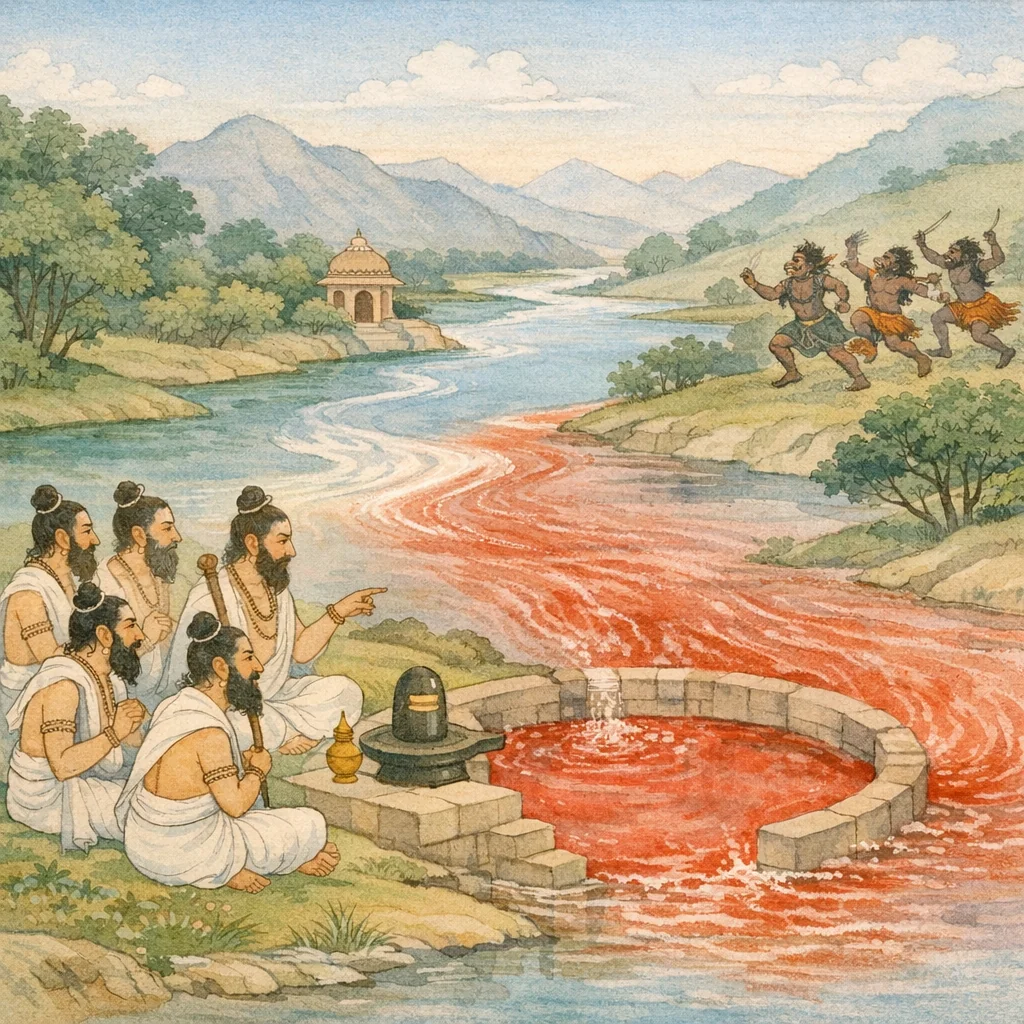
Vaiśampāyana said: Enraged, the wise Viśvāmitra had cursed her; and because of that curse, at that supremely sacred and radiant ford the river carried along blood.
Verse 2
वैशम्पायनजी कहते हैं--राजन्! कुपित हुए बुद्धिमान् विश्वामित्रने जब सरस्वती नदीको शाप दे दिया, तब वह नदी उस उज्ज्वल एवं श्रेष्ठ तीर्थमें रक्तकी धारा बहाने लगी ।। अथाजम्मुस्ततो राजन् राक्षसास्तत्र भारत । तत्र ते शोणितं सर्वे पिबन्त: सुखमासते,भारत! तदनन्तर वहाँ बहुत-से राक्षस आ पहुँचे। वे सब-के-सब उस रक्तको पीते हुए वहाँ सुखपूर्वक रहने लगे
Vaiśampāyana said: O King, when the wise Viśvāmitra, inflamed with anger, pronounced a curse upon the river Sarasvatī, the river at that radiant and eminent sacred ford began to flow as a stream of blood. Then, O King—O descendant of Bharata—many rākṣasas came there; and all of them, drinking that blood, dwelt there in grim contentment.
Verse 3
तृप्ताश्न सुभुशं तेन सुखिता विगतज्वरा: । नृत्यन्तश्न हसन्तश्न॒ यथा स्वर्गजितस्तथा,उस रक्तसे अत्यन्त तृप्त, सुखी और निश्चिन्त हो वे राक्षस वहाँ नाचने और हँसने लगे, मानो उन्होंने स्वर्गलोेकको जीत लिया हो
Vaiśampāyana said: Having eaten their fill and being thoroughly satisfied by that fare, they became cheerful and free from all distress. Then they began to dance and laugh there, as though they had conquered heaven itself—revealing the reckless elation that follows indulgence and pride.
Verse 4
कस्यचित् त्ववय कालस्य ऋषय: सुतपोधना: । तीर्थयात्रां समाजग्मु: सरस्वत्यां महीपते,पृथ्वीनाथ! कुछ कालके पश्चात् बहुत-से तपोधन मुनि सरस्वतीके तटपर तीर्थयात्राके लिये पधारे
Vaiśampāyana said: After some time had passed, many sages—rich in austerity and spiritual discipline—assembled for a pilgrimage to sacred fords along the river Sarasvatī, O king. The scene shifts from the battlefield to a holy landscape, suggesting that even amid the aftermath of war, the tradition of seeking purification, counsel, and dharmic orientation through tīrthas continues.
Verse 5
तेषु सर्वेषु तीर्थेषु स्वाप्लुत्य मुनिपुड्गरवा: । प्राप्प प्रीतिं परां चापि तपोलुब्धा विशारदा:
Vaiśampāyana said: Having bathed in all those sacred fords, the foremost of sages attained supreme joy and deep contentment—seasoned in spiritual discipline and intent upon austerity. The passage underscores the purifying power of pilgrimage when joined to self-control and learned discernment.
Verse 6
नृपश्रेष्ठ॒ वहाँ आकर उन महाभाग मुनियोंने देखा कि उस तीर्थकी दारुण दशा हो गयी है, वहाँ सरस्वतीका जल रक्तसे ओतप्रोत है और बहुत-से राक्षस उसका पान कर रहे हैं
Vaiśampāyana said: O best of kings, when those illustrious sages arrived there, they saw that the sacred ford had fallen into a dreadful state. The waters of the Sarasvatī were saturated with blood, and many rākṣasas were drinking it—an ominous sign of the moral collapse and violence that had overwhelmed even holy places in the wake of war.
Verse 7
अथागम्य महाभागास्तत् तीर्थ दारुणं तदा ६ ।। दृष्टवा तोयं सरस्वत्या: शोणितेन परिप्लुतम् । पीयमानं च रक्षोभिर॑हुभि्न॒पसत्तम,नृपश्रेष्ठ॒ वहाँ आकर उन महाभाग मुनियोंने देखा कि उस तीर्थकी दारुण दशा हो गयी है, वहाँ सरस्वतीका जल रक्तसे ओतप्रोत है और बहुत-से राक्षस उसका पान कर रहे हैं
Vaiśaṃpāyana said: Then those illustrious sages arrived at that dreadful sacred ford. There they beheld the waters of the Sarasvatī flooded with blood, and many rākṣasas drinking it. The scene underscores how violence can profane even a tīrtha, turning a place meant for purification into a witness of moral collapse and the predatory aftermath of war.
Verse 8
तान् दृष्टवा राक्षसान् राजन् मुनयः संशितव्रता: । परित्राणे सरस्वत्या: परं यत्न॑ प्रचक्रिरे,राजन! उन राक्षसोंको देखकर कठोर व्रतका पालन करनेवाले मुनियोंने सरस्वतीके उस तीर्थकी रक्षाके लिये महान् प्रयत्न किया
Vaiśampāyana said: “O King, seeing those rākṣasas, the sages—steadfast in their austere vows—undertook the utmost effort to protect the sacred ford (tīrtha) of the Sarasvatī.”
Verse 9
ते तु सर्वे महाभागा: समागम्य महाव्रता: । आहूय सरितां श्रेष्ठामिदं वचनमन्रुवन्,उन सभी महान् व्रतधारी महाभाग ऋषियोंने मिलकर सरिताओंमें श्रेष्ठ सरस्वतीको बुलाकर पूछा--
Vaiśampāyana said: Then all those blessed sages, steadfast in great vows, assembled together. Summoning Sarasvatī—the foremost among rivers—they addressed her with these words.
Verse 10
कारण ब्रूहि कल्याणि किमर्थ ते हृ॒दो हायम् । एवमाकुलतां यात: श्रुत्वा ध्यास्यामहे वयम्,“कल्याणि! तुम्हारा यह कुण्ड इस प्रकार रक्तसे मिश्रित क्यों हो गया? इसका क्या कारण है? बताओ। उसे सुनकर हमलोग कोई उपाय सोचेंगे”
“O auspicious lady, tell us the reason—why has this pool of yours become thus mixed with blood? What is the cause? Speak. Having heard it, we shall reflect and devise a remedy.”
Verse 11
ततः सा सर्वमाचष्ट यथावृत्तं प्रवेषती । दुःखितामथ तां दृष्टवा ऊचुस्ते वै तपोधना:,तब काँपती हुई सरस्वतीने सारा वृत्तान्त यथार्थ रूपसे कह सुनाया। उसे दुःखी देख वे तपोधन महर्षि उससे बोले--
Then she, entering their presence, truthfully recounted the entire account exactly as it had occurred. Seeing her distressed, those ascetics rich in austerity addressed her with words of counsel.
Verse 12
कारणं श्रुतमस्माभि: शापश्चैव श्रुतो5नघे । करिष्यन्ति तु यत् प्राप्त सर्व एव तपोधना:,“निष्पाप सरस्वती! हमने शाप और उसका कारण सुन लिया। ये सभी तपोधन इस विषयमें समयोचित कर्तव्यका पालन करेंगे”
Vaiśampāyana said: “O blameless one, we have heard the cause, and we have also heard the curse. All these ascetics, rich in austerity, will now do what the occasion demands—acting in the fitting way in response to what has come to pass.”
Verse 13
एवमुक्त्वा सरिच्छेष्ठामूचुस्तेडथ परस्परम् । विमोचयामहे सर्वे शापादेतां सरस्वतीम्,सरिताओंमें श्रेष्ठ सरस्वतीसे ऐसा कहकर वे आपसमें बोले--“हम सब लोग मिलकर इस सरस्वतीको शापसे छुटकारा दिलावें”
Having spoken thus to Sarasvatī, the foremost of rivers, they then said to one another: “Let us all together free this Sarasvatī from the curse.”
Verse 14
ते सर्वे ब्राह्मणा राज॑स्तपोभिनिियमैस्तथा । उपवासैश्व विविधैर्यमै: कष्टव्रतैस्तथा
Vaiśampāyana said: “O King, all those brāhmaṇas—through austerities and disciplined observances, through various fasts, through restraints, and through rigorous vows—were engaged in severe spiritual practice.”
Verse 15
आराध्य पशुभर्तारें महादेवं जगत्पतिम् | तां देवीं मोक्षयामासु: सरिच्छेष्ठां सरस्वतीम्
Vaiśampāyana said: Having duly worshipped Mahādeva—lord of creatures and master of the world—they then set about releasing that goddess Sarasvatī, the foremost of rivers.
Verse 16
राजन! उन सभी ब्राह्मणोंने तप, नियम, उपवास, नाना प्रकारके संयम तथा कष्टसाध्य व्रतोंके द्वारा पशुपति विश्वनाथ महादेवजीकी आराधना करके सरिताओंमें श्रेष्ठ उस सरस्वती देवीको शापसे छुटकारा दिलाया ।। तेषां तु सा प्रभावेण प्रकृतिस्था सरस्वती । प्रसन्नसलिला जज्ञे यथापूर्व तथैव हि,उनके प्रभावसे सरस्वती प्रकृतिस्थ हुई, उसका जल पूर्ववत् स्वच्छ हो गया
Vaiśaṃpāyana said: “O King, those Brahmins, by austerity, discipline, fasting, varied restraints, and arduous vows, worshipped Paśupati—Viśvanātha Mahādeva—and thereby freed the goddess Sarasvatī, best among rivers, from the burden of a curse. Through the power of their spiritual effort, Sarasvatī returned to her natural state; her waters became clear and tranquil again, just as they had been before.”
Verse 17
निर्मुक्ता च सरिच्छेष्ठा विबभौ सा यथा पुरा । दृष्टवा तोयं सरस्वत्या मुनिभिस्तैस्तथा कृतम्
And the foremost of rivers, once released, shone again as she had in former times. Seeing the waters of the Sarasvatī thus restored by those sages, the scene returned to its earlier purity and auspiciousness.
Verse 18
कृत्वाज्जलिं ततो राजन् राक्षसा: क्षुधयार्दिता:
Then, O King, the rākṣasas—tormented by hunger—folded their hands in supplication. The moment shows that even the fierce and violent, when pressed by suffering, turn to humility and seek relief through respectful appeal rather than force.
Verse 19
ऊचुस्तान् वै मुनीन् सर्वान् कृपायुक्तान् पुनः पुनः । वयं च क्षुधिताश्रैव धर्माद्धीनाश्न शाश्वतात्
Vaiśampāyana said: Again and again they addressed all those sages, filled with compassion: “We too are hungry, and our sustenance depends upon dharma; we do not live by any eternal, independent provision.”
Verse 20
राजन! तदनन्तर वे भूखसे पीड़ित हुए राक्षस उन सभी कृपालु मुनियोंसे बारंबार हाथ जोड़कर कहने लगे--“महात्माओ! हम भूखे हैं। सनातन धर्मसे भ्रष्ट हो गये हैं ।। न च न: कामकारो<यं यद् वयं पापकारिण: । युष्माकं चाप्रसादेन दुष्कृतेन च कर्मणा
Vaiśampāyana said: “O King, thereafter those rākṣasas, tormented by hunger, repeatedly bowed with joined palms to all the compassionate sages and said: ‘Great-souled ones, we are hungry. We have fallen away from the eternal dharma. It is not truly by our free choice that we have become doers of sin; rather, through the sages’ displeasure and through our own evil deeds, we have come to this wretched condition.’”
Verse 21
“स्त्रियाँ अपने योनिदोषजनित पाप (व्यभिचार)-से राक्षसी हो जाती हैं। इसी प्रकार क्षत्रिय, वैश्य और शूद्वरोंमेंसे जो लोग ब्राह्मणोंसे द्वेष करते हैं, वे भी इस जगत्में राक्षस होते हैं
Vaiśampāyana said: “Women, through sin arising from faults of the womb—namely adultery—become ‘rākṣasī-like’ in nature. In the same way, among kṣatriyas, vaiśyas, and śūdras, those who bear hatred toward brāhmaṇas are also, in this world, to be regarded as rākṣasas.”
Verse 22
एवं हि वैश्यशूद्राणां क्षत्रियाणां तथैव च । ये ब्राह्मणान् प्रद्धिषन्ति ते भवन्तीह राक्षसा:,“स्त्रियाँ अपने योनिदोषजनित पाप (व्यभिचार)-से राक्षसी हो जाती हैं। इसी प्रकार क्षत्रिय, वैश्य और शूद्वरोंमेंसे जो लोग ब्राह्मणोंसे द्वेष करते हैं, वे भी इस जगत्में राक्षस होते हैं
Vaiśampāyana said: “So it is indeed: among Vaiśyas and Śūdras, and likewise among Kṣatriyas, those who bear malice toward Brāhmaṇas become, here in this very world, ‘rākṣasas’—people of cruel and destructive disposition.”
Verse 23
यत् पापं वर्धते5स्माकं ततः स्मो ब्रद्म॒राक्षसा: | “हमलोग जो पापाचार करते हैं, यह हमारा स्वेच्छाचार नहीं है। आप-जैसे महात्माओंकी हमलोगोंपर कभी कृपा नहीं हुई और हम सदा दुष्कर्म ही करते चले आये। इससे हमारे पापकी निरन्तर वृद्धि होती रहती है और हम ब्रह्माराक्षस हो गये हैं || २० ई ।। योषितां चैव पापेन योनिदोषकृतेन च,आचार्यमृत्विजं चैव गुरुं वृद्धजनं तथा । प्राणिनो ये5वमन्यन्ते ते भवन्तीह राक्षसा:
Vaiśampāyana said: “Because sin keeps increasing within us, we have become brahmarākṣasas. Those beings who, through sins connected with women and through faults of the womb, and who also hold in contempt the teacher, the officiating priest, the spiritual preceptor, and venerable elders—such people become rākṣasas here.”
Verse 24
“जो प्राणधारी मानव आचार्य, ऋत्विज, गुरु और वृद्ध पुरुषोंका अपमान करते हैं, वे भी यहाँ राक्षस होते हैं ।। तत् कुरुध्वमिहास्माकं तारणं द्विजसत्तमा: । शक्ता भवन्त: सर्वेषां लोकानामपि तारणे
Vaiśampāyana said: “Those living men who insult their teachers, officiating priests, spiritual preceptors, and venerable elders become, even here, like rākṣasas. Therefore, O best of the twice-born, do here what will bring about our deliverance; you are capable of rescuing even all the worlds.”
Verse 25
“अतः विप्रवरो आप यहाँ हमारा उद्धार करें; क्योंकि आपलोग सम्पूर्ण लोकोंका उद्धार करनेमें समर्थ हैं! ।। तेषां तु वचन श्रुत्वा तुष्टवुस्तां महानदीम् । मोक्षार्थ रक्षसां तेषामूचु: प्रयतमानसा:,उन राक्षसोंका वचन सुनकर एकाग्रचित्त महर्षियोंने उनकी मुक्तिके लिये महानदी सरस्वतीका स्तवन किया और इस प्रकार कहा--
Therefore, O foremost of Brahmins, please grant us deliverance here; for you are capable of bringing about the deliverance of all the worlds. Hearing the words of those rākṣasas, the sages—intent and composed—praised that great river Sarasvatī, and, seeking liberation for those beings, spoke as follows.
Verse 26
क्षुतं कीटावपन्नं च यच्चोच्छिष्टाचितं भवेत् । सकेशमवधूतं च रुदितोपहतं च यत्
Vaiśampāyana said: “Food that has been sneezed upon, that has been infested by insects, that has been heaped up from another’s leftovers, that is mixed with hair, that has been shaken about and sullied, and that which has been spoiled by tears—such food is to be regarded as defiled.”
Verse 27
स्वभि: संसृष्टमन्नं च भागो5सौ रक्षसामिह । तस्माजज्ञात्वा सदा विद्वानेतान् यत्नाद् विवर्जयेत्
Food that has been contaminated by one’s own saliva is, in this world, considered the share of the Rākṣasas. Therefore, knowing this, a wise person should always avoid such things with care.
Verse 28
राक्षसान्नमसौ भुडुक्ते यो भुद्धक्ते हान्नमीदृशम् । “जिस अन्नपर थूक पड़ गयी हो, जिसमें कीड़े पड़े हों, जो जूठा हो, जिसमें बाल गिरा हो, जो तिरस्कारपूर्वक प्राप्त हुआ हो, जो अश्रुपातसे दूषित हो गया हो तथा जिसे कुत्तोंने छू दिया हो, वह सारा अन्न इस जगतमें राक्षसोंका भाग है। अतः विद्वान् पुरुष सदा समझ- बूझकर इन सब प्रकारके अन्नोंका प्रयत्नपूर्वक परित्याग करे। जो ऐसे अन्नको खाता है, वह मानो राक्षसोंका अन्न खाता है” || २६-२७ $ ।। शोधयित्वा ततस्तीर्थमृषयस्ते तपोधना:
Vaiśampāyana said: Whoever eats food of this kind is, as it were, eating the portion meant for the Rākṣasas. Food that has been spat upon, infested with worms, left over from another’s eating, contaminated by fallen hair, obtained with contempt, defiled by tears, or touched by dogs is declared in this world to belong to the Rākṣasas. Therefore, a discerning person should, with care and deliberation, renounce all such food—guarding purity, self-respect, and dharmic conduct even amid harsh circumstances.
Verse 29
महर्षीणां मतं ज्ञात्वा ततः सा सरितां वरा
Vaiśaṃpāyana said: Having understood the judgment of the great seers, then that foremost of rivers acted accordingly—aligning her course with the counsel of the sages, a gesture that underscores reverence for wise authority and the ethical weight of discerning and following righteous guidance.
Verse 30
अरुणामानयामास स्वां तनूं पुरुषर्षभ । तस्यां ते राक्षसा: स्नात्वा तनूस्त्यक्त्वा दिवंगता:
Vaiśampāyana said: “O bull among men, he caused his own body to assume a ruddy hue. Bathing in that (ruddy form/essence), those Rākṣasas cast off their bodies and went to heaven.”
Verse 31
अरुणायां महाराज ब्रद्मावध्यापहा हि सा । नरश्रेष्ठ! महर्षियोंका यह मत जानकर सरिताओंमें श्रेष्ठ सरस्वती अपनी ही स्वरूपभूता अरुणाको ले आयी। महाराज! उस अरुणामें स्नान करके वे राक्षस अपना शरीर छोड़कर स्वर्गलोकमें चले गये; क्योंकि वह ब्रह्महत्याका निवारण करनेवाली है || २९-३० $ ।। एतमर्थमभिज्ञाय देवराज: शतक्रतु:ः
Vaiśaṃpāyana said: “O king, Aruṇā is indeed a remover of the taint of brahma-slaughter. O best of men, understanding this conviction of the great seers, Sarasvatī—foremost among rivers—brought forth Aruṇā, who is of her own very essence. O king, after bathing in that Aruṇā, those rākṣasas cast off their bodies and went to heaven, for she has the power to annul the sin of brahmahatyā.” Having understood this matter, the lord of the gods, Śatakratu (Indra)…
Verse 32
जनमेजय उवाच किमर्थ भगवान् शक्रो ब्रह्मवध्यामवाप्तवान्
Janamejaya said: “For what reason did the revered Śakra (Indra) incur the guilt of brahma-slaughter?”
Verse 33
वैशम्पायन उवाच शृणुष्वैतदुपाख्यानं यथावृत्तं जनेश्वर
Vaiśampāyana said: “O lord of men, listen to this narrative exactly as it occurred.”
Verse 34
नमुचिर्वासवाद् भीत: सूर्यरश्मिं समाविशत्,वधिष्याम्यसुरश्रेष्ठ सखे सत्येन ते शपे । पहलेकी बात है, नमुचि इन्द्रके भयसे डरकर सूर्यकी किरणोंमें समा गया था। तब इन्द्रने उसके साथ मित्रता कर ली और यह प्रतिज्ञा की 'असुरश्रेष्ठ! मैं न तो तुम्हें गीले हथियारसे मारूँगा न सूखेसे। न दिनमें मारँगा न रातमें। सखे! मैं सत्यकी सौगन्ध खाकर यह बात तुमसे कहता हूँ"
Vaiśampāyana said: Namuci, terrified of Vāsava (Indra), entered into the rays of the sun. Then Indra, having made friendship with him, swore by truth: “O best of Asuras, my friend, I will not kill you with a wet weapon nor with a dry one; not by day nor by night.”
Verse 35
तेनेन्द्र: सख्यमकरोत् समयं चेदमब्रवीत् | नचार्द्रेण न शुष्केण न रात्रौी नापि चाहनि
Thus Indra entered into friendship and laid down this pact: “Not by what is wet, not by what is dry; not at night, and not even by day.”
Verse 36
एवं स कृत्वा समयं दृष्टवा नीहारमी श्वर:
Thus, having made the compact and seeing the misty veil arise, the Lord acted in accordance with the moment—mindful of the pledged terms and the changing conditions.
Verse 37
तच्छिरो नमुचेश्छिन्नं पृष्ठठ: शक्रमन्वियात्
Vaiśampāyana said: The severed head of Namuci, once cut off, pursued Śakra from behind—an ominous aftermath of violence, showing how even a victorious blow can carry a lingering moral and psychological consequence.
Verse 38
एवं स शिरसा तेन चोटद्यमान: पुन: पुनः:
Thus he was struck again and again upon the head by him, enduring repeated blows—an image of relentless violence that shows how, in the frenzy of battle, compassion and restraint are eclipsed by the drive to overpower the fallen or the weakened.
Verse 39
तमब्रवील्लोकगुरुररुणायां यथाविधि
Vaiśampāyana said: Then the revered teacher of the world addressed him at dawn, in the proper and prescribed manner—speaking as one who upholds right conduct even amid the turmoil of war.
Verse 40
एषा पुण्यजला शक्र कृता मुनिभिरेव तु
Vaiśampāyana said: “This is a sacred, merit-bearing body of water, O Śakra; it was indeed fashioned by the sages themselves.”
Verse 41
निगूढमस्यागमनमिहासीत पूर्वमेव तु । ततो<भ्येत्यारुणां देवीं प्लावयामास वारिणा
Vaiśampāyana said: Her arrival here had already been kept secret beforehand. Then, coming up to the goddess Aruṇā, he flooded her with water—an act that advances the episode through concealment and sudden action, highlighting how hidden movements and forceful deeds shape outcomes in the war narrative.
Verse 42
इस प्रकार श्रीमहाभारत शल्यपर्वके अन्तर्गत गदापव॑नें बलदेवजीकी तीर्थयात्राके प्रसंगमें सारस्वतोपाख्यानविषयक बयालीसवाँ अध्याय पूरा हुआ,“शक्र! महर्षियोंने इस अरुणाके जलको परम पवित्र बना दिया है। इस तीर्थमें पहले ही गुप्तरूपसे उसका आगमन हो चुका था, फिर सरस्वतीने निकट आकर अरुणादेवीको अपने जलसे आप्लावित कर दिया ।। सरस्वत्यारुणायाश्न पुण्यो5यं संगमो महान् | इह त्वं यज देवेन्द्र दद दानान्यनेकश:
Vasiṣṭha said: “O Śakra, the sages have made the waters of this Aruṇā supremely pure. In this sacred ford her coming had already occurred in a hidden manner; then Sarasvatī drew near and flooded the goddess Aruṇā with her own waters. This is a great and holy confluence of Sarasvatī and Aruṇā. Here, O lord of the gods, perform worship and offer many gifts.”
Verse 43
इत्युक्त: स सरस्वत्या: कुञ्जे वै जनमेजय,इति श्रीमहाभारते शल्यपर्वणि गदापर्वणि बलदेवतीर्थयात्रायां सारस्वतोपाख्याने त्रिचत्वारिंशोध्याय:
Vaiśampāyana said: “O Janamejaya, having spoken thus, he remained in the grove of the river Sarasvatī.” Thus ends the forty-third chapter in the Śalya Parvan of the Śrī Mahābhārata, in the section on the mace-fight, within Baladeva’s pilgrimage to sacred fords, in the episode concerning Sārasvata. The closing formula frames the narrative as remembered sacred history, emphasizing the ethical value of tīrtha-yātrā (pilgrimage) and disciplined withdrawal from violence even amid the war’s aftermath.
Verse 44
इष्टवा यथावद् बलभिदरुणायामुपास्पृशत् | स मुक्तः पाप्मना तेन ब्रह्म॒वध्याकृतेन च
Having duly performed the prescribed rite, he then touched water at Balabhid-Aruṇā as a purificatory act. By that observance he was freed from the taint of sin—specifically, from the grave guilt incurred through the slaying of a brāhmaṇa—thus restoring ritual and moral purity after a transgressive deed.
Verse 45
जगाम संदृष्टमनास्त्रिदिवं त्रिदशेश्वर: । जनमेजय! उनके ऐसा कहनेपर इन्द्रने सरस्वतीके कुंजमें विधिपूर्वक यज्ञ करके अरुणामें स्नान किया। फिर ब्रह्महत्याजनित पापसे मुक्त हो देवराज इन्द्र हर्षोत्फुल्ल हृदयसे स्वर्गलोकमें चले गये || ४३-४४ $ ।। शिरस्तच्चापि नमुचेस्तत्रैवाप्लुत्य भारत । लोकान् कामदुघान् प्राप्तमक्षयान् राजसत्तम,भारत! नृपश्रेष्ठ) नमुचिका वह मस्तक भी उसी तीर्थमें गोता लगाकर मनोवांछित फल देनेवाले अक्षय लोकोंमें चला गया
Vaiśampāyana said: O Bhārata, and O best of kings, even the severed head of Namuci—having plunged in that very sacred ford—attained imperishable realms that grant the desired fruits. The passage underscores the purificatory power attributed to tīrthas: contact with a sanctified place and rite is portrayed as capable of transforming even a being associated with violence into a recipient of auspicious, enduring worlds.
Verse 46
वैशग्पायन उवाच तत्राप्युपस्पृश्य बलो महात्मा दत्त्वा च दानानि पृथग्विधानि । अवाप्य धर्म परमार्थकर्मा जगाम सोमस्य महत् सुतीर्थम्,वैशम्पायनजी कहते हैं--राजन! पारमार्थिक कार्य करनेवाले महात्मा बलरामजी उस तीर्थमें भी स्नान करके नाना प्रकारकी वस्तुओंका दान करके धर्मका फल पाकर सोमके महान् एवं उत्तम तीर्थमें गये
Vaiśampāyana said: There too, the great-souled Balarāma performed the purifying bath, and after giving many kinds of gifts, he attained the fruit of dharma. Having acted with the highest spiritual purpose, he then proceeded to Soma’s great and excellent sacred ford.
Verse 47
यत्रायजद् राजसूयेन सोम: साक्षात् पुरा विधिवत् पार्थिवेन्द्र: । अत्रिर्धीमान् विप्रमुख्यो बभूव होता यस्मिन् क्रतुमुख्ये महात्मा
Vaiśaṃpāyana said: “In that very place, long ago, Soma himself—manifest in person—performed, in due ritual order, the Rājasūya sacrifice for a sovereign king. In that foremost of sacrifices, the great-souled and wise Atri, chief among the Brahmins, served as the Hotṛ priest.”
Verse 48
जहाँ पूर्वकालमें साक्षात् राजाधिराज सोमने विधिपूर्वक राजसूय-यज्ञका अनुष्ठान किया था। उस श्रेष्ठ यजञ्ञमें बुद्धिमान विप्रवर महात्मा अत्रिने होताका कार्य किया था ।। यस्यान्ते5 भूत् सुमहद् दानवानां दैतेयानां राक्षसानां च देवै: । यस्मिन् युद्ध तारकाख्य॑ सुतीव्र यत्र स्कन्दस्तारकाख्यं जघान
Vaiśaṃpāyana said: In that place, in ancient times, Soma himself—the sovereign among kings—performed the Rājasūya sacrifice in due ritual order. In that excellent sacrifice, the wise and foremost of Brahmins, the great-souled Atri, served as the Hotṛ priest. At the conclusion of that rite there arose a mighty conflict between the gods and the Dānavas, Daityas, and Rākṣasas—a fierce war in which Skanda slew the formidable demon named Tāraka.
Verse 49
उस यज्ञके अन्तमें देवताओंके साथ दानवों, दैत्यों तथा राक्षसोंका महान् एवं भयंकर तारकामय संग्राम हुआ था, जिसमें स्कन्दने तारकासुरका वध किया था ।। सैनापत्यं लब्धवान् देवतानां महासेनो यत्र दैत्यान्तकर्ता | साक्षाच्चैवं न्यवसत् कार्तिकेय: सदा कुमारो यत्र स प्लक्षराज:,उसीमें दैत्यविनाशक महासेन कार्तिकेयने देवताओंका सेनापतित्व ग्रहण किया था। जहाँ वह पाकड़का श्रेष्ठ वृक्ष है, वहाँ साक्षात् कुमार कार्तिकेय इस तीर्थमें सदा निवास करते हैं
Vaiśaṃpāyana said: At the conclusion of that sacrifice there arose a vast and dreadful, star-like (tārakā-) battle, in which Skanda slew the demon Tārakāsura. There, the demon-destroying Mahāsena Kārtikeya accepted the command of the gods’ army; and there, where the king of plakṣa-trees stands, the ever-youthful Kumāra Kārtikeya is said to dwell in person at this sacred ford.
Verse 53
प्रययुर्हि ततो राजन् येन तीर्थमसृग्वहम् । पूर्वोक्त सभी तीर्थोमें गोता लगाकर वे तपस्याके लोभी विज्ञ मुनिवर पूर्ण प्रसन्न हो उसी ओर गये, जिधर रक्तकी धारा बहानेवाला पूर्वोक्त तीर्थ था
Vaiśampāyana said: “Then, O King, they set out toward that sacred ford—the one described earlier—where a stream of blood was flowing.”
Verse 176
तानेव शरणं जम्मू राक्षसा: क्षुधितास्तथा | शापमुक्त हुई सरिताओंमें श्रेष्ठ सरस्वती पहलेकी भाँति शोभा पाने लगी। उन मुनियोंके द्वारा सरस्वतीका जल वैसा शुद्ध कर दिया गया--यह देखकर वे भूखे हुए राक्षस उन्हीं महर्षियोंकी शरणमें गये
Vaiśaṃpāyana said: Those rākṣasas, tormented by hunger, went to those very sages for refuge. Freed from the curse, Sarasvatī—the foremost of rivers—regained her former splendor. Seeing that the sages had purified the waters of Sarasvatī, the hungry rākṣasas sought protection at the feet of those great seers.
Verse 286
मोक्षार्थ राक्षसानां च नदीं तां प्रत्यचोदयन् । तदनन्तर उन तपोधन महर्षियोंने उस तीर्थकी शुद्धि करके उन राक्षसोंकी मुक्तिके लिये सरस्वती नदीसे अनुरोध किया
Vaiśampāyana said: With the aim of securing liberation for the Rākṣasas, they urged that river onward. Thereafter, the great ascetics—rich in austerity—purified that sacred ford and, seeking the release of those Rākṣasas, made a supplication to the river Sarasvatī.
Verse 313
तम्मिंस्तीर्थे वरे स्नात्वा विमुक्त: पाप्मना किल । राजन्! कहते हैं, इस बातको जानकर देवराज इन्द्र उसी श्रेष्ठ तीर्थमें स्नान करके ब्रह्महत्याके पापसे मुक्त हुए थे
Vaiśampāyana said: “O King, it is said that, upon learning this, Indra—the lord of the gods—bathed in that excellent tīrtha (sacred ford) and was freed from the stain of brahmahatyā (the slaying of a brāhmaṇa).”
Verse 323
कथमसम्मिंश्व तीर्थे वै आप्लुत्याकल्मषो5भवत् | जनमेजयने पूछा--ब्रह्मन! भगवान् इन्द्रको ब्रह्महत्याका पाप कैसे लगा तथा वे किस प्रकार इस तीर्थमें स्नान करके पापमुक्त हुए थे?
Janamejaya said: “How did he, after bathing in this sacred tīrtha, become free from defilement? O Brāhmaṇa, how did the blessed Indra incur the sin of brahmahatyā, and in what manner was he released from that guilt by bathing here?”
Verse 336
यथा बिभेद समयं नमुचेर्वासव: पुरा । वैशम्पायनजीने कहा--जनेश्वर! पूर्वकालमें इन्द्रने नमुचिके साथ अपनी की हुई प्रतिज्ञाको जिस प्रकार तोड़ डाला था, वह सारी कथा जैसे घटित हुई थी, तुम यथार्थरूपसे सुनो
Vaiśampāyana said: “Hear, O lord of men, exactly as it happened: how in former times Vāsava (Indra) broke the pledge he had made to Namuci—how that agreement was violated and what followed from it.”
Verse 353
वधिष्याम्यसुरश्रेष्ठ सखे सत्येन ते शपे । पहलेकी बात है, नमुचि इन्द्रके भयसे डरकर सूर्यकी किरणोंमें समा गया था। तब इन्द्रने उसके साथ मित्रता कर ली और यह प्रतिज्ञा की 'असुरश्रेष्ठ! मैं न तो तुम्हें गीले हथियारसे मारूँगा न सूखेसे। न दिनमें मारँगा न रातमें। सखे! मैं सत्यकी सौगन्ध खाकर यह बात तुमसे कहता हूँ"
“I shall slay you, O best of Asuras—friend, I swear to you by truth.” This is an earlier tale: Namuci, terrified of Indra, merged into the sun’s rays. Then Indra made friendship with him and took this vow: “O foremost Asura, I will not kill you with a wet weapon nor with a dry one; not by day nor by night. Friend, I tell you this under an oath of truth.”
Verse 366
चिच्छेदास्य शिरो राजन्नपां फेनेन वासव: । राजन! इस प्रकार प्रतिज्ञा करके भी देवराज इन्द्रने चारों ओर कुहासा छाया हुआ देख पानीके फेनसे नमुचिका सिर काट लिया
Vaiśampāyana said: “O King, Vāsava (Indra) severed his head with the foam of water. Though bound by a vow not to kill with what is wet or dry, and seeing the world veiled in mist, Indra used water-foam—neither strictly wet nor dry—to fulfill his purpose.”
Verse 373
भो भो मित्रघ्न पापेति ब्रुवाणं शक्रमन्तिकात् । नमुचिका वह कटा हुआ मस्तक इन्द्रके पीछे लग गया। वह उनके पास जाकर बारंबार कहने लगा, 'ओ मित्रघाती पापात्मा इन्द्र! तू कहाँ जाता है?”
Vaiśampāyana said: From close by, the severed head of Namuci followed Indra and kept crying, “Hey, hey—O slayer of a friend, O sinner!” Drawing near to him again and again, it repeatedly taunted, “O Indra, friend-killer and wicked-souled—where are you going?” The scene underscores the moral weight of betrayal: even a victorious act can be haunted by the charge of violating trust and righteousness (dharma).
Verse 386
पितामहाय संतप्त एतमर्थ न्यवेदयत् । इस प्रकार उस मस्तकके द्वारा बारंबार पूर्वोक्त बात पूछी जानेपर अत्यन्त संतप्त हुए इन्द्रने ब्रह्माजीसे यह सारा समाचार निवेदन किया
Vaiśampāyana said: Deeply distressed, Indra reported this matter to the Grandfather (Brahmā). Thus, when that severed head repeatedly questioned him about the same earlier point, Indra—overwhelmed with anguish—disclosed the entire account to Brahmā, seeking a higher judgment and relief from the moral burden of what had occurred.
Verse 426
अत्राप्लुत्य सुघोरात् त्वं पातकाद् विप्रमोक्ष्यसे । देवेन्द्र! सरस्वती और अरुणाका यह संगम महान् पुण्यदायक तीर्थ है। तुम यहाँ यज्ञ करो और अनेक प्रकारके दान दो। फिर उसमें स्नान करके तुम भयानक पातकसे मुक्त हो जाओगे'
Vaiśaṃpāyana said: “By bathing here, you will be released from a most dreadful sin. O Devendra, this confluence of the Sarasvatī and the Aruṇākā is a great, merit-bestowing sacred ford (tīrtha). Perform sacrifice here and give gifts of many kinds; then, after bathing in it, you will be freed from the terrifying stain of wrongdoing.”
Verse 3936
इष्ट्वोपस्पृश देवेन्द्र तीर्थ पापभयापहे । तब लोकगुरु ब्रह्माने उनसे कहा--देवेन्द्र! अरुणा तीर्थ पाप-भयको दूर करनेवाला है। तुम वहाँ विधिपूर्वक यज्ञ करके अरुणाके जलमें स्नान करो
Vaiśampāyana said: “O Indra, having duly performed sacrifice and purification at that sacred ford (tīrtha) which removes the fear born of sin, the world-teacher Brahmā then addressed him: ‘O Lord of the gods! The Aruṇā-tīrtha drives away sin and the dread that follows it. Go there, perform the rite according to rule, and bathe in the waters of the Aruṇā.’” The passage frames pilgrimage and ritual purity as ethical restoration—turning from the consequences of wrongdoing toward disciplined, lawful conduct in accord with dharma.
Frequently Asked Questions
He asks how Kumāra’s authority becomes properly established—who officiates, by what procedure, and in what place—treating political command as a matter requiring ritual and ethical validation, not only capability.
The narrative frames duty as relational and plural: when multiple legitimate claims exist (Śiva, Umā, Agni, Gaṅgā), an ideal response is not denial but an integrative fulfillment that preserves respect and order.
No explicit phalaśruti is stated in this excerpt; the meta-function operates implicitly by linking sacred geography (Sarasvatī/Samantapañcaka) and ritual investiture to the legitimizing logic of cosmic and social order.