Adhyaya 42
Sarasvatī-Śāpavimokṣa, Rākṣasa-Mokṣa, and Aruṇā-Tīrtha (Indra–Namuci Expiation)
Upa-parva: Sarasvatī-Tīrtha Śuddhi and Aruṇā Tīrtha (Curse-Release Episode)
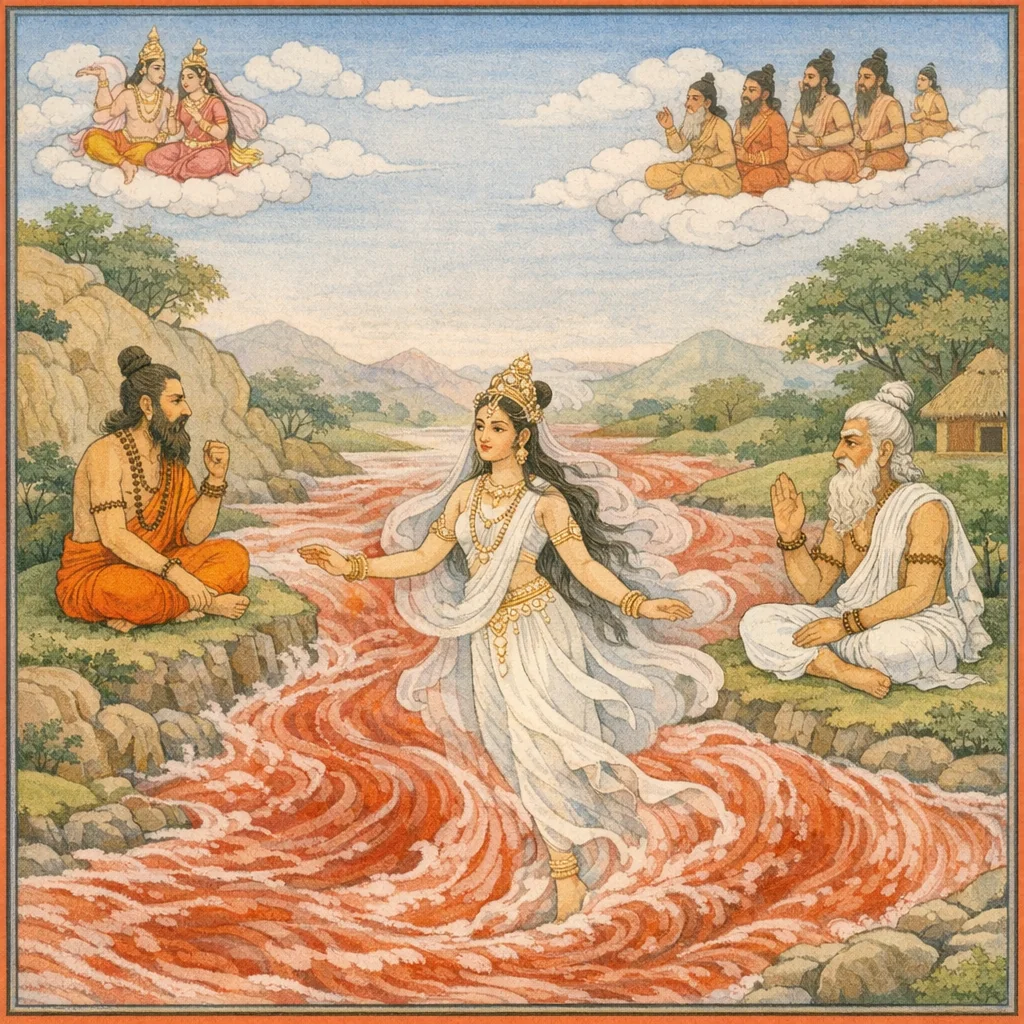
Vaiśaṃpāyana reports that a best-of-tīrthas on the Sarasvatī becomes afflicted: by a curse associated with the sage Viśvāmitra, the river’s waters carry blood. Rākṣasas arrive and drink the blood-water, becoming satiated and exhilarated. Later, pilgrim ṛṣis devoted to tapas reach the site, observe the blood-flooded waters being consumed, and undertake protective intervention for Sarasvatī. They summon the river, ask for the cause, and Sarasvatī—trembling—recounts the events and the curse. The ṛṣis then agree to free her from the curse; by their resolve and utterance, Sarasvatī returns to her natural, clear flow. Seeing this, hungry rākṣasas petition the compassionate sages, stating their condition is not mere whim but a consequence of prior dharmic decline; they explain that those who hate brāhmaṇas or disrespect ācārya, ṛtvij, guru, elders, and beings become rākṣasas. The sages prescribe a normative “share” for rākṣasas—food that is contaminated (e.g., touched by insects, leftovers, hair-fallen, damaged, or dog-contact)—and advise the learned to avoid such items. After purifying the tīrtha, the sages encourage the river to facilitate the rākṣasas’ release. Sarasvatī brings forth her form as Aruṇā; bathing there enables the rākṣasas to abandon their bodies and attain heavenly states, and Aruṇā is characterized as removing brahmahatyā-taint. Janamejaya then asks why Indra incurred brahmahatyā and how the tīrtha purifies; Vaiśaṃpāyana narrates Indra’s pact with Namuci (not killing by wet/dry, night/day), Indra’s use of mist and water-foam to behead Namuci, the accusatory pursuit by Namuci’s head, Brahmā’s instruction to bathe at Aruṇā, and Indra’s consequent purification and return to heaven. The chapter closes by pointing onward to further tīrtha associations (including Soma’s great tīrtha) and mythic battle references tied to ritual locales.
Chapter Arc: जनमेजय विस्मय से पूछते हैं—वसिष्ठापवाह तीर्थ में सरस्वती का वेग इतना भयंकर कैसे हुआ, और उसने महर्षियों को क्यों बहाया? वैर का मूल कारण क्या था? → वैशम्पायन/सूत-परंपरा में कथा खुलती है: सरस्वती-तट के तीर्थों का माहात्म्य, स्थाणुतीर्थ में शिव का पूजन, और उसी पवित्र क्षेत्र में स्कन्द का देवसेनापति-रूप में अभिषेक—पर इसी पुण्यभूमि में विश्वामित्र का क्रोध भी उभरता है। वसिष्ठ के प्रति पुराना वैर सरस्वती के प्रवाह में ‘शस्त्र’ बनकर उतरता है; महर्षियों की स्तुति से भी नदी का वेग थमता नहीं। → वसिष्ठ को बार-बार प्रवाह से दूर बहाया जाता देख विश्वामित्र अमर्ष से उबल पड़ते हैं; वे सरस्वती को शाप देते हैं—और नदी का स्वरूप ‘रक्त-धारा’ जैसा, राक्षस-समूह को प्रिय, भयावह बन जाता है। यह क्षण तीर्थ की पवित्रता और क्रोध की अशुद्धि का टकराव है। → सरस्वती शाप-ग्रस्त होकर व्याकुल होती है; ऋषि, देवता, गन्धर्व और अप्सराएँ उसे उस दशा में देखकर शोकाकुल हो उठते हैं। स्तुति और उपदेश के द्वारा उसके भीतर की देवी-शक्ति का स्मरण कराया जाता है—कि वह ही पुष्टि, कीर्ति, बुद्धि, वाणी आदि चतुर्विध रूपों में समस्त प्राणियों में वास करती है—और इस स्मरण से शाप-जनित उग्रता के शमन का मार्ग बनता है। → शाप से विक्षुब्ध सरस्वती का आगे क्या रूपांतरण होगा—क्या वह पुनः ‘पावनी’ बनेगी या क्रोध का प्रवाह किसी नए अनर्थ की ओर मुड़ेगा?
Shlokas
Verse 1
(दाक्षिणात्य अधिक पाठका ३ श्लोक मिलाकर कुल ४० $ “लोक हैं।) द्विचत्वारिशोड ध्याय: वसिष्छठापवाह तीर्थकी उत्पत्तिके प्रसंगमें विश्वामित्रका क्रोध और वसिष्ठजीकी सहनशीलता जनमेजय उवाच वसिष्ठस्यापवाहो5सौ भीमवेग: कथं नु सः । किमर्थ च सरिच्छोष्ठा तमृषिं प्रत्यवाहयत्
(In the southern (Dakṣiṇātya) supplementary reading, 3 ślokas are added, making 40 in all.) Chapter Forty-Two: In the episode concerning the origin of the sacred ford called Vasiṣṭhāpavāha—Viśvāmitra’s wrath and Vasiṣṭha’s forbearance. Janamejaya said: “How did that fearsome torrent known as Vasiṣṭhāpavāha come to have such dreadful speed? And for what reason did Sarasvatī, foremost among rivers, sweep that ṛṣi away?”
Verse 2
कथमस्याभवद् वैरं कारणं कि च तत् प्रभो | शंस पृष्टो महाप्राज्ञ न हि तृप्पामि ते वच:
Janamejaya said: “How did this enmity arise for him? What was its cause, O lord? Tell me, since you are asked—O greatly wise one—for I am not yet satisfied by your words.”
Verse 3
जनमेजयने पूछा--प्रभो! वसिष्ठापवाह तीर्थमें सरस्वतीके जलका भयंकर वेग कैसे हुआ? सरिताओंमें श्रेष्ठ सरस्वतीने उन महर्षिको किस लिये बहाया? उनके साथ उसका वैर कैसे हुआ? उस वैरका कारण क्या है? महामते! मैंने जो पूछा है, वह बताइये। मैं आपके वचनोंको सुनते-सुनते तृप्त नहीं होता हूँ ।। वैशम्पायन उवाच विश्वामित्रस्य विप्रर्षेवसिष्ठस्य च भारत । भृशं वैरमभूद् राजंस्तप:स्पर्धाकृतं महत्,वैशम्पायनजीने कहा--भारत! तपस्यामें होड़ लग जानेके कारण विश्वामित्र तथा ब्रह्मर्षि वसिष्ठमें बड़ा भारी वैर हो गया था
Janamejaya asked: “Lord, at the sacred ford called Vasiṣṭhāpavāha, how did the waters of Sarasvatī come to surge with such dreadful force? And why did Sarasvatī—foremost among rivers—sweep that great ṛṣi away? How did enmity arise between them, and what was its cause? O man of profound understanding, tell me what I ask; I never grow sated as I listen to your words.” Vaiśampāyana said: “O Bhārata (Janamejaya), through rivalry in austerities, there arose a great and fierce enmity between Viśvāmitra—the seer among Brahmins—and Vasiṣṭha, the Brahmarṣi.”
Verse 4
आश्रमो वै वसिष्ठस्य स्थाणुतीर्थेडभवन्महान् । पूर्वतः पार्श्वतश्चासीद् विश्वामित्रस्य धीमत:,सरस्वतीके स्थाणुतीर्थमें पूर्वतटपर वसिष्ठका बहुत बड़ा आश्रम था और पश्चिमतटपर बुद्धिमान विश्वामित्र मुनिका आश्रम बना हुआ था
Vaiśampāyana said: At Sthāṇutīrtha on the Sarasvatī there stood the great hermitage of Vasiṣṭha on the eastern bank; and on the opposite side, to the west, was the hermitage of the wise Viśvāmitra. The scene quietly frames two eminent sages in close proximity, hinting at the moral weight of ascetic power, restraint, and the long memory of rivalry transformed by spiritual striving.
Verse 5
यत्र स्थाणुर्महाराज तप्तवान् परमं तप: । तत्रास्य कर्म तद् घोरं प्रवदन्ति मनीषिण:,महाराज! जहाँ भगवान् स्थाणुने बड़ी भारी तपस्या की थी, वहाँ मनीषी पुरुष उनके घोर तपका वर्णन करते हैं
Vaiśampāyana said: “O great king, in that very place where Lord Sthāṇu performed the highest austerity, the wise recount the terrible deed associated with him—remembering the fearful power and consequence of such tapas.”
Verse 6
यत्रेष्टवा भगवान् स्थाणु: पूजयित्वा सरस्वतीम् | स्थापयामास तत् तीर्थ स्थाणुतीर्थमिति प्रभो,प्रभो! जहाँ भगवान् स्थाणु (शिव)-ने सरस्वतीका पूजन और यज्ञ करके तीर्थकी स्थापना की थी, वहाँ वह तीर्थ स्थाणुतीर्थके नामसे विख्यात हुआ
Vaiśampāyana said: “O lord, the place where the Blessed Sthāṇu (Śiva) performed a sacrifice and worshipped Sarasvatī—there he established a sacred ford. From that act it became renowned as ‘Sthāṇutīrtha.’”
Verse 7
तत्र तीर्थे सुरा: स्कन्दम भ्यषिज्चन्नराधिप । सैनापत्येन महता सुरारिविनिबर्हणम्,नरेश्वर! उसी तीर्थमें देवताओंने देवशत्रुओंका विनाश करनेवाले स्कन्दको महान् सेनापतिके पदपर अभिषिक्त किया था
Vaiśampāyana said: “At that sacred ford, O king, the gods consecrated Skanda—crusher of the enemies of the devas—by installing him in the great office of commander-in-chief. Thus that tīrtha is remembered as a place where divine authority was ritually affirmed for the protection of cosmic order.”
Verse 8
तस्मिन् सारस्वते तीर्थे विश्वामित्रो महामुनि: । वसिष्ठ॑ं चालयामास तपसोग्रेण तच्छुणु,उसी सारस्वततीर्थमें महामुनि विश्वामित्रने अपनी उग्र तपस्यासे वसिष्ठमुनिको विचलित कर दिया था। वह प्रसंग सुनाता हूँ, सुनो
Vaiśampāyana said: “At that sacred ford of the Sarasvatī, the great sage Viśvāmitra, by the fierceness of his austerities, caused the sage Vasiṣṭha to be shaken from his composure. Listen, as I recount that episode.”
Verse 9
विश्वामित्रवसिष्ठी तावहन्यहनि भारत । स्पर्धा तपःकृतां तीव्रां चक्रतुस्तो तपोधनौ,भारत! विश्वामित्र और वसिष्ठ दोनों ही तपस्याके धनी थे, वे प्रतिदिन होड़ लगाकर अत्यन्त कठोर तप किया करते थे
Vaiśampāyana said: O Bhārata, Viśvāmitra and Vasiṣṭha—both rich in ascetic power—day after day entered a fierce rivalry of austerities, each striving to outdo the other through severe tapas.
Verse 10
तत्राप्यधिकसंतापो विश्वामित्रो महामुनि: । दृष्टवा तेजो वसिष्ठस्थ चिन्तामभिजगाम ह,उनमें भी महामुनि विश्वामित्रको ही अधिक संताप होता था, वे वसिष्ठका तेज देखकर चिन्तामग्न हो गये थे
Vaiśampāyana said: Even among them, it was the great sage Viśvāmitra who felt the sharper anguish. Seeing the spiritual radiance abiding in Vasiṣṭha, he fell into deep reflection.
Verse 11
तस्य बुद्धिरियं हयासीद् धर्मनित्यस्य भारत । इयं सरस्वती तूर्ण मत्समीपं तपोधनम्,भरतनन्दन! सदा धर्ममें तत्पर रहनेवाले विश्वामित्र मुनिके मनमें यह विचार उत्पन्न हुआ कि यह सरस्वती तपोधन वसिष्ठको अपने जलके वेगसे तुरंत ही मेरे समीप ला देगी और यहाँ आ जानेपर तपस्वी मुनियोंमें श्रेष्ठ विप्रवर वसिष्ठका मैं वध कर डालूँगा; इसमें संशय नहीं है
Vaiśampāyana said: O Bhārata, such was the resolve that arose in the mind of the ever-righteous sage Viśvāmitra: “This Sarasvatī will swiftly, by the force of her waters, bring Vasiṣṭha—the treasure of asceticism—into my presence; and once he arrives here, I shall slay that foremost of brahmin sages. Of this there is no doubt.”
Verse 12
आनयिष्यति वेगेन वसिष्ठ॑ तपतां वरम् । इहागतं द्विजश्रेष्ठ हनिष्यामि न संशय:,भरतनन्दन! सदा धर्ममें तत्पर रहनेवाले विश्वामित्र मुनिके मनमें यह विचार उत्पन्न हुआ कि यह सरस्वती तपोधन वसिष्ठको अपने जलके वेगसे तुरंत ही मेरे समीप ला देगी और यहाँ आ जानेपर तपस्वी मुनियोंमें श्रेष्ठ विप्रवर वसिष्ठका मैं वध कर डालूँगा; इसमें संशय नहीं है
Vaiśampāyana said: “(Sarasvatī) will swiftly bring Vasiṣṭha, the foremost among ascetics. Once that best of twice-born sages arrives here, I shall kill him—of this there is no doubt.”
Verse 13
एवं निश्चित्य भगवान् विश्वामित्रो महामुनि: । सस्मार सरितां श्रेष्ठां क्रोधसंरक्तलोचन:,ऐसा निश्चय करके पूज्य महामुनि विश्वामित्रके नेत्र क्रोधसे रक्तवर्ण हो गये। उन्होंने सरिताओंमें श्रेष्ठ सरस्वतीका स्मरण किया
Having thus resolved, the revered great sage Viśvāmitra—his eyes reddened with anger—called to mind Sarasvatī, the foremost among rivers.
Verse 14
सा ध्याता मुनिना तेन व्याकुलत्वं जगाम ह । जज्ञे चैनं महावीर्य महाकोपं च भाविनी,उन मुनिके चिन्तन करनेपर विचारशीला सरस्वती व्याकुल हो उठी। उसे ज्ञात हो गया कि ये महान् शक्तिशाली महर्षि इस समय बड़े भारी क्रोधसे भरे हुए हैं
As that sage contemplated, the thoughtful Sarasvatī became distressed. She understood that this great and mighty seer was at that moment filled with an intense and formidable anger.
Verse 15
तत एनं वेपमाना विवर्णा प्राञ्जलिस्तदा । उपतस्थे मुनिवरं विश्वामित्रं सरस्वती,इससे सरस्वतीकी कान्ति फीकी पड़ गयी और वह हाथ जोड़ थर-थर काँपती हुई मुनिवर विश्वामित्रकी सेवामें उपस्थित हुई
Then Sarasvatī—trembling, her complexion drained—stood with folded hands and approached the great sage Viśvāmitra in attendance.
Verse 16
हतवीरा यथा नारी साभवद् दु:खिता भृशम् | ब्रूहि किं करवाणीति प्रोवाच मुनिसत्तमम्,जिसका पति मारा गया हो उस विधवा नारीके समान वह अत्यन्त दुःखी हो गयी और उन मुनिश्रेष्ठसे बोली--'प्रभो! बताइये, मैं आपकी किस आज्ञाका पालन करूँ?”
Vaiśampāyana said: Like a woman bereft of her husband, she became exceedingly distressed. Then she addressed the foremost of sages: “Lord, tell me—what should I do? Which of your commands am I to carry out?”
Verse 17
तामुवाच मुनि: क्रुद्धो वसिष्ठं शीघ्रमानय । यावदेनं निहन्म्यद्य तच्छुत्वा व्यथिता नदी
Vaiśampāyana said: Enraged, the sage said to her, “Bring Vasiṣṭha here at once—before I strike him down today.” Hearing those words, the river was shaken with distress.
Verse 18
तब कुपित हुए मुनिने उससे कहा--“वसिष्ठको शीघ्र यहाँ बहाकर ले आओ, जिससे आज मैं इनका वध कर डालूँ।' यह सुनकर सरस्वती नदी व्यथित हो उठी ।। प्राउ्जलिं तु ततः कृत्वा पुण्डरीकनिभेक्षणा । प्राकम्पत भूशं भीता वायुनेवाहता लता,वह कमलनयना अबला हाथ जोड़कर वायुके झकोरेसे हिलायी गयी लताके समान अत्यन्त भयभीत हो जोर-जोरसे काँपने लगी
Then the enraged sage said to her, “Bring Vasiṣṭha here swiftly, borne by the current, so that today I may slay him.” Hearing this, the river Sarasvatī was stricken with anguish. Then, lotus-eyed, she folded her hands in supplication and trembled violently in fear—like a creeper shaken by a gust of wind.
Verse 19
तथारूपां तु तां दृष्टवा मुनिराह महानदीम् । अविचारं वसिष्ठ॑ त्वमानयस्वान्तिकं मम,उसकी ऐसी अवस्था देखकर मुनिने उस महानदीसे कहा--“तुम बिना कोई विचार किये वसिष्ठको मेरे पास ले आओ”
Seeing her in such a condition, the sage addressed the great river: “Without hesitation or further deliberation, bring Vasiṣṭha to me at once.”
Verse 20
सा तस्य वचन श्र॒ुत्वा ज्ञात्वा पापं चिकीर्षितम् वसिष्ठस्य प्रभावं च जानन्त्यप्रतिमं भुवि
Hearing his words, she understood the sinful deed he intended to commit; and, knowing the unrivalled power of Vasiṣṭha upon the earth, she responded with that awareness.
Verse 21
साभिगम्य वसिष्ठ॑ च इदमर्थमचोदयत् । बदुक्ता सरितां श्रेष्ठा विश्वामित्रेण धीमता
Vaiśampāyana said: Having approached Vasiṣṭha, she urged him about this matter. Thus addressed by the wise Viśvāmitra, the foremost of rivers (the Gaṅgā) responded in accordance with that request.
Verse 22
विश्वामित्रकी बात सुनकर और उनकी पापपूर्ण चेष्टा जानकर वसिष्ठके भूतलपर विख्यात अनुपम प्रभावको जानती हुई उस नदीने उनके पास जाकर बुद्धिमान विश्वामित्रने जो कुछ कहा था, वह सब उनसे कह सुनाया ।। उभयो: शापयोर्भीता वेपमाना पुन: पुन: । चिन्तयित्वा महाशापमृषिवित्रासिता भृूशम्,वह दोनोंके शापसे भयभीत हो बारंबार काँप रही थी। महान् शापका चिन्तन करके विश्वामित्र ऋषिके डरसे बहुत डर गयी थी
Vaiśampāyana said: Hearing Viśvāmitra’s words and discerning his sinful intent, and knowing Vasiṣṭha’s famed, unrivalled power upon the earth, the river went to him and repeated all that the wise Viśvāmitra had said. Afraid of the two curses, she trembled again and again; pondering the dreadful might of that great curse, she grew exceedingly fearful of the sage Viśvāmitra’s wrath.
Verse 23
तां कृशां च विवर्णा च दृष्टवा चिन्तासमन्विताम् | उवाच राजन धर्मात्मा वसिष्ठो द्विपदां वर:,राजन! उसे दुर्बल, उदास और चिन्तामग्न देख मनुष्योंमें श्रेष्ठ धर्मात्मा वसिष्ठने कहा
Seeing her—emaciated, pale, and overwhelmed by anxious thoughts—the righteous-souled Vasiṣṭha, foremost among men, addressed the king.
Verse 24
वसिष्ठ उवाच पाह्यात्मानं सरिच्छेछे वह मां शीघ्रगामिनी । विश्वामित्र: शपेद्धि त्वां मा कृथास्त्वं विचारणाम्,वसिष्ठ बोले--सरिताओंमें श्रेष्ठ सरस्वती! तुम शीघ्र गतिसे प्रवाहित होकर मुझे बहा ले चलो और अपनी रक्षा करो, अन्यथा विश्वामित्र तुम्हें शाप दे देंगे; इसलिये तुम कोई दूसरा विचार मनमें न लाओ
Vasiṣṭha said: “O Sarasvatī, best among rivers, protect yourself and bear me swiftly along. Otherwise Viśvāmitra will surely curse you; therefore let no hesitation or other plan arise in your mind.”
Verse 25
तस्य तद् वचन श्रुत्वा कृपाशीलस्य सा सरित् | चिन्तयामास कौरव्य कि कृत्वा सुकृतं भवेत्,कुरुनन्दन! उन कृपाशील महर्षिका वह वचन सुनकर सरस्वती सोचने लगी, “क्या करनेसे शुभ होगा?”
Hearing those words of the compassionate sage, the river Sarasvatī began to reflect: “O descendant of the Kurus, joy of the Kuru line—what action would truly be a meritorious deed?”
Verse 26
तस्याश्रिन्ता समुत्पन्ना वसिष्ठो मय्यतीव हि | कृतवान् हि दयां नित्यं तस्य कार्य हितं॑ मया,उसके मनमें यह विचार उठा कि “वसिष्ठने मुझपर बड़ी भारी दया की है। अतः सदा मुझे इनका हित-साधन करना चाहिये”
In her mind this thought arose: “Vasiṣṭha has shown me exceedingly great compassion, always. Therefore it is my duty to work for his welfare and act in ways that benefit him.”
Verse 27
अथ कूले स्वके राजन् जपन्तमृषिसत्तमम् | जुद्दानं कौशिक प्रेक्ष्य सरस्वत्य भ्यचिन्तयत्
Then, O King, on her own riverbank, seeing Kauśika—the foremost of sages—absorbed in mantra-recitation, Sarasvatī reflected within herself on what response was fitting.
Verse 28
इदमन्तरमित्येवं ततः सा सरितां वरा । कूलापहारमकरोत् स्वेन वेगेन सा सरित्
Having thus indicated, “This is the interval,” the excellent river then, driven by her own powerful current, tore away the riverbank.
Verse 29
राजन्! तदनन्तर ऋषिश्रेष्ठ विश्वामित्रकों अपने तटपर जप और होम करते देख सरिताओंमें श्रेष्ठ सरस्वतीने सोचा, यही अच्छा अवसर है, फिर तो उस नदीने पूर्व-तटको तोड़कर उसे अपने वेगसे बहाना आरम्भ किया ।। तेन कूलापहारेण मैत्रावरुणिरौहाुत । उहामान: स तुष्टाव तदा राजन् सरस्वतीम्,उस बहते हुए किनारेके साथ मित्रावरुणके पुत्र वसिष्ठजी भी बहने लगे। राजन! बहते समय वसिष्ठजी सरस्वतीकी स्तुति करने लगे---
O King, thereafter the river Sarasvatī—foremost among streams—saw the best of sages, Viśvāmitra, engaged on her bank in japa and sacrificial offerings. Thinking, “This is the right moment,” she broke her eastern embankment and began to sweep it away with her own force. By that tearing away of the bank, Vasiṣṭha, the son of Mitra and Varuṇa, was carried along with the collapsing shore. As he was being borne downstream, O King, he praised Sarasvatī—not with anger, but with reverent speech.
Verse 30
पितामहस्य सरस: प्रवृत्तासि सरस्वति । व्याप्तं चेदं जगत् सर्व तवैवाम्भोभिरुत्तमै:,“सरस्वती! तुम पितामह ब्रह्माजीके सरोवरसे प्रकट हुई हो, इसीलिये तुम्हारा नाम सरस्वती है। तुम्हारे उत्तम जलसे ही यह सारा जगत् व्याप्त है
Vasiṣṭha said: “O Sarasvatī, you have arisen from the lake of the Grandfather, Brahmā; therefore you are called Sarasvatī. By your excellent waters this entire world is pervaded.”
Verse 31
त्वमेवाकाशगा देवि मेघेषु सृजसे पय: । सर्वाक्षापस्त्वमेवेति त्वत्तो वयमधीमहि,'देवि! तुम्हीं आकाशमें जाकर मेघोंमें जलकी सृष्टि करती हो, तुम्हीं सम्पूर्ण जल हो; तुमसे ही हम ऋषिगण वेदोंका अध्ययन करते हैं
Vasiṣṭha said: “O Goddess, you alone move through the sky and, within the clouds, bring forth the waters. You are yourself the totality of water in all its forms. From you, indeed, we ṛṣis receive the capacity to study and transmit the Vedas.”
Verse 32
पुष्टिद्युतिस्तथा कीर्ति: सिद्धिर्बद्धिरुमा तथा । त्वमेव वाणी स्वाहा त्वं तवायत्तमिदं जगत्
Vasiṣṭha said: “You are nourishment and radiance; you are fame; you are success and intelligence; you are also Umā. You alone are Speech, and you are Svāhā (the sacred offering-cry). This entire world depends upon you and is under your governance.”
Verse 33
एवं सरस्वती राजन् स्तूयमाना महर्षिणा,राजन! महर्षिके मुखसे इस प्रकार स्तुति सुनती हुई सरस्वतीने उन ब्रह्मर्षिको अपने वेगद्वारा विश्वामित्रके आश्रमपर पहुँचा दिया और विश्वामित्रसे बारंबार निवेदन किया कि “वसिष्ठ मुनि उपस्थित हैं!
O King, thus Sarasvatī, being praised by the great sage, listened to that hymn of eulogy. Then, by the force of her own swift current, she carried those brahmarṣis to Viśvāmitra’s hermitage and repeatedly petitioned Viśvāmitra, saying: “The sage Vasiṣṭha is present.”
Verse 34
वेगेनोवाह त॑ विप्रं विश्वामित्रा श्रमं प्रति । न्यवेदयत चाभीक्षणं विश्वामित्राय त॑ं मुनिम्,राजन! महर्षिके मुखसे इस प्रकार स्तुति सुनती हुई सरस्वतीने उन ब्रह्मर्षिको अपने वेगद्वारा विश्वामित्रके आश्रमपर पहुँचा दिया और विश्वामित्रसे बारंबार निवेदन किया कि “वसिष्ठ मुनि उपस्थित हैं!
With swift force she carried that brahmin-sage toward Viśvāmitra’s hermitage. Again and again she informed Viśvāmitra, “O king, the sage Vasiṣṭha is present.”
Verse 35
तमानीत॑ सरस्वत्या दृष्टवा कोपसमन्वित: । अथान्वेषत् प्रहरणं वसिष्ठान्तकरं तदा,सरस्वतीद्वारा लाये हुए वसिष्ठको देखकर विश्वामित्र कुपित हो उठे और उनके जीवनका अन्त कर देनेके लिये कोई हथियार दूँढ़ने लगे
Seeing Vasiṣṭha brought there by the river Sarasvatī, Viśvāmitra was seized by anger. Then, intent on ending Vasiṣṭha’s life, he began searching for a weapon to kill him.
Verse 36
तं तु क्रुद्धमभिप्रेक्ष्य ब्रह्मवध्याभयान्नदी । अपोवाह वसिष् तु प्राचीं दिशमतन्द्रिता
Seeing him enraged, the river—out of fear of the sin of Brahmin-slaying (brahmahatyā)—swiftly carried Vasiṣṭha away toward the eastern direction, remaining fully alert and resolute.
Verse 37
ततो<पवाहितं दृष्टवा वसिष्ठमृषिसत्तमम्,शोणितं वह कल्याणि रक्षोग्रामणिसम्मतम् | मुनिश्रेष्ठ वसिष्ठको पुनः अपनेसे दूर बहाया गया देख अमर्षशील विश्वामित्र दुःखसे अत्यन्त कुपित हो बोले--'सरिताओंमें श्रेष्ठ कल्याणमयी सरस्वती! तुम मुझे धोखा देकर फिर चली गयी, इसलिये अब जलकी जगह रक्त बहाओ, जो राक्षसोंके समूहको अधिक प्रिय है!
Then, seeing the foremost sage Vasiṣṭha carried away by the current once more, Viśvāmitra—stung by wounded pride—burned with grief and rage and cried: “O auspicious Sarasvatī, best of rivers! Since you have deceived me and gone away again, now flow not with water but with blood—blood dear to the leaders of the rākṣasas!”
Verse 38
अब्रवीद् दुःखसंक्रुद्धो विश्वामित्रो हामर्षण: । यस्मान्मां त्वं सरिच्छेछ्ठे वज्चयित्वा पुनर्गता
Viśvāmitra, inflamed with grief and anger, spoke in bitter resentment: “O best of rivers, since you have deceived me and then gone away again…”
Verse 39
ततः सरस्वती शप्ता विश्वामित्रेण धीमता
Then Sarasvatī was cursed by the wise Viśvāmitra—an episode showing how even revered powers and sacred forces may be drawn into strife when anger and rivalry overrun restraint.
Verse 40
अवहच्छोणितोन्मिश्र॑ तोयं संवत्सरं तदा । बुद्धिमान विश्वामित्रके इस प्रकार शाप देनेपर सरस्वती नदी एक सालतक रक्तमिश्रित जल बहाती रही ।। अथर्षयश्न देवाश्व गन्धर्वाप्सरसस्तदा
Then, when the wise Viśvāmitra pronounced his curse in that manner, the Sarasvatī River bore water mingled with blood for a full year. Thereafter the sages, the gods, and the Gandharvas and Apsarases gathered in response to that dreadful turn of events.
Verse 41
इस प्रकार श्रीमहाभारत शल्यपर्वके अन्तर्गत गदापव॑नमें बलदेवजीकी तीर्थयात्राके प्रसंगमें सारस्वतोपाख्यानविषयक इकतालीसवाँ अध्याय पूरा हुआ,एवं वसिष्ठापवाहो लोके ख्यातो जनाधिप नरेश्वरर इस प्रकार वह स्थान जगतमें वसिष्ठापवाहके नामसे विख्यात हुआ। वसिष्ठजीको बहानेके पश्चात् सरिताओंमें श्रेष्ठ सरस्वती फिर अपने पूर्व मार्गपर ही बहने लग गयी
Vaiśampāyana said: “O ruler among men, that place became renowned in the world by the name Vasiṣṭhāpavāha. After causing Vasiṣṭha to be carried away, Sarasvatī—the foremost of rivers—once again flowed along her former course.”
Verse 42
आगच्छच्च पुनर्मार्ग स्वमेव सरितां वरा,नरेश्वरर इस प्रकार वह स्थान जगतमें वसिष्ठापवाहके नामसे विख्यात हुआ। वसिष्ठजीको बहानेके पश्चात् सरिताओंमें श्रेष्ठ सरस्वती फिर अपने पूर्व मार्गपर ही बहने लग गयी इति श्रीमहाभारते शल्यपर्वणि गदापर्वणि बलदेवतीर्थयात्रायां सारस्वतोपाख्याने द्विचत्वारिंशोड्ध्याय:
Vasiṣṭha said: “O best of rivers, return again to your own course.” Thus that spot became renowned in the world by the name “Vasiṣṭhāpavāhaka” (the place where Vasiṣṭha was carried away). After Vasiṣṭha had been borne along, Sarasvatī—the foremost among rivers—once more flowed along her former channel. Thus ends the forty-second chapter of the Sārasvata episode, within Baladeva’s pilgrimage in the Gadā section of the Śalya Parva of the Mahābhārata.
Verse 366
उभयो: कुर्वती वाक््यं वज्चयित्वा च गाधिजम् । उन्हें कुपित देख सरस्वती नदी ब्रह्महत्याके भयसे आलस्य छोड़ दोनोंकी आज्ञाका पालन करती हुई विश्वामित्रको धोखा देकर वसिष्ठ मुनिको पुनः पूर्व-दिशाकी ओर बहा ले गयी
Having to comply with the commands of both, the river Sarasvatī resorted to a stratagem and deceived Gādhi’s son (Viśvāmitra). Seeing him enraged and fearing the grave sin of brahmin-slaying, she cast off hesitation and—while outwardly fulfilling both orders—misled Viśvāmitra and once again bore the sage Vasiṣṭha, turning her flow back toward the eastern direction.
Verse 383
शोणितं वह कल्याणि रक्षोग्रामणिसम्मतम् | मुनिश्रेष्ठ वसिष्ठको पुनः अपनेसे दूर बहाया गया देख अमर्षशील विश्वामित्र दुःखसे अत्यन्त कुपित हो बोले--'सरिताओंमें श्रेष्ठ कल्याणमयी सरस्वती! तुम मुझे धोखा देकर फिर चली गयी, इसलिये अब जलकी जगह रक्त बहाओ, जो राक्षसोंके समूहको अधिक प्रिय है!
Vasiṣṭha said: “O auspicious one, flow with blood—something welcomed by the leaders of the rākṣasas.” When the foremost sage Vasiṣṭha was again seen carried far away from him, the hot-tempered Viśvāmitra, pained and fiercely enraged, spoke: “O Sarasvatī, best of rivers and beneficent one! You have deceived me and gone away again; therefore now, instead of water, flow with blood—what is most dear to the hordes of rākṣasas.”
Verse 403
सरस्वती तथा दृष्टवा बभूवुर्भशदु:खिता: । तदनन्तर ऋषि, देवता, गन्धर्व और अप्सरा सरस्वतीको उस अवस्थामें देखकर अत्यन्त दुःखी हो गये
Seeing Sarasvatī in that condition, they became deeply distressed. Thereafter the sages, the gods, the Gandharvas, and the Apsarases, on beholding Sarasvatī thus, were overwhelmed with sorrow.
Verse 3236
त्वमेव सर्वभूतेषु वससीह चतुर्विधा । “तुम्हीं पुष्टि, कीर्ति, द्युति, सिद्धि, बुद्धि, उमा, वाणी और स्वाहा हो। यह सारा जगत् तुम्हारे अधीन है। तुम्हीं समस्त प्राणियोंमें चार- प्रकारके रूप धारण करके निवास करती हो”
Vasiṣṭha said: “You alone dwell within all beings, abiding there in fourfold forms. All prosperity, fame, radiance, accomplishment, intelligence, Umā, sacred speech, and Svāhā are truly you; and this entire world moves under your governance.”
Frequently Asked Questions
The dilemma concerns oath-bound truth (samaya) versus tactical compliance: Indra avoids explicit breach by killing Namuci with water-foam amid mist—neither ‘wet’ nor ‘dry’ and neither ‘night’ nor ‘day’—yet still incurs moral taint, indicating that formal loopholes do not erase ethical residue.
The text links social ethics to ontological consequence: hostility toward brāhmaṇas and contempt for teachers/elders is treated as causative of degradation, while purification is achieved through disciplined conduct, correct classification of impurity, and recourse to restorative tīrthas.
Yes in functional form: the narrative asserts that Aruṇā tīrtha removes brahmahatyā-taint and enables release (mokṣa-like deliverance) for afflicted beings; the implied phala is purification and reintegration into auspicious order through proper tīrtha observance and śauca.