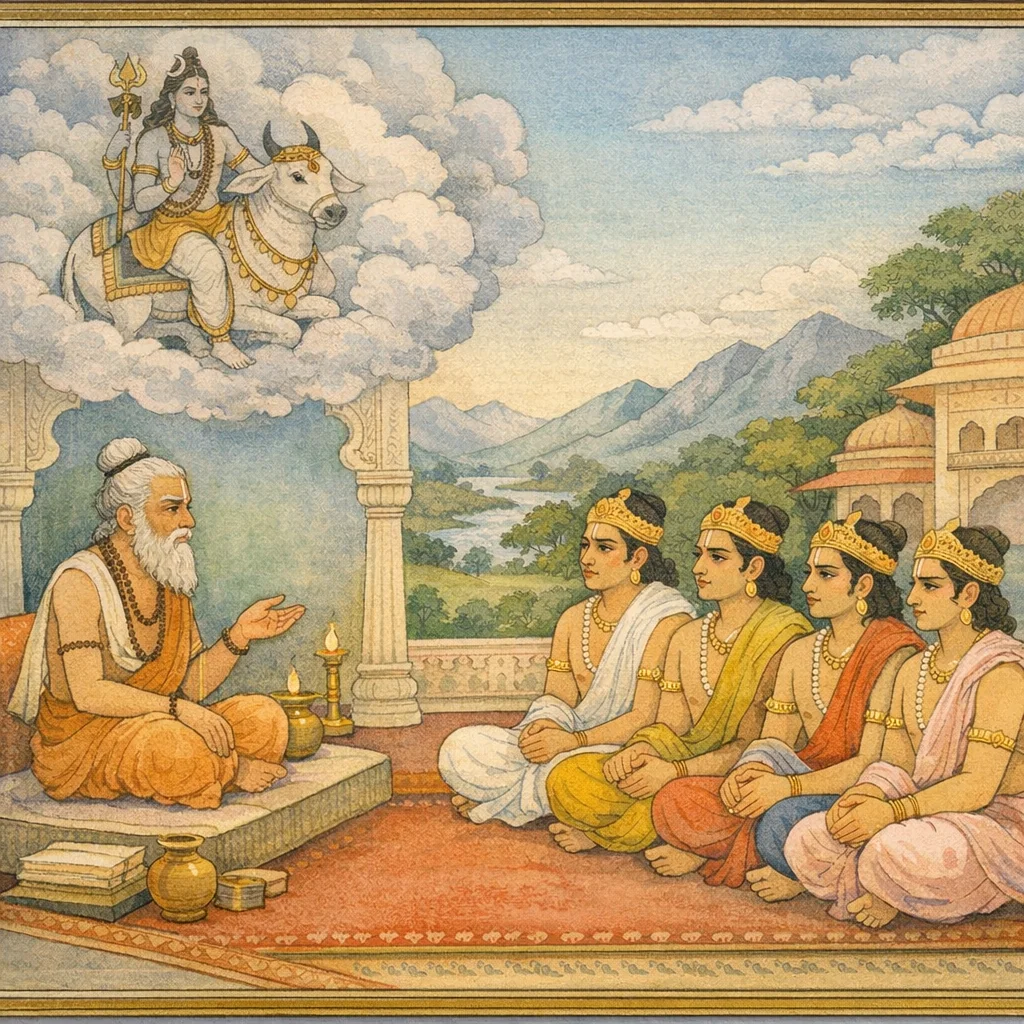
Adhyaya 46
Dyūta-kathā-praśnaḥ — Inquiry into the Dice-Game Calamity
Upa-parva: Dyūta-prastāva (Prelude to the Dice-Game)
Janamejaya requests a detailed account of the dice-game that became a major calamity for the brothers (Pāṇḍavas) and asks which kings were present, who supported the event, and who opposed it (1–3). The narrative relay is marked: Sauti introduces Vaiśaṃpāyana’s response to the king’s query (4–5). Dhṛtarāṣṭra, having understood Vidura’s position, speaks privately to Duryodhana, urging restraint and aligning Vidura’s counsel with authoritative instruction (Bṛhaspati) and with a pragmatic warning: gambling generates division, and division leads to the ruin of the kingdom (6–12). Dhṛtarāṣṭra further argues that Duryodhana already possesses inherited sovereignty, education, security, and abundance, and therefore should identify the true root of his distress (13–17). Duryodhana replies with a psychology of status injury: he is not satisfied by “common” prosperity, suffers upon seeing Yudhiṣṭhira’s expansive influence, and recounts humiliating incidents in the sabhā—misrecognitions, laughter by Bhīma and others, a fall into water mistaken for stone, and subsequent mockery—culminating in burning resentment (18–34). He also notes the overwhelming display of rare jewels and tribute, intensifying his sense of exclusion and comparative loss (23–35). The chapter thus anatomizes the shift from ethical counsel to grievance-driven strategy, establishing the motivational substrate for the dice-game initiation.
Chapter Arc: द्यूत के अनिष्ट की छाया पहले ही उतर आती है—धर्मराज युधिष्ठिर के मन में अनजानी चिन्ता उठती है, और उसी समय महर्षि व्यास का आगमन होता है। → युधिष्ठिर भाइयों सहित व्यास का सत्कार करते हैं; व्यास सुवर्णासन पर बैठकर भविष्यसूचक वाणी कहते हैं—राजा को स्वप्न में वृषध्वज, नीलकण्ठ, त्रिपुरान्तक शिव के दर्शन होंगे, और यह संकेत किसी महान् अनर्थ की ओर है। युधिष्ठिर के भीतर यह भय गहराता है कि कहीं समस्त क्षत्रिय-विनाश का कारण वे स्वयं न बन जाएँ। → व्यास की वाणी सुनकर युधिष्ठिर का मन ‘मरणे निश्चिता मति’ जैसा कठोर हो उठता है—वे अपने ही भाग्य-बंधन को देख लेते हैं और यह स्वीकारने लगते हैं कि यदि सर्वक्षत्र-निधन का हेतु बनना ही लिखा है तो वह उनके ही द्वारा होगा; यह आत्म-आरोप और नियति-बोध अध्याय का शिखर है। → युधिष्ठिर व्यास-वचन पर विचार कर भाइयों से परामर्श करते हैं; व्यास विदा लेने की अनुमति माँगते हैं और युधिष्ठिर उन्हें प्रणाम कर विदा करते हैं। विदाई के बाद भी युधिष्ठिर के मन में एक भारी संशय शेष रहता है—जिसका समाधान वे व्यास के अतिरिक्त किसी से नहीं मानते। → व्यास के चले जाने पर युधिष्ठिर का ‘भारी संशय’ खुलकर सामने आता है—आगे वही संशय द्यूत-आह्वान और धर्म-संकट की ओर कथा को धकेलता है।
Shlokas
Verse 1
(दाक्षिणात्य अधिक पाठके ४२ श्लोक मिलाकर कुल ११० श्लोक हैं) नशा (0) आज अत न (द्यूतपर्व) षट्चत्वारिशो< ध्याय: व्यासजीकी भविष्यवाणीसे युधिछिरकी चिन्ता और समत्वपूर्ण बर्ताव करनेकी प्रतिज्ञा वैशम्पायन उवाच समाप्ते राजसूये तु क्रतुश्रेष्ठे सुदुर्लभे । शिष्यै: परिवृतो व्यास: पुरस्तात् समपद्यत,वैशम्पायनजी कहते हैं--जनमेजय! यज्ञोंमें श्रेष्ठ परम दुर्लभ राजसूययज्ञके समाप्त हो जानेपर शिष्योंसे घिरे हुए भगवान् व्यास राजा युधिष्ठिरके पास आये
Vaiśampāyana said: When the Rājasūya sacrifice—foremost among rites and exceedingly hard to obtain—had been completed, Vyāsa, surrounded by his disciples, came forward into the presence of King Yudhiṣṭhira.
Verse 2
सो<भ्ययादासनात् तूर्ण भ्रातृभि: परिवारित: । पाद्येनासनदानेन पितामहमपूजयत्,उन्हें देखकर भाइयोंसे घिरे हुए राजा युधिष्ठटिर तुरंत आसनसे उठकर खड़े हो गये और आसन एवं पाद्य आदि समर्पण करके उन्होंने पितामह व्यासजीका यथावत् पूजन किया
Vaiśampāyana said: Seeing him, King Yudhiṣṭhira—surrounded by his brothers—rose quickly from his seat and, offering the customary water for washing the feet and presenting a seat, duly honored the revered grandsire Vyāsa.
Verse 3
अथोपविश्य भगवान् काञ्चने परमासने । आस्यतामिति चोवाच धर्मराजं युधिष्ठिरम्,तत्पश्चात् सुवर्णमय उत्तम आसनपर बैठकर भगवान् व्यासने धर्मराज युधिष्ठिरसे कहा --बैठ जाओ”
Then the revered sage, having seated himself upon a splendid golden throne, addressed Dharmarāja Yudhiṣṭhira and said, “Be seated.”
Verse 4
अथोपविष्ट राजानं भ्रातृभि: परिवारितम् | उवाच भगवान् व्यासस्तत्तद्वाक्यविशारद:,भाइयोंसे घिरे हुए राजा युधिष्ठिरके बैठ जानेपर बातचीतमें कुशल भगवान् व्यासने उनसे कहा--
Then, when King Yudhiṣṭhira had taken his seat, surrounded by his brothers, the venerable Vyāsa—skilled in discerning and speaking words suited to the moment—addressed him.
Verse 5
दिष्ट्या वर्धसि कौन्तेय साम्राज्य प्राप्य दुर्लभम् | वर्धिता: कुरव: सर्वे त्वया कुरुकुलोद्वह,“कुन्तीनन्दन! बड़े आनन्दकी बात है कि तुम परम दुर्लभ सम्राट्का पद पाकर सदा उन्नतिशील हो रहे हो। कुरुकुलका भार वहन करनेवाले नरेश! तुमने समस्त कुरुवंशियोंको समृद्धिशाली बना दिया
Vaiśampāyana said: “Fortune indeed attends you, O son of Kuntī: having attained the rare dignity of imperial sovereignty, you continue to prosper. O bearer of the Kuru line, through you all the Kurus have been made to flourish.”
Verse 6
आपूृच्छे त्वां गमिष्यामि पूजितो5स्मि विशाम्पते । एवमुक्त: स कृष्णेन धर्मराजो युधिष्ठिर:
Vaiśampāyana said: “I take my leave of you; I shall depart. I have been duly honored, O lord of the people.” Thus addressed by Kṛṣṇa, Dharma-rāja Yudhiṣṭhira responded.
Verse 7
युधिछिर उवाच संशयो द्विपदां श्रेष्ठ ममोत्पन्न: सुदुर्लभ:
Yudhiṣṭhira said: “O best among men, a doubt has arisen in me—one exceedingly difficult to resolve.”
Verse 8
उत्पातांस्त्रिविधान् प्राह नारदो भगवानृषि:
Then the venerable sage Nārada spoke, declaring that portents are of three kinds.
Verse 9
दिव्यांश्ैवान्तरिक्षांश्व॒ पार्थिवांश्व पितामह । अपि चैट्यस्य पतनाच्छन्नमौत्पातिकं महत्
Yudhiṣṭhira said: “O Grandfather, there are portents that are celestial, those that appear in the mid-air, and those that arise upon the earth. And further, from the fall of this sacred monument (caitya) a great ominous sign has manifested—hidden yet grave in its import.”
Verse 10
पितामह! देवर्षि भगवान् नारदने स्वर्ग, अन्तरिक्ष और पृथ्वीविषयक तीन प्रकारके उत्पात बताये हैं। क्या शिशुपालके मारे जानेसे वे महान् उत्पात शान्त हो गये? ।। वैशम्पायन उवाच राज्ञस्तु वचन श्रुत्वा पराशरसुत: प्रभु: । कृष्णद्वैपायनो व्यास इदं वचनमबत्रवीत्,वैशम्पायनजी कहते हैं--जनमेजय! राजा युधिष्ठिरका यह प्रश्न सुनकर पराशरनन्दन कृष्णद्वैपायन भगवान् व्यासने इस प्रकार कहा--
Vaiśampāyana said: “O Janamejaya! The king Yudhiṣṭhira asked: ‘Grandfather, the divine sage Nārada has described three kinds of ominous portents pertaining to heaven, the mid-region, and the earth. After Śiśupāla was slain, were those great portents pacified?’ Hearing the king’s words, the mighty Kṛṣṇa-Dvaipāyana Vyāsa, son of Parāśara, replied as follows.”
Verse 11
त्रयोदश समा राजन्ुत्पातानां फलं महत् | सर्वक्षत्रविनाशाय भविष्यति विशाम्पते,“राजन! उत्पातोंका महान् फल तेरह वर्षोतक हुआ करता है। इस समय जो उत्पात प्रकट हुआ था, वह समस्त क्षत्रियोंका विनाश करनेवाला होगा
Vaiśampāyana said: “O King, the portent’s great consequence is said to mature over thirteen years. The ominous signs that have appeared now will, O lord of the people, bring about the destruction of the entire warrior order.”
Verse 12
त्वामेक॑ कारणं कृत्वा कालेन भरतर्षभ | समेत पार्थिव क्षत्रं क्षयं यास्यति भारत । दुर्योधनापराधेन भीमार्जुनबलेन च,“भरतकुलतिलक! एकमात्र तुम्हींको निमित्त बनाकर यथासमय समस्त भूमिपालोंका समुदाय आपसमें लड़कर नष्ट हो जायगा। भारत! क्षत्रियोंका यह विनाश दुर्योधनके अपराधसे तथा भीमसेन और अर्जुनके पराक्रमद्वारा सम्पन्न होगा
Vaiśampāyana said: “O bull among the Bharatas, making you alone the instrumental cause, in due course the assembled host of kings and warriors will go to destruction. O descendant of Bharata, this ruin of the Kshatriyas will be brought about by Duryodhana’s wrongdoing, and also by the might of Bhima and Arjuna.”
Verse 13
स्वप्रे द्रक्ष्यसि राजेन्द्र क्षपान्ते त्वं वृषध्वजम् | नीलकण्ठं भवं स्थाणुं कपालिं त्रिपुरान्तकम्,'राजेन्द्र! तुम रातके अन्तमें स्वप्नमें उन वृषभध्वज भगवान् शंकरका दर्शन करोगे, जो नीलकण्ठ, भव, स्थाणु, कपाली, त्रिपुरान्तक, उग्र, रुद्र, पशुपति, महादेव, उमापति, हर, शर्व, वृष, शूली, पिनाकी तथा कृत्तिवासा कहलाते हैं
Vaiśampāyana said: “O best of kings, at the end of the night you will behold in a dream the Bull-bannered Lord—Śiva—known as Nīlakaṇṭha, Bhava, Sthāṇu, Kapālin, and Tripurāntaka.”
Verse 14
उग्र रुद्रे पशुपतिं महादेवमुमापतिम् | हरं शर्व वृषं शूलं पिनाकि कृत्तिवाससम्,'राजेन्द्र! तुम रातके अन्तमें स्वप्नमें उन वृषभध्वज भगवान् शंकरका दर्शन करोगे, जो नीलकण्ठ, भव, स्थाणु, कपाली, त्रिपुरान्तक, उग्र, रुद्र, पशुपति, महादेव, उमापति, हर, शर्व, वृष, शूली, पिनाकी तथा कृत्तिवासा कहलाते हैं
Vaiśampāyana said: “(You will behold) Śiva—fierce and awe-inspiring—Rudra, Paśupati, Mahādeva, the Lord of Umā; Hara, Śarva; the Bull-bannered one, the wielder of the trident, the bearer of the bow Pināka, and the ascetic clad in a hide. O king of kings, at the end of the night you will see him in a dream.”
Verse 15
कैलासकूटप्रतिमं वृषभे5वस्थितं शिवम् । निरीक्षमाणं सततं पितृराजाश्रितां दिशम्,“उन भगवान् शिवकी कान्ति कैलासशिखरके समान उज्ज्वल होगी। वे वृषभपर आरूढ़ हुए सदा दक्षिण दिशाकी ओर देख रहे होंगे
Vaiśampāyana said: “(He beheld) Śiva, radiant like the peak of Mount Kailāsa, seated upon the bull, continually gazing toward the southern quarter—the direction presided over by the Lord of the Fathers (Yama).”
Verse 16
एवमीदृशकं स्वप्न द्रक्ष्यसि त्वं विशाम्पते । मा तत्कृते हानुध्याहि कालो हि दुरतिक्रम:,“राजन! तुम्हें इस प्रकार ऐसा स्वप्न दिखायी देगा, किंतु उसके लिये तुम्हें चिन्ता नहीं करनी चाहिये; क्योंकि काल सबके लिये दुर्लडघ है
Vaiśampāyana said: “O lord of the people, you will behold a dream of this very kind. Do not brood over it on that account, for Time is indeed hard for anyone to overstep.”
Verse 17
स्वस्ति ते5स्तु गमिष्यामि कैलासं पर्वतं प्रति । अप्रमत्त: स्थितो दान्त: पृथिवीं परिपालय,“तुम्हारा कल्याण हो, अब मैं कैलासपर्वतपर जाऊँगा। तुम सावधान एवं जितेन्द्रिय होकर पृथ्वीका पालन करो”
Vaiśampāyana said: “May well-being be yours. I shall now depart toward Mount Kailāsa. Remain vigilant, steady, and self-restrained, and govern the earth with care.”
Verse 18
वैशम्पायन उवाच एवमुक््त्वा स भगवान् कैलासं पर्वतं ययौ । कृष्णद्वैपायनो व्यास: सह शिष्यै: श्रुतानुगै:,वैशम्पायनजी कहते हैं-जनमेजय! ऐसा कहकर भगवान् कृष्ण द्वैपायन व्यास वेदमार्गका अनुसरण करनेवाले अपने शिष्योंके साथ कैलासपर्वतपर चले गये
Vaiśampāyana said: Having spoken thus, that revered sage—Kṛṣṇa Dvaipāyana Vyāsa—departed for Mount Kailāsa, accompanied by his disciples who followed the path of sacred learning.
Verse 19
गते पितामहे राजा चिन्ताशोकसमन्वित: । निःश्वसन्नुष्णमसकृत् तमेवार्थ विचिन्तयन्,अपने पितामह व्यासजीके चले जानेपर चिन्ता और शोकसे युक्त राजा युधिष्छिर बारंबार गरम साँसें लेते हुए उसी बातका चिन्तन करते रहे। अहो! दैवका विधान पुरुषार्थसे किस प्रकार टाला जा सकता है? महर्षिने जो कुछ कहा है, वह निश्चय ही होगा
When the grandsire had departed, King Yudhiṣṭhira—overwhelmed by anxiety and grief—kept repeatedly heaving hot sighs, turning the same matter over and over in his mind. He reflected on how the ordinance of fate can be averted by human effort, and concluded that whatever the great sage had declared would surely come to pass.
Verse 20
कथं तु दैवं शक्येत पौरुषेण प्रबाधितुम् । अवश्यमेव भविता यदुक्तं परमर्षिणा,अपने पितामह व्यासजीके चले जानेपर चिन्ता और शोकसे युक्त राजा युधिष्छिर बारंबार गरम साँसें लेते हुए उसी बातका चिन्तन करते रहे। अहो! दैवका विधान पुरुषार्थसे किस प्रकार टाला जा सकता है? महर्षिने जो कुछ कहा है, वह निश्चय ही होगा
Vaiśampāyana said: “How, indeed, can destiny be checked or overpowered by human effort? Whatever the supreme seer has spoken must inevitably come to pass.”
Verse 21
ततोअब्रवीन्महातेजा: सर्वान् भ्रातृन् युधिष्ठिर: । श्रुतं वै पुरुषव्याप्रा यन्मां द्वैधवायनो5ब्रवीत्
Then the mighty Yudhiṣṭhira addressed all his brothers: “O tiger-like men, I have indeed heard what Dvaidhavāyana told me.”
Verse 22
तदा तद्वचन श्रुत्वा मरणे निश्चिता मति: । सर्वक्षत्रस्य निधने यद्य॒हं हेतुरीप्सित:
Hearing those words, his resolve hardened toward death: “If it is truly desired that I should be the cause of the destruction of all the kṣatriyas, then so be it.”
Verse 23
कालेन निर्मितस्तात को ममार्थो5स्ति जीवत: । एवं ब्रुवन्तं राजानं फाल्गुन: प्रत्यभाषत
Vaiśampāyana said: “Dear one, what purpose remains for me while I yet live, when all is fashioned and overruled by Time?” As the king spoke thus in despair, Phālguna (Arjuna) replied to him.
Verse 24
यही सोचते-सोचते महातेजस्वी युधिष्ठिरने अपने सब भाइयोंसे कहा--'पुरुषसिंहो! महर्षि व्यासने मुझसे जो कहा है, उसे तुमलोगोंने सुना है न? उनकी वह बात सुनकर मैंने मरनेका निश्चय कर लिया है। तात! यदि समस्त क्षत्रियोंके विनाशमें विधाताने मुझे ही निमित्त बनानेकी इच्छा की है, कालने मुझे ही इस अनर्थका कारण बनाया है तो मेरे जीवनका क्या प्रयोजन है?” राजाकी ऐसी बातें सुनकर अर्जुनने उत्तर दिया-- || २१-- २३ || मा राजन् कश्मलं घोर प्रविशो बुद्धिनाशनम् । सम्प्रधार्य महाराज यत् क्षेमं तत् समाचर,“राजन्! इस भयंकर मोहमें न पड़िये, यह बुद्धिको नष्ट करनेवाला है। महाराज! अच्छी तरह सोच-विचारकर आपको जो कल्याणप्रद जान पड़े, वह कीजिये”
Vaiśampāyana said: As he kept turning these thoughts over, the radiant Yudhiṣṭhira addressed all his brothers: “O lion-like men! You have heard what the great sage Vyāsa told me. Having heard his words, I have resolved to die. Dear ones—if the Ordainer wishes to make me the very instrument for the destruction of all kṣatriyas, if Time has made me the cause of this calamity, then what purpose is served by my life?” Hearing the king speak thus, Arjuna replied: “O King, do not enter this dreadful despair that destroys discernment. Reflect carefully, O great king, and do what leads to welfare.”
Verse 25
ततोअब्रवीत् सत्यधृतिर्भ्रातृन् सर्वान् युधिष्ठिर: । द्वैपायनस्य वचन होवं समनुचिन्तयन्,तब सत्यवादी युधिष्ठिरने अपने सब भाइयोंसे व्यासजीकी बातोंपर विचार करते हुए कहा--
Then Yudhiṣṭhira—steadfast in truth—addressed all his brothers. Reflecting carefully on the words of Dvaipāyana (Vyāsa), the truth-speaking king spoke, weighing their counsel with a sense of duty and moral responsibility.
Verse 26
अद्यप्रभृति भद्रें वः प्रतिज्ञां मे निबोधत । त्रयोदश समास्तात को ममार्थो5स्ति जीवत:,“तात! तुमलोगोंका कल्याण हो, भाइयोंके विनाशका कारण बननेके लिये मुझे तेरह वर्षोतक जीवित रहनेसे क्या लाभ? यदि जीना ही है तो आजसे मेरी यह प्रतिज्ञा सुन लो --
Vaiśampāyana said: “From this day onward, O blessed ones, understand my vow. O dear one, what purpose is served by my living for thirteen years, if my survival becomes the cause of my brothers’ destruction? If I am to live at all, then hear this solemn resolve of mine from today.”
Verse 27
न प्रवक्ष्यामि परुषं भ्रातृनन्यांश्व पार्थिवान् । स्थितो निदेशे ज्ञातीनां योक्ष्ये तत् समुदाहरन्,“मैं अपने भाइयों तथा दूसरे राजाओंसे कभी कड़वी बात नहीं बोलूँगा। बन्धु- बान्धवोंकी आज्ञामें रहकर प्रसन्नतापूर्वक उनकी मुँहमाँगी वस्तुएँ लानेमें संलग्न रहूँगा'
Vaiśampāyana said: “I will not speak harshly to my brothers or to any other kings. Remaining under the direction of my kinsmen, I will apply myself to bringing and providing whatever they ask for.”
Verse 28
एवं मे वर्तमानस्य स्वसुतेष्वितरेषु च । भेदो न भविता लोके भेदमूलो हि विग्रह:,“इस प्रकार समतापूर्ण बर्ताव करते हुए मेरा अपने पुत्रों तथा दूसरोंके प्रति भेदभाव न होगा; क्योंकि जगतमें लड़ाई-झगड़ेका मूल कारण भेदभाव ही है
“If I conduct myself in this way, then there will be no partiality on my part—neither toward my own sons nor toward others. For in this world, conflict and strife arise from discrimination and division alone.”
Verse 29
विग्रहं दूरतो रक्षन् प्रियाण्येव समाचरन् | वाच्यतां न गमिष्यामि लोकेषु मनुजर्षभा:,“नररत्नो! विग्रह या वैर-विरोधको अपनेसे दूर ही रखकर सबका प्रिय करते हुए मैं संसारमें निन्दाका पात्र नहीं हो सकूँगा”
Protecting myself from conflict by keeping quarrel far away, and acting only in ways that are pleasing and conciliatory, I shall not become a target of blame and censure among the people, O best of men.
Verse 30
भ्रातुर्ज्येष्स्य वचनं पाण्डवा: संनिशम्य तत् | तमेव समवर्तन्त धर्मराजहिते रता:,अपने बड़े भाईकी वह बात सुनकर सब पाण्डव उन्हींके हितमें तत्पर हो सदा उनका ही अनुसरण करने लगे
Vaiśampāyana said: Having heard the words of their eldest brother, the Pāṇḍavas aligned themselves with him alone. Devoted to the welfare of Dharmarāja (Yudhiṣṭhira), they continued to follow his lead, placing his good above their own impulses.
Verse 31
संसत्सु समयं कृत्वा धर्मराड् भ्रातृभि: सह | पितृंस्तर्प्प यथान्यायं देवताश्न विशाम्पते,राजन! धर्मराजने अपने भाइयोंके साथ भरी सभामें यह प्रतिज्ञा करके देवताओं तथा पितरोंका विधिपूर्वक तर्पण किया
Vaiśaṃpāyana said: O lord of the people, O king—after making a solemn pledge in the assembled court, Dharmarāja, together with his brothers, duly offered the prescribed libations to the gods and to the ancestral fathers, in accordance with proper rule.
Verse 32
कृतमड़लकल्याणो भ्रातृभि: परिवारित: । गतेषु क्षत्रियेन्द्रेषु सर्वेषु भरतर्षभ,भरतश्रेष्ठ जनमेजय! समस्त क्षत्रियोंक चले जानेपर कल्याणमय मांगलिक कृत्य पूर्ण करके भाइयोंसे घिरे हुए राजा युधिष्ठिरने मन्त्रियोंक साथ अपने उत्तम नगरमें प्रवेश किया। महाराज! दुर्योधन तथा सुबलपुत्र शकुनि ये दोनों उस रमणीय सभामें ही रह गये
Vaiśampāyana said: When all the foremost Kṣatriya kings had departed, O bull among the Bharatas, King Yudhiṣṭhira—having completed the auspicious rites and surrounded by his brothers—entered his excellent city together with his ministers. Yet Duryodhana and Śakuni, the son of Subala, remained behind in that delightful assembly hall.
Verse 33
युधिष्ठिर: सहामात्य: प्रविवेश पुरोत्तमम् दुर्योधनो महाराज शकुनिश्चापि सौबल: । सभायां रमणीयायां तत्रैवास्ते नराधिप,भरतश्रेष्ठ जनमेजय! समस्त क्षत्रियोंक चले जानेपर कल्याणमय मांगलिक कृत्य पूर्ण करके भाइयोंसे घिरे हुए राजा युधिष्ठिरने मन्त्रियोंक साथ अपने उत्तम नगरमें प्रवेश किया। महाराज! दुर्योधन तथा सुबलपुत्र शकुनि ये दोनों उस रमणीय सभामें ही रह गये
Vaiśampāyana said: Yudhiṣṭhira, accompanied by his ministers, entered his excellent city. But Duryodhana, O great king, and Śakuni, the son of Subala, remained there in that delightful assembly hall.
Verse 46
इति श्रीमहाभारते सभापर्वणि द्यूतपर्वणि युधिष्ठिरसमये षट्चत्वारिंशो5ध्याय: ।। ४६ || इस प्रकार श्रीमह्याभारत सभापव॑के अन्तर्गत झ्वूतपर्वमें युधिष्ठिर-प्रतिज्ञाविषयक छियालीसवाँ अध्याय पूरा हुआ
Thus, in the Śrī Mahābhārata, within the Sabhā Parva—specifically in the Dyūta (Gambling) section—this forty-sixth chapter, concerning the occasion of Yudhiṣṭhira, comes to its close.
Verse 66
अभिवाद्योपसंगृह् पितामहमथाब्रवीत् । “राजन! अब मैं जाऊँगा। इसके लिये तुम्हारी अनुमति चाहता हूँ। तुमने मेरा अच्छी तरह सम्मान किया है।' महात्मा कृष्णद्वैपायन व्यासके ऐसा कहनेपर धर्मराज युधिष्छिरने उन पितामहके दोनों चरणोंको पकड़कर प्रणाम किया और कहा
Having paid his respects and drawn near, the Pitāmaha said: “O king, I shall depart now. For this I seek your permission. You have honored me well.” When the great-souled Kṛṣṇa-Dvaipāyana Vyāsa had spoken thus, Dharmarāja Yudhiṣṭhira clasped the elder’s feet, bowed in reverence, and said…
Verse 73
तस्य नान्यो<स्ति वक्ता वै त्वामृते द्विजपुड़व । युधिष्ठिर बोले--नरश्रेष्ठ! मेरे मनमें एक भारी संशय उत्पन्न हो गया है। विप्रवर! आपके सिवा दूसरा कोई ऐसा नहीं है, जो उसका समाधान कर सके
Yudhiṣṭhira said: “O best of Brāhmaṇas, a grave doubt has arisen in my mind. Except for you, there is truly no other person who can speak in a way that resolves it.”
Frequently Asked Questions
The dilemma is whether state leadership should privilege prudent counsel and social cohesion by rejecting dyūta, or permit a prestige-driven contest that predictably produces factional division and institutional harm.
The chapter teaches that envy and reputational injury, when ungoverned, can override welfare-oriented reasoning; wise counsel is identifiable by its long-term, stability-centered orientation rather than by its alignment with immediate desires.
No explicit phalaśruti appears in this excerpt; the meta-function is causal and diagnostic—positioning dyūta and unrestrained resentment as roots of systemic collapse within the epic’s broader dharma inquiry.