Adhyaya 4
Sabhā-praveśa, Dāna, and the Courtly Convergence (सभा-प्रवेशः दानं च)
Upa-parva: Sabhā-praveśa and Sabhā-upāsanā (Assembly Entry, Consecratory Hospitality, and Court Attendance)
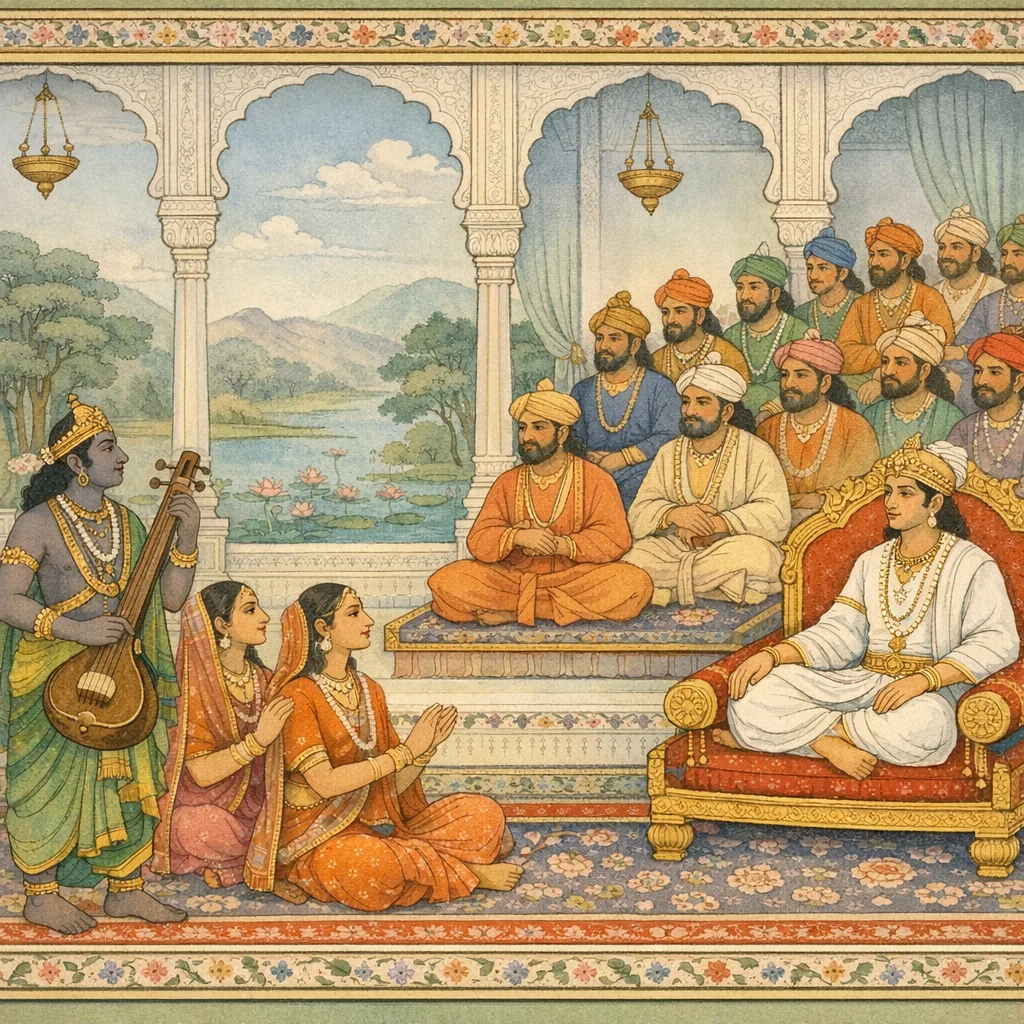
Vaiśaṃpāyana narrates Yudhiṣṭhira’s entry into the assembly hall and the immediate establishment of auspicious order (puṇyāha). The king feeds an ayuta (ten-thousand) brāhmaṇas and distributes lavish provisions—ghṛta-pāyasa, honey, foods, roots and fruits—along with new garments and garlands. He gifts cattle in large numbers and performs worship, installing/propitiating deities within the hall. Over seven nights, performers (wrestlers, actors, bards, charioteer-bards) attend upon him, and the Pāṇḍava court is described as Indra-like in splendor. The chapter then catalogs the presence of eminent ṛṣis (including Kṛṣṇa Dvaipāyana Vyāsa and Śuka among many) seated with the Pāṇḍavas, and a wide range of visiting rulers from multiple regions. It also depicts cultured entertainment and musical performance: Tumburu, Citraseṇa, gandharvas, and apsarases coordinate song and instrumentality with measured rhythm and tempo, delighting the Pāṇḍavas and sages. The closing image frames Yudhiṣṭhira as being attended like Brahmā by devas—an ideological statement that kingship is validated through dharma, ritual propriety, and public concord.
Chapter Arc: मय-निर्मित अद्भुत सभाभवन में धर्मराज युधिष्ठिर का प्रवेश—जहाँ पृथ्वी के राजाओं की भीड़ और दिव्य-मानवी वैभव एक साथ उमड़ पड़ता है। → युधिष्ठिर अतिथियों का सत्कार करते हैं—घृत-मधु मिश्रित पायस, कूष्माण्ड/कृसर, हविष्य, विविध फल-भक्ष्य; फिर नये-नये वस्त्र, हार और उपहारों से दूर-दूर से आये विप्रों और राजाओं को तृप्त करते हैं। सभा में एक-एक कर अनेक नरेशों के नाम गूँजते हैं—किरात, यवन, शैब्य, शिशुपाल (सहपुत्र), करूँषाधिपति आदि—और पाण्डव-वैभव का सार्वजनिक प्रदर्शन बनता जाता है। → तुम्बुरु के संचोदन से गन्धर्व-किन्नर दिव्य तानों में गाते-बजाते हैं; और सभा में बैठे सत्यव्रती, सत्यसंगर पाण्डवों की उपासना ऐसे करते हैं जैसे देवगण ब्रह्मा की—युधिष्ठिर का तेज सभा-केन्द्र बनकर प्रकट होता है। → सभा ‘राजसूय-पूर्व’ की प्रतिष्ठा-भूमि बन जाती है: अतिथि-सत्कार, संगीत, और राजाओं की उपस्थिति से इन्द्रप्रस्थ की सार्वभौम गरिमा स्थापित होती है; युधिष्ठिर का राजधर्म—दान, सम्मान, और मर्यादा—सर्वत्र मान्य होता है। → इतना वैभव और सार्वजनिक प्रशंसा आगे चलकर ईर्ष्या की अग्नि को किसके हृदय में भड़काएगी—और यह सभा किस परीक्षा का द्वार बनेगी?
Shlokas
Verse 1
(दाक्षिणात्य अधिक पाठके १६ श्लोक मिलाकर कुल ३८३ “लोक हैं) भीकम (2 अमान चतुथों5 ध्याय: मयद्वारा निर्मित सभाभवनमें धर्मराज युधिष्ठटिरका प्रवेश तथा सभामें स्थित महर्षियों और राजाओं आदिका वर्णन (वैशग्पायन उवाच तां तु कृत्वा सभां श्रेष्ठां मयश्लार्जुनमब्रवीत् । वैशम्पायनजी कहते हैं--जनमेजय! उस श्रेष्ठ सभाभवनका निर्माण करके मयासुरने अर्जुनसे कहा। मय उवाच एषा सभा सव्यसाचिन् ध्वजो ह्वात्र भविष्यति ।। मयासुर बोला--सव्यसाचिन्! यह है आपकी सभा, इसमें एक ध्वजा होगी। भूतानां च महावीर्यों ध्वजाग्रे किड़करो गण: । तव विस्फारघोषेण मेघवन्निनदिष्यति ।। उसके अग्रभागमें भूतोंका महापराक्रमी किंकर नामक गण निवास करेगा। जिस समय तुम्हारे धनुषकी टंकारध्वनि होगी, उस समय उस ध्वनिके साथ ये भूत भी मेघोंके समान गर्जना करेंगे। अयं हि सूर्यसंकाशो ज्वलनस्य रथोत्तम: | इमे च दिविजा: श्वेता वीर्यवन्तो हयोत्तमा: ।। मायामय: कृतो होष ध्वजो वानरलक्षण: । असज्जमानो वृक्षेषु धूमकेतुरिवोच्छित: ।। यह जो सूर्यके समान तेजस्वी अग्निदेवका उत्तम रथ है और ये जो श्वेत वर्णवाले दिव्य एवं बलवान अश्वरत्न हैं तथा यह जो वानरचिह्नसे उपलक्षित ध्वज है, इन सबका निर्माण मायासे ही हुआ है। यह ध्वज वृक्षोंमें कहीं अटकता नहीं है तथा अग्निकी लपटोंके समान सदा ऊपरकी ओर ही उठा रहता है। बहुवर्ण हि लक्ष्येत ध्वजं वानरलक्षणम् । ध्वजोत्कटं हाुनवमं युद्धे द्रक्ष्यसि विष्ठितम् ।। आपका यह वानरचिह्वित ध्वज अनेक रंगका दिखायी देता है। आप युद्धमें इस उत्कट एवं स्थिर ध्वजको कभी झुकता नहीं देखेंगे। इत्युक्त्वा5डलिड्ग्य बीभत्सुं विसृष्ट: प्रययौ मय: ।) ऐसा कहकर मयासुरने अर्जुनको हृदयसे लगा लिया और उनसे विदा लेकर (अभीष्ट स्थानको) चला गया। वैशम्पायन उवाच ततः प्रवेशनं तस्यां चक्रे राजा युधिष्ठिर: । अयुतं भोजयित्वा तु ब्राह्मणानां नराधिप:,वैशम्पायनजी कहते हैं--जनमेजय! तदनन्तर राजा युधिष्ठिरने घी और मधु मिलायी हुई खीर, खिचड़ी, जीवन्तिकाके साग, सब प्रकारके हविष्य, भाँति-भाँतिके भक्ष्य तथा फल, ईख आदि नाना प्रकारके चोष्य और बहुत अधिक पेय (शर्बत) आदि सामग्रियों-द्वारा दस हजार ब्राह्मणोंको भोजन कराकर उस सभा-भवनमें प्रवेश किया
Vaiśampāyana said: Thereafter King Yudhiṣṭhira entered that assembly-hall. But first, the lord of men fed ten thousand brāhmaṇas with many provisions—rice pudding (pāyasa) mixed with ghee and honey, kṛsara (a khichṛī-like dish), greens of jīvantī, every kind of ritual food (haviṣya), diverse foods and fruits, sugarcane and other chewables, and abundant drinks—then he entered the newly built hall.
Verse 2
साज्येन पायसेनैव मधुना मिश्रितेन च । कूृसरेणाथ जीवन्त्या हविष्येण च सर्वश:,वैशम्पायनजी कहते हैं--जनमेजय! तदनन्तर राजा युधिष्ठिरने घी और मधु मिलायी हुई खीर, खिचड़ी, जीवन्तिकाके साग, सब प्रकारके हविष्य, भाँति-भाँतिके भक्ष्य तथा फल, ईख आदि नाना प्रकारके चोष्य और बहुत अधिक पेय (शर्बत) आदि सामग्रियों-द्वारा दस हजार ब्राह्मणोंको भोजन कराकर उस सभा-भवनमें प्रवेश किया
Vaiśampāyana said: “O Janamejaya, thereafter King Yudhiṣṭhira, having fed ten thousand brāhmaṇas with ghee-rich rice pudding (pāyasa) mixed with honey, with kṛsara, with greens of jīvantī, and with every kind of ritual food (haviṣya), along with many varieties of foods and fruits, diverse chewables such as sugarcane, and abundant drinks, then entered that assembly-hall.”
Verse 3
इस प्रकार श्रीमहाभारत सभापव॑के अन्तर्गत सभाक्रियापर्वमें सभानिर्माणविषयक तीयरा अध्याय पूरा हुआ,भनक्ष्यप्रकारैविंविधै: फलैश्वापि तथा नृप । चोष्यैश्न विविध राजन् पेयैश्व बहुविस्तरै: वैशम्पायनजी कहते हैं--जनमेजय! तदनन्तर राजा युधिष्ठिरने घी और मधु मिलायी हुई खीर, खिचड़ी, जीवन्तिकाके साग, सब प्रकारके हविष्य, भाँति-भाँतिके भक्ष्य तथा फल, ईख आदि नाना प्रकारके चोष्य और बहुत अधिक पेय (शर्बत) आदि सामग्रियों-द्वारा दस हजार ब्राह्मणोंको भोजन कराकर उस सभा-भवनमें प्रवेश किया
Vaiśampāyana said: “O King (Janamejaya), thereafter King Yudhiṣṭhira, having fed ten thousand brāhmaṇas with ghee-and-honey mixed rice-pudding (pāyasa), kṛsara, greens of jīvantikā, various haviṣya offerings, many kinds of solid foods and fruits, diverse chewables such as sugarcane, and abundant drinks, entered that newly built assembly-hall.”
Verse 4
अहतैश्नैव वासोभिममल्यैरुच्चावचैरपि । तर्पयामास विप्रेन्द्रान नानादिग्भ्य:ः समागतान्,उन्होंने नये-नये वस्त्र और छोटे-बड़े अनेक प्रकारके हार आदिके उपहार देकर अनेक दिशाओंसे आये हुए श्रेष्ठ ब्राह्मणोंको तृप्त किया इति श्रीमहा भारते सभापर्वणि सभाक्रियापर्वणि सभाप्रवेशो नाम चतुर्थो5ध्याय: ।। ४ ।। इस प्रकार श्रीमह्या भारत सभथापवके अन्तर्गत सभाक्रियापर्वमें सभाप्रवेश नामक चौथा अध्याय पूरा हुआ
Vaiśampāyana said: With fresh, unsoiled garments and with many kinds of garlands—both modest and splendid—he satisfied the foremost Brāhmaṇas who had assembled from various directions.
Verse 5
ददौ तेभ्य: सहस्राणि गवां प्रत्येकश: पुन: । पुण्याहघोषस्तत्रासीद् दिवस्पृगिव भारत,भारत! तत्पश्चात् उन्होंने प्रत्येक ब्राह्मणको एक-एक हजार गौएँ दीं। उस समय वहाँ ब्राह्मणोंके पुण्याह-वाचनका गम्भीर घोष मानो स्वर्गलोकतक गूँज उठा
He then bestowed upon them, each one separately, a thousand cows. There arose there the deep, solemn reverberation of the Brahmins’ auspicious benedictions—echoing, as it were, up to heaven, O Bharata.
Verse 6
वादिन्रैविविषधीर्दिव्यैर्गन्धैरुच्चावचैरपि । पूजयित्वा कुरुश्रेष्ठो दैवतानि निवेश्य च,कुरुश्रेष्ठ युधिष्ठिने अनेक प्रकारके बाजे तथा भाँति-भाँतिके दिव्य सुगन्धित पदार्थोद्वारा उस भवनमें देवताओंकी स्थापना एवं पूजा की। इसके बाद वे उस भवनमें प्रविष्ट हुए
With varied music and with divine fragrances of many kinds—both modest and splendid—the foremost of the Kurus installed the deities in that hall and worshiped them. Thereafter he entered the building.
Verse 7
तत्र मल्ला नटा झल्ला: सूता वैतालिकास्तथा | उपतस्थुर्महात्मानं धर्मपुत्रं युधिष्ठिरम्,वहाँ धर्मपुत्र महात्मा युधिष्ठिरकी सेवामें कितने ही मल्ल (बाहुयुद्ध करनेवाले), नट, झल्ल (लकुटियोंसे युद्ध करनेवाले), सूत और वैतालिक उपस्थित हुए
There, wrestlers, actors, club-fighters, charioteers, and bards likewise came forward to attend upon the noble Dharmaputra Yudhiṣṭhira.
Verse 8
तथा स कृत्वा पूजां तां भ्रातृभि: सह पाण्डव: । तस्यां सभायां रम्यायां रेमे शक्रो यथा दिवि,इस प्रकार पूजनका कार्य सम्पन्न करके भाइयोंसहित पाण्डुनन्दन युधिष्ठिर स्वर्ममें इन्द्रकी भाँति उस रमणीय सभामें आनन्दपूर्वक रहने लगे
Having thus completed that act of worship together with his brothers, the Pāṇḍava (Yudhiṣṭhira) delighted in that splendid assembly hall, enjoying it as Indra rejoices in heaven.
Verse 9
सभायामृषयस्तस्यां पाण्डवै: सह आसते । आसांचक्रुनरिन्द्राश्न नानादेशसमागता:,उस सभामें ऋषि तथा विभिन्न देशोंसे आये हुए नरेश पाण्डवोंके साथ बैठा करते थे
Vaiśampāyana said: In that royal assembly-hall, the sages sat together with the Pāṇḍavas; and kings too—having come from many different lands—took their seats there.
Verse 10
असितो देवल: सत्य: सर्पिर्माली महाशिरा: । अर्वावसु: सुमित्रश्न मैत्रेय: शुनको बलि:
Vaiśampāyana said: “There were present the sages Asita, Devala, Satya, Sarpirmālī, Mahāśiras, Arvāvasu, Sumitra, Maitreya, Śunaka, and Bali.”
Verse 11
बको दाल्भ्य: स्थूलशिरा: कृष्णद्वैपायन: शुक: । सुमन्तुर्जैमिनि: पैलो व्यासशिष्यास्तथा वयम्
Vaiśampāyana said: “Baka Dālbhyā, Sthūlaśiras, Kṛṣṇa Dvaipāyana (Vyāsa), Śuka, Sumantu, Jaimini, and Paila—these were disciples of Vyāsa; and we too (belong to that line).”
Verse 12
तित्तिरियज्ञवल्क्यश्न॒ ससुतो लोमहर्षण: । अप्सुहोम्यश्न धौम्यश्न अणीमाण्डव्यकौशिकौ
Vaiśampāyana said: Tittiri, Yājñavalkya, and Lomaharṣaṇa together with his son, as well as Apsuhomya, Dhaumya, and the sages Aṇīmāṇḍavya and Kauśika—these revered teachers were present.
Verse 13
दामोष्णीषस्त्रैबलिश्व पर्णादो घटजानुक: । मौज्जायनो वायुभक्ष: पाराशर्यश्ष सारिक:
Vaiśampāyana said: “There were also other ascetics of striking vows and distinctive marks—one with a corded head-wrap, another connected with King Bali, one who lived on leaves, one whose knees were like a pot (from constant posture), one wearing muñja-grass, one who lived on air alone, and the son of Parāśara; and others besides.”
Verse 14
बलिवाक: सिनीवाक: सत्यपाल: कृतश्रम: । जातूकर्ण: शिखावांश्व॒ आलम्ब: पारिजातक:
Vaiśampāyana said: “(There were also) Balivāka, Sinīvāka, Satyapāla, and Kṛtaśrama; Jātūkarṇa and Śikhāvān; Ālamba and Pārijātaka.”
Verse 15
पर्वतश्न महाभागो मार्कण्डेयो महामुनि: । पवित्रपाणि: सावर्णो भालुकिर्गालवस्तथा
Vaiśampāyana said: “There was Parvataśna; the greatly fortunate and mighty sage Mārkaṇḍeya; Pavitrapāṇi; Sāvarṇa; Bhāluki; and Gālava as well.”
Verse 16
जड्घाबन्धुश्न रैभ्यश्व॒ कोपवेगस्तथा भृगुः । हरिबभ्ुश्न कौण्डिन्यो बश्रुमाली सनातन:
Vaiśampāyana said: “There were also Jaḍghābandhu, Raibhyāśva, Kopavega, and Bhṛgu; likewise Haribabhru, Kauṇḍinya, Baśrumālī, and the ancient sage Sanātana.”
Verse 17
काक्षीवानौशिजश्चनैव नाचिकेतो5थ गौतम: । पैड़यो वराह: शुनक: शाण्डिल्यश्व महातपा:
Vaiśaṃpāyana said: “There were also Kākṣīvān, Auśija, Nāciketa, and Gautama; likewise Paiḍya, Varāha, Śunaka, and the great ascetic Śāṇḍilya.”
Verse 18
कुक्कुरो वेणुजड्यो5थ कालाप: कठ एव च | मुनयो धर्मविद्वांसो धृतात्मानो जितेन्द्रिया:
Vaiśampāyana said: “There were sages named Kukkura, Veṇujaḍya, Kālāpa, and Kaṭha—seers who knew dharma, were steadfast in spirit, and had mastered their senses.”
Verse 19
असित, देवल, सत्य, सर्पिर्माली, महाशिरा, अर्वावसु, सुमित्र, मैत्रेय, शुनक, बलि, बक, दाल्भ्य, स्थूलशिरा, कृष्णद्वैपायन, शुकदेव, व्यासजीके शिष्य सुमन्तु, जैमिनि, पैल तथा हमलोग, तित्तिरि, याज्ञवल्क्य, पुत्रसहित लोमहर्षण, अप्सुहोम्य, धौम्य, अणीमाण्डव्य, कौशिक, दामोष्णीष, त्रैबलि, पर्णाद, घटजानुक, मौंजायन, वायुभक्ष, पाराशर्य, सारिक, बलिवाक, सिनीवाक, सत्यपाल, कृतश्रम, जातूकर्ण, शिखावानू, आलम्ब, पारिजातक, महाभाग पर्वत, महामुनि मार्कण्डेय, पवित्रपाणि, सावर्ण, भालुकि, गालव, जंघाबन्धु, रैभ्य, कोपवेग, भृगु, हरिबभ्रु, कौण्डिन्य, बभ्रुमाली, सनातन, काक्षीवान्ू, औशिज, नाचिकेत, गौतम, पैंगय, वराह, शुनक (द्वितीय), महातपस्वी शाण्डिल्य, कुक्कुर, वेणुजंघ, कालाप तथा कठ आदि धर्मज्ञ, जितात्मा और जितेन्द्रिय मुनि उस सभामें विराजते थे || १०-- १८ || एते चान्ये च बहवो वेदवेदाड्गपारगा: । उपासते महात्मानं सभायामृषिसत्तमा:,ये तथा और भी वेद-वेदांगोंके पारंगत बहुत-से मुनिश्रेष्ठ उस सभामें महात्मा युधिष्ठिरके पास बैठा करते थे
And many other sages too—fully accomplished in the Vedas and the auxiliary disciplines—sat in that royal assembly, attending upon the great-souled king Yudhiṣṭhira. The scene underscores that righteous sovereignty is strengthened when learning, self-restraint, and spiritual authority are honored at the center of public life.
Verse 20
कथयन्तः कथा: पुण्या धर्मज्ञा: शुचयो5मला: । तथैव क्षत्रियश्रेष्ठा धर्मराजमुपासते,वे धर्मज्ञ, पवित्रात्मा और निर्मल महर्षि राजा युधिष्ठिरको पवित्र कथाएँ सुनाया करते थे। इसी प्रकार क्षत्रियोंमें श्रेष्ठ नरेश भी वहाँ धर्मराज युधिष्ठिरकी उपासना करते थे
Vaiśampāyana said: The sages—pure, stainless, and well-versed in dharma—would recount sacred and uplifting narratives to King Yudhiṣṭhira. In the same way, the foremost among kṣatriya rulers also remained in attendance upon Dharmarāja, honoring him through respectful service and allegiance.
Verse 21
श्रीमान् महात्मा धर्मात्मा मुण्जकेतुर्विवर्धन: । संग्रामजिद् दुर्मुखश्न॒ उग्रसेनश्व॒ वीर्यवान्,श्रीमान् महामना धर्मात्मा मुंजकेतु, विवर्धन, संग्रामजित, दुर्मुख, पराक्रमी उग्रसेन, राजा कक्षसेन, अपराजित क्षेमक, कम्बोजराज कमठ और महाबली कम्पन, जो अकेले ही बल-पौरुषसम्पन्न, अस्त्रविद्याके ज्ञाता तथा अमिततेजस्वी यवनोंको सदा उसी प्रकार कँपाते रहते थे, जैसे वज्रधारी इन्द्रने कालकेय नामक असुरोंको कम्पित किया था। (ये सभी नरेश धर्मराज युधिष्ठिरकी उपासना करते रहते थे)
Vaiśaṃpāyana said: “There were illustrious kings—great-souled and devoted to dharma—such as Muñjaketu, Vivardhana, Saṅgrāmajit, Durmukha, and the valiant Ugrasena. Endowed with strength and manly prowess, skilled in the science of weapons, and blazing with immeasurable energy, they continually struck fear into the Yavanas, just as Indra, wielder of the thunderbolt, once made the Kālakeya demons tremble. All these rulers remained in attendance upon Dharmarāja Yudhiṣṭhira.”
Verse 22
कक्षसेन: क्षितिपति: क्षेमकश्चापराजित: । कम्बोजराज: कमठ: कम्पनश्न महाबल:,श्रीमान् महामना धर्मात्मा मुंजकेतु, विवर्धन, संग्रामजित, दुर्मुख, पराक्रमी उग्रसेन, राजा कक्षसेन, अपराजित क्षेमक, कम्बोजराज कमठ और महाबली कम्पन, जो अकेले ही बल-पौरुषसम्पन्न, अस्त्रविद्याके ज्ञाता तथा अमिततेजस्वी यवनोंको सदा उसी प्रकार कँपाते रहते थे, जैसे वज्रधारी इन्द्रने कालकेय नामक असुरोंको कम्पित किया था। (ये सभी नरेश धर्मराज युधिष्ठिरकी उपासना करते रहते थे)
Vaiśaṃpāyana said: Kakṣasena the lord of the earth, Kṣemaka the unconquered, Kamaṭha the king of Kamboja, and Kampana of great might—together with illustrious, high-minded, righteous kings such as Muñjaketu, Vivardhana, Saṅgrāmajit, Durmukha, and the valiant Ugrasena—were among those rulers who continually attended upon Dharmarāja Yudhiṣṭhira. Their steadfast allegiance reflects the ethical ideal that true sovereignty is grounded in dharma and is strengthened by honoring a just and disciplined king.
Verse 23
सततं कम्पयामास यवनानेक एव यः । बलपौरुषसम्पन्नान् कृतास्त्राममितौजस: । यथासुरान् कालकेयान् देवो वज्रधरस्तथा,श्रीमान् महामना धर्मात्मा मुंजकेतु, विवर्धन, संग्रामजित, दुर्मुख, पराक्रमी उग्रसेन, राजा कक्षसेन, अपराजित क्षेमक, कम्बोजराज कमठ और महाबली कम्पन, जो अकेले ही बल-पौरुषसम्पन्न, अस्त्रविद्याके ज्ञाता तथा अमिततेजस्वी यवनोंको सदा उसी प्रकार कँपाते रहते थे, जैसे वज्रधारी इन्द्रने कालकेय नामक असुरोंको कम्पित किया था। (ये सभी नरेश धर्मराज युधिष्ठिरकी उपासना करते रहते थे)
Vaiśampāyana said: He alone continually struck fear into many Yavana warriors—men endowed with strength and manly prowess, trained in the use of weapons, and of immeasurable energy—just as the thunderbolt-bearing Indra once made the Kālakeya asuras tremble. Among those who attended upon Dharmarāja Yudhiṣṭhira were the illustrious, high-minded, righteous kings: Muñjaketu, Vivardhana, Saṅgrāmajit, Durmukha, the valiant Ugrasena, King Kakṣasena, the unconquered Kṣemaka, the Kamboja king Kamaṭha, and the mighty Kampana.
Verse 24
जटासुरो मद्रकाणां च राजा कुन्ति: पुलिन्दश्च॒ किरातराज: । तथा<<ड्रवाज्ौ सह पुण्ड्रकेण पाण्ड्योड्रराजौ च सहान्ध्रकेण
Vaiśampāyana said: “Jaṭāsura, the king of the Madrakas; Kuntī; the Pulinda chief and the king of the Kirātas—likewise the Dravājas together with the ruler of Puṇḍra, and the kings of the Pāṇḍyas and the Uḍras together with the ruler of Andhra—all were assembled there.”
Verse 25
अड्ढो वड्ढः सुमित्रश्न शैब्यश्चामित्रकर्शन: । किरातराज: सुमना यवनाधिपतिस्तथा
Vaiśampāyana said: “Aḍḍha, Vaḍḍha, Sumitraśna, and Śaibya—who subdued his foes—were there, along with Sumanā, the Kirāta king; and the overlord of the Yavanas was present as well.”
Verse 26
चाणूरो देवरातश्न भोजो भीमरथश्न यः । श्रुतायुधश्न॒ कालिड्रो जयसेनश्व॒ मागध:
Vaiśampāyana said: “There were also Cāṇūra, Devarāta, Bhoja, Bhīmaratha, Śrutāyudha, Kālīdra, Jayasena, and the Māgadha.”
Verse 27
सुकर्मा चेकितानश्व पुरुश्चामित्रकर्शन: । केतुमान् वसुदानश्च वैदेहो&थ कृतक्षण:
Vaiśampāyana said: “There were also Sukarmā, Cekitānaśva, and Puru—renowned as a crusher of foes; likewise Ketumān and Vasudāna; and then the Videha prince Kṛtakṣaṇa.”
Verse 28
सुधर्मा चानिरुद्धश्न श्रुतायुश्न महाबल: । अनूपराजो दुर्धर्ष: क्रमजिच्च सुदर्शन:
Vaiśampāyana said: “There were also Sudharmā and Aniruddha; Śrutāyu, a man of great strength; Anūparāja, hard to assail; Kramajit; and Sudarśana.”
Verse 29
शिशुपाल: सहसुतः करूषाधिपतिस्तथा । वृष्णीनां चैव दुर्धर्षा: कुमारा देवरूपिण:
Vaiśampāyana said: “Śiśupāla with his sons, and likewise the ruler of Karūṣa; and also the hard-to-subdue princes of the Vṛṣṇis, godlike in form—these were among those present.”
Verse 30
आहुको विपृथुश्चैव गद: सारण एव च । अक्रूरः कृतवर्मा च सत्यकश्न शिने: सुत:
Vaiśampāyana said: “Āhuka, Vipṛthu, and also Gada; likewise Sāraṇa; and Akrūra; and Kṛtavarmā; and Satyaka, the son of Śini.”
Verse 31
भीष्मको<थाकृतिश्रैव द्युमत्सेनश्व वीर्यवान् । केकयाश्न महेष्वासा यज्ञसेनश्षु सौमकि:
Vaiśampāyana said: “Then there were Bhīṣmaka and also Ākṛti; and the mighty Dyumatsena; the Kekayas, famed as great bowmen; and Yajāsena, the son of Somaka.”
Verse 32
केतुमान् वसुमांश्वैव कृतास्त्रश्न महाबल: । एते चान्ये च बहव: क्षत्रिया मुख्यसम्मता:
Vaiśampāyana said: “Ketumān and Vasumān as well—along with the mighty warrior, trained in the use of weapons—these and many other kṣatriyas, acknowledged as foremost among their peers, were present.”
Verse 33
उपासते सभायां सम कुन्तीपुत्रं युधिष्ठिरम् । इनके सिवा जटासुर, मद्रराज शल्य, राजा कुन्तिभोज, किरातराज पुलिन्द, अंगराज, वंगराज, पुण्ड्रक, पाण्ड्य, उड़्राज, आन्ध्रनरेश, अंग, वंग, सुमित्र, शत्रुसूदन शैब्य, किरातराज सुमना, यवननरेश, चाणूर, देवरात, भोज, भीमरथ, कलिंगराज श्रुतायुध, मगधदेशीय जयसेन, सुकर्मा, चेकितान, शत्रुसंहारक पुरु, केतुमानू, वसुदान, विदेहराज कृतक्षण, सुधर्मा, अनिरुद्ध, महाबली श्रुतायु, दुर्धर्ष वीर अनूपराज, क्रमजित्, सुदर्शन, पुत्रसहित शिशुपाल, करूषराज दन्तवक्त्र, वृष्णिवंशियोंके देवस्वरूप दुर्धर्ष राजकुमार, आहुक, विपृथु, गद, सारण, अक्रूर, कृतवर्मा, शिनिपुत्र सत्यक, भीष्मक, आकृति, पराक्रमी द्ुमत्सेन, महान् धनुर्धर केकयराजकुमार, सोमक-पौत्र द्रुपद, केतुमान् (द्वितीय) तथा अस्त्रविद्यामें निपुण महाबली वसुमान--ये तथा और भी बहुत-से प्रधान क्षत्रिय उस सभामें कुन्तीनन्दन युधिष्ठिरकी सेवामें बैठते थे || २४--३२ ह ।। अर्जुन ये च संश्रित्य राजपुत्रा महाबला:,जो महाबली राजकुमार अर्जुनके पास रहकर कृष्णमृगचर्म धारण किये धरनुर्वेदकी शिक्षा लेते थे (वे भी उस सभाभवनमें बैठकर राजा युधिष्ठिरकी उपासना करते थे)। राजन! वृष्णिवंशको आनन्दित करनेवाले राजकुमारोंको वहीं शिक्षा मिली थी
Vaiśampāyana said: In that royal assembly many eminent kings and princes sat in attendance upon Yudhiṣṭhira, the son of Kuntī, honoring him as the rightful center of order and governance. Along with them were mighty princes who had taken refuge with Arjuna and, wearing black-antelope skins as marks of disciplined study, were being trained in the science of archery; they too sat in that hall, paying reverent service to King Yudhiṣṭhira. Thus the sabhā is portrayed as a place where political allegiance, ethical recognition of sovereignty, and the disciplined education of warriors converge under dharma-guided kingship.
Verse 34
अशिक्षन्त थनुर्वेदे रौरवाजिनवासस: । तत्रैव शिक्षिता राजन् कुमारा वृष्णिनन्दना:,जो महाबली राजकुमार अर्जुनके पास रहकर कृष्णमृगचर्म धारण किये धरनुर्वेदकी शिक्षा लेते थे (वे भी उस सभाभवनमें बैठकर राजा युधिष्ठिरकी उपासना करते थे)। राजन! वृष्णिवंशको आनन्दित करनेवाले राजकुमारोंको वहीं शिक्षा मिली थी
Vaiśampāyana said: “Clad in the hide of the ruru-deer, they trained in the science of archery (Dhanurveda). There itself, O king, the princes—delighting the Vṛṣṇi line—received their instruction.”
Verse 35
रौक्मिणेयश्व साम्बश्न युयुधानश्व सात्यकि: । सुधर्मा चानिरुद्धश्न शैब्यश्न नरपुड्व:,रुक्मिणीनन्दन प्रद्युम्न, जाम्बवतीकुमार साम्ब, सत्यकपुत्र (सात्यकि) युयुधान, सुधर्मा, अनिरुद्ध, नरश्रेष्ठ शैब्य--ये और दूसरे भी बहुत-से राजा उस सभामें बैठते थे। पृथ्वीपते! अर्जुनके सखा तुम्बुरु गन्धर्व भी उस सभामें नित्य विराजमान होते थे
Vaiśampāyana said: Raukmiṇeya (Pradyumna), Sāmba, Yuyudhāna (Sātyaki), Sudharmā, Aniruddha, and Śaibya—the foremost among men—along with many other kings, used to sit in that royal assembly. And Tumburu the Gandharva, friend of Arjuna, was also ever present there, lending the court an atmosphere of cultured splendor and righteous kingship.
Verse 36
एते चान्ये च बहवो राजान: पृथिवीपते । धनंजयसखा चात्र नित्यमास्ते सम तुम्बुरु:,रुक्मिणीनन्दन प्रद्युम्न, जाम्बवतीकुमार साम्ब, सत्यकपुत्र (सात्यकि) युयुधान, सुधर्मा, अनिरुद्ध, नरश्रेष्ठ शैब्य--ये और दूसरे भी बहुत-से राजा उस सभामें बैठते थे। पृथ्वीपते! अर्जुनके सखा तुम्बुरु गन्धर्व भी उस सभामें नित्य विराजमान होते थे
Vaiśampāyana said: “O lord of the earth, many kings—these and others besides—used to sit in that royal assembly. And there, ever present, was Tuṃburu, the Gandharva who was a close companion of Dhanañjaya (Arjuna). Also present were Pradyumna, the son of Rukmiṇī; Sāmba, the son of Jāmbavatī; Yuyudhāna (Sātyaki), the son of Satyaka; as well as Sudharmā, Aniruddha, and the eminent Śaibya—along with many others.”
Verse 37
उपासते महात्मानमासीनं सप्तविंशति: । चित्रसेन: सहामात्यो गन्धर्वाप्सरसस्तथा,मन्त्रीसहित चित्रसेन आदि सत्ताईस गन्धर्व और अप्सराएँ सभामें बैठे हुए महात्मा युधिष्ठिरकी उपासना करती थीं
Vaiśampāyana said: Seated in the assembly, the great-souled Yudhiṣṭhira was attended upon with reverence by twenty-seven Gandharvas and Apsarases, led by Citrasena together with his ministers—an image of rightful kingship honored even by celestial beings.
Verse 38
गीतवादित्रकुशला: साम्यतालविशारदा: । प्रमाणे5थ लये स्थाने किन्नरा: कृतनिश्रमा:,गाने-बजानेमें कुशल, साम्य5 और तालकेः विशेषज्ञ तथा प्रमाण, लय और स्थानकी जानकारीके लिये विशेष परिश्रम किये हुए मनस्वी किन्नर तुम्बुरुकी आज्ञासे वहाँ अन्य गन्धर्वोके साथ दिव्य तान छेड़ते हुए यथोचित रीतिसे गाते और पाण्डवों तथा महर्षियोंका मनोरंजन करते हुए धर्मराजकी उपासना करते थे
Vaiśampāyana said: Skilled in singing and instrumental music, and expert in keeping time and rhythm, the high-minded Kinnaras—well-trained in measure (pramāṇa), tempo (laya), and tonal placement (sthāna)—performed with disciplined artistry. Under Tumburu’s direction, together with other Gandharvas, they set in motion divine melodic phrases and sang in fitting manner, delighting the Pāṇḍavas and the great sages, and thereby rendering reverent service to Dharmarāja.
Verse 39
संचोदितास्तुम्बुरुणा गन्धर्वसहितास्तदा । गायन्ति दिव्यतानैस्ते यथान्यायं मनस्विन: । पाण्डुपुत्रानृषीश्वैव रमयन्त उपासते,गाने-बजानेमें कुशल, साम्य5 और तालकेः विशेषज्ञ तथा प्रमाण, लय और स्थानकी जानकारीके लिये विशेष परिश्रम किये हुए मनस्वी किन्नर तुम्बुरुकी आज्ञासे वहाँ अन्य गन्धर्वोके साथ दिव्य तान छेड़ते हुए यथोचित रीतिसे गाते और पाण्डवों तथा महर्षियोंका मनोरंजन करते हुए धर्मराजकी उपासना करते थे
Vaiśampāyana said: Then, at Tumburu’s prompting, those high-minded performers—accompanied by the Gandharvas—sang in celestial melodies, following the proper rules of art. Delighting the sons of Pāṇḍu and the sages, they offered reverent attendance in service, honoring the righteous king through refined music and disciplined performance.
Verse 40
तस्यां सभायामासीना: सुव्रता: सत्यसंगरा: । दिवीव देवा ब्रह्माणं युधिष्ठिरमुपासते,जैसे देवतालोग दिव्यलोककी सभामें ब्रह्माजीकी उपासना करते हैं, उसी प्रकार कितने ही सत्यप्रतिज्ञ और उत्तम व्रतका पालन करनेवाले महापुरुष उस सभामें बैठकर महाराज युधिष्ठिरकी आराधना करते थे
Vaiśampāyana said: Seated in that royal assembly were great men of excellent vows and unwavering truthfulness. Just as the gods in heaven revere Brahmā in the celestial court, so too did those steadfast and disciplined elders, gathered there, honor and attend upon King Yudhiṣṭhira—acknowledging in him the authority of dharma and the moral center of the realm.
Frequently Asked Questions
No explicit dharma-saṅkaṭa is staged as a dispute; the ethical focus is normative: how a ruler should inaugurate and legitimize a public institution through generosity, ritual propriety, and inclusive court protocol.
Sovereignty is portrayed as a moral performance anchored in dāna, hospitality, and respect for learned and sacred authority; the sabhā’s splendor is meaningful only when aligned with dharmic order and social responsibility.
A formal phalaśruti is not stated here; the meta-commentary is implicit in the framing similes (Indra/Brahmā): righteous kingship gains cosmic-style legitimacy when public auspiciousness, worship, and ethical distribution are established at the court’s foundation.