Adhyaya 1
अध्याय १: महाप्रस्थानारम्भः (The Commencement of the Great Departure)
Upa-parva: Mahāprasthāna (The Great Departure) — Succession, Renunciation, and the Journey Begins
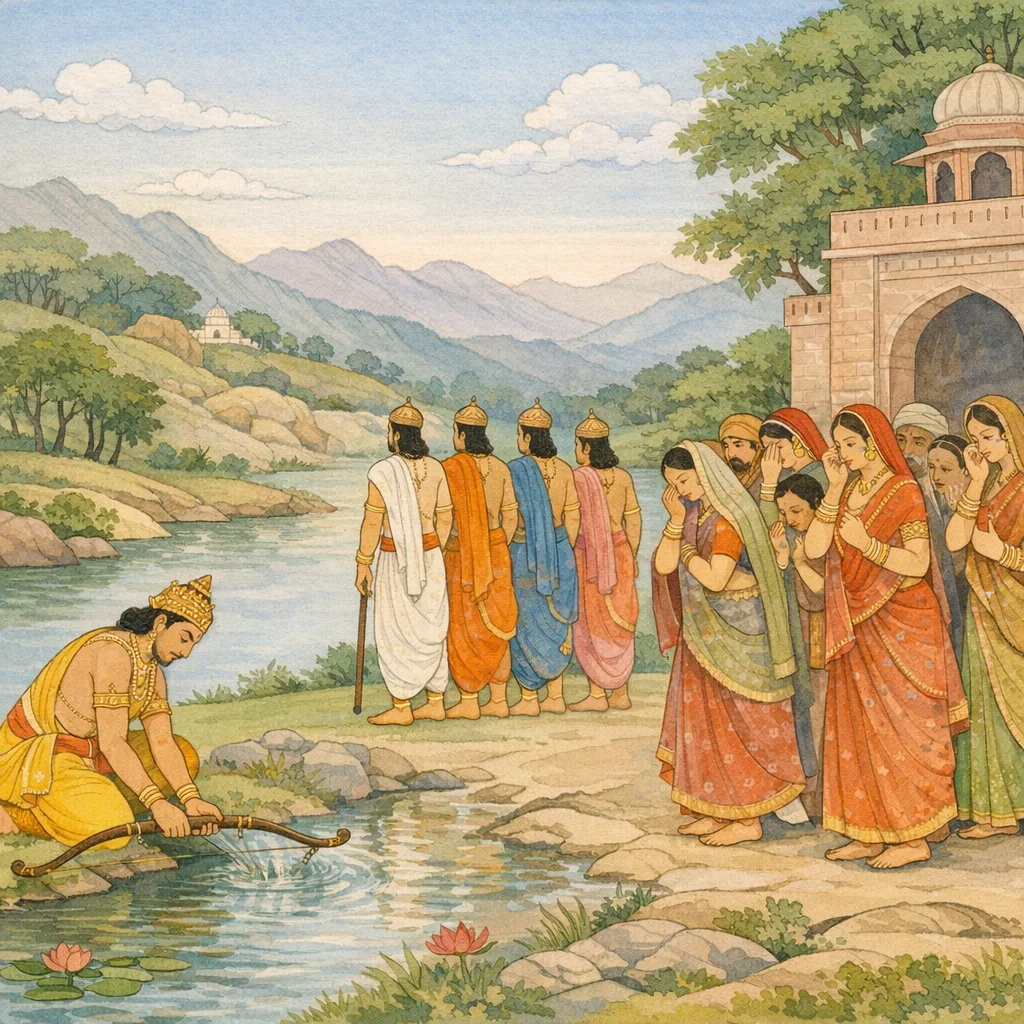
Janamejaya asks what the Pāṇḍavas did after learning of the Vṛṣṇi–Andhaka catastrophe and after Kṛṣṇa’s ascent (1.0). Vaiśaṃpāyana recounts that Yudhiṣṭhira, interpreting the event through the agency of Kāla (time), resolves upon karmanyāsa/tyāga (3.0) and communicates the intent to Arjuna, who assents; Bhīma and the twins follow (2.0–5.0). Yudhiṣṭhira summons Yuyutsu and entrusts him with the kingdom, then consecrates Parīkṣit as king (6.0–7.0). He instructs Subhadrā regarding Parīkṣit’s future rule and the protection of Vajra among the remaining Yādavas, emphasizing non-deviation into adharma (8.0–9.0). He performs udaka rites and śrāddha observances, then distributes extensive gifts (11.0–12.0), honors Kṛpa and assigns Parīkṣit to him as disciple (13.0). After informing ministers and citizens—who object but are respectfully acknowledged—he proceeds (14.0–17.0). The Pāṇḍavas and Draupadī abandon ornaments, don bark garments, perform the naiṣṭhikī iṣṭi, and extinguish/immerse sacred fires before departing; the city mourns, yet they cannot be turned back (18.0–24.0). Domestic figures separate: Ulūpī enters the Gaṅgā; Citrāṅgadā returns to Maṇipura; others remain around Parīkṣit (25.0–26.0). The group travels eastward with a dog, maintaining order of procession (27.0–31.0). Agni appears bodily, recalls the Khāṇḍava burning, and directs that the Gāṇḍīva and inexhaustible quivers—formerly obtained from Varuṇa—be returned to Varuṇa; Arjuna complies by casting them into water (32.0–40.0). Agni disappears; the travelers continue, circuiting regions and witnessing Dvārakā submerged, moving with a yogic intention of prādakṣiṇya of the earth (41.0–44.0).
Chapter Arc: मौसल-विनाश का समाचार सुनकर कुरुराज युधिष्ठिर के भीतर वैराग्य की ज्वाला उठती है; उसी क्षण अर्जुन अग्नि-प्रेरणा से गाण्डीव और अक्षय तरकश को जल में विसर्जित करने को उद्यत होता है। → वैशम्पायन के वचन से स्पष्ट होता है कि यह केवल शोक नहीं, ‘काल’ का अटल विधान है—जो समस्त भूतों को पकाता-पचाता है। युधिष्ठिर प्रस्थान का निश्चय करता है, नगर-जनपद को समझाकर अनुमति लेता है, और राज्य-उत्तराधिकार की व्यवस्था करता है। → युधिष्ठिर का निर्णायक त्याग—अग्निहोत्रादि अग्नियों का जल में उत्सर्ग, विधिपूर्वक उत्सर्गकालिक इष्टि, और फिर दक्षिणामुख होकर पाण्डवों का महाप्रस्थान; नगरवासी, अन्तःपुर की स्त्रियाँ और प्रजा रोकना चाहती हैं पर ‘कालपर्याय-धर्म’ के ज्ञाता राजा को लौटा नहीं पाते। → परीक्षित को भावी कुरुराज घोषित कर, यदुवंश के शेष वज्र का उल्लेख कर, युधिष्ठिर शासन-भार से मुक्त होता है। कृपाचार्य आदि युयुत्सु को घेरकर वापस ले जाते हैं—राज्य-रक्षा के लिए एक स्थिर हाथ छोड़ दिया जाता है, जबकि पाण्डव त्याग-पथ पर बढ़ते हैं। → हस्तिनापुर के बाहर निकल चुके पाण्डवों के पीछे विलाप करती प्रजा रह जाती है—अब यह यात्रा कहाँ और किस अंत तक पहुँचेगी?
Shlokas
Verse 1
मौसलपर्वकी कुल एलोकसंख्या-- ३०४॥। अग्निकी प्रेरणासे अर्जुन अपने गाण्डीव धनुष और अक्षय तरकसको जलमें डाल रहे हैं ॥ ३० श्रीपरमात्मने नम: ।। श्रीमहाभारतम् महाप्रस्थानिकपर्व प्रथमो 5 ध्याय: वृष्णिवंशियोंका श्राद्ध करके प्रजाजनोंकी अनुमति ले टद्रौोपदीसहित पाण्डवोंका महाप्रस्थान नारायणं नमस्कृत्य नरं चैव नरोत्तमम् | देवीं सरस्वतीं व्यासं ततो जयमुदीरयेत् ।। अन्तर्यामी नारायणस्वरूप भगवान् श्रीकृष्ण, (उनके नित्य सखा) नरस्वरूप नरश्रेष्ठ अर्जुन, (उनकी लीला प्रकट करनेवाली) भगवती सरस्वती और (उन लीलाओंका संकलन करनेवाले) महर्षि वेदव्यासको नमस्कार करके जय (महाभारत)-का पाठ करना चाहिये ।। जनमेजय उवाच एवं वृष्ण्यन्धककुले श्रुतव्वा मौसलमाहवम् । पाण्डवा: किमकुर्वन्त तथा कृष्णे दिवं गते,जनमेजयने पूछा--ब्रह्मन्! इस प्रकार वृष्णि और अन्धकवंशके वीरोंमें मूसलयुद्ध होनेका समाचार सुनकर भगवान् श्रीकृष्णके परमधाम पधारनेके पश्चात् पाण्डवोंने कया किया? इति श्रीमहाभारते महाप्रस्थानिके पर्वणि प्रथमो5ध्याय:
Janamejaya said: “O Brahmin, having heard that a battle with clubs had erupted among the Vṛṣṇis and Andhakas, what did the Pāṇḍavas do after Kṛṣṇa had departed to heaven?”
Verse 2
वैशम्पायन उवाच श्र॒त्वैवं कौरवो राजा वृष्णीनां कदनं महत् | प्रस्थाने मतिमाधाय वाक्यमर्जुनमब्रवीत्,वैशम्पायनजीने कहा--राजन्! कुरुराज युधिष्ठछिरने जब इस प्रकार वृष्णिवंशियोंके महान् संहारका समाचार सुना तब महाप्रस्थानका निश्चय करके अर्जुनसे कहा--
Vaiśampāyana said: When the Kuru king (Yudhiṣṭhira) heard in this manner the great slaughter of the Vṛṣṇis, he set his mind upon departure on the Great Journey, and then spoke these words to Arjuna—
Verse 3
काल: पचति भूतानि सर्वाण्येव महामते । कालपाशमहं मन्ये त्वमपि द्रष्टम्हसि
“Time ripens and consumes all beings without exception, O wise one. I regard this as the noose of Time; you too should recognize and behold it.”
Verse 4
“महामते! काल ही सम्पूर्ण भूतोंको पका रहा है--विनाशकी ओर ले जा रहा है। अब मैं कालके बन्धनको स्वीकार करता हूँ। तुम भी इसकी ओर दृष्टिपात करो” ।। इत्युक्त: स तु कौन्तेयः काल: काल इति ब्रुवन् | अन्वपद्यत तद् वाकयं भ्रातुर्ज्येष्ठस्य धीमत:,भाईके ऐसा कहनेपर कुन्तीकुमार अर्जुनने “काल तो काल ही है, इसे टाला नहीं जा सकता” ऐसा कहकर अपने बुद्धिमान बड़े भाईके कथनका अनुमोदन किया
“O great-minded one! Kāla—Time—ripens all beings, bearing them toward destruction. Now I accept Time’s bond. You too, look upon it.” When these words were spoken, Arjuna, Kuntī’s son, replied, “Time is indeed Time; it cannot be averted.” Saying this, he assented to the statement of his wise eldest brother.
Verse 5
अर्जुनस्य मतं ज्ञात्वा भीमसेनो यमौ तथा । अन्वपद्यन्त तद् वाक््यं यदुक्ते सव्यसाचिना
Understanding Arjuna’s intention, Bhīmasena and the twin brothers likewise assented to the very words spoken by Savyasācin, Arjuna the ambidextrous archer.
Verse 6
अर्जुनका विचार जानकर भीमसेन और नकुल-सहदेवने भी उनकी कही हुई बातका अनुमोदन किया ।। ततो युयुत्सुमानाय्य प्रव्रजन् धर्मकाम्यया । राज्यं परिददौ सर्व वैश्यापुत्रे युधिष्ठिर:,तत्पश्चात् धर्मकी इच्छासे राज्य छोड़कर जानेवाले युधिष्ठिरने वैश्यापुत्र युयुत्सुको बुलाकर उन्हींको सम्पूर्ण राज्यकी देख-भालका भार सौंप दिया
Knowing Arjuna’s view, Bhīmasena and Nakula and Sahadeva also assented to his words. Then Yudhiṣṭhira, desiring to pursue dharma and depart upon the path of renunciation, summoned Yuyutsu—the son of a Vaiśyā—and entrusted to him the administration of the entire kingdom.
Verse 7
अभिषिच्य स्वराज्ये च राजानं च परिक्षितम् | दुःखार्तश्लाब्रवीद् राजा सुभद्रां पाण्डवाग्रज:,फिर अपने राज्यपर राजा परीक्षितका अभिषेक करके पाण्डवोंके बड़े भाई महाराज युधिष्ठिरने दुःखसे आर्त होकर सुभद्रासे कहा--
Vaiśampāyana said: Having anointed King Parīkṣit to sovereign rule, Yudhiṣṭhira, the eldest of the Pāṇḍavas, overwhelmed by grief, addressed Subhadrā.
Verse 8
एष पुत्रस्य पुत्रस्ते कुरुराजो भविष्यति । यदूनां परिशेषश्च वज्ो राजा कृतश्च ह ८ ।। “बेटी! यह तुम्हारे पुत्रका पुत्र परीक्षित् कुरुदेश तथा कौरवोंका राजा होगा और यादवोंमें जो लोग बच गये हैं उनका राजा श्रीकृष्ण-पौत्र वज्जको बनाया गया है
Vaiśampāyana said: “O daughter, this—your son’s son—will become the king of the Kurus. And among the Yādavas who remain, Vajra has indeed been appointed as king.”
Verse 9
परिक्षिद्धास्तिनपुरे शक्रप्रस्थे च यादव: । वज्नो राजा त्वया रक्ष्यो मा चाधर्मे मन: कृथा:,'परीक्षित हस्तिनापुरमें राज्य करेंगे और यदुवंशी वज्र इन्द्रप्रस्थमें। तुम्हें राजा वज्जकी भी रक्षा करनी चाहिये और अपने मनको कभी अधर्मकी ओर नहीं जाने देना चाहिये”
“Parīkṣit shall rule in Hastināpura, and Vajra of the Yādavas in Indraprastha. You must safeguard the king, and never let your mind turn toward adharma.”
Verse 10
इत्युक्त्वा धर्मराज: स वासुदेवस्य धीमत: । मातुलस्य च वृद्धस्य रामादीनां तथैव च
Vaiśampāyana said: Having spoken thus, Dharmarāja (Yudhiṣṭhira) addressed the wise Vāsudeva, and also his aged maternal uncle, and likewise Rāma and the others—turning to the elders and revered kin with due regard, as he prepared to act in accordance with dharma.
Verse 11
भ्रातृभि: सह धर्मात्मा कृत्वोदकमतन्द्रित: । भ्राद्धान्युद्दिश्य सर्वेषां चकार विधिवत् तदा
Then the righteous-souled one, together with his brothers and without negligence, performed the water-offering rites; and, dedicating the śrāddha observances to all of them, he carried out the ceremonies in due and proper form.
Verse 12
ऐसा कहकर धर्मात्मा धर्मराज युधिष्ठिरने भाइयों-सहित आलस्य छोड़कर बुद्धिमान् भगवान् श्रीकृष्ण, बूढ़े मामा वसुदेव तथा बलराम आदिके लिये जलाञ्जलि दी और उन सबके उद्देश्यसे विधिपूर्वक श्राद्ध किया ।। द्वैपायनं नारदं च मार्कण्डेयं तपोधनम् । भारद्वाजं याज्ञवल्क्यं हरिमुद्दिश्य यत्नवान्
Vaiśampāyana said: Having spoken thus, the righteous king Yudhiṣṭhira—casting off all lethargy and accompanied by his brothers—offered the water-oblation in remembrance of the wise Lord Śrī Kṛṣṇa, his aged maternal uncle Vasudeva, and Balarāma and the others. For their sake he then performed the śrāddha rites in due form. With careful devotion he also made offerings in the names of Dvaipāyana (Vyāsa), Nārada, the ascetic Mārkaṇḍeya, Bhāradvāja, Yājñavalkya, and Hari.
Verse 13
अभोजयत् स्वादु भोज्यं कीर्तयित्वा च शार्द्धिणम् । ददौ रत्नानि वासांसि ग्रामानश्चान् रथांस्तथा
Vaiśampāyana said: Having praised the worthy recipient, he fed him with delicious food. He then bestowed jewels and garments, and also granted villages and chariots.
Verse 14
स्त्रियश्व द्विजमुख्येभ्यस्तदा शतसहस्रशः । प्रयत्नशील युधिष्ठिरने भगवान् श्रीकृष्णके उद्देश्यसे द्वैपायन व्यास, देवर्षि नारद, तपोधन मार्कण्डेय, भारद्वाज और याज्ञवल्क्य मुनिको सुस्वादु भोजन कराया। भगवान्का नाम कीर्तन करके उन्होंने उत्तम ब्राह्मणोंको नाना प्रकारके रत्न, वस्त्र, ग्राम, घोड़े और रथ प्रदान किये। बहुत-से ब्राह्मणशिरोमणियोंको लाखों कुमारी कन्याएँ दीं ।। कृपमभ्यर्च्य च गुरुमथ पौरपुरस्कृतम्
Vaiśampāyana said: Then, in countless hundreds of thousands, women and the foremost of the twice-born were honored. Yudhiṣṭhira, acting with deliberate care, offered sumptuous food—dedicating the act to Lord Śrī Kṛṣṇa—to Dvaipāyana Vyāsa, the divine seer Nārada, the ascetic sage Mārkaṇḍeya, and the sages Bhāradvāja and Yājñavalkya. After chanting the Lord’s name, he bestowed upon excellent brāhmaṇas many kinds of jewels, garments, villages, horses, and chariots; and he also gave, in vast numbers, maiden daughters in marriage to eminent brāhmaṇas. Then he duly worshiped Kṛpa, the revered teacher, honored by the citizens and the people.
Verse 15
शिष्यं परिक्षितं तस्मै ददौ भरतसत्तम: । तत्पश्चात् गुरुवर कृपाचार्यकी पूजा करके पुरवासियों-सहित परीक्षितको शिष्यभावसे उनकी सेवामें सौंप दिया ।। ततस्तु प्रकृती: सर्वा: समानाय्य युधिष्ठिर:
Vaiśampāyana said: The best of the Bharatas entrusted Parīkṣit to him as a disciple. Thereafter, having duly honored the foremost teacher, Kṛpācārya, he handed Parīkṣit over—together with the citizens—so that, in the spirit of discipleship, the prince might serve under his guidance. Then Yudhiṣṭhira proceeded to summon all the leading constituents of the realm.
Verse 16
सर्वमाचष्ट राजर्षिश्षिकीर्षितमथात्मन: । इसके बाद समस्त प्रकृतियों (प्रजा-मन्त्री आदि)-को बुलाकर राजर्षि युधिष्ठिरने, वे जो कुछ करना चाहते थे अपना वह सारा विचार उनसे कह सुनाया ।। ते श्रुत्वैव वचस्तस्य पौरजानपदा जना:,उनकी वह बात सुनते ही नगर और जनपदके लोग मन-ही-मन अत्यन्त उद्विग्न हो उठे। उन्होंने उस प्रस्तावका स्वागत नहीं किया। वे सब राजासे एक साथ बोले--, “आपको ऐसा नहीं करना चाहिये (आप हमें छोड़कर कहीं न जाय)”
Vaiśampāyana said: Then the royal sage Yudhiṣṭhira disclosed in full to the assembled ministers, citizens, and all the people what he himself intended to do. The moment they heard his words, the townsmen and the inhabitants of the countryside were inwardly shaken and deeply distressed. They did not welcome his proposal; gathering together, they spoke to the king with one voice: “You should not do this—do not leave us and go away.”
Verse 17
भृशमुद्विग्नमनसो नाभ्यनन्दन्त तद्गबच: । नैवं कर्तव्यमिति ते तदोचुस्तं जनाधिपम्,उनकी वह बात सुनते ही नगर और जनपदके लोग मन-ही-मन अत्यन्त उद्विग्न हो उठे। उन्होंने उस प्रस्तावका स्वागत नहीं किया। वे सब राजासे एक साथ बोले--, “आपको ऐसा नहीं करना चाहिये (आप हमें छोड़कर कहीं न जाय)”
Vaiśampāyana said: Deeply agitated at heart, the people did not welcome those words. Together they addressed the lord of men, saying, “This should not be done—do not act in this way.”
Verse 18
न च राजा तथाकार्षीत् कालपर्यायधर्मवित् । परंतु धर्मात्मा राजा युधिष्ठिर कालके उलट-फेरके अनुसार जो धर्म या कर्तव्य प्राप्त था उसे जानते थे; अतः उन्होंने प्रजाके कथनानुसार कार्य नहीं किया ।। ततो<नुमान्य धर्मात्मा पौरजानपदं जनम्
Vaiśampāyana said: But the king did not act in that way, for he understood the duty that changes with time and circumstance. Indeed, the righteous king Yudhiṣṭhira knew what dharma—what obligation—had come to him according to the turn of time; therefore he did not do as the people urged. Then, having duly acknowledged the citizens and the countryfolk, that righteous one…
Verse 19
ततः स राजा कौरव्यो धर्मपुत्रो युधिष्ठिर:
Then that Kuru king—Yudhiṣṭhira, the son of Dharma—went onward, embodying the moral authority and responsibility that defined his role at the close of his earthly journey.
Verse 20
उत्सृज्याभरणान्यज्राज्जगृहे वल्कलान्युत । भीमार्जुनयमाश्चैव द्रौपदी च यशस्विनी
Vaiśampāyana said: Casting aside their ornaments, the king took up garments of bark; and so too did Bhīma, Arjuna, Yama (Yudhiṣṭhira), and the illustrious Draupadī. This act marked their deliberate renunciation of royal identity and comfort, embracing austerity as they set out on the final journey, in keeping with dharma’s ideal of detachment at life’s end.
Verse 21
तथैव जगृहुः सर्वे वल्कलानि नराधिप । इसके बाद कुरुकुलरत्न धर्मपुत्र राजा युधिष्ठिरने अपने अंगोंसे आभूषण उतारकर वल्कलवस्त्र धारण कर लिया। नरेश्वर! फिर भीमसेन, अर्जुन, नकुल, सहदेव तथा यशस्विनी द्रौपदी देवी--न सबने भी उसी प्रकार वल्कल धारण किये ।। १९-२० ई ।। विधिवत् कारयित्वेष्टिं नैप्ठिकीं भरतर्षभ
Vaiśampāyana said: “Just so, all of them took up garments of bark, O king. Then Dharmaputra, King Yudhiṣṭhira, removing the ornaments from his own limbs, put on bark-cloth. O lord of men, thereafter Bhīmasena, Arjuna, Nakula, Sahadeva, and the illustrious Lady Draupadī likewise all donned bark garments.” This signaled deliberate renunciation: royal insignia and pleasures were set aside for austere living, aligning their conduct with dharma at life’s final stage.
Verse 22
ततः प्ररुरुदु: सर्वा: स्त्रियों दृष्टवा नरोत्तमान्,पहले जूएमें परास्त होकर पाण्डवलोग जिस प्रकार वनमें गये थे उसी प्रकार उस दिन द्रौपदीसहित उन नरोत्तम पाण्डवोंको इस प्रकार जाते देख नगरकी सभी स्त्रियाँ रोने लगीं। परन्तु उन सभी भाइयोंको इस यात्रासे महान् हर्ष हुआ
Vaiśampāyana said: Then, seeing those best of men, all the women burst into tears. Just as the Pāṇḍavas, defeated earlier in the dice-game, had gone to the forest, so too on that day—watching those noble Pāṇḍavas depart in the same manner, with Draupadī—the women of the city wept aloud. Yet for those brothers themselves, this journey brought a profound joy, for it marked their deliberate turning away from worldly rule toward the final path of renunciation.
Verse 23
प्रस्थितान् द्रौपदीषष्ठान् पुरा द्यृूतजितान् यथा । हर्षोउभवच्च सर्वेषां भ्रातृणां गमन॑ प्रति,पहले जूएमें परास्त होकर पाण्डवलोग जिस प्रकार वनमें गये थे उसी प्रकार उस दिन द्रौपदीसहित उन नरोत्तम पाण्डवोंको इस प्रकार जाते देख नगरकी सभी स्त्रियाँ रोने लगीं। परन्तु उन सभी भाइयोंको इस यात्रासे महान् हर्ष हुआ
Vaiśampāyana said: As they set out—those foremost of men, the five brothers with Draupadī as the sixth—just as earlier they had gone to the forest after being defeated at dice, so too on that day the women of the city wept on seeing them depart. Yet for all those brothers, this journey itself became a source of great joy.
Verse 24
युधिष्ठिरमतं ज्ञात्वा वृष्णिक्षयमवेक्ष्य च । भ्रातर: पञ्च कृष्णा च षष्ठी श्वा चैव सप्तम:,युधिष्ठिरका अभिप्राय जान और वृष्णिवंशियोंका संहार देखकर पाँचों भाई पाण्डव, द्रौपदी और एक कुत्ता--ये सब साथ-साथ चले
Vaiśampāyana said: Having understood Yudhiṣṭhira’s resolve and seeing the destruction of the Vṛṣṇi clan, the five brothers set out together—Kṛṣṇā (Draupadī) as the sixth, and a dog as the seventh.
Verse 25
आत्मना सप्तमो राजा निर्ययौ गजसाह्दयात् । पौरैरनुगतो दूरं सर्वैरन्तःपुरैस्तथा
Vaiśampāyana said: The king, as the seventh in that line, set out in person from Gajasāhvaya. The citizens followed him for a long distance, and so too did all the women of the inner palace.
Verse 26
न्यवर्तन्त ततः सर्वे नरा नगरवासिन:
Then all the people who dwelt in the city turned back.
Verse 27
विवेश गड्जां कौरव्य उलूपी भुजगात्मजा,जनमेजय! नागराजकी कन्या उलूपी उसी समय गंगाजीमें समा गयी। चित्रांगदा मणिपूर नगरमें चली गयी। तथा शेष माताएँ परीक्षितको घेरे हुए पीछे लौट आयीं
Vaiśampāyana said: O Janamejaya, Ulūpī—the serpent-princess, daughter of the Nāga race—entered the Gaṅgā. Citrāṅgadā returned to the city of Maṇipūra. The remaining mothers, surrounding Parīkṣit, then turned back.
Verse 28
चित्राड़दा ययौ चापि मणिपूरपुरं प्रति । शिष्टा: परिक्षितं त्वन्या मातर: पर्यवारयन्,जनमेजय! नागराजकी कन्या उलूपी उसी समय गंगाजीमें समा गयी। चित्रांगदा मणिपूर नगरमें चली गयी। तथा शेष माताएँ परीक्षितको घेरे हुए पीछे लौट आयीं
Vaiśampāyana said: O Janamejaya, Ulūpī—the Nāga-king’s daughter—at that very time merged into the river Gaṅgā. Citrāṅgadā departed for the city of Maṇipūra. The remaining mothers, surrounding Parīkṣit with due care and propriety, returned back.
Verse 29
पाण्डवाश्न महात्मानो द्रौपदी च यशस्विनी । कृतोपवासा: कौरव्य प्रययु: प्राडमुखास्तत:,कुरुनन्दन! तदनन्तर महात्मा पाण्डवक और यशस्विनी द्रौपदीदेवी सब-के-सब उपवासका व्रत लेकर पूर्वदिशाकी ओर मुँह करके चल दिये
Vaiśampāyana said: Then the great-souled Pāṇḍavas, and the illustrious Draupadī as well, having undertaken the vow of fasting, set out with their faces turned toward the east.
Verse 30
योगयुक्ता महात्मानस्त्यागधर्ममुपेयुष: । अभिजममुर्बहून् देशान् सरित: सागरांस्तथा,वे सब-के-सब योगयुक्त महात्मा तथा त्याग-धर्मका पालन करनेवाले थे। उन्होंने अनेक देशों, नदियों और समुद्रोंकी यात्रा की
Vaiśampāyana said: Those great-souled ones, steadfast in yoga and having embraced the dharma of renunciation, journeyed through many lands, and likewise crossed rivers and seas.
Verse 31
युधिष्ठटिरो ययावग्रे भीमस्तु तदनन्तरम् । अर्जुनस्तस्य चान्वेव यमौ चापि यथाक्रमम्,आगे-आगे युधिष्ठिर चलते थे। उनके पीछे भीमसेन थे। भीमसेनके भी पीछे अर्जुन थे और उनके भी पीछे क्रमश: नकुल और सहदेव चल रहे थे
Vaiśampāyana said: Yudhiṣṭhira proceeded in front; Bhīma followed immediately behind him. After Bhīma came Arjuna, and then the twin brothers, Nakula and Sahadeva, in due order.
Verse 32
पृष्ठतस्तु वरारोहा श्यामा पद्मदलेक्षणा । द्रौपदी योषितां श्रेष्ठा ययौ भरतसत्तम,भरतश्रेष्ठ) इन सबके पीछे सुन्दर शरीरवाली, श्यामवर्णा, कमलदललोचना, युवतियोंमें श्रेष्ठ द्रौपदी चल रही थी
Vaiśampāyana said: Behind them walked Draupadī—the finest among women—of graceful form, dark-hued, and lotus-petaled eyes.
Verse 33
श्वा चैवानुययावेक: प्रस्थितान् पाण्डवान् वनम् | क्रमेण ते ययुर्वीरा लौहित्यं सलिलार्णवम्,वनको प्रस्थित हुए पाण्डवोंके पीछे एक कुत्ता भी चला जा रहा था। क्रमश: चलते हुए वे वीर पाण्डव लालसागरके तटपर जा पहुँचे
Vaiśampāyana said: As the Pāṇḍavas set out for the forest on their final journey, a single dog followed them as well. Proceeding step by step, those heroic brothers eventually reached the waters of Lauhitya—the great ocean-like expanse—marking another threshold in their renunciant passage.
Verse 34
गाण्डीवं तु थरनुर्दिव्यं न मुमोच धनंजय: । रत्नलोभान् महाराज ते चाक्षय्ये महेषुधी,महाराज! अर्जुनने दिव्यरत्नके लोभसे अभीतक अपने दिव्य गाण्डीव धनुष तथा दोनों अक्षय तूणीरोंका परित्याग नहीं किया था
Vaiśampāyana said: O king, Dhanañjaya (Arjuna) did not let go of his divine bow Gāṇḍīva; and, drawn by its jewel-like splendor, he likewise did not abandon those two inexhaustible quivers filled with mighty arrows.
Verse 35
अनमनिं ते ददृशुस्तत्र स्थितं शैलमिवाग्रत: । मार्गमावृत्य तिष्ठन्तं साक्षात्पुरुषविग्रहम्
They then saw before them, standing there like a mountain, an awe-inspiring figure—manifest in human form—blocking the path and remaining firmly in place.
Verse 36
वहाँ पहुँचकर उन्होंने पर्वतकी भाँति मार्ग रोककर सामने खड़े हुए पुरुषरूपधारी साक्षात् अग्निदेवको देखा ।। ततो देव: स सप्तार्चि: पाण्डवानिदमब्रवीत् । भो भो: पाण्डुसुता वीरा: पावकं मां निबोधत,तब सात प्रकारकी ज्वालारूप जिह्लाओंसे सुशोभित होनेवाले उन अग्निदेवने पाण्डवोंसे इस प्रकार कहा--“वीर पाण्डुकुमारो! मुझे अग्नि समझो
Having reached that place, they saw Agni himself, assuming a human form, standing before them and blocking the path like a mountain. Then that god, radiant with seven tongues of flame, addressed the Pāṇḍavas: “O heroic sons of Pāṇḍu—know me to be Pāvaka, the Fire.”
Verse 37
युधिष्ठिर महाबाहो भीमसेन परंतप । अर्जुनाश्विसुती वीरी निबोधत वचो मम,“महाबाहु युधिष्ठिर! शत्रुसंतापी भीमसेन! अर्जुन! और वीर अश्विनीकुमारो! तुम सब लोग मेरी इस बातपर ध्यान दो
Vaiśampāyana said: “O mighty-armed Yudhiṣṭhira, O Bhīmasena, scorcher of foes, O Arjuna, and you two heroic sons of the Aśvins—listen attentively to my words.”
Verse 38
अहमग्नि: कुरुश्रेष्ठा मया दग्धं॑ च खाण्डवम् | अर्जुनस्य प्रभावेण तथा नारायणस्य च,“कुरुश्रेष्ठ वीरो! मैं अग्नि हूँ। मैंने ही अर्जुन तथा नारायणस्वरूप भगवान् श्रीकृष्णके प्रभावसे खाण्डव-वनको जलाया था
Vaiśampāyana said: “O best of the Kurus, I am Agni. It was I who burned the Khāṇḍava forest—made possible by the might of Arjuna and by the divine power of Nārāyaṇa (Śrī Kṛṣṇa).”
Verse 39
अयं व: फाल्गुनो भ्राता गाण्डीवं परमायुधम् । परित्यज्य वने यातु नानेनार्थोडस्ति कश्नन,“तुम्हारे भाई अर्जुनको चाहिये कि ये इस उत्तम आयुध गाण्डीव धनुषको त्यागकर वनमें जायँ। अब इन्हें इसकी कोई आवश्यकता नहीं है
Vaiśampāyana said: “This brother of yours, Phālguna (Arjuna), should abandon the supreme weapon, the Gāṇḍīva bow, and depart into the forest. For him now there is no purpose served by it.”
Verse 40
चक्ररत्नं तु यत् कृष्णे स्थितमासीन्महात्मनि । गतं तच्च पुनर्हस्ते कालेनैष्यति तस्य ह,“पहले जो चक्ररत्न महात्मा श्रीकृष्णके हाथमें था वह चला गया। वह पुनः समय आनेपर उनके हाथमें जायगा
Vaiśampāyana said: “That divine discus-jewel which once rested with the great-souled Kṛṣṇa has departed. Yet, when the proper time arrives, it will return again to his hand.”
Verse 41
वरुणादादह्तं पूर्व मयैतत् पार्थकारणात् । गाण्डीवं धनुषां श्रेष्ठ वरुणायैव दीयताम्,“यह गाण्डीव धनुष सब प्रकारके धनुषोंमें श्रेष्ठ है। इसे पहले मैं अर्जुनके लिये ही वरुणसे माँगकर ले आया था। अब पुन: इसे वरुणको वापस कर देना चाहिये'
Vaiśampāyana said: “Formerly, for Arjuna’s sake, I had obtained this from Varuṇa. This Gāṇḍīva, the finest among bows, should now be returned to Varuṇa alone.”
Verse 42
ततस्ते भ्रातर: सर्वे धनंजयमचोदयन् । स जले प्राक्षिपच्चैतत्तथाक्षय्ये महेषुधी,यह सुनकर उन सब भाइयोंने अर्जुनको वह धनुष त्याग देनेके लिये कहा। तब अर्जुनने वह धनुष और दोनों अक्षय तरकस पानीमें फेंक दिये
Then all his brothers urged Dhanañjaya (Arjuna) to relinquish his weapons. In obedience, Arjuna cast into the water that bow and the two inexhaustible quivers.
Verse 43
ततोडग्निर्भरतश्रेष्ठ तत्रैवान्तरधीयत । ययुश्च॒ पाण्डवा वीरास्ततस्ते दक्षिणामुखा:
Then, O best of the Bharatas, the fire vanished then and there. After that, the heroic Pāṇḍavas continued on their way, turning their faces southward.
Verse 44
भरतश्रेष्ठ] इसके बाद अग्निदेव वहीं अन्तर्धान हो गये और पाण्डववीर वहाँसे दक्षिणाभिमुख होकर चल दिये ।। ततस्ते तूत्तरेणैव तीरेण लवणाम्भस: । जम्मुर्भरतशार्दूल दिशं दक्षिणपश्चिमाम्
Thereafter Agnideva vanished on that very spot, and the Pāṇḍava heroes set forth from there, facing south. Then, O tiger among the Bharatas, they went along the northern shore of the salt sea, heading toward the south‑western quarter.
Verse 45
भरतश्रेष्ठ) तदनन्तर वे लवणसमुद्रके उत्तर तटपर होते हुए दक्षिण-पश्चिमदिशाकी ओर अग्रसर होने लगे ।। ततः पुनः समावृत्ता: पश्चिमां दिशमेव ते । ददृशुर्द्धारकां चापि सागरेण परिप्लुताम्,इसके बाद वे केवल पश्चिम दिशाकी ओर मुड़ गये। आगे जाकर उन्होंने समुद्रमें डुबी हुई द्वारकापुरीको देखा। फिर योगधर्ममें स्थित हुए भरतभूषण पाण्डवोंने वहाँसे लौटकर पृथ्वीकी परिक्रमा पूरी करनेकी इच्छासे उत्तर दिशाकी ओर यात्रा की
Then, turning back once more, they proceeded only toward the western quarter. There they beheld Dvārakā as well—submerged by the sea.
Verse 46
उदीची पुनरावृत्य ययुर्भरतसत्तमा: | प्रादक्षिण्यं चिकीर्षन्त: पृथिव्या योगधर्मिण:,इसके बाद वे केवल पश्चिम दिशाकी ओर मुड़ गये। आगे जाकर उन्होंने समुद्रमें डुबी हुई द्वारकापुरीको देखा। फिर योगधर्ममें स्थित हुए भरतभूषण पाण्डवोंने वहाँसे लौटकर पृथ्वीकी परिक्रमा पूरी करनेकी इच्छासे उत्तर दिशाकी ओर यात्रा की
Turning back again toward the northern quarter, the foremost of the Bharatas proceeded on. Established in the discipline of yoga, they wished to complete their pradakṣiṇā—circumambulating the earth in the auspicious clockwise manner—as an act of reverence and self-restraint on their final journey.
Verse 183
गमनाय मतिं चक्रे भ्रातरश्षास्य ते तदा | उन धर्मात्मा नरेशने नगर और जनपदके लोगोंको समझा-बुझाकर उनकी अनुमति प्राप्त कर ली। फिर उन्होंने और उनके भाइयोंने सब कुछ त्यागकर महा-प्रस्थान करनेका ही निश्चय किया
Vaiśampāyana said: Then those brothers resolved upon departure. Having persuaded the citizens and the people of the realm and obtained their consent, the righteous king and his brothers renounced everything and firmly chose the path of the Great Departure (mahāprasthāna).
Verse 216
समुत्सृज्याप्सु सर्वेडग्नीन् प्रतस्थुर्नरपुड़रवा: । भरतश्रेष्ठ! इसके बाद ब्राह्मणोंसे विधिपूर्वक उत्सर्गकालिक इष्टि करवाकर उन सभी नरश्रेष्ठ पाण्डवोंने अग्नियोंका जलमें विसर्जन कर दिया और स्वयं वे महायात्राके लिये प्रस्थित हुए
Vaiśampāyana said: O best of the Bharatas, thereafter—having had the Brahmins perform, according to rule, the concluding rite appropriate to relinquishment—the foremost of men, the Pāṇḍavas, consigned all their sacred fires into the waters and themselves set out for the Great Journey (mahāyātrā).
Verse 253
न चैनमशकत वज्षिन्निवर्तस्वेति भाषितुम् । उन छहोंको साथ लेकर सातवें राजा युधिष्ठिर जब हस्तिनापुरसे बाहर निकले तब नगरनिवासी प्रजा और अन्तःपुरकी स्त्रियाँ उन्हें बहुत दूरतक पहुँचाने गयीं; किंतु कोई भी मनुष्य राजा युधिष्ठिससे यह नहीं कह सका कि आप लौट चलिये
When King Yudhiṣṭhira, the seventh ruler, left Hastināpura with the six beside him, the townspeople and the women of the inner palace went far to see them off; yet no one could bring himself to say to King Yudhiṣṭhira, “Return.”
Verse 266
कृपप्रभृतयश्चैव युयुत्सुं पर्यवारयन् । धीरे-धीरे समस्त पुरवासी और कृपाचार्य आदि युयुत्सुको घेरकर उनके साथ ही लौट आये
Vaiśampāyana said: Kṛpa and the others surrounded Yuyutsu; and gradually the townspeople as a whole—together with Kṛpācārya and his companions—encircled Yuyutsu and returned with him.
Frequently Asked Questions
The ethical pivot is whether a ruler may renounce without destabilizing society; the chapter resolves this by depicting abdication as dharmically valid only after succession, ritual obligations, and public-facing accountability are completed.
Kāla is presented as the universal processor of beings and events; recognizing this, the protagonists treat power, weapons, and status as contingent, thereby framing detachment as a rational response to impermanence rather than mere withdrawal.
No explicit phalaśruti appears in the provided verses; the chapter instead embeds its meta-commentary in narrative actions—ritual completion, gift-giving, and relinquishment—functioning as an enacted hermeneutic of mokṣa-oriented discipline.