Adhyaya 64
अर्जुनकर्णयोर्युद्धवर्णनम् (Description of the Arjuna–Karṇa Engagement and Counsel to Duryodhana)
Upa-parva: Dhanaṃjaya–Karna Mahāratha-saṅgrāma (Strategic Duel and Counsel Episode)
Saṃjaya reports a battlefield scene rendered as cosmically witnessed: devas, siddhas, gandharvas, yakṣas, and apsarases appear in the sky amid music and acclamation. The Kuru and Pāṇḍu forces respond with martial sounds; the field is depicted as congested with horses, elephants, and chariots, and stained with blood. Arjuna and Karṇa exchange dense volleys that generate a darkness-like condition, with both warriors remaining visually prominent as if dispersing gloom. Surrounding combatants pause around the two mahārathas. Arjuna then checks or breaks attacks from multiple Kaurava leaders and additional contingents. Celestial instruments and auspicious flower-rain follow, while both principal warriors remain steady and undistracted. Aśvatthāmā takes Duryodhana’s hand and attempts to persuade him toward peace, citing losses of elders and arguing for stable rule alongside the Pāṇḍavas; he warns that Arjuna’s demonstrated capacity exceeds ordinary opposition. Duryodhana, after reflection, rejects pacification, invoking personal injury and asserting that Karṇa will overcome Arjuna despite fatigue. He then orders his forces to continue coordinated attack.
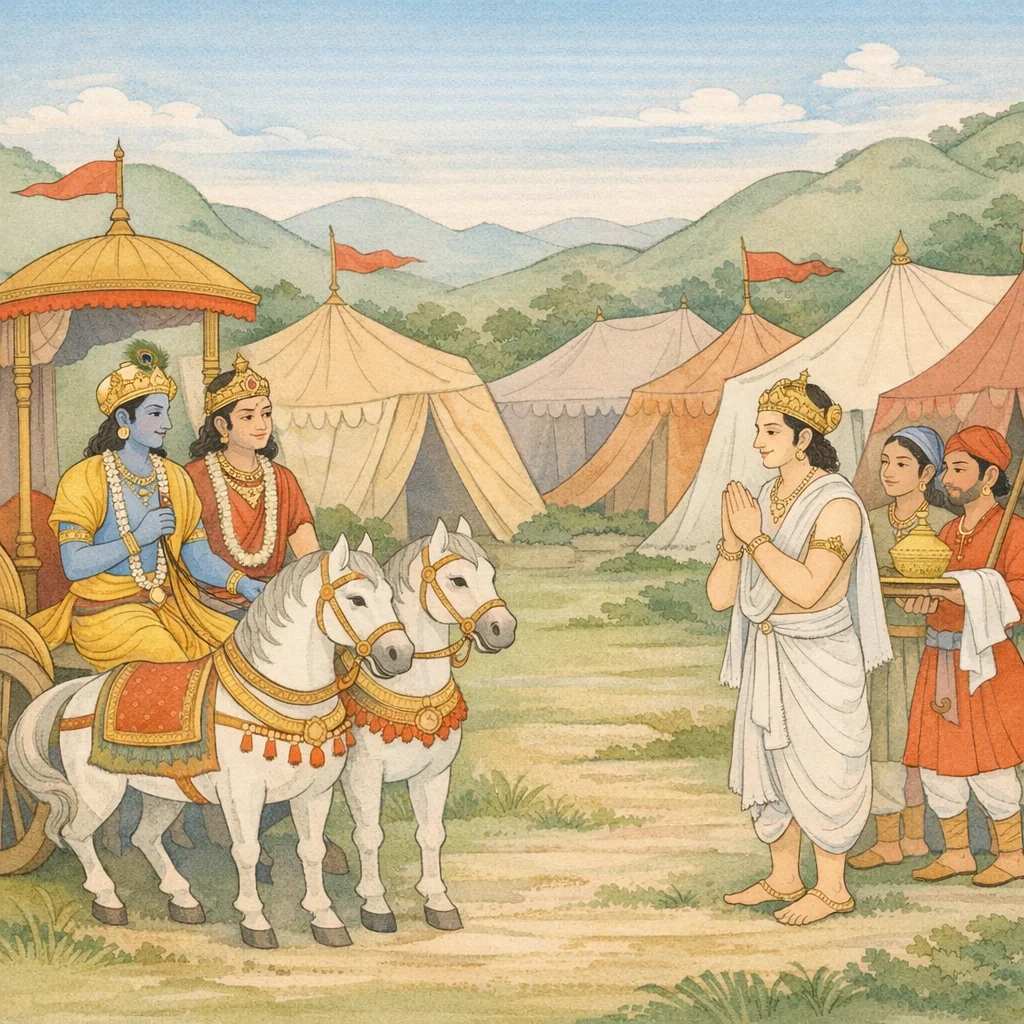
Chapter Arc: द्रोणपुत्र (अश्वत्थामा) को पराजित कर, गाण्डीवधारी अर्जुन रणभूमि में वीरों को उत्साहित करते हुए आगे बढ़ता है—पर उसकी दृष्टि युधिष्ठिर को खोजती है, और वे दिखाई नहीं देते। → अर्जुन, भीम से तीव्रता से पूछता है कि राजा युधिष्ठिर कहाँ हैं। भीम बताता है कि कर्ण के बाणों से अत्यन्त तप्त होकर युधिष्ठिर रण से हटकर शिविर की ओर चले गए हैं—यदि जीवित रहे तो। यह समाचार अर्जुन-कृष्ण के लिए संकट का संकेत बन जाता है: सेनापति-धर्मराज का हटना सेना के मनोबल को तोड़ सकता है। → कृष्ण और अर्जुन युद्ध का भार भीमसेन को सौंपकर (प्रत्यनीक में उसे स्थापित कर) स्वयं युधिष्ठिर के पास जाते हैं—यह निर्णय रण की धुरी बदलने वाला है: रणभूमि से हटकर वे ‘राजा की प्रवृत्ति’ (स्थिति/मनःस्थिति) को संभालने निकलते हैं। → युधिष्ठिर, एक साथ आए केशव-अर्जुन को सकुशल देखकर प्रसन्न होते हैं; क्षणभर को उन्हें लगता है मानो ‘माधिरथि (कर्ण) मारा गया’ हो। वे मधुर वाणी और मुस्कान के साथ दोनों का सत्कार करते हैं—राजा का मन स्थिर होने लगता है और शिविर में आश्वासन का वातावरण बनता है। → युधिष्ठिर का यह भ्रम कि कर्ण मारा गया, और वास्तविक युद्ध-स्थिति का अंतर—आगे संवाद/स्पष्टीकरण और रण की अगली दिशा का संकेत देता है।
Shlokas
Verse 1
अफड-ए क्र पजञज्चषष्टितमो< ध्याय: भीमसेनको युद्धका भार सौंपकर श्रीकृष्ण और अर्जुनका युधिष्ठिरके पास जाना संजय उवाच द्रौणिं पराजित्य ततोडग्रधन्वा कृत्वा महद् दुष्करं शूरकर्म । आलोकयामास ततः: स्वसैन्यं धनंजय: शत्रुभिरप्रधृष्य:,संजय कहते हैं--महाराज! तदनन्तर उत्तम धनुष धारण करनेवाले तथा शत्रुओंके लिये अजेय अर्जुनने दूसरोंके लिये दुष्कर वीरोचित कर्म करके अश्वत्थामाको हराकर फिर अपनी सेनाका निरीक्षण किया
Sañjaya said: “O King, thereafter Arjuna—bearing the foremost bow and unassailable by his foes—having defeated Droṇa’s son (Aśvatthāman) and having accomplished a great deed of heroic difficulty, surveyed his own army.”
Verse 2
स युध्यमानान् पृतनामुखस्थान्- शूर: शूरान् हर्षयन् सव्यसाची । पूर्वप्रहारैमथितान् प्रशंसन् स्थिरांक्षकारात्मरथाननीके,सव्यसाची शूरवीर अर्जुन युद्धके मुहानेपर खड़े होकर युद्ध करनेवाले अपने शूरवीर सैनिकोंका हर्ष बढ़ाते हुए तथा पहलेके प्रहारोंसे क्षत-विक्षत हुए अपने रथियोंकी भूरि-भूरि प्रशंसा करते हुए उन सबको अपनी सेनामें स्थिरतापूर्वक स्थापित किया
Sañjaya said: Arjuna, the ambidextrous master-archer, stood at the very front of the battle-line. Cheering the warriors who were fighting there, he raised the spirits of the brave; and praising those chariot-fighters who had already been battered by earlier blows, he firmly re-established them in their positions within the army.
Verse 3
अपश्यमानस्तु किरीटमाली युधिष्ठिरं भ्रातरमाजमीढम् । उवाच भीम॑ तरसाभ्युपेत्य राज्ञ: प्रवृत्ति त्विह कुत्र राजा,परंतु वहाँ अपने भाई अजमीढकुलनन्दन युधिष्ठिरको न देखकर किरीटधारी अर्जुनने बड़े वेगसे भीमसेनके पास जा उनसे राजाका समाचार पूछते हुए कहा--'भैया! इस समय हमारे महाराज कहाँ हैं?”
Not seeing Yudhiṣṭhira—his brother, the descendant of Ajāmīḍha—Arjuna, the wearer of the diadem, hurried up to Bhīma and asked about the king’s condition: “Brother, where is our king here at this moment?”
Verse 4
भीमसेन उवाच अपयात इतो राजा धर्मपुत्रो युधिष्ठिर: । कर्णबाणाभिततप्ताड़ो यदि जीवेत् कथठ्चन,भीमसेनने कहा--धर्मपुत्र राजा युधिष्ठिर यहाँसे हट गये हैं। कर्णके बाणोंसे उनके सारे अंग संतप्त हो रहे हैं। सम्भव है, वे किसी प्रकार जी रहे हों
Bhīmasena said: “The king Yudhiṣṭhira, Dharma’s son, has withdrawn from here. His whole body is scorched by Karṇa’s arrows. If only he might somehow still be alive.”
Verse 5
अर्जन उवाच तस्माद् भवान् शीघ्रमित: प्रयातु राज्: प्रवृत््यै कुरुसत्तमस्य । नूनं स विद्धोडतिभशं पृषत्कै: कर्णेन राजा शिबिरं गतोडसौ,अर्जुन बोले--यदि ऐसी बात है तो आप कुरुश्रेष्ठ राजा युधिष्ठिरका समाचार लानेके लिये शीघ्र ही यहाँसे जायेँ। निश्चय ही कर्णके बाणोंसे अत्यन्त घायल होकर राजा शिविरमें चले गये हैं
Arjuna said: “Therefore, you should depart quickly from here to bring news of the Kuru-best king. Surely that king—pierced and grievously wounded by Karṇa’s arrows—has gone back to the camp.”
Verse 6
यः सम्प्रहारै्निशितै: पृषत्कै- द्रोणेन विद्धोडतिभृशं तरस्वी । तस्थौ स तत्रापि जयप्रतीक्षो द्रोणो5पि यावन्न हत: किलासीत्,भैया भीमसेन! जो वेगशाली वीर युधिष्छिर द्रोणाचार्यके द्वारा किये गये प्रहारों तथा अत्यन्त तीखे बाणोंसे अच्छी तरह घायल किये जानेपर भी विजयकी प्रतीक्षामें तबतक युद्धस्थलमें डटे रहे, जबतक कि आचार्य द्रोण मारे नहीं गये। वे महानुभाव पाण्डवशिरोमणि आज कणंकि द्वारा संग्राममें संशयापन्न अवस्थामें डाल दिये गये हैं; अतः आप शीघ्र ही उनका समाचार जाननेके लिये जाइये, मैं यहाँ शत्रुओंको रोके रहूँगा
Arjuna said: “O brother Bhīmasena! That mighty and impetuous hero Yudhiṣṭhira—though struck by Droṇa’s assaults and pierced by his razor-sharp arrows—stood firm on the battlefield, waiting for victory, until Droṇa himself was slain. Today that foremost of the Pāṇḍavas has been thrown into doubt and peril in the fight by Karṇa. Therefore go quickly to learn his condition; I will hold the enemies back here.”
Verse 7
स संशयं गमित: पाण्डवाग्र्य: संख्येडद्य कर्णेन महानुभाव: । ज्ञातुं प्रयाह्मयाशु तमद्य भीम स्थास्याम्यहं शत्रुगणान् निरुद्ध्य,भैया भीमसेन! जो वेगशाली वीर युधिष्छिर द्रोणाचार्यके द्वारा किये गये प्रहारों तथा अत्यन्त तीखे बाणोंसे अच्छी तरह घायल किये जानेपर भी विजयकी प्रतीक्षामें तबतक युद्धस्थलमें डटे रहे, जबतक कि आचार्य द्रोण मारे नहीं गये। वे महानुभाव पाण्डवशिरोमणि आज कणंकि द्वारा संग्राममें संशयापन्न अवस्थामें डाल दिये गये हैं; अतः आप शीघ्र ही उनका समाचार जाननेके लिये जाइये, मैं यहाँ शत्रुओंको रोके रहूँगा
Today, in the thick of battle, the foremost of the Pāṇḍavas—the noble one—has been driven into a state of peril and uncertainty by Karṇa. Go quickly, Bhīma, and find out what has become of him. I will stand here and hold back the enemy host.
Verse 8
भीमसेन उवाच त्वमेव जानीहि महानुभाव राज्ञ: प्रवृत्ति भरतर्षभस्य । अहं हि यद्यर्जुन याम्यमित्रा वदन्ति मां भीत इति प्रवीरा:,भीमसेनने कहा--महानुभाव! तुम्हीं जाकर भरतकुलभूषण नरेशका समाचार जानो। अर्जुन! यदि मैं यहाँसे जाऊँगा तो मेरे वीर शत्रु मुझे डरपोक कहेंगे
Bhīmasena said: “You yourself, noble one, should go and learn news of the king, the bull of the Bharatas. Arjuna, if I leave from here, the valiant enemies will say that I fled in fear.”
Verse 9
ततोथब्रवीदर्जुनो भीमसेन॑ संशप्तका: प्रत्यनीकं स्थिता मे । एतानहत्वाद्य मया न शक््य- मितो<5पयातुं रिपुसड्घगोष्ठात्,तब अर्जुनने भीमसेनसे कहा--'भैया! संशप्तकगण मेरे विपक्षमें खड़े हैं। इन्हें मारे बिना आज मैं इस शत्रु-समुदायरूपी गोष्ठसे बाहर नहीं जा सकता”
Then Arjuna said to Bhīmasena: “Brother, the Saṃśaptakas stand arrayed against me. Unless I slay them today, I cannot break out from this crowded host of foes.”
Verse 10
अथाब्रवीदर्जुनं भीमसेन: स्ववीर्यमासाद्य कुरुप्रवीर । संशप्तकानू् प्रतियोत्स्यामि संख्ये सर्वानहं याहि धनंजय त्वम्,यह सुनकर भीमसेनने अर्जुनसे कहा--“कुरुकुलके श्रेष्ठ वीर धनंजय! मैं अपने ही बलका भरोसा करके संग्राम-भूमिमें सम्पूर्ण संशप्तकोंके साथ युद्ध करूँगा, तुम जाओ”
Then Bhīmasena spoke to Arjuna: “O foremost hero of the Kuru line, Dhanaṃjaya! Relying on my own strength, I shall face and fight all the Saṃśaptakas in the thick of battle. You go on.”
Verse 11
संजय उवाच तद् भीमसेनस्य वचो निशम्य सुदुष्करं भ्रातुरमित्रमध्ये । संशप्तकानीकमसहामेक: सुदुष्करं धारयामीति पार्थ:,संजय कहते हैं--राजन्! शत्रुओंकी मण्डलीमें अपने भाई भीमसेनका यह अत्यन्त दुष्कर वचन सुनकर कि “मैं अकेला ही असह्य संशप्तक सेनाका सामना करूँगा” उदार हृदयवाले महात्मा कपिध्वज अर्जुनने सत्यपराक्रमी भाई भीमके उस सत्य वचनको श्रवणगोचर करके उसे अप्रमेय, वृष्णिवंशावतंस नारायणावतार भगवान् श्रीकृष्णको बताया और उस समय कुरुश्रेष्ठ युधिष्ठिरका दर्शन करनेकी इच्छासे जानेको उद्यत हो इस प्रकार कहा--
Sañjaya said: “O King, amid the enemy host, hearing his brother Bhīmasena’s exceedingly difficult resolve—‘Alone I shall withstand the unbearable Saṃśaptaka battalion; I will bear this arduous burden’—Pārtha (Arjuna) took it to heart.”
Verse 12
उवाच नारायणमप्रमेयं कपिध्वज: सत्यपराक्रमस्य । श्रुत्वा वचो भ्रातुरदीनसत्त्व- स्तदाहवे सत्यवचो महात्मा | द्रष्ट कुरुश्रेष्ठमभिप्रयास्यन् प्रोवाच वृष्णिप्रवरं तदानीम्,संजय कहते हैं--राजन्! शत्रुओंकी मण्डलीमें अपने भाई भीमसेनका यह अत्यन्त दुष्कर वचन सुनकर कि “मैं अकेला ही असह्य संशप्तक सेनाका सामना करूँगा” उदार हृदयवाले महात्मा कपिध्वज अर्जुनने सत्यपराक्रमी भाई भीमके उस सत्य वचनको श्रवणगोचर करके उसे अप्रमेय, वृष्णिवंशावतंस नारायणावतार भगवान् श्रीकृष्णको बताया और उस समय कुरुश्रेष्ठ युधिष्ठिरका दर्शन करनेकी इच्छासे जानेको उद्यत हो इस प्रकार कहा--
Sañjaya said: “Having heard in the midst of battle the steadfast, truthful words of his brother, Arjuna—the great-souled warrior bearing the monkey-banner—addressed the immeasurable Nārāyaṇa, Krishna, foremost of the Vṛṣṇis. Intending then to go and see the best of the Kurus, Yudhiṣṭhira, he spoke.”
Verse 13
अजुन उवाच चोदयाश्वान् हृषीकेश विहायैतद् बलार्णवम् | अजातशशभन्रुं राजान द्रष्टमेच्छामि केशव,अर्जुन बोले--हषीकेश! अब आप इस शत्रुसेनारूपी समुद्रको छोड़कर घोड़ोंको यहाँसे हाँक ले चलें। केशव! मैं अजातशत्रु राजा युधिष्ठिरका दर्शन करना चाहता हूँ
Arjuna said: “O Hṛṣīkeśa, urge on the horses and move away from this ocean-like host of enemy forces. O Keśava, I wish to see King Yudhiṣṭhira, he who is called Ajātaśatru—‘one without enmity.’”
Verse 14
संजय उवाच ततो हयान् सर्वदाशार्हमुख्य: प्रचोदयन् भीममुवाच चेदम् | नैतच्चित्रं तव कर्माद्य भीम यास्याम्यहं जहि पार्थारिसंघान्,संजय कहते हैं--राजन्! तदनन्तर सम्पूर्ण दाशार्हवंशियोंमें प्रधान भगवान् श्रीकृष्ण अपने घोड़े हाँकते हुए वहाँ भीमसेनसे इस प्रकार बोले--“कुन्तीनन्दन भीम! आज यह पराक्रम तुम्हारे लिये कोई आश्चवर्यकी बात नहीं है। मैं जा रहा हूँ। तुम शत्रुसमूहोंका संहार करो'
Sañjaya said: Then the foremost of the Dāśārhas—Śrī Kṛṣṇa—urging on the horses, spoke these words to Bhīma: “Bhīma, son of Kuntī, this feat of yours today is no wonder. I am moving on; you strike down the gathered hosts of the enemies of Pārtha.”
Verse 15
ततो ययौ हृषीकेशो यत्र राजा युधिष्ठिर: । शीघ्राच्छीघ्रतरं राजन् वाजिभिर्गरुडोपमै:,राजन! यह कहकर भगवान् हृषीकेश गरुड़के समान वेगशाली घोड़ोंद्वारा शीघ्र-से- शीघ्र वहाँ जा पहुँचे, जहाँ राजा युधिष्ठिर विश्राम कर रहे थे
Sañjaya said: Then Hṛṣīkeśa set out to the place where King Yudhiṣṭhira was resting. O King, drawn by horses swift as Garuḍa, he reached there with the utmost speed.
Verse 16
प्रत्यनीके व्यवस्थाप्य भीमसेनमरिंदमम् | संदिश्य चैतं राजेन्द्र युद्ध प्रति वृकोदरम्,राजेन्द्र! शत्रुओंका सामना करनेके लिये शत्रुदमन वृकोदर भीमसेनको स्थापित करके और युद्धके विषयमें उन्हें पूर्वोक्त संदेश देकर वे दोनों पुरुषशिरोमणि अकेले सोये हुए राजा युधिष्ठिके पास जा रथसे नीचे उतरे और उन्होंने धर्मराजके चरणोंमें प्रणाम किया
Sañjaya said: Having stationed Bhīmasena, the subduer of foes, at the front line to face the enemy, and having conveyed to Vṛkodara the king’s instructions concerning the battle, those foremost of men then went to King Yudhiṣṭhira as he lay resting alone. Dismounting from their chariot, they bowed at the feet of Dharmarāja.
Verse 17
ततस्तु गत्वा पुरुषप्रवीरी राजानमासाद्य शयानमेकम् । रथादुभौ प्रत्यवरुह्मु तस्माद् ववन्दतुर्धर्मराजस्य पादौ,राजेन्द्र! शत्रुओंका सामना करनेके लिये शत्रुदमन वृकोदर भीमसेनको स्थापित करके और युद्धके विषयमें उन्हें पूर्वोक्त संदेश देकर वे दोनों पुरुषशिरोमणि अकेले सोये हुए राजा युधिष्ठिके पास जा रथसे नीचे उतरे और उन्होंने धर्मराजके चरणोंमें प्रणाम किया
Then those two foremost of men went on, reached the king who was lying alone, and both descended from the chariot. They bowed down at the feet of Dharmarāja (Yudhiṣṭhira), acknowledging his moral authority even amid the pressures of war.
Verse 18
त॑ दृष्टवा पुरुषव्याप्रं क्षेमिणं पुरुषर्षभम् मुदाभ्युपगतौ कृष्णावश्चिनाविव वासवम्,पुरुषसिंह पुरुषप्रवर श्रीकृष्ण एवं अर्जुनको सकुशल देखकर तथा दोनों कृष्णोंको इन्द्रके पास गये हुए अश्विनीकुमारोंके समान प्रसन्नतापूर्वक अपने समीप आया जान राजा युधिष्ठिरने उनका उसी तरह अभिनन्दन किया, जैसे सूर्य दोनों अश्विनीकुमारोंका स्वागत करते हैं। अथवा जैसे महान् असुर जम्भके मारे जानेपर बृहस्पतिने इन्द्र और विष्णुका अभिनन्दन किया था
Sañjaya said: Seeing Kṛṣṇa and Arjuna—those foremost among men—returned safe and well, Yudhiṣṭhira, filled with joy, came forward to greet them. He welcomed the two Kṛṣṇas with the same gladness as Indra welcomes the Aśvin twins when they approach him—an image that underscores relief and gratitude amid the calamity of war.
Verse 19
तावभ्यनन्दद् राजापि विवस्वानश्विनाविव । हते महासुरे जम्भे शक्रविष्णू यथा गुरु:,पुरुषसिंह पुरुषप्रवर श्रीकृष्ण एवं अर्जुनको सकुशल देखकर तथा दोनों कृष्णोंको इन्द्रके पास गये हुए अश्विनीकुमारोंके समान प्रसन्नतापूर्वक अपने समीप आया जान राजा युधिष्ठिरने उनका उसी तरह अभिनन्दन किया, जैसे सूर्य दोनों अश्विनीकुमारोंका स्वागत करते हैं। अथवा जैसे महान् असुर जम्भके मारे जानेपर बृहस्पतिने इन्द्र और विष्णुका अभिनन्दन किया था
Sañjaya said: Seeing both Kṛṣṇas—Śrī Kṛṣṇa and Arjuna—returned safe and well, King Yudhiṣṭhira came forward with heartfelt joy and welcomed them. He greeted them as Sūrya (Vivasvān) would welcome the Aśvin twins, or as Bṛhaspati, the preceptor of the gods, would congratulate Indra (Śakra) and Viṣṇu after the mighty demon Jambha had been slain—honouring their success and the protection of dharma amid the terrors of war.
Verse 20
मन्यमानो हतं कर्ण धर्मराजो युधिष्ठिर: । हर्षगद्गदया वाचा प्रीत: प्राह परंतप:,शत्रुओंको संताप देनेवाले धर्मराज युधिष्ठिरने कर्णको मारा गया मानकर हर्षगद्गद वाणीसे प्रसन्नतापूर्वक वार्तालाप आरम्भ किया
Sañjaya said: Believing Karṇa to have been slain, Dharmarāja Yudhiṣṭhira—delighting in that news—began to speak, his voice choked with joy.
Verse 21
अथोपयातोौ पृथुलोहिताक्षौ शराचिताज्ै रुधिरप्रदिग्धौ । समीक्ष्य सेनाग्रनरप्रवीरौ युधिष्ठिरो वाक्यमिदं बभाषे,सेनाके अग्रभागमें युद्ध करनेवाले पुरुषोंमें प्रमुख वीर विशाल एवं लाल नेत्रोंवाले श्रीकृष्ण और अर्जुन जब समीप आये, तब उनके सारे अंगोंमें बाण धँसे हुए थे। वे खूनसे लथपथ हो रहे थे; उन्हें देखकर युधिष्ठिरने निम्नांकित रूपसे बातचीत आरम्भ की
Sañjaya said: Then Kṛṣṇa and Arjuna—both broad and red-eyed—came near, their bodies pierced with arrows and smeared with blood. Seeing those foremost heroes fighting at the head of the army, Yudhiṣṭhira began to speak.
Verse 22
। : ; ' महासतत्त्वौ हि तौ दृष्टवा सहितौ केशवार्जुनौ । हतमाधिरथिं मेने संख्ये गाण्डीवधन्चना,एक साथ आये हुए महान् शक्तिशाली श्रीकृष्ण और अर्जुनको देखकर उन्हें यह पक्का विश्वास हो गया था कि गाण्डीवधारी अर्जुनने युद्धस्थलमें अधिरथपुत्र कर्णको मार डाला है
Sañjaya said: Seeing Kṛṣṇa and Arjuna—those two of mighty prowess—arrive together, he became convinced that, in the press of battle, Arjuna, the wielder of the Gāṇḍīva bow, had slain Karṇa, the son of Adhiratha.
Verse 23
तावभ्यनन्दत् कौन्तेय: साम्ना परमवल्गुना | स्मितपूर्वममित्रघ्नं पूजयन् भरतर्षभ,भरतश्रेष्ठ) यही सोचकर कुन्तीकुमार युधिष्ठिरने मुसकराकर शत्रुसूदन श्रीकृष्ण और अर्जुनकी प्रशंसा करते हुए परम मधुर और सान्त्वनापूर्ण वचनोंद्वारा उन दोनोंका अभिनन्दन किया
Sañjaya said: Then Kuntī’s son Yudhiṣṭhira, O bull among the Bharatas, welcomed them with exceedingly sweet and conciliatory words. Smiling first, he honored and praised the foe-slayer—Kṛṣṇa (and Arjuna)—seeking to strengthen their resolve and uphold harmony within the righteous cause amid the pressures of war.
Verse 65
इति श्रीमहा भारते कर्णपर्वणि युधिष्छिरं प्रति श्रीकृष्णार्जुनागमे पठडचषष्टितमो< ध्याय:,इस प्रकार श्रीमहाभारत कर्णपर्वमें युधिष्टिरके पास श्रीकृष्ण और अर्जुनका आगमनविषयक पैंयठवाँ अध्याय पूरा हुआ
Sañjaya said: “Thus, in the great Mahābhārata, in the Karṇa Parva, the sixty-fifth chapter—concerning the arrival of Śrī Kṛṣṇa and Arjuna before Yudhiṣṭhira—comes to an end.” This closing colophon marks the episode as a crucial moment of counsel and resolve amid the war’s moral strain, as the leaders reunite to steady their purpose and their responsibility to dharma in the face of suffering and duty.
Frequently Asked Questions
Whether a ruler should accept pragmatic reconciliation for public welfare after catastrophic losses, or continue escalation to satisfy grievance, honor-claims, and perceived strategic opportunity.
The chapter juxtaposes cosmic witness and human agency: even when events appear portentous and publicly observed, decisive outcomes still hinge on counsel received, choices made, and the willingness to restrain retaliation.
No explicit phalaśruti is presented here; the meta-commentary operates implicitly through Saṃjaya’s evaluative descriptions (omens, acclaim, warnings) that position the episode as a case study in leadership under moral and strategic pressure.