Adhyaya 62
कर्णपुत्रवधः (The Fall of Vṛṣasena) — Karṇa Parva, Adhyāya 62
Upa-parva: Karṇa–Śalya Saṃvāda and the Vṛṣasena Episode (Battlefield Consolation and Counter-Engagement)
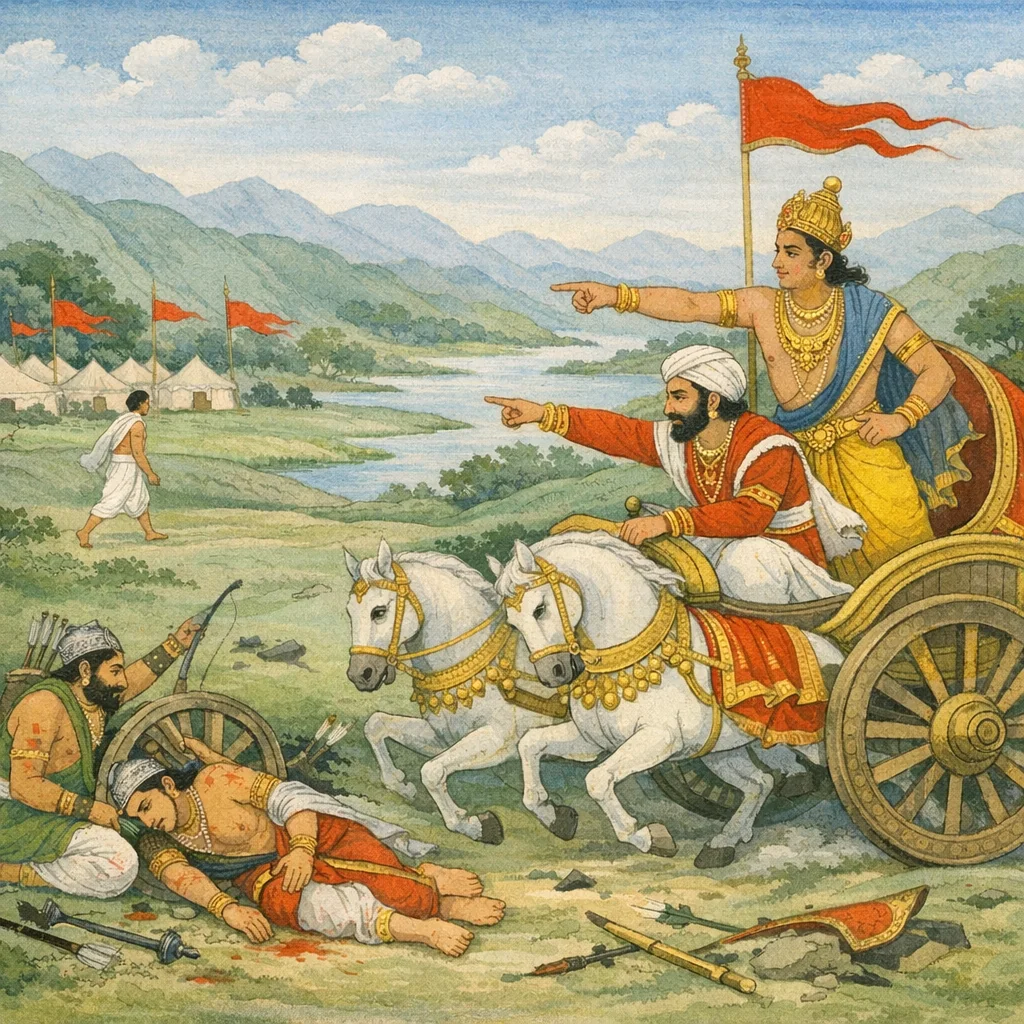
Sañjaya reports that after Duḥśāsana’s death, a group of Kaurava warriors attempt to check Bhīma with concentrated arrow-fire, yet are swiftly neutralized, triggering fear and withdrawal among allied forces. Karṇa enters the main battle and is addressed by Śalya, who interprets the moment as a test of command responsibility: Karṇa should not yield to agitation, as the Kaurava burden has been placed upon him; kṣatriya-duty requires meeting Dhanaṃjaya (Arjuna). Meanwhile Vṛṣasena, Karṇa’s son, advances aggressively toward the Pāṇḍavas; Nakula engages him, damaging his standards and equipment, and the fight escalates into close-quarters action with the loss of horses and weapons. As the broader melee intensifies with multi-front collisions (ratha, gaja, aśva, and infantry), Arjuna turns toward Vṛṣasena. Vṛṣasena strikes Arjuna with a notable volley, but Arjuna responds with focused, lethal archery: he pierces vital points, severs weapon and limbs, and finally takes Vṛṣasena’s head. Karṇa, witnessing his son’s fall, rushes his chariot toward Arjuna, grief and retaliation framing the next tactical phase.
Chapter Arc: संजय धृतराष्ट्र से कहता है—रणभूमि में राधेय कर्ण का वेग ऐसा उठा कि उसे रोकने को दौड़े योद्धा स्वयं मृत्यु के द्वार भेज दिए गए; और पाण्डव-पक्ष की आशा एकाएक डगमगा उठी। → कर्ण के बाणों से पीड़ित पाण्डव-योद्धा भीमसेन की ओर सिमटते हैं; नकुल-सहदेव रथ-घोड़े नष्ट होने से घायल होकर सहदेव के रथ पर चढ़ते हैं। उधर शल्य कर्ण को व्यंग्य/उकसावे के साथ बोलता है, पर कर्ण क्रोध में युधिष्ठिर पर शर-वर्षा जारी रखता है। इसी बीच संदेश आता है कि भीमसेन ने दुर्योधन को संकट में डाल दिया है—यदि कर्ण पहुँचे तो दुर्योधन बच सकता है। → शल्य के कहने पर भी कर्ण युधिष्ठिर को विमुख/पीड़ित करता रहता है, परन्तु दुर्योधन के जीवन-संशय का समाचार युद्ध की दिशा बदल देता है—कर्ण के सामने चुनाव खड़ा होता है: युधिष्ठिर को दबाए रखे या दुर्योधन की रक्षा को दौड़े। → कर्ण अंततः दुर्योधन को बचाने हेतु तीव्र वेग से रणक्षेत्र का रुख बदलता है; उसके हटते ही पाण्डव-पक्ष को क्षणिक राहत मिलती है और युधिष्ठिर घायल-थका अपनी छावनी में जाकर विश्राम करता है। → भीमसेन-दुर्योधन संग्राम के निर्णायक क्षण में कर्ण का आगमन—क्या वह समय पर पहुँचकर दुर्योधन को बचा पाएगा, या संकट और गहरा होगा?
Shlokas
Verse 1
/ अपने-आप बछ। सं: त्रेषष्टितमो<्ध्याय: कर्णद्वारा नकुल-सहदेवसहित युधिष्ठिरकी पराजय एवं पीड़ित होकर युधिष्ठिरका अपनी छावनीमें जाकर विश्राम करना संजय उवाच कर्णोडपि शरजालेन केकयानां महारथान् । व्यधमत् परमेष्वासानग्रत: पर्यवस्थितान्,संजय कहते हैं--राजन्! कर्ण भी अपने बाणसमूहसे सामने खड़े हुए महाधनुर्धर केकय-महारथियोंका विनाश करने लगा
Sañjaya said: O King, Karṇa too, with a net-like shower of arrows, began to strike down the Kekaya great chariot-warriors—supreme archers—who stood arrayed before him. The scene underscores the relentless momentum of battle, where prowess and duty to one’s side drive warriors into destructive action despite the human cost.
Verse 2
तेषां प्रयतमानानां राधेयस्य निवारणे । रथान् पञ्चशतान् कर्ण: प्राहिणोद् यमसादनम्,राधापुत्र कर्णको रोकनेके लिये प्रयत्न करनेवाले पाँच सौ रथियोंको उसने यमलोक पहुँचा दिया
Sañjaya said: As those warriors strove to check Rādheya (Karna), Karna dispatched five hundred chariot-fighters to the abode of Yama—an image of the battlefield’s ruthless finality, where valor and effort are swallowed by the inexorable law of death in war.
Verse 3
अविषटद्दां ततो दृष्टवा राधेयं युधि योधिन: । भीमसेनमुपागच्छन् कर्णबाणप्रपीडिता:,कर्णके बाणोंसे अत्यन्त पीड़ित हुए पाण्डव-योद्धा युद्धस्थलमें राधापुत्र कर्णको असहा देखकर भीमसेनके पास चले आये
Sanjaya said: Then, seeing Radheya (Karna) in the thick of battle, the warriors—hard-pressed by Karna’s arrows and unable to endure him—went up to Bhimasena.
Verse 4
रथानीकं विदार्यव शरजालैरनेकधा । कर्ण एकरथेनैव युधिष्ठिरमुपाद्रवत्,तदनन्तर कर्णने अपने बाणोंके समूहसे पाण्डवोंकी रथसेनाको अनेक भागोंमें विदीर्ण करके एकमात्र रथके द्वारा ही युधिष्ठिरपर धावा किया
Sañjaya said: Having torn apart the Pandavas’ chariot-host into many sections with a dense net of arrows, Karṇa—single-handed in one chariot—then charged straight at Yudhiṣṭhira.
Verse 5
सेनानिवेशमार्च्छन्तं मार्गणै: क्षतविक्षतम् । यमयोर्मध्यगं वीरं शनैर्यान्तं विचेतसम्,उस समय वीर युधिष्ठिर बाणोंसे क्षत-विक्षत होकर अचेत-से हो रहे थे और नकुल- सहदेवके बीचमें होकर धीरे-धीरे छावनीकी ओर जा रहे थे। उस अवस्थामें राजा युधिष्ठिरके पास पहुँचकर सूतपुत्र कर्णने दुर्योधनके हितकी इच्छासे परम उत्तम तीन तीखे बाणोंद्वारा उन्हें पुन: घायल कर दिया
Sañjaya said: “Wounded and torn by arrows, the hero was making his way toward the army-camp. Moving slowly, with his senses clouded, he went between the twin brothers (Nakula and Sahadeva). At that time, Karṇa—the charioteer’s son—approached King Yudhiṣṭhira with the intention of serving Duryodhana’s cause and struck him again with three exceptionally fine, sharp arrows.”
Verse 6
समासाद्य तु राजानं दुर्योधनहितेप्सया । सूतपुत्रस्त्रिभिस्ती&णैरविव्याध परमेषुभि:,उस समय वीर युधिष्ठिर बाणोंसे क्षत-विक्षत होकर अचेत-से हो रहे थे और नकुल- सहदेवके बीचमें होकर धीरे-धीरे छावनीकी ओर जा रहे थे। उस अवस्थामें राजा युधिष्ठिरके पास पहुँचकर सूतपुत्र कर्णने दुर्योधनके हितकी इच्छासे परम उत्तम तीन तीखे बाणोंद्वारा उन्हें पुन: घायल कर दिया
Sañjaya said: Approaching the king (Yudhiṣṭhira) with the intent to secure Duryodhana’s advantage, Karṇa—the charioteer’s son—pierced him again with three supremely sharp arrows.
Verse 7
तथैव राजा राधेयं प्रत्यविध्यत् स्तनान्तरे । शरैस्त्रिभिश्व यन्तारं चतुर्भिश्चतुरो हयान्,इसी प्रकार राजा युधिष्ठिरने भी राधापुत्र कर्णकी छातीमें गहरी चोट पहुँचायी। फिर तीन बाणोंसे सारथिको और चारसे चारों घोड़ोंको घायल कर दिया
Sañjaya said: In the same manner, the king (Yudhiṣṭhira) struck Rādheya (Karna) in the region of the chest with a deep, piercing hit. Then, with three arrows he wounded the charioteer, and with four more he struck the four horses.
Verse 8
चक्ररक्षौ तु पार्थस्य माद्रीपुत्रौ परंतपौ । तावप्यधावतां कर्ण राजानं मा वधीरिति,शत्रुओंको संताप देनेवाले माद्रीकुमार नकुल और सहदेव राजा युधिष्छिरके चक्ररक्षक थे। वे दोनों भी यह सोचकर कर्णकी ओर दौड़े कि यह राजा युधिष्ठिरका वध न कर डाले
Sanjaya said: The two sons of Madri—Nakula and Sahadeva, fierce tormentors of foes—were stationed as the wheel-guards of King Yudhiṣṭhira, the son of Pṛthā. Seeing Karṇa press forward, they too rushed toward him, intent on preventing him from slaying the king—protecting their sovereign and upholding their duty amid the chaos of war.
Verse 9
तो पृथक् शरवर्षाभ्यां राधेयम भ्यवर्षताम् । नकुल: सहदेवश्न परमं यत्नमास्थितौ,नकुल और सहदेव दोनों भाई उत्तम प्रयत्नका सहारा लेकर राधापुत्र कर्णपर पृथक्- पृथक् बाणोंकी वर्षा करने लगे
Sañjaya said: Then Nakula and Sahadeva, each in his own way, showered Karṇa—son of Rādhā—with torrents of arrows. Both brothers, exerting themselves to the utmost, pressed their attack with determined effort amid the duties and ferocity of battle.
Verse 10
तथैव तौ प्रत्यविध्यत् सूतपुत्र: प्रतापवान् | भल्लाभ्यां शितधाराभ्यां महात्मानावरिंदमौ,इसी प्रकार प्रतापी सूतपुत्रने भी तेज धारवाले दो भल्लोंद्वारा शत्रुओंका दमन करनेवाले उन दोनों महामनस्वी वीरोंको घायल कर दिया
Sañjaya said: In the same manner, the valiant son of the charioteer struck back and pierced those two great-souled, foe-subduing warriors with a pair of razor-edged bhalla arrows. The exchange reflects the relentless reciprocity of battle—prowess answering prowess—where martial skill, rather than moral deliberation, drives the immediate course of events.
Verse 11
दन्तवर्णास्तु राधेयो निजघान मनोजवान् | युधिष्ठिरस्य संग्रामे कालवालान् हयोत्तमान्,जिनकी पूँछ और गर्दनके बाल काले तथा शरीरका रंग श्वेत था और जो मनके समान तीव्र वेगसे चलनेवाले थे, युधिष्ठिरके उन उत्तम घोड़ोंको संग्रामभूमिमें राधापुत्र कर्णने मार डाला
Sañjaya said: In the thick of battle, Rādheya (Karna) struck down Yudhiṣṭhira’s finest horses—swift as the mind—white-bodied yet marked with dark manes and tails. The verse underscores the grim ethics of war: victory is pursued not only by confronting warriors but also by disabling the very means that sustain a king’s mobility, protection, and command on the battlefield.
Verse 12
ततो5परेण भल्लेन शिरस्त्राणमपातयत् | कौन्तेयस्य महेष्वास: प्रहसन्निव सूतज:,तत्पश्चात् महाथनुर्धर सूतपुत्रने हँसते हुए-से एक दूसरे भल्लके द्वारा कुन्तीकुमारके शिरस्त्राणको नीचे गिरा दिया
Sañjaya said: Then, with another broad-headed arrow, the mighty archer—the charioteer’s son—struck down the helmet of the son of Kuntī, seeming to laugh as he did so. In the grim ethic of battlefield prowess, this act proclaims dominance and seeks to shake the opponent’s confidence without yet ending his life.
Verse 13
तथैव नकुलस्यापि हयान् हत्वा प्रतापवान् । ईषां धनुश्व चिच्छेद माद्रीपुत्रस्य धीमत:,इसी प्रकार प्रतापी कर्णने बुद्धिमान् माद्रीकुमार नकुलके भी घोड़ोंको मारकर ईषादण्ड और धनुषको भी काट दिया
Sañjaya said: In the same manner, the mighty Karṇa slew Nakula’s horses and then cut apart the chariot’s pole and Nakula’s bow as well.
Verse 14
तौ हताश्लौ हतरथौ पाण्डवौ भूशविक्षतौ । भ्रातरावारुरुहतु: सहदेवरथं तदा,घोड़ों एवं रथोंके नष्ट हो जानेपर अत्यन्त घायल हुए वे दोनों भाई पाण्डव उस समय सहदेवके रथपर जा चढ़े
Sañjaya said: With their horses slain and their chariot destroyed, the two Pāṇḍava brothers, grievously wounded and smeared with dust, then climbed onto Sahadeva’s chariot.
Verse 15
तौ दृष्टवा मातुलस्तत्र विरथौ परवीरहा । अभ्यभाषत राधेयं मद्रराजोडनुकम्पया,शत्रुवीरोंका संहार करनेवाले मामा मद्रराज शल्यने उन दोनों भाइयोंको रथहीन हुआ देख कृपापूर्वक राधापुत्र कर्णसे कहा--
Sañjaya said: Seeing those two brothers there, now deprived of their chariots, their maternal uncle Śalya—the king of Madra, a slayer of enemy-heroes—addressed Rādheya (Karna) with compassion.
Verse 16
योद्धव्यमद्य पार्थेन फाल्गुनेन त्वया सह । किमर्थ धर्मराजेन युध्यसे भूशरोषित:,“कर्ण! आज तुम्हें कुन्तीकुमार अर्जुनके साथ युद्ध करना है। फिर अत्यन्त रोषमें भरकर धर्मराजके साथ किसलिये जूझ रहे हो?
Sañjaya said: “Karna, today you are meant to fight with Pārtha—Arjuna, the son of Phalguna. Why then, inflamed with fierce anger, are you engaging in battle with Dharmarāja (Yudhiṣṭhira)?”
Verse 17
क्षीणशस्त्रास्त्रकवच: क्षीणबाणो विबाणधि: । श्रान्तसारथिवाहश्न च्छन्नो<स्त्रैररिभिस्तथा
Sañjaya said: He had been stripped of weapons, missiles, and armor; his arrows were spent and his quiver emptied. His charioteer and horses were exhausted, and he was likewise covered over—hemmed in on all sides—by the enemy’s weapons.
Verse 18
एवमुक्तो5पि कर्णस्तु मद्रराजेन संयुगे,प्रहस्य समरे कर्णश्च॒कार विमुखं शरै: । युद्धस्थलमें मद्रराज शल्यके ऐसा कहनेपर भी कर्ण पूर्ववत् रोषमें भरकर युधिष्ठिरको बाणोंद्वारा पीड़ित करता रहा। माद्रीकुमार पाण्डुपुत्र नकुल-सहदेवको तीखे बाणोंसे घायल करके कर्णने हँसकर समरांगणमें बाणोंके प्रहारसे युधिष्ठिरको युद्धसे विमुख कर दिया
Sañjaya said: Though thus addressed by the king of Madra, Śalya, in the midst of battle, Karṇa—laughing in the fight—continued to act as before. With his arrows he drove Yudhiṣṭhira away from the combat, showing how, in the heat of war, pride and anger can override counsel and restraint.
Verse 19
तथैव कर्ण: संरब्धो युधिष्ठिरमताडयत् । शरैस्ती&णै: पराविध्य माद्रीपुत्रोी च पाण्डवी
Sañjaya said: In the same manner, Karṇa—his anger fully aroused—struck Yudhiṣṭhira. Piercing him with sharp arrows, he also shot down the two Pāṇḍava sons of Mādrī, pressing the battle forward with relentless force.
Verse 20
तत: शल्य: प्रहस्येद॑ं कर्ण पुनरुवाच ह
Sañjaya said: Then Śalya, laughing, spoke these words to Karṇa once again.
Verse 21
यदर्थ धार्तराष्ट्रेण सततं मानितो भवान्
Sañjaya said: “For the sake of which purpose Dhṛtarāṣṭra’s son has continually honored you…”
Verse 22
(हते हास्मिन् ध्रुवं पार्थ: स्वाञ्जेष्यति नो रथान् | तस्मिन् हि धार्तराष्ट्रस्य निहते तु ध्रुवी जय: ।। “इनके मारे जानेपर अर्जुन निश्चय ही हमारे सारे महारथियोंको जीत लेंगे। परंतु अर्जुनके मारे जानेपर धृतराष्ट्रपुत्र दुर्योधनकी विजय अवश्यम्भावी है। ध्वजोडसौ दृश्यते तस्य रोचमानों5शुमानिव । एनं जहि महाबाहो कि ते हत्वा युधिष्ठिरम् ।।) “महाबाहो! अर्जुनका यह सूर्यके समान प्रकाशमान ध्वज दिखायी देता है। तुम इन्हींको मारो, युधिष्ठिरका वध करनेसे तुम्हारा क्या लाभ है? शड्खयोर्ध्यायतो: शब्द: सुमहानेष कृष्णयो:
Sañjaya said: “If this one is slain, Pārtha (Arjuna) will surely overcome our chariot-warriors. But if Arjuna is slain, then victory for the son of Dhṛtarāṣṭra (Duryodhana) becomes certain. Look—his banner is visible, shining like the sun. Strike him down, O mighty-armed one; what gain is there for you in killing Yudhiṣṭhira? And now a very great sound arises—the reverberation of the conches of the two Kṛṣṇas (Kṛṣṇa and Arjuna), as they set their minds upon battle.”
Verse 23
असौ निष्नन् रथोदारानर्जुन: शरवृष्टिभि:
Sañjaya said: “There, Arjuna—pouring down showers of arrows—was striking down the noble chariot-warriors.”
Verse 24
पृष्ठरक्षौ च शूरस्य युधामन्यूत्तमौजसौ
Sañjaya said: And guarding the rear of that hero were Yudhāmanyu and Uttamaujā—both men of outstanding vigor—stationed to protect him from attacks coming from behind.
Verse 25
उत्तरं चास्य वै शूरश्नक्रं रक्षति सात्यकि: । धृष्टद्युम्नस्तथा चास्य चक्र रक्षति दक्षिणम्
Sañjaya said: The valiant Sātyaki guarded the northern side of his battle-formation, and Dhṛṣṭadyumna likewise protected its southern flank. Thus, the warriors maintained disciplined protection of the array amid the chaos of war.
Verse 26
'शूरवीर अर्जुनके पृष्ठभागकी रक्षा युधामन्यु और उत्तमौजा कर रहे हैं। शौर्यसम्पन्न सात्यकि उनके उत्तर (बायें) चक्रकी रक्षा करते हैं और धृष्टद्युम्न दाहिने चक्रकी ।। भीमसेन श्व वै राज्ञा धार्तराष्ट्रेण युध्यते । यथा न हन्यात्तं भीम: सर्वेषां नोडद्य पश्यताम्
“Yudhāmanyu and Uttamaujā were guarding the rear of the hero Arjuna. The valorous Sātyaki protected the northern (left) wheel of the array, and Dhṛṣṭadyumna the right. Meanwhile Bhīmasena was fighting the king of the Dhārtarāṣṭras; so that Bhīma might not slay him before the eyes of all who watched…”
Verse 27
पश्यैनं भीमसेनेन ग्रस्तमाहवशोभिनम्
Sañjaya said: “Behold him—seized in the midst of battle by Bhīmasena, that warrior who had been a splendid ornament of the battlefield.”
Verse 28
परित्राह्ोनमभ्येत्य संशयं परमं गतम्
Sañjaya said: Having approached the one in need of rescue, he was seized by the utmost doubt—caught between the urgent demand to protect and the perilous uncertainty of what must be done amid the chaos of war.
Verse 29
इति शल्यवच: श्रुत्वा राधेय: पृथिवीपते,पृथ्वीनाथ! शल्यकी यह बात सुनकर तथा महासमरमें दुर्योधनको भीमसेनसे ग्रस्त हुआ देखकर शल्यके वचनोंसे प्रेरित हो राजाको अधिक चाहनेवाला पराक्रमी कर्ण अजातशत्रु युधिष्ठिर और माद्रीकुमार पाण्डुपुत्र नकुल-सहदेवको छोड़कर आपके पुत्रकी रक्षा करनेके लिये दौड़ा
Sañjaya said: Hearing Śalya’s words, O king, and seeing in that great battle that Duryodhana had been seized and overpowered by Bhīmasena, the valiant Karṇa—spurred on by Śalya’s speech and moved by a stronger attachment to the king—left aside Ajātaśatru Yudhiṣṭhira and the Mādrī-born sons of Pāṇḍu, Nakula and Sahadeva, and rushed to protect your son.
Verse 30
दृष्टवा दुर्योधन चैव भीमग्रस्तं महाहवे । राजगृद्धी भूशं चैव शल्यवाक्यप्रचोदित:,पृथ्वीनाथ! शल्यकी यह बात सुनकर तथा महासमरमें दुर्योधनको भीमसेनसे ग्रस्त हुआ देखकर शल्यके वचनोंसे प्रेरित हो राजाको अधिक चाहनेवाला पराक्रमी कर्ण अजातशत्रु युधिष्ठिर और माद्रीकुमार पाण्डुपुत्र नकुल-सहदेवको छोड़कर आपके पुत्रकी रक्षा करनेके लिये दौड़ा
Sañjaya said: Seeing Duryodhana seized by Bhīma in the great battle, and being strongly stirred by Śalya’s words, Karṇa—fiercely ambitious for kingship—rushed to protect your son. In doing so, he set aside the pursuit of Yudhiṣṭhira (the foe-less one) and the sons of Mādrī, Nakula and Sahadeva, and turned his effort toward rescuing Duryodhana amid the tumult of war.
Verse 31
अजातशशम्रुमुत्सज्य माद्रीपुत्री च पाण्डवौ । तव पुत्र परित्रातुम भ्यधावत वीर्यवान्,पृथ्वीनाथ! शल्यकी यह बात सुनकर तथा महासमरमें दुर्योधनको भीमसेनसे ग्रस्त हुआ देखकर शल्यके वचनोंसे प्रेरित हो राजाको अधिक चाहनेवाला पराक्रमी कर्ण अजातशत्रु युधिष्ठिर और माद्रीकुमार पाण्डुपुत्र नकुल-सहदेवको छोड़कर आपके पुत्रकी रक्षा करनेके लिये दौड़ा
Sañjaya said: Leaving aside Ajātaśatru (Yudhiṣṭhira) and the two Pāṇḍava sons of Mādrī (Nakula and Sahadeva), the mighty warrior hurried forward, O lord of the earth, to protect your son.
Verse 32
मद्रराजप्रणुदितैरश्वैराकाशगैरिव । गते कर्णे तु कौन्तेय: पाण्डुपुत्रो युधिष्ठिर:
Sañjaya said: When Karṇa had departed, Yudhiṣṭhira—the son of Pāṇḍu, the Kuntī-born prince—moved on, his chariot-horses urged forward by the king of Madra, seeming as though they were coursing through the sky.
Verse 33
ताभ्यां स सहितस्तूर्ण व्रीडन्निव नरेश्वर:,नकुल और सहदेवके साथ वे नरेश लज्जित होते हुए-से तुरंत छावनीमें पहुँचकर रथसे उतर पड़े और सुन्दर शय्यापर लेट गये। उस समय उनका सारा शरीर बाणोंसे क्षत-विक्षत हो रहा था
Sañjaya said: Accompanied by those two—Nakula and Sahadeva—the king hastened back to the camp, seeming as if ashamed. He dismounted from his chariot and lay down upon a fine couch. At that time his whole body was being torn and lacerated by arrows.
Verse 34
प्राप्प सेनानिवेशं च मार्गणै: क्षतविक्षत: । अवतीर्णों रथात्तूर्णणाविशच्छयनं शुभम्,नकुल और सहदेवके साथ वे नरेश लज्जित होते हुए-से तुरंत छावनीमें पहुँचकर रथसे उतर पड़े और सुन्दर शय्यापर लेट गये। उस समय उनका सारा शरीर बाणोंसे क्षत-विक्षत हो रहा था
Sañjaya said: Wounded and torn by the arrows, he reached the army’s encampment. Quickly descending from his chariot, he entered a fine resting-place and lay down—his body still bearing the harsh marks of battle.
Verse 35
अपनीतशल्य: सुभृशं हृच्छल्याभिनिपीडित: । सो<ब्रवीदभ्रातरौ राजा माद्रीपुत्रो महारथौ,वहाँ उनके शरीरसे बाण निकाल दिये गये तो भी हृदयमें जो अपमानका काँटा गड़ गया था, उससे वे अत्यन्त पीड़ित हो रहे थे। उस समय राजा दोनों भाई माद्रीकुमार महारथी नकुल-सहदेवसे इस प्रकार बोले--
Sañjaya said: Though the barbs had been drawn out from his body, the king was still grievously tormented by the thorn lodged in his heart—the sting of humiliation. In that state, he addressed the two brothers, the mighty chariot-warriors Nakula and Sahadeva, the sons of Madri.
Verse 36
(युधिष्टिर उवाच गच्छतां त्वरितौ वीरौ यत्र भीमो व्यवस्थित: ।।) अनीकं भीमसेनस्य पाण्डवावाशु गच्छताम् । जीमूत इव नर्दस्तु युध्यते स वृकोदर:,युधिष्ठिरने कहा--वीर पाण्डुकुमारो! तुम दोनों शीघ्रतापूर्वक जहाँ भीमसेन खड़े हैं, वहाँ उनकी सेनामें जाओ। वहाँ भीमसेन मेघके समान गम्भीर गर्जना करते हुए युद्ध कर रहे हैं
Yudhiṣṭhira said: “You two heroic sons of Pāṇḍu, hurry at once to where Bhīma stands arrayed. Quickly join Bhīmasena’s battle-formation. There Vṛkodara fights on, roaring with the deep rumble of a thundercloud.”
Verse 37
ततोअन्यं रथमास्थाय नकुलो रथपुज्भव: । सहदेवश्च तेजस्वी भ्रातरौ शत्रुकर्षणौ,छ्प्प्य “चाचा तदनन्तर दूसरे रथपर बैठकर रथियोंमें श्रेष्ठ नकूल और तेजस्वी सहदेव--वे दोनों शत्रुसूदन बन्धु तीव्र वेगवाले घोड़ोंद्वारा भीमसेनके पास जा पहुँचे। फिर वे दोनों बलवान् भाई भीमसेनके सैनिकोंके साथ खड़े होकर युद्ध करने लगे
Then Nakula, foremost among charioteers, mounted another chariot; and Sahadeva too, radiant in prowess—those two brothers, scourges of their foes—sped on swift horses to Bhīmasena. Thereafter, standing with Bhīma’s troops, they began to fight.
Verse 38
तुरगैरग्रयरंहोभिययात्वा भीमस्य शुष्मिणौ | अनीकै: सहितौ तत्र भ्रातरौ समवस्थितौ,छ्प्प्य “चाचा तदनन्तर दूसरे रथपर बैठकर रथियोंमें श्रेष्ठ नकूल और तेजस्वी सहदेव--वे दोनों शत्रुसूदन बन्धु तीव्र वेगवाले घोड़ोंद्वारा भीमसेनके पास जा पहुँचे। फिर वे दोनों बलवान् भाई भीमसेनके सैनिकोंके साथ खड़े होकर युद्ध करने लगे
Mounted on swift horses of the finest speed, the two spirited brothers—Nakula and the valiant Sahadeva—rode up to Bhīmasena. There, standing together with Bhīma’s battle-formations, the brothers took their place and engaged in the fight, embodying fraternal solidarity and disciplined duty amid the chaos of war.
Verse 62
इस प्रकार श्रीमह्ा भारत कर्णपर्वमें संकुलयुद्धाविषयक बासठवाँ अध्याय पूरा हुआ
Thus ends the sixty-second chapter of the Karṇa Parva of the great Mahābhārata, dealing with the theme of a confused and densely entangled battle. The closing formula marks a pause in the narration, underscoring the moral weight of warfare where clarity of duty is tested amid chaos.
Verse 63
इति श्रीमहाभारते कर्णपर्वणि धर्मापयाने त्रिषष्टितमो5ध्याय:
Thus ends the sixty-third chapter, titled “Dharmāpayāna,” in the Karṇa Parva of the Śrī Mahābhārata. This closing colophon signals the completion of a section of the war narrative, framing the events within the moral horizon of dharma and its difficult course amid conflict.
Verse 173
पार्थमासाद्य राधेय उपहास्यो भविष्यसि । “इनके अस्त्र-शस्त्र और कवच नष्ट हो गये हैं। तीर और तरकस भी कट गये हैं। सारथि और घोड़े भी थके हुए हैं तथा शत्रुओंने इन्हें अस्त्रोंद्राया आच्छादित कर दिया है। राधानन्दन! अर्जुनके सामने पहुँचकर तुम उपहासके पात्र बन जाओगे'
O Rādheya! Their weapons and armor have been destroyed; their arrows and quivers have been cut down as well. The charioteer and the horses are weary, and the foes have covered them with a rain of missiles. If you go before Pārtha—Arjuna—you will become an object of ridicule.
Verse 196
प्रहस्य समरे कर्णश्च॒कार विमुखं शरै: । युद्धस्थलमें मद्रराज शल्यके ऐसा कहनेपर भी कर्ण पूर्ववत् रोषमें भरकर युधिष्ठिरको बाणोंद्वारा पीड़ित करता रहा। माद्रीकुमार पाण्डुपुत्र नकुल-सहदेवको तीखे बाणोंसे घायल करके कर्णने हँसकर समरांगणमें बाणोंके प्रहारसे युधिष्ठिरको युद्धसे विमुख कर दिया
Sañjaya said: Laughing in the midst of battle, Karṇa drove Yudhiṣṭhira back with volleys of arrows. Even after Śalya, the king of Madra, spoke to him, Karṇa—still inflamed with anger—continued to harass Yudhiṣṭhira with his shafts. Having also wounded the sons of Mādrī, Nakula and Sahadeva, with sharp arrows, Karṇa, smiling, forced Yudhiṣṭhira to turn away from the fight.
Verse 203
रथस्थमतिसंरब्धं युधिष्ठिरवधे धृतम् । तब शल्यने हँसकर युधिष्ठिरके वधका निश्चय किये अत्यन्त क्रोधमें भरकर रथपर बैठे हुए कर्णसे पुन: इस प्रकार कहा--
Sanjaya said: Seeing Karna seated upon his chariot, fiercely agitated and firmly resolved to slay Yudhishthira, Shalya—after laughing and settling in his mind the matter of Yudhishthira’s death—spoke once more to Karna in this manner, while Karna sat on the chariot filled with extreme wrath. The moment reveals how pride, mockery, and anger can inflame a warrior’s resolve, shaping choices in war that test the bounds of dharma.
Verse 213
त॑ पार्थ जहि राधेय किं ते हत्वा युधिष्ठिरम् 'राधापुत्र! दुर्योधनने जिनसे जूझनेके लिये तुम्हारा सदा सम्मान किया है, उन कुन्तीकुमार अर्जुनको मारो। युधिष्ठिरका वध करनेसे तुम्हें क्या मिलेगा?
Sanjaya said: “O son of Pritha (Arjuna), strike down Radheya (Karna). What will you gain by killing Yudhishthira? O son of Radha, slay Arjuna, the son of Kunti—him against whom Duryodhana has always honored you, that you might contend with him. What will Yudhishthira’s death bring you?”
Verse 226
श्रूयते चापघोषो<यं प्रावृषीवाम्बुदस्य ह । “श्रीकृष्ण और अर्जुन शंख बजा रहे हैं, जिनका यह महान् शब्द सुनायी पड़ता है। वर्षाकालके मेघकी गर्जनाके समान उनके धनुषका यह गम्भीर घोष कानोंमें पड़ रहा है
Sanjaya said: “This resounding roar is heard—deep and rolling like a monsoon rain-cloud’s thunder. It is the mighty sound raised by Sri Krishna and Arjuna as they blow their conches, a signal of resolve and dharmic readiness amid the moral gravity of war.”
Verse 233
सर्वा ग्रसति न: सेनां कर्ण पश्यैनमाहवे । 'कर्ण! ये अर्जुन अपने बाणोंकी वर्षसे बड़े-बड़े रथियोंका संहार करते हुए हमारी सारी सेनाको कालका ग्रास बना रहे हैं। युद्धस्थलमें इनकी ओर तो देखो
Sanjaya said: “Karna, look at him on the battlefield! Arjuna is swallowing up our entire army—by his relentless shower of arrows he is cutting down even the greatest chariot-warriors, turning our forces into the very mouthful of Death.”
Verse 273
यदि त्वासाद्य मुच्येत विस्मय: सुमहान् भवेत् । “देखो, युद्धमें शोभा पानेवाले दुर्योधनको भीमसेनने ग्रस लिया है। यदि तुम्हें पाकर वह संकटसे छूट जाय तो यह महान् आश्वर्यकी घटना होगी
Sanjaya said: “If, upon reaching you, he could be freed, it would indeed be a very great wonder. ‘Look—Bhimasena has swallowed up Duryodhana, the one who sought glory in battle. If, after finding you, he were to escape that peril, it would be an astonishing turn of fate.’”
Verse 286
कि नु माद्रीसुतौ हत्वा राजानं च युधिष्िरम् । “तुम चलकर जीवनके भारी संशयमें पड़े हुए राजा दुर्योधनको बचाओ। आज माद्रीकुमार नकुल-सहदेव तथा राजा युधिष्ठिरका वध करके क्या होगा?”
Sanjaya said: “What would be gained by slaying Madri’s two sons and King Yudhiṣṭhira? Go and save King Duryodhana, who is walking into a grave uncertainty about his very life.”
Verse 326
अपायाज्जवनैरश्लै: सहदेवश्व॒ मारिष । माननीय नरेश! मद्रराज शल्यके हाँके हुए घोड़े ऐसे भाग रहे थे, मानो आकाशमें उड़ रहे हों। कर्णके चले जानेपर कुन्तीकुमार पाण्डुपुत्र युधिष्ठि3 और सहदेव तीव्रगामी घोड़ोंद्वारा वहाँसे भाग गये
Sanjaya said: O noble one, Sahadeva too withdrew with swift horses. O revered king, the steeds urged on by Shalya, the king of Madra, fled as though they were flying through the sky. After Karna had moved away, the sons of Kunti—Pandhu’s sons Yudhishthira and Sahadeva—also escaped from that place, borne by their fast-moving horses.
Verse 2636
तथा राधेय क्रियतां राजा मुच्येत नो यथा । 'भीमसेन राजा दुर्योधनके साथ युद्ध करते हैं। राधानन्दन! हम सब लोगोंके देखते- देखते आज भीमसेन जिस प्रकार उसे मार न डालें, वैसा प्रयत्न करो। जैसे भी सम्भव हो, हमारे राजाकों भीमसेनसे छुटकारा मिलना ही चाहिये
Sanjaya said: “O Rādheya, act in such a way that our king may be freed. Bhīmasena is fighting King Duryodhana. O son of Rādhā, while all of us look on, make every effort today so that Bhīma does not slay him. By whatever means possible, our king must be rescued from Bhīmasena.”
Frequently Asked Questions
The chapter frames a tension between personal grief/anger and role-based restraint: Karṇa must act as delegated commander (bearing institutional responsibility) while confronting immediate emotional provocation produced by cascading losses.
Śalya’s counsel articulates a pragmatic ethic: composure and duty-performance are treated as non-negotiable under crisis; outcomes (victory/defeat) are secondary to fulfilling the assigned role with steadiness and capacity.
No explicit phalaśruti is presented here; the meta-level significance lies in the narrative framing—Sañjaya’s report converts battlefield events into a moral-historical record where counsel, decision, and consequence are analytically linked.