Adhyaya 86
Sātyaki’s Assurance and the Protection of Dharmarāja (सात्यकिवचनम्—धर्मराजरक्षणविचारः)
Upa-parva: Jayadratha-vadha-anukramaṇikā (Pursuit and Safeguarding of Dharmarāja)
Sañjaya reports a measured, courteous exchange in which Sātyaki responds to Yudhiṣṭhira’s prior speech, affirming that it is timely, reasoned, and oriented toward Arjuna’s objective. Sātyaki declares readiness for extreme exertion when deployed by the king, framing his commitment as both operational and ethical. He then articulates a strategic constraint: the pursuit and elimination of Jayadratha will be rendered futile if Droṇa succeeds in capturing Yudhiṣṭhira. Sātyaki requests that Yudhiṣṭhira be placed under reliable protection (explicitly naming Kṛṣṇa/Pradyumna as potential guardians) and warns about Droṇa’s battlefield capability and intent. He offers confidence in Arjuna’s superiority over the assembled opposition, while repeatedly returning to the necessity of guarding the king as the war’s political keystone. Yudhiṣṭhira agrees, resolves to intensify self-protection, authorizes Sātyaki to proceed toward Arjuna, and enumerates a defensive cordon of allies—Bhīma, Dhṛṣṭadyumna, the Draupadeyas, and multiple allied rulers—asserting that Droṇa will be checked, particularly by Dhṛṣṭadyumna’s counter-pressure.
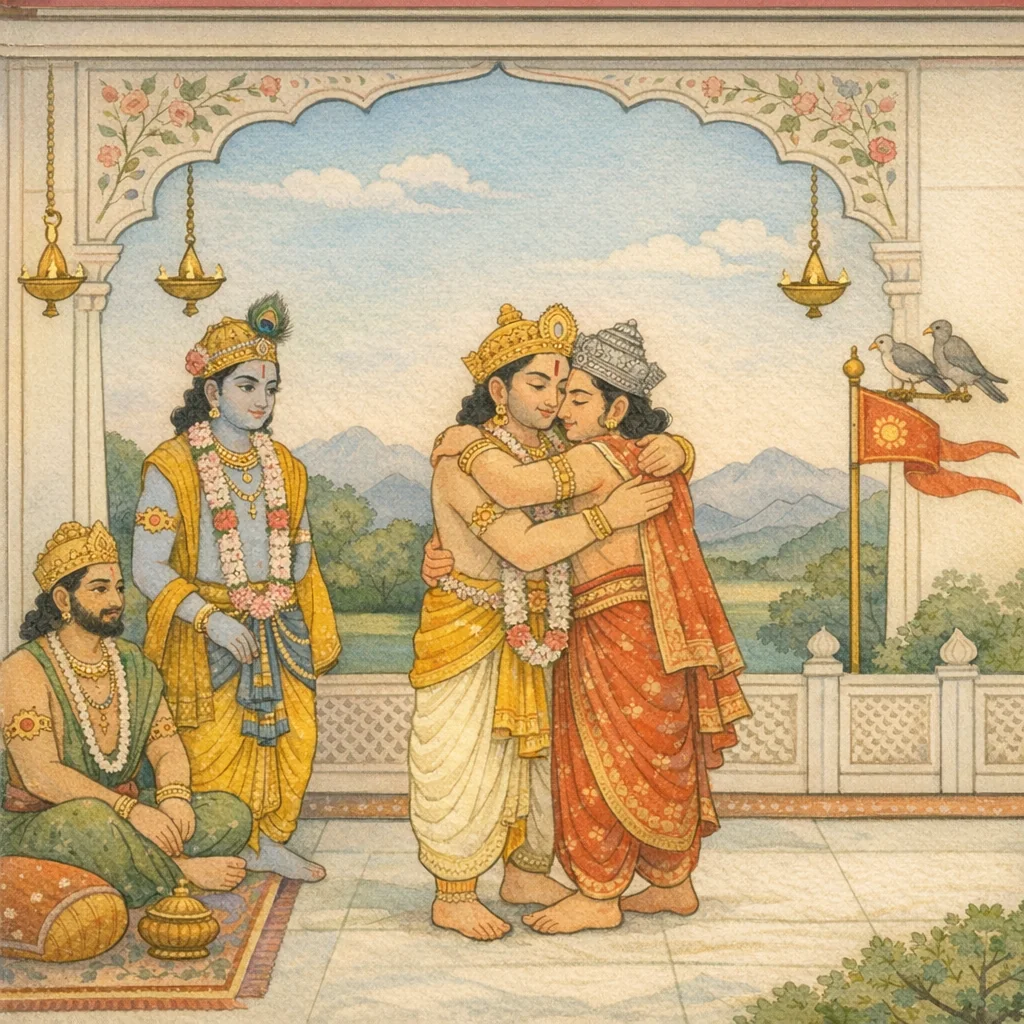
Chapter Arc: अर्जुन युद्धभूमि से लौटकर शुभ कक्ष्या/ड्योढ़ी में प्रवेश करता है; धर्मराज युधिष्ठिर उसे प्रणाम-स्वीकार कर प्रेम से आलिंगन करते हैं—और समस्त सुहृदों में आशा का संचार होता है। → युधिष्ठिर के आशीर्वाद और शुभ-लक्षणों (दाहिने प्रकट होने वाले विजय-सूचक निमित्त) के बीच अर्जुन अपने संकल्प को धार देता है: जयद्रथ-वध अनिवार्य है, पर साथ ही धर्मराज की रक्षा भी उतनी ही महान् जिम्मेदारी है। रथ-यात्रा की तैयारी होती है; कृष्ण सारथ्य संभालते हैं, सात्यकि को निर्देश मिलता है। → अर्जुन का प्रतिज्ञा-वाक्य निर्णायक रूप लेता है—‘मैं वहीं जाऊँगा जहाँ सैन्धव (जयद्रथ) यमलोक जाने की प्रतीक्षा कर रहा है’; और साथ ही यह भी कि जहाँ वासुदेव और वह स्वयं उपस्थित हों, वहाँ अनिष्ट नहीं हो सकता। → गोविन्द रश्मियाँ थामते हैं और रथ युद्ध-उद्देश्य की ओर बढ़ता है; सात्यकि ‘तथेत्य’ कहकर युधिष्ठिर की सुरक्षा-व्यवस्था हेतु प्रस्थान करता है—रणनीति स्पष्ट, भूमिकाएँ निश्चित। → अगले चरण में अर्जुन का जयद्रथ तक पहुँचना और उसे घेरने वाली कौरव-व्यवस्था को तोड़ना—क्या प्रतिज्ञा समय पर पूरी होगी?
Shlokas
Verse 1
हि ही बक। हि मा चतुरशीतितमो< ध्याय: युधिष्ठिरका अर्जुनको आशीर्वाद, कद हक का स्वप्न सुनकर समस्त सुहृदोंकी प्रसन्नता, सात्यकि और श्रीकृष्णके साथ रथपर बैठकर अर्जुनकी रणयात्रा तथा अर्जुनके कहनेसे सात्यकिका युधिष्ठिरकी रक्षाके लिये जाना संजय उवाच तथा तु वदतां तेषां प्रादुरासीद् धनंजय: । दिदृक्षुर्भरतश्रेष्ठ राजानं ससुह्ददूगणम्,संजय कहते हैं--राजन! इस प्रकार उन लोगोंमें बातचीत हो ही रही थी कि सुहृदोंसहित भरतश्रेष्ठ राजा युधिष्ठिरका दर्शन करनेकी इच्छासे अर्जुन वहाँ आ गये
Sañjaya said: “O King, while they were still speaking in this way, Dhanañjaya (Arjuna) suddenly appeared there, eager to see the best of the Bharatas—King Yudhiṣṭhira—together with his circle of well-wishing friends.”
Verse 2
त॑ निविष्टं शुभां कक्ष्यामभिवन्द्याग्रत: स्थितम् | तमुत्थायार्जुन॑ प्रेम्णा सस्वजे पाण्डवर्षभ:
Sañjaya said: Having respectfully saluted him who sat in an auspicious chamber, and standing before him, Arjuna rose and, moved by affection, embraced him—the bull among the Pāṇḍavas. The moment shows that even amid the harshness of war, reverence for elders and the bonds of kinship and loyalty still govern conduct.
Verse 3
उस सुन्दर ड्योढ़ीमें प्रवेश करके राजाको प्रणाम करनेके पश्चात् उनके सामने खड़े हुए अर्जुनको पाण्डव-दश्रेष्ठ युधिष्ठिरने उठकर प्रेमपूर्वक हृदयसे लगा लिया ।। मूर्थ्नि चैनमुपाप्राय परिष्वज्य च बाहुना । आशिष: परमा: प्रोच्य स्मयथमानो5भ्यभाषत,उनका मस्तक सूँघकर और एक बाँहसे उनका आलिंगन करके उन्हें उत्तम आशीर्वाद देते हुए राजाने मुसकराकर कहा--
Sañjaya said: Yudhiṣṭhira, the best of the Pāṇḍavas, after Arjuna had entered the splendid gateway and bowed to the king, rose to receive him. Drawing him close, he smelled his head and embraced him with one arm; then, offering him the highest blessings, the king spoke with a gentle smile—an affectionate act of dharma that honors kinship and righteous conduct even amid the pressures of war.
Verse 4
व्यक्तमर्जुन संग्रामे ध्रुवस्ते विजयो महान् । यादगूपा च ते च्छाया प्रसन्नश्च जनार्दन:,“अर्जुन! आज संग्राममें तुम्हें निश्चय ही महान् विजय प्राप्त होगी, यह बात स्पष्टरूपसे दृष्टिगोचर हो रही है; क्योंकि इसीके अनुरूप तुम्हारे मुखकी कान्ति है और भगवान् श्रीकृष्ण भी प्रसन्न हैं!
Sañjaya said: “Arjuna, it is plainly evident that in today’s battle a great victory is surely yours. The radiance on your face and your very bearing accord with it—and Janārdana (Kṛṣṇa) too is serene and pleased.”
Verse 5
तमब्रवीत् ततो जिष्णुर्महदा श्चर्यमुत्तमम् । दृष्टवानस्मि भद्रं ते केशवस्य प्रसादजम्,“तब विजयशील अर्जुनने उनसे कहा--राजन्! आपका कल्याण हो। आज मैंने बहुत उत्तम और आश्चर्यजनक स्वप्न देखा है। भगवान् श्रीकृष्णकी कृपासे ही वैसा स्वप्न प्रकट हुआ था”
Sañjaya said: Then Arjuna, the unconquered one, spoke to him: “O King, may you be well. Today I have beheld a supremely excellent and wondrous vision, as in a dream; it arose by the grace of Keśava (Kṛṣṇa).”
Verse 6
ततस्तत् कथयामास यथा दृष्टं धनंजय: । आश्चासनार्थ सुदह्ददां ऋ्यम्बकेण समागमम्,यों कहकर अर्जुन अपने सुहृदोंके आश्वासनके लिये जिस प्रकार भगवान् शंकरसे मिलनका स्वप्न देखा था, वह सब कह सुनाया
Sañjaya said: Then Dhananjaya (Arjuna) related everything exactly as he had seen it—how, for the reassurance of his dear companions, he had beheld in a dream his meeting with Tryambaka (Lord Śiva).
Verse 7
ततः शिरोभिरवरनिं स्पृष्टवा सर्वे च विस्मिता: । नमस्कृत्य वृषाड्काय साधु साधथ्वित्यथाब्रुवन्,यह स्वप्न सुनकर वहाँ आये हुए सब लोग आश्चर्यचकित हो उठे और सबने धरतीपर मस्तक टेककर भगवान् शंकरको प्रणाम करके कहा--“यह तो बहुत अच्छा हुआ, बहुत अच्छा हुआ'
Sañjaya said: Then all of them, struck with wonder, touched the earth with their heads. Having bowed in reverence to Śiva, the Bull-bannered Lord, they exclaimed, “Well done! Well done!”—taking the dream’s message as an auspicious sign, weighty with dharma, calling for humility and devotion amid the violence of war.
Verse 8
अनुज्ञातास्ततः सर्वे सुहृदो धर्मसूनुना । त्वरमाणा: सुसंनद्धा हृष्टा युद्धाय निर्ययु:,तदनन्तर धर्मपुत्र युधिष्ठिरकी आज्ञा लेकर कवच धारण किये हुए समस्त सुहृद् हर्षमें भरकर शीतघ्रतापूर्वक वहाँसे युद्धके लिये निकले
Sañjaya said: Then, with the permission of Dharmasūnu (Yudhiṣṭhira), all his well-wishing companions—hastening, fully armoured, and filled with exhilaration—set out from there for battle. The scene underscores disciplined obedience to rightful command and the collective resolve to enter war under dharmic leadership.
Verse 9
अभिवाद्य तु राजानं युयुधानाच्युतार्जुना: । हृष्टा विनिर्ययुस्ते वै युधिष्ठिरनिवेशनात्,तत्पश्चात् राजा युधिष्ठिरको प्रणाम करके सात्यकि, श्रीकृष्ण और अर्जुन बड़े हर्षके साथ उनके शिविरसे बाहर निकले
Sañjaya said: Having paid their respects to King Yudhiṣṭhira, Yuyudhāna (Sātyaki), Acyuta (Śrī Kṛṣṇa), and Arjuna—filled with gladness—indeed departed from Yudhiṣṭhira’s quarters. The verse underscores disciplined conduct and reverence toward rightful authority even amid the urgency of war.
Verse 10
रथेनैकेन दुर्धर्षा युयुधानजनार्दनौ । जग्मतु: सहितौ वीरावर्जुनस्य निवेशनम्,दुर्धर्ष वीर सात्यकि और श्रीकृष्ण एक रथपर आरूढ़ हो एक साथ अर्जुनके शिविरमें गये
Sañjaya said: The two unconquerable heroes—Yuyudhāna (Sātyaki) and Janārdana (Kṛṣṇa)—mounted a single chariot and went together to Arjuna’s camp. Their swift, united movement underscores loyal companionship and disciplined purpose amid the moral strain of war.
Verse 11
तत्र गत्वा हृषीकेश: कल्पयामास सूतवत् । रथं रथवरस्याजौ वानरर्षभलक्षणम्,वहाँ पहुँचकर भगवान् श्रीकृष्णने एक सारथिके समान रथियोंमें श्रेष्ठ अर्जुनके वानरश्रेष्ठ हनुमानके चिह्नसे युक्त ध्वजावाले रथको युद्धके लिये सुसज्जित किया
Sañjaya said: Having reached that place, Hṛṣīkeśa (Kṛṣṇa) arranged, like a skilled charioteer, the chariot of Arjuna—the best of chariot-warriors—for battle, bearing the emblem of Hanumān, the bull among monkeys. The scene underscores disciplined readiness in war: even the divinely guided side relies on careful preparation, service, and mastery of one’s role rather than mere pride or force.
Verse 12
स मेघसमनिर्घोषस्तप्तकाउचनसप्रभ: । बभौ रथवर: क्लृप्त: शिशुर्दिवसकृद् यथा,मेघके समान गम्भीर घोष करनेवाला और तपाये हुए सुवर्णके समान प्रभासे उद्धासित होनेवाला वह सजाया हुआ श्रेष्ठ रथ प्रातःकालके सूर्यकी भाँति प्रकाशित हो रहा था
Sañjaya said: That splendid chariot—its rumble deep like a thundercloud and its sheen like heated gold—stood fully arrayed and blazed forth, like the morning sun.
Verse 13
ततः पुरुषशार्दूल: सज्जं सज्जपुर:सर: । कृताद्विकाय पार्थाय न्यवेदयत तं॑ रथम्,तदनन्तर युद्धके लिये सुसज्जित पुरुषोंमें सर्वश्रेष्ठ पुरुषसिंह श्रीकृष्णने नित्य-कर्म सम्पन्न करके बैठे हुए अर्जुनको यह सूचित किया कि रथ तैयार है
Sañjaya said: Then Śrī Kṛṣṇa—the foremost among men, the lion among heroes—himself leading those who were fully prepared, informed Pārtha (Arjuna), who had completed his prescribed daily rites and was seated, that the chariot was ready.
Verse 14
त॑ं तु लोकवरः पुंसां किरीटी हेमवर्मभृत् । चापबाणधरो वाहूं प्रदक्षिणमवर्तत,तब पुरुषोंमें श्रेष्ठ लोकप्रवर अर्जुनने सोनेके कवच और किरीट धारण करके धनुष- बाण लेकर उस रथकी परिक्रमा की
Sanjaya said: Then Arjuna—foremost among men, the diademed hero—wearing golden armour, and bearing bow and arrows, circumambulated that chariot in reverence.
Verse 15
तपोविद्यावयोवृद्धैः क्रियावद्धिर्जितिन्द्रियै: । स्तूयमानो जयाशीर्भिरारुरोह महारथम्,उस समय तपस्या, विद्या तथा अवस्थामें बड़े-बूढ़े, क्रियाशील, जितेन्द्रिय ब्राह्मण उन्हें विजयसूचक आशीर्वाद देते हुए उनकी स्तुति-प्रशंसा कर रहे थे। उनकी की हुई वह स्तुति सुनते हुए अर्जुन उस विशाल रथपर आरूढ़ हुए
Sañjaya said: As he was being praised and blessed with victory-invoking benedictions by Brahmins—elderly in age, rich in austerity and learning, active in sacred duties, and self-controlled—Arjuna listened to their laudation and mounted the great chariot.
Verse 16
जैत्रै: सांग्रामिकैर्मन्त्रै: पूर्वमेव रथोत्तमम् अभिमन्त्रितमर्चिष्मानुदयं भास्करो यथा,उस उत्तम रथको पहलेसे ही विजयसाधक युद्धसम्बन्धी मन्त्रोंद्वारा अभिमन्त्रित किया गया था। उसपर आरूढ़ हुए तेजस्वी अर्जुन उदयाचलपर चढ़े हुए सूर्यके समान जान पड़ते थे
Sañjaya said: That finest of chariots had already been consecrated with victory-winning battle mantras; and radiant Arjuna, mounting it, seemed like the sun rising upon the eastern mountain.
Verse 17
स रथे रथिनां श्रेष्ठ काड्चने काज्चनावृत: । विबभौ विमलोडर्चिष्मान् मेराविव दिवाकर:,सुवर्णमय कवचसे आवृत हो उस स्वर्णमय रथपर आरूढ़ हुए रथियोंमें श्रेष्ठ उज्ज्वल कान्तिधारी तेजस्वी अर्जुन मेरु पर्वतपर प्रकाशित होनेवाले सूर्यके समान शोभा पा रहे थे
Sañjaya said: Mounted upon that chariot—the foremost among charioteers—covered in gold and radiant with spotless splendor, Arjuna shone like the sun blazing upon Mount Meru.
Verse 18
अन्वारुरुह्तुः पार्थ युयुधानजनार्दनौ | शर्यातिर्यज्ञमायान्तं यथेन्द्रं देवमश्विनौ,अर्जुनके बैठनेके बाद सात्यकि और श्रीकृष्ण भी उस रथपर आरूढ़ हो गये, मानो राजा शर्यातिके यज्ञमें आते हुए इन्द्रदेवके साथ दोनों अश्विनीकुमार आ रहे हों
Sañjaya said: After Pārtha (Arjuna) had taken his seat, Yuyudhāna (Sātyaki) and Janārdana (Kṛṣṇa) also mounted that chariot—like the two Aśvin twins accompanying Indra as he comes to King Śaryāti’s sacrifice.
Verse 19
अथ जग्राह गोविन्दो रश्मीन् रश्मिविदां वर: । मातलिवरासवस्येव वृत्रं हन्तुं प्रयास्यत:,उन घोड़ोंकी रास पकड़नेकी कलामें सर्वश्रेष्ठ भगवान् गोविन्दने रथकी बागडोर अपने हाथमें ले ली, ठीक उसी प्रकार जैसे, वृत्रासुरका वध करनेके लिये जानेवाले इन्द्रके रथकी बागडोर मातलिने पकड़ी थी
Sañjaya said: Then Govinda—foremost among those skilled in handling the reins—took the chariot’s reins into his own hands, just as Mātali once held the reins of Indra’s chariot when Indra set out to slay Vṛtra.
Verse 20
स ताभ्यां सहित: पार्थो रथप्रवरमास्थित: । सहितो बुधशुक्रा भ्यां तमो निघ्नन् यथा शशी,सात्यकि और श्रीकृष्ण दोनोंके साथ उस श्रेष्ठ रथपर बैठे हुए अर्जुन बुध और शुक्रके साथ स्थित हुए अन्धकारनाशक चन्द्रमाके समान जान पड़ते थे
Sañjaya said: Arjuna (Pārtha), seated upon that excellent chariot together with those two—Sātyaki and Śrī Kṛṣṇa—appeared like the moon that dispels darkness when accompanied by Budha (Mercury) and Śukra (Venus).
Verse 21
सैन्धवस्य वध प्रेप्सु: प्रयात: शत्रुपूगहा । सहाम्बुपतिमित्रा भ्यां यथेन्द्रस्तारकामये,शत्रुसमूहका नाश करनेवाले अर्जुन जब सात्यकि और श्रीकृष्णके साथ सिंधुराज जयद्रथका वध करनेकी इच्छासे प्रस्थित हुए, उस समय वरुण और मित्रके साथ तारकामय संग्राममें जानेवाले इन्द्रके समान सुशोभित हुए
Sañjaya said: Arjuna—the slayer of enemy hosts—set out, intent on killing the Saindhava (Jayadratha). Accompanied by Sātyaki and Śrī Kṛṣṇa, he shone like Indra going to the Tārakāmaya war together with Varuṇa and Mitra.
Verse 22
ततो वादित्रनिर्धोषिर्माड्रल्यैश्व स्तवैः शुभै: । प्रयान्तमर्जुनं वीर॑ मागधाश्वैव तुष्टवु:,तदनन्तर रणवाद्योंके घोष तथा शुभ एवं मांगलिक स्तुतियोंके साथ यात्रा करते हुए वीर अर्जुनकी मागधजन स्तुति करने लगे
Sañjaya said: Then, as the war-instruments resounded and auspicious praises were sung, the heroic Arjuna set forth. The Māgadha bards, too, extolled him as he proceeded—an outward celebration meant to strengthen resolve and proclaim honor amid the moral weight of battle.
Verse 23
सजयाशी: सपुण्याह: सूतमागधनि:स्वन: । युक्तो वादित्रघोषेण तेषां रतिकरो5भवत्,विजयसूचक आशीर्वाद तथा पुण्याहवाचनके साथ सूत, मागध एवं वन्दीजनोंका शब्द रणवाद्योंकी ध्वनिसे मिलकर उन सबकी प्रसन्नताको बढ़ा रहा था
Sañjaya said: “The auspicious benedictions—together with the cries of the sūtas and māgadhas—blended with the booming of war-instruments, became a source of delight to them, serving as a proclamation of victory.”
Verse 24
तमनुप्रयतो वायु: पुण्यगन्धवह: शुभ: । ववीौ संहर्षयन् पार्थ द्विषतश्चापि शोषयन्,अर्जुनके प्रस्थान करनेपर पीछेसे मंगलमय पवित्र एवं सुगन्धयुक्त वायु बहने लगी, जो अर्जुनका हर्ष बढ़ाती हुई उनके शत्रुओंका शोषण कर रही थी
Sañjaya said: As Arjuna (Pārtha) set forth, a favorable wind, bearing a sacred and fragrant scent, began to blow from behind him. It heightened Arjuna’s ardor and confidence, while at the same time drying up and weakening his foes—an auspicious sign that righteousness and divine favor were strengthening the just in the midst of war.
Verse 25
ततस्तस्मिन् क्षणे राजन् विविधानि शुभानि च । प्रादुरासन् निमित्तानि विजयाय बहूनि च । पाण्डवानां त्वदीयानां विपरीतानि मारिष,माननीय महाराज! उस समय बहुत-से ऐसे शुभ शकुन प्रकट हुए, जो पाण्डवोंकी विजय और आपके सैनिकोंकी पराजयकी सूचना दे रहे थे
Sañjaya said: “Then, at that very moment, O King, many diverse auspicious portents appeared—signs foretelling victory for the Pāṇḍavas; and, dear sir, they appeared as contrary omens for your own forces, indicating their reversal and defeat.”
Verse 26
दृष्टवार्जुनो निमित्तानि विजयाय प्रदक्षिणम् युयुधानं महेष्वासमिदं वचनमत्रवीत्,अर्जुनने अपने दाहिने प्रकट होनेवाले उन विजयसूचक शुभ लक्षणोंको देखकर महाधनुर्धर सात्यकिसे इस प्रकार कहा--
Sañjaya said: Seeing auspicious omens appearing on his right—signs foretelling victory—Arjuna addressed the great bowman Yuyudhāna (Sātyaki) with these words.
Verse 27
युयुधानाद्य युद्धे मे दृश्यते विजयो श्लुव: । यथा हीमानि लिड्डनि दृश्यन्ते शिनिपुड़व,'शिनिप्रवर युयुधान! आज जैसे ये शुभ लक्षण दिखायी देते हैं, उनसे युद्धमें मेरी निश्चित विजय दृष्टिगोचर हो रही है”
Sañjaya said: “O Yuyudhāna, foremost of the Śinis, today in this battle I can clearly perceive an auspicious victory for us, for such favorable signs are indeed appearing.”
Verse 28
सो<हं तत्र गमिष्यामि यत्र सैन्धवको नृपः । यियासुर्यमलोकाय मम वीर्य प्रतीक्षते,“अतः मैं वहीं जाऊँगा, जहाँ सिंधुराज जयद्रथ यमलोकमें जानेकी इच्छासे मेरे पराक्रमकी प्रतीक्षा कर रहा है
Sañjaya said: “I shall go there—where the Sindhu king Jayadratha, desiring to depart to Yama’s realm, awaits the proof of my valor.”
Verse 29
यथा परमकं कृत्यं सैन्धवस्थ वधो मम । तथैव सुमहत् कृत्यं धर्मराजस्य रक्षणम्,“मेरे लिये सिंधुराज जयद्रथका वध जैसे अत्यन्त महान् कार्य है, उसी प्रकार धर्मराजकी रक्षा भी परम महत्त्वपूर्ण कर्तव्य है
Sañjaya said: “Just as the slaying of the Sindhu prince (Jayadratha) is, for me, a supremely great duty, so too is the protection of Dharmarāja an equally weighty obligation.”
Verse 30
स त्वमद्य महाबाहो राजानं परिपालय । यथैव हि मया गुप्तस्त्वया गुप्तो भवेत् तथा,“महाबाहो! आज तुम्हीं राजा युधिष्ठिरकी सब ओरसे रक्षा करो। जिस प्रकार वे मेरे द्वारा सुरक्षित होते हैं, उसी प्रकार तुम्हारे द्वारा भी उनकी सुरक्षा हो सकती है
Sañjaya said: “Therefore, O mighty-armed one, today you must guard the king on every side. For just as he has been kept safe by me, so too may he be kept safe by you.”
Verse 31
न पश्यामि च त॑ लोके यस्त्वां युद्धे पराजयेत् । वासुदेवसमं युद्धे स्वयमप्यमरेश्वर:,“मैं संसारमें ऐसे किसी वीरको नहीं देखता, जो युद्धमें तुम्हें पपाजित कर सके। तुम संग्रामभूमिमें साक्षात् भगवान् श्रीकृष्णके समान हो। साक्षात् देवराज इन्द्र भी तुम्हें नहीं जीत सकते
Sañjaya said: “In this world I see no warrior who could defeat you in battle. On the field of war you are the equal of Vāsudeva himself; even the lord of the gods, Indra, could not overcome you.”
Verse 32
त्वयि चाहं पराश्चस्तः प्रद्युम्ने वा महारथे । शवनुयां सैन्धवं हन्तुमनपेक्षो नरर्षभ,“नरश्रेष्ठ) इस कार्यके लिये मैं तुमपर अथवा महारथी प्रद्युम्मपर ही पूरा भरोसा करता हूँ। सिंधुराज जयद्रथका वध तो मैं किसीकी सहायताकी अपेक्षा किये बिना ही कर सकता हूँ
Sañjaya said: “On you—or on Pradyumna, that great chariot-warrior—I place my full reliance, O bull among men. As for slaying the Sindhu king Jayadratha, I can accomplish that without looking for anyone’s assistance.”
Verse 33
मय्यपेक्षा न कर्तव्या कथंचिदपि सात्वत । राजन्येव परा गुप्ति: कार्या सर्वात्मना त्वया,'सात्वतवीर! तुम किसी प्रकार भी मेरा अनुसरण न करना। तुम्हें सब प्रकारसे राजा युधिष्ठिरकी ही पूर्णरूपसे रक्षा करनी चाहिये
Sañjaya said: “O Sātvata hero, you must not, in any way, look to me or follow after me. Your highest duty is this alone: with your whole being, you must ensure the complete protection of King Yudhiṣṭhira.”
Verse 34
न हि यत्र महाबाहुर्वासुदेवो व्यवस्थित: । किंचिद् व्यापद्यते तत्र यत्राहमपि च ध्रुवम्,“जहाँ महाबाहु भगवान् श्रीकृष्ण विराजमान हैं और मैं भी उपस्थित हूँ, वहाँ अवश्य ही कोई कार्य बिगड़ नहीं सकता है”
Sañjaya said: “Where the mighty-armed Vāsudeva (Kṛṣṇa) stands present, and where I too am certainly present, there no undertaking can truly go awry.”
Verse 35
एवमुक्तस्तु पार्थेन सात्यकि: परवीरहा । तथेत्युक्त्वागमत् तत्र यत्र राजा युधिष्ठिर:,अर्जुनके ऐसा कहनेपर शत्रुवीरोंका संहार करनेवाले सात्यकि “बहुत अच्छा” कहकर जहाँ राजा युधिष्छिर थे, वहीं चले गये
Sañjaya said: Thus addressed by Pārtha (Arjuna), Sātyaki—slayer of enemy champions—replied, “So be it,” and at once went to the place where King Yudhiṣṭhira was.
Verse 84
इति श्रीमहाभारते द्रोणपर्वणि प्रतिज्ञापर्वणि अर्जुनवाक्ये चतुरशीतितमो<ध्याय: ।। ८४ ।। इस प्रकार श्रीमह्ाभारत द्रोणपर्वके अन्तर्गत प्रतिज्ञापर्वमें अजुनवाक्यविषयक चौरासीवाँ अध्याय पूरा हुआ
Sañjaya said: “Thus, in the Śrī Mahābhārata, within the Droṇa Parva, in the section called the Pratijñā Parva, the eighty-fourth chapter—concerning Arjuna’s words—comes to an end.”
Frequently Asked Questions
The dilemma is prioritization under dharma: whether to pursue a vow-linked objective (Jayadratha) at full speed when doing so may expose the king to capture, thereby undermining the moral and political meaning of battlefield success.
Action must be governed by ends that preserve the social-political order: courage and initiative are endorsed, but only when integrated with protective responsibility, clear delegation, and evaluation of consequences beyond immediate tactical wins.
No explicit phalaśruti appears; the meta-commentary is implicit in the repeated insistence that outcomes are validated by safeguarding Dharmarāja—linking narrative success to the preservation of dharmic governance rather than to isolated feats.