Adhyaya 45
Droṇa-parva Adhyāya 45: Saubhadra–Lakṣmaṇa-saṃyoga and Kaurava Counter-Encirclement
Upa-parva: Saubhadrābhiyāna (Abhimanyu Episodes) — Droṇa-parva Context Unit
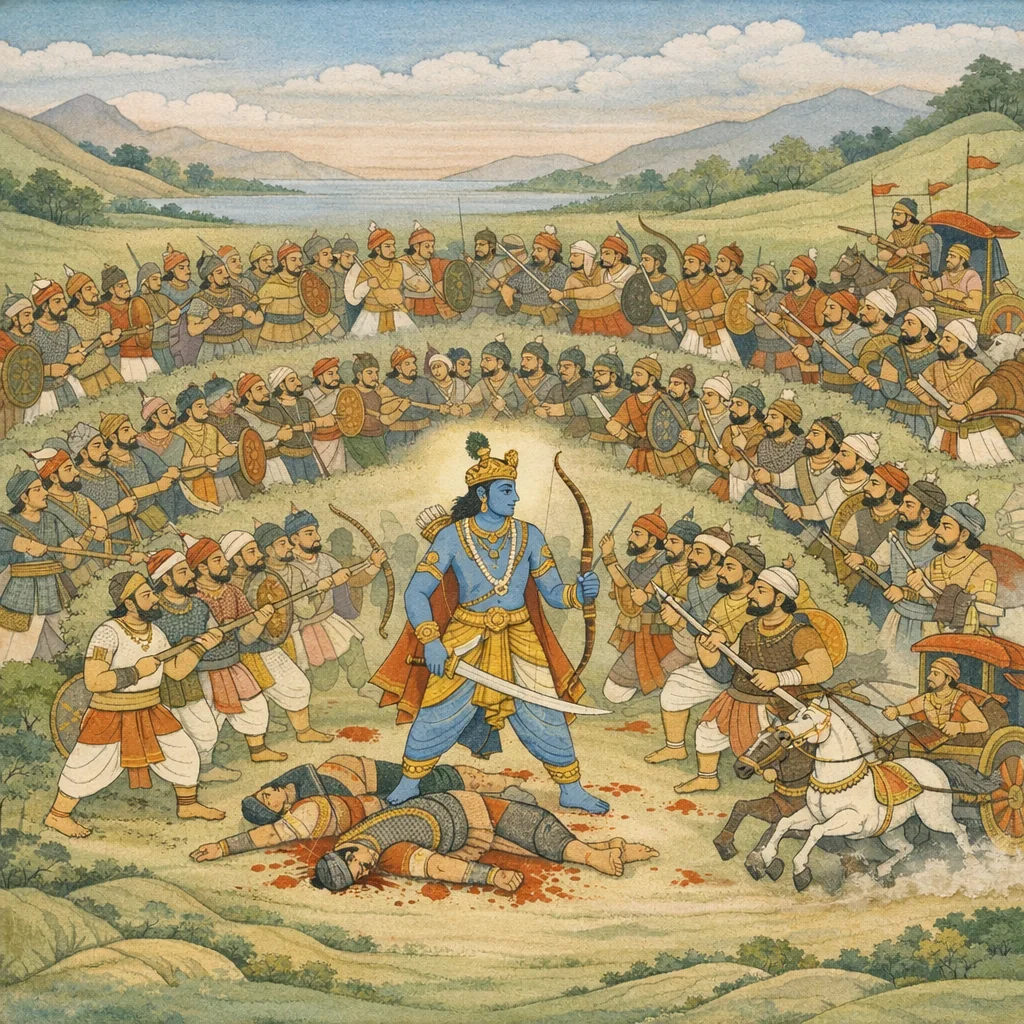
Dhṛtarāṣṭra responds with astonishment at Saubhadra’s (Abhimanyu’s) lone effectiveness against many, framing it as extraordinary yet consistent with those grounded in dharma. He asks how the Kauravas reacted when Duryodhana’s side faltered and many princes were slain. Sañjaya describes Kaurava troops showing visible fear and disorientation, abandoning the fallen and retreating in haste. Observing the rout, senior Kaurava leaders (Droṇa, Aśvatthāman, Kṛpa, Duryodhana, Karṇa, Kṛtavarman, Śakuni, and others) surge forward in anger but are repeatedly checked. Lakṣmaṇa (Duryodhana’s son), confident and skilled in archery, advances toward Abhimanyu; his father and other great chariot-warriors follow. A concentrated arrow-shower is met by Abhimanyu’s counter-force. Kṛṣṇa’s son (Kārṣṇi) confronts Lakṣmaṇa; Abhimanyu and Lakṣmaṇa engage directly, and Abhimanyu, enraged, declares a fatal intent and severs Lakṣmaṇa’s head with a bhalla. Duryodhana, enraged by his son’s fall, calls for Abhimanyu’s death; six prominent chariot-warriors encircle. Abhimanyu breaks their pressure and rushes toward Jayadratha’s formation, but his path is blocked by elephant corps and allied groups (Kaliṅgas, Niṣādas, and Krātha’s son). Abhimanyu disrupts the elephant ranks, wounds Krātha’s son, and dismantles his martial signs and support elements; with that leader slain, many fighters turn away, indicating a morale collapse tied to the fall of a capable commander.
Chapter Arc: चक्रव्यूह के भीतर अर्जुनपुत्र अभिमन्यु इन्द्र के समान पराक्रमी दिखता है—मानो अकेला ही रणभूमि का नियम बदल देने आया हो। → सत्यश्रवा, रुक्मरथ, उसके मित्रगण और सैकड़ों राजकुमार ‘पहले मैं, पहले मैं’ कहते हुए अभिमन्यु पर टूट पड़ते हैं; पर जो उसके निकट जाता है, वह समुद्र में गिरती नदियों की भाँति लौट नहीं पाता। सेना भय से काँपती है, जैसे आँधी में दिशाहीन नौका। → अभिमन्यु यमराज-तुल्य बनकर क्षत्रिय-समूहों को निगलता हुआ आगे बढ़ता है; उसके प्रहारों से कौरव-पक्ष की पंक्तियाँ टूटती हैं और दुर्योधन की प्रतिष्ठा रण में डगमगाती है—‘दुर्योधन-पराजय’ का क्षण उभरता है। → कौरव-सेना का उत्साह क्षीण होता है; अभिमन्यु की धाक से उनके अग्रणी योद्धा बिखरते हैं और रण-प्रवाह कुछ समय के लिए पाण्डव-पक्ष के अनुकूल झुकता है। → वीर्यवान योद्धा (श्लोक संकेत: ‘एवमुक्त्वा तु सौभद्रमभिदुद्राव…’) सुसज्जित रथ पर चढ़कर अभिमन्यु पर झपटता है—अगला प्रहार किसका होगा, यह अध्याय के अंत में अधर में लटकता है।
Shlokas
Verse 1
अपन क्रात बछ। हर: पजञज्चचत्वारिशो< ध्याय: हल ३8 के द्वारा सत्यश्रवा, क्षत्रियसमूह, रुक्मरथ तथा उसके मित्रगणों और सैकड़ों राजकुमारोंका वध और दुर्योधनकी पराजय संजय उवाच आददानस्तु शूराणामायुंष्यभवदार्जुनि: । अन्तकः सर्वभूतानां प्राणान् काल इवागते,संजय कहते हैं--राजन! मृत्युकाल उपस्थित होनेपर जैसे यमराज समस्त प्राणियोंके प्राण हर लेते हैं, उसी प्रकार अर्जुनकुमार अभिमन्यु भी वीरोंकी आयुका अपहरण करते हुए उनके लिये यमराज ही हो गये थे इस प्रकार श्रीमह्ाभारत द्रोणपर्वके अन्तर्गत अभिमन्युवधपर्वमें दुर्योधनकी पराजयविषयक पैंतालीसवाँ अध्याय पूरा हुआ ॥/ ४५ ॥। ऑपनआक्राता बछ। अर: षट्चत्वारिशो5 ध्याय: अभिमन्युके द्वारा लक्ष्मण तथा क्राथपुत्रका वध और सेनासहित छ: महारथियोंका पलायन धृतराष्ट उवाच यथा वदसि मे सूत एकस्य बहुभि: सह । संग्रामं तुमुलं घोरं जयं चैव महात्मन:
Sañjaya said: O King, as Time at the moment of death seizes away the lives of all creatures, so did Abhimanyu, Arjuna’s son, taking away the span of life of the warriors, become for them like Death itself.
Verse 2
स शक्र इव विक्रान्त: शक्रसूनो: सुतो बली । अभिमन्युस्तदानीक॑ लोडयन् समदृश्यत,इन्द्रकुमार अर्जुनका बलवान पुत्र अभिमन्यु इन्द्रके समान पराक्रमी था। वह उस समय सारे व्यूहका मन्थन करता दिखायी देता था
Sañjaya said: Mighty Abhimanyu, the son of Arjuna—Indra’s own son—appeared at that time like Indra himself in valor, churning and breaking through the enemy’s battle-formation.
Verse 3
प्रविश्यैव तु राजेन्द्र क्षत्रियेन्द्रान्लकोपम: । सत्यश्रवसमादत्त व्याप्रो मृगमिवोल्बण:,राजेन्द्र! क्षत्रियशिरोमणियोंके लिये यमराजके समान अभिमन्युने उस सेनामें प्रवेश करते ही जैसे उन्मत्त व्याप्र हरिणको दबोच लेता है, उसी प्रकार सत्यश्रवाको ले बैठा
Sañjaya said: O king, Abhimanyu—like Death itself to the foremost of warriors—had no sooner entered the host than he seized Satyāśravas, just as a fierce tiger pounces upon a deer.
Verse 4
सत्यश्रवसि चाक्षिप्ते त्वरमाणा महारथा: । प्रगृह्य विपुलं शस्त्रमभिमन्युमुपाद्रवन्,सत्यश्रवाके मारे जानेपर उन सभी महारथियोंने प्रचुर अस्त्र-शस्त्र लेकर बड़ी उतावलीके साथ अभिमन्युपर आक्रमण किया
Sañjaya said: When Satyśravas had been struck down, the great chariot-warriors, driven by haste and fury, seized abundant weapons and rushed to assail Abhimanyu.
Verse 5
अहं पूर्वमहं पूर्वमिति क्षत्रियपुड़वा: । स्पर्धमाना: समाजम्मुर्जिघांसन्तो<र्जुनात्मजम्,वे सभी क्षत्रियशिरोमणि “पहले मैं, पहले मैं” इस प्रकार परस्पर होड़ लगाते हुए अर्जुनकुमारको मार डालनेकी इच्छासे आगे बढ़े
Sañjaya said: Crying, “I first! I first!”, those foremost of kṣatriyas, competing with one another, surged forward in a crowd, intent on killing Arjuna’s son.
Verse 6
क्षत्रियाणामनीकानि प्रद्रुतान्यभिधावताम् । जग्रास तिमिरासाद्य क्षुद्रमत्स्यानिवार्णवे,उस समय धावा करनेवाले क्षत्रियोंकी उन आगे बढ़ती हुई सेनाओंको अभिमन्युने उसी प्रकार कालका ग्रास बना लिया, जैसे महासागरमें तिमि नामक महामत्स्य छोटे-छोटे मत्स्योंको निगल जाता है
Then Abhimanyu swallowed up those advancing Kshatriya battalions that were rushing to the charge, making them the prey of Death—just as in the great ocean the mighty fish called Timi devours the little fishes.
Verse 7
ये केचन गतास्तस्य समीपमपलायिन: । न ते प्रतिन्यवर्तन्त समुद्रादिव सिन्धव:,युद्धसे न भागनेवाले जो कोई शूरवीर उस सयम अभिमन्युके पास गये, वे फिर नहीं लौटे। जैसे समुद्रमें मिली हुई नदियाँ फिर वहाँसे लौट नहीं पाती हैं
Whatever valiant warriors went near him—men who did not flee from battle—none of them returned. Like rivers that have entered the ocean, they could not turn back again.
Verse 8
महाग्राहगृहीतेव वातवेगभयार्दिता । समकम्पत सा सेना विश्रष्टा नौरिवार्णवे,जिसका समुद्रमें मार्ग भूल गया हो, जो वायुके वेगसे भयाक्रान्त हो रही हो तथा जिसे किसी बहुत बड़े ग्राहने पकड़ लिया हो--ऐसी नौका जैसे डगमगाने लगती है, उसी प्रकार वह सेना अभिमन्युके भयसे काँप रही थी
That army trembled in fear of Abhimanyu, like a boat upon the ocean that has lost its course, terrified by the rush of the wind and seized by a mighty crocodile—rocking and reeling on the waters.
Verse 9
अथ रुक््मरथो नाम मद्रेश्वरसुतो बली | त्रस्तामाश्वासयन् सेनामत्रस्तो वाक्यमब्रवीत्,इसी समय मद्रराजका बलवान पुत्र रुक्मरथ आकर अपनी डरी हुई सेनाको आश्वासन देता हुआ निर्भय होकर बोला--
Then the mighty Rukmaratha, son of the lord of Madra, came forward. Reassuring the frightened army, he spoke without fear—
Verse 10
अलं त्रासेन व: शूरा नैष कश्रनिन्मयि स्थिते । अहमेन ग्रहीष्यामि जीवग्राहं न संशय:,'शूरवीरो! तुम्हें डरनेकी कोई आवश्यकता नहीं। यह अभिमन्यु मेरे रहते कुछ भी नहीं है। मैं अभी इसे जीतेजी पकड़ लूँगा। इसमें संशय नहीं है”
“Enough of fear, O heroes. While I stand here, this Abhimanyu is nothing. I shall seize him alive—of that there is no doubt.”
Verse 11
ऐसा कहकर पराक्रमी रुक्मरथ सुन्दर सजे-सजाये तेजस्वी रथपर आखरूढ़ हो सुभद्राकुमार अभिमन्युकी ओर दौड़ा
Sañjaya said: Having spoken thus, the valiant Rukmaratha—radiant, mounted upon a beautifully adorned and well-equipped chariot—charged straight toward Abhimanyu, the son of Subhadrā.
Verse 12
सो5भिमन्युं त्रिभिर्बाणैरविंद्ध्वा वक्षस्यथानदत् | त्रिभिश्ष दक्षिणे बाहौ सव्ये च निशितैस्त्रिभि:,उसने अभिमन्युकी छातीमें तीन बाण मारकर सिंहनाद किया। फिर तीन बाण दाहिनी और तीन तीखे बाण बायीं भुजामें मारे
Sañjaya said: Having pierced Abhimanyu in the chest with three arrows, he roared aloud like a lion. Then he struck again—three arrows in the right arm and three sharp arrows in the left—pressing the assault in the ruthless momentum of battle.
Verse 13
स तस्येष्वसनं छित्त्वा फाल्गुनि: सव्यदक्षिणौ | भुजौ शिरश्र स्वक्षिभ्रु क्षितौ क्षिप्रमपातयत्,तब अर्जुनकुमारने रुक्मरथका धनुष काटकर उसकी बायीं-दायीं भुजाओंको तथा सुन्दर नेत्र एवं भौंहोंसे सुशोभित मस्तकको भी तुरंत ही पृथ्वीपर काट गिराया
Sañjaya said: Having cut down his bow and its grip, Phālguni (Arjuna) swiftly struck off both the left and right arms, and also the head—adorned with beautiful eyes and brows—causing them to fall at once upon the earth.
Verse 14
दृष्टवा रुक्मरथं रुग्णं पुत्र शल्यस्य मानिनम् । जीवग्राहं जिघृक्षन्तं सौभद्रेण यशस्विना,राजन! राजा शल्यके अभिमानी पुत्र रुक्मरथको जो अभिमन्युको जीते-जी पकड़ना चाहता था, यशस्वी सुभद्राकुमारके द्वारा मारा गया देख शल्यपुत्रके बहुत-से मित्र राजकुमार, जो प्रहार करनेमें कुशल और युद्धमें उनन््मत्त होकर लड़नेवाले थे, अर्जुनकुमारको चारों ओरसे घेरकर बाणोंकी वर्षा करने लगे। उनके ध्वज सुवर्णके बने हुए थे, वे महाबली वीर चार हाथके धनुष खींच रहे थे
Sañjaya said: O King, seeing Rukmaratha—Śalya’s proud son—slain as he sought to seize Saubhadra (Abhimanyu) alive, many princes, his companions, skilled in assault and maddened by battle, surrounded Arjuna’s son on every side and showered him with arrows. Their standards were wrought of gold, and those mighty heroes drew their great bows with full force.
Verse 15
संग्रामदुर्मदा राजन् राजपुत्रा: प्रहारिण: । वयस्या: शल्यपुत्रस्य सुवर्णविकृतध्वजा:,राजन! राजा शल्यके अभिमानी पुत्र रुक्मरथको जो अभिमन्युको जीते-जी पकड़ना चाहता था, यशस्वी सुभद्राकुमारके द्वारा मारा गया देख शल्यपुत्रके बहुत-से मित्र राजकुमार, जो प्रहार करनेमें कुशल और युद्धमें उनन््मत्त होकर लड़नेवाले थे, अर्जुनकुमारको चारों ओरसे घेरकर बाणोंकी वर्षा करने लगे। उनके ध्वज सुवर्णके बने हुए थे, वे महाबली वीर चार हाथके धनुष खींच रहे थे
Sañjaya said: O King, the princes—skilled in striking and made reckless by the fury of battle—companions of Śalya’s son, bearing standards wrought of gold, surged forward. Seeing Rukmaratha, Śalya’s proud son, slain by Subhadrā’s son (Abhimanyu), they surrounded Arjuna’s son on all sides and showered him with arrows, drawing their mighty bows with full force.
Verse 16
तालमात्राणि चापानि विकर्षन्तो महाबला: । आर्जुनिं शरवर्षेण समन्तात् पर्यवारयन्,राजन! राजा शल्यके अभिमानी पुत्र रुक्मरथको जो अभिमन्युको जीते-जी पकड़ना चाहता था, यशस्वी सुभद्राकुमारके द्वारा मारा गया देख शल्यपुत्रके बहुत-से मित्र राजकुमार, जो प्रहार करनेमें कुशल और युद्धमें उनन््मत्त होकर लड़नेवाले थे, अर्जुनकुमारको चारों ओरसे घेरकर बाणोंकी वर्षा करने लगे। उनके ध्वज सुवर्णके बने हुए थे, वे महाबली वीर चार हाथके धनुष खींच रहे थे
Sañjaya said: Mighty warriors, drawing their bows to the full measure, hemmed in Arjuna’s son on every side and showered him with arrows. Thus, in war’s fury, grief and pride swiftly harden into collective retaliation, and the battlefield becomes a ring of relentless assault around a single hero.
Verse 17
शूरै: शिक्षाबलोपेतैस्तरुणैरत्यमर्षणै: । दृष्टवैकं समरे शूरं सौभद्रमपराजितम्,शिक्षा और बलसे सम्पन्न, तरुण अवस्थावाले, अत्यन्त अमर्षशील और शूरवीर राजकुमारोंद्वारा, किसीसे परास्त न होनेवाले शौर्यसम्पन्न सुभद्राकुमारको अकेले ही समरांगणमें बाणसमूहोंसे आच्छादित होते देख राजा दुर्योधनको बड़ा हर्ष हुआ। उसने यह मान लिया कि अब अभिमन्यु यमराजके लोकमें पहुँच गया
Sañjaya said: Seeing Abhimanyu—the heroic, unconquered son of Subhadrā—alone in battle, hemmed in and covered by volleys of arrows from youthful princes who were brave, well-trained, strong, and fiercely intolerant of defeat, King Duryodhana felt great delight. He concluded that Abhimanyu had now reached the realm of Yama.
Verse 18
छाद्यमानं शखव्रातै्ष्टो दुर्योधनो 5भवत् । वैवस्वतस्य भवनं गत॑ होनममन्यत,शिक्षा और बलसे सम्पन्न, तरुण अवस्थावाले, अत्यन्त अमर्षशील और शूरवीर राजकुमारोंद्वारा, किसीसे परास्त न होनेवाले शौर्यसम्पन्न सुभद्राकुमारको अकेले ही समरांगणमें बाणसमूहोंसे आच्छादित होते देख राजा दुर्योधनको बड़ा हर्ष हुआ। उसने यह मान लिया कि अब अभिमन्यु यमराजके लोकमें पहुँच गया
Sañjaya said: Seeing Subhadrā’s son Abhimanyu, unmatched in valor, standing alone on the battlefield and completely covered by volleys of arrows shot by youthful princes—well-trained, strong, fiercely unyielding, and heroic—King Duryodhana felt great delight. He concluded that Abhimanyu had fallen and gone to the abode of Vaivasvata (Yama), the Lord of Death.
Verse 19
सुवर्णपुड्खैरिषुभिननानालिड्लैः सुतेजनै: । अदृश्यमार्जुनिं चक्रु्निमेषात् ते नृूपात्मजा:,उन राजकुमारोंने सोनेके पंखवाले नाना प्रकारके चिह्लोंसे सुशोभित और पैने बाणोंद्वारा अर्जुनकुमार अभिमन्युको पलक मारते-मारते अदृश्य कर दिया
Sañjaya said: With sharp, brilliantly swift arrows—fitted with golden fletchings and marked with many distinctive signs—the princes, in the space of a single blink, made Abhimanyu, Arjuna’s son, vanish from sight amid the press of battle. The verse shows how concentrated, collective violence can overwhelm even a hero, sharpening the moral tension of many attacking one.
Verse 20
ससूताश्चध्वजं तस्य स्यन्दनं तं च मारिष । आचितं समपश्याम श्वाविधं शललैरिव,आर्य! सारथि, घोड़े और ध्वजसहित अभिमन्युके उस रथको मैंने उसी प्रकार बाणोंसे व्याप्त देखा, जैसे साही (सेह)-का शरीर काँटोंसे भरा रहता है
Sañjaya said: “O venerable one, I saw his chariot—together with its charioteer, horses, and banner—so completely covered with arrows that it looked like the body of a porcupine bristling with quills.”
Verse 21
स गाढविद्ध: क्रुद्धश्न तोत्रैर्गज इवार्दित: । गान्धर्वमस्त्रमायच्छद् रथमायां च भारत,भारत! बाणोंसे गहरी चोट खाकर अभिमन्यु अंकुशसे पीड़ित हुए गजराजकी भाँति कुपित हो उठा। उसने गान्धर्वास्त्रका प्रयोग किया और रथमाया (रथयुद्धकी शिक्षामें निपुणता) प्रकट की
Sañjaya said: Struck deeply by a shower of arrows, Abhimanyu flared up in wrath, like a lordly elephant tormented by the goad. In response, he set in motion the Gāndharva weapon and displayed mastery of ratha-māyā—skillful, deceptive maneuvering in chariot-combat—turning disciplined martial knowledge into a fierce counterstroke amid the chaos of war.
Verse 22
अर्जुनेन तपस्तप्त्वा गन्धर्वेभ्यो यदाह्नतम् । तुम्बुरुप्रमुखेभ्यो वै तेनामोहयताहितान्,अर्जुनने तपस्या करके तुम्बुरु आदि गन्धर्वोंसे जो अस्त्र प्राप्त किया था, उसीसे अभिमन्युने अपने शत्रुओंको मोहित कर दिया
Sañjaya said: The weapon that Arjuna had obtained from the Gandharvas—chief among them Tumburu—after performing austerities, was employed by Abhimanyu to bewilder his foes. Thus, the fruit of disciplined striving and divine instruction became, in the midst of war, a means to check hostile aggression without mere brute force.
Verse 23
एकधा शतधा राजन् दृश्यते सम सहस्रधा । अलातचक्रवत् संख्ये क्षिप्रमस्त्राणि दर्शयन्,राजन! वह शीघ्रतापूर्वक अस्त्रसंचालनका कौशल दिखाता हुआ युद्धमें अलातचक्रकी भाँति एक, शत तथा सहसौरों रूपोंमें दृष्टिगोचर होता था
Sañjaya said: O King, in that battle he appeared now as one, now as a hundred, even as a thousand—swiftly displaying his missiles—like the whirling circle of fire made by a brand. The verse underscores how speed and mastery in warfare can create an illusion of multiplicity, intensifying fear and confusion on the battlefield.
Verse 24
रथचर्यास्त्रिमायाभिमोहयित्वा परंतप: । बिभेद शतथा राजन् शरीराणि महीक्षिताम्,महाराज! शत्रुओंको संताप देनेवाले अभिमन्युने रथचर्या तथा अस्त्रोंकी मायासे मोहित करके राजाओंके शरीरोंके सौ-सौ टुकड़े कर दिये
Sañjaya said: O King, the foe-scorching Abhimanyu, first bewildering the opposing rulers by the illusory stratagems of chariot-manoeuvre and weapon-craft, then shattered their bodies into hundreds of pieces. The verse underscores how, in the frenzy of righteous war, mastery of skill and tactical deception can swiftly turn into overwhelming destruction, intensifying the moral weight of violence even when performed by a celebrated hero.
Verse 25
प्राणा: प्राणभृतां संख्ये प्रेषितानि शितै: शरै: । राजन प्रापुरमुं लोक॑ शरीराण्यवनिं ययु:,राजन! उस युद्धस्थलमें उसके पैने बाणोंसे प्रेरित हुए प्राणधारियोंके शरीर तो पृथ्वीपर गिर पड़े, परंतु प्राण परलोकमें जा पहुँचे
Sañjaya said: O King, in that battle the life-breaths of living warriors—driven forth by his keen arrows—reached the other world, while their bodies fell upon the earth. Thus the scene reveals the grim separation of soul and body that war brings: the mortal frame collapses here, yet the vital principle departs onward, reminding the listener of the ethical weight of violence and the inevitability of death amid righteous and unrighteous conflict alike.
Verse 26
धनूंष्यश्वान् नियन्तृश्व ध्वजान् बाहूंश्व साड्भदान् । शिरांसि च शितैर्बाणैस्तेषां चिच्छेद फाल्गुनि:,अर्जुनकुमारने अपने तीखे बाणोंद्वारा उनके धनुष, घोड़े, सारथि, ध्वज, अंगदयुक्त बाहु तथा मस्तक भी काट डाले
Sañjaya said: With razor-sharp arrows, Phālguna (Arjuna) cut down their bows, their horses, their charioteers, their standards, their arms adorned with armlets, and even their heads.
Verse 27
चूतारामो यथा भग्न: पड्चवर्ष: फलोपग: । राजपुत्रशतं तद्धत् सौभद्रेण निपातितम्,जैसे पाँच वर्षोका लगाया हुआ आमका बाग, जो फल देनेके योग्य हो गया हो, काट दिया जाय, उसी प्रकार सैकड़ों राजकुमारोंको सुभद्राकुमारने वहाँ मार गिराया
Sañjaya said: Just as a mango-grove, planted and tended for five years and now fit to bear fruit, might be cut down, so too were hundreds of princes struck down there—felled by Saubhadra.
Verse 28
क्रुद्धाशीविषसंकाशान् सुकुमारान् सुखोचितान् । एकेन निहतान् दृष्टवा भीतो दुर्योधनो5भवत्,क्रोधमें भरे हुए विषधर सर्पोके समान भयंकर तथा सुख भोगनेके योग्य उन सुकुमार राजकुमारोंको एकमात्र अभिमन्युद्वारा मारा गया देख दुर्योधन भयभीत हो गया
Sañjaya said: Seeing those youthful princes—terrible like enraged venomous serpents, yet delicate and accustomed to comfort—slain by a single warrior, Duryodhana was seized by fear.
Verse 29
रथिन: कुण्जरानश्वान् पदातींश्वापि मज्जतः । दृष्टवा दुर्योधन: क्षिप्रमुपायात् तममर्षित:,रथियों, हाथियों, घोड़ों और पैदलोंको भी अभिमन्यु-रूपी समुद्रमें डूबते देख अमर्षमें भरे हुए दुर्योधनने शीघ्र ही उसपर धावा किया
Sañjaya said: Seeing chariot-warriors, elephants, horses, and foot-soldiers sinking (as it were) in that sea-like Abhimanyu, Duryodhana—burning with indignation—swiftly rushed to attack him.
Verse 30
तयो: क्षणमिवापूर्ण: संग्राम: समपद्यत । अथाभवत् ते विमुख: पुत्र: शरशताहत:,उन दोनोंमें एक क्षणतक अधूरा-सा युद्ध हुआ। इतनेहीमें आपका पुत्र दुर्योधन सैकड़ों बाणोंसे आहत होकर वहाँसे भाग गया
Sañjaya said: Between those two, the clash arose only for a moment, as though unfinished. Then your son turned away—struck by hundreds of arrows—and fled from that place.
Verse 44
इस प्रकार श्रीमह्ाभारत द्रोणपर्वके अन्तर्गत अभिगनन््युवधपर्वमें आभिमन्युका पराक्रमविषयक चौवालीसवाँ अध्याय पूरा हुआ
Thus ends the forty-fourth chapter, describing Abhimanyu’s valor, within the Abhimanyu-vadha section of the Droṇa Parva of the Śrī Mahābhārata.
Verse 45
इति श्रीमहा भारते द्रोणपर्वणि अभिमन्युवधपर्वणि दुर्योधनपराजये पज्चचत्वारिंशो5 ध्याय:
Thus ends the forty-fifth chapter in the Droṇa Parva of the Śrī Mahābhārata, within the Abhimanyu-vadha section, describing the defeat and humiliation of Duryodhana.
Verse 131
एवमुकक््त्वा तु सौभद्रमभिदुद्राव वीर्यवान् । सुकल्पितेनोह्म॒मान: स्यन्दनेन विराजता
Sañjaya said: Having spoken thus, the valiant warrior rushed straight at Saubhadra (Abhimanyu), advancing in a splendid chariot—well-equipped and resounding—its brilliance proclaiming his martial intent.
Frequently Asked Questions
The chapter contrasts admiration for dharma-grounded valor with the rapid shift to retaliatory escalation after personal loss, showing how ethical framing and reactive grief coexist in leadership decisions.
Battlefield outcomes are strongly coupled to morale and command cohesion: the fall of a prominent figure can trigger disorder, while concentrated leadership response can temporarily restore coordination—though often at ethical cost.
No explicit phalaśruti appears in the provided passage; the meta-level reflection is indirect, conveyed through Dhṛtarāṣṭra’s evaluative astonishment and Sañjaya’s clinical reporting of morale, attachment, and escalation.