Adhyaya 137
Chapter 137: Yuyudhāna (Sātyaki) Slays Somadatta; Yudhiṣṭhira Redirected from Droṇa
Upa-parva: Somadatta-vadha (Yuyudhāna–Somadatta Duel Episode)
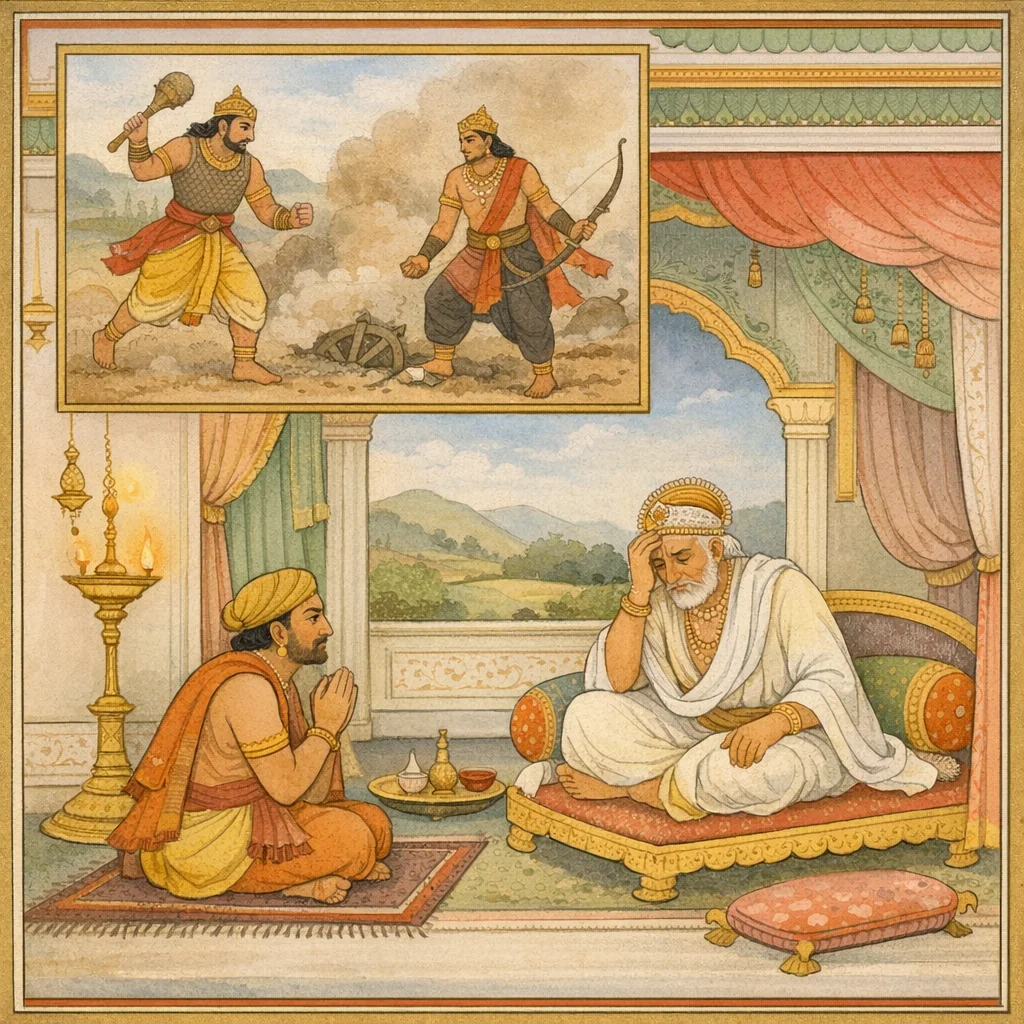
Sañjaya narrates how Sātyaki, seeing Somadatta advancing with a great bow, orders his charioteer to drive directly at him and declares he will not retreat without killing the enemy. A high-velocity chariot duel follows: both warriors shower arrows, cut each other’s weapons and emblems, and maneuver in tight chariot-circles. Somadatta severs Sātyaki’s bow; Sātyaki quickly replaces it, cuts Somadatta’s standard, and later breaks Somadatta’s bow and strikes him heavily. Bhīma intervenes to support Sātyaki, hurling a massive iron club (parigha), which Somadatta cleaves mid-flight. Sātyaki then escalates decisively—cutting Somadatta’s bow, killing his horses, and beheading the charioteer—before releasing a fierce, fire-like arrow that pierces Somadatta’s chest, causing his death. Kaurava warriors respond with a concentrated counter-attack on Sātyaki. Observing Sātyaki being covered by arrows, Yudhiṣṭhira advances with a large force against Droṇa’s formation; Droṇa counters aggressively, striking Arjuna and cutting Yudhiṣṭhira’s standard and bow. Yudhiṣṭhira retaliates with a thousand arrows, briefly stunning Droṇa, who then deploys the Vāyavya weapon; Arjuna checks it with a counter-weapon. Vāsudeva advises Yudhiṣṭhira to cease pursuing Droṇa directly and instead redeploy toward Duryodhana’s sector where Bhīma is engaged; Yudhiṣṭhira accepts and moves swiftly, while Droṇa continues pressing the Pāṇḍava-Pāñcāla forces as night approaches.
Chapter Arc: धृतराष्ट्र खेद और आत्मग्लानि से संजय से पूछते हैं—जिस भीमसेन को रोकने का दुर्योधन ने घमंड किया था, वही अब उनके कुल पर प्रलय बनकर कैसे टूट पड़ा? → धृतराष्ट्र दुर्योधन की पुरानी डींगें स्मरण करते हैं—कर्ण के भरोसे, दुःशासन के साथ, कृष्ण सहित पाण्डवों को जीत लेने की बार-बार की गई घोषणा। पर युद्धभूमि में वही भरोसा दरकता दिखता है: भीम का वेग इन्द्र के वज्रधारी हाथ के सामने खड़े दानव-सा असहाय कर देता है। → भीमसेन के सम्मुख कौरव-वीरों की असमर्थता निर्णायक रूप से उभरती है—कर्ण का पराजित होकर रथहीन होना और धृतराष्ट्र का यह निष्कर्ष कि ‘बडवानल के मुख से भी बचा जा सकता है, पर भीममुख के सामने से नहीं’। → धृतराष्ट्र दुर्योधन की ‘खोटी बुद्धि’ और कृष्ण की सलाह न मानने को विनाश का मूल मानते हैं; अपने पुत्र को आत्मापराध से जलता हुआ देखते हैं और कौरव-पक्ष की नैतिक-रणनीतिक पराजय स्वीकारते हैं। → भीम की अजेयता स्वीकार हो जाने के बाद भी प्रश्न शेष रहता है—दुर्योधन अब किस उपाय से अपने टूटते मनोबल और बिखरती सेना को संभालेगा?
Shlokas
Verse 1
अपन क्ाा बछ। अकाल पजञ्चत्रिशर्दाधिकशततमोब् ध्याय: धृतराष्ट्रका खेदपूर्वक भीमसेनके बलका वर्णन और अपने पुत्रोंकी निन्दा करना तथा भीमके द्वारा दुर्मरषण आदि धृतराष्ट्रके पाँच पुत्रोंका वध धृतराष्ट उवाच दैवमेव पर मन््ये धिक् पौरुषमनर्थकम् । यत्राधिरथिरायत्तों नातरत् पाण्डवं रणे,धृतराष्ट्रने कहा--संजय! मैं तो दैवको ही बड़ा मानता हूँ। पुरुषार्थ तो व्यर्थ है। उसे धिक्कार है; क्योंकि उसमें स्थित हुआ अधिरथपुत्र कर्ण सब प्रकारसे प्रयत्न करके भी रणक्षेत्रमें पाण्डुनन्दन भीमसे पार न पा सका
Dhṛtarāṣṭra said: “Sañjaya, I regard Fate alone as supreme; human effort is futile—shame on such purposeless prowess. For even Karṇa, the son of Adhiratha, though striving in every way on the battlefield, could not overcome the Pāṇḍava Bhīma.”
Verse 2
कर्ण: पार्थान् सगोविन्दान् जेतुमुत्सहते रणे । न च कर्णसमं योधं लोके पश्यामि कठ्चन,“कर्ण युद्धस्थलमें कृष्णसहित समस्त कुन्तीकुमारोंको जीतनेका उत्साह रखता है। मैं संसारमें कर्णके समान दूसरे किसी योद्धाको नहीं देख रहा हूँ!
Dhṛtarāṣṭra said: “Karna is eager, on the battlefield, to defeat all the sons of Kuntī together with Govinda (Kṛṣṇa). And I do not see anywhere in the world any warrior equal to Karna.”
Verse 3
इति दुर्योधनस्याहमश्रौषं जल्पतो मुहुः । कर्णो हि बलवान् शूरो दृढ्धन्वा जितक्लम:
Dhṛtarāṣṭra said: “Thus I repeatedly heard Duryodhana speaking. For Karṇa is indeed powerful and heroic—firm of bow, and one whose fatigue has been conquered.”
Verse 4
इति मामब्रवीत् सूत मन्दो दुर्योधन: पुरा । वसुषेणसहायं मां नाल॑ं देवाडपि संयुगे
Dhṛtarāṣṭra said: “Thus, long ago, O Sūta, the dull-witted Duryodhana spoke to me: ‘Even with Vasuṣeṇa as my ally, I am not equal to the gods themselves in battle.’”
Verse 5
कि नु पाण्डुसुता राजन् गतसत्त्वा विचेतस: । इस प्रकार दुर्योधनके मुँहसे मैंने बारंबार सुना है। सूत! मूर्ख दुर्योधनने पहले मुझसे यह भी कहा था कि “कर्ण बलवान शूरवीर, सुदृढ़ धनुर्धर और युद्धमें श्रम तथा थकावटपर विजय पानेवाला है। राजन! कर्णके साथ रहनेपर समरभूमिमें मुझे देवता भी परास्त नहीं कर सकते; फिर शक्तिहीन और विवेकशून्य पाण्डव मेरा क्या कर सकते हैं?” ।। ३-४ $ ।। तत्र त॑ निर्जितं दृष्टवा भुजड्रमिव निर्विषम्
Dhṛtarāṣṭra said: “O King, what indeed are the sons of Pāṇḍu—bereft of spirit and confused in mind?” Thus, again and again, I heard these words from Duryodhana’s mouth—his deluded boast that with Karṇa at his side even the gods could not defeat him, and that the Pāṇḍavas, lacking power and discernment, could do him no harm.
Verse 6
अहो दुर्मुखमेवैकं युद्धानामविशारदम्
Dhṛtarāṣṭra laments: “Alas—only Durmukha, unskilled in the arts of war, (stands out)!”
Verse 7
अश्वत्थामा मद्रराज: कृप: कर्णश्व॒ संगता:
Dhṛtarāṣṭra said: “Aśvatthāmā, the king of Madra, Kṛpa, and Karṇa have come together (in alliance/consultation).”
Verse 8
ते5पि चास्य महाघोरं बल॑ नागायुतोपमम्,बलसंरम्भवीर्यज्ञा: कोपयिष्यन्ति संयुगे । वे भी वायुके तुल्य तेजस्वी भीमसेनके दस हजार हाथियोंके समान अत्यन्त घोर बलको तथा उनके क्रूरतापूर्ण निश्चयको जानते हैं; उनके बल, पराक्रम और क्रोधसे परिचित हैं। ऐसी दशामें वे यम, काल और अन्तकके समान क्रूर कर्म करनेवाले भीमसेनको युद्धमें अपने ऊपर कैसे कुपित करेंगे?
Dhṛtarāṣṭra said: “They too know his exceedingly dreadful might—like that of ten thousand elephants—and they understand his fierce resolve and valor. Knowing the force of his strength, his prowess, and his wrath, how could they, in battle, provoke Bhīmasena—whose deeds are as cruel as Yama, Kāla, and Antaka—against themselves?”
Verse 9
जानन्तो व्यवसायं च क्रूरं मारुततेजस: । किमर्थ क्रूरकर्माणं यमकालान्तकोपमम्
Dhṛtarāṣṭra said: “Though they knew the fierce resolve of the mighty son of Māruta, why did they provoke that doer of terrible deeds, who was like Yama—the very end-time of death?”
Verse 10
कर्णस्त्वेको महाबाहु: स्वबाहुबलदर्पित:
Dhṛtarāṣṭra said: “Karna alone, that mighty-armed warrior, is swollen with pride in the strength of his own arms.”
Verse 11
यो5जयत् समरे कर्ण पुरंदर इवासुरम्
Dhṛtarāṣṭra said: “He who defeated Karṇa in battle—just as Purandara (Indra) once overcame an asura.”
Verse 12
नस पाण्डुसुतो जेतुं शक्य: केनचिदाहवे । जिन्होंने समरांगणमें असुरोंपर विजय पानेवाले देवराज इन्द्रके समान कर्णको पराजित कर दिया, उन पाण्डुपुत्र भीमसेनको कोई भी युद्धमें जीत नहीं सकता ।। द्रोणं यः सम्प्रमथ्यैक: प्रविष्टोी मम वाहिनीम्
Dhṛtarāṣṭra said: “That son of Pāṇḍu cannot be conquered by anyone in battle. He who, on the field of war, defeated Karṇa—who was like Indra, the king of the gods famed for victory over the Asuras—such a Pāṇḍava, Bhīmasena, cannot be overcome by any warrior. He alone, after crushing Droṇa, forced his way into my army.”
Verse 13
को हि संजय भीमस्य स्थातुमुत्सहतेडग्रत:
Dhṛtarāṣṭra said: “Tell me, Sañjaya—who indeed has the courage to stand facing Bhīma?”
Verse 14
प्रेतराजपुरं प्राप्प निवर्तेतापि मानव:
Dhṛtarāṣṭra said: Even after reaching the city of the Lord of the Dead (Yama), a human being may yet turn back—showing that fate is not a one-way descent, and that moral effort, restraint, or divine ordinance can reverse even what seems final.
Verse 15
पतड्जा इव वह्रिं ते प्राविशन्नल्पचेतस:
Dhṛtarāṣṭra said: “Those men of yours, of little discernment, rushed into the blazing fire as moths do—driven by blind impulse rather than wise counsel.”
Verse 16
यत् तत् सभायां भीमेन मम पुत्रवधाश्रयम्,दुःशासन: सह भ्रात्रा भयाद् भीमादुपारमत् | क्रोधमें भरे हुए भयंकर भीमसेनने सभाभवनमें उस दिन समस्त कौरवोंके सुनते हुए मेरे पुत्रोंके वधके सम्बन्धमें जो प्रतिज्ञा की थी, उसका विचार करके और कर्णको पराजित देखकर अपने भाई दुर्योधनसहित दुःशासन निश्चय ही भयके मारे भीमसेनसे दूर हट गया होगा
Dhṛtarāṣṭra said: Recalling that vow Bhīma made in the royal assembly—concerning the slaying of my sons—Duḥśāsana, together with his brother, must surely have withdrawn from Bhīma out of fear, especially after seeing Karṇa defeated. The scene shows how a public oath, born of wrath and humiliation, becomes moral pressure upon the wrongdoers: when their champion falters, fear replaces arrogance, and the consequences of adharma begin to close in.
Verse 17
उक्त संरम्भिणोग्रेण कुरूणां शृण्वतां तदा । तन्नूनमभिसंचिन्त्य दृष्टवा कर्ण च निर्जितम्
Dhṛtarāṣṭra said: “When those fierce, impetuous words were spoken then, in the hearing of the Kurus, it must have been after reflecting on that that he saw Karṇa as defeated.” Amid war-counsel and wounded pride, the king reads the moral weight of speech: harsh words, once uttered before one’s own people, can harden resolve and shape how victory and defeat are perceived.
Verse 18
यश्व संजय दुर्बुद्धिरब्रवीत् समितौ मुहुः
Dhṛtarāṣṭra said: “Or else, Sañjaya, what was it that the evil-minded one kept saying again and again in the assembly of battle?”
Verse 19
स नूनं॑ विरथं दृष्टवा कर्ण भीमेन निर्जितम्
Dhṛtarāṣṭra said: “Surely, seeing Karṇa deprived of his chariot and defeated by Bhīma, my mind is shaken.”
Verse 20
दृष्टवा भ्रातृन् हतान् संख्ये भीमसेनेन दंशितान्
Dhṛtarāṣṭra said: “Seeing my brothers slain on the battlefield—torn and mangled by Bhīmasena—…”
Verse 21
को हि जीवितमन्विच्छन् प्रतीपं पाण्डवं व्रजेत्
Dhṛtarāṣṭra said: “Who, desiring to preserve his life, would ever go against the Pāṇḍava?”
Verse 22
भीम॑ भीमायुध॑ क्रुद्धं साक्षात् कालमिव स्थितम् । अपने जीवनकी इच्छा रखनेवाला कौन पुरुष क्रोधमें भरकर साक्षात् कालके समान खड़े हुए भयानक अस्त्र-शस्त्रधारी पाण्डुपुत्र भीमसेनके विरुद्ध युद्धमें जा सकता है ।। २१ > वडवामुखमध्यस्थो मुच्येतापि हि मानव:
Bhīma, terrible in arms, stands in wrath like Kāla himself, Death made manifest. What man, still desiring life, could go to war against Bhīmasena, the son of Pāṇḍu, when in anger he rises like Death in person?
Verse 23
न पार्था न च पञज्चाला न च केशवसात्यकी,सूत! युद्धमें क़ुद्ध होनेपर पाण्डव, पांचाल, श्रीकृष्ण तथा सात्यकि--ये कोई भी शत्रुके जीवनकी रक्षा करना नहीं जानते हैं। अहो! मेरे पुत्रोंका जीवन भारी विपत्तिमें पड़ गया है
Dhṛtarāṣṭra said: “Neither the sons of Pṛthā, nor the Pañcālas, nor Keśava and Sātyaki—O Sūta—when inflamed with wrath in battle, know how to spare an enemy’s life. Alas! My sons’ lives have fallen into a grave calamity.”
Verse 24
जानते युधि संरब्धा जीवितं परिरक्षितुम् । अहो मम सुतानां हि विपन्नं सूत जीवितम्,सूत! युद्धमें क़ुद्ध होनेपर पाण्डव, पांचाल, श्रीकृष्ण तथा सात्यकि--ये कोई भी शत्रुके जीवनकी रक्षा करना नहीं जानते हैं। अहो! मेरे पुत्रोंका जीवन भारी विपत्तिमें पड़ गया है
Dhṛtarāṣṭra said: “When they are inflamed in battle, they do not know how to spare life. Alas, O Sūta, my sons’ very lives have fallen into grave peril.”
Verse 25
संजय उवाच यस्त्वं शोचसि कौरव्य वर्तमाने महाभये । त्वमस्थ जगतो मूलं विनाशस्य न संशय:,संजयने कहा--कुरुनन्दन! यह महान् भय जब सिरपर आ गया है, तब आप शोक करने बैठे हैं, यह ठीक नहीं है। इसमें कोई संदेह नहीं कि इस जगत्के विनाशका मूल कारण आप ही हैं
Sañjaya said: “O Kaurava prince, when this great terror has already come upon you, it is not fitting that you sit in grief. There is no doubt: you yourself have become the root-cause of this world’s destruction.”
Verse 26
स्वयं वैरं महत् कृत्वा पुत्राणां वचने स्थित: । उच्यमानो न गृल्लीषे मर्त्य: पथ्यमिवौषधम्,पुत्रोंकी हाँ-में-हाँ मिलाकर आपने स्वयं ही इस महान् वैरकी नींव डाली है और जब इसे मिटानेके लिये आपसे किसीने कोई बात कही, तब आपने उसे नहीं माना, ठीक उसी तरह, जैसे मरणासन्न मनुष्य हितकारक औषध नहीं ग्रहण करता है
Sañjaya said: “By echoing your sons’ wishes, you yourself laid the foundation of this great enmity. And when people spoke to you in order to end it, you would not accept their counsel—just as a mortal on the verge of death refuses a wholesome medicine.”
Verse 27
स्वयं पीत्वा महाराज कालकूटं सुदुर्जरम् । तस्येदानीं फल कृत्स्नमवाप्लुहि नरोत्तम,नरश्रेष्ठ महाराज! जिसको पचाना अत्यन्त कठिन है, उस कालकूट विषको स्वयं पीकर अब उसके सारे परिणामोंको आप ही भोगिये
Sañjaya said: “O great king, having yourself drunk the dread Kālakūṭa poison—so hard to digest—now, O best of men, you must undergo its entire consequence. Having chosen the act, you must now bear its full fruit.”
Verse 28
यत् तु कुत्सयसे योधान् युध्यमानान् महाबलान् । तत्र ते वर्तयिष्यामि यथा युद्धमवर्तत,युद्धमें लगे हुए महाबली योद्धाओंको जो आप कोस रहे हैं, वह व्यर्थ है। अब जिस प्रकार वहाँ युद्ध हुआ था, वह सब आपको बता रहा हूँ, सुनिये
But the reproach you cast upon the mighty warriors who are engaged in battle is misplaced. I shall now relate to you exactly how the fighting unfolded there—how the war truly proceeded—so that judgment may rest on knowledge rather than blame.
Verse 29
दृष्टवा कर्ण तु पुत्रास्ते भीमसेनपराजितम् । नामृष्यन्त महेष्वासा: सोदर्या: पजडच भारत,भरतनन्दन! कर्णको भीमसेनसे पराजित हुआ देख आपके पाँच महाधनुर्थर पुत्र जो परस्पर सगे भाई थे, सह न सके
Sañjaya said: Seeing Karṇa defeated by Bhīmasena, your five sons—great archers and full brothers—could not endure it. Unable to bear that humiliation, they were at once driven to renewed aggression in the battle, showing how wounded pride and loyalty to one’s own can override restraint and deepen the cycle of violence.
Verse 30
दुर्मर्षणो दुःसहश्न दुर्मदो दुर्धरो जय: । पाण्डवं चित्रसंनाहास्तं प्रतीपमुपाद्रवन्,उन पाँचोंके नाम ये हैं--दुर्मर्षण, दुःसह, दुर्मद, दुर्धर (दुराधार) और जय। इन सबने विचित्र कवच धारण करके अपने विरोधी पाण्डुपुत्र भीमसेनपर आक्रमण किया
Sañjaya said: Durmarṣaṇa, Duḥsaha, Durmada, Durdhara, and Jaya—wearing splendid and varied armor—rushed to assail their adversary, the Pāṇḍava Bhīmasena. In the heat of war they sought to overwhelm him by a concerted attack, showing how hostility and pride drive men to collective violence against a single formidable foe.
Verse 31
ते समन्तान्महाबाहुं परिवार्य वृकोदरम् । दिश: शरै: समावृण्वन् शलभानामिव व्रजै:,उन्होंने महाबाहु भीमसेनको चारों ओरसे घेरकर टिड्डीदलोंके समान अपने बाणसमूहोंद्वारा सम्पूर्ण दिशाओंको आच्छादित कर दिया
Sañjaya said: Encircling the mighty-armed Vṛkodara (Bhīma) on every side, they covered all the directions with volleys of arrows, like swarms of locusts filling the sky. The scene underscores the war’s ruthless collective assault against a single formidable warrior, where courage is tested amid overwhelming force.
Verse 32
आगच्छतस्तान् सहसा कुमारान् देवरूपिण: । प्रतिजग्राह समरे भीमसेनो हसन्निव,उन देवतुल्य राजकुमारोंको सहसा देख समरभूमिमें भीमसेनने हँसते हुए-से उनका आघात सहन किया
Sañjaya said: As those youthful princes, radiant like gods, rushed forward all at once, Bhīmasena met them on the battlefield and bore their assault—almost as if laughing—displaying fearless steadiness amid the press of war.
Verse 33
तव दृष्टवा तु तनयान् भीमसेनपुरोगतान् । अभ्यवर्तत राधेयो भीमसेनं महाबलम्,आपके पुत्रोंको भीमसेनके सामने गया हुआ देख राधानन्दन कर्ण पुनः महाबली भीमसेनका सामना करनेके लिये आ पहुँचा
Sañjaya said: Seeing your sons positioned with Bhīmasena at their front, Rādheya (Karna) turned back and came forward again to confront the mighty Bhīmasena—an act that underscores the relentless momentum of battle, where personal valor and loyalty to one’s side drive warriors to re-engage even against formidable opponents.
Verse 34
विसृजन् विशिखांस्तीक्ष्णान् स्वर्णपुड्खाज्छिलाशितान् । तं॑ तु भीमो5भ्ययात् तूर्ण वार्यमाण: सुतैस्तव,वह शानपर चढ़ाकर तेज किये हुए सुवर्णमय पंखोंसे युक्त पैने बाणोंकी वर्षा कर रहा था। उस समय आपके पुत्रोंद्वारा रोके जानेपर भी भीमसेन तुरंत ही कर्णके साथ युद्ध करनेके लिये आगे बढ़ गये
Sañjaya said: “Discharging sharp arrows, fitted with golden feathers and whetted like stone, he poured them forth. Yet Bhīma, though being restrained by your sons, rushed swiftly toward him, intent on engaging Karṇa in battle.”
Verse 35
कुरवस्तु ततः कर्ण परिवार्य समन्तत: । अवाकिरन् भीमसेनं शरै: संनतपर्वभि:,तब उन कौरवोंने कर्णको चारों ओरसे घेरकर भीमसेनपर झुकी हुई गाँठवाले बाणोंकी वर्षा आरम्भ कर दी
Sañjaya said: Then the Kauravas, surrounding Karṇa on every side as a protective ring, began to shower Bhīmasena with arrows whose knotted joints were bent downward—an organized, collective assault meant to check Bhīma’s force under Karṇa’s cover.
Verse 36
तान् बाणै: पञ्चविंशत्या साशथ्वान् राजन् नरर्षभान् | ससूतान् भीमधनुषो भीमो निन््ये यमक्षयम्,राजन्! यह देखकर भीमसेनने पचीस बाणोंका प्रहार करके सारथि और घोड़ोंसहित भयंकर धनुष धारण करनेवाले उन नरश्रेष्ठ राजकुमारोंको यमलोक पहुँचा दिया
Sañjaya said: O King, Bhīma, wielder of a dreadful bow, struck those bull-like princes with twenty-five arrows and, along with their charioteers and horses, sent them to Yama’s imperishable realm.
Verse 37
प्रापतन् स्यन्दने भ्यस्ते सार्थ सूतैर्गतासव: । चित्रपुष्पधरा भग्ना वातेनेव महाद्रुमा:,वे प्राणशून्य होकर सारथियोंके साथ रथोंसे नीचे गिर पड़े, मानो प्रचण्ड आँधीने विचित्र पुष्प धारण करनेवाले विशाल वृक्षोंकोी उखाड़कर धराशायी कर दिया हो
Sañjaya said: Deprived of life, they fell down from their shattered chariots together with their charioteers—like great trees laden with variegated blossoms, snapped and brought down by a violent wind.
Verse 38
तत्राद्भुतमपश्याम भीमसेनस्य विक्रमम् । संवार्याधिरथ्थिं बाणैर्यज्जघान तवात्मजान्,वहाँ हमने भीमसेनका यह अद्भुत पराक्रम देखा कि उन्होंने सूतपुत्र कर्णको अपने बाणोंद्वारा रोककर आपके पुत्रोंको मार डाला
Sañjaya said: “There we witnessed the astonishing prowess of Bhimasena: after checking the great chariot-warrior (Karna) with his arrows, he went on to strike down your sons.”
Verse 39
स वार्यमाणो भीमेन शितैर्बाणै: समन्ततः । सूतपुत्रो महाराज भीमसेनमवैक्षत,महाराज! भीमसेनके पैने बाणोंद्वारा चारों ओरसे रोके जानेपर भी सूतपुत्र कर्णने भीमसेनकी ओर क्रोधपूर्वक देखा
Sañjaya said: Though checked on every side by Bhīma with sharp arrows, Karṇa—the son of the charioteer—fixed his gaze upon Bhīmasena with wrath, O King.
Verse 40
त॑ भीमसेन: संरम्भात् क्रोधसंरक्तलोचन: । विस्फार्य सुमहच्चापं मुहुः कर्णमवैक्षत,इधर क्रोधसे लाल आँखें किये भीमसेन भी अपने विशाल धनुषको फैलाकर कर्णकी ओर रोषपूर्वक बारंबार देखने लगे
Sañjaya said: Then Bhīmasena, driven by impetuous fury, his eyes reddened with anger, stretched his exceedingly great bow and again and again looked toward Karṇa with wrath.
Verse 53
युद्धात् कर्णमपक्रान्तं किंस्विद् दुर्योधनो<ब्रवीत् । परंतु रणक्षेत्रमें विषहीन सर्पके समान कर्णको पराजित और युद्धसे भागा हुआ देखकर दुर्योधनने क्या कहा था
Dhṛtarāṣṭra said: “When Karṇa had withdrawn from the battle, what indeed did Duryodhana say?”
Verse 66
प्रावेशयद्भधुतवहं पतज्गभमिव मोहित: । अहो! दुर्योधनने मोहित होकर युद्धकी कलासे अनभिज्ञ दुर्मुखको अकेले ही पतंगकी भाँति आगमें झोंक दिया
Dhṛtarāṣṭra said: “Alas! Duryodhana, deluded, thrust Durmukha—unskilled in the arts of war—alone into the blaze, like a moth into fire.”
Verse 76
न शक्ता: प्रमुखे स्थातुं नूनं भीमस्य संजय । संजय! अभश्व॒त्थामा, मद्रराज शल्य, कृपाचार्य और कर्ण--ये सब मिलकर भी निश्चय ही भीमके सामने नहीं ठहर सकते
Dhṛtarāṣṭra said: “Surely, Saṃjaya, they are not able to stand firm in the very forefront against Bhīma. Even if Aśvatthāmā, the king of Madra—Śalya—along with Kṛpācārya and Karṇa all unite, they still cannot, with certainty, hold their ground before Bhīma.”
Verse 96
बलसंरम्भवीर्यज्ञा: कोपयिष्यन्ति संयुगे । वे भी वायुके तुल्य तेजस्वी भीमसेनके दस हजार हाथियोंके समान अत्यन्त घोर बलको तथा उनके क्रूरतापूर्ण निश्चयको जानते हैं; उनके बल, पराक्रम और क्रोधसे परिचित हैं। ऐसी दशामें वे यम, काल और अन्तकके समान क्रूर कर्म करनेवाले भीमसेनको युद्धमें अपने ऊपर कैसे कुपित करेंगे?
Dhṛtarāṣṭra said: “Those who understand the surge of strength and the nature of valor—how will they provoke him to wrath in battle? For they know the blazing might of the radiant Bhīmasena, like the wind in force, dreadful as ten thousand elephants, and they know his ruthless resolve. Familiar with his strength, heroism, and anger, how, in such a situation, would they dare to enrage in war that Bhīma whose deeds, when roused, are cruel like Yama, Kāla, and Antaka?”
Verse 106
भीमसेनमनादृत्य रणे<युध्यत सूतज: । अकेला सूतपुत्र महाबाहु कर्ण ही अपने बाहुबलके घमंडमें भरकर भीमसेनका तिरस्कार करके रणभूमिमें उनके साथ जूझता रहा
Dhṛtarāṣṭra said: “Disregarding Bhīmasena, the charioteer’s son fought on the battlefield. Karṇa—mighty-armed and alone—swollen with pride in his own strength, scorned Bhīma and continued to grapple with him in the field of war.”
Verse 126
भीमो धनंजयान्वेषी कस्तमाच्छेज्जिजीविषु: । जो भीमसेन अकेले ही द्रोणाचार्यको मथकर धनंजयका पता लगानेके लिये मेरी सेनामें घुस आये, उनका सामना करनेके लिये जीवित रहनेकी इच्छावाला कौन पुरुष जा सकता है?
Dhṛtarāṣṭra said: “Bhīma, seeking Dhanañjaya (Arjuna)—who among men, still desiring to live, could possibly withstand him?”
Verse 134
इस प्रकार श्रीमहाभारत द्रोणपर्वके अन्तर्गत जयद्रथवधपर्वमें कर्णका पलायनविषयक एक सौ चौतीसवाँ अध्याय पूरा हुआ
Thus, in the Śrī Mahābhārata, within the Droṇa Parva—specifically in the section concerning the slaying of Jayadratha—this one-hundred-and-thirty-fourth chapter, dealing with Karṇa’s withdrawal from the field, comes to its close.
Verse 135
इति श्रीमहाभारते द्रोणपर्वणि जयद्रथवधपर्वणि भीमसेनपराक्रमे पज्चत्रिंशदधिकशततमो<ध्याय
Thus, in the Śrī Mahābhārata, within the Droṇa Parva—specifically in the section concerning the slaying of Jayadratha—this concludes the one-hundred-and-thirty-fifth chapter, describing Bhīmasena’s heroic prowess.
Verse 136
उद्यताशनिहस्तस्य महेन्द्रस्येव दानव: । संजय! जैसे हाथमें वज्र लिये हुए देवराज इन्द्रके सामने कोई दानव खड़ा नहीं हो सकता, उसी प्रकार भीमसेनके सम्मुख भला कौन ठहर सकता है?
Dhṛtarāṣṭra said: “Sañjaya, just as no demon can stand before Mahendra—Indra, king of the gods—when he raises the thunderbolt in his hand, so too who could possibly hold his ground before Bhīmasena?”
Verse 146
न भीमसेन सम्प्राप्य निवर्तेत कदाचन । मनुष्य यमलोकमें भी जाकर लौट सकता है; परंतु युद्धमें भीमसेनके सामने जाकर कदापि जीवित नहीं लौट सकता
Dhṛtarāṣṭra said: “Having once come face to face with Bhīmasena, no one ever returns. A man might even go to Yama’s realm and yet come back, but after confronting Bhīma in battle, he does not return alive.”
Verse 156
ये भीमसेनं संक्रुद्धमन्वधावन् विमोहिता: । मेरे जो मन्दबुद्धि पुत्र मोहित होकर क्रोधमें भरे हुए भीमसेनकी ओर दौड़े थे, वे पतंगोंके समान मानो आगमें ही कूद पड़े थे
Dhṛtarāṣṭra said: “Those of my dull-witted sons who, deluded, ran after Bhīmasena when he was inflamed with wrath—rushing straight toward him—seemed like moths plunging into fire.”
Verse 176
दुःशासन: सह भ्रात्रा भयाद् भीमादुपारमत् | क्रोधमें भरे हुए भयंकर भीमसेनने सभाभवनमें उस दिन समस्त कौरवोंके सुनते हुए मेरे पुत्रोंके वधके सम्बन्धमें जो प्रतिज्ञा की थी, उसका विचार करके और कर्णको पराजित देखकर अपने भाई दुर्योधनसहित दुःशासन निश्चय ही भयके मारे भीमसेनसे दूर हट गया होगा
Dhṛtarāṣṭra said: “Duḥśāsana, along with his brother, must have withdrawn from Bhīma out of fear. For that terrifying Bhīmasena—his anger fully aroused—had once, in the assembly hall and in the hearing of all the Kauravas, vowed to slay my sons. Reflecting on that vow, and seeing Karṇa defeated, Duḥśāsana, together with his brother Duryodhana, surely retreated and kept away from Bhīmasena in sheer dread.”
Verse 183
कर्णो दुःशासनो<हं च जेष्यामो युधि पाण्डवान् । संजय! खोटी बुद्धिवाले दुर्योधनने सभामें बारंबार कहा था कि “कर्ण, दुःशासन तथा मैं --तीनों मिलकर युद्धमें अवश्य पाण्डवोंको जीत लेंगे”
Dhṛtarāṣṭra said: “Sañjaya! Duryodhana, in his misguided judgment, repeatedly declared in the assembly: ‘Karna, Duḥśāsana, and I—together, the three of us—shall surely defeat the Pāṇḍavas in battle.’”
Verse 193
प्रत्याख्यानाच्च कृष्णस्य भृशं तप्यति पुत्रक: । परंतु अब कर्णको भीमसेनके द्वारा पराजित और रथहीन हुआ देख श्रीकृष्णकी बात न माननेके कारण मेरा वह पुत्र निश्चय ही बड़ा भारी पश्चात्ताप कर रहा होगा
Dhṛtarāṣṭra said: “Because he rejected Kṛṣṇa’s counsel, my son is burning with intense remorse. And today, seeing Karṇa defeated and stripped of his chariot by Bhīmasena, my son—who refused to heed Śrī Kṛṣṇa’s words—will surely be seized by a heavy repentance.”
Verse 203
आत्मापराधे सुमहन्ूनं तप्यति पुत्रक: । अपने कवचधारी भ्राताओंको युद्धमें भीमसेनके द्वारा मारा गया देख मेरे पुत्रको अपने अपराधके लिये अवश्य ही महान् अनुताप हो रहा होगा
Dhṛtarāṣṭra said: “Surely my son is now burning with intense remorse over his own wrongdoing. Seeing his armoured brothers slain in battle by Bhīmasena, he must be feeling a great repentance for the fault that was his.”
Verse 226
न भीममुखसम्प्राप्तो मुच्येदिति मतिर्मम । मेरा तो ऐसा विश्वास है कि बडवानलके मुखमें पड़ा हुआ मनुष्य शायद जीवित बच जाय; परंतु भीमसेनके सम्मुख युद्धके लिये आया हुआ कोई भी शूरमा जीवित नहीं छूट सकता
Dhṛtarāṣṭra said: “It is my conviction that a man who has fallen even into the mouth of the submarine fire might somehow escape alive; but no warrior who comes to face Bhīmasena in battle can ever return living.”
Frequently Asked Questions
The chapter frames the tension between personal vow and broader operational responsibility: Sātyaki’s commitment to defeat Somadatta risks exposure to counter-attack, while Yudhiṣṭhira must decide whether direct pursuit of Droṇa is proportionate or strategically unsound.
Effective action in crisis requires both steadfastness and adaptability: vows and valor must be integrated with counsel, situational awareness, and timely redeployment to protect the collective objective.
No explicit phalaśruti appears in this chapter; its meta-level function is structural—linking a completed duel (Somadatta’s fall) to the next operational phase via counsel, weapon-countering, and the shifting pressure of Droṇa’s command.