Adhyaya 64
Bhīṣma’s Stuti of Keśava and Counsel on Nara–Nārāyaṇa (भीष्म-स्तवः; नरनारायण-प्रसङ्गः)
Upa-parva: Bhīṣma-stava and Nara–Nārāyaṇa Context (within Bhīṣma-parva)
Chapter 64 presents Bhīṣma addressing the Kuru king with a compact theological encomium (stuti) to Keśava/Kṛṣṇa, framed as an ancient praise previously articulated by seers and divine beings. Multiple authorities (e.g., Nārada, Mārkaṇḍeya, Bhṛgu, Dvaipāyana) are cited to attribute to Kṛṣṇa supreme sovereignty, omniscience regarding the world’s conditions, and cosmic embodiment imagery (sky as head, earth upheld by arms, three worlds as belly). The discourse then transitions, via Sañjaya’s report, to Bhīṣma reiterating that Kṛṣṇa is firmly devoted to the Pāṇḍavas. Bhīṣma introduces the explanatory agenda concerning Nara and Nārāyaṇa—why they are described as invincible and why the Pāṇḍavas are correspondingly difficult to approach in battle—culminating in practical counsel: seek peace with the Pāṇḍavas rather than disregard the Nara–Nārāyaṇa paradigm. The chapter closes with the king’s withdrawal to camp, indicating the advisory nature and immediate political setting of the speech.
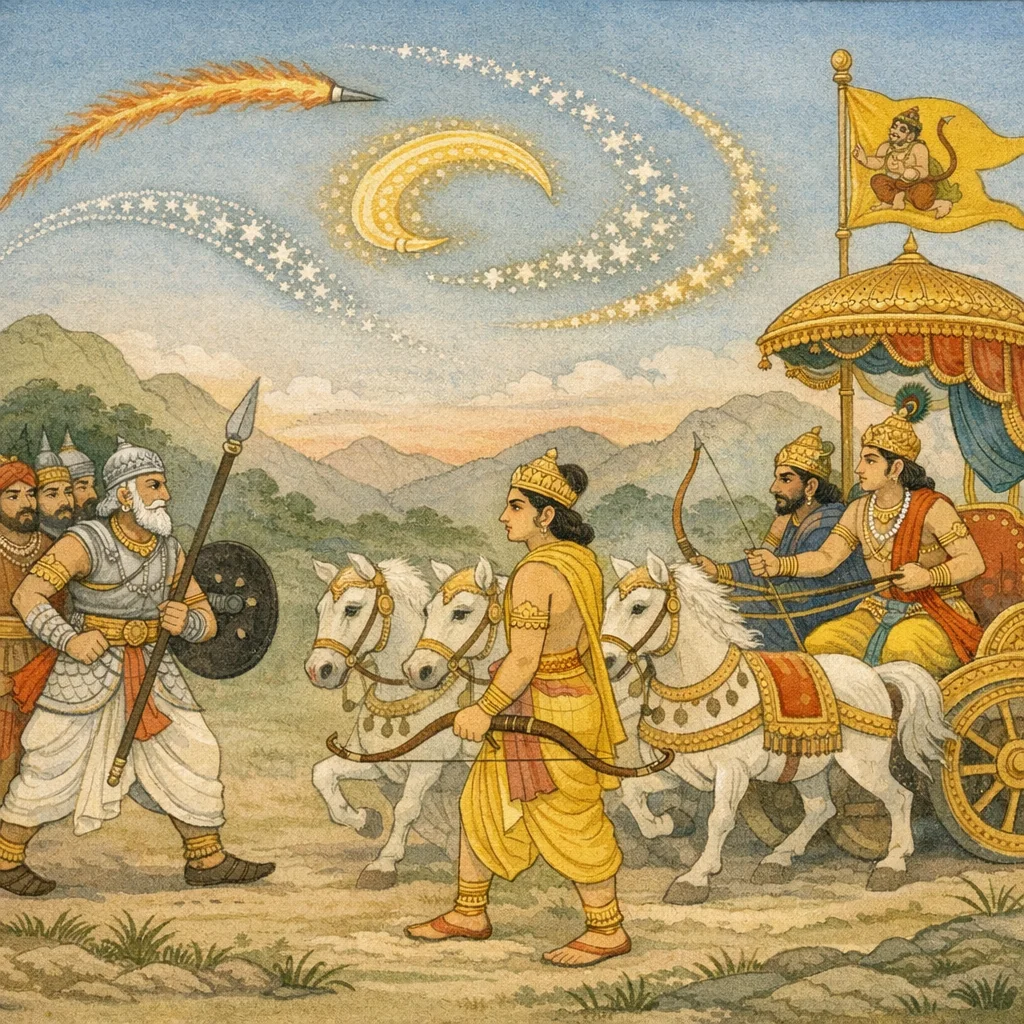
Chapter Arc: रात बीतते ही चौथे युद्ध-दिवस का प्रभात होता है; सेनाओं के अग्रभाग में शान्तनुनन्दन भीष्म, समग्र कौरव-वाहिनी से घिरे, शत्रुओं पर टूट पड़ने को उद्यत दिखाई देते हैं। → भीष्म के चारों ओर द्रोण, दुर्योधन, बाह्लिक, जयद्रथ, दुर्मर्षण, चित्रसेन आदि महारथी एक वज्र-व्यूह-सा घेरा बनाते हैं; उनकी सुरक्षित, मेघ-गर्जन-सी वाहिनी आगे बढ़ती है। उधर कपिध्वज अर्जुन का रथ-ध्वज और उसकी उपस्थिति देखकर कौरव-पक्ष में क्षणिक विषाद और आशंका फैलती है। → भीष्म और अर्जुन का भीषण सामना होता है—भीष्म के महास्त्रों का जाल आकाश में फैलकर कपिध्वज-केतु के ऊपर छा जाता है; कौरव सैनिक उसे सूर्य से दबे अंधकार की तरह ‘विशीर्यमाण’ होते देखते हैं। इसी उथल-पुथल में शल्य क्रुद्ध होकर धृष्टद्युम्न पर प्रहार करता है और युद्ध की धुरी एकाएक धृष्टद्युम्न-शल्य संघर्ष की ओर घूम जाती है। → दिन के अंत तक रणभूमि रक्त-फेन से भरी नदी-सी बन जाती है; भीष्म अडिग रहते हुए सौभद्र (अभिमन्यु) को लांघकर सीधे पार्थ (अर्जुन) की ओर बढ़ते हैं, और कौरव-सेना का मनोबल भीष्म के संरक्षण में फिर कस जाता है। → सांयमनि-पुत्र (शल्य) के वध का संकेत देकर अध्याय समाप्त होता है—अगले प्रसंग में यह स्पष्ट होने को रहता है कि इस घमासान में शल्य का अंत किसके हाथों और किस मोड़ पर होता है।
Shlokas
Verse 1
संजय कहते हैं--भारत! जब रात बीती और प्रभात हुआ, तब भरतवंशियोंकी सेनाके अग्रभागमें स्थित हुए महामना भीष्म समग्रसेनासे घिरकर शत्रुओंसे युद्ध करनेके लिये चले। उस समय उनके मनमें शत्रुओंके प्रति बड़ा क्रोध था,अपर एकषेष्टितमो< ध्याय: अभिमन्युका पराक्रम और धृष्टद्युम्नद्वारा शलके पुत्रका वध संजय उवाच द्रौणिभूरिश्रवा: शल्यश्रित्रसेनश्व॒ मारिष । पुत्र: सांयमनेश्वैव सौभद्रं पर्यवारयन् संजय कहते हैं--माननीय राजन! द्रोणपुत्र अश्वत्थामा, भूरिश्रवा, शल्य, चित्रसेन तथा शलके पुत्रने सुभद्राकुमार अभिमन्युको आगे बढ़नेसे रोका
Sañjaya said: O revered king, Droṇa’s son Aśvatthāmā, Bhūriśravā, Śalya, and Citrasena—along with the son of Sāyamana—surrounded Subhadrā’s son Abhimanyu and checked his advance. In the moral atmosphere of the war, this moment signals a deliberate concentration of force against a single youthful hero, foreshadowing the ethically fraught tactics that will soon be employed on the battlefield.
Verse 2
त॑ं द्रोणदुर्योधनबाह्लिकाश्व तथैव दुर्मर्षणचित्रसेनौ । जयद्रथश्वातिबलो बलौघै- न॑पास्तथान्ये प्रययु: समनन््तात्,उनके साथ चारों ओरसे द्रोण, दुर्योधन, बाह्लिक, दुर्मर्षण, चित्रसेन, अत्यन्त बलवान् जयद्रथ तथा अन्य नरेश विशाल वाहिनीको साथ लिये प्रस्थित हुए संसक्तमतितेजोभिस्तमेकं ददृशुर्जना: । पज्चभिर्मनुजव्याप्रैर्गजै: सिंहशिशुं यथा जैसे सिंहका बच्चा पाँच हाथियोंसे भिड़ा हुआहो, उसी प्रकार सुभद्राकुमार अभिमन्यु उन अत्यन्त तेजस्वी पाँच पुरुषसिंहोंसे अकेला ही युद्ध कर रहा था। यह बात वहाँ सब लोगोंने प्रत्यक्ष देखी
Sañjaya said: Around him advanced Droṇa, Duryodhana, Bāhlika, and also Durmarṣaṇa and Citrasena; and Jayadratha—exceedingly mighty—together with masses of troops, and other kings as well, moving in from every side. People there saw that single warrior locked in combat with men of overwhelming brilliance—like a lion-cub beset by five elephants. In the same way, Abhimanyu, the son of Subhadrā, was seen fighting alone against those five lion-like heroes.
Verse 3
स तैर्महद्विश्न महारथैश्न तेजस्विभिरव्वीर्यवद्धिश्व राजन् रराज राजा स तु राजमुख्यै- वत:ः स देवैरिव वज्रपाणि:,राजन्! इस महान, तेजस्वी, पराक्रमी और महारथी नरपतियोंसे घिरा हुआ राजा दुर्योधन देवताओंसहित वज्रपाणि इन्द्रके समान शोभा पा रहा था नातिलक्ष्यतया वक्रिन्न शौर्ये न पराक्रमे । बभूव सदृश: कार्ष्णेनस्त्रि नापि च लाघवे लक्ष्य वेधने, शौर्य प्रकट करने, पराक्रम दिखाने, अस्त्रज्ञान प्रदर्शित करने तथा हाथोंकी फुर्तीमें कोई भी अभिमन्युकी समानता न कर सका
Sañjaya said: O King, surrounded by those great, radiant, exceedingly valiant mahārathas, King Duryodhana shone resplendent—like Indra, the wielder of the thunderbolt, amid the gods. Yet in precision, in prowess, in heroism, in daring, in mastery of weapons, in quickness of hand, and in striking the mark, no warrior proved equal to Abhimanyu, the son of Kṛṣṇa’s sister.
Verse 4
तस्मिन्ननीकप्रमुखे विषक्ता दोधूयमानाश्न महापताका: । सुरक्तपीतासितपाण्डुराभा महागजस्कन्धगता विरेजु:,इस सेनाके प्रमुख भागमें बड़े-बड़े गजराजोंके कंधोंपर लगी हुई लाल, पीली, काली और सफेद रंगकी फहराती हुई विशाल पताकाएँ शोभा पा रही थीं तथा तमात्मजं युद्धे विक्रमन्तमरिंदमम् । दृष्टवा पार्थ: सुसंयत्तं सिंहनादमथानदत् अपने शत्रुसूदन पुत्र अभिमन्युको युद्धमें इस प्रकार प्रयत्नपूर्वक पराक्रम प्रकट करते देख कुन्तीपुत्र अर्जुनने सिंहके समान गर्जना की
Sañjaya said: In the foremost part of that battle-array, great banners—fastened in place yet billowing as they were shaken—shone brilliantly. They were of vivid red, yellow, black, and pale-white hues, mounted upon the shoulders of mighty elephants. Then, seeing his own son—an enemy-crusher—striving and displaying valor in the fight with disciplined readiness, Pārtha (Arjuna) let out a lion-like roar.
Verse 5
सा वाहिनी शान्तनवेन गुप्ता महारथैर्वरिणवाजिभिश्ष । बभौ सविद्युत्स्तनयित्नुकल्पा जलागमे द्यौरिव जातमेघा,शान्तनुनन्दन भीष्मसे रक्षित वह विशाल वाहिनी बड़े-बड़े रथों, हाथियों और घोड़ोंसे ऐसी शोभा पा रही थी, मानो वर्षाकालमें मेघोंकी घटासे आच्छादित आकाश बिजलीसहित बादलोंसे सुशोभित हो पीडयानं तु तत् सैन्यं पौत्रं तव विशाम्पते । दृष्टवा त्वदीया राजेन्द्र समन्तात् पर्यवारयन् प्रजानाथ! राजेन्द्र! आपके पौत्र अभिमन्युको कौरवसेनाको पीड़ा देते देख आपके ही सैनिकोंने सब ओरसे घेर लिया
Sañjaya said: That vast host, protected by Śāntanava (Bhīṣma) and adorned with great chariot-warriors, elephants, and horses, shone like the sky in the rainy season—covered with newly formed clouds, flashing with lightning and rumbling with thunder. But when your grandson was seen harassing that army, O lord of the people, your own troops, O king, surrounded him on every side.
Verse 6
ततो रणायाभिमुखी प्रयाता प्रत्यर्जुनं शान्तनवाभिगुप्ता । सेना महोग्रा सहसा कुरूणां वेगो यथा भीम इवापगाया:,तदनन्तर नदीके भयानक वेगकी भाँति कौरवोंकी वह अत्यन्त भयंकर सेना शान्तनुनन्दन भीष्मसे सुरक्षित हो रणके लिये अर्जुनकी ओर सहसा चली ध्वजिनीं धार्तराष्ट्राणां दीनशत्रुरदीनवत् । प्रत्युध्ययौ स सौभद्रस्तेजसा च बलेन च अपने शत्रुओंको दीन बना देनेवाले सुभद्राकुमारने दैन्यरहित होकर अपने तेज और बलसे कौरवसेनापर धावा किया
Sañjaya said: Then the Kuru host—vast and terrifying—protected by Bhīṣma, the son of Śāntanu, suddenly surged forward toward Arjuna, like the dreadful rush of a river in spate. At that moment, the son of Subhadrā, who makes his foes wretched, advanced without faltering and, by the force of his splendor and strength, charged straight against the Dhārtarāṣṭra battle-array. The scene underscores how, in war, disciplined protection under a seasoned guardian meets the fearless initiative of a righteous champion, and how courage is tested amid overwhelming momentum.
Verse 7
तं॑ व्यालनानाविधगूढसारं गजाश्वपादातरथौघपक्षम् । व्यूहं महामेघसमं महात्मा ददर्श दूरात् कपिराजकेतु:,महामना कपिध्वज अर्जुनने दूरसे देखा कि कौरवसेना व्याल नामक व्यूहमें आबद्ध होनेके कारण अनेक प्रकारकी दिखायी दे रही है। उसकी शक्ति छिपी हुई है। उसमें हाथी, घोड़े, पैदल तथा रथियोंके समूह भरे हुए हैं। सेनाका वह व्यूह महान् मेघोंकी घटाके समान जान पड़ता है तस्य लाघवमार्गस्थमादित्यसदृशप्रभम् | व्यदृश्यत महच्चापं समरे युध्यत: परै: समरभूमिमें शत्रुओंके साथ युद्ध करते हुए अभिमन्युका विशाल धनुष अस्त्रलाघवके पथपर स्थित हो सूर्यके समान प्रकाशित हो रहा था
Sañjaya said: From afar, the great-souled Arjuna—whose banner bears the emblem of the lord of monkeys—beheld the Kaurava host arranged in the ‘Vyāla’ formation. It appeared manifold and deceptive, its true strength concealed; its ‘wings’ were packed with masses of elephants, horses, infantry, and charioteers. That battle-array looked like a vast bank of thunderclouds—dense, ominous, and hard to penetrate—signaling the moral gravity and peril of the war about to unfold.
Verse 8
विनिर्ययौ केतुमता रथेन नरर्षभ: श्वेतहयेन वीर: । वरूथिना सैन्यमुखे महात्मा वधे धृत: सर्वसपत्नयूनाम्,तदनन्तर नरश्रेष्ठ महामना वीर अर्जुन समस्त शत्रुपक्षीय युवकोंके वधका संकल्प लेकर शत घोड़ोंसे जुते हुए ध्वज एवं आवरणसे युक्त रथपर आरूढ़ हो शत्रुसेनाके सामने चले स द्रौणिमिषुणैकेन विद्ध्वा शल्यं च पठ्चभि: | ध्वजं सांयमनेश्वैव सोडष्टाभिश्षिच्छिदे तत: उसने अभ्वत्थामाको एक और शल्यको पाँच बाणोंसे घायल करके शलके ध्वजको आठ बाणोंसे काट डाला
Sanjaya said: Then that heroic bull among men set out in his bannered chariot, drawn by white horses. Armoured and great-souled, he advanced to the very front of the army, resolved upon the destruction of all rival warriors. After that, the noble-minded hero Arjuna—having formed the grim resolve to slay the young champions of the enemy host—mounted his chariot, yoked with a hundred horses and furnished with banner and protective coverings, and moved straight toward the opposing army. He pierced Drona’s son (Aśvatthāman) with a single arrow, struck Śalya with five, and then cut down Śalya’s banner with sixteen shafts.
Verse 9
सूपस्करं सोत्तरबन्धुरेष॑ यत्तं यदूनामृषभेण संख्ये । कपिध्वजं प्रेक्ष्य विषेदुराजौ सहैव पुत्रैस्तव कौरवेया:,रुक्मदण्डां महाशक्तिं प्रेषितां सौमदत्तिना । शितेनोरगसंकाशां पत्रिणापजहार ताम् फिर भूरिश्रवाकी चलायी हुई स्वर्णदण्डविभूषित सर्पसदृश महाशक्तिको तीखे बाणसे छिन्न-भिन्न कर डाला
Sañjaya said: Seeing Kṛṣṇa—bearing his full equipment and accompanied by his elder brother—standing in the battle as the foremost of the Yādavas, and beholding Arjuna with the monkey-banner, your Kaurava warriors, along with their sons, grew despondent on the battlefield. Then the great spear with a golden shaft, sent by Saumadatti (Bhūriśravas), sharp and serpent-like, was struck down and shattered by Arjuna with a keen, feathered arrow—signaling how skill and resolve can check even a formidable assault in war.
Verse 10
जिसमें सब सामग्री सुन्दरतासे सजाकर रखी गयी थी, अच्छी तरह बँधी होनेके कारण जिसकी ईषा अत्यन्त मनोहर दिखायी देती है तथा यदुकुलतिलक श्रीकृष्ण जिसका संचालन करते हैं, उस वानरके चिह्नवाली ध्वजासे युक्त रथको युद्धभूमिमें उपस्थित देख आपके पुत्रोंसहित समस्त कौरवसैनिक विषादमग्न हो गये ।। प्रकर्षता गुप्तमुदायुधेन किरीटिना लोकमहारथेन । त॑ व्यूहराजं ददृशुस्त्वदीया- श्वतुश्चतुर्व्यालसहस्रकर्णम्,लोकविख्यात महारथी किरीटथारी अर्जुन अस्त्र-शस्त्र लेकर जिसे सुरक्षितरूपसे अपने साथ ले आ रहे थे और जिसमें चार-चार हजार मतवाले हाथी प्रत्येक दिशामें खड़े किये गये थे, उस व्यूहराजको आपके सैनिकोंने देखा शल्यस्य च महावेगानस्यत: समरे शरान् | (धनुश्चिच्छेद भल्लेन तीव्रवेगेन फाल्गुनि: ।) निवार्यार्जुनदायादो जघान चतुरो हयान् शल्य समरभूमिमें बड़े वेगशाली बाणोंका प्रहार कर रहे थे; किंतु अर्जुनपुत्र अभिमन्युने तीव्र वेगवाले भललसे उनके धनुषके टुकड़े-टुकड़े कर दिये और उनकी प्रगतिको रोककर पार्थकुमारने चारों घोड़ोंकी मार गिराया
Sanjaya said: When the Kaurava host—together with your sons—saw on the battlefield that chariot bearing the monkey-banner, beautifully furnished in every detail, its pole and fittings firmly bound and therefore strikingly elegant, and guided by Krishna, the glory of the Yadu line, they sank into dejection. They beheld that famed ‘king of battle-formations’, guarded in full strength by the world-renowned, diadem-wearing great charioteer (Arjuna), armed and vigilant, with four thousand rutting elephants stationed in each direction. And as Shalya, in the thick of combat, shot swift arrows with great force, the heir of Arjuna (Abhimanyu) checked his advance: with a fast-flying bhalla he cut Shalya’s bow, and then struck down his four horses.
Verse 11
यथा हि पूर्वेडहनि धर्मराज्ञा व्यूह: कृत: कौरवसत्तमेन । तथा न भूतो भुवि मानुषेषु न दृष्टपूर्वो न च संश्रुतश्च,कुरुश्रेष्ठ धर्मराज युधिष्ठिरने पहले दिन जैसा व्यूह बनाया था, वैसा ही वह भी था। वैसा व्यूह इस भूतलपर मनुष्योंकी सेनाओंमें न तो पहले कभी देखा गया था और न कभी सुना ही गया था भूरिश्रवाश्न शल्यश्न द्रौणि: सांयमनि: शलः । नाभ्यवर्तन्त संरब्धा: कार्ष्णेर्बाहुबलोदयम् भूरिश्रवा, शल्य, अश्वत्थामा तथा सांयमनि (सोमदत्तपुत्र) शल--ये सब लोग अत्यन्त क्रोधमें भरे हुए थे, तथापि अभिमन्युके बाहुबलकी वृद्धिको रोक न सके
Sañjaya said: Just as, on the previous day, the foremost of the Kauravas had arranged a battle-formation (vyūha) against Dharmarāja Yudhiṣṭhira, so too was this one. Among human armies on earth, such a formation had never before come to be—neither seen in the past nor even heard of. Bhūriśravā, Śalya, Drauṇi (Aśvatthāmā), Sāṃyamani (the son of Somadatta), and Śala—though inflamed with fury—were unable to check the rising might of the arms of Kārṣṇi (Abhimanyu).
Verse 12
ततो यथादेशमुपेत्य तस्थु: पाज्चालमुख्या: सह चेदिमुख्यै: । ततः समादेशसमाहतानि भेरीसहस्राणि विनेदुराजी,तदनन्तर सेनापतिकी आज्ञाके अनुसार यथोचित स्थानपर पहुँचकर पांचाल और चेदिदेशके प्रमुख वीर खड़े हुए। फिर उस युद्धस्थलमें प्रधानके आदेशानुसार सहस्रों रणभेरियाँ एक साथ बज उठीं ततत्त्रिगर्ता राजेन्द्र मद्राश्न सह केकयै: । पजञ्चविंशतिसाहस्रास्तव पुत्रेण चोदिता: राजेन्द्र! तब आपके पुत्र दुर्योधनसे प्रेरित होकर त्रिगर्तों तथा केकयोंसहित मद्रदेशके पचीस हजार योद्धाओंने शत्रुवधकी इच्छा रखनेवाले पुत्रसहित किरीटधारी अर्जुनको घेर लिया। वे सब-के-सब थधर्नुर्वेदके प्रधान ज्ञाता और युद्धस्थलमें शत्रुओंके लिये अजेय थे
Sañjaya said: Then, having moved to their assigned positions as commanded, the foremost warriors of the Pāñcālas stood firm together with the leading heroes of Cedi. Thereupon, in the battlefield, thousands of war-drums—struck in unison at the commander’s signal—resounded at once, proclaiming the ordered onset of war and the collective resolve to fight.
Verse 13
शड्खस्वनास्तूर्यरथस्वनाश्न सर्वेष्वनीकेषु ससिंहनादा: । तत:ः: सबाणानि महास्वनानि विस्फार्यमाणानि धनूंषि वीरै:,सभी सेनाओंमें शंखनाद, तूर्यनाद (वाद्योंकी ध्वनि) तथा वीरोंके सिंहनादसहित रथोंकी घर-घराहटके शब्द होने लगे। फिर वीरोंके द्वारा खींचे जानेवाले बाणसहित धनुषके महान् टंकार-शब्द गूँज उठे धनुर्वेदविदो मुख्या अजेया: शत्रुभिर्युधि । सहतपुत्रं जिघांसन्तं परिवद्रु: किरीटिनम् राजेन्द्र! तब आपके पुत्र दुर्योधनसे प्रेरित होकर त्रिगर्तों तथा केकयोंसहित मद्रदेशके पचीस हजार योद्धाओंने शत्रुवधकी इच्छा रखनेवाले पुत्रसहित किरीटधारी अर्जुनको घेर लिया। वे सब-के-सब थधर्नुर्वेदके प्रधान ज्ञाता और युद्धस्थलमें शत्रुओंके लिये अजेय थे
Sañjaya said: Throughout all the divisions of the army, the blare of conches, the sound of trumpets and instruments, the rumbling of chariots, and the lion-like shouts of warriors rose together. Then the mighty twang of bows being drawn—arrows set upon them—resounded as heroes prepared to strike. Expert masters of archery, invincible to foes in battle, they surrounded the diadem-crowned Arjuna, intent on killing him along with his son.
Verse 14
क्षणेन भेरीपणवप्रणादा- नन्तर्दधु: शड्खमहास्वनाश्न | तच्छड्खशब्दावृतमन्तरिक्ष- 04-३0 के अप,क्षणभरमें भेरी और पणव आदिके शब्दोंको महान् शंखनादोंने दबा लिया तथा उस शंखध्वनिसे व्याप्त हुए आकाशमें (पृथ्वीसे) उठी हुई धूलोंका भयंकर एवं अद्भुत जाल-सा फैल गया तौतु तत्र पितापुत्रौ परिक्षिप्ती महारथौ | ददर्श राजन् पाज्चाल्य: सेनापतिररिंदम शत्रुदमन नरेश! पिता-पुत्र महारथी अर्जुन और अभिमन्युको शत्रुओंद्वारा घिरे हुए देख पांचालराजकुमार सेनापति धृष्टद्युम्मन कई हजार हाथियों और रथों तथा सैकड़ों-हजारों घुड़सवारों एवं पैदलोंसे घिरकर अपनी विशाल वाहिनीको आगे बढ़ाते तथा क्रोधपूर्वक धनुषकी टंकार करते हुए मद्रों और केकयोंकी सेनापर चढ़ आये
Sañjaya said: In an instant, the booming of conches drowned out the sounds of kettledrums and tabors. The sky was filled and veiled by that conch-roar. Then, O king, the Pāñcāla commander—crusher of foes—saw the father and son, the great chariot-warriors (Arjuna and Abhimanyu), surrounded by enemies.
Verse 15
महानुभावाश्न ततः प्रकाश- मालोक्य वीरा: सहसाभिपेतु: । रथी रथेनाभिहत: ससूतः: पपात साश्वः सरथ: सकेतु:,तदनन्तर महान् प्रभावशाली वीर सूर्यदेवका प्रकाश देखकर सहसा शत्रुमण्डलीपर टूट पड़े। रथी रथीसे भड़कर सारथि, घोड़े, रथ और ध्वजसहित मरकर गिरने लगा स वारणरथौघानां सहसैर्बहुभिव॒त: । वाजिभि: पत्तिभिश्वैव वृत: शतसहस्रश: शत्रुदमन नरेश! पिता-पुत्र महारथी अर्जुन और अभिमन्युको शत्रुओंद्वारा घिरे हुए देख पांचालराजकुमार सेनापति धृष्टद्युम्मन कई हजार हाथियों और रथों तथा सैकड़ों-हजारों घुड़सवारों एवं पैदलोंसे घिरकर अपनी विशाल वाहिनीको आगे बढ़ाते तथा क्रोधपूर्वक धनुषकी टंकार करते हुए मद्रों और केकयोंकी सेनापर चढ़ आये
Sañjaya said: Then, seeing that brilliant radiance, the mighty warriors rushed forward at once. A chariot-warrior, struck by another chariot, fell—together with his charioteer—his horses, his chariot, and his banner. Amid the tumult, he was hemmed in by many thousands of elephants and masses of chariots, and likewise surrounded by cavalry and infantry in their hundreds of thousands.
Verse 16
गजो गजेनाभिहत: पपात पदातिना चाभिहत: पदाति: । आवर्तमानान्यभिवर्तमानै- घोरीकृतान्यद्धुतदर्शनानि । प्रासैश्न खड्गैश्न समाहतानि सदश्ववृन्दानि सदश्ववन्दै:,हाथी हाथीके आघातसे और पैदल पैदलकी चोटसे धराशायी होने लगे। श्रेष्ठ घोड़ोंके समूहपर उत्तम अश्वोंके समुदाय आक्रमण-प्रत्याक्रमण करते थे। ये सवारोंद्वारा किये हुए खड्ग और प्रासोंके आघातसे घायल होकर भयंकर और अद्भुत दिखायी देते थे। स्वर्णमय तारागणोंके चिह्लोंसे विभूषित सूर्यके समान चमकीले कवच फरसों, तलवारों और प्रासोंकी चोटसे विदीर्ण होकर धरतीपर गिर रहे थे धनुर्विस्फार्य संक्रुद्धो नोदयित्वा च वाहिनीम् । ययौ तं मद्रकानीकं केकयांक्ष परंतप शत्रुदमन नरेश! पिता-पुत्र महारथी अर्जुन और अभिमन्युको शत्रुओंद्वारा घिरे हुए देख पांचालराजकुमार सेनापति धृष्टद्युम्मन कई हजार हाथियों और रथों तथा सैकड़ों-हजारों घुड़सवारों एवं पैदलोंसे घिरकर अपनी विशाल वाहिनीको आगे बढ़ाते तथा क्रोधपूर्वक धनुषकी टंकार करते हुए मद्रों और केकयोंकी सेनापर चढ़ आये
Sañjaya said: An elephant, struck down by an elephant, fell; and a foot-soldier, struck by a foot-soldier, collapsed. As bodies of horsemen wheeled about and met those charging toward them, the scene became terrifying—yet wondrous to behold. Excellent troops of horses, battered by spears and swords in the clash of rival cavalry-squadrons, appeared dreadful in their wounds. The passage underscores the grim reciprocity of battle: like meets like, and violence returns violence, turning the field into a spectacle of awe and horror rather than a place of righteousness.
Verse 17
सुवर्णतारागणभूषितानि सूर्यपप्रभाभानि शरावराणि । विदार्यमाणानि परकश्रधैश्न प्रासैश्न खड्गैश्न निपेतुरुव्याम्,हाथी हाथीके आघातसे और पैदल पैदलकी चोटसे धराशायी होने लगे। श्रेष्ठ घोड़ोंके समूहपर उत्तम अश्वोंके समुदाय आक्रमण-प्रत्याक्रमण करते थे। ये सवारोंद्वारा किये हुए खड्ग और प्रासोंके आघातसे घायल होकर भयंकर और अद्भुत दिखायी देते थे। स्वर्णमय तारागणोंके चिह्लोंसे विभूषित सूर्यके समान चमकीले कवच फरसों, तलवारों और प्रासोंकी चोटसे विदीर्ण होकर धरतीपर गिर रहे थे तेन कीर्तिमता गुप्तमनीकं दृढ्धन्वना । संरब्धरथनागाश्चृं योत्स्यममानमशो भत सुदृढ़ धनुष धारण करनेवाले यशस्वी धृष्टद्युम्नसे सुरक्षित हुई वह सेना युद्धके लिये उद्यत हो बड़ी शोभा पाने लगी, उसके रथी, हाथीसवार और घुड़सवार सभी रोषावेशमें भरे हुए थे
Sañjaya said: “Coats of mail, adorned with golden star-like bosses and blazing with a sun-like radiance, were being split apart by axes, spears, and swords; torn open in the press of battle, they fell upon the earth.” The scene underscores the ethical gravity of war: even the most splendid protections and the pride they symbolize are rendered fragile when violence is unleashed.
Verse 18
गजैर्विषाणैर्वरहस्तरुग्णा: केचित् ससूता रथिन: प्रपेतु: । गजर्षभाश्षापि रथर्षभेण निपातिता बाणहता: पृथिव्याम्,दन्तार हाथियोंके दाँतों और सूँड़ोंक आघातसे रथ चूर-चूर हो जानेके कारण कितने ही रथी सारथि-सहित धरतीपर गिर पड़ते थे। कितने ही श्रेष्ठ रथियोंने बड़े बड़े हाथियोंको अपने बाणोंसे मारकर धराशायी कर दिया सोअ्ड्जुनप्रमुखे यान्तं पाउचालकुलवर्धन: । त्रिभि: शारद्वतं बाणैर्जत्रुदेशे समार्पयत् पांचालवंशकी वृद्धि करनेवाले धृष्टद्युम्नने अर्जुनके सामने जाते हुए कृपाचार्यको उनके गलेकी हँसलीपर तीन बाण मारे
Sañjaya said: Some chariot-warriors, their chariots shattered by the blows of elephants’ tusks and powerful trunks, fell to the earth along with their charioteers. And some great elephants too—struck down by a foremost chariot-fighter—collapsed on the ground, slain by arrows. Then Dṛṣṭadyumna, the increaser of the Pāñcāla line, as Kṛpa (Śāradvata) advanced in front of Arjuna, fixed three arrows into Kṛpa’s collarbone region. The scene underscores the brutal reciprocity of battle: strength and skill on both sides bring sudden reversals, while leaders press the fight with strategic intent despite the human cost.
Verse 19
गजौघवेगोद्धतसादितानां श्रुत्वा विषेदु: सहसा मनुष्या: । आर्तस्वनं सादिपदातियूनां विषाणगात्रावरताडितानाम्,हाथियोंके वेगसे कुचलकर कितने ही घुड़सवार और पैदल युवक मारे गये। वे उनके दाँतों और नीचेके अंगसे कुचलकर हताहत हो रहे थे। सहसा उनकी आर्त चीत्कार सुनकर सभी मनुष्योंको बड़ा खेद होता था ततः स मद्रकान् हत्वा दशैव दशभि: शरै: | पृष्टरक्षं जघानाशु भल्लेन कृतवर्मण: तत्पश्चात् दस बाणोंसे मद्रदेशीय दस योद्धाओंको मारकर तुरंत ही एक भल्लके द्वारा कृतवमकि पृष्ठ-रक्षकको मार डाला
Sañjaya said: Hearing the sudden cries of anguish of the young horsemen and foot-soldiers—crushed and mangled by the onrushing mass of elephants, struck down by tusks and battered by their limbs—men were at once overcome with grief and dismay. Then, after slaying ten Madra warriors with ten arrows, he swiftly struck down Kṛtavarman’s rear-guard protector with a broad-headed shaft.
Verse 20
सम्भ्रान्तनागाश्वरथे मुहूर्ते महाक्षये सादिपदातियूनाम् | महारथै: सम्परिवार्यमाणो ददर्श भीष्म: कपिराजकेतुम्,उस मुहूर्तमें जब कि घुड़सवारों और पैदल युवकोंका विकट संहार हो रहा था तथा हाथी, घोड़े और रथ सभी अत्यन्त घबराहटमें पड़े हुए थे, महा-रथियोंसे घिरे हुए भीष्मने वानरचिह्से युक्त ध्वजवाले अर्जुनको देखा दमन चापि दायादं पौरवस्य महात्मन: । जघान विमलाग्रेण नाराचेन परंतप: इसके बाद शत्रुओंको संताप देनेवाले पाण्डव-सेनापतिने निर्मल धारवाले नाराचसे महामना पौरवके पुत्र दमनको भी मार डाला
Sañjaya said: At that moment, when a dreadful slaughter of the young horsemen and foot-soldiers was taking place, and elephants, horses, and chariots were all thrown into confusion, Bhīṣma—though surrounded by great chariot-warriors—caught sight of Arjuna, whose banner bore the emblem of the lord of monkeys (Hanumān). Then the foe-scorching commander of the Pāṇḍava host struck down Damana as well, the noble scion of the Paurava line, with a sharp-pointed, spotless-edged nārāca arrow—showing how, amid the chaos of war, decisive perception and lethal resolve drive the battle’s moral and strategic momentum.
Verse 21
त॑ पञज्चतालोच्छिततालकेतु: सदश्ववेगाद्भुतवीर्ययान: । महास्त्रबाणाशनिदीप्तिमन्तं किरीटिनं शान्तनवो<भ्यधावत्,भीष्मका ध्वज पाँच तालवृक्षोंसे चिह्नित और ऊँचा था। उनके रथमें अच्छे घोड़े जुते हुए थे, जिनके वेगसे वह रथ अद्भुत शक्तिशाली जान पड़ता था। उसपर आरूढ़ होकर शान्तनुनन्दन भीष्मने किरीटधारी अर्जुनपर धावा किया, जो बाण और अशनि आदि महान् दिव्यास्त्रोंकी दीप्तिसे उद्दीप्त हो रहे थे ततः सांयमने: पुत्र: पाज्चाल्यं युद्धदुर्मदम् । अविध्यत् त्रिंशता बाणैर्दशभिश्चास्य सारथिम्
Sañjaya said: Bhīṣma, Śāntanu’s son, whose banner bore the mark of five towering palmyra trees and whose chariot—yoked to splendid horses—seemed to surge with astonishing might, charged straight at Arjuna, the diadem-wearer, blazing with the radiance of great divine weapons like arrows and thunderbolts. Then the son of Sāṃyamani struck the Pāñcāla warrior, maddened for battle, with thirty arrows, and also struck his charioteer with ten.
Verse 22
तथैव शक्रप्रतिमप्रभाव- मिन्द्रात्मजं द्रोणमुखा विसख॒ु: । कृपश्च शल्यश्न विविंशतिश्न दुर्योधन: सौमदत्तिश्ष॒ राजन्,राजन! इसी प्रकार इन्द्रतुल्य प्रभावशाली इन्द्रकुमार अर्जुनपर द्रोणाचार्य, कृपाचार्य, शल्य, विविंशति, दुर्योधन तथा भूरिश्रवाने भी आक्रमण किया तब शलके पुत्रने तीस बाणोंसे रणदुर्मद धृष्टद्यम्मको और दस बाणोंद्वारा उनके सारथिको घायल कर दिया ।। सो<5तिविद्धो महेष्वास: सृक्किणी परिसंलिहन् | भल्लेन भृशतीक्ष्णेन निचकर्तास्य कार्मुकम् इस प्रकार अत्यन्त घायल होकर अपने मुहके दोनों कोनोंको चाटते हुए महाधनुर्धर धष्टद्युम्नने अत्यन्त तीखे भललसे शलके पुत्रका धनुष काट दिया
Sañjaya said: In the same manner, O King, Droṇa and the others assailed Arjuna, Indra’s son, whose might was like Śakra’s—along with Kṛpa, Śalya, Viviṁśati, Duryodhana, and Saumadatti (Bhūriśravas). Then Dhṛṣṭadyumna, though grievously wounded, licking the corners of his mouth in fierce resolve, severed the bow of Śalya’s son with a razor-sharp bhalla arrow.
Verse 23
ततो रथानां प्रमुखादुपेत्य सर्वस्त्रवित् काउ्चनचित्रवर्मा | जवेन शूरो5भिससार सर्वा- स्तानर्जुनस्यात्मसुतो$भिमन्यु:,तदनन्तर सम्पूर्ण अस्त्रोंके ज्ञाता, सोनेके विचित्र कवच धारण करनेवाले शूरवीर अर्जुनपुत्र अभिमन्युने एक श्रेष्ठ रथके द्वारा वेगपूर्वक वहाँ पहुँचकर उन समस्त कौरव महारथियोंपर धावा किया अथैनं पज्चविंशत्या क्षिप्रमेव समार्पयत् । अश्वांश्वास्यावधीद् राजन्नुभौ तौ पार्ष्णि सारथी राजन! तत्पश्चात् उन्होंने शीघ्र ही पचीस बाणोंसे शलपुत्रको घायल कर दिया तथा उसके घोड़ों एवं दोनों पृष्ठरक्षकोंको भी मृत्युके मुखमें डाल दिया
Sañjaya said: Then, coming up to the very front of the chariots, Abhimanyu—Arjuna’s own son, a master of every weapon and wearing a wondrous golden cuirass—charged with great speed at all those Kaurava great chariot-warriors. After that, he swiftly struck Śalya’s son with twenty-five arrows, and, O King, he also slew his horses and the two rear-guard attendants of that chariot.
Verse 24
तेषां महास्त्राणि महारथाना- मसहाकर्मा विनिहत्य कार्ष्णि: | बभौ महामन्त्रहुतार्चिमाली सदोगत: सन् भगवानिवाग्नि:,अर्जुनकुमारका पराक्रम दूसरोंके लिये असहा था। वह उन कौरव महारथियोंके बड़े- बड़े अस्त्रोंको नष्ट करके यज्ञ-मण्डपमें महान् मन्त्रोंद्वारा हविष्पकी आहुति पाकर प्रज्वलित हुई ज्वालामालाओंसे अलंकृत भगवान् अग्निदेवके समान शोभा पाने लगा स हताश्वे रथे तिष्ठन् ददर्श भरतर्षभ | पुत्र: सांयमने: पुत्रं पाउ्चाल्यस्य महात्मन: भरतश्रेष्ठ) जिसके घोड़े मार दिये गये थे, उसी रथपर खड़े हुए शलके पुत्रने महामना धृष्टद्युम्नके पुत्रको देखा
Sañjaya said: Kārṣṇi—whose prowess was unbearable for others—shattered the mighty celestial weapons of those great chariot-warriors. Having done so, he shone like the blessed Fire-god, wreathed in flames kindled by oblations poured with great mantras in a sacrificial rite.
Verse 25
ततः स तूर्ण रुधिरोदफेनां कृत्वा नदीमाशु रणे रिपूणाम् । जगाम सौभद्रमतीत्य भीष्मो महारथं पार्थमदीनसत्त्व:,तदनन्तर उदार शक्तिशाली भीष्मने रणभूमिमें तुरंत ही शत्रुओंके रक्तरूपी जल एवं फेनसे भरी नदी बहाकर सुभद्राकुमार अभिमन्युको टालकर महारथी अर्जुनपर आक्रमण किया स प्रगृह्म महाघोरं निस्त्रिंशवरमायसम् । पदातिस्तूर्णमानर्च्छद् रथस्थं पुरुषर्षभ: तब पुरुषश्रेष्ठ शलपुत्र तुरंत ही एक अत्यन्त भयंकर लोहेकी बनी हुई बड़ी तलवार हाथमें ले पैदल ही रथपर बैठे हुए पांचालराजकुमार धृष्टद्युम्मनकी ओर चला
Sañjaya said: Then Bhīṣma, swift and unwearied in spirit, quickly turned the enemies’ blood—frothing in the battle—into a river, and, passing beyond Saubhadra (Abhimanyu), advanced to confront the great chariot-warrior Pārtha (Arjuna). Taking up a most dreadful, excellent iron sword, that bull among men rushed forward on foot toward the warrior stationed on a chariot.
Verse 26
ततः प्रहस्याद्भुतविक्रमेण गाण्डीवमुक्तेन शिलाशितेन । विपाठजालेन महास्त्रजालं विनाशयामास किरीटमाली,तब किरीटधारी अर्जुनने हँसकर अद्भुत पराक्रम दिखाते हुए गाण्डीव धनुषसे छोड़े और शिलापर रगड़कर तेज किये हुए विपाठ नामक बाणोंके समूहसे शत्रुओंके बड़े-बड़े अस्त्रोंके जालको छिलन्न-भिन्न कर दिया त॑ महौघमिवायान्तं खात् पतन्तमिवोरगम् । भ्रान्तावरणनिस्त्रिंशं कालोत्सृष्टमिवान्तकम् उस युद्धमें पाण्डवों तथा द्रुपदकुमार धृष्टद्युम्नने मतवाले गजराजके समान पराक्रमी और सूर्यके समान दीप्तिमान् शलपुत्रको आते देखा। वह महान् वेगशाली जलप्रवाह, आकाशसे गिरते हुए सर्प तथा कालकी भेजी हुई मृत्युके समान जान पड़ता था। उसके हाथमें नंगी तलवार थी
Sañjaya said: Then the diademed Arjuna, smiling and displaying wondrous prowess, shattered the enemy’s vast net of mighty missiles with volleys of Vipāṭha arrows—arrows released from the Gāṇḍīva and honed upon stone. The scene shows how disciplined mastery and presence of mind in battle can neutralize even overwhelming force.
Verse 27
तमुत्तमं सर्वधनुर्धराणा- मसक्तकर्मा कपिराजकेतु: । भीष्म महात्माभिववर्ष तूर्ण शरौघजालैविंमलैक्ष भल्लै:,तत्पश्चात् अप्रतिहत पराक्रमवाले महामना कपि-ध्वज अर्जुनने सम्पूर्ण धनुर्धरोंमें श्रेष्ठ भीष्मपर तुरंत ही निर्मल भल्लों तथा बाणसमूहोंकी वर्षा आरम्भ कर दी दीप्यमानमिवादित्यं मत्तवारणविक्रमम् । अपश्यन् पाण्डवास्तत्र धृष्टद्युम्नश्व॒ पार्षत: उस युद्धमें पाण्डवों तथा द्रुपदकुमार धृष्टद्युम्नने मतवाले गजराजके समान पराक्रमी और सूर्यके समान दीप्तिमान् शलपुत्रको आते देखा। वह महान् वेगशाली जलप्रवाह, आकाशसे गिरते हुए सर्प तथा कालकी भेजी हुई मृत्युके समान जान पड़ता था। उसके हाथमें नंगी तलवार थी
Sañjaya said: Then that great-souled Arjuna—foremost among all bowmen, tireless in action, bearing the banner marked with the lord of monkeys—swiftly showered the noble Bhīṣma with spotless sharp arrows and dense nets of arrow-showers. The scene underscores the grim ethic of kṣatriya warfare: even the most venerable elder is met with full martial force when dharma is believed to be at stake, and excellence in arms is turned into a disciplined, duty-bound assault rather than personal hatred.
Verse 28
तथैव भीष्माहतमन्तरिक्षे महास्त्रजालं कपिराजकेतो: । विशीर्यमाणं ददृशुस्त्वदीया दिवाकरेणेव तमो5भिभूतम्,इसी प्रकार आपके सैनिकोंने देखा कि आकाशमें कपिध्वज अर्जुनके बिछाये हुए महान् अस्त्रजालको भीष्मजीने अपने अस्त्रोंके आघातसे उसी प्रकार छिन्न-भिन्न कर दिया है, जैसे भगवान् सूर्य अन्धकारराशिको नष्ट कर देते हैं तस्य पाञज्चालदायाद: प्रतीपमभिधावत: । शितनिस्त्रिंशहस्तस्य शरावरणधारिण: वह विरोधभाव लेकर धावा कर रहा था। उसके हाथमें तीखी तलवार थी। उसने अपने अंगोंमें कवच धारण कर रखा था। वह बाणके वेगको लाँघकर अत्यन्त निकट आ पहुँचा था। उस दशामें पांचालराजकुमार सेनापति धृष्टद्युम्नने तुरंत क्रोधपूर्वक गदासे आघात करके उसके मस्तकको विदीर्ण कर दिया
Sañjaya said: In the same way, your warriors beheld in the sky the vast net of mighty missiles released by Arjuna, whose banner bears the lord of monkeys. Struck by Bhīṣma, that weapon-net was seen breaking apart and being dispelled—just as darkness is overcome by the sun. The scene underscores a central war-ethic of the epic: prowess and mastery of arms can neutralize even overwhelming force, yet such brilliance, like sunlight, also reveals the grim inevitability of destruction on the battlefield.
Verse 29
एवंविध॑ कार्मुकभीमनाद- मदीनवत् सत्पुरुषोत्तमा भ्याम् । ददर्श लोक: कुरुसूंजयाश्न तद् द्वैरथं भीष्मधनंजयाभ्याम्,इस तरह सत्पुरुषोंमें श्रेष्ठ भीष्म और अर्जुनमें धनुषोंकी भयंकर टंकारसे युक्त, दैन्यरहित द्वैरथ-युद्ध होने लगा, जिसे कौरव और सूंजय वीरों तथा दूसरे लोगोंने भी देखा बाणवेगमतीतस्य तथाभ्याशमुपेयुष: । त्वरन् सेनापति: क्रुद्धो बिभेद गदया शिर: वह विरोधभाव लेकर धावा कर रहा था। उसके हाथमें तीखी तलवार थी। उसने अपने अंगोंमें कवच धारण कर रखा था। वह बाणके वेगको लाँघकर अत्यन्त निकट आ पहुँचा था। उस दशामें पांचालराजकुमार सेनापति धृष्टद्युम्नने तुरंत क्रोधपूर्वक गदासे आघात करके उसके मस्तकको विदीर्ण कर दिया
Sañjaya said: Thus the world—together with the Kurus and the Śṛñjayas—beheld that chariot-duel between Bhīṣma and Dhanañjaya (Arjuna), marked by the terrifying twang of their bows and free from any sign of weakness. Then, when an assailant had overleapt the rush of arrows and come extremely close, the commander Dhṛṣṭadyumna, swiftly and in anger, struck with his mace and split his head—showing how, in the press of war, decisive force is used to stop a direct, hostile charge.
Verse 30
तस्य राजन् सनिस्त्रिंशं सुप्रभं च शरावरम् । हतस्य पततो हस्ताद् वेगेन न्यपतद् भुवि,राजन्! उसके मारे जानेपर शरीरसे चमकीला कवच और हाथसे तलवार उसके गिरनेके साथ ही वेगपूर्वक पृथ्वीपर गिरी
Sañjaya said: O King, as he was slain and fell, his bright quiver and his sword in its scabbard slipped from his hand and, with force, dropped to the earth. The image underscores the stark finality of battle: when life departs, even the warrior’s proud emblems—arms and armor—are reduced to inert objects, reminding the listener of the impermanence of power and the grave cost of violence.
Verse 31
त॑ निहत्य गदाग्रेण स लेभे परमां मुदम् । पुत्र: पाज्चालराजस्य महात्मा भीमविक्रम:,पांचालराजका भयानक पराक्रमी पुत्र महामना धृष्टद्युम्न गदाके अग्रभागसे शलपुत्रको मारकर अत्यन्त प्रसन्न हुए
Sañjaya said: Having struck him down with the mightiest blow from the head of his mace, the great-souled son of the king of the Pāñcālas—fearsome in valor—felt supreme joy.
Verse 32
तस्मिन् हते महेष्वासे राजपुत्रे महारथे । हाहाकारो महानासीत् तव सैन्यस्य मारिष,आर्य! उस महाधनुर्धर महारथी राजकुमारके मारे जानेपर आपकी सेनामें महान् हाहाकार मच गया
Sañjaya said: When that great archer—the royal prince, a mighty chariot-warrior—was slain, a tremendous cry of distress arose throughout your army, O revered one.
Verse 33
ततः सांयमनि: क्रुद्धों दृष्टवा निहतमात्मजम् | अभिदुद्राव वेगेन पाज्चाल्यं युद्धदुर्मदम्,अपने पुत्रको मारा गया देख संयमनकुमार शलने कुपित होकर रणदुर्मद पांचालराजकुमार धृष्टद्युम्नपर बड़े वेगसे धावा किया
Sañjaya said: Then Sāṃyamani, enraged on seeing his own son slain, rushed forward with great speed against the Pāñcāla prince Dhṛṣṭadyumna, who was intoxicated with the fury of battle.
Verse 34
तौ तत्र समरे शूरौ समेतौ युद्धदुर्मदौ । ददृशु: सर्वराजान: कुरव: पाण्डवास्तथा,युद्धमें उन्मत्त होकर लड़नेवाले वे दोनों शूरवीर उस समरभूमिमें एक दूसरेसे भिड़ गये। कौरव और पाण्डव दोनों पक्षोंके समस्त भूपाल उनका युद्ध देखने लगे
Sañjaya said: There, on that battlefield, the two heroic warriors—frenzied with the intoxication of combat—closed with one another. All the kings on both sides, the Kurus and the Pāṇḍavas alike, watched their duel unfold.
Verse 35
ततः सांयमनि: क्रुद्धः पार्षत॑ परवीरहा । आजयपघान त्रिभिवणैस्तोत्रैरिव महाद्विपम्,तब शत्रुवीरोंका संहार करनेवाले शलने जैसे महावत किसी महान् गजराजको अंकुशोंसे मारे, उसी प्रकार द्रुपदपुत्र धृष्टद्युम्नको क्रोधपूर्वक तीन बाणोंसे घायल किया
Sañjaya said: Then Sāṃyamani, inflamed with anger and a slayer of enemy-heroes, struck the son of Drupada—Dhṛṣṭadyumna—on the battlefield with three arrows, as a mahout goads a mighty elephant with sharp prods.
Verse 36
तथैव पार्षतं शूरं शल्य: समितिशोभन: । आजचघानोरसि क्रुद्धस्ततो युद्धमवर्तत,इसी प्रकार संग्राममें शोभा पानेवाले शल्यने भी क्रुद्ध होकर शूरवीर धृष्टद्युम्नकी छातीपर प्रहार किया। फिर तो वहाँ भयंकर युद्ध छिड़ गया
Sañjaya said: In the same way, Śalya—glorious in the press of battle—struck the heroic son of Pṛṣata, Dhṛṣṭadyumna, on the chest in anger. Thereupon, a fierce engagement erupted on that field.
Verse 61
इति श्रीमहा भारते भीष्मपर्वणि भीष्मवधपर्वणि चतुर्थयुद्धदिवसे सांयमनिपुत्रवधे एकषष्टितमो5 ध्याय:,इस प्रकार श्रीमह्याभारत भीष्मपर्वके अन्तर्गत भीष्मवधपर्वमें चौथे दिनके युद्धर्ें शलपुत्रके वधसे सम्बन्ध रखनेवाला इकसठवाँ अध्याय पूरा हुआ
Sañjaya said: Thus, in the Śrī Mahābhārata, within the Bhīṣma Parva—specifically in the section concerning Bhīṣma’s fall—on the fourth day of battle, the sixty-first chapter, dealing with the slaying of the son of Sāṃyamani, is concluded.
Frequently Asked Questions
The ethical tension is whether leadership should persist in escalation despite credible testimony of overwhelming moral-spiritual and strategic disadvantage, or adopt restraint by pursuing peace with the Pāṇḍavas in recognition of Kṛṣṇa’s support and the Nara–Nārāyaṇa framework.
The chapter models a principle of calibrated action: decisions should integrate dharmic legitimacy, reliable counsel, and an accurate appraisal of power; theological praise functions here as an epistemic tool for recognizing the limits of coercion.
No explicit phalaśruti formula is stated; however, the narration marks the discourse as 'puṇya' (meritorious to hear), functioning as an implicit meta-commentary that attentive reception of the stuti and counsel carries ethical-intellectual value.