Adhyaya 61
Dhṛtarāṣṭra’s Anxiety and Bhīṣma’s Theological Explanation of Pāṇḍava Invincibility (Book 6, Chapter 61)
Upa-parva: Bhīṣma–Dhṛtarāṣṭra–Saṃjaya Saṃvāda (Causal Account of Pāṇḍava Ascendancy)
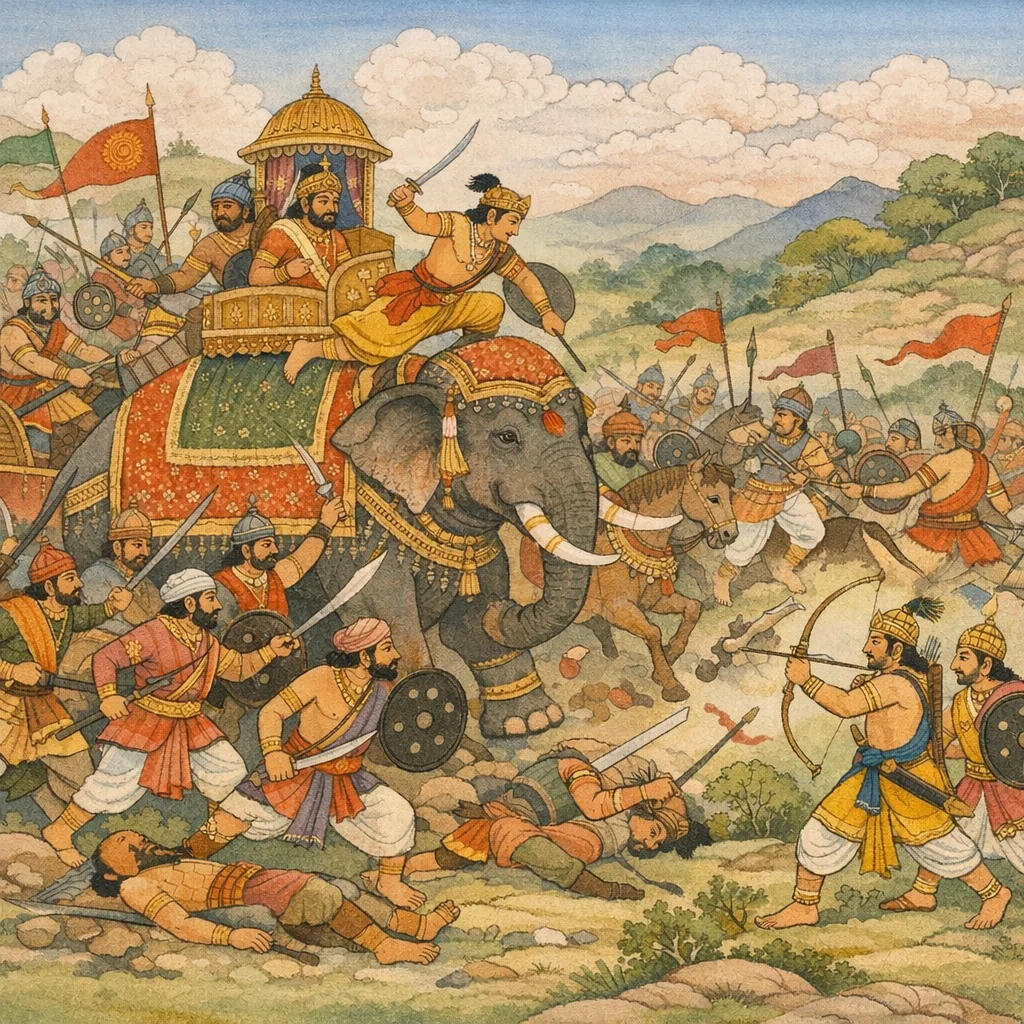
The chapter opens with Dhṛtarāṣṭra expressing fear and astonishment to Saṃjaya upon hearing of the Pāṇḍavas’ difficult feats and the broad defeats of his sons. He asks why the Pāṇḍavas appear “unassailable” and worries that Bhīma will eliminate his lineage, requesting a precise causal account. Saṃjaya answers that the Pāṇḍavas employ neither mantra-made stratagems nor deceptive terrors; they fight according to accepted norms and repeatedly initiate action grounded in dharma and pursuit of lasting renown. He contrasts this with the Kauravas’ harshness and wrongdoing, stating that the present reversals are the bitter fruit of sustained misconduct and ignored counsel from well-wishers such as Vidura, Bhīṣma, Droṇa, and Saṃjaya himself. Saṃjaya then introduces an earlier scene: Duryodhana, distressed at night, approaches Bhīṣma and asks why the Pāṇḍavas prevail despite many celebrated warriors on the Kaurava side. Bhīṣma advises reconciliation and explains the deeper cause of Pāṇḍava success: they are protected by Śārṅgadhanvan (Vāsudeva/Nārāyaṇa). To substantiate this, Bhīṣma recounts a purāṇic hymn-like narrative in which Brahmā and assembled beings praise the Supreme as the cosmic foundation, protector, and dharma-establisher, framing battlefield outcomes within a cosmological order rather than mere human calculation.
Chapter Arc: संजय धृतराष्ट्र को बताता है कि व्यूहों में सजी दोनों सेनाएँ आमने-सामने हैं और धनंजय (अर्जुन) रथ-समूहों को चीरता हुआ तुम्हारी सेना पर प्रहार करता है। → तीरों की वर्षा से अतिरथ रथयूथपों को विदीर्ण करते हैं; योद्धा उज्ज्वल यश की कामना में यह निश्चय कर लेते हैं कि अब युद्ध से निवृत्ति केवल मृत्यु ही दे सकती है। रणभूमि में संकेतों, नाम-गोत्र के उच्चारण और अनुमान से पहचान कर-करके घमासान बढ़ता जाता है—पदाति रथी को गिराता है, रथी पदाति को; हाथी, घोड़े, रथ और पैदल सब एक-दूसरे में उलझ जाते हैं। → रणकौशल की चरम सीमा पर दृश्य उभरता है—कोई वीर उछलकर महागज पर चढ़ता है, केशपक्ष पकड़कर शत्रु का सिर काट लेता है; उसी बीच क्रुद्ध किरीटी अर्जुन चारों ओर खड़े राजश्रेष्ठों पर टूट पड़ता है और सात्यकि के साथ सौबल-बल (शकुनि-पक्ष) की ओर धावा करता है, जिससे युद्ध ‘लोमहर्षण’ रूप ले लेता है। → भीमसेन, घटोत्कच, सात्यकि, चेकितान और द्रौपदेय आदि भीषण संहार करते हुए पाण्डव-पक्ष की गति को तीव्र करते हैं; दोनों ओर विजय-लिप्सा बनी रहती है और संग्राम फिर से व्यापक रूप में फैल जाता है। → युद्ध का प्रवाह थमता नहीं—अर्जुन का क्रोध और सौबल-बल की ओर बढ़ता दबाव अगले क्षणों में किसके पतन का कारण बनेगा, यह अनिश्चित रह जाता है।
Shlokas
Verse 1
अपना छा अ-क्राछ सप्तपञ्चाशत्तमो< ध्याय: उभय पक्षकी सेनाओंका घमासान युद्ध संजय उवाच ततो व्यूकेष्वनीकेषु तावकेषु परेषु च । धनंजयो रथानीकमवधीत् तव भारत,संजय कहते हैं--भारत! आपकी और पाण्डवोंकी पूर्वोक्तरूपसे व्यूह-रचना सम्पन्न हो जानेपर अर्जुनने आपके रथियोंकी सेनाका संहार आरम्भ किया
Sañjaya said: “Then, when the battle-formations (vyūhas) of both sides—yours and the enemy’s—had been fully arrayed, Dhanañjaya (Arjuna) began to strike down the chariot-warriors’ division of your army, O Bhārata.” The verse frames the clash as an organized, deliberate engagement: once the ordered vyūhas are set, the kṣatriya-duty’s moral tension turns into immediate, consequential action on the field.
Verse 2
शरैरतिरथो युद्धे दारयन् रथयूथपान् | ते वध्यमाना: पार्थेन कालेनेव युगक्षये
Sañjaya said: “In the battle, that great chariot-warrior, with his arrows, tore through the leaders of chariot-divisions. Those warriors, being cut down by Pārtha, fell as though Time itself (Kāla)—at the end of an age—had come to destroy them.” The verse casts Arjuna’s prowess not merely as personal might, but as destiny’s inexorable working within the war’s moral catastrophe.
Verse 3
प्रार्थयाना यशो दीप्त॑ मृत्युं कृत्वा निवर्तनम्,वे उज्ज्वल यश प्राप्त करना चाहते थे। अतः यह निश्चय करके कि अब मृत्यु ही हमें युद्धसे निवृत्त कर सकती है, एकाग्रचित्त होकर युद्धमें डटे रहे। राजन! उन्होंने युद्धमें ऐसी तत्परता दिखायी कि बार-बार पाण्डव-सेनाको तितर-बितर कर दिया
Sañjaya said: “Seeking blazing renown, they resolved that nothing but death would turn them back from the fight. With minds fixed on that decision, they stood firm in battle. O King, they showed such relentless readiness in combat that again and again they scattered the Pāṇḍava army in disarray.”
Verse 4
एकाग्रमनसो भूत्वा पाण्डवानां वरूथिनीम् | बभज्जुर्बहुशो राज॑स्ते चासज्जन्त संयुगे,वे उज्ज्वल यश प्राप्त करना चाहते थे। अतः यह निश्चय करके कि अब मृत्यु ही हमें युद्धसे निवृत्त कर सकती है, एकाग्रचित्त होकर युद्धमें डटे रहे। राजन! उन्होंने युद्धमें ऐसी तत्परता दिखायी कि बार-बार पाण्डव-सेनाको तितर-बितर कर दिया
Sañjaya said: “With minds fixed in single-pointed resolve, O King, they repeatedly broke up the battle-array (varūthinī) of the Pāṇḍavas; and they pressed on, fully engaged in the fight.”
Verse 5
द्रवद्धिरथ भग्नैश्व परिवर्तद्धिरेव च । पाण्डवै: कौरवेयैश्व न प्राज्ञायत किंचन,तदनन्तर क्षत-विक्षत होकर भागते और पुनः लौटकर सामना करते हुए पाण्डवों तथा कौरवोंके सैनिकोंको कुछ भी सूझ नहीं पड़ता था
Sañjaya said: With chariots rushing about—some shattered, others wheeling back again—the warriors of both the Pāṇḍavas and the Kauravas could make out nothing clearly. Amid the wounded and the retreating who turned again to face the fight, confusion reigned.
Verse 6
उदतिष्ठद् रजो भौम॑ छादयानं दिवाकरम् | न दिश: प्रदिशो वापि तत्र हन्यु: कथं नरा:,भूतलसे इतनी धूल उड़ी कि सूर्यदेव आच्छादित हो गये। दिशा और प्रदिशाका कुछ भी पता नहीं चलता था। वैसी दशामें वहाँ युद्ध करनेवाले लोग कैसे किसीपर प्रहार करें
Sañjaya said: The dust rising from the earth surged up and veiled the sun. Neither the directions nor the intermediate quarters could be made out; in such a condition, how could the warriors there strike their blows at all?
Verse 7
अनुमानेन संज्ञाभिननामगोत्रैश्व संयुगे । वर्तते च तथा युद्ध तत्र तत्र विशाम्पते,प्रजानाथ! उस रणक्षेत्रमें अनुमानसे, संकेतोंसे तथा नाम और गोत्रोंके उच्चारणसे अपने या पराये पक्षका निश्चय करके जहाँ-तहाँ युद्ध हो रहा था
Sañjaya said: “O lord of the people, O king of men—on that battlefield, fighters were identifying one another as friend or foe by inference, by agreed signals, and by calling out names and lineages; and thus, in many places, the fighting was going on in that very manner.”
Verse 8
न व्यूहो भिद्यते तत्र कौरवाणां कथंचन । रक्षित: सत्यसंधेन भारद्वाजेन संयुगे,सत्यप्रतिज्ञ भरद्वाजनन्दन द्रोणाचार्यके द्वारा सुरक्षित होनेके कारण कौरव-सेनाका व्यूह किसी प्रकार भंग न हो सका
Sañjaya said: There, the Kauravas’ battle-formation could not be broken in any way, for in that combat it was being guarded by the Bhāradvāja—Droṇa—steadfast in his pledged word.
Verse 9
तथैव पाण्डवानां च रक्षित: सव्यसाचिना । नाभिद्यत महाव्यूहो भीमेन च सुरक्षित:,इसी तरह सव्यसाची अर्जुन और भीमसे सुरक्षित पाण्डवोंके महाव्यूहका भी भेदन न हो सका
Sañjaya said: “In the same way, the great battle-formation of the Pāṇḍavas—well guarded by Savyasācin (Arjuna) and securely protected by Bhīma—could not be broken through.”
Verse 10
सेनाग्रादपि निष्पत्य प्रायुध्यंस्तत्र मानवा: । उभयो: सेनयो राजन् व्यतिषक्तरथद्वधिपा:,वहाँ सेनाके अग्रभागसे भी निकलकर (व्यूह छोड़कर) वीर सैनिक युद्ध करते थे। राजन! दोनों सेनाओंके रथ और हाथी परस्पर भिड़ गये
Sañjaya said: “O King, some warriors even broke out from the very front of the battle-array and fought hand-to-hand there. The chariots and elephants of both armies became interlocked as they crashed into one another.”
Verse 11
हयारोहैर्हयारोहा: पात्यन्ते सम महाहवे । ऋष्टिभिरविमलाभि श्ष प्रासैरपि च संयुगे,उस महासमरमें घुड़सवार घुड़सवारोंको चमकीली ऋषष्टियों और प्रासोंद्वारा मार गिराते थे
Sañjaya said: “In that great battle, horsemen struck down opposing horsemen in the thick of combat, using spotless, gleaming spears and also javelins.”
Verse 12
रथी रथिनमासाद्य शरै: कनकभूषणै: । पातयामास समरे तस्मिन्नति भयड्करे,वह संग्राम अत्यन्त भयानक हो रहा था। उसमें रथी रथियोंके सामने जाकर उन्हें स्वर्णभूषित बाणोंसे मार गिराते थे
Sañjaya said: “In that exceedingly dreadful battle, chariot-warriors would close in upon opposing chariot-warriors and, with arrows adorned with gold, strike them down.”
Verse 13
गजारोहा गजारोहान् नाराचशरतोमरै: । संसक्तान् पातयामासुस्तव तेषां च सर्वश:,आपके और पाण्डव-पक्षके हाथीसवार अपनेसे भिड़े हुए विपक्षी हाथीसवारोंको सब ओरसे नाराच, बाण और तोमरोंकी मारसे धराशायी कर देते थे
Sañjaya said: “Your elephant-riders and the elephant-riders on the Pāṇḍava side, locked in close combat, were felling the opposing elephant-warriors on every side with volleys of nārācas, arrows, and tomara-spears.”
Verse 14
वकश्िदुत्पत्य समरे वरवारणमास्थित: । केशपक्षे परामृश्य जहार समरे शिर:,कोई योद्धा रणक्षेत्रमें उछलकर बड़े-बड़े हाथियोंपर चढ़ जाता और विपक्षी योद्धाके केशोंको पकड़कर उसका सिर काट लेता था
Sañjaya said: “In that battle, some warrior would spring up in the midst of combat, mount a mighty elephant, seize an opponent by the tuft of hair, and in the very press of war carry off his head.”
Verse 15
अन्ये द्विरददन्ताग्रनिर्भिन्नहृदया रणे । वेमुश्न रुधिरं वीरा निःश्वसन््त: समन्ततः,बहुत-से वीर युद्धस्थलमें हाथियोंके दाँतोंके अग्रभागसे अपना हृदय विदीर्ण हो जानेके कारण सब ओर लंबी साँस खींचते हुए मुखसे रक्त वमन कर रहे थे
Sañjaya said: Other warriors, their hearts torn open in battle by the sharp tips of elephants’ tusks, were all around—gasping for breath and vomiting blood. The scene underscores the brutal, indiscriminate violence of war, where even the valiant are reduced to helpless suffering amid the clash of arms.
Verse 16
इस प्रकार श्रीमह्याभारत भीष्मपर्वके अन्तर्गत भीष्यवधपर्वरमें तीसरे दिनके युद्ध्ें परस्पर व्यूह-रचनाविषयक छतप्पनवाँ अध्याय पूरा हुआ,कश्चित् करिविषाणस्थो वीरो रणविशारद: । प्रावेपच्छक्तिनिर्भिन्नो गजशिक्षास्त्रवेदिना कोई रणविशारद वीर हाथीके दाँतोंपर खड़ा होकर युद्ध कर रहा था। इतनेहीमें गजशिक्षा और अस्त्रविद्याके ज्ञाता किसी विपक्षी योद्धाने उसके ऊपर शक्ति चला दी। उस शक्तिके आघातसे वक्ष:स्थल विदीर्ण हो जानेके कारण वह मरणोन्मुख वीर वहीं काँपने लगा
Sañjaya said: A certain heroic warrior, skilled in the ways of battle, stood poised upon an elephant’s tusk and fought on. Just then an opposing combatant—one who knew the training of elephants and the science of weapons—hurled a śakti (a heavy spear) at him. With his chest torn open by that blow, the warrior trembled on the spot, nearing death—an image of how, in war, prowess and daring are still subject to the impartial certainty of weapon-skill and fate.
Verse 17
पत्तिसड्घा रणे पत्तीन् भिन्दिपालपरश्वधथैः । न्यपातयन्त संहृष्टा: परस्परकृतागस:,हर्ष और उल्लासमें भरकर एक-दूसरेका अपराध करनेवाले पैदलसमूह विपक्षके पैदल सैनिकोंको भिन्दिपाल और फरसोंसे मार-मारकर रणभूमिमें गिरा रहे थे
Sañjaya said: In the battle, bands of foot-soldiers—exultant and inflamed—struck down the opposing infantry, felling them on the field with bhindipālas (javelins) and paraśvadhās (battle-axes). In their mutual hostility, each side treated the other as an offender, and the clash of wrongdoing fed the frenzy of war.
Verse 18
रथी च समरे राजन्नासाद्य गजयूथपम् | सगजं पातयामास गजी स रथिनां बरम्,राजन्! उस समरभूमिमें कोई रथी किसी गजयूथ-पतिसे भिड़ जाता और सवार तथा हाथी दोनोंको मार गिराता था। उसी प्रकार गजारोही भी रथियोंमें श्रेष्ठ वीरका वध कर देता था
Sañjaya said: “O King, in that battle a chariot-warrior would close with an elephant-troop leader and strike him down together with his elephant; and likewise an elephant-rider would bring down the foremost of chariot-fighters. Thus, on the field, each arm of the army met the other in direct contest, and the slaughter fell on both mount and rider alike.”
Verse 19
रथिनं च हयारोह: प्रासेन भरतर्षभ । पातयामास समरे रथी च हयसादिनम्,भरतश्रेष्ठ! उस संग्राममें घुड़सवार रथीको तथा रथी घुड़सवारको प्रासद्वारा मारकर धराशायी कर देता था
Sañjaya said: O bull among the Bharatas, in that battle the horseman struck down the charioteer with a spear, and the chariot-warrior in turn felled the mounted horseman. Thus, amid the clash of arms, each combatant met the other with equal resolve, showing how swiftly violence rebounds upon violence in war.
Verse 20
पदाती रथिनं संख्ये रथी चापि पदातिनम् | न्यपातयच्छितै: शस्त्रै: सेनयोरुभयोरपि,दोनों ही सेनाओंमें पैदल वीर रथीको और रथी योद्धा पैदल सैनिकको अपने तीखे अस्त्र-शस्त्रोंद्वारा रणभूमिमें मार गिराता था
Sañjaya said: In the press of battle, foot-soldiers struck down chariot-warriors, and chariot-warriors likewise felled foot-soldiers, with keen weapons—on both sides alike. The scene showed the war’s grim reciprocity: rank and mode of fighting offered no moral immunity, and violence returned violence in an escalating cycle.
Verse 21
गजारोहा हयारोहान् पातयाज्चक्रिरे तदा । हयारोहा गजस्थांश्व तदद्भुतमिवा भवत्,हाथीसवार घुड़सवारोंको और घुड़सवार हाथी-सवारोंको युद्धस्थलमें गिरा देते थे। ये घटनाएँ आश्षर्यजनक-सी प्रतीत होती थीं
Sañjaya said: Then the elephant-riders caused the horsemen to fall, and the horsemen in turn brought down those stationed upon elephants. The mutual overthrow of mounted warriors upon the battlefield appeared almost wondrous—an awe-inspiring spectacle born of the fierce skill and peril of war.
Verse 22
गजारोहवरैश्लापि तत्र तत्र पदातय: । पातिता: समदृश्यन्त तैश्वापि गजयोधिन:,उस रणक्षेत्रमें जहाँ-तहाँ श्रेष्ठ गजारोहियोंद्वारा गिराये हुए पैदल और पैदलोंद्वारा गिराये हुए हाथीसवार दृष्टिगोचर हो रहे थे
Sañjaya said: Across that battlefield, foot-soldiers struck down by the finest elephant-riders were seen lying in many places; and likewise, elephant-warriors too were visible, felled by those very infantry. The scene revealed the grim reciprocity of war—no arm of the host remained invulnerable, and prowess on either side brought the same mortal consequence.
Verse 23
एत्तिसड्घा हयारोहै: सादिसड्घाश्न पत्तिभि: । पात्यमाना व्यदृश्यन्त शतशो5थ सहसत्रश:,घुड़सवारोंद्वारा पैदलोंके समूह और पैदलोंद्वारा घुड़सवारोंके समूह सैकड़ों और हजारोंकी संख्यामें गिराये जाते हुए दिखायी देते थे
Sañjaya said: Companies of foot-soldiers were seen being struck down by mounted horsemen, and likewise companies of horsemen by the infantry—falling in hundreds and in thousands. The scene underscores the grim reciprocity of battle, where prowess and position offer no moral immunity and the cost of violence multiplies beyond measure.
Verse 24
ध्वजैस्तत्रापविद्धैश्व कार्मुकैस्तोमरैस्तथा । प्रासैस्तथा गदाभिश्न परिघै: कम्पनैस्तथा,भरतश्रेष्ठ! वहाँ इधर-उधर गिरे हुए ध्वज, धनुष, तोमर, प्रास, गदा, परिघ, कम्पन, शक्ति, विचित्र कवच, कणप, अंकुश, चमचमाते हुए खड्ग, सुवर्णमय पाँखवाले बाण, शूल, गद्दी और बहुमूल्य कम्बलोंद्वारा आच्छादित हुई वहाँकी भूमि भाँति-भाँतिके पुष्पहारोंसे चित्रित हुई-सी जान पड़ती थी
Sañjaya said: There the ground was strewn with standards cast down, with bows, javelins, lances, maces, iron clubs, and heavy war-hammers—so thickly scattered that the battlefield seemed carpeted with the broken instruments of combat. The scene underscores the moral weight of war: even the proud emblems and weapons that signify valor become lifeless debris when dharma is contested through violence.
Verse 25
शक्तिभि: कवचैश्षित्रै: कणपैरड्कुशैरपि । निस्त्रिंशैर्विमलै श्वापि स्वर्णपुड्खै: शरैस्तथा,भरतश्रेष्ठ! वहाँ इधर-उधर गिरे हुए ध्वज, धनुष, तोमर, प्रास, गदा, परिघ, कम्पन, शक्ति, विचित्र कवच, कणप, अंकुश, चमचमाते हुए खड्ग, सुवर्णमय पाँखवाले बाण, शूल, गद्दी और बहुमूल्य कम्बलोंद्वारा आच्छादित हुई वहाँकी भूमि भाँति-भाँतिके पुष्पहारोंसे चित्रित हुई-सी जान पड़ती थी
Sañjaya said: The ground there appeared as though patterned with garlands of many kinds, being strewn on all sides with fallen weapons and war-gear—javelins, ornate cuirasses, quivers and goads, gleaming swords, spears, and arrows with golden fletching. The scene underscores the moral weight of battle: human skill and valor culminate in a field carpeted by instruments of harm, reminding the listener of war’s costly aftermath even amid heroic display.
Verse 26
धार्तराष्ट्रा रणे यत्नात् पाण्डवान् प्रत्ययोधयन् | वे अतिरथी वीर थे। उन्होंने अपने बाणोंद्वारा युद्धस्थलमें रथयूथपतियोंको विदीर्ण करके यमलोक भेज दिया। युगान्तमें कालके समान उस युद्धमें कुन्ती-कुमार अर्जुनके द्वारा आपके सैनिकोंका भयंकर विनाश हो रहा था, तो भी वे यत्नपूर्वक पाण्डवोंके साथ युद्ध करते रहे,परिस्तोमै: कुथाभि श्ष कम्बलैश्व महाधनै: । भूर्भाति भरतश्रेष्ठ स्रग्दामैरिव चित्रिता भरतश्रेष्ठ! वहाँ इधर-उधर गिरे हुए ध्वज, धनुष, तोमर, प्रास, गदा, परिघ, कम्पन, शक्ति, विचित्र कवच, कणप, अंकुश, चमचमाते हुए खड्ग, सुवर्णमय पाँखवाले बाण, शूल, गद्दी और बहुमूल्य कम्बलोंद्वारा आच्छादित हुई वहाँकी भूमि भाँति-भाँतिके पुष्पहारोंसे चित्रित हुई-सी जान पड़ती थी
Sañjaya said: The sons of Dhṛtarāṣṭra, striving with all their might, fought back against the Pāṇḍavas. Those heroic warriors—mighty chariot-fighters—shattered the leaders of chariot-squadrons with their arrows on the battlefield and sent them to Yama’s realm. And yet, like Time at the end of an age, Arjuna, Kuntī’s son, was bringing about a dreadful destruction of your army in that battle; still they continued to contend with the Pāṇḍavas with determined effort. O best of the Bharatas, the ground there, strewn with costly coverings—paristomas, kuthās, and rich blankets—appeared as though painted with garlands of many colors.
Verse 27
नराश्चकायै: पतितैर्दन्तिभिश्न महाहवे | अगम्यरूपा पृथिवी मांसशोणितकर्दमा,उस महासमरमें मनुष्यों, घोड़ों और हाथियोंकी लाशें पड़ी हुई थीं। मांस और रक्तकी कीचड़ जम गयी थी। वहाँकी भूमिमें जाना असम्भव हो गया था
Sañjaya said: In that great battle the ground was strewn with fallen bodies—men and elephants alike. The earth became a mire of flesh and blood, so dreadful that it was no longer passable. The scene lays bare the moral cost of war: when dharma collapses into slaughter, even the very land turns into an obstacle, forcing the listener to confront the suffering that victory cannot erase.
Verse 28
प्रशशाम रजो भौम॑ व्युक्षितं रणशोणितै: । दिशश्व विमला: सर्वा: सम्बभूवुर्जनेश्वर
Sañjaya said: The dust raised from the earth subsided, having been drenched with the blood of battle; and all the directions became clear and spotless, O lord of men. The scene suggests a grim calm after violence—nature itself settling once the frenzy of combat has spent its force.
Verse 29
जनेश्वर! रणभूमिमें बहे हुए रक्तसे सिंचकर धरतीकी धूल बैठ गयी और सारी दिशाएँ साफ हो गयीं ।। उत्थितान्यगणेयानि कबन्धानि समन्तत: । चिह्नभूतानि जगतो विनाशार्थाय भारत,भारत! उस समय जगत्के विनाशको सूचित करनेवाले असंख्य कबन्ध चारों ओर उठने लगे
Sanjaya said: O lord of men! As the battlefield was drenched by the flowing blood, the dust upon the earth settled down, and all the directions became clear. Then, on every side, countless headless trunks rose up—portents standing as signs that foretold the world’s destruction, O Bharata. The scene frames the war not as glory but as a moral catastrophe whose very omens proclaim ruin.
Verse 30
तस्मिन् युद्धे महारौद्रे वर्तमाने सुदारुणे । प्रत्यदृश्यन्त रथिनो धावमाना: समन्ततः,उस अत्यन्त दारुण और महाभयंकर युद्धमें रथी योद्धा चारों ओर दौड़ते दिखायी देते थे
Sañjaya said: As that battle raged—terribly fierce and dreadfully cruel—chariot-warriors were seen rushing in every direction, the field filled with frantic movement and the overwhelming violence of war.
Verse 31
ततो भीष्मश्र द्रोणश्षु सैन्धवश्ष जयद्रथ: । पुरुमित्रो जयो भोज: शल्यश्वापि ससौबल:,तदनन्तर भीष्म, द्रोण, सिन्धुराज जयद्रथ, पुरुमित्र, जय, भोज, शल्य और शकुनि--ये सिंहतुल्यपराक्रमी रणदुर्जय वीर पाण्डवोंकी सेनाको बार-बार भंग करने लगे
Sañjaya said: Then Bhīṣma and Droṇa, and Jayadratha of Sindhu, along with Purumitra, Jaya, Bhoja, Śalya, and Śakuni of the Saubala line—heroes lion-like in prowess and hard to overcome in battle—again and again broke and scattered the army of the Pāṇḍavas.
Verse 32
एते समरदुर्धर्षा: सिंहतुल्यपराक्रमा: । पाण्डवानामनीकानि बभज्जुः सम पुन: पुन:,तदनन्तर भीष्म, द्रोण, सिन्धुराज जयद्रथ, पुरुमित्र, जय, भोज, शल्य और शकुनि--ये सिंहतुल्यपराक्रमी रणदुर्जय वीर पाण्डवोंकी सेनाको बार-बार भंग करने लगे
Sañjaya said: These warriors, hard to withstand in battle and possessing lion-like prowess, repeatedly shattered the battle-formations of the Pāṇḍavas.
Verse 33
तथैव भीमसेनो<पि राक्षसश्ष घटोत्कच: । सात्यकिश्नेकितानश्ष द्रौपदेयाक्ष भारत,भरतनन्दन! इसी प्रकार भीमसेन, राक्षस घटोत्कच, सात्यकि, चेकितान तथा द्रौपदीके पाँचों पुत्र--ये सब मिलकर जैसे देवता दानवोंको खदेड़ते हैं, उसी प्रकार समस्त राजाओंसहित आपके पुत्रों और सैनिकोंको रणभूमिमें भगाने लगे
Sañjaya said: “In the same way, Bhīmasena too—along with the rākṣasa Ghaṭotkaca, Sātyaki, Cekitāna, and the sons of Draupadī—joined together and began to drive back your sons and their troops on the battlefield, just as the gods rout the demons.”
Verse 34
तावकांस्तव पुत्रांश्व सहितान् सर्वराजभि: । द्रावयामासुराजौ ते त्रिदशा दानवानिव,भरतनन्दन! इसी प्रकार भीमसेन, राक्षस घटोत्कच, सात्यकि, चेकितान तथा द्रौपदीके पाँचों पुत्र--ये सब मिलकर जैसे देवता दानवोंको खदेड़ते हैं, उसी प्रकार समस्त राजाओंसहित आपके पुत्रों और सैनिकोंको रणभूमिमें भगाने लगे
Sañjaya said: O joy of the Bharatas, your sons, together with all the allied kings, were put to flight in battle—just as the gods drive away the Dānavas.
Verse 35
तथा ते समरे<न्योन्यं निध्नन्त:ः क्षत्रियर्षभा: | रक्तोक्षिता घोररूपा विरेजुर्दानवा इव,संग्रामभूमिमें एक-दूसरेको मारते हुए श्रेष्ठ क्षत्रिय वीर रक्तरंजित हो भयानक रूपधारी दानवोंके समान सुशोभित होने लगे
Sañjaya said: Thus, in that battle, those bull-like warriors among the kṣatriyas struck down one another. Smeared with blood and taking on a dreadful aspect, they shone on the field of combat like dānavas (asuras).
Verse 36
विनिर्जित्य रिपून् वीरा: सेनयोरुभयोरपि । व्यदृश्यन्त महामात्रा ग्रहा इव नभस्तले,दोनों सेनाओंके वीर शत्रुओंको जीतकर आकाशमें फैले हुए विशाल ग्रहोंके समान दिखायी देते थे
Sañjaya said: Having conquered their foes, the heroic champions of both armies appeared on the battlefield like great planets spread across the sky—lofty, unmistakable, and awe-inspiring in their might.
Verse 37
ततो रथसहस्रेण पुत्रो दुर्योधनस्तव । अभ्ययात् पाण्डवं युद्धे राक्षसं च घटोत्कचम्,तदनन्तर आपका पुत्र दुर्योधन सहस्रों रथियोंके साथ पाण्डववंशी राक्षस घटोत्कचके साथ युद्ध करनेके लिये वहाँ आया
Sañjaya said: Then your son Duryodhana advanced with a thousand chariots, coming to engage in battle the Pāṇḍava-side rākṣasa Ghaṭotkaca.
Verse 38
तथैव पाण्डवा: सर्वे महत्या सेनया सह । द्रोणभीष्मौ रणे यत्तौ प्रत्युद्ययुररिंदमौ,इसी प्रकार विशाल सेनाके साथ समस्त पाण्डव भी युद्धके लिये तैयार खड़े हुए शत्रुदमन द्रोणाचार्य और भीष्मसे भिड़नेके लिये आगे बढ़े
Sañjaya said: Likewise, all the Pāṇḍavas, accompanied by their vast army, stood ready for battle. They advanced to meet Droṇa and Bhīṣma—those two formidable, enemy-subduing champions—who were already engaged in the fight.
Verse 39
किरीटी च ययीौ क्रुद्ध: समन्तात् पार्थिवोत्तमान् | आर्जुनि: सात्यकिश्वैव ययतु: सौबलं बलम्,क्रोधमें भरे हुए किरीटधारी अर्जुन सब ओर खड़े हुए श्रेष्ठ राजाओंका सामना करनेके लिये चले। अभिमन्यु और सात्यकिने शकुनिकी सेनापर आक्रमण किया
Sañjaya said: The diadem-crowned Arjuna, inflamed with wrath, advanced on every side against the foremost of kings. And Abhimanyu, together with Sātyaki, moved to assail the forces of Saubala (Śakuni).
Verse 40
ततः प्रववृते भूय: संग्रामो लोमहर्षण: । तावकानां परेषां च समरे विजयैषिणाम्,इस प्रकार युद्धमें विजय चाहनेवाले आपके और पाण्डवोंके सैनिकोंमें पुनः रोमांचकारी संग्राम छिड़ गया
Sañjaya said: Then once again there arose a hair-raising battle, as both your warriors and the opposing forces—each intent on victory—clashed in the fight.
Verse 57
इति श्रीमहाभारते भीष्मपर्वणि भीष्मवधपर्वणि तृतीये युद्धदिवसे संकुलयुद्धे सप्तपज्चाशत्तमोडध्याय:
Thus, in the Śrī Mahābhārata, within the Bhīṣma Parva—specifically the section concerning Bhīṣma’s fall—on the third day of battle, amid the confused and densely intermingled fighting, ends the fifty-seventh chapter.
Frequently Asked Questions
Dhṛtarāṣṭra confronts the dilemma of responsibility: whether the crisis is an external inevitability (daiva) or the consequence of governance failures and tolerated wrongdoing, and whether a ruler can still act wisely after repeatedly ignoring corrective counsel.
The chapter teaches that durable success is not reduced to tactics alone: disciplined adherence to dharma, receptivity to ethical counsel, and the moral weight of prior actions shape outcomes; theological framing further presents protection as aligned with dharma-restoration.
No explicit phalaśruti formula appears here; the meta-commentary operates implicitly through Saṃjaya’s causal diagnosis and Bhīṣma’s purāṇic account, positioning the chapter as an interpretive key for reading war events within a dharma-karma framework.