Adhyaya 107
Adhyāya 107 — बहुयुद्धप्रकरणम् (Multiple Defensive Engagements to Protect Bhīṣma)
Upa-parva: Bhīṣma-vadha-prayatna (Defensive engagements around Bhīṣma; tactical interpositions)
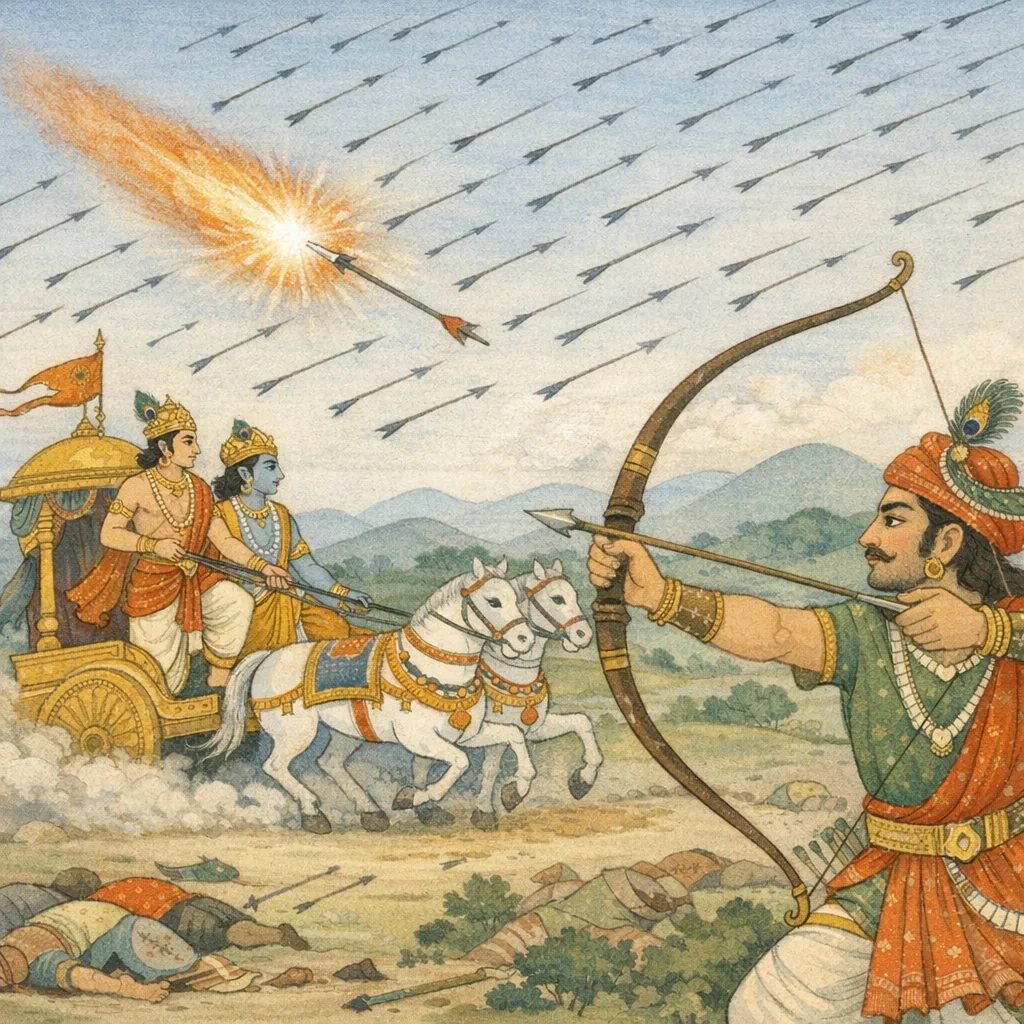
Sañjaya reports a sequence of simultaneous engagements marked by tactical interpositions. A rākṣasa combatant pressures Sātyaki and Mādhava (Kārṣṇi); missiles are exchanged, and Bhagadatta escalates by hurling a heavy śakti weapon, which Sātyaki cleaves into three parts mid-flight. Observing the containment of the Vārṣṇeya warrior, Duryodhana issues a directive to his brothers and allied mahārathas: ensure Sātyaki cannot disengage alive, treating his removal as a major reduction of Pāṇḍava strength. The chapter then shifts across the battlefield: Abhimanyu’s advance toward Bhīṣma is checked by the Kāmboja king; Virāṭa and Drupada confront Aśvatthāmā; Sahadeva is met by Kṛpa; Nakula is struck by Vikarṇa and retaliates; Ghaṭotkaca engages Durmukha; Dhṛṣṭadyumna is opposed by Hārdikya; Bhīma clashes with Bhūriśravā (Saumadatti); Drona obstructs Yudhiṣṭhira’s forward movement; and further duels (Cekitāna vs Citraseṇa, Arjuna’s pressure on Kaurava forces, Duḥśāsana’s obstruction) culminate in the depiction of Kaurava troops being repeatedly broken and re-formed under pressure. The thematic throughline is containment: many confrontations are explicitly framed as efforts to preserve Bhīṣma’s position and delay concentrated attacks.
Chapter Arc: त्रिगर्तों के राजा सुशर्मा अपने ‘संशप्तक’ व्रत की ज्वाला लेकर अर्जुन पर टूट पड़ता है—और युद्धभूमि में पहली ही घड़ी में बाण-वृष्टि से पार्थ और सारथि वासुदेव को लक्ष्य बनाकर चुनौती को व्यक्तिगत बना देता है। → सुशर्मा के तीखे प्रहारों के बीच कौरव-पाण्डव सेनाएँ घोर संग्राम में उलझती जाती हैं। एक ओर अर्जुन पर त्रिगर्तों का दबाव बढ़ता है, दूसरी ओर द्रोणाचार्य द्रुपद को शर-संधान से भेदते हुए पुराने वैर को फिर जीवित कर देते हैं। इसी कोलाहल में अभिमन्यु का सामना चित्रसेन से होता है, और रथ-भंग, अश्व-हत्या, सारथि-हत्या जैसे युद्ध-लक्षण लगातार दृश्य को और उग्र बनाते हैं। → मृत्युकल्पा, सुदुर्जया आपतित शक्ति को वार्ष्णेय (श्रीकृष्ण) अपने अद्भुत लाघव से निष्फल कर देते हैं—क्षण भर में वह प्राणघातक वेग टूटता है और रण की दिशा बदलती प्रतीत होती है। → चित्रसेन के रथ के घोड़े मारे जाने पर वह रथ से कूदकर दुर्मुख के रथ पर चढ़ जाता है—रणनीति बदलकर प्राण बचाता है। द्रोण से पीड़ित द्रुपद पूर्ववैर स्मरण कर शीघ्रगामी अश्वों से हटता है। उधर भीमसेन सबके देखते-देखते बाह्लीक को घोड़े-सारथि-रथ से शून्य कर देता है, जिससे पाण्डव पक्ष का उत्साह बढ़ता है। → अर्जुन पर त्रिगर्तों का दबाव बना रहता है और द्रोण की धारा भी थमती नहीं—अगले क्षण किसका रथ टूटेगा और किसका संकल्प डगमगाएगा, यह अनिश्चित रह जाता है।
Shlokas
Verse 1
ऑपन-आ कराता | अं क्ाज चतुर्राधिकशततमो< ध्याय: अर्जुनके द्वारा त्रिगर्तोंकी पराजय, कौरव-पाण्डव- सैनिकोंका घोर युद्ध, अभिमन्युसे चित्रसेनकी, द्रोणसे ट्रपदकी और भीमसेनसे बाह्लीककी पराजय तथा सात्यकि और भीष्मका युद्ध संजय उवाच अर्जुनस्तान् नरव्याप्र: सुशर्मानुचरान् नृपान् । अनयत् प्रेतराजस्य सदनं सायकै: शितै:,संजय कहते हैं--राजन्! पुरुषसिंह अर्जुन अपने तीखे बाणोंसे सुशर्माके अनुगामी नरेशोंको यमलोक भेजने लगे
Sañjaya said: O King, Arjuna—the tiger among men—began to send those kings who followed Susharman to the abode of the Lord of the Dead, striking them down with his sharp arrows.
Verse 2
सुशर्मापि ततो बाणै: पार्थ विव्याध संयुगे । वासुदेवं च सप्तत्या पार्थ च नवभि: पुन:
Sañjaya said: Then Suśarmā too, in the thick of battle, struck Pārtha (Arjuna) with his arrows. He also pierced Vāsudeva (Kṛṣṇa) with seventy shafts, and once again struck Pārtha with nine.
Verse 3
तब सुशमनि भी युद्धस्थलमें अनेक बाणोंद्वारा कुन्तीकुमार अर्जुनको घायल कर दिया। फिर उसने वसुदेवनन्दन श्रीकृष्णको सत्तर और अर्जुनको नौ बाण मारे ।। त॑ निवार्य शरौघेण शक्रसूनुर्महारथ: । सुशर्मणो रणे योद्धान् प्राहिणोद् यमसादनम्,यह देख इन्द्रपुत्र महारथी अर्जुनने अपने बाण-समूहोंके द्वारा सुशर्माकों रोककर रणक्षेत्रमें उसके योद्धाओंको यमलोक पहुँचाना आरम्भ किया
Sañjaya said: Then Arjuna, the mighty chariot-warrior, son of Indra, checked Suśarman’s onrushing torrents of arrows with volleys of his own. Having thus restrained him, Arjuna began to send Suśarman’s fighters, one after another, to the abode of Yama on the battlefield.
Verse 4
ते वध्यमाना: पार्थेन कालेनेव युगक्षये । व्यद्रवन्त रणे राजन् भये जाते महारथा:,राजन! जैसे युगान्तमें साक्षात् कालके द्वारा सारी प्रजा मारी जाती है, उसी प्रकार रणक्षेत्रमें अर्जुनके द्वारा मारे जाते हुए सारे महारथी युद्धका मैदान छोड़कर भागने लगे
Sañjaya said: “As at the end of an age Time itself cuts down all beings, so too—struck down by Pārtha (Arjuna) on the battlefield—the great chariot-warriors, seized by fear, broke ranks and fled, O King.”
Verse 5
उत्सृज्य तुरगान् केचिद् रथान् केचिच्च मारिष । गजानन्ये समुस्तृज्य प्राद्रवन्त दिशो दश,आर्य! कुछ लोग घोड़ोंको, कुछ दूसरे लोग रथोंको और इसी प्रकार कुछ लोग हाथियोंको छोड़कर दसों दिशाओंमें भागने लगे
Sañjaya said: “O venerable one, some abandoned their horses, others their chariots; and others, leaving even their elephants behind, fled headlong in all ten directions.”
Verse 6
अपरे तु तदा55दाय वाजिनागरथान् रणे । त्वरया परया युक्ताः प्राद्रवन्त विशाम्पते
Sañjaya said: Then others, having taken up their horses and chariots on the battlefield, and driven by utmost haste, rushed forward, O lord of the people.
Verse 7
पादाताश्चापि शस्त्राणि समुत्सृज्य महारणे । निरपेक्षा व्यधावन्त तेन तेन सम भारत
Sañjaya said: In that great battle, even the foot-soldiers cast aside their weapons and, caring for nothing, fled in all directions, O Bhārata.
Verse 8
प्रजानाथ! दूसरे लोग उस समय बड़ी उतावलीके साथ अपने हाथी, घोड़े एवं रथको साथ ले रणभूमिसे भाग निकले। भारत! उस महायुद्धमें पैदल सिपाही भी अपने अस्त्र- शस्त्रोंकी फेंककर उनकी कोई अपेक्षा न रखकर जिधरसे राह मिली, उधरसे ही भागने लगे ।। वार्यमाणा: सुबहुशस्त्रैगर्तेन सुशर्मणा । तथान्यै: पार्थिवश्रेष्ठिर्न व्यतिष्ठन्त संयुगे,यद्यपि त्रिगर्तराज सुशर्मा तथा अन्य श्रेष्ठ नरेशोंने भी बारंबार रोकनेका प्रयत्न किया, तथापि वे सैनिक युद्धमें ठहर न सके
Sañjaya said: “O lord of men! At that time many others, seized by frantic haste, fled from the battlefield taking their elephants, horses, and chariots with them. O Bhārata, in that great war even the foot-soldiers, casting away their weapons and no longer caring for them, ran off by whatever path they could find. Though they were repeatedly restrained by Suśarman of the Trigartas—armed in many ways—and by other foremost kings, those troops could not stand their ground in the fight.”
Verse 9
तद् बल प्रद्गुतं दृष्ट॒वा पुत्रो दुर्योधनस्तव । पुरस्कृत्य रणे भीष्म सर्वसैन्यपुरस्कृत:,उस सेनाको भागती देख आपके पुत्र दुर्योधनने रणभूमिमें भीष्मको आगे करके सम्पूर्ण सेनाओंके साथ महान प्रयत्नपूर्वक धनंजयपर धावा किया। प्रजानाथ! उसके आक्रमणका उद्देश्य था त्रिगर्तराजके जीवनकी रक्षा
Sañjaya said: Seeing that army thrown into disorder and fleeing, your son Duryodhana—placing Bhīṣma at the forefront in the battle and advancing with the whole host—charged with great effort against Dhanañjaya (Arjuna). O lord of men, the aim of that assault was to protect the life of the king of the Trigartas.
Verse 10
सर्वोद्योगेन महता धनंजयमुपाद्रवत् । त्रिगर्ताधिपतेरथथें जीवितस्य विशाम्पते,उस सेनाको भागती देख आपके पुत्र दुर्योधनने रणभूमिमें भीष्मको आगे करके सम्पूर्ण सेनाओंके साथ महान प्रयत्नपूर्वक धनंजयपर धावा किया। प्रजानाथ! उसके आक्रमणका उद्देश्य था त्रिगर्तराजके जीवनकी रक्षा
Sañjaya said: With a great and total exertion, they rushed upon Dhananjaya (Arjuna). O lord of the people, the purpose of that assault was to safeguard the life of the ruler of the Trigartas.
Verse 11
स एक: समरे तस्थौ किरन् बहुविधाञ्शरान् । भ्रातृभि: सहित: सर्व: शेषा हि प्रद्गुता नरा:,केवल दुर्योधन ही अपने समस्त भाइयोंके साथ नाना प्रकारके बाणोंकी वर्षा करता हुआ समरभूमिमें खड़ा रहा। शेष सब मनुष्य भाग गये
Sañjaya said: He alone stood firm on the battlefield, showering arrows of many kinds; accompanied by all his brothers, while all the remaining men had indeed fled.
Verse 12
तथैव पाण्डवा राजन् सर्वोद्योगेन दंशिता: । प्रययु: फाल्गुनार्थाय यत्र भीष्मो व्यतिष्ठत,राजन! उसी प्रकार पाण्डव भी कवच बाँधकर सम्पूर्ण उद्योगके साथ अर्जुनकी रक्षाके लिये उसी स्थानपर गये, जहाँ भीष्म स्थित थे
Sañjaya said: “So too, O King, the Pāṇḍavas—having armed themselves and donned their armor with full resolve—set out for the sake of Phālguna (Arjuna), to the very place where Bhīṣma stood.”
Verse 13
ज्ञायमाना रणे वीर्य घोरं गाण्डीवधन्चन: । हाहाकारकृतोत्साहा भीष्म जग्मु: समन््ततः
Sañjaya said: “Recognizing in the battle the terrible prowess of the wielder of the Gāṇḍīva bow, the warriors—roused amid cries of alarm—closed in on Bhīṣma from every side.”
Verse 14
गाण्डीवधारी अर्जुनके भयंकर पराक्रमको जाननेके कारण वे लोग उत्साहके साथ कोलाहल और सिंहनाद करते हुए सब ओरसे भीष्मपर आक्रमण करने लगे ।। ततस्तालध्वज: शूर: पाण्डवानां वरूथिनीम् । छादयामास समरे शरै: संनतपर्वभि:,तदनन्तर तालचिह्नित ध्वजावाले शूरवीर भीष्मने झुकी हुई गाँठवाले बाणोंसे युद्धमें पाण्डवसेनाको आच्छादित कर दिया
Sañjaya said: “Knowing the dreadful prowess of Arjuna, wielder of the Gāṇḍīva, the warriors, filled with zeal, raised a tumult and lion-roars and began to assail Bhīṣma from every side. Then the heroic Bhīṣma, whose banner bore the emblem of the palmyra, covered the Pāṇḍava battle-array in the fight with arrows whose joints were bent.”
Verse 15
एकी भूतास्तत: सर्वे कुरव: सह पाण्डवै: । अयुध्यन्त महाराज मध्यं प्राप्ते दिवाकरे,महाराज! तत्पश्चात् समस्त कौरव एकत्र संगठित होकर दोपहर होते-होते पाण्डवोंके साथ घोर युद्ध करने लगे
Sañjaya said: “Then, O King, all the Kurus, having gathered into a single compact body along with the Pāṇḍavas, fought on fiercely as the sun reached midday.”
Verse 16
सात्यकि: कृतवर्माणं विद्ध्वा पठ्चभिराशुगै: । अतिष्ठदाहवे शूर: किरन् बाणान् सहस्रश:,श्हवीर सात्यकि कृतवर्माको पाँच बाणोंसे घायल करके समरभूमिमें सहस्रों बाणोंकी वर्षा करते हुए खड़े रहे
Sañjaya said: “Having pierced Kṛtavarmā with five swift arrows, the heroic Sātyaki stood firm in the battle, showering arrows by the thousand.”
Verse 17
तथैव द्रुपदो राजा द्रोणं विद्ध्वा शितै: शरै: । पुनर्विव्याध सप्तत्या सारथिं चास्थ पञ्चभि:,इसी प्रकार राजा ट्रुपदने द्रोणाचार्यको तीखे बाणोंसे एक बार घायल करके सत्तर बाणोंद्वारा पुन घायल किया और पाँच बाणोंसे उनके सारथिको भी भारी चोट पहुँचायी
Sañjaya said: In the same manner, King Drupada, having struck Droṇa with sharp arrows, pierced him again with seventy more; and with five arrows he also grievously wounded Droṇa’s charioteer.
Verse 18
भीमसेनस्तु राजानं बाह्लीकं प्रपितामहम् । विद्ध्वा नदन्महानादं शार्टूल इव कानने,भीमसेनने अपने प्रपितामह राजा बाह्लीकको बाणोंद्वारा घायल करके वनमें सिंहके समान बड़े जोरसे गर्जना की
Sañjaya said: Bhīmasena, having pierced King Bāhlīka—his own great-grandfather—roared with a mighty cry, like a tiger in the forest.
Verse 19
आजुनिश्नित्रसेनेन विद्धों बहुभिराशुगै: । अतिष्ठदाहवे शूर: किरन् बाणान् सहस्रश:,अर्जुनकुमार अभिमन्युको चित्रसेनने बहुत-से बाणों-द्वारा घायल कर दिया था, तो भी शूरवीर अभिमन्यु सहस्रों बाणोंकी वर्षा करता हुआ युद्धभूमिमें डटा रहा
Sañjaya said: Though Abhimanyu, Arjuna’s son, had been pierced by many swift-flying arrows shot by Citrasena, the heroic youth stood firm in the thick of battle, showering the field with thousands of his own arrows.
Verse 20
चित्रसेनं त्रिभिर्बाणैविव्याध समरे भृशम् । समागतोौ तौ तु रणे महामात्रौ व्यरोचताम्
Sañjaya said: In the thick of battle, he struck Citrāsena fiercely with three arrows. When those two great warriors met in combat, they shone forth on the battlefield—each displaying prowess and resolve.
Verse 21
तस्याश्चांश्व॒तुरो हत्वा सूत॑ं च नवभि: शरै:
Sañjaya said: Having struck down four of his horses, he then pierced the charioteer with nine arrows.
Verse 22
हताश्वात् तु रथात् तूर्ण सोडवप्लुत्य महारथ:
Sañjaya said: Then the great warrior, seeing the horses of his chariot slain, swiftly leapt down from the chariot in a single bound—an image of battlefield resolve amid sudden loss.
Verse 23
द्रोणश्व द्रुपदं भित्त्वा शरै: संनतपर्वभि:
Sañjaya said: Drona, piercing Drupada with arrows whose joints were well-set and firm, struck him down in the press of battle—an image of martial prowess that also underscores the grim ethical tension of war, where personal enmity and duty collide on the battlefield.
Verse 24
सारथिं चास्य विव्याध त्वरमाण: पराक्रमी । पराक्रमी द्रोणाचार्यने भी झुकी हुई गाँठवाले बाणोंसे द्रपदको घायल करके बड़ी उतावलीके साथ उनके सारथिको भी बींध डाला ।। २३ ई ।। पीड्यमानस्ततो राजा ट्रुपदो वाहिनीमुखे
Sañjaya said: The valiant warrior, acting with urgent speed, pierced Drupada’s charioteer as well. The scene underscores the ruthless momentum of battle, where even those who merely enable a fighter—like the driver of the chariot—become targets, revealing how war rapidly erodes ordinary restraints and compassion.
Verse 25
भीमसेनस्तु राजानं मुहूर्तादिव बाह्लविकम्
Sañjaya said: Bhīmasena, in a very short while, bore down upon the Bāhlavika king—swiftly closing the distance as the battle’s momentum turned toward direct confrontation.
Verse 26
ससम्भ्रमो महाराज संशयं परमं गत:,महाराज! नरश्रेष्ठ बाह्नीक बड़ी घबराहटमें पड़ गये। उनका जीवन अत्यन्त संशयमें पड़ गया। उस अवस्थामें वे रथसे कूदकर शीघ्र ही उस महायुद्धमें लक्ष्मणके रथपर आरूढ़ हो गये
Sañjaya said: O King, seized by sudden panic, Bāhnīka fell into the gravest doubt, as though his very life hung in uncertainty. In that distressed state, he leapt down from his own chariot and, in the midst of the great battle, quickly mounted Lakṣmaṇa’s chariot—an act revealing how fear and confusion can drive a warrior to abandon his station and seek immediate refuge in another’s protection.
Verse 27
अवलष्लुत्य ततो वाहाद् बाह्लीक: पुरुषोत्तम: । आरुरोह रथं तूर्ण लक्ष्मणस्य महारणे,महाराज! नरश्रेष्ठ बाह्नीक बड़ी घबराहटमें पड़ गये। उनका जीवन अत्यन्त संशयमें पड़ गया। उस अवस्थामें वे रथसे कूदकर शीघ्र ही उस महायुद्धमें लक्ष्मणके रथपर आरूढ़ हो गये
Sañjaya said: Then Bāhlīka, that foremost of men, leapt down from his mount and, in the great clash of battle, quickly mounted Lakṣmaṇa’s chariot, O King.
Verse 28
सात्यकि: कृतवर्माणं वारयित्वा महारणे । शरैरबहुविधै राजन्नाससाद पितामहम्,राजन्! दूसरी ओर उस महायुद्धमें सात्यकिने कृतवर्माको रोककर नाना प्रकारके बाणोंकी वर्षा करते हुए पितामह भीष्मपर धावा किया
Sañjaya said: In that great battle, Sātyaki checked Kṛtavarman and, O King, showering him with many kinds of arrows, then charged straight at the Grandsire Bhīṣma.
Verse 29
स विद्ध्वा भारतं षष्ट्य निशितैलोंमवाहिभि: । नृत्यन्निव रथोपस्थे विधुन्वानो महद् धनु:,उन्होंने अपने विशाल धनुषकी टंकार फैलाते तथा रथकी बैठकमें नृत्य करते हुए-से पंखयुक्त साठ तीखे बाणोंद्वारा भरतवंशी पितामह भीष्मको घायल कर दिया
Sañjaya said: Having thus struck Bhīṣma, the Bharata elder, with sixty sharp, feathered arrows, he seemed to dance upon the chariot-seat, all the while brandishing his great bow and spreading its resounding twang.
Verse 30
तस्यायसीं महाशक्तिं चिक्षेपाथ पितामह: । हेमचित्रां महावेगां नागकन्योपमां शुभाम्,पितामहने सात्यकिपर लोहेकी बनी हुई एक विशाल शक्ति चलायी, जो सुवर्णजटित, अत्यन्त वेगशालिनी तथा सर्पिणीके समान आकारवाली एवं सुन्दर थी
Sañjaya said: Then the Grandsire hurled at him a great iron spear—adorned with gold, driven with tremendous speed, beautiful, and shaped like a serpent-maiden.
Verse 31
उस अत्यन्त दुर्जय मृत्युस्वरूपा शक्तिको सहसा आती देख महायशस्वी सात्यकिने अपनी फुर्तीके कारण उसको असफल कर दिया
Sañjaya said: Seeing that utterly irresistible spear—like Death itself—suddenly rushing toward him, the illustrious Sātyaki, by sheer speed and presence of mind, rendered it futile.
Verse 32
अनासाद्य तु वार्ष्णेयं शक्ति: परमदारुणा | न्यपतद् धरणीपृष्ठे महोल्केव महाप्रभा,वह परम भयंकर शक्ति सात्यकितक न पहुँचकर अत्यन्त तेजस्विनी बड़ी भारी उल्काके समान पृथ्वीपर गिर पड़ी
Sañjaya said: But failing to reach the Vārṣṇeya (Sātyaki), that exceedingly dreadful spear-weapon (śakti), blazing with great brilliance, fell upon the face of the earth like a massive meteor.
Verse 33
तामापतन्तीं सहसा मृत्युकल्पां सुदुर्जयाम् । व्यंसयामास वार्ष्णेयो लाघवेन महायशा:,वार्ष्णेयस्तु ततो राजन् स््वां शक्ति कनकप्रभाम् । वेगवद् गृहा चिक्षेप पितामहरथं प्रति राजन! तब सात्यकिने भी अपनी सुनहरी प्रभावाली शक्ति लेकर उसे भीष्मके रथपर बड़े वेगसे चलाया
Sañjaya said: As that weapon came rushing in all at once—terrible as death itself and seemingly impossible to withstand—the illustrious Vārṣṇeya (Sātyaki) swiftly struck it aside with agile skill. Then, O King, Vārṣṇeya seized his own spear, radiant like gold, and hurled it with great force straight toward the chariot of the Grandsire (Bhīṣma).
Verse 34
वार्ष्णेय भुजवेगेन प्रणुन्ना सा महाहवे । अभिदुद्राव वेगेन कालरात्रियथा नरम्,उस महासमरमें सात्यकिकी भुजाओंके वेगसे चलायी हुई वह शक्ति अत्यन्त वेगपूर्वक भीष्मकी ओर चली, मानो कालरात्रि मनुष्यकी ओर जा रही हो
Sañjaya said: In that great battle, the spear-weapon (śakti), driven forth by the force of the Vārṣṇeya’s arms, rushed with tremendous speed toward Bhīṣma—like Kālarātri herself surging upon a man.
Verse 35
तामापतन्तीं सहसा द्विधा चिच्छेद भारत: । क्षुप्राभ्यां सुतीक्षणा भ्यां सा व्यशीर्यत मेदिनीम्,परंतु भरतवंशी भीष्मने अपने अत्यन्त तीखे दो क्षुरप्रोंसे उस सहसा आती हुई शक्तिको दो जगहसे काट दिया। वह छिन्न-भिन्न होकर पृथ्वीपर गिर पड़ी
Sañjaya said: The weapon that came rushing in all at once, Bhīṣma—the scion of Bharata—swiftly cut in two with his two exceedingly sharp kṣurapra arrows. Shattered and severed, it fell down upon the earth.
Verse 36
छित्त्वा शक्ति तु गाज़ेय: सात्यकिं नवभि: शरै: । आजपघानोरसि क्रुद्ध: प्रहसउ्छत्रुकर्शन:,शक्तिको काटकर हँसते हुए शत्रुसूदन गंगानन्दन भीष्मने कुपित हो सात्यकिकी छातीमें नौ बाण मारे
Sañjaya said: Having cut down the spear, the Gāṅgeya (Bhīṣma)—the foe-subduer—laughed, and in anger struck Sātyaki on the chest with nine arrows.
Verse 37
ततः सरथनागाश्चा: पाण्डवा: पाण्डुपूर्वज । परिवत्रू रणे भीष्मं माधवत्राणकारणात्,पाण्डुके बड़े भाई महाराज धृतराष्ट्र! उस समय मधुवंशी सात्यकिको बचानेके लिये पाण्डवोंने रथ, घोड़े और हाथियोंकी सेनाके साथ आकर युद्धभूमिमें भीष्मको चारों ओरसे घेर लिया
Sañjaya said: Then the Pāṇḍavas—supported by chariots, horses, and war-elephants—closed in around Bhīṣma on the battlefield, O elder brother of Pāṇḍu, for the sake of protecting Mādhava’s ally (Sātyaki).
Verse 38
ततः प्रववृते युद्ध तुमुलं लोमहर्षणम् । पाण्डवानां कुरूणां च समरे विजयैषिणाम्,तत्पश्चात् युद्धमें विजयकी अभिलाषा रखनेवाले कौरवों तथा पाण्डवोंमें परस्पर घोर युद्ध हुआ, जो रोंगटे खड़े कर देनेवाला था
Sañjaya said: Then there began a tumultuous battle—hair-raising in its ferocity—between the Pāṇḍavas and the Kurus, both striving in the field of combat for victory.
Verse 104
इति श्रीमहाभारते भीष्मपर्वणि भीष्मवधपर्वणि वार्ष्णेययुद्धे चतुरधिकशततमो<ध्याय:
Thus ends the one-hundred-and-fourth chapter (the 104th) in the Bhīṣma Parva of the Śrī Mahābhārata, within the section on the fall of Bhīṣma, specifically in the episode describing the battle involving the Vārṣṇeya (Kṛṣṇa’s clan/representative).
Verse 206
यथा दिवि महाघोरौ राजन् बुधशनैश्वरौ | उसने तीन बाणोंसे समरांगणमें चित्रसेनको अत्यन्त घायल कर दिया। राजन! जैसे आकाशमें दो महाघोर ग्रह बुध और शनैश्वर सुशोभित होते हैं, उसी प्रकार दो महान् वीर चित्रसेन और अभिमन्यु रण-भूमिमें शोभा पा रहे थे
Sañjaya said: O King, with three arrows he grievously wounded Citrasena on the battlefield. And, O King, just as in the sky the two formidable planets—Mercury and Saturn—stand out in their dread splendor, so too did the two great warriors, Citrasena and Abhimanyu, shine upon the field of war.
Verse 216
ननाद बलवतन्नादं सौभद्र: परवीरहा । तब शत्रुवीरोंका संहार करनेवाले सुभद्राकुमार अभिमन्युने चित्रसेनके चारों घोड़ोंको मारकर नौ बाणोंसे उसके सारथिको भी नष्ट कर दिया। तत्पश्चात् बड़े जोरसे सिंहनाद किया
Sañjaya said: Abhimanyu, the son of Subhadrā—slayer of enemy heroes—raised a mighty roar. Having struck down the four horses of Citraseṇa and then, with nine arrows, destroyed his charioteer as well, he thereafter let out a powerful lion-like shout.
Verse 226
आरुरोह रथं तूर्ण दुर्मुखस्य विशाम्पते । प्रजानाथ! घोड़ोंके मारे जानेपर महारथी चित्रसेन तुरंत ही रथसे कूद पड़े और दुर्मुखके रथपर आरूढ़ हो गये
Sañjaya said: “O lord of the people, when his horses had been slain, the great chariot-warrior Citraseṇa swiftly leapt down from his own chariot and at once mounted Durmukha’s chariot—an urgent act of battlefield prudence, preserving mobility and continuing the fight amid the chaos of war.”
Verse 246
अपायाज्जवनैरश्वै: पूर्ववैरमनुस्मरन् । इस प्रकार युद्धके मुहानेपर द्रोणाचार्यसे पीड़ित हो राजा ट्रुपद पूर्व वैरका स्मरण करते हुए शीघ्रगामी घोड़ोंद्वारा वहाँसे भाग गये
Sañjaya said: “Remembering his former enmity, King Drupada—harassed by Droṇācārya at the very brink of battle—fled from that place with swift horses. The verse underscores how unresolved hostility and past grievances can drive fearful retreat even in a moment that demands steadfastness in war and duty.”
Verse 256
व्यश्वसूतरथं चक्रे सर्वसैन्यस्य पश्यत: । भीमसेनने दो ही घड़ीमें सारी सेनाके देखते-देखते राजा बाह्नलीकको घोड़े, सारथि तथा रथसे शून्य कर दिया
Sañjaya said: “Before the eyes of the entire army, Bhīmasena swiftly rendered the king Bāhlīka’s chariot ineffective—depriving it of its horses, charioteer, and chariot—thereby demonstrating overwhelming martial prowess amid the moral gravity of war.”
Frequently Asked Questions
The tension lies in prioritizing preservation of a commander (Bhīṣma) through coordinated targeting and containment of key opponents (e.g., Sātyaki), raising questions about proportionality, collective duty, and the moral cost of strategy within declared war norms.
Operational outcomes in complex conflict emerge from coordinated systems—interpositions, layered defenses, and leadership directives—rather than isolated heroics; the chapter emphasizes how command protection reorganizes the entire field’s pairings and priorities.
No explicit phalaśruti appears in this passage; its meta-commentary is implicit through Sañjaya’s structured reporting, which frames the episode as a study in tactical containment and the cascading effects of leadership-centered strategy.