Adhyaya 106
भीष्मरथाभिमुख्यं — Arjuna’s advance with Śikhaṇḍin; Duḥśāsana’s interception
Upa-parva: Bhīṣma-vadha-prayāsa (Episode: Coordinated advance toward Bhīṣma; counter-interdictions by Kaurava champions)
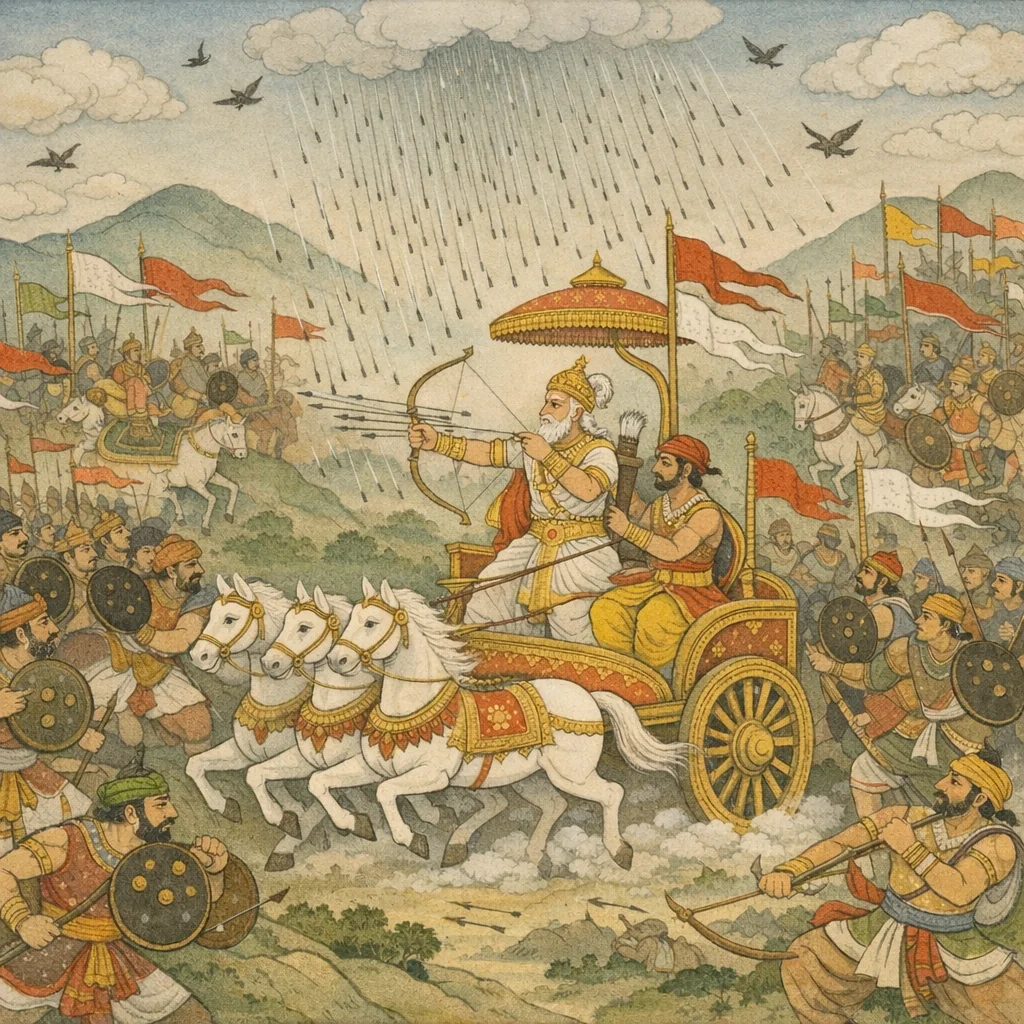
Saṃjaya reports that Arjuna, assessing Bhīṣma’s continuing battlefield dominance, instructs Śikhaṇḍin to come forward toward the grandsire, assuring him not to fear Bhīṣma and stating his intent to dislodge Bhīṣma from the chariot with concentrated archery. This call triggers a broader Pāṇḍava surge: Dhṛṣṭadyumna, Abhimanyu, the twins, Yudhiṣṭhira, and allied kings press toward Bhīṣma’s position. In response, Kaurava champions execute a coordinated set of counter-moves, each intercepting a specific attacker (e.g., Kṛtavarmā checks Dhṛṣṭadyumna; Somadatta checks Bhīma; Vikarṇa checks Nakula; Kṛpa checks Sahadeva; Aśvatthāmā checks Virāṭa and Drupada; Bhāradvāja’s son (Droṇa) checks Yudhiṣṭhira). Duḥśāsana then directly engages Arjuna to prevent access to Bhīṣma, producing a high-intensity chariot duel. The chapter emphasizes reciprocal archery exchanges: Duḥśāsana strikes Arjuna and Kṛṣṇa; Arjuna responds with dense volleys that pierce armor; Duḥśāsana repeatedly recovers, re-arms, and continues interception near Bhīṣma’s front, illustrating both tactical resilience and the protective perimeter around the commander.
Chapter Arc: रणभूमि में ध्वज-पताकाओं का वन-सा उठना और रथों की वायु-सी गति—युद्ध का दृश्य गन्धर्व-नगर की भाँति चमकता है, पर उसी चमक के भीतर मृत्यु की छाया घनी है। → गंगानन्दन भीष्म, रथियों में श्रेष्ठ, पाण्डव-सेना पर शतशः सहस्रशः तीक्ष्ण बाणों की वर्षा करते हैं। रथ पैदल सैनिकों और घोड़ों को रौंदते हुए आगे बढ़ते हैं; कटे धान के ढेरों को बैलों के झुंड जैसे मर्दित करते हैं, वैसे ही मनुष्य-समूह कुचले जाते हैं। → युद्ध का रूप ‘यमराष्ट्र-विवर्धनी’ बन जाता है—क्रव्याद पक्षियों और हंसों से भरा, लाशों से पटता, ध्वजों-सा दिखता पर वास्तव में मर्त्यकुल का अपहरण करता हुआ। क्षत्रिय चीख उठते हैं कि दुर्योधन के अपराध से क्षत्रिय-समाज क्षय को जा रहा है। → वर्णन युद्ध के संकुल, रक्तमय प्रवाह पर ठहरता है—यह स्वजनक्षय घोर है, कारण चाहे दैव हो या पुरुषार्थ, पर उसका भार नेतृत्व और अहं के निर्णयों पर भी पड़ता है। अध्याय ‘घमासान युद्ध’ के व्यापक चित्र के साथ समाप्त होता है। → भीष्म की प्रचण्डता के सामने पाण्डव-पक्ष अगला प्रतिकार कैसे रचेगा—और यह स्वजनक्षय किस मोड़ पर टूटेगा—यह प्रश्न अगले प्रसंगों में धकेल देता है।
Shlokas
Verse 1
अपन प्रा बा >>: > यहाँपर “मर्यादा” शब्द सम्बन्धकी मर्यादाके लिये प्रयुक्त हुआ है। ग>र्योधिकशततमो< ध्याय: उभय पक्षकी सेनाओंका घमासान युद्ध और रक्तमयी रणनदीका वर्णन संजय उवाच मध्यन्दिने महाराज संग्राम: समपद्यत । लोकक्षयकरो रौद्रो भीष्मस्य सह सोमकै:,संजय कहते हैं--महाराज! दोपहर होते-होते भीष्मका सोमकोंके साथ लोकविनाशक भयंकर संग्राम होने लगा
Sanjaya said: “O King, by midday a battle had fully erupted—fierce and dreadful, bringing ruin upon the people—between Bhishma and the Somakas.”
Verse 2
गाड़ेयो रथिनां श्रेष्ठ; पाण्डवानामनीकिनीम् । व्यधमन्निशितैर्बाणै: शतशो5थ सहस्रश:,रथियोंमें श्रेष्ठ गंगानन्दन भीष्मने सैकड़ों और हजारों तीखे बाणोंकी वर्षा करके पाण्डवोंकी विशाल सेनाको नष्ट करना आरम्भ किया
Sañjaya said: Bhīṣma, the son of the Gaṅgā and foremost among chariot-warriors, began to shatter the Pāṇḍavas’ great host, showering it with sharp arrows by the hundreds and by the thousands.
Verse 3
सम्ममर्द च तत् सैन्यं पिता देवव्रतस्तव । धान्यानामिव लूनानां प्रकरं गोगणा इव,राजन! जैसे बैलोंके समुदाय कटे हुए धानके बोझोंका मर्दन करते हैं, उसी प्रकार आपके ताऊ देवव्रतने उस सेनाको रौंद डाला
Sañjaya said: Your uncle Devavrata (Bhīṣma) crushed that army, O King—just as a herd of oxen tramples and presses down heaps of harvested grain.
Verse 4
धृष्टद्युम्न: शिखण्डी च विराटो द्रुपदस्तथा । भीष्ममासाद्य समरे शरैर्जघ्नुर्महारथम्,तब धृष्टद्युम्म, शिखण्डी, विराट और ट्रुपदने समरभूमिमें महारथी भीष्मके पास पहुँचकर उन्हें बाणोंसे घायल करना आरम्भ किया
Sanjaya said: Dhrishtadyumna, Shikhandi, Virata, and Drupada likewise closed in upon Bhishma on the battlefield and began striking that great chariot-warrior with volleys of arrows.
Verse 5
धृष्टद्युम्न॑ ततो विद्ध्वा विराटं च शरैस्त्रिभि: । ट्रुपदस्य च नाराचं प्रेषयामास भारत,भारत! तदनन्तर भीष्मने विराट और धृष्टद्युम्नको तीन बाणोंसे घायल करके द्रुपदपर नाराचका प्रहार किया
Sañjaya said: Then, having struck Dhṛṣṭadyumna and also Virāṭa with three arrows, he sent a nārāca-shaft against Drupada, O Bhārata.
Verse 6
तेन विद्धा महेष्वासा भीष्मेणामित्रकर्षिणा । चुक्रुधु: समरे राजन् पादस्पृष्टा इवोरगा:,राजन! शत्रुसूदन भीष्मके द्वारा घायल हुए वे महाधनुर्धर वीर पैरोंसे कुचले हुए सर्पोंकी भाँति समरांगणमें अत्यन्त कुपित हो उठे
Sañjaya said: Struck by Bhīṣma—the mighty warrior who crushes the foe—those great bowmen blazed with wrath upon the battlefield, O King, like serpents trampled underfoot.
Verse 7
शिखण्डी तं च विव्याध भरतानां पितामहम् । स्त्रीमयं मनसा ध्यात्वा नास्मै प्राहरदच्युत:,शिखण्डीने भरतवंशियोंके पितामह भीष्मको बींध डाला; परंतु मन-ही-मन उसे स्त्रीरूप मानकर अपनी मर्यादासे च्युत न होनेवाले भीष्मने उसपर प्रहार नहीं किया
Sañjaya said: Śikhaṇḍī pierced Bhīṣma, the grandsire of the Bharatas. Yet Bhīṣma—steadfast in his vow and propriety—would not strike back, for in his mind he regarded Śikhaṇḍī as female.
Verse 8
धृष्टद्युम्नस्तु समरे क्रोधेनाग्निरिव ज्वलन् । पितामहूं त्रिभिबणिर्बाह्वोरुससि चार्पयत्,धृष्टद्युम्न रणक्षेत्रमें क्रोधसे अग्निकी भाँति जल उठे। उन्होंने तीन बाणोंसे पितामह भीष्मको उनकी छाती और भुजाओंमें चोट पहुँचायी
Sañjaya said: In the thick of battle, Dhṛṣṭadyumna, blazing like fire with wrath, struck the grandsire Bhīṣma with three arrows, planting them in his arms and upon his chest.
Verse 9
द्रुपद: पञचविंशत्या विराटो दशभि: शरै: । शिखण्डी पज्चविंशत्या भीष्मं विव्याध सायकै:,द्रपदने पचीस, विराटने दस और शिखण्डीने पचीस सायकोंद्वारा भीष्मको घायल कर दिया
Sañjaya said: Drupada struck Bhīṣma with twenty-five arrows; Virāṭa pierced him with ten shafts; and Śikhaṇḍī again wounded Bhīṣma with twenty-five missiles.
Verse 10
सो$तिविद्धो महाराज शोणितौघपरिप्लुत: । वसन्ते पुष्पशबलो रक्ताशोक इवाबभौ
Sañjaya said: O great king, pierced through and through and drenched in torrents of blood, he appeared like a red Aśoka tree in spring, variegated with blossoms.
Verse 11
महाराज! उनके सायकोंसे अत्यन्त घायल होनेके कारण वे रक्तप्रवाहसे नहा उठे और वसन्तऋतुमें पुष्पोंसे भरे हुए रक्ताशोककी भाँति शोभा पाने लगे ।। तान् प्रत्यविध्यद् गाड़ेयस्सत्रिभिस्त्रिभिरजिद्ागै: । ट्रुपदस्य च भल्लेन धनुश्चिच्छेद मारिष,आर्य! उस समय गंगानन्दन भीष्मने उन सबको तीन-तीन सीधे जानेवाले बाणोंसे घायल कर दिया और एक भल्लके द्वारा द्रपदका धनुष काट दिया
Sañjaya said: O King, grievously struck by those arrows, they seemed bathed in streams of blood, and shone like red aśoka trees in spring laden with blossoms. Then Bhīṣma, the son of the Gaṅgā, pierced each of them with three straight-flying shafts; and with a broad-headed arrow he cut down Drupada’s bow.
Verse 12
सोअन्यत् कार्मुकमादाय भीष्म विव्याध पञ्चभि: । सारथिं च त्रिभिर्बाणै: सुशितै रणमूर्धनि,तब उन्होंने दूसरा धनुष हाथमें लेकर युद्धके मुहानेपर पाँच तीखे बाणोंद्वारा भीष्मको और तीन बाणोंसे उनके सारथिको भी घायल कर दिया
Sañjaya said: Taking up another bow, he struck Bhīṣma with five keen arrows; and on the very forefront of the battle he also wounded Bhīṣma’s charioteer with three well-honed shafts.
Verse 13
तथा भीमो महाराज द्रौपद्या: पजच चात्मजा: । केकया भ्रातर: पञज्च सात्यकिश्ैव सात्वत:
Sañjaya said: “So too, O great king, Bhīma; the five sons of Draupadī; the five brothers of Kekaya; and Sātyaki of the Sātvata line.”
Verse 14
अभ्यद्रवन्त गाड़ेयं युधिष्ठिरपुरोगमा: ।। रिरक्षिषन्त: पाज्चाल्यं धृष्टद्युम्नपुरोगमा:
Sañjaya said: Led by Yudhiṣṭhira, they charged fiercely forward, intent on protecting the Pāñcāla prince; and with Dhṛṣṭadyumna at their head, they moved to shield him amid the press of battle.
Verse 15
महाराज! भीम, द्रौपदीके पाँचों पुत्र, पाँचों भाई केकयराजकुमार, सात्वतवंशी सात्यकि, युधिष्ठिर आदि पाण्डव-सैनिक तथा धृष्टद्युम्न आदि पांचाल-सैनिक द्रुपदकी रक्षाके लिये गंगानन्दन भीष्मपर टूट पड़े ।। तथैव तावका: सर्वे भीष्मरक्षार्थमुद्यता: । प्रत्युद्ययु: पाण्डुसेनां सहसैन्या नराधिप,नरेश्वर! इसी प्रकार आपके समस्त सैनिक भीष्मकी रक्षाके लिये सेनासहित उद्यत हो पाण्डव-सेनापर चढ़ आये
Sañjaya said: O King! Bhīma, the five sons of Draupadī, the five princely brothers of the Kekaya line, Sātyaki of the Sātvata clan, the Pāṇḍava troops led by Yudhiṣṭhira, and the Pāñcāla forces led by Dhṛṣṭadyumna—all, for the protection of Drupada, rushed upon Bhīṣma, the son of the Gaṅgā. Likewise, O lord of men, all your warriors, resolved to protect Bhīṣma, advanced with their armies and counter-charged against the Pāṇḍava host.
Verse 16
तत्रासीत् सुमहद् युद्ध तव तेषां च संकुलम् | नराश्वरथनागानां यमराष्ट्रविवर्धनम्,तब वहाँ उन सबके पैदल, घुड़सवार, रथी और हाथीसवारोंमें अत्यन्त भयंकर घमासान युद्ध होने लगा, जो यमराजके राष्ट्रकी वृद्धि करनेवाला था
Sañjaya said: There arose there a very great and confused melee of battle between your forces and theirs—of foot-soldiers, horsemen, charioteers, and elephant-warriors—one that swelled the realm of Yama, for it sent multitudes to death.
Verse 17
रथी रथिनमासाद्य प्राहिणोद् यमसादनम् । तथेतरान् समासाद्य नरनागाश्चसादिन:,रथीने रथीका सामना करके उसे यमलोक पहुँचा दिया। पैदल, हाथीसवार और घुड़सवारोंने भी एक-दूसरेसे भिड़कर ऐसा ही किया
Sañjaya said: A chariot-warrior, closing in upon another chariot-warrior, dispatched him to Yama’s abode. Likewise, meeting their counterparts in close combat, the foot-soldiers, elephant-riders, and horsemen also struck one another down.
Verse 18
अनयन् परलोकाय शरै: संनतपर्वभि: । शरैश्न विविधैघोरैस्तत्र तत्र विशाम्पते
Sañjaya said: With arrows whose joints were well-tempered and firm, and with many kinds of dreadful shafts, they were sending men to the next world—striking them here and there across the field, O lord of men.
Verse 19
प्रजानाथ! उस युद्धस्थलमें जहाँ-तहाँ सब योद्धा झुकी हुई गाँठवाले नाना प्रकारके भयंकर बाणोंद्वारा अपने विपक्षियोंको परलोकके अतिथि बनाने लगे ।। रथास्तु रथिभिहीना हतसारथयस्तथा । विप्रद्रुता श्वाः समरे दिशो जग्मु: समन्ततः,कितने ही रथ रथियों और सारथियोंसे शून्य हो भागते हुए घोड़ोंके साथ सम्पूर्ण दिशाओंमें चक्कर काट रहे थे
Sañjaya said: O lord of men, on that battlefield the warriors everywhere, striking with many kinds of dreadful arrows with bent joints, were sending their opponents to the next world as guests of Death. And many chariots—bereft of their chariot-warriors and with their charioteers slain—were carried about by terrified, runaway horses, wheeling in all directions across the field.
Verse 20
मृद्नन्तस्ते नरान् राजन् हयांश्व सुबहून् रणे वातायमाना दृश्यने गन्धर्वनगरोपमा:,राजन! वे रथ उस रणक्षेत्रमें आपके बहुत-से पैदल मनुष्यों तथा घोड़ोंको कुचलते हुए हवाके समान तीव्र गतिसे भाग रहे थे और गन्धर्वनगरके समान दृष्टिगोचर हो रहे थे
Sañjaya said: O King, those chariots, crushing many of your foot-soldiers and horses in the battle, were seen rushing like the wind—appearing like a celestial city of the Gandharvas.
Verse 21
रथिनश्न रथैहीना वर्मिणस्तेजसा युता: । कुण्डलोष्णीषिण: सर्वे निष्काड्दविभूषणा:,प्रजानाथ! कितने ही रथी रथोंसे हीन हो गये थे। वे कवच, कुण्डल और पगड़ी धारण किये बड़े तेजस्वी दिखायी देते थे। उन सबने कण्ठमें स्वर्णमय पदक और भुजाओंमें बाजूबंद धारण कर रखे थे। वे देखनेमें देवकुमारोंके समान सुन्दर और युद्धमें इन्द्रके समान शौर्यसम्पन्न थे। वे समृद्धिमें कुबेर और नीतिज्ञतामें बृहस्पतिजीसे भी बढ़कर थे। ऐसे सर्वलोकेश्वर शूरवीर भी रथहीन हो गँवार मनुष्योंकी भाँति जहाँ-तहाँ भागते दिखायी देते थे
Sañjaya said: Many great chariot-warriors had been deprived of their chariots; yet, clad in armor and radiant with martial splendor, all of them wore earrings and turbans, adorned with golden neck-ornaments and armlets. Though they looked like celestial princes in beauty and were Indra-like in valor, they were seen running here and there on foot like ordinary men—showing how, in war, fortune and circumstance can strip even the mighty of their station and composure.
Verse 22
देवपुत्रसमा: सर्वे शौर्ये शक्रसमा युधि । ऋचछ्या वैश्रव्ं चाति नयेन च बृहस्पतिम्,प्रजानाथ! कितने ही रथी रथोंसे हीन हो गये थे। वे कवच, कुण्डल और पगड़ी धारण किये बड़े तेजस्वी दिखायी देते थे। उन सबने कण्ठमें स्वर्णमय पदक और भुजाओंमें बाजूबंद धारण कर रखे थे। वे देखनेमें देवकुमारोंके समान सुन्दर और युद्धमें इन्द्रके समान शौर्यसम्पन्न थे। वे समृद्धिमें कुबेर और नीतिज्ञतामें बृहस्पतिजीसे भी बढ़कर थे। ऐसे सर्वलोकेश्वर शूरवीर भी रथहीन हो गँवार मनुष्योंकी भाँति जहाँ-तहाँ भागते दिखायी देते थे
Sañjaya said: “All of them looked like sons of the gods—radiant and splendid. In battle their valor matched Indra’s; in prosperity they rivaled Kubera; and in statecraft they even surpassed Bṛhaspati. Yet, O lord of men, by the turn of fate many great chariot-warriors were left without their chariots, and those very heroes—adorned with armor, earrings, and headgear, wearing golden neck-ornaments and armlets—were seen fleeing here and there like ordinary, bewildered men.”
Verse 23
सर्वलोकेश्चरा: शूरास्तत्र तत्र विशाम्पते । विप्रद्रुता व्यदृश्यन्त प्राकृता इव मानवा:,प्रजानाथ! कितने ही रथी रथोंसे हीन हो गये थे। वे कवच, कुण्डल और पगड़ी धारण किये बड़े तेजस्वी दिखायी देते थे। उन सबने कण्ठमें स्वर्णमय पदक और भुजाओंमें बाजूबंद धारण कर रखे थे। वे देखनेमें देवकुमारोंके समान सुन्दर और युद्धमें इन्द्रके समान शौर्यसम्पन्न थे। वे समृद्धिमें कुबेर और नीतिज्ञतामें बृहस्पतिजीसे भी बढ़कर थे। ऐसे सर्वलोकेश्वर शूरवीर भी रथहीन हो गँवार मनुष्योंकी भाँति जहाँ-तहाँ भागते दिखायी देते थे
Sañjaya said: O lord of the people, heroic warriors famed across all the worlds were seen here and there, routed and fleeing—appearing like ordinary men. Thus, even those celebrated as world-renowned champions, when deprived of their chariots and shaken by the press of battle, seemed to lose their former splendor and ran about in confusion, revealing how war levels status and exposes human vulnerability.
Verse 24
दन्तिनश्न नरश्रेष्ठ हीना: परमसादिभि: । मृद्नन्तः स्वान्यनीकानि निपेतु: सर्वशब्दगा:,नरश्रेष्ठ, कितने ही दन्तार हाथी अपने श्रेष्ठ सवारोंसे रहित हो अपनी ही सेनाको कुचलते हुए प्रत्येक शब्दके पीछे दौड़ते थे
Sañjaya said: “O best of men, many elephants, bereft of their finest riders and goaded into frenzy, began trampling their own formations. Startled by every sound, they rushed about and fell into confusion, spreading panic across the battlefield.”
Verse 25
चर्मभिक्षामरैश्षित्रै: पताकाभिक्न मारिष | छत्रै: सितैहेमदण्डैश्वामरैश्व समनन्तत:,माननीय महाराज! ढाल, विचित्र चँवर, पताका, श्वेत छत्र, सुवर्णदण्डभूषित चामर--ये चारों ओर बिखरे पड़े थे और (इन्हींके ऊपरसे) नूतन मेघोंकी घटाके सदृश हाथी मेघोंके समान भयंकर गर्जना करते हुए सम्पूर्ण दिशाओंमें दौड़ते दिखायी देते थे
Sañjaya said: “O venerable one, all around were strewn shields, variegated yak-tail fans, and torn banners; and there too lay white parasols with golden staffs and ceremonial cāmaras. Over and across this scattered pageantry of war, elephants—like fresh thunderclouds—were seen rushing in every direction, roaring terribly.”
Verse 26
विशीर्णविप्रधावन्तो दृश्यन्ते सम दिशो दश | नवमेघप्रतीकाशा जलदोपमनि:स्वना:,माननीय महाराज! ढाल, विचित्र चँवर, पताका, श्वेत छत्र, सुवर्णदण्डभूषित चामर--ये चारों ओर बिखरे पड़े थे और (इन्हींके ऊपरसे) नूतन मेघोंकी घटाके सदृश हाथी मेघोंके समान भयंकर गर्जना करते हुए सम्पूर्ण दिशाओंमें दौड़ते दिखायी देते थे
Sañjaya said: “Scattered and fleeing in disorder, they were seen rushing in all ten directions—like newly formed storm-clouds in appearance, and with a roar like thunderclouds.”
Verse 27
तथैव दन्तिभिहीना गजारोहा विशाम्पते । प्रधावन्तो 5न्वदृश्यन्त तव तेषां च संकुले,प्रजानाथ! इसी प्रकार हाथियोंसे रहित हाथीसवार भी आपके और पाण्डवोंके भयानक युद्धमें इधर-उधर दौड़ते दिखायी देते थे
Sañjaya said: “In the same way, O lord of the people, elephant-riders who had been separated from their elephants were seen running about in confusion amid that dense and dreadful clash between your forces and theirs.”
Verse 28
नानादेशसमुत्थांश्व॒ तुरगान् हेमभूषितान् । वातायमानानद्राक्ष शतशशो5थ सहस्रश:,अनेक देशोंमें उत्पन्न, सुवर्णभूषित और वायुके समान वेगशाली सैकड़ों और हजारों घोड़ोंको हमने रणभूमिसे भागते देखा है
Sañjaya said: “I saw horses—bred in many different lands, adorned with golden trappings—fleeing from the battlefield in hundreds and in thousands, swift as the wind.”
Verse 29
अश्वारोहान् हतैरश्वैरगहीतासीन् समनन््ततः । द्रवमाणानपश्याम द्राव्यमाणांश्व॒ संयुगे,हमने युद्धमें बहुत-से घुड़सवारोंको देखा, जो घोड़ोंके मारे जानेपर हाथमें तलवार लिये सब ओर भागते और शत्रुओंद्वारा खदेड़े जाते थे
Sañjaya said: “In that battle I saw many horsemen whose horses had been slain; sword in hand and bereft of their mounts, they fled in every direction, driven back and chased down by the enemy.”
Verse 30
गजो गजं समासाद्य द्रवमाणं महाहवे । ययौ प्रमृद्य तरसा पादातान् वाजिनस्तथा,उस महायुद्धमें एक हाथी भागते हुए दूसरे हाथीके पास पहुँचकर अपने वेगसे बहुतेरे पैदल सिपाहियों तथा घोड़ोंको कुचलता हुआ उसका अनुसरण करता था
Sañjaya said: “In that great battle, one elephant, coming up to another elephant that was fleeing, pressed on in pursuit—crushing under its sheer momentum many foot-soldiers and horses as it surged forward.”
Verse 31
तथैव च रथान् राजन् प्रममर्द रणे गज: । रथाश्वैव समासाद्य पतितांस्तुरगान् भुवि,राजन! इसी प्रकार उस रणक्षेत्रमें एक हाथी बहुत-से रथोंको रौंद डालता था और रथ पृथ्वीपर पड़े हुए घोड़ोंको कुचलकर भागते जाते थे
Sañjaya said: “So too, O King, in that battle an elephant crushed many chariots; and the chariots, rushing on, trampled the horses that had fallen upon the ground.”
Verse 32
व्यमृद्नन् समरे राजंस्तुरगाश्न नरान् रणे । एवं ते बहुधा राजनू् प्रत्यमृदूनन् परस्परम्,नरेश्वर! समरांगणमें बहुत-से घोड़ोंने पैदल मनुष्योंको कुचल दिया। राजन्! इस प्रकार वे सैनिक अनेक बार एक-दूसरेको कुचलते रहे
Sañjaya said: “O King, in the clash of battle the horses trampled down the foot-soldiers. Thus, O ruler of men, those warriors again and again crushed one another in the press of war.”
Verse 33
तस्मिन् रौद्रे तथा युद्धे वर्तमाने महा भये । प्रावर्तत नदी घोरा शोणितान्त्रतरद्धिणी,उस महाभयंकर घोर युद्धमें रक्त, आँत और तरंगोंसे युक्त एक भयानक नदी बह चली
Sañjaya said: “As that fierce battle raged on in dreadful terror, a horrifying river began to flow—its current made of blood, its contents of entrails, and its waves churning with gore.”
Verse 34
अस्थिसंघातसम्बाधा केशशैवलशाद्वला । रथद्गदा शरावर्ता हयमीना दुरासदा,वह हड्डियोंके समूहरूपी शिलाखण्डोंसे भरी थी। केश ही उसमें सेवार और घासके समान जान पड़ते थे। रथ कुण्ड और बाण भँवरके समान प्रतीत होते थे। घोड़े ही उस दुर्गम नदीके मत्स्य थे
Sañjaya said: “That dreadful river was choked with heaps of bones like rocky masses. Hair upon it looked like algae and grass. Chariots and maces appeared as its pools, arrows as its whirlpools, and horses as the fish within it—making it perilous and hard to cross.”
Verse 35
शीर्षोपलसमाकीर्णा हस्तिग्राहसमाकुला । कवचोष्णीषफेनौघा धरनुर्वेगासिकच्छपा,कटे हुए मस्तक पत्थरोंके टुकड़ोंके समान बिखरे थे। हाथी ही उसमें विशाल ग्राहके समान जान पड़ते थे, कवच और पगड़ी फेनराशिके समान थे, धनुष ही उसका वेगयुक्त प्रवाह और खड्ग ही वहाँ कच्छपके समान प्रतीत होते थे
Sañjaya said: “The battlefield looked like a river in spate—strewn with severed heads like scattered stones, crowded with elephants as though they were mighty crocodiles; coats of mail and turbans rose like foaming masses, bows formed its swift current, and swords seemed like turtles moving within it.”
Verse 36
पताकाध्वजवृक्षाद्या मर्त्यकूलापहारिणी । क्रव्यादहंससंकीर्णा यमराष्ट्रविवर्धनी,पताका और ध्वजाएँ किनारेके वृक्षोंक समान जान पड़ती थीं। मनुष्योंकी लाशें ही उसके कागारें थीं, जिन्हें वह अपने वेगसे तोड़-तोड़कर बहा रही थी। मांसाहारी पक्षी ही उसके आस-पास हंसोंके समान भरे हुए थे। वह नदी यमके राज्यको बढ़ा रही थी
Sañjaya said: “Its banners and standards looked like trees lining the banks. It swept away heaps of human corpses, breaking them apart with its rushing force. Flesh-eating birds crowded around it as if they were swans. That river only enlarged Yama’s realm—feeding death with the harvest of war.”
Verse 37
तां नदीं क्षत्रिया: शूरा रथनागहयप्लवै: । प्रतेरुबहवोी राजन् भयं त्यक्त्वा महारथा:,राजन! बहुत-से शूरवीर महारथी क्षत्रिय नौकाके समान घोड़े, रथ, हाथी आदिपर चढ़कर भयसे रहित हो उस नदीके पार जा रहे थे
Sañjaya said: “O King, many valiant Kṣatriya warriors—great chariot-fighters—casting off fear, crossed that river, using chariots, elephants, and horses as though they were boats.”
Verse 38
अपोवाह रणे भीरून् कश्मलेनाभिसंवृतान् । यथा वैतरणी प्रेतान् प्रेतराजपुरं प्रति,जैसे वैतरणी नदी मरे हुए प्राणियोंको प्रेतराजके नगरमें पहुँचाती है, उसी प्रकार वह रक्तमयी नदी डरपोक और कायरोंको मूर्च्छित-से करके रणभूमिसे दूर हटाने लगी
Sañjaya said: “In the battle, it swept away the fearful—those enveloped by despair and confusion—just as the Vaitaraṇī carries the dead toward the city of the Lord of the departed. So that blood-like river drove the timid, as if fainting, away from the field of war.”
Verse 39
प्राक्रोशन् क्षत्रियास्तत्र दृष्टवा तद् वैशसं महत् । दुर्योधनापराधेन गच्छन्ति क्षत्रिया: क्षयम्,वहाँ खड़े हुए क्षत्रिय वह अत्यन्त भयंकर मारकाट देखकर यह पुकार-पुकारकर कह रहे थे कि दुर्योधनके अपराधसे ही सारे क्षत्रिय विनाशको प्राप्त हो रहे हैं
Sañjaya said: “There the kṣatriyas, seeing that immense and dreadful slaughter, cried out aloud again and again: ‘Because of Duryodhana’s wrongdoing, the kṣatriya host is being driven to destruction.’”
Verse 40
गुणवत्सु कथं द्वेषं धृतराष्ट्रो जनेश्वर: । कृतवान् पाण्डुपुत्रेषु पापात्मा लोभमोहित:,पापात्मा राजा धुृतराष्ट्रने लोभसे मोहित होकर गुणवान् पाण्डवोंसे द्वेष क्यों किया?
Sañjaya said: “How did Dhṛtarāṣṭra, lord of men, come to bear hatred toward the virtuous sons of Pāṇḍu? Deluded by greed, that sinful-minded king directed his malice against them.”
Verse 41
एवं बहुविधा वाच: श्रूयन्ते सम परस्परम् । पाण्डवस्तवसंयुक्ता: पुत्राणां ते सुदारुणा:,महाराज! इस प्रकार वहाँ परस्पर कही हुई पाण्डवोंकी प्रशंसा तथा आपके पुत्रोंकी अत्यन्त भयंकर निन््दासे युक्त नाना प्रकारकी बातें सुनायी पड़ती थीं
Sañjaya said: “O great king, on every side were heard many kinds of remarks exchanged among the people—words that praised the Pāṇḍavas and, in the same breath, spoke with harsh and dreadful censure of your sons. Thus the talk in the camp revealed the moral judgment forming around the conduct of the rival parties on the eve of war.”
Verse 42
ता निशम्य ततो वाच: सर्वयोधैरुदाह्ृता: । आगस्कृत् सर्वलोकस्य पुत्रो दुर्योधनस्तव,भारत! तब सम्पूर्ण योद्धाओंके मुखसे निकली हुई उन बातोंको सुनकर सम्पूर्ण लोकोंका अपराध करनेवाले आपके पुत्र दुर्योधनने भीष्म, द्रोण, कृप और शल्यसे कहा --“आपलोग अहंकार छोड़कर युद्ध करें; विलम्ब क्यों कर रहे हैं?
Sañjaya said: “Hearing those words spoken aloud by all the warriors, your son Duryodhana—one who had brought offence upon the whole world—addressed Bhīṣma, Droṇa, Kṛpa, and Śalya: ‘Cast aside pride and fight. Why do you delay?’”
Verse 43
भीष्म॑ द्रोणं कृपं चैव शल्यं चोवाच भारत । युध्यध्वमनहंकारा: कि चिरं कुरुथेति च,भारत! तब सम्पूर्ण योद्धाओंके मुखसे निकली हुई उन बातोंको सुनकर सम्पूर्ण लोकोंका अपराध करनेवाले आपके पुत्र दुर्योधनने भीष्म, द्रोण, कृप और शल्यसे कहा --“आपलोग अहंकार छोड़कर युद्ध करें; विलम्ब क्यों कर रहे हैं?
Sañjaya said: “Then Duryodhana addressed Bhīṣma, Droṇa, Kṛpa, and Śalya: ‘Fight, setting aside pride and self-importance. Why do you delay so long?’ The moment underscores how, in the heat of war, impatience and ego drive commanders to pressure elders and teachers, turning duty into a contest of prestige rather than a disciplined pursuit of righteous conduct.”
Verse 44
ततः प्रववृते युद्ध कुरूणां पाण्डवैः सह । अक्षद्यूतकृतं राजन् सुघोरं वैशसं तदा
Sañjaya said: “Then the war between the Kurus and the Pāṇḍavas began—O King—an exceedingly dreadful and ruinous conflict, born of the dice-game’s wrongdoing.”
Verse 45
राजन्! तदनन्तर कौरवोंका पाण्डवोंके साथ अत्यन्त भयंकर युद्ध होने लगा, जो कपटपूर्ण द्यूतके कारण सम्भव हुआ था और जिसमें बड़ी भारी मारकाट मच रही थी ।। यत् पुरा न निगृह्नासि वार्यमाणो महात्मभि: । वैचित्रवीर्य तस्येद॑ फलं पश्य सुदारुणम्,विचित्रवीर्यनन्दन महाराज धृतराष्ट्र! पूर्वकालमें महात्मा पुरुषोंके मना करनेपर भी जो आपने उनकी बातें नहीं मानीं, उसीका यह भयंकर फल प्राप्त हुआ है, इसे देखिये
Sanjaya said: “O King, thereafter a most dreadful battle broke out between the Kauravas and the Pandavas—an outcome made possible by the deceitful game of dice—and it was filled with terrible slaughter. What you once failed to restrain, though urged by noble-minded elders, has now ripened into its harshest consequence. O Dhritarashtra, son of Vichitravirya: behold this exceedingly cruel fruit of your earlier refusal to heed the counsel of the great.”
Verse 46
न हि पाण्डुसुता राजन् ससैन्या: सपदानुगा: । रक्षन्ति समरे प्राणान् कौरवा वापि संयुगे,राजन! सेना और सेवकोंसहित पाण्डव अथवा कौरव समरभूमिमें अपने प्राणोंकी रक्षा नहीं करते हैं--प्राणोंका मोह छोड़कर युद्ध कर रहे हैं
Sañjaya said: O King, neither the sons of Pāṇḍu—together with their troops and followers—nor the Kauravas in this battle are trying to preserve their lives. Casting off attachment to life, they are fighting in the clash of arms.
Verse 47
एतस्मात् कारणाद् घोरो वर्तते स्वजनक्षय: । दैवाद् वा पुरुषव्याप्र तव चापनयान्नूप,पुरुषसिंह! नरेश्वर! इस कारणसे अथवा दैवकी प्रेरणासे या आपके ही अन्यायसे होनेवाले इस युद्धमें स्वजनोंका घोर संहार हो रहा है
Sañjaya said: “For this very reason, a dreadful destruction of one’s own kinsmen is taking place—whether by fate’s compulsion, O tiger among men, or through your own wrongful course, O king, O lion among men, O lord of men.”
Verse 102
इस प्रकार श्रीमहाभारत भीष्मपर्वके अन्तर्गत भीष्मवधपर्वमें भीमपराक्रमविषयक एक यौ दोवाँ अध्याय पूरा हुआ
Sañjaya said: Thus, in the Śrī Mahābhārata, within the Bhīṣma Parva, in the section concerning the slaying of Bhīṣma, the one-hundred-and-second chapter—dealing with Bhīma’s mighty prowess—comes to its conclusion.
Verse 103
इति श्रीमहाभारते भीष्मपर्वणि भीष्मवधपर्वणि संकुलयुद्धे उयधिकशततमो ध्याय:,इस प्रकार श्रीमह्या भारत भीष्मपर्वके अन्तर्गत भीष्मवधपर्वमें घमासान युद्धविषयक एक सौ तीसरा अध्याय पूरा हुआ
Sañjaya concludes: Thus, in the Śrī Mahābhārata, within the Bhīṣma Parva—specifically the section on the slaying of Bhīṣma—ends the one-hundred-and-third chapter, describing the fierce and confused clash of battle.
Frequently Asked Questions
The narrative juxtaposes reverence for an elder (Bhīṣma as pitāmaha) with the wartime necessity of neutralizing the opposing commander, raising the question of how duty is executed when the target is also an object of familial and institutional respect.
Complex objectives in a hierarchical conflict environment are achieved through coordinated roles: a forward screen (Śikhaṇḍin), a principal striker (Arjuna), morale amplification (Dhṛṣṭadyumna), and defensive interdiction (Kaurava interceptors), demonstrating that outcomes depend on systems of action rather than isolated heroics.
No explicit phalaśruti appears in the provided passage; the meta-commentary functions indirectly through Saṃjaya’s framing, which presents tactical events as evidence for broader themes of leadership protection, resilience, and the moral complexity of duty-driven action.