Adhyaya 8
Muñjavān on Himavat: Maheśvara’s abode, Śiva-stuti, and sacrificial gold (Chapter 8)
Upa-parva: Āśvamedha-saṃvidhāna and Śiva-stuti episode (Marutta–Saṃvarta–Bṛhaspati context)
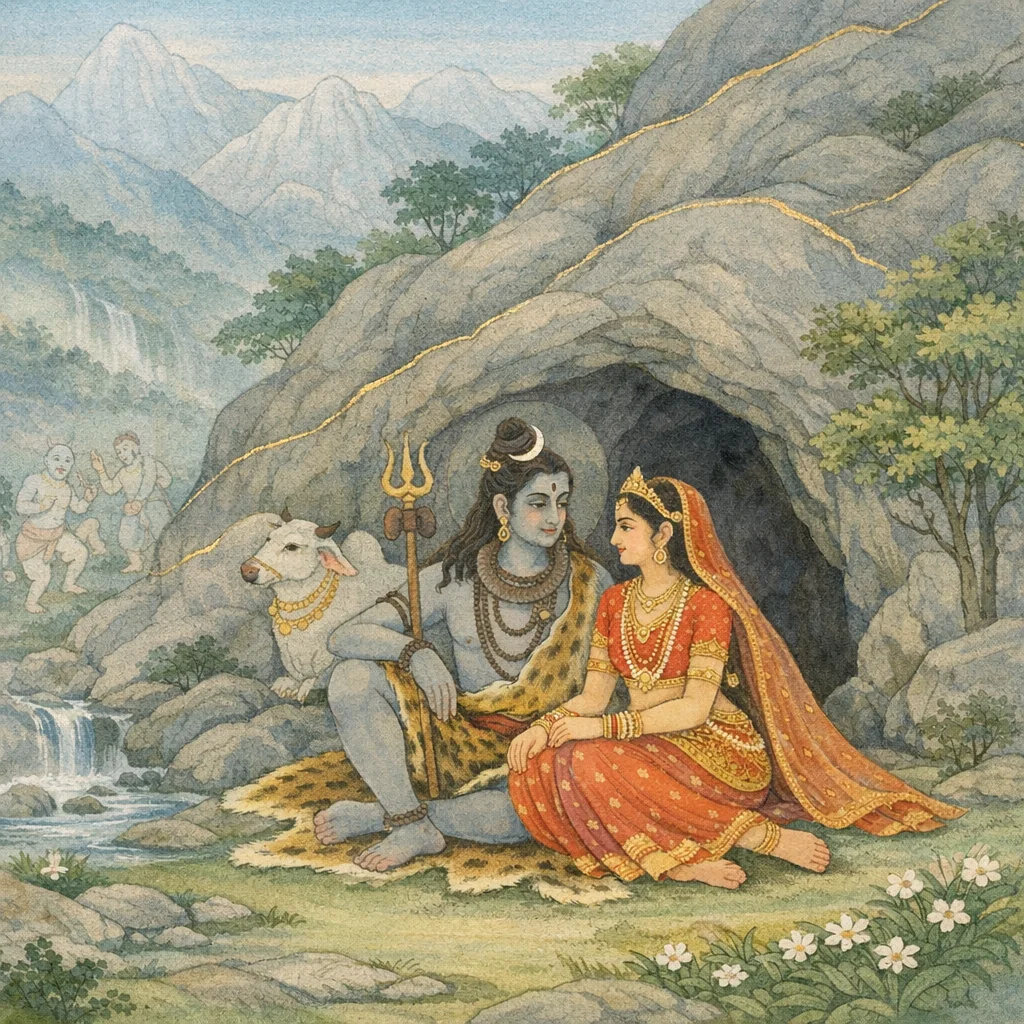
Saṃvarta describes Muñjavān mountain on the back of Himavat as a sacred terrain where Umāpati (Maheśvara) abides with gaṇas and is attended by multiple divine and semi-divine classes (Rudras, Sādhyas, Viśvedevas, Vasus, Yama, Varuṇa, Kubera, Aśvins, Gandharvas, Apsarases, Yakṣas, Devarṣis, Ādityas, Maruts, and others). The locale is portrayed as beyond ordinary sensory and climatic conditions—no heat/cold, wind/sun, hunger/thirst, fear, aging, or death—emphasizing transcendence. The mountain’s flanks shine with gold-like radiance, and Kubera’s armed associates guard its mineral wealth. Saṃvarta then provides an extended Śiva-stuti through many epithets (e.g., Śarva, Rudra, Śitikaṇṭha, Tryambaka, Paśupati, Tripuraghna), prescribing reverential homage as the means to obtain gold for the sacrifice. Vyāsa reports that, following these instructions, Kāraṃdhama’s son arranges an extraordinary yajña-procedure; artisans fabricate golden vessels. Hearing of Marutta’s prosperity, Bṛhaspati becomes distressed, anticipating Saṃvarta as a rival, and Indra approaches him to speak.
Chapter Arc: संवर्त-मरुत्त उपाख्यान की धारा आगे बढ़ती है: मरुत्त को धन-समृद्धि की सिद्धि हेतु महादेव के नाममय स्तोत्र का उपदेश मिलता है, और कथा का द्वार एक दिव्य पर्वत-लोक की ओर खुलता है जहाँ कुबेर के अनुचर रमण करते हैं। → वर्णन गहन होता जाता है—वनस्पतियों की जड़ों, दुर्गम शिखरों और शैलराज की गुफाओं में नाना भूतगणों से घिरे, उमा-सहाय महेश्वर का नित्य निवास बताया जाता है। साथ ही कुबेर के प्रियार्थ उस पर्वत के चारों ओर सूर्य-किरणों-सी दीप्तिमान सुवर्ण-खानों का संकेत मरुत्त की अभिलाषा को तीव्र करता है। → महादेव की नामावली-स्तुति का उत्कर्ष—रुद्र, शितिकण्ठ, कपर्दी, कराल, वरद, ध्रुवहस्त, विरूपाक्ष आदि अनेक नामों से स्तवन—और उसी के फलस्वरूप दिव्य लोक का प्रत्यक्ष-सा चित्र: प्रभात-सूर्य-सम तेज, अप्राकृत सौंदर्य, तथा जरा-क्षुधा-पिपासा-मृत्यु-भय से रहित अवस्था का वर्णन। → कथा यह स्थापित करती है कि धन की प्राप्ति का मूल केवल भौतिक साधन नहीं, बल्कि शिव-भक्ति और नाम-स्मरण की शक्ति है; कुबेर-सम्बद्ध सुवर्ण-समृद्धि का मार्ग भी उसी आध्यात्मिक अनुशासन से प्रशस्त होता है। → मरुत्त के लिए इस उपदेश का प्रत्यक्ष फल—धन-प्राप्ति की ठोस परिणति और आगे की घटनाएँ—अगले अध्याय की ओर संकेत बनकर ठहर जाती हैं।
Shlokas
Verse 1
अत-४#-#काञ अष्टमो> ध्याय: संवर्तका मरुत्तको सुवर्णकी प्राप्तिके लिये महादेवजीकी नाममयी स्तुतिका उपदेश और धनकी प्राप्ति तथा मरुत्तकी सम्पत्तिसे बृहस्पतिका चिन्तित होना संवर्त उवाच गिरेहिमवत: पृष्ठे मुजचवान् नाम पर्वत: । तप्यते यत्र भगवांस्तपो नित्यमुमापति:,संवर्तने कहा--राजन्! हिमालयके पृष्ठभागमें मुडचवान् नामक एक पर्वत है, जहाँ उमावलल्लभ भगवान् शंकर सदा तपस्या किया करते हैं
Saṃvarta said: “O King, on the heights of the Himālaya there is a mountain named Muñjavān. There the Blessed Lord, Umāpati (Śiva, the consort of Umā), continually performs austerities.”
Verse 2
वनस्पतीनां मूलेषु शुड्रेषु विषमेषु च । गुहासु शैलराजस्य यथाकामं यथासुखम्,वहाँ वनस्पतियोंके मूलभागमें, दुर्गण शिखरोंपर तथा गिरिराजकी गुफाओंमें नाना प्रकारके भूतगणोंसे घिरे हुए महातेजस्वी त्रिशूलधारी भगवान् महेश्वर उमादेवीके साथ इच्छानुसार सुखपूर्वक सदा निवास करते हैं
Saṁvarta said: “At the roots of trees, on low and rugged uneven heights, and within the caves of the king of mountains, the supremely radiant Lord Maheśvara—bearing the trident—dwells eternally with Goddess Umā, surrounded by hosts of diverse beings, abiding as he wills and in perfect ease.”
Verse 3
उमासहायो भगवान् यत्र नित्य॑ं महेश्वर: । आस्ते शूली महातेजा नानाभूतगणावृत:,वहाँ वनस्पतियोंके मूलभागमें, दुर्गण शिखरोंपर तथा गिरिराजकी गुफाओंमें नाना प्रकारके भूतगणोंसे घिरे हुए महातेजस्वी त्रिशूलधारी भगवान् महेश्वर उमादेवीके साथ इच्छानुसार सुखपूर्वक सदा निवास करते हैं
Saṃvarta said: There, the blessed Lord Maheśvara—ever accompanied by Umā—abides continually. The trident-bearing, mighty and radiant Śiva dwells surrounded by hosts of diverse beings, making that wild mountain-land his chosen, peaceful residence.
Verse 4
तत्र रुद्राश्न॒ साध्याश्ष विश्वेष्थ वसवस्तथा । यमश्नच वरुणश्लैव कुबेरश्न सहानुग:,उस पर्वतपर रुद्रगण, साध्यगण, विश्वेदेवगण, वसुगण, यमराज, वरुण, अनुचरोंसहित कुबेर, भूत, पिशाच, अश्विनीकुमार, गन्धर्व, अप्सरा, यक्ष, देवर्षि, आदित्यगण, मरुदगण तथा यातुधानगण अनेक रूपधारी उमावल्लभ परमात्मा शिवकी सब प्रकारसे उपासना करते हैं
Saṃvarta said: “There, the Rudras and the Sādhyas, the Viśvedevas and the Vasus as well; Yama and Varuṇa, and Kubera together with his attendants—indeed all these divine hosts worship in every way Śiva, the supreme Lord, beloved of Umā, who assumes many forms.”
Verse 5
भूतानि च पिशाचाश्न नासत्यावपि चाश्रिनौ | गन्धर्वाप्सरसश्ैव यक्षा देवर्षयस्तथा,उस पर्वतपर रुद्रगण, साध्यगण, विश्वेदेवगण, वसुगण, यमराज, वरुण, अनुचरोंसहित कुबेर, भूत, पिशाच, अश्विनीकुमार, गन्धर्व, अप्सरा, यक्ष, देवर्षि, आदित्यगण, मरुदगण तथा यातुधानगण अनेक रूपधारी उमावल्लभ परमात्मा शिवकी सब प्रकारसे उपासना करते हैं
Saṃvarta said: “Beings of every order—spirits and goblins, the divine Aśvin twins, Gandharvas and Apsarases, Yakṣas and the seer-sages among the gods as well—offer worship. Thus the whole cosmos, from the subtle to the celestial, turns in reverence toward Śiva, the beloved of Umā, acknowledging him as the supreme Lord.”
Verse 6
आदित्या मरुतश्वैव यातुधानाश्च सर्वशः । उपासन्ते महात्मानं बहुरूपमुमापतिम्,उस पर्वतपर रुद्रगण, साध्यगण, विश्वेदेवगण, वसुगण, यमराज, वरुण, अनुचरोंसहित कुबेर, भूत, पिशाच, अश्विनीकुमार, गन्धर्व, अप्सरा, यक्ष, देवर्षि, आदित्यगण, मरुदगण तथा यातुधानगण अनेक रूपधारी उमावल्लभ परमात्मा शिवकी सब प्रकारसे उपासना करते हैं
Saṁvarta said: “The Ādityas, the Maruts, and the Yātudhānas—indeed all classes of beings—worship that great-souled Lord, the many-formed consort of Umā (Śiva).”
Verse 7
इस प्रकार श्रीमह्याभारत आश्वमेधिकपर्वके अन्तर्गत अश्वमेधपर्वमें संवर्त और मरुत्तका उपाख्यानविषयक सातवाँ अध्याय पूरा हुआ,रमते भगवांस्तत्र कुबेरानुचरै: सह । विकृतैर्विकृताकारै: क्रीडद्धि: पृथिवीपते पृथ्वीनाथ! वहाँ विकराल आकार और विकृत वेषवाले कुबेर-सेवक यक्ष भाँति- भाँतिकी क्रीडाएँ करते हैं और उनके साथ भगवान् शिव आनन्दपूर्वक रहते हैं
Saṃvarta said: “O lord of the earth, there the Blessed Lord (Śiva) dwells in delight together with Kubera’s attendants—those strange, fearsome-looking Yakṣas—who, in their distorted guises, sport and play in manifold ways.”
Verse 8
श्रिया ज्वलन् दृश्यते वै बालादित्यसमपद्युति: । न रूपं शक््यते तस्य संस्थानं वा कदाचन,इति श्रीमहाभारते आश्वमेधिके पर्वणि अश्वमेधपर्वणि संवर्तमरुत्तीये अष्टमो5 ध्याय: इस प्रकार श्रीमह्याभारत आश्वमेधिकपरववके अन्तर्गत अश्वमेधपर्वमें संवर्त और मरुत्तका उपाख्यानविषयक आठवाँ अध्याय पूरा हुआ
Saṁvarta said: “He is seen blazing with splendor, his radiance like that of the young rising sun. Yet his true form cannot be clearly made out—nor can any definite outline or shape of him ever be discerned.”
Verse 9
नोष्णं न शिशिरं तत्र न वायुर्न च भास्कर:
Saṃvarta said: “In that realm there is neither heat nor cold; neither wind blows there, nor does the sun shine.”
Verse 10
तस्य शैलस्य पाशर्वेषु सर्वेषु जयतां वर,चिकीर्षडद्धि: प्रियं राजन् कुबेरस्प महात्मन: । विजयी वीरोंमें श्रेष्ठ नरेश! उस पर्वतके चारों ओर सूर्यकी किरणोंके समान प्रकाशमान सुवर्णकी खानें हैं। राजन! अस्त्र-शस्त्रोंसे सुसज्जित कुबेरके अनुचर अपने स्वामी महात्मा कुबेरका प्रिय करनेकी इच्छासे उन खानोंकी रक्षा करते हैं
Saṃvarta said: “O best of conquerors, O king—on every side of that mountain there are mines of gold, shining like the rays of the sun. Wishing to do what is dear to their great lord Kubera, his attendants—armed with weapons—stand guard over those mines.”
Verse 11
धातवो जातरूपस्य रश्मय: सवितुर्यथा । रक्ष्यन्ते ते कुबेरस्प सहायैरुद्यतायुथै:
Saṁvarta said: “Just as the rays of the Sun safeguard the gold that is born of the earth, so too these treasures are protected by Kubera, aided by his ready and marshalled hosts.”
Verse 12
(तत्र गत्वा त्वमन्वास्य महायोगेश्वरं शिवम् । कुरु प्रणाम राजर्षे भकत्या परमया युत: ।।) राजर्षे! वहाँ जाकर तुम परम भक्तिभावसे युक्त हो महायोगेश्वर शिवको प्रणाम करो ।। तस्मै भगवते कृत्वा नमः शर्वाय वेधसे,(एभिस्तं नामभिर्देवं सर्वविद्याधरं स्तुहि) जगत्स्रष्टा भगवान् शंकरको नमस्कार करके समस्त विद्याओंको धारण करनेवाले उन महादेवजीकी तुम इन निम्नांकित नामोंद्वारा स्तुति करो
“Go there and, having approached the great Lord of Yoga, Śiva, bow to him, O royal sage, with the highest devotion. Having offered homage to that Blessed One—saying, ‘Salutations to Śarva, to the Creator’—praise that deity, the bearer of all knowledge, by these names.”
Verse 13
रुद्राय शितिकण्ठाय पुरुषाय सुवर्चसे । कपर्दिने करालाय हर्यक्ष्णे वरदाय च
Saṃvarta said: “(I offer reverence) to Rudra—the blue‑throated one; to the supreme Person of radiant splendor; to the matted‑haired Lord, the awe‑inspiring One; to the tawny‑eyed deity; and to the gracious Giver of boons.”
Verse 14
त्र्यक्ष्णे पृष्णो दन््तभिदे वामनाय शिवाय च । याम्यायाव्यक्तरूपाय सद्वृत्ते शड़कराय च
Saṃvarta said: “(Obeisance) to the three‑eyed Lord; to the speckled one; to the breaker of the demon’s tooth; to Vāmana; and to Śiva. (Obeisance) to the Lord of Yama’s quarter; to Him whose form is unmanifest; to the One of righteous conduct; and to Śaṅkara as well.”
Verse 15
क्षेम्याय हरिकेशाय स्थाणवे पुरुषाय च । हरिनेत्राय मुण्डाय क्ुद्धायोत्तरणाय च
Saṃvarta said: “Homage to the auspicious and protective One; to the tawny‑haired Lord; to the immovable, steadfast One; and to the Supreme Person. Homage to Him whose eyes are tawny; to the shaven‑headed ascetic form; to the wrathful aspect; and to the One who carries beings across (beyond danger and bondage).”
Verse 16
भास्कराय सुतीर्थाय देवदेवाय रंहसे । उष्णीषिणे सुवक्त्राय सहस्राक्षाय मीढुषे
Saṃvarta said: “Homage to Bhāskara—the radiant one; to the supremely holy ford; to the God of gods, swift in power; to the crowned lord of fair countenance; to the thousand‑eyed one, the generous bestower of boons.”
Verse 17
गिरिशाय प्रशान्ताय यतये चीरवाससे । बिल्वदण्डाय सिद्धाय सर्वदण्डधराय च
Saṃvarta said: “(Salutations) to the mountain‑dwelling Lord, to the tranquil one; to the ascetic clad in bark‑garments; to the perfected sage bearing a bilva‑wood staff; and to him who upholds the rod of discipline in every way.”
Verse 18
मृगव्याधाय महते धन्विनेडथ भवाय च | वराय सोमवक्त्राय सिद्धमन्त्राय चक्षुषे
Saṃvarta said: “(Salutations) to the great Hunter, to the mighty Archer, and also to Bhava (Śiva); to the excellent One whose face is like Soma (the moon); to Him whose mantras are perfected; to the all-seeing Eye.”
Verse 19
हिरण्यबाहवे राजन्नुग्राय पतये दिशाम् । लेलिहानाय गोष्ठाय सिद्धमन्त्राय वृष्णये
Saṃvarta said: “O King, (this offering/this act is directed) to Hiraṇyabāhu—the fierce Lord of the quarters—who blazes forth, who is the protector of the cattle-pen, who is empowered by perfected mantras, and who is the mighty bull-like one.”
Verse 20
पशूनां पतये चैव भूतानां पतये नमः । वृषाय मातृभक्ताय सेनान्ये मध्यमाय च
Saṃvarta said: “Homage to the Lord of cattle and likewise to the Lord of all beings; homage to the Bull (the emblem of dharma), to Him who is devoted to the Mother, to the divine Commander of hosts, and to the One who stands in the middle (the inner ruler).”
Verse 21
ख्रुवहस्ताय पतये धन्विने भार्गवाय च । अजाय कृष्णनेत्राय विरूपाक्षाय चैव ह
Saṃvarta said: “(Oblations and salutations are offered) to Dhruvahasta, to the Lord, to the wielder of the bow, to Bhārgava; and also to Aja, to the dark-eyed one, and indeed to Virūpākṣa.”
Verse 22
तीक्ष्णदंष्टाय तीक्ष्णाय वैश्वानरमुखाय च । महाद्युतये5नज्राय सर्वाय पतये विशाम्
Saṃvarta said: “(I offer reverence) to the One of sharp fangs, the fierce One, the One whose face is like Vaiśvānara (the all-consuming fire); to the One of great radiance, the unaging One; to the All, the Lord, the protector and master of peoples.”
Verse 23
विलोहिताय दीप्ताय दीप्ताक्षाय महौजसे । वसुरेत:सुवपुषे पृथवे कृत्तिवाससे
Saṃvarta said: “(Salutations) to the One who is reddish in hue and blazing with radiance; whose eyes shine with fire-like brilliance; whose energy is immense; whose seed is the Vasus and whose form is supremely beautiful; who is vast and all-pervading; and who is clad in a garment of skins.” In context, this is a reverential invocation that frames the speaker’s counsel within humility and ethical restraint, acknowledging a higher, awe-inspiring power before proceeding with instruction.
Verse 24
कपालमालिने चैव सुवर्णमुकुटाय च । महादेवाय कृष्णाय तयम्बकायानघाय च
Saṃvarta said: “(Salutations) to the Lord who wears a garland of skulls, and to Him who bears a golden crown; to Mahādeva, to the dark-hued Lord, to the three-eyed One, and to the sinless One.” In this invocation, the speaker gathers seemingly contrasting epithets—terrifying and auspicious—to affirm Śiva’s all-encompassing sovereignty and purity, framing devotion as reverent recognition of the divine beyond fear and duality.
Verse 25
क्रोधनायानृशंसाय मृदवे बाहुशालिने । दण्डिने तप्ततपसे तथैवाक्रूरकर्मणे
Saṃvarta said: “(This offering/this reverence is) for one who is given to wrath and harshness, yet also gentle and strong-armed; for one who wields punishment, who has performed austere penances, and likewise for one whose deeds are not cruel.” The verse juxtaposes seemingly opposite traits—severity and gentleness—suggesting a moral portrait in which disciplined power (daṇḍa) and tapas are meant to restrain cruelty and uphold order.
Verse 26
सहस्रशिरसे चैव सहस्नरचरणाय च । नम: स्वधास्वरूपाय बहुरूपाय दंष्टिणे
Saṃvarta said: “Salutations to Him who is thousand-headed and also thousand-footed; salutations to Him whose very essence is Svadhā (the sacred offering to the ancestors), who assumes many forms, and who is fanged.” In this hymn-like address, the speaker frames the divine as all-pervading and multiform—present in cosmic magnitude, in ritual duty toward the Pitṛs, and in awe-inspiring power—thus grounding ethical life in reverence for the One who upholds both worldly order and sacred obligation.
Verse 27
“भगवन्! आप रुद्र (दुःखके कारणको दूर करनेवाले), शितिकण्ठ (गलेमें नील चिह्न धारण करनेवाले), पुरुष (अन्तर्यामी), सुवर्चा (अत्यन्त तेजस्वी), कपर्दी (जटा-जूटधारी), कराल (भयंकर रूपवाले), हर्यक्ष (हरे नेत्रोंवाले), वरद (भक्तोंको अभीष्ट वर प्रदान करनेवाले), त्र्यक्ष (त्रिनेत्रधारी), पूषाके दाँत उखाड़नेवाले, वामन, शिव, याम्य (यमराजके गणस्वरूप), अव्यक्तरूप, सदवृत्त (सदाचारी), शंकर, क्षेम्य (कल्याणकारी), हरिकेश (भूरे केशोंवाले), स्थाणु (स्थिर), पुरुष, हरिनेत्र, मुण्ड, क्ुद्ध, उत्तरण (संसार-सागरसे पार उतरनेवाले), भास्कर (सूर्यरूप), सुतीर्थ (पवित्र तीर्थरूप), देवदेव, रंहस (वेगवान), उष्णीषी (सिरपर पगड़ी धारण करनेवाले), सुवक्त्र (सुन्दर मुखवाले), सहसख्राक्ष (हजारों नेत्रोंवाले), मीढवान् (कामपूरक), गिरिश (पर्वतपर शयन करनेवाले), प्रशान्त, यति (संयमी), चीरवासा (चीरवस्त्र धारण करनेवाले), विल्वदण्ड (बेलका डंडा धारण करनेवाले), सिद्ध, सर्वदण्डधर (सबको दण्ड देनेवाले), मृगव्याध (आर्द्रा-नक्षत्रस्वरूप), महान, धन्वी (पिनाक नामक धनुष धारण करनेवाले), भव (संसारकी उत्पत्ति करनेवाले), वर (श्रेष्ठठ, सोमवकत्र (चन्द्रमाके समान मुखवाले), सिद्धमन्त्र (जिन्होंने सभी मन्त्र सिद्ध कर लिया है ऐसे), चक्षुष (नेत्ररूप), हिरण्यबाहु (सुवर्णके समान सुन्दर भुजाओंवाले), उग्र (भयंकर), दिशाओंके पति, लेलिहान (अग्निरूपसे अपनी जिद्दाओंके द्वारा हविष्यका आस्वादन करनेवाले), गोष्ठ (वाणीके निवासस्थान), सिद्धमन्त्र, वृष्णि (कामनाओंकी वृष्टि करनेवाले), पशुपति, भूतपति, बृष (धर्मस्वरूप), मातृभक्त, सेनानी (कार्तिकेय रूप), मध्यम, खुवहस्त (हाथमें खुवा ग्रहण करनेवाले ऋत्विजरूप), पति (सबका पालन करनेवाले), धन्वी, भार्गव, अज (जन्मरहित), कृष्णनेत्र, विरूपाक्ष, तीक्ष्णदंष्ट, तीक्षण, वैश्वानरमुख (अग्निरूप मुखवाले), महाद्युति, अनंग (निराकार), सर्व, विशाम्पति (सबके स्वामी), विलोहित (रक्तवर्ण), दीप्त (तेजस्वी), दीप्ताक्ष (देदीप्यमान नेत्रोंवाले), महौजा (महाबली), वसुरेता (हिरण्यवीर्य अग्निरूप), सुवपुष् (सुन्दर शरीरवाले), पृथु (स्थूल), कृत्तिवासा (मृगचर्म धारण करनेवाले), कपालमाली (मुण्डमाला धारण करनेवाले), सुवर्णमुकुट, महादेव, कृष्ण (सच्चिदानन्दस्वरूप), तयम्बक (त्रिनेत्रधारी), अनघ (निष्पाप), क्रोधन (दुष्टोपर क्रोध करनेवाले), अनृशंस (कोमल स्वभाववाले), मृदु, बाहुशाली, दण्डी, तेज तप करनेवाले, कोमल कर्म करनेवाले, सहस्रशिरा (हजारों मस्तकवाले), सहस्नरचरण, स्वधास्वरूप, बहुरूप और दंष्टी नाम धारण करनेवाले हैं। आपको मेरा प्रणाम है || १३-- २६ || पिनाकिनं महादेवं महायोगिनमव्ययम् | त्रिशूलहस्तं वरदं ऋयम्बकं भुवनेश्वरम्,इस प्रकार उन पिनाकधारी, महादेव, महायोगी, अविनाशी, हाथमें त्रिशूल धारण करनेवाले, वरदायक, त्र्यम्बक, भुवनेश्वर, त्रिपुरासुरको मारनेवाले, त्रिनेत्रधारी, त्रिभुवनके स्वामी, महान् बलवान, सब जीवोंकी उत्पत्तिक कारण, सबको धारण करनेवाले, पृथ्वीका भार सँभालनेवाले, जगत्के शासक, कल्याणकारी, सर्वरूप, शिव, विश्वेश्वर, जगत्को उत्पन्न करनेवाले, पार्वतीके पति, पशुओंके पालक, विश्वरूप, महेश्वर, विरूपाक्ष, दस भुजाधारी, अपनी ध्वजामें दिव्य वृषभका चिह्न धारण करनेवाले, उग्र, स्थाणु, शिव, रुद्र, शर्व, गौरीश, ईश्वर, शितिकण्ठ, अजन्मा, शुक्र, पृथु, पृथुहर, वर, विश्वरूप, विरूपाक्ष, बहुरूप, उमापति, कामदेवको भस्म करनेवाले, हर, चतुर्मुख एवं शरणागतवत्सल महादेवजीको सिरसे प्रणाम करके उनके शरणापन्न हो जाना
Saṃvarta said: “O Blessed Lord! You are Rudra, the remover of the causes of sorrow; Śitikaṇṭha, marked by the blue throat; the inner Puruṣa who dwells within all; the supremely radiant one; Kapardī with matted locks; the awe-inspiring; the green-eyed; the giver of boons; the three-eyed; the one who tore out Pūṣan’s teeth; Vāmana; Śiva; the Yama-like lord of restraint; the unmanifest in form; the righteous; Śaṅkara, the beneficent; the bringer of welfare; the tawny-haired; the immovable pillar (Sthāṇu); the skull-bearing ascetic; the wrathful against evil; the one who ferries beings across the ocean of saṃsāra; the sun-like; the holy ford itself; the god of gods; swift; crowned; fair-faced; thousand-eyed; fulfiller of desires; lord of mountains; tranquil; the disciplined sage; clad in bark-garments; bearing the bilva staff; perfected; wielder of punishment for all; the hunter-form; the great one; the bowman bearing Pināka; Bhava, source of becoming; the excellent; moon-faced; master of accomplished mantras; the very eye; golden-armed; fierce; lord of the directions; flame-tongued fire; the seat of sacred speech; Paśupati, lord of creatures; lord of spirits; the bull of dharma; devoted to the Mothers; the divine commander; the balanced one; the priest with kuśa in hand; protector and lord; unborn; dark-eyed; Virūpākṣa; sharp-fanged; fire-faced; of vast splendor; bodiless; all-pervading; lord of peoples; red-hued; blazing; with blazing eyes; of mighty vigor; whose seed is the Vasus’ fire; of beautiful body; broad and massive; clad in hide; garlanded with skulls; crowned with gold; Mahādeva; the dark, all-blissful reality; Tryambaka; stainless; wrathful toward the wicked yet gentle and non-cruel; strong-armed; staff-bearing ascetic; austere in tapas yet tender in action; thousand-headed and thousand-footed; the very form of svadhā; manifold in forms and fanged in power. To you I bow.” Thus, bowing with his head to the Pināka-bearing Mahādeva—great yogin, imperishable, trident in hand, bestower of boons, Tryambaka, Lord of the worlds—Saṃvarta takes refuge in Śiva, praising him as the cosmic ruler and protector who upholds the world and disciplines wrongdoing while remaining compassionate to those who surrender.
Verse 28
त्रिपुरघ्नं त्रिनयनं त्रिलोकेशं महौजसम् । प्रभवं सर्वभूतानां धारणं धरणीधरम्,इस प्रकार उन पिनाकधारी, महादेव, महायोगी, अविनाशी, हाथमें त्रिशूल धारण करनेवाले, वरदायक, त्र्यम्बक, भुवनेश्वर, त्रिपुरासुरको मारनेवाले, त्रिनेत्रधारी, त्रिभुवनके स्वामी, महान् बलवान, सब जीवोंकी उत्पत्तिक कारण, सबको धारण करनेवाले, पृथ्वीका भार सँभालनेवाले, जगत्के शासक, कल्याणकारी, सर्वरूप, शिव, विश्वेश्वर, जगत्को उत्पन्न करनेवाले, पार्वतीके पति, पशुओंके पालक, विश्वरूप, महेश्वर, विरूपाक्ष, दस भुजाधारी, अपनी ध्वजामें दिव्य वृषभका चिह्न धारण करनेवाले, उग्र, स्थाणु, शिव, रुद्र, शर्व, गौरीश, ईश्वर, शितिकण्ठ, अजन्मा, शुक्र, पृथु, पृथुहर, वर, विश्वरूप, विरूपाक्ष, बहुरूप, उमापति, कामदेवको भस्म करनेवाले, हर, चतुर्मुख एवं शरणागतवत्सल महादेवजीको सिरसे प्रणाम करके उनके शरणापन्न हो जाना
Saṁvarta said: “(I take refuge in) the slayer of Tripura, the three-eyed Lord of the three worlds, of immense splendor—the source of all beings, the one who upholds all, the bearer of the earth’s burden.”
Verse 29
ईशानं शड्करं सर्व शिवं विश्वेश्वरं भवम् । उमापतिं पशुपतिं विश्वरूपं महेश्वरम्,इस प्रकार उन पिनाकधारी, महादेव, महायोगी, अविनाशी, हाथमें त्रिशूल धारण करनेवाले, वरदायक, त्र्यम्बक, भुवनेश्वर, त्रिपुरासुरको मारनेवाले, त्रिनेत्रधारी, त्रिभुवनके स्वामी, महान् बलवान, सब जीवोंकी उत्पत्तिक कारण, सबको धारण करनेवाले, पृथ्वीका भार सँभालनेवाले, जगत्के शासक, कल्याणकारी, सर्वरूप, शिव, विश्वेश्वर, जगत्को उत्पन्न करनेवाले, पार्वतीके पति, पशुओंके पालक, विश्वरूप, महेश्वर, विरूपाक्ष, दस भुजाधारी, अपनी ध्वजामें दिव्य वृषभका चिह्न धारण करनेवाले, उग्र, स्थाणु, शिव, रुद्र, शर्व, गौरीश, ईश्वर, शितिकण्ठ, अजन्मा, शुक्र, पृथु, पृथुहर, वर, विश्वरूप, विरूपाक्ष, बहुरूप, उमापति, कामदेवको भस्म करनेवाले, हर, चतुर्मुख एवं शरणागतवत्सल महादेवजीको सिरसे प्रणाम करके उनके शरणापन्न हो जाना
Saṃvarta said: “Take refuge in Mahādeva by bowing your head to him—Īśāna, Śaṅkara, the all-auspicious Śiva; Viśveśvara, Bhava; Umāpati, Paśupati; the cosmic-formed Viśvarūpa, the great Lord Maheśvara.”
Verse 30
विरूपाक्षं दशभुजं दिव्यगोवृषभध्वजम् । उम्र॑ स्थाणुं शिवं रौद्रं शर्व गौरीशमी श्वरम्,इस प्रकार उन पिनाकधारी, महादेव, महायोगी, अविनाशी, हाथमें त्रिशूल धारण करनेवाले, वरदायक, त्र्यम्बक, भुवनेश्वर, त्रिपुरासुरको मारनेवाले, त्रिनेत्रधारी, त्रिभुवनके स्वामी, महान् बलवान, सब जीवोंकी उत्पत्तिक कारण, सबको धारण करनेवाले, पृथ्वीका भार सँभालनेवाले, जगत्के शासक, कल्याणकारी, सर्वरूप, शिव, विश्वेश्वर, जगत्को उत्पन्न करनेवाले, पार्वतीके पति, पशुओंके पालक, विश्वरूप, महेश्वर, विरूपाक्ष, दस भुजाधारी, अपनी ध्वजामें दिव्य वृषभका चिह्न धारण करनेवाले, उग्र, स्थाणु, शिव, रुद्र, शर्व, गौरीश, ईश्वर, शितिकण्ठ, अजन्मा, शुक्र, पृथु, पृथुहर, वर, विश्वरूप, विरूपाक्ष, बहुरूप, उमापति, कामदेवको भस्म करनेवाले, हर, चतुर्मुख एवं शरणागतवत्सल महादेवजीको सिरसे प्रणाम करके उनके शरणापन्न हो जाना
Saṃvarta said: “(I take refuge in) the Lord who is Virūpākṣa, ten-armed, bearing on his banner the divine bull; fierce yet steadfast, auspicious yet terrible; known as Śarva, the Lord of Gaurī, the supreme Ruler.”
Verse 31
शितिकण्ठमजं शुक्र पृथुं पृथुहरं वरम् । विश्वरूपं विरूपाक्ष॑ बहुरूपमुमापतिम्,इस प्रकार उन पिनाकधारी, महादेव, महायोगी, अविनाशी, हाथमें त्रिशूल धारण करनेवाले, वरदायक, त्र्यम्बक, भुवनेश्वर, त्रिपुरासुरको मारनेवाले, त्रिनेत्रधारी, त्रिभुवनके स्वामी, महान् बलवान, सब जीवोंकी उत्पत्तिक कारण, सबको धारण करनेवाले, पृथ्वीका भार सँभालनेवाले, जगत्के शासक, कल्याणकारी, सर्वरूप, शिव, विश्वेश्वर, जगत्को उत्पन्न करनेवाले, पार्वतीके पति, पशुओंके पालक, विश्वरूप, महेश्वर, विरूपाक्ष, दस भुजाधारी, अपनी ध्वजामें दिव्य वृषभका चिह्न धारण करनेवाले, उग्र, स्थाणु, शिव, रुद्र, शर्व, गौरीश, ईश्वर, शितिकण्ठ, अजन्मा, शुक्र, पृथु, पृथुहर, वर, विश्वरूप, विरूपाक्ष, बहुरूप, उमापति, कामदेवको भस्म करनेवाले, हर, चतुर्मुख एवं शरणागतवत्सल महादेवजीको सिरसे प्रणाम करके उनके शरणापन्न हो जाना
Saṃvarta said: “I take refuge in Mahādeva—blue-throated, unborn, radiant and pure; broad and mighty, the remover of the earth’s burden, the supreme boon-giver; the Lord of the universe, the many-formed One; Virūpākṣa; and Umāpati, the consort of Umā.”
Verse 32
प्रणम्य शिरसा देवमनड्राड्रहरं हरम् । शरण्यं शरणं याहि महादेवं चतुर्मुखम्,इस प्रकार उन पिनाकधारी, महादेव, महायोगी, अविनाशी, हाथमें त्रिशूल धारण करनेवाले, वरदायक, त्र्यम्बक, भुवनेश्वर, त्रिपुरासुरको मारनेवाले, त्रिनेत्रधारी, त्रिभुवनके स्वामी, महान् बलवान, सब जीवोंकी उत्पत्तिक कारण, सबको धारण करनेवाले, पृथ्वीका भार सँभालनेवाले, जगत्के शासक, कल्याणकारी, सर्वरूप, शिव, विश्वेश्वर, जगत्को उत्पन्न करनेवाले, पार्वतीके पति, पशुओंके पालक, विश्वरूप, महेश्वर, विरूपाक्ष, दस भुजाधारी, अपनी ध्वजामें दिव्य वृषभका चिह्न धारण करनेवाले, उग्र, स्थाणु, शिव, रुद्र, शर्व, गौरीश, ईश्वर, शितिकण्ठ, अजन्मा, शुक्र, पृथु, पृथुहर, वर, विश्वरूप, विरूपाक्ष, बहुरूप, उमापति, कामदेवको भस्म करनेवाले, हर, चतुर्मुख एवं शरणागतवत्सल महादेवजीको सिरसे प्रणाम करके उनके शरणापन्न हो जाना
Saṃvarta said: “Bowing with your head to that divine Lord Hara—who bears and removes the burden of the cosmic egg—go for refuge to the Refuge of all, to Mahādeva, the four-faced (manifest) Lord.”
Verse 33
(विरोचमानं वपुषा दिव्याभरणभूषितम् । अनाद्यन्तमजं शम्भुं सर्वव्यापिनमी श्वरम् ।। निस्त्रैगुण्यं निरुद्वेगं निर्मल॑ निधिमोजसाम् | प्रणम्य प्राउजलि: शर्व प्रयामि शरणं हरम् ।। (और इस प्रकार स्तुति करना)--जो अपने तेजस्वी श्रीविग्रहसे प्रकाशित हो रहे हैं, दिव्य आभूषणोंसे विभूषित हैं, आदि-अन्तसे रहित, अजन्मा, शम्भु, सर्वव्यापी, ईश्वर, त्रिगुणरहित, उद्वेगशून्य, निर्मल, ओज एवं तेजकी निधि एवं सबके पाप और दुःखको हर लेनेवाले हैं, उन भगवान् शंकरको हाथ जोड़ प्रणाम करके मैं उनकी शरणमें जाता हूँ ।। सम्मान्यं निश्चलं नित्यमकारणमलेपनम् | अध्यात्मवेदमासाद्य प्रयामि शरणं मुहु: ।। जो सम्माननीय, निश्चल, नित्य, कारणरहित, निर्लेप और अध्यात्मतत्त्वके ज्ञाता हैं, उन भगवान् शिवके निकट पहुँचकर मैं बारंबार उन्हींकी शरणमें जाता हूँ ।। यस्य नित्य॑ं विदु: स्थान मोक्षमध्यात्मचिन्तका: । योगिनस्तत्त्वमार्गस्था: कैवल्यं पदमक्षरम् ।। य॑ विदुः सड़निर्मुक्ता: सामान्यं समदर्शिन: । त॑ प्रपद्ये जगद्योनिमयोनिं निर्गुणात्मकम् ।। अध्यात्मतत्त्वका विचार करनेवाले ज्ञानी पुरुष मोक्षतत्त्वमें जिनकी स्थिति मानते हैं तथा तत्त्वमार्गमें परिनिष्ठित योगीजन अविनाशी कैवल्य पदको जिनका स्वरूप समझते हैं और आसक्तिशून्य समदर्शी महात्मा जिन्हें सर्वत्र समानरूपसे स्थित समझते हैं, उन योनिरहित जगत्कारणभूत निर्गुण परमात्मा शिवकी मैं शरण लेता हूँ ।। असृजद् यस्तु भूरादीन् सप्तलोकान् सनातनान् | स्थित: सत्योपरि स्थाणु त॑ं प्रपद्ये सनातनम् ।। जिन्होंने सत्यलोकके ऊपर स्थित होकर भू आदि सात सनातन लोकोंकी सृष्टि की है, उन स्थाणुरूप सनातन शिवकी मैं शरण लेता हूँ ।। भक्तानां सुलभं त॑ हि दुर्लभं दूरपातिनाम् । अदूरस्थममु देवं प्रकृते: परत: स्थितम् ।। नमामि सर्वलोकस्थं व्रजामि शरणं शिवम् ।) जो भक्तोंके लिये सुलभ और दूर (विमुख) रहनेवाले लोगोंके लिये दुर्लभ हैं, जो सबके निकट और प्रकृतिसे परे विराजमान हैं, उन सर्वलोकव्यापी महादेव शिवको मैं नमस्कार करता और उनकी शरण लेता हूँ ।। एवं कृत्वा नमस्तस्मै महादेवाय रंहसे । महात्मने क्षितिपते तत्सुवर्णमवाप्स्यसि,पृथ्वीनाथ! इस प्रकार वेगशाली महात्मा महादेवजीको नमस्कार करके तुम वह सुवर्ण- राशि प्राप्त कर लोगे
Saṃvarta said: “I bow with joined palms to Śarva—Hari, the remover—who shines with a radiant form adorned with divine ornaments; who is without beginning or end, unborn, auspicious (Śambhu), all-pervading, and the Lord; who is beyond the three guṇas, free from agitation, pure, and a treasury of spiritual power. Having approached the knower of the inner Self—ever worthy of honor, unmoving, eternal, causeless, and untouched—I take refuge in him again and again. Those who contemplate the truth of the Self know his station to be liberation; yogins established on the path of reality understand him as the imperishable state of kaivalya; and the unattached, even-sighted sages know him as equally present in all. To that source of the world—yet himself without source—whose very nature is beyond qualities, I surrender. He, the eternal Sthāṇu, abiding above Satyaloka, brought forth the seven everlasting worlds beginning with Bhū; in him I take refuge. He is easy to reach for devotees, yet hard to attain for those who keep themselves far away; he is near at hand, and yet stands beyond Prakṛti. I salute that God who pervades all worlds; I go to Śiva for refuge. And thus, O lord of the earth: by offering reverence to that swift and mighty Mahādeva, you will obtain that mass of gold.”
Verse 34
(लभन्ते गाणपत्यं च तदेकाग्रा हि मानवा: | कि पुनः: स्वर्णभाण्डानि तस्मात् त्वं गच्छ मा चिरम् ।। मद त्तरं हि ते लाभ हस्त्यश्वोष्टादिभि: सह ।) जो लोग भगवान् शंकरमें अपने मनको एकाग्र करते हैं, वे तो गणपति-पदको भी प्राप्त कर लेते हैं, फिर सुवर्णमय पात्र पा लेना कौन बड़ी बात है। अतः तुम शीघ्र वहाँ जाओ, विलम्ब न करो। हाथी, घोड़े और ऊँट आदिके साथ तुम्हें वहाँ महान् लाभ प्राप्त होगा ।। सुवर्णमाहरिष्यन्तस्तत्र गच्छन्तु ते नरा: । इत्युक्त: स वचस्तेन चक्रे कारन्धमात्मज:,तुम्हारे सेवकलोग सुवर्ण लानेके लिये वहाँ जायेँ। उनके ऐसा कहनेपर करन्धमके पौजत्र मरुत्तने वैसा ही किया
Saṃvarta said: “Men who fix their minds with one-pointed devotion on Lord Śaṅkara can attain even the status associated with Gaṇapati; how much more easily, then, can they obtain vessels of gold? Therefore go there at once—do not delay. There you will gain a great profit, together with elephants, horses, camels, and the like. Let your men go there to bring back gold.” Thus instructed by him, Marutta, the descendant of Karaṇdhama, acted accordingly.
Verse 35
(गड्भाधरं नमस्कृत्य लब्धवान् धनमुत्तमम् | कुबेर इव तत् प्राप्पय महादेवप्रसादत:ः ।। शालाश्च सर्वसम्भारास्तत: संवर्तशासनात् ।) उन्होंने गंगाधर महादेवजीको नमस्कार करके उनकी कृपासे कुबेरकी भाँति उत्तम धन प्राप्त कर लिया। उस धनको पाकर संवर्तकी आज्ञासे उन्होंने यज्ञशालाओं तथा अन्य सब सम्भारोंका आयोजन किया ।। ततो5तिमानुषं सर्व चक्रे यज्ञस्य संविधिम् । सौवर्णानि च भाण्डानि संचक्ुस्तत्र शिल्पिन:,तदनन्तर राजाने अलौकिकरूपसे यज्ञकी सारी तैयारी आरम्भ की। उनके कारीगरोंने वहाँ रहकर सोनेके बहुत-से पात्र तैयार किये
Having bowed to Mahādeva, the bearer of the Gaṅgā, he obtained excellent wealth by that divine favor—like Kubera himself. With that wealth secured, and at Saṃvarta’s command, they arranged the sacrificial halls and all the required materials. Thereafter the king began the entire preparation for the sacrifice in a manner beyond ordinary human means; and the artisans there fashioned many vessels of gold.
Verse 36
बृहस्पतिस्तु तां श्रुत्वा मरुत्तस्य महीपते: । समृद्धिमतिदेवेभ्य: संतापमकरोद् भूशम्,उधर बृहस्पतिने जब सुना कि राजा मरुत्तको देवताओंसे भी बढ़कर सम्पत्ति प्राप्त हुई है, तब उन्हें बड़ा दुःख हुआ
When Bṛhaspati heard that King Marutta had attained a prosperity surpassing even that of the gods, he was deeply distressed.
Verse 37
स तप्यमानो वैवर्ण्य कृशत्वं चागमत् परम् | भविष्यति हि मे शत्रु: संवर्तो वसुमानिति,वे चिन्ताके मारे पीले पड़ गये और यह सोचकर कि "मेरा शत्रु संवर्त बहुत धनी हो जायगा” उनका शरीर अत्यन्त दुर्बल हो गया
Tormented by inner heat and anxiety, he became pale and wasted away to an extreme degree, thinking, “My enemy Saṃvarta will surely become wealthy.”
Verse 38
त॑ं श्रुव्वा भृशसंतप्तं देवराजो बृहस्पतिम् | अधिगम्यामरवृत: प्रोवाचेदं वचस्तदा,देवराज इन्द्रने जब सुना कि बृहस्पतिजी अत्यन्त संतप्त हो रहे हैं, तब वे देवताओंको साथ लेकर उनके पास गये और इस प्रकार पूछने लगे
Hearing that Bṛhaspati, the preceptor of the gods, was deeply distressed, Indra—the lord of the gods—went to him, surrounded by the immortals, and then addressed him with these words. The scene underscores a ruler’s duty to attend to the suffering of a wise counselor and to seek counsel with humility when disorder or grief arises.
Verse 86
निर्देष्ठ प्राणिभि: कैश्वित् प्राकृतर्मासलोचनै: । उनका श्रीविग्रह प्रभातकालके सूर्यकी भाँति तेजसे जाज्वल्यमान दिखायी देता है। संसारके कोई भी प्राकृत प्राणी अपने मांसमय नेत्रोंसे उनके रूप या आकारको कभी देख नहीं सकते
Saṃvarta said: Some ordinary creatures, with their natural, fleshly eyes, may speak of what they have ‘seen’; yet his glorious form appears blazing with radiance like the morning sun. No merely worldly being can truly behold his real form or measure his stature with eyes made of flesh. The passage underscores the ethical point that spiritual reality is not grasped by crude perception alone, and that humility before the limits of the senses is itself a form of dharma.
Verse 93
न जरा क्षुत्पिपासे वा न मृत्युर्न भयं नृप । वहाँ न अधिक गर्मी पड़ती है न विशेष ठंढक, न वायुका प्रकोप होता है न सूर्यके प्रचण्ड तापका। नरेश्वर! उस पर्वतपर न तो भूख सताती है न प्यास, न बुढ़ापा आता है न मृत्यु। वहाँ दूसरा कोई भय भी नहीं प्राप्त होता है
Saṁvarta said: “O king, there is neither old age nor the afflictions of hunger and thirst; there is neither death nor fear. That mountain-abode is described as a realm free from the ordinary pressures that drive human conduct—where bodily need and existential dread do not compel action.”
Verse 113
चिकीर्षडद्धि: प्रियं राजन् कुबेरस्प महात्मन: । विजयी वीरोंमें श्रेष्ठ नरेश! उस पर्वतके चारों ओर सूर्यकी किरणोंके समान प्रकाशमान सुवर्णकी खानें हैं। राजन! अस्त्र-शस्त्रोंसे सुसज्जित कुबेरके अनुचर अपने स्वामी महात्मा कुबेरका प्रिय करनेकी इच्छासे उन खानोंकी रक्षा करते हैं
Saṃvarta said: “O King, those attendants of the great-souled Kubera, wishing to do what is dear to their lord, keep watch. O victorious ruler, best among heroes and kings—around that mountain lie mines of gold, shining like the rays of the sun. Armed and fully equipped, Kubera’s followers guard those mines out of devotion to their master and a desire to please him.”
Frequently Asked Questions
The implicit dilemma concerns sanctifying material acquisition: how the procurement of gold for a royal sacrifice can be framed as dharmically permissible only when subordinated to reverence, ritual purpose, and guarded stewardship rather than personal aggrandizement.
Sacred geography and divine transcendence function as ethical correctives: the chapter teaches that political power and ritual wealth gain legitimacy through humility before the transcendent (Śiva) and through disciplined, purpose-bound action.
A direct phalaśruti is not stated; however, the narrative supplies an instrumental meta-claim: proper homage and stuti to Maheśvara is presented as the enabling condition for successfully obtaining the gold required for the yajña and completing the sacrificial arrangement.