Adhyaya 71
Āśvamedha-dīkṣā-nirdeśaḥ — Scheduling the Initiation and Assigning Protection for the Horse
Upa-parva: Aśvamedha-dīkṣā and Aśva-utsarga (Initiation and Release of the Sacrificial Horse)
Vaiśaṃpāyana reports that, after Kṛṣṇa’s prompting, Yudhiṣṭhira consults Vyāsa and requests proper initiation into the Aśvamedha, acknowledging that the rite depends upon Vyāsa’s expertise. Vyāsa affirms that he, Paila, and Yājñavalkya will execute the ritual injunctions at the proper time, and he fixes Yudhiṣṭhira’s dīkṣā on the full moon of Caitra. He instructs that all sacrificial requisites be assembled and that specialists examine a medhya horse suitable for the sacrifice. The horse is to be released according to śāstra to wander the ocean-bounded earth, increasing the king’s fame. Yudhiṣṭhira complies and reports readiness; Vyāsa adds further requirements, including gold-appropriate implements (e.g., sphya and kūrca), and reiterates immediate horse-release under secure escort. Yudhiṣṭhira then asks who should protect the roaming horse; Vyāsa designates Arjuna—praised as foremost among archers and capable of subduing opposition—as the principal guardian, equipped with divine weapons. Additional administrative roles are allocated: Bhīma and Nakula for city defense, Sahadeva for household governance, while Yudhiṣṭhira also acknowledges Dhṛtarāṣṭra’s position within the restored polity.
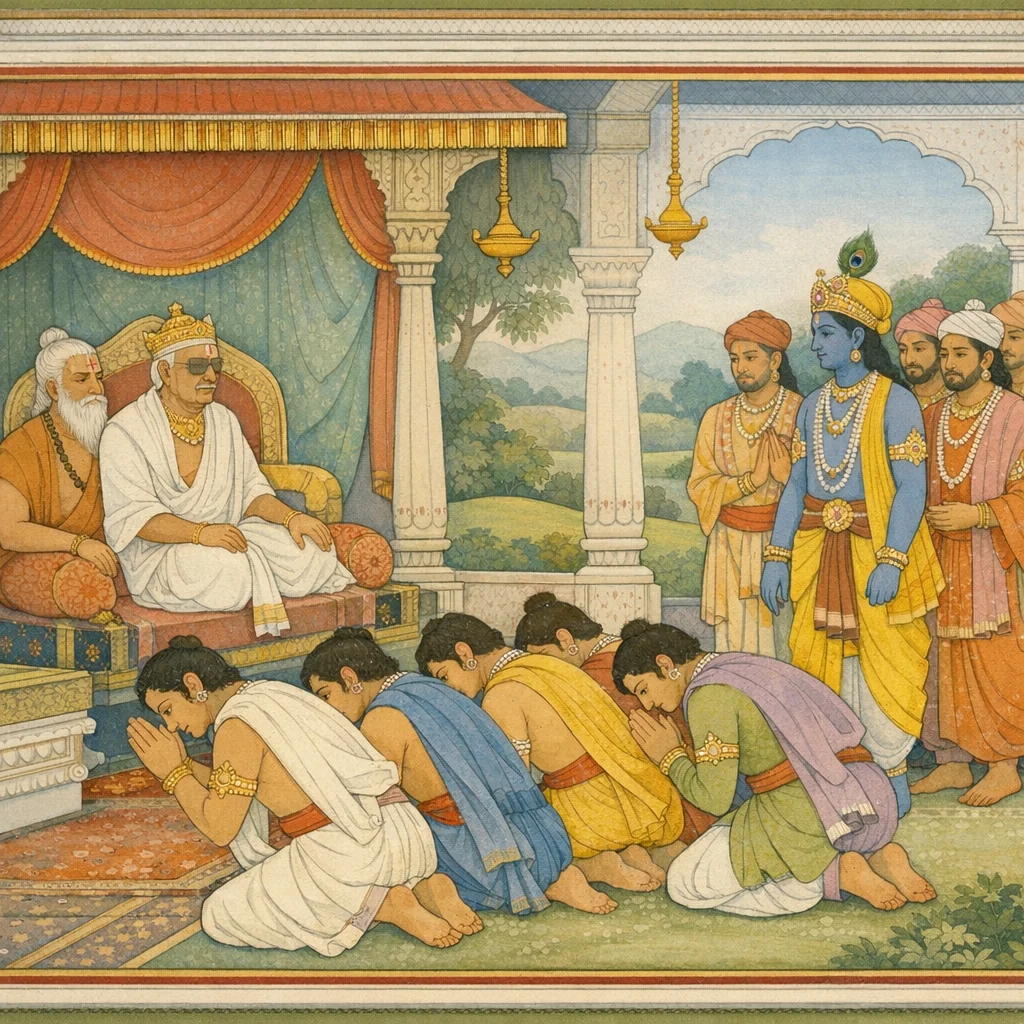
Chapter Arc: युद्धोत्तर शान्ति के बीच नगर के द्वार पर धूल-धूसरित परन्तु तेजस्वी पाण्डवों का आगमन होता है; उन्हें देखने की उत्कंठा से वृष्णि-वीर और स्वयं भगवान् श्रीकृष्ण यथान्याय प्रत्युद्गमन करते हैं। → महासैन्य के खुर-नेमि-स्वन से नगर गूँज उठता है; पाण्डव क्रमशः विदुर, वैश्या-पुत्र (संजय) आदि पूज्य जनों का सत्कार करते हुए राजपरिवार से मिलने बढ़ते हैं, और सबके मन में युद्ध के बाद धर्म-राज्य की दिशा को लेकर मौन प्रश्न उठता है। → पाण्डव अपना-अपना नाम बताकर धृतराष्ट्र के चरणों में प्रणाम करते हैं; फिर व्यास के सान्निध्य में बैठकर संवाद होता है और युधिष्ठिर के भीतर ‘अश्वमेध’ के संकल्प का निर्णायक उदय होता है—राजधर्म की पुनर्स्थापना हेतु महाक्रतु का मार्ग। → व्यास के वचन से प्रेरित होकर धर्मात्मा युधिष्ठिर अश्वमेध के आयोजन का निश्चय करता है; वृष्णि-अन्धक वीरों की उपस्थिति में वह प्राप्त रत्न/उपहार को अश्वमेध में उपयोग करने की इच्छा प्रकट करता है। → अश्वमेध की तैयारी आरम्भ होने से पहले—यह महायज्ञ किन-किन परीक्षाओं, विरोधों और अनपेक्षित घटनाओं को जन्म देगा?
Shlokas
Verse 1
ऑपनआक्रात बछ। 2 एकसप्ततितमो<्ध्याय: भगवान् श्रीकृष्ण और उनके साथियोंद्वारा पाण्डवोंका स्वागत, पाण्डवोंका नगरमें आकर सबसे मिलना और व्यासजी तथा श्रीकृष्णका युधिषछिरको यज्ञके लिये आज्ञा देना वैशम्पायन उवाच तान् समीपगतान् श्रुत्वा पाण्डवान् शत्रुकर्शन: । वासुदेव: सहामात्य: प्रययौ ससुह्ृदूगण:,वैशम्पायनजी कहते हैं--जनमेजय! पाण्डवोंके समीप आनेका समाचार सुनकर शत्रुसूदन भगवान् श्रीकृष्ण अपने मित्रों और मन्त्रियोंके साथ उनसे मिलनेके लिये चले
Vaiśampāyana said: Hearing that the Pāṇḍavas had come near, Vāsudeva—Kṛṣṇa, the subduer of foes—set out to meet them, accompanied by his ministers and surrounded by his circle of friends.
Verse 2
ते समेत्य यथान्यायं प्रत्युद्याता दिदृक्षया । ते समेत्य यथाधर्म पाण्डवा वृष्णिभि: सह
Vaiśampāyana said: Gathering together in the proper manner, they went forth to welcome them, eager to see them. Thus, assembling in accordance with dharma, the Pāṇḍavas—along with the Vṛṣṇis—set out to receive them.
Verse 3
महतस्तस्य सैन्यस्य खुरनेमिस्वनेन ह
Vaiśampāyana said: Verily, from the thunderous sound of the hooves and the wheel-rims of that vast army, the earth seemed to resound—signaling the immense scale and momentum of the royal enterprise about to unfold.
Verse 4
ते कोशानग्रत: कृत्वा विविशु: स्वपुरं तदा
Vaiśampāyana said: Having placed the treasury and stores in the forefront, they then entered their own city—signaling an orderly return in which the community’s wealth and resources were secured first, reflecting prudent governance and responsibility after the events of the campaign.
Verse 5
ते समेत्य यथान्यायं धृतराष्ट्र जनाधिपम्
Vaiśampāyana said: Having assembled together, they approached Dhṛtarāṣṭra, the lord of the people, in the manner prescribed by propriety—observing due etiquette and rightful conduct toward the elder king.
Verse 6
धृतराष्ट्रादनु च ते गान्धारी सुबलात्मजाम्
And after Dhṛtarāṣṭra, they also (followed) Gāndhārī, the daughter of Subala—indicating the royal elders proceeding together in the unfolding events, with the queen sharing her husband’s fate and responsibilities.
Verse 7
विदुरं पूजयित्वा च वैश्यापुत्र॑ समेत्य च
Vaiśampāyana said: Having duly honored Vidura, and also meeting with the son of a vaiśyā, they proceeded in accordance with proper respect and social duty—showing that righteous conduct begins with reverence to the wise and courteous engagement with all, regardless of birth.
Verse 8
ततस्तत् परमाश्चर्य विचित्र महदद्भुतम्
Then there occurred something supremely astonishing—strange, vast, and truly wondrous—drawing all attention by its extraordinary nature.
Verse 9
तदुपश्रुत्य तत् कर्म वासुदेवस्य धीमत:
Vaiśampāyana said: Having heard of that deed performed by the wise Vāsudeva, they reflected upon it, recognizing the moral weight and purposeful intent behind his action.
Verse 10
पूजा पूजयामासु: कृष्णं देवकिनन्दनम् । परम बुद्धिमान् भगवान् श्रीकृष्ण वह अलौकिक कर्म सुनकर पाण्डवोंने उन पूजनीय देवकीनन्दन श्रीकृष्णका पूजन किया अर्थात् उनकी भूरि-भूरि प्रशंसा की || ९३ || ततः कतिपयाहस्य व्यास: सत्यवतीसुत:,इसके थोड़े दिनों बाद महातेजस्वी सत्यवतीनन्दन व्यासजी हस्तिनापुरमें पधारे। कुरुकुलतिलक समस्त पाण्डवोंने उनका यथोचित पूजन किया
Vaiśampāyana said: The Pāṇḍavas honored Kṛṣṇa, the son of Devakī—praising and worshipping that supremely wise and divine Śrī Kṛṣṇa. Then, after a few days, Vyāsa, the son of Satyavatī, arrived at Hastināpura; and the Pāṇḍavas, the glory of the Kuru line, received and worshipped him with due rites.
Verse 11
आजगाम महातेजा नगरं नागसाह्दयम् | तस्य सर्वे यथान्यायं पूजांचक्रुः कुरूद्वहा:,इसके थोड़े दिनों बाद महातेजस्वी सत्यवतीनन्दन व्यासजी हस्तिनापुरमें पधारे। कुरुकुलतिलक समस्त पाण्डवोंने उनका यथोचित पूजन किया
Vaiśaṃpāyana said: After some days, the mighty and radiant sage arrived at the city known as Nāgasāhvaya (Hastināpura). There, all the foremost of the Kurus received and honored him in the proper manner, in accordance with due custom and dharma.
Verse 12
सह वृष्ण्यन्धकव्याप्रैरुपासांचक्रिरे तदा | तत्र नानाविधाकारा: कथा: समभिकीरत्त्य वै
Vaiśampāyana said: Then, together with the active leaders of the Vṛṣṇis and Andhakas, they rendered respectful attendance. There, after duly recounting many kinds of accounts and narratives, they engaged in varied discussions—setting a tone of fellowship, remembrance, and counsel appropriate to dharma after great events.
Verse 13
भवत्प्रसादाद् भगवन् यदिदं रत्नमाहतम्
O Blessed Lord, by your gracious favor, this jewel—now obtained and brought here—has come into our possession.
Verse 14
तमनुज्ञातुमिच्छामि भवता मुनिसत्तम | त्वदधीना वयं सर्वे कृष्णस्य च महात्मन:,“'मुनिश्रेष्ठ! मैं चाहता हूँ कि इसके लिये आपकी आज्ञा प्राप्त हो जाय, क्योंकि हम सब लोग आप और महात्मा श्रीकृष्णके अधीन हैं!
Vaiśampāyana said: “O best of sages, I wish to obtain your permission for this. For all of us act under your authority—and under that of the great-souled Kṛṣṇa as well.”
Verse 15
व्यास उवाच अनुजानामि राजंस्त्वां क्रियतां यदनन्तरम् । यजस्व वाजिमेधेन विधिवत् दक्षिणावता,व्यासजीने कहा--राजन्! मैं तुम्हें यज्ञके लिये आज्ञा देता हूँ। अब इसके बाद जो भी आवश्यक कार्य हो, उसे आरम्भ करो। विधिपूर्वक दक्षिणा देते हुए अश्वमेध यज्ञका अनुष्ठान करो
Vyāsa said: “O King, I grant you permission—now proceed with whatever must be done next. Perform the Aśvamedha sacrifice in due form, accompanied by proper gifts (dakṣiṇā).”
Verse 16
अश्वमेधो हि राजेन्द्र पावन: सर्वपाप्मनाम् । तेनेष्टवा त्वं विपाप्मा वै भविता नात्र संशय:,राजेन्द्र! अश्वमेधयज्ञ समस्त पापोंका नाश करके यजमानको पवित्र बनानेवाला है। उसका अनुष्ठान करके तुम पापसे मुक्त हो जाओगे, इसमें संशय नहीं है
Vyāsa said: “O best of kings, the Aśvamedha sacrifice is a purifier that destroys every kind of sin. Having performed it, you will indeed become free from sin—of this there is no doubt.”
Verse 17
वैशम्पायन उवाच इत्युक्त: स तु धर्मात्मा कुरुराजो युधिष्ठिर: । अश्वमेधस्य कौरव्य चकाराहरणे मतिम्,वैशम्पायनजी कहते हैं--कुरुनन्दन! व्यासजीके ऐसा कहनेपर धर्मात्मा कुरुराज युधिष्ठिरने अश्वमेधयज्ञ आरम्भ करनेका विचार किया
Vaiśampāyana said: When this had been spoken, the righteous-souled Yudhiṣṭhira, king of the Kurus, O descendant of Kuru, resolved to undertake the Aśvamedha sacrifice—turning his mind toward the necessary preparations for it.
Verse 18
समनुज्ञाप्य तत् सर्व कृष्णद्वैपायनं नृप: । वासुदेवमथाभ्येत्य वाग्मी वचनमब्रवीत्,श्रीकृष्णद्वैवायन व्याससे सब बातोंके लिये आज्ञा ले प्रवचनकुशल राजा युधिष्छिर भगवान् श्रीकृष्णके पास जाकर इस प्रकार बोले--
Vaiśampāyana said: Having duly obtained permission for all that from Kṛṣṇa-Dvaipāyana (Vyāsa), the king—eloquent and self-possessed—then approached Vāsudeva (Kṛṣṇa) and spoke these words.
Verse 19
देवकी सुप्रजा देवी त्वया पुरुषसत्तम । यद् ब्रूयां त्वां महाबाहो तत् कृथास्त्वमिहाच्युत,“पुरुषोत्तम! महाबाहु अच्युत! आपको ही पाकर देवकीदेवी उत्तम संतानवाली मानी गयी हैं। मैं आपसे जो कुछ कहूँ, उसे आप यहाँ सम्पन्न करें
Vaiśaṃpāyana said: “O best of men! By having you as her son, the goddess Devakī is truly counted as blessed with excellent offspring. O mighty-armed Acyuta, whatever I am about to request of you—please accomplish it here.”
Verse 20
त्वत्प्रभावार्जितान् भोगानश्रीम यदुनन्दन । पराक्रमेण बुद्ध्या च त्वयेयं निर्जिता मही,“यदुनन्दन! हम आपके ही प्रभावसे प्राप्त हुई इस पृथ्वीका उपभोग कर रहे हैं। आपने ही अपने पराक्रम और बुद्धिबलसे इस सम्पूर्ण पृथ्वीको जीता है
Vaiśampāyana said: “O delight of the Yadus, we enjoy these comforts and royal enjoyments only through the power you have brought to bear. By your valor and by your discerning counsel, this entire earth has been conquered by you.”
Verse 21
दीक्षयस्व त्वमात्मानं त्वं हि नः परमो गुरु: । त्वयीष्टवति दाशार्ह विपाप्मा भविता हाहम्,“दशाहईनन्दन! आप ही इस यज्ञकी दीक्षा ग्रहण करें; क्योंकि आप हमारे परम गुरु हैं। आपके यज्ञानुष्ठान पूर्ण कर लेनेपर निश्चय ही हमारे सब पाप नष्ट हो जायँगे
Vaiśampāyana said: “Do you yourself undertake the consecration for this sacrifice, for you are truly our highest preceptor. O Dāśārha, when you have completed the sacrificial rite, then I too shall surely become free from sin.”
Verse 22
त्वं हि यज्ञो$क्षर: सर्वस्त्वं धर्मस्त्वं प्रजापति: । त्वं गति: सर्वभूतानामिति मे निश्चिता मतिः,“आप ही यज्ञ, अक्षर, सर्वस्वरूप, धर्म, प्रजापति एवं सम्पूर्ण भूतोंकी गति हैं--यह मेरी निश्चित धारणा है”
Vaiśampāyana said: “You indeed are the sacrifice itself; you are the Imperishable, the all-encompassing reality. You are Dharma; you are Prajāpati, the lord of creatures. You are the final refuge and destination of all beings—this is my settled conviction.”
Verse 23
वायुदेव उवाच त्वमेवैतन्महाबाहो वक्तुमर्हस्थरिंदम । त्वं गति: सर्वभूतानामिति मे निश्चिता मतिः,भगवान् श्रीकृष्णने कहा--महाबाहो! शत्रुदमन नरेश! आप ही ऐसी बात कह सकते हैं। मेरा तो यह दृढ़ विश्वास है कि आप ही सम्पूर्ण भूतोंके अवलम्ब हैं
Vāyudeva said: “You alone, O mighty-armed one, are fit to speak of this, O subduer of foes. For it is my settled conviction that you are the refuge and sustaining support of all beings.”
Verse 24
त्वं चाद्य कुरुवीराणां धर्मेण हि विराजसे । गुणीभूता: सम ते राजंस्त्वं नो राजा गुरुर्मत:,राजन्! समस्त कौरववीरोंमें एकमात्र आप ही धर्मसे सुशोभित होते हैं। हमलोग आपके अनुयायी हैं और आपको अपना राजा एवं गुरु मानते हैं
Vāyu said: “And among the heroes of the Kurus, you alone today shine by righteousness. We are aligned with you and stand as your followers; we regard you as our king and as our teacher.”
Verse 25
यजस्व मदनुज्ञात: प्राप्य एष क्रतुस्त्वया । युनक्तु नो भवान् कार्ये यत्र वाउछसि भारत,इसलिये भारत! आप हमारी अनुमतिसे स्वयं ही इस यज्ञका अनुष्ठान कीजिये तथा हमलोगोंमेंसे जिसको जिस कामपर लगाना चाहते हों, उसे उस कामपर लगनेकी आज्ञा दीजिये
Vāyu said: “Perform the sacrifice, for you have obtained our consent and this rite has now come within your reach. O Bhārata, assign us to whatever tasks you desire—direct each of us to the work you deem fit.”
Verse 26
विविशु: सहिता राजन् पुरं वारणसाह्नयम् । उन सब लोगोंने पाण्डवोंसे मिलनेके लिये आगे बढ़कर उनकी अगवानी की और सब यथायोग्य एक-दूसरेसे मिले। राजन! धर्मानुसार पाण्डव वृष्णियोंस मिलकर सब एक साथ हो हस्तिनापुरमें प्रविष्ट हुए,सत्यं ते प्रतिजानामि सर्व कर्तास्मि तेडनघ । भीमसेनार्जुनौ चैव तथा माद्रवतीसुतौ । इष्टवन्तो भविष्यन्ति त्वयीष्टवति पार्थिवे निष्पाप नरेश! मैं आपके सामने सच्ची प्रतिज्ञा करता हूँ कि आप जो कुछ कहेंगे, वह सब करूँगा। आप राजा हैं, आपके द्वारा यज्ञ होनेपर भीमसेन, अर्जुन, नकुल और सहदेवको भी यज्ञानुष्ठानका फल मिल जायगा
Vaiśampāyana said: “O King, they entered together the city known as Vāraṇasāhvaya (Hastināpura). I make you a truthful vow, O sinless one: I shall do whatever you command. When you, O sovereign, perform the sacrifice, Bhīmasena and Arjuna, and likewise the sons of Mādrī (Nakula and Sahadeva), will also become sharers in the sacrificial merit.”
Verse 33
द्यावापृथिव्यो: खं चैव सर्वमासीत् समावृतम् । उस विशाल सेनाके घोड़ोंकी टापों और रथके पहियोंकी घरघराहटके तुमुल घोषसे पृथ्वी और स्वर्गके बीचका सारा आकाश व्याप्त हो गया था
Vaiśampāyana said: “The entire expanse—heaven and earth and the sky between—seemed completely covered, as the tumultuous roar of that vast army rose up: the thunder of horses’ hooves and the grinding rumble of chariot wheels filled the whole midspace.”
Verse 46
पाण्डवा: प्रीतमनस: सामात्या: ससुहृद्गणा: । वे खजानेको आगे करके अपनी राजधानीमें घुसे। उस समय मन्त्रियों एवं सुहृदोंसहित समस्त पाण्डवोंका मन प्रसन्न था
Vaiśampāyana said: The Pāṇḍavas—joyful at heart, accompanied by their ministers and surrounded by their well-wishers—entered their own capital, placing the royal treasury in the forefront. At that time, with ministers and friends beside them, the minds of all the Pāṇḍavas were serene and satisfied, marking a return to ordered kingship and responsible governance after turmoil.
Verse 56
कीर्तयन्त: स्वनामानि तस्य पादौ ववन्दिरे । वे यथायोग्य सबसे मिलकर राजा धृतराष्ट्रके पास गये। अपना-अपना नाम बताते हुए उनके चरणोंमें प्रणाम करने लगे
Reciting their own names, they bowed at his feet. In due order, they all went together to King Dhṛtarāṣṭra and, identifying themselves, offered reverent salutations—an act that upholds courtly propriety, humility, and respect for elders even amid the aftermath of conflict.
Verse 63
कुन्तीं च राजशार्दूल तदा भरतसत्तम | नृपश्रेष्ठ भरतभूषण! धृतराष्ट्रसे मिलनेके बाद वे सुबलपुत्री गान्धारी और कुन्तीसे मिले
Vaiśampāyana said: “O tiger among kings, O best of the Bharatas, O foremost ruler, ornament of the Bharata line—then he also met Kuntī. After meeting Dhṛtarāṣṭra, he went on to meet Gāndhārī, the daughter of Subala, and Kuntī.” The passage underscores the post-war ethic of honoring elders and maintaining familial bonds through respectful reconciliation.
Verse 70
इस प्रकार श्रीमह्याभारत आश्वमेधिकपरववके अन्तर्गत अनुगीतापर्वमें पाण्डवोका आगमनविषयक सत्तरवाँ अध्याय पूरा हुआ
Thus, in the Śrī Mahābhārata, within the Aśvamedhika Parva—specifically in the Anugītā sub-section—the seventieth chapter, dealing with the arrival of the Pāṇḍavas, is concluded. The line functions as a formal colophon, marking closure and framing the narrative’s movement from instruction and reflection back into the unfolding duties and events of the Pāṇḍavas’ post-war life.
Verse 71
इति श्रीमहाभारते आश्वमेधिके पर्वणि अनुगीतापर्वणि कृष्णव्यासानुज्ञायामेकसप्ततितमो<ध्याय:
Thus, in the Śrī Mahābhārata, within the Āśvamedhika Parva, in the section known as the Anugītā Parva, this concludes the seventy-first chapter, composed with the authorization of Kṛṣṇa Dvaipāyana Vyāsa. The line functions as a formal colophon, marking the close of a chapter and affirming the traditional transmission and ethical authority of the teaching that has just been delivered.
Verse 73
पूज्यमाना: सम ते वीरा व्यरोचन्त विशाम्पते । प्रजानाथ! फिर विदुरका सम्मान करके वैश्यापुत्र युयुत्सुसे मिलकर उन सबके द्वारा सम्मानित होते हुए वीर पाण्डव बड़ी शोभा पा रहे थे
Vaiśampāyana said: “O lord of the people, those heroes, being duly honored, shone with equal splendor. In the narrative, the Pāṇḍavas’ radiance is shown as the ethical fruit of receiving and granting proper respect—especially amid reconciliations after conflict—where honor (pūjā) restores social harmony and affirms dharma.”
Verse 86
शुश्रुवुस्ते तदा वीरा: पितुस्ते जन्म भारत । भरतनन्दन! तत्पश्चात् उन वीरोंने तुम्हारे पिताके जन्मका वह आश्षर्यपूर्ण विचित्र, महान् एवं अदभुत वृत्तान्त सुना
Vaiśampāyana said: “Then those heroes heard, O Bhārata, the account of your father’s birth. O joy of the Bharata line, thereafter those warriors narrated to you that wondrous, extraordinary, great, and marvelous story concerning your father’s origin.”
Verse 126
युधिष्ठिरो धर्मसुतो व्यासं वचनमत्रवीत् | फिर वृष्णि एवं अन्धकवंशी वीरोंके साथ वे उनकी सेवामें बैठ गये। वहाँ नाना प्रकारकी बातें करके धर्मपुत्र युधिष्ठिरने व्यासजीसे इस प्रकार कहा--
Vaiśampāyana said: “Yudhiṣṭhira, the son of Dharma, addressed Sage Vyāsa with words. Then, together with the heroic Vṛṣṇis and the Andhaka lineage, he sat in attendance upon him. After conversing on many matters, Dharmaputra Yudhiṣṭhira spoke to Vyāsa in this manner—setting the stage for counsel grounded in dharma and right conduct.”
Verse 133
उपयोक्तुं तदिच्छामि वाजिमेथे महाक्रतौ । “भगवन्! आपकी कृपासे जो वह रत्न लाया गया है, उसका अश्वमेध नामक महायज्ञमें मैं उपयोग करना चाहता हूँ
Vaiśampāyana said: “With your permission, I wish to employ that precious item in the great sacrificial rite—the Aśvamedha—so that what has been obtained through your grace may be dedicated to a dharmic purpose.”
Frequently Asked Questions
The ethical problem is how to assert imperial authority without uncontrolled aggression: the horse must roam freely per rite, yet be protected and potential disputes managed so the sacrificial purpose is preserved with restraint.
Legitimate power is procedural and consultative: dharma is enacted through calendrical discipline, expert oversight, proper materials, and clearly delegated responsibility rather than impulsive personal rule.
No explicit phalaśruti appears here; the meta-function is logistical and institutional—showing how the rite’s efficacy depends on correct timing, authorized officiants, and controlled execution within the epic’s governance arc.