Adhyaya 56
Uttaṅka’s Petition for Madayantī’s Divine Earrings (Maṇikuṇḍala) — Agreement, Proof, and Vigilance
Upa-parva: Uttaṅka–Saudāsa–Madayantī Episode (Maṇikuṇḍala-Prārthanā)
Vaiśaṃpāyana describes a formidable king, Saudāsa, encountered by the brahmin Uttaṅka. Despite the king’s frightening appearance, Uttaṅka remains composed. Saudāsa states that at the sixth time-period his meal is prescribed and cannot be relinquished, presenting a competing obligation. Uttaṅka identifies himself as acting for a guru’s purpose and asserts that one engaged in gurv-artha should not be harmed; he proposes a samaya: he will complete the teacher’s task and then return under the king’s control. Uttaṅka further argues donor–recipient propriety, positioning Saudāsa as a legitimate giver and himself as a fit recipient for a specific requested item. Saudāsa affirms his truthfulness and asks what is to be received; Uttaṅka requests the maṇikuṇḍale. Saudāsa replies that the earrings belong to his queen Madayantī and instructs Uttaṅka to ask her directly, indicating where she can be found. Madayantī accepts the plausibility of the request but asks for identification/proof; she explains the earrings’ divine status, their luminous qualities, and the persistent risk of seizure by devas, yakṣas, and nāgas through moments of negligence (placing them down, impurity, sleep). The chapter closes with her demand for an appropriate token of recognition before transfer, emphasizing custody-discipline as part of dharma.
Chapter Arc: वैशम्पायन जनमेजय को उत्तंक के तेज, तप और गुरु-भक्ति का स्मरण कराते हैं—ऐसा शिष्य जो गुरु के अतिरिक्त किसी की पूजा नहीं करता, उसी के जीवन में एक परीक्षा उतरती है। → गुरुकुल में ऋषिकुमारों की आकांक्षा ‘औत्तड़की’ गुरु-वृत्ति पाने की है; गुरु-पुत्री (धर्मज्ञ, विनीत) पिता की आज्ञा से शिष्य-धर्म की मर्यादा को रेखांकित करती है। गौतम ऋषि दक्षिणा को गुरु-संतोष का सार बताते हैं और उत्तंक को पूर्ण तृप्त घोषित करते हैं—पर साथ ही एक ऐसी आज्ञा/कार्य का संकेत बनता है जो शिष्य की देह-सीमा और धैर्य की परीक्षा लेगा। → उत्तंक गुरु-पत्नी के प्रियार्थ/आज्ञार्थ ‘बहुत अच्छा’ कहकर निकल पड़ता है और कठोर श्रम में पड़ जाता है—भारी लकड़ियों का बोझ उठाते-उठाते वह थककर धरती पर गिर पड़ता है; भूख और भार से पिसकर अपनी दयनीय अवस्था देखकर आर्तस्वर में रो पड़ता है। → अध्याय का अंत उत्तंक की शारीरिक-मानसिक चरम-सीमा पर होता है—गुरु-भक्ति का संकल्प बना है, पर देह टूट रही है; कथा उसे आगे की निर्णायक सहायता/घटना की दहलीज़ पर छोड़ देती है। → भूख, थकान और गिरावट के बाद उत्तंक को कौन सहारा देगा—और गुरु/गुरुपत्नी की आज्ञा पूरी करने हेतु वह किस उपाय से उठ खड़ा होगा?
Shlokas
Verse 1
इस प्रकार श्रीमह्याभारत आश्वमेधिकपववके अन्तर्गत अनुगीतापर्वमें उत्तडुको पाख्यानमें कृष्णवाक्यविषयक पचपनवाँ अध्याय पूरा हुआ ॥/ ५५ ॥ (दाक्षिणात्य अधिक पाठके ५ श्लोक मिलाकर कुल ४२ श्लोक हैं) भीकम (2 अमान षट्पज्चाशत्तमो< ध्याय: उत्तंककी गुरुभक्तिका वर्णन, गुरुपुत्रीके साथ उत्तंकका विवाह, गुरुपत्नीकी आज्ञासे दिव्यकुण्डल लानेके लिये उत्तंकका राजा सौदासके पास जाना जनमेजय उवाच उत्तड़क: केन तपसा संयुक्तो वै महामना: । यः शापं दातुकामो<भूद् विष्णवे प्रभविष्णवे,जनमेजयने पूछा--ब्रह्मन्! महात्मा उत्तंक मुनिने ऐसी कौन-सी तपस्या की थी, जिससे वे सबकी उत्पत्तिके हेतुभूत भगवान् विष्णुको भी शाप देनेका संकल्प कर बैठे?
Janamejaya said: “O Brahmin, by what austerity and spiritual discipline was the great-souled Uttanka endowed, that he even formed the intention to pronounce a curse upon Viṣṇu—the mighty Lord who is the source of all power?”
Verse 2
वैशम्पायन उवाच उत्तड़को महता युक्तस्तपसा जनमेजय । गुरुभक्त: स तेजस्वी नान्यत् किंचिदपूजयत्,वैशम्पायनजीने कहा--जनमेजय! उत्तंक मुनि बड़े भारी तपस्वी, तेजस्वी और गुरुभक्त थे। उन्होंने जीवनमें गुरुक सिवा दूसरे किसी देवताकी आराधना नहीं की थी
Vaiśampāyana said: “O Janamejaya, the sage Uttaṅka was endowed with great austerity. Radiant in spiritual power and steadfast in devotion to his teacher, he offered worship to none other—holding the guru alone as his supreme object of reverence.”
Verse 3
सर्वेषामृषिपुत्राणामेष आसीन्मनोरथ: । औत्तड़कीं गुरुवृत्तिं वै प्राप्तुयामेति भारत,भरतनन्दन! जब वे गुरुकुलमें रहते थे, उन दिनों सभी ऋषिकुमारोंके मनमें यह अभिलाषा होती थी कि हमें भी उत्तंकके समान गुरुभक्ति प्राप्त हो
Vaiśampāyana said: “This was the cherished wish in the hearts of all the sons of sages: ‘O Bhārata, O delight of the Bharatas, may we too attain that very conduct of devotion to the teacher which belonged to Uttaṅka.’”
Verse 4
गौतमस्य तु शिष्याणां बहूनां जनमेजय । उत्तड़के< भ्यधिका प्रीति: स्नेहश्वैवाभवत् तदा
Vaiśampāyana said: “O Janamejaya, among Gautama’s many disciples, at that time there arose an especially great affection and warm attachment toward Uttaṅka, marking him as the dearest among the pupils.”
Verse 5
जनमेजय! गौतमके बहुत-से शिष्य थे, परंतु उनका प्रेम और स्नेह सबसे अधिक उत्तंकमें ही था ।। स तस्य दमशौचाभ्यां विक्रान्तेन च कर्मणा । सम्यक् चैवोपचारेण गौतम: प्रीतिमानभूत्,उत्तंकके इन्द्रियसंयम, बाहर-भीतरकी पवित्रता, पुरुषार्थ, कर्म और उत्तमोत्तम सेवासे गौतम बहुत प्रसन्न रहते थे
Vaiśampāyana said: “O Janamejaya, Gautama had many disciples, yet his deepest affection and tenderness were directed especially toward Uttaṅka. By Uttaṅka’s self-restraint, inner and outer purity, energetic performance of duty, and proper, attentive service, Gautama became greatly pleased.”
Verse 6
अथ शिष्यसहस्राणि समनुज्ञातवानृषि: । उत्तड़क॑ परया प्रीत्या नाभ्यनुज्ञातुमैच्छत । त॑ क्रमेण जरा तात प्रतिपेदे महामुनिम्,उन महर्षिने अपने सहस्रों शिष्योंको पढ़ाकर घर जानेकी आज्ञा दे दी; परंतु उत्तड़कपर अधिक प्रेम होनेके कारण वे उन्हें घर जानेकी आज्ञा नहीं देना चाहते थे। तात! क्रमश: उन महामुनि उत्तंकको वृद्धावस्था प्राप्त हुई
Vaiśampāyana said: The sage, having duly granted leave to his thousands of students, did not wish to dismiss Uttaṅka, for he loved him exceedingly. But, dear one, in due course old age overtook that great ascetic.
Verse 7
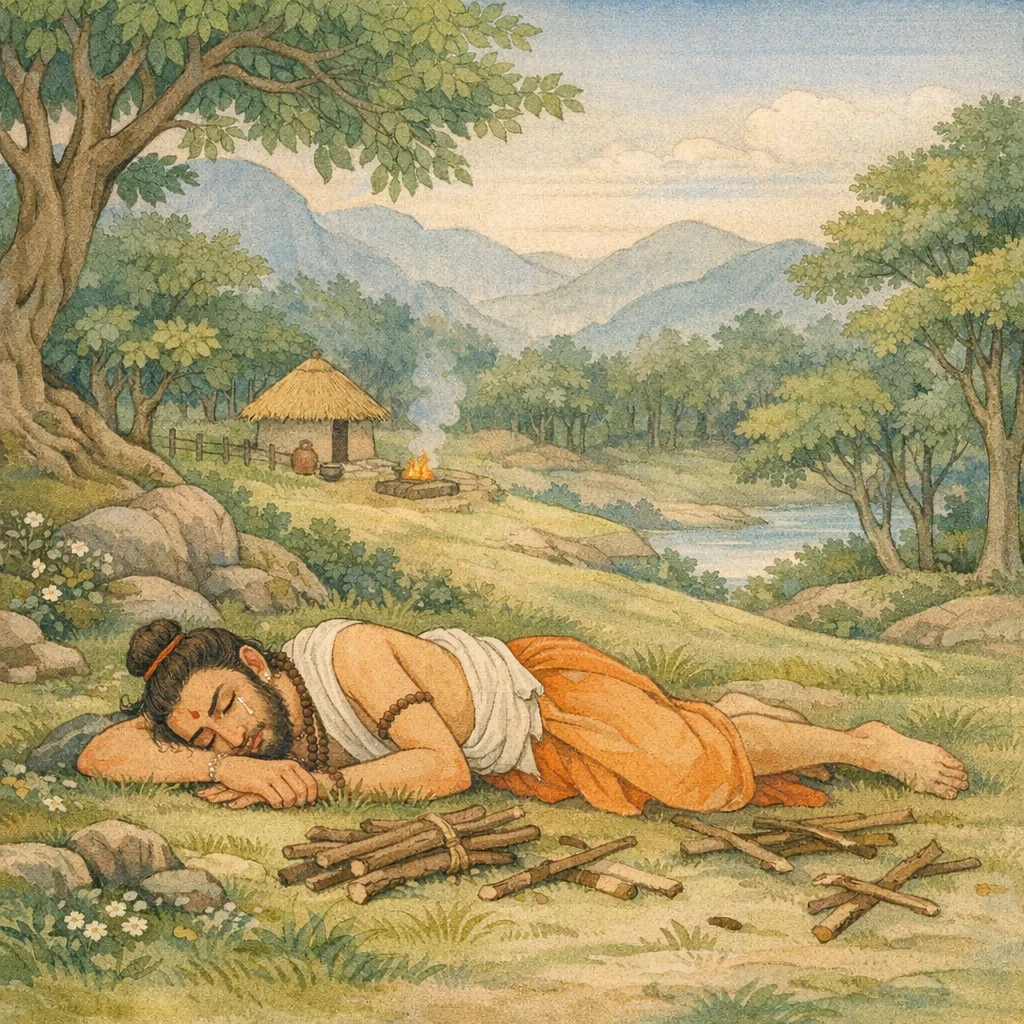
न चान्वबुध्यत तदा स मुनिर्गुरुवत्सल: । ततः कदाचिद् राजेन्द्र काष्ठान्यानयितुं ययौ
And at that time the sage—deeply devoted to his teacher—did not perceive what was really going on. Then, O best of kings, on one occasion he went out to bring firewood.
Verse 8
स तद्धाराभिभूतात्मा काष्ठ भारमरिंदम,तत: काष्ठै: सह तदा पपात धरणीतले । शत्रुदमन नरेश! बोझ भारी होनेके कारण वे बहुत थक गये। उनका शरीर लकड़ियोंके भारसे दब गया था। वे भूखसे पीड़ित हो रहे थे। जब आश्रमपर आकर उस बोझको वे जमीनपर गिराने लगे, उस समय चाँदीके तारकी भाँति सफेद रंगकी उनकी जटा लकड़ीमें चिपक गयी थी, जो उन लकड़ियोंके साथ ही जमीनपर गिर पड़ी
Vaiśampāyana said: Overpowered and exhausted by that burden, the foe-subduer, weighed down by the load of firewood, then collapsed upon the ground together with the wood.
Verse 9
निचिक्षेप क्षितौ राजन् परिश्रान्तो बुभुक्षित: । तस्य काष्ठे विलग्नाभूज्जटा रूप्यसमप्रभा
Vaiśampāyana said: “O king, exhausted and hungry, he cast himself down upon the ground. And on a piece of wood near him there became stuck a matted lock of hair, shining with a luster like silver.”
Verse 10
ततः स भारनिष्षिष्ट: क्षुधाविष्टश्न भारत
Then he, relieved of his burden yet seized by hunger, O Bhārata, continued onward.
Verse 12
जग्राहाश्रूणि सुश्रोणी करेण पृथुलोचना । पितुर्नियोगाद् धर्मज्ञा शिरसावनता तदा
Vaiśampāyana said: Then the noble woman—slender-waisted and large-eyed—wiped away her tears with her hand. Knowing what dharma required, and acting under her father’s command, she bowed her head in submission.
Verse 13
ततो गुरुसुता तस्य पद्मपत्रनि भानना,तब कमलदलके समान प्रफुल्ल मुखवाली विशाललोचना परम सुन्दरी धर्मज्ञ गुरुपुत्रीने पिताकी आज्ञा पाकर विनीत भावसे सिर झुकाये वहाँ आयी और अपने हाथोंमें उसने मुनिके आँसू ग्रहण कर लिये ।। तस्या निपेततुर्दग्धौ करौ तैरश्रुबिन्दुभि: । न हि तानश्रुपातांस्तु शक्ता धारयितुं मही उन अभश्रुबिन्दुओंसे उसके दोनों हाथ जल गये और आँसुओंसहित पृथ्वीसे जा लगे। परंतु पृथ्वी भी उन गिरते हुए अश्रुबिन्दुओंके धारण करनेमें असमर्थ हो गयी
Then the guru’s daughter—her face radiant like a lotus petal—came there with humble composure, having received her father’s command, and she gathered the sage’s tears in her hands. But those tear-drops were so scorching that her two hands were burned, and the tears fell down to the earth. Even the earth, however, was unable to bear the weight and heat of those falling tears.
Verse 14
गौतमस्त्वब्रवीद् विप्रमुत्तड़कं प्रीतमानस: । कस्मात् तात तवाद्येह शोकोत्तरमिदं मन: । स स्वैरं ब्रूहि विप्रषें श्रोतुमिच्छामि तत्त्वतः,फिर गौतमने प्रसन्नचित्त होकर विप्रवर उत्तंकसे पूछा--“बेटा! आज तुम्हारा मन शोकसे व्याकुल क्यों हो रहा है? मैं इसका यथार्थ कारण सुनना चाहता हूँ। ब्रह्मर्ष! तुम नि:संकोच होकर सारी बातें बताओ'
Vaiśampāyana said: With a pleased and kindly mind, Gautama addressed the brahmin Uttanka: “My son, why is your heart today overcome by grief? Speak freely, O brahmin-seer; I wish to hear the true reason in full.”
Verse 15
उत्तडुक उवाच भवद्गतेन मनसा भवत्प्रियचिकीर्षया । भवद्धक्तिगतेनेह भवद्धावानुगेन च,उत्तंकने कहा--गुरुदेव! मेरा मन सदा आपमें लगा रहा। आपहीका प्रिय करनेकी इच्छासे मैं निरन्तर आपकी सेवामें संलग्न रहा, मेरा सम्पूर्ण अनुराग आपटहीमें रहा है और आपहीकी भक्तिमें तत्पर रहकर मैंने न तो लौकिक सुखको जाना और न मुझे आये हुए इस बुढ़ापाका ही पता चला। मुझे यहाँ रहते हुए सौ वर्ष बीत गये तो भी आपने मुझे घर जानेकी आज्ञा नहीं दी
Uttaḍuka said: “Revered master, my mind has ever been fixed upon you, intent on doing what is pleasing to you. Devoted to you alone, I have remained here in your service, following after you with steadfast attachment. Absorbed in my devotion, I sought no worldly enjoyments, nor did I even notice the coming of old age. Though a hundred years have passed while I have lived here, you have still not granted me leave to return home.”
Verse 16
जरेयं नावबुद्धा मे नाभिज्ञातं सुखं च मे । शतवर्षोषितं मां हि न त्वमभ्यनुजानिथा:,उत्तंकने कहा--गुरुदेव! मेरा मन सदा आपमें लगा रहा। आपहीका प्रिय करनेकी इच्छासे मैं निरन्तर आपकी सेवामें संलग्न रहा, मेरा सम्पूर्ण अनुराग आपटहीमें रहा है और आपहीकी भक्तिमें तत्पर रहकर मैंने न तो लौकिक सुखको जाना और न मुझे आये हुए इस बुढ़ापाका ही पता चला। मुझे यहाँ रहते हुए सौ वर्ष बीत गये तो भी आपने मुझे घर जानेकी आज्ञा नहीं दी
Uttaṅka said: “I did not even notice that old age had come upon me, nor did I ever come to know worldly pleasure. Indeed, though I have dwelt here for a hundred years, you have not granted me leave.”
Verse 17
भवता त्वभ्यनुज्ञाता: शिष्या: प्रत्यवरा मम । उपपन्ना द्विजश्रेष्ठ शशशो5थ सहस्रश:,द्विजश्रेष्ठ! मेरे बाद सैकड़ों और हजारों शिष्य आपकी सेवामें आये और अध्ययन पूरा करके आपकी आज्ञा लेकर चले गये (केवल मैं ही यहाँ पड़ा हुआ हूँ)
Uttaṅka said: “With your permission, O best of the twice-born, disciples who came after me—hundreds and even thousands—have completed their studies, received your leave, and departed. Yet I alone remain here, still held back.”
Verse 18
गौतम उवाच त्वत्प्रीतियुक्तेन मया गुरुशुश्रूषया तव । व्यतिक्रामन्महाकालो नावबुद्धो द्विजर्षभ,गौतमने कहा--विप्रवर! तुम्हारी गुरुशुश्रूषासे तुम्हारे ऊपर मेरा बड़ा प्रेम हो गया था। इसीलिये इतना अधिक समय बीत गया तो भी मेरे ध्यानमें यह बात नहीं आयी
Gautama said: “Because I had become filled with affection for you, owing to your devoted service to your teacher, a great span of time passed by—yet I did not even notice it, O best of the twice-born.”
Verse 19
कि त्वद्य यदि ते श्रद्धा गमनं॑ प्रति भार्गव । अनुज्ञां प्रतिगृहा त्वं स््वगृहान् गच्छ मा चिरम्,भृगुनन्दन! यदि आज तुम्हारे मनमें यहाँसे जानेकी इच्छा हुई है तो मेरी आज्ञा स्वीकार करो और शीघ्र ही यहाँसे अपने घरको चले जाओ
Gautama said: “But if today you truly have the resolve to depart, O Bhārgava, then accept my permission and go back to your own home without delay, O delight of the Bhṛgus.”
Verse 20
उत्तडुक उवाच गुर्वर्थ क॑ प्रयच्छामि ब्रूहि त्वं द्विजसत्तम । तमुपाहत्य गच्छेयमनुज्ञातस्त्वया विभो,उत्तंकने पूछा-<द्विजश्रेष्ठ! प्रभो! मैं आपको गुरुदक्षिणामें क्या दूँ? यह बताइये। उसे आपको अर्पित करके आज्ञा लेकर घरको जाऊँ
Uttaṅka said: “O best of Brahmins, tell me—what shall I offer as the teacher’s fee? Having brought and presented that to you, may I depart for home with your permission, O venerable one?”
Verse 21
गौतम उवाच दक्षिणा परितोषो वै गुरूणां सद्धिरुच्यते तव ह्याचरतो ब्रह्ांस्तुष्टो 5हं वै न संशय:,गौतमने कहा--ब्रह्मन्! सत्पुरुष कहते हैं कि गुरुजनोंको संतुष्ट करना ही उनके लिये सबसे उत्तम दक्षिणा है। तुमने जो सेवा की है, उससे मैं बहुत संतुष्ट हूँ, इसमें संशय नहीं है
Gautama said: “O Brahmin, the virtuous declare that for teachers the finest fee is their satisfaction. By the service you have rendered, I am indeed well pleased—of that there is no doubt.”
Verse 22
इत्थं च परितुष्टं मां विजानीहि भृगूद्वह । युवा षोडशवर्षो हि यद्यद्य भविता भवान्,भगुकुलभूषण! इस तरह तुम मुझे पूर्ण संतुष्ट जानो। यदि आज तुम सोलह वर्षके तरुण हो जाओ तो मैं तुम्हें पत्नीरूपसे अपनी कुमारी कन्या अर्पित कर दूँगा; क्योंकि इसके सिवा दूसरी कोई स्त्री तुम्हारे तेजको नहीं सह सकती
Gautama said: “Know me to be fully satisfied in this way, O foremost of the Bhṛgus. O ornament of the Bhṛgu lineage—if you were to become a youth of sixteen years, then I would offer you my maiden daughter as a wife; for apart from her, no other woman would be able to endure the radiance of your ascetic power.”
Verse 23
ददानि पत्नीं कन्यां च स्वां ते दुहितरं द्विज । एतामृते<ड्रना नान्या त्वत्तेजो5हति सेवितुम्,भगुकुलभूषण! इस तरह तुम मुझे पूर्ण संतुष्ट जानो। यदि आज तुम सोलह वर्षके तरुण हो जाओ तो मैं तुम्हें पत्नीरूपसे अपनी कुमारी कन्या अर्पित कर दूँगा; क्योंकि इसके सिवा दूसरी कोई स्त्री तुम्हारे तेजको नहीं सह सकती
Gautama said: “I offer you my wife and also my maiden daughter—my own child, O twice-born. Apart from her, no other woman is capable of enduring and serving one possessed of your radiance, O ornament of the Bhṛgu lineage.”
Verse 24
ततस्तां प्रतिजग्राह युवा भूत्वा यशस्विनीम् । गुरुणा चाभ्यनुज्ञातो गुरुपत्नीमथाब्रवीत्,तब उत्तंकने तपोबलसे तरुण होकर उस यशस्खविनी गुरुपुत्रीका पाणिग्रहण किया। तत्पश्चात् गुरुकी आज्ञा पाकर वे गुरुपत्नीसे बोले--
Then, having become youthful again through the power of his austerities, he accepted that illustrious maiden in marriage. And, having received his teacher’s permission, he thereafter addressed the teacher’s wife.
Verse 25
कं भवत्यै प्रयच्छामि गुर्वर्थ विनियुड्धक्ष्य माम् । प्रियं हितं च काड्क्षामि प्राणैरपि धनैरपि,“माताजी! मुझे आज्ञा दीजिये, मैं गुरुदक्षिणामें आपको क्या दूँ? अपना धन और प्राण देकर भी मैं आपका प्रिय एवं हित करना चाहता हूँ
Gautama said: “What shall I offer you as the teacher’s fee (guru-dakṣiṇā)? Command me. I long to do what is both dear and beneficial to you—even if it must be done at the cost of my life or with all my wealth.”
Verse 26
यद् दुर्लभं हि लोकेडस्मिन् रत्नमत्यद्भुतं महत् | तदानयेयं तपसा न हि मे<त्रास्ति संशय:,“इस लोकमें जो अत्यन्त दुर्लभ, अद्भुत एवं महान् रत्न हो, उसे भी मैं तपस्याके बलसे ला सकता हूँ; इसमें संशय नहीं है”
Gautama said: “Whatever jewel in this world is exceedingly rare—wondrous and great—I can bring it forth by the power of austerity. Of this, there is no doubt in me.”
Verse 27
अहल्योवाच परितुष्टास्मि ते विप्र नित्यं भकत्या तवानघ । पर्याप्तमेतद् भद्गं ते गच्छ तात यथेप्सितम्,अहल्या बोली--निष्पाप ब्राह्मण! मैं तुम्हारे भक्ति-भावसे सदा संतुष्ट हूँ। बेटा! मेरे लिये इतना ही बहुत है। तुम्हारा कल्याण हो। अब तुम्हारी जहाँ इच्छा हो, जाओ
Ahalyā said: “O sinless brahmin, I am ever content with your devotion. My child, this is enough for me. May good befall you. Now go wherever you wish.”
Verse 28
वैशम्पायन उवाच उत्तड़कस्तु महाराज पुनरेवाब्रवीद् वच: । आज्ञापयस्व मां मात: कर्तव्यं च तव प्रियम्,वैशम्पायनजी कहते हैं--महाराज! गुरुपत्नीकी बात सुनकर उत्तंकने फिर कहा --“माताजी! मुझे आज्ञा दीजिये--मैं क्या करूँ? मुझे आपका प्रिय कार्य अवश्य करना है!
Vaiśampāyana said: “O King, then Uttaṅka, having heard the words of his teacher’s wife, spoke again: ‘Mother, command me—what shall I do? I must surely accomplish what is dear to you.’”
Verse 29
अहल्योवाच सौदासपत्न्या विधृते दिव्ये ये मणिकुण्डले । ते समानय भद्ठं ते गुर्वर्थ: सुकृतो भवेत्,अहल्या बोली--बेटा! राजा सौदासकी रानीने जो दो दिव्य मणिमय कुण्डल धारण कर रखे हैं, उन्हें ले आओ। तुम्हारा कल्याण हो। उनके ला देनेसे तुम्हारी गुरु-दक्षिणा पूरी हो जायगी
Ahalyā said: “Bring here those two divine, jewel-studded earrings worn by the wife of King Saudāsa. May good befall you. By bringing them, your offering to your teacher (guru-dakṣiṇā) will be duly fulfilled.”
Verse 30
स तथेति प्रतिश्रुत्य जगाम जनमेजय । गुरुपत्नीप्रियार्थ वै ते समानयितुं तदा,जनमेजय! तब “बहुत अच्छा" कहकर उत्तंकने गुरुपत्नीकी आज्ञा स्वीकार कर ली और उनका प्रिय करनेकी इच्छासे उन कुण्डलोंको लानेके लिये चल दिये
Vaiśampāyana said: “So be it,” he promised, O Janamejaya, and at once set out to procure those ear-ornaments, intending to fulfill the beloved wish of his teacher’s wife.
Verse 31
स जगाम ततः: शीघ्रमुत्तड़को ब्राह्मणर्षभ: । सौदासं पुरुषादं वै भिक्षितुं मणिकुण्डले,ब्राह्मणशिरोमणि उत्तंक नरभक्षी राक्षसभावको प्राप्त हुए राजा सौदाससे उन मणिमय कुण्डलोंकी याचना करनेके लिये वहाँसे शीघ्रतापूर्वक प्रस्थित हुए
Vaiśaṃpāyana said: Then the eminent brāhmaṇa Uttanka set out swiftly from there, intending to beg from King Saudāsa—now a man-eater—the pair of jewel-studded earrings.
Verse 32
गौतमस्त्वब्रवीत् पत्नीमुत्तड़को नाद्य दृश्यते । इति पृष्टा तमाचष्ट कुण्डलार्थे गतं च सा,उनके चले जानेपर गौतमने पत्नीसे पूछा--“आज उत्तंक क्यों नहीं दिखायी देता है?' पतिके इस प्रकार पूछनेपर अहल्याने कहा--“वह सौदासकी महारानीके कुण्डल ले आनेके लिये गया”
After he had gone, Gautama said to his wife, “Why is Uttanka not seen today?” Asked thus, Ahalyā replied, “He has gone on the matter of the earrings.”
Verse 33
ततः प्रोवाच पत्नीं स न ते सम्यगिदं कृतम् । शप्त: स पार्थिवो नून॑ ब्राह्मणं तं वधिष्यति,यह सुनकर गौतमने पत्नीसे कहा--'देवि! यह तुमने अच्छा नहीं किया। राजा सौदास शापवश राक्षस हो गये हैं। अतः वे उस ब्राह्मणको अवश्य मार डालेंगे”
Then he said to his wife, “This was not rightly done by you. That king has indeed been cursed; therefore he will surely kill that brāhmaṇa.”
Verse 34
अहल्योवाच अजानन्त्या नियुक्त: स भगवन् ब्राह्मणो मया | भवत्प्रसादान्न भयं किंचित् तस्य भविष्यति,अहल्या बोली--भगवन्! मैं इस बातको नहीं जानती थी, इसीलिये उस ब्राह्मणको ऐसा काम सौंप दिया। मुझे विश्वास है कि आपकी कृपासे उसे वहाँ कोई भय नहीं प्राप्त होगा
Ahalyā said: “Revered one, I did not know; therefore I set that brāhmaṇa to this task. I trust that by your grace no fear will befall him there.”
Verse 35
इत्युक्त: प्राह तां पत्नीमेवमस्त्विति गौतम: । उत्तड़को5पि बने शून्ये राजानं तं॑ ददर्श ह
Vaiśampāyana said: Thus addressed, Gautama replied to his wife, “So be it.” And Uttanka too, in a deserted forest, happened to see that king.
Verse 56
यह सुनकर गौतमने पत्नीसे कहा--'अच्छा, ऐसा ही हो।” उधर उत्तंक निर्जन वनमें जाकर राजा सौदाससे मिले ।। इति श्रीमहाभारते आश्वमेधिके पर्वणि अनुगीतापर्वणि उत्तड़कोपाख्याने कुण्डलाहरणे षट्पञ्चाशत्तमो5ध्याय:
Hearing this, Gautama said to his wife, “So be it; let it be as you say.” Meanwhile, Uttanka went into a lonely forest and there met King Saudāsa. Thus ends the fifty-sixth chapter in the Śrī Mahābhārata, in the Āśvamedhika Parva, within the Anugītā section, in the episode of Uttanka, concerning the taking of the earrings.
Verse 73
उत्तड़क: काष्ठ भारं च महान्तं समुपानयत् । किंतु वे गुरुवत्सल महर्षि यह नहीं जान सके कि मेरा बुढ़ापा आ गया। राजेन्द्र! एक दिन उत्तंक मुनि लकड़ियाँ लानेके लिये वनमें गये और वहाँसे काठका बहुत बड़ा बोझ उठा लाये
Vaiśaṃpāyana said: Uttaṅka brought in a very large load of firewood. Yet the sage—affectionate toward his disciple as a guru is—did not realize that old age had come upon me. O best of kings, one day the ascetic Uttaṅka went into the forest to gather fuel and returned carrying an immense burden of wood.
Verse 96
तत: काष्ठै: सह तदा पपात धरणीतले । शत्रुदमन नरेश! बोझ भारी होनेके कारण वे बहुत थक गये। उनका शरीर लकड़ियोंके भारसे दब गया था। वे भूखसे पीड़ित हो रहे थे। जब आश्रमपर आकर उस बोझको वे जमीनपर गिराने लगे, उस समय चाँदीके तारकी भाँति सफेद रंगकी उनकी जटा लकड़ीमें चिपक गयी थी, जो उन लकड़ियोंके साथ ही जमीनपर गिर पड़ी
Vaiśaṃpāyana said: Then, together with the bundle of firewood, he fell to the ground. O king, subduer of foes—overwhelmed by the heavy load, he had become utterly exhausted; his body was pressed down by the weight of the wood and he was tormented by hunger. When he reached the hermitage and tried to set the burden down, his matted locks—white like silver threads—had become caught in the wood, and so they too fell to the earth along with the logs.
Verse 106
दृष्टवा तां ववसो5वस्थां रुरोदार्तस्वरस्तदा । भारत! भारसे तो वे पिस ही गये थे, भूखने भी उन्हें व्याकुल कर दिया था। अतः अपनी उस अवस्थाको देखकर वे उस समय आर्त स्वरसे रोने लगे
Vaiśampāyana said: Seeing that pitiable condition, he then began to weep in a distressed voice. O descendant of Bharata, he had been worn down and hunger had also tormented him; therefore, beholding his own state, he cried out in anguish at that time.
Frequently Asked Questions
A conflict of obligations: Saudāsa asserts a fixed feeding-time duty, while Uttaṅka must fulfill a guru-directed mission; dharma is resolved through a negotiated, truth-bound samaya rather than coercion.
Dharma operates as disciplined reliability: truthfulness, explicit agreements, and vigilance in handling entrusted valuables are portrayed as stabilizing virtues in high-risk contexts.
No explicit phalaśruti appears; the implicit meta-lesson is that ethical success depends on apramāda (non-negligence) and satya in both speech and custodial action, aligning personal conduct with broader social order.