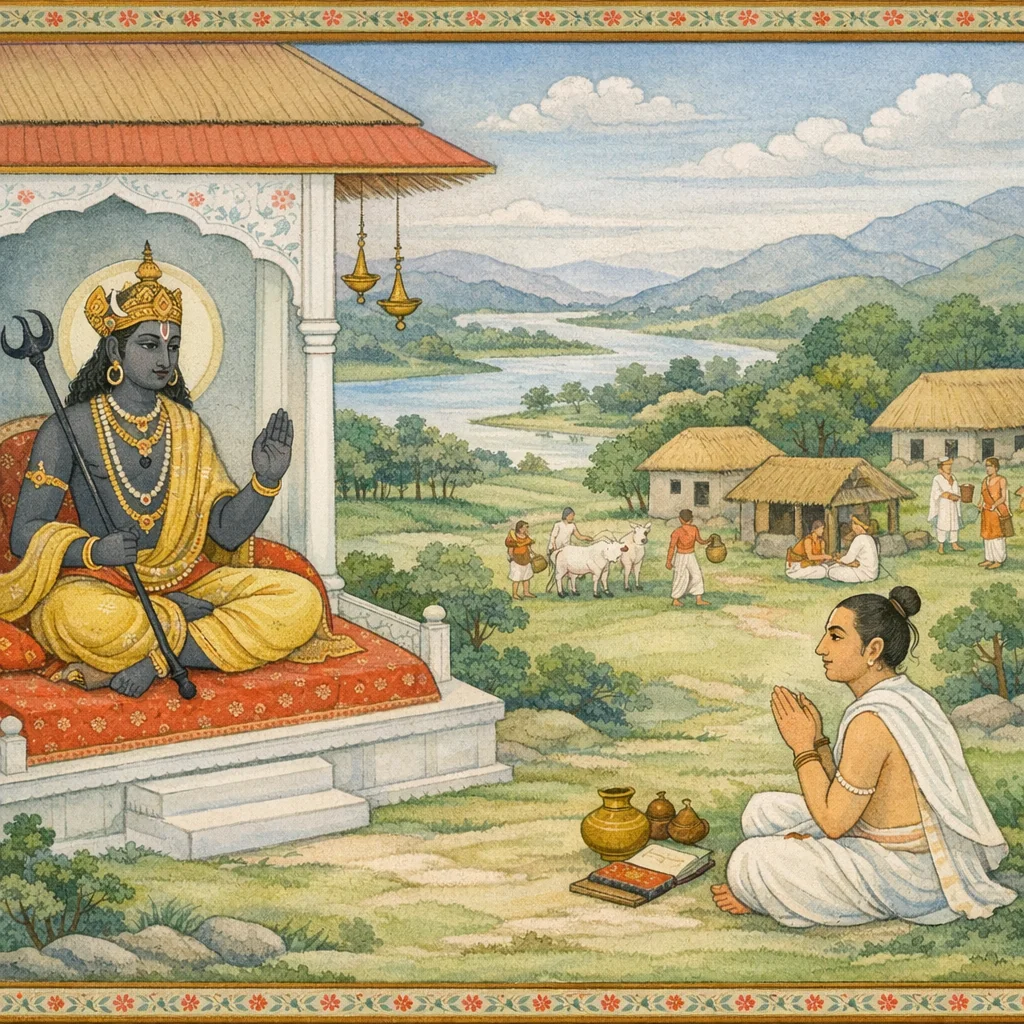
Adhyaya 71
गोप्रदान-माहात्म्ये गोलोक-प्रश्नः (Gopradāna-Māhātmya: Inquiry into Goloka)
Upa-parva: Dāna-dharma (Gopradāna / Goloka-adhyāya cycle)
Chapter 71.0 continues the Anuśāsana-parva’s dāna discourse by refining the doctrinal and cosmological claims surrounding go-pradāna. Yudhiṣṭhira references earlier accounts—Naciketā’s context, the cautionary episode of King Nṛga’s suffering arising from a single inadvertent fault, and Kṛṣṇa as the instrumental cause of Nṛga’s release—to establish that he has grasped the basic narrative. His remaining uncertainty concerns the ‘gavāṃ loka’ (the world associated with cows) and the destination attained by donors. Bhīṣma responds by citing an ancient itihāsa: Śakra (Indra), observing the radiance of Goloka-dwellers surpassing that of Svarga’s residents, asks Padmayoni (Brahmā) to explain the nature of these realms, the fruits and highest excellence (parama-guṇa) gained there, the means by which persons reach that state free from affliction, the duration and measure of donation-fruit, and how small gifts may become “many” through qualification. He further inquires about comparative merit (many cows vs. few), whether one can be considered a ‘go-prada’ without literal gifting, how an alpa-dātṛ can equal a bahu-dātṛ, and what dakṣiṇā is especially distinguished in go-pradāna. The chapter is thus a structured interrogative preface that sets the analytic agenda for subsequent explication: merit calculus, intentionality, procedural correctness, and cosmological telos.
Chapter Arc: भीष्म युधिष्ठिर को दानधर्म के सूक्ष्म फल बताने के लिए एक प्राचीन आख्यान छेड़ते हैं—मध्यदेश में गंगा-यमुना के बीच बसे ब्राह्मण-ग्राम से उठता है एक प्रश्न: जीवन का शेष काल कैसे सार्थक हो? → अध्ययन से ऊबा एक ब्राह्मण धर्मराज (यम) के पास पहुँचकर अपने बचे हुए समय का ‘निश्चित’ उपाय पूछता है; पर यम उत्तर देते हैं कि वे काल-विधान नहीं जानते—वे केवल धर्माचरण को पहचानते हैं। ब्राह्मण की जिज्ञासा अब ‘समय’ से हटकर ‘कर्म’ के निश्चित फल पर टिक जाती है। → यम धर्म का सार दान में, विशेषतः जलदान में स्थिर करते हैं—पोखरी, तालाब, कुएँ खुदवाना; प्यासों के लिए प्रपा बनवाना; नित्य जल देना—यह दुर्लभ और उत्तम पुण्य है, अन्नदान के साथ भी ‘पानीय’ को विशेष मानते हैं। → दान के विविध रूप (तिल, जल, दीप, रत्न आदि) के माहात्म्य को धर्म-नीति के रूप में स्थापित कर कथा ब्राह्मण को ‘काल-चिंता’ से मुक्त कर ‘धर्म-चिंतन’ में स्थिर करती है—जो धर्म करता है, वही जाना जाता है। → अंत में संकेत मिलता है कि यम के निषेध के बावजूद कोई बलपूर्वक उसी ब्राह्मण को उठा लाता है—यम उठकर उस लाए हुए को देखते हैं; आगे क्या दंड/उपदेश होगा, यह अगले प्रसंग की देहरी पर छोड़ दिया जाता है।
Shlokas
Verse 1
न्ीप्ज््ल््िसस ' बे । नत२स्प्स्स्न्िपनासज्स अष्टषष्टितमो< ध्याय: तिल, जल, दीप तथा रत्न आदिके दानका माहात्म्य-- धर्मराज और ब्राह्मणका संवाद युधिछिर उवाच तिलानां कीदृशं दानमथ दीपस्य चैव हि । अन्नानां वाससां चैव भूय एव ब्रवीहि मे,युधिष्ठिरने पूछा--पितामह! तिलोंके दानका कैसा फल होता है? दीप, अन्न और वस्त्रके दानकी महिमाका भी पुनः मुझसे वर्णन कीजिये
Yudhiṣṭhira said: “O Grandsire, what is the true nature and fruit of gifting sesame? And likewise of gifting a lamp. Tell me again, in fuller measure, the greatness of giving food and clothing as well.”
Verse 2
भीष्म उवाच अत्राप्युदाहरन्तीममितिहासं पुरातनम् । ब्राह्मणस्य च संवादं यमस्य च युधिष्ठिर,भीष्मजीने कहा--युधिष्ठिर! इस विषयमें ब्राह्मण और यमके संवादरूप प्राचीन इतिहासका उदाहरण दिया जाता है
Bhishma said: “Here too, O Yudhishthira, an ancient precedent is cited—an old tale in the form of a dialogue between a Brahmin and Yama. It is brought forward as an illustrative example for this very matter.”
Verse 3
मध्यदेशे महान ग्रामो ब्राह्म॒णानां बभूव ह | गंगायमुनयोर्मध्ये यामुनस्य गिरेरध:,नरेश्वर! मध्यदेशमें गंगा-यमुनाके मध्यभागमें यामुन पर्वतके निम्न स्थलमें ब्राह्मणोंका एक विशाल एवं रमणीय ग्राम था जो लोगोंमें पर्णशशालानामसे विख्यात था। वहाँ बहुत-से विद्वान ब्राह्मण निवास करते थे
Bhishma said: In the Madhyadeśa there once was a large settlement of Brahmins. It lay between the Gaṅgā and the Yamunā, below the slopes of the Yāmuna mountain. The passage introduces a renowned Brahmin village—an idealized setting of learning and disciplined life—preparing the ground for a dharma-teaching narrative rooted in the authority of sacred geography and the conduct of the learned.
Verse 4
पर्णशालेति विख्यातो रमणीयो नराधिप । विद्वांसस्तत्र भूयिष्ठा ब्राह्म॒णाश्चावसंस्तथा,नरेश्वर! मध्यदेशमें गंगा-यमुनाके मध्यभागमें यामुन पर्वतके निम्न स्थलमें ब्राह्मणोंका एक विशाल एवं रमणीय ग्राम था जो लोगोंमें पर्णशशालानामसे विख्यात था। वहाँ बहुत-से विद्वान ब्राह्मण निवास करते थे
Bhishma said: O king, there was a delightful settlement renowned among people by the name Parṇaśālā. In that place many learned Brahmins dwelt, living there in great number—set in the sacred middle region between the Gaṅgā and the Yamunā, in the low-lying tract near the Yamunā’s mountainous area. The scene establishes a dharmic setting: a community grounded in learning and Brahminical conduct, from which moral instruction and exemplary narratives are to unfold.
Verse 5
अथ प्राह यम: कंचित् पुरुषं कृष्णवाससम् । रक्ताक्षमूर्थ्वरीमाणं काकजंघाक्षिनासिकम्,एक दिन यमराजने काला वस्त्र धारण करनेवाले अपने एक दूतसे, जिसकी आँखें लाल, रोएँ ऊपरको उठे हुए और पैरोंकी पिण्डली, आँख एवं नाक कौएके समान थीं, कहा --
Bhīṣma said: Then Yama spoke to a certain man—one clad in black—whose eyes were red, whose body-hair stood on end, and whose shanks, eyes, and nose were like those of a crow. In this scene, the Lord of Justice issues an instruction to his fearsome attendant, underscoring that the administration of moral law (dharma) is carried out through appointed agents and that the consequences of deeds are enforced with impartial authority.
Verse 6
गच्छ त्वं ब्राह्मणग्रामं ततो गत्वा तमानय । अगस्त्यं गोत्रतश्नापि नामतश्नापि शर्मिणम्
Bhīṣma said: “Go to the settlement of the brāhmaṇas. Having gone there, bring him here—Agastya, the auspicious one—identifying him both by his gotra (lineage) and by his very name.”
Verse 7
मा चान्यमानयेथास्त्वं सगोत्रं तस्य पार्श्चत:,“उसी गाँवमें उसीके समान एक दूसरा ब्राह्मण भी रहता है। वह शर्मीके ही गोत्रका है। उसके अगल-बगलमें ही निवास करता है। गुण, वेदाध्ययन और कुलमें भी वह शर्मीके ही समान है। सन्तानोंकी संख्या तथा सदाचारके पालनमें भी वह बुद्धिमान् शर्मीके ही तुल्य है। तुम उसे यहाँ न ले आना
Bhīṣma said: “Do not bring another man in his place. In that same village there lives a second brāhmaṇa of the very same gotra, dwelling close by. In virtues, Vedic study, and family standing he is equal to Śarmīka; in the number of his children and in the observance of good conduct as well, he matches that wise man. Do not bring him here.”
Verse 8
स हि तादृग्गुणस्तेन तुल्यो5ध्ययनजन्मना । अपत्येषु तथा वृत्ते समस्तेनैव धीमता,“उसी गाँवमें उसीके समान एक दूसरा ब्राह्मण भी रहता है। वह शर्मीके ही गोत्रका है। उसके अगल-बगलमें ही निवास करता है। गुण, वेदाध्ययन और कुलमें भी वह शर्मीके ही समान है। सन्तानोंकी संख्या तथा सदाचारके पालनमें भी वह बुद्धिमान् शर्मीके ही तुल्य है। तुम उसे यहाँ न ले आना
Bhīṣma said: “For he is endowed with the very same qualities as that man—equal to him in Vedic study and in birth. Likewise, in the matter of offspring and in established conduct, he is in every respect comparable to that wise one.”
Verse 9
तमानय यथोद्विष्टं पूजा कार्या हि तस्य वै । स गत्वा प्रतिकूलं तच्चकार यमशासनम्,“मैंने जिसे बताया है, उसी ब्राह्मणको तुम यहाँ ले आओ; क्योंकि मुझे उसकी पूजा करनी है।” उस यमदूतने वहाँ जाकर यमराजकी आज्ञाके विपरीत कार्य किया
Bhīṣma said: “Bring here that brāhmaṇa exactly as I have indicated; for I must offer him due honor and worship.” But that messenger of Yama went there and, acting contrary to Yama’s command, carried out an opposing course of action.
Verse 10
तमाक्रम्यानयामास प्रतिषिद्धों यमेन यः । तस्मै यम: समुत्थाय पूजां कृत्वा च वीर्यवान्
Bhīṣma said: “He who, though forbidden by Yama, nevertheless overpowered him and brought him along—toward that mighty Yama he rose in respect and, having offered him due honor, performed worship.”
Verse 11
एवमुक्ते तु वचने धर्मराजेन स द्विज:,धर्मराजके इस प्रकार आदेश देनेपर अध्ययनसे ऊबे हुए उस समागत ब्राह्मणने उनसे कहा--:'धर्मसे कभी च्युत न होनेवाले देव! मेरे जीवनका जो समय शेष रह गया है, उसमें मैं यहीं रहूँगा'
When Dharmarāja had spoken thus, that brāhmaṇa replied: “O lord who never swerves from dharma! Whatever time remains of my life, I shall stay here.”
Verse 12
उवाच धर्मराजानं निर्विण्णो5ध्ययनेन वै | यो मे कालो भवेच्छेषस्तं वसेयमिहाच्युत,धर्मराजके इस प्रकार आदेश देनेपर अध्ययनसे ऊबे हुए उस समागत ब्राह्मणने उनसे कहा--:'धर्मसे कभी च्युत न होनेवाले देव! मेरे जीवनका जो समय शेष रह गया है, उसमें मैं यहीं रहूँगा'
Bhīṣma said: Wearied by continual study, the brāhmaṇa addressed Dharmarāja: “O Acyuta—one who never swerves from dharma—whatever time remains to me in this life, I shall dwell here.”
Verse 13
यम उवाच नाहं कालस्य विद्िितं प्राप्रोमीह कथंचन । यो हि धर्म चरति वै तं॑ तु जानामि केवलम्,यमराजने कहा--ब्रह्मन! मैं कालके विधानको किसी तरह नहीं जानता। जगत्में जो पुरुष धर्माचरण करता है, केवल उसीको मैं जानता हूँ
Yama said: “O Brahmin, I do not in any way comprehend here the ordained dispensation of Time. I recognize only that person who truly practices dharma.”
Verse 14
गच्छ विप्र त्वमद्यैव आलयं स्वं महाद्युते । ब्रृूहि सर्व यथा स्वैरं करवाणि किमच्युत,धर्मसे कभी च्युत न होनेवाले महातेजस्वी ब्राह्मण! तुम अभी अपने घरको चले जाओ और अपनी इच्छाके अनुसार सब कुछ बताओ मैं तुम्हारे लिये क्या करूँ?
Yama said: “Go, O brāhmaṇa, this very day to your own dwelling, O greatly radiant one. Speak freely and tell me everything as you wish—what shall I do for you, O unwavering one?”
Verse 15
ब्राह्मण उवाच यत् तत्र कृत्वा सुमहत् पुण्यं स्यात् तद् ब्रवीहि मे । सर्वस्य हि प्रमाणं त्वं त्रैलोक्यस्यापि सत्तम,ब्राह्मणने कहा--साधुशिरोमणे! संसारमें जो कर्म करनेसे महान् पुण्य होता हो वह मुझे बताइये; क्योंकि समस्त त्रिलोकीके लिये धर्मके विषयमें आप ही प्रमाण हैं
The brāhmaṇa said: “Tell me what deed, if performed there, would yield very great merit. For you are the authoritative standard in matters of righteousness for all—indeed, for the three worlds as well, O best of the virtuous.”
Verse 16
यम उवाच शृणु तत्त्वेन विप्ररषे प्रदानविधिमुत्तमम् । तिला: परमकं दान पुण्यं चैवेह शाश्वतम्,यमने कहा--ब्रह्मर्ष! तुम यथार्थरूपसे दानकी उत्तम विधि सुनो। तिलका दान सब दानोंमें उत्तम है। वह यहाँ अक्षय पुण्यजनक माना गया है
Yama said: “O brahmarṣi, listen in truth to the highest rule of giving. The gift of sesame seeds is the foremost of gifts; here it is regarded as a source of enduring, unfailing merit.”
Verse 17
तिलाक्ष सम्प्रदातव्या यथाशक्ति द्विजर्षभ । नित्यदानात् सर्वकामांस्तिला निर्वर्तयन्त्युत,द्विजश्रेष्ठी अपनी शक्तिके अनुसार तिलोंका दान अवश्य करना चाहिये। नित्यदान करनेसे तिल दाताकी सम्पूर्ण कामनाओंको पूर्ण कर देते हैं
Yama said: “O best of Brahmins, you should certainly give sesame seeds in charity according to your capacity. By the practice of daily giving, sesame is said to bring the donor’s aims and wishes to fulfillment.”
Verse 18
तिलान् श्राद्धे प्रशंसन्ति दानमेतद्ध्यनुत्तमम् । तान् प्रयच्छस्व विप्रेभ्यो विधिदृष्देन कर्मणा,श्राद्धमें विद्वान पुरुष तिलोंकी प्रशंसा करते हैं। यह तिलदान सबसे उत्तम दान है। अतः तुम शास्त्रीय विधिके अनुसार ब्राह्मणोंको तिलदान देते रहो
Yama said: “In the śrāddha rite, sesame seeds are especially praised; this gift is indeed unsurpassed. Therefore, give sesame to the Brahmins, performing the act in accordance with the scriptural procedure.”
Verse 19
वैशाख्यां पौर्णमास्यां तु तिलान् दद्याद् द्विजातिषु | तिला भक्षयितव्याशक्ष सदा त्वालम्भनं च तै:,वैशाखकी पूर्णिमाको ब्राह्मणोंके लिये तिलदान दे, तिल खाये और सदा तिलोंका ही उबटन लगाये
Yama said: “On the full-moon day of Vaiśākha, one should give sesame seeds in charity to the twice-born (especially Brahmins). One should also eat sesame, and regularly apply a sesame-based unguent to the body.”
Verse 20
कार्य सततमिच्छटद्धि: श्रेय: सर्वात्मना गृहे । तथा55प: सर्वदा देया: पेयाश्वैव न संशय:,जो सदा कल्याणकी इच्छा रखते हैं, उन्हें सब प्रकारसे अपने घरमें तिलॉका दान और उपयोग करना चाहिये। इसी प्रकार सर्वदा जलका दान और पान करना चाहिये--इसमें संशय नहीं है
Yama said: “One who constantly seeks what is truly beneficial should, with wholehearted intent, practice in one’s own household the giving and proper use of sesame (as a meritorious domestic observance). Likewise, water should always be given in charity and also taken for drinking—of this there is no doubt.”
Verse 21
पुष्करिण्यस्तडागानि कूपांश्चैवात्र खानयेत् । एतत् सुदुर्लभतरमिहलोके द्विजोत्तम,द्विजश्रेष्ठ! मनुष्यको यहाँ पोखरी, तालाब और कुएँ खुदवाने चाहिये। यह इस संसारमें अत्यन्त दुर्लभ--पुण्य कार्य है
Yama said: “In this world, O best of the twice-born, one should have ponds, tanks, and wells dug. Such an act is exceedingly rare and hard to attain as merit—an outstanding deed of righteousness, for it sustains living beings by providing water.”
Verse 22
आपो नित्य प्रदेयास्ते पुण्यं होतदनुत्तमम् । प्रपाश्न॒ कार्या दानार्थ नित्यं ते द्विजसत्तम । भुक्तेडप्यन्न॑ प्रदेयं तु पानीयं वै विशेषत:,विप्रवर! तुम्हें प्रतिदिन जलका दान करना चाहिये। जल देनेके लिये प्याऊ लगाने चाहिये। यह सर्वोत्तम पुण्य कार्य है। (भूखेको अन्न देना तो आवश्यक है ही,) जो भोजन कर चुका हो उसे भी अन्न देना चाहिये। विशेषतः जलका दान तो सभीके लिये आवश्यक है
Yama said: “You should give water every day; this is an unsurpassed act of merit. For the sake of charity, O best of the twice-born, you should also regularly set up a prapā, a public water-station. Even to one who has already eaten, food should still be given; but above all, the gift of drinking water is essential for everyone.”
Verse 23
भीष्म उवाच इत्युक्ते स तदा तेन यमदूतेन वै गृहान् । नीतश्न॒ कारयामास सर्व तद् यमशासनम्,भीष्मजी कहते हैं--राजन्! यमराजके ऐसा कहनेपर उस समय ब्राह्मण जानेको उद्यत हुआ। यमदूतने उसे उसके घर पहुँचा दिया और उसने यमराजकी आज्ञाके अनुसार वह सब पुण्य कार्य किया और कराया
Bhishma said: “When Yama’s messenger had spoken thus, the brahmana then prepared to depart. The Yamadūta brought him back to his home, and he carried out—and had carried out—every meritorious act in accordance with Yama’s command.”
Verse 24
नीत्वा तं यमदूतो<पि गृहीत्वा शर्मिणं तदा । ययौ स धर्मराजाय न्यवेदयत चापि तम्,तत्पश्चात् यमदूत शर्मीको पकड़कर वहाँ ले गया और धर्मराजको इसकी सूचना दी
Bhishma said: “Then Yama’s messenger seized Śarmi, led him away, and went to Dharmarāja (Yama), duly reporting the matter to him.”
Verse 25
त॑ं धर्मराजो धर्मज्ञं पूजयित्वा प्रतापवान् | कृत्वा च संविदं तेन विससर्ज यथागतम्,प्रतापी धर्मराजने उस धर्मज्ञ ब्राह्यणकी पूजा करके उससे बातचीत की और फिर वह जैसे आया था, उसी प्रकार उसे विदा कर दिया
Bhishma said: “The valiant Dharmarāja, having honored that knower of dharma, conversed with him and, after reaching an understanding, dismissed him—sending him back just as he had come.”
Verse 26
तस्यापि च यम: सर्वमुपदेशं चकार ह । प्रेत्यैत्य च ततः सर्व चकारोक्तं यमेन तत्,उसके लिये भी यमराजने सारा उपदेश किया। परलोकमें जाकर जब वह लौटा, तब उसने भी यमराजके बताये अनुसार सब कार्य किया
Bhishma said: Even to him, Yama imparted the entire instruction. Having gone to the other world and then returned, he carried out everything exactly as Yama had prescribed—showing that true guidance, once received, must be translated into disciplined action.
Verse 27
तथा प्रशंसते दीपान् यम: पितृहितेप्सया । तस्माद् दीपप्रदो नित्यं संतारयति वै पितृन्,पितरोंके हितकी इच्छासे यमराज दीपदानकी प्रशंसा करते हैं; अतः प्रतिदिन दीपदान करनेवाला मनुष्य पितरोंका उद्धार कर देता है
Bhīṣma said: Yama, desiring the welfare of the ancestors, likewise praises the offering of lamps. Therefore, one who regularly gives lamps truly helps one’s forefathers cross over—bringing them benefit and upliftment through this act of piety.
Verse 28
दातव्या: सततं दीपास्तस्माद् भरतसत्तम | देवतानां पितृणां च चक्षुष्यं चात्मनां विभो,इसलिये भरतश्रेष्ठ) देवता और पितरोंके उद्देश्य्से सदा दीपदान करते रहना चाहिये। प्रभो! इससे अपने नेत्रोंका तेज बढ़ता है
Bhishma said: Therefore, O best of the Bharatas, lamps should be given continually. Offered for the sake of the gods and the ancestors, this gift is said to be beneficial to the eyes and to increase one’s inner radiance, O lord.
Verse 29
रत्नदानं च सुमहत् पुण्यमुक्तं जनाधिप । यस्तान् विक्रीय यजते ब्राह्मणो हाभयंकरम्,जनेश्वर! रत्नदानका भी बहुत बड़ा पुण्य बताया गया है। जो ब्राह्मण दानमें मिले हुए रत्नको बेचकर उसके द्वारा यज्ञ करता है, उसके लिये वह प्रतिग्रह भयदायक नहीं होता
Bhīṣma said: O king, the gift of jewels is declared to be a very great merit. And if a brāhmaṇa sells the jewels he has received as a gift and performs a sacrifice with the proceeds, then for him that acceptance of gifts is not a cause of fear.
Verse 30
यद् वै ददाति वित्रेभ्यो ब्राह्मण: प्रतिगृह वै । उभयो: स्यात् तदक्षय्यं दातुरादातुरेव च,जो ब्राह्मण किसी दातासे रत्नोंका दान लेकर स्वयं भी उसे ब्राह्मणोंको बाँट देता है तो उस दानके देने और लेनेवाले दोनोंको अक्षय पुण्य प्राप्त होता है
Bhishma said: When a Brahmin receives a gift and then gives that very wealth onward to other Brahmins, the merit of that act becomes inexhaustible for both parties—the original giver and the receiver who redistributes it. The teaching highlights that gifts meant for sacred use bear lasting fruit when accepted without greed and passed on in a spirit of dharma.
Verse 31
यो ददाति स्थित: स्थित्यां तादृशाय प्रतिग्रहम् उभयोरक्षयं धर्म त॑ मनु: प्राह धर्मवित्,जो पुरुष स्वयं धर्ममर्यादामें स्थित होकर अपने ही समान स्थितिवाले ब्राह्मणको दानमें मिली हुई वस्तुका दान करता है, उन दोनोंको अक्षय धर्मकी प्राप्ति होती है। यह धर्मज्ञ मनुका वचन है
He who stands firm within the bounds of dharma and gives in charity—even that which he himself received as a gift—to a Brahmin of like station, wins for both an imperishable dharma. Such is the saying of Manu, knower of dharma.
Verse 32
वाससां सम्प्रदानेन स्वदारनिरतो नर: । सुवस्त्रश्न सुवेषश्च भवतीत्यनुशुश्रुम,जो मनुष्य अपनी ही स्त्रीमें अनुराग रखता हुआ वस्त्र दान करता है, वह सुन्दर वस्त्र और मनोहर वेष-भूषासे सम्पन्न होता है--ऐसा हमने सुन रखा है
Bhishma said: By giving garments in charity, a man who remains devoted to his own wife is said to become endowed with fine clothing and pleasing attire. Thus have we heard.
Verse 33
गाव: सुवर्ण च तथा तिलाश्रैवानुवर्णिता: । बहुश: पुरुषव्याप्र वेदप्रामाण्यदर्शनात्,पुरुषसिंह! मैंने गौ, सुवर्ण और तिलके दानका माहात्म्य अनेकों बार वेद-शास्त्रके प्रमाण दिखाकर वर्णन किया है
Bhishma said: O tiger among men, I have many times described—citing the authority of the Vedas—the greatness of giving in charity cows, gold, and sesame seeds.
Verse 34
विवाहांश्वैव कुर्वीत पुत्रानुत्पादयेत च । पुत्रलाभो हि कौरव्य सर्वलाभाद् विशिष्यते,कुरुनन्दन! मनुष्य विवाह करे और पुत्र उत्पन्न करे। पुत्रका लाभ सब लाभोंसे बढ़कर है
Bhishma said: “One should indeed enter into marriage and beget sons. For, O scion of the Kuru line, the gain of a son surpasses every other gain.”
Verse 63
शमे निविष्टं विद्वांसमध्यापकमनावृतम् । “तुम ब्राह्मणोंके उस ग्राममें चले जाओ और जाकर अगस्त्यगोत्री शर्मी नामक शमपरायण विद्वान् अध्यापक ब्राह्मणको, जो आवरणरहित है, यहाँ ले आओ
Bhishma said: “Go to that village of the Brahmins. There, bring here the learned Brahmin teacher named Śarmī, of the Agastya lineage—one who is firmly established in self-restraint (śama) and lives without concealment.”
Verse 67
इस प्रकार श्रीमह्याभारत अनुशासनपर्वके अन्तर्गत दानधर्मपर्वमें जलदानका माहात्म्यविषयक सरसठवाँ अध्याय पूरा हुआ
Thus ends the sixty-seventh chapter, on the greatness of gifting water, within the Dāna-dharma section of the Anuśāsana Parva of the sacred Mahābhārata. The closing note affirms that even simple, life-sustaining gifts—such as water—are upheld as potent acts of dharma and compassion.
Verse 68
इति श्रीमहाभारते अनुशासनपर्वणि दानधर्मपर्वणि यमब्राह्मणसंवादे अष्टषष्टितमो< ध्याय:,इस प्रकार श्रीमह्ाभारत अनुशासनपर्वके अन्तर्गत दानधर्मपर्वमें यम और ब्राह्मणका संवादविषयक अड़सठवाँ अध्याय पूरा हुआ
Thus, in the Śrī Mahābhārata, within the Anuśāsana Parva—specifically in the Dāna-dharma section—ends the sixty-eighth chapter, which sets forth the dialogue between Yama and a Brāhmaṇa. The colophon marks the completion of this teaching unit, framing the foregoing discourse as ethical instruction on charity and righteous conduct.
Verse 103
प्रोवाच नीयतामेष सो5नन््य आनीयतामिति । वह आक्रमण करके उसी ब्राह्णको उठा लाया, जिसके लिये यमराजने मना कर दिया था। शक्तिशाली यमराजने उठकर उसके लाये हुए ब्राह्मणकी पूजा की और दूतसे कहा -- इसको तुम ले जाओ और दूसरेको यहाँ ले आओ'
Bhīṣma said: “Let this one be taken away; bring that other one instead.” Acting on this command, the messenger forcefully seized and brought the very Brāhmaṇa whom Yama had earlier forbidden to be taken. Then mighty Yama rose, honored the Brāhmaṇa who had been brought, and instructed his attendant: “Take this man away, and bring another here.” The episode underscores the moral weight of a Brāhmaṇa’s sanctity and the truth that even the lord of death upholds dharma by correcting an improper seizure and restoring rightful order.
Frequently Asked Questions
Yudhiṣṭhira seeks a precise account of the ‘gavāṃ loka’—where cow-donors are said to go—and the underlying rationale that connects go-pradāna with a specific cosmological destination and quality of posthumous experience.
The chapter models dharma inquiry as analytic: it distinguishes quantity from qualification (few vs. many gifts), highlights the role of intention and procedure (including dakṣiṇā), and treats merit as intelligible through structured questioning rather than mere assertion.
No explicit phalaśruti appears within the provided verses; instead, the chapter functions as a thematic prologue that enumerates the parameters—fruit, duration, equivalences, and qualifications—through which the later exposition on go-pradāna’s results will be articulated.