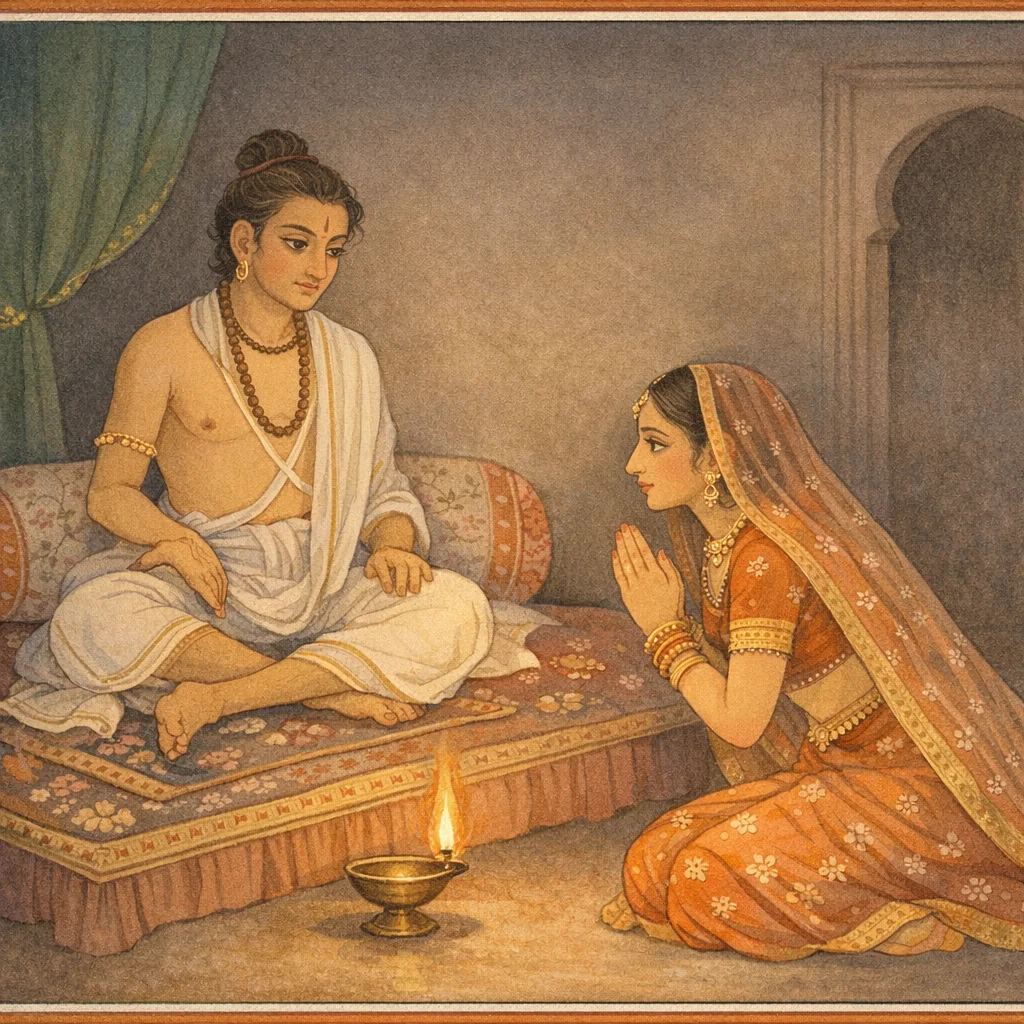
Adhyaya 22
Aṣṭāvakra and the Woman: Disclosure, Permission, and Marital Resolution (अनुशासन पर्व, अध्याय २२)
Upa-parva: Anuśāsana-parva (Didactic Dialogues on Conduct and Social Dharma)
Yudhiṣṭhira asks Bhīṣma how a particular woman does not fear the curse of a supremely radiant authority and how that authority’s restraint/withdrawal occurred. Bhīṣma recounts that Aṣṭāvakra questioned the woman about the alteration of her form, instructing that no falsehood should be spoken. The woman replies that her conduct is to be understood directionally (she identifies herself with the northern quarter) and frames her interaction as a deliberate test intended to stabilize or instruct; she also generalizes that sexual desire can trouble even elderly women, presenting it as a recognized condition rather than mere individual fault. She states that higher beings are satisfied and that she was sent by a Brahmin—identified as the girl’s father—to deliver instruction and complete the task. She grants Aṣṭāvakra leave, promises safe return without hardship, and states he will obtain the maiden, who will become a mother of sons. Aṣṭāvakra departs, returns home, reports the encounter, and is then asked to accept the Brahmin’s daughter in marriage at an auspicious conjunction of nakṣatra and tithi; he agrees, accepts the maiden, and resides contentedly in his āśrama.
Chapter Arc: भीष्म राजन् को एक विचित्र उपाख्यान में ले जाते हैं—अष्टावक्र ऋषि और उत्तर दिशा की एक रहस्यमयी स्त्री का संवाद, जहाँ सेवा-धर्म और काम-धर्म आमने-सामने खड़े हैं। → स्त्री ‘बहुत अच्छा’ कहकर दिव्य तेल, वस्त्र और स्नान-सामग्री लाती है; ऋषि को स्नानगृह तक ले जाकर विधिपूर्वक, सोपचार सेवा करती है। ऋषि उस सुखोष्ण स्नान और स्त्री के हाथों के स्पर्श-सुख में डूबते हैं—और समय का बोध खो बैठते हैं। → रात्रि के मध्य स्त्री काम-आकांक्षा से व्याकुल होकर ऋषि से मैथुन की माँग करती है और चेतावनी देती है कि अस्वीकार करने पर ‘अधर्म’ लगेगा—यहीं तपस्वी की मर्यादा और गृहस्थ-धर्म का दावा तीखे संघर्ष में बदल जाता है। → ऋषि अपनी संयम-शक्ति और सत्य-प्रतिज्ञा का आधार लेकर काम-प्रवृत्ति को स्वीकार नहीं करते; स्त्री के रूप-परिवर्तन (कन्या-रूप बनाम जरा-जीर्णता) का रहस्य प्रश्न बनकर उभरता है, और कथा संकेत देती है कि यह परीक्षा/माया/नियमबद्ध वरदान का परिणाम है—सेवा का प्रतिदान देह-सुख नहीं, आत्म-नियंत्रण की सिद्धि है। → स्त्री के रूप-परिवर्तन का कारण क्या है, और ‘भक्ति’ बनाम ‘काम’ के इस विवाद में धर्म का अंतिम निर्णय किसके पक्ष में जाएगा?
Shlokas
Verse 1
(दाक्षिणात्य अधिक पाठके २ श्लोक मिलाकर कुल १०५ श्लोक हैं) नल्लजा5 >> 7 जा विशो<ध्याय: अष्टावक्र और उत्तर दिशाका संवाद भीष्म उवाच अथ सा स्त्री तमुवाच बाढमेवं भवत्विति । तैलं दिव्यमुपादाय स्नानशाटीमुपानयत्
Bhishma said: Then that woman said to him, “So be it; let it be as you say.” Taking up a divine oil, she brought a bathing-cloth. The episode advances the ethical tone of the dialogue by showing prompt assent, hospitality, and the careful preparation for a purificatory act—outer cleanliness serving as a support for inner discipline and dharma.
Verse 2
भीष्मजी कहते हैं--राजन्! ऋषिकी बात सुनकर उस स्त्रीने कहा--“बहुत अच्छा, ऐसा ही हो” यों कहकर वह दिव्य तेल और स्नानोपयोगी वस्त्र ले आयी ।। अनुज्ञाता च मुनिना सा स्त्री तेन महात्मना | अथास्य तैलेनाड्नि सर्वाण्येवाभ्यमृक्षत,फिर उन महात्मा मुनिकी आज्ञा लेकर उस स्त्रीने उनके सारे अंगोंमें तेलकी मालिश की
Bhishma said: “O King, having heard the rishi’s words, the woman replied, ‘Very well—let it be exactly so.’ Saying this, she brought divine oil and garments suitable for bathing. Then, having received permission from that great-souled sage, she anointed all his limbs with the oil.”
Verse 3
शनैश्वोत्सादितस्तत्र स्स्नानशालामुपागमत् | भद्रासनं तततश्रित्रमृषिरन्वगमन्नवम्,फिर उसके उठानेपर वे धीरेसे वहाँ स्नानगृहमें गये। वहाँ ऋषिको एक विचित्र एवं नूतन चौकी प्राप्त हुई
Bhīṣma said: When he was gently lifted up, he slowly went there to the bathing-house. There the sage obtained a fine seat—strange in appearance and newly made—prepared for him, befitting respectful hospitality.
Verse 4
अथोपविष्टश्न यदा तस्मिन् भद्रासने तदा । स्नापयामास शनकैस्तमृषिं सुखहस्तवत्,जब वे उस सुन्दर चौकीपर बैठ गये तब उस स्त्रीने धीरे-धीरे हाथोंके कोमल स्पर्शसे उन्हें नहलाया
Bhīṣma said: When the sage had seated himself upon that auspicious seat, she then bathed him gently and gradually, with hands whose touch was soft and soothing—an act of careful service that reflects reverence toward an ascetic and the dharma of hospitality.
Verse 5
दिव्यं च विधिवच्चक्रे सोपचारं मुनेस्तदा । स तेन सुसुखोष्णेन तस्या हस्तसुखेन च
Bhishma said: “Then he performed the rite in a splendid and properly prescribed manner, offering due honors to the sage. And he was comforted both by that pleasantly warm (service) and by the soothing touch of her hands.”
Verse 6
तत उत्थाय स मुनिस्तदा परमविस्मित:,तदनन्तर वे मुनि अत्यन्त आश्वर्यवकित होकर उठ बैठे। उन्होंने देखा कि पूर्व-दिशाके आकाशकमें सूर्यदेवका उदय हो गया है। वे सोचने लगे, क्या यह मेरा मोह है या वास्तवमें सूर्योदय हो गया है
Bhishma said: Then that sage rose, utterly astonished. Immediately afterward, overwhelmed with wonder, he sat up and beheld that in the eastern sky the Sun-god had already risen. He reflected, “Is this some delusion of mine, or has sunrise truly occurred?”
Verse 7
पूर्वस्यां दिशि सूर्य च सो5पश्यदुदितं दिवि | तस्य बुद्धिरियं कि नु मोहस्तत्त्वमिदं भवेत्,तदनन्तर वे मुनि अत्यन्त आश्वर्यवकित होकर उठ बैठे। उन्होंने देखा कि पूर्व-दिशाके आकाशकमें सूर्यदेवका उदय हो गया है। वे सोचने लगे, क्या यह मेरा मोह है या वास्तवमें सूर्योदय हो गया है
Bhishma said: He then saw the sun risen in the sky in the eastern direction. A doubt arose in his mind: “What is this—mere delusion, or has the sun truly risen?” Immediately afterward, the sage, struck with overwhelming wonder, sat up and looked again: in the eastern sky the Sun-god had indeed appeared. He reflected, “Is this my confusion, or has dawn actually come?”
Verse 8
अथोपास्य सहस्रांशुं कि करोमीत्युवाच ताम् । सा चामृतरसप्रख्यं ऋषेरन्नमुपाहरत्,फिर तो तत्काल स्नान, संध्योपासना और सूर्योपस्थान करके उससे बोले, “अब क्या करूँ?” तब उस स्त्रीने ऋषिके समक्ष अमृतरसके समान मधुर अन्न परोसकर रखा
Bhishma said: After worshipping the thousand-rayed Sun, he said to her, “What should I do now?” Then that woman brought before the sage food that was sweet and delightful, like nectar—signifying reverent service and the proper honoring of a holy guest after the completion of daily rites.
Verse 9
तस्य स्वादुतयान्नस्य न प्रभूतं चकार सः । व्यगमच्चाप्यह:शेषं ततः संध्यागमत् पुन:,उस अन्नके स्वादसे वे इतने आकृष्ट हो गये कि उसे पर्याप्त न मान सके--“बस अब पूरा हो गया” यह बात न कह सके। इसीमें सारा दिन निकल गया और पुनः संध्याकाल आ पहुँचा
Bhishma said: So captivated was he by the deliciousness of that food that he could not bring himself to deem it sufficient—he could not say, “Enough, it is complete.” In this very indulgence the remainder of the day slipped away, and once again the evening twilight arrived.
Verse 10
अथ सा स्त्री भगवन्तं सुप्यतामित्यचोदयत् । तत्र वै शयने दिव्ये तस्य तस्याश्ष कल्पिते,इसके बाद उस स्त्रीने भगवान् अष्टावक्रसे कहा--“अब आप सो जाइये।” फिर वहीं उनके और उस स्त्रीके लिये दो शय्याएँ बिछायी गयीं
Bhīṣma said: Then that woman urged the venerable sage, “Now, please sleep.” Thereupon, in that very place, two splendid beds were arranged—one for him and one for her—signaling the careful observance of hospitality and propriety in receiving a revered guest.
Verse 11
पृथक् चैव तथा सुप्तौ सा स्त्री स च मुनिस्तदा । तथार्धात्रे सा स्त्री तु शयनं तदुपागमत्,उस समय वह स्त्री और मुनि दोनों अलग-अलग सो गये। जब आधी रात हुई तब वह स्त्री उठकर मुनिकी शय्यापर आ बैठी
Bhīṣma said: Then the woman and the sage lay down to sleep separately. When midnight came, the woman rose and approached that bed, coming to sit upon the sage’s couch—an act that sets the stage for a moral test concerning restraint, propriety, and the safeguarding of dharma.
Verse 12
अष्टावक्र उवाच न भठद्रे परदारेषु मनो मे सम्प्रसज्जति । उत्तिष्ठ भद्रे भद्रं ते स्वयं वै विरमस्व च,अष्टावक्र बोले--भद्रे! मेरा मन परायी स्त्रियोंमें आसक्त नहीं होता है। तुम्हारा भला हो, यहाँसे उठो और स्वयं ही इस पापकर्मसे विरत हो जाओ
Aṣṭāvakra said: “O noble lady, my mind does not become attached to another man’s wife. May good befall you—rise from here, and of your own accord desist from this sinful act.”
Verse 13
भीष्य उवाच सा तदा तेन विप्रेण तथा तेन निवर्तिता । स्वतन्त्रास्मीत्युवाचर्षि न धर्मच्छलमस्ति ते,भीष्मजी कहते हैं--राजन्! इस प्रकार उन ब्रह्मर्षिके लौटानेपर उसने कहा--'मैं स्वतन्त्र हूँ; अत: मेरे साथ समागम करनेसे आपके धर्मकी छलना नहीं होगी”
Bhishma said: “O King, when that brahmarshi tried to dissuade her in this manner, she replied, ‘I am free to choose for myself. Therefore, if you unite with me, there will be no deception or violation of dharma on your part.’”
Verse 14
अष्टावक्र उवाच नास्ति स्वतन्त्रता स्त्रीणामस्वतन्त्रा हि योषित: । प्रजापतिमतं होतन्न स्त्री स्वातन्तद्रयमहति,अष्टावक्र बोले--भटद्रे! स्त्रियोंकी स्वतन्त्रता नहीं सिद्ध होती; क्योंकि वे परतन्त्र मानी गयी हैं। प्रजापतिका यह मत है कि स्त्री स्वतन्त्र रहनेयोग्य नहीं है
Aṣṭāvakra said: “Women do not possess independent autonomy; indeed, women are regarded as dependent. This, according to the view attributed to Prajāpati, is that a woman is not considered fit to live in complete independence.”
Verse 15
रूयुवाच बाधते मैथुन विप्र मम भक्ति च पश्य वै । अधर्म प्राप्स्यसे विप्र यन्मां त्वं नाभिनन्दसि,स्त्री बोली--ब्रह्मन! मुझे मैथुनकी भूख सता रही है। आपके प्रति जो मेरी भक्ति है, इसपर भी तो दृष्टिपात कीजिये। विप्रवर! यदि आप मुझे संतुष्ट नहीं करते हैं तो आपको पाप लगेगा
The woman said: “O brahmin, desire for union troubles me; yet look also upon my devotion to you. O best of brahmins, if you do not accept and satisfy me, you will incur sin.”
Verse 16
अद्टावक्र उवाच हरन्ति दोषजातानि नरं जात॑ यथेच्छकम् | प्रभवामि सदा धृत्या भद्रे स्वशयनं व्रज,अष्टावक्रने कहा--भटद्रे! स्वेच्छाचारी मनुष्यको ही सब प्रकारके पापसमूह अपनी ओर खींचते हैं। मैं धैर्यके द्वारा सदा अपने मनको काबूमें रखता हूँ; अतः तुम अपनी शय्यापर लौट जाओ
Aṣṭāvakra said: “Clusters of faults and sins seize and carry off a man who lives by mere whim. I, however, always master myself through steadfast self-control. Therefore, noble lady, return to your own bed.”
Verse 17
रूयुवाच शिरसा प्रणमे विप्र प्रसादं कर्तुमहसि । भूमौ निपतमानाया: शरणं भव मेडनघ,स्त्री बोली--अनघ! विप्रवर! मैं सिर झुकाकर प्रणाम करती हूँ और आपके सामने पृथ्वीपर पड़ी हूँ। आप मुझपर कृपा करें और मुझे शरण दें
The woman said: “O blameless one, O best of brāhmaṇas, I bow my head to you in reverence. I have fallen to the ground before you—please show me compassion and grant me refuge.”
Verse 18
यदि वा दोषजातं त्वं परदारेषु पश्यसि । आत्मानं स्पर्शयाम्यद्य पार्णिं गृह्ीष्व मे द्विज,ब्रह्म! यदि आप परायी स्त्रियोंके साथ समागममें दोष देखते हैं तो मैं स्वयं आपको अपना दान करती हूँ। आप मेरा पाणिग्रहण कीजिये
Aṣṭāvakra said: “If you perceive any fault in union with another man’s wife, then today I offer myself to you—take my hand in marriage, O twice-born brāhmaṇa.”
Verse 19
न दोषो भविता चैव सत्येनैतद् ब्रवीम्यहम् । स्वतन्त्रां मां विजानीहि यो<धर्म: सो<सस््तु वै मयि । त्वय्यावेशितचित्ता च स्वतन्त्रास्मि भजस्व माम्,मैं सच कहती हूँ, आपको कोई दोष नहीं लगेगा। आप मुझे स्वतन्त्र समझिये। इसमें जो पाप होता है, वह मुझे ही लगे। मेरा चित्त आपके ही चिन्तनमें लगा है। मैं स्वतन्त्र हूँ; अतः मुझे स्वीकार कीजिये
“No blame will come to you—this I declare truthfully. Know me to be acting of my own free will; if any unrighteousness lies in this act, let that fault rest upon me alone. My mind is wholly absorbed in you. I am independent in this choice; therefore accept me.”
Verse 20
सअद्टावक्र उवाच स्वतन्त्रा त्वं कथं भद्रे ब्रूहि कारणमत्र वै नास्ति त्रिलोके स्त्री काचिद् या वै स्वातन्त्रयमहति,अष्टावक्रने कहा--भद्रे! तुम स्वतन्त्र कैसे हो? इसमें जो कारण हो, वह बताओ! तीनों लोकोंमें कोई ऐसी स्त्री नहीं है जो स्वतन्त्र रहने योग्य हो इति श्रीमहा भारते अनुशासनपर्वणि दानधर्मपर्वणि अष्टावक्रदिक्संवादे विंशो5ध्याय:
Aṣṭāvakra said: “O noble lady, how is it that you are independent? Tell me the reason for it here. For in the three worlds there is no woman who is truly fit to live in complete independence.”
Verse 21
पिता रक्षति कौमारे भर्ता रक्षति यौवने । पुत्राश्न॒ स्थाविरे काले नास्ति स्त्रीणां स्वतन्त्रता,कुमारावस्थामें पिता इसकी रक्षा करते हैं, जवानीमें वह पतिके संरक्षणमें रहती है और बुढ़ापेमें पुत्र उसकी देखभाल करते हैं। इस प्रकार स्त्रियोंके लिये स्वतन्त्रता नहीं है
In childhood a woman is protected by her father; in youth she is protected by her husband; and in old age she is protected by her sons. Thus, in this normative statement of social dharma, women are said not to act independently but to live under the guardianship of family protectors.
Verse 22
रूयुवाच कौमार ब्रह्मचर्य मे कन्यैवास्मि न संशय: । पत्नीं कुरुष्व मां विप्र श्रद्धां विजहि मा मम
Rūyu said: “My celibate discipline has been preserved from maidenhood; of this there is no doubt. O brāhmaṇa, take me as your wife. Do not abandon your trust in me.”
Verse 23
स्त्री बोली--विप्रवर! मैं कुमारावस्थासे ही ब्रह्मचारिणी हूँ; अतः कन्या ही हूँ--इसमें संशय नहीं है। अब आप मुझे पत्नी बनाइये। मेरी श्रद्धाका नाश न कीजिये ।। अष्टावक्र उवाच यथा मम तथा तुभ्य॑ यथा तुभ्यं तथा मम । जिज्ञासेयमृषेस्तस्य विघ्न: सत्यं न कि भवेत्,अष्टावक्रने कहा--जैसी मेरी दशा है, वैसी तुम्हारी है और जैसी तुम्हारी दशा है, वैसी मेरी है। यह वास्तवमें वदान्य ऋषिके द्वारा परीक्षा ली जा रही है या सचमुच यह कोई विघ्न तो नहीं है?
The woman said: “O best of Brahmins, from my maidenhood I have lived as a celibate; therefore I am truly a maiden—there is no doubt in this. Now take me as your wife. Do not destroy my faith.” Aṣṭāvakra replied: “As my condition is, so is yours; and as yours is, so is mine. I wonder whether this is a test devised by that generous sage, or whether it is in truth some obstacle meant to disrupt the right course.”
Verse 24
आश्चर्य परम हीदं कि नु श्रेयो हि मे भवेत् । दिव्याभरणवत्त्रा हि कन्येयं मामुपस्थिता,(वे मन-ही-मन सोचने लगे--) यह पहले वृद्धा थी और अब दिव्य वस्त्राभूषणोंसे विभूषित कन्यारूप होकर मेरी सेवामें उपस्थित है। यह बड़े ही आश्वर्यकी बात है। क्या यह मेरे लिये कल्याणकारी होगा?
Aṣṭāvakra said: “This is a supreme wonder indeed. What good, I ask, may come to me from this? For this maiden—adorned with divine ornaments and garments—has come and stands before me in attendance.”
Verse 25
कि त्वस्था: परमं रूपं जीर्णमासीत् कथ॑ं पुनः । कन्यारूपमिहाद्यैवं किमिवात्रोत्तरं भवेत्,परंतु इसका यह परम सुन्दर रूप पहले जराजीर्ण कैसे हो गया था और अब यहाँ यह कन्यारूप कैसे प्रकट हो गया? ऐसी दशामें यहाँ उसके लिये क्या उत्तर हो सकता है?
Aṣṭāvakra said: “But how did this supremely beautiful form become worn out with age before? And now, here, how has it appeared again in the form of a maiden? In such a situation, what answer could possibly be given?”
Verse 26
यथा पर शक्तिधुतेर्न व्युत्थास्ये कथंचन । न रोचते हि व्युत्थानं सत्येनासादयाम्यहम्,मुझमें कामको दमन करनेकी शक्ति है और पूर्वप्राप्त मुनि-कन्याको किसी तरह भी प्राप्त करनेका धैर्य बना हुआ है। इस शक्ति और धृतिके ही सहारे मैं किसी तरह विचलित नहीं होऊँगा। मुझे धर्मका उल्लंघन अच्छा नहीं लगता। मैं सत्यके सहारेसे ही पत्नीको प्राप्त करूँगा
As long as I am upheld by supreme inner strength and steadfast resolve, I will not be shaken in any way. I do not approve of straying from righteousness; therefore I will attain my intended wife only through truthfulness and lawful means.
Verse 56
व्यतीतां रजनीं कृत्स्नां नाजानात् स महाव्रतः । उसने मुनिके लिये विधिपूर्वक सम्पूर्ण दिव्य सामग्री प्रस्तुत की। वे महाव्रतधारी मुनि उसके दिये हुए कुछ-कुछ गरम होनेके कारण सुखदायक जलसे नहाकर उसके हाथोंके सुखद स्पर्शसे सेवित होकर इतने आनन्दविभोर हो गये कि कब सारी रात बीत गयी? इसका उन्हें ज्ञान ही नहीं हुआ
Bhishma said: The great-vowed sage did not even realize that the entire night had passed. Having been duly served with all the proper, excellent requisites—bathed in pleasantly warm water and attended with the soothing touch of the host—he became so absorbed in contentment that the passage of time escaped his notice.
Frequently Asked Questions
The tension is between inquiry and propriety: Aṣṭāvakra demands truthful disclosure about a transformed form while the woman frames the interaction as a controlled test, raising questions about speech ethics, intention, and social boundaries.
The chapter models dharma as practice: speak truthfully under constraint, recognize desire as a force requiring regulation, and resolve social outcomes (such as marriage) through consent, legitimate intermediaries, and ritually appropriate timing.
No explicit phalaśruti formula appears in the provided verses; the chapter’s function is exemplary and normative, embedding its significance in conduct-guidance rather than stated salvific reward.