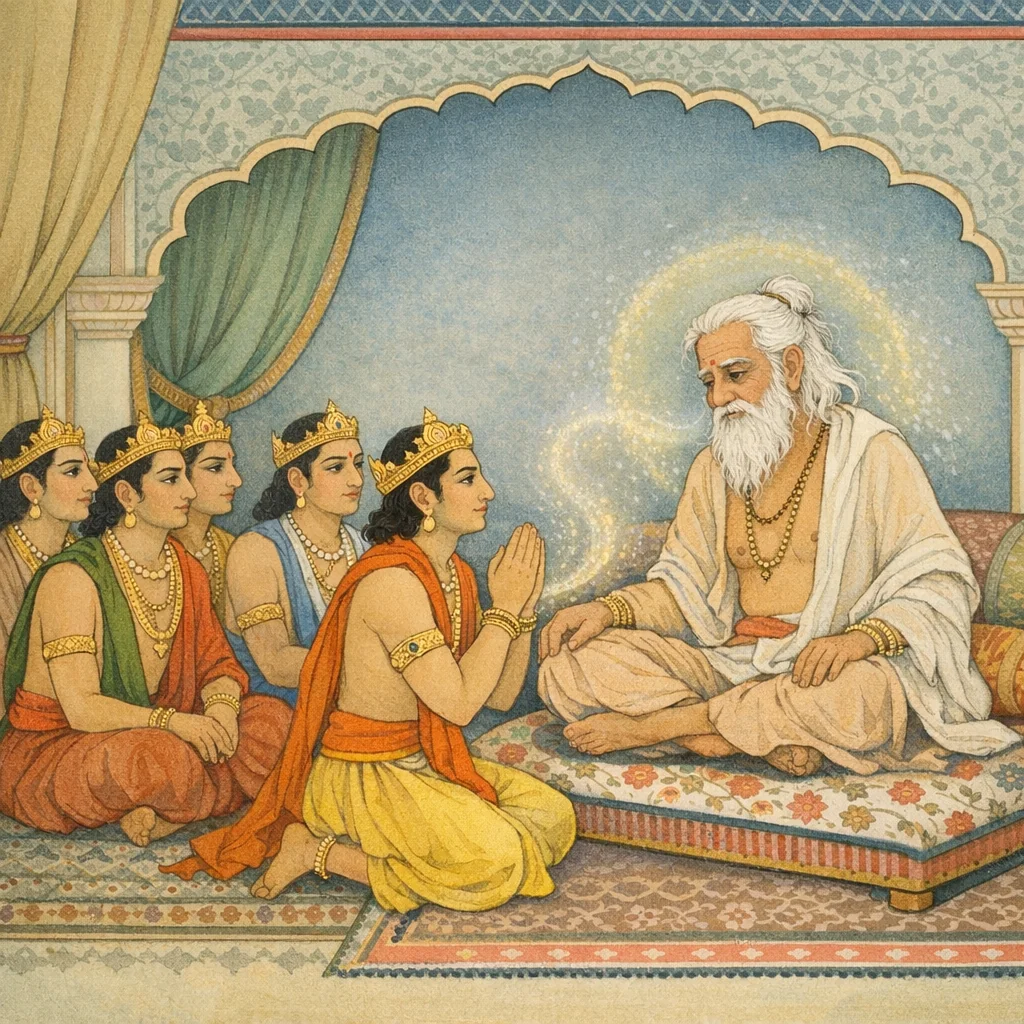
Adhyaya 85
Ādi Parva, Adhyāya 85: Āṣṭaka–Yayāti संवादः (Merit-Exhaustion, Rebirth, and the Critique of Pride)
Upa-parva: Āṣṭaka–Yayāti Saṃvāda (Dialogue of Āṣṭaka and Yayāti)
Adhyāya 85 is structured as a sustained interrogation by Āṣṭaka and a doctrinal reply by King Yayāti. Āṣṭaka first asks why a being who enjoyed in Nandana and could assume forms (kāmarūpī) abandons that state and returns to earth; Yayāti answers with an analogy of social abandonment when wealth is depleted, extending it to the abandonment of one whose merit is exhausted (kṣīṇa-puṇya). He describes a “bhauma naraka” where fallen beings endure predation and prolonged descent, including being attacked by fierce terrestrial rākṣasas during the fall. Āṣṭaka then asks how such beings become embodied again; Yayāti explains re-embodiment through reproductive and elemental pathways (blood/seed mingled with nutritive essences), and that beings enter plants, waters, air, earth, and diverse life-forms, becoming ‘garbhabhūta’ (entering gestation). The dialogue continues into embryological and cognitive formation: vāyu is said to draw the seed toward the womb, and the developing human acquires the sensory modalities—hearing, sight, smell, taste, touch—along with mental apprehension. Finally, the chapter turns explicitly normative: Yayāti lists stabilizing virtues (tapas, dāna, śama, dama, modesty, straightforwardness, compassion) and warns that pride (māna) corrupts otherwise protective actions (ritual, silence, study, sacrifice), limiting their fruits and undermining higher attainments.
Chapter Arc: अकस्मात् ययाति पर जरा उतर आती है—पलित केश, शिथिल देह, और भीतर अब भी अतृप्त यौवन की आग। वह स्वीकार करता है कि यह सब कविपुत्र शुक्राचार्य (काव्य उशनस्) के शाप से हुआ है। → ययाति अपने पुत्रों के सामने असाधारण प्रस्ताव रखता है—‘मेरी जरा और पाप्मान तुम ले लो; अपनी जवानी मुझे दे दो, ताकि मैं विषय-भोग कर सकूँ।’ एक-एक कर यदु, तुर्वसु, द्रुह्यु और अनु वृद्धावस्था की दीनता का वर्णन करते हुए इंकार करते हैं—बूढ़ा न वाहन भोग पाता है, न स्त्री-सुख, न यज्ञ-आचरण; वह असमय भोजन करता, अशुचि रहता, और अपमान का पात्र बनता है। → पुत्रों के इंकार पर ययाति क्रोध और शोक के बीच उन्हें शाप/अप्रसन्नता के वचन देता—विशेषतः द्रुह्यु और अन्य अस्वीकार करने वालों को ‘काम’ और ‘सम्पद’ की असिद्धि तथा वंश-प्रतिष्ठा के ह्रास का संकेत। तभी पुरु आगे बढ़कर पिता की आज्ञा को धर्म मानकर अपनी युवावस्था अर्पित करने को तैयार होता है। → ययाति पुरु पर प्रसन्न होकर उसे वर देता—उसकी प्रजा सर्वकामसमृद्ध होगी और राज्य में प्रतिष्ठा स्थिर रहेगी। फिर महातपस्वी ययाति शुक्राचार्य का स्मरण कर ‘संक्रामण’ द्वारा अपनी जरा पुरु में स्थानांतरित कर देता और स्वयं पुरु की युवावस्था धारण करता है। → ययाति को पुनः यौवन मिल गया—अब प्रश्न यह है कि वह इस उधार लिए यौवन का उपयोग कैसे करेगा, और पुरु की स्वीकृति का मूल्य आगे किस रूप में प्रकट होगा।
Shlokas
Verse 1
(दाक्षिणात्य अधिक पाठके ४ ३ श्लोक मिलाकर कुल ४६३ “लोक हैं) #२-:237#:22 श््नु 32 चतुरशीतितमो< ध्याय: ययातिका अपने पुत्र यदु, तुर्वसु, द्रहूु और अनुसे अपनी युवावस्था देकर वृद्धावस्था लेनेक लिये आग्रह और उनके अस्वीकार करनेपर उन्हें शाप देना, फिर अपने पुत्र पूरुको जरावस्था देकर उनकी युवावस्था लेना तथा उन्हें वर प्रदान करना वैशम्पायन उवाच जरां प्राप्प ययातिस्तु स्वपुरं प्राप्य चैव हि । पुत्रं ज्येष्ठ वरिष्ठ च यदुमित्यब्रवीद् वच:,वैशम्पायनजी कहते हैं--राजा ययाति बुढ़ापा लेकर वहाँसे अपने नगरमें आये और अपने ज्येष्ठ एवं श्रेष्ठ पुत्र यदुसे इस प्रकार बोले
Vaiśampāyana said: Having been overtaken by old age, King Yayāti returned to his own city. There he addressed his eldest and most eminent son, Yadu, speaking these words—setting in motion a moral test about duty to one’s father, the limits of desire, and the consequences of refusing a rightful request.
Verse 2
ययातिरुवाच जरा वली च मां तात पलितानि च पर्यगुः । काव्यस्योशनस: शापान्न च तृप्तोडस्मि यौवने,ययातिने कहा--तात! कविपुत्र शुक्राचार्यके शापसे मुझे बुढ़ापेने घेर लिया; मेरे शरीरमें झुर्रियाँ पड़ गयीं और बाल सफेद हो गये; किंतु मैं अभी जवानीके भोगोंसे तृप्त नहीं हुआ हूँ
Yayāti said: “Dear son, old age has overtaken me—wrinkles have appeared and my hair has turned grey. Because of the curse of Kāvya Uśanas (Śukrācārya), I have been seized by senescence; yet I am still not satisfied with the enjoyments of youth.”
Verse 3
त्वं यदो प्रतिपद्यस्व पाप्मानं जरया सह । यौवनेन त्वदीयेन चरेयं विषयानहम्,यदो! तुम बुढ़ापेके साथ मेरे दोषको ले लो और मैं तुम्हारी जवानीके द्वारा विषयोंका उपभोग करूँ। एक हजार वर्ष पूरे होनेपर मैं पुनः तुम्हारी जवानी देकर बुढ़ापेके साथ अपना दोष वापस ले लूँगा
“Yadu, take upon yourself my old age together with my ‘taint’; and by means of your youth I shall enjoy the objects of sense.”
Verse 4
पूर्णे वर्षमहस्रे तु पुनस्ते यौवनं त्वहम् । दत्त्वा स्वं प्रतिपत्स्यामि पाप्मानं जरया सह,यदो! तुम बुढ़ापेके साथ मेरे दोषको ले लो और मैं तुम्हारी जवानीके द्वारा विषयोंका उपभोग करूँ। एक हजार वर्ष पूरे होनेपर मैं पुनः तुम्हारी जवानी देकर बुढ़ापेके साथ अपना दोष वापस ले लूँगा
Vaiśampāyana said: “When a full thousand years have passed, I will again return your youth to you. Having granted it for now, I shall take back my own burden of decay—my ‘taint’—together with old age. Thus, by your youth I will enjoy the objects of sense; and when the term is complete, I will restore what is yours and reclaim what is mine.”
Verse 5
यदुरुवाच जरायां बहवो दोषा: पानभोजनकारिता: । तस्माज्जरां न ते राजन ग्रहीष्य इति मे मति:,यदु बोले--राजन! बुढ़ापेमें खाने-पीनेसे अनेक दोष प्रकट होते हैं; अतः मैं आपकी वृद्धावस्था नहीं लूँगा, यही मेरा निश्चित विचार है
Yadu said: “O King, in old age many faults arise, brought on by eating and drinking. Therefore, O ruler, I will not take your old age—this is my settled resolve.”
Verse 6
सितश्मश्रुर्निरानन्दो जरया शिथिलीकृत: । वलीसंगतगाज्रस्तु दुर्दर्शो दुर्बल: कृशः,महाराज! मैं उस बुढ़ापेको लेनेकी इच्छा नहीं करता, जिसके आनेपर दाढ़ी-मूँछके बाल सफेद हो जाते हैं; जीवनका आनन्द चला जाता है। वृद्धावस्था एकदम शिथिल कर देती है। सारे शरीरमें झुर्रियाँ पड़ जाती हैं और मनुष्य इतना दुर्बल तथा कृशकाय हो जाता है कि उसकी ओर देखते नहीं बनता
Vaiśampāyana said: “I do not desire that old age in which one’s beard and moustache turn white, the joy of life departs, and the body is loosened and enfeebled by senescence. With limbs covered in wrinkles, a person becomes so weak and emaciated that he is scarcely fit to be looked upon.”
Verse 7
अशक्तः कार्यकरणे परिभूत: स यौवतै: । सहोपजीविभिशश्लैव तां जरां नाभिकामये,बुढ़ापेमें काम-काज करनेकी शक्ति नहीं रहती, युवतियाँ तथा जीविका पानेवाले सेवक भी तिरस्कार करते हैं; अतः मैं वृद्धावस्था नहीं लेना चाहता
Vaiśampāyana said: “In old age one becomes incapable of carrying out one’s tasks and duties; one is slighted by the young, and even by those dependents and servants who live by one’s support. Therefore, I do not desire to accept such old age.”
Verse 8
सन्ति ते बहव:ः पुत्रा मत्त: प्रियतरा नूप । जरां ग्रहीतुं धर्मज्ञ तस्मादन्यं वृणीष्व वै,धर्मज्ञ नरेश्वरर आपके बहुत-से पुत्र हैं, जो आपको मुझसे भी अधिक प्रिय हैं; अतः बुढ़ापा लेनेके लिये किसी दूसरे पुत्रको चुन लीजिये
Vaiśampāyana said: “O king, you have many sons who are dearer to you than I am. Therefore, O knower of dharma, if you must accept old age, choose some other son for that burden.”
Verse 9
ययातिरुवाच यत् त्वं मे हृदयाज्जातो वय: स्व॑ न प्रयच्छसि । तस्मादराज्यभाक् तात प्रजा तव भविष्यति,ययातिने कहा--तात! तुम मेरे हृदयसे उत्पन्न (औरस पुत्र) होकर भी मुझे अपनी युवावस्था नहीं देते; इसलिये तुम्हारी संतान राज्यकी अधिकारिणी नहीं होगी
Yayāti said: “Since you, though born from my very heart, do not grant me your own youth, therefore, my son, your descendants shall not be entitled to kingship.”
Verse 10
तुर्वसो प्रतिपद्यस्व पाप्मानं जरया सह । यौवनेन चरेयं वै विषयांस्तव पुत्रक,(अब उन्होंने तुर्वसुको बुलाकर कहा--) तुर्वसो! बुढ़ापेके साथ मेरा दोष ले लो। बेटा! मैं तुम्हारी जवानीसे विषयोंका उपभोग करूँगा
Vaiśampāyana said: “O Turvasu, accept my sin together with my old age. My son, with your youth I shall indeed indulge in the objects of sense.”
Verse 11
पूर्णे वर्षमहस्रे तु पुनर्दास्थामि यौवनम् । स्वं चैव प्रतिपत्स्यामि पाप्मानं जरया सह,एक हजार वर्ष पूर्ण होनेपर मैं तुम्हें जवानी लौटा दूँगा और बुढ़ापेसहित अपने दोषको वापस ले लूँगा
Vaiśampāyana said: “When a full thousand years have passed, I shall restore your youth again; and I shall take back upon myself my own taint—together with the old age.”
Verse 12
वुर्वयुरुवाच न कामये जरां तात कामभोगप्रणाशिनीम् । बलरूपान्तकरणी बुद्धिप्राणप्रणाशिनीम्,तुर्वसु बोले--तात! काम-भोगका नाश करनेवाली वृद्धावस्था मुझे नहीं चाहिये। वह बल तथा रूपका अन्त कर देती है और बुद्धि एवं प्राणशक्तिका भी नाश करनेवाली है
Vaiśampāyana said: “Dear father, I do not desire old age—the destroyer of pleasures and enjoyments. It brings strength and beauty to an end, and it also destroys clarity of intellect and the vital powers.”
Verse 13
ययातिर्वाच यत् त्वं मे हृदयाज्जातो वय: स्व॑ न प्रयच्छसि । तस्मात् प्रजा समुच्छेदं तुर्वलो तव यास्यति,ययातिने कहा--तुर्वसो! तू मेरे हृदयसे उत्पन्न होकर भी मुझे अपनी युवावस्था नहीं देता है, इसलिये तेरी संतति नष्ट हो जायगी
Vaiśampāyana said: Yayāti said, “Though you are born from my very heart, you do not grant me your own youth. Therefore, O Turvasu, the line of your descendants shall come to ruin and be cut off.”
Verse 14
संकीर्णाचारधर्मेषु प्रतिलोमचरेषु च । पिशिताशिषु चान्त्येषु मूढ राजा भविष्यसि,मूढ़! जिनके आचार और धर्म वर्णसंकरोंके समान हैं, जो प्रतिलोमसंकर जातियोंमें गिने जाते हैं तथा जो कच्चा मांस खानेवाले एवं चाण्डाल आदिकी श्रेणीमें हैं, ऐसे लोगोंका तू राजा होगा
“You will become king among those whose conduct and dharma are confused and mixed, among those who follow inverted ways, and among the lowest who eat raw flesh—people of the outcaste condition, like the Caṇḍālas.”
Verse 15
गुरुदारप्रसक्तेषु तिर्यग्योनिगतेषु च | पशुधर्मेषु पापेषु म्लेच्छेषु त्वं भविष्यसि,जो गुरु-पत्नियोंमें आसक्त हैं, जो पशु-पक्षी आदिका-सा आचरण करनेवाले हैं तथा जिनके सारे आचार-विचार भी पशुओंके समान हैं, तू उन पापात्मा म्लेच्छोंका राजा होगा
Vaiśampāyana said: “Among those who lust after their teacher’s wife, who have fallen into base (animal-like) modes of existence, and who live by sinful, beastly codes of conduct—among such ‘mlecchas’—you will become their ruler.”
Verse 16
वैशम्पायन उवाच एवं स तुर्वसुं शप्त्वा ययाति: सुतमात्मन: । शर्मिष्ठाया: सुतं द्रुह्मुमिदं वचनमत्रवीत्,वैशम्पायनजी कहते हैं--जनमेजय! राजा ययातिने इस प्रकार अपने पुत्र तुर्वसुको शाप देकर शर्मिष्ठाके पुत्र द्रह्यसे यह बात कही
Vaiśampāyana said: Having thus pronounced a curse upon Turvasu, his own son, King Yayāti then addressed these words to Druhyu, the son of Śarmiṣṭhā.
Verse 17
ययातिरुवाच द्रह्मो त्वं प्रतिपद्यस्व वर्णरूपविनाशिनीम् । जरां वर्षसहसतरं मे यौवनं स्वं ददस्व च,ययातिने कहा--द्रुह्ञे! कान्ति तथा रूपका नाश करनेवाली यह वृद्धावस्था तुम ले लो और एक हजार वर्षोंके लिये अपनी जवानी मुझे दे दो
Yayāti said: “O Druhyu, take upon yourself this old age that destroys complexion and beauty; and give to me your own youth for a thousand years.”
Verse 18
पूर्णे वर्षमहस्रे तु पुनर्दास्थामि यौवनम् । स्वं चादास्यामि भूयो5हं पाप्मानं जरया सह,हजार वर्ष पूर्ण हो जानेपर मैं पुनः तुम्हारी जवानी तुम्हें दे दूँगा और बुढ़ापेके साथ अपना दोष फिर ले लूँगा
Vaiśaṃpāyana said: “When a full thousand years have passed, I shall restore your youth to you again; and I, taking back upon myself the taint of sin together with old age, will bear it once more.”
Verse 19
दु्लुस्वाच नगजं न रथं नाश्वं जीर्णो भुड्धक्ते न च स्त्रियम् । वाक्सड्रश्नास्य भवति तां जरां नाभिकामये,द्रह्मु बोले--पिताजी! बूढ़ा मनुष्य हाथी, घोड़े और रथपर नहीं चढ़ सकता; स्त्रीका भी उपभोग नहीं कर सकता। उसकी वाणी भी लड़खड़ाने लगती है; अतः मैं वृद्धावस्था नहीं लेना चाहता
Vaiśampāyana said: “Druhyu replied: ‘Father! A man grown old and infirm cannot mount an elephant, a horse, or a chariot; he cannot enjoy the company of a woman; even his speech begins to falter. Therefore I do not desire senescence—I do not wish to accept the burden of old age.’”
Verse 20
ययातिरुवाच यत् त्वं मे हृदयाज्जातो वयः स्व॑ न प्रयच्छसि । तस्माद् द्रुह्मो प्रियः कामो न ते सम्पत्स्यते क्वचित्,ययाति बोले--ट्रह्मो! तू मेरे हृदयसे उत्पन्न होकर भी अपनी जवानी मुझे नहीं दे रहा है; इसलिये तेरा प्रिय मनोरथ कभी सिद्ध नहीं होगा
Vaiśaṃpāyana said: King Yayāti said, “Though you were born from my very heart, you do not give me your own youth. Therefore, Druhma, the desire that is dear to you shall never be fulfilled anywhere.”
Verse 21
जहाँ घोड़े जुते हुए उत्तम रथों, घोड़ों, हाथियों, पीठकों (पालकियों), गदहों, बकरों, बैलों और शिबिका आदिकी भी गति नहीं है, जहाँ प्रतिदिन नावपर बैठकर ही घूमना फिरना होगा, ऐसे प्रदेशमें तू अपनी संतानोंके साथ चला जायगा और वहाँ तेरे वंशके लोग राजा नहीं, भोज कहलायेंगे
“There is a land where the finest horse-yoked chariots cannot go—nor horses, elephants, palanquins, asses, goats, oxen, or litters. There you must travel each day only by boat. To such a region you shall depart with your children; and there the men of your line shall be called not ‘kings’ but ‘Bhojas’.”
Verse 22
बस्तानां च गवां चैव शिबिकायास्तथैव च । उड्डपप्लवसंतारो यत्र नित्यं भविष्यति | अराजा भोजशब्दं त्वं तत्र प्राप्स्पसि सान्वय:,जहाँ घोड़े जुते हुए उत्तम रथों, घोड़ों, हाथियों, पीठकों (पालकियों), गदहों, बकरों, बैलों और शिबिका आदिकी भी गति नहीं है, जहाँ प्रतिदिन नावपर बैठकर ही घूमना फिरना होगा, ऐसे प्रदेशमें तू अपनी संतानोंके साथ चला जायगा और वहाँ तेरे वंशके लोग राजा नहीं, भोज कहलायेंगे
Vaiśampāyana said: “In that region there will be no passage for goats and cattle, nor for palanquins (śibikā) and the like; there, crossing will always be by rafts and boats. There you, together with your lineage, will attain the designation ‘Bhoja’—not the status of king.”
Verse 23
यत्राश्वरथमुख्यानामश्चानां स्थाद् गतं न च | हस्तिनां पीठकानां च गर्दभानां तथैव च,ययातिरुवाच अनो त्व॑ं प्रतिपद्यस्व पाप्मानं जरया सह । एकं वर्षसहसत्रं तु चरेयं यौवनेन ते तदनन्तर ययातिने [अनुसे] कहा--अनो! तुम बुढ़ापेके साथ मेरा दोष ले लो और मैं तुम्हारी जवानीके द्वारा एक हजार वर्षतक सुख भोगूँगा
Vaiśaṃpāyana said: “There was a place where the foremost horses and chariots could neither stand nor move; likewise for elephants, for those who carried loads, and for donkeys as well.” Then Yayāti said: “O Anu, take upon yourself my sin together with my old age. Using your youth, I shall live and enjoy for a thousand years.”
Verse 24
अनुरुवाच जीर्ण: शिशुवदादत्तेडकाले5न्नमशुचिर्यथा | न जुहोति च कालेडग्निं तां जरां नाभिकामये,अनु बोले--पिताजी! बूढ़ा मनुष्य बच्चोंकी तरह असमयमें भोजन करता है, अपवित्र रहता है तथा समयपर अग्निहोत्र नहीं करता, अतः ऐसी वृद्धावस्थाको मैं नहीं लेना चाहता
The aged one replied: “Just as a child, he takes food at improper times and remains impure; and he does not offer oblations into the sacred fire at the proper time (Agnihotra). Such a senility—marked by loss of discipline and neglect of daily rites—I do not desire.”
Verse 25
ययातिरुवाच यत् त्वं मे हृदयाज्जातो वय: स्व॑ न प्रयच्छसि । जरादोष्स्त्वया प्रोक्तस्तस्मात् त्वं प्रतिपत्स्यसे,ययातिने कहा--अनो! तू मेरे हृदयसे उत्पन्न होकर भी अपनी युवावस्था मुझे नहीं दे रहा है और बुढ़ापेके दोष बतला रहा है, अतः तू वृद्धावस्थाके समस्त दोषोंको प्राप्त करेगा और तेरी संतान जवान होते ही मर जायगी तथा तू भी बूढ़े-जैसा होकर अग्निहोत्रका त्याग कर देगा
Yayāti said: “Though born from my very heart, you do not grant me your own youth, and instead you speak to me of the faults of old age. Therefore you shall yourself fall into those very afflictions of senescence.”
Verse 26
प्रजाश्न॒ यौवनप्राप्ता विनशिष्यन्त्यनो तव । अग्निप्रस्कन्दनपरस्त्वं चाप्येवं भविष्यसि,ययातिने कहा--अनो! तू मेरे हृदयसे उत्पन्न होकर भी अपनी युवावस्था मुझे नहीं दे रहा है और बुढ़ापेके दोष बतला रहा है, अतः तू वृद्धावस्थाके समस्त दोषोंको प्राप्त करेगा और तेरी संतान जवान होते ही मर जायगी तथा तू भी बूढ़े-जैसा होकर अग्निहोत्रका त्याग कर देगा
Vaiśaṃpāyana said: “Your offspring, as soon as they attain youth, will perish. And you too will become one devoted to abandoning the sacred fire-rites (Agnihotra), thus coming to be in the same fallen condition.”
Verse 27
ययातिरुवाच पूरो त्वं मे प्रिय: पुत्रस्त्वं वरीयान् भविष्यसि । जरा वली च मां तात पलितानि च पर्यगु:,ययातिने [पूरुसे] कहा--पूरो! तुम मेरे प्रिय पुत्र हो। गुणोंमें तुम श्रेष्ठ होओगे। तात! मुझे बुढ़ापेने घेर लिया; सब अंगोंमें झुर्रियाँ पड़ गयीं और सिरके बाल सफेद हो गये। बुढ़ापाके ये सारे चिह्न मुझे एक ही साथ प्राप्त हुए हैं
Vaiśampāyana said: Yayāti said, “Pūru, you are my beloved son; you will prove the most excellent. Dear child, old age has overtaken me—wrinkles have spread over my limbs and my hair has turned grey. All the marks of senescence have come upon me at once.”
Verse 28
काव्यस्योशनस: शापान्न च तृप्तोडस्मि यौवने । पूरो त्वं प्रतिपद्यस्व पाप्मानं जरया सह । कंचित् काल॑ चरेयं वै विषयान् वयसा तव,कविपुत्र शुक्राचार्यके शापसे मेरी यह दशा हुई है; किंतु मैं जवानीके भोगोंसे अभी तृप्त नहीं हुआ हूँ। पूरो! तुम बुढ़ापेके साथ मेरे दोषको ले लो और मैं तुम्हारी युवावस्था लेकर उसके द्वारा कुछ कालतक विषयभोग करूँगा। एक हजार वर्ष पूरे होनेपर मैं तुम्हें पुनः तुम्हारी जवानी दे दूँगा और बुढ़ापेके साथ अपना दोष ले लूँगा
Vaiśaṃpāyana said: “Because of the curse of Kāvya Uśanas (Śukrācārya), I have been brought to this condition; yet I am not satisfied with the enjoyments of youth. Pūru, take upon yourself my sin together with my old age, and I will take your youth and, with it, indulge in sense-pleasures for some time.”
Verse 29
पूर्णे वर्षमहस्रे तु पुनर्दास्थामि यौवनम् । स्वं चैव प्रतिपत्स्यामि पाप्मानं जरया सह,कविपुत्र शुक्राचार्यके शापसे मेरी यह दशा हुई है; किंतु मैं जवानीके भोगोंसे अभी तृप्त नहीं हुआ हूँ। पूरो! तुम बुढ़ापेके साथ मेरे दोषको ले लो और मैं तुम्हारी युवावस्था लेकर उसके द्वारा कुछ कालतक विषयभोग करूँगा। एक हजार वर्ष पूरे होनेपर मैं तुम्हें पुनः तुम्हारी जवानी दे दूँगा और बुढ़ापेके साथ अपना दोष ले लूँगा
Vaiśampāyana said: “When a full thousand years are completed, I shall give back your youth again; and I shall take back my own sin together with old age.”
Verse 30
वैशम्पायन उवाच एवमुक्त: प्रत्युवाच पूरु: पितरमञ्जसा । यथा<55त्थ मां महाराज तत् करिष्यामि ते वच:,वैशम्पायनजी कहते हैं--ययातिके ऐसा कहनेपर पूरुने अपने पितासे विनयपूर्वक कहा--“महाराज! आप मुझे जैसा आदेश दे रहे हैं, आपके उस वचनका मैं पालन करूँगा
Vaiśampāyana said: Thus addressed, Pūru replied to his father without hesitation: “O great king, just as you have instructed me, so will I carry out your command.”
Verse 31
(गुरोर्वे वचन पुण्यं स्वर्ग्यमायुष्करं नृणाम् | गुरुप्रसादात् त्रैलोक्यमन्वशासच्छतक्रतुः ।। गुरोरनुमतिं प्राप्य सर्वान् कामानवाप्लुयात् ।) “गुरुजनोंकी आज्ञाका पालन मनुष्योंके लिये पुण्य, स्वर्ग तथा आयु प्रदान करनेवाला है। गुरुके ही प्रसादसे इन्द्रने तीनों लोकोंका शासन किया है। गुरुस्वरूप पिताकी अनुमति प्राप्त करके मनुष्य सम्पूर्ण कामनाओंको पा लेता है। प्रतिपत्स्पामि ते राजन् पाप्मानं जरया सह । गृहाण यौवन मत्तश्चर कामान् यथेप्सितान्,“राजन! मैं बुढ़ापेके साथ आपका दोष ग्रहण कर लूँगा। आप मुझसे जवानी ले लें और इच्छानुसार विषयोंका उपभोग करें
Vaiśampāyana said: “Indeed, obedience to the guru’s command is meritorious for human beings—granting heaven and length of life. By the guru’s grace, even Indra, the lord of a hundred sacrifices, came to rule the three worlds. Having obtained the guru—here, the father in the role of guru—one’s consent, a person may attain all desired ends. O King, I will take upon myself your fault together with your old age. Take youth from me, and enjoy the objects of desire as you wish.”
Verse 32
जरयाहं प्रतिच्छन्नो वयोरूपधरस्तव । यौवनं भवते दत्त्वा चरिष्यामि यथा55त्थ माम्,“मैं वृद्धावस्थासे आच्छादित हो आपकी आयु एवं रूप धारण करके रहूँगा और आपको जवानी देकर आप मेरे लिये जो आज्ञा देंगे, उसका पालन करूँगा”
Vaiśampāyana said: “I shall remain concealed beneath old age, taking on your age and appearance. Having bestowed youth upon you, I will act exactly as you command me.”
Verse 33
ययातिरुवाच पूरो प्रीतो5स्मि ते वत्स प्रीतश्चेदं ददामि ते । सर्वकामसमृद्धा ते प्रजा राज्ये भविष्यति,ययाति बोले--वत्स! पूरो! मैं तुमपर प्रसन्न हूँ और प्रसन्न होकर तुम्हें यह वर देता हूँ -- तुम्हारे राज्यमें सारी प्रजा समस्त कामनाओंसे सम्पन्न होगी”
Yayāti said: “My child Pūru, I am pleased with you. Being pleased, I grant you this boon: in your kingdom, your subjects will have all their desires fulfilled and will live in prosperity.”
Verse 34
एवमुक्त्वा ययातिस्तु स्मृत्वा काव्यं महातपा: । संक्रामयामास जरां तदा पूरो महात्मनि,ऐसा कहकर महातपस्वी ययातिने शुक्राचार्यका स्मरण किया और अपनी वृद्धावस्था महात्मा पूरुको देकर उनकी युवावस्था ले ली
Vaiśampāyana said: Having spoken thus, the great ascetic Yayāti remembered Kāvya (Śukrācārya). Then he transferred his own old age to the noble Pūru and, in exchange, took Pūru’s youth.
Verse 84
इति श्रीमहाभारते आदिपर्वणि सम्भवपर्वणि ययात्युपाख्याने चतुरशीतितमो<ध्याय:
Thus ends the eighty-fourth chapter of the Sambhava section within the Ādi Parva of the Śrī Mahābhārata, in the episode concerning King Yayāti.
Frequently Asked Questions
The dilemma is how to secure durable well-being when even high status and celestial enjoyment collapse after merit is exhausted; the chapter frames the ethical problem as choosing conduct that preserves moral capital rather than relying on prestige, power, or ritual display.
Merit is finite when unsupported by humility and restraint; pride can negate the fruit of austerity, learning, and rites, while compassion, self-control, and integrity are presented as stabilizing disciplines that guide one toward higher, calmer states.
Rather than a formal phalaśruti formula, the chapter offers a functional ‘result-logic’: practices performed under pride become fear-producing and yield limited worlds, whereas the orientation of mind toward non-pride and ethical discipline is linked to niḥśreyasa (highest good) and “parā śānti” (supreme peace).