Adhyaya 208
Tīrtha-Sevana and the Cursed Apsaras (Grāha-Encounter at Saubhadra Tīrtha)
Upa-parva: Tīrthayātrā Episode (Southern Sea Tīrthas and the Five Grāhas)
Vaiśaṃpāyana reports that Arjuna approaches highly meritorious southern sea tīrthas, ornamented by ascetics, yet learns that five are avoided because grāhas residing there seize practitioners. Despite warnings, Arjuna enters Saubhadra tīrtha and is seized by a powerful aquatic grāha; he lifts and subdues it through strength. The grāha then transforms into a radiant, ornamented woman—an apsaras—who identifies herself as Vargā, favored of Kubera (Dhanapati). She explains that she and four companions attempted to disrupt a solitary, radiant brāhmaṇa engaged in austerities by singing, laughing, and enticing him; unmoved, the ascetic cursed them to live as grāhas in water for a hundred years. The chapter functions as an etiological account for why certain holy bathing-sites are avoided and as a didactic statement on the inviolability of tapas and the moral hazards of interfering with spiritual discipline.
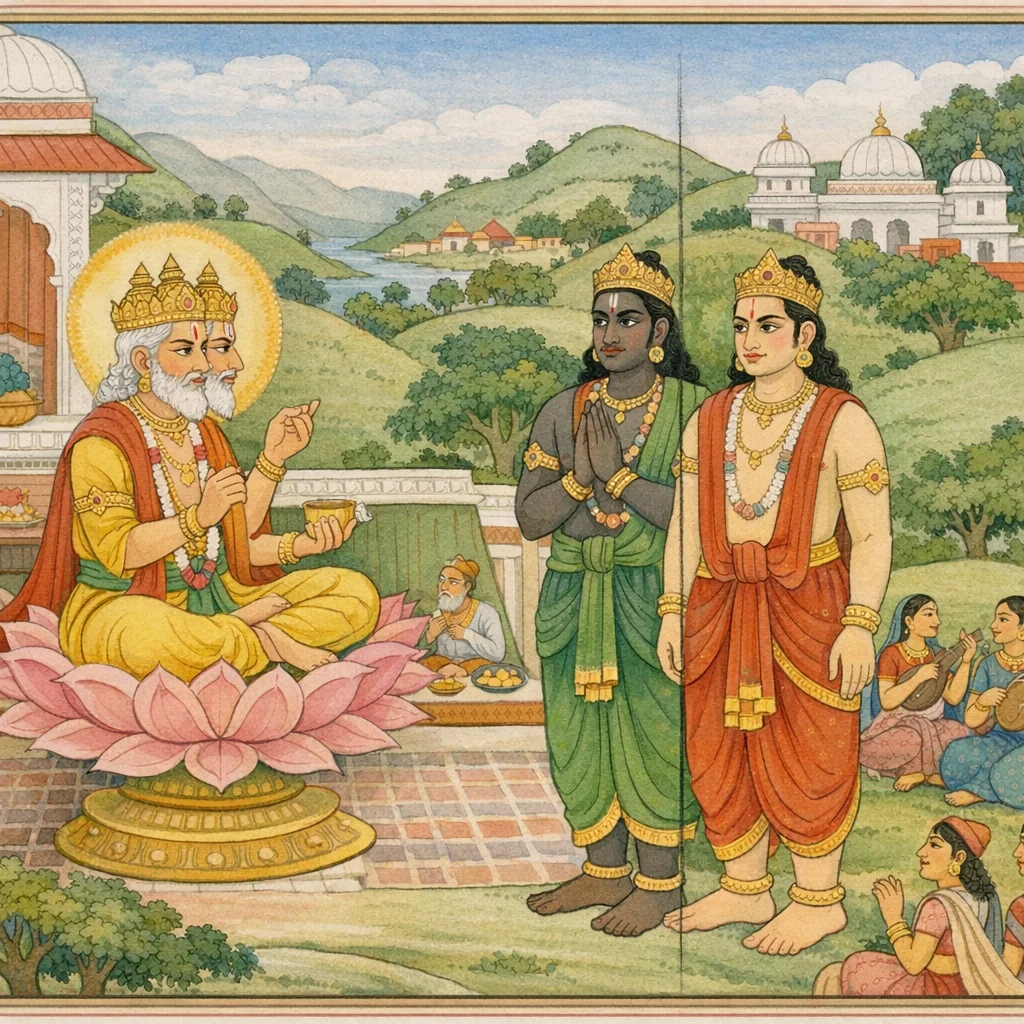
Chapter Arc: Hiranyakashipu’s ancient daitya line is recalled, and from it arise the fearsome brothers Sunda and Upasunda—two bodies, one hunger for dominion. → The brothers’ might swells; they revel in unchecked pleasure and conquest, and the world’s households echo with commands to eat, drink, sing, and indulge—signs of a realm sliding into lawless excess. Their power becomes a burden upon the three worlds, drawing the attention of the cosmic regulator, Brahma. → Brahma himself approaches the two asuras and grants their boon—yet binds it with a fated condition: the manner of their death is fixed so that their end will arise from the very bond they cherish, turning invincibility into a hidden snare. → Armed with the boon, the brothers cast off ascetic marks for crowns and ornaments and establish a perpetual festival of arrogance; the immediate crisis is postponed, but the seed of their downfall is planted in the terms of the gift. → Their ‘protected’ reign begins in full intoxication—inviting the inevitable moment when desire and rivalry will make the brothers the instruments of each other’s death.
Shlokas
Verse 1
(दाक्षिणात्य अधिक पाठके २५६ श्लोक मिलाकर कुल ४९३ “लोक हैं) भस्न्मा तन (_) अडमन+ा - कण्ठ, तालू, मूर्धा, दन्त और ओषछ्ठ--इन पाँच स्थानों अथवा पाँच आभ्यन्तर प्रयत्नोंके भेदसे पाँच प्रकारके अक्षरसमूह कहे गये हैं। अ इ उ ऋ लू ये पाँच ही मूल स्वर हैं, अन्य स्वर इन्हींके दीर्घ आदि भेद अथवा संधिज हैं। अष्टाधिकद्विशततमो< ध्याय: सुन्द-उपसुन्दकी तपस्या, ब्रह्माजीके द्वारा उन्हें वर प्राप्त होना और दैत्योंके यहाँ आनन्दोत्सव नारद उवाच शृणु मे विस्तरेणेममितिहासं पुरातनम् | भ्रातृभि: सहित: पार्थ यथावृत्तं युधिष्ठिर,नारदजीने कहा--कुन्तीनन्दन युधिष्ठिर! यह वृत्तान्त जिस प्रकार संघटित हुआ था, वह प्राचीन इतिहास तुम मुझसे भाइयोंसहित विस्तारपूर्वक सुनो
Narada said: “O Yudhiṣṭhira, son of Kuntī—O Pārtha—listen, together with your brothers, as I recount in detail this ancient legend, exactly as it happened.”
Verse 2
महासुरस्यान्ववाये हिरण्यकशिपो: पुरा । निकुम्भो नाम दैत्येन्द्रस्तेजस्वी बलवानभूत्,प्राचीनकालमें महान् दैत्य हिरण्यकशिपुके कुलमें निकुम्भ नामसे प्रसिद्ध एक दैत्यराज हो गया है, जो अत्यन्त तेजस्वी और बलवान था
Nārada said: In ancient times, within the lineage of the great asura Hiraṇyakaśipu, there arose a lord among the Daityas named Nikumbha—radiant in tejas and formidable in strength.
Verse 3
तस्य पुत्रौ महावीर्यों जातौ भीमपराक्रमौ । सुन्दोपसुन्दौ दैत्येन्द्री दारुणौ क्रूरमानसौ,उसके महाबली और भयानक पराक्रमी दो पुत्र हुए, जिनका नाम था सुन्द और उपसुन्द। वे दोनों दैत्यराज बड़े भयंकर और क्रूर हृदयके थे
Nārada said: From him were born two sons of great might and dreadful prowess—Sunda and Upasunda. Those two lords among the Dānavas were fierce and terrifying, their minds hardened by cruelty.
Verse 4
तावेकनिनश्षयो दैत्यावेककार्यार्थसम्मतौ । निरन्तरमवर्तेतां समदुःखसुखावुभौ,उनका एक ही निश्चय होता था और एक ही कार्यके लिये वे सदा सहमत रहते थे। उनके सुख और दुःख भी एक ही प्रकारके थे। वे दोनों सदा साथ रहते थे
Narada said: Those two Daityas were of a single resolve and were always in agreement for the sake of one common purpose. Their joys and sorrows were alike; they lived in constant companionship.
Verse 5
विनान्योन्यं न भुज्जाते विनान्योन्यं न जल्पत: । अन्योन्यस्य प्रियकरावन्योन्यस्य प्रियंवदौ,उनमेंसे एकके बिना दूसरा न तो खाता-पीता और न किसीसे कुछ बात-चीत ही करता था। वे दोनों एक-दूसरेका प्रिय करते और परस्पर मीठे वचन बोलते थे
Narada said: Without one another, the two would neither eat nor drink; without one another, they would not even speak with anyone. Each sought the other’s happiness, and they addressed one another with words that were gentle and pleasing.
Verse 6
एकशीलसमाचारी द्विधैवैको5भवत् कृत: । तौ विवृद्धौ महावीर्यो कार्येष्वप्येकनिश्चयौं,उनके शील और आचरण एक-से थे, मानो एक ही जीवात्मा दो शरीरोंमें विभक्त कर दिया गया हो। वे महापराक्रमी दैत्य साथ-साथ बढ़ने लगे। वे प्रत्येक कार्यमें एक ही निश्चयपर पहुँचते थे
Nārada said: Their disposition and conduct were identical, as though a single being had been divided into two bodies. Those mighty, heroic daityas grew up together, and even in their undertakings they arrived at one and the same resolve.
Verse 7
त्रैलोक्यविजयार्थाय समाधायैकनिश्चयम् । दीक्षां कृत्वा गतौ विन्ध्यं तावुग्रं तेपतुस्तप:,किसी समय वे तीनों लोकोंपर विजय पानेकी इच्छासे एकमत होकर गुरुसे दीक्षा ले विन्ध्य पर्वतपर आये और वहाँ कठोर तपस्या करने लगे
Nārada said: With the aim of conquering the three worlds, the two of them fixed their resolve as one. Having received initiation from their teacher, they went to the Vindhya mountain and there undertook severe austerities.
Verse 8
तौ तु दीर्घेण कालेन तपोयुक्ता बभूवतु: । क्षुत्पिपासापरिश्रान्तौ जटावल्कलधारिणौ,भूख और प्यासका कष्ट सहते हुए सिरपर जटा तथा शरीरपर वल्कल धारण किये वे दोनों भाई दीर्घकालतक भारी तपस्यामें लगे रहे
Nārada said: In the course of a long time, the two brothers became wholly devoted to austerity. Enduring the hardship of hunger and thirst, weary from privation, they lived as ascetics—wearing matted locks upon their heads and bark garments on their bodies—steadfastly engaged in severe penance.
Verse 9
मलोपचितसर्वाज्ञि वायुभक्षौ बभूवतु: । आत्ममांसानि जुहद्वन्तौ पादाड्गुष्ठाग्रविष्ठितो । ऊर्ध्वबाहू चानिमिषौ दीर्घकालं धृतव्रतौ,उनके सम्पूर्ण अंगोंमें मैल जम गयी थी, वे हवा पीकर रहते थे और अपने ही शरीरके मांसखण्ड काट-काटकर अग्निमें आहुति देते थे। तदनन्तर बहुत समयतक पैरोंके अंगूठोंके अग्रभागके बलपर खड़े हो दोनों भुजाएँ ऊपर उठाये एकटक दृष्टिसे देखते हुए वे दोनों व्रत धारण करके तपस्यामें संलग्न रहे
Nārada said: Their whole bodies had become caked with filth; they lived on air alone. Cutting off pieces of their own flesh, they offered them into the fire. Thereafter, for a long time, standing balanced on the tips of their great toes, with both arms raised upward and eyes unblinking, the two maintained their vow and remained absorbed in austerity.
Verse 10
तयोस्तप:प्रभावेण दीर्घकालं प्रतापित: । धूम॑ प्रमुमुचे विन्ध्यस्तदद्भुतमिवाभवत्,उन दैत्योंकी तपस्याके प्रभावसे दीर्घकालतक संतप्त होनेके कारण विन्ध्य पर्वत धुआँ छोड़ने लगा, यह एक अद्भुत-सी बात हुई
Nārada said: Scorched for a long time by the force of those two Daityas’ austerities, the Vindhya mountain began to emit smoke; it seemed a wondrous and ominous sign.
Verse 11
ततो देवा भयं जम्मुरुग्रं दृष्टवा तयोस्तप: । तपोविघातार्थमथो देवा विघ्नानि चक्रिरे,उनकी उम्र तपस्या देखकर देवताओंको बड़ा भय हुआ। वे देवतागण उनके तपको भंग करनेके लिये अनेक प्रकारके विघ्न डालने लगे
Then the gods, seeing the fierce austerity of those two, were seized with fear. With the aim of obstructing their penance, the gods set in motion various hindrances.
Verse 12
रत्नै: प्रलो भयामासुः स्त्रीभि श्वो भौ पुन: पुनः । नच तौ चक्रतुर्भड़ं व्रतस्य सुमहाव्रती,उन्होंने बार-बार रत्नोंके ढेर तथा सुन्दरी स्त्रियोंकों भेज-भेजकर उन दोनोंको प्रलोभनमें डालनेकी चेष्टा की; किंतु उन महान् व्रतधारी दैत्योंने अपने तपको भंग नहीं किया
They repeatedly tried to entice those two—sending heaps of jewels and beautiful women again and again. Yet those two mighty observers of great vows did not allow their austerity to be broken, remaining steadfast in their discipline.
Verse 13
अथ मायां पुनर्देवास्तयोशक्षक्रुर्महात्मनो: । भगिन्यो मातरो भार्यास्तयोक्षात्मजनस्तथा,तत्पश्चात् देवताओंने महान् आत्मबलसे सम्पन्न उन दोनों दैत्योंके सामने पुन: मायाका प्रयोग किया। उनकी मायानिर्मित बहनें, माताएँ, पत्नियाँ तथा अन्य आत्मीयजन वहाँ भागते हुए आते और उन्हें कोई शूलधारी राक्षस बार-बार खदेड़ता तथा पृथ्वीपर पटक देता था। उनके आभूषण गिर जाते, वस्त्र खिसक जाते और बालोंकी लटें खुल जाती थीं। वे सभी आत्मीयजन सुन्द-उपसुन्दको पुकारकर चीखते हुए कहते--“बेटा! मुझे बचाओ, भैया! मेरी रक्षा करो।' यह सब सुनकर भी वे दोनों महान् व्रतधारी तपस्वी अपनी तपस्यासे नहीं डिगे; अपने व्रतको नहीं तोड़ सके
Then the gods once again employed illusion against those two great-souled ones. By that māyā there appeared before them sisters, mothers, wives, and other close kin, fleeing in distress as if being repeatedly chased down and hurled to the ground by a spear-bearing demon; their ornaments fell, their garments slipped, and their hair came loose. Crying out to Sunda and Upasunda—“Son, save me! Brother, protect me!”—they begged for rescue. Yet even hearing this, the two mighty ascetics, firm in their vows, did not waver from their austerities and could not be made to break their vow.
Verse 14
प्रपात्यमाना विस्रस्ता: शूलहस्तेन रक्षसा | भ्रष्टाभरणकेशान्ता भ्रष्टाभरणवासस:,तत्पश्चात् देवताओंने महान् आत्मबलसे सम्पन्न उन दोनों दैत्योंके सामने पुन: मायाका प्रयोग किया। उनकी मायानिर्मित बहनें, माताएँ, पत्नियाँ तथा अन्य आत्मीयजन वहाँ भागते हुए आते और उन्हें कोई शूलधारी राक्षस बार-बार खदेड़ता तथा पृथ्वीपर पटक देता था। उनके आभूषण गिर जाते, वस्त्र खिसक जाते और बालोंकी लटें खुल जाती थीं। वे सभी आत्मीयजन सुन्द-उपसुन्दको पुकारकर चीखते हुए कहते--“बेटा! मुझे बचाओ, भैया! मेरी रक्षा करो।' यह सब सुनकर भी वे दोनों महान् व्रतधारी तपस्वी अपनी तपस्यासे नहीं डिगे; अपने व्रतको नहीं तोड़ सके
Nārada said: As they were being hurled down and driven about by a spear‑wielding rākṣasa, their ornaments slipped away, their garments were disordered, and the ends of their hair came loose. (In the surrounding episode, the gods, seeking to break the austerity of Sunda and Upasunda, again employed māyā: illusory sisters, mothers, wives, and other dear ones appeared, fleeing and crying for protection. Yet, despite hearing these distressing cries, the two great ascetics did not waver from their tapas and did not violate their vow.)
Verse 15
अभिभाष्य तत: सर्वस्तौ त्राहीति विचुक्रुशु: । नच तौ चक्रतुर्भड़ं व्रतस्य सुमहाव्रती,तत्पश्चात् देवताओंने महान् आत्मबलसे सम्पन्न उन दोनों दैत्योंके सामने पुन: मायाका प्रयोग किया। उनकी मायानिर्मित बहनें, माताएँ, पत्नियाँ तथा अन्य आत्मीयजन वहाँ भागते हुए आते और उन्हें कोई शूलधारी राक्षस बार-बार खदेड़ता तथा पृथ्वीपर पटक देता था। उनके आभूषण गिर जाते, वस्त्र खिसक जाते और बालोंकी लटें खुल जाती थीं। वे सभी आत्मीयजन सुन्द-उपसुन्दको पुकारकर चीखते हुए कहते--“बेटा! मुझे बचाओ, भैया! मेरी रक्षा करो।' यह सब सुनकर भी वे दोनों महान् व्रतधारी तपस्वी अपनी तपस्यासे नहीं डिगे; अपने व्रतको नहीं तोड़ सके
Narada said: After addressing them, all those (who appeared before them) cried out, “Save us!” Yet those two great ascetics, firm in their mighty vow, did not cause any breach of their observance. In context, the gods—seeking to break the austerity of Sunda and Upasunda—again employed illusion: fabricated sisters, mothers, wives, and other loved ones were shown fleeing in distress, pursued and struck down by a spear-bearing demon, their ornaments and garments disheveled. Even hearing their desperate pleas, the two did not abandon self-control.
Verse 16
यदा क्षोभं नोपयाति नार्तिमन्यतरस्तयो: । ततः स्त्रियस्ता भूतं च सर्वमन्तरधीयत,जब उन दोनोंमेंसे एक भी न तो इन घटनाओंसे क्षुब्ध हुआ और न किसीके मनमें कष्टका ही अनुभव हुआ, तब वे मायामयी स्त्रियाँ और वह राक्षस सब-के-सब अदृश्य हो गये
Nārada said: When neither of the two was stirred into agitation by what had occurred, nor did either feel distress in the mind, then those illusory women and that being (the rākṣasa) all vanished from sight.
Verse 17
ततः पितामहः साक्षादभिगम्य महासुरौ । वरेणच्छन्दयामास सर्वलोकहित: प्रभु:,तब सम्पूर्ण लोकोंके हितैषी पितामह साक्षात् भगवान् ब्रह्माने उन दोनों महादैत्योंके निकट आकर उन्हें इच्छानुसार वर माँगनेको कहा
Then the Grandfather himself—Brahmā, the sovereign who seeks the welfare of all worlds—approached those two mighty asuras in person and invited them to choose a boon according to their desire.
Verse 18
ततः सुन्दोपसुन्दौ तौ भ्रातरौ दृढविक्रमौ । दृष्टवा पितामहं देवं तस्थतु: प्राजजली तदा,तदनन्तर सुदृढ़ पराक्रमी दोनों भाई सुन्द और उपसुन्द भगवान् ब्रह्माको उपस्थित देख हाथ जोड़कर खड़े हो गये और एक साथ भगवान् ब्रह्मासे बोले--'भगवन्! यदि आप हमारी तपस्यासे प्रसन्न हैं तो हम दोनों सम्पूर्ण मायाओंके ज्ञाता, अस्त्र-शस्त्रोंके विद्वान, बलवान इच्छानुसार रूप धारण करनेवाले और अमर हो जाये
Then the two brothers Sunda and Upasunda, firm in valor, on beholding the divine Pitāmaha (Brahmā), stood there with hands joined in reverence.
Verse 19
ऊचतुश्न प्रभुं देव ततस्तौ सहितौ तदा । आवयोस्तपसानेन यदि प्रीत:ः पितामह:,तदनन्तर सुदृढ़ पराक्रमी दोनों भाई सुन्द और उपसुन्द भगवान् ब्रह्माको उपस्थित देख हाथ जोड़कर खड़े हो गये और एक साथ भगवान् ब्रह्मासे बोले--'भगवन्! यदि आप हमारी तपस्यासे प्रसन्न हैं तो हम दोनों सम्पूर्ण मायाओंके ज्ञाता, अस्त्र-शस्त्रोंके विद्वान, बलवान इच्छानुसार रूप धारण करनेवाले और अमर हो जाये
Nārada said: Then the two brothers together addressed the Lord, saying, “O divine Master! If the Grandfather Brahmā is pleased by our austerities, then grant us boons.”
Verse 20
मायाविदावस्त्रविदौ बलिनौ कामरूपिणौ । उभावप्यमरी स्याव: प्रसन्नो यदि नौ प्रभु:,तदनन्तर सुदृढ़ पराक्रमी दोनों भाई सुन्द और उपसुन्द भगवान् ब्रह्माको उपस्थित देख हाथ जोड़कर खड़े हो गये और एक साथ भगवान् ब्रह्मासे बोले--'भगवन्! यदि आप हमारी तपस्यासे प्रसन्न हैं तो हम दोनों सम्पूर्ण मायाओंके ज्ञाता, अस्त्र-शस्त्रोंके विद्वान, बलवान इच्छानुसार रूप धारण करनेवाले और अमर हो जाये
Nārada said: “If our Lord is pleased with us, may we both become immortal—masters of magical arts, skilled in the knowledge of weapons, mighty in strength, and able to assume whatever form we desire.”
Verse 21
ब्रह्मोवाच ऋते<मरत्वं युवयो: सर्वमुक्तं भविष्यति । अन्यद् वृणीतं मृत्योश्व॒ विधानममरै: समम्,ब्रह्माजीने कहा--अमरत्वके सिवा तुम्हारी माँगी हुई सब वस्तुएँ तुम्हें प्राप्त होंगी। तुम मृत्युका कोई दूसरा ऐसा विधान माँग लो, जो तुम्हें देवताओंके समान बनाये रख सके
Brahmā said: “Except for immortality, everything you have asked for will be granted. Choose instead some other ordinance concerning death—one that may keep you on a par with the gods.”
Verse 22
प्रभविष्याव इति यन्महदशभ्युद्यतं तप: । युवयो्हेतुनानेन नामरत्वं विधीयते,हम तीनों लोकोंके ईश्वर होंगे, ऐसा संकल्प करके जो तुमलोगोंने यह बड़ी भारी तपस्या प्रारम्भ की थी, इसीलिये तुमलोगोंको अमर नहीं बनाया जाता; क्योंकि अमरत्व तुम्हारी तपस्याका उद्देश्य नहीं था
With the great resolve, “We shall be the lords of the three worlds,” you began that mighty austerity. For this reason you are not made immortal, for immortality was not the aim of your tapas.
Verse 23
त्रैलोक्यविजयार्थाय भवद्भ्यामास्थितं तप: । हेतुनानेन दैत्येन्द्री न वा कामं करोम्यहम्,दैत्यपतियो! तुम दोनोंने त्रिलोकीपर विजय पानेके लिये ही इस तपस्याका आश्रय लिया था, इसीलिये तुम्हारी अमरत्वविषयक कामनाकी पूर्ति मैं नहीं कर रहा हूँ
Narada said: “You undertook this austerity with the aim of conquering the three worlds. For this very reason, O queen of the Daityas—and O lords of the Daityas—I do not grant your wish for immortality.”
Verse 24
7, युन्दोपयुन्दावूचत॒ः त्रिषु लोकेषु यद् भूतं॑ किंचित् स्थावरजड्भमम् । सर्वस्मान्नो भयं न स्यादृतेडन्योन्यं पितामह,सुन्द और उपसुन्द बोले--पितामह! तब यह वर दीजिये कि हम दोनोंमेंसे एक- दूसरेको छोड़कर तीनों लोकोंमें जो कोई भी चर या अचर भूत हैं, उनसे हमें मृत्युका भय न हो
Sunda and Upasunda said: “O Grandsire (Brahmā), grant us this boon: that in the three worlds, from any being whatsoever—moving or unmoving—we shall have no fear of death, except from one another.”
Verse 25
पितामह उवाच यत् प्रार्थितं यथोक्तं च काममेतद् ददानि वाम् | मृत्योविधानमेतच्च यथावद् वा भविष्यति,ब्रह्माजीने कहा--तुमने जैसी प्रार्थना की है, तुम्हारी वह मुँहमाँगी वस्तु तुम्हें अवश्य दूँगा। तुम्हारी मृत्युका विधान ठीक इसी प्रकार होगा
The Grandsire said: “The boon you have asked for, exactly as you have stated it, I grant to you both. And the ordinance concerning your death shall also come to pass precisely in that very manner.”
Verse 26
नारद उवाच ततः पितामहो दत्त्वा वरमेतत् तदा तयो: । निवर्त््य तपसस्तौ च ब्रह्मलोक॑ जगाम ह,नारदजी कहते हैं--युधिष्ठिर! उस समय उन दोनों दैत्योंको यह वरदान देकर और उन्हें तपस्यासे निवृत्त करके ब्रह्माजी ब्रह्मतोकको चले गये
Narada said: Then the Grandsire (Brahmā), having granted that boon to those two and having caused them to cease from their austerities, departed for Brahmaloka.
Verse 27
लब्ध्वा वराणि दैत्येन्द्रावथ तौ भ्रातरावुभौ | अवध्यौ सर्वलोकस्य स्वमेव भवनं गतौ,फिर वे दोनों भाई दैत्यराज सुन्द और उपसुन्द यह अभीष्ट वर पाकर सम्पूर्ण लोकोंके लिये अवध्य हो पुनः अपने घरको ही लौट गये
Nārada said: Having obtained the boons they desired, the two brothers—lords among the Dānavas—became invulnerable to all the worlds; and then they returned to their own dwelling.
Verse 28
तौ तु लब्धवरीौ दृष्टवा कृतकामौ मनस्विनौ । सर्व: सुहृज्जनस्ताभ्यां प्रहर्षमुपजग्मिवान्,वरदान पाकर पूर्णकाम होकर लौटे हुए उनदोनों मनस्वी वीरोंको देखकर उनके सभी सगे-सम्बन्धी बड़े प्रसन्न हुए
Narada said: Seeing those two high-minded heroes return after obtaining the boon they sought—now satisfied in their purpose—all their well-wishing kinsmen and friends were filled with joy.
Verse 29
ततस्तौ तु जटा भित्त्वा मौलिनौ सम्बभूवतु: । महाहाभरणोपेतौ विरजो<म्बरधारिणौ,तदनन्तर उन्होंने जटाएँ कटाकर मस्तकपर मुकुट धारण कर लिये और बहुमूल्य आभूषण तथा निर्मल वस्त्र धारण करके ऐसा प्रकाश फैलाया, मानो असमयमें ही चाँदनी छिटक गयी हो और सर्वदा दिन-रात एकरस रहने लगी हो। उनके सभी सगे-सम्बन्धी सदा आमोद-प्रमोदमें डूबे रहते थे
Then the two of them cut off their matted locks and appeared with crowns upon their heads. Adorned with splendid ornaments and wearing spotless garments, they shone forth with a radiance—as if untimely moonlight had suddenly spread and day and night had become uniformly bright.
Verse 30
अकालकौमुदी चैव चक्रतु: सार्वकालिकीम् । नित्यप्रमुदित: सर्वस्तयोश्वैव सुहृज्जन:,तदनन्तर उन्होंने जटाएँ कटाकर मस्तकपर मुकुट धारण कर लिये और बहुमूल्य आभूषण तथा निर्मल वस्त्र धारण करके ऐसा प्रकाश फैलाया, मानो असमयमें ही चाँदनी छिटक गयी हो और सर्वदा दिन-रात एकरस रहने लगी हो। उनके सभी सगे-सम्बन्धी सदा आमोद-प्रमोदमें डूबे रहते थे
Nārada said: “They brought about a moonlit radiance as though it were out of season, and made it seem perpetual—present at all times. Because of them, all their well-wishers and kinsmen remained continually delighted and immersed in joy.”
Verse 31
भक्ष्यतां भुज्यतां नित्यं दीयतां रम्यतामिति । गीयतां पीयतां चेति शब्दश्चासीद् गृहे गृहे,प्रत्येक घरमें सर्वदा 'खाओ, भोग करो, लुटाओ, मौज करो, गाओ और पीओ'”का शब्द गूँजता रहता था
Narada said: “In every house, day after day, the same cry was heard: ‘Eat! Enjoy! Give away lavishly! Make merry! Sing! Drink!’”
Verse 32
तत्र तत्र महानादैरुत्कृष्टतलनादितै: । हृष्ट प्रमुदितं सर्व दैत्यानामभवत् पुरम्,जहाँ-तहाँ जोर-जोरसे तालियाँ पीटनेकी ऊँची आवाजसे दैत्योंका वह सारा नगर हर्ष और आनन्दमें मग्न जान पड़ता था
Nārada said: “Here and there a great clamour arose—echoing with the loud, elevated thunder of clapped palms—so that the whole city of the Daityas seemed immersed in exhilaration and delight.”
Verse 33
तैस्तैरविंहारैर्बहुभिदैत्यानां कामरूपिणाम् | समा: संक्रीडतां तेषामहरेकमिवाभवत्,इच्छानुसार रूप धारण करनेवाले वे दैत्य वर्षोतक भाँति-भाँतिके खेल-कूद और आमोद-प्रमोद करनेमें लगे रहे; किंतु वह सारा समय उन्हें एक दिनके समान लगा
Nārada said: “With those many and varied amusements, the shape-shifting Dānavas kept sporting and indulging in pleasures. For them, even whole years passed as though they were a single day.”
Verse 207
इस प्रकार श्रीमह्याभारत आदिपर्वके अन्तर्गत विदुरागमनराज्यलम्भपर्वमें युधिष्ठिर-नारद- संवादविषयक दो सौ सातवाँ अध्याय पूरा हुआ
Thus concludes the two-hundred-and-seventh chapter of the Ādi Parva of the Śrī Mahābhārata, within the section titled “Vidura’s Arrival and the Attainment of the Kingdom,” dealing with the dialogue between Yudhiṣṭhira and Nārada.
Verse 208
इति श्रीमहाभारते आदिपर्वणि विदुरागमनराज्यलम्भपर्वणि सुन्दोपसुन्दोपाख्यानेडष्टाधिकद्विशततमो<5 ध्याय:,इस प्रकार श्रीमह्या भारत आदिपर्वके अन्तर्गत विदुरागमनराज्यलम्भपर्वमें युन्दोपयुन्दोपाख्यानविषयक दो सौ आठवाँ अध्याय पूरा हुआ
Thus ends the 208th chapter of the Ādi Parva of the Śrī Mahābhārata, within the section titled “Vidura’s Arrival and the Attainment of the Kingdom,” in the sub-narrative known as “The Tale of Sunda and Upasunda.”
Frequently Asked Questions
The dilemma centers on action under advisory constraint: whether to avoid a sacred site due to credible warnings or to proceed with disciplined courage; the narrative tests how reverence for tīrtha is balanced with responsibility toward foreseeable harm.
Tapas is portrayed as ethically protected power: deliberate interference with sincere ascetic discipline generates severe karmic repercussions, while humility before spiritual practice and attention to wise counsel preserve social and personal order.
No explicit phalaśruti is stated; the implicit meta-teaching is etiological and normative—explaining ritual avoidance of certain tīrthas and reinforcing the broader Mahābhārata framework where actions toward ascetics and sacred contexts yield durable consequences.