Adhyaya 31
यज्ञप्रवर्तनम् (Yajña-pravartana) — The Institution/Commencement of Sacrifice in Dvāpara
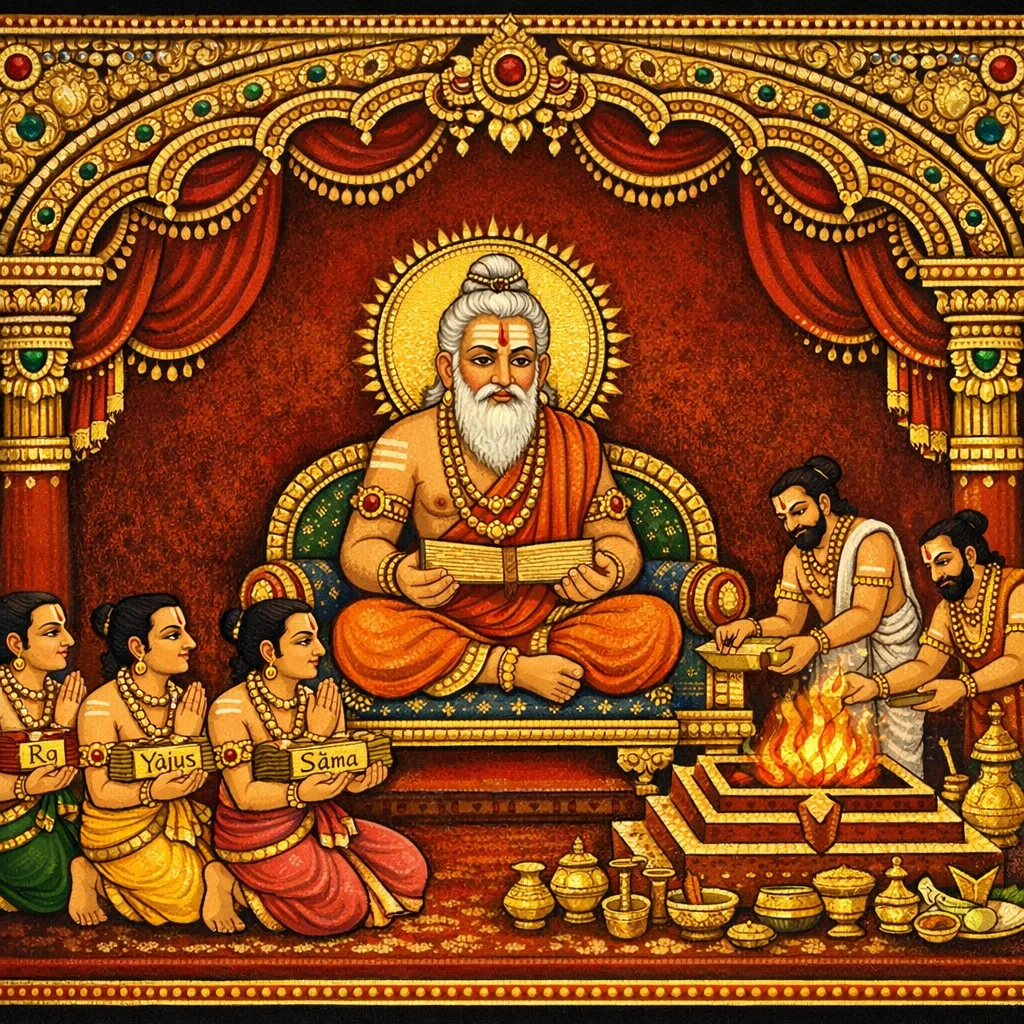
This chapter, named “Yajñapravarttana” in the colophon, is narrated by Sūta, who sets forth the vidhi (regime of practice) of the Dvāpara-yuga as Tretā ends and Dvāpara begins. Dvāpara is portrayed as dominated by rajas and tamas and by social-functional disorder: mixture of varṇas, inversion of duties (kārya-viparyaya), and the weakening of the perfections attributed to Tretā. A central theme is epistemic fragmentation: śruti and smṛti become “twofold,” certainty about dharma grows difficult, and rival viewpoints multiply, producing śāstric clutter. The chapter links this to the history of Vedic transmission: the once single Veda is arranged into four and further differentiated through ṛṣi lineages, mantra variations, recensional ordering (mantra–brāhmaṇa vinayāsa), and shifts in accent and letters (svara-varṇa viparyaya). Overall, it explains why yajña-organization and textual division become necessary in Dvāpara and why these systems decline further as the age moves toward Kali.
Shlokas
Verse 1
इति श्रीब्रह्माण्डे महापुराणे वायुप्रोक्ते पूर्वभागे द्वितीये ऽनुषङ्गपादे यज्ञप्रवर्त्तनं नाम त्रिशत्तमो ऽध्यायः सूत उवाच अत ऊर्द्धं प्रवक्ष्यामि द्वापरस्य विधिं पुनः / तत्र त्रेतायुगे क्षीणे द्वापरं प्रतिपद्यते
Thus, in the Śrī Brahmāṇḍa Mahāpurāṇa, in the former section spoken by Vāyu, in the second anuṣaṅga-pāda, ends the thirtieth chapter called “The Setting in Motion of the Yajña.” Sūta said: Hereafter I shall again declare the ordinance of the Dvāpara; when the Tretā-yuga wanes, one enters the Dvāpara-yuga.
Verse 2
द्वापरादौ प्रजानां तु सिद्धिस्त्रेतायुगे तु या / परिवृत्ते युगे तस्मिंस्ततस्ताभिः प्रणश्यति
At the dawn of the Dvāpara, the attainments (siddhi) that beings possessed in the Tretā-yuga—when that yuga turns, those attainments thereafter begin to perish.
Verse 3
ततः प्रवर्त्तते तासां प्रजानां द्वापरे पुनः / संभेदश्चैव वर्णानां कार्याणां च विपर्ययः
Then, again in the Dvāpara Yuga, the course of those beings comes into motion; the varṇas become mixed, and duties and works are thrown into reversal.
Verse 4
यज्ञावधारणं दण्डो मदो दंभः क्षमा बलम् / एषा रजस्तमोयुक्ता प्रवृत्तिर्द्वापरे स्मृता
Outward regulation of sacrifice, punishment, pride, hypocrisy, and ‘forbearance’ backed by force—this is remembered as the Dvāpara disposition, joined with rajas and tamas.
Verse 5
आद्ये कृते यो धर्मो ऽस्ति स त्रेतायां प्रवर्त्तते / द्वापरे व्याकुलीभूत्वा प्रणश्यति कलौ युगे
The dharma that exists in the first Kṛta Yuga continues into Tretā; in Dvāpara it becomes troubled and declines, and in the Kali Yuga it perishes.
Verse 6
वर्णानां विपरिध्वंसः संकीयत तथाश्रमाः / द्वैविध्यं प्रतिपद्येतेयुगे तस्मिञ्छ्रुति स्मृती
It is said that the varṇas fall into ruin and the āśramas too become constricted; in that yuga, both Śruti and Smṛti take on a twofold character.
Verse 7
द्वैधात्तथा श्रुतिस्मृत्योर्निश्चयो नाधिगम्यते / अनिश्चयाधिगमनाद्धर्मतत्त्वं न विद्यते
Because Śruti and Smṛti become divided, certainty cannot be attained; and when one falls into uncertainty, the true principle of dharma is not known.
Verse 8
धर्मासत्त्वेन मित्राणां मतिभेदो भवेन्नृणाम् / परस्परविभिन्नैस्तैदृष्टीनां विभ्रमेण च
When the true essence of dharma is not grasped, even among friends men fall into differences of opinion; and so too through the bewilderment of views that diverge from one another.
Verse 9
अयं धर्मो ह्ययं नेति निश्चयो नाधिगम्यते / कारणानां च वैकल्प्यात्कार्याणां चाप्यनिश्चयात्
No firm conclusion is reached—“this is dharma, this is not”—for the causes admit of many alternatives, and the effects too are uncertain.
Verse 10
मतिभेदेन तेषां वै दृष्टीनां विभ्रमो भवेत् / ततो दृष्टिविभन्नैस्तु कृतं शास्त्राकुलं त्विदम्
Through differences of opinion their views become bewildered; and thus, by those of divergent outlooks, this body of śāstra has been made tangled and confused.
Verse 11
एको वेदश्चतुष्पाद्धि त्रेतास्विह विधीयते / संक्षयादायुपश्चैव व्यस्यते द्वापरेषु च
The Veda is truly one; yet in the Tretā age it is ordained here as fourfold. And as the span of life declines, in the Dvāpara age it is divided and arranged.
Verse 12
ऋषिमन्त्रात्पुनर्भेदाद्भिद्यते दृष्टिविभ्रमैः / मन्त्रब्राह्मणविन्यासैः स्वरवर्णविपर्ययैः
Through differences of seers and mantras it is again split, by the bewilderment of divergent views—through varied arrangements of mantra and brāhmaṇa portions, and through reversals of accents (svara) and syllables (varṇa).
Verse 13
संहिता ऋग्यजुःसाम्नां संपठ्यन्ते महर्षिभिः / सामान्या वैकृताश्चैव दृष्टिभिन्ने क्वचित्क्वचित्
The Saṃhitās of the Ṛg, Yajur, and Sāma are recited together by the great ṛṣis; yet here and there, through differences of vision, they appear in common and also in altered forms.
Verse 14
ब्राह्मणं कल्पसूत्राणि मन्त्रप्रवचनानि च / अन्ये ऽपि प्रस्थितास्तान्वै केचित्तान्प्रत्यवस्थिताः
There are also the Brāhmaṇas, the Kalpa-sūtras, and the expositions of the mantras; some set forth upon those paths, while others remained established, holding fast to them.
Verse 15
द्वापरेषु प्रवर्त्तन्ते निवर्त्तन्ते कलौ युगे / एकमाध्वर्यवं त्वासीत्पुनर्द्वैधमजायत
In the Dvāpara age they come into full activity, and in the Kali age they fall into cessation; the Ādhvaryava was once a single stream, and then again a twofold division arose.
Verse 16
सामान्यविपरीतार्थैः कृतशास्त्राकुलं त्विदम् / आध्वर्यवस्य प्रस्थानैर्बहुधा व्याकुलीकृतैः
This whole body has been thrown into confusion by treatises that assign meanings contrary to the common sense; and by the many, variously branched prasthānas of the Ādhvaryava, it has been disturbed in manifold ways.
Verse 17
तथैवाथर्वऋक्साम्नां विकल्पैश्चापि संज्ञया / व्याकुलेद्वापरे नित्यं क्रियते भिन्न दर्शनैः
So too, for the Atharva, the Ṛg, and the Sāma there are variants and differing designations; in the Dvāpara age, through divergent viewpoints, confusion is continually brought about.
Verse 18
तेषां भेदाः प्रतीभेदा विकल्पाश्चापि संख्याया / द्वापरे संप्रवर्त्तते विनश्यन्ति ततः कलौ
Their divisions, sub-divisions, and the many variations in enumeration arise in the Dvāpara age; thereafter, in the Kali age, they perish.
Verse 19
तेषां विपर्ययोत्पन्ना भवन्ति द्वापरे पुनः / अवृष्टिर्मरणं चैव तथैव व्याध्युपद्रवाः
Again, in the Dvāpara age, from their perversion arise drought without rain, death, and likewise the afflictions of disease.
Verse 20
वाङ्मनः कर्मर्जेदुःखैर्निर्वेदो जायते पुनः / निर्वेदाज्जायते तेषां दुःखमोक्षविचारणा
From the sorrows born of speech, mind, and action, dispassionate weariness arises again; from that weariness is born in them reflection on liberation from suffering.
Verse 21
विचारणाच्च वैराग्यं वैराग्याद्दोषदर्शनम् / दोषदर्शनतस्चैव द्वापरे ऽज्ञानसंभवः
From reflection arises dispassion; from dispassion, the seeing of faults; and from the seeing of faults, in the Dvāpara age, ignorance comes to be.
Verse 22
तेषाम ज्ञानिनां पूर्वमाद्ये स्वायंभुवे ऽन्तरे / उत्पद्यन्ते हि शास्त्राणां द्वापरे परिपन्थिनः
For those who are ignorant, even before the first Svāyambhuva Manvantara, there arise in the Dvāpara age factions that oppose the śāstras.
Verse 23
आयुर्वेदविकल्पश्च ह्यगानां ज्योतिषस्य च / अर्थशास्त्रविकल्पाश्च हेतुशास्त्रविकल्पनम्
Even in Ayurveda, Jyotiṣa, Arthaśāstra, and Hetuśāstra, many variants and differing schools arise.
Verse 24
प्रक्रियाकल्पसूत्राणां भाष्यविद्याविकल्पनम् / स्मृतिशास्त्रप्रभेदश्च प्रस्थानानि पृथक्पृथक्
The procedural Kalpa-sūtras and the sciences of commentary (bhāṣya) take on many forms; the Smṛti-śāstras too divide into branches, with traditions (prasthāna) standing apart.
Verse 25
द्वापरेष्वभिवर्त्तन्ते मतिभेदाश्रयान्नृणाम् / मनसा कर्मणा वाचा कृच्छ्राद्वार्ता प्रसिद्ध्यति
In the Dvāpara age, as people cling to differences of view, divisions arise; by mind, by deed, and by speech, discourse is established only with hardship.
Verse 26
द्वापरे सर्वभूतानां कायक्लेशपुरस्कृता / लोभो वृत्तिर्वणिक्पूर्वा तत्त्वानामविनिश्चयः
In the Dvāpara age, all beings live with bodily toil set foremost; greed turns merchant-like, and the truths (tattvas) remain undecided.
Verse 27
वेदशास्त्रप्रणयनं धर्माणां संकरस्तथा / वर्णाश्रमपरिध्वंसः कामक्रोधौ तथैव च
New Vedas and śāstras are composed, and dharmas become intermingled; the order of varṇa and āśrama is ruined, and desire and wrath likewise grow.
Verse 28
द्वापरेषु प्रवर्त्तन्ते रागो लोभो वधस्तथा / वेदं व्यासश्चतुर्द्धा तु व्यस्यते द्वापरादिषु
In the Dvāpara age, passion, greed, and even slaughter come into force. In the Dvāpara and the ages that follow, Vyāsa divides the Veda into four parts.
Verse 29
निःशेषे द्वापरे तस्मिंस्तस्य संध्या तु यादृशी / प्रतिष्ठते गुणैर्हीनो धर्मो ऽसौ द्वापरस्य तु
When that Dvāpara age is wholly exhausted, such is its twilight. The dharma of Dvāpara remains established, yet bereft of its virtues.
Verse 30
तथैव संध्या पादेन ह्यङ्गः संध्या इतीष्यते / द्वापरस्यावशेषेण तिष्यस्य तु निबोधत
Likewise, a quarter portion of the twilight is called the ‘aṅga-sandhyā’. From what remains of Dvāpara, understand the nature of Tiṣya (Kali).
Verse 31
द्वापरस्याशसेषण प्रतिपत्तिः कलेरपि / हिंसासूयानृतं माया वधश्चैव तपस्विनाम्
From what remains of Dvāpara, the onset of Kali too is understood: violence, envy, falsehood, deceit, and even the slaying of ascetics.
Verse 32
एते स्वभावास्तिष्यस्य साधयन्ति च वै प्रजाः / एष धर्मः कृतः कृत्स्नो धर्मश्च परिहीयते
These are the innate ways of Tiṣya (Kali), which the people themselves bring into effect. In the Kṛta age dharma was whole and complete, but dharma steadily declines.
Verse 33
मनसा कर्मणा स्तुत्या वार्ता सिध्यति वा न वा / कलौ प्रमारकी रोगः सततं क्षुद्भयानि च
By mind, by deed, and by praise, an undertaking may succeed or may not; in Kali-yuga there are ruinous diseases and unceasing fears of hunger.
Verse 34
अनावृष्टिभयं घोरं देशानां च विपर्ययः / न प्रमाणं स्मृतेरस्ति तिष्ये लोकेषु वै युगे
Dreadful is the fear of drought, and the realms fall into upheaval; in the Tiṣya (Kali) age, among the worlds, even Smṛti has no accepted authority.
Verse 35
गर्भस्थो म्रियते कश्चिद्यौव नस्थस्तथापरः / स्थविराः के ऽपि कौमारे म्रियन्ते वै कलौ प्रजाः
Some die while still in the womb, others while in youth; and some, though aged, die as if in childhood—thus do beings perish in Kali-yuga.
Verse 36
दुरिष्टैर्दुरधीतैश्च दुष्कृतैश्च दुरागमैः / विप्राणां कर्मदोषैस्तैः प्रजानां जायते भयम्
Through perverted rites, misguided study, evil deeds, and corrupt teachings—by such faults of karma among the vipras, fear arises in the people.
Verse 37
हिंसा माया तथेर्ष्या च क्रोधो ऽसूया क्षमा नृषु / तिष्ये भवन्ति जन्तूनां रागो लोभश्च सर्वशः
In the Tiṣya (Kali) age, among men arise violence, deceit, envy, wrath, malice, and forgiveness wanes; in all beings, everywhere, passion and greed prevail.
Verse 38
संक्षोभो जायते ऽत्यथै करिमासाद्य वै युगम् / पूर्णे वर्षसहस्रे वै परमायुस्तदा नृणाम्
In that yuga a very great upheaval arises; and when that yuga (Kari-kāla) arrives, the supreme lifespan of men becomes a full thousand years.
Verse 39
नाधीयते तदा वेदान्न यजं ते द्विजातयः / उत्सीदन्ति नराश्चैव क्षत्रियाश्च विशः क्रमात्
Then the Vedas are not studied, and the twice-born do not perform yajña; in due order men, the kṣatriyas, and the vaiśyas sink into decline.
Verse 40
शूद्राणामन्त्ययोनेस्तु संबन्धा ब्राह्मणैः सह / भवन्तीह कलौ तस्मिञ्छयनासनभोजनैः
In that Kali-yuga, śūdras and those of the lowest birth form ties with brāhmaṇas through sharing bed, seat, and food.
Verse 41
राजानः शूद्रभूयिष्ठाः पाखण्डानां प्रवर्त्तकाः / गुणहीनाः प्रजाश्चैव तदा वै संप्रवर्त्तते
Then the kings will be mostly śūdra-like, promoters of pākhaṇḍa; and the people too will be devoid of virtues—such a state will prevail.
Verse 42
आयुर्मेधा बलं रूपं कुलं चैव प्रणश्यति / शूद्राश्च ब्राह्मणाचाराः शूद्राचाराश्च ब्राह्मणाः
Lifespan, intellect, strength, beauty, and lineage perish; śūdras take up brāhmaṇa conduct, and brāhmaṇas adopt śūdra ways.
Verse 43
राजवृत्ताः स्थिताश्चोरा श्चोराचाराश्च पार्थिवाः / भृत्या एते ह्यसुभृतो युगान्ते समवस्थिते
At the end of the Yuga, thieves will act like kings, and kings will act like thieves. Servants will be selfish, caring only for their own sustenance.
Verse 44
अशीलिन्यो ऽनृताश्चैव स्त्रियो मद्यामिषप्रियाः / मायाविन्यो भविष्यन्ति युगान्ते मुनिसत्तम
O best of sages, at the end of the Yuga, women will be unchaste, untruthful, fond of wine and meat, and deceptive.
Verse 45
एकपत्न्यो न शिष्यन्ति युगान्ते मुनिसत्तम / श्वापदप्रबलत्वं च गवां चैव ह्युपक्षयः
O best of sages, at the end of the Yuga, faithful wives will not remain. Beasts of prey will become powerful, and cows will decline.
Verse 46
साधूनां विनिवृत्तिं च विद्यास्तस्मिन्युगक्षये / तदा धर्मो महोदर्के दुर्लभो दानमूलवान्
Know that saintly people will disappear at the end of that Yuga. Then Dharma will be rare, rooted only in charity.
Verse 47
चातुराश्रमशैथिल्यो धर्मः प्रविचरिष्यति / तदा ह्यल्पफला भूमिः क्वचिच्चापि महाफला
Dharma characterized by the looseness of the four Ashramas will prevail. The earth will yield little fruit, though in some places it may yield much.
Verse 48
न रक्षितारो बोक्तारो बलिभागस्य पार्थिवाः / युगान्ते च भविष्यन्ति स्वरक्षणपरायणाः
At the end of the yuga, earthly kings will be neither protectors nor rightful enjoyers of the share of tribute; they will be devoted only to guarding themselves.
Verse 49
अरक्षितारो राजानो विप्राः शूद्रोपजीविनः / शूद्राभिवादिनः सर्वे युगान्ते द्विजसत्तमाः
At the end of the yuga, kings will be without the duty of protection; and even the finest twice-born will live by the support of śūdras and offer salutations to śūdras.
Verse 50
अदृशूला जनपदाः शिवशूला द्विजास्तथा / प्रमदाः केशशूलाश्च युगान्ते समुपस्थिते
When the end of the yuga draws near, the realms will be pierced by ‘unseen spears’; the twice-born by the ‘spear of Śiva’; and women will be troubled by the ‘spear of hair’.
Verse 51
तपोयज्ञफलानां च विक्रेतारो द्विजोत्तमाः / यतयश्च भविष्यन्ति बहवो ऽस्मिन्कलौ युगे
In this Kali age many renunciants will arise; yet the foremost twice-born will become sellers of the fruits of austerity and sacrifice.
Verse 52
चित्रवर्षी यदा देवस्तदा प्राहुर्युगक्षयम् / सर्वे वाणिजकाश्चा पि भविष्यन्त्यधमे युगे
When the deity sends forth strange and variegated rains, they declare it the waning of the yuga; and in that base age, all will become traders.
Verse 53
भूयिष्ठं कूटमानैश्च पण्यं विक्रीणते जनाः / कुशीलचर्यापाखण्डैर्व्याधरूपैः समावृतम्
Most people will sell goods with deceitful measures; the world will be veiled by vile conduct, hypocrisy, and those who assume the guise of the afflicted.
Verse 54
पुरुषाल्पं बहुस्त्रीकं युगान्ते समुपस्थिते / बाहुयाचनको लोको भविष्यति परस्परम्
As the end of the age draws near, men will be few and women many; people will live with hands outstretched, begging from one another.
Verse 55
अव्याकर्ता क्रूरवाक्या नार्जवो नानसूयकः / न कृते प्रतिकर्त्ता च युगे क्षीणे भविष्यति
When the age wanes, people will give no reply, speak cruelly, lack uprightness, and be filled with envy; none will repay good for good.
Verse 56
अशङ्का चैव पतिते युगान्ते तस्य लक्षणम् / ततः शून्य वसुमती भविष्यति वसुन्धरा
The mark of the age’s fall is the loss of fear and doubt; then this Vasumatī—this Earth—will become empty and desolate.
Verse 57
गोप्तारश्चाप्यगोप्तारः प्रभविष्यन्ति शासकाः / हर्त्तारः पररत्नानां परदारविमर्शकाः
Rulers who are called protectors yet do not protect will rise to power; they will steal others’ jewels and violate the honor of others’ wives.
Verse 58
कामात्मानो दुरात्मानो ह्यधमाः साहसप्रियाः / प्रनष्टचेष्टना धूर्त्ता मुक्तकेशास्त्त्वशूलिनः
They will be ruled by desire—wicked in heart, base, and fond of rash violence; their right striving will perish, they will be crafty, with loosened hair, bearing the trident.
Verse 59
ऊनषोडशवर्षाश्च प्रजा यन्ते युगक्षये / शुक्लदन्ता जिताक्षाश्च मुण्डाः काषायवाससः
At the yuga’s end, the people will be under sixteen years of age—white-toothed, sense-controlled, shaven-headed, and clad in ochre robes.
Verse 60
शूद्रा धर्मं चरिष्यति युगान्ते समुपस्थिते / सस्यचोरा भविष्यन्ति तथा चैलापहारिणः
When the yuga’s end draws near, even the Śūdra will practice dharma; yet there will be thieves of grain and robbers who snatch away garments.
Verse 61
चोराच्चोराश्च हर्त्तारो हर्तुर्हर्त्ता तथापरः / ज्ञानकर्मम्युपरते लोके निष्क्रियतां गते
There will be thieves who steal from thieves, plunderers who plunder plunderers, and robbers who rob the robbers; for in the world, knowledge and righteous action will cease, and inertia will prevail.
Verse 62
कीटमूषकसर्पाश्च धर्षयिष्यन्ति मानवान् / अभीक्ष्णं क्षेममारोग्यं सामर्थ्यं दुर्लभं तथा
Insects, rats, and serpents will harass mankind; and again and again, safety, health, and strength will be hard to obtain.
Verse 63
कौशिकान्प्रतिवत्स्यन्ति देशाः क्षुद्भयपीडिताः / दुःखेनाभिप्लुतानां च परमायुः शतं तदा
To the land of Kauśika the regions, tormented by hunger and fear, shall turn back; and for those overwhelmed by sorrow, the utmost span of life then will be a hundred years.
Verse 64
दृश्यन्ते च न दृश्यन्ते वेदा कलियुगे ऽखिलाः / तत्सीदन्ते तथा यज्ञाः केवलाधर्मपीडिताः
In the Kali Yuga, all the Vedas will at times be seen and at times not seen; and so too the sacrifices will decline, afflicted solely by adharma.
Verse 65
काषायिणो ऽथ निर्ग्रन्था तथा कापालिकाश्च ह / वेदविक्रयिमश्चन्ये तीर्थविक्रयिणो ऽपरे
Then there will be wearers of ochre, nirgranthas, and also kapālikas; some will trade in the Vedas, and others will sell even the tīrthas, the sacred places.
Verse 66
वर्णाश्रमाणां ये चान्ये पाखण्डाः परिपन्थिनः / उत्पद्यन्ते तदा ते वै संप्राप्ते तु कलौ युगे
When the Kali Yuga has arrived, there will arise other heretical sects and rival paths, set against the order of varṇa and āśrama.
Verse 67
अधीयते तदा वेदाञ्छूद्रा धर्मार्थ कोविदाः / यजन्ते चाश्वमेधेन राजानः शूद्रयोनयः
Then even the śūdras will study the Vedas, skilled in dharma and artha; and kings born of śūdra lineage will perform the Aśvamedha sacrifice.
Verse 68
स्त्रीबालगोवधं कृत्वा हत्वान्ये च परस्परम् / अपहत्य तथान्योन्यं साधयन्ति तदा प्रजाः
Having slain women, children, and cows, and having killed one another; and likewise plundering each other, then the people pursue their own ends.
Verse 69
दुःखप्रवचनाल्पायुर्देहाल्पायुश्च रोगतः / अधर्माभिनिवेशित्वात्तमोवृत्तं कलौ स्मृतम्
By uttering words of sorrow, life becomes short; by disease, the body’s span too is diminished. Through attachment to adharma, Kali is remembered as a course of darkness.
Verse 70
प्रजासु भ्रूणहत्या च तदा वैरात्प्रवर्त्तते / तस्मादायुर्बलं रूपं कलिं प्राप्य प्रहीयते
Then among the people, out of enmity, even the slaying of the unborn arises. Therefore, upon the advent of Kali, lifespan, strength, and beauty decline.
Verse 71
तदा चाल्पेन कालेन सिद्धिं गच्छन्ति मानवाः / धन्या धर्मं चरिष्यन्ति युगान्ते द्विजसत्तमाः
Then, in but a little time, humans attain accomplishment. O best of the twice-born, at the yuga’s end the blessed will walk in dharma.
Verse 72
श्रुतिस्मृत्युदितं धर्मं ये चरन्त्यनसूयकाः / त्रेतायामाब्दिको धर्मो द्वापरे मासिकः स्मृतः
Those who, free from envy, practice the dharma declared in Śruti and Smṛti: in Tretā it is remembered as yearly, and in Dvāpara as monthly.
Verse 73
यथाशक्ति चरन्प्राज्ञस्तदह्ना प्राप्नुयात्कलौ / एषा कलियुगावस्था संध्यांशं तु निबोधत
In the Kali Yuga, the wise who act according to their strength may gain the fruit that very day. Such is the condition of the Kali age; understand its twilight portion (sandhyāṃśa).
Verse 74
युगेयुगे तु हीयन्ते त्रित्रिपादास्तु सिद्धयः / युगस्वभावात्संध्यासु तिष्ठन्तीह तु यादृशः
From age to age the siddhis decline; even those founded on three ‘quarters’ diminish. By the very nature of each yuga, in the sandhyā periods they remain here just as they are.
Verse 75
संध्यास्वभावाः स्वांशेषु पादशेषाः प्रतिष्ठिताः / एवं संध्यांशके काले संप्राप्ते तु युगान्तिके
In the sandhyā-natured portions, the remaining fractions of the ‘quarters’ are established. Thus, when the time of the sandhyāṃśa arrives, the end of the yuga draws near.
Verse 76
तेषां शास्ता ह्यसाधूनां भृगूणां निधनोत्थितः / गोत्रेण वै चन्द्र मसो नाम्ना प्रमतिरुच्यते
The chastiser of those unrighteous Bhṛgus will arise from their downfall. He will belong to the Candramas lineage (gotra) and be known by the name Pramati.
Verse 77
माधवस्य तु सोंऽशेन पूर्वं स्वायंभुवे ऽन्तरे / समाः सविंशतिः पूर्णाः पर्यटन्वै वसुंधराम्
As an aṃśa of Mādhava, long ago in the Svāyaṃbhuva Manvantara, he wandered over the earth for twenty full years.
Verse 78
अनुकर्षन्स वै सेनां सवाजिरथकुञ्जराम् / प्रगृहीतायुधैर्विप्रैः शतशो ऽथ सहस्रशः
He drew the army onward—rich with horses, chariots, and elephants—while weapon-bearing Brahmins followed with him by hundreds and by thousands.
Verse 79
स तदा तैः परिवृतो म्लेच्छान्हन्ति स्मसर्वशः / सह वा सर्वशश्चैव राज्ञस्ताञ्छूद्रयोनिजान्
Then, surrounded by them, he slew the mlecchas on every side; and together with the king he likewise struck down, in all directions, those born of śūdra lineage.
Verse 80
पारवण्डास्तु ततः सर्वान् निः शेषं कृतवान्विभुः / नात्यर्थ धार्मिका ये च तान्सर्वान्हन्ति सर्वशः
Thereafter the mighty Pāravaṇḍa made an end of them all, leaving none; and those who were not truly steadfast in dharma, he too slew everywhere.
Verse 81
वर्णव्यत्यासजाताश्च ये च ताननुजीविनः / उदीच्यान्मध्यदेश्यांश्च पवतीयांस्तथैव च
Those born of the confusion of varṇas, and those who lived in their train; the northerners, the folk of the Middle Country, and likewise the Pavatīyas.
Verse 82
प्राच्यान्प्रतीच्यांश्च तथा विन्ध्यपृष्ठचरानपि / तथैव दाक्षिणात्यांश्च द्रविडान्सिंहलैः सह
The easterners and the westerners, and those who roamed the Vindhya’s back-slopes; likewise the southern Draviḍas, together with the Siṃhalas.
Verse 83
गान्धारान्पारदांश्चैव पह्लवान्यव नाञ्शकान् / तुषारान्बर्बरांश्चीनाञ्छूलिकान्दरदान् खशान्
He named the Gandhāras, the Pāradas, the Pahlavas, the Yavanas and the Śakas; likewise the Tuṣāras, the Barbaras, the Chīnas, the Śūlikas, the Daradas, and the Khaśas.
Verse 84
लंपाकारान्सकतकान्किरातानां च जातयः / प्रवृत्तचक्रो बलवान्म्लेच्छानामन्तकृत्प्रभुः
The Lampākas, the Sakatakas, and the many clans of the Kirātas—against them the mighty Lord set his cakra in motion, the end-maker of the mlecchas.
Verse 85
अदृष्टः सर्वभूतानां चचाराथ वसुन्धराम् / माधवस्य तु सोंऽशेन देवस्येह विजज्ञिवान्
Unseen by all beings, he roamed across the earth; and it was known that here he was born as a portion (aṃśa) of the god Mādhava.
Verse 86
पूर्वजन्मनि विख्यातः प्रमतिर्न्नाम वीर्यवान् / गोत्रतो वै चन्द्रमसः पूर्वे कलियुगे प्रभुः
In a former birth he was famed as Pramati, a man of great valor; by lineage he belonged to the Lunar race (Candra), and in the earlier Kali-yuga he was like a sovereign lord.
Verse 87
द्वात्रिंशे ऽभ्युदिते वर्षे प्रक्रान्तो विंशतीः समाः / विनिघ्नन्सर्वभूतानि मानवानेव सर्वशः
When the thirty-second year had dawned, he pressed on for twenty years; and everywhere he struck down men—indeed, as though all beings—without distinction.
Verse 88
कृत्वा बीजावशेषं तु पृथ्व्यां कूरेण कर्मणा / परस्पर निमित्तेन कोपेनाकस्मिकेन तु
Having wrought a cruel deed upon the earth, he left not even a remnant of seed; through mutual provocation, a sudden wrath arose.
Verse 89
सुसाधयित्वा वृषलान्प्रायशस्तानधर्मिकान् / गङ्गायमुनयोर्मध्ये निष्ठां प्राप्तः सहानुगः
Having thoroughly subdued the vṛṣalas, most of them unrighteous, he, with his followers, attained steadfastness in the land between the Gaṅgā and Yamunā.
Verse 90
ततो व्यतीते कल्पे तु सामान्ये सहसैनिकः / उत्साद्य पार्थिवान्सर्वान्मलेच्छांश्चैव सहस्रशः
Then, when a common kalpa had passed, he rose with his host and destroyed all the kings, and likewise thousands upon thousands of mlecchas.
Verse 91
तत्र संध्यांशके काले संप्राप्ते तु युगान्तके / स्थितास्वल्पावशिष्टासु प्रजास्विह क्वचित्क्वचित्
There, when the twilight portion of the age’s end arrived, only a scant remnant of beings remained, scattered here and there.
Verse 92
अपग्रहास्ततस्ता वै लोभाविष्टास्तु वृन्दशः / उपहिसंति चान्योन्यं पोथयन्तः परस्परम्
Then, seized by greed, the bands of apagrahas fell upon one another, trampling and wounding each other in mutual strife.
Verse 93
अराजके युगवशात्संक्षये समुपस्थिते / प्रजास्ता वै ततः सर्वाः परस्परभयार्द्दिताः
When, for want of a king, the decline of the age’s dharma drew near, all the people were afflicted by fear of one another.
Verse 94
व्याकुलाश्च परिभ्रान्तास्त्यक्त्वा दारान्गृहाणि च / स्वान्प्रणाननपेक्षन्तो निष्कारणसुदुःखिताः
They grew distraught and wandered aimlessly; abandoning wives and homes, heedless even of their own lives, they grieved bitterly without cause.
Verse 95
नष्टे श्रौते स्मृतौ धर्मे परस्परहतास्तदा / निर्मर्यादा निराक्रन्दा निःस्नेहा निरपत्रपाः
When the dharma of Śruti and Smṛti was lost, they began to slay one another—without restraint, without lament, without affection, and without shame.
Verse 96
नष्टे धर्मे प्रतिहता ह्रस्वकाः पञ्चविंशतिम् / हित्वा पुत्रांश्च दारांश्च विषादव्याकुलेद्रियाः
When dharma was lost, they were struck down and became short-lived, lasting but twenty-five years; abandoning sons and wives, their senses were shaken by sorrow.
Verse 97
अनावृष्टिहताश्चैव वार्त्तामुत्सृज्य दुःखिताः / प्रत्यन्तांस्ता निषेवन्ते हित्वा जनपदान्स्वकान्
Struck by drought as well, they abandoned their livelihoods in sorrow; leaving their own lands behind, they took refuge in the frontier regions.
Verse 98
सरितः सागरानूपान्सेवन्ते पर्वतांस्तथा / मांसैर्मूलफलैश्चैव वर्तयन्तः सुदुःखिताः
They dwelt by rivers, along the ocean’s shores and marshlands, and likewise wandered among the mountains; sustaining themselves on meat, roots, and fruits alone, they lived in grievous misery.
Verse 99
चीरपत्राचिनधरा निष्क्रिया निष्परिग्रहाः / वर्णाश्रमपरिभ्रष्टाः संकरं घोरमास्थिताः / एतां काष्ठामनुप्राप्ता अल्पशेषाः प्रजास्ततः
Clad in rags, leaves, and bark, they became inactive and without possessions; fallen away from the dharma of varṇa and āśrama, they entered a dreadful state of confusion. Thus the people reached that extreme, and only a scant remnant remained.
Verse 100
जराव्याधिक्षुधा विष्टा दुःखान्निर्वेदमागमन् / विचारणा तु निर्वेदात्साम्यावस्था विचारणात्
Afflicted by old age, disease, and hunger, they came to dispassion (nirveda) through suffering; from dispassion arose inquiry, and from inquiry arose the state of equanimity.
Verse 101
साम्यावस्थात्मको बोधः संबोधाद्धर्मशीलता / तासूपशमयुक्तासु कलिशिष्टासु वै स्वयम्
Awareness whose very nature was equanimity arose; from that awakening came a disposition to live by dharma. And among those left in Kali-yuga, endowed with inner pacification, it manifested of itself.
Verse 102
अहोरात्रं तदा तासां युगान्ते परिवर्त्तिनि / चित्तसंमोहनं कृत्वा तासां वै सुप्तमत्तवत्
Then, at the turning of the age’s end, as day and night revolved, their minds were deluded; and they became as if asleep, as if intoxicated.
Verse 103
भाविनोर्ऽथस्य च बलात्ततः कृतमवर्त्तत / प्रवृत्ते तु ततस्तस्मिन्पूते कृतयुगे तु वै
By the force of what was to come, the Kṛtayuga then set in motion. And when that purified Kṛtayuga began to proceed, it was indeed established.
Verse 104
उत्पन्नाः कलिशिष्टासु प्रजाः कार्तयुगास्तदा / तिष्ठन्ति चेह ये सिद्धा अदृष्टा विचरन्ति च
Then the beings born from the remnants of Kali took on the nature of the Kṛtayuga. And the siddhas who are here both abide and also roam about unseen.
Verse 105
सह सप्तर्षिभिश्चैव तत्र ते च व्यवस्थिताः / ब्रह्मक्षत्रविशः शूद्रा बीजार्थं ये स्मृता इह
There they were established together with the Saptarṣis. And brāhmaṇa, kṣatriya, vaiśya, and śūdra are here remembered as the seed for continuance.
Verse 106
कलिजैः सह ते संति निर्विशेषास्तदाभवन् / तेषां सप्तर्षयो धर्मं कथयन्तीतरेषु च
They are also among those born in Kali, and at that time became without distinction. And among them the Saptarṣis speak of dharma to the others.
Verse 107
वर्णाश्रमाचारयुक्तः श्रौतः स्मार्त्तो द्विधा तु सः / ततस्तेषु क्रियावत्सु वर्तन्ते वै प्रजाः कृते
That dharma is joined to the conduct of varṇa and āśrama, and is twofold: śrauta and smārta. Then, among those devoted to sacred rites, in the Kṛtayuga the people indeed live in accordance with it.
Verse 108
श्रौतस्मार्त्ते कृतानां च धर्मे सप्तर्षिदर्शिते / केचिद्धर्मव्यवस्थार्थं तिष्ठन्तीहायुगक्षयात्
In the śrauta and smārta dharma shown by the Seven Ṛṣis, some sages abide here to uphold the ordering of Dharma, even until the yuga’s end.
Verse 109
मन्वन्तराधिकारेषु तिष्ठन्ति मुनयस्तु वै / यथा दावप्रदग्धेषु तृणेष्विह तपेन तु
In the governing spans of each manvantara, the sages indeed abide; as grass burned by a forest fire here springs up again through the power of tapas.
Verse 110
वनानां प्रथमं वृष्ट्या तेषां मूलेषु संभवः / तथा कार्तयुगानां तु कलिजष्विह संभवः
Forests first arise through rain, from their very roots; so too the seed of the Kṛtayuga comes forth here, even within the Kaliyuga.
Verse 111
एवं युगो युगस्येह संतानस्तु परस्परम् / वर्त्तते ह्यव्यवच्छेदाद्यावन्मन्वन्तरक्षयः
Thus yuga follows yuga here in mutual succession; unbroken, this course continues until the manvantara comes to its end.
Verse 112
सुखमायुर्बलं रूपन्धर्मोर्ऽथः काम एव च / युगेष्वेतानि हीयन्ते त्रित्रिपादाः क्रमेण च
Happiness, lifespan, strength, beauty, Dharma, artha, and kāma—through the yugas these all diminish in due order, declining by three pādas at a time.
Verse 113
ससंध्याशेषु हीयन्ते युगानान्धर्मसिद्धयः / इत्येष प्रतिसंधिर्यः कीर्त्तितस्तु मया द्विजाः
In the remaining portion of each yuga’s sandhyā, the attainments of dharma decline. O twice-born ones, this is the pratisandhi as I have proclaimed.
Verse 114
चतुर्युगानां सर्वेषामेतेनैव प्रसाधनम् / एषा चतुर्युगावृत्तिरासहस्रद्गुणीकृता
By this alone the ordering of all the caturyugas is accomplished. This cycle of the caturyuga is reckoned as multiplied a thousandfold.
Verse 115
ब्रह्मणस्तदहः प्रोक्तं रात्रिश्चैतावती स्मृता / अत्रार्जवं जडीभावो भूतानामायुगक्षयात्
This is declared to be Brahmā’s ‘day’, and a ‘night’ of equal measure is also remembered. Here, as the yuga wanes, beings fall into simplicity and inert dullness.
Verse 116
एतदेव तु सर्वेषां युगानां लक्षणं स्मृतम् / एषा चतुर्युगानां च गुणिता ह्येकसप्ततिः
This indeed is remembered as the mark of all the yugas. And for the caturyugas, when multiplied, it is called ekasaptati—seventy-one.
Verse 117
क्रमेण परिवृत्ता तुमनोरन्तरमुच्यते / चतुर्युगे यथैकस्मिन्भवतीह यथा तु यत्
That which turns in orderly succession is called a manvantara. Just as within a single caturyuga, whatever occurs here occurs in its proper way—so is the rule.
Verse 118
तथा चान्येषु भवति पुनस्तद्वद्यथाक्रमम् / सर्गे सर्गे तथा भेदा उत्पद्यन्ते तथैव तु
So too in other creations it happens again, in due sequence; in each and every sarga, distinctions arise in the same manner.
Verse 119
पञ्चत्रिंशत्परिमिता न न्यूना नाधिकाः स्मृताः / तथा कल्पा युगैः मार्द्धं भवन्ति सह लक्षणैः / मन्वन्तराणां सर्वेषामेतदेव तु लक्षणम्
They are remembered as thirty-five in measure—neither fewer nor more. So too the kalpas occur together with the yugas, bearing their marks; this indeed is the characteristic of all manvantaras.
Verse 120
यथा युगानां परिवर्त्तनानि चिरप्रवृत्तानि युगस्वभावात् / तथा न संतिष्ठति जीवलोकः क्षयोदयाभ्यां परिवर्त्तमानः
As the turnings of the yugas have long proceeded by the very nature of the ages, so the world of living beings does not stand still, but revolves through decline and arising.
Verse 121
इत्येत ल्लक्षणं प्रोक्तं युगानां वै समासतः
Thus, in brief, the characteristics of the yugas have been declared.
Verse 122
अतीतानागतानां हि सर्वमन्वन्तरोष्विह / मन्वन्तरेण चैकेन सर्वाण्येवान्तराणि वै
Here, among all past and future manvantaras, by understanding a single manvantara, all the other intervals are understood as well.
Verse 123
ख्यातानीह विजानीध्वं कल्पं कल्पेन चैव ह / अनागतेषु तद्वच्च तर्कः कार्यो विजानता
Know what is renowned here: understand each kalpa by comparison with another kalpa. So too regarding what is yet to come, the wise should reason with discerning thought.
Verse 124
मन्वन्तरेषु सर्वेषु अतीतानागतेष्विह / तुल्याभिमानिनः सर्वे नामरूपैर्भवन्त्युत
In all manvantaras, past and yet to come, all bear the same sense of self; they arise distinguished only by name and form.
Verse 125
देवा ह्यष्टविधा ये वा इह मन्वन्तरेश्वराः / ऋषयो मनवश्चैव सर्वे तुल्याः प्रयोजनैः
The gods who rule the manvantara are said to be of eight kinds; and the rishis and the Manus as well—all are alike in their purposes and functions.
Verse 126
एवं वर्णाश्रमाणां तु प्रविभागं पुरा युगे / युगस्वभावांश्च तथा विधत्ते वै सदा प्रभुः
Thus the Lord ever ordains, in each age, the divisions of varna and ashrama, and likewise establishes the very nature of the yugas.
Verse 127
वर्णाश्रमविभागाश्च युगानि युगसिद्धयः / अनुषङ्गात्समाख्याताः सृष्टिसर्गं निबोधत / विस्तरेणानुपूर्व्या च स्थितिं वक्ष्ये युगेष्विह
The divisions of varna and ashrama, the yugas, and the attainments of the yugas have been spoken of in passing. Now understand the unfolding of creation; here I shall describe, in due order and in detail, the course of existence through the ages.
Frequently Asked Questions
It explains the Dvāpara-yuga regime: how yajña and dharma are organized amid declining certainty, social-duty inversion, and the need to systematize Vedic transmission.
It states that śruti-smṛti become “twofold,” producing interpretive indecision; as certainty about dharma weakens, divergent views multiply and create śāstric complexity.
It indicates that the earlier unified Veda becomes arranged into a fourfold form and further diversified in Dvāpara through recensional differences, mantra–brāhmaṇa ordering, and phonetic variations.