Adhyaya 22
रामस्य हिमवद्गमनम् (Rama’s Journey to Himavat)
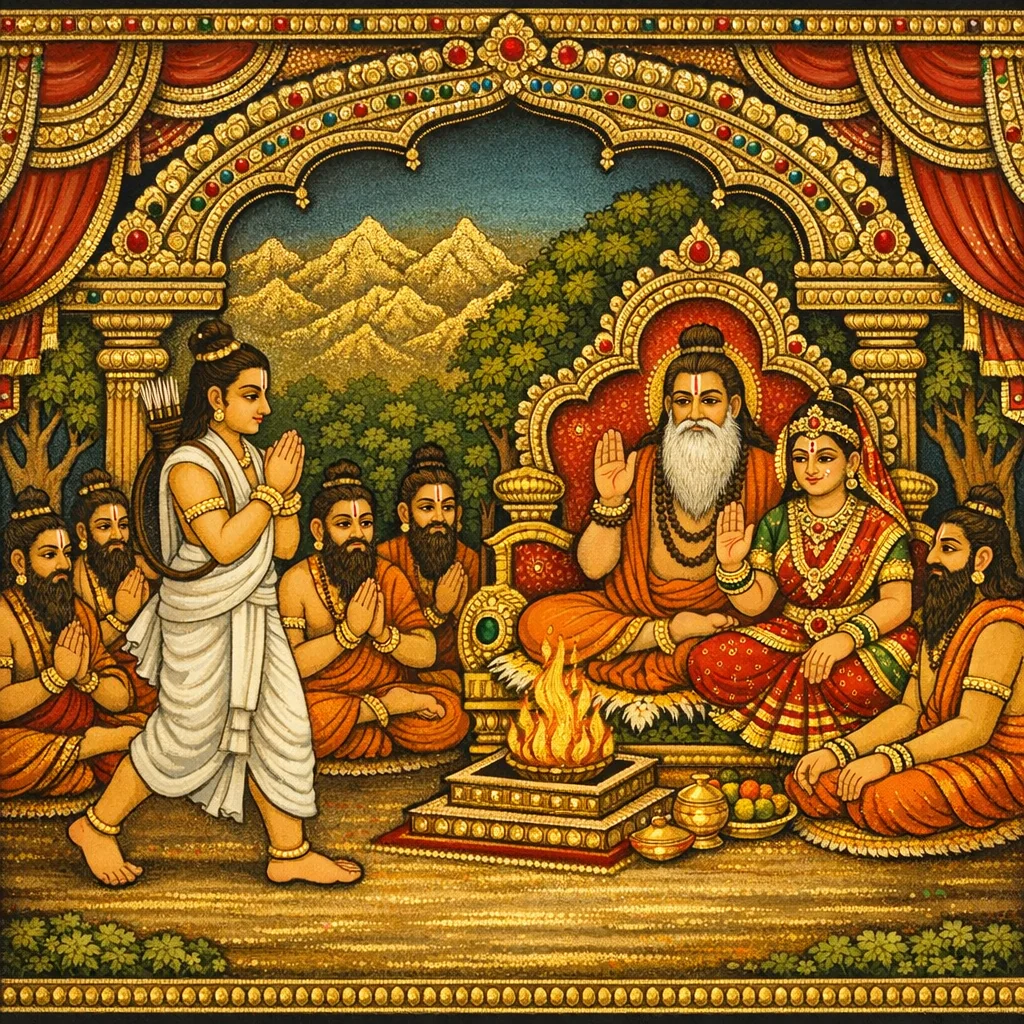
Framed as Vasiṣṭha’s narration in a rishi-to-rishi transmission setting, this chapter shows Rama taking leave with due reverence: he circumambulates and bows to Bhṛgu and Khyāti, is embraced and blessed, and is approved by the assembled munis. Resolute in undertaking tapas, Rama departs the āśrama by the path prescribed by his guru and journeys toward Himavat. The narrative then turns descriptive as he crosses varied lands—mountains, rivers, forests, hermitages, and tīrthas—before reaching the unsurpassed Himalaya. Himavat is depicted as a cosmographic landmark: sky-scraping peaks, mineral- and gem-strewn slopes, luminous herbs, and diverse micro-climates shaped by wind, sun, melting snow, and forest-fire imagery. The chapter thus links ascetic resolve to pilgrimage-space and places the Himalaya as a sacral-cosmological axis where rishi culture, yakṣa presence, and natural marvels converge.
Shlokas
Verse 1
इति श्रीब्रह्माण्डे महापुराणे वायुप्रोक्ते मध्यभागे तृतीय उपोद्धातपादे एकविंशति तमौध्यायः // २१// वसिष्ठ उवाच इत्येवमुक्तो भृगुणा तथेत्युक्त्वा प्रणम्य च / रामस्तेनाभ्यनुज्ञातश्चकार गमने मनः
Thus ends Chapter 21 of the Śrī Brahmāṇḍa Mahāpurāṇa, in the middle section, the third introductory pāda, as spoken by Vāyu. Vasiṣṭha said: So addressed by Bhṛgu, Rāma replied, “So be it,” bowed in reverence, and, granted permission, set his mind on departure.
Verse 2
भृगुं ख्यातिं च विधिवत्परिक्रम्य प्रणम्यच / परिष्वक्तस्तथा ताभ्यामाशीर्भिराभिनन्दितः
Rama, following the proper rite, circumambulated Bhrigu and Khyati and bowed in reverence; they embraced him and blessed him with auspicious benedictions.
Verse 3
मुनींश्च तान्नमस्कृत्य तैः सर्वैरनुमोदितः / निश्चक्रमाश्रमात्तस्मात्तपसे कृतनिश्चयः
Having bowed to those sages and won the assent of them all, he departed that hermitage, firmly resolved to undertake austerities.
Verse 4
ततो गुरुनियोगेन तदुक्तेनैव वर्त्मना / हिमवन्तं गिरिवरं ययौ रामो महामनाः
Then, by his guru’s command and along the very path prescribed, Rama, great-souled, set out for Himavan, the foremost of mountains.
Verse 5
सो ऽतीत्य विविधान्देशान्पर्वतान्सरितस्तथा / वनानि मुनिमुख्यानामावासांश्चात्यगाच्छनैः
He crossed many lands, mountains, and rivers, and slowly passed by the forests and hermitages where the foremost sages dwelt.
Verse 6
तत्रतत्र निवासेषु मुनीनां निवसन्पथि / तीर्थेषु क्षेत्रमुख्येषु निवसन्वा ययौ शनैः
Along the way he stayed at times in the dwellings of sages, or resided in foremost tirthas and holy kshetras, and thus journeyed on, slowly and steadily.
Verse 7
अतीत्य सुबहून्देशान्पश्यन्नपि मनोरमान् / आससादच लश्रेष्ठं हिमवन्तमनुत्तमम्
Passing beyond many lands and beholding their delights, that noble one came at last to Himavān, the unsurpassed king of mountains.
Verse 8
स गत्वा पर्वतवरं नानाद्रुमलतास्थितम् / ददर्श विपुलैः शृङ्गैरुल्लिखन्तमिवांबरम्
He went to that foremost mountain, clothed in many trees and vines, and beheld its mighty peaks as though they were carving the sky.
Verse 9
नानाधातुविचित्रैश्च प्रदेशैरुपशोभितम् / रत्नौषधीभिरभितः स्फुरद्भिरभिशोभितम्
It was adorned with tracts made wondrous by many minerals, and shone all the more with jewel-like healing herbs flashing on every side.
Verse 10
मरुत्संघट्टनाघृष्टनीरसांघ्रिपजन्मना / सानिलेनानलेनोच्छैर्दह्यमानं नवं क्वचित्
In places, a forest-fire—born from dry bamboo rubbed by clashing winds—flared up with the gale and burned the young woods in towering flames.
Verse 11
क्वचिद्रविकरामर्शज्वलदर्केपलाग्निभिः / द्रवद्धिमाशिलाजातुजलशान्तदवानलम्
In places, the sun’s touch kindled fire in arka leaves; yet the forest-blaze was quenched by waters born from melting slabs of ice and stone.
Verse 12
स्फटिकाञ्जनदुर्वर्णस्वर्णराशिप्रभाकरैः / स्फुरत्परस्परच्छायाशरैर्द्दीप्तवनं क्वचित्
With crystal-like gleam, añjana-dark hues, and the radiance of heaps of gold, by rays flashing and crossing like arrows of shadow, in places the forest blazed with light.
Verse 13
उपत्यकशिलापृष्ठवालातपनिषेविभिः / तुषारक्लिन्नसिद्धौघौरुद्भासितवनं क्वचित्
On the rocky backs of the valleys, basking in sunlight, by hosts of Siddhas damp with frost, in places the forest shone forth in wondrous radiance.
Verse 14
क्वचिदर्काशुसंभिन्नश्चामीकरशिलाश्रितैः / यक्षौघैर्भासितोपान्तं विशद्भिरिवपावकम्
In places, upon golden rocks pierced by swift sunbeams, hosts of Yakshas dwelling there made the outskirts shine as though with clear, stainless fire.
Verse 15
दरीमुखविनिष्क्रान्ततरक्षूत्पतनाकुलैः / मृगयूथार्त्तसन्नादैरापूरितगुहं क्वचित्
In places, caves were filled with the commotion of tarakṣus leaping out from their mouths, and with the distressed cries of startled herds of deer.
Verse 16
युद्ध्यद्वराहशार्दूलयूथपैरित स्तेरम् / प्रसभोन्मृष्टकान्तोरुशिलातरुतटं क्वचित्
In places there was a bank encircled by troops of battling boars and śārdūlas; there, broad rocks and tree-lined slopes shone, burnished by forceful rubbing.
Verse 17
कलभोन्मेषणाकृष्टकरिणीभिरनुद्रुतैः / गवयैः खुरसंक्षुण्णशिलाप्रस्थतटङ्क्वचित्
Somewhere, gavayas, running after the cow-elephants drawn by the frolic of their calves, crushed the edges of rocky ledges beneath their hooves.
Verse 18
वासितर्थे ऽभिसंवृद्धमदोन्मत्तमतङ्गजैः / युद्ध्यद्भिश्चूर्णितानेकगण्डशैलवनं क्वचित्
Somewhere, elephants maddened by musth, heightened by fragrant sap, fought and ground to dust a forest strewn with many knotted rocky hills.
Verse 19
बृंहितश्रवणामर्षान्मातं गानभिधावताम् / सिंहानां चरणक्षुण्णनखभिन्नोपरं क्वचित्
Somewhere, lions, roused to fury at the sound of roaring, charged forth; their paws crushed rock, and their claws split the upper stone.
Verse 20
सहसा निपतत्सिंहनखनिर्भिन्नमस्तकैः / गजैराक्रन्दनादेन पूर्यमामं वनं क्वचित्
Somewhere, elephants with heads torn open by a lion’s claws fell suddenly, and the forest was filled with their cries of anguish.
Verse 21
अष्टपादबलाकृष्टकेसरा दारुणाखैः / भेद्यमानाखिलशिलागंभीरकुहरं क्वचित्
Somewhere, lions with dreadful claws, their manes drawn as if by the strength of an eight-footed one, pierced all rock and split open deep caverns.
Verse 22
संरब्धा नेकशबरप्रसक्तैरृयूथपैः / इतरेतरसंमर्दं विप्रभग्नदृषत्क्वचित्
With the herd-leaders entangled with many Śabaras, they flared up in fury; there was crushing clash against one another, and somewhere they were struck by stones broken by the brāhmaṇas.
Verse 23
गिरिकुञ्जेषु संक्रीडत्करिणीमद्विपं क्वचित् / करेणुमाद्रवन्मत्तगजाकलितकाननम्
Somewhere in the mountain thickets a rut-maddened elephant sported with a cow; elsewhere the woodland, thronged with frenzied tuskers, rushed toward the cow-elephant.
Verse 24
स्वपत्सिंहमुखश्वासमरुत्पुर्मदरीशतम् / गहनेषु गुरुत्राससाशङ्कविहरन्मृगम्
By the rushing wind of his young one’s lion-mouthed breath, the caves seemed filled with intoxicated frenzy; in the deep thickets the deer wandered, burdened with great fear and suspicion.
Verse 25
कण्टाकश्लिष्टलाङ्गूललोमत्रुटनकातरैः / क्रीडितं चमरीयूथैर्मन्दमन्दविचारिभिः
Tormented as the tail-hairs, caught on thorns, were torn away, the herds of chamarī—moving ever so slowly—played there.
Verse 26
गिरिकन्दरसंसक्तकिन्नरीसमुदीरितैः / सतालनादैरुदिनैर्भृताशेषदिशामुखम्
From the kinnarīs’ songs clinging to the mountain caves, lofty notes—woven with rhythmic beats—rose up and filled the faces of all directions.
Verse 27
अरण्यदेवतानां च चरेतीनामितस्ततः / अलक्तकरसक्लिन्नचरणाङ्कितभूतलम्
All around, the ground was imprinted with the footprints of the forest-deities and the roaming caretīs, their feet wet with red alaktaka dye.
Verse 28
मयूरकेकिरीवृन्दैः संगीत मधुरस्वरैः / प्रवृत्तनृत्तं परितो विततोदग्रबर्हिभिः
Bands of peacocks, singing in sweet tones, set dancing all around, their lofty, spread-out plumes filling the whole expanse.
Verse 29
जलस्थलरुहानेककुसुमोत्करवर्षिभिः / गात्राह्लादकरैर्मन्दं वीज्यमानं वनानिलैः
Clusters of many flowers, born in water and on land, seemed to shower down; and gentle forest breezes slowly fanned the air, delighting the limbs.
Verse 30
भूतार्त्तवरसास्वादमाद्यत्पुंस्कोकिलारवैः / आकुलीकृतपर्यन्तसहकारवनान्तरम्
With the rapturous calls of the male kokilas, the grove seemed to taste a finest nectar; the mango-wood, from its depths to its borders, was stirred into sweet tumult.
Verse 31
नानापुष्पासवोन्माद्यद्भृङ्गसंगीतनादितम् / अनेकविहगारावबधिरीकृतकाननम्
It resounded with the music of bees, intoxicated by the nectar of many flowers; and the cries of countless birds made the woodland almost deafening.
Verse 32
मधुद्रवार्द्राविरलप्रत्यग्रकुसुमोत्करैः / वनान्तमारुताकीर्णैरलङ्कृतमहीतलम्
The earth’s surface was adorned with scattered clusters of fresh blossoms, moist with dripping honey, and with pollen strewn about by the breezes from within the forest.
Verse 33
उपरिष्टान्निपततां विषमोपलसंकटे / निर्झराणां महारावैः समन्ताद्बधिरीकृतम्
There, where torrents fell from above amid perilous, uneven rocks, the mighty roar of the cascades made all the quarters seem deafened.
Verse 34
विततानेकसंसक्तशाखाग्राविरलच्छदैः / पाटलैर्विटपच्छायैरुपशल्यसमुत्थितैः
With many branch-tips spread wide and interlaced, bearing sparse leaves, the pale shadows of the pātala boughs rose amid the upaśalya grasses.
Verse 35
कदंबनिंबहिन्तालसर्जबेधूकतिन्दुकैः / कपित्थपनसाशोकसहकारेगुदाशनैः
That woodland was filled with kadamba, nimba, hintāla, sarja, bedhūka, tinduka, kapittha, panasa, aśoka, sahakāra (mango), and eguda trees.
Verse 36
नागचंपकपुन्नागकोविदारप्रियङ्गुभिः / प्रियालनीपबकुलबन्धूकाक्षतमालकैः
The forest was graced with nāgacampaka and punnāga, with kovidāra and priyaṅgu, and with priyāla, nīpa, bakula, bandhūka, akṣata, and tamāla.
Verse 37
द्राक्षामधूकामलकजंबूकङ्कोलजातिभिः / बिल्वार्जुनकरञ्जाम्रबीजपूराङ्घ्रिपैरपि
It was abundant with vines, madhūka, āmalaka, jambū and kankola, and also with bilva, arjuna, karanja, mango, bījapūra and other trees.
Verse 38
पिचुलांबष्ठकनकवैकङ्कतशमीधवैः / पुत्रजीवाभयारिष्टलोहोदुंबरपिप्पलैः
It was adorned with piculā, ambaṣṭha, kanaka, vaikaṅkata, śamī and dhava, and with putrajīva, abhaya, ariṣṭa, loha, udumbara and pippala trees.
Verse 39
अन्यैश्च विविधैर्वृक्षैः समन्तादुपशोभितम् / निरन्तरतरुच्छायासुदूरविनिवारितैः
It was beautified on every side by many other kinds of trees, whose unbroken shade kept the sun’s rays far away.
Verse 40
समन्तादर्ककिरणैरनासादितभूतलम् / नानापक्वफलास्वादबलपुष्टैः प्लवेगमैः
On every side the sun’s rays did not reach the ground; monkeys, strengthened and well-nourished by the taste of many ripe fruits, leapt about with swift agility.
Verse 41
आक्रान्तचकितानेकवनपङ्क्तिशताकुलम् / तत्र तत्रातिरम्यैश्च शिलाकुहरनिर्गतैः
It teemed with hundreds of ranks of woodland; creatures roaming here and there started in alarm when disturbed, and in many places exquisitely lovely streams issued from rocky caverns.
Verse 42
प्रतापविषमैराजन्ह्रास्यमानं सरिच्छतैः / सारोवरैश्च विपुलैः कुमुदोत्पलमण्डितैः
O King, that land was rugged with uneven displays of might, and in places seemed worn down by the river-currents; it was adorned with broad lakes, decked with kumuda and utpala blossoms.
Verse 43
नानाविहगसंघुष्टैः समन्तादुपशोभितम् / समासाद्यथ शैलेन्द्रं तुषारशिशिरं गिरिम्
That place rang with the calls of many kinds of birds and was beautified on every side; then they came upon the lord of mountains, a peak chilled by snow and frost.
Verse 44
आरुरोह भगुश्रेष्ठस्तरसा तं मुदान्वितः / तस्य प्रविश्य गहनं वनं रामो महामनाः
Then the foremost of Bhṛgu’s line (Rama), filled with joy, swiftly climbed that mountain; and Rama, great-souled, entered its deep and dense forest.
Verse 45
विचचार शनै राजन्नुपशल्यमहीरुहम् / स तत्र विचरन्दिक्षु हरिणीभिः समन्ततः
O King, he wandered there slowly amid trees and creepers free of thorns; and as he roamed through the quarters, does surrounded him on every side.
Verse 46
विक्ष्यमाणो मुदं लेभे साशङ्कं मुग्धदृष्टिभिः / स तत्र कुसुमामोदगन्धिभिर्वनवायुभिः
Beholding those innocent, enchanting gazes (of the does), he felt joy, though touched with a slight hesitation; and there the forest winds blew, laden with the fragrance of blossoms.
Verse 47
वीज्यमानो जहर्षे स वीक्ष्योदारां वनश्रियम् / विविधाश्च स्थरीः सूक्ष्ममुपरिक्रम्य भार्गवः
Swayed as though fanned by the breeze, Bhārgava rejoiced on beholding the noble splendor of the forest; and he moved about, subtly surveying its many tracts.
Verse 48
द्वन्द्वांश्च धातून्विविधान्पश्यन्नेवमतर्कयत् / अहो ऽयं सर्वशैलानामाधिपत्ये ऽभिषेचितः
Seeing the many ores and the paired opposites, he reflected: “Ah! This one has been anointed to the lordship of all mountains.”
Verse 49
ब्रह्मणा यज्ञभाक्चैव स्थाने संप्रतिपादितः / अस्य शैलाधिराजत्वं सुव्यक्तमभिलक्ष्यते
Brahmā has established him in his proper station as a receiver of the yajña’s share; thus his sovereignty as king among mountains is plainly seen.
Verse 50
रवैः कीचकवेणुनां मधुरीकृतकाननः / नितंबस्थलसंसक्ततुषारनिचयैग्यम्
By the sounds of the kīcaka flutes his woodland is made sweet with melody; and by heaps of snow clinging to his slopes like hips, he appears in a single, unbroken whiteness.
Verse 51
विभातीवाहितस्वच्छपरीतधवलांशुकः / निबिडश्रितनीहारनिकरेण तथोपरि
He shines as though wrapped in a spotless, clear white garment; and above, he is likewise adorned by dense masses of mist clinging close.
Verse 52
नानावर्णोत्तरासंगावृत्ताङ्ग इवल्क्ष्यते / चन्दनागुरुकर्पूरकस्तूरीकुङ्कुमादिभिः
Smeared with many-hued unguents—sandal, agaru, camphor, musk, and kuṅkuma—it appears as though its limbs were wrapped in varied colors.
Verse 53
अलङ्कृतागः सुव्यक्तं दृश्यते ऽही विलासिवत् / मृगेन्द्राहतदन्तीन्द्रकुंभस्थलपरिच्युतैः
Adorned in splendor, it is seen distinctly like a reveler, by the pearls and gems that have fallen from the temple-bulge of the lordly elephant struck by the lion.
Verse 54
स्थूलमुक्तोत्करैरेष विभाति परितो गिरिः / नानावृक्षलतावल्लीपुष्पालङ्कृतमूर्द्धजः
This mountain shines all around with heaps of great pearls; its summit, like a crown of hair, is adorned with the flowers of many trees, creepers, and vines.
Verse 55
नीरन्ध्राञ्चितमे घौघवितानसमलङ्कृतः / नानाधातुविचित्राङ्गः सर्वरत्नविभूषितः
It is adorned with an unbroken canopy of dense cloud-masses; its form is variegated by many minerals and embellished with every kind of jewel.
Verse 56
कैलासव्याजविलसत्सितच्छत्रविराजितः / गजाश्वमुखयूथैश्च समन्तात्परिवारितः
It is glorified by a radiant white parasol, gleaming as if it were Kailāsa itself, and is surrounded on every side by companies of elephants, horses, and other chief hosts.
Verse 57
रत्नद्वीपमहाद्वारशिलाकन्दरमन्दिरः / विविक्तगह्वरास्थानमध्यसिंहासनाश्रयः
In the rock-cavern shrine at the great gate of Ratnadvīpa, he abides upon the central throne within a secluded, deep ravine.
Verse 58
समन्तात्प्रतिसंसक्ततरुवेत्रवतां शनैः / दृष्ट्वा जनैरनासाद्यो महाराजाधिराजवत्
As trees and creepers close in all around, little by little, he appears to people unapproachable—like an emperor, the king over kings.
Verse 59
दोधूयमानो विचरच्चमरीचा रुचामरैः / मयूरैरुपनृत्यद्भिर्गायद्भिश्चैव किन्नरैः
Moving to and fro, he shines with the radiant glow of chāmara fans; peacocks dance nearby, and kinnara minstrels sing.
Verse 60
सत्त्वजातैरनेकैश्च सेव्यमानो विराजते / व्यक्तमेवाचलेन्द्राणामधिराज्यपदे स्थितः
Attended by many kinds of beings, he shines in splendor; plainly he stands in the sovereign rank above the lords of mountains.
Verse 61
भुनक्त्याक्रम्य वसुधां समग्रां श्रियमोजसा / एवं संचिन्तयानः स हिमाद्रिवनगह्वरे
With might he oversteps the whole earth and enjoys the splendor of Śrī; thus pondering, he remains within the forested ravine of Himādri.
Verse 62
विचचार चिरं रामो मुदा परमया युतः / आससाद वने तस्मिन्विपुले भृगुपुङ्गवः
Rama, filled with supreme joy, wandered for a long while; in that vast forest he came to the hermitage of the foremost sage of Bhrigu’s line.
Verse 63
सरोवरं महाराज विपुलं विमलोदकम् / कुमुदोत्पलकह्लारनिकरैरुपसोभितम्
O great king, there was a vast lake of spotless water, adorned with clusters of kumuda, utpala, and kahlara lotuses.
Verse 64
पङ्कजैरुत्पलैश्चैव रक्तपीतैः सितासितैः / अन्यैश्च जलचैर्वक्षैः सर्वतः समलङ्कृतम्
It was adorned on every side with lotuses and utpalas—red and yellow, white and dark—along with other water-born plants.
Verse 65
हंससारसदात्यूहकारण्डवशतैरपि / जीवजीवकचक्राह्वकुररभ्रमरोत्करैः
There were swans, sarasa cranes, dātyūha birds, and hundreds of kāraṇḍavas; also jīvajīvakas, cakrāhvas, kuraras, and swarming bees.
Verse 66
संघुष्यमाणं परितः सेवितं मन्दवायुना / शफरीमत्स्यसंघैश्च विचरद्भिरितस्ततः
All around it resounded with lively calls, caressed by a gentle breeze; and shoals of śapharī fish moved to and fro.
Verse 67
अन्तर्जनितकल्लोलैर्नृत्यमानमिवाभितः / आससाद भृगुश्रेष्ठस्तत्सरोवरमुत्तमम्
With waves rising from within, as though dancing on every side, the foremost of the Bhṛgus came upon that most excellent lake.
Verse 68
नानापतत्र्रिविरुतैर्मधुरीकृतदिक्तटम् / स तस्य तीरे विपुलं कृत्वाश्रमपदं शुभम्
Sweetened by the calls of many kinds of birds along the edges of every quarter, he made upon its bank a spacious and auspicious hermitage.
Verse 69
रामो मतिमतां श्रेष्ठस्तपसे च मनो दधे / शाकमूलफलाहारो नियतं नियतेन्द्रियः
Rāma, foremost among the wise, set his mind upon austerity; living on herbs, roots, and fruits, he steadfastly restrained his senses.
Verse 70
तपश्चचार देवेशं विनिवेश्यात्ममानसे / भृगूपदिष्टमार्गेण भक्त्या परमया युतः
Following the path taught by Bhṛgu, filled with supreme devotion, he practiced austerity, enthroning the Lord of the gods within his own heart.
Verse 71
पूजयामास देवेशमेकाग्रमनसा नृप / अनिकेतः स वर्षासु शिशिरे जलसंश्रयः
O king, with a single-pointed mind he worshiped the Lord of the gods; without a dwelling, in the rainy season and in winter he took refuge only in the waters.
Verse 72
ग्रीष्मे पञ्जाग्निमध्यस्थश्चचारैवं तपश्चिरम् / रिपून्निर्जित्य कामादीनूर्मिषषट्कं विधूय च
In summer, abiding amid the five fires, he practiced austerity for a long time. Conquering foes such as desire, he cast away the six waves of worldly turmoil.
Verse 73
द्वन्द्वैरनुद्वेजितधीस्तापदोषैरनाकुलः / यमैः सनियमैश्चैव शुद्धदेहः समाहितः
His mind was unshaken by the pairs of opposites, and untroubled by the faults of heat and hardship. With yamas and niyamas, his body was purified and his being composed.
Verse 74
वशी चकार पवनं प्राणायामेन देहगम् / जितपद्मासनो मौनी स्थिरचित्तो महामुनिः
The great sage mastered the breath moving within the body through prāṇāyāma. Established in padmāsana, vowed to silence, he remained of steady mind.
Verse 75
वशी चकार चाक्षाणि प्रत्याहारपरायणः / धारणाभिः स्थिरीचक्रे मनश्चञ्चलमात्मवान्
Devoted to pratyāhāra, he brought the senses under control. Through dhāraṇā, self-possessed, he steadied the restless mind.
Verse 76
ध्यानेन देवदेवेशं ददर्श परमेश्वरम् / स्वस्थान्तः करणो मैत्रः सर्वबाधाविवर्जितः
Through meditation he beheld Parameśvara, the Lord of the lords of the gods. Serene within, filled with friendliness, he was free from every hindrance.
Verse 77
चिन्तयामास देवेशं ध्याने दृष्ट्वा जगद्गुरुम् / ध्येयावस्थि तचित्तात्मा निश्चलेद्रियदेहवान्
Having beheld in meditation the Lord of the gods, the Guru of the world, he pondered upon Him. His mind abided in the state of contemplation, with senses and body unmoving.
Verse 78
आकालावधि सो ऽतिष्ठन्निवातस्थप्रदीपवत् / जपंश्च देवदेवेशं ध्यायंश्च स्वमनीषया
Until the appointed time he stood steady like a lamp in a windless place. By his own insight he both uttered japa to the Lord of lords and meditated upon Him.
Verse 79
आराधयदमेयात्मा सर्वभावस्थमीश्वरम् / ततः स निष्फलं रूपमैश्वरं यन्निरञ्जनम्
The immeasurable-souled one worshiped Īśvara who abides in every state of being. Then he beheld that sovereign form—partless, stainless, and pure.
Verse 80
परं ज्योतिरचिन्त्यं यद्योगिध्येयमनुत्त मम् / नित्यं शुद्धं सदा शान्तमतीन्द्रियमनौपमम् / आनन्दमात्रमचलं व्याप्ताशेषचराचरम्
That Supreme Light is inconceivable, the yogins’ object of meditation, unsurpassed. Everlasting, pure, ever peaceful, beyond the senses and without equal; sheer Bliss, unmoving, pervading all that moves and all that does not.
Verse 81
चिन्तयामास तद्रूपं देवदेवस्य भार्गवः / नित्यं शुद्धं सदा शान्तमतीन्द्रियमनौपमम्
Bhārgava contemplated that very form of the Lord of gods—everlasting, pure, ever peaceful, beyond the senses, and without equal.
Frequently Asked Questions
Rama, after honoring Bhṛgu and Khyāti and receiving blessings and communal assent from the sages, departs the āśrama under guru instruction and travels toward Himavat to undertake tapas.
It maps an āśrama-and-tīrtha landscape leading into the Himalayan sacral zone, portraying Himavat through peaks, caves, forests, minerals, gem-herbs, and climatic forces—an index of how cosmology becomes navigable terrain.
In the provided passage, the emphasis is not on lineage cataloging or Lalitopakhyana; it is a narrative-geography and tapas setup chapter centered on rishi protocol, pilgrimage movement, and the cosmographic grandeur of Himavat.