Adhyaya 5
Vīrabhadra Destroys Dakṣa’s Sacrifice (Dakṣa-yajña-vināśa)
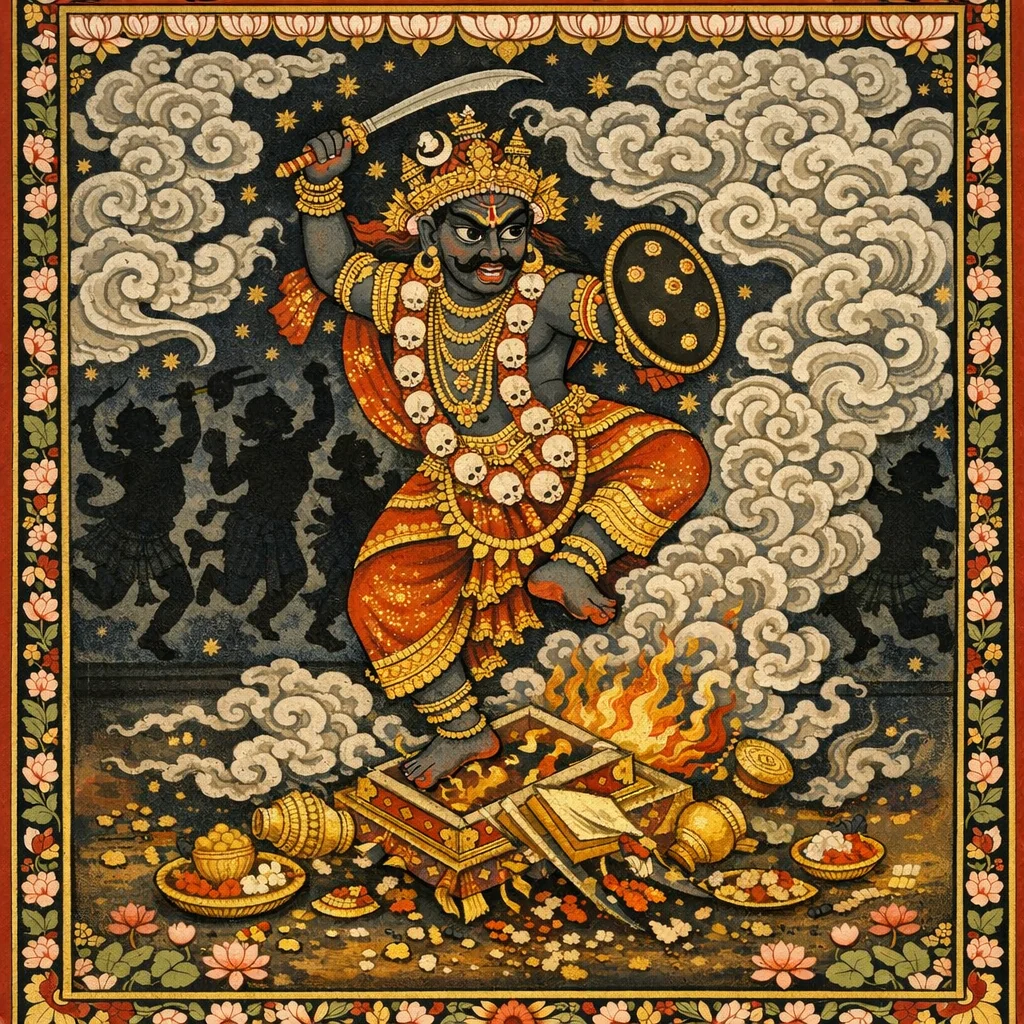
Hearing from Nārada of Satī’s death and Dakṣa’s offenses, Lord Śiva manifests the wrathful Vīrabhadra from his hair. Vīrabhadra and the gaṇas destroy the sacrificial arena, blind Bhaga, break Pūṣā’s teeth, and behead Dakṣa, offering his head into the southern fire before returning to Kailāsa.
Shlokas
Verse 1
मैत्रेय उवाच भवो भवान्या निधनं प्रजापते- रसत्कृताया अवगम्य नारदात् । स्वपार्षदसैन्यं च तदध्वरर्भुभि- र्विद्रावितं क्रोधमपारमादधे ॥ १ ॥
Maitreya said: Hearing from Nārada that Satī had died because of Prajāpati Dakṣa’s insult, and that his own attendant-soldiers had been driven off by the Ṛbhu demigods, Lord Śiva was seized by boundless wrath.
Verse 2
क्रुद्ध: सुदष्टौष्ठपुट: स धूर्जटि- र्जटां तडिद्वह्निसटोग्ररोचिषम् । उत्कृत्य रुद्र: सहसोत्थितो हसन् गम्भीरनादो विससर्ज तां भुवि ॥ २ ॥
Blazing with anger, Lord Śiva—Dhūrjaṭi—clenched his lips between his teeth and tore from his head a lock of hair, radiant and fierce like lightning and fire. Rising at once, laughing like one possessed, he hurled it to the earth with a deep, thunderous roar.
Verse 3
ततोऽतिकायस्तनुवा स्पृशन्दिवं सहस्रबाहुर्घनरुक् त्रिसूर्यदृक् । करालदंष्ट्रो ज्वलदग्निमूर्धज: कपालमाली विविधोद्यतायुध: ॥ ३ ॥
From that, a dreadful black demon was born—vast enough to touch the sky and blazing with the brilliance of three suns. His fangs were terrifying, his hair flared like burning fire; he had thousands of arms, raised many kinds of weapons, and wore a garland of human heads.
Verse 4
तं किं करोमीति गृणन्तमाह बद्धाञ्जलिं भगवान् भूतनाथ: । दक्षं सयज्ञं जहि मद्भटानां त्वमग्रणी रुद्र भटांशको मे ॥ ४ ॥
With palms joined, the gigantic being asked, “My lord, what shall I do?” Then Bhagavān Śiva, known as Bhūtanātha, commanded, “You are born from my own body and are the foremost of my gaṇas; therefore, at this sacrifice, slay Dakṣa and his soldiers.”
Verse 5
आज्ञप्त एवं कुपितेन मन्युना स देवदेवं परिचक्रमे विभुम् । मेने तदात्मानमसङ्गरंहसा महीयसां तात सह: सहिष्णुम् ॥ ५ ॥
Thus commanded by blazing wrath, he circumambulated Rudra, the God of gods, the all-powerful Lord. He deemed himself possessed of an irresistible force, able to confront even the forbearance of the great.
Verse 6
अन्वीयमान: स तु रुद्रपार्षदै- र्भृशं नदद्भिर्व्यनदत्सुभैरवम् । उद्यम्य शूलं जगदन्तकान्तकं सम्प्राद्रवद् घोषणभूषणाङ्घ्रि: ॥ ६ ॥
Followed by Rudra’s attendants, who roared tumultuously, he thundered forth in dreadful fury. Raising a mighty trident—terrible enough to slay even Death—he charged ahead, while the ornaments upon his legs seemed to roar.
Verse 7
अथर्त्विजो यजमान: सदस्या: ककुभ्युदीच्यां प्रसमीक्ष्य रेणुम् । तम: किमेतत्कुत एतद्रजोऽभू- दिति द्विजा द्विजपत्न्यश्च दध्यु: ॥ ७ ॥
At that moment, the priests, the sponsor of the sacrifice, the assembled elders, the brāhmaṇas and their wives, seeing dust rising in the northern quarter, pondered: “What is this darkness? From where has this dust arisen?”
Verse 8
वाता न वान्ति न हि सन्ति दस्यव: प्राचीनबर्हिर्जीवति होग्रदण्ड: । गावो न काल्यन्त इदं कुतो रजो लोकोऽधुना किं प्रलयाय कल्पते ॥ ८ ॥
They speculated: “No wind is blowing, nor are there any marauders; and King Prācīnabarhi, stern in punishment, still lives. No cattle are passing—so whence comes this dust? Is the world now preparing for pralaya, the great dissolution?”
Verse 9
प्रसूतिमिश्रा: स्त्रिय उद्विग्नचित्ता ऊचुर्विपाको वृजिनस्यैव तस्य । यत्पश्यन्तीनां दुहितृणां प्रजेश: सुतां सतीमवदध्यावनागाम् ॥ ९ ॥
Prasūti, Dakṣa’s wife, and the other women, their hearts shaken with anxiety, said: “This peril is indeed the ripened fruit of Dakṣa’s sin, for the blameless Satī, before her sisters’ very eyes, abandoned her body and went to the heavenly realm.”
Verse 10
यस्त्वन्तकाले व्युप्तजटाकलाप: स्वशूलसूच्यर्पितदिग्गजेन्द्र: । वितत्य नृत्यत्युदितास्त्रदोर्ध्वजान् उच्चाट्टहासस्तनयित्नुभिन्नदिक् ॥ १० ॥
At the time of cosmic dissolution, Lord Śiva’s matted locks fly loose, and with his trident he pierces the rulers of the directions. Raising his arms like banners, he laughs aloud and dances in majesty, as thunder shakes the quarters of the world.
Verse 11
अमर्षयित्वा तमसह्यतेजसं मन्युप्लुतं दुर्निरीक्ष्यं भ्रुकुट्या । करालदंष्ट्राभिरुदस्तभागणं स्यात्स्वस्ति किं कोपयतो विधातु: ॥ ११ ॥
That gigantic dark being, blazing with intolerable effulgence, flooded with wrath and dreadful to behold, bared his fearsome fangs. With a mere movement of his brows he scattered the luminaries of the sky and veiled them in his piercing radiance—before such an enraged ordainer, who could possibly remain safe?
Verse 12
बह्वेवमुद्विग्नदृशोच्यमाने जनेन दक्षस्य मुहुर्महात्मन: । उत्पेतुरुत्पाततमा: सहस्रशो भयावहा दिवि भूमौ च पर्यक् ॥ १२ ॥
As the people spoke among themselves with anxious eyes, Dakṣa beheld from every side—on earth and in the sky—thousands of dreadful, fearsome omens arising.
Verse 13
तावत्स रुद्रानुचरैर्महामखो नानायुधैर्वामनकैरुदायुधै: । पिङ्गै: पिशङ्गैर्मकरोदराननै: पर्याद्रवद्भिर्विदुरान्वरुध्यत ॥ १३ ॥
My dear Vidura, the followers of Rudra surrounded the sacrificial arena and ran about on every side. Short in stature and armed with many kinds of weapons, their bodies looked like sharks—dark and yellowish—and they began to create grave disturbances in the sacrifice.
Verse 14
केचिद्बभञ्जु: प्राग्वंशं पत्नीशालां तथापरे । सद आग्नीध्रशालां च तद्विहारं महानसम् ॥ १४ ॥
Some soldiers tore down the pillars and front structure of the sacrificial pavilion; some stormed into the women’s quarters; some wrecked the agnīdhra hall and the sacrificial arena; and some ransacked the kitchen and the residential rooms.
Verse 15
रुरुजुर्यज्ञपात्राणि तथैकेऽग्नीननाशयन् । कुण्डेष्वमूत्रयन् केचिद्बिभिदुर्वेदिमेखला: ॥ १५ ॥
They smashed the vessels meant for the sacrifice; some set about extinguishing the sacrificial fires; some urinated into the kuṇḍas; and some tore apart the boundary belt around the altar.
Verse 16
अबाधन्त मुनीनन्ये एके पत्नीरतर्जयन् । अपरे जगृहुर्देवान् प्रत्यासन्नान् पलायितान् ॥ १६ ॥
Some blocked the path of the fleeing sages; some threatened the women gathered there; and some seized the devas who were escaping from the pavilion.
Verse 17
भृगुं बबन्ध मणिमान् वीरभद्र: प्रजापतिम् । चण्डेश: पूषणं देवं भगं नन्दीश्वरोऽग्रहीत् ॥ १७ ॥
Maṇimān, a follower of Lord Śiva, bound Bhṛgu Muni; Vīrabhadra seized Prajāpati Dakṣa; Caṇḍeśa arrested the deva Pūṣā; and Nandīśvara captured the deva Bhaga.
Verse 18
सर्व एवर्त्विजो दृष्ट्वा सदस्या: सदिवौकस: । तैरर्द्यमाना: सुभृशं ग्रावभिर्नैकधाद्रवन् ॥ १८ ॥
A ceaseless shower of stones fell, and all the ṛtvij priests, the assembled participants, and the devas were plunged into great distress. Fearing for their lives, they scattered and fled in every direction.
Verse 19
जुह्वत: स्रुवहस्तस्य श्मश्रूणि भगवान् भव: । भृगोर्लुलुञ्चे सदसि योऽहसच्छ्मश्रु दर्शयन् ॥ १९ ॥
Virabhadra tore off the mustache of Bhrigu, who was offering the sacrificial oblations with his hands in the fire, for he had mocked Lord Shiva by showing his mustache.
Verse 20
भगस्य नेत्रे भगवान् पातितस्य रुषा भुवि । उज्जहार सदस्थोऽक्ष्णा य: शपन्तमसूसुचत् ॥ २० ॥
Virabhadra immediately caught Bhaga, who had been moving his eyebrows during Daksha’s cursing of Lord Shiva, and out of great anger thrust him to the ground and forcibly put out his eyes.
Verse 21
पूष्णो ह्यपातयद्दन्तान् कालिङ्गस्य यथा बल: । शप्यमाने गरिमणि योऽहसद्दर्शयन्दत: ॥ २१ ॥
Just as Baladeva knocked out the teeth of the King of Kalinga, Virabhadra knocked out the teeth of Pusha, who by smiling sympathetically had shown his teeth while Shiva was cursed.
Verse 22
आक्रम्योरसि दक्षस्य शितधारेण हेतिना । छिन्दन्नपि तदुद्धर्तुं नाशक्नोत् त्र्यम्बकस्तदा ॥ २२ ॥
Then Virabhadra, the giant personality, sat on the chest of Daksha and tried to separate his head from his body with sharp weapons, but was unsuccessful.
Verse 23
शस्त्रैरस्त्रान्वितैरेवमनिर्भिन्नत्वचं हर: । विस्मयं परमापन्नो दध्यौ पशुपतिश्चिरम् ॥ २३ ॥
He tried to cut the head of Daksha with hymns as well as weapons, but still it was hard to cut even the surface of the skin. Thus Virabhadra was exceedingly bewildered.
Verse 24
दृष्ट्वा संज्ञपनं योगं पशूनां स पतिर्मखे । यजमानपशो: कस्य कायात्तेनाहरच्छिर: ॥ २४ ॥
Then Vīrabhadra saw the wooden device in the sacrificial arena by which the animals were to have been killed. He took the opportunity of this facility to behead Dakṣa.
Verse 25
साधुवादस्तदा तेषां कर्म तत्तस्य पश्यताम् । भूतप्रेतपिशाचानां अन्येषां तद्विपर्यय: ॥ २५ ॥
Upon seeing the action of Vīrabhadra, the party of Lord Śiva was pleased and cried out joyfully, and all the bhūtas, ghosts and demons that had come made a tumultuous sound. On the other hand, the brāhmaṇas in charge of the sacrifice cried out in grief at the death of Dakṣa.
Verse 26
जुहावैतच्छिरस्तस्मिन्दक्षिणाग्नावमर्षित: । तद्देवयजनं दग्ध्वा प्रातिष्ठद् गुह्यकालयम् ॥ २६ ॥
Vīrabhadra then took the head and with great anger threw it into the southern side of the sacrificial fire, offering it as an oblation. In this way the followers of Lord Śiva devastated all the arrangements for sacrifice. After setting fire to the whole arena, they departed for their master’s abode, Kailāsa.
Frequently Asked Questions
Śiva manifests Vīrabhadra after learning that Satī gave up her body due to Dakṣa’s grievous insult and that Śiva’s attendants were driven away. Vīrabhadra functions as the instrument of cosmic justice: to chastise sacrificial arrogance and protect the dignity of a great devotee (Śiva). The episode teaches that offenses to exalted beings and to sacred relationships destabilize ritual merit and invite severe reaction.
The chapter portrays yajña as spiritually hollow when driven by pride and disregard for devotees. Although Dakṣa’s rite is externally elaborate, it collapses under the weight of aparādha; the very structure of sacrifice—pillars, fires, and implements—becomes a theater for moral reckoning. Bhāgavata theology thereby prioritizes devotion, humility, and honoring Vaiṣṇavas/Śaivas over mere ritual performance.
Vīrabhadra targets figures implicated in the assembly’s complicity: Bhṛgu is humiliated for his role in the sacrificial antagonism; Bhaga is blinded for his expressive participation during censure of Śiva; Pūṣā loses his teeth for smiling in support; and Dakṣa is ultimately beheaded as the principal offender. The narrative frames these punishments as proportional responses to collective endorsement of insult and sectarian contempt.
Casting Dakṣa’s head into the southern side of the fire symbolizes the inversion of a pride-based yajña: the performer becomes the oblation. It underscores that ritual power is not autonomous; it is subordinate to dharma and divine oversight. The act also dramatizes how adharmic sacrifice can devolve into a parody of itself, requiring later rectification and restoration.