Sukta 2
Rishi: Atharvanic tradition (often transmitted under Atharvan/Angiras lineages for Kāma material)
Devata: Kāma (personified Desire/Compulsion) as rival-slayer
Chandas: Predominantly Anuṣṭubh-like cadence (Atharvanic mixed anuṣṭubh usage)
Mantras
Mantra 1
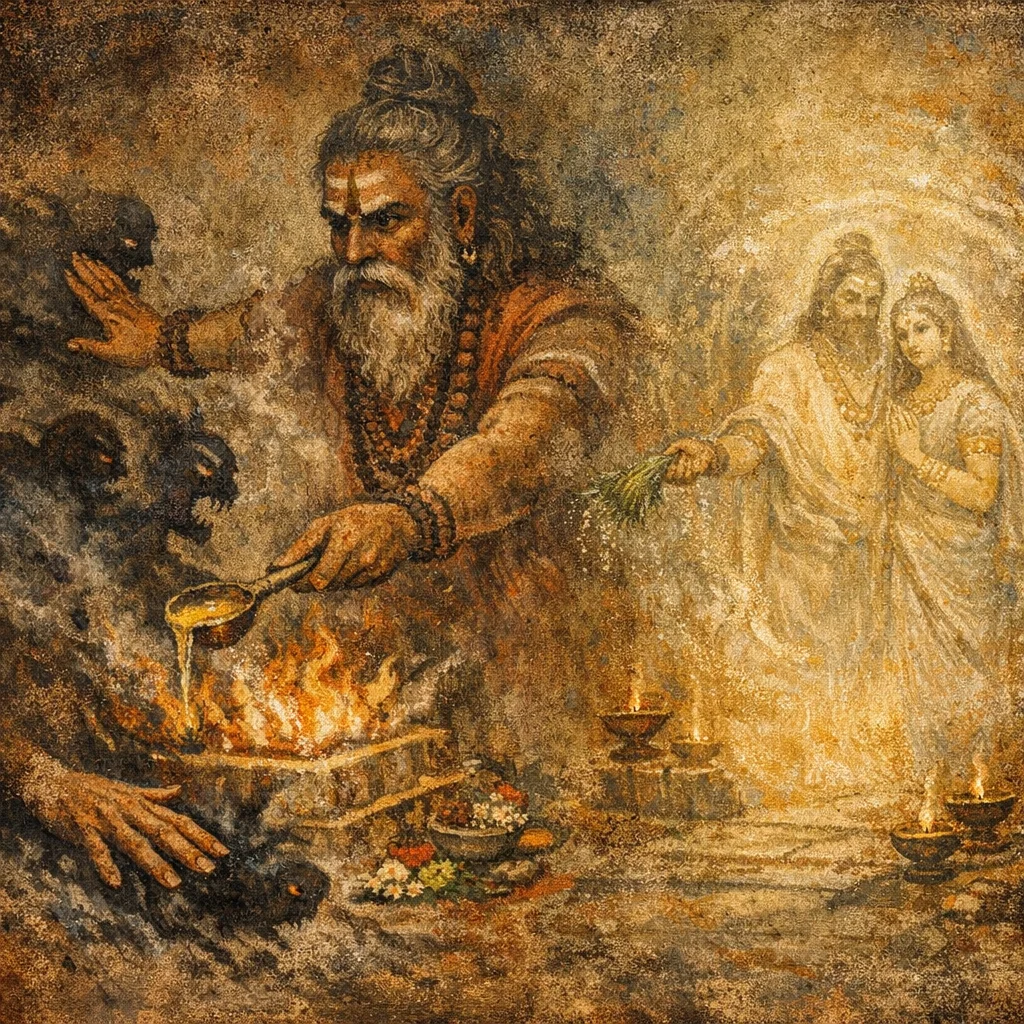
कामः सपत्नहनमृषभं घृतेन कामं शिक्षामि हविषाज्येन । नीचैः सपत्नान् मम पादय त्वमभिष्टुतो महता वीर्येऽण
Kāma, the slayer of rivals, the Bull—him with ghee; Kāma I discipline and set to work with oblation, with butter. Press my rivals downward; make them fall beneath me, thou who art duly hymned, with mighty manly power.
Mantra 2
यन्मे मनसो न प्रियं चक्षुषो यन्मे बभस्ति नाभिनन्दति । तद् दुष्वप्न्यं प्रति मुञ्चामि सपत्ने कामं स्तुत्वोदहं भिदेयम्
What is not pleasing to my mind, what my eye finds not agreeable, what manifestation of mine wins no approval—this evil-dreaming I cast back upon the rival; having praised Kāma, may I break him utterly.
Mantra 3
दुष्वप्न्यं काम दुरितं च कामाप्रजस्तामस्वगतामवर्तिम्। उग्र ईशानः प्रति मुञ्च तस्मिन् यो अस्मभ्यमंहूरणा चिकित्सात्
The evil-dreaming, O Kāma, and the evil plight, O Kāma—barrenness, ill-going, and mis-turning: thou fierce lord, cast it back upon that man who, with distressful intent, would contrive against us.
Mantra 4
नुदस्व काम प्र णुदस्व कामावर्तिं यन्तु मम ये सपत्नाः । तेषां नुत्तानामधमा तमांस्यग्ने वास्तूनि निर्दह त्वम्
Drive off, O Kāma; drive off forth, O Kāma: let my rivals go into reversal and turning-back. Of those driven out, to the lowest darknesses—O Agni—burn thou their dwellings utterly away.
Mantra 5
सा ते काम दुहिता धेनुरुच्यते यामाहुर्वाचं कवयो विराजम्। तया सपत्नान् परि वृङ्ग्धि ये मम पर्येनान् प्राणः पशवो जीवनं वृणक्तु
That daughter of thine, O Kāma, is called the Milch-cow—her whom the poets call Speech, the radiant Virāj. With her strip away the rivals who encompass me; and may breath, cattle, and life choose and win these for me.
Mantra 6
कामस्येन्द्रस्य वरुणस्य राज्ञो विष्णोर्बलेन सवितुः सवेन । अग्नेर्होत्रेण प्र णुदे सपत्नांछम्बीव नावमुदकेषु धीरः
By Kāma’s power, by Indra’s, by Varuṇa the King, by Viṣṇu’s strength, by Savitṛ’s driving-on; by Agni’s priestly offering I thrust mine rivals forth— as a steadfast man a boat upon the waters.
Mantra 7
अध्यक्षो वाजी मम काम उग्रः कृणोतु मह्यमसपत्नमेव। विश्वे देवा मम नाथं भवन्तु सर्वे देवा हवमा यन्तु म इमम्
Let fierce Kāma, mine overseer, victorious in might, make me—yea, make me—free from rivals. Let all the Gods become my patrons; let all the Gods come hither to this my call.
Mantra 8
इदमाज्यं घृतवज्जुषाणाः कामज्येष्ठा इह मादयध्वम्। कृण्वन्तो मह्यमसपत्नमेव
This ghee-rich ājya—accepting it—rejoice ye here, with Kāma as your chief; and, rejoicing, make me verily without a rival.
Mantra 9
इन्द्राग्नी काम सरथं हि भूत्वा नीचैः सपत्नान् मम पादयाथः । तेषां पन्नानामधमा तमांस्यग्ने वास्तून्यनुनिर्दह त्वम्
Indra and Agni—O Kāma—become ye verily of one car, and thrust my rivals downward, make them fall. Of those thus fallen into the lowest darknesses, O Agni, burn out their dwellings, following after them.
Mantra 10
जहि त्वं काम मम ये सपत्ना अन्धा तमांस्यव पादयैनान्। निरिन्द्रिया अरसाः सन्तु सर्वे मा ते जीविषुः कतमच्चनाहः
Smite thou, O Kāma, those rivals of mine; cast them down into blind darknesses. Let them all be void of faculty, sapless; let them not live—no, not for any day whatsoever.
Mantra 11
अवधीत् कामो मम ये सपत्ना उरुं लोकमकरन्मह्यमेधतुम्। मह्यं नमन्तां प्रदिशश्चतस्रो मह्यं षडुर्वीर्घृतमा वहन्तु
Kāma hath smitten down those rivals of mine who would have made for me a wide domain for thriving. Let the four quarters bow unto me; let the six broad regions bring hither ghee for me.
Mantra 12
तेऽधराञ्चः प्र प्लवन्तां छिन्ना नौरिव बन्धनात्। न सायकप्रणुत्तानां पुनरस्ति निवर्तनम्
Downward let them drift away, like a boat cut loose from its mooring. For those whom the missile hath driven forth, there is no turning back again.
Mantra 13
अग्निर्यव इन्द्रो यवः सोमो यवः । यवयावानो देवा यावयन्त्वेनम्
Agni is barley, Indra is barley, Soma is barley: the gods, possessed of barley—aye, of driving-away—let them drive him hence.
Mantra 14
असर्ववीरश्चरतु प्रणुत्तो द्वेष्यो मित्राणां परिवर्ग्यः१ स्वानाम्। उत पृथिव्यामव स्यन्ति विद्युत उग्रो वो देवः प्र मृणत् सपत्नान्
Let him, expelled, go wandering, bereft of all his champions—hateful to friends, to be shunned of his own. And upon the earth the lightnings are hurled down: your fierce god smiteth the rivals utterly.
Mantra 15
च्युता चेयं बृहत्यच्युता च विद्युद् बिभर्ति स्तनयित्नूंश्च सर्वान्। उद्यन्नादित्यो द्रविणेन तेजसा नीचैः सपत्नान् नुदतां मे सहस्वान्
Moved, yet this great one is unmoved: the lightning beareth all the thunders. Let the rising Āditya, mighty, with wealth and with splendor, thrust my rivals downward and away.
Mantra 16
यत् ते काम शर्म त्रिवरूथमुद्भु ब्रह्म वर्म विततमनतिव्याध्यंऽ कृतम्। तेन सपत्नान् परि वृङ्ग्धि ये मम पर्येनान् प्राणः पशवो जीवनं वृणक्तु
That shelter of thine, O Kāma—threefold-guarded—sprung forth as sacred spell, as armour spread abroad, made not to be overpassed by sickness: therewith do thou shear away the rivals, who beset me round about; let breath, let cattle, let life choose (and cleave to) me.
Mantra 17
येन देवा असुरान् प्राणुदन्त येनेन्द्रो दस्यूनधमं तमो निनाय । तेन त्वं काम मम ये सपत्नास्तानस्माल्लोकात् प्र णुदस्व दूरम्
With that whereby the Gods drave forth the Asuras, whereby Indra led the Dasyus down into nethermost darkness—with that, O Kāma, do thou drive far away from this world those rivals of mine.
Mantra 18
यथा देवा असुरान् प्राणुदन्त यथेन्द्रो दस्यूनधमं तमो बबाधे। तथा त्वं काम मम ये सपत्नास्तानस्माल्लोकात् णुदस्व दूरम्
As the Gods drave forth the Asuras, as Indra smote the Dasyus into nethermost darkness, so, O Kāma, drive thou far away from this world those rivals of mine.
Mantra 19
कामो जज्ञे प्रथमो नैनं देवा आपुः पितरो न मर्त्याः । ततस्त्वमसि ज्यायान् विश्वहा महांस्तस्मै ते काम नम इत् कृणोमि
Kāma was born the first: him neither Gods attained, nor Fathers, nor mortals. Therefore art thou ever greater, mighty: to thee, O Kāma, to him—homage, even so, I render.
Mantra 20
यावती द्यावापृथिवी वरिम्णा यावदापः सिष्यदुर्यावदग्निः । ततस्त्वमसि ज्यायान् विश्वहा महांस्तस्मै ते काम नम इत् कृणोमि
As vast as Heaven and Earth in their breadth, as far as the Waters flow, as far as Fire (extends)—therefore art thou ever greater, mighty: to thee, O Kāma, homage, even so, I render.
Mantra 21
यावतीर्दिशः प्रदिशो विषूचीर्यावतीराशा अभिचक्षणा दिवः । ततस्त्वमसि ज्यायान् विश्वहा महांस्तस्मै ते काम नम इत् कृणोमि
As many as are the quarters, the fore-quarters, spreading apart; as many as are the hopes that look abroad from heaven—therefrom art thou the greater, evermore the mighty: to thee, O Kāma, to that one, I do indeed make reverent homage.
Mantra 22
यावतीर्भृङ्गा जत्वःऽ कुरूरवो यावतीर्वघा वृक्षसर्प्योऽ बभूवुः । ततस्त्वमसि ज्यायान् विश्वहा महांस्तस्मै ते काम नम इत् कृणोमि
As many as are the bees, the winged swarms, the harsh-crying; as many as are the smiters, the tree-creeping serpents that have come to be—therefrom art thou the greater, evermore the mighty: to thee, O Kāma, I do indeed make reverent homage.
Mantra 23
ज्यायान् निमिषतोऽसि तिष्ठतो ज्यायान्त्समुद्रादसि काम मन्यो । ततस्त्वमसि ज्यायान् विश्वहा महांस्तस्मै ते काम नम इत् कृणोमि
Greater art thou than the blinking one, greater than the standing one; greater art thou than the ocean, O Kāma, O Manyu. Therefrom art thou the greater, evermore the mighty: to thee, O Kāma, I do indeed make reverent homage.
Mantra 24
न वै वातश्चन काममाप्नोति नाग्निः सूर्यो नोत चन्द्रमाः । ततस्त्वमसि ज्यायान् विश्वहा महांस्तस्मै ते काम नम इत् कृणोमि
Verily the Wind attains not Kāma, nor Agni, nor the Sun, nor yet the Moon. Therefrom art thou the greater, evermore the mighty: to thee, O Kāma, I do indeed make reverent homage.
Mantra 25
यास्ते शिवास्तन्वःऽ काम भद्रा याभिः सत्यं भवति यद् वृणीषे। ताभिष्ट्वमस्माँ अभिसंविशस्वान्यत्र पापीरप वेशया धियः
Those gracious forms of thine, O Kāma—those goodly powers whereby what thou choosest becomes true—therewith do thou enter in upon us and abide; but elsewhere drive thou away the evil thoughts.
Frequently Asked Questions
Here Kāma is not primarily romantic love; it is Desire/Compulsion as a commanding force. The hymn treats Kāma as a power that can be directed to overpower rivals and make one’s intention prevail.
Ghṛta/ājya (ghee/clarified butter) offered as havis is central, especially in the opening where Kāma is ‘set to work’ through oblation and praise.
Its primary function is abhicārika (rival-subduing/coercive). It can also be read as paustika in the sense of securing advantage and dominance for the patron, but its tone is explicitly competitive and suppressive.