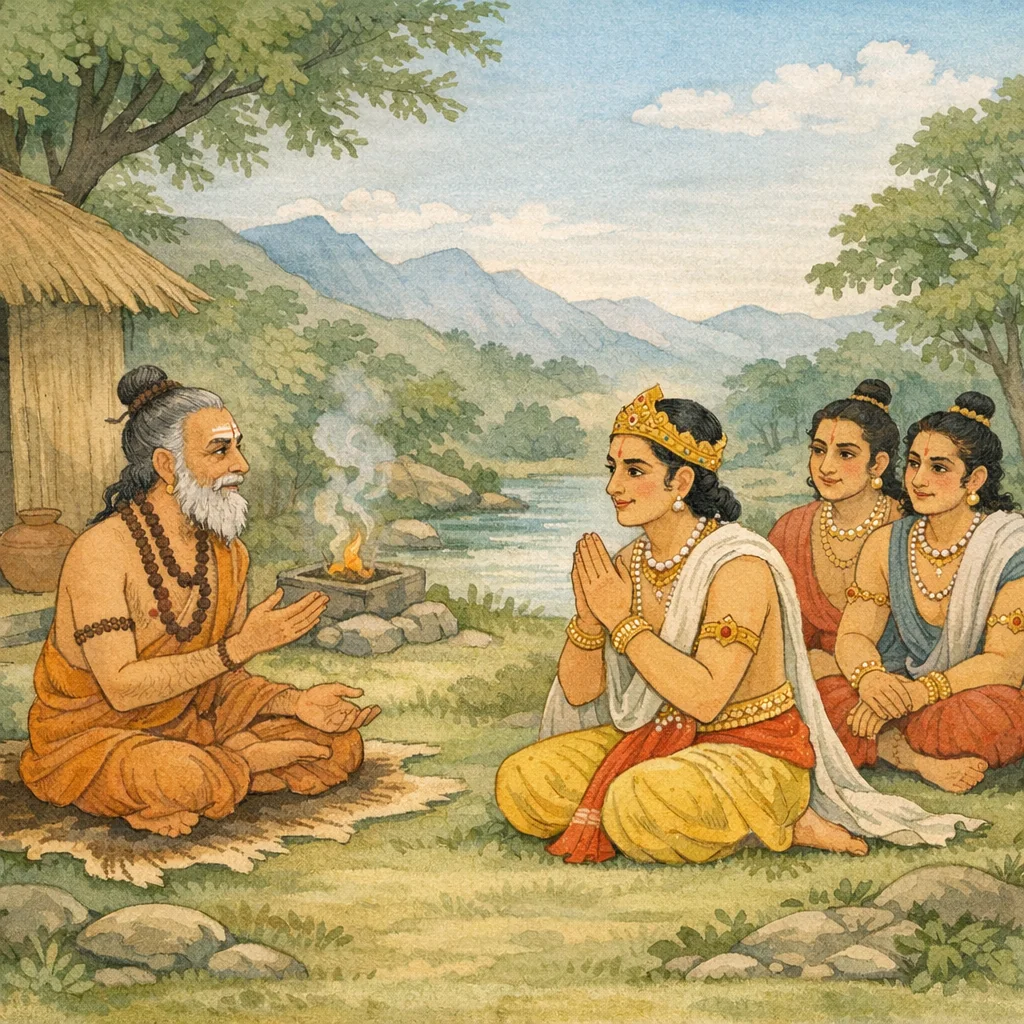
Adhyaya 92
Adharma’s Short-Lived Prosperity and the Restorative Path of Tīrtha (लोमश–युधिष्ठिर संवादः)
Upa-parva: Tīrtha-yātrā Parva (Lomāśa-guided pilgrimage discourse)
Yudhiṣṭhira addresses Lomāśa with a problem of moral perception: he does not consider himself without virtues, yet he is intensely afflicted by suffering; conversely, he observes others—described as lacking qualities and not devoted to dharma—prospering in the world. Lomāśa responds by discouraging despair and explaining a causal sequence: growth through adharma produces an initial appearance of well-being and even competitive victory, but the same adharma culminates in total ruin. To substantiate, he cites daityas and dānavas who rose by unrighteous means and later perished. In a mythic-historical contrast, devas embrace dharma and enter tīrthas, while asuras avoid them; adharma generates pride, pride generates anger, anger erodes modesty and conduct, after which kṣamā (forbearance), dharma, and lakṣmī depart. Misfortune and kali then “enter” the asuric line, leading to swift destruction. The devas, by contrast, approach sacred waters and holy abodes, abandoning sins through tapas, ritual action, gifts, and blessings, thereby attaining welfare. Lomāśa concludes with prescriptive counsel: Yudhiṣṭhira too should bathe at tīrthas with his brothers to regain prosperity; he lists exemplary kings (e.g., Nṛga, Śibi, Bhagīratha, Gaya, Pūru, Purūravas, Ikṣvāku, Mucukunda, Māndhātṛ, Marutta) who attained fame and wealth through ascetic/pilgrimage discipline. Finally, he forecasts that the Dhārtarāṣṭras, overcome by pride and delusion, will meet a fate like the daityas—implying the ethical arc of retribution without prescribing personal retaliation.
Chapter Arc: महर्षि लोमश इन्द्र और अर्जुन का संदेश लेकर युधिष्ठिर के सम्मुख आते हैं—वनवास की धूल में भी स्वर्गीय आश्वासन की चमक उतर आती है। → लोमश युधिष्ठिर की धर्मनिष्ठा और तप-परंपरा का स्मरण कराते हुए कहते हैं कि वे ‘पुरुष को पवित्र करने वाले’ साधन जानते हैं और पाण्डवों को तीर्थ-पुण्य से जोड़ेंगे; साथ ही इन्द्र के आदेश और अर्जुन के अनुरोध से युधिष्ठिर की रक्षा करते हुए साथ चलने का वचन देते हैं। → युधिष्ठिर लोमश के दर्शन और वचनों से इतने हर्षित होते हैं कि उत्तर नहीं सूझता; फिर स्वीकार करते हैं कि धौम्य के आदेश से वे पहले ही तीर्थयात्रा का संकल्प कर चुके थे—अब यह संकल्प इन्द्र-अर्जुन-संदेश से दिव्य अनुमोदन पा जाता है। → युधिष्ठिर लोमश सहित थोड़े ब्राह्मणों के साथ काम्यक वन में तीन रात्रि ठहरते हैं और तीर्थयात्रा-मार्ग की तैयारी स्थिर होती है; कथा-धारा तीर्थयात्रापर्व में आगे बढ़ने को सज्ज हो जाती है। → तीर्थयात्रा का वास्तविक प्रस्थान और आगे के तीर्थ-क्रम का उद्घाटन अगले अध्यायों के लिए छोड़ दिया जाता है।
Shlokas
Verse 1
#८2:8 #:23:.:7 (0) मपिटम अा८् द्विनवतितमो< ध्याय: महर्षि लोमशके मुखसे इन्द्र और अर्जुनका संदेश सुनकर युधिष्ठिरका प्रसन्न होना और तीर्थयात्राके लिये उद्यत हो अपने अधिक साथियोंको विदा करना लोमश उवाच धनंजयेन चाप्युक्त यत् तच्छृूणु युधिष्ठिर । युधिष्टिरं भ्रातरं मे योजयेर्धर्म्यया श्रिया,लोमश मुनि कहते हैं--युधिष्ठिर! जब मैं आने लगा, तब अर्जुनने भी मुझसे जो बात कही थी, वह सुनो। वे बोले--'तपोधन! आप मेरे बड़े भैया युधिष्ठिरको धर्मानुकूल राजलक्ष्मीसे संयुक्त कीजिये। आप उत्कृष्ट धर्मों और तपस्याओंको जानते हैं। श्रीसम्पन्न राजाओंका जो सनातनधर्म है, उसका भी आपको पूर्ण ज्ञान है
Lomaśa said: “Yudhiṣṭhira, listen to what Dhanañjaya (Arjuna) also told me. He said: ‘O ascetic rich in austerity, please unite my elder brother Yudhiṣṭhira with a kingship-fortune that accords with dharma.’”
Verse 2
त्वं हि धर्मान् परान् वेत्थ तपांसि च तपोधन । श्रीमतां चापि जानासि धर्म राज्ञां सनातनम्,लोमश मुनि कहते हैं--युधिष्ठिर! जब मैं आने लगा, तब अर्जुनने भी मुझसे जो बात कही थी, वह सुनो। वे बोले--'तपोधन! आप मेरे बड़े भैया युधिष्ठिरको धर्मानुकूल राजलक्ष्मीसे संयुक्त कीजिये। आप उत्कृष्ट धर्मों और तपस्याओंको जानते हैं। श्रीसम्पन्न राजाओंका जो सनातनधर्म है, उसका भी आपको पूर्ण ज्ञान है
Lomaśa said: “O ascetic rich in austerity, you truly know the highest forms of dharma and the disciplines of tapas. You also understand the timeless code of conduct that belongs to prosperous kings.”
Verse 3
स भवान् परम॑ वेद पावन पुरुषं प्रति । तेन संयोजयेथास्त्वं तीर्थपुण्येन पाण्डवान्,“पुरुषको पवित्र बनानेवाला जो उत्तम साधन है, उसे आप जानते हैं। अतः आप पाण्डवोंको तीर्थयात्रा-जनित पुण्यसे सम्पन्न कीजिये
Lomaśa said: “You, revered one, know well the highest means by which a person becomes purified. Therefore, please unite the Pāṇḍavas with the merit born of pilgrimage—so that their lives may be strengthened by sacred discipline and inner cleansing.”
Verse 4
यथा तीर्थानि गच्छेत गाश्न दद्यात् स पार्थिव: । तथा सर्वात्मना कार्यमिति मामर्जुनो5ब्रवीत्,“महाराज युधिष्ठिर जिस प्रकार तीर्थो्में जायँ और वहाँ गोदान करें, वैसा सब प्रकारसे प्रयत्न कीजियेगा।” यह बात अर्जुनने मुझसे कही थी
Lomaśa said: “Arjuna told me, ‘O king, just as a ruler should go on pilgrimage to sacred fords and, while there, give gifts of cows, so too you must undertake this with your whole being—make it your complete resolve and effort.’”
Verse 5
भवता चानुगुप्तोडसौ चरेत् तीर्थानि सर्वश: । रक्षोभ्यो रक्षितव्यश्न दुर्गेषु विषमेषु च
“And when he is protected by you, let him travel everywhere among the sacred fords. He must be guarded from the rākṣasas, especially in difficult and perilous regions.”
Verse 6
उन्होंने यह भी कहा--“महाराज युधिष्ठिर आपसे सुरक्षित रहकर सब तीर्थोमें विचरण करें। दुर्गग स्थानों और विषम अवसरोंमें आप राक्षसोंसे उनकी रक्षा करें ।। दधीच इव देवेन्द्र यथा चाप्यड्धिरा रविम् तथा रक्षस्व कौन्तेयान् राक्षसेभ्यो द्विजोत्तम,'द्विजश्रेष्ठ! जैसे दधीचने देवराज इन्द्रकी और महर्षि अंगिराने सूर्यकी रक्षा की है, उसी प्रकार आप राक्षसोंसे कुन्तीकुमारोंकी रक्षा कीजिये”
Lomaśa said: They also said this—“O great king Yudhiṣṭhira, let him travel safely through all the sacred fords under your protection. In difficult regions and in perilous times, you must guard him from the rākṣasas. Just as Dadhīca protected Indra, the lord of the gods, and as the sage Aṅgirā protected the Sun, so too, O best of the twice-born, protect the sons of Kuntī from the rākṣasas.”
Verse 7
यातुधाना हि बहवो राक्षसा: पर्वतोपमा: । त्वयाभिगुप्तं कौन्तेयं न विवर्तेयुरन्तिकम्,“बहुत-से पिशाच तथा राक्षस, जो पर्वतोंके समान विशालकाय हैं, आपसे सुरक्षित राजा युधिष्ठिरके पास नहीं आ सकेंगे”
Lomaśa said: “Indeed, many yātudhānas and rākṣasas—huge as mountains—are about. Yet if the son of Kuntī (Yudhiṣṭhira) is protected by you, they will not dare to come near him.” The verse underscores the ethical duty of guardianship: true strength is shown in shielding the righteous from harm, so that fear and violence cannot approach where dharma is being upheld.
Verse 8
सो5हमिन्द्रस्य वचनान्नियोगादर्जुनस्य च | रक्षमाणो भयेभ्यस्त्वां चरिष्यामि त्वया सह,राजन! इस प्रकार मैं इन्द्रके कथन और अर्जुनके अनुरोधसे सब प्रकारके भयसे तुम्हारी रक्षा करते हुए तुम्हारे साथ-साथ तीर्थोमें विचरण करूँगा
Lomaśa said: “Therefore, acting under Indra’s command and also at Arjuna’s request, I shall accompany you, O king, safeguarding you from every kind of danger as we journey together through the sacred pilgrimage places.”
Verse 9
द्विस्तीर्थानि मया पूर्व दृष्टानि कुरुनन्दन । इदं तृतीयं द्रक्ष्यामि तान्येव भवता सह,कुरुनन्दन! पहले दो बार मैंने सब तीर्थोंके दर्शन कर लिये; अब तीसरी बार तुम्हारे साथ पुनः उनका दर्शन करूँगा
Lomaśa said: “O joy of the Kurus, I have already visited those sacred fords twice before. Now, for a third time, I shall behold those very same tīrthas again—this time together with you.”
Verse 10
इयं राजर्षिभियता पुण्यकृद्धिर्युधिष्ठिर । मन्वादिभिम्महाराज तीर्थयात्रा भयापहा,महाराज युधिष्ठिर! यह तीर्थयात्रा सब प्रकारके भयका नाश करनेवाली है। मनु आदि पुण्यात्मा राजर्षियोंने इस तीर्थयात्रारूपी धर्मका पालन किया है
Lomaśa said: “O Yudhiṣṭhira, this sacred pilgrimage—an enhancer of merit—has been undertaken by royal sages. O great king, beginning with Manu and other righteous forebears, they observed this dharmic practice. Such a journey to holy fords dispels fear and steadies the mind in righteousness.”
Verse 11
नानजुर्नाकृतात्मा च नाविद्यो न च पापकृत् स्नाति तीर्थेषु कौरव्य न च वक्रमतिर्नर:,कुरुनन्दन! जो सरल नहीं है, जिसने अपने मन और इन्द्रियोंको वशमें नहीं किया है, जो विद्याहीन और पापात्मा है तथा जिसकी बुद्धि कुटिलतासे भरी हुई है, ऐसा मनुष्य (श्रद्धा न होनेके कारण) तीर्थोंमें स्नान नहीं करता
Lomaśa said: “O Kauravya, a man who is not straightforward, who has not mastered his inner self, who is without true knowledge, who commits sin, and whose mind is crooked—such a person does not truly bathe in sacred fords. For him, pilgrimage and ritual washing are empty, because the required faith and inner purity are absent.”
Verse 12
त्वं तु धर्ममतिर्नित्यं धर्मज्ञ: सत्यसंगर: । विमुक्त: सर्वसड्भेभ्यो भूय एव भविष्यसि
But you are ever intent on dharma—one who understands righteousness and is firmly pledged to truth. Freed from all such entanglements and faults, you will become so again, all the more.
Verse 13
तुम तो सदा धर्ममें मन लगाये रखनेवाले, धर्मज्ञ, सत्यप्रतिज्ञ और सब प्रकारकी आसक्तियोंसे शून्य हो और आगे भी तुममें अधिकाधिक इन गुणोंका विकास होगा ।। यथा भगीरथो राजा राजानश्न गयादय: । यथा ययाति: कौन्तेय तथा त्वमपि पाण्डव
Lomaśa said: “You are one who continually keeps the mind fixed on dharma—knowing what is right, steadfast in truth, and free from every kind of attachment. In you these virtues will grow still more in the days to come. Just as King Bhagiratha, and kings such as Nala and Gaya, and just as Yayati, O son of Kunti—so too will you, O Pandava, become renowned.”
Verse 14
कुन्तीकुमार पाण्डुनन्दन! जैसे राजा भगीरथ हो गये हैं, जैसे गय आदि राजर्षि हो चुके हैं तथा जैसे महाराज ययाति हुए हैं, वैसे ही तुम भी विख्यात हो ।। युधिछिर उवाच न हर्षात् सम्प्रपश्यामि वाक्यस्यास्योत्तरं क्वचित् | स्मरेद्धि देवराजो यं को नामाभ्यधिकस्तत:
Yudhiṣṭhira said: “Overwhelmed with joy, I cannot at all find a fitting reply to these words. For the very one whom the king of the gods remembers—who could possibly be superior to him?”
Verse 15
युधिष्ठिर बोले--महर्ष! आपके दर्शन और आपकी बातोंके सुननेसे मुझे इतना अधिक हर्ष हुआ है कि मुझे इन वचनोंका कोई उत्तर नहीं सूझता। देवराज इन्द्र जिसका स्मरण करते हों उससे बढ़कर इस संसारमें कौन है? ।। भवता संगमो यस्य भ्राता चैव धनंजय: । वासव: स्मरते यस्य को नामाभ्यधिकस्तत:,जिसे आपका संग प्राप्त हो, जिसके अर्जुन-जैसा भाई हो और जिसे इन्द्र याद करते हों, उससे बढ़कर सौभाग्यशाली और कौन है?
Yudhiṣṭhira said: “Sage, meeting you and hearing your words has filled me with such joy that I find no fitting reply. In this world, who could be greater than one whom Indra himself remembers? For he who has had your company, who has Dhanañjaya (Arjuna) as his brother, and whom Vāsava (Indra) calls to mind—who could possibly be more fortunate or more eminent than he?”
Verse 16
यच्च मां भगवानाह तीर्थानां दर्शन प्रति । धौम्यस्य वचनादेषा बुद्धि: पूर्व कृतेव मे
Yudhiṣṭhira said: “And what the revered one told me regarding the visiting of sacred fords—this resolve of mine has arisen from Dhaumya’s counsel, as though it were already ordained by my earlier deeds.”
Verse 17
भगवन्! आपने मुझे तीर्थोंके दर्शनके लिये जो उत्साह प्रदान किया है, वह ठीक है। मैंने पहलेसे ही धौम्यजीके आदेशसे तीर्थोमें जानेका विचार कर रखा है ।। तद् यदा मन्यसे ब्रह्मन् गमन तीर्थदर्शने तदैव गन्तास्मि तीर्थान्यिष मे निश्चय: पर:,अतः ब्रह्म! आप जब ठीक समझें तभी मैं तीर्थोंके दर्शनके लिये चल दूँगा; यही मेरा अन्तिम निश्चय है
Yudhiṣṭhira said: “Revered sir, the encouragement you have given me to visit the sacred fords is fitting. Indeed, even earlier—on the instruction of Dhaumya—I had already resolved to undertake a pilgrimage. Therefore, O Brahmin, whenever you deem it proper for me to set out to behold the tīrthas, at that very time I shall depart. This is my firm and final decision.”
Verse 18
वैशम्पायन उवाच गमने कृतबुद्धि तु पाण्डवं लोमशो<ब्रवीत् | लघुर्भव महाराज लघु: स्वैरं गमिष्यसि,वैशम्पायनजी कहते हैं--जनमेजय! तीर्थयात्राके लिये जिन्होंने निश्चित विचार कर लिया था, उन पाण्डु-नन्दन युधिष्ठिरसे महर्षि लोमशने कहा--“महाराज! लोकसमूहसे आप हलके हो जाइये--थोड़े ही लोगोंको साथ रखिये; क्योंकि थोड़े संगी-साथी होनेपर आप इच्छानुसार सर्वत्र जा सकेंगे
Vaiśampāyana said: When the Pāṇḍava had firmly resolved to set out on the journey, the sage Lomaśa spoke to him: “O great king, travel light—reduce the crowd around you and keep only a few companions; for when you are unburdened, you will be able to move about freely wherever you wish.”
Verse 19
युधिछिर उवाच भिक्षाभुजो निवर्तन्तां ब्राह्मणा यतयश्न ये । क्षुत्तृडध्वश्रमायासशीतार्तिमसहिष्णव:,युधिष्ठिर बोले--जो भिक्षाभोजी ब्राह्मण और संन्यासी हैं तथा जो भूख-प्यास, परिश्रम-थकावट और सर्दीकी पीड़ा सहन न कर सकें, उन्हें लौट जाना चाहिये
Yudhiṣṭhira said: “Let those brāhmaṇas and ascetics who live on alms turn back—those who cannot endure hunger and thirst, the strain of the road, fatigue and exertion, and the pain of cold.”
Verse 20
ते सर्वे विनिवर्तन्तां ये च मिष्टभुजो द्विजा: । पक््वान्नलेहापानानां मांसानां च विकल्पका:,जो द्विज मिष्टान्नभोजी हैं वे भी लौट जायँ। जो पक्वान्न, चटनी, पेय पदार्थ और मांस आदि खानेवाले मनुष्य हों, वे भी लौट जायूँ
Yudhiṣṭhira said: “Let all of them turn back—those brahmins who are fond of sweet foods as well. And let those too return who make choices and seek varieties of cooked dishes, relishes, drinks, and meats.” In context, the instruction underscores restraint and suitability: those inclined toward indulgent fare are not fit for the intended austere undertaking and should withdraw rather than compromise the discipline and purpose of the journey.
Verse 21
तेडपि सर्वे निवर्तन्तां ये च सूदानुयायिन: । मया यथोचिताजीव्यै: संविभक्ताश्न वृत्तिभि:,जो लोग रसोइयोंकी अपेक्षा रखनेवाले हैं तथा जिन्हें मैंने अलग-अलग बाँटकर उचित- उचित आजीविकाकी व्यवस्था कर दी है, वे सब लोग घर लौट जायेँ
Yudhiṣṭhira said: “Let all those also return home—those who depend upon the cooks and those for whom I have already arranged suitable means of livelihood, assigning them their proper sustenance and occupations.”
Verse 22
ये चाप्यनुरता: पौरा राजभक्तिपुर:सरा: । धृतराष्ट्र महाराजमभिगच्छन्तु ते च वै,जो पुरवासी राजभक्तिवश मेरे पीछे-पीछे चले आये हैं, वे अब महाराज धूृतराष्ट्रके पास चले जायँ। वे उनके लिये यथासमय समुचित आजीविका प्रदान करेंगे। यदि राजा धृतराष्ट्र उचित जीविकाकी व्यवस्था न करें तो पांचालनरेश ट्रुपद हमारा प्रिय और हित करनेके लिये अवश्य आपलोगोंको जीविका देंगे
Yudhiṣṭhira said: “Let those townsmen too—who are devoted and who have followed me out of loyalty to the king—now go to the great king Dhṛtarāṣṭra. He should provide them, at the proper time, with fitting means of livelihood. And if King Dhṛtarāṣṭra does not arrange suitable sustenance, then King Drupada of the Pāñcālas—who is dear to us and intent on our welfare—will surely provide you all with support.”
Verse 23
स दास्यति यथाकालमुचिता यस्य या भृति: । स चेद् यथोचितां वृत्तिं न दद्यान्मनुजेश्वर:,जो पुरवासी राजभक्तिवश मेरे पीछे-पीछे चले आये हैं, वे अब महाराज धूृतराष्ट्रके पास चले जायँ। वे उनके लिये यथासमय समुचित आजीविका प्रदान करेंगे। यदि राजा धृतराष्ट्र उचित जीविकाकी व्यवस्था न करें तो पांचालनरेश ट्रुपद हमारा प्रिय और हित करनेके लिये अवश्य आपलोगोंको जीविका देंगे
Yudhiṣṭhira said: “He will provide, at the proper time, the fitting maintenance that is due to each person. But if that lord of men (the king) should fail to arrange an appropriate livelihood, then King Drupada of the Pāñcālas—our dear friend and well-wisher—will surely provide you with sustenance.”
Verse 24
अस्मत्प्रियहितार्थाय पाज्चाल्यो व: प्रदास्यति,जो पुरवासी राजभक्तिवश मेरे पीछे-पीछे चले आये हैं, वे अब महाराज धूृतराष्ट्रके पास चले जायँ। वे उनके लिये यथासमय समुचित आजीविका प्रदान करेंगे। यदि राजा धृतराष्ट्र उचित जीविकाकी व्यवस्था न करें तो पांचालनरेश ट्रुपद हमारा प्रिय और हित करनेके लिये अवश्य आपलोगोंको जीविका देंगे
Yudhiṣṭhira said: “For our welfare and out of affection for us, the king of the Pāñcālas will provide for you. Those townsmen who, compelled by loyalty to the king, have followed behind me—let them now go to King Dhṛtarāṣṭra. At the proper time he will grant them suitable means of livelihood. And if King Dhṛtarāṣṭra does not arrange an appropriate livelihood, then Drupada, the Pāñcāla ruler, will certainly support you for our sake and for your good.”
Verse 25
वैशमग्पायन उवाच ततो भूयिष्ठश: पौरा गुरुभारप्रपीडिता: । विप्राश्न॒ यतयो मुख्या जम्मुर्नागपुरं प्रति,वैशम्पायनजी कहते हैं--जनमेजय! तब बहुत-से नागरिक, ब्राह्मण और यति मानसिक दु:खके भारी भारसे पीड़ित हो हस्तिनापुरको चले गये
Vaiśaṃpāyana said: Then, many of the townspeople—crushed under the heavy burden of grief—together with brāhmaṇas and foremost ascetics, set out toward Nāgapura (Hastināpura). The verse underscores how collective suffering drives even the settled and the renunciant alike to seek refuge and counsel at the royal center, where dharma and public order are expected to be restored.
Verse 26
तान् सर्वान् धर्मराजस्य प्रेम्णा राजाम्बिकासुत: । प्रतिजग्राह विधिवद् धनैश्व समतर्पयत्,अम्बिकानन्दन राजा धुृतराष्ट्रने धर्मराज युधिष्ठिरके स्नेहवश उन सबको विधिपूर्वक अपनाया और उन्हें धन देकर तृप्त किया
Vaiśaṃpāyana said: Out of affection for Dharmarāja Yudhiṣṭhira, the king—Ambikā’s son (Dhṛtarāṣṭra)—formally received all of them in due manner and satisfied them by bestowing wealth. The verse highlights courteous hospitality and the ethical duty of honoring guests and dependents through proper rites and generous support.
Verse 27
ततः कुन्तीसुतो राजा लघुभिन्रह्णै: सह । लोमशेन च सुप्रीतस्त्रिरात्रं काम्यकेडवसत्,तदनन्तर कुन्तीनन्दन राजा युधिष्छिर थोड़े-से ब्राह्मणों और लोमशजीके साथ अत्यन्त प्रसन्नतापूर्वक तीन राततक काम्यक वनमें टिके रहे
Then the king, Kuntī’s son (Yudhiṣṭhira), pleased at heart, stayed for three nights in the Kāmyaka forest together with a small company of brāhmaṇas and with the sage Lomaśa. The passage underscores the exiled king’s disciplined, respectful companionship with ascetics—finding steadiness and counsel in dharmic company rather than in comfort or power.
Verse 92
इति श्रीमहाभारते वनपर्वणि तीर्थयात्रापर्वणि लोमशतीर्थयात्रायां द्विनवतितमो<ध्याय:
Thus ends the ninety-second chapter in the Vana Parva of the Śrī Mahābhārata, within the section on pilgrimage (Tīrtha-yātrā), specifically in the account of Lomasa’s pilgrimage narration.
Frequently Asked Questions
Yudhiṣṭhira confronts an apparent contradiction: his own suffering despite dharma-oriented intent versus the visible flourishing of those who appear non-dharmic, raising the problem of how moral causality operates in lived time.
Prosperity acquired through adharma is structurally unstable because it cultivates inner corruption (pride, anger, shamelessness) that expels kṣamā, dharma, and lakṣmī; sustained dharma supported by tīrtha, tapas, and right action restores welfare and reputation.
There is no formal phalaśruti formula; the chapter instead provides pragmatic soteriological framing by presenting tīrtha-observance and dharma as a “sanātana” (enduring) path to regain śrī (prosperity) and śreyas (well-being).