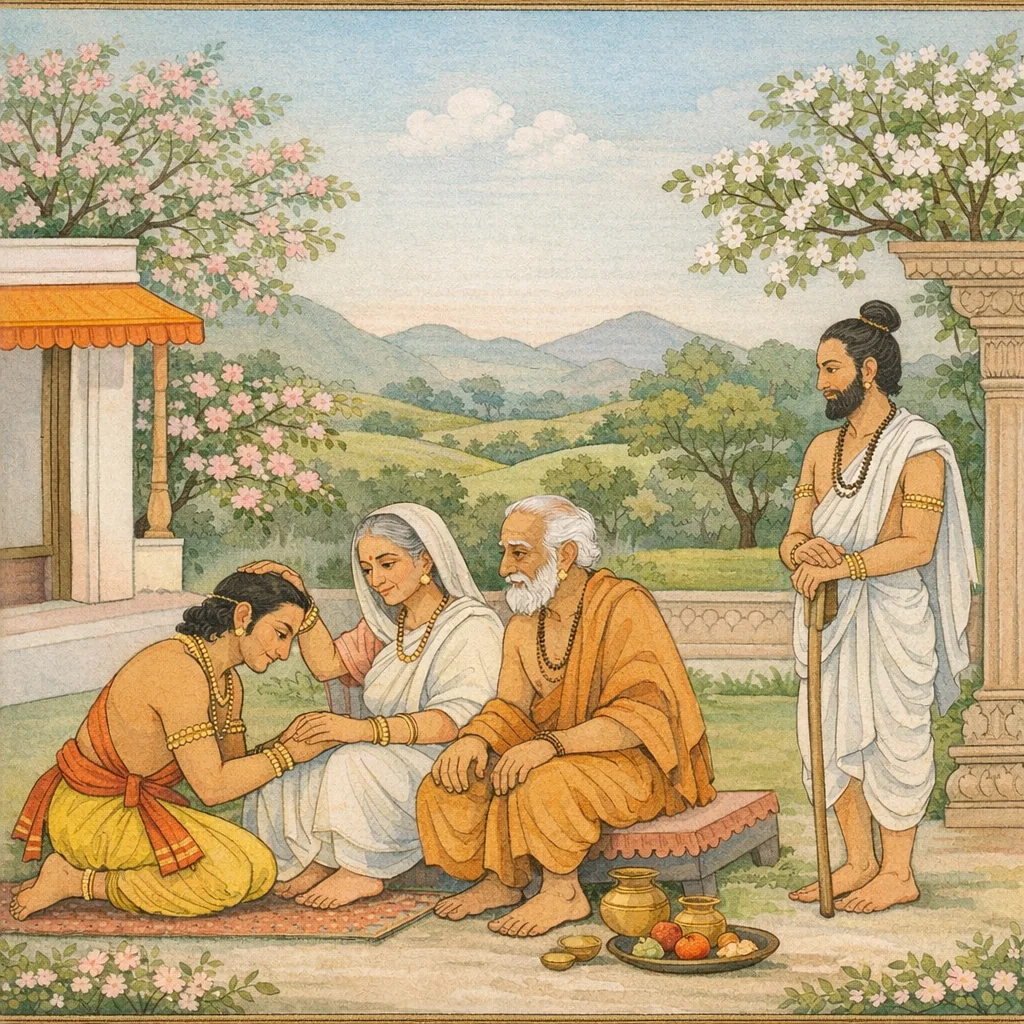
Adhyaya 216
आरण्यकपर्वणि अध्यायः २१६ — इन्द्र-स्कन्द-संमुखता वज्रप्रहारश्च (Indra approaches Skanda; vajra strike and the arising of Viśākha)
Upa-parva: Mārkaṇḍeya-saṃvāda (Skanda–Indra episode context)
Mārkaṇḍeya describes a formidable divine mobilization: planets and subsidiary grahas, sages, the Mothers (Mātṛ-gaṇas), and blazing attendants assemble around Mahāsena (Skanda). Observing uncertain prospects of victory yet desiring success, Indra mounts Airāvata and advances with the gods in a rapid, martial procession marked by banners, armor, and varied weapons. As Indra issues a lion-like challenge, Skanda answers with a sea-like roar; the shock disorients the divine host. Seeing the gods approach with hostile intent, Skanda emits intensified flames that scorch the deva-soldiery, driving them to seek refuge with him rather than with Indra. Abandoned, Indra hurls the vajra at Skanda’s right side; the strike pierces, and from the vajra-impact arises another radiant warrior, Viśākha, described as youthful, golden-armored, and spear-bearing. Confronted by this manifestation, Indra submits with folded hands; Skanda grants him and the host assurance of safety (abhaya), after which the gods celebrate with instruments, signaling restored order and acknowledged supremacy.
Chapter Arc: मार्कण्डेय ऋषि युधिष्ठिर को धर्मव्याध-कौशिक संवाद की कड़ी में देवताओं की गणना (तैंतीस देव) और ‘धर्म’ के सूक्ष्म स्वरूप की पृष्ठभूमि देकर कथा में प्रवेश कराते हैं—जहाँ एक साधारण-सा कसाई असाधारण धर्म-प्रकाशक बनकर खड़ा है। → कौशिक ब्राह्मण धर्मव्याध के घर पहुँचकर उसके आचरण, सत्यशीलता और धर्मज्ञान से चकित होता है। व्याध अपने माता-पिता—दोनों गुरुजनों—का दर्शन कराकर बताता है कि ‘माता-पिता की सेवा’ ही उसकी तपस्या है। ब्राह्मण के मन में प्रश्न उठता है: शूद्र-योनि में जन्मा यह व्यक्ति इतना ऊँचा धर्म कैसे जानता है? → धर्मव्याध अपने पूर्वजन्म का वृत्तांत खोलता है—अकार्य कर बैठने (अनुचित कर्म) से मन की तीव्र पीड़ा, और क्रोधमूर्च्छित ऋषि का शाप: ‘तू क्रूर व्याध होकर शूद्र-योनि में जन्मेगा।’ यही मोड़ बताता है कि पतन का कारण कर्म है, और उत्थान का साधन भी कर्म ही—सेवा, संयम, सत्य। → व्याध स्पष्ट करता है कि ब्राह्मणों का अपराध उसके लिए ‘अनतिक्रमणीय’ है; वह विनय, सेवा और सत्य के बल पर धर्म का उपदेशक बना है। कौशिक को संकेत मिलता है कि धर्म जन्म-आधारित नहीं, आचरण-आधारित है; और गुरु केवल वेदपाठी नहीं—माता-पिता भी प्रत्यक्ष गुरु हैं। → कथा अगले चरण की ओर बढ़ती है—कौशिक के लिए धर्मव्याध आगे और कौन-से सूक्ष्म धर्म-नियम, प्रायश्चित्त और आचरण-मार्ग बताएगा, जिनसे उसका अहं और क्रोध पूर्णतः गल सके?
Shlokas
Verse 1
६:22...8 #::3..7 | आए आप5ह - आठ वसु, ग्यारह रुद्र, बारह आदित्य, इन्द्र और प्रजापति--ये तैंतीस देवता हैं। पजञ्चदर्शाधिकद्विशततमो< ध्याय: धर्मव्याधका कौशिक ब्राह्णको माता-पिताकी सेवाका उपदेश देकर अपने पूर्वजन्मकी कथा कहते हुए व्याध होनेका कारण बताना मार्कण्डेय उवाच गुरुं निवेद्य विप्राय तौ मातापितरावुभौ । पुनरेव स धर्मात्मा व्याधो ब्राह्मणमब्रवीत्
Markandeya said: Having first reported to the Brahmin-teacher about both his mother and father, that righteous-minded hunter again addressed the Brahmin—continuing his instruction on the duty of serving one’s parents and the moral basis of his own way of life.
Verse 2
मार्कण्डेयजी कहते हैं--युधिष्ठिर! इस प्रकार धर्मात्मा व्याधने कौशिक ब्राह्मणको अपने माता-पितारूप दोनों गुरुजनोंका दर्शन कराकर पुनः उससे इस प्रकार कहा -- ३ ॥। प्रवृत्तचक्षुर्जातो 5स्मि सम्पश्य तपसो बलम् । यदर्थमुक्तोडसि तया गच्छ त्वं मिथिलामिति,“ब्राह्मण!” माता-पिताकी सेवा ही मेरी तपस्या है। इस तपस्याका प्रभाव देखिये। मुझे दिव्य-दृष्टि प्राप्त हो गयी है, जिसके कारण उस पतिव्रता देवीने जो सदा पतिकी ही सेवामें संलग्न रहनेवाली, जितेन्द्रिय तथा सत्य एवं सदाचारमें तत्पर है, आपको यह कहकर यहाँ भेजा था कि “आप मिथिलापुरीको जाइये। वहाँ एक व्याध रहता है। वह आपको सब धर्मोका उपदेश करेगा”
Markandeya said: “Yudhishthira, in this way the righteous hunter first showed the Brahmin Kaushika his two teachers in the form of his mother and father, and then spoke again: ‘My inner sight has awakened—behold the power of austerity. The reason that devoted woman told you, “Go to Mithila,” is this: O Brahmin, service to my mother and father is itself my austerity. By the force of that discipline I have gained divine vision. That chaste lady—ever intent on serving her husband, self-controlled, and devoted to truth and good conduct—sent you here saying, “Go to Mithila; there lives a hunter who will instruct you in all the duties of dharma.”’”
Verse 3
पतिशुश्रूषपरया दान्तया सत्यशीलया । मिथिलायां वसेद् व्याध: स ते धर्मान् प्रवक्ष्यति,“ब्राह्मण!” माता-पिताकी सेवा ही मेरी तपस्या है। इस तपस्याका प्रभाव देखिये। मुझे दिव्य-दृष्टि प्राप्त हो गयी है, जिसके कारण उस पतिव्रता देवीने जो सदा पतिकी ही सेवामें संलग्न रहनेवाली, जितेन्द्रिय तथा सत्य एवं सदाचारमें तत्पर है, आपको यह कहकर यहाँ भेजा था कि “आप मिथिलापुरीको जाइये। वहाँ एक व्याध रहता है। वह आपको सब धर्मोका उपदेश करेगा”
Mārkaṇḍeya said: “A devoted wife—ever intent on serving her husband, self-controlled, and steadfast in truth and good conduct—has sent you here with this message: ‘Go to Mithilā. There lives a hunter by trade; he will expound to you the principles of dharma, O brāhmaṇa.’”
Verse 4
ब्राह्मण उवाच पतिव्रताया: सत्याया: शीलाढ्याया यतव्रत । संस्मृत्य वाक््यं धर्मज्ञ गुणवानसि मे मत:,ब्राह्मण बोला--उत्तम व्रतका पालन करनेवाले धर्मज्ञ व्याध! उस सत्यपरायणा और सुशीला पतिव्रता-देवीके वचनोंका स्मरण करके मुझे यह दृढ़ विश्वास हो गया है कि तुम उत्तम गुणोंसे सम्पन्न हो
The brāhmaṇa said: “O disciplined one, remembering the words of that truthful, virtuous, and devoted wife, I have come to a firm conviction: you are a knower of dharma, and in my judgment you are endowed with noble qualities.”
Verse 5
व्याध उवाच यत् तदा त्वं द्विजश्रेष्ठ तयोक्तो मां प्रति प्रभो । दृष्टमेव तया सम्यगेकपत्न्या न संशय:,धर्मव्याधने कहा-<द्धिजश्रेष्ठ! प्रभो! उस पतिव्रता देवीने पहले आपसे मेरे विषयमें जो कुछ कहा है, वह सब ठीक है। इसमें संदेह नहीं कि उसने पातिव्रत्यके प्रभावसे सब कुछ प्रत्यक्ष देखा है
The hunter said: “O best of Brahmins, O revered sir—whatever that devoted wife told you earlier about me is entirely accurate. There is no doubt: by the power of her single-minded fidelity as a chaste wife, she truly perceived it directly and correctly.”
Verse 6
त्ववनुग्रहबुद्धया तु विप्रैतद् दर्शितं मया । वाक्यं च शृणु मे तात यत् ते वक्ष्ये हित॑ द्विज,विप्रवर! आपपर अनुग्रह करनेके विचारसे ही मैंने ये सब बातें आपके सामने रखी हैं। तात! आप मेरी बात सुनिये। ब्रह्म! आपके लिये जो हितकर है वही बात बताऊँगा
The hunter said: “O brāhmaṇa, it is only with the intention of showing you favor that I have set these matters before you. Now listen to my words, dear sir. O best of the twice-born, I will tell you what is truly for your welfare.”
Verse 7
त्वया विनिकृता माता पिता च द्विजसत्तम | अनिसृष्टोडसि निष्क्रान्तो गृहात् ताभ्यामनिन्दित
The hunter said: “O best of Brahmins, you have wronged your mother and your father. Without being released by them, you have gone out from the house—though you are blameless by birth. In matters of dharma, leaving one’s parents without their consent is itself a fault, for service to them is a primary obligation.”
Verse 8
वेदोच्चारणकार्यार्थमयुक्त तत् त्वया कृतम् तव शोकेन वृद्धौ तावन्धी भूती तपस्विनौ
The hunter said: “What you have done is improper. You left for the sake of Vedic recitation and ritual duty, yet because of your grief and neglect those two aged ascetics have become blind—reduced to helplessness.”
Verse 9
द्विजश्रेष्ठ] आपने माता-पिताकी उपेक्षा की है। वेदाध्ययन करनेके लिये उन दोनोंकी आज्ञा लिये बिना ही आप घरसे निकल पड़े हैं। अनिन्द्य ब्राह्मण! यह आपके द्वारा अनुचित कार्य हुआ है। आपके शोकसे ये दोनों बूढ़े एवं तपस्वी माता-पिता अन्धे हो गये हैं ।। तौ प्रसादयितुं गच्छ मा त्वां धर्मोडत्यगादयम् | तपस्वी त्वं महात्मा च धर्मे च निरत: सदा,आप उन्हें प्रसन्न करनेके लिये घर जाइये। ऐसा करनेसे आपका धर्म नष्ट नहीं होगा। आप तपस्वी, महात्मा तथा निरन्तर धर्ममें तत्पर रहनेवाले हैं
The hunter said: “O best of Brahmins, you have neglected your mother and father. Without first obtaining their permission, you left home in order to pursue Vedic study. Blameless Brahmin, this was improper on your part. Because of grief for you, your aged, ascetic parents have even become blind. Therefore go and win their forgiveness and make them content; this will not diminish your dharma. You are an ascetic, a great-souled man, and always devoted to righteousness.”
Verse 10
सर्वमेतदपार्थ ते क्षिप्रं तौ सम्प्रसादय । श्रद्दधस्व मम ब्रह्मन् नान्यथा कर्तुमहसि । गम्यतामग्य विप्रषषे श्रेयस्ते कथयाम्यहम्,परंतु माता-पिताको संतुष्ट न करनेके कारण आपका यह सारा धर्म और व्रत व्यर्थ हो गया है। अतः शीघ्र जाकर उन दोनोंको प्रसन्न कीजिये। ब्रह्मन! मेरी बातपर श्रद्धा कीजिये। इसके विपरीत कुछ न कीजिये। ब्रह्मर्ष! आप अपने घर जाइये और माता-पिताकी सेवा कीजिये। यह मैं आपके लिये परम कल्याणकी बात बता रहा हूँ
The hunter said: “All of this has become fruitless for you. Go quickly and win the full goodwill of those two (your mother and father). Have faith in my words, O brāhmaṇa; you ought not to act otherwise. Go home at once, O brahmarṣi. Serve your parents—this is what I declare to be your highest good.”
Verse 11
ब्राह्मण उवाच यदेतदुक्तं भवता सर्व सत्यमसंशयम् | प्रीतो5स्मि तव भद्र| ते धर्माचारगुणान्वित,ब्राह्मण बोला--धर्म, सदाचार और सदगुणोंसे सम्पन्न व्याध!! आपका भला हो। आपने यह जो कुछ बताया है, सब निःसंदेह सत्य है। मैं आपपर बहुत प्रसन्न हूँ
The Brahmin said: “What you have stated is entirely true, without any doubt. I am pleased with you. Blessings upon you—endowed as you are with dharma, good conduct, and noble qualities.”
Verse 12
व्याध उवाच दैवतप्रतिमो हि त्वं यस्त्वं धर्ममनुव्रत: । पुराणं शाश्ष॒तं दिव्यं दुष्प्राप्पमकृतात्मभि:,धर्मव्याधने कहा--विप्रवर! आप देवताओंके समान हैं; क्योंकि आपने उस धर्ममें मन लगाया है, जो पुरातन, सनातन, दिव्य तथा मनको न जीतनेवाले पुरुषोंके लिये दुर्लभ है
Verse 13
मातापित्रो: सकाशं हि गत्वा त्वं द्विजसत्तम । अलन्द्रितः कुरु क्षिप्रं मातापित्रोर्हि पूजनम् । अत: परमहं धर्म नानन््यं पश्यामि कंचन,द्विजश्रेष्ठी आप माता-पिताके पास जाकर आलस्यरहित हो शीघ्र ही उनकी सेवामें लग जाइये। मैं इससे बढ़कर और कोई धर्म नहीं देखता
Verse 14
ब्राह्मण उवाच इहाहमागतो दिष्ट्या दिष्ट्या मे सज्भतं त्वया । ईदृशा दुर्लभा लोके नरा धर्मप्रदर्शका:,ब्राह्मण बोला--नरश्रेष्ठ! मेरा बड़ा भाग्य था, जो यहाँ आया और सौभाग्यसे ही मुझे आपका संग प्राप्त हो गया। संसारमें आप-जैसे धर्मका मार्ग दिखानेवाले मनुष्य दुर्लभ हैं
Verse 15
एको नरसहस्रेषु धर्मविद् विद्यते न वा । प्रीतो5स्मि तव सत्येन भद्र| ते पुरुषर्षभ,हजारों मनुष्योंमेंसे कोई एक भी धर्मके तत्त्वको जाननेवाला है या नहीं--यह निश्चयपूर्वक नहीं कहा जा सकता। पुरुषर्षभ! आपका कल्याण हो। आज मैं आपके सत्यके कारण आपपर बहुत प्रसन्न हूँ
Verse 16
पतमानोउद्य नरके भवतास्मि समुद्धृतः । भवितव्यमथैवं च यद् दृष्टोईसि मयानघ,अनघ! मैं नरकमें गिर रहा था। आज आपने मेरा उद्धार कर दिया। इस प्रकार जब मुझे आपका दर्शन मिल गया, तब निश्चय ही आपके उपदेशके अनुसार भविष्यमें सब कुछ होगा
“As I was falling today into hell, I have been lifted out by you. And now that I have beheld you, O sinless one, it is certain that things will unfold exactly as you have instructed.”
Verse 17
राजा ययातिर्दाहित्रै: पतितस्तारितो यथा । सद्धिः पुरुषशार्दूल तथाहं भवता द्विज:,राजा ययाति स्वर्गसे गिर गये थे; परंतु उनके उत्तम स्वभाववाले दौतह्ित्रों (पुत्रीके पुत्रों)- ने पुनः उनका उद्धार कर दिया--वे पूर्ववत् स्वर्गलोकमें प्रतिष्ठित हो गये। पुरुषसिंह! इसी प्रकार आपने भी आज मुझ ब्राह्मणको नरकमें गिरनेसे बचाया है
Just as King Yayāti, having fallen from heaven, was rescued by his grandsons (his daughter’s sons) and restored again to the heavenly world, so too, O tiger among men, have you—O twice-born one—saved me today from falling into hell. The speaker frames the listener’s act as a decisive moral intervention: timely help and righteous conduct can reverse a person’s downward course and re-establish them in a higher ethical and spiritual state.
Verse 18
मातापितृभ्यां शुश्रूषां करिष्ये वचनात् तव । नाकृतात्मा वेदयति धर्माधर्मविनिश्चयम्,मैं आपके कहनेके अनुसार माता-पिताकी सेवा करूँगा। जिसका अन्तः:करण शुद्ध नहीं है, वह धर्म-अधर्मके निर्णयको बतला नहीं सकता
At your word, I shall render devoted service to my mother and father. For one whose inner self is not disciplined and purified cannot truly discern or declare the right decision between dharma and adharma.
Verse 19
दुर्जेय: शाश्वतो धर्म: शूद्रयोनौ हि वर्तते । नत्वां शूद्रमहं मन््ये भवितव्यं हि कारणम्,आश्चर्य है कि यह सनातन धर्म, जिसके स्वरूपको समझना अत्यन्त कठिन है, शूद्रयोनिके मनुष्यमें भी विद्यमान है। मैं आपको शूद्र नहीं मानता। आपका जो शूद्रयोनिमें जन्म हो गया है, इसका कोई विशेष कारण होना चाहिये
The brāhmaṇa said: “This eternal dharma is hard to conquer—hard to fathom—and yet it is found even in one born in a Śūdra womb. But I do not regard you as a Śūdra. There must be some deeper cause behind your being born in that condition.”
Verse 20
येन कर्मविशेषेण प्राप्तेयं शूद्रता त्वया । एतदिच्छामि विज्ञातुं तत््वेन हि महामते । कामया ब्रूहि मे सर्व सत्येन प्रयतात्मना,महामते! जिस विशेष कर्मके कारण आपको यह शाूद्रयोनि प्राप्त हुई है, उसे मैं यथार्थरूपसे जानना चाहता हूँ। आप सत्य और पवित्र अन्तःकरणके विश्वासके अनुसार स्वेच्छापूर्वक मुझे सब कुछ बताइये
The brāhmaṇa said: “By what particular deed did you come to attain this condition of śūdra-hood? I wish to know it in its true nature, O wise one. Please tell me everything of your own accord—truthfully, with a disciplined and purified mind.”
Verse 21
व्याध उवाच अनतिक्रमणीया वै ब्राह्मुणा मे द्विजोत्तम | शृणु सर्वमिदं वृत्तं पूर्वदेहे ममानघ,धर्मव्याधने कहा--विप्रवर! मुझे ब्राह्मगोंका अपराध कभी नहीं करना चाहिये। अनघ! मेरे पूर्वजन्मके शरीरद्वारा जो घटना घटित हुई है, वह सब बताता हूँ, सुनिये
The hunter said: “O best of the twice-born, I must never transgress against brāhmaṇas. O sinless one, listen— I shall tell you in full the account of what occurred through my body in a former life.”
Verse 22
अहं हि ब्राह्मण: पूर्वमासं द्विजवरात्मज: । वेदाध्यायी सुकुशलो वेदाज़्ानां च पारग:
The hunter said: “In former times I was indeed a brāhmaṇa, the son of an excellent twice-born. I was a diligent student of the Vedas, highly competent, and one who had crossed to the far shore of Vedic knowledge.”
Verse 23
मैं पूर्वजन्ममें एक श्रेष्ठ ब्राह्मणका पुत्र और वेदाध्ययनपरायण ब्राह्मण था। वेदांगोंका पारंगत विद्वान् माना जाता था। मैं विद्याध्ययनमें अत्यन्त कुशल था ।। आत्मदोषकृतैब्रह्मन्नवस्थामाप्तवानिमाम् । कश्चिद् राजा मम सखा भर्नुर्वेदपरायण:
The hunter said: “O Brāhmaṇa, it is through faults of my own making that I have come to this present condition. A certain king—my friend—named Bhṛṅgu, devoted to the Vedas, was associated with me.”
Verse 24
एतस्मिन्नेव काले तु मृगयां निर्गतो नृप:,ब्रह्म! इसी समय राजा अपने मन्त्रियों तथा प्रधान योद्धाओंके साथ शिकार खेलनेके लिये निकले। उन्होंने एक ऋषिके आश्रमके निकट बहुत-से हिंसक पशुओंका वध किया
At that very time, the king set out for the hunt. Near a sage’s hermitage he killed many fierce animals—an episode that frames royal sport against the ethical tension of violence committed in the vicinity of an ascetic refuge.
Verse 25
सहितो योधमुख्यैश्न मन्सत्रिभिश्न सुसंवृत: । ततो<भ्यहन् मृगांस्तत्र सुबहूनाश्रमं प्रति,ब्रह्म! इसी समय राजा अपने मन्त्रियों तथा प्रधान योद्धाओंके साथ शिकार खेलनेके लिये निकले। उन्होंने एक ऋषिके आश्रमके निकट बहुत-से हिंसक पशुओंका वध किया
The king, accompanied by his chief warriors and closely attended by his ministers, set out for the hunt. There, near a sage’s hermitage, he struck down many wild beasts. The address “O Brahman” frames the account as a moralized narration, hinting at the ethical tension of royal sport conducted in the vicinity of an ascetic refuge.
Verse 26
अथ क्षिप्त: शरो घोरो मयापि द्विजसत्तम । ताडितश्न॒ ऋषिस्तेन शरेणानतपर्वणा,द्विजश्रेष्ठ) तदनन्तर मैंने भी एक भयानक बाण छोड़ा। उसकी गाँठ कुछ झुकी हुई थी। उस बाणसे एक ऋषि मारे गये
Then I too released a dreadful arrow, O best of twice-born. Struck by that arrow—whose joint was slightly bent—an ascetic seer was slain. The moment reveals how a single heedless act, driven by impulse, can become a grave moral fault when it harms the innocent and the spiritually venerable.
Verse 27
भूमौ निपतितो ब्रह्म॒न्नुवाच प्रतिनादयन् । नापराध्याम्यहं किंचित् केन पापमिदं कृतम्,ब्रह्म! बाण लगते ही वे मुनि पृथिवीपर गिर पड़े और अपने आर्तनादसे उस वन्य प्रदेशको गुँजाते हुए बोले, “आह! मैं तो किसीका कोई अपराध नहीं करता हूँ। फिर किसने यह पापकर्म कर डाला?”
Verse 28
मन्वानस्तं मृगं चाहं सम्प्राप्त: सहसा प्रभो । अपश्यं तमृषिं विद्धं शरेणानतपर्वणा,प्रभो! मैंने उन्हें हिंसक पशु समझकर बाण मारा था। अतः सहसा उनके पास जा पहुँचा। वहाँ जाकर देखा कि झुकी हुई गाँठवाले उस बाणसे एक ऋषि घायल होकर धरतीपर पड़े हैं
Thinking him to be a wild beast, I shot an arrow. Then, O lord, I hurried there at once; and on reaching the spot I saw that it was a sage, lying wounded on the ground—pierced by my arrow whose joints were not straight.
Verse 29
अकार्यकरणाच्चापि भृशं मे व्यथितं मन: । तमुग्रतपसं विप्र॑ं निष्टनन्तं महीतले,यह न करनेयोग्य पाप कर डालनेके कारण मेरे मनमें उस समय बड़ी पीड़ा हुई। वे उग्र तपस्वी ब्राह्मण उस समय धरतीपर पड़े-पड़े कराह रहे थे
“Because I had done what ought not to be done, my mind was deeply pained. I saw that austere brāhmaṇa, fierce in his penance, lying on the ground and groaning— and remorse seized me for the sinful act I had committed.”
Verse 30
अजानता कृतमिदं मयेत्यहमथाब्रुवम् क्षन्तुमहसि मे सर्वमिति चोक्तो मया मुनि:,मैंने साहस करके उन मुनीश्वरसे कहा--“भगवन्! अनजानमें मेरे द्वारा यह अपराध बन गया है। अतः आप यह सब क्षमा कर दें”
The hunter said: “Then I spoke up, admitting, ‘This was done by me unknowingly. Please forgive me for all of it.’ Thus I addressed the sage, taking responsibility while pleading for pardon for an unintended wrong.”
Verse 31
ततः प्रत्यब्रवीद् वाक्यमृषिर्मा क्रोधमूर्च्छित: । व्याधस्त्वं भविता क्रूर शूद्रयोनाविति द्विज,मेरी बात सुनकर ऋषि क्रोधसे व्याकुल हो गये और उत्तर देते हुए बोले--“निर्दयी ब्राह्मण! तू शूद्रयोनिमें जन्म लेकर व्याध होगा"
Then the sage, overcome by a surge of anger, replied with these words: “Cruel one! You shall be born in a Śūdra womb and become a hunter-butcher, O twice-born.” The verse highlights how wrath can distort judgment and turn speech into a weapon, setting in motion a karmic consequence framed as a curse.
Verse 215
इति श्रीमहाभारते वनपर्वणि मार्कण्डेयसमास्यापर्वणि ब्राह्मणव्याधसंवादे पजञ्चदशाधिकद्वधिशततमो< ध्याय:,इस प्रकार श्रीमहाभारत वनपर्वके अन्तर्गत मार्कण्डेयसगास्यापर्वमें ब्राह्मण- व्याधसंवादविषयक दो सौ पंद्रहवाँ अध्याय पूरा हुआ
Thus, in the Śrī Mahābhārata, within the Vana Parva, in the section connected with Mārkaṇḍeya, in the dialogue between the Brāhmaṇa and the hunter (Vyādha), the two-hundred-and-fifteenth chapter concludes. This closing colophon signals the completion of the teaching episode, framing the Vyādha’s ethical instruction as an authoritative part of the epic’s discourse on dharma in everyday life.
Verse 233
संसर्गाद् धनुषि श्रेष्ठस्ततो 5हमभवं द्विज । ब्राह्मण! अपने ही दोषोंके कारण मुझे इस दुरवस्थामें आना पड़ा है। पूर्वजन्ममें जब मैं ब्राह्मण था, एक धरनुर्वेद-परायण राजाके साथ मेरी मित्रता हो गयी थी। उनके संसर्गसे मैं धनुर्वेदकी शिक्षा लेने लगा और धनुष चलानेकी कलामें मैंने श्रेष्ठ योग्यता प्राप्त कर ली
The Hunter said: “Through association I became foremost in the use of the bow, O twice-born. O Brahmin, it is because of my own faults that I have fallen into this wretched condition. In a former birth, when I was a Brahmin, I became friends with a king devoted to the science of archery. By keeping his company I took up training in that discipline, and I attained exceptional skill in the art of shooting the bow.”
Frequently Asked Questions
The tension lies between coercive assertion of authority (Indra’s armed advance and vajra deployment) and the ethical restoration of order through refuge and protection (the gods seeking śaraṇa and Skanda granting abhaya after demonstrating superior force).
Power is not self-validating: legitimacy is stabilized when strength is paired with restraint and protection; the episode models how dominance can transition into security-giving governance rather than continued escalation.
No explicit phalaśruti is present in the provided verses; the chapter’s meta-function is exemplum-based—teaching through narrated precedent within Mārkaṇḍeya’s discourse rather than through a stated reward formula.