Adhyaya 115
Akṛtavraṇa’s Account Begins: Gādhi–Satyavatī–Ṛcīka and the Bhārgava Lineage Prelude
Upa-parva: Rāma-Jāmadagnya Itihāsa (Paraśurāma Lineage Narrative) — Exile-Era Sage Discourse Unit
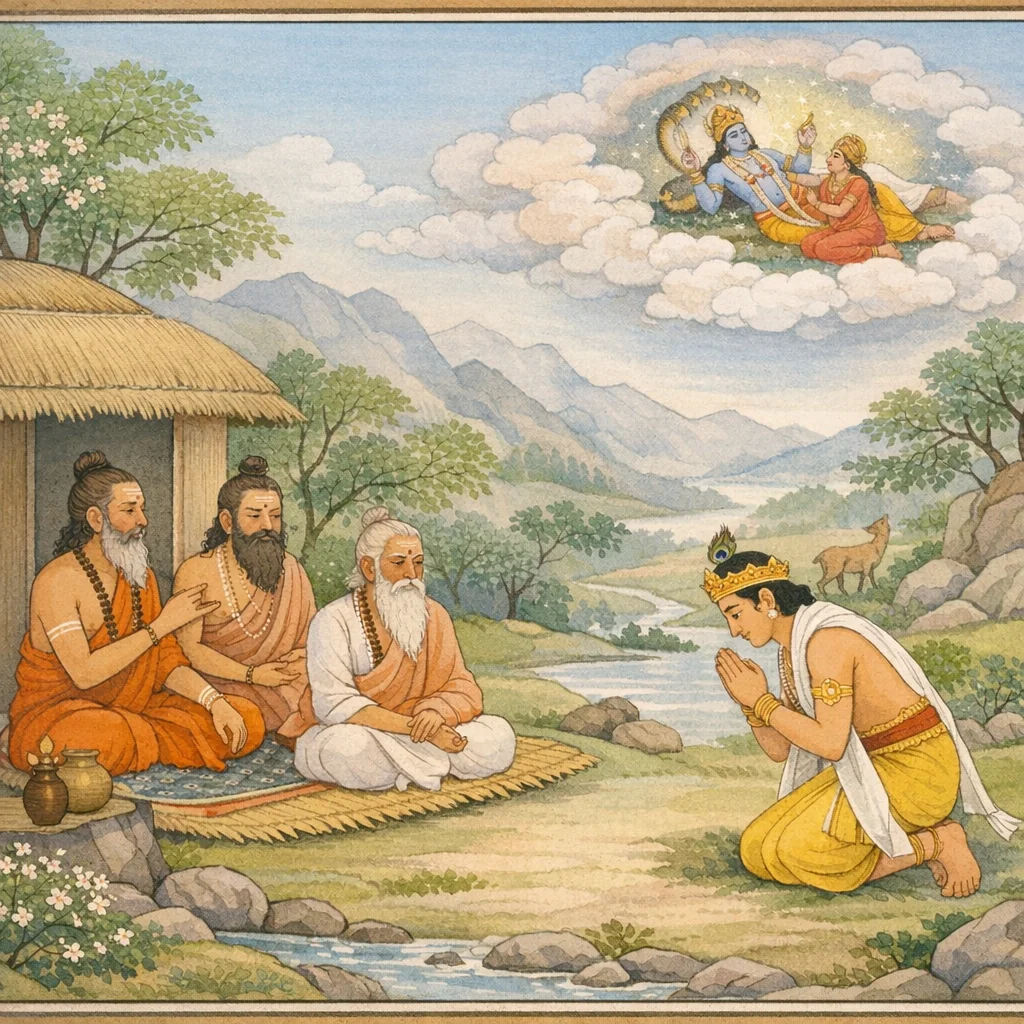
Vaiśaṃpāyana reports that the king (Yudhiṣṭhira) spends a night among ascetics and honors them with his brothers. Lomaśa identifies the assembled sages (Bhṛgus, Aṅgirases, Vasiṣṭhas, Kāśyapas). Yudhiṣṭhira approaches, offers salutations, and questions Akṛtavraṇa—an attendant of Rāma Jāmadagnya—asking when the Bhārgava will be seen. Akṛtavraṇa notes that ascetics see Rāma on the eighth and fourteenth lunar days, and that the upcoming night leads to caturdaśī. Yudhiṣṭhira then requests a historical explanation for how Rāma defeated the kṣatriyas, prompting Akṛtavraṇa to begin a lineage narrative: in Kānyakubja, King Gādhi goes to the forest; his daughter Satyavatī is sought by the Bhārgava Ṛcīka. Gādhi stipulates a bride-price of a thousand swift pale horses with dark ears; Ṛcīka agrees and petitions Varuṇa, who provides the horses, giving rise to the fame of Aśvatīrtha. Satyavatī is given in marriage; Bhṛgu visits and grants a boon linked to puṃsavana in which Satyavatī and her mother are to embrace different trees (aśvattha and udumbara). A reversal occurs; Bhṛgu declares the consequence—Satyavatī’s son will exhibit kṣatriya conduct though Brahmin-born, while her mother’s son will be a kṣatriya with Brahmin discipline. Satyavatī petitions that the effect shift to her grandson; Bhṛgu assents. Jamadagni is born to Satyavatī, endowed with brilliance; he grows through Vedic study, and the dhanurveda and fourfold weapon-sciences are said to manifest in him—setting the preconditions for Paraśurāma’s later career.
Chapter Arc: लोमश के तीर्थयात्रा-प्रसंग में युधिष्ठिर महेन्द्राचल के तपोवन में पहुँचते हैं, जहाँ अकृतव्रण के माध्यम से परशुराम-परंपरा और कार्तवीर्योपाख्यान का द्वार खुलता है। → लोमश युधिष्ठिर को वहाँ उपस्थित महर्षियों का परिचय कराते हैं; युधिष्ठिर विनयपूर्वक प्रणाम कर अकृतव्रण से परशुराम के पूर्ववृत्त का प्रत्यक्ष-वृत्तांत पूछते हैं। अकृतव्रण संकेत देता है कि तपस्वी परशुराम अमुक तिथि-रात्रि के बाद दर्शन देंगे—प्रतीक्षा के साथ कथा का दबाव बढ़ता है। → अकृतव्रण कार्तवीर्य के अत्याचार से क्षुब्ध देवताओं और महाव्रती ऋषियों का विष्णु के पास जाना तथा धर्म-रक्षा हेतु दिव्य हस्तक्षेप की भूमिका सुनाते हैं—यहीं से परशुराम के अवतरण/प्रचंड प्रतिशोध की कथा का केंद्र बनता है। → कथा ऋचीक-मुनि, गाधि-कन्या के विवाह-शुल्क (हजार अश्व) और वरुण से याचना जैसी पूर्वपीठिका को स्थापित कर देती है, जिससे आगे के उपाख्यान के कारण-कार्य स्पष्ट हो जाते हैं। → परशुराम के प्रत्यक्ष दर्शन और कार्तवीर्य-वध/क्षत्रिय-निग्रह की निर्णायक घटनाएँ अगले प्रवाह में सुनाई जाएँगी—युधिष्ठिर प्रतीक्षा में रह जाते हैं।
Shlokas
Verse 1
हि >> आय न [हुक हि 7 आम पञ्चदशाधिकशततमो< ध्याय: अकृतव्रणके द्वारा युधिष्ठिससे परशुरामजीके उपाख्यानके प्रसंगमें ऋचीक मुनिका गाधिकन्याके साथ विवाह और भूगुऋषिकी कृपासे जमदग्निकी उत्पत्तिका वर्णन वैशम्पायन उवाच स तत्र तामुषित्वैकां रजनीं पृथिवीपति: । तापसानां परं चक्रे सत्कारं भ्रातृभि: सह,वैशम्पायनजी कहते हैं--जनमेजय! उस पर्वतपर एक रात निवास करके भाइयोंसहित राजा युधिष्ठिरने तपस्वी मुनियोंका बहुत सत्कार किया
Vaiśampāyana said: After spending a single night there, the lord of the earth (King Yudhiṣṭhira), together with his brothers, offered the ascetics the highest hospitality. The episode underscores the king’s commitment to dharma in exile—honouring spiritual discipline and serving the righteous even amid personal hardship.
Verse 2
लोमशस्तस्य तान् सर्वानाचख्यौ तत्र तापसान् | भगूनज्विरसश्वैव वसिष्ठानथ काश्यपान्,लोमशजीने युधिष्ठिस्से उन सभी तपस्वी महात्माओंका परिचय कराया। उनमें भृगु, अंगिरा, वसिष्ठ तथा कश्यपगोत्रके अनेक संत महात्मा थे
Vaiśampāyana said: There, Lomaśa introduced to him all those ascetic sages—those of the lineages of Bhṛgu, Aṅgiras, Vasiṣṭha, and Kāśyapa. The scene underscores the reverence due to realized seers and the importance of recognizing spiritual authority through venerable traditions.
Verse 3
तान् समेत्य स राजर्षिरभिवाद्य कृताज्जलि: । रामस्यानुचरं वीरमपृच्छदकृतव्रणम्,उन सबसे मिलकर राजर्षि युधिष्ठिरने हाथ जोड़कर उन्हें प्रणाम किया और परशुरामजीके सेवक वीरवर अकृतत्रणसे पूछा--“भगवान् परशुरामजी इन तपस्वी महात्माओंको कब दर्शन देंगे? उसी निमित्तसे मैं भी उन भगवान् भार्गवका दर्शन करना चाहता हूँ!
Vaiśaṃpāyana said: Having met them all, the royal sage (Yudhiṣṭhira) bowed with joined palms and respectfully questioned the heroic Akṛtavraṇa, attendant of Rāma (Paraśurāma): “When will Lord Paraśurāma grant his audience to these ascetic great-souled ones? For that very purpose I too wish to behold that divine Bhārgava.”
Verse 4
कदा तु रामो भगवांस्तापसान् दर्शयिष्यति । तेनैवाहं प्रसंगेन द्रष्टमिच्छामि भार्गवम्,उन सबसे मिलकर राजर्षि युधिष्ठिरने हाथ जोड़कर उन्हें प्रणाम किया और परशुरामजीके सेवक वीरवर अकृतत्रणसे पूछा--“भगवान् परशुरामजी इन तपस्वी महात्माओंको कब दर्शन देंगे? उसी निमित्तसे मैं भी उन भगवान् भार्गवका दर्शन करना चाहता हूँ!
Vaishampayana said: “When will the venerable Rama (Parashurama) grant his audience to these ascetic sages? On that very pretext, I too wish to behold that divine Bhargava.”
Verse 5
अकृतव्रण उवाच आयानेवासि विदितो रामस्य विदितात्मन: । प्रीतिस्त्वयि च रामस्य क्षिप्रं त्वां दर्शयिष्यति,अकृतव्रणने कहा--राजन! आत्मज्ञानी परशुरामजीको पहले ही यह ज्ञात हो गया था कि आप आ रहे हैं। आपपर उनका बहुत प्रेम है, अतः वे शीघ्र ही आपको दर्शन देंगे। ये तपस्वीलोग प्रत्येक चतुर्दशी और अष्टमीको परशुरामजीका दर्शन करते हैं। आजकी रात बीत जानेपर कल सबेरे चतुर्दशी हो जायगी
Akṛtavraṇa said: “O king, the self-knowing Rāma (Paraśurāma) has already learned that you are on your way. He bears great affection for you; therefore he will soon grant you his audience.”
Verse 6
चतुर्दशीमष्टमीं च राम॑ पश्यन्ति तापसा: | अस्यां रात्र्यां व्यतीतायां भवित्री श्वश्चतुर्दशी,अकृतव्रणने कहा--राजन! आत्मज्ञानी परशुरामजीको पहले ही यह ज्ञात हो गया था कि आप आ रहे हैं। आपपर उनका बहुत प्रेम है, अतः वे शीघ्र ही आपको दर्शन देंगे। ये तपस्वीलोग प्रत्येक चतुर्दशी और अष्टमीको परशुरामजीका दर्शन करते हैं। आजकी रात बीत जानेपर कल सबेरे चतुर्दशी हो जायगी
Akṛtavraṇa said: “O Rāma, these ascetics behold Paraśurāma on every fourteenth lunar day and on the eighth. When this night has passed, tomorrow morning will be the fourteenth (caturdaśī).”
Verse 7
युधिछिर उवाच भवाननुगतो रामं॑ जामदग्न्यं महाबलम् । प्रत्यक्षदर्शी सर्वस्य पूर्ववृत्तस्य कर्मण:,युधिष्ठिरने पूछा--मुने! आप महाबली परशुरामजीके अनुगत भक्त हैं। उन्होंने पहले जो-जो कार्य किये हैं, उन सबको आपने प्रत्यक्ष देखा है
Yudhiṣṭhira said: “You are a devoted follower of Rāma Jāmadagnya, the mighty one. You have personally witnessed all of his deeds as they unfolded in the past.”
Verse 8
स भवान् कथयत्वद्य यथा रामेण निर्जिता: । आहवे क्षत्रिया: सर्वे कथं केन च हेतुना,अतः हम आपसे यह जानना चाहते हैं कि परशुरामजीने किस प्रकार और किस कारणसे समस्त क्षत्रियोंकों युद्धमें पपाजित किया था। आप वह सब वृत्तान्त आज मुझे बताइये
Yudhiṣṭhira said: “Pray tell me today how all the Kṣatriyas were defeated in battle by Rāma (Paraśurāma). In what manner did it happen, and for what cause? I wish to hear that entire account from you.”
Verse 9
अकृतव्रण उवाच हन्त ते कथयिष्यामि महदाख्यानमुत्तमम् | भगूणां राजशार्दूल वंशे जातस्य भारत,अकृतब्रणने कहा--भरतकुलभूषण नृपश्रेष्ठ युधिष्ठिर! भूगुवंशी परशुरामजीकी कथा बहुत बड़ी और उत्तम है, मैं आपसे उसका वर्णन करूँगा
Akṛtavraṇa said: “Come, I shall recount to you a great and excellent legend—O tiger among kings, O Bhārata—concerning one born in the lineage of the Bhṛgus.”
Verse 10
रामस्य जामदग्न्यस्य चरितं देवसम्मितम् | हैहयाधिपतेश्नैव कार्तवीर्यस्य भारत,भारत! जमदग्निकुमार परशुराम तथा हैहयराज कार्तवीर्यका चरित्र देवताओंके तुल्य है
Akṛtavraṇa said: “O Bhārata, the life-story of Rāma Jāmadagnya (Paraśurāma) is comparable to that of the gods; and so too is the celebrated account of Kārtavīrya, the lord of the Haihayas.”
Verse 11
रामेण चार्जुनो नाम हैहयाधिपतिहत: । तस्य बाहुशतान्यासंस्त्रीणि सप्त च पाण्डव,पाण्डुनन्दन! परशुरामजीने अर्जुन नामसे प्रसिद्ध जिस हैहयराज कार्तवीर्यका वध किया था, उसके एक हजार भुजाएँ थीं
Akṛtavraṇa said: “By Rāma (Paraśurāma) there was slain a king of the Haihayas named Arjuna. O Pāṇḍava, son of Pāṇḍu, he possessed hundreds—indeed a thousand—arms.”
Verse 12
दत्तात्रेयप्रसादेन विमानं काउ्चनं तथा । ऐश्वर्य सर्वभूतेषु पृथिव्यां पृथिवीपते,पृथ्वीपते! श्रीदत्तात्रयजीकी कृपासे उसे एक सोनेका विमान मिला था और भूतलके सभी प्राणियोंपर उसका प्रभुत्व था
Akṛtavraṇa said: “By the grace of Dattātreya, he obtained a golden aerial chariot; and, O lord of the earth, he came to possess sovereignty over all beings upon the earth.”
Verse 13
अव्याहतगतिकश्नैव रथस्तस्य महात्मन: । रथेन तेन तु सदा वरदानेन वीर्यवान्,महामना कार्तवीर्यके रथकी गतिको कोई भी रोक नहीं सकता था। उस रथ और वरके प्रभावसे शक्तिसम्पन्न हुआ कार्तवीर्य अर्जुन सब ओर घूमकर सदा देवताओं, यक्षों तथा ऋषियोंको रौंदता फिरता था और सम्पूर्ण प्राणियोंकों भी सब प्रकारसे पीड़ा देता था
Akṛtavraṇa said: “The chariot of that great-souled one moved with an unhindered course—none could check its speed. Empowered by that chariot and by the boon that had been granted, the mighty and high-minded Kārtavīrya (Arjuna) ranged everywhere, trampling even gods, yakṣas, and ṛṣis, and in every way afflicting all living beings.”
Verse 14
मर्मर्द देवान् यक्षांश्व ऋषीं श्वैव समन्तत: । भूतांश्नैव स सर्वास्तु पीडयामास सर्वतः,महामना कार्तवीर्यके रथकी गतिको कोई भी रोक नहीं सकता था। उस रथ और वरके प्रभावसे शक्तिसम्पन्न हुआ कार्तवीर्य अर्जुन सब ओर घूमकर सदा देवताओं, यक्षों तथा ऋषियोंको रौंदता फिरता था और सम्पूर्ण प्राणियोंकों भी सब प्रकारसे पीड़ा देता था
Akṛtavraṇa said: Empowered by his chariot’s might, Kārtavīrya Arjuna ranged everywhere, crushing the gods, the Yakṣas, and the seers on all sides; indeed, he tormented all beings in every way. The verse underscores how unchecked power, even when divinely aided, can turn into oppression and adharma when used to harm the world rather than protect it.
Verse 15
ततो देवा: समेत्याहु#षयश्न महाव्रता: । देवदेवं सुरारिघ्नं विष्णुं सत्यपराक्रमम्,कार्तवीर्यका ऐसा अत्याचार देख देवता तथा महान् व्रतका पालन करनेवाले ऋषि मिलकर दैत्योंका विनाश करनेवाले सत्यपराक्रमी देवाधिदेव भगवान् विष्णुके पास जा इस प्रकार बोले--“भगवन्! आप समस्त प्राणियोंकी रक्षाके लिये कृतवीर्यकुमार अर्जुनका वध कीजिये।” एक दिन शक्तिशाली हैहयराजने दिव्य विमानद्वारा शचीके साथ क्रीड़ा करते हुए देवराज इन्द्रपर आक्रमण किया। भारत! तब भगवान् विष्णुने कार्तवीर्य अर्जुनका नाश करनेके सम्बन्धमें इन्द्रके साथ विचार-विनिमय किया
Then the gods, together with great sages steadfast in their vows, assembled and addressed Viṣṇu—the God of gods, the slayer of the enemies of the celestials, whose prowess is true and unfailing. They appealed to him to protect living beings by putting an end to the oppression caused by Kārtavīrya Arjuna. In this narrative setting, the plea frames divine intervention as an ethical necessity: when power turns into tyranny and threatens cosmic order, the guardians of dharma seek the Lord’s corrective action rather than private vengeance.
Verse 16
कार्तवीर्यका ऐसा अत्याचार देख देवता तथा महान् व्रतका पालन करनेवाले ऋषि मिलकर दैत्योंका विनाश करनेवाले सत्यपराक्रमी देवाधिदेव भगवान् विष्णुके पास जा इस प्रकार बोले--“भगवन्! आप समस्त प्राणियोंकी रक्षाके लिये कृतवीर्यकुमार अर्जुनका वध कीजिये।” एक दिन शक्तिशाली हैहयराजने दिव्य विमानद्वारा शचीके साथ क्रीड़ा करते हुए देवराज इन्द्रपर आक्रमण किया। भारत! तब भगवान् विष्णुने कार्तवीर्य अर्जुनका नाश करनेके सम्बन्धमें इन्द्रके साथ विचार-विनिमय किया
Akṛtavraṇa said: Seeing such oppression by the sons of Kārtavīrya, the gods and the great vow-observing sages assembled and approached Lord Viṣṇu—divine, unfailing in valor, and the destroyer of the Daityas—and petitioned him: “O Lord, for the protection of all living beings, slay Arjuna, the son of Kṛtavīrya.” Once, the powerful Haihaya king, sporting with Śacī in a celestial chariot, even launched an attack upon Indra, king of the gods. O Bhārata, then Lord Viṣṇu consulted with Indra about bringing about the destruction of Kārtavīrya Arjuna—framing divine intervention as a response to tyranny and a safeguard of cosmic order.
Verse 17
भगवन् भूतरक्षार्थमर्जुनं जहि वै प्रभो । विमानेन च दिव्येन हैहयाधिपति: प्रभु: १६ ।। शचीसहायं क्रीडन्तं धर्षषामास वासवम् | ततस्तु भगवान् देव: शक्रेण सहितस्तदा । कार्तवीर्यविनाशार्थ मन्त्रयामास भारत,कार्तवीर्यका ऐसा अत्याचार देख देवता तथा महान् व्रतका पालन करनेवाले ऋषि मिलकर दैत्योंका विनाश करनेवाले सत्यपराक्रमी देवाधिदेव भगवान् विष्णुके पास जा इस प्रकार बोले--“भगवन्! आप समस्त प्राणियोंकी रक्षाके लिये कृतवीर्यकुमार अर्जुनका वध कीजिये।” एक दिन शक्तिशाली हैहयराजने दिव्य विमानद्वारा शचीके साथ क्रीड़ा करते हुए देवराज इन्द्रपर आक्रमण किया। भारत! तब भगवान् विष्णुने कार्तवीर्य अर्जुनका नाश करनेके सम्बन्धमें इन्द्रके साथ विचार-विनिमय किया
Akṛtavraṇa said: “O Blessed Lord, for the protection of all beings, slay Arjuna (Kārtavīrya), O Master. For the mighty lord of the Haihayas, riding a divine aerial car, once assaulted Vāsava (Indra) while he was sporting with Śacī. Then the divine Lord, together with Śakra, deliberated, O Bhārata, on the means to bring about Kārtavīrya’s destruction.”
Verse 18
यत् तद् भूतहितं कार्य सुरेन्द्रेण निवेदितम् । सम्प्रतिश्रुत्य तत् सर्व भगवॉल्लोकपूजित:
That deed which was for the welfare of all beings, and which had been proposed by Indra, the Lord—revered and worshipped by the worlds—accepted in full by giving his assent and promise.
Verse 19
एतस्मिन्नेव काले तु पृथिव्यां पृथिवीपति:,इसी समय इस भूतलपर कान्यकुब्जदेशमें एक महाबली महाराज शासन करते थे जो गाधिके नामसे विख्यात थे। वे राजधानी छोड़कर वनमें गये और वहीं रहने लगे। उनके वनवासकालमें ही एक कन्या उत्पन्न हुई जो अप्सराके समान सुन्दरी थी। भारत! विवाहके योग्य होनेपर भृगुपुत्र ऋचीक मुनिने उसका वरण किया
Akṛtavraṇa said: “At that very time, on the earth, there ruled in the land of Kānyakubja a mighty king renowned by the name Gādhi. Leaving his capital behind, he went to the forest and lived there. During his period of forest-dwelling a daughter was born—beautiful like an apsaras. O Bhārata, when she came of marriageable age, the sage Ṛcīka, son of Bhṛgu, chose her as his bride.”
Verse 20
कान्यकुब्जे महानासीत् पार्थिव: सुमहाबल: । गाधीति विश्रुतो लोके वनवासं जगाम ह,इसी समय इस भूतलपर कान्यकुब्जदेशमें एक महाबली महाराज शासन करते थे जो गाधिके नामसे विख्यात थे। वे राजधानी छोड़कर वनमें गये और वहीं रहने लगे। उनके वनवासकालमें ही एक कन्या उत्पन्न हुई जो अप्सराके समान सुन्दरी थी। भारत! विवाहके योग्य होनेपर भृगुपुत्र ऋचीक मुनिने उसका वरण किया
In Kānyakubja there once ruled a mighty king of great strength, a sovereign renowned in the world by the name Gādhi. Renouncing the life of the capital, he went to dwell in the forest. The verse sets the stage for a lineage narrative: a powerful ruler turns toward austerity and forest-dwelling, a shift that frames later events in terms of restraint, renunciation, and the moral weight of choices made by kings and sages alike.
Verse 21
वने तु तस्य वसत: कन्या जज्ञेडप्सर:समा | ऋचीको भार्गवस्तां च वरयामास भारत,इसी समय इस भूतलपर कान्यकुब्जदेशमें एक महाबली महाराज शासन करते थे जो गाधिके नामसे विख्यात थे। वे राजधानी छोड़कर वनमें गये और वहीं रहने लगे। उनके वनवासकालमें ही एक कन्या उत्पन्न हुई जो अप्सराके समान सुन्दरी थी। भारत! विवाहके योग्य होनेपर भृगुपुत्र ऋचीक मुनिने उसका वरण किया
Akṛtavraṇa said: While he was living in the forest, a daughter was born to him, beautiful like an apsaras. O Bhārata, when she came of marriageable age, the Bhārgava sage Ṛcīka chose her as his bride. The episode frames a royal household’s transition into forest-dwelling and then into a dharmic marriage alliance, where a sage’s lawful seeking of a bride becomes the pivot for later moral and genealogical consequences.
Verse 22
तमुवाच ततो गाधिर्त्राह्मणं संशितव्रतम् । उचितं नः कुले किंचित् पूर्वर्यत् सम्प्रवर्तितम्,उस समय राजा गाधिने कठोर व्रतका पालन करनेवाले ब्रह्मर्षि ऋचीकसे कहा -- द्विजश्रेष्ठ! हमारे कुलमें पूर्वजोंने जो कुछ शुल्क लेनेका नियम चला रखा है, उसका पालन करना हमलोगोंके लिये भी उचित है। अतः आप यह जान लें कि इस कन्याके लिये एक सहसख्र वेगशाली अश्व शुल्करूपमें देने पड़ेंगे, जिनके शरीरका रंग तो सफेद और पीला मिला हुआ-सा और कान एक ओरसे काले रंगके हों
Then King Gādhi addressed the Brahmin of firm and disciplined vows: “Whatever custom our forefathers established in our lineage is proper for us to uphold as well. Therefore understand this: for this maiden, a bride-price must be given—one thousand swift horses, whose bodies are of a whitish-yellow hue, and whose ears are black on one side.”
Verse 23
एकत: श्यामकर्णानां पाण्डुराणां तरस्विनाम् । सहसतं वाजिनां शुल्कमिति विद्धि द्विजोत्तम,उस समय राजा गाधिने कठोर व्रतका पालन करनेवाले ब्रह्मर्षि ऋचीकसे कहा -- द्विजश्रेष्ठ! हमारे कुलमें पूर्वजोंने जो कुछ शुल्क लेनेका नियम चला रखा है, उसका पालन करना हमलोगोंके लिये भी उचित है। अतः आप यह जान लें कि इस कन्याके लिये एक सहसख्र वेगशाली अश्व शुल्करूपमें देने पड़ेंगे, जिनके शरीरका रंग तो सफेद और पीला मिला हुआ-सा और कान एक ओरसे काले रंगके हों
Akṛtavraṇa said: “Know this, O best of Brahmins: the bride-price is a thousand swift horses—pale in color, with one ear dark.” In context, the king insists that ancestral custom regarding the śulka (bride-price) must be upheld, presenting tradition as an ethical obligation even when the demand is severe.
Verse 24
न चापि भगवान् वाच्यो दीयतामिति भार्गव । देया मे दुहिता चैव त्वद्विधाय महात्मने,'भगुनन्दन! आप कोई निन्दनीय तो हैं नहीं, यह शुल्क चुका दीजिये, फिर आप-जैसे महात्माको मैं अवश्य अपनी कन्या ब्याह दूँगा"
Akṛtavraṇa said: “Nor should a venerable man like you be spoken to in a demeaning way—‘Pay it!’ O Bhārgava. Once the due bride-price is given, I will certainly give my daughter in marriage to a great-souled man such as you.”
Verse 25
ऋचीक उवाच एकत: श्यामकर्णाना पाण्डुराणां तरस्विनाम् | दास्याम्यश्वसहस्ं ते मम भार्या सुतास्तु ते,ऋचीक बोले--राजन्! मैं आपको एक ओरसे श्याम कर्णवाले पाण्डुरंगके वेगशाली अश्व एक हजारकी संख्यामें अर्पित करूँगा। आपकी पुत्री मेरी धर्मपत्नी बने
R̥cīka said: “O king, on the one hand I shall present to you a thousand swift horses—pale in color, with dark ears. In return, let your daughter become my lawful wife.”
Verse 26
अकृतव्रण उवाच स तथेति प्रतिज्ञाय राजन् वरुणमब्रवीत् । एकत: श्यामकर्णानां पाण्डुराणां तरस्विनाम्
Akṛtavraṇa said: “So be it.” Having thus pledged, he addressed King Varuṇa: “On one side, there are the swift and powerful ones—some with dark ears, others pale….”
Verse 27
सहस्र॑ं वाजिनामेकं शुल्कार्थ मे प्रदीयताम् तस्मै प्रादात् सहस््न॑ं वै वाजिनां वरुणस्तदा
Akṛtavraṇa said: “Let a single thousand horses be given to me as the bride-price.” Thereupon Varuṇa, at that time, indeed granted him a thousand horses. The episode underscores how worldly transactions—here, the formal ‘price’ connected with marriage—are fulfilled through divine patronage, and how a pledged demand, once accepted, is met without deceit.
Verse 28
अकृतबत्रण कहते हैं--राजन्! इस प्रकार शुल्क देनेकी प्रतिज्ञा करके ऋचीक मुनिने वरुणके पास जाकर कहा--'देव! मुझे शुल्कमें देनेके लिये एक हजार ऐसे अश्व प्रदान करें, जिनके शरीरका रंग पाण्डुर और कान एक ओरसे श्याम हों। साथ ही वे सभी अश्व तीव्रगामी होने चाहिये।। उस समय वरुणने उनकी इच्छाके अनुसार एक हजार श्यामकर्ण घोड़े दे दिये ।। तदश्वतीर्थ विख्यातमुत्थिता यत्र ते हया: । गज्जायां कान्यकुब्जे वै ददौ सत्यवतीं तदा,जहाँ वे श्यामकर्ण घोड़े प्रकट हुए थे, वह स्थान अश्वतीर्थके नामसे विख्यात हुआ। तत्पश्चात् राजा गाधिने शुल्करूपमें एक हजार श्यामकर्ण घोड़े प्राप्त करके गंगातटपर कान्यकुब्ज नगरमें ऋचीक मुनिको अपनी पुत्री सत्यवती ब्याह दी! उस समय देवता बराती बने थे। देवता उन सबको देखकर वहाँसे चले गये
Akṛtavraṇa said: “O King, having thus pledged the bride-price, the sage Ṛcīka went to Varuṇa and said, ‘O god, grant me as the bride-price a thousand horses—pale-bodied, with one ear dark, and all swift of pace.’ Varuṇa, in accordance with his wish, bestowed a thousand horses with dark ears. The place where those horses manifested became renowned as Aśvatīrtha. Thereafter King Gādhi, having received the thousand dark-eared horses as the bride-price, gave his daughter Satyavatī in marriage to the sage Ṛcīka at Kānyakubja on the bank of the Gaṅgā. On that occasion the gods themselves formed the wedding procession; and after beholding all, they departed.”
Verse 29
ततो गाधि: सुतां चास्मै जन्याश्वासन् सुरास्तदा | लब्ध्वा हयसहसंर॑ तु तांश्न दष्टवा दिवौकस:,जहाँ वे श्यामकर्ण घोड़े प्रकट हुए थे, वह स्थान अश्वतीर्थके नामसे विख्यात हुआ। तत्पश्चात् राजा गाधिने शुल्करूपमें एक हजार श्यामकर्ण घोड़े प्राप्त करके गंगातटपर कान्यकुब्ज नगरमें ऋचीक मुनिको अपनी पुत्री सत्यवती ब्याह दी! उस समय देवता बराती बने थे। देवता उन सबको देखकर वहाँसे चले गये
Then King Gādhi gave his daughter to him (Ṛcīka), and at that time the gods themselves stood by as witnesses to the marriage. Having obtained the bride-price of a thousand horses, the celestial beings, after beholding those wondrous steeds, departed from that place. The episode underscores a socially sanctioned marriage alliance (with śulka) and the extraordinary, divinely connected means by which the required gift was secured.
Verse 30
धर्मेण लब्ध्वा तां भार्यामचीको द्विजसत्तम: । यथाकामं यथाजोषं तया रेमे सुमध्यया,विप्रवर ऋचीकने धर्मपूर्वक सत्यवतीको पत्नीरूपमें प्राप्त करके उस सुन्दरीके साथ अपनी इच्छाके अनुसार सुखपूर्वक रमण किया
Having obtained that wife through righteous means, the foremost of Brahmins, Ṛcīka, lived in joyful union with her—according to his desire and to their mutual satisfaction—with that fair-waisted lady. The verse underscores that marital happiness is grounded in dharma: a relationship rightly acquired and rightly conducted becomes a legitimate sphere for pleasure rather than a breach of ethics.
Verse 31
त॑ विवाहे कृते राजन् सभार्यमवलोकक: । आजगाम भृगुः श्रेष्ठ पुत्रं दृष्टया ननन्द ह,राजन! विवाह करनेके पश्चात् पत्नीसहित ऋचीकको देखनेके लिये महर्षि भृगु उनके आश्रमपर आये और अपने श्रेष्ठ पुत्रको विवाहित देखकर वे बड़े प्रसन्न हुए
O King, when the marriage had been duly performed, the eminent sage Bhṛgu came to see his son Ṛcīka together with his wife. On beholding his excellent son now married, Bhṛgu was filled with joy—signaling approval of the rite and the household stage of life when it is entered in accordance with dharma.
Verse 32
भार्यापती तमासीन॑ गुरुं सुरगणार्चितम् । अर्चित्वा पर्युपासीनौ प्राउ्जली तस्थतुस्तदा,उन दोनों पति-पत्नीने पवित्र आसनपर विराजमान देववृन्दवन्दित गुरु (पिता एवं श्वशुर)-का पूजन किया और उनकी उपासनामें संलग्न हो वे हाथ जोड़े खड़े रहे
Then the husband and wife approached the revered guru—honoured even by the hosts of gods—who was seated on a sacred seat. After worshipping him, they remained close in attentive service, standing with folded hands, embodying humility, reverence, and disciplined conduct toward elders.
Verse 33
ततः स्नुषां स भगवान प्रह्ृष्टो भुगुरब्रवीत् | वरं वृणीष्व सुभगे दाता हास्मि तवेप्सितम्,भगवान् भृगुने अत्यन्त प्रसन्न होकर अपनी पुत्रवधूसे कहा--“सौभाग्यवती बहू! कोई वर माँगो, मैं तुम्हारी इच्छाके अनुरूप वर प्रदान करूँगा”
Then the venerable Bhṛgu, filled with delight, addressed his daughter-in-law: “Fortunate one, choose a boon. I shall grant you whatever you desire.” The moment underscores the ethical weight of a boon-offer: a powerful elder, pleased by conduct or circumstance, binds himself by word to generosity, placing responsibility on the recipient to choose wisely and dharmically.
Verse 34
सा वै प्रसादयामास त॑ गुरुं पुत्रकारणात् | आत्मनश्रैव मातुश्च प्रसादं च चकार स:,सत्यवतीने श्वशुरको अपने और अपनी माताके लिये पुत्र-प्राप्तिका उद्देश्य रखकर प्रसन्न किया। तब भूगुजीने उसपर कृपादृष्टि की
With the aim of obtaining a son, she sought to win the favor of that revered preceptor. Acting for the welfare of both herself and her mother, she succeeded in securing his gracious approval; and the sage, pleased, bestowed his benevolent regard upon her.
Verse 35
भूगुरुवाच ऋतौ त्वं चैव माता च स्नाते पुंसवनाय वै । आलिड्रेतां पृथग वृक्षौ साश्व॒त्थं त्वमुदुम्बरम्,भगुजी बोले--बहू! ऋतुकालमें स्नान करनेके पश्चात् तुम और तुम्हारी माता पुत्र- प्राप्तिके उद्देश्यसे दो भिन्न-भिन्न वृक्षोंका आलिंगन करो। तुम्हारी माता तो पीपलका और तुम गूलरका आलिंगन करना
Bhṛgu said: “When the season of conception has come, you and your mother, after bathing, should embrace two different trees with the intention of obtaining a son. Let your mother embrace the aśvattha (sacred fig), and you embrace the udumbara (cluster fig).”
Verse 36
चरुद्धयमिदं भद्ठे जनन्याश्व॒ तवैव च । विश्वमावर्तयित्वा तु मया यत्नेन साधितम्,भद्रे! मैंने विराट् पुरुष परमात्माका चिन्तन करके तुम्हारे और तुम्हारी माताके लिये यत्नपूर्वक दो चरु तैयार किये हैं
Akṛtavraṇa said: “O noble lady, this sacred porridge (caru) has been prepared by me with careful effort for you and for your mother as well. Having turned my mind to the All-pervading Lord (the Virāṭ Puruṣa), I have accomplished it through disciplined striving.”
Verse 37
प्राशितव्यं प्रयत्नेन चेत्युक्त्वादर्शनं गत: । आलिड्ने चरौ चैव चक्रतुस्ते विपर्ययम्,तुम दोनों प्रयत्नपूर्वक अपने-अपने चरुका भक्षण करना; ऐसा कहकर भृगुजी अन्तर्धान हो गये। इधर सत्यवती और उसकी माताने वृक्षोंक आलिंगन और चरु-भक्षणमें उलट-फेर कर दिया
Akṛtavraṇa said: “You must eat it with care and effort.” Having said this, the sage disappeared from sight. But the two women reversed the intended procedure—mixing up the embracing of the tree and the eating of the sacrificial porridge (caru)—thereby turning the rite’s outcome upside down. The episode underscores how negligence or confusion in a dharmic act, especially a vow or ritual meant to shape destiny, can distort results and bring unintended consequences.
Verse 38
ततः पुनः स भगवान् काले बहुतिथे गते । दिव्यज्ञानाद् विदित्वा तु भगवानागत: पुन:,तदनन्तर बहुत दिन बीतनेपर भगवान् भृगु अपनी दिव्य ज्ञानशक्तिसे सब बातें जानकर पुनः वहाँ आये
Then, after a long time had passed, that revered sage—having come to know everything through his divine insight—returned again to that place. The verse underscores the authority of spiritual knowledge and the timely reappearance of a knower of truth when circumstances ripen.
Verse 39
अथोवाच महातेजा भृगुः सत्यवतीं स्नुषाम् | उपयुक्तश्चरुर्भद्रे वृक्षे चालिड्रनं कृतम्,उस समय महातेजस्वी भृूगु अपनी पुत्रवधू सत्यवतीसे बोले--“भद्रे! तुमने जो चरुभक्षण और वृक्षोंका आलिड्रन किया है, उसमें उलट-फेर करके तुम्हारी माताने तुम्हें ठग लिया। सुभ्रू!][ इस भूलके कारण तुम्हारा पुत्र ब्राह्मण होकर भी क्षत्रियोचित आचार- विचारवाला होगा”
Then the mighty sage Bhṛgu said to his daughter-in-law Satyavatī: “O auspicious lady, the ritual porridge (caru) you consumed and the licking of the tree you performed have been tampered with—your mother has deceived you by reversing the intended procedure. Because of this mistake, your son, though a brāhmaṇa by birth, will display conduct and temperament befitting a kṣatriya.”
Verse 40
विपरीतेन ते सुभूर्मात्रा चैवासि वज्चिता । ब्राह्मण: क्षत्रवृत्तिवैं तव पुत्रो भविष्यति,उस समय महातेजस्वी भृूगु अपनी पुत्रवधू सत्यवतीसे बोले--“भद्रे! तुमने जो चरुभक्षण और वृक्षोंका आलिड्रन किया है, उसमें उलट-फेर करके तुम्हारी माताने तुम्हें ठग लिया। सुभ्रू!][ इस भूलके कारण तुम्हारा पुत्र ब्राह्मण होकर भी क्षत्रियोचित आचार- विचारवाला होगा”
Akṛtavraṇa said: “O fair Subhū, your mother has indeed deceived you by reversing the intended order in what you did—eating the sacrificial porridge and licking the tree. Because of this mistake, your son, though born a brāhmaṇa, will take on the conduct and disposition proper to a kṣatriya.”
Verse 41
क्षत्रियो ब्राह्म॒णाचारो मातुस्तव सुतो महान् | भविष्यति महावीर्य: साधूनां मार्गमास्थित:,“और तुम्हारी माताका पुत्र क्षत्रिय होकर भी ब्राह्मणोचित आचार-विचारका पालन करनेवाला होगा। वह महापराक्रमी बालक साधु-महात्माओंके मार्गका अवलम्बन करेगा”
Akṛtavraṇa said: “Though a Kṣatriya, your mother’s illustrious son will live by conduct befitting a Brāhmaṇa—disciplined, restrained, and guided by sacred norms. That child will be of great valor, and he will follow the path upheld by the righteous and saintly.”
Verse 42
ततः प्रसादयामास श्वशुरं सा पुन: पुनः । न मे पुत्रो भवेदीदृक् काम॑ पौत्रो भवेदिति,तब सत्यवतीने बारंबार प्रार्थना करके पुनः अपने श्वशुरको प्रसन्न किया और कहा --“भगवन! मेरा पुत्र ऐसा न हो। भले ही, पौत्र क्षत्रियस्वभावका हो जाय”
Then she repeatedly sought to appease her father-in-law. She said, “May my son not turn out like this; let my grandson, if need be, become one of kṣatriya disposition.” In context, her plea reflects an ethical attempt to avert the immediate repetition of a troubling trait in her own child, even while accepting that such a warrior-like nature might emerge in a later generation.
Verse 43
एवमस्त्विति सा तेन पाण्डव प्रतिनन्दिता । जमदर्ग्निं ततः पुत्र॑ं जज्ञे सा काल आगते,पाण्डुनन्दन! तब 'एवमस्तु” कहकर भृगुजीने अपनी पुत्रवधूका अभिनन्दन किया। तत्पश्चात् प्ररवका समय आनेपर सत्यवतीने जमदग्निनामक पुत्रको जन्म दिया
“So be it,” she said; and she was warmly approved by him, O descendant of Pāṇḍu. Then, when the proper time arrived, Satyavatī gave birth to a son named Jamadagni. The passage underscores the ethical ideal that blessings and consent, given in due order and with goodwill, culminate in auspicious outcomes within the family line.
Verse 44
तेजसा वर्चसा चैव युक्त भार्गवनन्दनम् | स वर्धमानस्तेजस्वी वेदस्याध्ययनेन च
Akṛtavraṇa said: “Endowed with spiritual power and radiant splendor, the beloved son of Bhṛgu grew ever more resplendent; and through the disciplined study of the Veda his inner brilliance continued to increase.”
Verse 45
बहूनूषीन् महातेजा: पाण्डवेयात्यवर्तत । भार्गवनन्दन जमदग्नि तेज और ओज (बल) दोनोंसे सम्पन्न थे। युधिष्ठिर! बड़े होनेपर महातेजस्वी जमदग्नि मुनि वेदाध्ययनद्वारा अन्य बहुत-से ऋषियोंसे आगे बढ़ गये ।। ४४ $ई || तं तु कृत्स्नो धरनुर्वेद: प्रत्यभाद् भरतर्षभ । चतुर्विधानि चास्त्राणि भास्करोपमवर्चसम्,भरतश्रेष्ठ! सूर्यके समान तेजस्वी जमदग्निकी बुद्धिमें सम्पूर्ण धनुर्वेद और चारों प्रकारके अस्त्र स्वतः स्फुरित हो गये
Akṛtavraṇa said: “O descendant of the Pāṇḍus, the great‑splendored Jamadagni, the son of Bhṛgu’s line, surpassed many sages through the disciplined study of the Vedas. O Yudhiṣṭhira, as he matured, his brilliance and vigor grew complete. And, O bull among the Bharatas, the entire science of archery shone forth within his understanding of its own accord; likewise the fourfold classes of weapons, radiant like the sun, became manifest to him.”
Verse 114
इस प्रकार श्रीमहाभारत वनपर्वके अन्तर्गत तीर्थयात्रापर्वमें लोमशती र्थयात्राके प्रसंगमें महेन्द्राचलगमनविषयक एक सौ चौदहवाँ अध्याय पूरा हुआ
Thus ends the one hundred and fourteenth chapter on the journey to Mount Mahendra, occurring within the Tīrthayātrā section of the Vana Parva of the Śrī Mahābhārata, in the context of Lomāśa’s pilgrimage narrative.
Verse 115
इति श्रीमहाभारते वनपर्वणि तीर्थयात्रापर्वणि लोमशतीर्थयात्रायां कार्तवीर्योपाख्याने पजञ्चदशाधिकशततमो<ध्याय:
Thus ends the one-hundred-and-fifteenth chapter in the Vana Parva of the Śrī Mahābhārata, within the section on pilgrimage (Tīrtha-yātrā), in the account of Lomaśa’s pilgrimage, in the episode concerning Kārtavīrya. This closing colophon marks the completion of the chapter and situates it within the larger sacred-travel narrative framework.
Verse 186
जगाम बदरीं रम्यां स्वमेवाश्रममण्डलम् । समस्त प्राणियोंके हितके लिये जो कार्य करना आवश्यक था उसे देवेन्द्रने बताया। तत्पश्चात् विश्ववन्दित भगवान् विष्णुने वह सब कार्य करनेकी प्रतिज्ञा करके अत्यन्त रमणीय बदरीतीर्थकी यात्रा की, जहाँ उनका अपना ही विस्तृत आश्रम था
Akṛtavraṇa said: He went to the lovely Badarī, to the precincts of his own hermitage. Indra explained what actions were necessary for the welfare of all living beings. Thereafter, the Lord Viṣṇu—revered by the whole world—pledged to accomplish all those tasks and set out for the exceedingly beautiful sacred ford of Badarī, where his own spacious hermitage stood.
Frequently Asked Questions
Yudhiṣṭhira’s inquiry asks how extraordinary force came to be exercised by Rāma Jāmadagnya and on what grounds; the chapter answers indirectly by establishing dharmic lineage, ritual causality, and the ethics of legitimate power formation.
The text presents ritual action, vows, and boons as causal instruments shaping character and social function, while also acknowledging role-complexity (Brahmin birth with kṣatriya conduct) as a lawful outcome of prior conditions.
No explicit phalaśruti is stated in these verses; the chapter functions as a narrative prologue whose interpretive value lies in contextualizing Paraśurāma’s later actions within genealogy, rite, and transmitted knowledge.