Adhyaya 51
कृष्णेन अर्जुनस्य प्रोत्साहनम् — Kṛṣṇa’s Exhortation to Arjuna (Prelude to Karṇa’s Slaying)
Upa-parva: Karṇa-vadha-prastāva (Prelude to the Slaying of Karṇa)
Saṃjaya reports Keśava addressing Arjuna, who is already intent on Karṇa’s destruction. Kṛṣṇa situates the moment within the seventeenth day of catastrophic attrition, noting how immense armies on both sides have been reduced to remnants. He reviews key prior war outcomes—Bhīṣma and Droṇa brought down through coordinated protection and tactical sequencing, Jayadratha slain despite heavy defenses—arguing that Arjuna’s martial capacity has repeatedly determined strategic turns. Kṛṣṇa enumerates the surviving Kaurava mahārathas (Aśvatthāman, Kṛtavarman, Karṇa, Śalya, Kṛpa) and urges Arjuna to eliminate them, with special emphasis on Karṇa as the moral and operational root of Duryodhana’s confidence. The discourse also recalls Karṇa’s earlier hostile speech toward Draupadī and his antagonism toward the Pāṇḍavas, presenting the impending engagement as both a strategic necessity and a reckoning for accumulated wrongdoing. The chapter closes with an explicit directive: fulfill the vow-like expectation of confronting Karṇa, thereby securing fame and advancing the war toward closure.
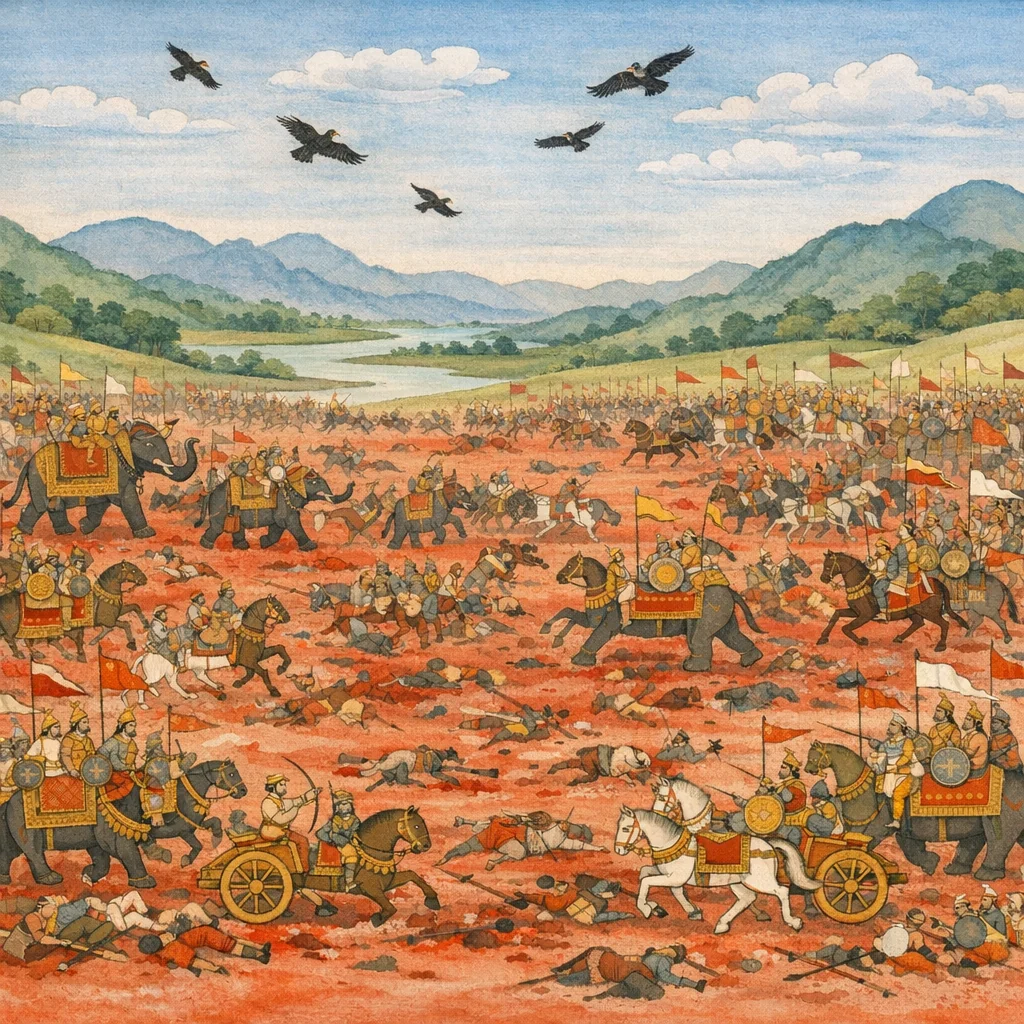
Chapter Arc: रणभूमि चारों ओर से ‘समूहों के समूह’ बनकर उमड़ती है—रथौघ, हयौघ, गजौघ और नरौघ परस्पर गुँथे हुए, मानो पृथ्वी स्वयं लोहे की जंजीरों में जकड़ गई हो। → गदा, परिघ, कणप, प्रास, भिन्दिपाल और भुशुण्डी निरन्तर चलती रहती हैं; हाथी हाथियों से, घोड़े घोड़ों से, रथी रथियों से भिड़ते हैं—हर दिशा में एक साथ कई युद्ध, और किसी एक केंद्र का अभाव ही इस अध्याय की दहशत बनता है। → भूमि कटे हुए शिरों, भुजाओं, जंघाओं, चर्मों और पताकाओं से पट जाती है; मेदा-वसा-मज्जा-मांस से तृप्त कौए, गीध और बक मतवाले होकर मंडराते हैं; रक्त से ढकी धरती वर्षाकाल की लाल कीट-व्याप्त भूमि-सी दीखती है—युद्ध ‘प्रेत-राजपुर’ के समान घोर मायोधन बन जाता है। → वर्णन युद्ध के परिणाम से अधिक उसके सर्वग्रासी स्वरूप पर ठहरता है—हजारों स्वर्णभूषित भुजाएँ छटपटाती, लिपटती, गिरती दिखती हैं; भय त्यागकर भी योद्धा-व्रत में बँधे शूर आगे बढ़ते रहते हैं, और रण का कोलाहल थमता नहीं। → घोर संग्राम प्रेतनगरी-सा फैलता जाता है—जो उसमें प्रवेश करते हैं, भय और विनाश की लहरें उन्हें डुबो देती हैं; अगले क्षण किसका रथ गिरेगा, यह अनिश्चित रह जाता है।
Shlokas
Verse 1
इस प्रकार श्रीमह्ाभारत कर्णपर्वमें संकुलयुद्धविषयक इकक््यावनवाँ अध्याय पूरा हुआ ॥/ ११ ॥। पम्प बछ। आर: द्विपञ्चाशत्तमो<5 ध्याय: दोनों सेनाओंका घोर पट कौरव-सेनाका व्यथित ना संजय उवाच क्षत्रियास्ते महाराज परस्परवधैषिण: । अन्योन्यं समरे जघ्नु: कृतवैरा: परस्परम्,संजय कहते हैं--महाराज! एक-दूसरेके वधकी इच्छावाले वे क्षत्रिय परस्पर वैरभाव रखकर समरांगणमें एक-दूसरेको मारने लगे
Sanjaya said: O great king, those kshatriya warriors—intent on one another’s death—fell upon each other in battle. Bound by long-nursed enmity, they struck down one another on the field, driven by the will to destroy their foes rather than to restrain themselves by higher duty.
Verse 2
रथौघाश्ष हयौघाक्ष नरौघाश्ष॒ समन्ततः । गजौघाश्न महाराज संसक्ताश्न परस्परम्,राजेन्द्र! रथसमूह, अश्वसमूह, हाथियोंके झुंड और पैदल मनुष्योंके समुदाय सब ओर एक-दूसरेसे उलझे हुए थे
Sañjaya said: O great king, everywhere the masses of chariots, the masses of horses, the masses of foot-soldiers, and the masses of elephants were locked together, entangled with one another in the press of battle—an image of war’s overwhelming confusion where countless lives are caught in mutual collision.
Verse 3
गदानां परिघाणां च कणपानां च क्षिप्यताम् । प्रासानां भिन्दिपालानां भुशुण्डीनां च सर्वश:,उस अत्यन्त दारुण संग्राममें हमलोग निरन्तर चलाये जानेवाले परिघों, गदाओं, कणपों, प्रासों, भिन्दिपालों और भुशुण्डियोंकी धारा-सी गिरती देख रहे थे। सब ओर टिड्डी- दलोंके समान बाणोंकी वर्षा हो रही थी
Sañjaya said: “Everywhere we beheld a relentless storm of weapons being hurled—iron clubs and bludgeons, heavy missiles, spears, bhindipālas, and bhuśuṇḍīs—cast without pause. In that exceedingly dreadful battle, the field seemed filled with an unbroken, falling stream of such arms, as if the very air were thick with the descent of destruction.”
Verse 4
सम्पातं चानुपश्याम संग्रामे भृूशदारुणे । शलभा इव सम्पेतु: समन्ताच्छरवृष्टय:,उस अत्यन्त दारुण संग्राममें हमलोग निरन्तर चलाये जानेवाले परिघों, गदाओं, कणपों, प्रासों, भिन्दिपालों और भुशुण्डियोंकी धारा-सी गिरती देख रहे थे। सब ओर टिड्डी- दलोंके समान बाणोंकी वर्षा हो रही थी
Sañjaya said: In that exceedingly dreadful battle we kept witnessing the incessant onrush—on every side showers of arrows fell, converging like swarms of locusts. The scene conveys the war’s relentless, dehumanizing momentum, where skill and courage are swallowed by the sheer, indiscriminate force of massed weaponry.
Verse 5
नागान् नागा: समासाद्य व्यधमन्त परस्परम् । हया हयांश्व॒ समरे रथिनो रथिनस्तथा,नागाश्च समरे उयड़ं ममृदु: शीघ्रगा नृप । हाथी हाथियोंसे भिड़कर एक-दूसरेको संताप देने लगे। उस समरांगणमें घोड़े घोड़ों, रथी रथियों एवं पैदल पैदलसमूहों, अश्वसमुदायों तथा रथों और हाथियोंका भी मर्दन कर रहे थे। नरेश्वर! इसी प्रकार रथी हाथी और घोड़ोंका तथा शीघ्रगामी हाथी उस युद्धस्थलमें हाथी सेनाके अन्य तीन अंगोंको रौंदने लगे
Sañjaya said: Elephants, closing upon elephants, struck one another and caused mutual torment. In that battlefield, horses pressed against horses, and chariot-warriors against chariot-warriors; and the swift-moving elephants, O king, trampled and crushed the opposing forces in the melee. Thus, amid the confusion of war, each arm of the host collided with its counterpart, and the great beasts, driven by speed and fury, bore down upon the other divisions as well.
Verse 6
पत्तय: पत्तिसंघांश्ष हयसंघांश्व॒ पत्तय: । पत्तयो रथमातड्जन् रथा हस्त्यश्वमेव च
Sañjaya said: The foot-soldiers struck down masses of infantry and masses of horsemen; and the infantry also assailed the chariots—along with charioteers, elephants, and horses. The scene is one of total battlefield entanglement, where every arm of the army turns upon the others in the press of war, showing how violence, once unleashed, spreads across all ranks without restraint.
Verse 7
वध्यतां तत्र शूराणां क्रोशतां च परस्परम्
Sañjaya said: “There, the warriors were being slain, while they cried out to one another—each calling to the other amid the mutual onslaught.”
Verse 8
घोरमायोधन जज्ञे पशूनां वैशसं यथा । वहाँ मारे जाते और एक-दूसरेको कोसते हुए शूरवीरोंके आर्तनादसे वह युद्धस्थल वैसा ही भयंकर जान पड़ता था, मानो वहाँ पशुओंका वध किया जा रहा हो ।। रुधिरेण समास्तीर्णा भाति भारत मेदिनी
Sañjaya said: A dreadful battle arose, resembling the butchery of animals. Covered everywhere with blood, the earth of the Bhāratas appeared grim and terrible—made more horrifying by the cries of warriors being slain and cursing one another, as if a slaughterhouse had come to life on the battlefield.
Verse 9
यथा वा वाससी शुक्ले महार०ञ्जनरजञ्जिते,अथवा जैसे कोई श्यामवर्णा युवती श्वेत रंगके वस्त्रोंको हल्दीके गाढ़े रंगमें रँगकर पहन ले, वैसी ही वह रणभूमि प्रतीत होती थी। मांस और रक्तसे चित्रित-सी जान पड़नेवाली वह भूमि सुवर्णमयी-सी प्रतीत होती थी
Sañjaya said: Just as two white garments, once steeped in a powerful dye, take on its deep color—or as a dark-complexioned young woman might wear white cloth after staining it with thick turmeric—so did the battlefield appear. Though it was as if painted with flesh and blood, that ground seemed, in a grim irony, almost golden in its sheen. The image underscores how war can make horror look deceptively splendid, masking adharma with a surface brilliance.
Verse 10
बिभयाद् युवती श्यामा तद्वदासीद् वसुंधरा । मांसशोणितचित्रेव शातकुम्भमयीव च,अथवा जैसे कोई श्यामवर्णा युवती श्वेत रंगके वस्त्रोंको हल्दीके गाढ़े रंगमें रँगकर पहन ले, वैसी ही वह रणभूमि प्रतीत होती थी। मांस और रक्तसे चित्रित-सी जान पड़नेवाली वह भूमि सुवर्णमयी-सी प्रतीत होती थी
Sañjaya said: The earth itself appeared as if afraid—like a dark-complexioned young woman; so did the battlefield look. Smeared and patterned with flesh and blood, that ground seemed, paradoxically, as though made of gold—an image that underscores the dreadful cost of war and the moral dissonance between martial glory and human suffering.
Verse 11
भिन्नानां चोत्तमाड़ानां बाहूनां चोरुभि: सह । कुण्डलानां प्रवृद्धानां भूषणानां च भारत,भारत! वहाँ भूतलपर कटे हुए मस्तकों, भुजाओं, जाँघों, बड़े-बड़े कुण्डलों, अन्यान्य आभूषणों, निष्कों, धनुर्धर शूरवीरोंके शरीरों, ढालों और पताकाओंके ढेर-के-ढेर पड़े थे
Sañjaya said: “O Bhārata, the ground was strewn with severed heads and with arms and thighs, along with great, prominent earrings and other ornaments. The battlefield displayed the grim consequence of unchecked wrath and rivalry—where valor and pride alike were reduced to lifeless fragments, warning how adharma-driven conflict turns all worldly splendor into ruin.”
Verse 12
निष्काणामथ शूराणां शरीराणां च धन्विनाम् | चर्मणां सपताकानां संघास्तत्रापतन् भुवि,भारत! वहाँ भूतलपर कटे हुए मस्तकों, भुजाओं, जाँघों, बड़े-बड़े कुण्डलों, अन्यान्य आभूषणों, निष्कों, धनुर्धर शूरवीरोंके शरीरों, ढालों और पताकाओंके ढेर-के-ढेर पड़े थे
Sañjaya said: O Bhārata, there on the ground fell heaps upon heaps—severed heads, arms, and thighs; great earrings and other ornaments; golden neck-plates (niṣkas); the bodies of bow-wielding heroes; and piles of shields and banners. The scene lays bare the terrible cost of war, where valor and adornment alike are reduced to lifeless remnants, warning how violence strips away dignity and worldly splendor.
Verse 13
गजा गजान् समासाद्य विषाणैरार्दयन् नृप । विषाणाभिह्तास्तत्र भ्राजन्ते द्विरदास्तथा
Sañjaya said: O king, elephants, closing in upon other elephants, battered them with their tusks. Struck by tusks, those mighty two-tusked beasts there still shone forth—an image of the war’s relentless force, where even the noblest creatures are driven into mutual harm amid the clash of armies.
Verse 14
रुधिरेणावसिक्ताज़ा गैरिकप्रस्रवा इव । यथा भ्राजन्ति स्यन्दन्त: पर्वता धातुमण्डिता:
Sañjaya said: “Smeared and drenched with blood, they looked like mountains streaked with red ochre. Thus the chariots shone—like hills adorned with mineral-veins—terrible in their splendor amid the slaughter.”
Verse 15
नरेश्वर! हाथी हाथियोंसे भिड़कर अपने दाँतोंसे परस्पर पीड़ा दे रहे थे। दाँतोंकी चोटसे घायल हो खूनसे भीगे शरीरवाले हाथी गेरूके रंगसे मिले हुए जलका स्रोत बहानेवाले झरनोंसे युक्त धातुमण्डित पर्वतोंके समान शोभा पाते थे ।। तोमरान् सादिभिर्मुक्तान् प्रतीपानास्थितान् बहून् । हस्तैर्विचेरुस्ते नागा बभज्जुश्वापरे तथा
Sanjaya said: O king, elephants crashed against elephants, tormenting one another with their tusks. Wounded by the blows of tusks and drenched in blood, they looked like mineral-streaked mountains—reddened like ochre, with streams and springs flowing down their sides. Those great elephants also roamed about with their trunks, seizing many hostile tomara-spears and other missiles that had been hurled at them, and they shattered still others as well.
Verse 16
कितने ही हाथी घुड़सवारोंके छोड़े हुए तोमरों तथा अनेक विपक्षियोंको भी सूँड़ोंसे पकड़कर रणभूमिमें विचरते थे तथा दूसरे उनको टुकड़े-टुकड़े कर डालते थे ।। नाराचैश्छिन्नवर्माणो भ्राजन्ति सम गजोत्तमा: | हिमागमे यथा राजन व्यभ्रा इव महीधरा:,राजन! नाराचोंसे कवच छिलन्न-भिन्न होनेके कारण गजराजोंकी वैसी ही शोभा हो रही थी, जैसे हेमन्त-ऋतुमें बिना बादलोंके पर्वत शोभित होते हैं
Sanjaya said: O King, the foremost elephants, their armour cut and torn apart by nārāca arrows, still shone on the battlefield—like mountains in the cold season, radiant and clear when the sky is free of clouds. The image underscores the grim splendour of war: even as protection is stripped away and bodies are wounded, the combatants press on, and the field displays a terrible beauty born of endurance amid destruction.
Verse 17
शरै: कनकपुड्खैश्न चित्रा रेजुर्गजोत्तमा: । उल्काभि: सम्प्रदीप्ताग्रा: पर्वता इव भारत,भरतनन्दन! विचित्र प्रकारसे सजे हुए उत्तम हाथी सुवर्णमय पंखवाले बाणोंके लगनेसे उल्काओंद्वारा उद्दीप्त शिखरोंवाले पर्वतोंके समान शोभा पा रहे थे
Sañjaya said: The finest elephants, adorned in varied fashion, shone brilliantly when struck by arrows with golden fletching; they looked like mountains whose peaks blaze with meteors—O Bhārata, O joy of the Bharatas. The image underscores the terrible splendor of battle, where even noble creatures become luminous signs of destruction rather than instruments of righteous order.
Verse 18
केचिदभ्याहता नागैर्नागा नगनिभोपमा: । विनेशु: समरे तस्मिन् पक्षवन्त इवाद्रय:,उस संग्राममें पर्वतोंके समान प्रतीत होनेवाले कितने ही हाथी हाथियोंसे घायल हो पंखधारी शैलसमूहोंके समान नष्ट हो गये
Sanjaya said: In that battle, many elephants—huge as mountains—were struck down by other elephants and perished, like winged mountains brought to ruin. The scene underscores the war’s relentless reciprocity: even the mightiest fall when violence answers violence.
Verse 19
अपरे प्राद्रवन् नागा: शल्यार्ता व्रणपीडिता: । प्रतिमानैश्व कुम्भैश्न पेतुरुव्या महाहवे
Sañjaya said: Other elephants, tormented by spears and wracked with the pain of wounds, fled in panic; and in that great battle they collapsed upon the earth, their massive bodies and pot-like heads striking down as they fell. The scene underscores how war reduces even the mightiest beings to helpless suffering, revealing the ethical cost of violence amid martial glory.
Verse 20
दूसरे बहुत-से हाथी बाणोंसे व्यथित और घावोंसे पीड़ित हो भाग चले और कितने ही उस महासमरमें दोनों दाँतों और कुम्भस्थलोंको धरतीपर टेककर धराशायी हो गये ।। विनेदु: सिंहवच्चान्ये नदन्तो भैरवान् रवान् | बश्रमुर्बहवो राजं॑श्रुक्तुशुश्चापरे गजा:,राजन! दूसरे अनेक गजराज भयंकर गर्जना करते हुए सिंहके समान दहाड़ रहे थे और दूसरे बहुतेरे हाथी इधर-उधर चक्कर काटते और चीखते-चिल्लाते थे
Sañjaya said: Many other elephants, tormented by arrows and suffering from wounds, fled in panic; and some, in that great battle, collapsed to the ground, bracing themselves with both tusks and their frontal globes. Others roared like lions, bellowing dreadful cries; and many, O King, wandered about in confusion, while still others screamed and trumpeted. The scene underscores the moral cost of war: even the mighty, driven by fear and pain, are reduced to helplessness amid the chaos of violence.
Verse 21
हयाश्न निहता बाणैहेमभाण्डविभूषिता: । निषेदुश्चैव मम्लुश्न बश्रमुश्न दिशो दश,सोनेके आभूषणोंसे विभूषित बहुसंख्यक घोड़े बाणोंद्वारा घायल होकर बैठ जाते, मलिन हो जाते और दसों दिशाओंमें भागने लगते थे
Sañjaya said: Many horses, adorned with golden trappings, were struck down by arrows. Wounded, they sank to the ground, grew sullied and weakened, and in panic scattered—fleeing toward all ten directions. The scene underscores the impersonal devastation of war, where even splendidly equipped beings become helpless amid the violence unleashed by human resolve.
Verse 22
अपरे कृष्यमाणाश्रन विचेष्टन्तो महीतले । भावान् बहुविधांश्वक्रुस्ताडिता: शरतोमरै:,बाणों और तोमरोंद्वारा ताड़ित होकर कितने ही अश्व धरतीपर लोट जाते और हथियोंद्वारा खींचे जानेपर छटपटाते हुए नाना प्रकारके भाव व्यक्त करते थे
Sañjaya said: Other horses, struck by arrows and javelins, were dragged along and writhed upon the ground, displaying many kinds of distress and agitation. The scene underscores the brutal momentum of battle, where even the innocent mounts are swept into suffering by the warriors’ violence.
Verse 23
नरास्तु निहता भूमौ कूजन्तस्तत्र मारिष | दृष्टवा च बान्धवानन्ये पितृनन्ये पितामहान्,आर्य! वहाँ घायल होकर पृथ्वीपर पड़े हुए कितने ही मनुष्य अपने बान्धव-जनोंको देखकर कराह उठते थे। कितने ही अपने बाप-दादोंको देखकर कुछ अस्फुट स्वरमें बोलने लगते थे
Sañjaya said: “O venerable one, there on the battlefield men, struck down and lying upon the earth, cried out in anguish. Some, seeing their own kinsmen, groaned aloud; others, beholding their fathers and grandfathers, began to speak in broken, indistinct voices.”
Verse 24
धावमानान् परांश्चान्यान् दृष्टवान्ये तत्र भारत | गोत्रनामानि ख्यातानि शशंसुरितरेतरम्,भरतनन्दन! दूसरे बहुत-से मनुष्य अन्यान्य लोगोंको दौड़ते देख एक-दूसरेसे अपने प्रसिद्ध नाम और गोत्र बताने लगते थे
Sañjaya said: “O Bhārata, seeing many others running here and there, some men began calling out to one another, proclaiming their well-known names and clan-lineages—seeking recognition amid the panic and confusion of the battlefield.”
Verse 25
तेषां छिन्ना महाराज भुजा: कनकभूषणा: । उद्वेष्टन्ते विचेष्टन्ते पतन्ते चोत्पतन्ति च
Sañjaya said: “O great king, their arms—adorned with golden ornaments—have been severed. Even after being cut off, they writhe and twitch, falling down and springing up again.”
Verse 26
वेगांश्वान्ये रणे चक्र: पञ्चास्या इव पन्नगा:,प्रजानाथ! सर्पोके शरीरोंके समान प्रतीत होनेवाली कितनी ही चन्दनचर्चित भुजाएँ रणभूमिमें पाँच मुँहवाले सर्पोके समान महान् वेग प्रकट करतीं तथा रक्तरंजित होनेके कारण सुवर्णमयी ध्वजाओंके समान अधिकाधिक शोभा पाती थीं
Verse 27
ते भुजा भोगिभोगाभाश्नन्दनाक्ता विशाम्पते । लोहितार्द्ा भृशं रेजुस्तपनीय ध्वजा इव,प्रजानाथ! सर्पोके शरीरोंके समान प्रतीत होनेवाली कितनी ही चन्दनचर्चित भुजाएँ रणभूमिमें पाँच मुँहवाले सर्पोके समान महान् वेग प्रकट करतीं तथा रक्तरंजित होनेके कारण सुवर्णमयी ध्वजाओंके समान अधिकाधिक शोभा पाती थीं
Sañjaya said: “O lord of the people, many arms—smeared with sandal paste and resembling the coiled bodies of serpents—flashed across the battlefield with tremendous force. Stained with blood, they shone all the more, like banners of pure gold.”
Verse 28
वर्तमाने तथा घोरे संकुले सर्वतोदिशम् । अविज्ञाता: सम युध्यन्ते विनिध्नन्त: परस्परम्,उस घोर घमासान युद्धके चालू होनेपर सम्पूर्ण योद्धा एक-दूसरेपर चोट करते हुए बिना जाने-पहचाने ही युद्ध करते थे
Sañjaya said: As that dreadful, chaotic battle raged on in every direction, the warriors—unable to recognize one another—fought on blindly, striking and killing each other in mutual confusion. The scene underscores how, once violence becomes all-consuming, discernment and moral clarity collapse amid the fog of war.
Verse 29
भौमेन रजसा<5<कीर्णे शस्त्रसम्पातसंकुले । नैव स्वे न परे राजन् व्यज्ञायन्त तमोवृता:,राजन! शस्त्रोंकी धारावाहिक वृष्टिसे व्याप्त तथा धरतीकी धूलसे आच्छादित हुए उस प्रदेशमें अपने और शत्रुपक्षके सैनिक अन्धकारसे आच्छादित होनेके कारण पहचानमें नहीं आते थे
Verse 30
तथा तदभवद् युद्ध घोररूपं भयानकम् । लोहितोदा महानद्य: प्रसख्नुस्तत्र चासकृत्,वह युद्ध ऐसा घोर एवं भयानक हो रहा था कि वहाँ बारंबार खूनकी बड़ी-बड़ी नदियाँ बह चलती थीं
Sanjaya said: Thus the battle became dreadful in form and terrifying—so much so that, again and again, great rivers with blood for their waters seemed to flow there. The scene underscores the moral horror of war: when dharma collapses into unchecked violence, the earth itself appears flooded by the consequences of human rage and ambition.
Verse 31
शीर्षपाषाणसंछन्ना: केशशैवलशाद्धला: । अस्थिमीनसमाकीर्णा धनुःशरगदोडुपा:,योद्धाओंके कटे हुए मस्तक शिलाखण्डोंके समान उन नदियोंको आच्छादित किये रहते थे। उनके केश ही सेवार और घासके समान प्रतीत होते थे, हड्डियाँ ही उनमें मछलियोंके समान व्याप्त हो रही थीं, धनुष, बाण और गदाएँ नौकाके समान जान पड़ती थीं
Sañjaya said: “Those rivers were covered over with severed heads like boulders; the hair upon them looked like algae and river-grass. Bones were scattered everywhere like fish, and bows, arrows, and maces appeared like boats.” The image underscores the moral horror of war: the battlefield becomes a grotesque ‘river’ of death, where human bodies and weapons replace the natural order, revealing how violence overturns dharma and turns life’s currents into a passage of suffering.
Verse 32
मांसशोणितपड्किन्यो घोररूपा: सुदारुणा: । नदी: प्रवर्तयामासु: शोणितौघविवर्धिनी:,उनके भीतर मांस और रक्तकी ही कीचड़ जमी थी। रक्तके प्रवाहको बढ़ानेवाली उन घोर एवं भयंकर नदियोंको वहाँ योद्धाओंने प्रवाहित किया था
Sañjaya said: Rivers whose beds were mire of flesh and blood—terrible in form and exceedingly dreadful—were set flowing there, swelling with torrents of gore. The scene underscores how war, when unrestrained by dharma, turns the battlefield into a landscape of moral horror where life is reduced to slaughter and its aftermath.
Verse 33
भीरुवित्रासकारिण्य: शूराणां हर्षवर्धना: । ता नद्यो घोररूपास्तु नयन्त्यो यमसादनम्,वे भयानक रूपवाली नदियाँ कायरोंको डराने और शूरवीरोंका हर्ष बढ़ानेवाली थीं तथा प्राणियोंको यमलोक पहुँचाती थीं
Sañjaya said: Those rivers, dreadful in appearance, struck terror into the cowardly yet heightened the exhilaration of the brave; and, sweeping living beings along, they bore them onward to the abode of Yama—death itself—amid the horrors of battle.
Verse 34
अवगाढान् मज्जयन्त्य: क्षत्रस्याजनयन् भयम् । क्रव्यादानां नरव्याप्र नर्दतां तत्र तत्र ह
Sañjaya said: “Plunging deep and dragging them down, they spread terror among the warrior order. And, O tiger among men, the flesh-eating creatures roared here and there across the field.”
Verse 35
उत्थितान्यगणेयानि कबन्धानि समन्ततः,वहाँ चारों ओर उठे हुए अगणित कबन्ध और रक्त-मांससे तृप्त हुए भूतगण नृत्य कर रहे थे। भारत! ये सब-के-सब रक्त तथा वसा पीकर छके हुए थे
Sañjaya said: “On every side, countless headless trunks rose up. Around them, hosts of spirits—sated with blood and flesh—danced in frenzy. O Bhārata, all of them were intoxicated, having drunk blood and fat.”
Verse 36
नृत्यन्ति वै भूतगणा: सुतृप्ता मांसशोणितै: । पीत्वा च शोणितं तत्र वसां पीत्वा च भारत,वहाँ चारों ओर उठे हुए अगणित कबन्ध और रक्त-मांससे तृप्त हुए भूतगण नृत्य कर रहे थे। भारत! ये सब-के-सब रक्त तथा वसा पीकर छके हुए थे
Sañjaya said: All around, the hosts of spirits, fully sated with flesh and blood, were dancing. O Bhārata, having drunk the blood there—and having also drunk the fat—they were utterly glutted. The scene underscores the moral horror of war: when dharma collapses on the battlefield, the aftermath is imagined as a feast for inhuman forces, a stark warning about the ethical cost of violence.
Verse 37
मेदोमज्जावसामत्तास्तृप्ता मांसस्य चैव ह । धावमाना: सम दृश्यन्ते काकगृध्रबकास्तथा
Sañjaya said: “Intoxicated with fat, marrow, and grease, and fully sated with flesh, the crows, vultures, and cranes are seen running about there.” The line underscores the moral horror of the battlefield: the abundance of slain bodies becomes sustenance for scavengers, marking the collapse of ordinary human order under the violence of war.
Verse 38
मेदा, वसा, मज्जा और मांससे तृप्त एवं मतवाले कौए, गीध और बक सब ओर उड़ते दिखायी देते थे ।। शूरास्तु समरे राजन् भयं त्यक्त्वा सुदुस्त्यजम् । योधव्रतसमाख्याताश्षक्रुः कर्माण्यभीतवत्
Sañjaya said: O King, the heroes in that battle cast aside fear—though it is so hard to abandon—and, famed for the warrior’s vow, carried out their deeds as if fearless. The scene is framed by the grim aftermath of slaughter, where carrion birds, sated and intoxicated on fat, marrow, and flesh, wheel everywhere—yet the fighters press on, bound by their martial code.
Verse 39
राजन्! उस समरमें योद्धाओंके व्रतका पालन करनेमें विख्यात शूरवीर जिसका त्याग करना अत्यन्त कठिन है, उस भयको छोड़कर निर्भयके समान पराक्रम प्रकट करते थे ।। शरशक्तिसमाकीर्णे क्रव्यादगणसंकुले । व्यचरन्त रणे शूरा: ख्यापयन्त: स्वपौरुषम्,बाण और शक्तियोंसे व्याप्त तथा मांसभक्षी जन्तुओंसे भरे हुए उस रणक्षेत्रमें शूरवीर अपने पुरुषार्थकी ख्याति बढ़ाते हुए विचर रहे थे
Sañjaya said: In that battlefield—choked with arrows and spears and crowded with flesh-eating creatures—the heroes moved about, making their own valor renowned. Casting off fear, though it is hardest to abandon, they displayed courage as if they were fearless, holding fast to the warrior’s vow amid the terror of war.
Verse 40
अन्योन्यं श्रावयन्ति सम नामगोत्राणि भारत । पितृनामानि च रणे गोत्रनामानि वा विभो
Sañjaya said: “O Bhārata, in the midst of battle they call out to one another their identical names and lineages—uttering their fathers’ names, or their clan-names, O mighty one.”
Verse 41
श्रावयाणाक्ष बहवस्तत्र योद्धा विशाम्पते । अन्योन्यमवमृद्नन्त: शक्तितोमरपट्टिशै:
Sañjaya said: “O lord of the people, many warriors there raised a deafening din, as they pressed upon one another in close combat, striking with spears, javelins, and battle-axes.”
Verse 42
भारत! प्रभो! रणभूमिमें कितने ही योद्धा एक-दूसरेको अपने और पिताके नाम तथा गोत्र सुनाते थे। प्रजानाथ! नाम और गोत्र सुनाते हुए बहुतेरे योद्धा शक्ति, तोमर और पट्टिशोंद्वारा एक-दूसरेको धूलमें मिला रहे थे ।। वर्तमाने तथा युद्धे घोररूपे सुदारुणे । व्यषीदत् कौरवी सेना भिन्ना नौरिव सागरे,इस प्रकार वह दारुण एवं भयंकर युद्ध चल ही रहा था कि समुद्रमें टूटी हुई नौकाके समान कौरव-सेना छिलन्न-भिन्न हो गयी और विषाद करने लगी
Sanjaya said: “O Bhārata, O lord! On the battlefield many warriors called out to one another their own names, their fathers’ names, and their lineages. O ruler of men, even as they proclaimed name and clan, countless fighters were striking each other down with spears, javelins, and battle-axes, casting one another into the dust. While that dreadful, most cruel combat continued unabated, the Kaurava host—shattered and scattered—lost heart, like a boat broken apart upon the sea.”
Verse 52
इति श्रीमहाभारते कर्णपर्वणि संकुलयुद्धे द्विपञ्चाशत्तमो5ध्याय:
Thus ends the fifty-second chapter, titled “The Confused (Tumultuous) Battle,” in the Karṇa Parva of the sacred Mahābhārata. This closing colophon signals a completed narrative unit within the war account, marking the transition to the next phase of events and underscoring the epic’s careful structuring of the ethical and historical record of the conflict.
Verse 63
नागाश्च समरे उयड़ं ममृदु: शीघ्रगा नृप । हाथी हाथियोंसे भिड़कर एक-दूसरेको संताप देने लगे। उस समरांगणमें घोड़े घोड़ों, रथी रथियों एवं पैदल पैदलसमूहों, अश्वसमुदायों तथा रथों और हाथियोंका भी मर्दन कर रहे थे। नरेश्वर! इसी प्रकार रथी हाथी और घोड़ोंका तथा शीघ्रगामी हाथी उस युद्धस्थलमें हाथी सेनाके अन्य तीन अंगोंको रौंदने लगे
Sanjaya said: O king, in that battle the elephants, swift in their charge, pressed against other elephants and tormented one another. On that field, horses clashed with horses, chariot-warriors with chariot-warriors, and foot-soldiers with foot-soldiers; masses of cavalry, chariots, and elephants crushed and trampled all around. Thus, O lord of men, chariot-fighters bore down upon elephants and horses, and the fast-moving elephants, in the very midst of the fight, trampled the other three limbs of the elephant-corps—horse, chariot, and infantry—so that the ordered structure of the army dissolved into mutual destruction.
Verse 83
शक्रगोपगणाकीर्णा प्रावषीव यथा धरा । भारत! खूनसे ढकी हुई यह पृथ्वी वर्षाकालमें वीरबहूटी नामक लाल रंगके कीड़ोंसे व्याप्त हुई भूमिके समान शोभा पाती थी
Sañjaya said: O Bhārata, the earth—covered with blood—appeared as though it were the ground in the rainy season, thickly strewn with swarms of śakragopa insects. In that season the land is seen carpeted with red creatures; so too, on the battlefield, the blood-soaked earth took on a dreadful, deceptive splendor. The simile underscores the moral inversion of war: what nature displays as seasonal color is here mirrored by human violence, turning beauty into a sign of ruin.
Verse 256
निपतन्ति तथैवान्ये स्फुरन्ति च सहस्रश: । महाराज! मनुष्योंकी कटी हुई सहस्रों सुवर्णभूषित भुजाएँ कभी टेढ़ी होकर किसी शरीरसे लिपट जातीं, कभी छटपटातीं, गिरती, ऊपरको उछलतीं, नीचे आ जातीं और तड़पने लगती थीं
Sañjaya said: “Others too were falling in the same way, and countless limbs were twitching. O great king, thousands of severed human arms, adorned with gold ornaments, would at times bend crookedly as if clinging to some body; at times they would quiver, drop, spring upward, sink down again, and writhe in agony.”
Verse 343
घोरमायोधन जज्ञे प्रेतताजपुरोपमम् । जो उनमें प्रवेश करते, उन्हें वे डुबो देती थीं और क्षत्रियोंके मनमें भय उत्पन्न करती थीं। नरव्याप्र! वहाँ गरजते हुए मांसभक्षी जन्तुओंके शब्दसे वह युद्धस्थल प्रेतराजकी नगरीके समान भयानक जान पड़ता था
Sañjaya said: A dreadful battlefield came into being, resembling the city of the Lord of the Dead. It was so terrifying that it seemed like Yama’s own realm—an image that underscores how war, when it turns into indiscriminate slaughter, overwhelms the warrior’s courage with fear and reduces the field of duty into a landscape of death.
Frequently Asked Questions
The dilemma is how to reconcile decisive battlefield action with ethical restraint: Kṛṣṇa frames the confrontation with Karṇa as necessary for ending collective harm, while also grounding it in moral accountability for Karṇa’s earlier complicity and abusive discourse.
Strategic action should be aligned with dharma as interpreted through responsibility and consequence: prior choices (alliances, speech, and instigation) generate obligations in the present, and leadership requires identifying the pivotal cause of ongoing disorder and addressing it without hesitation.
No formal phalaśruti is stated. The chapter instead provides an internal epic rationale—promise-fulfillment (pratijñā), restoration of political order, and acquisition of kīrti (renown)—as the implied significance of understanding and enacting the counsel.