Adhyaya 26
अध्याय २६ — शल्यस्य सारथ्य-नियोजनं, कर्णस्य प्रस्थानं, उत्पातदर्शनं च (Chapter 26: Śalya appointed as charioteer; Karṇa’s departure; portents)
Upa-parva: Śalya-Karṇa Rathārohaṇa (Śalya as Karṇa’s Sārathi) Episode
Chapter 26 documents a coordinated transition in Kaurava command logistics and battlefield psychology. Duryodhana praises Śalya as a charioteer surpassing even Kṛṣṇa in skill, arguing that with Karṇa as warrior and Śalya as driver, Arjuna will not prevail. Saṃjaya reports the practical enactment: Karṇa’s chariot is prepared in due form, honored ritually, and Śalya mounts it; Karṇa then takes position, radiating martial readiness. Duryodhana issues a directive framed as compensatory ambition—what Bhīṣma and Droṇa did not accomplish, Karṇa should now achieve—naming key Pandava targets. Karṇa responds with aggressive intent and orders Śalya to drive forward. Śalya counters by rebuking Karṇa’s contempt for the Pandavas, emphasizing their proven prowess and warning that the sound of Gāṇḍīva will alter Karṇa’s confidence. Karṇa dismisses the warning; Kaurava forces celebrate. The chapter then shifts to omenology: earthquakes, celestial anomalies, fires, winds, animal behavior, and unsettling signs accompany Karṇa’s advance, interpreted as indicators of impending catastrophe, though the Kauravas disregard them. The unit closes with Karṇa moving toward the Pandava formation and urgently inquiring after Arjuna’s position.
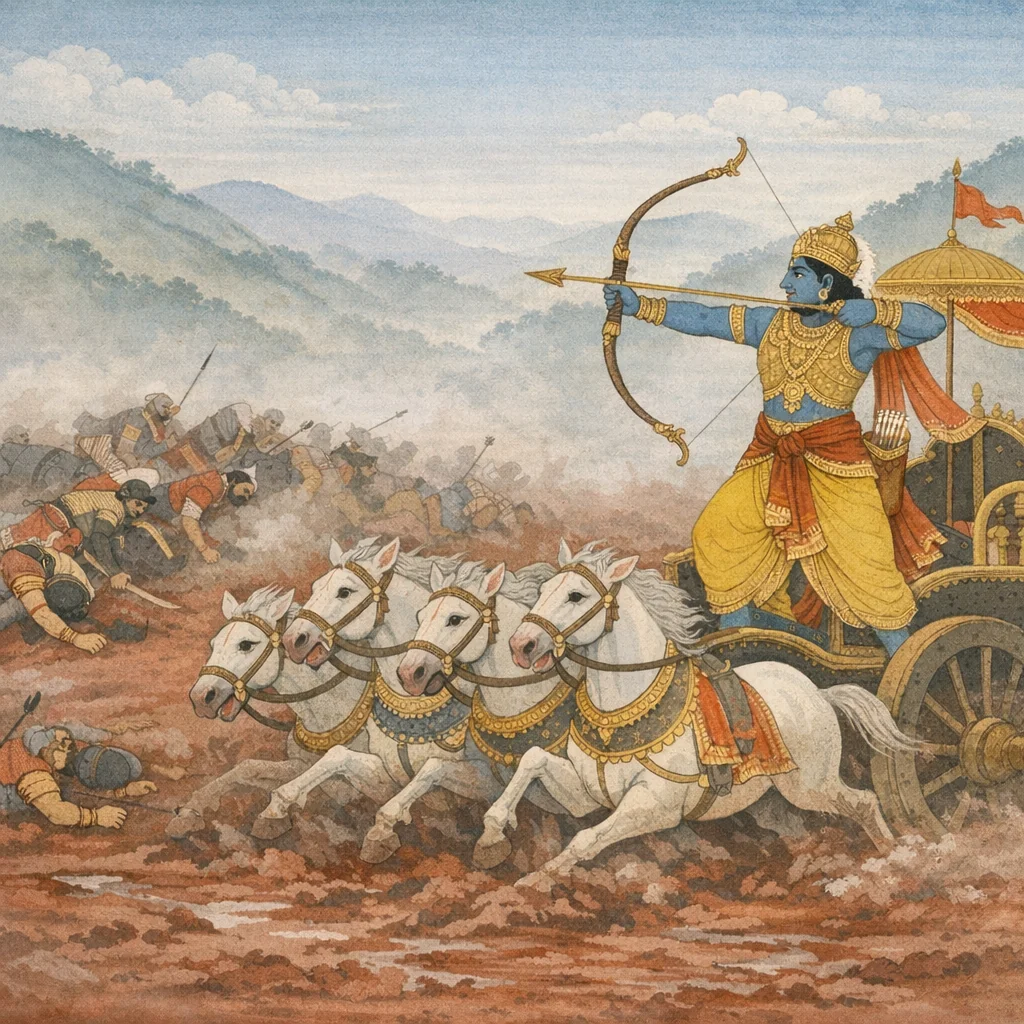
Chapter Arc: कर्णपर्व के इस अध्याय में रणभूमि पर अर्जुन के सामने एक संगठित प्रतिरोध खड़ा होता है—त्रिगर्त, शिबि, शाल्व, संशप्तक और ‘नारायणबल’ सहित अनेक दल एक साथ उसे रोकने निकलते हैं। → संशप्तकों की प्रतिज्ञाबद्ध टुकड़ियाँ और सहयोगी राजागण अर्जुन को चारों ओर से घेरकर रथ, घोड़े और धनुष-शक्ति की परीक्षा लेते हैं। नामी योद्धाओं की कतारें (सत्यसेन, चन्द्रदेव, मित्रदेव, श्रुतंजय, त्रसेन, मित्रवर्मा आदि) एक-एक कर सामने आती हैं, जिससे युद्ध का दबाव निरंतर बढ़ता जाता है। → अर्जुन क्रोध में भरकर शरशतों से संशप्तक-गणों को सैकड़ों-हजारों की संख्या में गिराता है; प्रमुख राजाओं का वध होता है—विशेषतः श्रुतंजय का संहार और सौश्रुति का शिरच्छेद युद्ध को निर्णायक मोड़ देता है। रक्त-कर्दम में रथ के पहिये धँसते हैं, फिर भी अर्जुन का रथ आगे बढ़ता रहता है। → मारे गए राजाओं के चन्दन-चर्चित, उत्तम वस्त्रों और हारों से सजे शव धरती पर बिखर जाते हैं; अर्जुन की मार से कौरव-सेना प्रायः विमुख होकर भाग खड़ी होती है और ठहर नहीं पाती। → पराजित होकर भी शेष कौरव-बल का अगला प्रत्युत्तर और युद्ध की अगली लहर आसन्न है।
Shlokas
Verse 1
इस प्रकार श्रीमह्ाभारत कर्णपर्वमें संकुल-युद्धविषयक छब्बीसवाँ अध्याय पूरा हुआ ॥/ २६ ॥। (दाक्षिणात्य अधिक पाठका ई “लोक मिलाकर कुल ३८३ “लोक हैं) #+>2ी >> श््यु हि कक - शरभ आठ पैरोंका एक जानवर है, जिसका आधा शरीर पशुका और आधा पक्षीका होता है। भगवान् नृसिंहकी भाँति उसका शरीर भी द्विविध आकृतियोंके सम्मिश्रणसे बना है। वह इतना प्रबल है कि सिंहको भी मार सकता है। सप्तविशो<्ध्याय: अर्जुनद्वारा राजा श्रुतंजय, सौश्रुति, चन्द्रदेव और सत्यसेन आदि महारथियोका वध एवं संशप्तक-सेनाका संहार संजय उवाच श्वेताश्चो5थ महाराज व्यधमत्तावकं॑ बलम् | यथा वायु: समासाद्य तूलराशिं समन्तत:,संजय कहते हैं--महाराज! एक ओर श्वेतवाहन अर्जुन आपकी सेनाको उसी प्रकार छिन्न-भिन्न कर रहे थे, जैसे वायु रूईके ढेरको पाकर उसे सब ओर बिखेर देती है
Sañjaya said: O great king, then Arjuna—riding the white-steeded chariot—was scattering your army in utter disarray, just as the wind, rushing upon a heap of cotton, blows it apart in every direction. The image underscores the overwhelming momentum of a righteous warrior’s prowess in battle and the fragility of forces driven by pride and attachment rather than clear discernment.
Verse 2
प्रत्युद्ययुस्त्रिगर्तास्तं शिबय: कौरवै: सह । शाल्वा: संशप्तकाश्नचैव नारायणबलं च तत्,उस समय उनका सामना करनेके लिये त्रिगर्त, शिबि, कौरवोंसहित शाल्व, संशप्तकगण तथा नारायणी-सेनाके सैनिक आगे बढ़े
Sañjaya said: To confront him, the Trigartas advanced, and the Śibis along with the Kauravas; the Śālvas too, as well as the Saṃśaptakas, and that mighty Nārāyaṇa contingent. Thus, many allied forces moved forward together, driven by loyalty to their side and the harsh compulsions of war.
Verse 3
सत्यसेनश्वन्द्रदेवो मित्रदेव: श्रुतंजय: । सौश्रुतिश्रित्रसेनश्व मित्रवर्मा च भारत
Sañjaya said: “O Bhārata (Dhṛtarāṣṭra), there were warriors named Satyasena, Candradeva, Mitradeva, Śrutaṃjaya, Sauśruti, Citrasena, and Mitravarmā.”
Verse 4
त्रिगर्तराज: समरे भ्रातृभि: परिवारित: । पुत्रैश्नैव महेष्वासैर्नानाशस्त्रविशारदै:
Sañjaya said: In the thick of battle, the king of the Trigartas stood surrounded by his brothers, and also by his sons—mighty archers, skilled in the use of many kinds of weapons. The verse underscores the war’s collective, clan-bound commitment: kinship becomes a shield and a force-multiplier, even as it binds families to the peril and moral weight of the battlefield.
Verse 5
भरतनन्दन! सत्यसेन, चन्द्रदेव, मित्रदेव, श्रुतंजय, सौश्रुति, चित्रसेन तथा मित्रवर्मा-- इन सात भाइयों तथा नाना प्रकारके शस्त्रोंके प्रहारमें कुशल महाधनुर्धर पुत्रोंसे घिरा हुआ त्रिगर्तराज सुशर्मा समरांगणमें उपस्थित हुआ ।। ते सृजन्त: शरब्रातान् किरन्तो<र्जुनमाहवे । अभ्यवर्तन्त सहसा वार्योचा इव सागरम्,वे सभी वीर युद्धस्थलमें अर्जुनपर बाणसमूहोंकी वर्षा करते हुए जैसे जलका प्रवाह समुद्रकी ओर जाता है, उसी प्रकार सहसा उनके सामने आ पहुँचे
Sanjaya said: O descendant of Bharata, the Trigarta king Susarman came onto the battlefield, surrounded by his mighty bowmen sons—skilled in striking with many kinds of weapons—together with his seven brothers: Satyasena, Candradeva, Mitradeva, Śrutaṃjaya, Sauśruti, Citrasena, and Mitravarmā. Pouring forth volleys of arrows upon Arjuna in the fight, those heroes rushed forward all at once, like torrents of water surging toward the sea.
Verse 6
ते त्वर्जुन॑ समासाद्य योधा: शतसहस्रश: । अगच्छन् विलयं सर्वे तारक्ष्य दृष्टवे पन्नगा:,परंतु जैसे गरुड़को देखते ही सर्प अपने प्राण खो देते हैं, उसी प्रकार वे सब-के-सब लाखों योद्धा अर्जुनके पास पहुँचते ही कालके गालमें चले गये
Sañjaya said: “But when those warriors—by the hundreds of thousands—closed in upon Arjuna, they all met destruction at once. Just as serpents lose their very life on beholding Tārakṣya (Garuḍa), so too did they, on merely reaching Arjuna, pass into the jaws of Death.”
Verse 7
ते हन्यमाना: समरे नाजहु: पाण्डवं रणे । हन्यमाना महाराज शलभा इव पावकम्,जैसे पतंगे जलते रहनेपर भी आगमें टूटे पड़ते हैं, उसी प्रकार रणभूमिमें मारे जानेपर भी वे समस्त योद्धा युद्धमें पाण्डुकुमार अर्जुनको छोड़कर भाग न सके
Sañjaya said: Though they were being struck down in the battle, they did not abandon the son of Pāṇḍu (Arjuna) on the field. O King, even while being slain, they rushed upon him like moths that, though burning, still plunge into the fire—an image of relentless, self-consuming fury in war.
Verse 8
सत्यसेनस्टत्रिभिर्बाणैरविव्याध युधि पाण्डवम् । मित्रदेवस्त्रिषष्टया तु चन्द्रदेवस्तु सप्तभि:,सत्यसेनने तीन, मित्रदेवने तिरसठ, चन्द्रदेवने सात, मित्रवर्माने तिहत्तर, सौश्रुतिने सात, श्रुवंज॑यने बीस तथा सुशमने नौ बाणोंसे युद्धस्थलमें पाण्डुपुत्र अर्जुनको बींध डाला
Sañjaya said: In the thick of battle, Satyasena pierced the Pāṇḍava (Arjuna) with three arrows. Mitradeva struck him with sixty-three, and Candradeva with seven. Mitravarmā then hit him with seventy-three; Sauśruti with seven; Śruvañjaya with twenty; and Suśamā with nine. Thus, many warriors together showered Arjuna with missiles, displaying the relentless, collective violence of war where prowess is measured by the capacity to wound, even as the larger struggle over rightful rule and duty continues.
Verse 9
मित्रवर्मा त्रिसप्तत्या सौश्रुतिश्चापि सप्तभि: | श्रुतंजयस्तु विंशत्या सुशर्मा नवभि: शरै:,सत्यसेनने तीन, मित्रदेवने तिरसठ, चन्द्रदेवने सात, मित्रवर्माने तिहत्तर, सौश्रुतिने सात, श्रुवंज॑यने बीस तथा सुशमने नौ बाणोंसे युद्धस्थलमें पाण्डुपुत्र अर्जुनको बींध डाला
Sañjaya said: Mitravarmā struck Arjuna, the son of Pāṇḍu, with seventy-three arrows; Sauśruti with seven; Śrutañjaya with twenty; and Suśarmā with nine. Thus, amid the press of battle, many warriors together pierced Arjuna—showing how, in war, coordinated force is used to overwhelm even a foremost hero, while Arjuna’s steadfastness under assault becomes a measure of disciplined endurance rather than mere aggression.
Verse 10
स विद्धो बहुभि: संख्ये प्रतिविव्याध तान् नृपान् । सौश्रुतिं सप्तभिर्विद्ध्वा सत्यसेनं त्रिभि: शरै:,इस प्रकार रणभूमिमें बहुसंख्यक योद्धाओंद्वारा घायल किये जानेपर बदलेमें अर्जुनने भी उन सभी नरेशोंको क्षत-विक्षत कर दिया। उन्होंने सौश्नुतिको सात बाणोंसे घायल करके सत्यसेनको तीन बाण मारे
Sañjaya said: Though struck by many in the press of battle, he counter-pierced those kings in return. Having wounded Sauśruti with seven arrows, he struck Satyasena with three shafts—thus answering injury with swift, measured retaliation amid the ethics of war.
Verse 11
श्रुतंजयं च विंशत्या चन्द्रदेवं तथाष्टभि: । मित्रदेवं शतेनैव श्रुतसेनं त्रिभि: शरै:
Sañjaya said: With twenty arrows he struck Śrutaṃjaya; with eight he struck Candradeva; with a full hundred he struck Mitradeva; and with three arrows he struck Śrutasena. Thus, in the press of battle, the warrior’s measured use of force—varying the number of shafts to each opponent—shows the grim calculus of war, where prowess is displayed through controlled, targeted violence rather than indiscriminate slaughter.
Verse 12
श्रुतंजयं च राजानं हत्वा तत्र शिलाशितै:,फिर सानपर चढ़ाकर तेज किये हुए कई बाणोंसे राजा श्रुतंजयका वध करके सौश्रुतिके शिरस्त्राणसहित सिरको धड़से अलग कर दिया। फिर तुरंत ही चन्द्रदेवको भी अपने बाणोंद्वारा यमलोक पहुँचा दिया
Sañjaya said: There, after slaying King Śrutaṃjaya with arrows sharpened on stone and further honed to a blazing keenness, he severed Sauśrutika’s head together with its helmet and cast it down. Then, without delay, he also dispatched Candradeva to Yama’s realm by means of his arrows. The passage underscores the grim momentum of battle: prowess and technique become instruments of death, and the ethical weight of war is conveyed through the stark finality of beheading and the repeated sending of warriors to the world of the dead.
Verse 13
सौश्रुते: सशिरस्त्राणं शिर: कायादपाहरत् | त्वरितश्नन्द्रदेव॑ च शरैरनिन्ये यमक्षयम्,फिर सानपर चढ़ाकर तेज किये हुए कई बाणोंसे राजा श्रुतंजयका वध करके सौश्रुतिके शिरस्त्राणसहित सिरको धड़से अलग कर दिया। फिर तुरंत ही चन्द्रदेवको भी अपने बाणोंद्वारा यमलोक पहुँचा दिया
Sañjaya said: He struck off the head of Śrutajaya—helmet and all—severing it from the body. Then, without delay, he also dispatched Candradeva to Yama’s imperishable realm by means of his arrows. The verse underscores the relentless, ethically fraught momentum of battle, where prowess and haste eclipse ordinary human restraint and life is treated as something that can be ‘sent’ onward by force.
Verse 14
तथेतरान् महाराज यतमानान् महारथान् । पज्चभि: पज्चभिर्बाणैरेकैकं प्रत्यवारयत्,महाराज! इसी प्रकार विजयके लिये प्रयत्नशील अन्य महारथियोंमेंसे प्रत्येकको पाँच- पाँच बाण मारकर रोक दिया
Sañjaya said: “So too, O King, he checked the other great chariot-warriors who were striving for victory—repelling each one by striking him with five arrows.” The verse highlights controlled martial force: the aim is not indiscriminate slaughter, but tactical restraint and the turning back of opponents within the harsh ethics of battlefield duty.
Verse 15
सत्यसेनस्तु संक्रुद्धस्तोमरं व्यसृजन्महत् । समुद्दिश्य रणे कृष्णं सिंहनादं ननाद च,तब सत्यसेनने अत्यन्त कुपित होकर रणभूमिमें श्रीकृष्णको लक्ष्य करके एक विशाल तोमरका प्रहार किया और सिंहके समान गर्जना की
Sañjaya said: Enraged, Satyasena hurled a massive javelin on the battlefield, aiming it at Kṛṣṇa; and he roared aloud like a lion. The scene underscores how wrath in war drives warriors toward reckless, adharma-leaning aggression—even against the charioteer who embodies calm counsel and righteous strategy.
Verse 16
स निर्भिद्य भुजं सव्यं माधवस्य महात्मन: । अयस्मयो हेमदण्डो जगाम धरणीं तदा,सुवर्णमय दण्डवाला वह लोहनिर्मित तोमर महात्मा श्रीकृष्णकी बायीं भुजापर चोट करके तत्काल धरतीपर गिर पड़ा
Sañjaya said: Having pierced the left arm of the great-souled Mādhava (Kṛṣṇa), that iron weapon with a golden staff at once fell down upon the earth. The scene underscores how, amid the fury of war, even a strike that reaches the divine charioteer does not overturn the larger moral order; it becomes another moment in the unfolding of fate and duty on the battlefield.
Verse 17
माधवस्य तु विद्धस्य तोमरेण महारणे । प्रतोद: प्रापतद्धस्ताद् रश्मयश्न विशाम्पते,प्रजानाथ! उस महासमरमें तोमरसे घायल हुए श्रीकृष्णके हाथसे चाबुक और बागडोर गिर पड़ी
Sañjaya said: In that great battle, when Mādhava (Kṛṣṇa) was struck by a javelin, the whip slipped from his hand, and the reins too fell down—O lord of men, O protector of the people. The scene underscores how even the charioteer of Arjuna bears the shocks of war, steadfastly sustaining his duty amid peril.
Verse 18
वासुदेवं विभिन्नाड़ं दृष्टवा पार्थो धनंजय: । क्रोधमाहारयत्तीव्रं कृष्णं चेदमुवाच ह,श्रीकृष्णके शरीरमें घाव देखकर कुन्तीकुमार अर्जुन-को बड़ा क्रोध हुआ। वे उनसे इस प्रकार बोले--
Sanjaya said: Seeing Vasudeva (Krishna) with his body wounded, Partha—Dhananjaya (Arjuna)—was seized by fierce anger. Then he addressed Krishna with these words. The moment underscores Arjuna’s protective devotion toward his charioteer and guide, and how righteous indignation can surge when one beholds harm done to the innocent and the revered amid the chaos of war.
Verse 19
प्रापयाश्वान् महाबाहो सत्यसेन प्रति प्रभो । यावदेनं शरैस्तीक्ष्णैनयामि यमसादनम्,'प्रभो! महाबाहो! आप घोड़ोंको सत्यसेनके निकट पहुँचाइये। मैं अपने तीखे बाणोंसे पहले इसीको यमलोक भेज दूँगा”
Sañjaya said: “O lord, O mighty-armed one, drive the horses up toward Satyasena. Before he can do more, I will dispatch him to Yama’s abode with my sharp arrows.” The line conveys the battlefield ethic of swift, decisive action—an intent to neutralize a dangerous opponent immediately, framed in the idiom of sending one to the realm of Death.
Verse 20
प्रतोद॑ गृह सो<न्यत्तु रश्मीनपि यथा पुरा । वाहयामास तानभश्चान् सत्यसेनरथं प्रति,तब भगवान् श्रीकृष्णने दूसरा चाबुक लेकर पूर्ववत् घोड़ोंकी बागडोर सँभाली और उन घोड़ोंको सत्यसेनके रथके समीप पहुँचा दिया
Sañjaya said: Taking up another whip, he once again—just as before—grasped the reins and drove the horses forward, bringing them close to Satyasena’s chariot. The scene underscores steady, disciplined action amid battle: the charioteer’s composure and skill become a moral counterpoint to the surrounding fury of war.
Verse 21
विष्वक्सेन तु निर्भिन्न दृष्टवा पार्थो धनंजय: । सत्यसेनं शरैस्ती&णैर्वारयित्वा महारथ:,कुन्तीकुमार महारथी अर्जुनने श्रीकृष्णको घायल हुआ देख सत्यसेनको तीखे बाणोंसे रोककर तेज धारवाले भल्लोंसे सेनाके मध्यभागमें उस राजकुमारके कुण्डलमण्डित महान् मस्तकको धड़से काट डाला
Sañjaya said: Seeing Viśvaksena struck down, Pārtha Dhanañjaya (Arjuna), the great chariot-warrior, checked Satyasena with sharp arrows. Then, in the midst of the army, he severed that prince’s ear-ornamented head from his body with keen-edged bhalla shafts—an act driven by the ruthless necessities of battle, where protection of one’s side and swift neutralization of threats override personal sentiment.
Verse 22
ततः सुनिशितैर्भल्लै राज्ञस्तस्य महच्छिर: । कुण्डलोपचितं कायाच्चकर्त पृतनान्तरे,कुन्तीकुमार महारथी अर्जुनने श्रीकृष्णको घायल हुआ देख सत्यसेनको तीखे बाणोंसे रोककर तेज धारवाले भल्लोंसे सेनाके मध्यभागमें उस राजकुमारके कुण्डलमण्डित महान् मस्तकको धड़से काट डाला
Verse 23
तन्निकृत्य शितैर्बाणिमित्रवर्माणमाक्षिपत् । वत्सदन्तेन तीक्ष्णेन सारथिं चास्य मारिष,मान्यवर! सत्यसेनको मारकर तीखे बाणोंद्वारा मित्रवर्माकों और एक पैने वत्सदन्तसे उसके सारथिको भी मार गिराया
Sañjaya said: Having thus struck him down, he felled Mitravarman with sharp arrows; and with a keen, calf-tooth–shaped shaft he also brought down that warrior’s charioteer, O venerable one. In the grim ethic of battlefield duty, the narration shows the relentless logic of war: disabling both the fighter and the driver to neutralize the chariot’s threat, even as the act underscores the harsh, escalating violence of Kurukṣetra.
Verse 24
ततः शरशतैर्भूय: संशप्तकगणान् बली । पातयामास संक्रुद्धो शतशो5थ सहस्रश:,तदनन्तर अत्यन्त क्रोधमें भरे हुए बलवान अर्जुनने पुनः हजारों और सैकड़ों संशप्तकगणोंको सैकड़ों बाणोंसे मारकर धरतीपर सुला दिया
Sanjaya said: Then, once again, the mighty Arjuna—burning with anger—felled the bands of the Saṁśaptakas with hundreds of arrows, casting them down in their hundreds and even by the thousands. The episode underscores the grim momentum of vowed warfare: fierce resolve and martial skill drive the slaughter forward, even as the moral weight of mass killing hangs over the battlefield.
Verse 25
ततो रजतपुड्खेन राजज्शीर्ष महात्मन: । मित्रदेवस्य चिच्छेद क्षुरप्रेण महारथ:,राजन! फिर महारथी धनंजयने रजतमय पंखवाले क्षुरप्रसे महामना मित्रदेवके मस्तकको काट डाला
Sañjaya said: Then the great chariot-warrior Dhanañjaya (Arjuna), using a razor-edged arrow fitted with silver feathers, struck down and severed the head of the noble Mitradeva. In the moral atmosphere of the war, the verse underscores the grim inevitability of kṣatriya-battle: prowess and resolve are exercised without hesitation, even against a worthy opponent, when one has entered the ordained field of combat.
Verse 26
सुशर्माणं सुसंक्रुद्धो जत्र॒ुदेशे समाहनत् | ततः संशप्तका: सर्वे परिवार्य धनंजयम्
Sañjaya said: Enraged, he struck Suśarmā in the region of the collarbone/neck. Then all the Saṃśaptakas surrounded Dhanañjaya (Arjuna), closing in on him in the press of battle—an episode that underscores how wrath and vowed hostility intensify the violence of war and test a warrior’s steadiness under assault.
Verse 27
अभ्यर्दितस्तु तैर्जिष्णु: शक्रतुल्यपराक्रम:,इति श्रीमहाभारते कर्णपर्वणि संशप्तकजये सप्तविंशोध्याय:
Sanjaya said: Pressed hard by those warriors, Arjuna (Jishnu), whose prowess was equal to Indra's, stood his ground and fought on. Thus ends the twenty-seventh chapter in the Karna Parva of the Mahabharata, in the section concerning the victory over the Samsaptakas.
Verse 28
तत: शरसहस््राणि प्रादुरासन् विशाम्पते
Sañjaya said: Then, O lord of the people, thousands of arrows suddenly appeared—filling the battlefield as the clash intensified, a stark sign of how swiftly human resolve turns into overwhelming violence in war.
Verse 29
ध्वजानां छिद्यमानानां कार्मुकाणां च मारिष | रथानां सपताकानां तूणीराणां युगैः सह
Sañjaya said: “O revered one, there were banners being cut down, bows being shattered, and chariots—still bearing their standards—being broken; even the quivers and the yokes along with their teams were destroyed.”
Verse 30
अक्षाणामथ चक्राणां योक्त्राणां रश्मिभि: सह । कूबराणां वरूथाणां पूषत्कानां च संयुगे
Sañjaya said: In that battle, the axles and wheels, the yokes together with their reins, the pole-pieces, the protective fittings, and the chariot-guards as well—were all being shattered and torn apart amid the clash. The scene underscores how war does not merely strike warriors; it destroys the very supports and instruments that carry human purpose, revealing the relentless, indiscriminate ruin that follows when conflict is embraced.
Verse 31
अश्वानां पततां चापि प्रासानामृष्टिभि: सह । गदानां परिघानां च शक्तितोमरपट्टिशै:
Sañjaya said: “There were also horses falling, and spears together with lances; and likewise maces and iron bludgeons—along with śaktis, tomaras, and battle-axes.” In this grim catalogue of weapons and casualties, the narrative underscores the impersonal, overwhelming machinery of war, where living beings and instruments of violence alike are swept into destruction.
Verse 32
शतघ्नीनां सचक्राणां भुजानां चोरुभि: सह । कण्ठसूत्राज़दानां च केयूराणां च मारिष
Sanjaya said: “O revered one, there were also śataghnīs and wheeled engines, and severed arms together with thighs—along with neck-threads and armlets. Thus the battlefield was strewn with the broken ornaments and dismembered limbs of warriors, bearing witness to the terrible cost of this unrighteous slaughter.”
Verse 33
हाराणामथ निष्काणां तनुत्राणां च भारत | छत्राणां व्यजनानां च शिरसां मुकुटै:ः सह
Sañjaya said: “O Bhārata, there were heaps of necklaces and gold ornaments, coats of mail, parasols and fans—along with severed heads still bearing their crowns.”
Verse 34
अश्रूयत महा>शब्दस्तत्र तत्र विशाम्पते । प्रजानाथ! फिर तो वहाँ हजारों बाण प्रकट होने लगे। माननीय भरतवंशी प्रजापालक नरेश! उस समय कट-कटकर गिरनेवाले ध्वज, धनुष, रथ, पताका, तरकस, जूए, धुरे, पहिये, जोत, बागडोर, कूबर, वरूथ (रथका चर्ममय आवरण), बाण, घोड़े, प्रास, ऋष्टि, गदा, परिघ, शक्ति, तोमर, पट्टिश, चक्रयुक्त शतघ्नी, बाँह-जाँघ, कण्ठसूत्र, अंगद, केयूर, हार, निष्क, कवच, छत्र, व्यजन और मुकुटसहित मस्तकोंका महान् शब्द युद्धस्थलमें जहाँ- तहाँ सब ओर सुनायी देने लगा || २८--३३ ह || सकुण्डलानि स्वक्षीणि पूर्णचन्द्रनिभानि च
Sanjaya said: O lord of the people, O king of men, a tremendous clamor was heard here and there across the battlefield. Then, in that place, thousands of arrows seemed to spring forth. At that time the great crash of things being cut down and falling—standards, bows, chariots, banners, quivers, yokes, axles, wheels, harness, reins, poles, leather coverings of chariots, arrows, horses, spears, lances, maces, iron bars, javelins, tomara-spears, battle-axes, wheel-fitted śataghnī weapons, severed arms and thighs, neck-ornaments, armlets, shoulder-ornaments, garlands, gold plaques, armor, parasols, fans, and heads falling with their crowns—was heard everywhere on the field. Even earrings and bright ornaments, moonlike in sheen, were seen among the fallen.
Verse 35
सुसत्रग्वीणि सुवासांसि चन्दनेनोक्षितानि च
Sañjaya said: “(They brought) fine garlands and excellent garments, all anointed with sandalwood.” The line evokes the courtly, ritualized language of honor—objects of fragrance and adornment used to receive, celebrate, or consecrate someone, even amid the grim moral atmosphere of war.
Verse 36
गन्धर्वनगराकारं घोरमायोधनं तदा
Sañjaya said: “At that time, the battlefield appeared like a Gandharva-city—an awe-inspiring, illusory spectacle—terrible in its aspect.”
Verse 37
हस्तिभि: पतितैश्वैव तुरज्ञैश्चाभवन्मही
Sañjaya said: The earth became strewn and choked with the fallen—elephants and horses alike—showing how the fury of battle reduces even the mightiest war-beasts to lifeless heaps and turns the battlefield into a grim testimony of destruction.
Verse 38
नासीच्चक्रपथस्तत्र पाण्डवस्य महात्मन:
Sañjaya said: There, for that great-souled Pāṇḍava, no track of the chariot-wheel could be seen—suggesting the tumult of battle and the extraordinary speed and skill with which he moved, leaving no clear trace for others to follow.
Verse 39
आतड्कादिव सीदन्ति रथचक्राणि मारिष
Sañjaya said: “O venerable one, the wheels of the chariots are sinking, as if from a sudden panic.” In the grim press of battle, even the instruments of war falter—suggesting how fear, confusion, and the crushing weight of conflict can undermine strength and order.
Verse 40
सीदमानानि चक्राणि समूहुस्तुरगा भूशम्
Sañjaya reports that the chariot-wheels began to sink, and the horses churned up the earth—an ominous battlefield sign suggesting strain, disorder, and the heavy burden of war pressing upon men and machines alike.
Verse 41
वध्यमान तु तत् सैन्यं पाण्डुपुत्रेण धन्विना
Sañjaya said: That army, however, was being cut down by the bow-bearing son of Pāṇḍu—an image of relentless martial prowess where the tide of battle turns through a single warrior’s disciplined force, raising the ethical tension between duty in war and the human cost of slaughter.
Verse 42
ताज्जित्वा समरे जिष्णु: संशप्तकगणान् बहून्,उस समय समरांगणमें उन बहुसंख्यक संशप्तकगणोंको परास्त करके विजयी कुन्तीकुमार अर्जुन धूमरहित प्रज्वलित अग्निके समान शोभा पा रहे थे
Sañjaya said: Having conquered in battle those many bands of the Saṁśaptakas, Arjuna—the victorious son of Kuntī—shone on the battlefield like a smokeless, blazing fire. The image underscores disciplined valor: victory gained through steadfast resolve rather than cruelty, and brilliance that comes from focused duty amid the chaos of war.
Verse 43
विरराज तदा पार्थों विधूमो5ग्निरिव ज्वलन्,उस समय समरांगणमें उन बहुसंख्यक संशप्तकगणोंको परास्त करके विजयी कुन्तीकुमार अर्जुन धूमरहित प्रज्वलित अग्निके समान शोभा पा रहे थे
Sanjaya said: Then Partha (Arjuna), having overcome those numerous Saṁsaptakas on the battlefield, shone in victory—blazing like a smokeless fire. The image underscores a warrior’s disciplined, righteous prowess: power that is intense and effective, yet unclouded by confusion or hesitation in the midst of dharmic combat.
Verse 113
नवमभिर्मित्रवर्माणं सुशर्माणं तथाष्टभि: । श्रुतंजयको बीस, चन्द्रदेवको आठ, मित्रदेवको सौ, श्रुतसेन (चित्रसेन)-को तीन, मित्रवर्माको नौ तथा सुशर्माको आठ बाणोंसे घायल कर दिया
Sañjaya said: With nine arrows he struck Mitravarmā, and likewise with eight he struck Suśarmā—describing the swift, measured violence of the battlefield where prowess is displayed through precise, counted blows rather than restraint.
Verse 263
शस्त्रौधैर्ममृदु: क्ुद्धा नादयन्तो दिशो दश । साथ ही अत्यन्त कुपित होकर अर्जुनने सुशर्माके गलेकी हँसलीपर भी गहरी चोट पहुँचायी। फिर तो क्रोधमें भरे हुए सभी संशप्तक दसों दिशाओंको अपनी गर्जनासे प्रतिध्वनित करते हुए अर्जुनको चारों ओरसे घेरकर अपने अस्त्र-शस्त्रोंद्वारा पीड़ा देने लगे
Sañjaya said: Then, in fury, the Saṁsaptakas—shouting so that the ten directions resounded—surrounded Arjuna on every side and, with a dense shower of weapons, sought to wound and harass him. The scene underscores how wrath and collective aggression intensify violence on the battlefield, even as Arjuna remains the focal point of their vowed hostility.
Verse 273
ऐन्द्रमस्त्रममेयात्मा प्रादुश्चक्रे महारथ: । उनसे पीड़ित होकर इन्द्रके तुल्य पराक्रमी तथा अमेय आत्मबलसे सम्पन्न महारथी अर्जुनने ऐन्द्रास्त्र प्रकट किया
Sañjaya said: The great chariot-warrior, whose inner power was beyond measure, manifested the Indra-weapon. Pressed and afflicted by the enemy’s assault, Arjuna—Indra’s equal in prowess and endowed with immeasurable strength—brought forth the Aindra astra, answering force with disciplined, divinely sanctioned counterforce within the grim ethics of battlefield duty.
Verse 346
शिरांस्युरव्यामदृश्यन्त ताराजालमिवाम्बरे । पृथ्वीपर गिरे हुए कुण्डल और सुन्दर नेत्रोंसे युक्त पूर्ण चन्द्रमाके समान मनोहर मस्तक आकाशकमें ताराओंके समूहकी भाँति दिखायी देते थे
Sañjaya said: On the earth, severed heads were seen scattered about, appearing like a net of stars in the sky. Those charming heads—fallen to the ground, still adorned with earrings and marked by beautiful eyes—looked like full moons, and together they seemed like a constellation of stars. The passage heightens the moral weight of war: even the noble and beautiful are reduced to lifeless fragments, exposing the terrible cost of violence and the fragility of worldly splendor.
Verse 356
शरीराणि व्यदृश्यन्त निहतानां महीतले । वहाँ मारे गये राजाओंके सुन्दर हारोंसे सुशोभित, उत्तम वस्त्रोंसे सम्पन्न तथा चन्दनसे चर्चित शरीर पृथ्वीपर पड़े देखे जाते थे
Sañjaya said: On the surface of the earth were seen the bodies of the slain—fallen on the battlefield, their forms still adorned with fine garlands and ornaments, clothed in excellent garments, and anointed with sandalwood paste. The sight underscores the tragic irony of war: royal splendor and worldly refinement cannot shield anyone from death, and the field of dharma becomes a stark witness to the impermanence of power and pride.
Verse 366
निहतै राजपुतन्रैश्न क्षत्रियैश्व॒ महाबलै: । उस समय वहाँ मारे गये राजकुमारों तथा महाबली क्षत्रियोंकी लाशोंसे वह युद्धस्थल गन्धर्वनगरके समान भयानक जान पड़ता था
Sañjaya said: With the princes and the mighty kṣatriya warriors slain, the battlefield at that time—strewn with the bodies of fallen royal sons and powerful fighters—appeared terrifying, like a Gandharva-city: splendid in image yet dreadful in reality. The scene underscores the moral cost of war, where royal lineage and strength alike end in the same silence of death.
Verse 373
अगम्यरूपा समरे विशीर्णैरिव पर्वतै: । समरांगणमें टूट-फ़ूटकर गिरे हुए पर्वतोंके समान धराशायी हुए हाथियों और घोड़ोंके कारण वहाँकी भूमिपर चलना-फिरना असम्भव हो गया था
Sañjaya said: In that battle the field became impassable, as though it were strewn with shattered mountains. For elephants and horses, broken and fallen in heaps like crags, lay collapsed across the ground, making movement there impossible—an image of war’s ruin where pride and power alike are reduced to lifeless obstruction.
Verse 383
निध्नतः शात्रवान् भल््लैहस्त्यश्वंं चास्यतो महत् । अपने भल्लोंसे शत्रुसैनिकों तथा उनके हाथी-घोड़ेके महान् समुदायको मारते-गिराते हुए महामना पाण्डुकुमार अर्जुनके रथके पहियोंके लिये मार्ग नहीं मिलता था
Sañjaya said: As the high-minded Arjuna, son of Pāṇḍu, struck down the enemy ranks with sharp arrows—bringing down soldiers and felling great masses of elephants and horses—such was the press of battle and the sheer density of bodies and beasts that even the wheels of his chariot could not find a clear path forward. The scene underscores the terrible momentum of war: prowess and resolve may be unwavering, yet the battlefield itself becomes a moral and physical obstruction, choked by the consequences of violence.
Verse 393
चरतस्तस्य संग्रामे तस्मिंललोहितकर्दमे । मान्यवर! उस संग्राममें रक्तकी कीच मच गयी थी। उसमें विचरते हुए अर्जुनके रथके पहिये मानो भयसे शिथिल होते जा रहे थे
Sañjaya said: As he moved about in that battle—where the ground had turned into a mire of blood—Arjuna’s chariot-wheels seemed, as if from fear, to be growing slack and losing their firm hold. The scene underscores how war’s moral and physical chaos can make even the instruments of a righteous cause appear to falter, testing resolve amid overwhelming carnage.
Verse 403
श्रमेण महता युक्ता मनोमारुतरंहस: । मन और वायुके समान वेगशाली घोड़े भी वहाँ धँसते हुए पहियोंको बड़े परिश्रमसे खींच पाते थे
Sañjaya said: Even those horses, swift as thought and as the wind, could only haul the chariot there with immense exertion, as the wheels sank into the ground. The scene underscores how, amid war, not only valor but also endurance and the limits of strength shape what can be done.
Verse 416
प्रायशो विमुखं सर्व नावतिष्ठत भारत । धनुर्धर पाण्डुकुमारकी मार खाकर आपकी वह सारी सेना प्रायः पीठ दिखाकर भाग चली। वहाँ क्षणभरके लिये भी ठहर न सकी
Sañjaya said: “O Bhārata, almost the entire host turned away and could not hold its ground. Struck down by the bowmen among the sons of Pāṇḍu, your whole army for the most part showed its back and fled, unable to stand there even for a moment.”
Frequently Asked Questions
The dilemma concerns whether martial confidence and loyalty-driven ambition should override sober assessment and counsel: Karṇa’s commitment to decisive action conflicts with Śalya’s insistence on recognizing the Pandavas’ demonstrated capabilities and the warnings implied by portents.
The chapter highlights how speech and perception shape action: praise can inflate risk-taking, corrective counsel can be rejected due to ego, and omens function as narrative devices underscoring the limits of control when prior causes (karma) mature into consequences.
No explicit phalaśruti is presented here; the meta-commentary operates implicitly through Saṃjaya’s reportage of widespread portents and collective disregard, positioning the episode as a cautionary illustration of decision-making under moral and strategic delusion.