Adhyaya 17
Adhyāya 17 — गजयुद्ध-वृत्तान्तः, सहदेव-दुःशासन-संघर्षः, नकुल-कर्ण-समागमः (Elephant-battle account; Sahadeva–Duhshasana clash; Nakula–Karna encounter)
Upa-parva: Karṇa Parva — Elephants’ Assault and the Nakula–Karṇa Encounter (Adhyāya 17)
Saṃjaya reports that Kaurava commanders, urged by Duryodhana, drive elephant divisions against Dhṛṣṭadyumna and the Pāñcāla front. Regionally named elephant-warriors advance and unleash dense missile volleys, while Pāṇḍava allies counter with coordinated archery. Elephants trample men, horses, and chariots; several are brought down by precise nārāca shots, with Sātyaki and Sahadeva highlighted for disabling key animals and their crews. The fighting expands into a rathin–hastin mêlée, with significant elephant losses attributed to Sahadeva, Nakula, and supporting Pāñcāla champions. A duel then forms between Sahadeva and Duḥśāsana: bows are cut, swords raised, missiles exchanged, and Duḥśāsana is momentarily overpowered and withdrawn by his charioteer after a penetrating shot. Karṇa then checks Nakula’s advance; Nakula reproaches Karṇa as a root cause of hostility, while Karṇa responds by urging action over speech. A fierce exchange follows: bows are severed, chariots damaged, and Nakula is forced to flee on foot. Karṇa theatrically binds Nakula’s strung bow at his neck and admonishes him to fight equals rather than seniors; despite having a clear opportunity to kill, Karṇa releases Nakula, explicitly because he recalls Kuntī’s request. Karṇa then turns rapidly upon the Pāñcālas, producing widespread rout imagery—broken chariots, panicked elephants, scattered cavalry—framed as a mid-day devastation cycle.
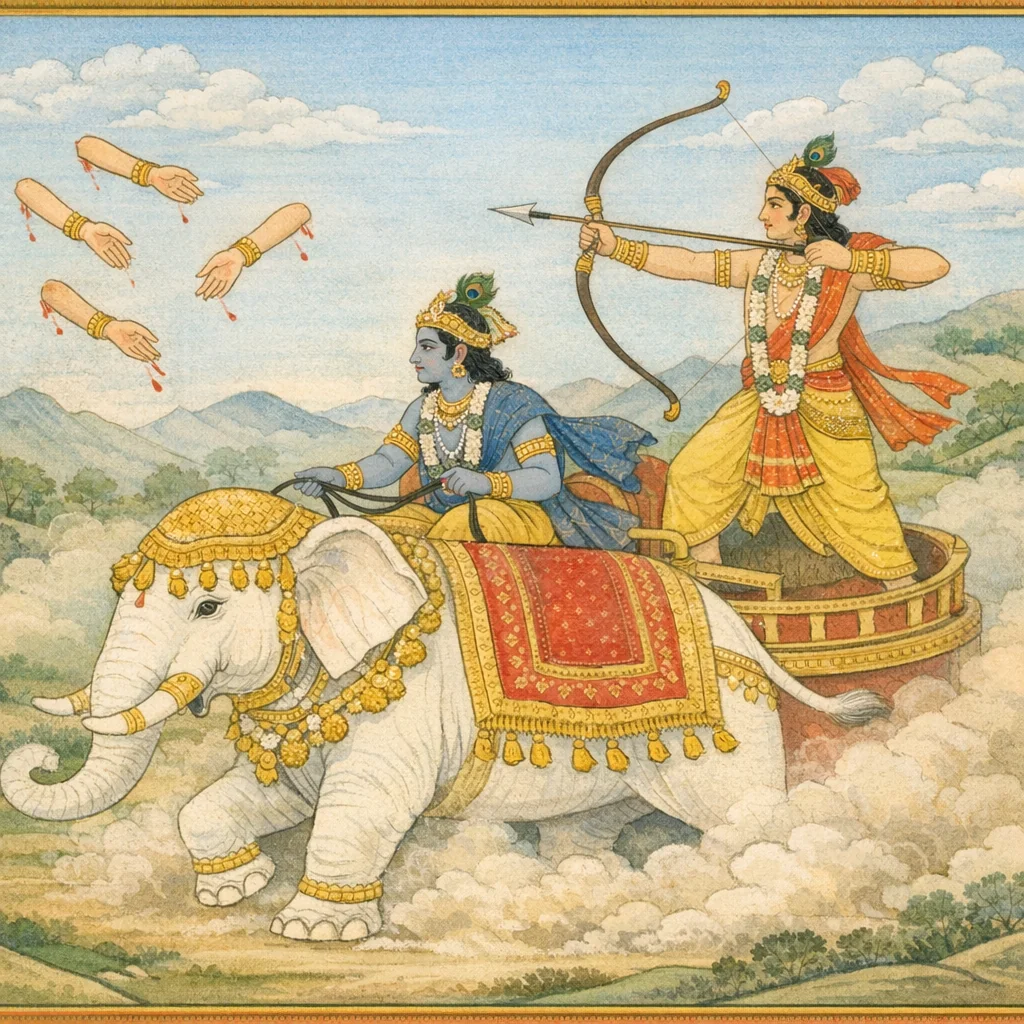
Chapter Arc: संजय धृतराष्ट्र से कहते हैं—पाण्डव-सेना के उत्तर भाग में दण्डधार के प्रहार से रथी, हाथी, घोड़े और पदाति कराह उठे; रणध्वनि में भय और अव्यवस्था फैलती जाती है। → मगध-निवासी दण्डधार, भगदत्त-तुल्य पराक्रमी, अपने प्रमाथी गज-बल के साथ अर्जुन और जनार्दन पर बाण-वर्ष करता है; हँसता-गरजता हुआ वह पाण्डव-पंक्तियों को तोड़ने का यत्न करता है। → अर्जुन दण्डधार को रण में मार गिराते हैं; उसके बाद उसका भ्राता ‘दण्ड’ हिम-श्वेत, सुवर्ण-मालाधारी, पर्वत-सम गज पर चढ़कर प्रतिशोध में धावा बोलता है—पर अर्जुन उसके भी भुजाओं को क्षुर-प्रहार से काट गिराते हैं; कटे हुए, चन्दन-रंजित भुज-दण्ड गज से एक साथ गिरते हैं। → दण्ड और दण्डधार के वध से उनकी सेना का मनोबल टूटता है और वह पलायन करती है; अर्जुन के चारों ओर अपने सैनिक इन्द्र के देवगणों की भाँति घिरकर विजय-स्तुति करते हैं और कहते हैं कि इस शत्रु के मारे जाने से प्रजा भय-मुक्त होगी। → अर्जुन शुभवचन सुनकर यथोचित सम्मान देते हैं और फिर संशप्तक-संघ के संहार हेतु आगे बढ़ जाते हैं—अगला संघर्ष तुरंत सामने है।
Shlokas
Verse 1
हि 7 बछ। हे अष्टादशो<् ध्याय: अर्जुनके द्वारा हाथियोंसहित दण्डधार और दण्ड आदिका वध तथा उनकी सेनाका पलायन संजय उवाच अथोत्तरेण पाण्डूनां सेनायां ध्वनिरुत्थित: । रथनागाश्चपत्तीनां दण्डधारेण वध्यताम्
Sanjaya said: Then, in the northern sector of the Pandavas’ army, a great roar arose. Charioteers, elephants, and foot-soldiers were being cut down by the wielder of the staff—so that the battlefield resounded with alarm and the ranks began to break under the pressure of relentless slaughter.
Verse 2
संजय कहते हैं--राजन्! तदनन्तर पाण्डव-सेनाके उत्तर भागमें दण्डधारके द्वारा मारे जाते हुए रथी, हाथी, घोड़े और पैदलोंका आर्तनाद गूँज उठा ।। निवर्तयित्वा तु रथं केशवो<र्जुनमब्रवीत् वाहयन्नेव तुरगान् गरुडानिलरंहस:,उस समय भगवान् श्रीकृष्णने अपना रथ लौटाकर गरुड़ और वायुके समान वेगवाले घोड़ोंको हाँकते हुए ही अर्जुनसे कहा--
Sanjaya said: O King, thereafter, in the northern sector of the Pandava army, a great cry of anguish resounded as chariot-warriors, elephants, horses, and foot-soldiers were being struck down by the wielder of the staff. Then Keshava, having turned the chariot back, spoke to Arjuna while still driving the horses—swift as Garuda and the wind. In that moment, Lord Krishna, reversing his chariot amid the press of battle, addressed Arjuna, guiding action with alertness and purpose even as the slaughter raged.
Verse 3
मागधो>प्यतिविक्रान्तो द्विरदेन प्रमाथिना । भगदत्तादनवर: शिक्षया च बलेन च,'पार्थ! यह मगधनिवासी दण्डधार भी बड़ा पराक्रमी है। इसके पास शत्रुओंको मथ डालने-वाला गजराज है। इसे युद्धकी उत्तम शिक्षा मिली है तथा यह बलवान भी है, इन सब विशेषताओंके कारण यह पराक्रममें भगदत्तसे तनिक भी कम नहीं है
Sanjaya said: “This Magadhan warrior too is exceedingly valiant. He possesses a crushing war-elephant that can smash opposing ranks. Trained in the finest arts of battle and endowed with great strength, he is, by these qualities, in prowess not at all inferior to Bhagadatta.”
Verse 4
एनं हत्वा निहन्तासि पुन: संशप्तकानिति । वाक्यान्ते प्रापयत् पार्थ दण्डधारान्तिकं प्रति,“अत: पहले इसका वध करके तुम पुनः संशप्तकोंका संहार करना।' इतना कहते- कहते श्रीकृष्णने अर्जुनको दण्डधारके निकट पहुँचा दिया
Sañjaya said: “Having slain this one, you will then destroy the Saṁśaptakas again.” As these words were being spoken, Śrī Kṛṣṇa brought Arjuna (Pārtha) close to Daṇḍadhāra. The moment underscores a warrior’s dharma: immediate, necessary action in battle is to be taken without losing sight of the larger obligation—protecting one’s side by neutralizing urgent threats and then returning to the vowed task.
Verse 5
स मागधानां प्रवरो$ड्कुशग्रहे ग्रहेडप्रसह्ो विकचो यथा ग्रह: । सपत्नसेनां प्रममाथ दारुणो महीं समग्रां विकचो यथा ग्रह:,मागध वीरोंमें सर्वश्रेष्ठ दण्डधार अंकुश धारण करके हाथीद्वारा युद्ध करनेमें अपना सानी नहीं रखते थे। जैसे ग्रहोंमें केतुग्रहका वेग असहां होता है, उसी प्रकार उनका आक्रमण भी शत्रुओंके लिये असहनीय था। जैसे धूमकेतु नामक उत्पातग्रह सम्पूर्ण भूमण्डलके लिये अनिष्टकारक होता है, उसी प्रकार उस भयंकर वीरने वहाँ शत्रुओंकी सम्पूर्ण सेनाको मथ डाला
Sañjaya said: The foremost of the Magadhas, gripping the elephant-goad, unmatched in elephant-combat, charged with a force as irresistible as a blazing comet among the planets. Terrible in battle, he crushed the enemy host; like a portentous comet that brings calamity upon the whole earth, his onset became ruinous to the opposing army. Ethically, the verse underscores how sheer martial prowess—when unleashed in war—can become an indiscriminate, world-afflicting force, overwhelming collective life beyond individual duels.
Verse 6
सुकल्पितं दानवनागसंनिभं महा भ्रनिर्ह्ठादममित्रमर्दनम् । रथाश्वमातड्रगणान् सहस्रश: समास्थितो हन्ति शरैर्नरानपि,उनका हाथी खूब सजाया गया था, वह गजासुरके समान बलशाली, महामेघके समान गर्जना करनेवाला तथा शत्रुओंको रौंद डालनेवाला था। उसपर आरूढ़ होकर दण्डधार अपने बाणोंसे सहस्रों रथों, घोड़ों, मतवाले हाथियों और पैदल मनुष्योंका भी संहार करने लगे
Sañjaya said: “That elephant had been splendidly caparisoned—like a Dānava among elephants—roaring like a great thundercloud and crushing foes beneath it. Mounted upon it, the staff-bearing warrior cut down with his arrows, by the thousand, chariots, horses, troops of rutting elephants, and even foot-soldiers.”
Verse 7
रथानधिष्ठाय सवाजिसारथीन् नरांश्व पादर्द्धिददो व्यपोथयत् | द्विपांश्न पद्धयां ममृदे करेण द्विपोत्तमो हन्ति च कालचक्रवत्,उनका वह हाथी रथोंपर पैर रखकर सारथि और घोड़ोंसहित उन्हें चूर-चूर कर डालता था। पैदल मनुष्योंको भी पैरोंसे ही कुचल डालता था। हाथियोंको भी दोनों पैरों तथा सूँड़से मसल देता था। इस प्रकार वह गजराज कालचक्रके समान शत्रु-सेनाका संहार करने लगा
Sañjaya said: Mounting the chariots, that foremost of elephants crushed them—chariots together with their horses and charioteers—into ruin. He trampled the foot-soldiers under his feet, and he ground down other elephants with both his feet and his trunk. Thus, like the wheel of Time itself, the lordly elephant began to annihilate the enemy host, displaying the terrifying, impersonal momentum of war where strength, not right, decides the immediate fate on the field.
Verse 8
नरांस्तु कार्ष्णायसवर्म भूषणान् निपात्य साशथ्वानपि पत्तिभि: सह । व्यपोथयद् दन्तिवरेण शुष्मिणा स शब्दवत् स्थूलनलं यथा तथा,वे अपने बलवान एवं श्रेष्ठ गजराजके द्वारा लोहेके कवच तथा उत्तम आभूषण धारण करनेवाले घुड़सवारोंकों घोड़ों और पैदलोंसहित पृथ्वीपर गिराकर कुचलवा देते थे। उस समय जैसे मोटे नरकुलोंके कुचले जाते समय “चर-चर” की आवाज होती है, उसी प्रकार उन सैनिकोंके कुचले जानेपर भी होती थी
Sañjaya said: With his powerful and excellent war-elephant, he struck down men clad in iron armour and fine ornaments, casting them to the ground along with their horses and their foot-soldiers, and then crushed them. As thick reeds crackle loudly when trampled, so too did those warriors make a harsh, splintering sound as they were crushed—an image that underscores the brutal, dehumanizing force of battle where splendour and protection fail before sheer might.
Verse 9
अथार्जुनो ज्यातलनेमिनि:स्वने मृदड्भभेरीबहुशडखनादिते । रथाश्वमातड्रसहस्रसंकुले रथोत्तमेनाभ्यपतद् द्विपोत्तमम्,तदनन्तर जहाँ धनुषकी टंकार और पहियोंकी घर्घराहटका शब्द गूँज रहा था, मृदंग, भेरी और बहुसंख्यक शंखोंकी ध्वनि हो रही थी तथा जहाँ रथ, घोड़े और हाथी सहस्रोंकी संख्यामें भरे हुए थे, उस समरांगणमें पूर्वोक्त गजराजके समीप अर्जुन अपने उत्तम रथके द्वारा जा पहुँचे
Sañjaya said: Then Arjuna, amid the resounding twang of bowstrings and the rumble of chariot-wheels—while drums, kettledrums, and countless conches blared—drove his excellent chariot into that battlefield crowded with thousands of chariots, horses, and elephants, and closed in upon the foremost of elephants (the great war-elephant previously described).
Verse 10
ततोडर्जुनं द्वादशभि: शरोत्तमै- जनार्दनं षोडशभि: समार्पयत् । स दण्डधारस्तुरगांस्त्रिभिस्त्रिभि- स््ततो ननाद प्रजहास चासकृत्,तब दण्डधारने अर्जुनको बारह और भगवान् श्रीकृष्णको सोलह उत्तम बाण मारे। फिर तीन-तीन बाणोंसे उनके घोड़ोंको घायल करके वे बारंबार गर्जने और अट्टहास करने लगे
Then he struck Arjuna with twelve excellent arrows and showered Janārdana (Kṛṣṇa) with sixteen. Next, wounding the horses with three arrows each, that wielder of the staff-like weapon roared again and again and repeatedly burst into loud laughter—an exultant display of battlefield pride and intimidation amid the relentless clash of dharma and ambition.
Verse 11
ततोडस्य पार्थ: सगुणेषुकार्मुकं चकर्त भल्लैर्ध्वजमप्यलंकृतम् । पुनर्नियन्तृन् सह पादगोप्तृ- सतत: स चुक्रोध गिरिव्रजेश्वर:,तत्पश्चात् अर्जुनने अपने भल्लोंद्वारा प्रत्यंचा और बाणोंसहित दण्डधारके धनुष तथा सजे-सजाये ध्वजको भी काट गिराया। फिर हाथीके महावतों तथा पादरक्षकोंको भी मार डाला। इससे गिरिव्रजके स्वामी दण्डधार अत्यन्त कुपित हो उठे
Sañjaya said: Then Pārtha (Arjuna), with sharp bhalla-arrows, cut to pieces his bow with its bowstring, and also struck down his ornamented banner. Next he slew the drivers (mahouts) along with the foot-guards protecting them. Thereupon the lord of Girivraja, the wielder of the staff-like weapon, blazed with intense wrath—his anger rising from the shock of seeing his martial insignia and protectors destroyed in battle.
Verse 12
ततोअरर्जुनं भिन्नकटेन दन्तिना घनाघनेनानिलतुल्यवर्चसा । अतीव चुक्षो भयिषुर्जनार्दनं धनंजयं चाभिजघान तोमरै:,उन्होंने गण्डस्थलसे मदकी धारा बहानेवाले, वायुके समान वेगशाली, मदोन्मत्त गजराजके द्वारा अर्जुन और श्रीकृष्णको अत्यन्त घबराहटमें डालनेकी इच्छासे उसे उन दोनोंकी ओर बढ़ाया और तोमरोंसे उन दोनोंपर प्रहार किया
Sanjaya said: Then, with a rutting elephant whose temples streamed with ichor—dark as a rain-cloud and radiant, swift as the wind—he drove it forward, intent on throwing Janardana (Krishna) and Dhananjaya (Arjuna) into extreme alarm; and he struck at them with javelins. The scene underscores the war’s ruthless escalation, where fear is deliberately weaponized against even the foremost warriors.
Verse 13
अथास्य बाहू द्विपहस्तसंनिभौ शिरकश्ष पूर्णेन्दुनिभानन त्रिभि: । क्षुरै: प्रचिच्छेद सहैव पाण्डव- स्ततो द्विपं बाणशतै: समार्पयत्,तब अर्जुनने हाथीकी सूँड़के समान मोटी दण्डधारकी दोनों भुजाओं तथा पूर्ण चन्द्रमाके समान मनोहर मुखवाले उनके मस्तकको भी तीन छुरोंसे एक साथ ही काट डाला। फिर उन्होंने उनके हाथको सौ बाण मारे
Sañjaya said: Then the Pāṇḍava (Arjuna) simultaneously severed his two arms—thick like an elephant’s trunk—and also his head, whose face was lovely like the full moon, with three razor-edged arrows. Thereafter he struck the elephant with a hundred arrows. The passage underscores the grim precision of battlefield duty: skill and resolve are exercised without hesitation in the violent economy of war.
Verse 14
स पार्थबाणैस्तपनीय भूषणै: समाचित: काजउ्चनवर्मभृद् द्विप: । तथा चकाशे निशि पर्वतो यथा दावाग्निना प्रज्वलितौषधिद्रुम:,उसके सारे शरीरमें अर्जुनके सुवर्णभूषित बाण चुभ गये थे। इससे सुवर्णमय कवच धारण करनेवाला वह हाथी उसी प्रकार शोभा पाने लगा, जैसे रात्रिमें दावानलसे जलती हुई ओषधियों और वृक्षोंसे युक्त पर्वत प्रकाशित होता है
Sañjaya said: Pierced all over by Arjuna’s arrows adorned with gold, that elephant—wearing a golden coat of mail—shone brilliantly. It looked like a mountain at night, lit up by a forest-fire, blazing with herbs and trees. The image underscores the terrible splendor of battle: even suffering is transfigured into a fearful radiance by the instruments of war.
Verse 15
स वेदनार्तोम्बुदनिस्वनो नदं- श्वरन भ्रमन् प्रस्खलितान्तरोड<द्रवत् । पपात रुग्ण: सनियन्तृकस्तथा यथा गिरिव॑जविदारितस्तथा,वह हाथी वेदनासे पीड़ित हो मेघके समान गर्जना करता, सब ओर विचरता, घूमता और बीच-बीचमें लड़खड़ाता हुआ भागने लगा। अधिक घायल हो जानेके कारण वह महावतोंके साथ ही पृथ्वीपर गिर पड़ा; मानो वद्धद्वारा विदीर्ण किया हुआ पर्वत धराशायी हो गया हो
Sañjaya said: Tormented by pain, the elephant roared with a thundercloud’s rumble. Wandering in confusion, it ran off, repeatedly staggering. Then, grievously wounded, it collapsed to the ground along with its driver, like a mountain split by a thunderbolt crashing down. The scene underscores the pitiless momentum of battle, where even mighty creatures and their human keepers are swept into suffering and ruin.
Verse 16
हिमावदातेन सुवर्णमालिना हिमाद्रिकूटप्रतिमेन दन्तिना । हते रणे भ्रातरि दण्ड आव्रज- ज्जिघांसुरिन्द्रावरजं धनंजयम्,रणभूमिमें अपने भाई दण्डधारके मारे जानेपर दण्ड श्रीकृष्ण और अर्जुनका वध करनेकी इच्छासे बर्फके समान सफेद, सुवर्णमालाधारी तथा हिमालयके शिखरके समान विशालकाय गजराजके द्वारा वहाँ आ पहुँचा
Sañjaya said: When his brother Daṇḍa was slain in battle, Daṇḍa (the warrior) rushed onto the field, intent on killing Dhanañjaya (Arjuna), the younger brother of Indra. He arrived mounted upon a lordly elephant—snow-white, adorned with a garland of gold, and towering like a peak of the Himālaya—driven by vengeful resolve born of fraternal loss.
Verse 17
इस प्रकार श्रीमह्याभारत कर्णपर्वमें अश्वत्थागाकी पराजयविषयक सत्रहवाँ अध्याय पूरा हुआ,स तोमरैरकककरप्रभैस्त्रिभि- जनार्दनं पञ्चभिरर्जुनं शितै: । समर्पयित्वा विननाद नर्दयं- स्ततो<स्य बाहू निचकर्त पाण्डव: उसने सूर्यकी किरणोंके समान प्रकाशित होनेवाले तीन तीखे तोमरोंसे श्रीकृष्णको और पाँचसे अर्जुनको घायल करके बड़े जोरसे गर्जना की। इतनेहीमें पाण्डुपुत्र अर्जुनने उसकी दोनों बाँहें काट डालीं
Sañjaya said: With three keen javelins, radiant like the sun’s rays, he struck Janārdana (Kṛṣṇa), and with five sharp ones he struck Arjuna. Having thus delivered his blows, he roared loudly in exultation; but at once the Pāṇḍava (Arjuna), answering force with decisive restraint, cut off both his arms—showing how battlefield prowess is checked by swifter skill and the inexorable consequences of violent intent.
Verse 18
क्षुरप्रकृत्ती सुभृशं॑ सतोमरौ शुभाड़दौ चन्दनरूषितौ भुजौ । गजात् पतन््तौ युगपद् विरेजतु- ्यथाद्रिशुड्भाद रुचिरो महोरगौ,क्षुसे कटी हुई, सुन्दर बाजूबन्दसे विभूषित, चन्दनचर्चित तथा तोमरसहित वे विशाल भुजाएँ हाथीसे एक साथ गिरते समय पर्वतके शिखरसे गिरनेवाले दो सुन्दर एवं बड़े-बड़े सर्पोंके समान विभूषित हुईं इस प्रकार अपने सुहृदोंकी कही हुई ये बातें बारंबार सुनकर अर्जुनको मन-ही-मन बड़ी प्रसन्नता हुई। वे उन लोगोंका यथायोग्य आदर-सत्कार करके पुनः संशप्तकगणका वध करनेके लिये वहाँसे चल दिये ।। इति श्रीमहाभारते कर्णपर्वणि दण्डवधेडष्टादशो5 ध्याय: इस प्रकार श्रीमह्ा भारत कर्णपर्वमें दण्डधार और दण्डका वधविषयक अठारहवाँ अध्याय पूरा हुआ
Sañjaya said: “Those two mighty arms—honed like razors, bristling with javelins, adorned with splendid armlets, and anointed with sandal—shone as they fell together from the elephant, like two beautiful great serpents slipping down from a mountain peak.” The image underscores the terrible grandeur of war: even heroic strength, richly ornamented and celebrated, is brought down in an instant, turning splendor into a warning about the fragility of embodied power amid adharma-driven violence.
Verse 19
तथार्धचन्द्रेण हतं किरीटिना पपात दण्डस्य शिर:ः क्षितिं द्विपात् । तच्छोणितादे निपतद् विरेजे दिवाकरोडस्तादिव पश्चिमां दिशम्,तत्पश्चात् किरीटधारी अर्जुनके चलाये हुए अर्थचन्द्रसे कटकर दण्डका मस्तक हाथीसे पृथ्वीपर गिर पड़ा। उस समय खूनसे लथपथ हो गिरता हुआ वह मस्तक अस्ताचलसे पश्चिम दिशाकी ओर डूबते हुए सूर्यके समान शोभायमान हुआ
Sañjaya said: Struck by Arjuna—the diademed warrior—with a crescent-shaped arrow, Daṇḍa’s head was severed and fell from his elephant onto the earth. As it dropped, drenched in blood, it shone like the sun sinking in the west beyond the setting mountain—an image of grim splendor amid the violence of battle.
Verse 20
अथ ड्िपं श्वेतवरा भ्रसंनि भं दिवाकरांशुप्रतिमै: शरोत्तमै: । बिभेद पार्थ: स पपात नादयन् हिमाद्रिकूटं कुलिशाहतं यथा,इसके बाद अर्जुनने श्वेत महामेघके समान सफेद रंगवाले उस हाथीको सूर्यकी किरणोंके सदृश तेजस्वी उत्तम बाणोंद्वारा विदीर्ण कर डाला। फिर तो वह वज्रके मारे हुए हिमालयके शिखरके समान धमाकेकी आवाजके साथ धराशायी हो गया
Sañjaya said: Then Pārtha (Arjuna) pierced that excellent white elephant—like a bright white cloud—with superb arrows blazing like the rays of the sun. Struck through, it crashed down with a thunderous roar, like a peak of the Himālaya shattered by Indra’s thunderbolt. The verse underscores the relentless force of war: prowess and precision bring swift destruction, while the similes evoke cosmic power to frame human violence within a larger, awe-inspiring order.
Verse 21
ततोडपरे तत्प्रतिमा गजोत्तमा जिगीषव: संयति सव्यसाचिना । तथा कृतास्ते च यथैव तौ द्विपौ ततः प्रभग्नं सुमहद्रिपोर्बलम्,तदनन्तर उसीके समान जो दूसरे-दूसरे गजराज विजयकी इच्छासे युद्धके लिये आगे बढ़े, उन सबकी सव्यसाची अर्जुनने वैसी ही दशा कर डाली, जैसी कि पूर्वोक्त दोनों हाथियोंकी कर दी थी। इससे शत्रुकी उस विशाल सेनामें भगदड़ मच गयी
Sañjaya said: Then other excellent elephants, matching those in might, advanced into battle with the desire to win. Savyasācī Arjuna reduced them to the very same condition as he had done to the two elephants mentioned earlier. Thereupon, a great rout broke out in the enemy’s vast host—showing how, in war, unchecked aggression and pride in brute force collapse when met by disciplined skill and steadfast resolve.
Verse 22
गजा रथाश्वाः पुरुषाश्व संघश: परस्परघ्ना: परिपेतुराहवे । परस्परं प्रस्खलिता: समाहिता भृशं निपेतुर्बहुभाषिणों हता:,झुंड-के-झुंड हाथी, रथ, घोड़े और पैदल मनुष्य परस्पर आघात-प्रत्याघात करते हुए युद्धस्थलमें चारों ओरसे टूट पड़े थे। वे आपसमें एक-दूसरेकी चोटसे अत्यन्त घायल हो लड़खड़ाते और बहुत बकझक करते हुए मरकर गिर जाते थे
Sañjaya said: In the battle, elephants, chariots, horses, and masses of foot-soldiers surged about, striking and counterstriking one another. Wounded grievously by each other’s blows, they reeled and stumbled; and, amid loud and many cries, the slain fell down in heaps—an image of war’s blind mutual destruction and the collapse of restraint when violence becomes its own momentum.
Verse 23
अथार्जुनं स्वे परिवार्य सैनिका: पुरन्दरं देवगणा इवाब्रुवन् अभैष्म यस्मान्मरणादिदव प्रजा: स वीर दिष्टया निहतस्त्वया रिपु:,इसके बाद इन्द्रको घेरकर खड़े हुए देवताओंके समान अपनी ही सेनाके लोग अर्जुनको घेरकर इस प्रकार बोले--“वीर! जैसे प्रजा मौतसे डरती है, उसी प्रकार हमलोग जिससे भयभीत हो रहे थे, उस शत्रुको आपने मार डाला; यह बड़े सौभाग्यकी बात है!
Sañjaya said: Then their own soldiers, surrounding Arjuna, spoke like the hosts of gods encircling Purandara (Indra): “O hero, the enemy whom we feared—just as subjects fear death—has, by good fortune, been slain by you.”
Verse 24
न चेदरक्षिष्य इमं जन॑ भयाद् द्विषद्धिरेवं बलिभि: प्रपीडितम् । तथा भविष्यद् विषतां प्रमोदनं यथा हतेष्वेष्विह नोडरिसूदन,'शत्रुसूदन! यदि आप बलवान शत्रुओंसे इस प्रकार पीड़ित हुए इन स्वजनोंकी भयसे रक्षा नहीं करते तो इन शत्रुओंको वैसी ही प्रसन्नता होती, जैसी इस समय इनके मारे जानेपर यहाँ हमलोगोंको हो रही है”
Sañjaya said: “O slayer of foes, if out of fear you had not protected these people—your own kinsmen—when they were being thus oppressed by powerful enemies, then the hostile would have rejoiced in the same way that we now rejoice here at their being slain.”
Verse 25
इतीव भूयश्न सुहृद्धिरीरिता निशम्य वाच: सुमनास्ततोअर्जुन: | यथानुरूपं प्रतिपूज्य तं जनं जगाम संशप्तकसंघहा पुन:
Sañjaya said: Hearing again those words spoken by his well-wishing friends, Arjuna’s mind grew calm and clear. Having responded with due honor to those people in a manner fitting to the occasion, he once more went forth as the slayer of the band of the Saṃśaptakas.
Frequently Asked Questions
The tension between decisive victory (killing a routed opponent) and restraint grounded in prior obligation: Karṇa releases Nakula despite tactical dominance because he remembers Kuntī’s instruction/request.
The chapter contrasts verbal reproach with demonstrable capability: Karṇa frames legitimacy in combat through performance (karma) rather than denunciation (vāda), while the narrative simultaneously shows that ethical memory can override mere efficiency.
No explicit phalaśruti appears in this chapter segment; its meta-significance is conveyed narratively through exemplars of restraint, obligation, and the consequences of tactical choices within the war’s larger moral architecture.