Adhyaya 49
Droṇa-parva Adhyāya 49: Yudhiṣṭhira’s Lament and Strategic Foreboding after Abhimanyu’s Fall
Upa-parva: Abhimanyu-vadha-anuśocana (Lament after Abhimanyu’s Fall)
Saṃjaya reports that after the rathayūthapa Saubhadra (Abhimanyu) is slain, the Pāṇḍavas sit down in distress around King Yudhiṣṭhira, mentally fixed on the loss. Yudhiṣṭhira laments the fallen hero’s prowess: Abhimanyu breached the compact Droṇa-led formation like a lion entering a herd, scattering seasoned archers and striking down key opponents before reaching death. The king then turns to the ethical burden of leadership, questioning how he will face Arjuna and Subhadrā, and implicitly acknowledging his role in allowing a young, comparatively inexperienced warrior to be placed at the forefront. He characterizes this as an error arising from desire and delusion—an inability to foresee the “precipice” hidden behind an attractive aim. The chapter closes by projecting consequences: Arjuna’s anger at the killing of his son will pose severe danger to the Dhārtarāṣṭra coalition, and Yudhiṣṭhira expresses that victory or sovereignty is joyless when weighed against the fall of such a valued hero.
Chapter Arc: अकेला घिरा हुआ सौभद्र अभिमन्यु—धनुष, रथ, खड्ग और चक्र से वंचित—फिर भी रणभूमि में सूर्य-चन्द्र-सम तेज से खड़ा है; पृथ्वीपति वीर उसकी दुर्धर्ष देह-दीप्ति को देखते रह जाते हैं। → शत्रु-समूह उसे चारों ओर से दबाता है; अभिमन्यु महागदा उठा कर अंतिम प्रतिरोध करता है। गदा की ज्वलन्त वज्र-सी उठान देखकर रथोपस्थ के योद्धा पीछे हटते हैं, फिर भी बहुजन मिलकर उसे थकाते, काटते, और अवसर खोजते हैं। → दुःशासनपुत्र क्रोध में गदा लेकर दौड़ता है—“तिष्ठ तिष्ठ”—और उठते हुए अभिमन्यु के मस्तक पर गदा-प्रहार करता है; परवीरहा सौभद्र भूमि पर गिर पड़ता है। → अभिमन्यु के पतन से कौरवों में परा प्रीति और पाण्डवों में तीव्र व्यथा फैलती है; एक वीर का अंत बहु-योद्धाओं के बीच होता है, और रण का नैतिक ताप और बढ़ जाता है। → पाण्डव-पक्ष की शोकाग्नि प्रतिशोध में कैसे बदलेगी—और किस पर सबसे पहले गिरेगी—यह अगले प्रसंग की ओर कथा को धकेल देता है।
Shlokas
Verse 1
/ (दाक्षिणात्य अधिक पाठका ३ श्लोक मिलाकर कुल ४१ ६ “लोक हैं।) न२्ंखय्य््लिििसस ह्य ४ «आर एकोनपज्चाशत्तमो<ड्ध्याय: अभिमन्युका कालिकेय, वसाति और कैकय रथियोंको मार डालना एवं छ: महारथियोंके सहयोगसे अभिमन्युका वध और भागती हुई अपनी सेनाको युधिष्ठिरका आश्वासन देना संजय उवाच विष्णो: स्वसुर्नन्दकर: स विष्ण्वायुधभूषण: । रराजातिरथ: संख्ये जनार्दन इवापर:,संजय कहते हैं--राजन्! भगवान् श्रीकृष्णकी बहिन सुभद्राको आनन्दित करनेवाला तथा श्रीकृष्णके ही समान चक्ररूपी आयुधसे सुशोभित होनेवाला अतिरथी वीर अभिमन्यु उस युद्धस्थलमें दूसरे श्रीकृष्णके समान प्रकाशित हो रहा था
Sanjaya said: O King, that heroic Abhimanyu—delighting Subhadrā, the sister of Lord Viṣṇu (Kṛṣṇa), and adorned with the same discus-like weaponry—shone on the battlefield as a supreme chariot-warrior, like another Janārdana (Kṛṣṇa) himself. The verse frames Abhimanyu’s valor not merely as martial prowess but as a dharmic radiance: his conduct and splendor in war are measured against the divine standard embodied by Kṛṣṇa.
Verse 2
मारुतोद्धूतकेशान्तमुद्यतारिवरायुधम् । वपु: समीक्ष्य पृथ्वीशा दुःसमीक्ष्यं सुरैरपि
Sañjaya said: Seeing that kingly warrior’s form—his hair-ends tossed by the wind and his excellent weapons raised aloft—the rulers of the earth beheld a sight so formidable that even the gods would find it hard to look upon. The verse underscores how, in the moral chaos of war, sheer martial splendor and wrath can become awe-inspiring yet ominous, eclipsing ordinary human courage.
Verse 3
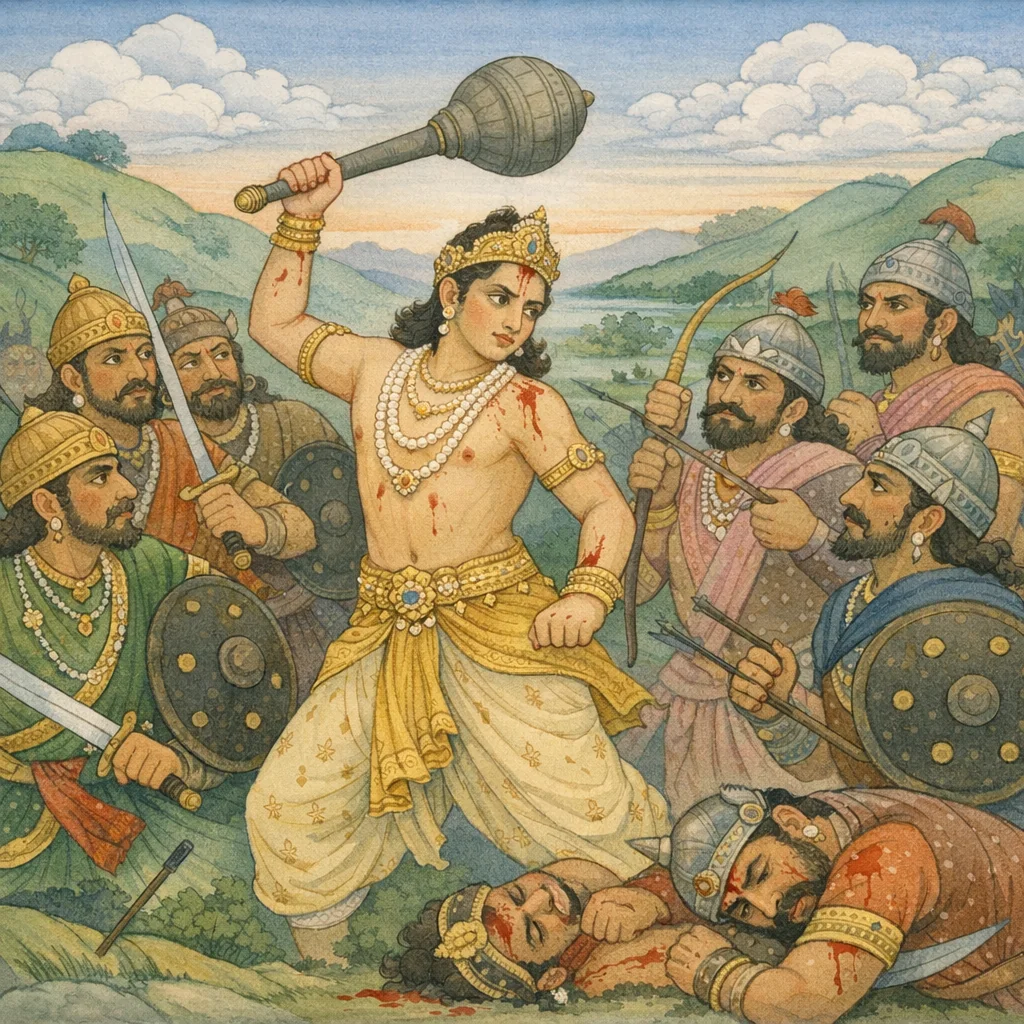
महारथस्तत: कार्ष्णि: संजग्राह महागदाम्,तब महारथी अभिमन्युने एक विशाल गदा हाथमें ले ली। शत्रुओंने उसे धनुष, रथ, खड्ग और चक्रसे भी वंचित कर दिया था। इसलिये गदा हाथमें लिये हुए अभिमन्युने अश्वत्थामापर धावा किया
Sanjaya said: Then the great warrior, Abhimanyu—descendant of Kṛṣṇa’s line—seized a mighty mace. Deprived by his enemies of bow, chariot, sword, and discus-like weaponry, he chose the mace as his remaining means of resistance. With the mace in hand, Abhimanyu charged straight at Aśvatthāmā, embodying the kṣatriya ethic of steadfast courage even when stripped of customary arms.
Verse 4
विधनुःस्यन्दनासिस्तैर्विचक्रश्चारिभि: कृत: । अभिमन्युर्गदापाणिर श्वृत्थामानमार्दयत्,तब महारथी अभिमन्युने एक विशाल गदा हाथमें ले ली। शत्रुओंने उसे धनुष, रथ, खड्ग और चक्रसे भी वंचित कर दिया था। इसलिये गदा हाथमें लिये हुए अभिमन्युने अश्वत्थामापर धावा किया
Verse 5
स गदामुद्यतां दृष्टवा ज्वलन्तीमशनीमिव । अपाक्रामद् रथोपस्थाद् विक्रमांस्त्रीन् नरर्षभ:,प्रजजलित वज़्के समान उस गदाको ऊपर उठी हुई देख नरश्रेष्ठ अश्वत्थामा अपने रथकी बैठकसे तीन पग पीछे हट गया
Sañjaya said: Seeing that mace raised aloft, blazing like a thunderbolt, the bull among men—Aśvatthāmā—stepped back three paces from the seat of his chariot. The moment underscores how even the fiercest warriors, amid the moral chaos of war, must reckon with immediate peril and the limits of bravado when confronted by overwhelming force.
Verse 6
तस्याश्वान् गदया हत्वा तथोभौ पार्ष्णिसारथी । शराचिताड्: सौभद्र: श्वाविद्वत् समदृश्यत,उस गदासे अभश्र॒ृत्थामाके चारों घोड़ों तथा दोनों पार्श्वरक्षकोंको मारकर बाणोंसे भरे हुए शरीरवाला सुभद्राकुमार साहीके समान दिखायी देने लगा
Sañjaya said: Having struck down his opponent’s horses with his mace, and likewise killing the two flank-guards and the charioteer, the son of Subhadrā stood with his body bristling with arrows—appearing like a porcupine. The verse underscores the grim ethic of battlefield duty: valor and skill are displayed amid relentless violence, where even attendants and horses become casualties in the pursuit of victory.
Verse 7
ततः सुबलदायादं कालिकेयमपोथयत् | जघान चास्यानुचरान् गान्धारान् सप्तसप्ततिम्,तदनन्तर उसने सुबलपुत्र कालिकेयको मार गिराया और उसके पीछे चलनेवाले सतहत्तर गान्धारोंका भी संहार कर डाला
Sañjaya said: Then he struck down Kālikeya, the descendant of Subala; and thereafter he also slew Kālikeya’s followers—seventy-seven warriors of Gandhāra. The verse underscores the relentless momentum of battle, where lineage and allegiance mark one’s place in the conflict, and where the ethics of war are framed by duty to one’s side rather than personal enmity.
Verse 8
पुनश्चैव वसातीयाज्जघान रथिनो दश । केकयानां रथान् सप्त हत्वा च दश कुञ्जरान्
Sañjaya said: And again, that warrior of the Vasātiya line struck down ten chariot-fighters. Having destroyed seven chariots of the Kekayas, he also slew ten elephants. The account underscores the relentless escalation of violence in battle—where prowess is measured in numbers felled, even as the moral weight of slaughter accumulates.
Verse 9
दौ:शासनिरथं साश्वं गदया समपोथयत् । इसके बाद दस वसातीय रथियोंको मार डाला। केकयोंके सात रथों और दस हाथियोंको मारकर दुःशासनकुमारके घोड़ोंसहित रथको भी गदाके आघातसे चूर-चूर कर डाला ।। ८$ || ततो दौ:शासनि: क्रुद्धो गदामुद्यम्य मारिष
Sañjaya said: With a mace he smashed to pieces the chariot of Duḥśāsana’s son, together with its horses. Then Duḥśāsana’s son, enraged, lifted his mace—O dear one—ready to strike back. The scene underscores how wrath (krodha) rapidly escalates violence on the battlefield, eclipsing restraint and discernment that dharma would otherwise demand.
Verse 10
तावुद्यतगदौ वीरावन्योन्यवधकाड्क्षिणौ
Sañjaya said: Those two heroes, with maces raised, each intent on the other’s death, stood poised for mutual slaughter—an image of war’s grim resolve where valor is inseparable from the ethical tragedy of fratricidal conflict.
Verse 11
भ्रातृव्यौ सम्प्रजह्वाते पुरेव ऋयम्बकान्धकौ । वे दोनों वीर एक-दूसरेके शत्रु थे। अतः गदा हाथमें लेकर एक-दूसरेका वध करनेकी इच्छासे परस्पर प्रहार करने लगे। ठीक उसी तरह, जैसे पूर्वकालमें भगवान् शंकर और अन्धकासुर परस्पर गदाका आघात करते थे ।। तावन्योन्यं गदाग्राभ्यामाहत्य पतितौ क्षितौ
Sañjaya said: The two rival kinsmen closed in upon each other, like Śiva (Tryambaka) and the demon Andhaka in ancient times. Striking one another with the heavy heads of their maces, they both fell to the ground. The simile underscores how, in the fury of war, even those bound by kinship can be driven into mutual destruction when enmity eclipses restraint and dharma.
Verse 12
इन्द्रध्वजाविवोत्सृष्टी रणमध्ये परंतपौ । शत्रुओंको संताप देनेवाले वे दोनों वीर रणक्षेत्रमें गदाके अग्रभागसे एक-दूसरेको चोट पहुँचाकर नीचे गिराये हुए दो इन्द्र-ध्वजोंके समान पृथ्वीपर गिर पड़े ।। दौ:शासनिरथोत्थाय कुरूणां कीर्तिवर्धन:
Sañjaya said: In the midst of the battle, those two tormentors of foes—two heroes who brought burning anguish to their enemies—struck one another with the head of their maces and fell to the earth like two Indra-banners cast down. Then Duhśāsani, rising again, sought to enhance the fame of the Kurus.
Verse 13
गदावेगेन महता व्यायामेन च मोहित:,गदाके उस महान् वेग और परिश्रमसे मोहित होकर शत्रुवीरोंका नाश करनेवाला अभिमन्यु अचेत हो पृथ्वीपर गिर पड़ा। राजन! इस प्रकार उस युद्धस्थलमें बहुत-से योद्धाओंने मिलकर एकाकी अभिमन्युको मार डाला
Sañjaya said: Overwhelmed by the tremendous force of the mace-blows and exhausted by relentless exertion, Abhimanyu—destroyer of enemy heroes—lost consciousness and fell upon the earth. O King, thus on that battlefield, many warriors, joining together, slew Abhimanyu while he stood alone. The episode underscores the moral rupture of war: when a lone fighter is surrounded and struck down by many, victory is gained at the cost of fairness and kṣatriya-ethics, intensifying the tragedy that fuels further vengeance.
Verse 14
विचेता न्न्यपतद् भूमौ सौभद्र: परवीरहा । एवं विनिहतो राजन्नेको बहुभिराहवे,गदाके उस महान् वेग और परिश्रमसे मोहित होकर शत्रुवीरोंका नाश करनेवाला अभिमन्यु अचेत हो पृथ्वीपर गिर पड़ा। राजन! इस प्रकार उस युद्धस्थलमें बहुत-से योद्धाओंने मिलकर एकाकी अभिमन्युको मार डाला
Sañjaya said: Overcome by exhaustion and the force of the blows, Abhimanyu—the son of Subhadrā, a slayer of enemy heroes—fell senseless to the ground. O King, thus in that battle, many warriors together brought down and killed the lone Abhimanyu. The passage underscores the moral dissonance of collective violence against a single, isolated fighter, even amid the accepted harshness of war.
Verse 15
क्षोभयित्वा चमूं सर्वां नलिनीमिव कुञ्जर: । अशोभत हतो वीरो व्याधैर्वनगजो यथा,जैसे हाथी कभी सरोवरको मथ डालता है, उसी प्रकार सारी सेनाको क्षुब्ध करके व्याधोंके द्वारा जंगली हाथीकी भाँति मारा गया वीर अभिमन्यु वहाँ अद्भुत शोभा पा रहा था
Sañjaya said: Having churned and thrown the entire army into turmoil—like an elephant stirring up a lotus-filled lake—the heroic Abhimanyu, though slain, still shone there with a strange, awe-inspiring splendor, like a wild elephant brought down by hunters.
Verse 16
त॑ं तथा पतितं शूरं तावका: पर्यवारयन् । दावं दग्ध्वा यथा शान्तं पावकं शिशिरात्यये,इस प्रकार रणभूमिमें गिरे हुए शूरवीर अभिमन्युको आपके सैनिकोंने चारों ओरसे घेर लिया। जैसे ग्रीष्म-ऋतुमें जंगलको जलाकर आग बुझ गयी हो, जिस प्रकार वायु वृक्षोंकी शाखाओंको तोड़-फोड़कर शान्त हो रही हो, जैसे संसारको संतप्त करके सूर्य अस्ताचलको चले गये हों, जैसे चन्द्रमापर ग्रहण लग गया हो तथा जैसे समुद्र सूख गया हो, उसी प्रकार समस्त कौरव-सेनाको संतप्त करके पूर्ण चन्द्रमाके समान मुखवाला अभिमन्यु पृथ्वीपर पड़ा था; उसके सिरके बड़े-बड़े बालों (काकपक्ष)-से उसकी आँखें ढक गयी थीं। उस दशामें उसे देखकर आपके महारथी बड़ी प्रसन्नताके साथ बारंबार सिंहनाद करने लगे
Sañjaya said: Seeing that hero fallen in such a state, your warriors surrounded him on every side. He lay there like a forest-fire that, after consuming the woodland in the heat of summer, has at last subsided—having scorched the whole host and then come to rest. The verse underscores the grim ethic of war: even a supremely valiant fighter, once brought down, becomes the object of collective control and triumphal encirclement, revealing how victory can harden into exultation over a fallen foe.
Verse 17
विमृद्य नगशृज्भजाणि संनिवृत्तमिवानिलम् । अस्तंगतमिवादित्यं तप्त्वा भारतवाहिनीम्,इस प्रकार रणभूमिमें गिरे हुए शूरवीर अभिमन्युको आपके सैनिकोंने चारों ओरसे घेर लिया। जैसे ग्रीष्म-ऋतुमें जंगलको जलाकर आग बुझ गयी हो, जिस प्रकार वायु वृक्षोंकी शाखाओंको तोड़-फोड़कर शान्त हो रही हो, जैसे संसारको संतप्त करके सूर्य अस्ताचलको चले गये हों, जैसे चन्द्रमापर ग्रहण लग गया हो तथा जैसे समुद्र सूख गया हो, उसी प्रकार समस्त कौरव-सेनाको संतप्त करके पूर्ण चन्द्रमाके समान मुखवाला अभिमन्यु पृथ्वीपर पड़ा था; उसके सिरके बड़े-बड़े बालों (काकपक्ष)-से उसकी आँखें ढक गयी थीं। उस दशामें उसे देखकर आपके महारथी बड़ी प्रसन्नताके साथ बारंबार सिंहनाद करने लगे
Sañjaya said: “Having crushed the warriors of the Bhāratas, he lay stilled—like the wind that subsides after shattering the crests and branches of trees, like the sun that sets after scorching the world. Thus Abhimanyu, who had tormented the entire Kaurava host, lay fallen on the battlefield, surrounded on all sides by your soldiers. Seeing him in that condition, your great chariot-warriors repeatedly roared with lion-cries in exultation.”
Verse 18
उपप्लुतं यथा सोम॑ संशुष्कमिव सागरम् | पूर्णचन्द्रा भवदनं काकपक्षवृताक्षिकम्,इस प्रकार रणभूमिमें गिरे हुए शूरवीर अभिमन्युको आपके सैनिकोंने चारों ओरसे घेर लिया। जैसे ग्रीष्म-ऋतुमें जंगलको जलाकर आग बुझ गयी हो, जिस प्रकार वायु वृक्षोंकी शाखाओंको तोड़-फोड़कर शान्त हो रही हो, जैसे संसारको संतप्त करके सूर्य अस्ताचलको चले गये हों, जैसे चन्द्रमापर ग्रहण लग गया हो तथा जैसे समुद्र सूख गया हो, उसी प्रकार समस्त कौरव-सेनाको संतप्त करके पूर्ण चन्द्रमाके समान मुखवाला अभिमन्यु पृथ्वीपर पड़ा था; उसके सिरके बड़े-बड़े बालों (काकपक्ष)-से उसकी आँखें ढक गयी थीं। उस दशामें उसे देखकर आपके महारथी बड़ी प्रसन्नताके साथ बारंबार सिंहनाद करने लगे
Sanjaya said: Abhimanyu—his face like the full moon—lay fallen upon the earth after scorching the entire Kaurava host. His eyes were covered by thick locks of hair (kākapakṣa). The Kaurava warriors, having surrounded the slain hero on all sides, roared repeatedly with triumphant lion-cries, as though the fire that had burned a forest in summer had died down, as though the wind that had shattered branches had grown still, as though the sun that had tormented the world had set, as though the moon were eclipsed, and as though the ocean had dried up.
Verse 19
त॑ भूमौ पतितं दृष्टवा तावकास्ते महारथा: । मुदा परमया युक्ताश्रुक्रुशु: सिंहवन्मुहु:,इस प्रकार रणभूमिमें गिरे हुए शूरवीर अभिमन्युको आपके सैनिकोंने चारों ओरसे घेर लिया। जैसे ग्रीष्म-ऋतुमें जंगलको जलाकर आग बुझ गयी हो, जिस प्रकार वायु वृक्षोंकी शाखाओंको तोड़-फोड़कर शान्त हो रही हो, जैसे संसारको संतप्त करके सूर्य अस्ताचलको चले गये हों, जैसे चन्द्रमापर ग्रहण लग गया हो तथा जैसे समुद्र सूख गया हो, उसी प्रकार समस्त कौरव-सेनाको संतप्त करके पूर्ण चन्द्रमाके समान मुखवाला अभिमन्यु पृथ्वीपर पड़ा था; उसके सिरके बड़े-बड़े बालों (काकपक्ष)-से उसकी आँखें ढक गयी थीं। उस दशामें उसे देखकर आपके महारथी बड़ी प्रसन्नताके साथ बारंबार सिंहनाद करने लगे
Sañjaya said: Seeing him fallen upon the ground, your great chariot-warriors, filled with the highest exhilaration, repeatedly roared like lions. In the ethical atmosphere of the battle, their triumphant cries mark a grim reversal: the fall of a valiant youth becomes an occasion for collective exultation, revealing how war can harden judgment and eclipse compassion.
Verse 20
आसीत् परमको हर्षस्तावकानां विशाम्पते । इतरेषां तु वीराणां नेत्रेभ्य: प्रापतज्जलम्,प्रजानाथ! आपके पुत्रोंको तो बड़ा हर्ष हुआ; परंतु पाण्डववीरोंके नेत्रोंसे आँसू बहने लगा
Sañjaya said: O lord of the people, O ruler of men, an exceedingly great joy arose among your sons’ party; but from the eyes of the other heroes—the Pāṇḍava warriors—tears began to fall. The verse underscores how the same turn of war can kindle triumph in one camp and grief in the other, revealing the moral weight and human cost that accompany victory and loss.
Verse 21
अन्तरिक्षे च भूतानि प्राक्रोशन्त विशाम्पते । दृष्टवा निपतितं वीरं च्युतं चन्द्रमिवाम्बरात्,महाराज! उस समय अन्तरिक्षमें खड़े हुए प्राणी आकाशसे गिरे हुए चन्द्रमाके समान वीर अभिमन्युको रणभूमिमें पड़ा देख उच्च स्वरसे आपके महारथियोंकी निन्दा करने लगे
Verse 22
द्रोणकर्णमुखै: षड्भिर्धार्तराष्ट्रमहारथै: । एको<यं निहतः शेते नैष धर्मो मतो हि न:,ट्रोण और कर्ण आदि छ: कौरव महारथियोंके द्वारा असहाय अवस्थामें मारा गया यह एक बालक यहाँ सो रहा है। हमारे मतमें यह धर्म नहीं है
Sañjaya said: “Struck down by six great chariot-warriors of the Dhṛtarāṣṭras—headed by Droṇa and Karṇa—this lone boy lies here slain, helpless. In our judgment, this is not dharma.”
Verse 23
तस्मिन् विनिहते वीरे बह्नशो भत मेदिनी । द्यौर्यथा पूर्णचन्द्रेण नक्षत्रणणमालिनी,वीर अभिमन्युके मारे जानेपर वह रणभूमि पूर्ण चन्द्रमासे युक्त तथा नक्षत्रमालाओंसे अलंकृत आकाशकी भाँति बड़ी शोभा पा रही थी
Sañjaya said: When that heroic warrior was slain, the earth shone forth in many ways—like the sky adorned with a full moon and garlanded with clusters of stars. The verse frames the battlefield’s terrible splendor: even amid grief and moral shock at a young hero’s fall, the epic’s imagery insists that war can appear outwardly radiant while remaining inwardly tragic and ethically fraught.
Verse 24
रुक्मपुड्खैश्न सम्पूर्णा रुधिरौघपरिप्लुता । उत्तमान्जैश्व शूराणां भ्राजमानै: सकुण्डलै:,सुवर्णमय पंखवाले बाणोंसे वहाँकी भूमि भरी हुई थी। रक्तकी धाराओंमें डूबी हुई थी। शूरवीरोंके कुण्डल-मण्डित तेजस्वी मस्तकों, हाथियोंके विचित्र झूलों, पताकाओं, चामरों, हाथीकी पीठपर बिछाये जानेवाले कम्बलों, इधर-उधर पड़े हुए उत्तम वस्त्रों, हाथी, घोड़े और मनुष्योंके चमकीले आभूषणों, केंचुलसे निकले हुए सर्पोके समान पैने और पानीदार खड़गों, भाँति-भाँतिके कटे हुए धनुषों, शक्ति, ऋष्टि, प्रास, कम्पन तथा अन्य नाना प्रकारके आयुधोंसे आच्छादित हुई रणभूमिकी अद्भुत शोभा हो रही थी
Sañjaya said: The ground there was completely covered with arrows whose golden fletchings gleamed, and it was flooded with torrents of blood. It was strewn with the severed heads of heroic warriors, shining with their earrings—so that the battlefield, though dreadful in its violence, appeared with a grim, astonishing splendor. The passage underscores the Mahābhārata’s ethical tension: martial glory and outward brilliance are inseparable here from mass suffering and the tragic cost of war.
Verse 25
विचिन्रैश्व॒ परिस्तोभै: पताकाभिश्न संवृता । चामरैश्न कुथाभिश्र प्रविद्धैश्नाम्बरोत्तमै:,सुवर्णमय पंखवाले बाणोंसे वहाँकी भूमि भरी हुई थी। रक्तकी धाराओंमें डूबी हुई थी। शूरवीरोंके कुण्डल-मण्डित तेजस्वी मस्तकों, हाथियोंके विचित्र झूलों, पताकाओं, चामरों, हाथीकी पीठपर बिछाये जानेवाले कम्बलों, इधर-उधर पड़े हुए उत्तम वस्त्रों, हाथी, घोड़े और मनुष्योंके चमकीले आभूषणों, केंचुलसे निकले हुए सर्पोके समान पैने और पानीदार खड़गों, भाँति-भाँतिके कटे हुए धनुषों, शक्ति, ऋष्टि, प्रास, कम्पन तथा अन्य नाना प्रकारके आयुधोंसे आच्छादित हुई रणभूमिकी अद्भुत शोभा हो रही थी
Sañjaya said: The battlefield was covered with a strange profusion—strewn with banners and standards, with fly-whisks and elephant-cloths, and with fine garments flung about in every direction. In this grim spectacle, the ornaments and trappings of war became debris, revealing the ethical cost of battle: glory and display collapse into ruin when dharma is eclipsed by slaughter.
Verse 26
तच्चक्रं भृशमुद्विग्ना: संचिच्छिदुरनेकधा । हवा उसके केशान्तभागको हिला रही थी। उसने अपने हाथमें चक्रनामक उत्तम आयुध उठा रखा था। उस समय उसके शरीर और उस चक्रको--जिसकी ओर दृष्टिपात करना देवताओंके लिये भी अत्यन्त कठिन था--देखकर समस्त भूपालगण अत्यन्त उद्विग्न हो उठे और उन सबने मिलकर उस चक्रके टुकड़े-टुकड़े कर दिये,तथाश्वनरनागानामलंकारैश्व सुप्रभे: । खडगै: सुनिशितै: पीतैनिर्मुक्तिर्भुजगैरिव सुवर्णमय पंखवाले बाणोंसे वहाँकी भूमि भरी हुई थी। रक्तकी धाराओंमें डूबी हुई थी। शूरवीरोंके कुण्डल-मण्डित तेजस्वी मस्तकों, हाथियोंके विचित्र झूलों, पताकाओं, चामरों, हाथीकी पीठपर बिछाये जानेवाले कम्बलों, इधर-उधर पड़े हुए उत्तम वस्त्रों, हाथी, घोड़े और मनुष्योंके चमकीले आभूषणों, केंचुलसे निकले हुए सर्पोके समान पैने और पानीदार खड़गों, भाँति-भाँतिके कटे हुए धनुषों, शक्ति, ऋष्टि, प्रास, कम्पन तथा अन्य नाना प्रकारके आयुधोंसे आच्छादित हुई रणभूमिकी अद्भुत शोभा हो रही थी
Sañjaya said: Terrified at the sight of that discus, the kings, shaken with dread, struck together and shattered it into many pieces. And the battlefield shone strangely—strewn with the bright ornaments of horses, men, and elephants, and with keen, gleaming swords, like snakes newly freed from their slough. The scene underscores how, in the frenzy of war, even awe-inspiring weapons and royal splendor become mere debris, while fear and survival drive collective action.
Verse 27
चापैश्न विविधैश्छिन्नै: शक््त्यृष्टिप्रासकम्पनै: । विविधैश्वायुधैश्वान्यै: संवृता भूरशो भत,सुवर्णमय पंखवाले बाणोंसे वहाँकी भूमि भरी हुई थी। रक्तकी धाराओंमें डूबी हुई थी। शूरवीरोंके कुण्डल-मण्डित तेजस्वी मस्तकों, हाथियोंके विचित्र झूलों, पताकाओं, चामरों, हाथीकी पीठपर बिछाये जानेवाले कम्बलों, इधर-उधर पड़े हुए उत्तम वस्त्रों, हाथी, घोड़े और मनुष्योंके चमकीले आभूषणों, केंचुलसे निकले हुए सर्पोके समान पैने और पानीदार खड़गों, भाँति-भाँतिके कटे हुए धनुषों, शक्ति, ऋष्टि, प्रास, कम्पन तथा अन्य नाना प्रकारके आयुधोंसे आच्छादित हुई रणभूमिकी अद्भुत शोभा हो रही थी
Sañjaya said: The ground shone, covered over with many kinds of bows that had been cut to pieces, with śaktis, ṛṣṭis, prāsas, kampanas, and with various other weapons. The battlefield’s terrible splendor lay in this very abundance—an image of war’s waste, where valor and skill culminate not in harmony but in a landscape strewn with broken instruments of violence.
Verse 28
वाजिभिश्षापि निर्जीवै: श्वसद्धि: शोणितो क्षितै: । सारोहैरविषमा भूमि: सौभद्रेण निपातितैः,सुभद्राकुमार अभिमन्युके द्वारा मार गिराये हुए रक्तस्नात निर्जीव और सजीव घोड़ों और घुड़सवारोंके कारण वह भूमि विषम एवं दुर्गम हो गयी थी
Sañjaya said: The ground had become uneven and hard to traverse—strewn with horses, some lifeless and some still gasping, drenched in blood, and with fallen riders—cut down by Saubhadra (Abhimanyu). The scene underscores the grim cost of battle: valor and duty on the field are inseparable from suffering and the ethical weight of violence.
Verse 29
साड्कुशै: समहामात्रै: सवर्मायुधकेतुभि: । पर्वतैरिव विध्वस्तैर्विशिखैर्मथितैर्गजै:,अंकुश, महावत, कवच, आयुध और ध्वजाओंसहित बड़े-बड़े गजराज बाणोंद्वारा मथित होकर भहराये हुए पर्वतोंके समान जान पड़ते थे। जिन्होंने बड़े-बड़े गजराजोंको मार डाला था, वे श्रेष्ठ रथ घोड़े, सारथि और योद्धाओंसे रहित हो मथे गये सरोवरोंके समान चूर- चूर होकर पृथ्वीपर बिखरे पड़े थे। नाना प्रकारके आयुधों और आभूषणोंसे युक्त पैदल सैनिकोंके समूह भी उस युद्धमें मारे गये थे। इन सबके कारण वहाँकी भूमि अत्यन्त भयानक तथा भीरु पुरुषोंके मनमें भय उत्पन्न करनेवाली हो गयी थी
Sañjaya said: The great lordly elephants—together with their goads, their mahouts, their armor, weapons, and banners—were seen, pierced and battered by arrows, like mountains shattered and thrown down. The field, strewn with such fallen war-beasts and the wreckage of battle, became dreadful to behold, striking fear into the hearts of the timid and revealing the grim cost of violence that overwhelms all distinctions of rank and might.
Verse 30
पृथिव्यामनुकीर्णैश्न व्यश्वसारथियोधिभि: । हृदैरिव प्रक्षुभितैर्हतनागै रथोत्तमै:,अंकुश, महावत, कवच, आयुध और ध्वजाओंसहित बड़े-बड़े गजराज बाणोंद्वारा मथित होकर भहराये हुए पर्वतोंके समान जान पड़ते थे। जिन्होंने बड़े-बड़े गजराजोंको मार डाला था, वे श्रेष्ठ रथ घोड़े, सारथि और योद्धाओंसे रहित हो मथे गये सरोवरोंके समान चूर- चूर होकर पृथ्वीपर बिखरे पड़े थे। नाना प्रकारके आयुधों और आभूषणोंसे युक्त पैदल सैनिकोंके समूह भी उस युद्धमें मारे गये थे। इन सबके कारण वहाँकी भूमि अत्यन्त भयानक तथा भीरु पुरुषोंके मनमें भय उत्पन्न करनेवाली हो गयी थी
Sañjaya said: The earth was strewn with the finest chariots and with slain elephants—chariots now bereft of horses, charioteers, and warriors—so that the battlefield looked like lakes churned into turmoil. The great elephants, struck down amid their goads, armor, weapons, and banners, lay shattered like mountains. With masses of foot-soldiers also cut down, the ground became exceedingly dreadful, awakening fear in the hearts of the timid. The scene underscores the moral cost of war: valor and skill culminate in ruin, and the field itself becomes a testimony to the suffering produced when dharma is contested by violence.
Verse 31
पदातिसंघैश्न हतैर्विविधायुध भूषणै: । भीरूणां त्रासजननी घोररूपाभवन्मही,अंकुश, महावत, कवच, आयुध और ध्वजाओंसहित बड़े-बड़े गजराज बाणोंद्वारा मथित होकर भहराये हुए पर्वतोंके समान जान पड़ते थे। जिन्होंने बड़े-बड़े गजराजोंको मार डाला था, वे श्रेष्ठ रथ घोड़े, सारथि और योद्धाओंसे रहित हो मथे गये सरोवरोंके समान चूर- चूर होकर पृथ्वीपर बिखरे पड़े थे। नाना प्रकारके आयुधों और आभूषणोंसे युक्त पैदल सैनिकोंके समूह भी उस युद्धमें मारे गये थे। इन सबके कारण वहाँकी भूमि अत्यन्त भयानक तथा भीरु पुरुषोंके मनमें भय उत्पन्न करनेवाली हो गयी थी
Sañjaya said: “With masses of foot-soldiers slain—still adorned with diverse weapons and ornaments—the earth there took on a dreadful aspect, becoming a source of terror to the faint-hearted. The battlefield, strewn with broken arms and fallen men, proclaimed the ethical cost of war: when fury rules, the very ground becomes a witness to fear, ruin, and the collapse of human restraint.”
Verse 32
तं॑ दृष्टवा पतितं भूमौ चन्द्रार्कसदृशद्युतिम् तावकानां परा प्रीति: पाण्डूनां चाभवद् व्यथा,चन्द्रमा और सूर्यके समान कान्तिमान् अभिमन्युको पृथ्वीपर पड़ा देख आपके पुत्रोंको बड़ी प्रसन्नता हुई और पाण्डवोंकी अन्तरात्मा व्यथित हो उठी
Sañjaya said: Seeing him fallen upon the earth—radiant like the moon and the sun—your side was filled with great delight, while the Pāṇḍavas were stricken with inner anguish. The verse underscores how war distorts moral perception: one party’s joy at an enemy’s fall becomes the other’s grief, even when the fallen is a noble and luminous warrior.
Verse 33
अभिमन्यौ हते राजन् शिशुके<प्राप्तयौवने । सम्प्राद्रवच्चमू: सर्वा धर्मराजस्य पश्यत:,राजन! जो अभी युवावस्थाको प्राप्त नहीं हुआ था, उस बालक अभिमन्युके मारे जानेपर धर्मराज युधिष्ठिरके देखते-देखते उनकी सारी सेना भागने लगी
Sañjaya said: O King, when Abhimanyu—still a mere boy who had not yet reached full youth—was slain, the entire army, before the very eyes of Dharmarāja Yudhiṣṭhira, broke ranks and fled. The moment underscores how the fall of a righteous and beloved young warrior can shatter morale and order, turning grief and shock into collective collapse on the battlefield.
Verse 34
दीर्यमाणं बल॑ दृष्टवा सौभद्रे विनिपातिते । अजातशशत्रुस्तान् वीरानिदं वचनमब्रवीत्,सुभद्राकुमारके धराशायी होनेपर अपनी सेनामें भगदड़ पड़ी देख अजातशत्रु युधिष्ठिरने अपने पक्षके उन वीरोंसे यह वचन कहा--
Sañjaya said: Seeing his army breaking into disorder when Saubhadra had been struck down, Ajātaśatru (Yudhiṣṭhira) addressed those warriors on his side with these words—seeking to steady them amid the moral shock and tactical crisis caused by the fall of Abhimanyu.
Verse 35
स्वर्गमेष गत: शूरो यो हतो न पराड्मुख: । संस्तम्भयत मा भैष्ट विजेष्यामो रणे रिपून्,“यह शूरवीर अभिमन्यु जो प्राणोंपर खेल गया, परंतु युद्धमें पीठ न दिखा सका, निश्चय ही स्वर्गलोकमें गया है। तुम सब लोग धैर्य धारण करो। भयभीत न होओ। हमलोग रणक्षेत्रमें शत्रुओंको अवश्य जीतेंगे”
Sañjaya said: “This heroic one—slain yet never turning his back in battle—has surely gone to heaven. Steady yourselves; do not be afraid. We shall defeat the enemies on the battlefield.”
Verse 36
इत्येवं स महातेजा दु:खितेभ्यो महाद्युति: । धर्मराजो युधां श्रेष्ठो ब्रवन् दुः:खमपानुदत्,महातेजस्वी और परम कान्तिमान् योद्धाओंमें श्रेष्ठ धर्मराज युधिष्ठिरने अपने दुःखी सैनिकोंसे ऐसा कहकर उनके दुःखका निवारण किया
Sañjaya said: Thus spoke Dharmarāja Yudhiṣṭhira—radiant and mighty, foremost among warriors—and by addressing his grief-stricken soldiers in this way, he dispelled their sorrow.
Verse 37
युद्धे ह्ाशीविषाकारान् राजपुत्रान् रणे रिपून् | पूर्व निहत्य संग्रामे पश्चादार्जुनिर भ्ययात्,युद्धमें विषधर सर्पके समान भयंकर शत्रुरूप राजकुमारोंको पहले मारकर पीछेसे अर्जुनकुमार अभिमन्यु स्वर्गलोकमें गया था
Sañjaya said: In the battle, after first slaying in the combat those enemy princes—terrible like venomous serpents—Arjunī (Abhimanyu, the son of Arjuna) thereafter went to the heavenly world. The line underscores both his fierce valor against formidable foes and the tragic, righteous cost of war borne by a dutiful warrior.
Verse 38
हत्वा दश सहस्राणि कौसल्यं च महारथम् । कृष्णार्जुनसम: कार्ष्णि: शक्रलोकं गतो ध्रुवम्,दस हजार रथियों और महारथी कोसलनरेश बृहद्वधलको मारकर श्रीकृष्ण और अर्जुनके समान पराक्रमी अभिमन्यु निश्चय ही इन्द्रलोकमें गया है
Sañjaya said: “Having slain ten thousand warriors and also the great chariot-fighter, the king of Kosala, the son of Kṛṣṇa—Abhimanyu—whose prowess matched that of Kṛṣṇa and Arjuna, has surely gone to Śakra’s world. Thus, even amid the brutal calculus of war, his death is framed as a heroic passage to a higher realm, underscoring the epic’s tension between martial glory and the tragic cost of dharma-bound conflict.”
Verse 39
रथाश्वनरमातड़ान् विनिहत्य सहख्रश: । अवितृप्त: स संग्रामादशोच्य: पुण्यकर्मकृत् । गत: पुण्यकृतां लोकान् शाश्चतान् पुण्यनिर्जितान्,रथ, घोड़े, पैदल और हाथियोंका सहस्रोंकी संख्यामें संहार करके भी वह युद्धसे तृप्त नहीं हुआ था। पुण्यकर्म करनेके कारण अभिमन्यु शोकके योग्य नहीं है। वह पुण्यात्माओंके पुण्योपार्जित सनातन लोकोंमें जा पहुँचा है
Sanjaya said: Having slain charioteers, horses, foot-soldiers, and elephants by the thousands, he still was not sated by battle. Yet, because he performed meritorious deeds, he is not one to be mourned. He has gone to the eternal worlds won by merit—realms belonging to the righteous, attained through virtue.
Verse 48
इस प्रकार श्रीमहाभारत द्रोणपर्वके अन्तर्गत अभिमनन््युवधपर्वमें आभिमन्युको रथह्दीन करनेसे सम्बन्ध रखनेवाला अड़्तालीसवाँ अध्याय पूरा हुआ
Sanjaya said: Thus ends the forty-eighth chapter of the Abhimanyu-vadha section within the Droṇa Parva of the revered Mahābhārata, dealing with the episode concerning Abhimanyu being deprived of his chariot. The closing note underscores the moral gravity of the battle’s escalation, where disabling a warrior’s means of defense becomes a decisive—and ethically charged—turning point in the narrative.
Verse 49
इति श्रीमहाभारते द्रोणपर्वणि अभिमन्युवधपर्वणि अभिमन्युवधे एकोनपज्चाशत्तमो5 ध्याय:,इस प्रकार श्रीमहाभारत द्रोणपर्वके अन्तर्गत अभिमन्युवधपर्वमें अभिमनन््युवधविषयक उनचासवाँ अध्याय पूरा हुआ
Sañjaya said: Thus, in the Śrī Mahābhārata, within the Droṇa Parva—specifically in the sub-section on the slaying of Abhimanyu—ends the forty-ninth chapter, concluding the account of Abhimanyu’s death. The colophon marks the closure of a morally charged episode in which the codes of righteous warfare are strained under the pressures of victory and vengeance.
Verse 93
अभिदुद्राव सौभद्रं तिष्ठ तिछेति चाब्रवीत् | आर्य! इससे दुःशासनपुत्र कुपित हो गदा हाथमें लेकर अभिमन्युकी ओर दौड़ा और इस प्रकार बोला--“अरे! खड़ा रह, खड़ा रह”
Sañjaya said: Enraged, the son of Duḥśāsana rushed at Abhimanyu (the son of Subhadrā) and shouted, “Stand! Stand!”—a cry of pursuit and challenge amid the fury of battle, where anger seeks to overpower restraint and righteousness is tested under violence.
Verse 123
उत्तिष्ठमानं सौभद्रं गदया मूर्थ््यताडयत् । तत्पश्चात् कुरुकुलकी कीर्ति बढ़ानेवाले दुःशासनपुत्रने पहले उठकर उठते हुए सुभद्राकुमारके मस्तकपर गदाका प्रहार किया
Sañjaya said: As Abhimanyu, the son of Subhadrā, was rising, he was struck on the head with a mace. Thereafter, the son of Duḥśāsana—seeking to enhance the fame of the Kuru line—first rose and, as the youth was still getting up, delivered a mace-blow upon Subhadrā’s son’s head. The scene underscores the brutal opportunism of battle, where valor is claimed even through striking an opponent at a vulnerable moment, raising sharp ethical tension between proclaimed Kṣatriya honor and the ruthless reality of war.
Frequently Asked Questions
The dilemma is leadership culpability: whether it was ethically defensible to rely on a young, less war-seasoned hero for a high-risk breach of a dense formation, and how responsibility is apportioned when strategic necessity results in irreversible loss.
The chapter frames grief as a mode of ethical audit: desire for success can obscure foreseeable risks, and prudent governance requires recognizing how delusion (moha) and craving for outcomes can distort judgment and generate avoidable harm.
No formal phalaśruti appears here; instead, the meta-level function is prognostic—linking the event to future consequence by forecasting Arjuna’s retaliatory resolve and the destabilization it brings to the broader political-military order.