Adhyaya 62
Adhyāya 62: Marutta’s Treasure and the Pāṇḍavas’ Auspicious Departure (मरुत्तस्य धनप्राप्त्युपक्रमः)
Upa-parva: Ratna-Āharaṇa (Marutta’s Hidden Treasure) Episode
Janamejaya asks Vaiśaṃpāyana what Yudhiṣṭhira did after hearing Vyāsa’s statement concerning the Aśvamedha and how Marutta’s buried treasure was obtained. Vaiśaṃpāyana reports that Yudhiṣṭhira, having heard the counsel, convenes all brothers—Arjuna, Bhīma, and the twins—and reminds them that the guidance came from trusted authorities acting for Kuru welfare (Vyāsa, Bhīṣma, and Kṛṣṇa). He notes the scarcity of wealth in the world and proposes collective retrieval of Marutta’s treasure, inviting Bhīma’s view. Bhīma endorses the plan, reasoning that if the treasure is secured the sacrificial objective is effectively accomplished; he recommends approaching Girīśa/Maheśvara with reverence and worship so that even the fierce guardians of the treasure become manageable through divine favor. The brothers assent, fix an auspicious day and constellation, order the army, and depart after arranging blessings from brāhmaṇas, worshiping Maheśvara in advance, distributing and offering foods, and receiving auspicious benedictions from priests and townspeople. They circumambulate and bow to brāhmaṇas with sacred fires, then formally take leave of Dhṛtarāṣṭra (grief-stricken), Pṛthā, and Yuyutsu, proceeding with public honor and ritual propriety.
Chapter Arc: अभिमन्यु-वियोग की ज्वाला अभी बुझी नहीं—यादवों में वसुदेव-केशव सहित सब शोकाकुल हैं और पाण्डवों के हृदय में भी वही रिक्तता गूँज रही है। → वसुदेव और श्रीकृष्ण अपने प्रिय भानजे अभिमन्यु के निमित्त और्ध्वदेहिक कर्म करते हैं; असंख्य ब्राह्मणों को विधिपूर्वक भोजन कराकर दान-धर्म होता है, पर शान्ति नहीं आती—कर्मकाण्ड सम्पन्न होकर भी मन का घाव खुला रहता है। उधर उत्तरा का शोक और भविष्य की अनिश्चितता (वंश-दीप का प्रश्न) भीतर-भीतर सभा को और भारी बनाती है। → दिव्यदृष्टि से स्थिति जानकर महर्षि व्यास का आगमन—वे उत्तरा को शोक त्यागने का आदेश देते हैं और आश्वासन देते हैं कि उसका यशस्वी, महातेजस्वी पुत्र होगा; साथ ही वे गर्भस्थ शिशु (परीक्षित) के विकास का संकेत देकर वंश-रक्षा का ध्रुव सत्य स्थापित करते हैं। → व्यास युधिष्ठिर को अश्वमेध यज्ञ के लिए प्रेरित करते हैं—शोक से राज्य-धर्म की ओर, निजी क्षति से लोक-कल्याण की ओर मन को मोड़ते हैं; उपदेश देकर वे अंतर्धान हो जाते हैं, और कथा का रुख पुनर्निर्माण (राजधर्म/यज्ञ) की दिशा में स्थिर होता है। → युधिष्ठिर क्या शोक के भार को पार कर अश्वमेध का संकल्प ले पाएँगे—और यह यज्ञ पाण्डव-राज्य को किस प्रकार नई परीक्षा में डालेगा?
Shlokas
Verse 1
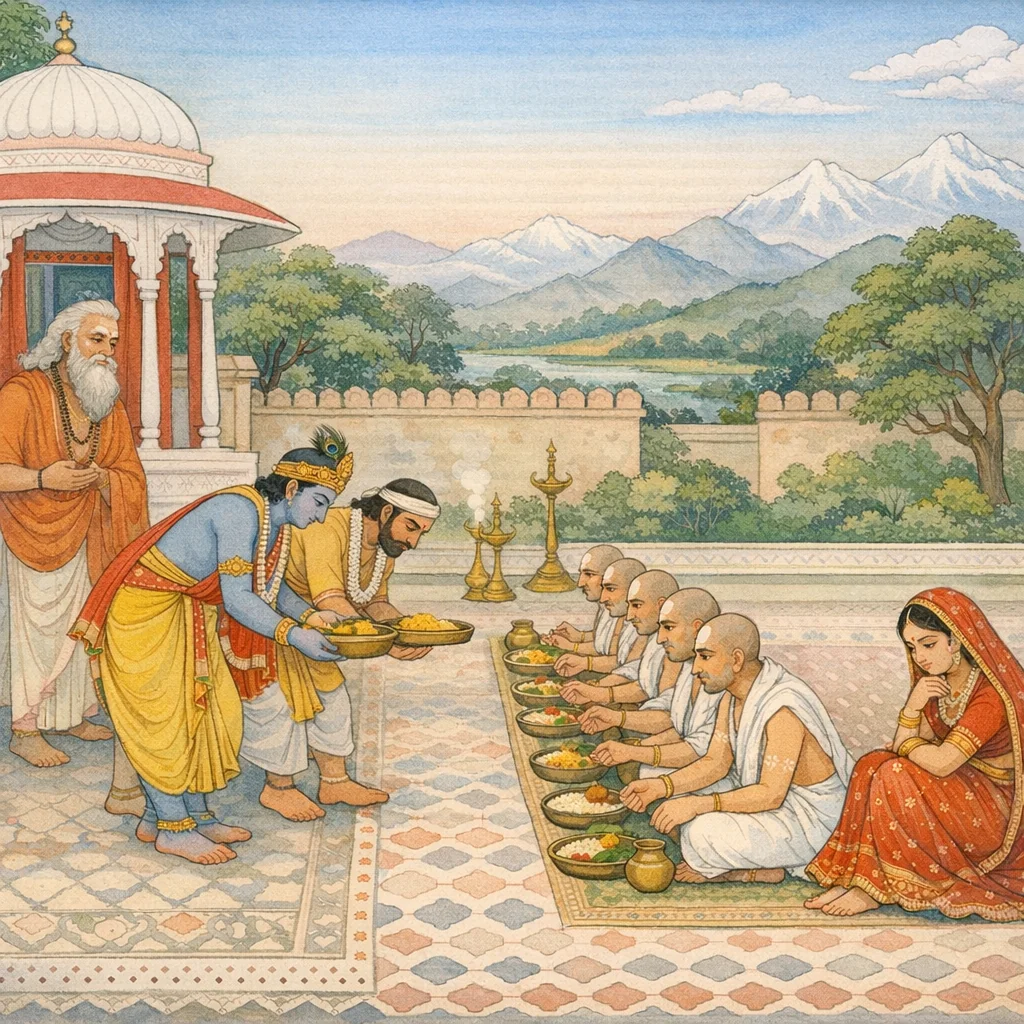
अफ-्-रू- >> द्विषष्टितमो<5 ध्याय: वसुदेव आदि यादवोंका अभिमन्युके निमित्त श्राद्ध करना तथा व्यासजीका उत्तरा और अर्जुनको समझाकर युधिष्ठिरको अश्वमेधयज्ञ करनेकी आज्ञा देना वैशम्पायन उवाच एतच्छुत्वा तु पुत्रस्य वच: शूरात्मजस्तदा । विहाय शोक धर्मात्मा ददौ श्राद्धमनुत्तमम्,वैशम्पायनजी कहते हैं--जनमेजय! अपने पुत्र श्रीकृष्णकी बात सुनकर शूरपुत्र धर्मात्मा वसुदेवजीने शोक त्याग दिया और अभिमन्युके लिये परम उत्तम श्राद्धवेिषयक दान दिया
Vaiśampāyana said: Hearing these words of his son, the heroic son of Śūra—righteous Vāsudeva—then cast aside his grief and bestowed an unsurpassed śrāddha-offering (funerary gift) for Abhimanyu. The passage frames grief as something to be transformed through dharma: honoring the dead by prescribed rites and generous giving, rather than remaining immobilized by sorrow.
Verse 2
तथैव वासुदेवश्च स्वस्रीयस्य महात्मन: । दयितस्य पितुर्नित्यमकरोदौर्ध्वदेहिकम्,इसी प्रकार भगवान् श्रीकृष्णने भी अपने महामनस्वी भानजे अभिमन्युका, जो उनके पिता वसुदेवजीका सदा ही परम प्रिय रहा, श्राद्धकर्म सम्पन्न किया
Vaiśampāyana said: In the same way, Vāsudeva (Kṛṣṇa) regularly performed the post-funeral rites (śrāddha and related offerings) for his noble sister’s son, who had been ever dear to his father. The passage underscores the dharmic duty of honoring the departed through prescribed rites and sustaining familial responsibility even after the devastations of war.
Verse 3
षष्टिं शतसहस्तराणि ब्राह्मणानां महौजसाम् | विधिवद् भोजयामास भोज्यं सर्वगुणान्वितम्,उन्होंने साठ लाख महातेजस्वी ब्राह्मणोंको विधिपूर्वक सर्वगुणसम्पन्न उत्तम अन्न भोजन कराया
Vaiśampāyana said: He duly fed sixty hundred-thousands (i.e., six million) mighty, radiant Brāhmaṇas, serving them excellent food endowed with every desirable quality—thus fulfilling the ethical duty of generous hospitality and sacrificial giving.
Verse 4
आच्छाद्य च महाबाहुर्धनतृष्णामपानुदत् । ब्राह्मणानां तदा कृष्णस्तद भूल्लोमहर्षणम्,महाबाहु श्रीकृष्णने उस समय ब्राह्मणोंको वस्त्र पहनाकर इतना धन दिया, जिससे उनकी धनविषयक तृष्णा दूर हो गयी। यह एक रोमांचकारी घटना थी
Vaiśampāyana said: Then the mighty-armed Kṛṣṇa, having clothed the brāhmaṇas and bestowed wealth upon them, removed their craving for riches. That deed was truly hair-raising—an awe-inspiring act of generosity that restored contentment and honored the worthy.
Verse 5
सुवर्ण चैव गाश्नैव शयनाच्छादनानि च | दीयमानं तदा विप्रा वर्धतामिति चाब्रुवन्,ब्राह्मणलोग सुवर्ण, गौ, शय्या और वस्त्रका दान पाकर अभ्युदय होनेका आशीर्वाद देने लगे
Vaiśampāyana said: “Then, as gold, cows, beds, and garments were being bestowed, the brāhmaṇas, receiving these gifts, pronounced blessings, saying, ‘May you prosper and increase.’” The verse highlights the ethical ideal of dāna (generosity) performed in a sanctioned rite, and the reciprocal benediction offered by learned recipients as a reinforcement of auspicious social order.
Verse 6
वासुदेवो5थ दाशाहों बलदेव: ससात्यकि: । अभिमन्योस्तदा श्राद्धमकुर्वन् सत्यकस्तदा,भगवान् श्रीकृष्ण, बलदेव, सत्यक और सात्यकिने भी उस समय अभिमन्युका श्राद्ध किया
Vaiśaṃpāyana said: Then Vāsudeva (Kṛṣṇa), the Dāśārha (Balarāma), and Sātyaki performed the śrāddha rites for Abhimanyu at that time—honoring the fallen hero with the prescribed ancestral offerings and affirming the dharmic duty of remembrance and gratitude after the devastations of war.
Verse 7
अतीव दुःखसंतप्ता न शमं चोपलेभिरे | तथैव पाण्डवा वीरा नगरे नागसाह्वये
Overwhelmed and scorched by intense sorrow, they found no peace of mind. In the same way, the heroic Pāṇḍavas too, in the city called Nāgasāhvaya, could not attain calm—showing how even the righteous, after great loss and upheaval, may remain inwardly unsettled despite outward victory.
Verse 8
सुबहूनि च राजेन्द्र दिवसानि विराटजा,राजेन्द्र! विराटकुमारी उत्तराने पतिके दुःखसे आतुर हो बहुत दिनोंतक भोजन ही नहीं किया। उसकी वह दशा बड़ी ही करुणाजनक थी। उसके गर्भका बालक उदरहीमें पड़ा- पड़ा क्षीण होने लगा
Vaiśampāyana said: “O king, for many days the daughter of Virāṭa—Princess Uttarā—stricken with grief for her husband, did not take food. Her condition became deeply pitiable, and the child in her womb, lying within her belly, began to waste away.”
Verse 9
नाभुड्क्त पतिदु:खार्ता तदभूत् करुणं महत् | कुक्षिस्थ एव तस्याथ गर्भो वै सम्प्रलीयत,राजेन्द्र! विराटकुमारी उत्तराने पतिके दुःखसे आतुर हो बहुत दिनोंतक भोजन ही नहीं किया। उसकी वह दशा बड़ी ही करुणाजनक थी। उसके गर्भका बालक उदरहीमें पड़ा- पड़ा क्षीण होने लगा
Vaiśampāyana said: Overwhelmed by grief for her husband, she did not eat; her condition became deeply pitiable. Then, O lord of kings, the embryo in her womb began to waste away while still within her belly. The passage underscores how intense sorrow can endanger life itself, and it evokes the ethical duty of kin and community to protect and sustain the vulnerable in times of bereavement.
Verse 10
आजगाम ततो व्यासो ज्ञात्वा दिव्येन चक्षुषा । समागम्याब्रवीद् धीमान् पृथां पृुथुललोचनाम्,उसकी इस दशाको दिव्य दृष्टिसे जानकर महान् तेजस्वी बुद्धिमान् महर्षि व्यास वहाँ आये और विशाल नेत्रोंवाली कुन्ती तथा उत्तरासे मिलकर उन्हें समझाते हुए इस प्रकार बोले--'यशस्विनि उत्तरे! तुम यह शोक त्याग दो। तुम्हारा पुत्र महातेजस्वी होगा
Then Vyāsa arrived there, having perceived the situation with his divine sight. Approaching, the wise sage addressed Pṛthā (Kuntī), the wide-eyed one, and, meeting with her and Uttarā, spoke to console and instruct them: “O illustrious Uttarā, abandon this grief. Your son will be endowed with great splendor.”
Verse 11
उत्तरां च महातेजा: शोक: संत्यज्यतामयम् | भविष्यति महातेजा: पुत्रस्तव यशस्विनि,उसकी इस दशाको दिव्य दृष्टिसे जानकर महान् तेजस्वी बुद्धिमान् महर्षि व्यास वहाँ आये और विशाल नेत्रोंवाली कुन्ती तथा उत्तरासे मिलकर उन्हें समझाते हुए इस प्रकार बोले--'यशस्विनि उत्तरे! तुम यह शोक त्याग दो। तुम्हारा पुत्र महातेजस्वी होगा
Vaiśaṃpāyana said: “O illustrious Uttarā, let this grief be cast aside. Your son will be endowed with great splendor.” Thus, in the wake of calamity, the elders counsel the young queen to relinquish despair and to steady herself in dharma, trusting in the promised restoration of her lineage.
Verse 12
प्रभावाद् वासुदेवस्य मम व्याहरणादपि । पाण्डवानामयं चान्ते पालयिष्यति मेदिनीम्,“भगवान् श्रीकृष्णके प्रभावसे और मेरे आशीर्वादसे वह पाण्डवोंके बाद सम्पूर्ण पृथ्वीका पालन करेगा”
Vaiśaṃpāyana said: “By the divine potency of Vāsudeva, and also by the force of my own utterance (blessing), this one will, in the end, protect and govern the earth after the Pāṇḍavas.” The verse underscores that rightful kingship is sustained not merely by lineage, but by divine grace and the moral authority of a truthful benediction, aimed at the welfare and protection of the world.
Verse 13
धनंजयं च सम्प्रेक्ष्य धर्मराजस्य शृण्वत: । व्यासो वाक्यमुवाचेदं हर्षयन्निव भारत,भारत! तत्पश्चात् व्यासजीने धर्मराज युधिष्ठिरको सुनाते हुए अर्जुनकी ओर देखकर उनका हर्ष बढ़ाते हुए-से कहा--
Seeing Dhanañjaya (Arjuna) while Dharmarāja (Yudhiṣṭhira) listened, Vyāsa spoke these words, as though to gladden him—O Bhārata. (Thus, Vyāsa, looking toward Arjuna in Yudhiṣṭhira’s presence, began speaking in a manner meant to raise their spirits and steady their resolve.)
Verse 14
पौत्रस्तव महाभागो जनिष्यति महामना: । पृथ्वीं सागरपर्यन्तां पालयिष्यति धर्मत:,“कुरुश्रेष्ठ! तुम्हें महान् भाग्यशाली और महामनस्वी पौत्र होनेवाला है, जो समुद्रपर्यन्त सारी पृथ्वीका धर्मत: पालन करेगा; अतः शत्रुसूदन! तुम शोक त्याग दो। इसमें कुछ विचार करनेकी आवश्यकता नहीं है। मेरा यह कथन सत्य होगा
Vaiśampāyana said: “O best of the Kurus, a grandson of yours will be born—highly fortunate and great-souled. Ruling in accordance with dharma, he will protect the whole earth up to the encircling ocean. Therefore, O subduer of foes, abandon your grief; there is no need for further doubt—my words will prove true.”
Verse 15
तस्माच्छोकं कुरुश्रेष्ठ जहि त्वमरिकर्शन । विचार्यमत्र न हि ते सत्यमेतद् भविष्यति,“कुरुश्रेष्ठ! तुम्हें महान् भाग्यशाली और महामनस्वी पौत्र होनेवाला है, जो समुद्रपर्यन्त सारी पृथ्वीका धर्मत: पालन करेगा; अतः शत्रुसूदन! तुम शोक त्याग दो। इसमें कुछ विचार करनेकी आवश्यकता नहीं है। मेरा यह कथन सत्य होगा
Therefore, O best of the Kurus, abandon your grief, O subduer of foes. There is no need for further deliberation here on your part; what I say will indeed prove true. A highly fortunate and great-souled grandson will be born to you, who will uphold the whole earth—bounded by the ocean—according to dharma; hence, cast off sorrow.
Verse 16
यच्चापि वृष्णिवीरेण कृष्णेन कुरुनन्दन । पुरोक्त तत् तथा भावि मा तेअत्रास्तु विचारणा,“कुरुनन्दन! वृष्णिवंशके वीर पुरुष भगवान् श्रीकृष्णने पहले जो कुछ कहा है, वह सब वैसा ही होगा। इस विषयमें तुम्हें कोई अन्यथा विचार नहीं करना चाहिये
Vaiśampāyana said: “O joy of the Kurus, whatever was formerly spoken by Kṛṣṇa—the heroic champion of the Vṛṣṇis—will indeed come to pass exactly so. Therefore, do not entertain any doubt or counter-thought in this matter.”
Verse 17
विबुधानां गतो लोकानक्षयानात्मनिर्जितान् । न स शोच्यस्त्वया वीरो न चान्यै: कुरुभिस्तथा,“वीर अभिमन्यु अपने पराक्रमसे उपार्जित किये हुए देवताओंके अक्षय लोकोंमें गया है; अतः उसके लिये तुम्हें या अन्य कुरुवंशियोंको क्षोभ नहीं करना चाहिये”
Vaiśampāyana said: “That hero has gone to the imperishable worlds of the gods—realms won by his own valor. Therefore he is not one for you to mourn, nor for the other Kurus either.”
Verse 18
एवं पितामहेनोक्तो धर्मात्मा स धनंजय: । त्यक्त्वा शोक॑ महाराज हृष्टरूपो5भवत् तदा,महाराज! अपने पितामह व्यासजीके द्वारा इस प्रकार समझाये जानेपर धर्मात्मा अर्जुनने शोक त्यागकर संतोषका आश्रय लिया
Thus instructed by the Grandsire, that righteous-souled Dhanañjaya (Arjuna) cast off his grief, O King, and at that time became serene and glad of heart—having accepted the counsel that restores dharma and steadies the mind after loss.
Verse 19
पितापि तव धर्मज्ञ गर्भ तस्मिन् महामते । अवर्धत यथाकामं शुक्लपक्षे यथा शशी,धर्मज्ञ! महामते! उस समय तुम्हारे पिता परीक्षित् शुक्लपक्षके चन्द्रमाकी भाँति यथेष्ट वृद्धि पाने लगे
Vaiśampāyana said: “O knower of dharma, O great-minded one—your father too, while in that very womb, grew and flourished as he wished, like the moon waxing in the bright fortnight.”
Verse 20
ततः: संचोदयामास व्यासो धर्मात्मजं नृपम् अश्वमेधं प्रति तदा तत: सो<न्तर्हितो5भवत्,तदनन्तर व्यासजीने धर्मपुत्र राजा युधिष्ठिरको अश्वमेध यज्ञ करनेके लिये आज्ञा दी और स्वयं वहाँसे अदृश्य हो गये
Then Vyāsa urged the righteous king, the son of Dharma, to undertake the Aśvamedha sacrifice. Having thus instructed him regarding the rite, Vyāsa thereafter disappeared from that place—signaling both the king’s duty to restore order through lawful kingship and the sage’s detachment after setting dharma in motion.
Verse 21
धर्मराजो5पि मेधावी श्रुत्वा व्यासस्य तद् वच: । वित्तस्यानयने तात चकार गमने मतिम्,तात! व्यासजीका वचन सुनकर बुद्धिमान् धर्मराज युधिष्ठिरने धन लानेके लिये हिमालयकी यात्रा करनेका विचार किया
Vaiśaṃpāyana said: The wise Dharmarāja Yudhiṣṭhira, having heard those words of Vyāsa, resolved—dear one—to set out in order to procure wealth. In keeping with his sense of duty and propriety, he formed the intention to journey (toward the Himalayas) to obtain the resources required for the rite.
Verse 61
इस प्रकार श्रीमह्ाभारत आश्वमेधिकपर्वके अन्तर्गत अनुगीतापर्वरें वसुदेवकोी सान्त्वनाविषयक इकसठवाँ अध्याय पूरा हुआ
Thus, in the Śrī Mahābhārata, within the Āśvamedhika Parva, the sixty-first chapter of the Anugītā section—concerning the consolation of Vasudeva—comes to an end. The closing note signals a transition: the teaching and reassurance offered to Vasudeva is complete, reaffirming steadiness of mind and dharmic endurance after suffering.
Verse 62
इति श्रीमहाभारते आश्वमेधिके पर्वणि अनुगीतापर्वणि वासुदेवसान्त्वने द्विषष्टितमो5 ध्याय:,इस प्रकार श्रीमह्याभारत आश्वमेधिकपरववके अन्तर्गत अनुगीतापर्वमें श्रीकृष्णकी सान्त्वनाविषयक बासठवाँ अध्याय पूरा हुआ
Thus, in the Śrī Mahābhārata, within the Aśvamedhika Parva, in the Anugītā section, the sixty-second chapter—concerning Vāsudeva’s consolatory instruction—comes to an end. (The accompanying colophon in the edition reiterates in Hindi that this is the completion of the 62nd chapter on Kṛṣṇa’s consolation.)
Verse 76
नोपागच्छन्त वै शान्तिमभिमन्युविनाकृता: । वे सबके सब अत्यन्त दुःखसे संतप्त थे। उन्हें शान्ति नहीं मिलती थी। उसी प्रकार हस्तिनापुरमें वीर पाण्डव भी अभिमन्युसे रहित होकर शान्ति नहीं पाते थे
Vaiśampāyana said: Deprived of Abhimanyu, they could not attain peace. All of them were scorched by intense sorrow; tranquility did not come to them. In the same way, in Hastināpura too, the heroic Pāṇḍavas, bereft of Abhimanyu, found no peace.
Frequently Asked Questions
How to secure material resources for a public rite without appearing predatory: the chapter resolves this by grounding action in elder counsel, collective deliberation, and ritual legitimacy rather than unilateral extraction.
Strategic action is strengthened by humility and sanctioned worship: Bhīma proposes that reverence to Maheśvara aligns human initiative with a higher order, reducing conflict with formidable guardians through earned favor rather than brute force.
No explicit phalaśruti is stated in these verses; the chapter’s meta-sense is procedural—showing that auspicious timing, blessings, and respectful leave-taking function as embedded validations of dharmic conduct.