Adhyaya 11
Vāsudeva’s Upadeśa: The Inner Enemy and the Indra–Vṛtra Precedent (आत्मशत्रु-बोधः; इन्द्र-वृत्रोपाख्यानम्)
Upa-parva: Kṛṣṇa’s Consolatory Instruction to Yudhiṣṭhira (Indra–Vṛtra Upākhyāna Context)
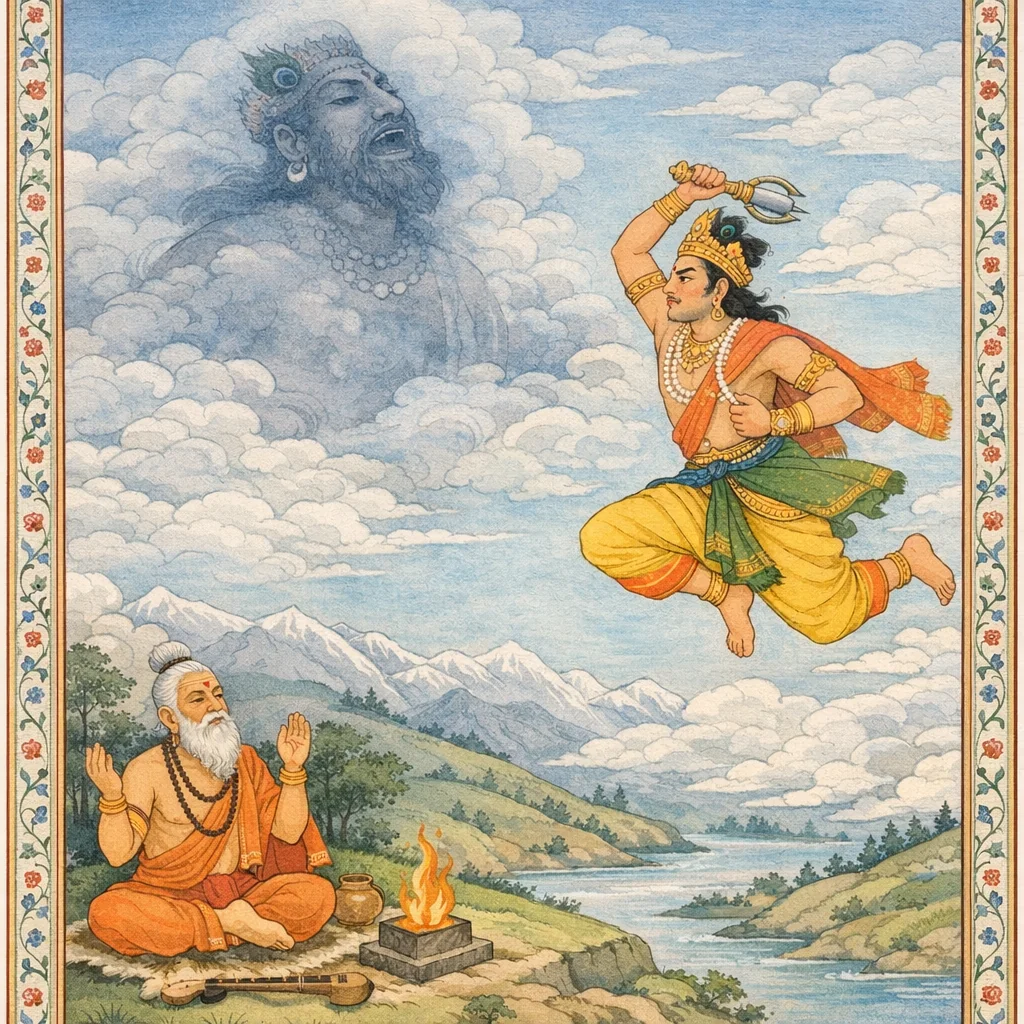
Vaiśaṃpāyana reports that, after Vyāsa’s remarkable address, Vāsudeva begins speaking upon seeing Yudhiṣṭhira (Dharmasuta) despondent and bereaved. Kṛṣṇa frames a doctrinal contrast: crookedness (jihmatā) leads toward mortality-bound outcomes, while straightforwardness (ārjava) aligns with the ‘station of Brahman’ (brahmaṇaḥ padam), implying liberation-oriented clarity. He challenges the king’s assumption that his tasks are complete, arguing that true conquest remains unfinished if one fails to recognize the ‘enemy lodged in the body’—the self’s internal affliction or delusive tendency. To ground the instruction in authoritative precedent, Kṛṣṇa introduces the Indra–Vṛtra account: Vṛtra successively pervades and ‘seizes’ the domains of the senses—earth (smell), waters (taste), fire/light (form), wind (touch), and space (sound)—each time prompting Indra (Śatakratu) to strike with the vajra, driving Vṛtra into subtler substrates. Ultimately Vṛtra enters Indra himself, producing great delusion, until Vasiṣṭha awakens him through a chant (rathaṃtara). Indra then destroys the body-internal Vṛtra with an ‘unseen’ vajra. The chapter closes by labeling this teaching a dharma-rahasya, transmitted from Śakra to great ṛṣis and then to the narrator’s lineage, offered as a disciplined interpretive key for the king.
Chapter Arc: कुरुक्षेत्र-विजय के बाद भी धर्मराज युधिष्ठिर शोक में डूबे हैं—अपने ही बन्धु-बान्धवों के विनाश से उनका मन बुझा हुआ है, जैसे धुएँ से ढका अग्नि या ग्रहणग्रस्त सूर्य। → युधिष्ठिर की निर्विण्णता देखकर वृष्णिकुल-समुद्र श्रीकृष्ण उन्हें आश्वासन देने हेतु एक पुरातन आख्यान छेड़ते हैं—इन्द्र और वृत्रासुर का संघर्ष, जहाँ वृत्र क्रमशः इन्द्र के ‘विषय’ (इन्द्रिय-ग्रहण) को छीनता चला जाता है। → जब आकाश तक वृत्रासुरमय हो जाता है और शब्द-विषय का भी अपहरण होने लगता है, तब शतक्रतु इन्द्र अत्यन्त क्रुद्ध होकर वज्र का प्रहार करते हैं; वृत्र वज्राघात से जल, तेज, आकाश आदि तत्त्वों में सहसा प्रवेश कर विषयों को ग्रसने लगता है—युद्ध बाह्य नहीं, चेतना के क्षेत्र में निर्णायक बन जाता है। → वृत्र-ग्रस्त इन्द्र पर मोह छा जाता है; तब महर्षि वसिष्ठ रथन्तर-साम द्वारा उन्हें प्रत्यय (धैर्य/बोध) लौटाते हैं। श्रीकृष्ण इस दृष्टान्त से युधिष्ठिर को समझाते हैं कि शोक-प्रलाप से नहीं, ज्ञान और धर्म-स्थित प्रज्ञा से ही मन का विषाद कटता है। → युधिष्ठिर के भीतर उठता प्रश्न बना रहता है—क्या अपने स्वजनों के वध का भार कभी हल्का होगा, और राजा होकर प्रायश्चित्त का मार्ग क्या है?
Shlokas
Verse 1
/ 2: बछ। से, एकादशोब< ध्याय: श्रीकृष्णका युधिष्ठिरको इन्द्रद्वारा शरीरस्थ वृत्रासुरका संहार करनेका इतिहास सुनाकर समझाना वैशम्पायन उवाच इत्युक्ते नृपतौ तस्मिन् व्यासेनाद्भुतकर्मणा । वासुदेवो महातेजास्ततो वचनमाददे,वैशम्पायनजी कहते हैं--जनमेजय! अद्भुत-कर्मा वेदव्यासजीने युधिष्ठिरसे इस प्रकार कहा, तब महातेजस्वी भगवान् श्रीकृष्ण कुछ कहनेको उद्यत हुए
Vaiśampāyana said: When the king had thus been addressed by Vyāsa—whose deeds are wondrous—Vāsudeva, radiant with great splendor, then began to speak. The narrative turns from Vyāsa’s instruction to Kṛṣṇa’s forthcoming counsel, signaling that ethical understanding is to be clarified not only by austere wisdom but also by compassionate, practical guidance.
Verse 2
त॑ नृपं दीनमनसं निहतज्ञातिबान्धवम् | उपप्लुतमिवादित्यं सधूममिव पावकम्,जाति-भाइयोंके मारे जानेसे युधिष्ठिरका मन शोकसे दीन एवं व्याकुल हो रहा था। वे राहुग्रस्त सूर्य और धूमयुक्त अग्निके समान निस्तेज हो गये थे। विशेषतः उनका मन राज्यकी ओरसे खिन्न एवं विरक्त हो गया था। यह सब जानकर वृष्णिवंशभूषण श्रीकृष्णने कुन्तीकुमार धर्मपुत्र युधिष्ठिको आश्वासन देते हुए इस प्रकार कहना आरम्भ किया
Vaiśaṃpāyana said: King Yudhiṣṭhira, his mind sunk in grief, had lost his kinsmen and relatives. He appeared dimmed, like the sun eclipsed by Rāhu, and like fire veiled in smoke. His heart, especially, had grown weary and detached from kingship. Knowing this, Śrī Kṛṣṇa—the glory of the Vṛṣṇi line—began to speak, offering reassurance to Kuntī’s son, Dharmaputra Yudhiṣṭhira.
Verse 3
निर्विण्णमनसं पार्थ ज्ञात्वा वृष्णिकुलोदह: | आश्वासयन् धर्मसुतं प्रवक्तुमुपचक्रमे,जाति-भाइयोंके मारे जानेसे युधिष्ठिरका मन शोकसे दीन एवं व्याकुल हो रहा था। वे राहुग्रस्त सूर्य और धूमयुक्त अग्निके समान निस्तेज हो गये थे। विशेषतः उनका मन राज्यकी ओरसे खिन्न एवं विरक्त हो गया था। यह सब जानकर वृष्णिवंशभूषण श्रीकृष्णने कुन्तीकुमार धर्मपुत्र युधिष्ठिको आश्वासन देते हुए इस प्रकार कहना आरम्भ किया
Vaiśampāyana said: Knowing that Pārtha (Yudhiṣṭhira), his mind sunk in despondency, had grown weary and disenchanted—especially toward kingship—Kṛṣṇa, the foremost of the Vṛṣṇi line, began to console the son of Dharma and commenced to speak. The verse frames a moral crisis after slaughter among kin: the righteous king, shaken by grief and guilt, turns away from power, and Kṛṣṇa steps in to steady him with counsel grounded in dharma and responsibility.
Verse 4
वायुदेव उवाच सर्व जिद्ठां मृत्युपदमार्जवं ब्रह्मण: पदम् । एतावान् ज्ञानविषय: कि प्रलाप: करिष्यति,भगवान् श्रीकृष्णने कहा--धर्मराज! कुटिलता मृत्युका स्थान है और सरलता ब्रह्मकी प्राप्तिका साधन है। इस बातको ठीक-ठीक समझ लेना ही ज्ञानका विषय है। इसके विपरीत जो कुछ कहा जाता है, वह प्रलाप है। भला वह किसीका क्या उपकार करेगा?
Vāyudeva said: “Let it be understood that all crookedness leads to the station of death, while straightforwardness is the path to Brahman. This much alone is the true domain of knowledge. Whatever is spoken contrary to this is mere prattle—what good could it possibly do to anyone?”
Verse 5
नैव ते निछितं कर्म नैव ते शत्रवो जिता: । कथं शत्रुं शरीरस्थमात्मनो नावबुध्यसे,आपने अपने कर्तव्यकर्मको पूरा नहीं किया। आपने अभीतक शत्रुओंपर विजय भी नहीं पायी। आपका शत्रु तो आपके शरीरके भीतर ही बैठा हुआ है। आप अपने उस शत्रुको क्यों नहीं पहचानते हैं?
Vāyu said: “You have not yet fulfilled the duty you resolved to perform, nor have you truly conquered your enemies. How is it that you do not recognize your own enemy—the one seated within your very body?”
Verse 6
अत्र ते वर्तयिष्यामि यथाधर्म यथाश्रुतम् इन्द्रस्य सह वृत्रेण यथा युद्धमवर्तत,यहाँ मैं आपके समक्ष धर्मके अनुसार एक वृत्तान्त जैसा सुन रखा है, वैसा ही बता रहा हूँ। पूर्वकालमें वृत्रासुरके साथ इन्द्रका जैसा युद्ध हुआ था, वही प्रसंग सुना रहा हूँ
Here I shall recount to you—according to dharma and exactly as I have heard—the account of how the battle between Indra and Vṛtra once took place. I will narrate that ancient episode in the same manner it has been handed down.
Verse 7
वृत्रेण पृथिवी व्याप्ता पुरा किल नराधिप । दृष्टवा स पृथिवीं व्याप्तां गन्धस्य विषये हते,नरेश्वर! कहते हैं, प्राचीन कालमें वृत्रासुरने समूची पृथ्वीपर अधिकार जमा लिया था। इन्द्रने देखा, वृत्रासुरने पृथ्वीपर अधिकार कर लिया और गन्धके विषयका भी अपहरण कर लिया और इस प्रकार पृथ्वीका अपहरण करनेसे सब ओर दुर्गनन््धका प्रसार हो गया है। तब गन्धके विषयका अपहरण होनेसे शतक्रतु इन्द्रको बड़ा क्रोध हुआ
Vāyu said: “O king, it is said that in ancient times Vṛtra spread himself over the whole earth and seized control of it. When Indra saw the earth thus overrun, he also found that the domain of fragrance had been struck down—its proper function and possession had been taken away. Because the earth was thus usurped, foul odor spread everywhere; and when the sphere of fragrance was stolen, Śatakratu Indra was filled with great anger.”
Verse 8
धराहरणदुर्गन्न्धो विषय: समपद्यत | शतक्रतुश्नुकोपाथ गन्धस्य विषये हते,नरेश्वर! कहते हैं, प्राचीन कालमें वृत्रासुरने समूची पृथ्वीपर अधिकार जमा लिया था। इन्द्रने देखा, वृत्रासुरने पृथ्वीपर अधिकार कर लिया और गन्धके विषयका भी अपहरण कर लिया और इस प्रकार पृथ्वीका अपहरण करनेसे सब ओर दुर्गनन््धका प्रसार हो गया है। तब गन्धके विषयका अपहरण होनेसे शतक्रतु इन्द्रको बड़ा क्रोध हुआ
Vāyu said: “When the Earth was seized, a foul stench spread everywhere. In ancient times Vṛtrāsura had brought the whole Earth under his control; and when Indra saw that Vṛtra had usurped the Earth and even carried off the very ‘domain of fragrance,’ the Lord of a hundred sacrifices (Indra) was seized with great anger, O king. The episode shows how the violation of rightful order—appropriating what sustains the world’s harmony—provokes divine censure and becomes a cause of disorder felt by all.”
Verse 9
वृत्रस्य स ततः क्रुद्धो घोरं वज़्मवासृजत् । स वध्यमानो वज्ेण सुभृशं भूरितेजसा
Then, enraged at Vṛtra, he hurled the dreadful thunderbolt. Struck down by that thunderbolt—charged with immense fiery power—Vṛtra was violently assailed, as the divine force of Indra’s weapon bore upon him.
Verse 10
इस प्रकार श्रीमहाभारत आश्रवमेधिकपर्वके अन्तर्गत अश्वमेधपर्वमें संवर्त और मरुत्तका उपाख्यानविषयक दसवाँ अध्याय पूरा हुआ,अप्सु वृत्रगृहीतासु रसे च विषये हते
Vaiśaṃpāyana said: Thus ends the tenth chapter of the Aśvamedha section within the Āśvamedhika Parva of the Śrī Mahābhārata, dealing with the episode of Saṃvarta and King Marutta. (Colophon/closing marker:) ‘When the waters were seized by Vṛtra, and when the essence and the sphere of enjoyment were struck down.’
Verse 11
स वध्यमानो वज्रेण तस्मिन्नमिततेजसा,इस प्रकार श्रीमह्ाभारत आश्वमेधिकपर्वके अन्तर्गत अश्वमेधपर्वमें श्रीकृष्ण और धर्मराज युधिष्ठिरका संवादविषयक ग्यारहवाँ अध्याय पूरा हुआ
Struck down by the thunderbolt of that one of immeasurable splendor, he was being slain. Thus ends the eleventh chapter of the Aśvamedha section within the Āśvamedhika Parva of the Śrī Mahābhārata, dealing with the dialogue between Śrī Kṛṣṇa and Dharmarāja Yudhiṣṭhira.
Verse 12
व्याप्ते ज्योतिषि वृत्रेण रूपेडथ विषये हते
Vāyu said: “When the luminous realm had been pervaded by Vṛtra, and when he was then slain within the sphere of manifestation, the order of the worlds was restored.”
Verse 13
स वध्यमानो वज्ेण तस्मिन्नमिततेजसा,इति श्रीमहाभारते आश्वमेधिके पर्वणि अश्वमेधपर्वणि कृष्णधर्मसंवादे एकादशो< ध्याय:
Struck down by the thunderbolt of that one of immeasurable splendor, he was being slain. Thus ends the eleventh chapter in the Śrī Mahābhārata, in the Āśvamedhika Parva, in the Aśvamedha section, within the dialogue on Kṛṣṇa and Dharma.
Verse 14
व्याप्ते वायौ तु वृत्रेण स्पर्शेड्थ विषये हृते
Vāyu-deva said: “When the wind itself was pervaded and obstructed by Vṛtra, and the sphere of touch (the sense-domain of tactile perception) was seized, how could one then make contact or move freely?”
Verse 15
शतक्रतुरतिक्रुद्धस्तत्र वज़्मवासृजत् । जब वृत्रासुरने वायुको भी व्याप्त करके उसके स्पर्श नामक विषयका अपहरण कर लिया, तब शतक्रतुने अत्यन्त कुपित होकर वहाँ उसके ऊपर अपना वज्र छोड़ दिया ।। १४ ई | स वध्यमानो वज्रेण तस्मिन्नमिततेजसा
Vāyu said: “Śatakratu (Indra), inflamed with intense anger, hurled his thunderbolt there. Struck down by that thunderbolt of the immeasurably radiant one, he endured the assault.” The passage frames Indra’s retaliatory violence as arising from wrath, while highlighting the overwhelming force of divine weaponry and the peril faced by the one targeted.
Verse 16
आकाशे वृत्रभूते5थ शब्दे च विषये हते
When the sky had become as though obstructed (as by Vṛtra), and when sound itself—together with its field of operation—was struck down, the scene turned into a state of stunned stillness, as if the very medium of hearing had been overwhelmed.
Verse 17
स वध्यमानो वजेण तस्मिन्नमिततेजसा
“Struck down by the thunderbolt of that one of immeasurable splendor, he was being slain.” The line underscores the irresistible force of divine power when it is directed to uphold cosmic order, suggesting that overwhelming might, when wielded by a righteous and radiant authority, becomes an instrument of restraint against what must be checked.
Verse 18
तस्य वृत्रगृहीतस्य मोह: समभवन्महान्
When he was seized by Vṛtra, a great delusion overcame him—his clarity of mind was eclipsed under the force of that overpowering grasp.
Verse 19
ततो वृत्रं शरीरस्थं जघान भरतर्षभ । शतक्रतुरदृश्येन वज्ञेणेतीह न: श्रुतम्,भरतश्रेष्ठ! तत्पश्चात् शतक्रतुने अपने शरीरके भीतर स्थित हुए वृत्रासुरको अदृश्य वज्के द्वारा मार डाला ऐसा हमने सुना है
Then, O bull among the Bharatas, Śatakratu (Indra) struck down Vṛtra who had taken up residence within his own body—so we have heard here—by means of an unseen thunderbolt. The account underscores that even when danger is internal and concealed, decisive action aligned with cosmic order is required to remove the force that obstructs life and duty.
Verse 20
इदं धर्म्य रहस्यं वै शक्रेणोक्तं महर्षिषु । ऋषिभिक्ष मम प्रोक्त तन्निबोध जनाधिप,जनेश्वर! यह धर्मसम्मत रहस्य इन्द्रने महर्षियोंको बताया और महर्षियोंने मुझसे कहा। वही रहस्य मैंने आपको सुनाया है। आप इसे अच्छी तरह समझें
This is a righteous and confidential teaching, first spoken by Śakra (Indra) among the great seers. The seers then conveyed it to me; and I, in turn, have declared that same secret to you. Therefore, O lord of men, grasp it well—receive it with attentive understanding, for it concerns dharma and its subtle intent.
Verse 96
विवेश सहसा तोयं जग्राह विषयं ततः । तत्पश्चात् उन्होंने कुपित हो वृत्रासुरके ऊपर घोर वज्रका प्रहार किया। महातेजस्वी वज्जसे अत्यन्त आहत हो वह असुर सहसा जलमें जा घुसा और उसके विषयभूत रसको ग्रहण करने लगा
Vāyu-deva said: He suddenly entered the water and then seized it as his object of enjoyment. After that, in anger, he dealt Vṛtrāsura a terrible blow with the thunderbolt. Struck down with extreme force by that blazing vajra, the asura abruptly plunged into the waters and began to draw in the essence—making the water itself the field of his grasping. The passage underscores how wrath and craving can drive a being to seek refuge in sense-objects even amid violent conflict.
Verse 103
शतक्रतुरतिक्रुद्धस्तत्र वज़्मवासृजत् । जब जलपर भी वृत्रासुरका अधिकार तथा रसरूपी विषयका अपहरण हो गया, तब अत्यन्त क्रोधमें भरे हुए इन्द्रने वहाँ भी उसपर वज्रका प्रहार किया
Vāyu said: Indra, the lord of a hundred sacrifices, inflamed with intense anger, hurled his thunderbolt there. In the narrative context, this act follows the loss of rightful control and enjoyment (the ‘rasa’-like objects of experience) that had been seized by Vṛtrāsura; Indra’s wrath expresses the ethical tension between restoring cosmic order and the peril of acting from uncontrolled anger.
Verse 126
शतक्रतुरतिक्रुद्धस्तत्र वज़्मवासृजत् । वृत्रासुरके द्वारा तेजपर भी अधिकार कर लिया गया और उसके रूप नामक विषयका अपहरण हो गया, यह जानकर शतक्रतुके क्रोधकी सीमा न रह गयी। उन्होंने वहाँ भी वृत्रासुरपर वज्ञका प्रहार किया
Vāyu said: Indra (Śatakratu), overcome with intense anger, hurled his thunderbolt there. Learning that Vṛtrāsura had seized the splendor and authority associated with his very form and name, Indra’s wrath knew no bounds, and he struck at Vṛtra again with the vajra—an act driven by wounded sovereignty and the fierce impulse to restore cosmic order.
Verse 136
विवेश सहसा वायुं जग्राह विषयं ततः । उस तेजमें स्थित हुआ वृत्रासुर अमिततेजस्वी वज्रके प्रहारसे पीड़ित हो सहसा वायुमें समा गया और उसके स्पर्श नामक विषयको ग्रहण करने लगा
Vāyu said: “Then, all at once, he entered into the principle of Wind and took up its object—touch. Thus Vṛtrāsura, of immeasurable splendor, tormented by the blow of the thunderbolt, suddenly merged into Vāyu and began to apprehend the sense-field of touch.”
Verse 156
आकाशमभिदुद्राव जग्राह विषयं ततः । वायुके भीतर अमित तेजस्वी वज्ञसे पीड़ित हो वृत्रासुर भागकर आकाशमें जा छिपा और उसके विषयको ग्रहण करने लगा
Vāyu said: “He fled swiftly into the sky and then seized upon his object. Terrified of Vāyu’s power, the immensely radiant Vṛtrāsura—struck and tormented by the thunderbolt—ran off and hid in the heavens, seeking to take hold of his intended refuge.”
Verse 173
विवेश सहसा शक्रं जग्राह विषयं ततः । आकाशके भीतर अमित तेजस्वी वज्रसे पीड़ित हो वृत्रासुर सहसा इन्द्रमें समा गया और उनके विषयको ग्रहण करने लगा
Vāyu said: “Then, all at once, he entered Śakra (Indra) and seized his ‘sphere’—taking hold of Indra’s very domain and power. The episode underscores how the consequences of violent conflict can persist beyond the battlefield, as the defeated adversary’s force and claim over authority can intrude upon the victor, testing his self-mastery and right to rule.”
Verse 183
रथन्तरेण तं तात वसिष्ठ: प्रत्ययोधयत् । तात! वृत्रासुरसे गृहीत होनेपर इन्द्रके मनपर महान् मोह छा गया। तब महर्षि वसिष्ठने रथन्तर सामके द्वारा उन्हें सचेत किया
Vāyu said: “Dear child, Vasiṣṭha roused him to clarity by means of the Rathantara chant. When Indra had been seized by the sin incurred in the affair of Vṛtrāsura, a great delusion overwhelmed his mind; then the sage Vasiṣṭha awakened him through the Rathantara Sāman.”
Verse 1136
विवेश सहसा ज्योतिर्जग्राह विषयं तत: । जलमें अमिततेजस्वी वज्रकी मार खाकर वृत्रासुर सहसा तेजस्तत्त्वमें घुस गया और उसके विषयको ग्रहण करने लगा
Vāyu said: “Then, all at once, he entered into the radiant essence and thereafter took hold of its sphere of operation.” In the narrative frame, this describes a sudden transition from embodied struggle to absorption into a higher, luminous principle—suggesting that even after violent defeat, a being’s potency or consciousness may merge into a subtler reality, raising questions about the moral aftermath of conflict and the destiny of the fallen.
Verse 1636
शतक्रतुरभिक्रुद्धस्तत्र वज़मवासृजत् । जब आकाश वृत्रासुरमय हो गया और उसके शब्दरूपी विषयका अपहरण होने लगा, तब शतक्रतु इन्द्रको बड़ा क्रोध हुआ और उन्होंने वहाँ भी उसपर वज्रका प्रहार किया
Vāyu said: Indra, the lord of a hundred sacrifices, became intensely enraged and, right there, hurled his thunderbolt. In the narrative frame, this act signals how unchecked wrath—even in a deity—can escalate conflict, turning a struggle for control into destructive retaliation rather than restraint guided by dharma.
Frequently Asked Questions
The dilemma is whether post-war remorse justifies withdrawal from duty, or whether ethical leadership requires confronting internal confusion and continuing action under disciplined discernment.
The sequence teaches that disorder can migrate into progressively subtler levels—culminating in the self—so victory is incomplete without inner clarity; rectitude (ārjava) and awakened awareness are presented as the decisive instruments.
Yes: it is explicitly framed as a dharma-rahasya, attributed to Śakra and transmitted through ṛṣi tradition, signaling interpretive authority and positioning the lesson as a key for restoring composure and right action.