Adhyaya 166
Kalmāṣapāda’s Encounter with Śakti and the Escalation of the Vasiṣṭha–Viśvāmitra Feud (कल्माषपाद–शक्ति प्रसङ्गः)
Upa-parva: Vasiṣṭha–Viśvāmitra-vaira (Kalmāṣapāda–Śakti episode)
A Gandharva narrates the account of King Kalmāṣapāda of the Ikṣvāku line. While hunting, the king—hungry and thirsty—meets Śakti, the eminent son of Vasiṣṭha, on a narrow path. The king orders the ascetic to move aside; Śakti answers with conciliatory speech yet remains on the ‘path of dharma,’ refusing to yield. In anger and pride, the king strikes him with a whip. The affront triggers a curse: Kalmāṣapāda is condemned to become a ‘puruṣāda,’ driven to consume human flesh and to wander as a source of fear. The narrative then ties this to the broader Viśvāmitra–Vasiṣṭha rivalry: Viśvāmitra approaches, perceives the situation, and through command and the curse’s momentum causes a rākṣasa named Kiṃkara to enter the king, intensifying the destructive disposition. Later, a hungry brāhmaṇa requests meat; the king promises food, but his cook cannot find animal meat and is repeatedly instructed—under the king’s possession—to provide human flesh. The brāhmaṇa, with siddha insight, rejects the offering as unfit and reiterates the curse, strengthening it. The possessed king retaliates by killing and consuming Śakti, and subsequently the rākṣasa consumes Vasiṣṭha’s hundred sons. Vasiṣṭha, overwhelmed by grief, attempts self-destruction—leaping from Meru, entering fire, and sinking into the sea—yet survives each attempt, returning exhausted to his āśrama. The chapter functions as an ethical case-study on arrogance, the performative power of speech, and the compounding effects of rivalry on social order.
Chapter Arc: एक आगन्तुक ब्राह्मण-गाथा के रूप में कथा खुलती है: महातपा ऋषि गङ्गाद्वार की ओर जाते हैं, जहाँ एक अप्सरा घृताची का दृश्य अनायास ही एक महान् वंश-प्रसंग का बीज बो देता है। → गङ्गातट पर वायु के वेग से घृताची का वस्त्र खिसकता है; ऋषि के मन में क्षणिक काम-उद्रेक उठता है और उसी से द्रोण के जन्म का कारण बनता है। आगे वही द्रोण अस्त्र-विद्या की पूर्णता हेतु गुरु से ‘सम्पूर्ण अस्त्र, उनके प्रयोग और संहार’ की याचना करता है—ज्ञान की भूख के साथ भविष्य की कठोरता भी बढ़ती जाती है। → द्रोण और पाञ्चालराज द्रुपद का सख्य-प्रतिज्ञा से बँधना—‘सख्यं तदेव भवतु शश्वद्’—और उसी के भीतर छिपा असमानता का बीज: एक ब्राह्मण-शिष्य और एक राजकुमार की मित्रता, जो समय के साथ परीक्षा माँगती है। → दोनों अपने-अपने पथ पर लौटते हैं; पर द्रुपद के हृदय में द्रोण के प्रति ‘असत्कार’ की स्मृति टिक जाती है—अपमान का काँटा क्षणभर भी नहीं निकलता, और वही भविष्य के वैर का आधार बनता है। → द्रुपद के मन में पलता अपमान और द्रोण की अस्त्र-सम्पन्नता—दोनों मिलकर आने वाले प्रतिशोध की छाया डालते हैं: यह मित्रता कब और कैसे शत्रुता में बदलेगी?
Shlokas
Verse 1
अपन प्रा बछ। अं क्ाज पज्चषष्टर्याधेकशततमो< ध्याय: द्रोणके द्वारा द्रपदके अपमानित होनेका वृत्तान्त ब्राह्मण उवाच गड्जद्वारं प्रति महान् बभूवर्षिमहातपा: । भरद्वाजो महाप्राज्ञ: सततं संशितव्रतः,आगन्तुक ब्राह्मणने कहा--गंगाद्वारमें एक महाबुद्धिमान् और परम तपस्वी भरद्वाज नामक महर्षि रहते थे, जो सदा कठोर व्रतका पालन करते थे
The Brahmin said: Near Gaṅgādvāra there lived a great sage of mighty austerities—Bharadvāja, supremely wise, ever steadfast in his disciplined vows. The narrative foregrounds the ethical ideal of brahminical restraint and tapas as the foundation of spiritual authority, setting the stage for later tensions between ascetic merit and worldly honor.
Verse 2
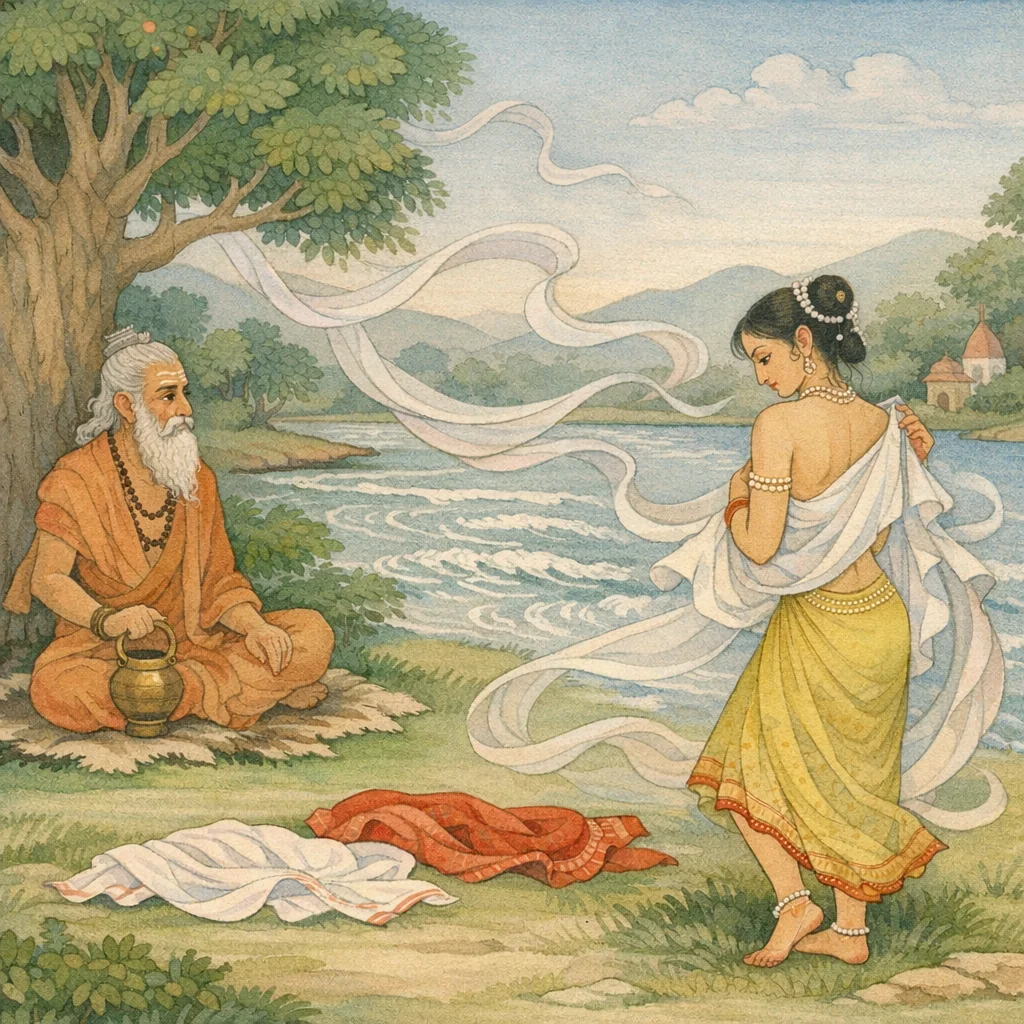
सोअभिषेक्तुं गतो गड्ां पूर्वमेवागतां सतीम् । ददर्शाप्सरसं तत्र घृताचीमाप्लुतामृषि:,एक दिन वे गंगाजीमें स्नान करनेके लिये गये। वहाँ पहलेसे ही आकर सुन्दरी अप्सरा घृताची नामवाली गंगाजीमें गोते लगा रही थी। महर्षिने उसे देखा
The sage, having gone to the river Gaṅgā to bathe, saw there the Apsaras Ghṛtācī—already arrived before him—immersing herself in the water. The scene sets the stage for a moral tension often explored in the Mahābhārata: the encounter between ascetic discipline and the allure of celestial beauty, where vigilance over the senses becomes an ethical test.
Verse 3
तस्या वायुर्नदीतीरे वसन॑ व्यहरत् तदा । अपकृष्टाम्बरां दृष्टवा तामृषिश्चकमे तदा,जब नदीके तटपर खड़ी हो वह वस्त्र बदलने लगी, उस समय वायुने उसकी साड़ी उड़ा दी। वस्त्र हट जानेसे उसे नग्नावस्थामें देखकर महर्षिने उसे प्राप्त करनेकी इच्छा की
As she stood on the riverbank changing her garments, the wind at that moment carried off her clothing. Seeing her with her robe drawn away, the sage then conceived desire to possess her. The verse frames a moral tension: an external accident (the wind) becomes the occasion for an inner lapse (unrestrained desire), highlighting the ethical demand for self-control even when circumstances provoke temptation.
Verse 4
तस्यां संसक्तमनस: कौमारब्रह्मचारिण: । चिरस्य रेतश्नस्कन्द तदृषिद्रोण आदधे,मुनिवर भरद्वाजने कुमारावस्थासे ही दीर्घकाल-तक ब्रह्मचर्यका पालन किया था। घृताचीमें चित्त आसक्त हो जानेके कारण उनका वीर्य स्खलित हो गया। महर्षिने उस वीर्यको द्रोण (यज्ञकलश)-में रख दिया
Bharadvāja, a sage who had long maintained brahmacarya from youth, became mentally attached to Ghṛtācī; as a result his semen was discharged. The seer then carefully collected that semen and placed it in a droṇa (a vessel), setting in motion the extraordinary birth that follows. The passage underscores how even great ascetics are tested by desire, and how restraint and responsibility are expected when a lapse occurs.
Verse 5
ततः समभवद् द्रोण: कुमारस्तस्य धीमत:ः । अध्यगीष्ट स वेदांश्ष वेदाड़ानि च सर्वश:,उसीसे बुद्धिमान् भरद्वाजजीके द्रोण नामक पुत्र हुआ। उसने सम्पूर्ण वेदों और वेदांगोंका भी अध्ययन कर लिया
Then, to that wise Bharadvāja was born a son named Droṇa. As he grew, he mastered the Vedas in their entirety, and also studied all the auxiliary disciplines (Vedāṅgas), becoming thoroughly trained in sacred learning—an education that later undergirds his authority as a teacher and his moral responsibility in the unfolding events.
Verse 6
भरद्वाजस्य तु सखा पृषतो नाम पार्थिव: । तस्यापि द्रुपदो नाम तदा समभवत् सुतः,पृषत नामके एक राजा भरद्वाज मुनिके मित्र थे। उन्हीं दिनों राजा पृषतके भी ट्रुपद नामक पुत्र हुआ
The Brahmin said: Bharadvāja had a friend, a king named Pṛṣata. In due course, that king too had a son, who was then born and came to be known as Drupada. The verse situates Drupada’s birth within a network of friendship between a sage and a ruler, hinting at how personal bonds and lineage shape later duties and conflicts.
Verse 7
स नित्यमाश्रमं गत्वा द्रोणेन सह पार्षत: | चिक्रीडाध्ययनं चैव चकार क्षत्रियर्षभ:,क्षत्रियशिरोमणि पृषतकुमार द्रुपद प्रतिदिन भरद्वाज मुनिके आश्रमपर जाकर द्रोणके साथ खेलते और अध्ययन करते थे
The son of Pṛṣata, that bull among kṣatriyas, would regularly go to the hermitage of Bharadvāja and, together with Droṇa, spend his days in play and in study. The verse highlights the formative bond of shared education and companionship—an ethical reminder that early friendships, forged in discipline and learning, can later be tested by pride, rivalry, and the demands of kṣatriya duty.
Verse 8
ततस्तु पृषते5तीते स राजा द्रुपदो5भवत् | द्रोणोडपि राम॑ शुश्राव दित्सन्तं वसु सर्वश:,पृषतकी मृत्युके पश्चात् ट्रपद राजा हुए। इधर द्रोणने भी यह सुना कि परशुरामजी अपना सारा धन दान कर देना चाहते हैं और वनमें जानेके लिये उद्यत हैं। तब वे भरद्वाजनन्दन द्रोण परशुरामजीके पास जाकर बोले--'द्विजश्रेष्ठ! मुझे द्रोण जानिये। मैं धनकी कामनासे यहाँ आया हूँ”
After King Pṛṣata had passed away, Drupada became king. Around the same time, Droṇa heard that Rāma (Paraśurāma) intended to give away all his wealth in charity and then depart for the forest. Motivated by the desire for means of livelihood, Droṇa went to Paraśurāma and introduced himself, seeking wealth. The passage frames a transition of political power alongside a moral moment: renunciation and generosity on one side, and a learned man’s material need on the other.
Verse 9
वनं तु प्रस्थितं राम॑ं भरद्वाजसुतोब्रवीत् | आगतं वित्तकामं मां विद्धि द्रोणं द्विजोत्तम,पृषतकी मृत्युके पश्चात् ट्रपद राजा हुए। इधर द्रोणने भी यह सुना कि परशुरामजी अपना सारा धन दान कर देना चाहते हैं और वनमें जानेके लिये उद्यत हैं। तब वे भरद्वाजनन्दन द्रोण परशुरामजीके पास जाकर बोले--'द्विजश्रेष्ठ! मुझे द्रोण जानिये। मैं धनकी कामनासे यहाँ आया हूँ”
As Rāma (Paraśurāma) was setting out for the forest, the son of Bharadvāja addressed him: “O best of Brahmins, know me to be Droṇa. I have come here desiring wealth.” The moment frames Droṇa’s candid admission of need and Paraśurāma’s impending renunciatory departure, setting up a moral tension between ascetic giving and a seeker’s worldly necessity.
Verse 10
राम उवाच शरीरमात्रमेवाद्य मया समवशेषितम् । अस्त्राणि वा शरीर वा ब्रह्मन्नेकतमं वृणु,परशुरामजीने कहा--ब्रह्म! अब तो केवल मैंने अपने शरीरको ही बचा रखा है (शरीरके सिवा सब कुछ दान कर दिया)। अतः अब तुम मेरे अस्त्रों अथवा यह शरीर-- दोनोंमेंसे किसी एकको माँग लो
Rama said: “O Brahmin, today I have left myself with nothing but my body alone. Therefore, choose one of the two—either my weapons or this very body.”
Verse 11
द्रोण उदाच अस्त्राणि चैव सर्वाणि तेषां संहारमेव च । प्रयोगं चैव सर्वेषां दातुमहति मे भवान्,द्रोण बोले--भगवन्! आप मुझे सम्पूर्ण अस्त्र तथा उन सबके प्रयोग और उपसंहारकी विधि भी प्रदान करें
Droṇa said: “Revered sir, please grant me all the celestial weapons, and also the method for withdrawing them. Teach me the proper deployment of each of them as well.” In the narrative, this is a disciplined request for complete knowledge—power together with the restraint and procedure required to control it.
Verse 12
ब्राह्मण उवाच तथेत्युक्त्वा ततस्तस्मै प्रददौ भूगुनन्दन: । प्रतिगृह्म तदा द्रोण: कृतकृत्यो&5भवत् तदा,आगन्तुक ब्राह्मणने कहा--तब भृगुनन्दन परशुरामजीने “तथास्तु/ कहकर अपने सब अस्त्र द्रोणको दे दिये। उन सबको ग्रहण करके द्रोण उस समय कृतार्थ हो गये
The Brahmin said: “So be it.” Having spoken thus, Bhṛgu’s descendant (Paraśurāma) then bestowed upon him his weapons. Receiving them, Droṇa at that moment felt his purpose fulfilled—his quest accomplished. Ethically, the verse highlights the weight of a teacher’s gift: mastery of arms is transmitted through consent and trust, and the recipient’s satisfaction signals the completion of a vowed pursuit rather than mere acquisition of power.
Verse 13
सम्प्रह्ृष्टमना द्रोणो रामात् परमसम्मतम् । ब्रह्मास्त्रं समनुप्राप्य नरेष्वभ्यधिको5भवत्,उन्होंने परशुरामजीसे प्रसन्नचित्त होकर परम सम्मानित ब्रह्मास्त्रका ज्ञान प्राप्त किया और मनुष्योंमें सबसे बढ़-चढ़कर हो गये
With his mind filled with joy, Droṇa—highly esteemed by Rāma (Paraśurāma)—received the knowledge of the Brahmāstra. Having obtained that supreme weapon, he became pre-eminent among men, surpassing others in martial power and reputation.
Verse 14
ततो द्रुपदमासाद्य भारद्वाज: प्रतापवान् | अब्रवीत् पुरुषव्याप्र: सखायं विद्धि मामिति,तब पुरुषसिंह प्रतापी द्रोणने राजा द्रुपदके पास जाकर कहा--'राजन्! मैं तुम्हारा सखा हूँ, मुझे पहचानो”
Then the valiant son of Bharadvāja approached King Drupada and spoke like a lion among men: “Recognize me as your friend.” In the ethical frame of the episode, this is a direct appeal to the obligations of friendship and gratitude—testing whether past bonds will be honored when status and power have changed.
Verse 15
हुपद उवाच नाश्रोत्रिय: श्रोत्रियस्थ नारथी रथिन: सखा । नाराजा पार्थिवस्यापि सखिपूर्व किमिष्यते,द्रपदने कहा--जो श्रोत्रिय नहीं है, वह श्रोत्रियका; जो रथी नहीं है, वह रथी वीरका और इसी प्रकार जो राजा नहीं है, वह किसी राजाका मित्र होनेयोग्य नहीं है; फिर तुम पहलेकी मित्रताकी अभिलाषा क्यों करते हो?
Hupada said: “One who is not a śrotriya is not fit to be the companion of a śrotriya; one who is not a chariot-warrior is not the friend of a true rathin. Likewise, one who is not a king is not worthy to be the friend of a king. If so, why do you still desire the former friendship?”
Verse 16
ब्राह्मण उवाच स विनिश्ित्य मनसा पाज्चाल्यं प्रति बुद्धिमान | जगाम कुरुमुख्यानां नगरं नागसाह्नयम्,आगन्तुक ब्राह्मणने कहा--बुद्धिमान् द्रोणने पांचालराज ट्रुपदसे बदला लेनेका मन- ही-मन निश्चय किया। फिर वे कुरुवंशी राजाओंकी राजधानी हस्तिनापुरमें गये
Verse 17
तस्मै पौत्रान् समादाय वसूनि विविधानि च । प्राप्ताय प्रददौ भीष्म: शिष्यान् द्रोणाय धीमते,वहाँ जानेपर बुद्धिमान द्रोणको नाना प्रकारके धन लेकर भीष्मजीने अपने सभी पौत्रोंको उन्हें शिष्यरूपमें सौंप दिया
Taking his grandsons with him, along with various kinds of wealth, Bhīṣma—upon reaching the wise Droṇa—formally entrusted all those youths to him as pupils. The act frames education as a sacred responsibility: the guardian does not merely seek skill for the princes, but places them under a worthy teacher with due honor and support, so that learning may proceed within discipline and dharma.
Verse 18
द्रोण: शिष्यांस्तत: पार्थानिदं वचनमब्रवीत् । समानीय तु ताज्शिष्यान् द्रपदस्यासुखाय वै,तब द्रोणने सब शिष्योंको एकत्र करके, जिनमें कुन्तीके पुत्र तथा अन्य लोग भी थे, द्रपदको वष्ट देनेके उद्देश्यसे इस प्रकार कहा--
Then Droṇa addressed his disciples—especially the Pārthas (Kuntī’s sons)—and, having gathered all the students together, spoke with the deliberate intention of bringing distress upon Drupada. The verse frames Droṇa’s instruction as purposeful retaliation, setting a moral tension between a teacher’s authority and the use of disciples as instruments of personal vengeance.
Verse 19
आचार्यवेतनं किंचिद् हृदि यद् वर्तते मम । कृतास्त्रैस्तत् प्रदेयं स्थात् तदृतं वदतानघा: । सोर्ड्जुनप्रमुखैरुक्तस्तथास्त्विति गुरुस्तदा,“निष्पाप शिष्यगण! मेरे मनमें तुमलोगोंसे कुछ गुरुदक्षिणा लेनेकी इच्छा है। अस्त्रविद्यामें पारंगत होनेपर तुम्हें वह दक्षिणा देनी होगी। इसके लिये सच्ची प्रतिज्ञा करो।' तब अर्जुन आदि शिष्योंने अपने गुरुसे कहा--“तथास्तु (ऐसा ही होगा)”
The Brahmin teacher said, “A certain teacher’s fee lies in my heart. When you have become accomplished in the use of weapons, you must grant me that fee. Speak a truthful pledge to this.” Then Arjuna and the other foremost disciples replied to their guru, “So be it.” The moment frames the ethical bond of instruction: knowledge is received with discipline and repaid through a vowed obligation to the teacher.
Verse 20
यदा च पाण्डवा: सर्वे कृतास्त्रा: कृतनिश्चया: । ततो द्रोणोडब्रवीद् भूयो वेतनार्थमिदं वच:,जब समस्त पाण्डव अस्त्रविद्यामें पारंगत हो गये और प्रतिज्ञापालनके निश्चयपर दृढ़तापूर्वक डटे रहे, तब द्रोणाचार्यने गुरुदक्षिणा लेनेके लिये पुनः यह बात कही --
When all the Pāṇḍavas had become fully trained in the use of weapons and, firm in resolve, stood steadfast in their commitment to fulfill what was required of them, Droṇa spoke again—this time with the intention of claiming his due fee (guru’s recompense). The moment frames the ethical tension between a teacher’s rightful claim and the grave consequences that a demanded recompense may set in motion.
Verse 21
पार्षतो द्रुपदो नामच्छत्रवत्यां नरेश्वर: । तस्मादाकृष्य तद् राज्यं मम शीघ्र प्रदीयताम्,“अहिच्छत्रा नगरीमें पृषतके पुत्र राजा ट्रपद रहते हैं। उनसे उनका राज्य छीनकर शीतघ्र मुझे अर्पित कर दो'
The Brahmin said: “There is a king named Drupada, son of Pṛṣata, ruling in Chatravatī. Seize his kingdom and hand it over to me at once.” The statement frames a morally charged demand: the speaker urges dispossession and transfer of sovereignty, raising questions of rightful ownership, justice, and the ethics of using force to settle personal claims.
Verse 22
(धार्तराष्ट्रश्न सहिता: पञ्चालान् पाण्डवा ययु: ।। यज्ञसेनेन संगम्य कर्णदुर्योधनादय: । निर्जिता: संन्यवर्तन्त तथान्ये क्षत्रियर्षभा: ।।) ततः पाण्डुसुता: पज्च निर्जित्य द्रुपदं युधि । द्रोणाय दर्शयामासुर्बद्ध्वा ससचिवं तदा,(गुरुकी आज्ञा पाकर) धृतराष्ट्रपुत्रोंसहित पाण्डव पंचाल देशमें गये। वहाँ राजा ट्रुपदके साथ युद्ध होनेपर कर्ण, दुर्योधन आदि कौरव तथा दूसरे-दूसरे प्रमुख क्षत्रिय वीर परास्त होकर रणभूमिसे भाग गये। तब पाँचों पाण्डवोंने ट्रुपदको युद्धमें परास्त कर दिया और मन्त्रियों-सहित उन्हें कैद करके द्रोणके सम्मुख ला दिया
Then the five sons of Pāṇḍu, having defeated King Drupada in battle, bound him together with his ministers and presented him before Droṇa. The episode underscores the hard edge of a disciple’s obedience to a teacher’s command, even when it entails humiliating a former friend and king, and it foreshadows how personal vows and institutional loyalties can override gentler claims of dharma.
Verse 23
(महेन्द्र इव दुर्धर्षो महेन्द्र इव दानवम् । महेन्द्रपुत्र: पाउचालं जितवानर्जुनस्तदा ।। तद् दृष्टवा तु महावीर्य फाल्गुनस्यामितौजस: । व्यस्मयन्त जना: सर्वे यज्ञसेनस्य बान्धवा: ।। नास्त्यर्जुनसमो वीर्ये राजपुत्र इति ब्रुवन् ।।) महेन्द्रपुत्र अर्जुन महेन्द्र पर्वतके समान दुर्धर्ष थे। जैसे महेन्द्रने दानवराजको परास्त किया था, उसी प्रकार उन्होंने पांचालराजपर विजय पायी। अमिततेजस्वी अर्जुनका वह महान् पराक्रम देख राजा ट्रुपदके समस्त बान्धवजन बड़े विस्मित हुए और मन-ही-मन कहने लगे--“'अर्जुनके समान शक्तिशाली दूसरा कोई राजकुमार नहीं है'। द्रोण उदाच प्रार्थयामि त्वया सख्यं पुनरेव नराधिप । अराजा किल नो राज्ञ: सखा भवितुमहति,द्रोणाचार्य बोले--राजन्! मैं फिर भी तुमसे मित्रताके लिये प्रार्थना करता हूँ। यज्ञसेन! तुमने कहा था, जो राजा नहीं है, वह राजाका मित्र नहीं हो सकता; अतः मैंने राज्यप्राप्तिके लिये तुम्हारे साथ युद्धका प्रयास किया है। तुम गंगाके दक्षिणतटके राजा रहो और मैं उत्तरतटका
Arjuna, the son of Indra, was then as unassailable as Indra himself. Just as Indra once overcame the lord of the Dānavas, so did Arjuna conquer the Pāñcāla king. Seeing that mighty feat of Phālguna, whose energy was immeasurable, all the kinsmen of Yajñasena were struck with wonder and said among themselves: “Among princes, none equals Arjuna in prowess.”
Verse 24
अतः: प्रयतितं राज्ये यज्ञसेन त्वया सह । राजासि दक्षिणे कूले भागीरथ्याहमुत्तरे,द्रोणाचार्य बोले--राजन्! मैं फिर भी तुमसे मित्रताके लिये प्रार्थना करता हूँ। यज्ञसेन! तुमने कहा था, जो राजा नहीं है, वह राजाका मित्र नहीं हो सकता; अतः मैंने राज्यप्राप्तिके लिये तुम्हारे साथ युद्धका प्रयास किया है। तुम गंगाके दक्षिणतटके राजा रहो और मैं उत्तरतटका
Therefore I have exerted myself to obtain a kingdom, even by striving against you, O Yajñasena. You had declared that one who is not a king cannot be a king’s friend; hence I sought sovereignty through conflict with you. Be you the king on the southern bank of the Bhāgīrathī (Gaṅgā), and I shall be on the northern bank—so that our relation may stand on equal footing and friendship may be possible. The passage frames war not as mere aggression but as a means to secure status and honor within a rigid social-political ethic of reciprocity.
Verse 25
ब्राह्मण उवाच एवमुक्तो हि पाज्चाल्यो भारद्वाजेन धीमता । उवाचास्त्रविदां श्रेष्ठो द्रोणं ब्राह्मणसत्तमम्,आगन्तुक ब्राह्मण कहता है--बुद्धिमान् भरद्वाज-नन्दन द्रोणके यों कहनेपर अस्त्रवेत्ताओंमें श्रेष्ठ पंचाल-नरेश द्रुपदने विप्रवर द्रोणसे इस प्रकार कहा--
Verse 26
एवं भवतु भद्रें ते भारद्वाज महामते । सख्यं तदेव भवतु शश्वद् यदभिमन्यसे,“महामते द्रोण! एवमस्तु, आपका कल्याण हो। आपकी जैसी राय है, उसके अनुसार हम दोनोंकी वही पुरानी मैत्री सदा बनी रहे”
“So be it, O noble one—may good befall you, O Bhāradvāja, great-minded. Let that very friendship remain, enduring always, just as you intend.” In the ethical tone of the episode, the speaker affirms goodwill and chooses to preserve an established bond of friendship, emphasizing consent, continuity, and mutual respect.
Verse 27
एवमन्योन्यमुक्त्वा तौ कृत्वा सख्यमनुत्तमम् । जम्मतुद्रोणपाञउ्चाल्यौ यथागतमरिंदमौ,शत्रुओंका दमन करनेवाले द्रोणाचार्य और द्रुपद एक दूसरेसे उपर्युक्त बातें कहकर परम उत्तम मैत्रीभाव स्थापित करके इच्छानुसार अपने-अपने स्थानको चले गये
Having thus spoken to one another, the two established an unsurpassed bond of friendship. Then Droṇa and the Pāñcāla prince Drupada—both subduers of foes—departed, each returning as he had come, to his own place. The passage underscores how mutual speech and agreement can forge powerful alliances, even among those destined to become adversaries later, highlighting the ethical weight of promises and friendship in dharma.
Verse 28
असत्कार: स तु महान् मुहूर्तमपि तस्य तु । नापैति हृदयाद् राज्ञो दुर्मना: स कृशो5भवत्,उस समय उनका जो महान् अपमान हुआ, वह दो घड़ीके लिये भी राजा द्रुपदके हृदयसे निकल नहीं पाया। वे मन-ही-मन बहुत दुःखी थे और उनका शरीर भी बहुत दुर्बल हो गया
That grave insult he suffered did not leave King Drupada’s heart even for a moment. Brooding inwardly in distress, he grew despondent, and his body became visibly emaciated—showing how dishonor, when nursed within, can consume both mind and strength.
Verse 164
इस प्रकार श्रीमहाभारत आदिपव॑के अन्तर्गत चैत्ररथपर्वमें ब्राह्मगकथाविषयक एक सौ चौंसठवाँ अध्याय पूरा हुआ
Thus ends the one hundred and sixty-fourth chapter of the Mahābhārata’s Ādi Parva, within the Caitraratha sub-section, dealing with the narrative concerning a brāhmaṇa. The recitation marks a formal closure of this unit, reminding the listener that the epic’s moral instruction proceeds chapter by chapter through framed storytelling.
Verse 165
इति श्रीमहाभारते आदिपर्वणि चैत्ररथपर्वणि द्रौपदीसम्भवे पज्चषष्ट्यधिकशततमो< ध्याय:,इस प्रकार श्रीमहाभारत आदिपर्वके अन्तर्गत चैत्ररथपर्वमें द्रौपदीजन्मविषयक एक सौ पैंसठवाँ अध्याय पूरा हुआ
Thus, in the Śrī Mahābhārata, within the Ādi Parva, in the Caitraratha section, the chapter concerning the birth/origin of Draupadī—being the one hundred and sixty-fifth—comes to its close. This colophon marks the completion of a narrative unit, formally sealing the account and situating it within the epic’s ethical frame: events are not merely told, but carefully placed within the larger order of dharma and destiny that governs the Mahābhārata’s unfolding.
Frequently Asked Questions
The dilemma is the exercise of royal authority versus dharmic restraint: when confronted with an ascetic on a narrow path, the king chooses coercion and humiliation rather than patience or mutual accommodation, converting a minor encounter into a moral breach with severe consequences.
The chapter teaches that power without self-governance destabilizes social order; harmful speech and action, especially against the vulnerable or disciplined, can become self-propagating causes. It also warns that rivalries can instrumentalize crises, multiplying harm beyond the original fault.
No explicit phalaśruti is stated here. The meta-function is implicit: the narrative exemplifies how dharma-violations and retaliatory mechanisms (curse, possession, vengeance) operate as instructive models within Itihāsa for understanding long-range karmic consequence.