Sukta 30
Sukta 10.30
Āpaḥ (Waters); with Mitra-Varuṇa invoked as upholders of great dhāsi (support)
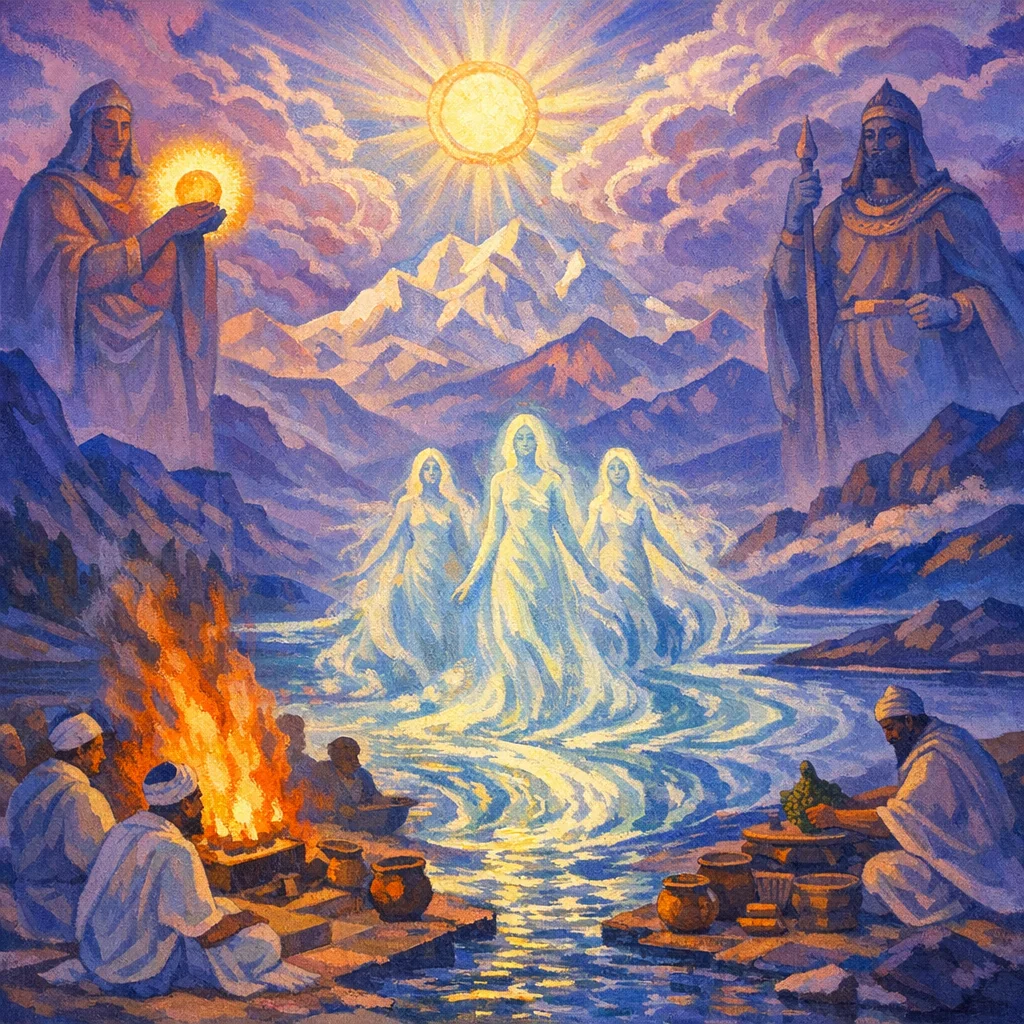
This hymn praises Āpaḥ (the Waters) as living, divine powers who carry sweetness, purification, and auspicious support into the sacrifice and into human life. It links the Waters’ beneficence with the vast “dhāsi” (sustaining support) of Mitra–Varuṇa, and culminates in a ritual scene where the Waters “take their seat” on the barhis as Soma is pressed for Indra.
Mantras
Mantra 1
प्र देवत्रा ब्रह्मणे गातुरेत्वपो अच्छा मनसो न प्रयुक्ति । महीं मित्रस्य वरुणस्य धासिं पृथुज्रयसे रीरधा सुवृक्तिम् ॥
Let the path go forward toward the divine through the Word; like a guided impulse of the mind, go to the Waters. For the far-striding one, set in place a well-fashioned utterance—great is the sustaining power of Mitra and Varuṇa.
Mantra 2
अध्वर्यवो हविष्मन्तो हि भूताच्छाप इतोशतीरुशन्तः । अव याश्चष्टे अरुणः सुपर्णस्तमास्यध्वमूर्मिमद्या सुहस्ताः ॥
O Adhvaryus, bearing the offering, become those who desire and go toward the Waters that yearn. Cast forth today, with skilful hands, that wave which the ruddy fair-winged one beholds from above.
Mantra 3
अध्वर्यवोऽप इता समुद्रमपां नपातं हविषा यजध्वम् । स वो दददूर्मिमद्या सुपूतं तस्मै सोमं मधुमन्तं सुनोत ॥
O Adhvaryus, go to the ocean of the Waters; worship Apām Napāt with the offering. He will give you today the well-purified wave; for him press out the Soma rich with sweetness.
Mantra 4
यो अनिध्मो दीदयदप्स्वन्तर्यं विप्रास ईळते अध्वरेषु । अपां नपान्मधुमतीरपो दा याभिरिन्द्रो वावृधे वीर्याय ॥
He who, without fuel, shines within the waters—him the seers adore in the sacrifices. O Apām Napāt, give the honeyed waters by which Indra grows in heroic power.
Mantra 5
याभिः सोमो मोदते हर्षते च कल्याणीभिर्युवतिभिर्न मर्यः । ता अध्वर्यो अपो अच्छा परेहि यदासिञ्चा ओषधीभिः पुनीतात् ॥
With those fair young maidens by whom Soma rejoices and exults like a lover—O Adhvaryu, go forth toward the Waters, when you will mix them in and purify them with the plants.
Mantra 6
एवेद्यूने युवतयो नमन्त यदीमुशन्नुशतीरेत्यच्छ । सं जानते मनसा सं चिकित्रेऽध्वर्यवो धिषणापश्च देवीः ॥
Thus indeed the young maidens bow to the youth when, desiring, he approaches the desiring ones. In mind they come to one knowledge, to one understanding—O Adhvaryus—Dhiṣaṇā and the divine Waters.
Mantra 7
यो वो वृताभ्यो अकृणोदु लोकं यो वो मह्या अभिशस्तेरमुञ्चत् । तस्मा इन्द्राय मधुमन्तमूर्मिं देवमादनं प्र हिणोतनापः ॥
He who made for you a space out of the shut-in states, who released you from the great oppression—send forth for that Indra the honeyed wave, the divine rapture: O Waters, set it moving.
Mantra 8
प्रास्मै हिनोत मधुमन्तमूर्मिं गर्भो यो वः सिन्धवो मध्व उत्सः । घृतपृष्ठमीड्यमध्वरेष्वापो रेवतीः शृणुता हवं मे ॥
Send forth for him the honeyed wave—the womb, O rivers, the spring of sweetness that is within you. O rich Waters, hear my call: in the sacrifices it is to be adored, the ghee-backed (shining) offering-force.
Mantra 9
तं सिन्धवो मत्सरमिन्द्रपानमूर्मिं प्र हेत य उभे इयर्ति । मदच्युतमौशानं नभोजां परि त्रितन्तुं विचरन्तमुत्सम् ॥
O rivers, send forth that intoxicating wave, drunk by Indra, which moves in both realms. Dripping with ecstasy, swift and forceful, born of the cloud, it ranges around the threefold thread—the fount in its wide coursing.
Mantra 10
आवर्वृततीरध नु द्विधारा गोषुयुधो न नियवं चरन्तीः । ऋषे जनित्रीर्भुवनस्य पत्नीरपो वन्दस्व सवृधः सयोनीः ॥
Now adore the Waters, O Seer—those that turn and return in their movement, flowing in a double stream; like fighters for the Light-cows they move towards the appointed goal. They are the Mothers that bring forth, the Spouses of the worlds; increase together, sharing one origin: bow to them within you.
Mantra 11
हिनोता नो अध्वरं देवयज्या हिनोत ब्रह्म सनये धनानाम् । ऋतस्य योगे वि ष्यध्वमूधः श्रुष्टीवरीर्भूतनास्मभ्यमापः ॥
Set our sacrifice in motion, O Waters fit for the god-offering; set the inspired Word in motion so that the riches may be won. In the yoking of Ṛta, loosen and pour out your udder; become for us powers of ready hearing and swift response.
Mantra 12
आपो रेवतीः क्षयथा हि वस्वः क्रतुं च भद्रं बिभृथामृतं च । रायश्च स्थ स्वपत्यस्य पत्नीः सरस्वती तद्गृणते वयो धात् ॥
O Waters rich in plenitude, you indeed dwell as the treasures; you bear the auspicious will and you bear Ṛta. You are also the consorts of a noble progeny; may Sarasvatī place that vital power in the one who sings.
Mantra 13
प्रति यदापो अदृश्रमायतीर्घृतं पयांसि बिभ्रतीर्मधूनि । अध्वर्युभिर्मनसा संविदाना इन्द्राय सोमं सुषुतं भरन्तीः ॥
When the Waters are seen approaching—bearing ghee, milk-streams, and honeys—they come in conscious accord with the priests’ intent, bringing to Indra the Soma well pressed: the offering of clarified delight to the lord of luminous power.
Mantra 14
एमा अग्मन्रेवतीर्जीवधन्या अध्वर्यवः सादयता सखायः । नि बर्हिषि धत्तन सोम्यासोऽपां नप्त्रा संविदानास एनाः ॥
These rich and life-giving Waters have come; O adhvaryus, seat them, friends. Place them upon the sacred grass, O Soma-workers—these in mutual accord, the Children of the Waters, ready for the offering.
Mantra 15
आग्मन्नाप उशतीर्बर्हिरेदं न्यध्वरे असदन्देवयन्तीः । अध्वर्यवः सुनुतेन्द्राय सोममभूदु वः सुशका देवयज्या ॥
The Waters, eager and consenting, have come; they have sat down here on this sacred seat within the sacrifice, seeking the gods. O adhvaryus, press the Soma for Indra; your god-serving work has become well able to succeed.
Frequently Asked Questions
The primary deity is Āpaḥ (the divine Waters), often spoken of as rivers (sindhavaḥ). Mitra–Varuṇa are also invoked as upholders of a great sustaining support (dhāsi) that stabilizes the rite and order.
It asks the Waters to come to the sacrifice, hear the poet’s call, and send a ‘honeyed wave’—symbolizing sweetness, nourishment, purification, and prosperity for the worshippers.
The closing verse places the Waters inside the Soma ritual: once the Waters have ‘sat’ on the sacred seat (barhis), the priests are told to press Soma for Indra, showing that the Waters’ blessing supports the main offering’s success.