Adhyaya 35
उत्तरो बृहन्नडां सारथ्याय नियुङ्क्ते — Uttara Appoints Bṛhannadā as Charioteer
Upa-parva: Gograharaṇa Upaparva (Cattle-Raid Episode)
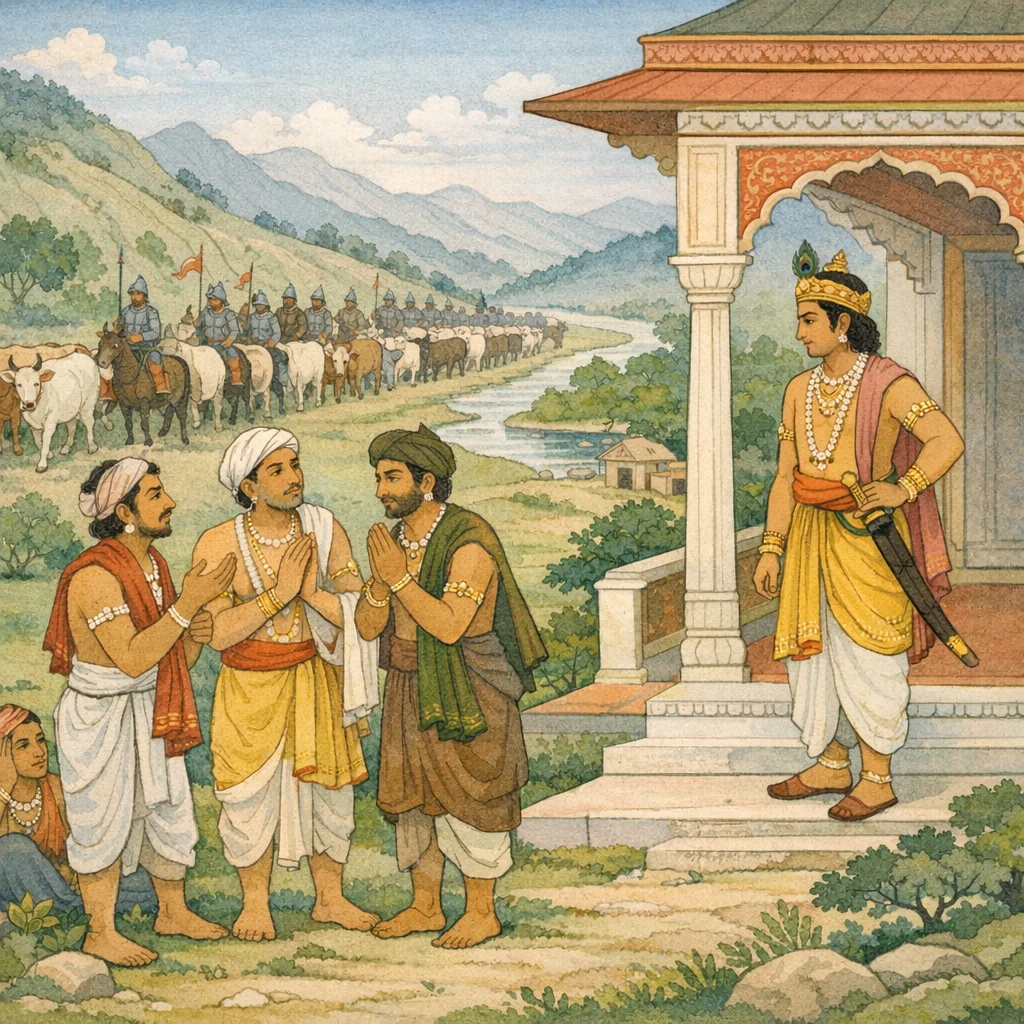
Vaishampayana narrates a courtly exchange in which the princess approaches Bṛhannadā (Arjuna in disguise) amid companions and requests urgent assistance: the Kurus are carrying off Matsya cattle, and her brother (Prince Uttara), an archer, intends to engage them. A practical obstacle arises—Uttara’s charioteer has recently been killed, and no equal driver is available—prompting the princess to cite Sairandhrī’s testimony about Bṛhannadā’s expertise with horses. She frames the request as a matter of loyalty and emotional obligation, escalating it with a vow-like ultimatum. Bṛhannadā proceeds to Uttara; the prince recognizes Bṛhannadā’s prior association with Arjuna’s successes (Khāṇḍava episode and conquests) and commands preparation of horses and chariot. Bṛhannadā demurs, claiming competence in music and dance rather than battlefield charioteering, but Uttara insists. Arjuna then engages in controlled, humorous speech while fully aware of the situation, dons armor (to the amusement of the palace maidens), and is fitted out with high-quality gear. Uttara takes up weapons and a lion-bannered standard; together they depart toward the Kuru forces. The chapter closes with Arjuna driving the horses toward the enemy, foreshadowing escalation from concealment to open martial action.
Chapter Arc: उत्तर दिशा से कौरव-सेना मत्स्यदेश की सीमा पर टूट पड़ती है; विराट के गोठों में भगदड़ मचती है और गौओं का हरण आरम्भ हो जाता है—नगर के लिए यह अपमान और संकट एक साथ है। → भीष्म, द्रोण, कर्ण, कृप, द्रौणि, शल्य/सौबल, दुःशासन, विकर्ण, चित्रसेन, दुर्मुख आदि महारथियों की सूची स्वयं भय का घोष बन जाती है; उनके वेग से गोपाल तितर-बितर होते हैं और गोधन बलपूर्वक खींच लिया जाता है। भीतर नगर में गोपों की वाणी और हाहाकार से राजसभा/अन्तःपुर तक दबाव बढ़ता है—राजा विराट अनुपस्थित/असमर्थ-सा दिखता है, और उत्तर को स्वयं निकलने के लिए उकसाया जाता है। → गोप उत्तर से कहते हैं—‘राजपुत्र! राज्यहितैषी हो तो शीघ्र स्वयं निकलो; मत्स्यराज ने तुम्हें यहाँ शून्य-पाल नहीं बनाया।’ वे उसे विजय-स्वप्न दिखाते हैं: ‘तुम्हारे दृढ़ हाथ से छूटे रुक्मपुङ्ख बाण सूर्य को ढक दें; कुरुओं को जीतकर वज्रपाणि की भाँति यश लेकर लौटो।’ उत्तर स्त्रियों के मध्य यह निर्भय वचन सुनकर श्लाघा/उत्साह में भर उठता है। → अध्याय का निष्कर्ष उत्तर के भीतर उठे आत्मविश्वास और प्रस्थान-प्रेरणा में है—गोपवाक्य उसके लिए रण-आह्वान बन जाता है, और वह अपने पराक्रम की कल्पना में नगर-मान की रक्षा का भार स्वीकार करने को तत्पर होता है। → उत्तर का यह उत्साह वास्तविक रणभूमि में कैसे टिकेगा—और उसके रथ पर कौन सारथि बनेगा—यह प्रश्न अगले प्रसंग की ओर कथा को धकेल देता है।
Shlokas
Verse 1
(दाक्षिणात्य अधिक पाठके ६६ श्लोक मिलाकर कुल २५३ “लोक हैं।) ््स् “+ (9) #::.# #55-7 पजञ्चत्रिशो<ड्ध्याय: कौरवोंद्वारा उत्तर दिशाकी ओरसे आकर विराटकी गौओंका अपहरण और गोपाध्यक्षका उत्तरकुमारको युद्धके लिये उत्साह दिलाना वैशमग्पायन उवाच याते त्रिगर्तान् मत्स्ये तु पशूंस्तान् वै परीप्सति | दुर्योधन: सहामात्यो विराटमुपयादथ,वैशम्पायनजी कहते हैं-जनमेजय! जिस समय अपने पशुओंको छुड़ा लानेकी इच्छासे राजा विराट त्रिगर्तोंसे युद्ध करनेके लिये गये, उसी समय दुर्योधनने अपने मन्त्रियोंके साथ विराटदेशपर चढ़ाई की
Vaiśaṃpāyana said: When the king of the Matsyas (Virāṭa) had gone out against the Trigartas, intent on recovering those cattle, then Duryodhana—together with his ministers—advanced upon Virāṭa’s realm.
Verse 2
भीष्मो द्रोणश्र कर्णश्र॒ कृपश्च परमास्त्रवित् । द्रौणिश्व सौबलश्चैव तथा दुःशासन: प्रभो,राजन! भीष्म, द्रोण, कर्ण, अस्त्रविद्याके श्रेष्ठ विद्वान् कृपाचार्य, अश्वत्थामा, शकुनि, दुःशासन, विविंशति, विकर्ण, पराक्रमी चित्रसेन, दुर्मुख, दुःशल तथा अन्य महारथी भी दुर्योधनके साथ थे
Vaiśaṃpāyana said: O lord, O king, Bhīṣma, Droṇa, and Karṇa were there, and also Kṛpa—supreme among those who know the highest weapons. Likewise Aśvatthāmā (son of Droṇa), Śakuni (of the Saubala line), and Duḥśāsana were present.
Verse 3
विविंशतिर्विकर्णश्न चित्रसेनश्न वीर्यवान् । दुर्मुखो दुःशलश्लैव ये चैवान्ये महारथा:,राजन! भीष्म, द्रोण, कर्ण, अस्त्रविद्याके श्रेष्ठ विद्वान् कृपाचार्य, अश्वत्थामा, शकुनि, दुःशासन, विविंशति, विकर्ण, पराक्रमी चित्रसेन, दुर्मुख, दुःशल तथा अन्य महारथी भी दुर्योधनके साथ थे
Vaiśaṃpāyana said: “Vivimśati, Vikarṇa, and the valiant Citrasena; Durmukha and Duḥśala as well—along with other great chariot-warriors—were also present on Duryodhana’s side.”
Verse 4
एते मत्स्यानुपागम्य विराटस्य महीपते: । घोषान् विद्राव्य तरसा गोधनं जहुरोजसा,इन सबने राजा विराटके मत्स्यदेशमें आकर उनके गोष्ठोंमें भगदड़ मचा दी और बड़े वेगसे बलपूर्वक गोधनका अपहरण करना आरम्भ किया
Arriving in the land of the Matsyas, these men, with swift force, threw King Virāṭa’s cattle-stations into panic and, relying on sheer might, began to carry off the herds.
Verse 5
षष्टिं गवां सहस्राणि कुरव: कालयन्ति च । महता रथवंशेन परिवार्य समन्तत:,वे कौरव वीर राजा विराटकी साठ हजार गौओंको विशाल रथसमूहोंद्वारा चारों ओरसे घेरकर हाँक ले चले
Vaiśaṃpāyana said: The Kurus drove off sixty thousand cattle, surrounding them on all sides with a great array of chariots.
Verse 6
गोपालानां तु घोषस्य हन्यतां तैर्महारथै: । आराव: सुमहानासीत् सम्प्रहारे भयंकरे,उस समय वहाँ भयंकर मारपीट हुई। उन महारथियोंद्वारा मारे जाते हुए गोष्ठके ग्वालोंका जोर-जोरसे होनेवाला आर्तनाद बहुत दूरतक सुनायी देता था
Vaiśaṃpāyana said: As those great chariot-warriors struck down the cowherds of the cattle-settlement, a tremendous cry arose. In that fearful clash, the anguished wailing of the herdsmen being beaten and slain resounded far and wide.
Verse 7
गोपाध्यक्षो भयत्रस्तो रथमास्थाय सत्वर: । जगाम नगरायैव परिक्रोशंस्तदा5<र्तवत्,तब उन गौओंका रक्षक भयभीत हो तुरंत ही रथपर बैठकर आर्तकी भाँति विलाप करता हुआ राजधानीकी ओर चल दिया [
Vaiśaṃpāyana said: The chief cowherd, shaken with fear, quickly mounted a chariot and hurried toward the city, crying out in distress like one afflicted—seeking immediate protection and help for the cattle and the community.
Verse 8
स प्रविश्य पुरं राज्ञो नृपवेश्माभ्ययात् ततः । अवतीर्य रथात् तूर्णमाख्यातुं प्रविवेश ह,राजा विराटके नगरमें पहुँचकर वह राजभवनके समीप गया और रथसे उतरकर तुरंत यह समाचार सूचित करनेके लिये महलके भीतर चला गया
Having entered the king’s city, he went straight toward the royal residence. Quickly descending from his chariot, he then went inside the palace at once, intent on delivering the news—an image of prompt duty and responsible communication in a royal crisis.
Verse 9
दृष्टवा भूमिंजयं नाम पुत्र मत्स्यस्य मानिनम् | तस्मै तत् सर्वमाचष्ट राष्ट्स्य पशुकर्षणम्,वहाँ मत्स्यराजके मानी पुत्र भूमिंजय (उत्तर) से मिलकर उस गोपने उनसे राज्यके पशुओंके अपहरणका सब समाचार बताते हुए कहा--“राजकुमार! आप इस राष्ट्रकी वृद्धि करनेवाले हैं। आज कौरव आपकी साठ हजार गौओंको हाँक ले जा रहे हैं। उनके हाथसे उस गोधनको जीत लानेके लिये उठ खड़े होइये
Seeing the proud prince of Matsya named Bhūmiṃjaya (Uttara), he reported to him the entire matter of the kingdom’s cattle being driven off. He urged the prince to rise and reclaim the herd from the Kauravas—an appeal to royal duty: to protect the realm’s wealth and uphold the honor and security of the kingdom.
Verse 10
षष्टिं गवां सहस्राणि कुरव: कालयन्ति ते । तद् विजेतुं समुत्तिष्ठ गोधन राष्ट्रमवर्धन,वहाँ मत्स्यराजके मानी पुत्र भूमिंजय (उत्तर) से मिलकर उस गोपने उनसे राज्यके पशुओंके अपहरणका सब समाचार बताते हुए कहा--“राजकुमार! आप इस राष्ट्रकी वृद्धि करनेवाले हैं। आज कौरव आपकी साठ हजार गौओंको हाँक ले जा रहे हैं। उनके हाथसे उस गोधनको जीत लानेके लिये उठ खड़े होइये
Vaiśaṃpāyana said: “The Kurus are driving away your sixty thousand cows. Rise up and win back that cattle-wealth, O increaser of the kingdom’s prosperity.” (Thus the messenger, having met the proud son of the Matsya king—Bhūmijaya (Uttara)—reported the full news of the cattle-raid and urged him to act.)
Verse 11
राजपुत्र हितप्रेप्सु: क्षिप्रं निर्याहि च स्वयम् । त्वां हि मत्स्यो महीपाल: शून्यपालमिहाकरोत्,*राजपुत्र! आप इस राज्यके हितैषी हैं, अतः स्वयं ही युद्धके लिये तैयार होकर निकलिये। मत्स्यनरेशने अपनी अनुपस्थितिमें आपको ही यहाँका रक्षक नियुक्त किया है
Vaiśaṃpāyana said: “O prince, since you seek the welfare of the kingdom, go forth at once—personally—and make ready for battle. For King Matsya, the lord of the land, has appointed you here as the guardian in his absence.”
Verse 12
त्वया परिषदो मध्ये श्लाघते स नराधिप: । पुत्रो ममानुरूपश्व शूरश्वेति कुलोद्वह:,“वे सभामें आपसे प्रभावित होकर आपकी प्रशंसामें बड़ी-बड़ी बातें किया करते हैं। उनका कहना है--'मेरा यह पुत्र उत्तर मेरे अनुरूप शूरवीर और इस वंशका भार वहन करनेमें समर्थ है
Vaiśaṃpāyana said: In the midst of the royal assembly, that king speaks in your praise, boasting about you. He declares, ‘This son of mine—Uttara—is like me, a true hero, and a worthy bearer of the weight and honor of our lineage.’
Verse 13
इष्वस्त्रे निपुणो योध: सदा वीरश्न मे सुतः । तस्य तत् सत्यमेवास्तु मनुष्येन्द्रस्य भाषितम्,“मेरा वह लाड़ला बेटा बाण चलाने तथा अन्यान्य अस्त्रोंके प्रयोगकी कलामें भी निपुण, सदा युद्धके लिये उद्यत रहनेवाला और वीर है।” उन महाराजका यह कथन आज सत्य सिद्ध होना चाहिये
“My beloved son is a warrior skilled in archery and in the arts of every weapon—ever ready for battle, ever heroic. Let the words spoken by the lord of men prove true today.”
Verse 14
आवर्तय कुरून् जित्वा पशून् पशुमतां वर | निर्दहदेषामनीकानि भीमेन शरतेजसा,'पशुसम्पत्तिवाले समस्त राजाओंमें आप श्रेष्ठ हैं; अतः कौरवोंको परास्त करके अपने पशुओंको लौटा लाइये और बाणोंकी भयंकर अग्निसे इन कौरवोंकी सारी सेनाओंको भस्म कर डालिये
Vaiśaṃpāyana said: “O best among those rich in cattle, defeat the Kurus and bring back the herds. With Bhīma’s arrow-born brilliance, burn down their battle-formations.”
Verse 15
धनुश्च्युतै रुक्मपुड्खै: शरै: संनतपर्वभि: । द्विषतां भिन्ध्यनीकानि गजानामिव यूथप:,'जैसे हाथियोंके झुंडका स्वामी गजराज अपने विरोधियोंको रौंद डालता है, उसी प्रकार आप अपने धनुषसे छूटे हुए सुवर्णमय पंखसे सुशोभित और झुकी हुई गाँठवाले तीखे बाणोंद्वारा विपक्षियोंकी विपुल वाहिनीको छिन्न-भिन्न कर डालिये
Vaiśaṃpāyana said: “With arrows released from the bow—adorned with golden fletching and fitted with well-bent joints—shatter the battle-formations of your foes, just as the leader of a herd of elephants breaks and tramples opposing ranks.”
Verse 16
पाशोपधानां ज्यातन्त्रीं चापदण्डां महास्वनाम् | शरवर्णा भनुर्वीणां शत्रुमध्ये प्रवादय,“आज शशत्रुओंके बीचमें जोर-जोरसे गूँजनेवाली धनुषरूपी वीणा बजाइये। पाश (प्रत्यंचा बाँधनेके दोनों सिरे) उसके उपधान (खूँटियाँ) हैं, प्रत्यंचा तार हैं, धनुष उसका दण्ड है और बाण ही उससे झंकृत होनेवाले वर्ण (स्वर) हैं
Vaiśaṃpāyana said: “In the midst of the enemies, make the bow-lute resound loudly. Let its end-loops and pegs be the fittings, the bowstring its string, the bow-staff its body, and the arrows the notes that ring out—so that today your weapon itself proclaims your presence and resolve.”
Verse 17
श्वेता रजतसंकाशा रथे युज्यन्तु ते हया: । ध्वजं च सिंहं सौवर्णमुच्छूयन्तु तव प्रभो,'प्रभो अब चाँदीके समान चमकनेवाले वे श्वेत रंगके घोड़े आपके रथमें जोते जायँ और सिंहके चिह्नसे सुशोभित सुवर्णमय ऊँचा ध्वज फहरा दिया जाय
Vaiśaṃpāyana said: “Let your white horses, gleaming like silver, be yoked to the chariot. And let the lofty golden banner, marked with a lion, be raised high for you, O lord.”
Verse 18
रुक्मपुड्खा: प्रसन्नाग्रा मुक्ता हस्तवता त्वया | छादयन्तु शरा: सूर्य राज्ञां मार्गनिरोधका:,“वीरवर! आपके हाथ बहुत मजबूत हैं। उनके द्वारा आपके चलाये हुए सोनेकी पाँख और स्वच्छ नोकवाले बाण शत्रुपक्षेके राजाओंकी राह रोककर सूर्यदेवको भी ढक दें
Vaiśaṃpāyana said: “O best of heroes, your arms are mighty. May the arrows you release—gold-feathered and keen-tipped—block the path of the hostile kings and, in their dense flight, even veil the sun.”
Verse 19
रणे जित्वा कुरून् सर्वान् वज़पाणिरिवासुरान् | यशो महदवाप्य त्वं प्रविशेदं पुरं पुन:
Vaiśaṃpāyana said: “Having defeated all the Kurus in battle—like the wielder of the thunderbolt conquering the Asuras—you will win great renown and then re-enter this city once again.”
Verse 20
'जैसे वज्रपाणि इन्द्र समस्त असुरोंको परास्त कर देते हैं, उसी प्रकार आप युद्धमें सम्पूर्ण कौरवोंको जीतकर महान् यश प्राप्त करके पुन: इस नगरमें प्रवेश करें ।। त्वं हि राष्ट्रस्य परमा गतिर्मत्स्यपते: सुत: । यथा हि पाण्डुपुत्राणामर्जुनो जयतां वर:,“मत्स्यराजके सुयोग्य पुत्र होनेके कारण आप ही इस राष्ट्रके महान् आश्रय हैं। जैसे विजयी वीरोंमें श्रेष्ठ अर्जुन पाण्डवोंके उत्तम आश्रय हैं, उसी प्रकार आप भी निश्चय ही इस राज्यके निवासियोंकी परम गति हैं। हम सभी मत्स्यदेशवासी आज आपको पाकर ही गतिमान् (सनाथ) हैं!
Vaiśampāyana said: “Just as Indra, wielder of the thunderbolt, overcomes all the Asuras, so may you defeat the entire host of the Kauravas in battle, win great fame, and then re-enter this city. For you, O son of the lord of Matsya, are the highest refuge and final resort of this kingdom. As Arjuna—best among victors—is the foremost support of the sons of Pāṇḍu, so you too are surely the supreme reliance of the people of this realm. Today, all we who dwell in the land of Matsya have become secure and supported simply by obtaining you.”
Verse 21
एवमेव गतिनूनं भवान् विषयवासिनाम् | गतिमन्तो वयं त्वद्य सर्वे विषयवासिन:,“मत्स्यराजके सुयोग्य पुत्र होनेके कारण आप ही इस राष्ट्रके महान् आश्रय हैं। जैसे विजयी वीरोंमें श्रेष्ठ अर्जुन पाण्डवोंके उत्तम आश्रय हैं, उसी प्रकार आप भी निश्चय ही इस राज्यके निवासियोंकी परम गति हैं। हम सभी मत्स्यदेशवासी आज आपको पाकर ही गतिमान् (सनाथ) हैं!
Vaiśaṃpāyana said: “So indeed you are the sure refuge and highest resort of the people who dwell in this realm. Today, having obtained you, we—all the inhabitants of this country—have become ‘possessed of a path,’ no longer helpless. As Arjuna, foremost among victorious heroes, is the finest support of the Pāṇḍavas, so you too are certainly the supreme stay of the residents of this kingdom.”
Verse 22
वैशमग्पायन उवाच स्त्रीमध्य उक्तस्तेनासौ तद् वाक्यमभयंकरम् । अन्त:पुरे श्लाघमान इदं वचनमत्रवीत्,वैशम्पायनजी कहते हैं--राजन! उस समय राजकुमार उत्तर अन्तःपुरमें स्त्रियोंके बीचमें बैठा था। वहीं उस गोपाध्यक्षने उससे ये निर्भय बनानेवाली उत्साहजनक बातें कहीं। अतः वह अपनी प्रशंसा करता हुआ इस प्रकार कहने लगा
Vaiśaṃpāyana said: “O King, at that time Prince Uttara was seated among the women in the inner apartments. There the cowherd-chief addressed him with words that dispelled fear and stirred courage. Then Uttara, praising himself, began to speak in this manner.”
Verse 34
इस प्रकार श्रीमह्या भारत विराटपर्वके अन्तर्गत गोहरणपर्वमें दक्षिण दिशाकी ओरसे गौओके अपहरणके प्रसंगमें विराटके जयघोषसम्बन्धी चौंतीसवाँ अध्याय पूरा हुआ
Thus ends the thirty-fourth chapter of the Goharaṇa episode within the Virāṭa Parva of the Śrī Mahābhārata, concerning the carrying off of the cattle from the southern direction and the proclamation of King Virāṭa’s victory.
Verse 35
इति श्रीमहाभारते विराटपर्वणि गोहरणपर्वणि उत्तरगोग्रहे गोपवाक्ये पज्चत्रिंशोडध्याय:
Thus ends the thirty-fifth chapter in the Virāṭa Parva of the Śrī Mahābhārata, within the cattle-raid section—Uttara’s taking of the cows—concluding with the words of the cowherds.
Frequently Asked Questions
The tension is between maintaining the vow of anonymity and meeting an immediate public duty to protect Matsya’s wealth (go-dhana); Arjuna must act without prematurely revealing identity, calibrating response to both ethics and risk.
Dharma is operational as discernment: competence should align with responsibility, and ethical action in crises often requires restrained disclosure—doing what is necessary while minimizing avoidable harm to prior commitments.
No explicit phalaśruti appears here; the meta-function is narrative and ethical—establishing credibility, pressure, and preparation that contextualize the impending engagement and the limits of concealment.