Adhyaya 13
Virāṭa-parva Adhyāya 13 — Kīcaka’s Proposition and Draupadī’s Dharmic Refusal
Upa-parva: Kīcaka–Draupadī Saṃvāda (Episode within Virāṭa-parva)
Vaiśaṃpāyana reports that ten months of the Pandavas’ concealed residence in Matsya have elapsed. Draupadī, serving Queen Sudeṣṇā as a Sairandhrī, is seen by Kīcaka, Virāṭa’s commander, who becomes infatuated and approaches the queen to inquire about the attendant. He then addresses Draupadī directly with persuasive and transactional language, offering wealth, status, and household prosperity in exchange for her association, framing desire as entitlement. Draupadī responds with a structured ethical rebuttal: she identifies herself as another’s wife (paradārā), emphasizes the impropriety of his intent, and articulates a normative rule—virtuous persons avoid wrongful acts. She warns of reputational and existential consequences for coercive pursuit and invokes protective agency by stating her husbands are “Gandharvas,” a strategic claim consistent with incognito conditions. The chapter’s thematic center is dharma under asymmetric power: refusal grounded in marital ethics, social norms, and deterrence, while maintaining operational secrecy for the Pandavas’ larger objective.
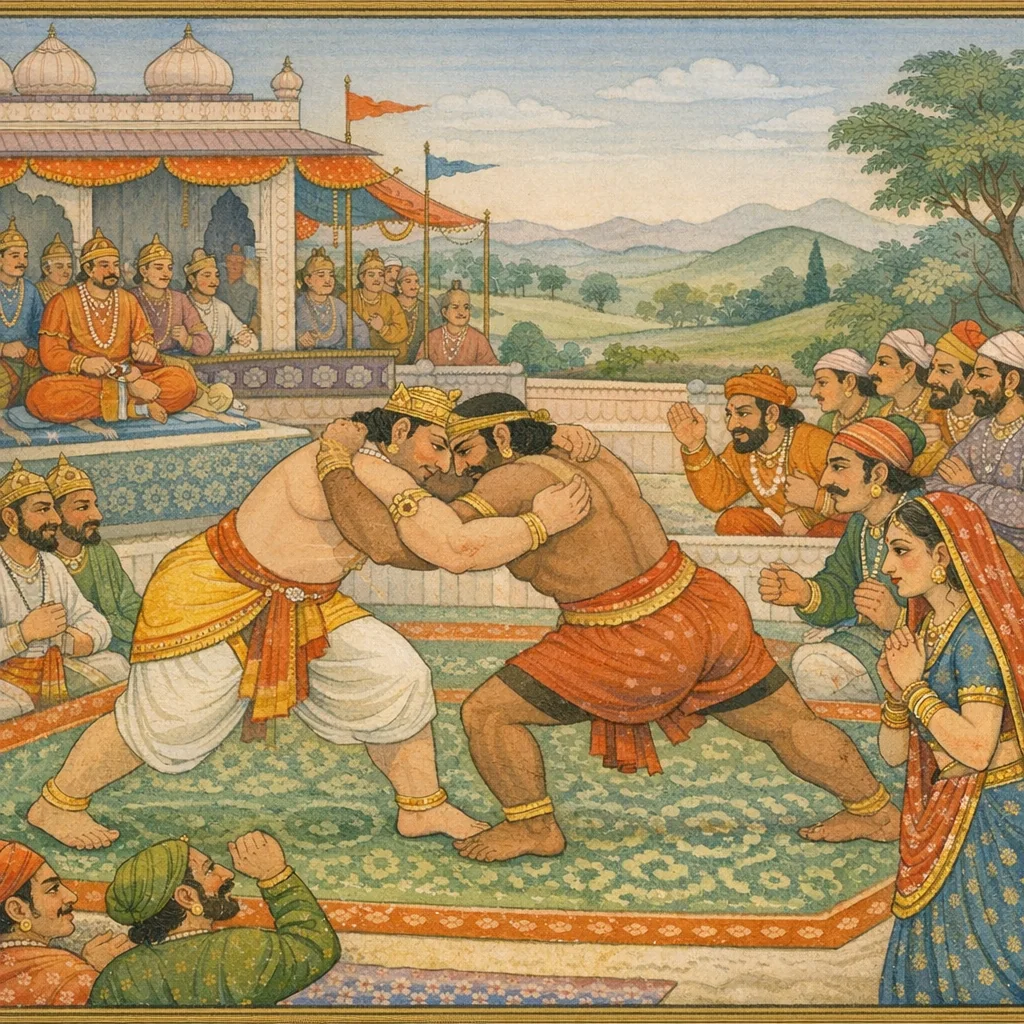
Chapter Arc: वैशम्पायन जनमेजय से कहते हैं—मत्स्यनगर में पाण्डव अज्ञातवास के व्रत को निभाते हुए विराट की सेवा में लगे हैं; पर नगर के उत्सव-समाज में एक नया आकर्षण उठता है: मल्ल-युद्ध का कोलाहल। → तृणबिन्दु के प्रसाद और धर्म की अनुकम्पा से सुरक्षित रहते हुए भी पाण्डवों का छिपा हुआ तेज़ भीतर-भीतर उबलता है। सभा-उत्सव में प्रसिद्ध मल्ल जीमूत का नाम गूँजता है; भीमसेन का क्षात्र-बल और मल्ल-धर्म उसे चुनौती की ओर खींचता है, जबकि पहचान छिपाए रखना अनिवार्य है। → भीम और जीमूत—दो मतवाले महागजों की भाँति—निःशस्त्र बाहुबल से घोर संग्राम करते हैं। प्रहार-प्रतिप्रहार, जकड़न, पटकनी और उछाल के बीच जनसमूह का निनाद उठता है; युद्ध वृत्र-वासव के समान प्रतीत होता है और अखाड़ा रणभूमि बन जाता है। → भीमसेन अपने पराक्रम से जीमूत को परास्त कर उत्सव-सभा में विजय का हर्ष भर देते हैं, पर स्वयं को विराट का साधारण सेवक/मल्ल ही बनाए रखते हैं। पाण्डव उसी प्रकार प्रच्छन्न रहकर विराट के कार्यों में लगे रहते हैं; द्रौपदी अपने पतियों के क्लेश को देखकर भीतर से व्याकुल होती है। → विजय के शोर के बीच द्रौपदी की निःश्वास-भरी चिंता संकेत देती है—यह तेज़ बार-बार प्रकट होगा तो अज्ञातवास की डोर कब तक सुरक्षित रहेगी?
Shlokas
Verse 1
(दाक्षिणात्य अधिक पाठके २ श्लोक मिलाकर कुल १५ श्लोक हैं।) हि >> आय ० (0) है 7 (समयपालनपर्व) त्रयोदशो 5 ध्याय: भीमसेनके द्वारा जीमूत नामक विश्वविख्यात मलल्लका वध जनमेजय उवाच एवं ते मत्स्यनगरे प्रच्छन्ना: कुरुनन्दना: । अत ऊर्ध्व॑ महावीर्या: किमकुर्वत वै द्विज,जनमेजयने पूछा--ब्रह्मन्! इस प्रकार मत्स्यदेशकी राजधानीमें गुप्तरूपसे निवास करनेवाले महापराक्रमी पाण्डुपुत्रोंने इसके बाद क्या किया?
Janamejaya said: “O Brahmin, after the mighty sons of Pāṇḍu—delight of the Kurus—had thus been living in concealment within the city of the Matsyas, what did they do next?”
Verse 2
वैशम्पायन उवाच एवं मत्स्यस्य नगरे प्रच्छन्ना: कुरुनन्दना: । आराधयन्तो राजानं यदकुर्वत तच्छुणु,वैशम्पायनजीने कहा--राजन! इस प्रकार मत्स्यदेशकी राजधानीमें गुप्तरूपसे निवास करनेवाले पाण्डवोंने राजा विराटकी सेवा करते हुए जो-जो कार्य किया, वह सुनो
Vaiśampāyana said: “Thus, in the city of the Matsya king, the delight of the Kuru line (the Pāṇḍavas) lived in concealment. While respectfully serving and pleasing the king, whatever deeds they carried out—listen to that.”
Verse 3
तृणबिन्दुप्रसादाच्च धर्मस्य च महात्मन: । अज्ञातवासमेवं तु विराटनगरेडवसन्,राजर्षि तृणबिन्दु और महात्मा धर्मके प्रसादसे पाण्डवलोग इस प्रकार विराटके नगरमें अज्ञातवासके दिन पूरे करने लगे। महाराज युधिष्ठिर राजसभाके प्रमुख सदस्य और मत्स्यदेशकी प्रजाके अत्यन्त प्रिय थे। राजन्! इसी प्रकार पुत्रसहित राजा विराटका भी उनपर विशेष प्रेम था। वे पासोंका मर्म जानते थे। जैसे कोई सूतमें बाँधे हुए पक्षियोंको इच्छानुसार उड़ावे, उसी प्रकार वे द्यूतशालामें पासोंको अपने इच्छानुसार फेंकते हुए राजा आदिको जूआ खेलाया करते थे
Vaiśampāyana said: “By the gracious favor of King Tṛṇabindu and of the great-souled Dharma, the Pāṇḍavas thus continued to dwell in the city of Virāṭa, completing the period of living incognito.”
Verse 4
युधिष्ठटिर: सभास्तारो मत्स्यानामभवत् प्रिय: । तथैव च विराटस्य सपुत्रस्थ विशाम्पते,राजर्षि तृणबिन्दु और महात्मा धर्मके प्रसादसे पाण्डवलोग इस प्रकार विराटके नगरमें अज्ञातवासके दिन पूरे करने लगे। महाराज युधिष्ठिर राजसभाके प्रमुख सदस्य और मत्स्यदेशकी प्रजाके अत्यन्त प्रिय थे। राजन्! इसी प्रकार पुत्रसहित राजा विराटका भी उनपर विशेष प्रेम था। वे पासोंका मर्म जानते थे। जैसे कोई सूतमें बाँधे हुए पक्षियोंको इच्छानुसार उड़ावे, उसी प्रकार वे द्यूतशालामें पासोंको अपने इच्छानुसार फेंकते हुए राजा आदिको जूआ खेलाया करते थे
Vaiśampāyana said: “Yudhiṣṭhira became a leading member of the Matsya royal court and was dear to the people. In the same way, O lord of men, King Virāṭa too—together with his sons—developed a special affection for him.”
Verse 5
स हाक्षह्ददयज्ञस्तान् क्रीडयामास पाण्डव: । अक्षवत्यां यथाकामं सूत्रबद्धानिव द्विजान्,राजर्षि तृणबिन्दु और महात्मा धर्मके प्रसादसे पाण्डवलोग इस प्रकार विराटके नगरमें अज्ञातवासके दिन पूरे करने लगे। महाराज युधिष्ठिर राजसभाके प्रमुख सदस्य और मत्स्यदेशकी प्रजाके अत्यन्त प्रिय थे। राजन्! इसी प्रकार पुत्रसहित राजा विराटका भी उनपर विशेष प्रेम था। वे पासोंका मर्म जानते थे। जैसे कोई सूतमें बाँधे हुए पक्षियोंको इच्छानुसार उड़ावे, उसी प्रकार वे द्यूतशालामें पासोंको अपने इच्छानुसार फेंकते हुए राजा आदिको जूआ खेलाया करते थे
Vaiśampāyana said: “That Pāṇḍava, skilled in the very heart of dice-play, made them play. In the dice-hall he cast the dice exactly as he wished—like one who, having birds tied by a string, makes them fly as he pleases.”
Verse 6
अज्ञातं च विराटस्य विजित्य वसु धर्मराट् । भ्रातृभ्य: पुरुषव्याप्रो यथा सम्प्रयच्छति,'पुरुषसिंह धर्मराज युधिष्ठिर जूएमें धन जीतकर अपने भाइयोंको यथायोग्य बाँट देते थे।! इसका राजा विराटको भी पता नहीं लगता था
Vaiśampāyana said: “Having won wealth, the righteous king (Yudhiṣṭhira)—a tiger among men—would distribute it to his brothers in due measure, all without King Virāṭa coming to know of it.”
Verse 7
भीमसेनो<पि मांसानि भक्ष्याणि विविधानि च । अतिसृष्टानि मत्स्येन विक्रीणीते युधिष्ठिरे,भीमसेन भी नाना प्रकारके भक्ष्य-भोज्य पदार्थ, जो मत्स्यनरेशद्वारा उन्हें पुरस्काररूपमें प्राप्त होते, बेच देते और उससे मिला हुआ धन युधिष्ठिरकी सेवामें अर्पित करते थे
Bhīmasena too would sell the meats and various foods that the king of Matsya (Virāṭa) granted him as rewards, and he would offer the money thus gained in Yudhiṣṭhira’s service.
Verse 8
वासांसि परिजीर्णानि लब्धान्यन्तःपुरेडर्जुन: । विक्रीणानश्न सर्वेभ्य: पाण्डवेभ्य: प्रयच्छति,अर्जुनको अन्तःपुरमें जो पुराने उतारे हुए बहुमूल्य वस्त्र प्राप्त होते, उन्हें वे बेचते और बेचनेसे मिला हुआ मूल्य सब पाण्डवोंको देते थे
Vaiśampāyana said: In the women’s quarters, Arjuna obtained costly garments that had grown old and worn. He sold them, and the money from the sale he distributed among all the Pāṇḍavas—quietly sustaining the family in exile by honest, nonviolent means, without burdening others.
Verse 9
सहदेवो<पि गोपानां वेषमास्थाय पाण्डव: । दध्षि क्षीरं घृतं चैव पाण्डवेभ्य: प्रयच्छति,पाण्डुनन्दन सहदेव भी ग्वालोंका वेश धारणकर पाण्डवोंको दही, दूध और घी दिया करते थे
Vaiśampāyana said: Sahadeva too, a son of Pāṇḍu, assumed the disguise of a cowherd. In that role he supplied the Pāṇḍavas with curd, milk, and ghee—quietly sustaining them during their concealed life.
Verse 10
नकुलो<पि धनं लब्ध्वा कृते कर्मणि वाजिनाम् । तुष्टे तस्मिन् नरपतौ पाण्डवेभ्य: प्रयच्छति,नकुल भी घोड़ोंके शिक्षणका कार्य करके महाराज विराटके संतुष्ट होनेपर उनसे पुरस्कारस्वरूप जो धन पाते, उसे सब पाण्डवोंको बाँट दिया करते थे
Vaiśampāyana said: Nakula too, having earned wealth by training the horses, would—when that king (Virāṭa) was pleased—hand the reward over to the Pāṇḍavas.
Verse 11
कृष्णा तु सर्वान् भर्तुस्तान् निरीक्षन्ती तपस्विनी । यथा पुनरविज्ञाता तथा चरति भामिनी,तपस्विनी एवं सुन्दरी द्रौपदी भी उन सब पतियोंकी देखभाल करती हुई ऐसा बर्ताव करती, जिससे फिर कोई उसे पहचान न सके
Vaiśampāyana said: Draupadī (Kṛṣṇā), though living as an ascetic woman, kept watch over all her husbands and attended to them; yet she conducted herself with such disciplined care that she would not be recognized again.
Verse 12
एवं सम्पादयन्तस्ते तदान्योन्यं महारथा: । विराटनगरे चेरु: पुनर्गर्भधृता इव,इस प्रकार एक-दूसरेका सहयोग करते हुए वे महारथी पाण्डव विराटनगरमें बहुत छिपकर रहते थे; मानो पुनः माताके गर्भमें निवास कर रहे हों
Thus, by mutually supporting one another and setting their affairs in order among themselves, those great chariot-warriors (the Pāṇḍavas) moved about within the city of Virāṭa in deep concealment—like beings dwelling once again in a mother’s womb.
Verse 13
साशड्का धार्तराष्ट्रस्य भयात् पाण्डुसुतास्तदा । प्रेक्षमाणास्तदा कृष्णामूषुश्छन्ना नराधिप,इति श्रीमहाभारते विराटपर्वणि समयपालनपर्वणि जीमूतवधे त्रयोदशो 5ध्याय:
Vaiśampāyana said: Then, fearing the son of Dhṛtarāṣṭra and filled with apprehension, the sons of Pāṇḍu remained concealed, all the while keeping watch on Kṛṣṇā (Draupadī), O king.
Verse 14
राजन! दुर्योधनद्वारा पहचान लिये जानेके भयसे पाण्डव सदा सशंक रहते थे; अत: वे उस समय द्रौपदीकी देखभाल करते हुए भी छिपकर ही वहाँ निवास करते थे ।। अथ मासे चतुर्थ तु ब्रह्मण: सुमहोत्सव: । आसीत् समृद्धो मत्स्येषु पुरुषाणां सुसम्मत:,तदनन्तर चौथा महीना प्रारम्भ होनेपर मत्स्यदेशमें ब्रह्माजीकी पूजाका महान् उत्सव मनाया जाने लगा। इसमें बड़ा समारोह होता था। मत्स्यदेशके लोगोंको यह बहुत प्रिय था। जनमेजय! उस समय विराटनगरमें चारों दिशाओंसे हजारों कुश्ती लड़नेवाले मल्ल जुटने लगे। इसी अवसरपर ब्रह्माजी और भगवान् शंकरकी सभाके समान उस राजधानीमें लोगोंका जमाव होता था
Vaiśaṃpāyana said: “O King, fearing that Duryodhana might recognize them, the Pāṇḍavas lived in constant caution. Therefore, even while keeping watch over Draupadī, they stayed there only in concealment. Then, when the fourth month began, in the land of the Matsyas a grand and prosperous festival in honor of Brahmā was celebrated—highly esteemed and beloved among the people.”
Verse 15
तत्र मल््ला: समापेतुर्दिग्भ्यो राजन् सहस्रश: । समाजे ब्रह्मणो राजन् यथा पशुपतेरिव,तदनन्तर चौथा महीना प्रारम्भ होनेपर मत्स्यदेशमें ब्रह्माजीकी पूजाका महान् उत्सव मनाया जाने लगा। इसमें बड़ा समारोह होता था। मत्स्यदेशके लोगोंको यह बहुत प्रिय था। जनमेजय! उस समय विराटनगरमें चारों दिशाओंसे हजारों कुश्ती लड़नेवाले मल्ल जुटने लगे। इसी अवसरपर ब्रह्माजी और भगवान् शंकरकी सभाके समान उस राजधानीमें लोगोंका जमाव होता था
Vaiśampāyana said: Then, O King, thousands of wrestlers gathered there from every direction. In that assembly, O King, the crowding in the royal city was like the congregation of Brahmā, and like that of Paśupati (Śiva).
Verse 16
महाकाया महावीर्या: कालखज्जा इवासुरा: । वीर्योन्मत्ता बलोदग्रा राज्ञा समभिपूजिता:,वहाँ आये हुए विशालकाय और महान् बलशाली मल्ल कालखंज नामक असुरोंके समान जान पड़ते थे। वे सब अपनी शक्ति और पराक्रमके मदसे उन्मत्त थे एवं बलमें बहुत बड़े-चढ़े थे। राजा विराटने उन सबका खूब स्वागत- सत्कार किया
Vaiśampāyana said: Those wrestlers who had arrived appeared like the demon Kālakhajja—huge in body and formidable in might. Intoxicated with their own prowess and swollen with strength, they were nevertheless received and duly honored by King Virāṭa, who extended to them full hospitality and respect.
Verse 17
सिंहस्कन्धकटिग्रीवा: स्ववदाता मनस्विन: । असकृल्लब्धलक्षास्ते रड़े पार्थिवसंनिधौ,उनके कंधे, कमर और कण्ठ सिंहके समान थे। वे निर्मल यशसे सुशोभित और मनस्वी थे। उन्होंने अनेक बार राजाके समीप रंगभूमि (अखाड़े) में विजय पायी थी
Vaiśaṃpāyana said: “They had shoulders, waists, and necks like lions—radiant in their own natural splendor and possessed of high spirit. Time and again, in the king’s very presence, they had won honor and success in the arena.”
Verse 18
तेषामेको महानासीत् सर्वमल्लानथादह्वयत् । आवल्गमानं तं रड्भे नोपतिष्ठति कश्नन,उन सबमें एक बहुत बड़ा पहलवान था, जो दूसरे सब पहलवानोंको अपने साथ लड़नेके लिये ललकारता था। जब वह अखाड़ेमें उतरकर उलछने लगा, उस समय कोई भी उसके समीप खड़ा न हो सका
Among them there was one mighty wrestler who challenged all the other wrestlers to combat. When he entered the arena and began to grapple and display his strength, no one could stand near him or face him.
Verse 19
यदा सर्वे विमनसस्ते मल्ला हतचेतस: । अथ सूदेन तं मल्ल॑ योधयामास मत्स्यराट्,जब वे सभी मल्ल उदासीन हो हिम्मत हार बैठे, तब मत्स्यनरेशने अपने रसोइयेसे उस पहलवानको लड़ानेका निश्चय किया
When all the wrestlers became dispirited and lost heart, the king of the Matsyas resolved to have that wrestler fought by his own cook—thus arranging a new challenger when the others had given up.
Verse 20
नोद्यमानस्तदा भीमो दुःखेनैवाकरोन्मतिम् | न हि शक्नोति विवृते प्रत्याख्यातुं नराधिपम्,उस समय राजासे प्रेरित होनेपर भीमसेनने [पहचाने जानेके भयसे] दुःखी होकर ही उससे लड़नेका विचार किया। वे राजाकी बातको प्रकटरूपमें टाल नहीं सकते थे
Though urged on by the king at that time, Bhīma—troubled by the fear of being recognized—resolved, in sorrow, to engage in the fight. For he could not openly refuse the lord of men.
Verse 21
ततः स पुरुषव्यात्र: शार्ट्लशिथिलश्चरन् । प्रविवेश महारजं विराटम भिपूजयन्,तदनन्तर पुरुषसिंह भीमने सिंहके समान धीमी चालसे चलते हुए राजा विराटका मान रखनेके लिये उस विशाल रंगभूमिमें प्रवेश किया
Then that tiger among men, moving with a deliberately slow and relaxed gait, entered the great arena, doing so in a manner meant to honor King Virāṭa and uphold the decorum of the royal assembly.
Verse 22
बबन्ध कक्षां कौन्तेयस्तत: संहर्षयन् जनम् । ततस्तु वृत्रसंकाशं भीमो मल्लं समाह्दयत्
Vaiśampāyana said: Then the son of Kuntī tightened his wrestler’s girdle, stirring the crowd to excitement. Thereupon Bhīma challenged a wrestler who looked like Vṛtra—an encounter framed not as mere sport, but as a public test of strength, resolve, and disciplined conduct under the rules of the arena.
Verse 23
तावुभौ सुमहोत्साहावुभौ भीमपराक्रमौ
Vaiśampāyana said: Both of them were of exceedingly great zeal and energy, and both were possessed of Bhīma-like might in battle—men whose courage and strength promised decisive action in the unfolding events.
Verse 24
ततस्तौ नरशार्दूलौ बाहुयुद्धं समीयतु:
Then those two tiger-like men closed in for a contest of arms—meeting in direct, hand-to-hand combat. The narration underscores the warrior code: when words and distance fail, the struggle is taken up face to face, testing strength, resolve, and restraint within the bounds of kṣatriya conduct.
Verse 25
वीरौ परमसंहृष्टावन््योन्यजयकाड्क्षिणौ | आसीत् सुभीम: सम्पातो वज्रपर्वतयोरिव
Vaiśampāyana said: The two heroes, exultant and each longing to conquer the other, closed upon one another with a most dreadful rush—like the collision of a thunderbolt and a mountain. The verse underscores the intoxicating pull of victory in combat, while hinting at the grave consequences when prowess is driven chiefly by the desire to overpower.
Verse 26
अत्यन्त हर्षमें भरकर एक-दूसरेको जीत लेनेकी इच्छावाले वे दोनों नरश्रेष्ठ वीर बाहुयुद्ध करने लगे। उस समय उन दोनोंमें बड़ी भयंकर भिड़न्त हुई। उनके परस्परके आघातसे इस प्रकार चटचट शब्द होने लगा, मानो वज्र और पर्वत एक-दूसरेसे टकरा गये हों ।। उभौ परमसंदहृष्टी बलेनातिबलावुभौ । अन्योन्यस्यान्तरं प्रेप्सू परस्परजयैषिणौ,दोनों अत्यन्त प्रसन्न थे। बलकी दृष्टिसे दोनों ही अत्यन्त बलशाली थे और एक-दूसरेपर चोट करनेका अवसर देखते हुए विजयके अभिलाषी हो रहे थे
Vaiśampāyana said: Both of those foremost men, filled with intense exhilaration, were exceedingly mighty in strength. Each sought an opening in the other and longed for victory over his opponent. As they closed in for arm-to-arm combat, a dreadful clash arose between them; from their mutual blows there came a sharp, cracking sound, as though a thunderbolt and a mountain had struck against each other. The passage highlights the intoxicating surge of martial joy and the peril of victory-lust that drives combatants to seek the slightest weakness in the other.
Verse 27
उभौ परमसंद्ृष्टी मत्ताविव महागजौ | कृतप्रतिकृतैश्षित्रैर्बाहुभिश्व सुसड्कटै: । संनिपातावधूतैश्न प्रमाथोन््मथनैस्तथाः,दोनोंमें भरपूर हर्ष और उत्साह भरा था। दोनों ही मतवाले गजराजोंकी भाँति एक-दूसरेसे भिड़े हुए थे। जब एक-दूसरेका कोई अंग जोरसे दबाता, तब दूसरा फौरन उसका प्रतीकार करता--उस अंगको उसकी पकड़से छुड़ा लेता था। दोनों एक-दूसरेके हाथोंको मुट्टीसे पकड़कर विवश कर देते और विचित्र ढंगसे परस्पर प्रहार करते थे। दोनों आपसमें गुँथ जाते और फिर धक्के देकर एक दूसरेको दूर हटा देते। कभी एक-दूसरेको पटककर जमीनपर रगड़ता, तो दूसरा नीचेसे ही कुलाँचकर ऊपरवालेको दूर फेंक देता या उसे लिये-दिये खड़ा हो अपने शरीरसे दबाकर उसके अंगोंको भी मथ डालता था
Vaiśaṃpāyana said: Both combatants, evenly matched in strength and resolve, surged at one another like two intoxicated lordly elephants. With powerful, tightly locked arms they traded grips and counter-grips, swift reversals and instant escapes—each undoing the other’s hold at once. They seized and constrained one another’s hands, struck in unusual ways, grappled chest to chest, then shoved apart again. At times one would throw the other down and grind him against the ground; at times the one beneath would spring up, hurl the other away, or rise while bearing him, crushing and churning his limbs by sheer bodily force. It was not mere rage on display, but disciplined endurance and the will to answer force with force in a contest of equals.
Verse 28
क्षेपणै्मुष्टिभिश्वैव* * वराहोद्धूतनि:स्वनै:३ | तलैरवजनिपातैश्वरं प्रसृष्ठाभिस्तथैव" च,कभी दोनों दोनोंको बलपूर्वक पीछे हटाते और मुक्कोंसे एक-दूसरेकी छातीपर चोट करते थे। कभी एकको दूसरा अपने कंधेपर उठा लेता और उसका मुँह नीचे करके घुमाकर पटक देता था, जिससे ऐसा शब्द होता; मानो किसी शूकरने चोट की हो। कभी परस्पर तर्जनी और अँगूठेके मध्यभागको फैलाकर चाँटोंकी मार होती और कभी हाथकी अंगुलियोंको फैलाकर वे एक- दूसरेको थप्पड़ मारते थे
Vaiśampāyana said: They fought in close quarters—shoving and striking with fists that rang out harshly, like the snorting of a boar roused into fury. At times one would drive the other back by force; at times they battered each other’s chest with punches. Sometimes one would hoist the other onto his shoulder, whirl him face-down, and slam him to the ground with a resounding crash. At other moments they traded open-handed blows—slaps with spread fingers and sharp strikes of the palm—each testing the other’s strength and resolve in a contest of sheer bodily prowess.
Verse 29
शलाकानखपातैश्न पादोदधूतैश्न दारुणै: । जानुभिश्नचाश्मनिर्घोषै: शिरोभि श्चावघट्टनै:,कभी वे रोषपूर्वक अंगुलियोंके नखोंसे एक-दूसरेको बकोटते। कभी पैरोंसे उलझाकर दोनों दोनोंको गिरा देते। कभी घुटने और सिरसे टक्कर मारते; जिससे पत्थर टकरानेके समान भयंकर शब्द होता था
Vaiśampāyana said: In their fury they clawed at one another with sharp nails like spikes; they tripped and threw each other down with harsh, sweeping kicks; and they struck with knees and butting heads, producing a dreadful crash like stones colliding—an image of combat driven by anger rather than restraint.
Verse 30
तद् युद्धमभवद् घोरमशस्त्रं बाहुतेजसा । बलप्राणेन शूराणां समाजोत्सवसंनिधौ
Vaiśampāyana said: Then there arose a dreadful combat—weaponless, driven only by the blazing strength of their arms and the life-force of the heroes—unfolding in the very presence of the assembled crowd, as though at a public festival.
Verse 31
अरज्यत जन: सर्व: सोत्क़रुष्टनिनदोत्थित: । बलिनो: संयुगे राजन् वृत्रवासवयोरिव
Vaiśampāyana said: The entire crowd was thrown into agitation, stirred up by the loud, exalted uproar. O King, it was as though two mighty champions had met in battle—like Vṛtra and Vāsava (Indra) in their famed combat.
Verse 32
प्रकर्षणाकर्षणयोरभ्याकर्षविकर्षणै:* | आकर्षतुरथान्योन्यं जानुभिश्चापि जघ्नतु:
Vaiśampāyana said: In the struggle of pulling and counter‑pulling—each dragging and wrenching the other—they hauled one another close, and even struck with their knees. The scene shows a raw contest of bodies, where force replaces restraint, and pride and rivalry drive men toward ever-escalating violence.
Verse 33
कभी वे प्रतिपक्षीको गोदमें घसीट लाते, कभी खेलमें ही उसे सामने खींच लेते, कभी आगे-पीछे, दायें-बायें पैंतरे बदलते और कभी सहसा पीछे ढकेलकर पटक देते थे। इस तरह दोनों दोनोंको अपनी ओर खींचते और घुटनोंसे एक- दूसरेपर प्रहार करते थे। उस सामूहिक उत्सवमें पहलवानों और जनसमुदायके निकट उन दोनोंमें केवल बाहुबल, शारीरिक बल तथा प्राणबलसे किसी अस्त्र- शस्त्रके बिना बड़ा भयंकर युद्ध हुआ। राजन! इन्द्र और वृत्रासुरके समान भीम और जीमूतके उस मल्लयुद्धमें सब लोगोंका बड़ा मनोरंजन हुआ। सभी दर्शक जीतनेवालेका उत्साह बढ़ानेके लिये जोर-जोरसे हर्षनाद कर उठते थे || ३०-- ३२ ।। ततः शब्देन महता भर्त्सयन्तौ परस्परम् | व्यूढोरस्कौ दीर्घभुजौ नियुद्धकुशलावुभौ । बाहुभि: समसज्जेतामायसै: परिघैरिव,तदनन्तर चौड़ी छाती और लंबी भुजावाले, कुश्तीके दाँव-पेचमें कुशल वे दोनों वीर गम्भीर गर्जनाके साथ एक-दूसरेको डाँट बताते हुए लोहेके परिघ (मोटे डंडे)-जैसी बाँहोंसे बाँहें मिलाकर परस्पर भिड़ गये। फिर विपुलपराक्रमी शत्रुहन्ता महाबाहु भीमसेनने गर्जना करते हुए, जैसे सिंह हाथीपर झपटे, उसी प्रकार झपटकर जीमूतको दोनों हाथोंसे पकड़कर खींचा और ऊपर उठाकर उसे घुमाना आरम्भ किया। यह देख वहाँ आये हुए पहलवानों तथा मत्स्यदेशकी प्रजाको बड़ा आश्चर्य हुआ
Vaiśampāyana said: At times they dragged the opponent into their lap; at times, in the very play of the arena, they hauled him to the front; at times they shifted their footing—forward and back, right and left; and at times they suddenly shoved him backward and flung him down. Thus each drew the other toward himself and struck with the knees. In that public festival, amid the wrestlers and the people of Matsya, with no weapons at all, a dreadful battle was fought by sheer arm‑strength, bodily power, and vital endurance. O king, like Indra and Vṛtra, the wrestling of Bhīma and Jīmūta delighted all; the spectators raised loud cries of joy to spur on the one they wished to win. Then, with a mighty roar, the two—broad‑chested, long‑armed, and skilled in holds—taunted one another and closed in, locking limbs like iron clubs.
Verse 34
चकर्ष दोर्भ्यामुत्पात्य भीमो मल्लममित्रहा । निनदन्तमभिक्रोशन् शार्दूल इव वारणम्,तदनन्तर चौड़ी छाती और लंबी भुजावाले, कुश्तीके दाँव-पेचमें कुशल वे दोनों वीर गम्भीर गर्जनाके साथ एक-दूसरेको डाँट बताते हुए लोहेके परिघ (मोटे डंडे)-जैसी बाँहोंसे बाँहें मिलाकर परस्पर भिड़ गये। फिर विपुलपराक्रमी शत्रुहन्ता महाबाहु भीमसेनने गर्जना करते हुए, जैसे सिंह हाथीपर झपटे, उसी प्रकार झपटकर जीमूतको दोनों हाथोंसे पकड़कर खींचा और ऊपर उठाकर उसे घुमाना आरम्भ किया। यह देख वहाँ आये हुए पहलवानों तथा मत्स्यदेशकी प्रजाको बड़ा आश्चर्य हुआ
Vaiśampāyana said: Bhīma, the slayer of foes, seized the wrestler with both arms, wrenched him up, and—roaring and shouting—dragged him about, like a tiger overpowering an elephant. The feat displayed Bhīma’s overwhelming strength and his disciplined mastery of force, used here in a public contest rather than on a battlefield.
Verse 35
समुद्यम्य महाबाहुर्भ्रामयामास वीर्यवान् । ततो मल्लाश्न मत्स्याश्न विस्मयं चक्रिरे परम्,तदनन्तर चौड़ी छाती और लंबी भुजावाले, कुश्तीके दाँव-पेचमें कुशल वे दोनों वीर गम्भीर गर्जनाके साथ एक-दूसरेको डाँट बताते हुए लोहेके परिघ (मोटे डंडे)-जैसी बाँहोंसे बाँहें मिलाकर परस्पर भिड़ गये। फिर विपुलपराक्रमी शत्रुहन्ता महाबाहु भीमसेनने गर्जना करते हुए, जैसे सिंह हाथीपर झपटे, उसी प्रकार झपटकर जीमूतको दोनों हाथोंसे पकड़कर खींचा और ऊपर उठाकर उसे घुमाना आरम्भ किया। यह देख वहाँ आये हुए पहलवानों तथा मत्स्यदेशकी प्रजाको बड़ा आश्चर्य हुआ
Vaiśampāyana said: The mighty-armed, valiant hero lifted him up and began to whirl him around. Seeing this, both the wrestlers and the people of the Matsya realm were struck with the greatest astonishment.
Verse 36
भ्रामयित्वा शतगुणं गतसत्त्वमचेतनम् । प्रत्यपिंघन्महाबाहुर्मलल्लं भुवि वृकोदर:,सौ बार घुमानेपर जब वह धैर्य, साहस और चेतनासे भी हाथ धो बैठा, तब बड़ी-बड़ी बाहुओंवाले वृकोदरने उसे पृथ्वीपर गिराकर मसल डाला
Vaiśampāyana said: Having whirled the wrestler around a hundredfold, until his strength and awareness were gone and he lay senseless, the mighty-armed Vṛkodara struck him down to the ground and crushed him there. The episode underscores Bhīma’s overwhelming prowess and the decisive, duty-bound ending of a contest once the opponent is fully incapacitated.
Verse 37
तस्मिन् विनिहते वीरे जीमूते लोकविश्वुते । विराट: परम हर्षमगच्छद् बान्धवै: सह,इस प्रकार उस लोकविख्यात वीर जीमूतके मारे जानेपर राजा विराटको अपने बन्धु-बान्धवोंके साथ बड़ी प्रसन्नता हुई
Vaiśampāyana said: When that heroic Jīmūta, renowned among the people, had been slain, King Virāṭa, together with his kinsmen and relatives, was filled with great joy.
Verse 38
प्रहर्षात् प्रददौ वित्तं बहु राजा महामना: । बललवाय महारज्रे यथा वैश्रवणस्तथा,उस समय कुबेरके समान महामनस्वी राजा विराटने अत्यन्त हर्षमें भरकर बलल्लवको उस विशाल रंगभूमिमें ही बहुत धन दिया
Vaiśampāyana said: Overwhelmed with joy, the high-minded King Virāṭa bestowed abundant wealth upon Ballava, right there in that vast arena—giving like Vaiśravaṇa (Kubera) himself.
Verse 39
एवं स सुबहून् मल्लान् पुरुषांश्न महाबलान् | विनिध्नन् मत्स्यराजस्य प्रीतिमाहरदुत्तमाम्,इसी तरह बहुत-से पहलवानों और महाबली पुरुषोंको मारकर भीमसेनने मत्स्यनरेश विराटका उत्तम प्रेम प्राप्त किया
Vaiśampāyana said: Thus Bhīmasena, after striking down many wrestlers and other men of great strength, won the highest favor of the king of the Matsyas, Virāṭa.
Verse 40
यदास्य तुल्य: पुरुषो न कश्रित् तत्र विद्यते । ततो व्यप्रैश्व सिंहैश्व द्विरदेश्वाप्पपोधयत्,जब वहाँ उनकी जोड़का कोई पहलवान नहीं रह गया, तब विराट उन्हें व्याप्रों, सिंहों और हाथियोंसे लड़ाने लगे
Vaiśampāyana said: When, in that place, no man remained who could match him, King Virāṭa then arranged for him to be tested in combat against fierce beasts—tigers and lions—and even against powerful elephants.
Verse 41
पुनरन्तःपुरगतः स्त्रीणां मध्ये वृकोदर: । योध्यते स विराटेन सिंहैर्मत्तैमहाबलै:,कभी-कभी विराटकी प्रेरणासे स्त्रियोंके अन्तःपुरमें जाकर भीमसेन उन्हें दिखानेके लिये महान् बलवान् और मतवाले सिंहोंके साथ लड़ा करते थे
Vaiśampāyana said: Again, entering the women’s inner apartments and standing among the ladies, Vṛkodara (Bhīma) would, at King Virāṭa’s prompting, engage in combat with powerful, frenzied lions—displaying his prowess for their astonishment.
Verse 42
बीभत्सुरपि गीतेन स्वनृत्येन च पाण्डव: । विराट तोषयामास सर्वाश्वान्त:पुरस्त्रिय:,पाण्डुनन्दन अर्जुनने भी अपने गीत और नृत्यसे राजा विराट तथा अन्तःपुरकी सम्पूर्ण स्त्रियोंको संतुष्ट कर लिया था
Vaiśampāyana said: Even Bībhatsu (Arjuna), the son of Pāṇḍu, pleased King Virāṭa and all the women of the inner palace by his singing and his own dancing.
Verse 43
अश्जैविनीतैर्जवनैस्तत्र तत्र समागतै: । तोषयामास राजानं नकुलो नृपसत्तमम्,इसी प्रकार नकुलने जहाँ-तहाँसे आये हुए वेगवान् घोड़ोंको सुशिक्षित करके नृपश्रेष्ठ विराटको प्रसन्न किया था। प्रसन्न होकर राजाने पुरस्काररूपमें उन्हें बहुत धन दिया था। इसी तरह सहदेवके द्वारा शिक्षित एवं विनीत किये हुए बैलोंको देखकर नरश्रेष्ठ विराटने उन्हें भी इनाममें बहुत धन दिया
Vaiśampāyana said: By training and disciplining the swift horses that had come from various places, Nakula pleased King Virāṭa, the best of rulers. Delighted, the king rewarded him with abundant wealth. In the same manner, seeing the bulls trained and made tractable by Sahadeva, Virāṭa—foremost among men—also granted him great riches as a prize.
Verse 44
तस्मै प्रदेयं प्रायच्छत् प्रीतो राजा धन बहु । विनीतान् वृषभान् दृष्टवा सहदेवस्य चाभित: । धनं ददौ बहुविधं विराट: पुरुषर्षभ:,इसी प्रकार नकुलने जहाँ-तहाँसे आये हुए वेगवान् घोड़ोंको सुशिक्षित करके नृपश्रेष्ठ विराटको प्रसन्न किया था। प्रसन्न होकर राजाने पुरस्काररूपमें उन्हें बहुत धन दिया था। इसी तरह सहदेवके द्वारा शिक्षित एवं विनीत किये हुए बैलोंको देखकर नरश्रेष्ठ विराटने उन्हें भी इनाममें बहुत धन दिया
Vaiśampāyana said: Pleased, the king granted him a generous reward of wealth. And when Virāṭa—the best of men—saw the well-trained, disciplined bulls under Sahadeva’s care, he too bestowed upon him wealth in many forms.
Verse 45
द्रौपदी प्रेक्ष्य तान् सर्वान् क्लिश्यमानान् महारथान् । नातिप्रीतमना राजन् नि:श्वासपरमा भवत्,राजन! अपने सम्पूर्ण महारथी पतियोंको इस प्रकार क्लेश उठाते देख द्रौपदीके मनमें खेद होता था और वह लंबी साँसें भरती रहती थी
Vaiśampāyana said: Seeing all those great chariot-warriors—her husbands—suffering hardship, Draupadī was not at ease, O king; her heart grew heavy, and she could do nothing but breathe long, sorrowful sighs.
Verse 46
एवं ते न्यवसंस्तत्र प्रच्छन्ना: पुरुषर्षभा: । कर्माणि तस्य कुर्वाणा विराटनृपतेस्तदा,इस प्रकार वे पुरुषशिरोमणि पाण्डव उस समय राजा विराटके भिन्न-भिन्न कार्य सँभालते हुए वहाँ छिपकर रहते थे
Vaiśampāyana said: Thus those bull-like men, the foremost among men—the Pāṇḍavas—lived there in concealment, and at that time they carried out the various duties and tasks of King Virāṭa.
Verse 236
मत्ताविव महाकायौ वारणौ षष्टिहायनौ । वे दोनों बड़े उत्साहमें भरे थे। दोनों ही प्रचण्ड पराक्रमी थे, ऐसा लगता था मानो साठ वर्षके दो मतवाले एवं विशालकाय गजराज एक-दूसरेसे भिड़नेको उद्यत हों
Vaiśampāyana said: The two of them, huge-bodied and seemingly intoxicated with might, looked like a pair of sixty-year-old lordly elephants poised to clash. Both were brimming with ardor and fierce valor, as if ready to meet each other head-on in a decisive contest.
Verse 2236
जीमूतं नाम तं तत्र मल्लं प्रख्यातविक्रमम् । फिर लोगोंमें हर्षका संचार करते हुए उन्होंने लँगोट बाँधा और उस प्रसिद्ध पराक्रमी जीमूत नामक मल्लको, जो वृत्रासुरके समान दिखायी देता था, युद्धके लिये ललकारा
Vaiśampāyana said: There, he challenged to combat the wrestler named Jīmūta, renowned for his prowess. Stirring joy and excitement among the people, he tightened his loincloth and called that celebrated, mighty wrestler—who appeared like Vṛtrāsura—into battle, setting the stage for a public contest of strength and honor.
Frequently Asked Questions
The dilemma is the conflict between coercive desire backed by institutional power and the ethical boundary of marital integrity: whether authority can override consent and dharma, and how a vulnerable court dependent can defend lawful limits.
Desire is not self-justifying; dharma requires restraint, respect for another’s marital status, and avoidance of harm. The chapter also illustrates prudent speech as a defensive instrument when direct force or formal justice may be inaccessible.
No explicit phalaśruti appears in this passage; its value is contextual and instructional—clarifying dharmic norms and social power dynamics that shape subsequent events within Virāṭa-parva.