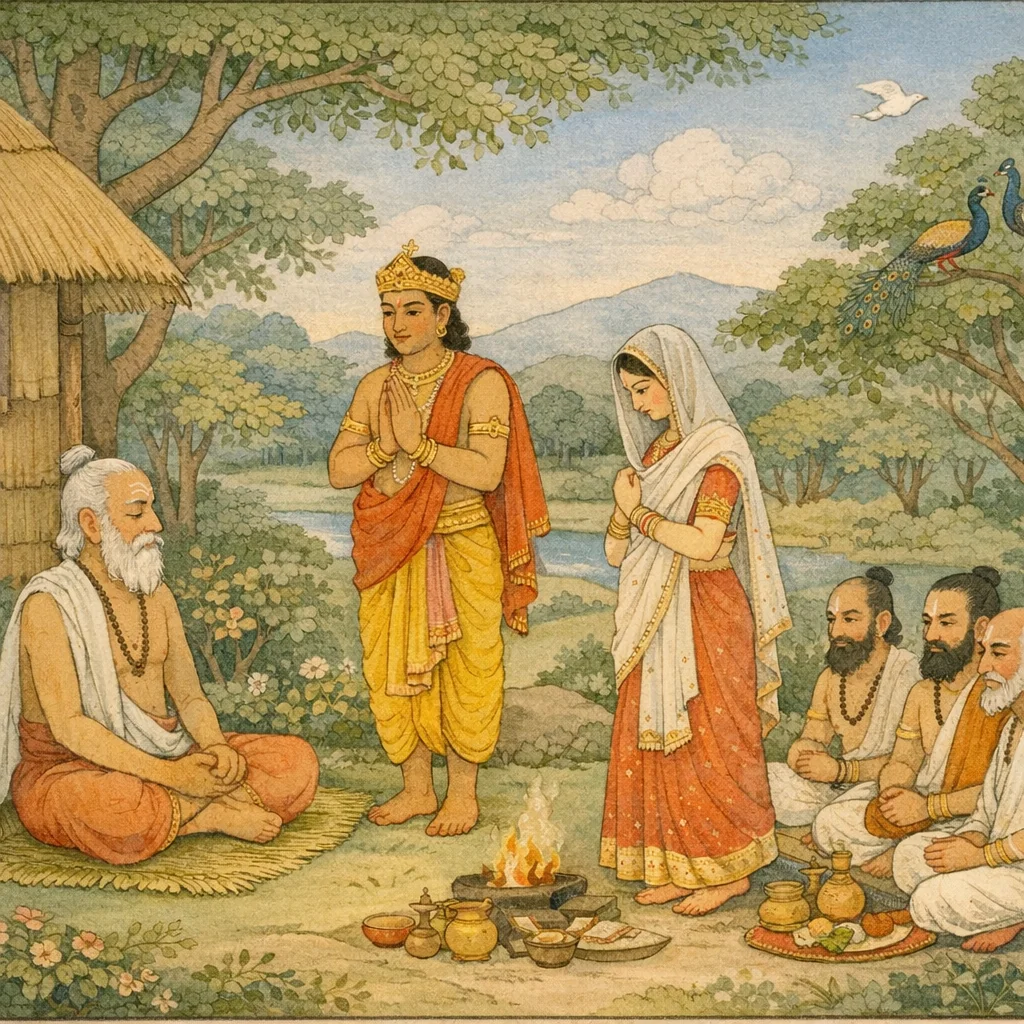
Adhyaya 297
Yakṣa-saṃvāda: Yudhiṣṭhira’s Interrogation at the Guarded Water
Upa-parva: Yakṣa-praśna (Dharma-baka-saṃvāda) Episode
Yudhiṣṭhira arrives at a forest water source and finds his brothers—Bhīma, Arjuna, and the twins—collapsed and lifeless, with no visible wounds, prompting him to infer a non-ordinary cause. He considers covert human agency and poisoning but rejects these hypotheses based on observed signs, then resolves to verify by approaching the water. A voice from the unseen realm identifies itself as a Yakṣa who has taken the brothers and warns Yudhiṣṭhira not to drink unless he answers questions. Yudhiṣṭhira initiates inquiry into the being’s identity and acknowledges the procedural condition, choosing dialogue over force. The Yakṣa reveals it is not a bird but a Yakṣa responsible for the brothers’ fall due to their disregard of prohibition. A long sequence of doctrinal riddles follows, spanning cosmology, social ethics, ritual semantics, and practical nīti (e.g., the role of truth, self-restraint, generosity, and learned conduct). Yudhiṣṭhira answers consistently with dharma-centered reasoning, emphasizing satya, tapas, svādhyāya, and compassionate governance of mind and speech. Satisfied, the Yakṣa grants a boon: one brother may live. Yudhiṣṭhira selects Nakula, arguing impartiality toward both maternal lineages and affirming ānṛśaṃsya as paramount dharma. The Yakṣa commends this ethical priority and restores all the brothers, establishing Yudhiṣṭhira’s discernment as the episode’s decisive instrument of survival.
Chapter Arc: राजर्षि अश्वपति पुण्य दिन पर वृद्ध द्विजों, ऋत्विजों और पुरोहितों को साथ लेकर अपनी कन्या सावित्री के विवाह-कार्य हेतु प्रस्थान करते हैं—एक आदर्श, धर्मसम्मत संकल्प का शुभारम्भ। → पवित्र अरण्य में द्युमत्सेन के आश्रम पर पहुँचकर अश्वपति सावित्री का प्रस्ताव रखते हैं; पर वनवासी, राज्यच्युत द्युमत्सेन यह शंका उठाते हैं कि राजकन्या वन-जीवन के क्लेश कैसे सह पाएगी। → अश्वपति धर्मज्ञ द्युमत्सेन से कहते हैं—‘यह मेरी शोभना कन्या सावित्री है; इसे स्वधर्म से, स्नुषा रूप में स्वीकार करें’—और द्युमत्सेन के संकोच के सामने सावित्री के व्रत-बल व निश्चय की प्रतिष्ठा स्थापित होती है। → सत्यवान् और सावित्री का विवाह सम्पन्न होता है; दोनों एक-दूसरे को पाकर हर्षित होते हैं। सावित्री सेवा, विनय, संयम और सबके मनोनुकूल आचरण से आश्रम के सभी जनों को संतुष्ट करती है। → पर भीतर-ही-भीतर सावित्री क्षीण होती जाती है; नारद के पूर्व कथन का वाक्य उसके मन में दिन-रात घूमता रहता है—आगामी अनिष्ट की छाया स्पष्ट होने लगती है।
Shlokas
Verse 1
/ #:73:.7 #:ड-.ह () हि 2 7-2 पज्चनवर्त्याधिकद्विशततमो< ध्याय: सत्यवान् और सावित्रीका विवाह तथा सावित्रीका अपनी सेवाओंद्वारा सबको संतुष्ट करना मार्कण्डेय उवाच अथ कन्याप्रदाने स तमेवार्थ विचिन्तयन् । समानिन्ये च तत् सर्व भाण्डं वैवाहिक नृप:,मार्कण्डेयजी कहते हैं--युधिष्ठिर! तदनन्तर कन्यादानके विषयमें नारदजीके ही कथनपर विचार करते हुए राजा अभश्वपतिने विवाहके लिये सारी सामग्री एकत्र करवायी
Mārkaṇḍeya said: Then, as the king reflected on that very matter of giving his daughter in marriage (kanyā-dāna), in accordance with Nārada’s words, he gathered together all the requisites for the wedding.
Verse 2
ततो वृद्धान् द्विजान् सर्वनृत्विज: सपुरोहितान् | समाहूय दिने पुण्ये प्रययौ सह कन्यया,फिर उन्होंने बूढ़े ब्राह्मणों, समस्त ऋत्विजों तथा पुरोहितोंको बुलाकर किसी शुभ दिनमें कन्याके साथ तपोवनको प्रस्थान किया
Then, having summoned the aged Brahmins—together with all the officiating priests and the family priest—on an auspicious day he set out for the hermitage-forest, accompanied by the maiden.
Verse 3
मेध्यारण्यं स गत्वा च झुमत्सेनाश्रमं नृप: । पद्धयामेव द्विजै: सार्ध राजर्षि तमुपागमत्,पवित्र वनमें द्युमत्सेनके आश्रमके निकट पहुँचकर राजा अभश्वपति ब्राह्मणोंके साथ पैदल ही उन राजर्षिके पास गये
Mārkaṇḍeya said: Having gone to the sanctifying forest and approaching the hermitage of Dyumatsena, the king—Aśvapati—went on foot, together with brāhmaṇas, to that royal sage.
Verse 4
तत्रापश्यन्महाभागं शालवृक्षमुपाश्रितम् । कौश्यां बृस्यां समासीन चक्षुहीनं नृपं तदा,वहाँ उन्होंने उन महाभाग नेत्रहीन नरेशको शालवृक्षके नीचे एक कुशकी चटाईपर बैठे देखा
There they saw a most fortunate king, bereft of sight, seated at that time upon a mat of kuśa grass beneath the shelter of a śāla tree.
Verse 5
स राजा तसय राजर्षे: कृत्वा पूजां यथाहत: । वाचा सुनियतो भूत्वा चकारात्मनिवेदनम्,राजा अश्वपतिने राजर्षि द्युमत्सेनकी यथायोग्य पूजा की और वाणीको संयममें रखकर उन्होंने उनके समक्ष अपना परिचय दिया। तब धर्मज्ञ राजा टझुमत्सेनने मद्रराज अश्वपतिको अर्ध्य, आसन और गौ निवेदन करके उनसे पूछा--“किस उद्देश्यसे आपका यहाँ शुभागमन हुआ है?”
That king, having offered due honor to the royal sage in a manner befitting him, restrained his speech and then made a formal self-introduction.
Verse 6
तस्यार्घ्यमासनं चैव गां चावेद्य स धर्मवित् | किमागमनमित्येवं राजा राजानमब्रवीत्,राजा अश्वपतिने राजर्षि द्युमत्सेनकी यथायोग्य पूजा की और वाणीको संयममें रखकर उन्होंने उनके समक्ष अपना परिचय दिया। तब धर्मज्ञ राजा टझुमत्सेनने मद्रराज अश्वपतिको अर्ध्य, आसन और गौ निवेदन करके उनसे पूछा--“किस उद्देश्यसे आपका यहाँ शुभागमन हुआ है?”
Having duly offered him the ceremonial water of welcome, a seat, and a cow as a gift, that king—versed in dharma—addressed the other king and asked: “For what purpose have you come here?”
Verse 7
तस्य सर्वमभिप्रायमितिकर्तव्यतां च ताम् सत्यवन्तं समुद्दिश्य सर्वमेव न्यवेदयत्,तब राजाने उनसे सत्यवानके उद्देश्यसे अपना सारा अभिप्राय तथा कैसे-कैसे क्या-क्या करना है इत्यादि बातोंका विवरण सब कुछ स्पष्ट बता दिया
Mārkaṇḍeya said: Keeping Satyavān in view, she disclosed to him her entire intention and also the complete course of action—what was to be done and how—making everything clear in full detail.
Verse 8
अश्वपतिर्वाच सावित्री नाम राजर्षे कन्येयं मम शोभना । तां स्वधर्मेण धर्मज्ञ स्नुषार्थे त्वं गृहाण मे,अश्वपति बोले--धर्मज्ञ राजर्षे! सावित्री नामसे प्रसिद्ध मेरी यह सुन्दरी कन्या है। इसे आप धर्मतः अपनी पुत्रवधू बनानेके लिये स्वीकार करें
Aśvapati said: “O royal sage, this is my beautiful daughter, renowned by the name Sāvitrī. O knower of dharma, accept her from me in accordance with righteous custom, taking her as a daughter-in-law for your house.”
Verse 9
हुमत्सेन उवाच च्युता: सम राज्याद् वनवासम॒श्रिता- श्वराम धर्म नियतास्तपस्विन: । कथं त्वनर्हा वनवासमा श्रमे निवत्स्यते क्लेशमिमं सुता तव,द्युमत्सेन बोले--महाराज! हम राज्यसे भ्रष्ट हो चुके हैं एवं वनका आश्रय लेकर संयम-नियमके साथ तपस्वी जीवन बिताते हुए धर्मका अनुष्ठान करते हैं। आपकी कन्या ये सब कष्ट सहन करनेयोग्य नहीं है। ऐसी दशामें यह आश्रममें रहकर वनवासके इस कष्टको कैसे सह सकेगी?
Dyumatsena said: “O king, we have fallen from our kingdom and have taken refuge in forest-dwelling. Living as ascetics—bound by purity, vows, and the discipline of dharma—we perform austerities. But your daughter is not fit to endure such hardship. How could she, in this hermitage, live through the suffering that this forest-exile entails?”
Verse 10
अश्वपतिरवाच सुखं च दुःखं च भवाभवात्मकं यदा विजानाति सुताहमेव च । न मद्विधे युज्यति वाक्यमीदृशं विनिश्चयेनाभिगतो5स्मि ते नूप,अश्वपतिने कहा--राजन्! सुख और दुःख तो उत्पन्न और नष्ट होनेवाले हैं। इस बातको मैं और मेरी पुत्री दोनों जानते हैं। मेरे-जैसे मनुष्यसे आपको ऐसी बात नहीं कहनी चाहिये। मैं तो सब प्रकारसे निश्चय करके ही आपके पास आया हूँ
Aśvapati said: “O king, pleasure and pain are of the nature of arising and passing away. My daughter and I both understand this. Such words are not fitting to be spoken to one like me. I have come to you only after firm deliberation and settled resolve.”
Verse 11
आशा नाहसि मे हन्तुं सौहदात् प्रणतस्य च । अभितक्षागतं प्रेम्णा प्रत्याख्यातुं न मा्हसि,मैं सौहार्दभावसे आपकी शरणमें आया हूँ। आप मेरी आशा भग्न न करें--प्रेमपूर्वक अपने पास आये हुए मुझ प्रार्थीको निराश न लौटावें
Humatsen said: “Do not shatter my hope—especially when I have bowed to you and come seeking refuge in friendship. You ought not turn away, with refusal, one who has approached you in affection and trust.”
Verse 12
अनुरूपो हि युक्तश्न त्वं ममाहं तवापि च | स््नुषां प्रतीच्छ मे कन्यां भारया सत्यवतः सतः,आप सर्वथा मेरे अनुरूप और योग्य हैं। मैं भी आपके योग्य हूँ। आप मेरी इस कन्याको अपने श्रेष्ठ पुत्र सत्यवान्की पत्नी एवं अपनी पुत्रवधूके रूपमें ग्रहण कीजिये
Humat-sena said: “You are indeed well-suited and worthy for me, and I too am worthy of you. Therefore accept my daughter as your daughter-in-law—let her be the wife of my noble son Satyavān.”
Verse 13
इुमत्सेन उवाच पूर्वमेवाभिलषित: सम्बन्धो मे त्वया सह | भ्रष्टराज्यस्त्वहमिति तत एतद् विचारितम्,द्युमत्सेन बोले--महाराज! मैं तो पहलेसे ही आपके साथ सम्बन्ध करना चाहता था; परंतु इस समय अपने राज्यसे भ्रष्ट हो गया हूँ, ऐसा सोचकर मैंने ऐसा विचार कर लिया था कि अब यह सम्बन्ध नहीं हो सकेगा
Dyumatsena said: “Long ago I had already wished to form an alliance with you. But when I reflected, ‘I am one who has fallen from his kingdom,’ I concluded that such a relationship could not now be properly established.”
Verse 14
अभिप्रायस्त्वयं यो मे पूर्वमेवाभिकाड्क्षित: । स निर्वर्ततु मेडद्यैव काड्क्षितो हासि मेडतिथि:,किंतु मेरा यह अभिप्राय, जो मुझे पहलेसे ही अभीष्ट था, यदि आज ही सिद्ध होना चाहता है तो अवश्य हो। आप मेरे मनोवांछित अतिथि हैं
Dyumatsena said: “This intention of mine, long cherished from before, should be fulfilled today itself. You are the guest I have been hoping for.”
Verse 15
ततः सर्वान् समानाय्य द्विजानाश्रमवासिन: । यथाविधि समुद्वाहं कारयामासतुर्न॒पौ,तदनन्तर उस आश्रममें रहनेवाले सभी ब्राह्मणोंको बुलाकर दोनों राजाओंने सत्यवान्- सावित्रीका विवाह-संस्कार विधिवत् सम्पन्न कराया
Then, summoning all the twice-born Brahmins dwelling in the hermitage, the two kings had the marriage rite performed in due form—thus duly solemnizing the union of Satyavān and Sāvitrī according to sacred procedure and social duty.
Verse 16
दत्त्वा सो5श्चवपति: कनन््यां यथाहं सपरिच्छदम् । ययौ स्वमेव भवन युक्त: परमया मुदा,राजा अश्वपति दहेजसहित कन्यादान देकर बड़ी प्रसन्नताके साथ अपनी राजधानीको लौट गये
Having given the maiden in marriage—together with the appropriate gifts and provisions, as was proper—King Aśvapati, filled with the highest joy, returned to his own royal residence.
Verse 17
सत्यवानपि तां भार्या लब्ध्वा सर्वगुणान्विताम् । मुमुदे सा च तं लब्ध्वा भर्तारें मनसेप्सितम्
Satyavān too, having obtained her as his wife—endowed with every virtue—rejoiced; and she also, having obtained the husband her heart had chosen, rejoiced in turn.
Verse 18
उस सर्वसदगुणसम्पन्न भार्याको पाकर सत्यवान्को बड़ी प्रसन्नता हुई और सत्यवान्को अपने मनोवांछित पतिके रूपमें पाकर सावित्रीको भी बड़ा आनन्द हुआ ।। गते पितरि सर्वाणि संन्यस्याभरणानि सा । जगृहे वल्कलान्येव वस्त्र काषायमेव च,पिताके चले जानेपर सावित्री अपने सब आभूषण उतारकर वल्कल तथा गेरुआ वस्त्र पहनने लगी
When her father had departed, Sāvitrī set aside all her ornaments. Embracing the austere life she had chosen, she took up only bark-garments and wore only ochre clothing—an outward sign of inner resolve, self-restraint, and fidelity to dharma in her chosen marriage.
Verse 19
परिचारैर्गुणैश्वेव प्रश्रयेण दमेन च । सर्वकामक्रियाभिश्न सर्वेषां तुष्टिमादथे,सावित्रीने सेवा, गुण, विनय, संयम और सबके मनके अनुसार कार्य करनेसे सभीको प्रसन्न कर लिया
Dyumatsena said: “By attentive service, by good qualities, by humility, and by self-control—and by acting in ways that suited the wishes and needs of all—she won the satisfaction of everyone.”
Verse 20
श्वश्वृं शरीरसत्कारै: सर्वैराच्छादनादिभि: | श्वशुरं देवसत्कारैर्वाच: संयमनेन च,उसने शारीरिक सेवा तथा वस्त्राभूषण आदिके द्वारा सासको और वाणीके संयमपूर्वक देवोचित सत्कारद्वारा ससुरको संतुष्ट किया
She pleased her mother-in-law through every kind of bodily service and respectful care—providing coverings, garments, and the like; and she satisfied her father-in-law by honoring him as one would a deity, chiefly through disciplined, restrained speech.
Verse 21
तथैव प्रियवादेन नैपुणेन शमेन च । रहश्वैवोपचारेण भर्तारें पर्यतोषयत्,इसी प्रकार मधुर सम्भाषण, कार्य-कुशलता, शान्ति तथा एकान्तसेवाद्वारा पतिदेवको भी सदा प्रसन्न रखा
In the same way, by sweet and considerate speech, by skillful conduct in duties, by calm self-restraint, and by private, attentive service, she continually kept her husband pleased.
Verse 22
एवं तत्राश्रमे तेषां तदा निवसतां सताम् | कालस्तपस्यतां कश्चिदपाक्रामत भारत,भरतनन्दन! इस प्रकार उन सब लोगोंको उस आश्रममें रहकर तपस्या करते कुछ काल व्यतीत हो गया
O Bhārata, O joy of the Bharata line, as those virtuous ones dwelt in that hermitage and practiced austerities with discipline, some time passed by there in the course of their restrained life.
Verse 23
सावित्र्या ग्लायमानायास्तिष्ठन्त्यास्तु दिवानिशम् । नारदेन यदुक्तं तद् वाक्यं मनसि वर्तते,इधर सावित्री निरन्तर चिन्तासे गली जा रही थी। दिन-रात सोते-उठते हर समय नारदजीकी कही हुई बात उसके मनमें बनी रहती थी--वह उसे क्षणभरके लिये भी नहीं भूलती थी
As Sāvitrī stood there, wasting away with anxiety day and night, the words that Nārada had spoken kept revolving in her mind. She could not set them aside even for a moment, for they continually pressed upon her heart.
Verse 294
इस प्रकार श्रीमह्ाभारत वनपर्वके अन्तर्गत पतित्रतामाहात्म्यपर्वमें सावित्री- उपाख्यानविषयक दो सौ चौरानबेवाँ अध्याय पूरा हुआ
Thus concludes the two hundred and ninety-fourth chapter of the Sāvitrī episode, within the “Glory of the Pativratā” section of the Vana Parva of the Śrī Mahābhārata.
Verse 295
इति श्रीमहा भारते वनपर्वणि पतिव्रतामाहात्म्यपर्वणि सावितरयुपाख्याने पज्चनवत्यधिकद्धिशततमो<ध्याय:
Thus, in the revered Mahābhārata, within the Vana Parva, in the section extolling the greatness of devoted wives (pativratā), in the sub-narrative of Sāvitrī, ends the two-hundred-and-ninety-fifth chapter.
Frequently Asked Questions
Yudhiṣṭhira must choose between immediate survival advantage (reviving the strongest or most strategically valuable brother) and impartial dharma (ensuring equitable regard for both Kuntī’s and Mādrī’s lineages).
Legitimate action begins with disciplined inquiry and truthful speech; mastery over mind, desire, and pride is presented as more decisive than physical power in resolving crises.
Yes: the Yakṣa’s restoration of all brothers functions as an implicit validation that dharma—especially ānṛśaṃsya and fairness—possesses practical efficacy, not merely abstract virtue, within the epic’s moral economy.